Downshifting, slow living, living in the moment – all descriptions of conscious and mindful ways of living which appear, for many, to have taken on a particular significance during the pandemic according to media reports and social media posts. So what are they? And do they describe what we have done with our lives?
Downshifting is where are people adopt long-term voluntary simplicity in their life. They accept less money through fewer hours worked in order to have time for things they consider important in life. Downshifting also places emphasis on consuming less in order to reduce our ecological footprint.
Slow living is just that – a way of living which considers speed, haste and fast isn’t always the best. It considers that aspects of working, leisure time, consumption are about thoughtful, meaningful engagement rather than rushed, often thoughtless activity.
Living in the moment is about forgetting the past or fretting about the future, but consciously making the most of the here and now.
All of these seek to make the most of life in terms of personal time and enjoyment.
From Google to Instagram thousands of individuals offer advice, personal testimony and guidance to support others to achieve their goals. Consultants seek to support the transformation, often for significant fees which rather seems to go against the principle of simplifying life and its finances! The overarching concern for me is that in order for any of us to want to seek alternative ways of working and living, there must be dissatisfaction with the current status quo. The sheer volume of internet posts from people seeking or making such changes, indicates that a large proportion of the working Western world workforce is unfulfilled or unhappy.
The pandemic has been seen as a catalyst for downshifting within the Western world. In America at the end of last year one in four women were said to be looking at downshifting according to the Women in the Workplace report. In the UK BECTU have been directing their members in the media and entertainment to career advice at this tough time. One aspect of that is devoted to health and wellbeing, and involves a really practical look at the possibilities of downshifting.
If we are to be pigeonholed for what we have done – it appears to be downshifting. The word downshifting stems from an American term for changing to a lower gear. It’s an apt description, we have reduced the speed of travel in our lives – quite literally to a speed limit of 4mph on the canals! However, although we are deliberately working less we have found downshifting effectively uplifting. We have consciously stepped off the hamster wheel of working harder, to earn more money to buy more things or experiences. Living more thoughtfully and choosing to consume less means we require less money, and thus less work to achieve our goals, giving us more time to enjoy our lives.
It’s a step I wish we’d had the courage to seek earlier, but I think it would have been much harder with school-aged children, and probably harder to achieve in the house than it is on the boat. I realise I should have listened sooner to my mother-in-law when she told me years ago to slow down! In a way Steve achieved a better balance over eight years ago when he stepped away from a high profile project management role with one of the multinational information technology giants. For him the tipping point came when increasing number of colleagues were leaving work after suffering heart attacks on the job. Some died. Some survived but it was a wake up call. It was alarming to us as a family, and discussing it over dinner one night our youngest voiced the obvious: “You need to leave then.” He resigned and after a period of time set up a property company which was about bringing in a modest income, not being greedy but recognising a turnover that was just enough.
In my case it took Covid and the first lockdown to accelerate my concerns over ways I was being required to work, far distant from the fundamental principles in which I believed. By taking direct control of my personal capacity to realise or at least strive to realise the things that matter, I feel better about myself, and my contribution to society. I have exchanged feeling disturbed and disenchanted for daily satisfaction which is motivating, inspiring and revitalising.
Both of us cutting loose has enabled our radical change in the physical constraints of living space. Living on the boat has enabled us to live more simply – in all aspects of our lives, travelling, cooking, eating, leisure time and crucially, work.
For us this means spending more time living simply, doing the things we enjoy. These are positive for our healthy, happiness, comfort, and well-being. Being able to spend a lot more time walking, running, sleeping, reading and taking time to complete hobbies is an important part of our lives. Yes, we earn less but we spend less and work less which in the past four plus months appears to have proportionally increased our satisfaction.
Living like this also enables us to try and reduce our impact on the world. We are walk more, cycle when we need to go further, shop locally within walking distance, don’t need ready meals or processed foods because we have time to cook, we have no tumble drier or washing machine using water and power, we don’t iron (phew). There is simple pleasure in making the most of what we have – fuel for example is dual purpose – it heats us and is used for cooking at the same time. Collecting twigs and fallen wood gets us out in the fresh air and at this time of the year be aware of the peaty, warm scent of old woodland.
Social media indicates that as a society this pandemic has given us all an opportunity to reconsider how we live, how we work, what we really value and what we can do without. It doesn’t seem particularly radical but common sense. How can it be radical to reduce the stresses and strains on our lives, by taking control of what we need and what we want. I hope many more people and companies will post pandemic seek to rebalance working and living to be more positive and more productive.
We have heard so much open discussion about mental health during this pandemic, and it is evident that how we feel colours our response to everything around us – our work, self belief, productivity, creativity, and ultimately or resilience, how we cope with challenges. Disenchantment and exhaustion on an apparently never-ending cycle of work, snatched leisure, coloured our lives a washed out grey. Getting a better balance (in our case a cycle of leisure with interjections of work when we need the income) brings a vivid vibrant palette into play.
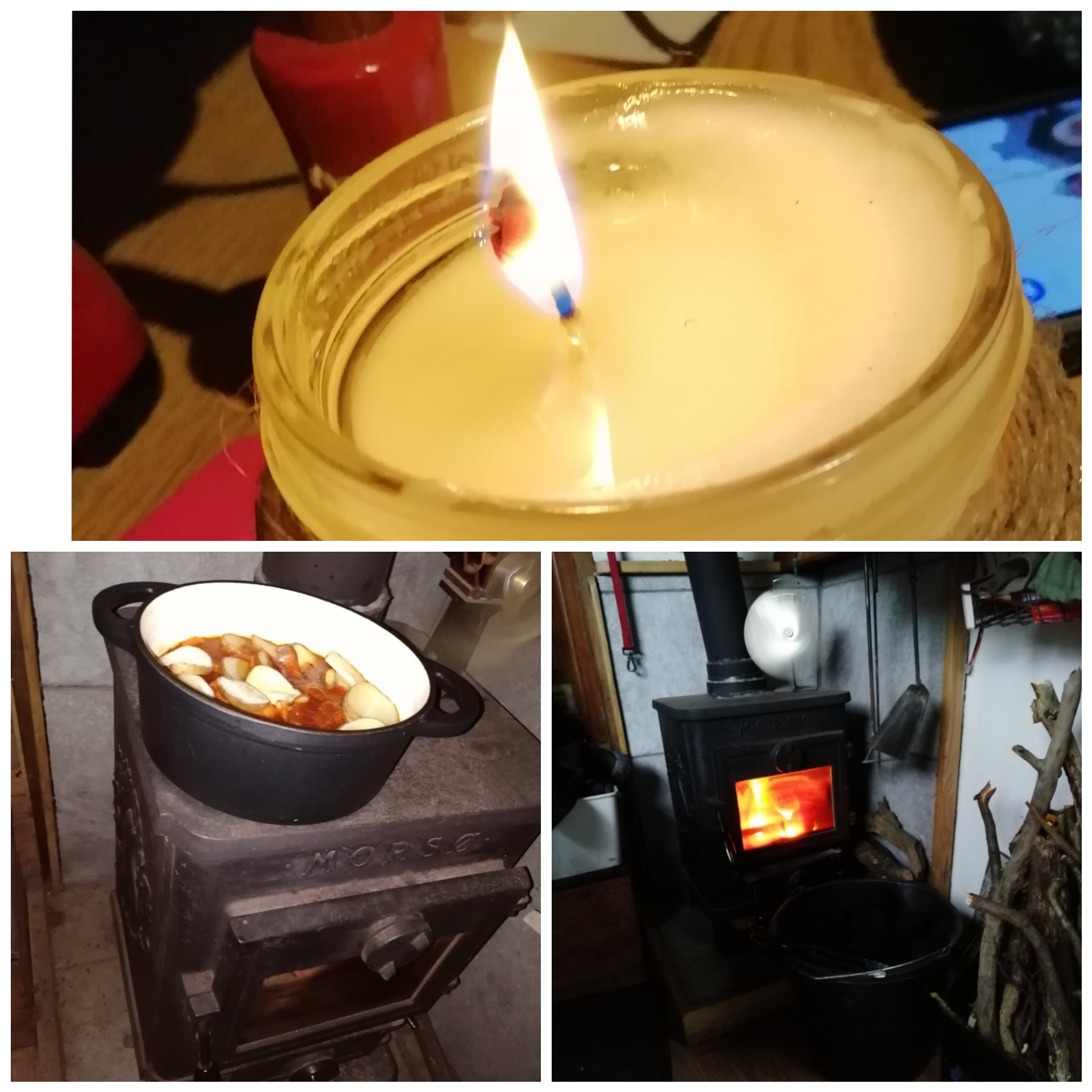
So how do we live people ask us, how do we pass our days? Winter days on the boat (when allowed to move) consist of long dog walks, three hours cruising if the rain isn’t bucketing down or there’s ice on the canal, a couple of hours project work which is now pleasurable and focused, time for preparing food and the daily routine boat maintenance. The evenings give time for reading, ferocious games of Scrabble, laptop tv and conversations by the light of a blazing stove and candlelight.
Three hours cruising is sufficient in cold weather to move us on and charge the boat batteries. The distance we can travel in that time varies depending on the number of locks we need to operate en route and whether they are in our favour or not. A lock in our favour is one where a boat has come through heading towards us, leaving the lock ready for us to go straight into or with little for us to do to counteract any leakage to get it right for us. If another boat has gone through ahead of us then we take longer filling or emptying the lock before we can use it, depending on whether we are going up or down.
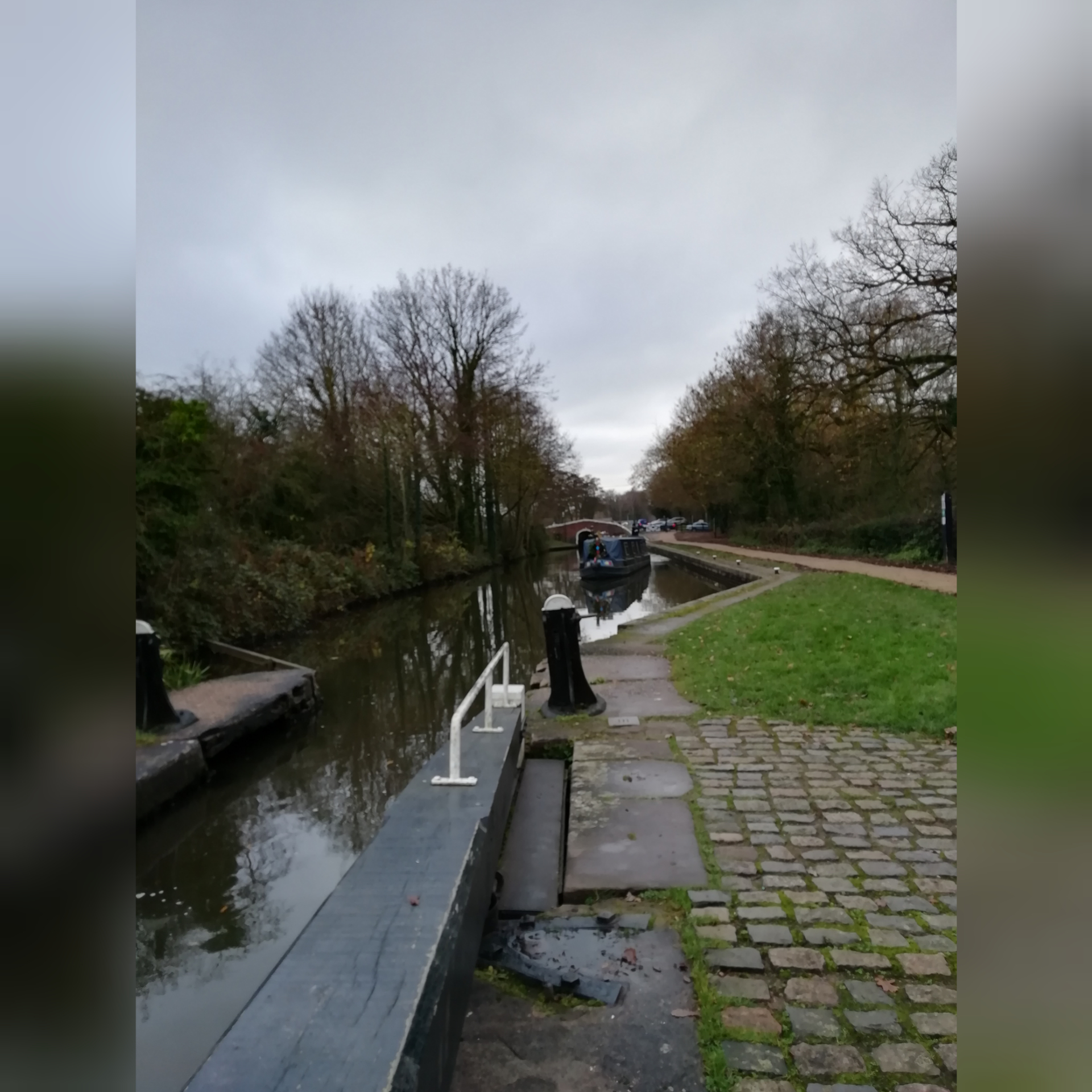
We tend to cruise in the winter in the mornings so we can get to a mooring in good light. It seems so strange talking about moving again having been in a single spot on lockdown for the past 19 days so far. This week though we did make a move – to the services no less and it was WONDERFUL to be out and about on the water again even if we only cruised a mile out and a mile back!
So you don’t get fancy ideas of our services – here they are – alongside a winding (pronounced like the weather) hole for turning boats. The principle is that this notch in the canal allows you to put the nose of the boat in and use the wind to help you turn. In this instance a brick built block with a water point outside, and inside a toilet – the windowsill of which is a book exchange, a separate Elsan emptying area and an outside yard space with four industrial sized rubbish bins.

Here these aren’t separated into recycling and general rubbish but in an increasing number of Canal and Rivers Trust waste disposals in Leicestershire, Warwickshire and Staffordshire we found recycling bins alongside the general bins. I wonder if it is the local authorities or CRT who make the decision – but whoever it is I hope the number of recycling bins increases to help boaters play their part in reducing waste going into landfill. I find it frustrating to have separated everything and then not have a recycling bin. On their website CRT say some sites do have fusion collections where a single collection is made and recycling is separated out at a recycling plant. It would be good if they put signs up near the bin to say that’s what they are doing. I can’t keep the recycling on board here until I find a suitable bin as I don’t have the space or know how long it will be before we can move thanks to the lockdown.
We are allowed under the regulations to leave our mooring and head for the services and we gleefully did! Filled up with water, emptied rubbish and loo cassettes, and then winded. In this instance we weren’t helped by a strong wind going the wrong way so it wasn’t a 3-point turn! We then headed back past where we had been moored to the next point where we could wind again, putting us back facing the right way. On the way back we moored and cleared some old fallen wood and litter we had spotted on dog walks before returning to almost the same spot we had left. We actually moved a couple of feet to avoid a really muddy patch which had developed over the weeks.
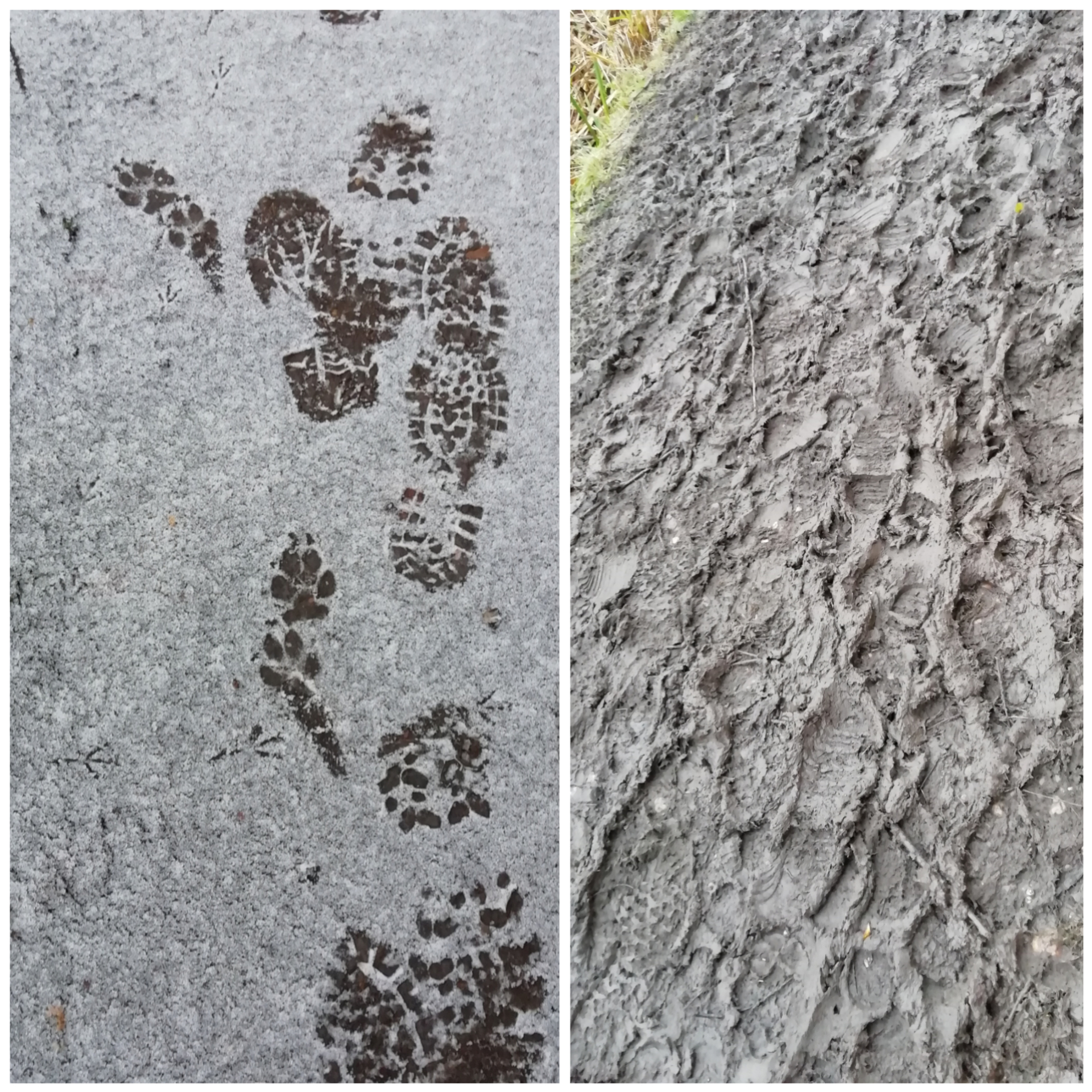
It felt ridiculously exciting to be on the move, a real treat, even for a tiny moment of escape. It made me realise how much I appreciate the peripatetic lifestyle with regular new places and views. Even a moment was liberating and makes me realise in this lockdown how important for us all, whatever our circumstances, to create moments of change. Wind in my face, a sense of freedom, and in the centre of the cut being certainly more than 2 meters from the crowds on the towpath! It is great to see the towpaths being so well used with walkers, some with dogs, some not, cyclists, joggers, serious runners, though it does change the nature of the surfaces just outside our front door! It has been so varied in this last week from crisp and snowy to slushy and now mud, mud…plus flooding around the nearby River Trent.

So we’re back in situ again, full of water for a couple of weeks, empty of waste (we walk waste back and forth rather than moving the boat every couple of days). We also have a stack of twigs and some larger pieces of fallen wood which we now have time to saw up and season. Wood foraging may not seem interesting or important but it is vital to keeping us warm, keeping costs down and also helping us do our bit for the environment around us. It’s hugely satisfying seeing the results of our efforts.
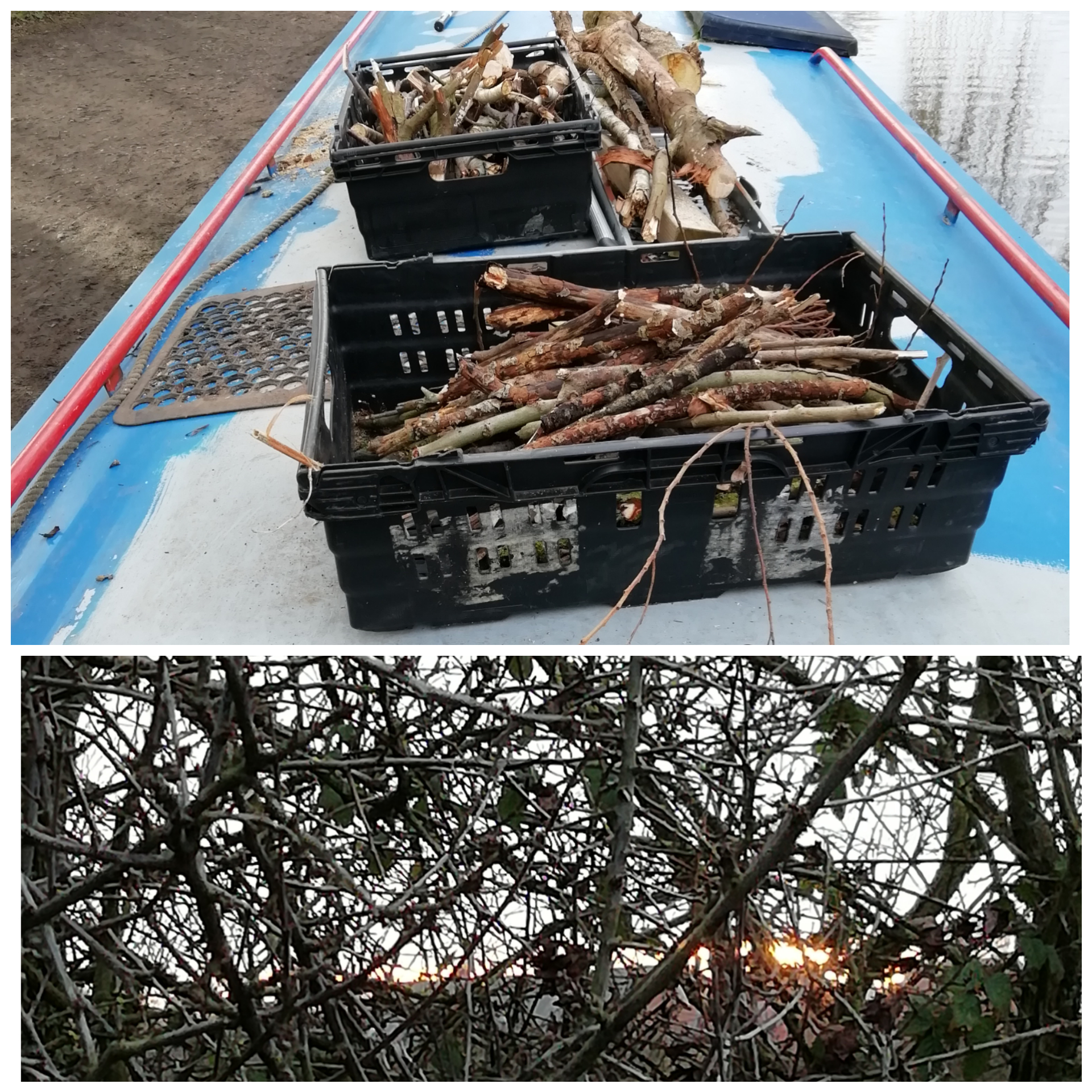
We’ve had really mixed weather but are able to make the most of beautiful clear day with sunshine that was even warm in the sheltered spots. A long muddy walk was glorious for all of us complete with the treat of coffee and delicious cake from The Narrowboat Tearoom which we found moored en route. Glad for my waistline that I’m doing RED January and the Walk 1000 miles in 2021!

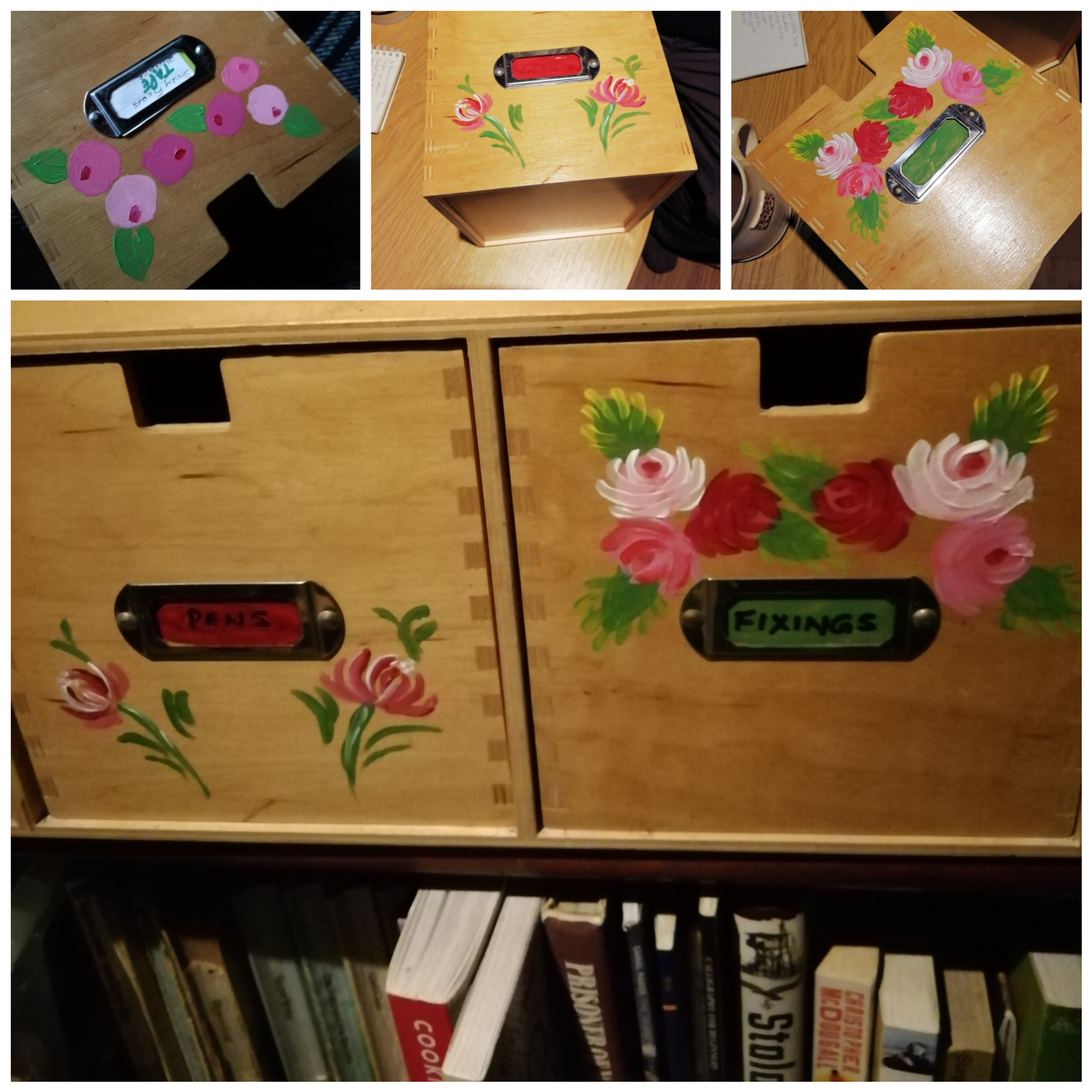
During the days of significant rain we have concentrated on jobs we want to do inside the boat. Steve’s mopped out the bilges, I have been writing next to the stove, and I’ve been learning from YouTube how to paint canal art roses.
I also managed to finish the rag rug I started before the last lockdown made from our old sports race tee shirts from races and donations from friends and family – thanks Emma and Freya! It has been met with approval I am glad to say. Tempted now to wait until charity shops open to find some old curtains to make another rug or two.

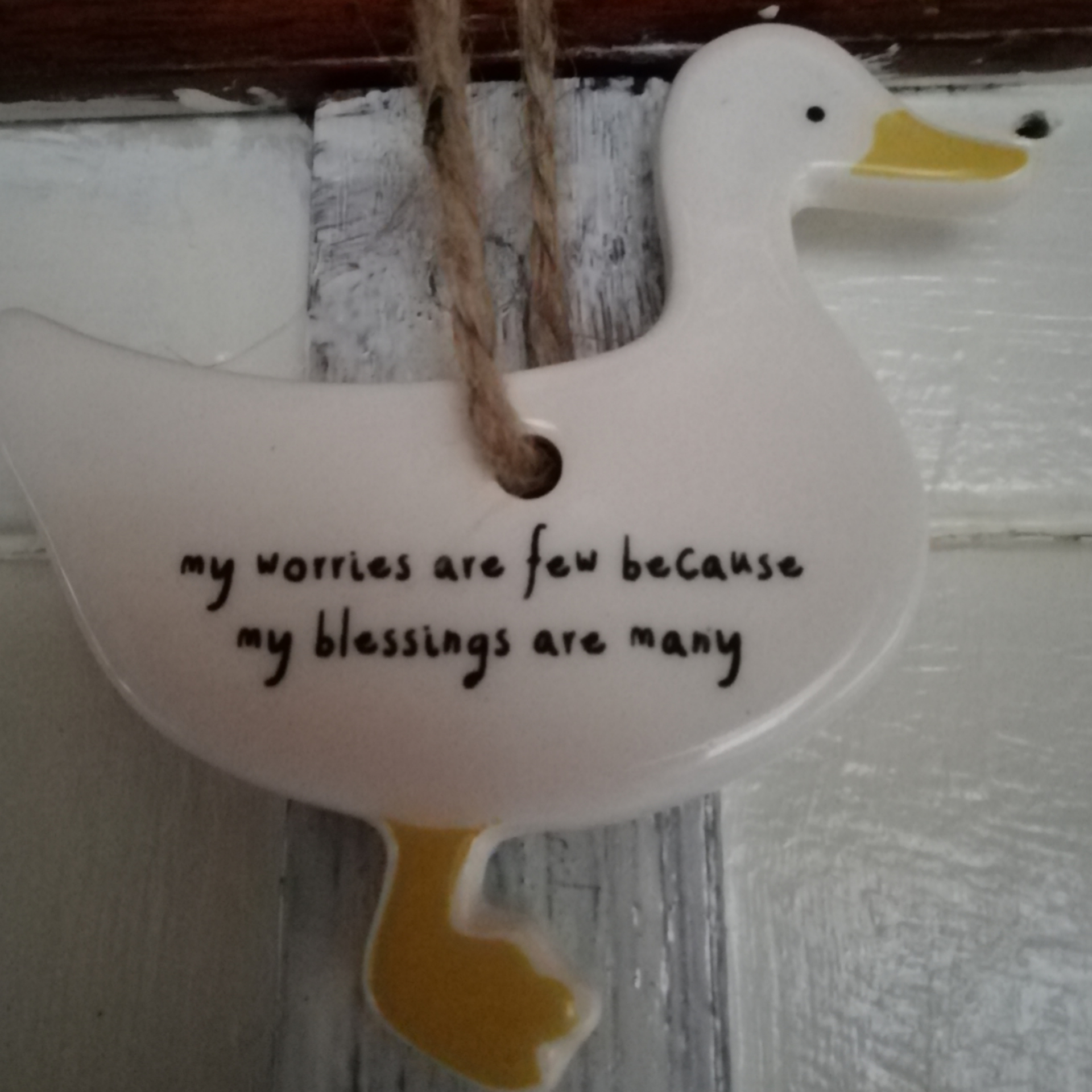
Supporting one of the local coffee shops here I also picked up an appropriate new addition to the boat this week which perfectly sums up downsizing for me.
Have you changed your work/life balance? How do you do it? How’s it gone? We’d love to hear your stories as well as your comments on our experience so far.
Next week: Low Impact Living. What is it? How are we doing? Can it be done?
 Pickingupducks
Feel very relaxed just reading this! x
LikeLiked by 1 person
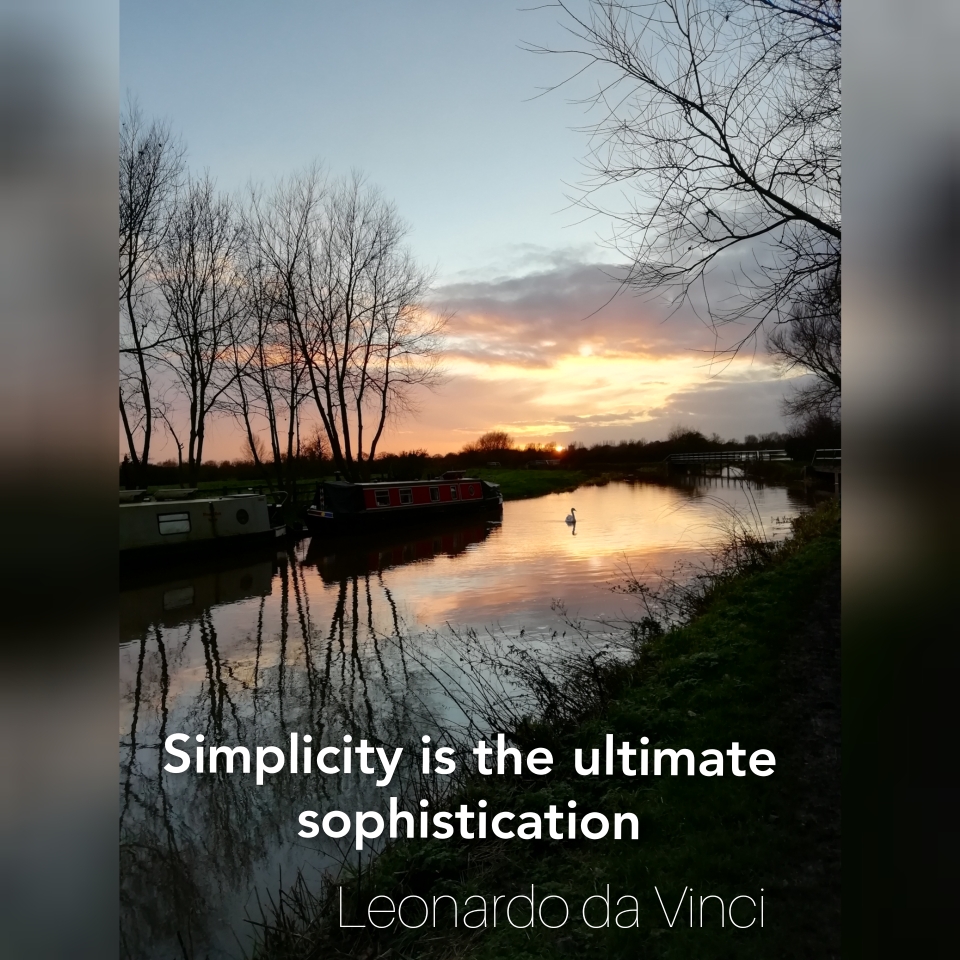
Well Deena, I feel you are the epitome of Leonardo’s quotation. You make it all sound so simple and I guess even the challenges are all part of that simplicity; look at the problem, have a good think, pare back to the basics…and there’s the solution. Yes, if only, but I’m sure you get my drift. I found your piece so comforting to read, it gave me plenty of ideas but also confirmed that intentionally or otherwise, we are doing a pretty good job of downshifting. We’ve always been conscious of rabid consumerism and have never really fallen into that trap, being quite modest in our requirements and pretty resistant to ‘keeping up with the Joneses’. As lifelong vegetarians we’ve always been aware of the need to use the world’s resources as efficiently as possible and that it’s possible to feed the whole world and rid it of starving communities. Having said that, I still eat more than is necessary, still spend (though not often) on fripperies and don’t work hard enough on pareing back even more. Over recent years we have decided not to invest in new white goods, a new car, new things for the house. Everything works, everything looks fine; if I want change, I move things around for a new ‘look’. At a more micro level, we’re doing a lot more recycling, cooking more from scratch, saving even small amounts of leftovers to make something else from or use as a side dish. We buy from Charity shops, although lately there is no need even for that, we really do have enough clothes to last until…….
At a personal level Covid really has been good for me, it’s helped me to slow down, appreciate time and use time to explore what I can co creatively. Whilst I’ve always been a patient person, I also have a ‘hurry up’ driver, which causes me to feel I need to cram as much as possible into the available time, fortunately that’s taken a back seat of late! As for exercise, health and well-being; I’m into my 6th year of walk 1000 boots-on miles (2 of those years were 1500 milers) and will keep on doing that as long as I am able. I feel healthy but still need to lose weight and tone up my body.Wishing you many more wonderful adventures and looking forward to following and responding to your blogs.
LikeLike
So good to read your response and your idea of changing things round to give a new look is something we were talking of as we walked yesterday. Come the summer we will live in and with the boat in a different way. Coal stores will give way to a rooftop garden and the cratch, currently a wet clothes drying area and storage will once more become a cushioned area for sitting out with evening drinks. You have though made me work out what else I can move around! Thank you.
LikeLike