You join us on the edge. On the edge of major change. On the edge of a major quadrennial event.
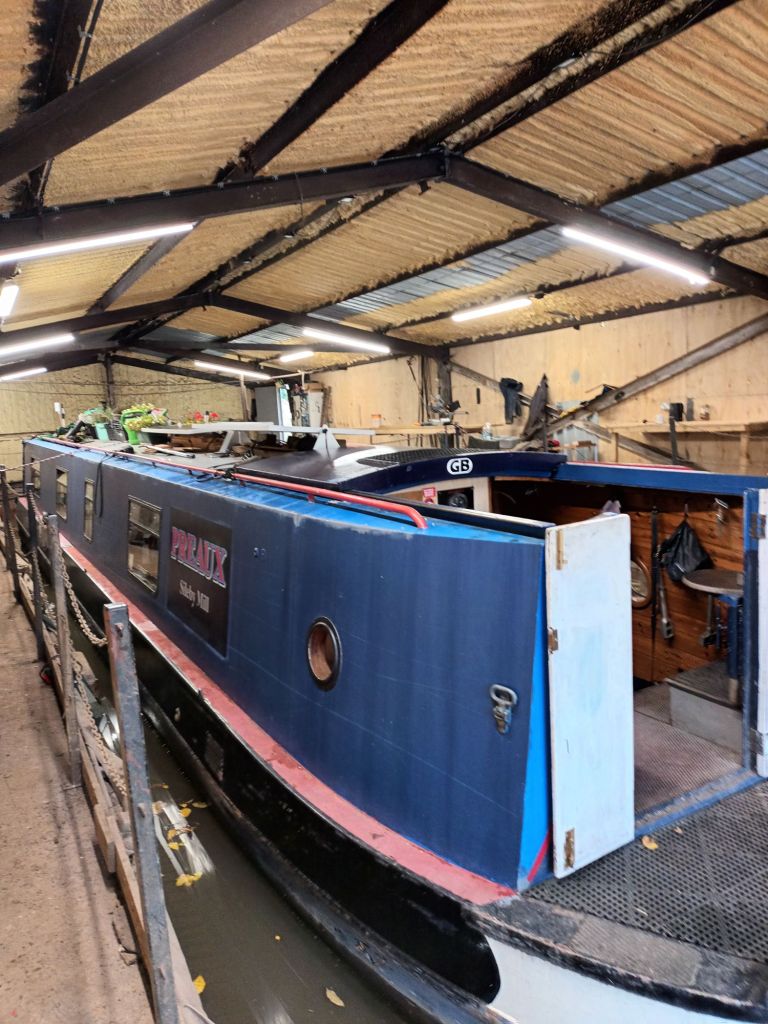
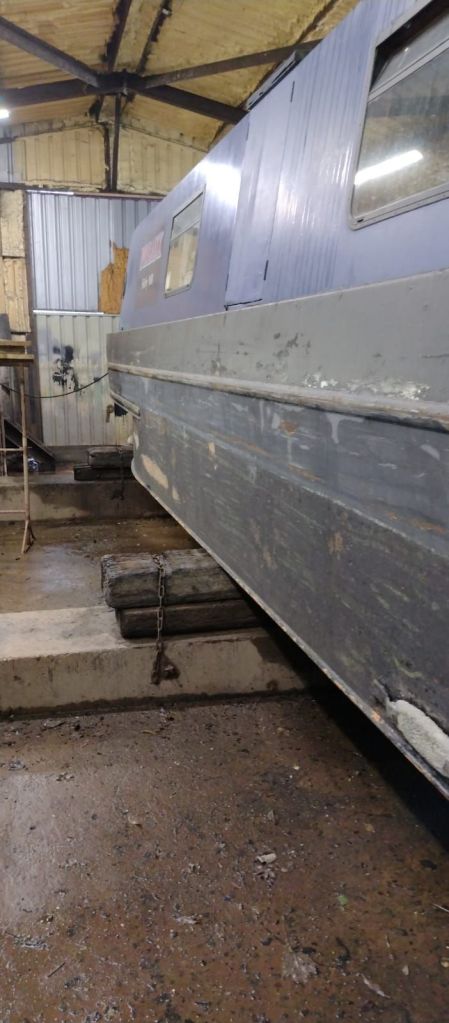
We are at last, after a long journey to get here, heading into dry dock tomorrow. We will cruise in, straps will be attached, water will be drained from underneath us, and the boat sides below the waterline will be cleaned and a protective coating will be applied to the hull to shield the steel below the waterline from rust, pitting or wear and tear.
Us out of the water 4 years ago at Middlewich
We choose to have two pack epoxy (an epoxy resin and a hardener). This lasts longer than the traditional blacking with bitumen. Blacking lasts 2-3 years and two-pack epoxy can last between 5 and 10 years.
As we are being blacked in a dry dock that is enclosed on 3 sides we have made the decision not to spend more than one night aboard in the fumes. We have also opted for experts to conduct the blacking for us – that way if the weather causes delays in the blacking setting it doesn’t give us a problem.
We choose to have Preaux blacked quadrennially at the same time as the BSS – boat safety survey – which needs to happen every 4 years. We had sacrificial anodes replaced last time she was blacked and haven’t been in a marina since then so we should be fine with those we have.
Perishing anodes 4 years ago
The BSS has some people panicking. It’s a bit like an MOT. The boat has to demonstrate that it meets the minimum safety requirements before being allowed to moor or cruise on most of the Uk’s inland waterways. Insurance and the annual Canal and River Trust licence demand BSS certification details as do many marinas.
The Survey looks at how dangerous the boat is to others in terms of fire, explosion, carbon monoxide poisoning, electrocution or pollution risks. Examiners check batteries are secure, that gas systems are free of leaks (that’s fine for us – we got rid of gas onboard two years ago).
Hero arriving!
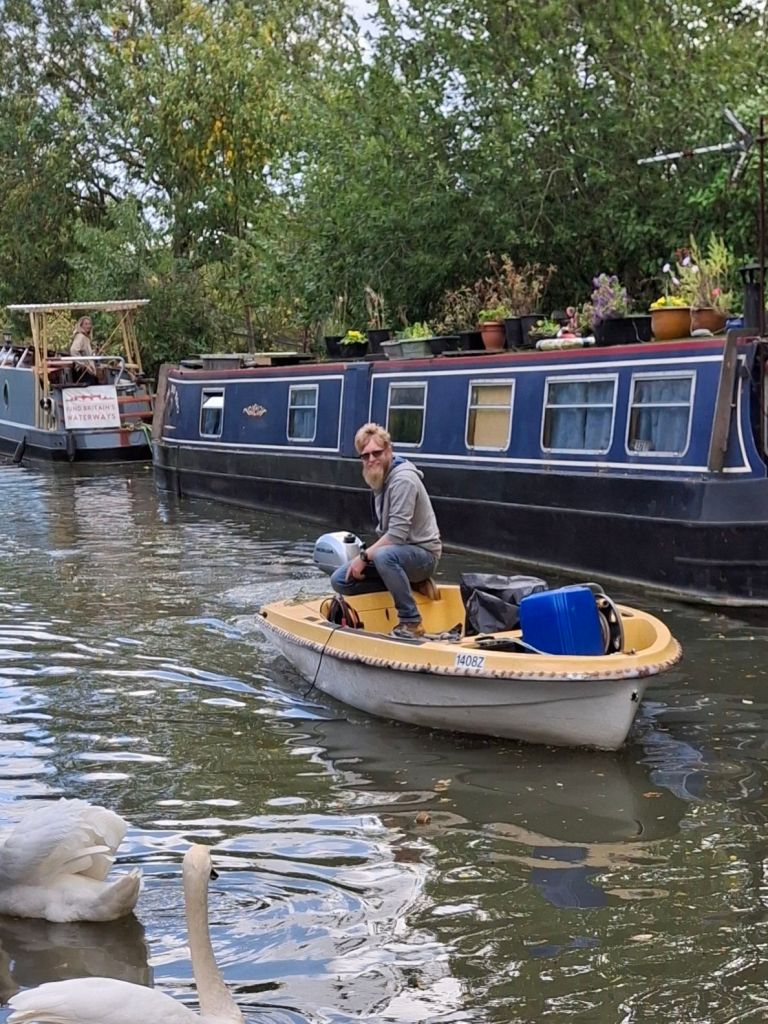
Talking of batteries- while the Skipper was on Mum duty this week our starter battery went flat and this is how Superman arrives to the rescue on the cut! Wonderful and now we have replaced that very elderly battery.
BSS examiners also check fire extinguishers – the Skipper has been checking ours for the right kind of extinguisher and that they are in date. Examiners check the carbon monoxide alarms – which we also check most weeks – and also monitor the ventilation across the boat. Battery isolators and electrical cables all get checked by examiners too.
While the examiner is doing the BSS he (in this instance) will also conduct a survey for the insurers who are requiring out of water surveys when a boat is over a certain age. Bless her, Preaux’s like us – getting older every year!
We think we’ve checked everything but on the day the BSS survey is happening we are likely to be a little twitchy until we get the call to say all is well. Last time we were caught out by the ventilation requirement but just removing the ventilation grills below the mushroom vents on the roof resolved that instantly.
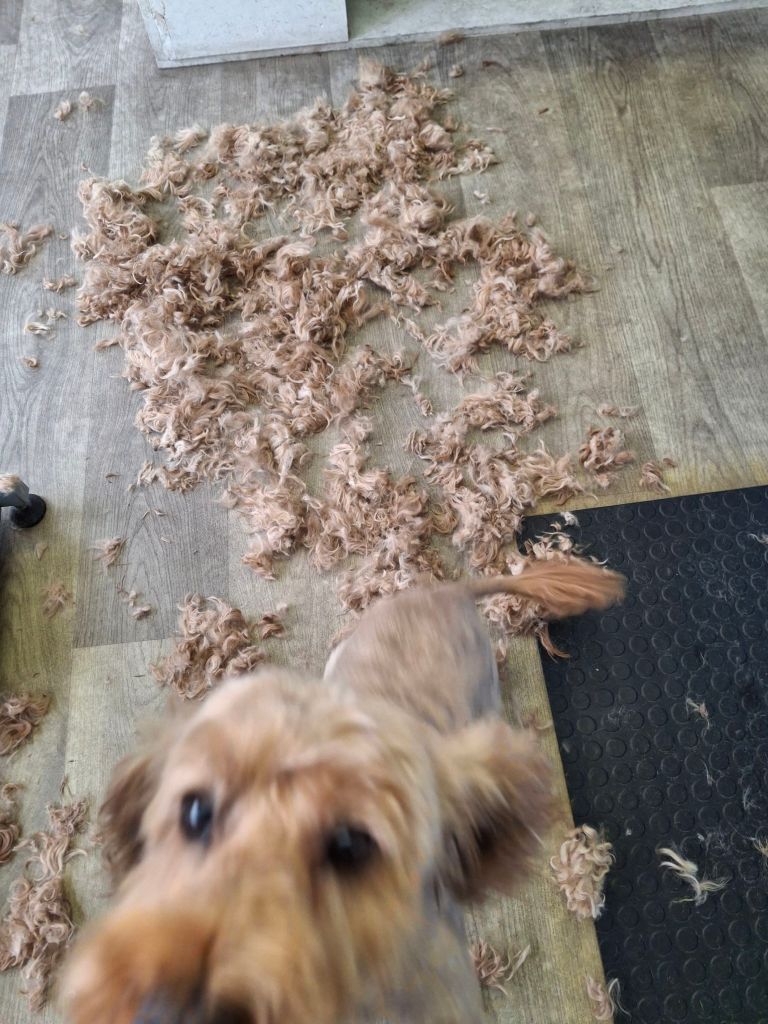
We are going in early too as we managed to get here with our major detour going to Birmingham to circumvent lock closures and meet lock usage restrictions due to low water. Other boats haven’t made their slots, so we are heading in tomorrow, 10 days earlier than our original booking. That is a big bonus – we have gained an extra day’s holiday so after one night in the shadowy environs of the dry dock we are off to stay with friends in Derbyshire before heading to the North Yorkshire coast and a hired cottage. Boatdog had a seriously extreme and much needed hairdo this week so she is perfect for a lot of joyous beach running without bringing most of the sand back with her!
Skinny boatdog
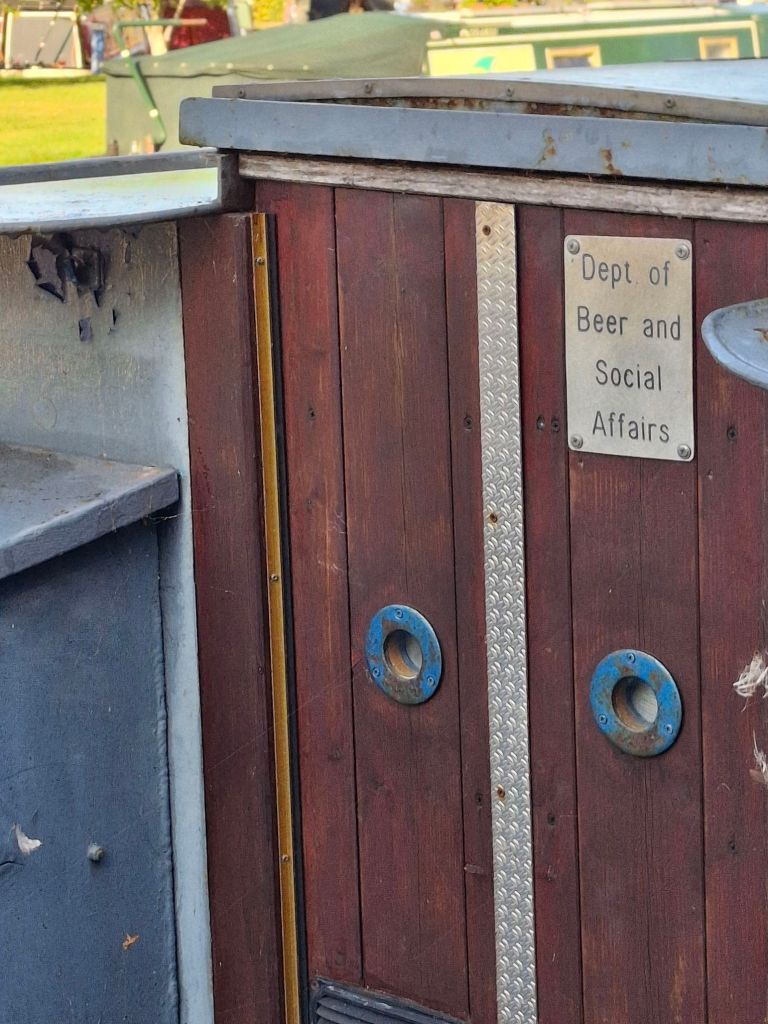
After plenty of inhaling sea air, it’s back to Derbyshire for a very special party for the Skipper before we return to Preaux and begin to work out where we can head with water levels and winter works. That should demand attendance at the Dept of Beer and Social Affairs.
As far as the insurance survey and the BSS and the blacking – will they all happen without issue?
This week has been very different for us – 3 days helping with young family and now the Skipper is doing the same for older family.
Amid this we have managed to catch up with old amd new boating friends (2 and 4 legged) over coffees, drinks, craft stalls, and bagels. We have seen family amid scarecrow and beer festivals, fitted in work and started the repaint of the interior of the boat.
It seems that this week has consisted of 9 days already!
Autumn has arrived, the lifting of the extended mooring due to the drought has been lifted even though the drought is still having a massive impact across the network.
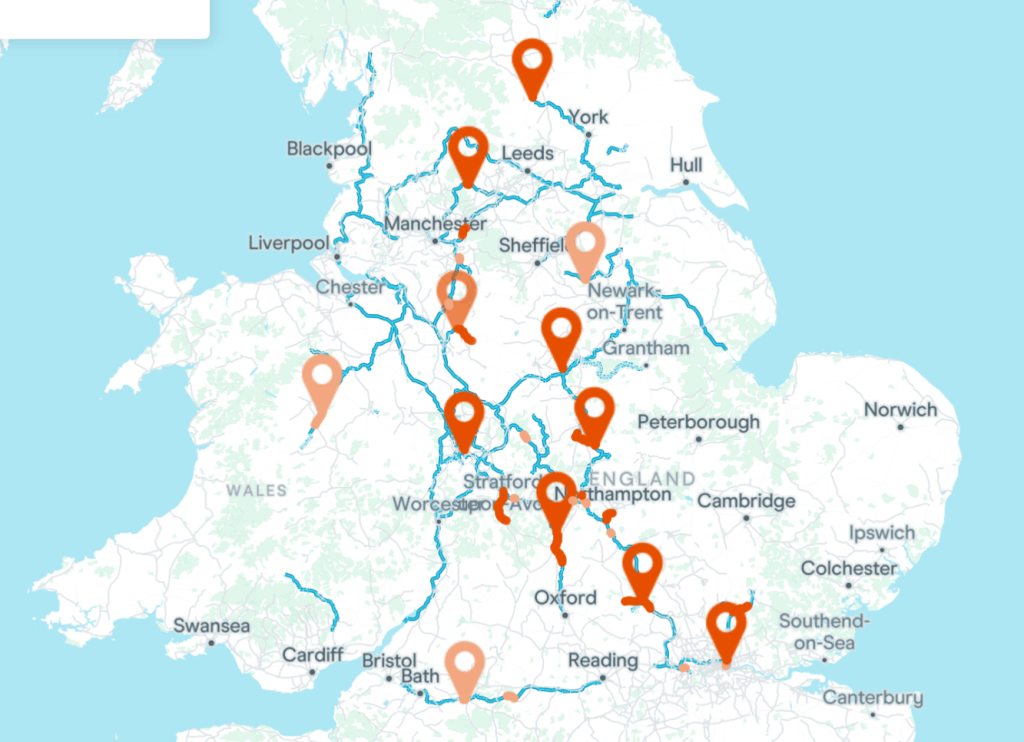
Closures and restrictions remain – all these are current due to low water levels
Where we are in Northamptonshire it is appatent that some people who need to return to home moorings on the Leicester Line are suffering real hardship very directly from the Line’s closure. They would be coming past us and turning onto the line but they can’t and are now having to face additional costs, immense stress and in some cases impossible choices being forced to leave boats in places where they could be at risk.
The implications are many and very serious for individuals. Seeing the rain made the lifting of mooring restrictions may make some boaters and non-boaters feel all is well, but it is actually far from well.
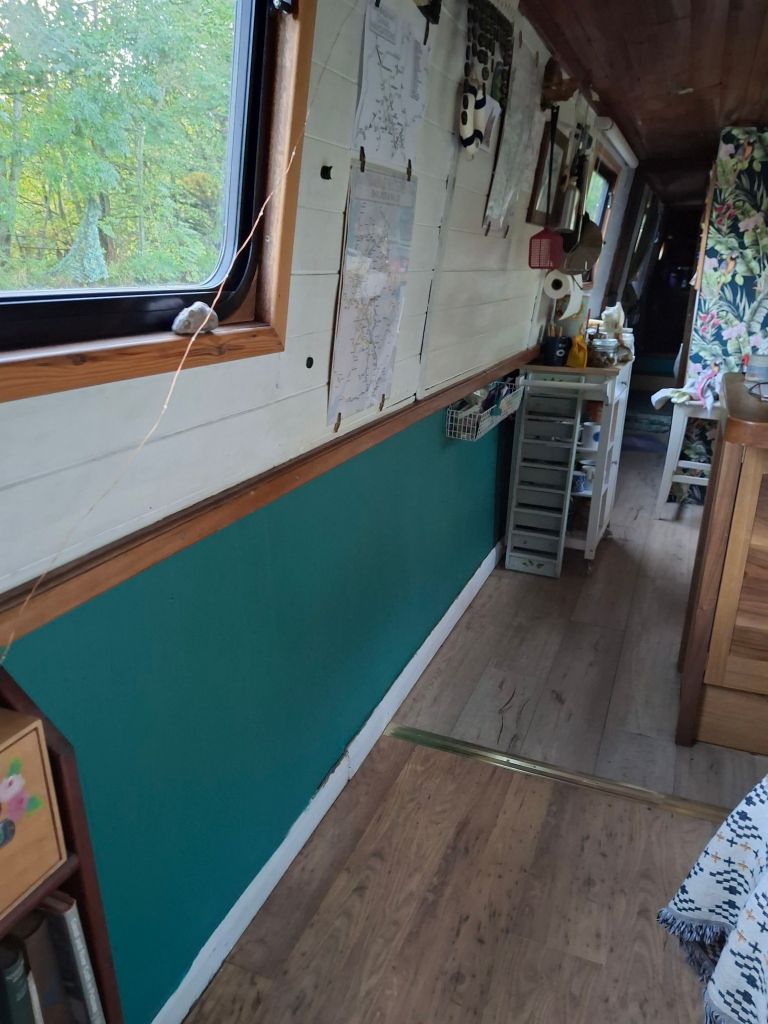
We need more than a few showers to resolve the water crisis affecting our waterways. I have though found plenty to occupy me indoors by getting underway with an interior repaint. This is so much easier when there is just me and the dog aboard, because everything has to be moved from each side of rhe boat and liked on the other while painting is in progress. So far under the gunwhales on one side has gone from gloomy grey to surprisingly vibrant teal reminiscentof a mallard drake. The colour is surprising because I had no exact idea what shade was in the reduced price tin we bought! It has been a delightful surprise! It is so satisfying when things work out unexpectedly.
Grimy grubby grey has given way to mallard teal. The white will be repainted white next
That is it. We have worked the last locks for a month or so (at least for our boat – we’ve already offered to lockwheel for some friends, gluttons for punishment as we are!).
We are just 8 miles from where we are coming out of the water for maintenance, Boat Safety Survey and an insurance survey, but we have no more locks to do on the way. The relief is immense. Collapsing bridges, fallen trees and low water could still prevent us getting there in time, but we are optimistic we will make it without further dramas.
Signs of autumn 🍂
The commercial impact of low water on the canals can often be overlooked by those of us who live aboard, irritated by being unable to cruise where and when we want. There are many businesses that depend on the canals being navigable. There are the obvious like fuel boats, hire boat companies, floating traders, boat movers, and boatyards. The latter can be affected by people being unable to get to them for booked work because they are stuck elsewhere on the network by closed locks or low navigation levels, or by their premises being in an area where water levels are too low for boats.
The outcome of this means low water can lead to job uncertainty, to increase business costs, and then there are all the businesses alongside the canal, like shops and cafes, restaurants and pubs, who count on passing floating trade.
Low water levels are still, as we enter October affecting many areas of the inland waterway network from closures to limited use of locks involving access on restricted days and times.
Canal and River Trust low water stoppages and restitctions this week
Canal and River Trust manage a total of 84 reservoirs across the network. We have made it onto and are currently moored on the Grand Union Canal, the principal navigation route, running 137 miles like the backbone of the network. It is fed by multiple reservoirs; the Tring reservoirs feed the London section, Daventry and Drayton feed the lock flights of Braunston and Long Buckby in Northamptonshire, and the Leicester Line which has experienced closures since the start of the summer, is fed by four reservoirs along its length. The West Midlands section of the GU is fed by two reservoirs and a maze of pipes.
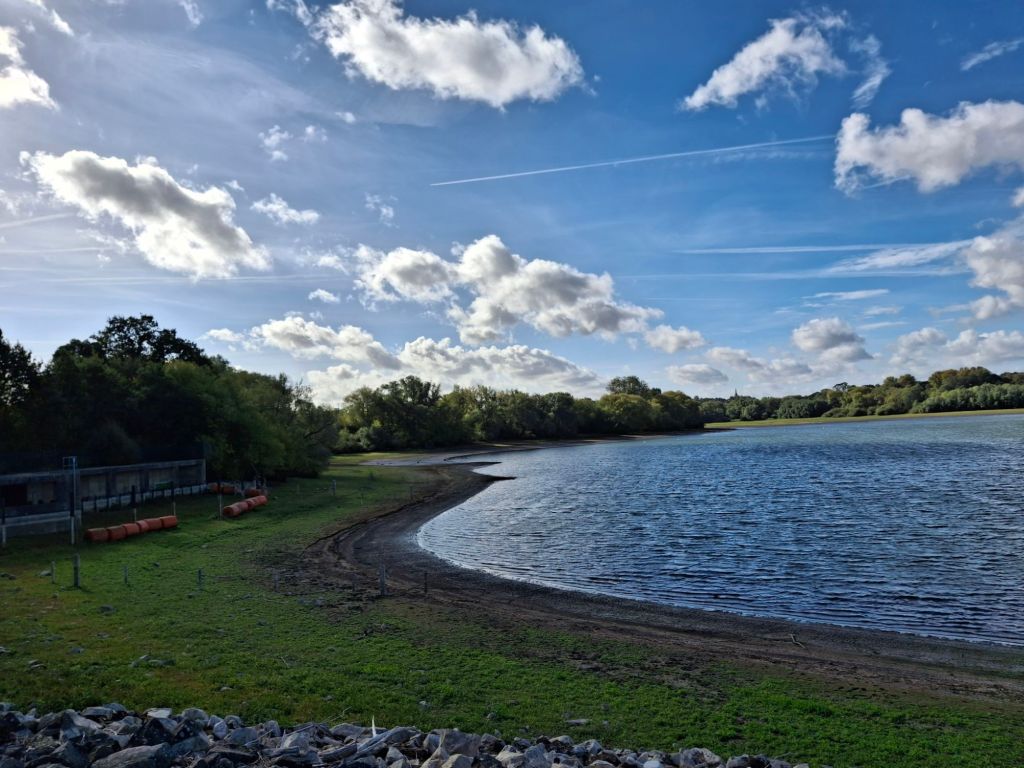
Travelling this British Shallow Time (and autumn low) we have seen navigation low, making mooring often difficult if not impossible and locks inoperable or shut. However this week is the first time we have had an opportunity to walk round one of the relevant reservoirs and see for ourselves just how low levels are.
The green is normally under water.
Daventry (site of an excellent parkrun and also a parkswim) is, according to local people who walk regularly round the country park that extends around the reservoir, lower than it has been for many years. One person said it was lower they believed than in living memory.
It will take a considerable amount of constant rain to bring levels back to where they should be at this time of year for continuous canal use. For us, we are now hoping merely for enough water to move regularly to essential services after we make it to and from the boatyard for work. After that, we reckon gentle winter cruising at a slow pace between 14-day mooring stops will see us through from this month to the end of March. Then we will intend to begin heading to the waterways of Yorkshire.
For now though, it is time to enjoy autumn with its colours, its sense of slowing down, of sorting out before settling in for the delights of winter. We are revelling in long walks in now familiar places, catching up with friends on and off boats, enjoying being somewhere for a while so we can host meals aboard for others, spending time with family and sorting things like flu jabs, hair cuts, dog grooming (the small hearthrug of a Boatdog will shortly be shorn!) and when the Skipper is off looking after his mum this month I shall be painting the interior of the boat so it is inviting when we snuggle down during short winter days when we spend more time indoors.
But before winter comes, we have autumn to enjoy, a holiday to plan while our home is out of the water, and birthdays to enjoy.
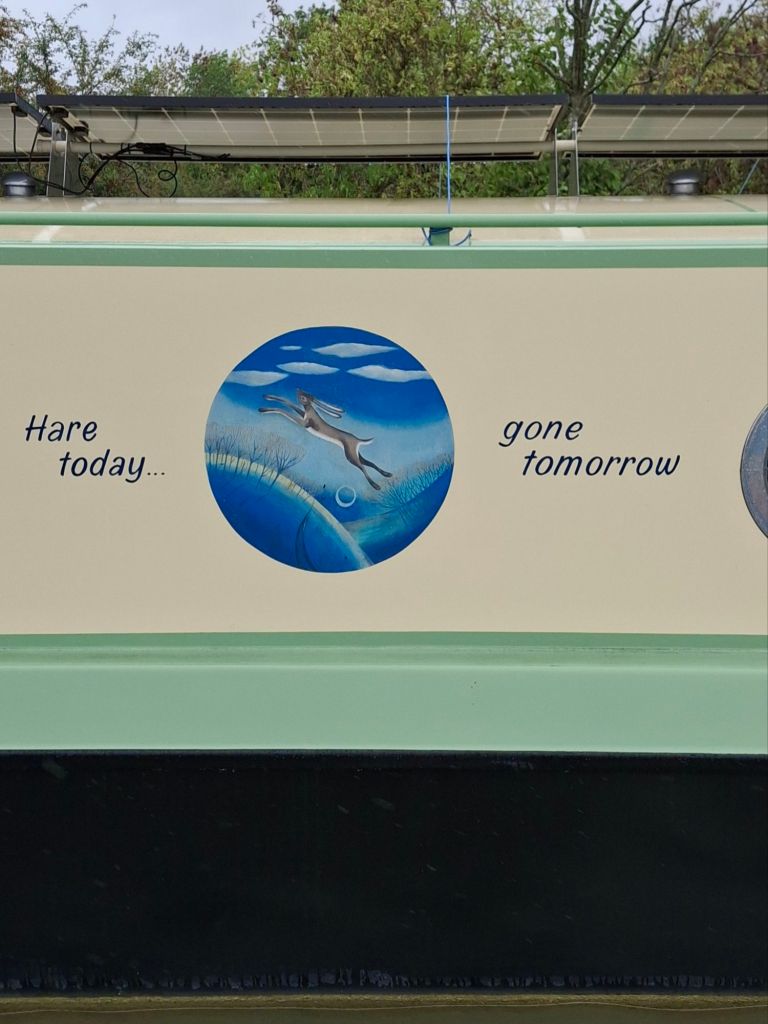
Aesop the famed Ancient Greek fabulist was said to have told the tale of the hare and the tortoise. One so fast, so fleet of foot, and one so slow to be ridiculed.
We learn such fables as children, but so often forget them as adults. As adults so often we are encouraged to go further and faster, higher and longer more rapidly. Speed is so often seen as positive, slowness as either regrettable or something to be overcome.
Living a slowed down life rebalances the rhetoric. Living afloat on a home that travels at a maximum 4mph gives time to appreciate the advantages of going at a considered pace.
Our life recently has been playing out the hare’s route versus the tortoise’s route to get from A to B on the canal network in real (slow) time thanks to the demands of British Shallow Time (BST) that has led to canals and locks being closed through lack of water.
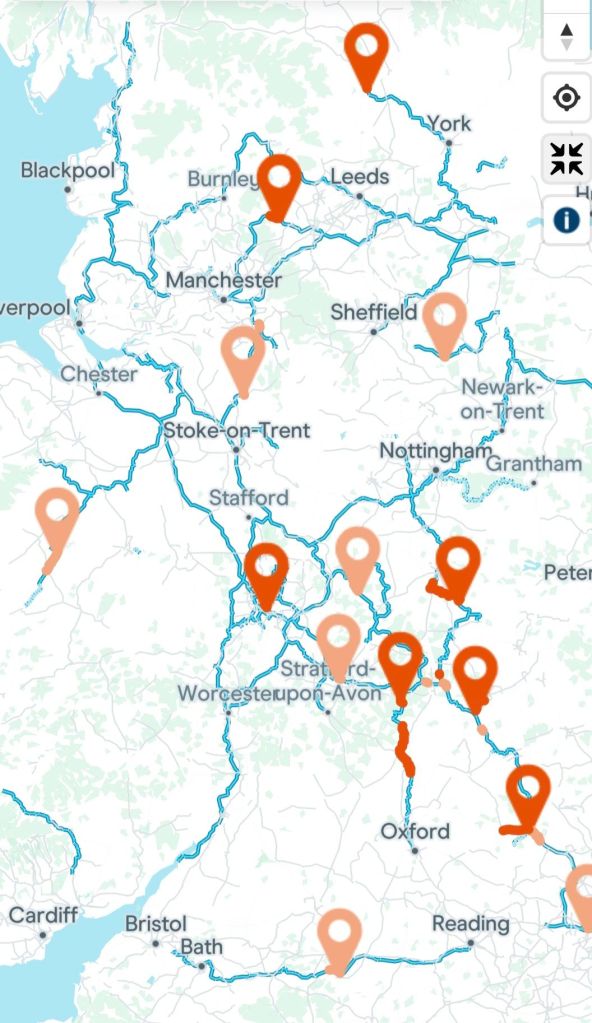
Our original plan, let’s call it Plan A, when sun was still a pleasant thing, was to take a simple route of 66 miles and 57 locks (about 35 hours travelling time) to get ourselves from where we were enjoying summer to where we need to be next month for major regular work on the boat.
The drought led to restrictions of many miles and many locks of Plan A on 3 July and 20 days later the decision was taken to close that section completely making Plan A unviable. It remains closed now nearly 3 months later.
So we made what turned out to be the right decision that it Plan A was probably not going to open for us in time for our deadlines.
Onto Plan B then. It would be a lot longer, at 115 miles but involved one one more lock (58) and it would take longer – 53 hours. But oh, dear, a flight of locks en route was closed because of the drought meaning the entire route was out of use. So Plan B was out of the window.
That then took us to Plan C a huge detour. Plan C would take us 129 miles, 155 locks and double the time of Plan A. But it was the only choice unless we sat and waited and hoped. Sitting, waiting and hoping could work, but the potential of it not working at all, none of the waterways, none of the locks reopening when we needed them to could be high. Water levels have risen slightly but the important thing to note there is slightly.
So we set off on Plan C. Just as we approached a pivotal make or break point on the outskirts of Birmingham, a section of canal which had been closed unexpectedly opened due to the slight improvement in water levels.
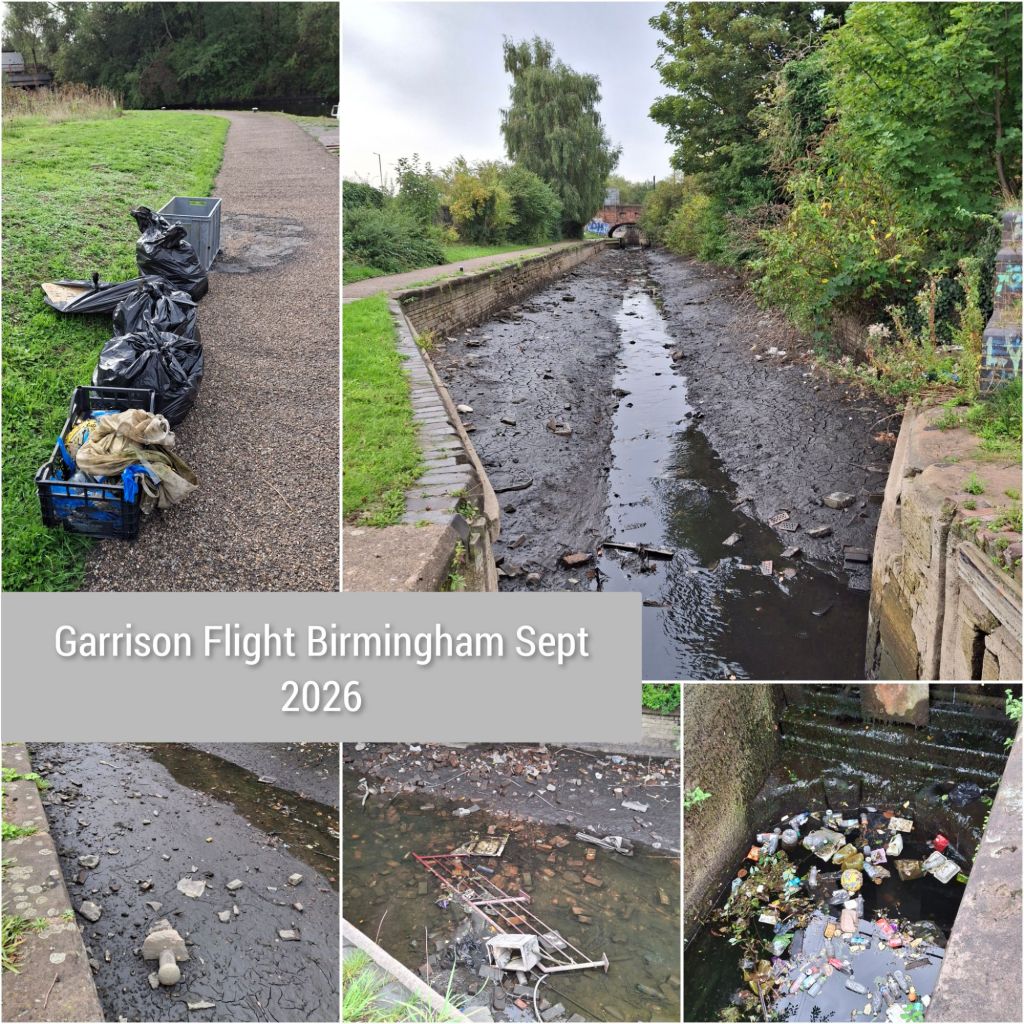
That meant an on the fly move to Plan D which reduced our mileage by just 4 miles but glory of glories, cut the number of heavy locks we had to work by 38. So Plan D it was. Plan D involved using locks which were just reopening after weeks of closure. They made for hard going with drained pounds and high levels of rubbish in the water.
Plan D also required arriving at some lock flights with restrictions within their opening hours which meant some long days.
But it has worked. Slow (very very slow at home times) but moving on gradually, we have now arrived almost where we need to be, just 17 miles and 13 locks from our final destination after 125 miles, 117 locks and many long hard hours. We have crawled into bed some nights by 8pm utterly drained.
Today the locks that blocked Plan B have begun to reopen for limited times for the many people queuing there. We are now in a relaxed, leisurely moving mode whereas if we had waited hoping against hope they would open, we would be queuing and then trying to dash for the entire remaining journey time (taking into account that we don’t and can’t move every day because of work and family commitments). There would be no safety net if another issue appeared en route, like a broken lock, or a fallen tree.
Now, we are planning the final stages of our move in a relaxed fashion. We have time to catch up with friends en route, to enjoy the areas we are travelling through.
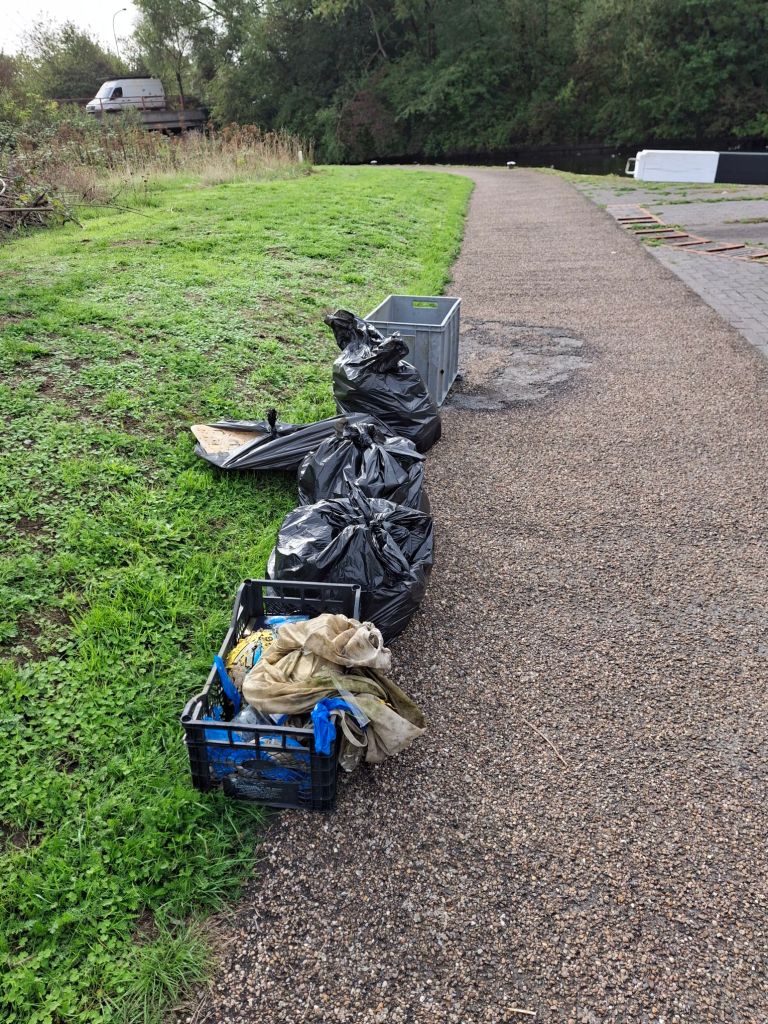
Taking the longer route but in the mode of the tortoise, slow but sure, determinedly moving on has led us to meet people from Northern California, Scotland, to travel at a speed where we had time to watch kingfishers, remove 18 bags of rubbish and debris from the network, and help others.
We have gone further but slower. It has been hard work and often utterly exhausting’ but we have had time to smell the flowers, watch wildlife living amid the autumn colours, and do our bit to improve where we live.
Nature doesn’t hurry but plants grow and seasons change. We have time at our speed to appreciate what is around us, and that can never be undervalued.
It doesn’t matter that we go slow or have detours. Like the tortoise we get where we are going, and have adventures on the way. It really does pay to go slow. The hare rushed ahead, got bored and exhausted hinself so he took a nap. While he was sleeping the tortoise steadily travelled past him. It is a fable but its truth still plays out every day in modern life.
It’s the start of another year, a time to take stock and look ahead. That applies to us all, and particularly to us aboard nb Preaux our floating home and office.
Six years ago we set off saying we would give it a go for two years and obviously we can’t count…
This year has seen us travelling less miles and locks than last year but more than the year before.
We have worked 434 locks this year over 612 miles.
That means over the past 6 years we have travelled 4,142 miles and worked 2,762 locks just for our boat (ignoring all those locks we work for others to help them on their way).
This has been a year of very many highlights for us:
+Both our daughters have given us grandchildren this year and everyone is happy and healthy.
+We completed the BCN 24 hour Challenge and highly recommend cruising at 4am on a summer morning!
+We have cruised with valued friends old and new, from England and France.
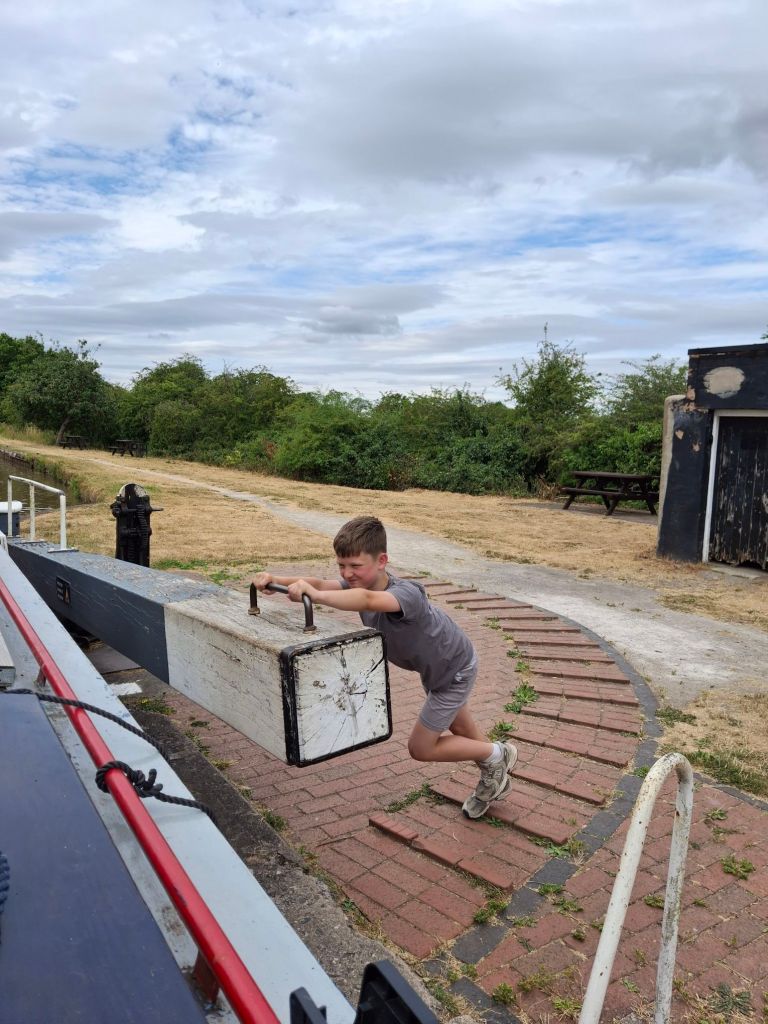
+Our eldest grandson has been a superstar at locks with us
+We have experienced a lot of new waterways – all around Birmingham!
+Once more the inestimable Kev Kyte has worked on the boat for us, cutting out a perishing well deck and welding in an immaculate replacement.
+Work has ticked along and paid the bills for us.
+We have rescued 2 Canada goslings, a moorhen chick and a hoglet from perishing
+The Skipper has completed more external painting
+We have continued volunteering for Canal and River Trust
+We have lost count of the number of bags of rubbish we have fished out of locks and the pounds in between them
A couple of locks’ worth…
We started this year afloat on the Grand Union in Grafton Regis outside Milton Regis, stuck because of low water levels. We end the year on a major detour to get not far from there to get the boat out of the water for blacking (treatment to her nether regions) and BSS (regular safety survey similar to an MOT). That detour has been caused again by low water levels. The shorter route we would have taken has been shut for some time so we are on a longer loop, but actually shorter than we were expecting as another closed waterway (again shut for low water) reopened the very morning we were in a position to take it!
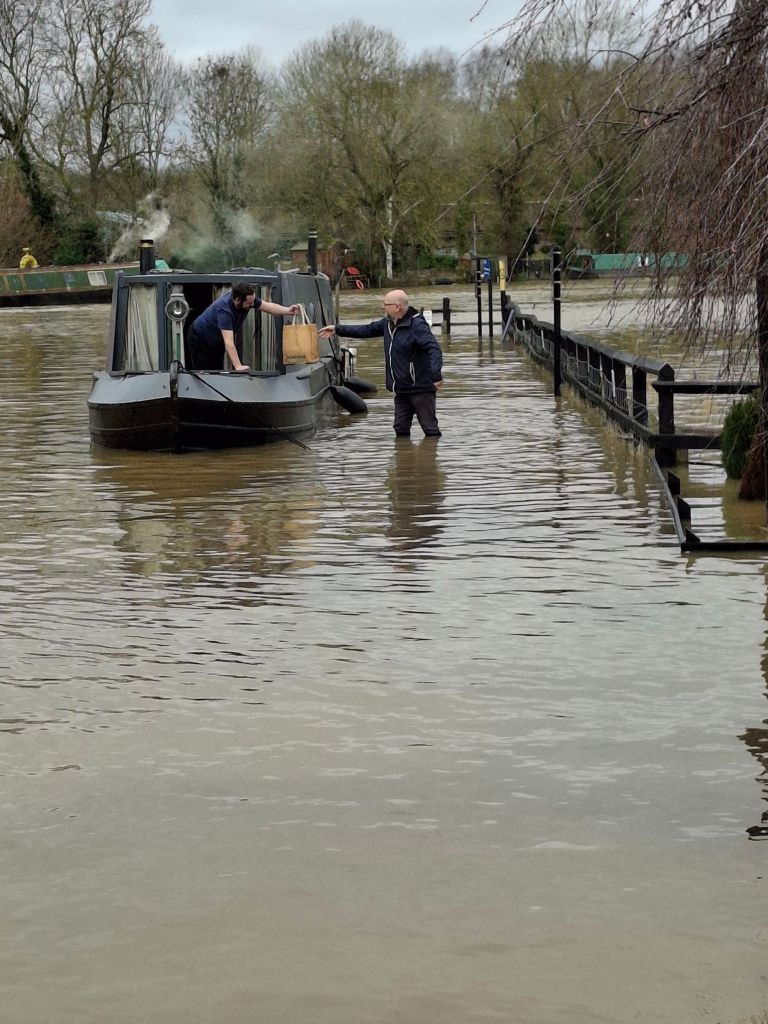
So British Shallow Time has affect us for months now, curtailing cruising and cosing routes. We expect this to be an annual occurrence now. Equally, winter time is seeing more flooding and for the past two years we have been river based at that time so we have waded a lot.
We are giving serious thought as to what this means for us going forward and how we live afloat.
This is a very short post as battling waterways which have been closed since early August complete with 16 locks (11 single and 5 wide) have left us exhausted and remembering why going to a gym is not necessary when you are travelling distances on canals. We have fished out innumerable bags of rubbish, plastic tubs, tyres, a child’s cot, a tent and so much fabric tangled in the prop that it took us hours to travel just a few miles. Fortunately Richard from CRT met us part way and took most of the detritus we collected because we have failed to find an open rubbish facility.
Tonight we shall sleep well, and tomorrow we do it all again!
If you want to try something – do. You won’t regret trying but you will regret wondering what it would have been like if only you had tried it.
There’s a fragile, colourful theme running throughout our lives. It’s a theme that the narrowboat part of our life, just one of the many beautiful homes we’ve lived in, now takes us from one to another discovery of new, exciting, palette reflecting something unique, often in unexpectrd places.
Kawaka New Zealand (public toilet), Coventry (cathedral), Istanbul (mosque) – not all reached by narrowboat!
Those colours are often not as fragile as they appear when encased in lead as stained glass. This week alone we have found them in the soaring space of a cathedral and illuminating a humble parish church.
The latter contained two modern style stained glass windows and got me thinking. These, made and donated in memory of an individual and a family, are really poignant. They contain elements important to those people such as a Mercedes Benz logo and white rose of Yorkshire.
So what I wondered would be in my stained glass window?
What would be in yours?
How and what would we want to be remembered?
Putting down in glass what matters to you requires thought and evaluation. You can’t have everything so it’s a helpful process of reflection. This can happen at any time in our lives and is invaluable – to see what we have achieved or illuminating what we want to achieve.
Constraints require focus – you can’t have everything so what is important, what is essential to you? What ahould be the colours – what the reflection?
Reflection is an essential part of professional development and is as valuable in our personal lives, something we often forget.
Reflection is a process that enables us to take stock, to move forward informed by what has gone before, and in my case, sort out the calm from the noise.
One of my own leaded windows with reflection
A stained glass window struck me as a great tool for reflection (pun fully intended). There is the window itself with its carefully curated contents. Then the reflection it casts is diffused, different and often more thought-provoking.
Some years ago I made a stained glass window for the Skipper when we lived on land. It was a window that was the essence of him (or at least as I see him) focused, clear, unfussy, and fundamentally, of course, for him, reflecting his beloved Yorkshire.
The same white rose of Yorkshire flies on the back of our boat. Its glazed fused replica still sits in the middle of that window, now bound up in storage. Maybe one day it will find a new home. It is just too big for the boat, so it has to wait for now.
So what, I found myself thinking this week, would be in my own stained glass window. Selfishly, even honing things down, I found that too much mattered to me, too much is fundamental to me, now and in the future. So I need two windows. You might find you need one, two or a triptych.
Within mine (portrayed here courtesy of AI) is family, founded in our marriage and our two amazing daughters. Now that has gloriously expanded to include their two great partners and our three gorgeous grandchildren (who definitely don’t look as AI has portrayed them!).
AI generated windows of my reflection
So family remains at the heart of things, whatever I do I do for them. In a way that simplifies things in my life. It always has done. What I do is about making them proud and trying to make them safe and happy. I know I often get things wrong but I keep trying. It’s about trying to set examples showing not perfection but that you make mistakes, can overcome things and achieve something. If the first path you try does not work out, try the second or the third and you will get there – wherever there might be.
My PhD, which I celebrated with them both there as adults at my graduation was in point about recognising some people’s journeys are different to others, and have more diversions. Now I’m seeking a route to be a good granny – my mother never had the chance to be to my girls so I have no direct role model but I also recognise we are two very different people so we would have had very different approaches to being a granny. On reflection each of us should be content to be whatever we feel is right for us as individuals.
A visual representation of wet dog = dog and water combined!
Other strands flowing through my reflections are water, friends, education, nature and of course my dogs, in all their shapes and sizes. These elements have been and continue to be valued in bringing meaning and balance.
I recognise some things need more focus and others less attention. Another realisation is that AI can never replace personal effort and creativity. One day I shall build my own stained glass leaded window – and it won’t look as garish as the AI version.
Remembering less is more is my fundamental reflection. Focus. Simplicity. Essentials.
Beauty comes often in simple reflections and a muted palette!
Sometimes we all need a stark reminder to stop and take stock. This week has brought us some truly awful reminders.
Routine can act as a blinkers for us, so that we fail to see the big picture, as we become bound up in the minutiae of careers, and daily life.
Small issues can appear to be insurmountable problems, using up inordinate time and effort to resolve. Familiarity can breed contempt in so many ways, and without conscious thought, we let it. Jobs, relationships, life, can all seem irritating, mundane and yet we need to step back occasionally and recognise their immense value to us.
Sometimes familiarity with something means we actually fail to appreciate its value completely. Health is one of those aspects for us. We are healthy. We don’t take any pills or potions, have any ongoing health conditions and this is a massive plus for us and our lives. We don’t have to arrange repeat prescriptions or doctors’/hospital appointments as we travel. Health allows us to battle tough locks, to comfortably walk miles every day. We don’t give a second thought to our health, and perhaps because we don’t have to think about it, we fail to appreciate the value to us of good health. We are aging like every other human being, but we have the immeasurable benefits of aging in health, and aging together. Whatever the water levels, the drought, pressures of work, demands of tenants, or family concerns, we must not forget those fundamentals, and I for one feel guilty of having done that in recent times.
50ft – too small?
When the boat feels too small, too full of “stuff”, we can just clear up, recycle, and reduce while actually being reminded of the sheer advantage of being able to clear up rapidly!
This may sound like a Pollyanna reset – frustrating to those who dislike the apparently simplistic approach but however irritating it may be, it is both relevant and true. However it also feels bad to be benefiting in any tangential way from the tragedies of others.
This week alone we shared grief at a dreadful incident that came out of the blue on a family walk. It has left a wife without a husband, a daughter without a father. Their hopes and dreams are in shreds.
We supported a decades-long friend for whom a sudden diagnosis of heart failure means she won’t work again and needs to rethink how she lives. She has the advantage of getting help in time but it has forced changes and worse for her in some ways, having to accept interventions by others in her life.
I celebrated with another friend for whom major surgery has given her the confidence and hope to plan and enjoy thinking ahead.
And as has been the situation monthly for the past 19 years, the Skipper continues to travel to support his mum, now in her 90s, so she can live independently in her home.
It is fortunate that we have health to help others, and knowing how fragile that health can be makes us grateful for every moment. We have family who love and support us, and fabulous friends. Recognising that we are fortunate stops us building resentment, whether against the drought or the rain, but brings appreciation for each element for what it brings.
We have travelled this week because we can. Because there is water to do so where we are and because we wanted to make sure nothing major stands in our way if and when the closed locks ahead are opened. We have travelled to enjoy travelling, the wildlife, the changing views, the new locations to moor, the feel of wind on our faces combined with either sun or rain, or in some cases – both!
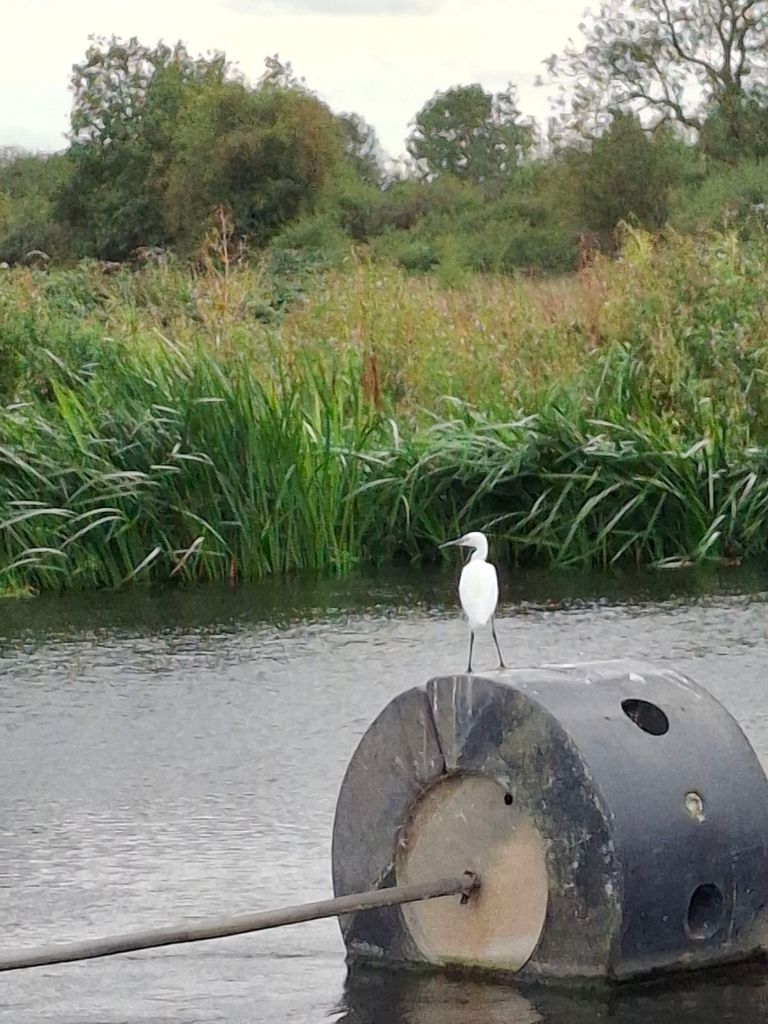
Posing egret
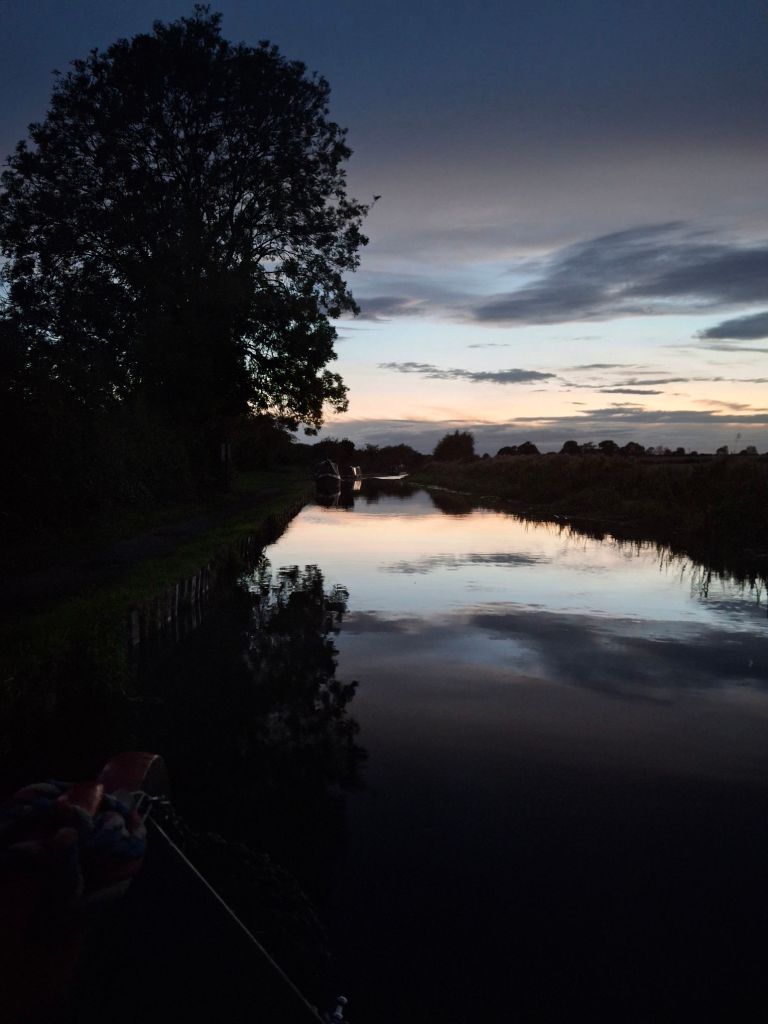
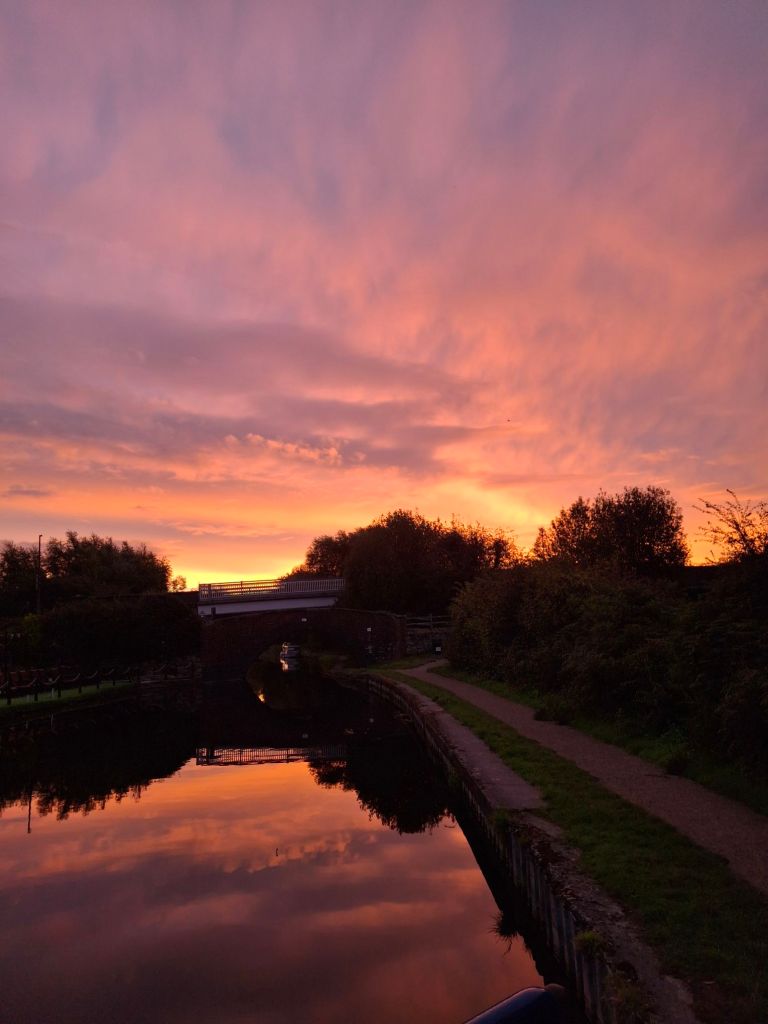
En route we have paused to admire the sunsets, crawled out at some unearthly hour to admire the sunrise (so we could get to volunteering commitments on time), and tried to appreciate what we have rather than aspiring for what we don’t or can’t have.
Are we merely playing Eleanor Porter’s Glad Game? If it makes our lives feel richer and more contented, we shall play on! Maybe if more of us played the Glad Game with the positives we have politicians would not be investing time and public money planning campaigns to make us all feel more upbeat about our lives. Life is too short to worry about things we can’t influence, but we should invest time and effort in those things we can’t influence change or those we enjoy. Time is very precious and we must remember that next time a moan rises to our lips.
Oscar Wilde said, “A cynic is a man who knows the price of everything and the value of nothing.” This week has brought us up short to recognise the value of the life we are fortunate to live, and the value of being able to live it without feeling ashamed of doing so.
Having waved a fond farewell to wonderful friends from France with whom we’ve had an awesome week, I was just debating what to have for lunch (and as is my wont when I’ve been talking French all the time, debating with myself en français) when the Skipper announced we were on the move – NOW.
Off again!
Slightly bemused by the urgency, I reached for my windlass and headed for the nearby river lock. It appeared that the forecast was predicting that strange wet stuff would fall from the sky in positive much-needed torrents, so we could do with leaving a river that is renowned for flooding rapidly before we found we couldn’t leave.
Chugging along we realised there was a lock out ahead, but considered it was at the end of another canalised section so if we had to wait, there might not be such a bad place to be. We continued on, lunching on the move, until we arrived at the closed lock and found a cabal of Canal and River Trust staff debating solutions to solve to a non-equalising lock. Locks need to equalise, to balance if you will, for the boat in them to be released and to continue with its journey. A lock that won’t equalise just keeps filling or emptying (depending on the issue) and so it is impossible to open the gates to let the boat out.
Going down by chance and seeing repairs en route
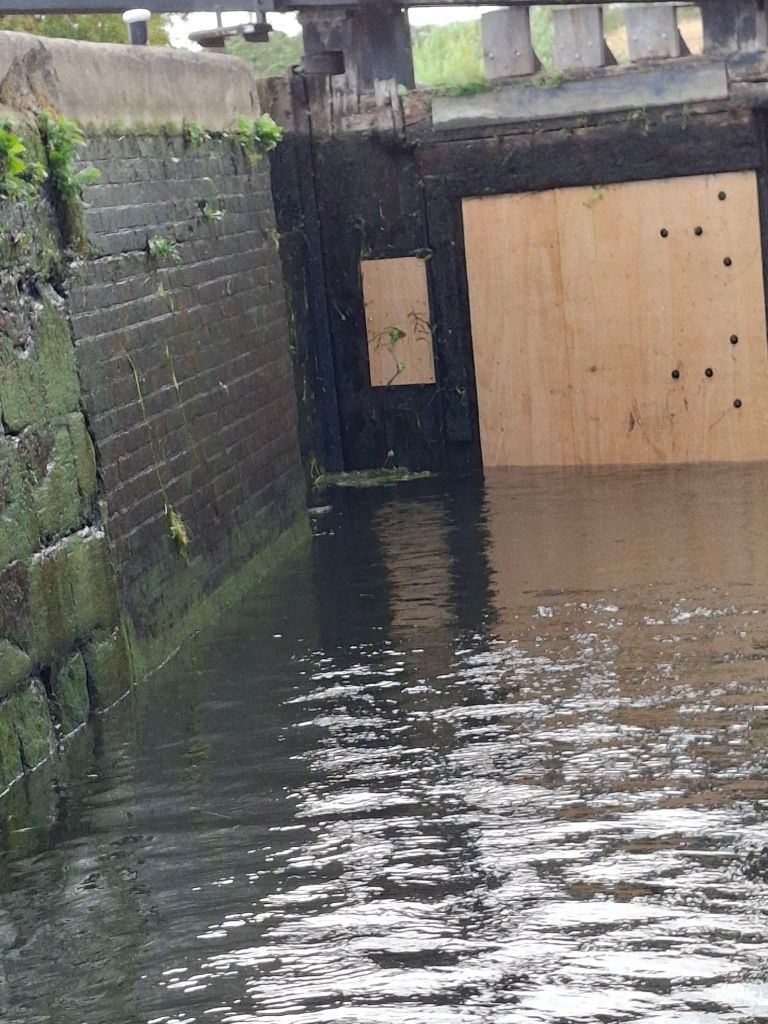
They had already fitted panels of wood across where they considered the leakage was happening without a resolution, and it was taking 5 strong men to open the gates. Emptying the lock entirely to check the cill to see if a major leak was occurring there seemed to be the next step. That is a step that could take some considerable time.
As luck had it, they needed to empty the lock and we wanted to travel down so we arrived at an opportune moment. We were allowed to travel down with the emptying water, and continues on our way with barely a hesitation. All those lovely strong men on the lock meant I could put my feet up too instead of lockwheeling!
Now through where we had expected an obstacle, we kept going…and going…and made it off one river onto the next, and thought, well why stop now? Our evening meal was actually eaten on the canal network with 16 miles and 12 locks behind us.
By the next morning we realised what a good thing it was we had moved as the rain lashed the boat. Thunderstorms with spectacular lightning streaked across the sky the next day with yet more rain, and we were even more grateful to have left a river where a quick look at the Environment Agency data showed rising levels. Normally it will keep rising there for several days after initial downpours too, reinforcing our gratitude at having moved when we did.
It is strange to think that in the time it took us in our narrowboat to negotiate two rivers and get onto a canal, our French family travelled across countries and made it home using a tunnel and high speed trains! C’est la vie!
When a break came with a day dawning bright and clear, we set off once more, aiming to do a short 5 miles, 4 lock hop with the Skipper in the car lockwheeling ahead, with me on the tiller in the excellent company of Boatdog. The rain kindly held off until we completed our next move and moored up.
We navigated what is familiar territory for us on the Trent and Mersey canal, past the Clock Warehouse at Shardlow, up through Shardlow Lock which is definitely looking leaky and unloved these days, moving gently past long strings of moored boats to pass under Hickens Bridge, whoever Hicken was, which carries the noisy, busy A50 on its high speed way from Derby to Stoke.
Under the calmer more sedate and more rural Acrelane bridge, avoiding fishermen out with the early worms hoping to make a catch, and into Aston Lock set now amid huge arable fields that once would have been a patchwork of smaller fields and hedges worked originally by horses and then by tractors a fraction of the size of today’s monsters. Along this stretch it is obvious that the old weeping willows are suffering from the drought. One has split and a huge section is overhanging the water while sawdust and a sizeable stump marks the demise of another that looks like it blocked navigation for a while.
On through the brick arch of Cow Pasture bridge alongside the impressive 4-storey red brick Weston Grange, a home built on the site of an ancient medieval grange that once belonged to Chester Abbey. Two buzzards sit majestically on wooden fence posts at the edge of the garden, taking flight together as we chug past. I love not only the wildlife but the evocative names of the bridges and locks we pass.
Next it’s under the dripping metal railway bridge, splattering the back of my neck, before arriving in front of Weston Lock and the bridge immediately before it. Up again, only 10 feet this time arriving alongside the old lock house now sold off as a private home but once where the lock keeper/lengthsman responsible for a section of the canal would have lived.
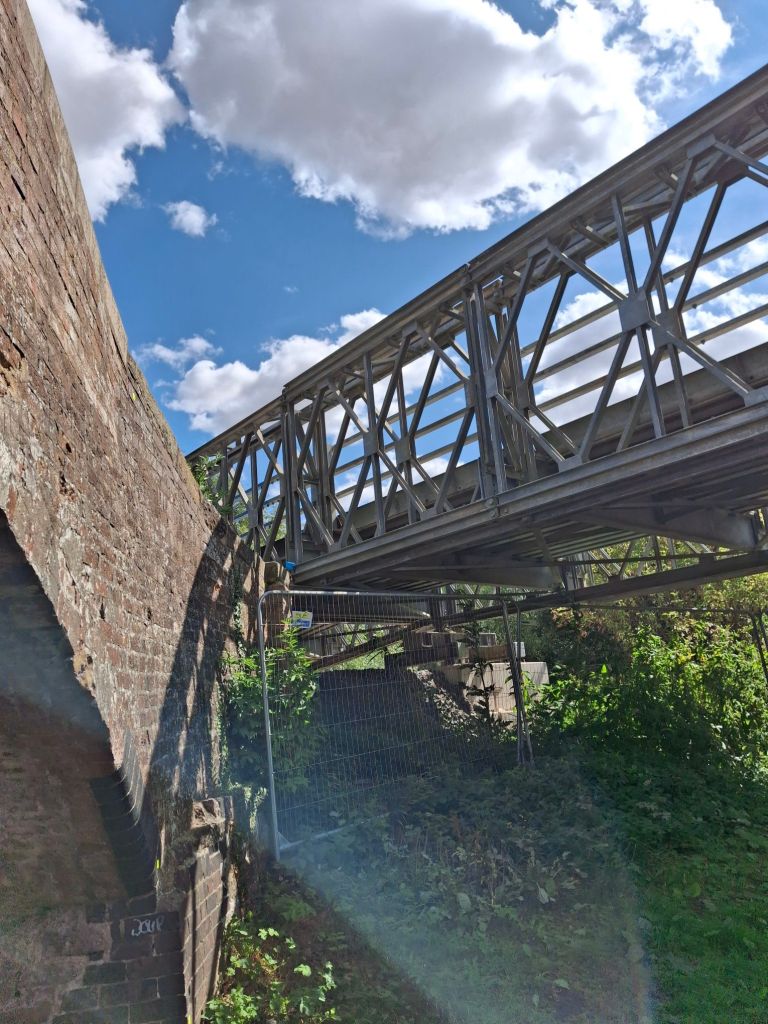
On then to Fine George’s Bridge looking a bit less than fine with a metal monstrosity of a bridge dwarfing it built by Balfour Beatty as part of infrastructure for a massive power update. Overhead cables and wooden poles are being removed and cables buried underground.
Fine George’s Bridge dwarfed by its new, meccano-style companion
After this the light and atmosphere changes as we glide into a steep sided wooded section alongside the Ukranian Youth Association summer camp, and then to a section where it warns to keep right because straying over gets you stuck on a shallow shelf. It may be that I keep more firmly right than the Skipper would do, and I watch the overhanging brambles brushing the herbs and flowers that have suddenly cheered up on the roof after the downpours. It is amazing just how resilient they are. They have endured being baked on a metal roof and seared from above simultaneously, and then they get a downpour or two and begin instantly perking up, miraculously flowering just when I thought they were done. I wonder how much rain trees will need to feel the same rejuvenation…
When will we have enough?
Due to water levels on the canals not being anywhere near where they need to be, mooring restrictions on sections where stays of 14 days are normal, have been lifted and we can stay where we are until the end of September when the situation will be reviewed. For us, aiming as we are to get into a Northamptonshire boatyard by mid October to get the boat out of the water for regular maintenance and a survey, we will move on as we can, as levels allow. It’s about another 40 miles and 14 locks until the next known low water lock stoppage (a lock flight that closed on 28 July), and then 53 miles and 27 locks from there to our destination.
We don’t have to worry about flooding now which might trap us where we don’t want to be. We have 2 months to do our trip, water levels permitting. We shall get as far as we can, but our essential rain dances will be continuing to try and help us on our so slow way!