
There’s nothing like the fear of waiting for something that others tell you is downright dangerous and terrifying. That stomach-churning trepidation, night-waking terror, and escalating imagination of all the what-might-go-wrongs.
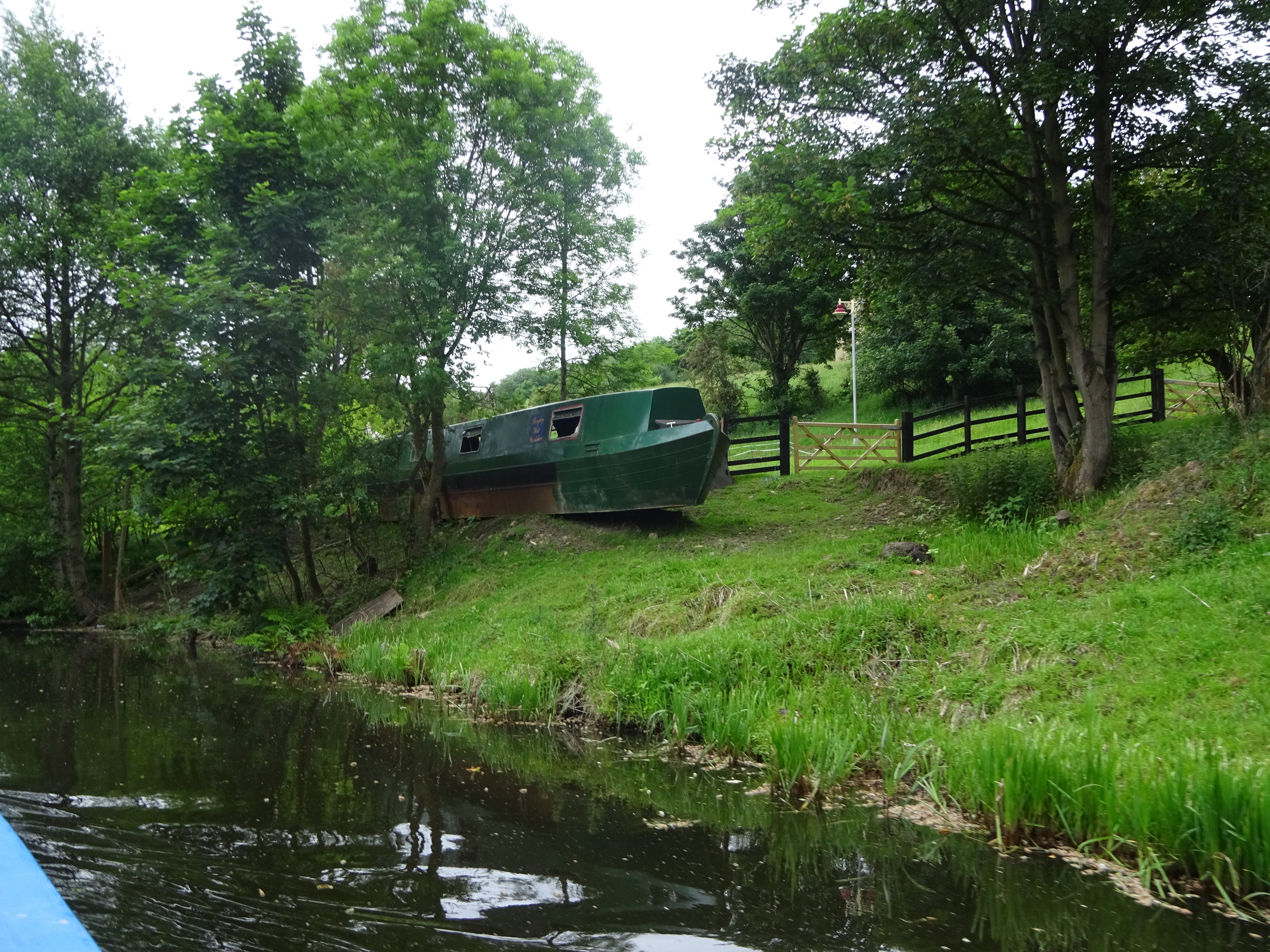
We’ve had it this week. After a peaceful, sun baked 10 days in Skipton we prepared for yet another new experience on the waterways – joining the inland waterways giants of the floating world on their commercial territories. Rules are different, locks are different, there are new guides to be accessed and instructions to be absorbed. There is always the fear of doing something wrong, or ignoring a vital sign.
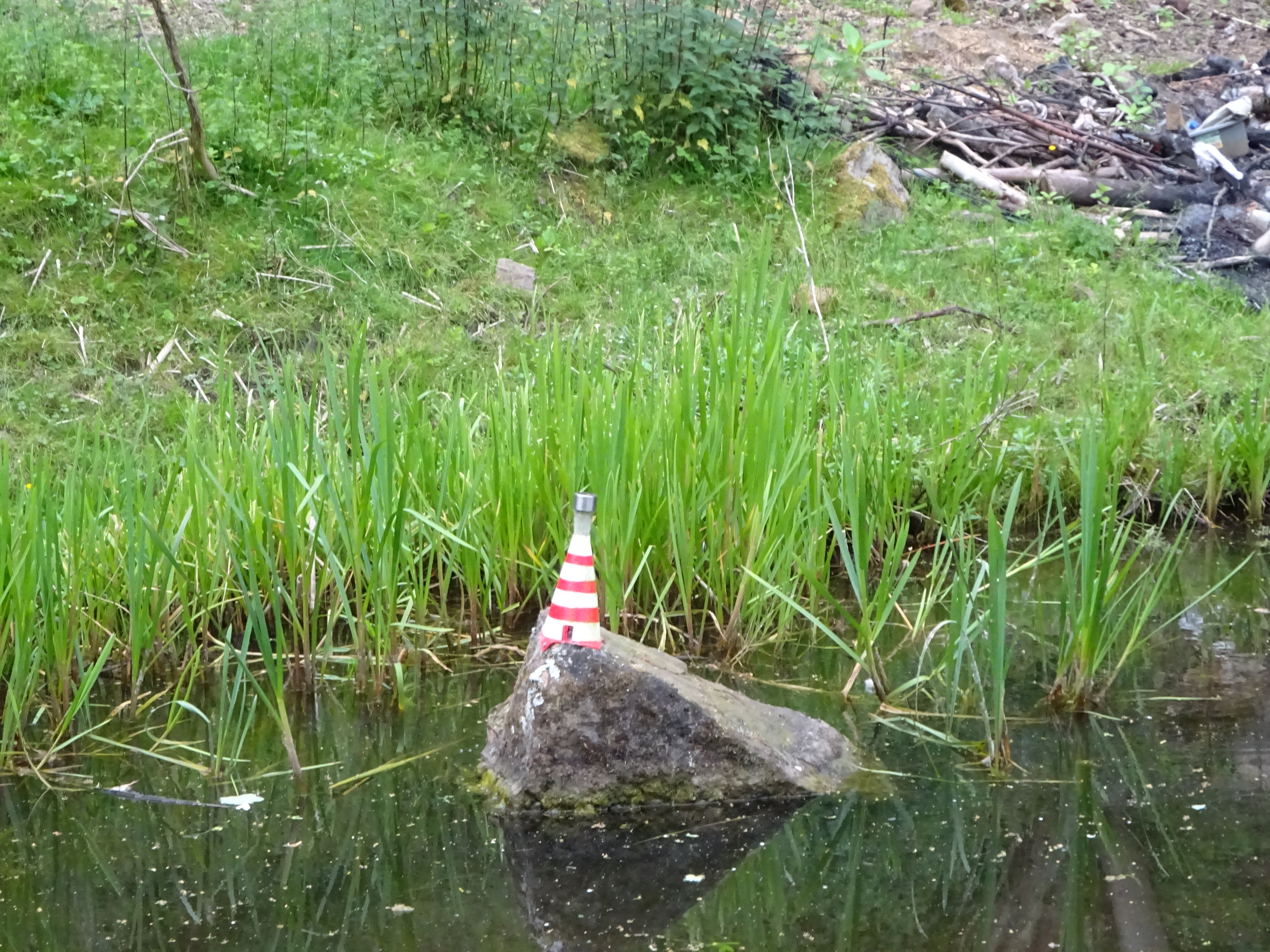
Our first commercial waterway after the Leeds Liverpool Canal is the great Aire & Calder Navigation which we meet at Leeds. A commercial waterway, it is capable of carrying 600-tonne barges shipping mainly gravel and petroleum. Vessels of up to 200ft in length (we’re 50ft). Who knows if we are going to meet dozens of these commercial natives or maybe be all alone on our travels?
The Aire & Calder Navigation is also a river – and rivers demand more skill as they can be subject to strong currents, which need careful managing to prevent your boat being pushed around. Rivers invariably have weirs which need avoiding and steering away from. Locks are mechanical – controlled by traffic lights, primarily for the commercial traffic, sometimes manned by lock keepers, but sometimes we will have to operate them. Single red or single green seem to convey the instructions you might expect but we also need to take heed and understand amber (no lock keeper – moor up to self operate); red and green together (lock available and lock keeper will operate for you) or flashing red (flooding – unsafe to navigate). Hopefully we will get lots of red and green together, no flashing red and very few ambers… we shall see!
There’s also the issue of where to stop. On canals we regularly bash in mooring pins or stakes and tie the boat to these at night at a pleasant spot.
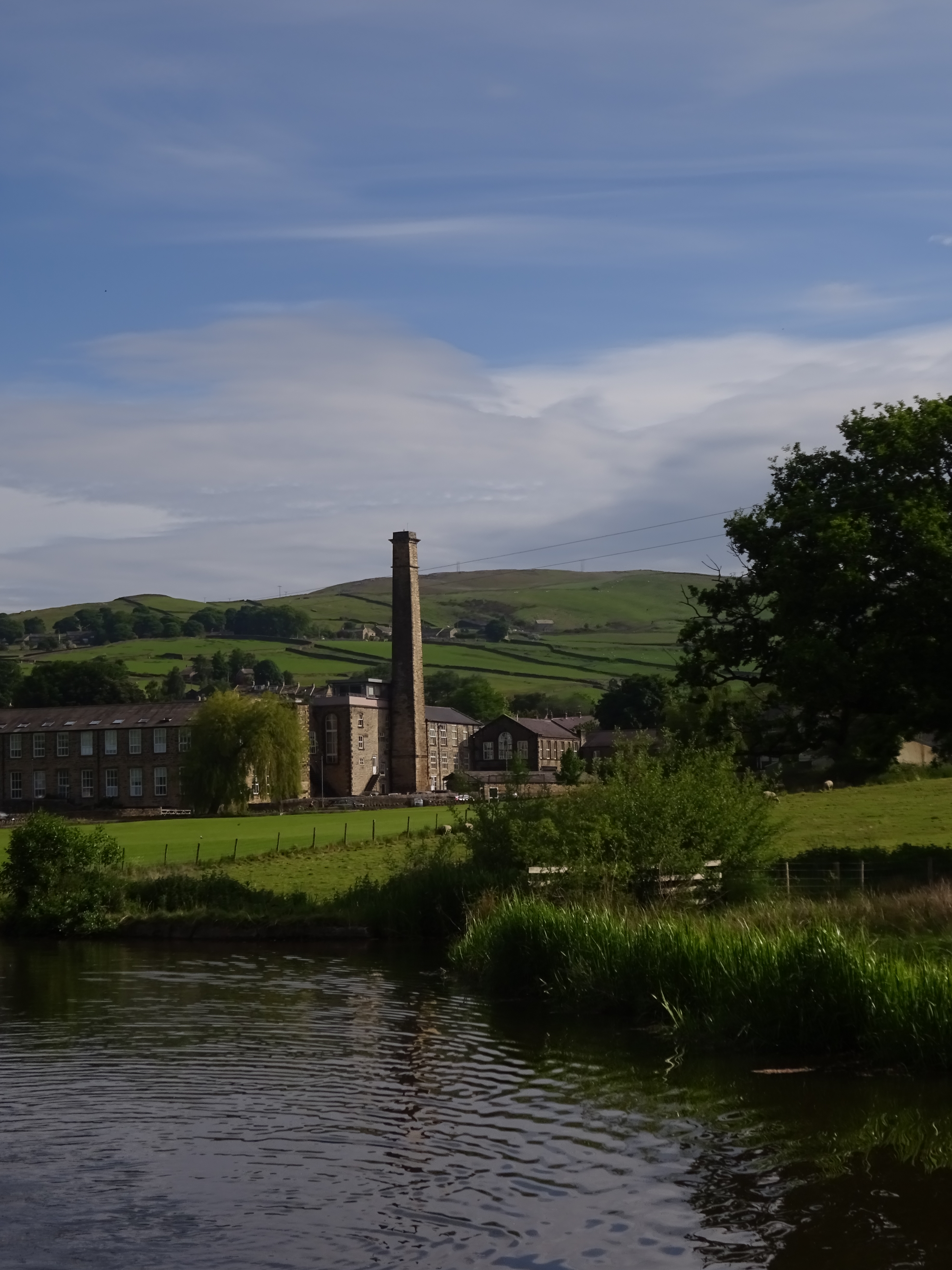
On commercial waterways the huge wash from big craft can make these types of moorings pull loose so fixed bollard or fixed mooring rings are advised. How plentiful they are everyone fails to mention…
The navigation guides seem to be full now of warnings like Boaters must on no account…Boaters should obey…keep a sharp lookout… All we need now are the Beware crocodile and shark signs and we’ll have the set!
There’s a lot to think about, before we even get onto the Aire & Calder. Once there we have 17 miles and 9 locks before we merge onto the next challenge – another navigable waterway, the Calder & Hebble. This also attracts commercial traffic but slightly smaller than the Aire & Calder. It also appears to require new equipment – a Calder & Hebble handspike which seems to be purchasable or can be made from 3×2 timber plus a plane… not something we appear to have in our onboard toolkit! Still where there’s a will, there’s a way, and a wooden spike is something I am sure we can fashion somehow… or is this wishful thinking? [As I write there now are two chunks of 3×2 waiting on the roof to become essential pieces of kit!]
First though, we have to get to, and tackle, the Aire & Calder Navigation. We have so much we want to see and do before we face our potential nemesis that we may as well enjoy the journey to it. We started for the first time on this trip with help on board – friends to support with 4 of Yorkshire’s idiosyncratic swing bridges. Swinging, like many things in Yorkshire is a practical activity and essential if you are going to travel on the Leeds Liverpool Canal. These sometimes manual, sometimes electronic, sometimes a combination of both bridges, make a change from locks. They are vital connections to small farms, country lanes, major roads and even memorials. Each needs unlocking with either a handcuff or BWB key and then operating, and relocking. Some swing happily, others grumble and grind or just won’t budge without added assistance from walkers, cyclists or other boaters!
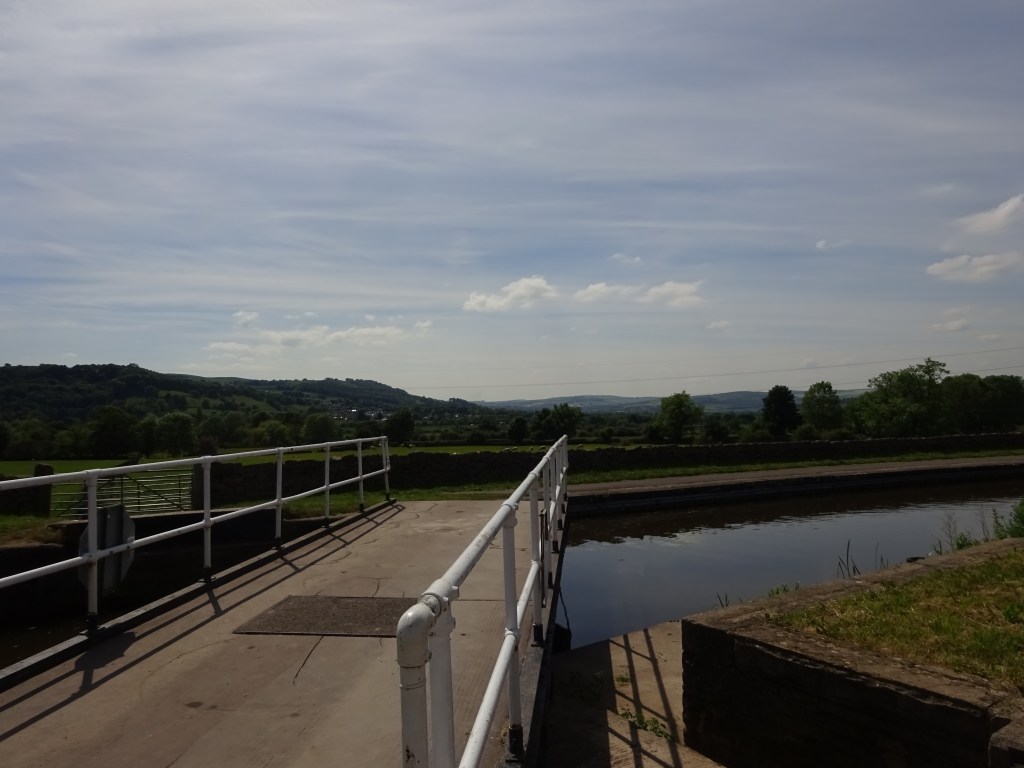
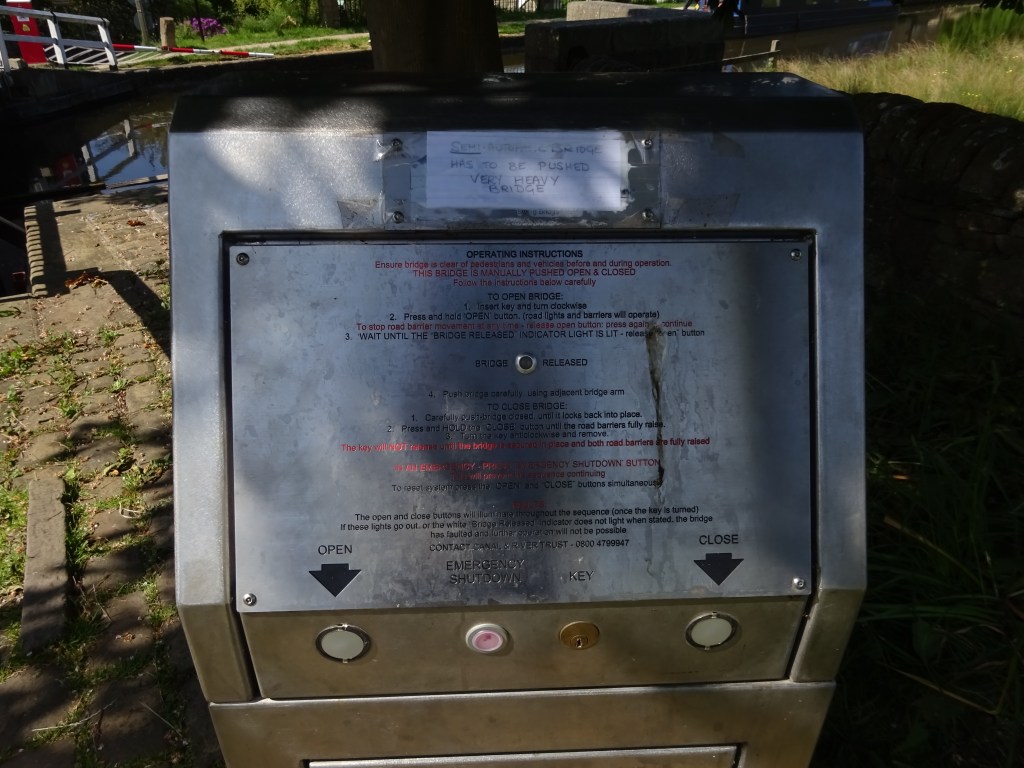
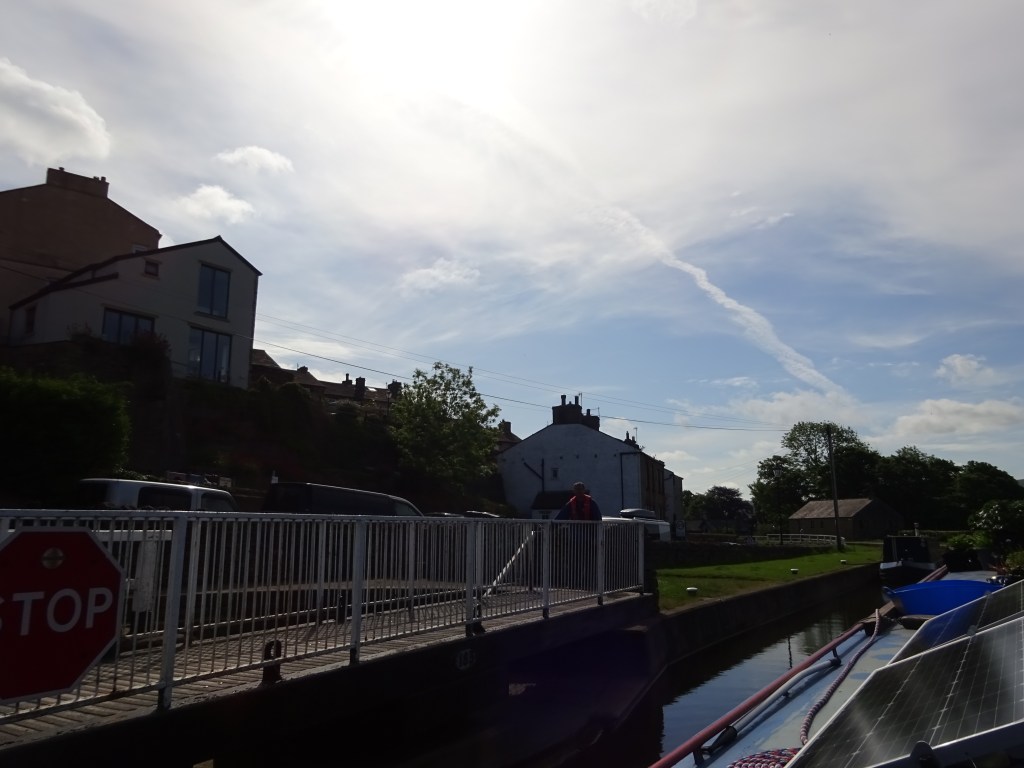
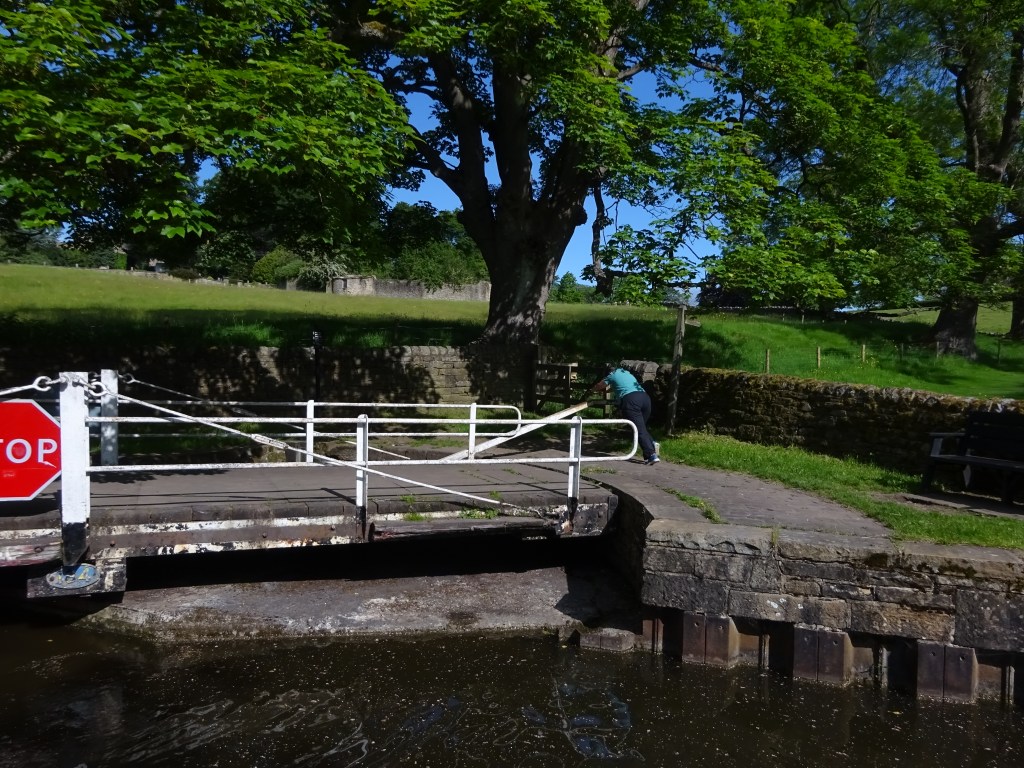
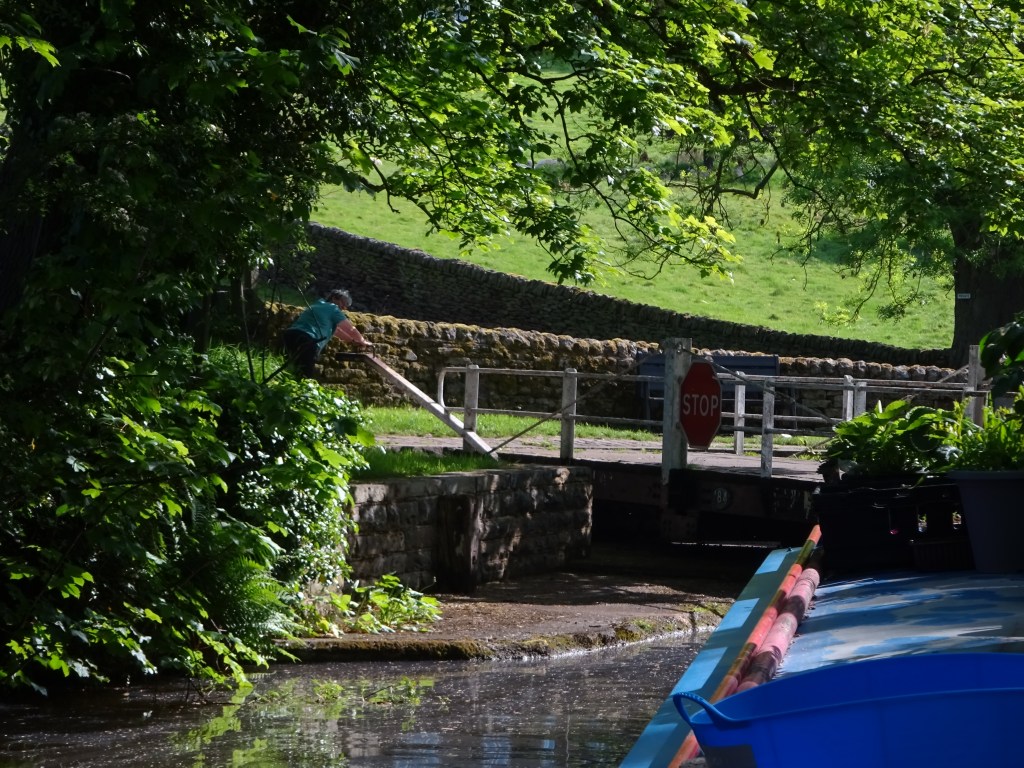
Padlocks and bridge locks are the only type of lock you encounter on the 17 miles between Gargrave and Bingley. Through wooded glades and far-reaching views, we cruised east towards the former mill and dye town of Keighley and where the canal passes its outskirts, found East Riddlesden Hall, the 17th century manor house of a cloth merchant, now offering welcome riverside walks and a delightful tea room under the auspices of the National Trust. From here to Foulridge which we distantly remembered on the Yorkshire/Lancashire border was regarded as a day’s work for a boat horse in the days of non-stop fly boats which used to carry “perishable goods and passengers” – presumably both went off after a short time on board!
Each of the bridges takes us nearer to our nemesis – the commercial waterway looming ahead of us. How then to tackle the rising fear of the unknown and the resulting nerves, as we might for a job interview, returning to work in the office, an exam or test, or a visit to the dentist…can we use the same strategies?
Research – reading and personal experiences. Sometimes knowing more about what you are going to face can make it better, but equally it can sometimes make it worse as people have a habit of sharing horror stories. Good news or no news rarely makes the headlines as Galtung and Ruge recognised in 1965. In googling “issues on the commercial inland waterways” it was comforting to find nothing about collisions, narrowboats having issues, or indeed discover anything news or noteworthy about the commercial navigation.
Hearing the experience of others too is sometimes helpful as long as they don’t have a tendency to embellishment… fortunately those we met and chatted to regarded the commercial navigation as an unsung delight of the waterways – not a perspective we had expected and one which perhaps isn’t newsworthy. Don’t over prepare and alarm yourself in the process!
Perhaps because we were so focused on the alarming trial ahead of commercial navigation we were in danger of giving the here-and-now less attention this week. It made me realise that by failing to live in the present but overly in the future, we really can miss out.
Yorkshire’s ubiquitous swing bridges brought most of the early week excitement. Raising one of the few electronically controlled ones a car decided to explore the possibility of getting through the barrier before it closed… got through the first onto the bridge…saw the barrier ahead closing and promptly reversed into the first barrier. I then spent hours with police and Canal & River Trust on the phone. Four hours waiting engineers and the queues built up on both sides of the bridge.
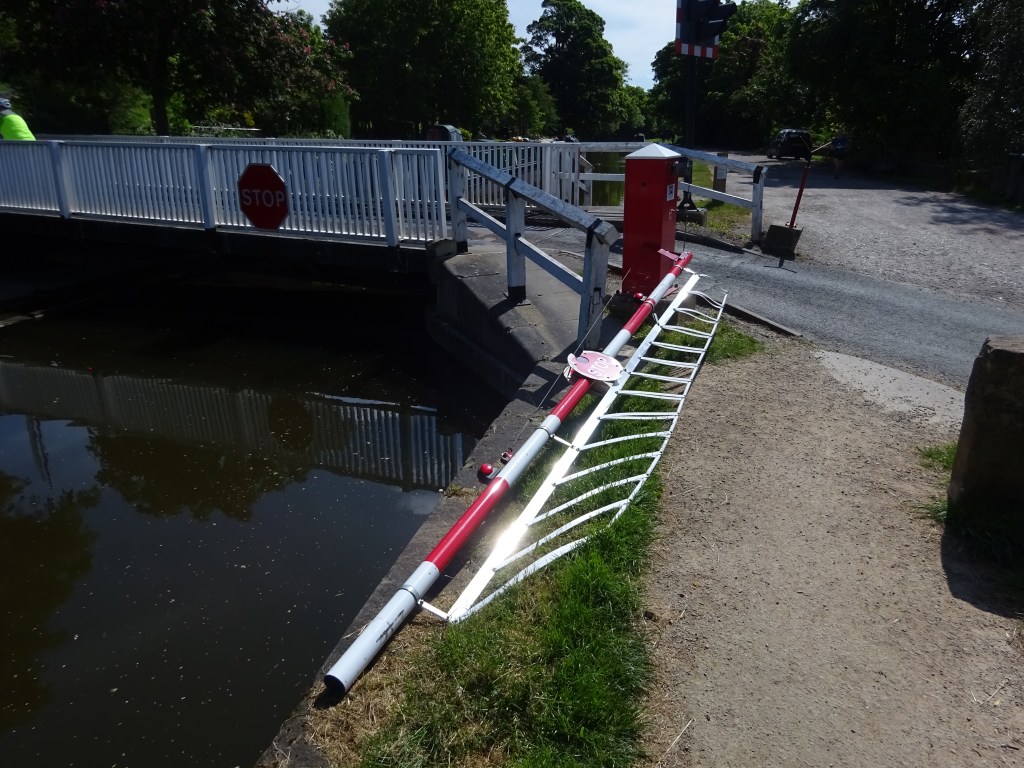
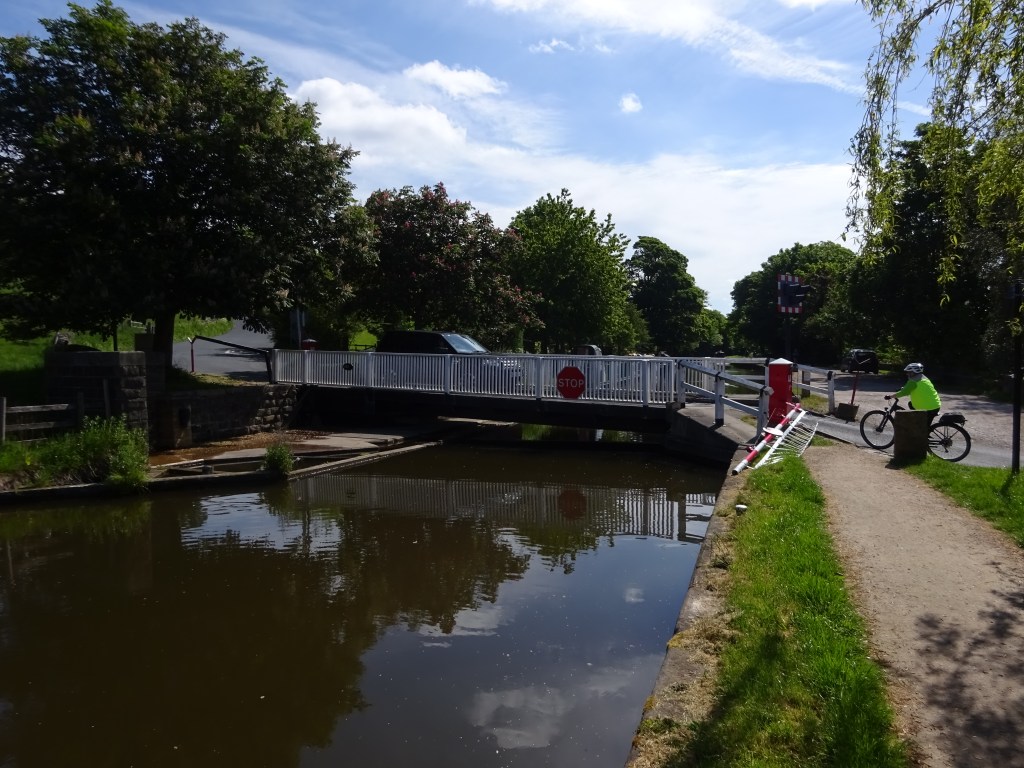
Those four hours were unexpectedly delightful – a sunny opportunity to meet Judy and Bill York and enjoy their true Yorkshire hospitality in their garden mooring. We also developed new boat aspirations after a tour of their beautiful Swallow’s Nest! I could have happily listened to their boating stories for many more hours, but the minute the engineers arrived they got us all moving rapidly before they replaced the barrier.
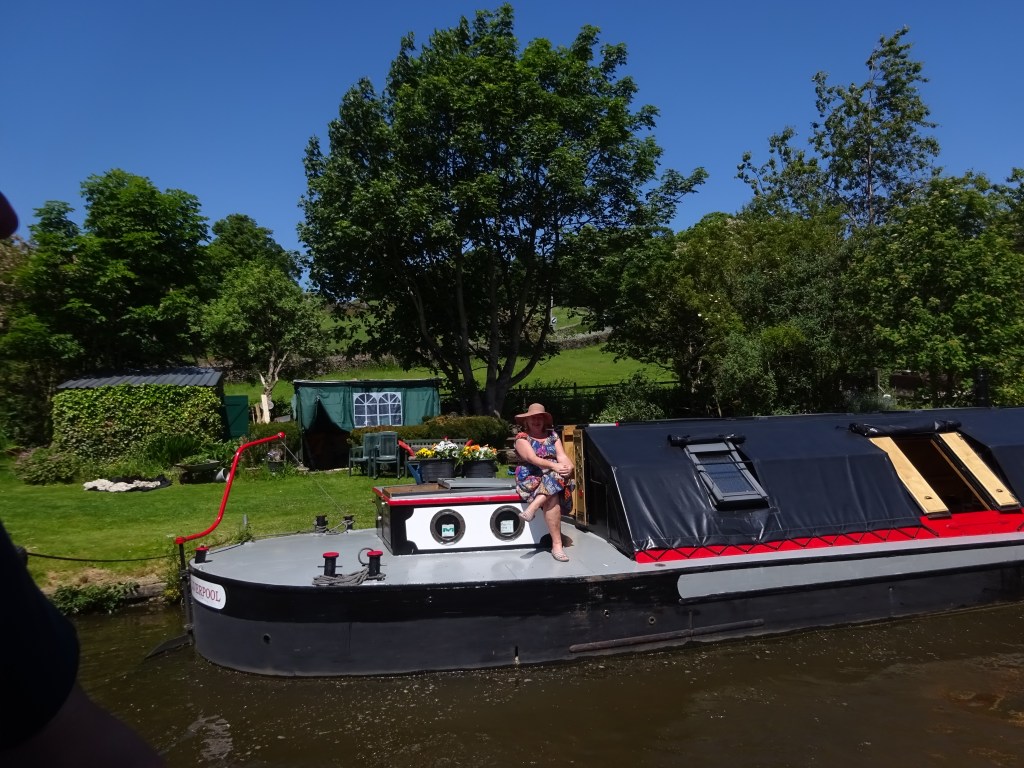
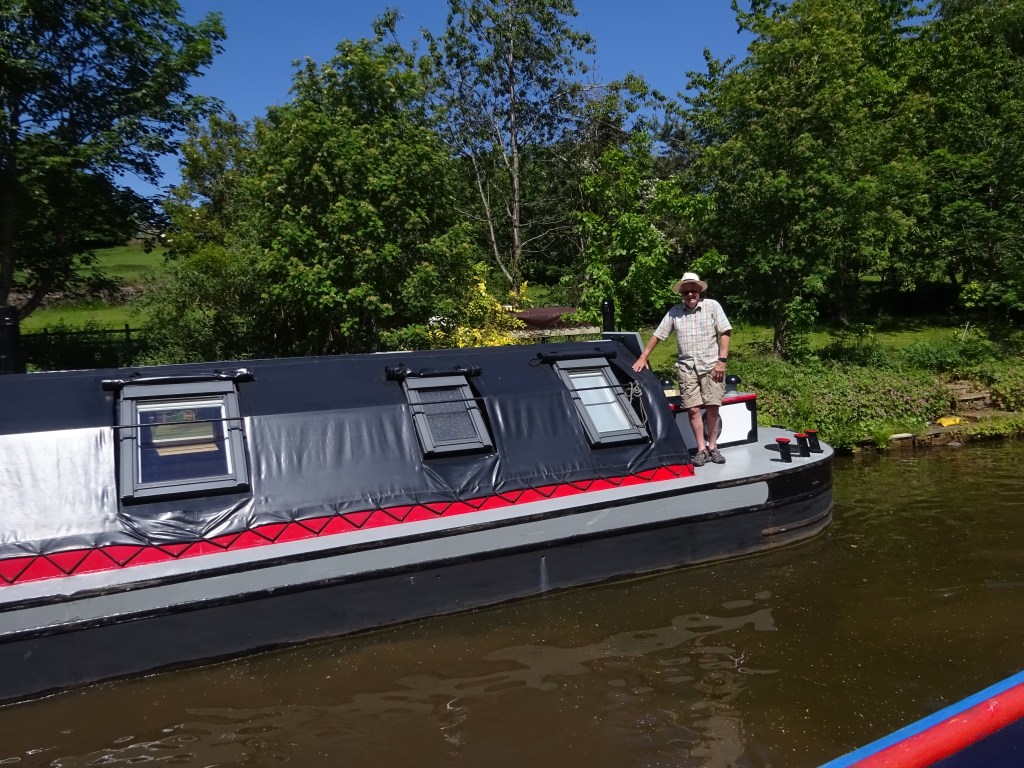

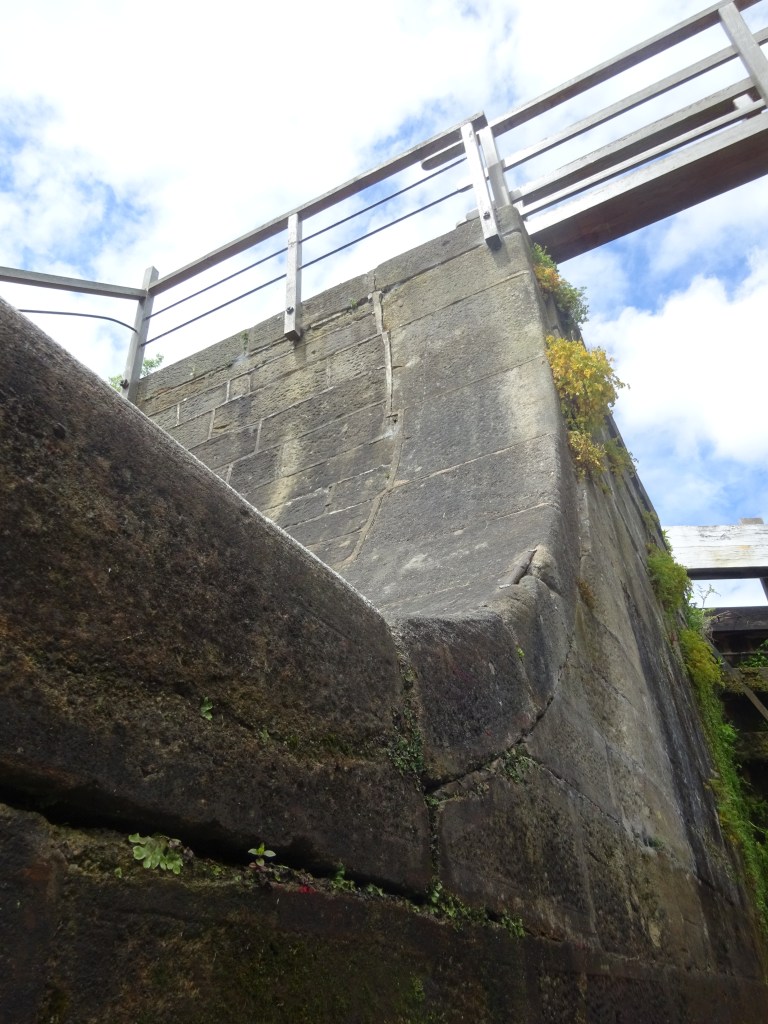
The hire boats we collected in the queue then stayed with us and three of us leapfrogged our way through a batch of swing bridges into Riddlesden, supporting each other en route. One boat stayed with us the next day and assisted by lockies Miles and John, we made it down the historic, architectural, engineering Wonder of the Waterways – the Bingley 5 and Bingley 3 staircase flights overseen by that wonder of thermal warmth, the Damart factory!
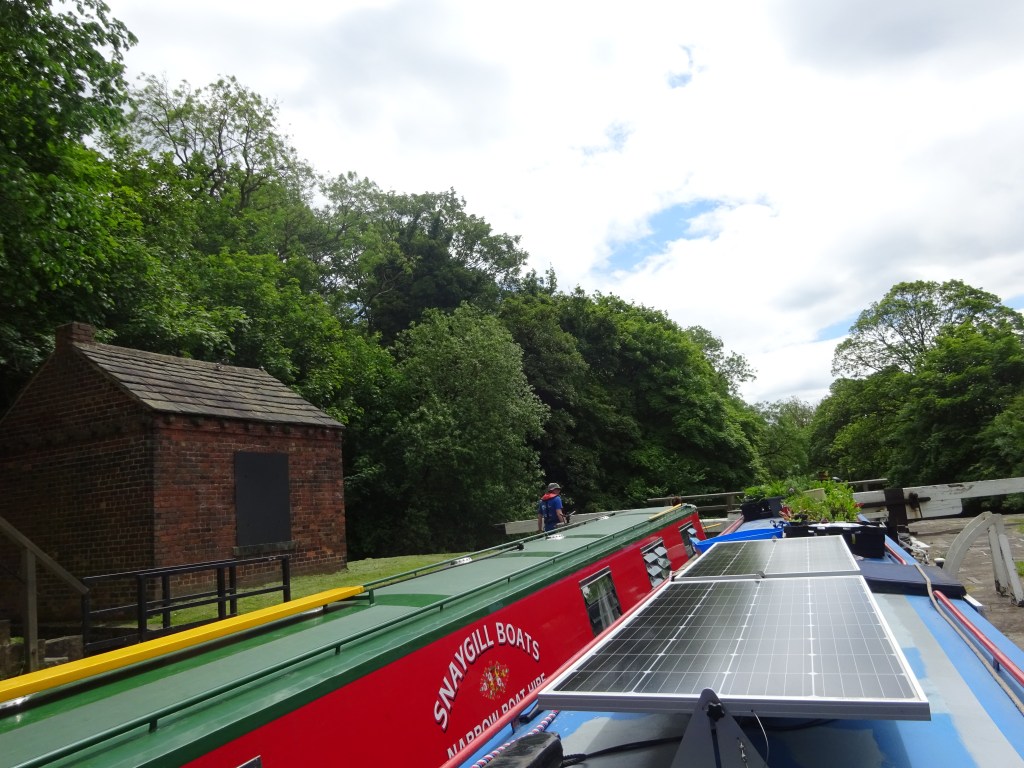
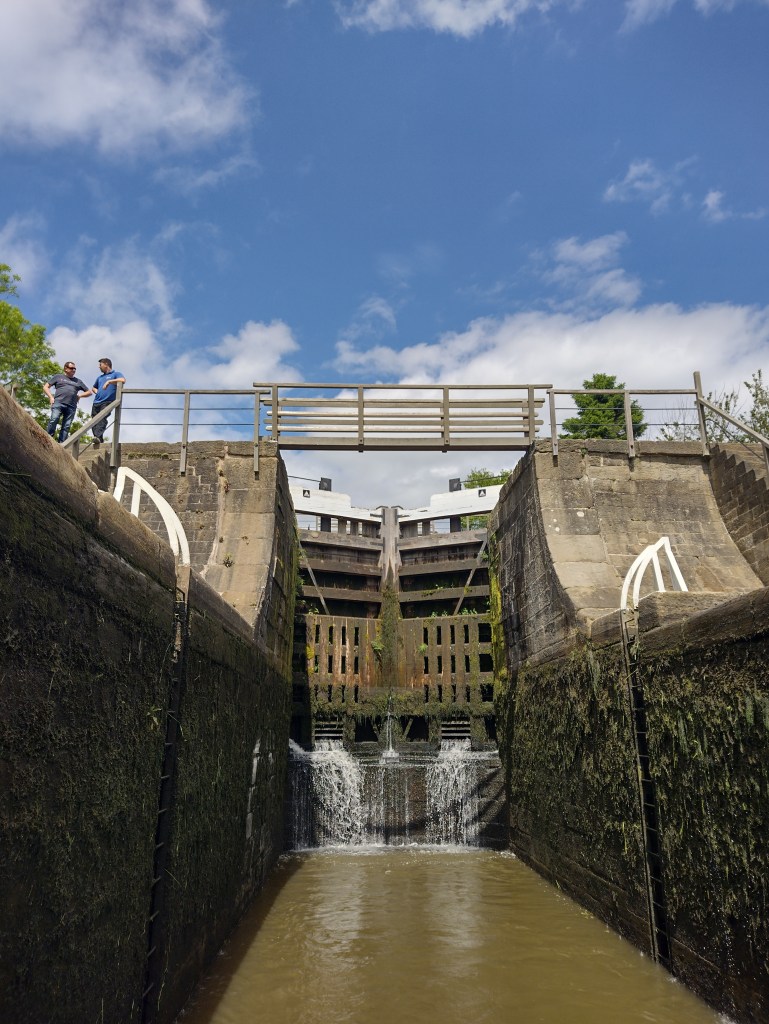
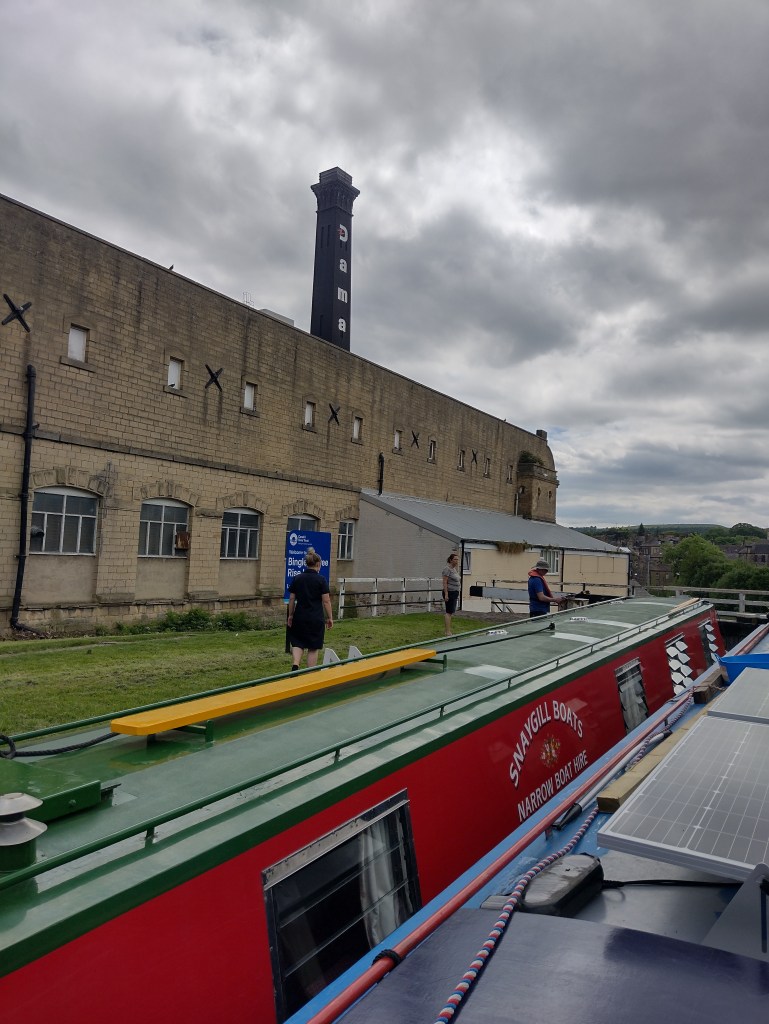
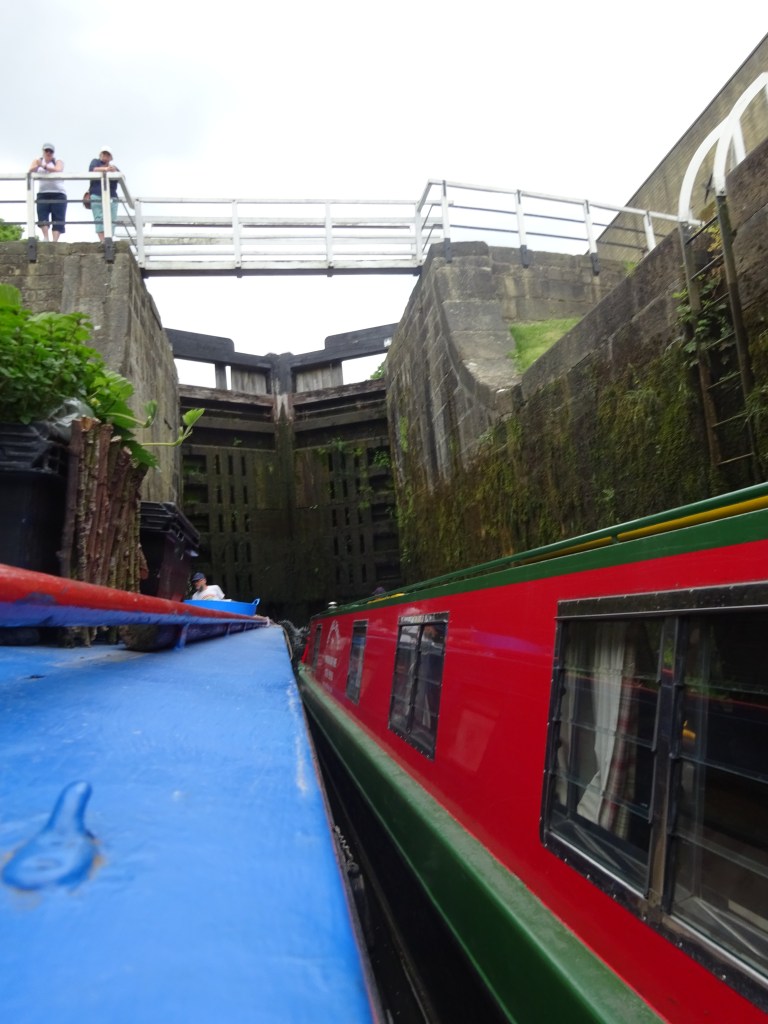
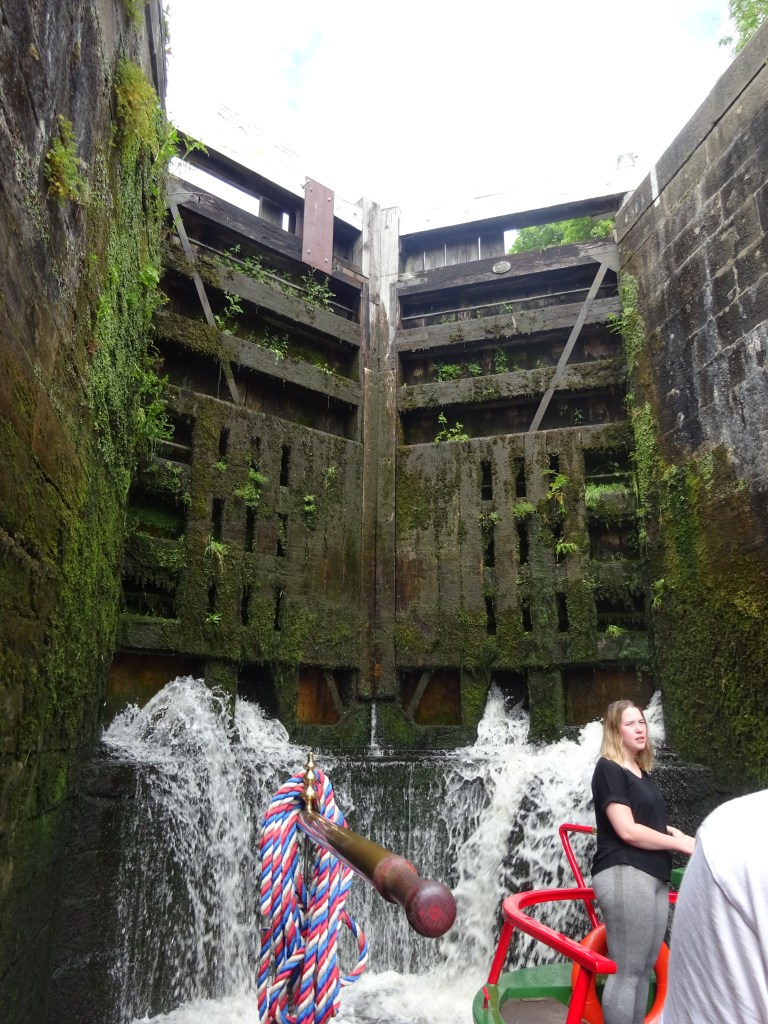
Bingley 5 Rise has lots of quirks including box clough ground paddles and a ratchet mechanism on “scissor” gate paddles. Completed in 1774 and is still in daily use now – it includes two of the largest gates on the whole Leeds Liverpool Canal so I am reliably informed.
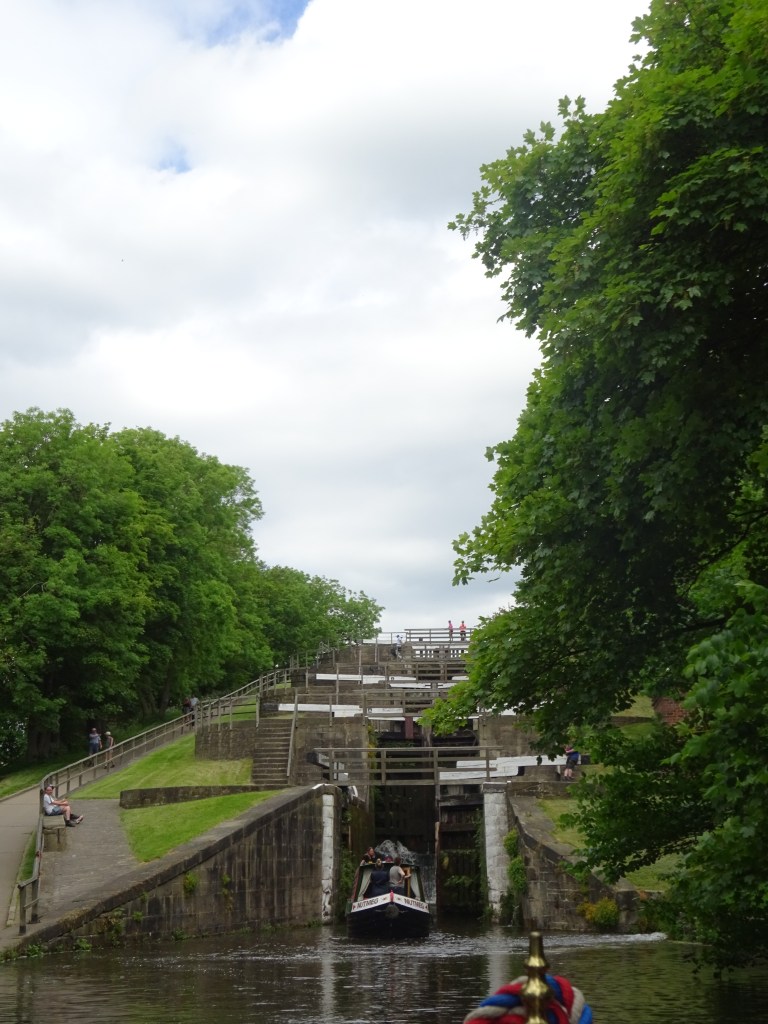
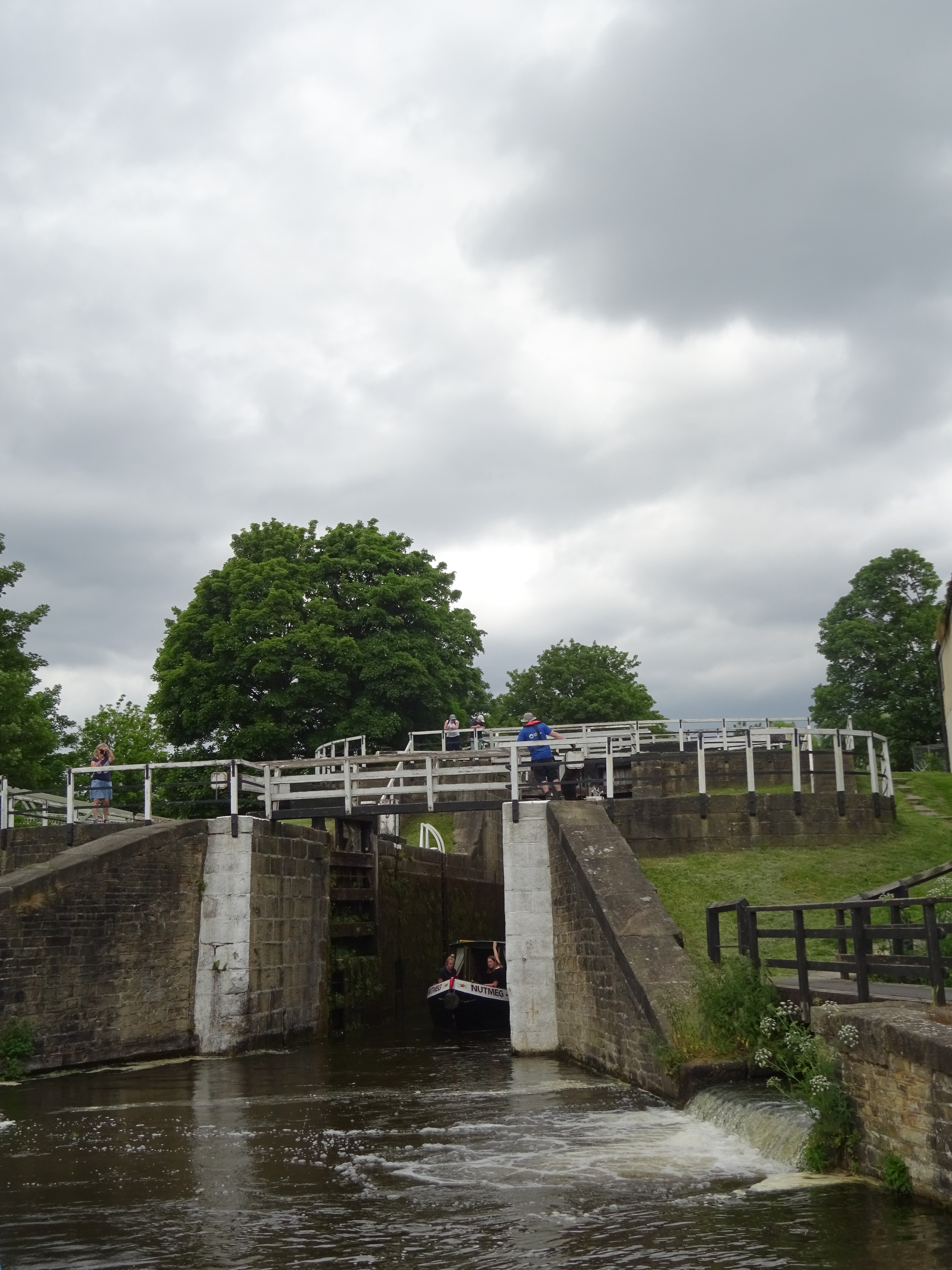
Personally I don’t think they are as impressive as the Foxton staircase in Leicestershire, but they are impressive feats of engineering nonetheless.

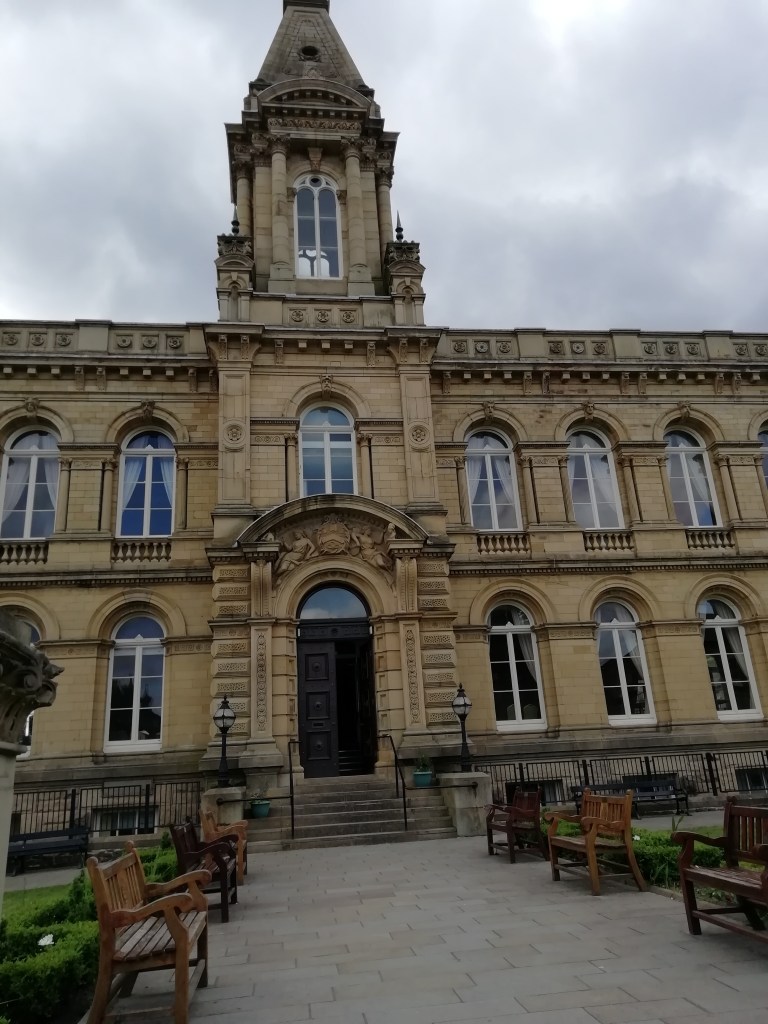
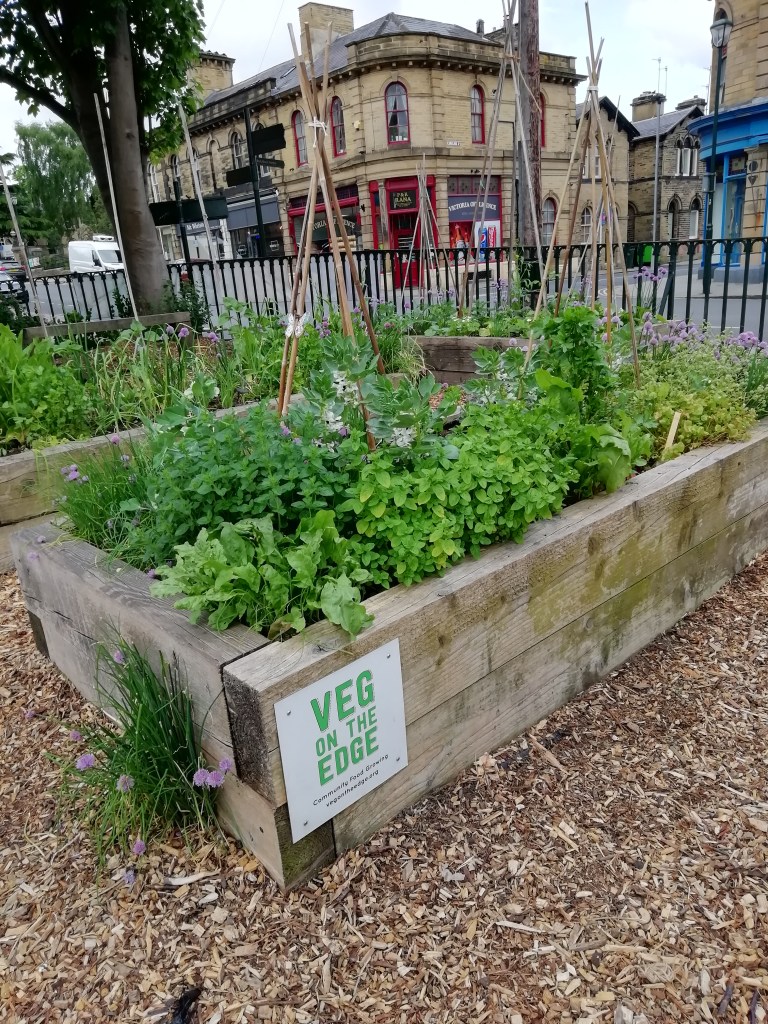
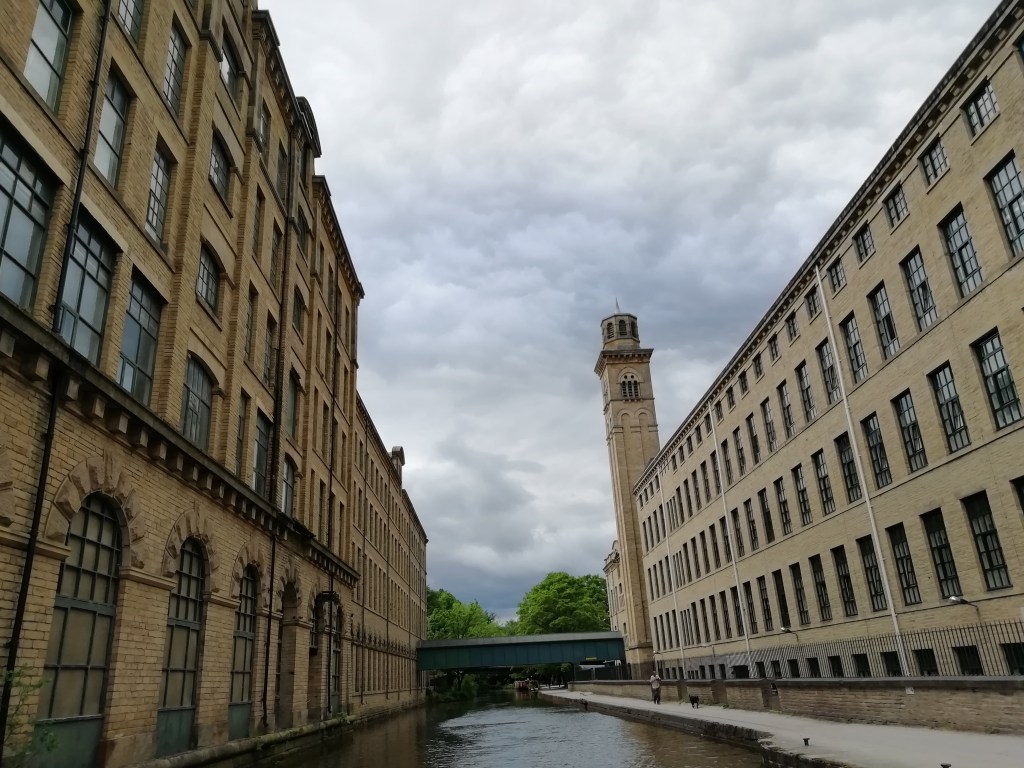
We edged closer to terror via a cultural interlude at Saltaire, a UNESCO World Heritage Site, and the Utopian realisation of Titus Salt. He wanted to create a place fit for his workers to keep his workers happy and healthy. In the process Saltaire was born with its mills and its housing, public parks, sports grounds, schools, hospital, library and recreation areas. It remains a remarkable place today, a cultural and visionary hub.

This included an exhibition by Simon Palmer. His watercolours made me smile, nod, and yearn to observe like him. Through his delightful two women of integrity he also introduced me to the much-needed Marie Collins Foundation which supports victims of online abuse.
On then to the long awaited descent into Leeds and what awaited us beyond…
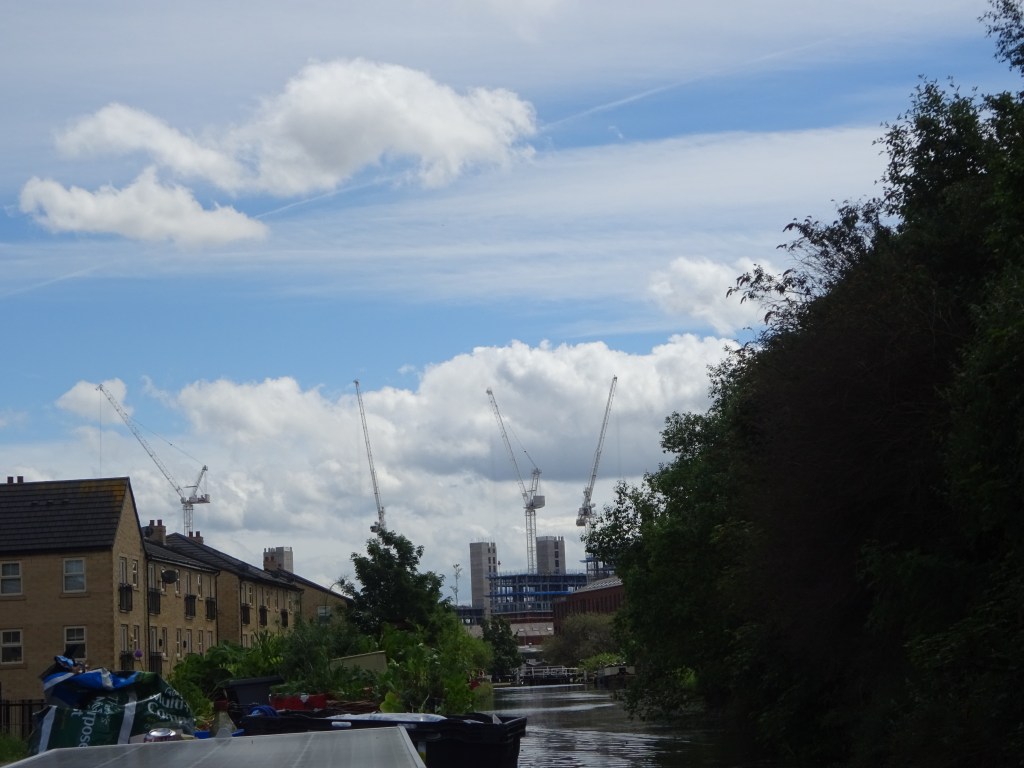
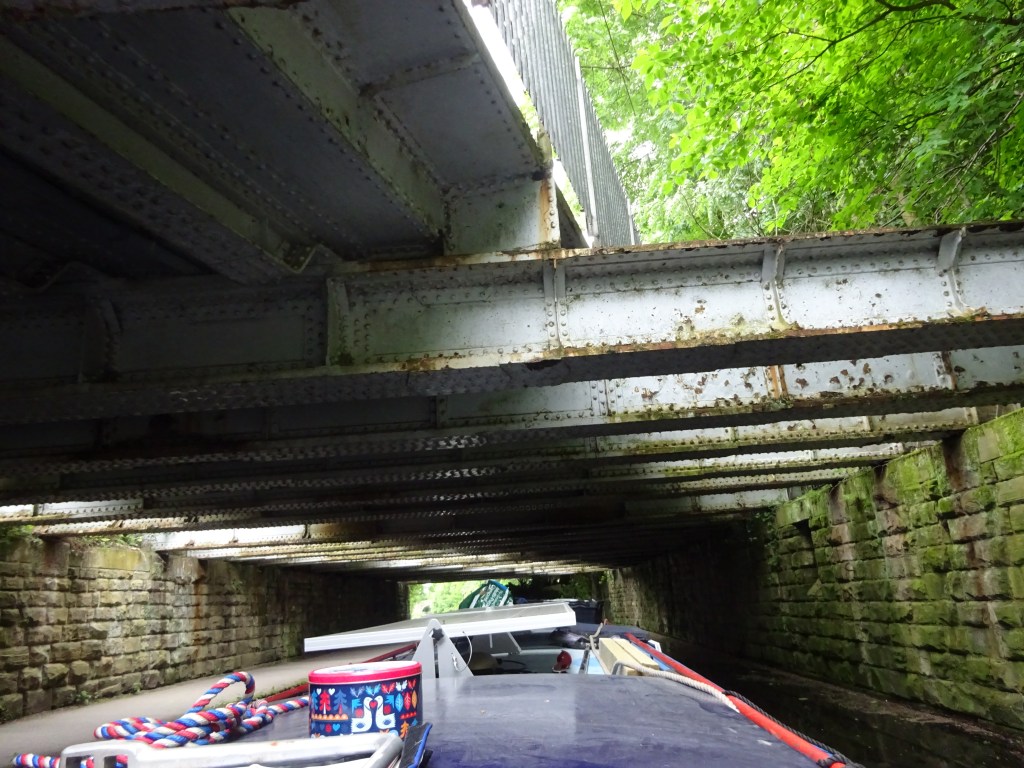
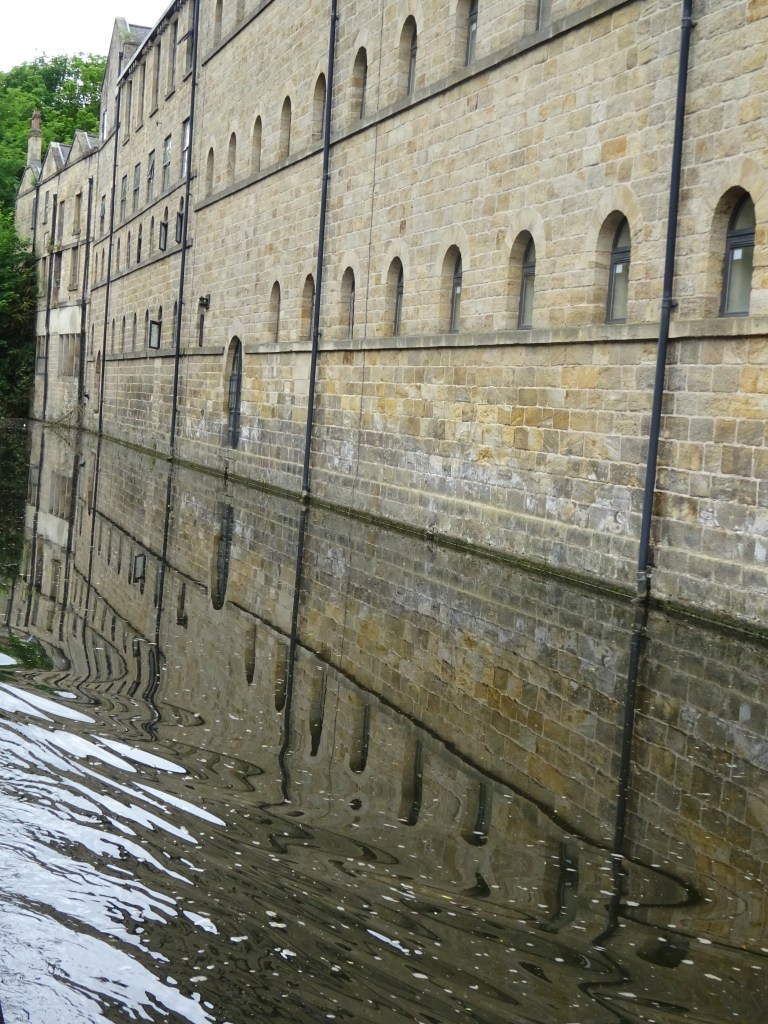

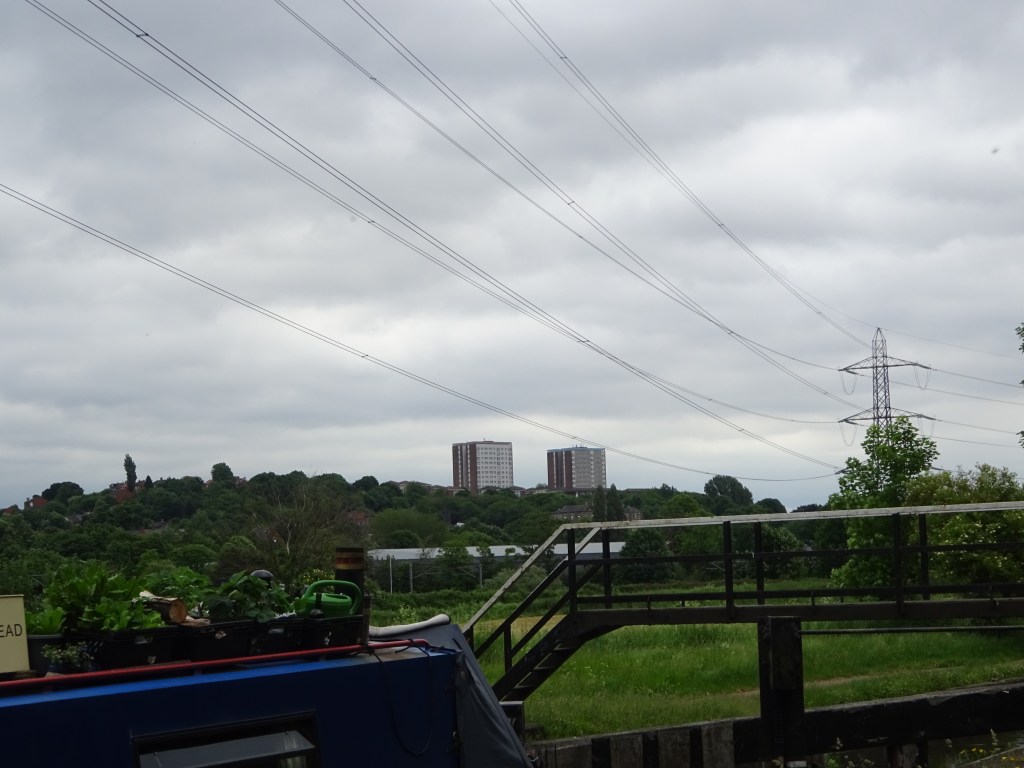
As we came down the previous staircase locks into Leeds we encountered Dave and Kim on Betty D. We made it through the locks together, and once they moored up for a weekend on the town, they kindly helped us through River Lock so we scarcely had time to worry as the moment arrived.

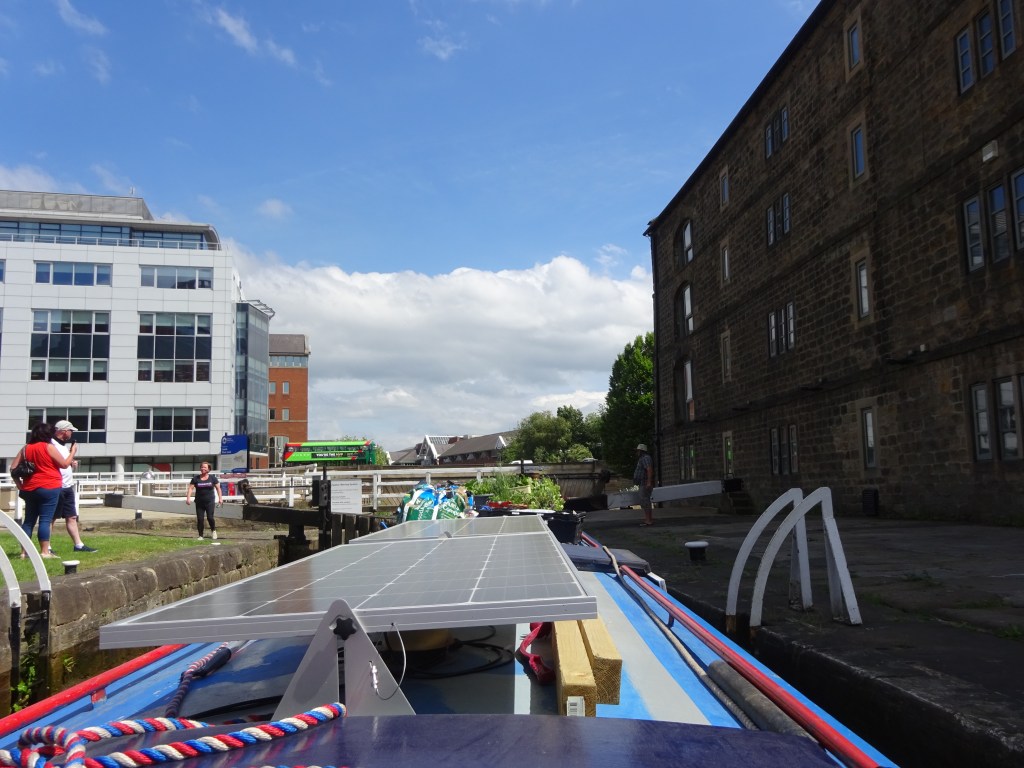
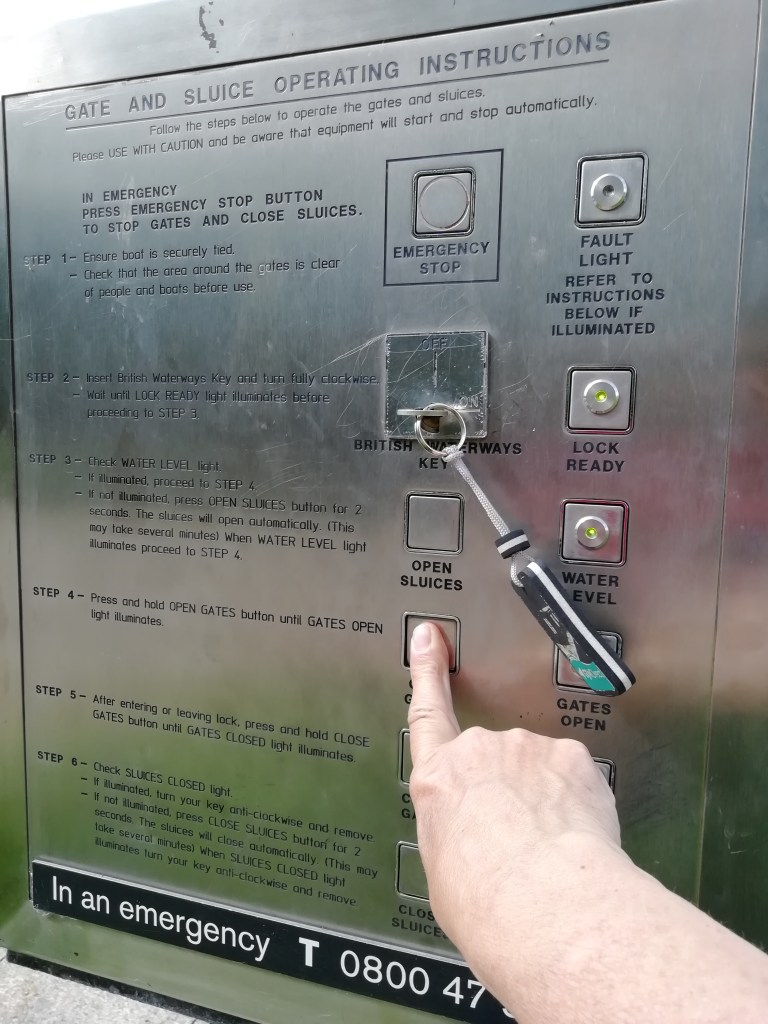
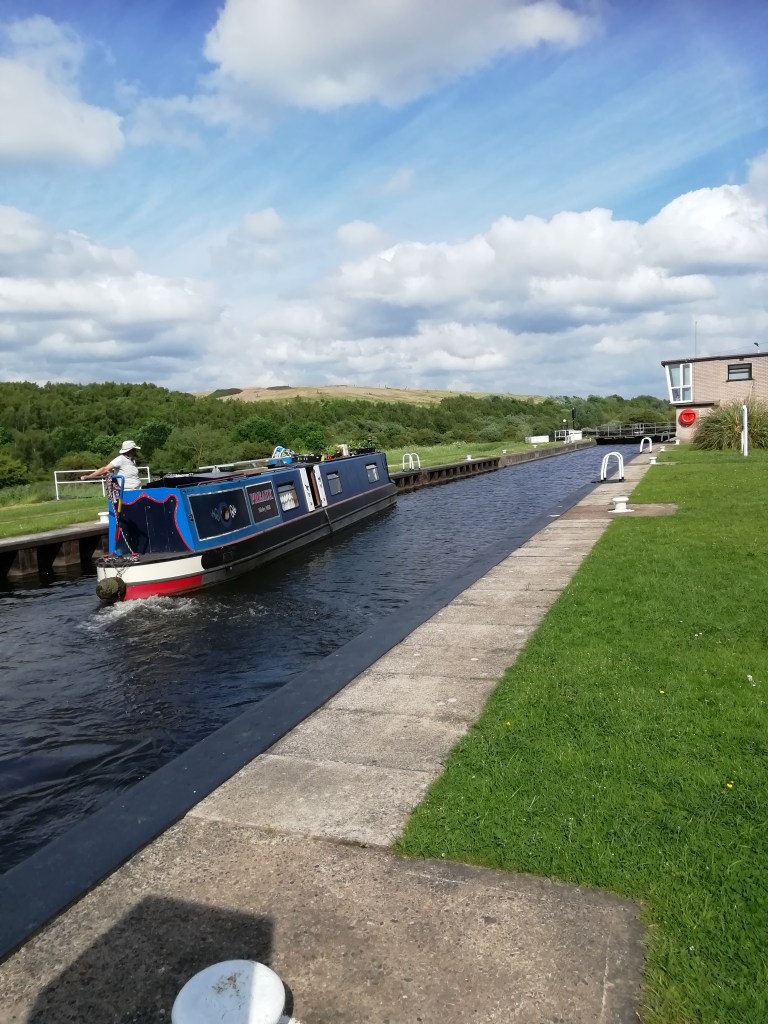
From then on until we moored up last night 4 locks later, the commercial waterway was wide, we saw only one other moving boat, a narrowboat of a similar size to ourselves, and although the locks were vast, being electronic made them much less physical hassle than any of the previous locks or swing bridges. Not a windlass in sight! The only thing that got a work out was my finger pressing buttons, and my legs having to walk the length of the lock to find the boat! [We only ever encountered amber lights.]
The lesson of the week was not to lose sight of the present, or to take your eye off the ball because you’re stressing or fretting about the future. To do so is to miss potential delights and experiences, learning and opportunities that exist right now. The future will come and when it does – that will be the time to deal with it. It’s a lesson we need to remember and teach our children and students.
We’ve made it onto the Aire and Calder without incident; made the right decision when faced with three apparent routes and unclear signage; learned to look for the high yellow paddles to indicate the lock location; had no problem mooring (we’re on chains in the piling) and yet again we have more new experiences under our belts. The navigation is so wide it feels a little as if we’ve gone to sea…but that’s another challenge for the future perhaps!
 Pickingupducks
Phew, I’m exhausted!! A terrifyingly fascinating account of your experiences Deena; my heart rate was up and down like a yo-yo during this read! We’ve had a few hair raising experiences on our two boating holidays but nothing like this. I can appreciate the huge difference in boating environments but can’t help be intrigued by some of the snapshot views before you as you progressed through those gargantuan locks. Saltaire is now on my list of travel destinations. Can’t wait for your next blog.
LikeLiked by 2 people
Sorry to exhaust you!Thank you so much for your comments, and do make it to Saltaire when you can. It is truly beautiful and fascinating as well.
LikeLiked by 1 person