This week has reinforced both the diversity and importance of community for us. There have been times we’ve needed help and there have been times we’ve been glad to help others, and to celebrate with them too. We’ve seen communities that have been created with vision and communities which have developed organically. We’ve recognised how important it is for us all to have functioning communities to help us survive emotionally, practically and psychologically, whatever our circumstances.
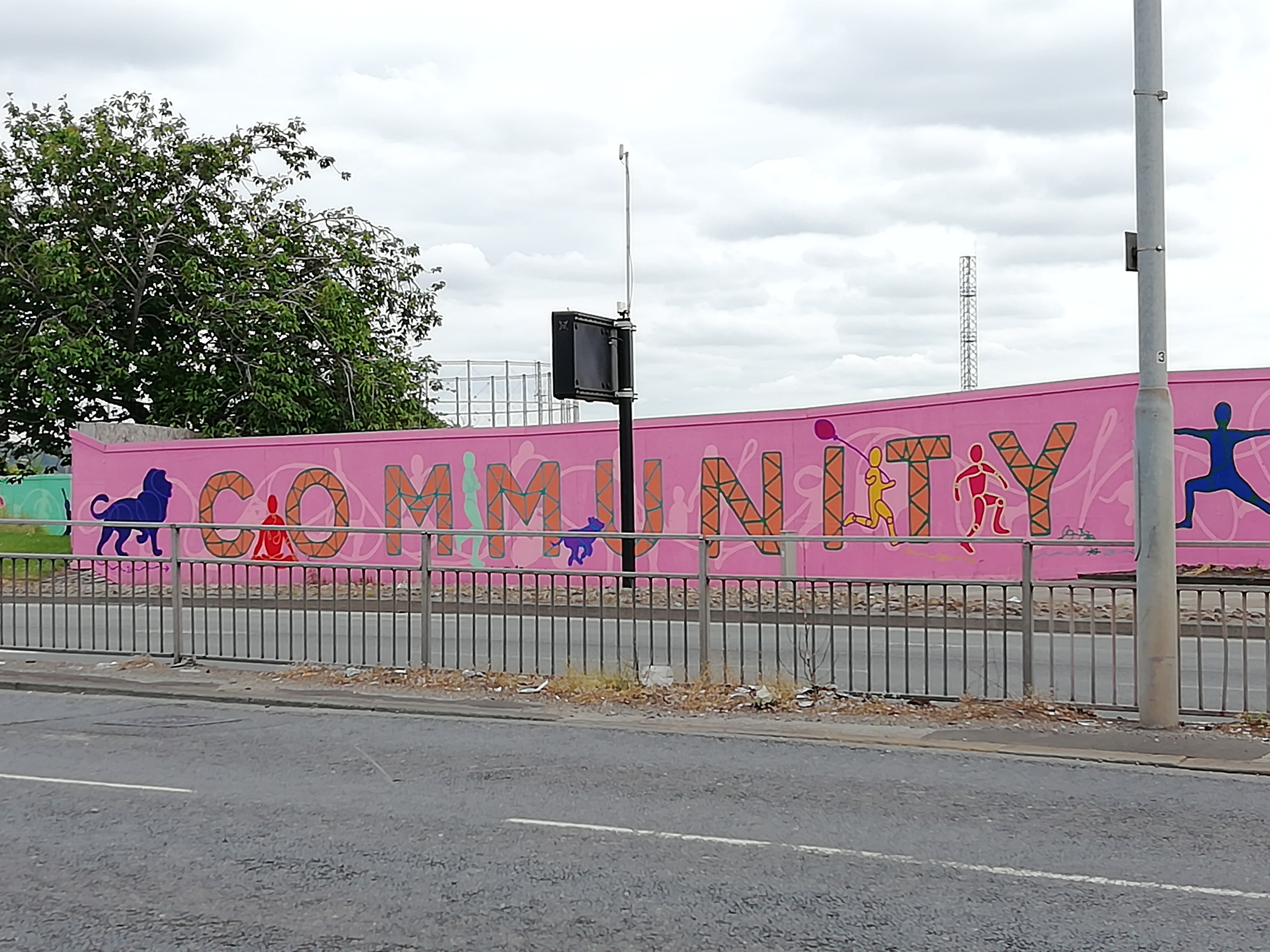
Feeling part of a community has always been important to be personally, giving me a sense of belonging and purpose. I find it strange that I feel just as settled, as fulfilled and very much at home in this transient floating community than I ever have in a land-based or these days, online, community. It set me wondering why that might be, and thinking what makes a community.
What makes community for you?
Back in 1986 Macmillan & Chavis identified from their research what they saw as pillars essential for a sense of community:
- membership
- influence
- integration
- fulfillment of needs
- shared emotional connection
Those pillars are evident in Saltaire, the community the Leeds and Liverpool Canal took us to on this journey in Yorkshire and which I touched on last week. Created as the uptopian dream of Titus Salt, a wool merchant inspired by alpaca wool to create new textile mills with a surrounding village designed to make (and keep) his workers happy and healthy. Built in the early 1850s the community of fudge-coloured stone was named after Salt and the river which flows through it. In 2000 his vision was designated a UNESCO World Heritage Site for its impact on international town planning, and for being an outstanding example of a model town in terms of social and economic influence.
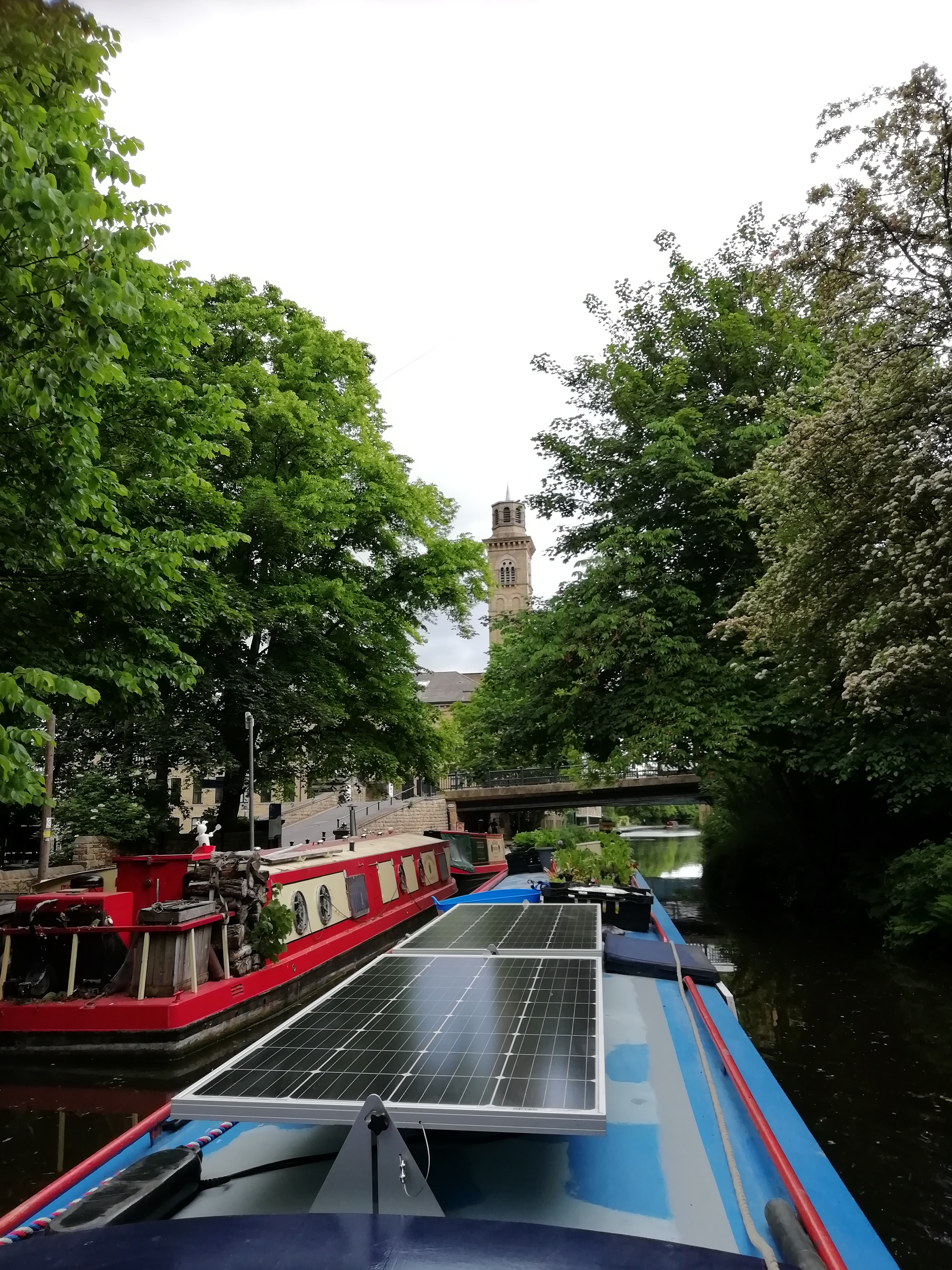


Some may say Salt was a dictator seeking merely to maximise profits and compelling his staff to live as he demanded. Historically he has been regarded as a caring philanthropist with the best interests of his workers at heart. He considered their needs from the maternity ward of their hospital to the alms houses, all of which he provided. For life in between there were libraries, churches, a school, allotments and sports facilities to sustain the population as well as the employment from the mills. The one thing missing was a pub. Salt as a Quaker was a temperance observer. 2021 Saltaire has a licensed bar restaurant “don’t tell Titus!” Even without a pub, Saltaire flourished during Salt’s lifetime. After his death his sons struggled to keep the business and the village going. His vision died but the sense of community it engendered remains today.
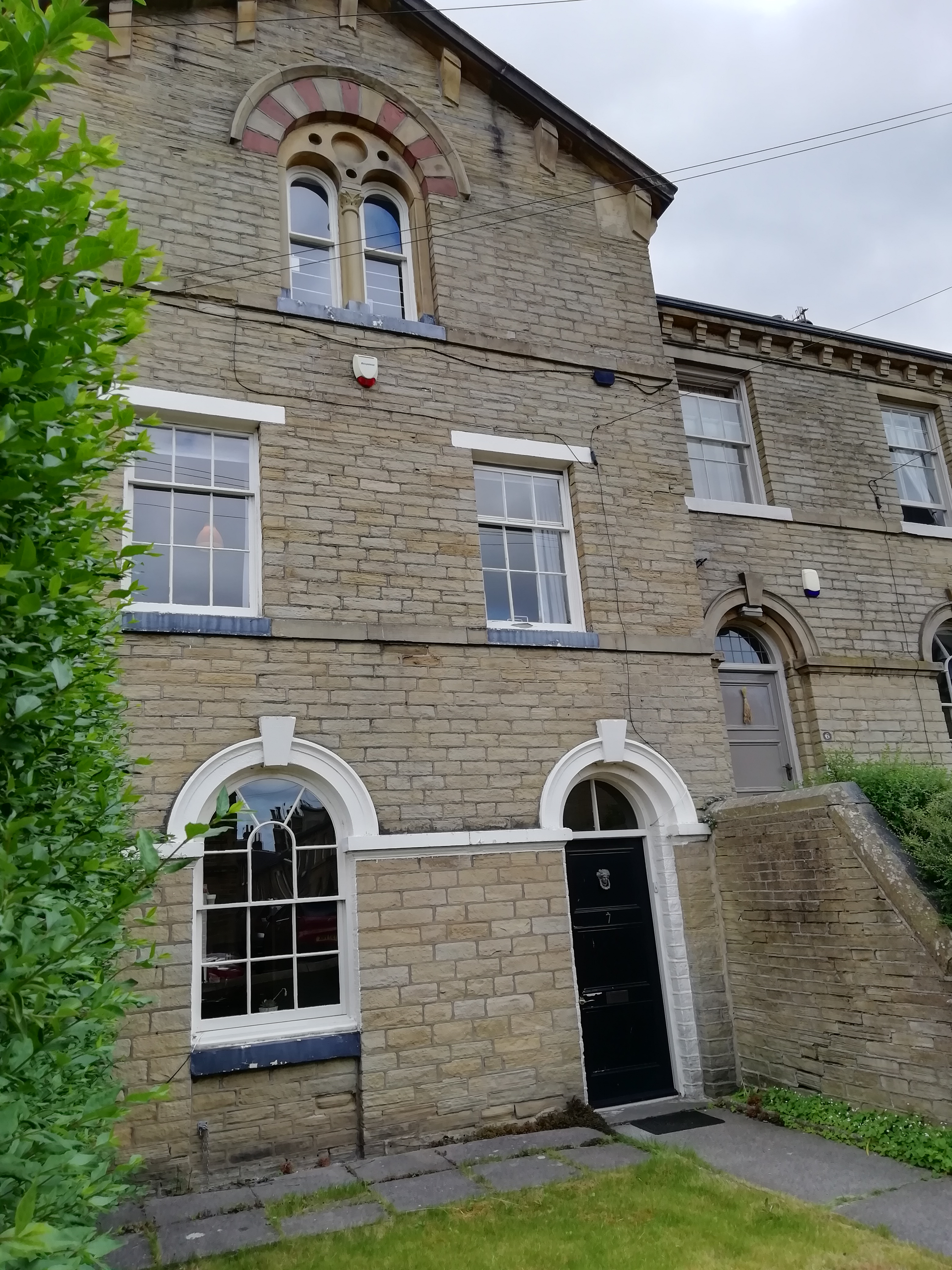

Saltaire’s terraced homes are now in individual ownership but there remains a clear sense of community in the streets and the park. It is a sense of community built around place, shared values and for many, a shared love of cultural endeavour. It’s a creative, artistic and collaborative community. Other model communities built around industries of chocolate, soap, mustard and railways still exist in various forms today across the UK.
Community for me is about people, and it’s people who make or break communities. It is the same on land as on water, in villages as suburbs or cities, in colleges and universities where groups of people come together to live and work. Some become inspiring communities which encourage engagement – some do not. Sometimes they require a catalyst like Salt, sometimes they are organic, created by mutual need or shared interests.
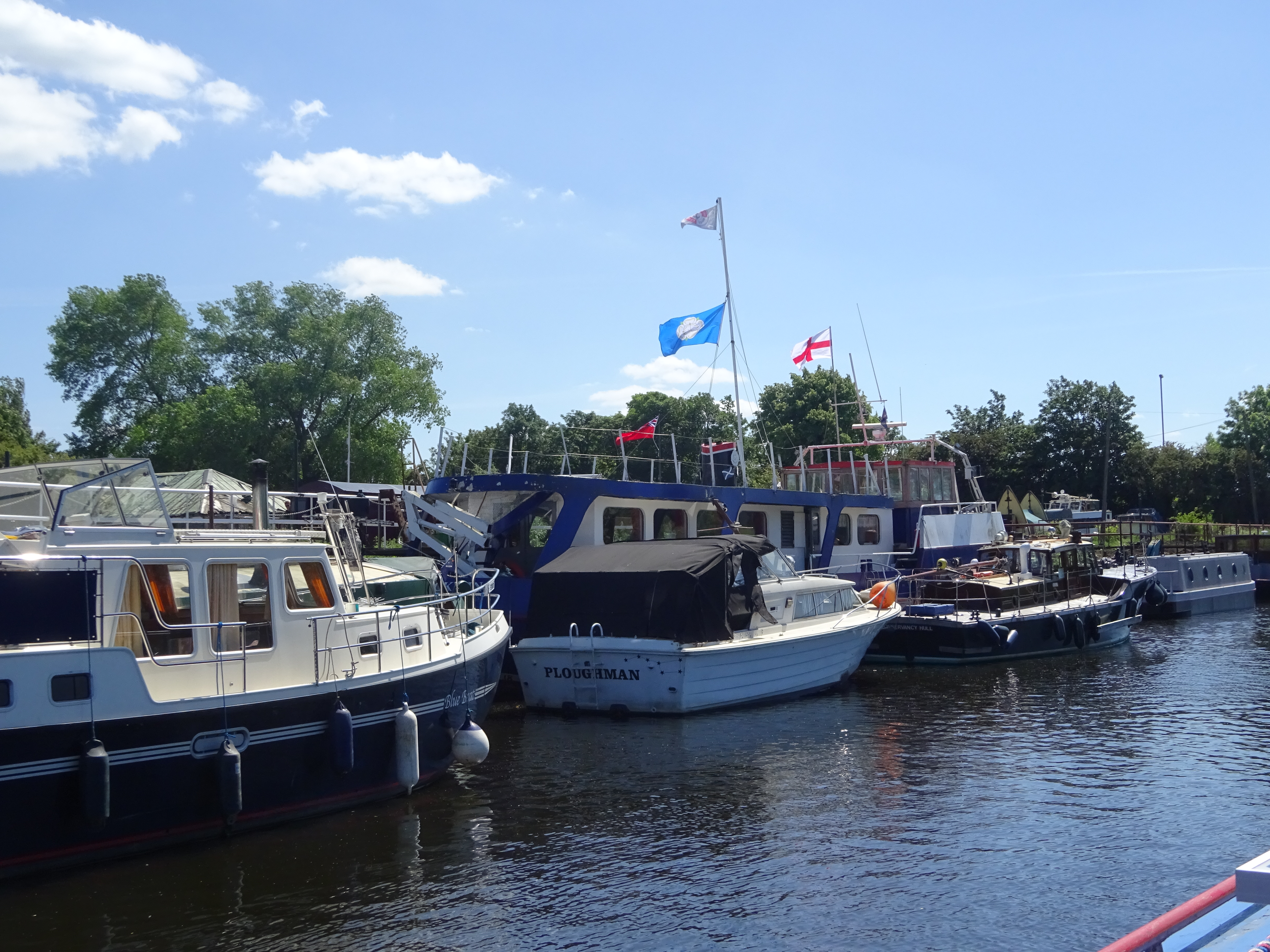
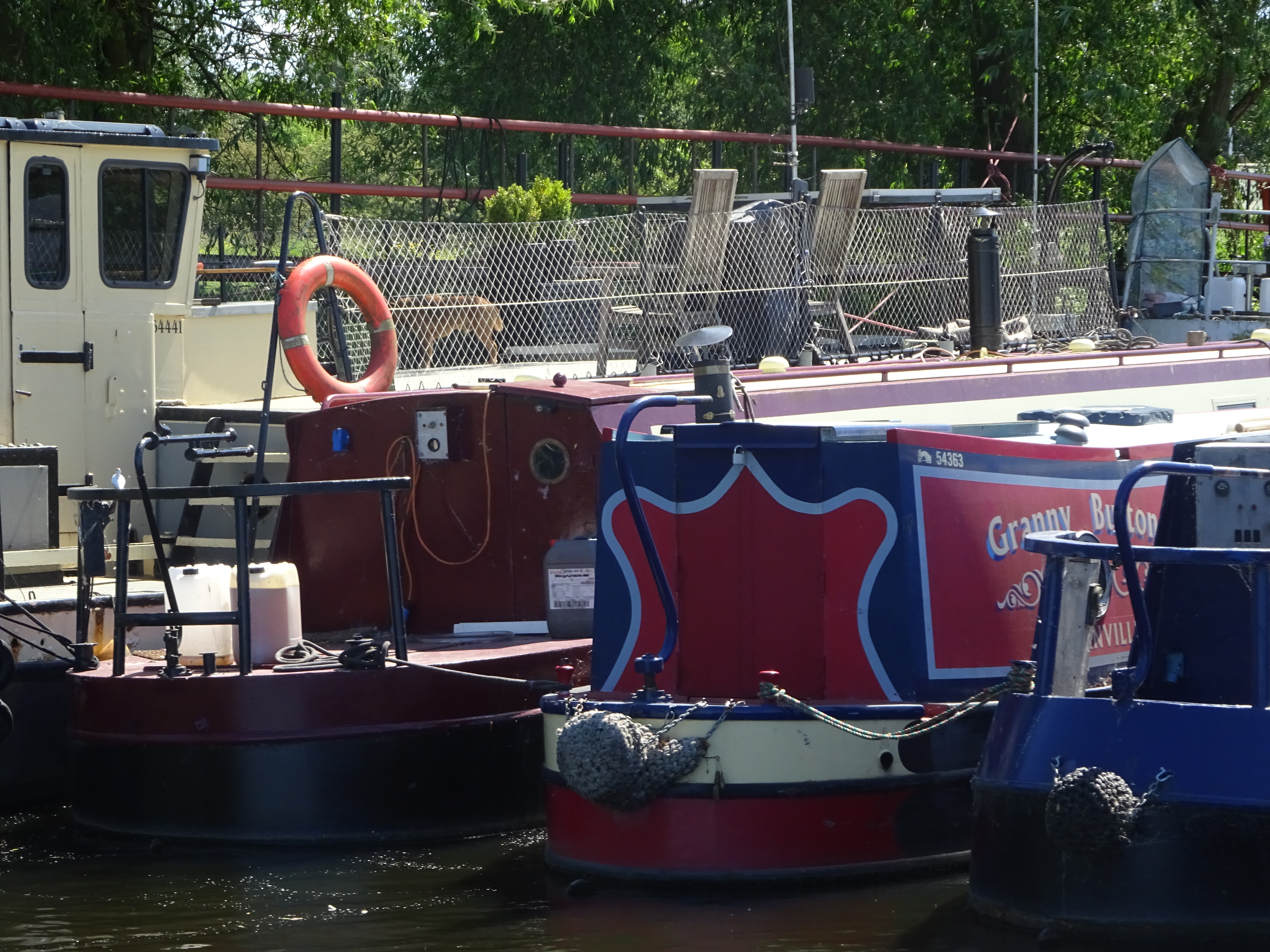
The boating community is largely organic. Boaters are all different. Boats come in a never-ending succession of types, sizes, colours, ages, states of repair/disrepair and there are sub-communities of certain makers, narrowboats, cruisers, Dutch barges etc., but the fundamental is that if you boat, you love living on the water and given the chance, will non-judgmentally support others to both do and enjoy doing that. Community can be created through locations or boats but it takes people to make and sustain a community, and community really is important for the majority of us. It’s about making us feel we belong, feeling connected to others, cared for and responsible for others too. It’s important to feel we can contribute, we can matter, and natter too.
People contribute to their communities in many different ways, and it’s the same on the canals. Volunteers and paid staff go above and beyond in supporting the network which they love.

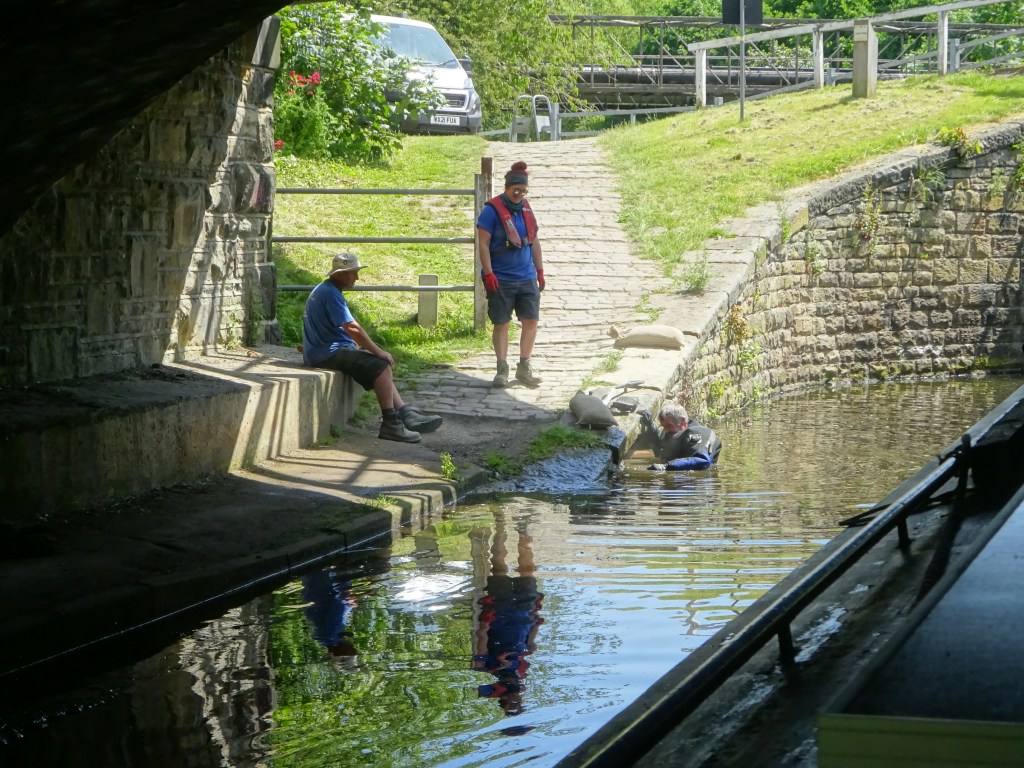
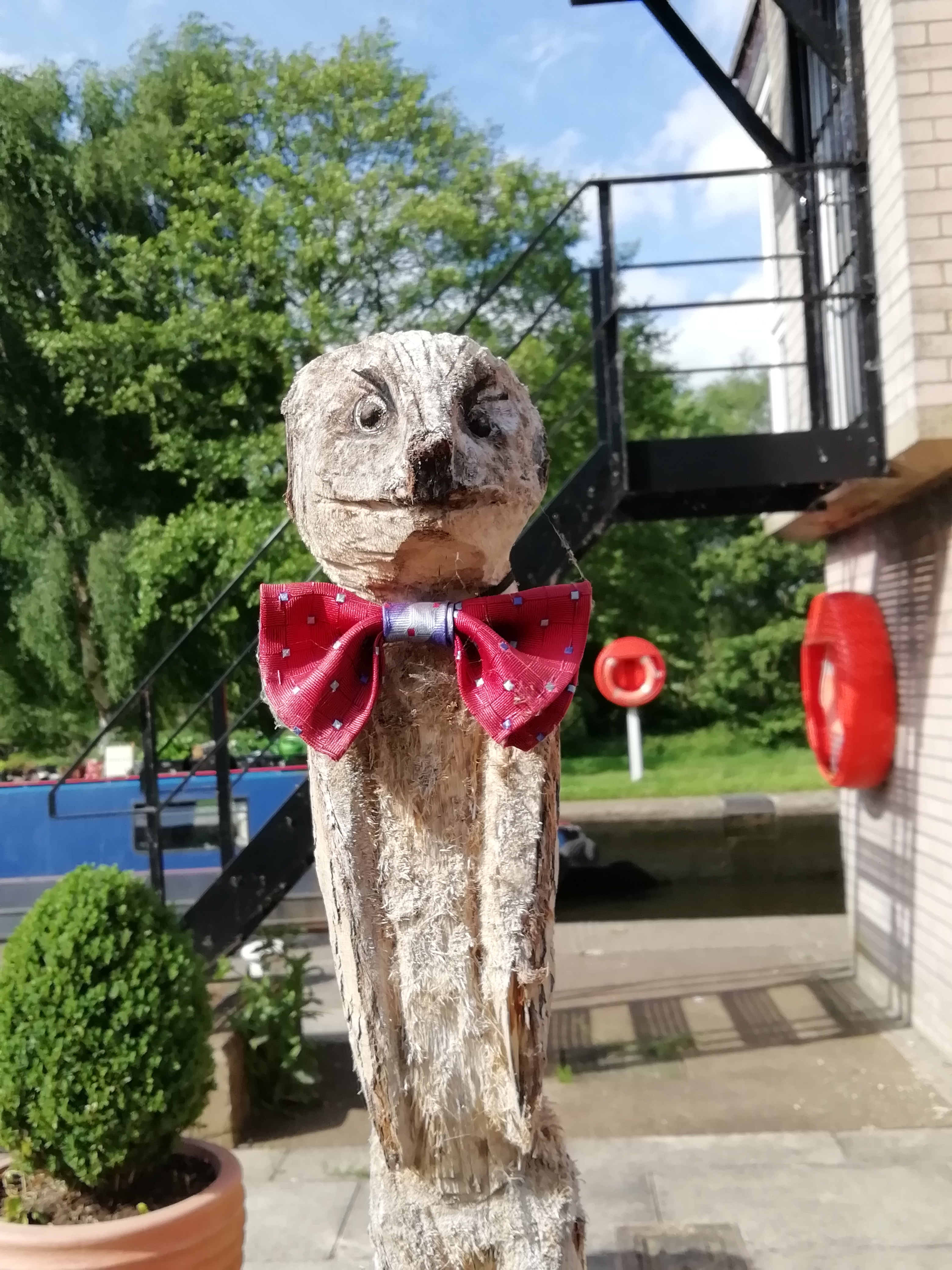
Sometimes it’s in times of trouble and crisis that community comes to the fore. On the Aire and Calder we found our morning walk with the dog last Sunday barred by police tape.

Later in the day we helped the wide beam at the centre of the police investigation through several locks, learning en route that those on the boat were friends of the owners, accompanied by a narrowboat which had been moored nearby. We formed a supportive convoy of three.
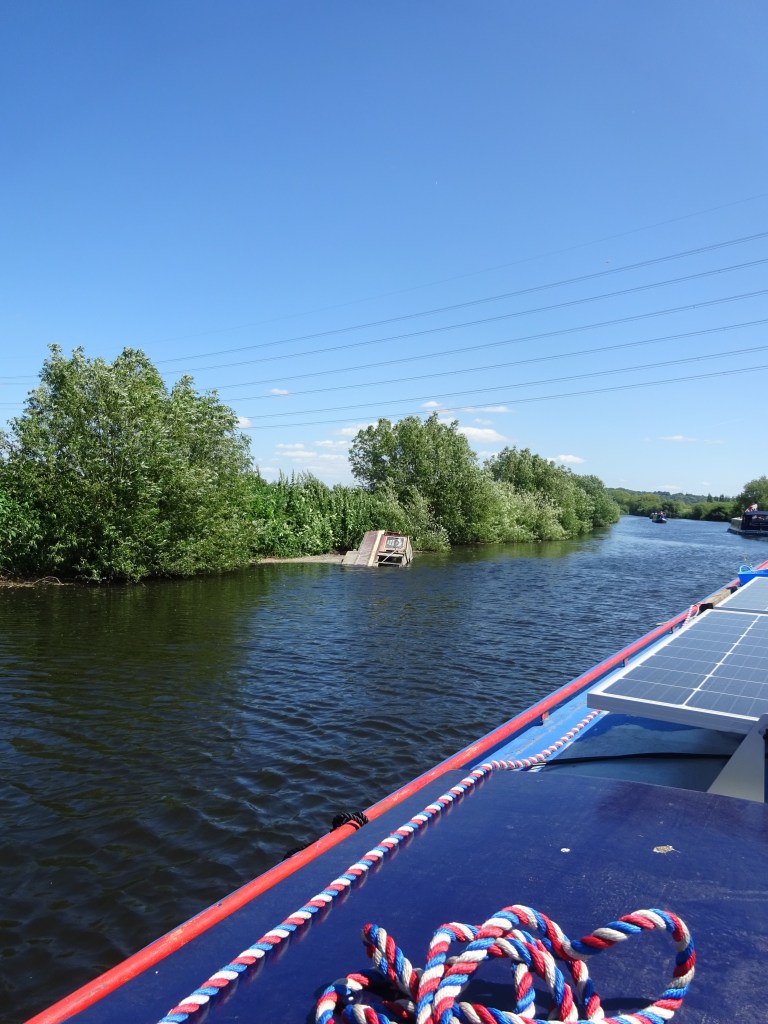
The owner of the boat had been found unconscious in the water alongside his boat, pulled out by those on the narrowboat who called paramedics. He was rushed to hospital with head and chest injuries and when we met them was in intensive care. Police ruled out foul play, establishing that he had fallen into the water, perhaps as the result of a heart attack whilst hammering in mooring pins, and been crushed against the side by his boat. His friends had come to take the boat back to its mooring whilst his wife sat by his side in hospital. The crew kept apologising to us for being slow and careful, but of course we didn’t mind. We appreciated the care they were taking to get their friend’s boat back to its home mooring.

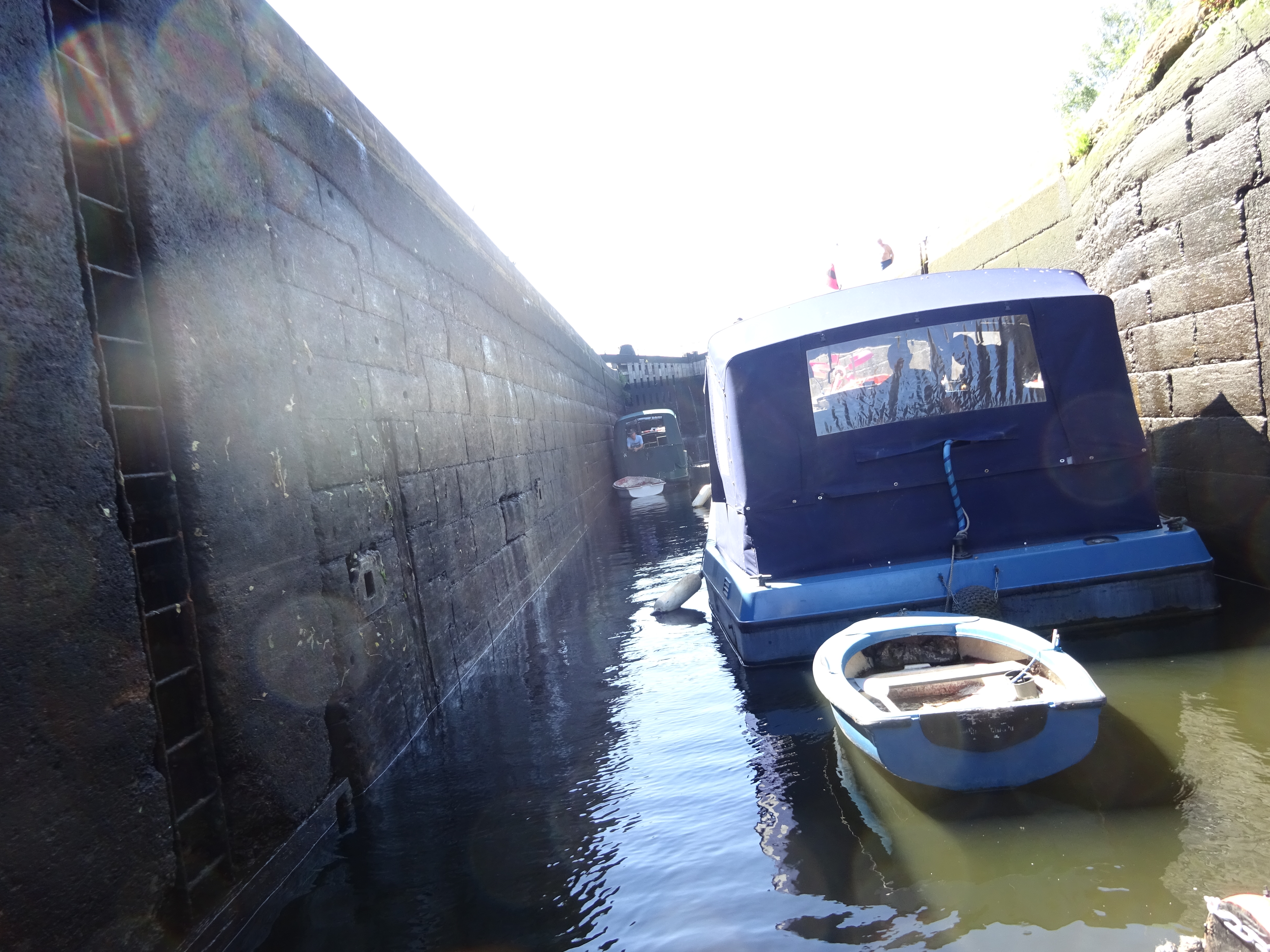
The novelty of navigating huge commercial locks in a convoy of a wide beam, 2 narrowboats and 2 dinghies took us time to adjust to, so slow but sure was fine with us, and we were just glad to support them in their mercy mission in a very small way with some lock support.
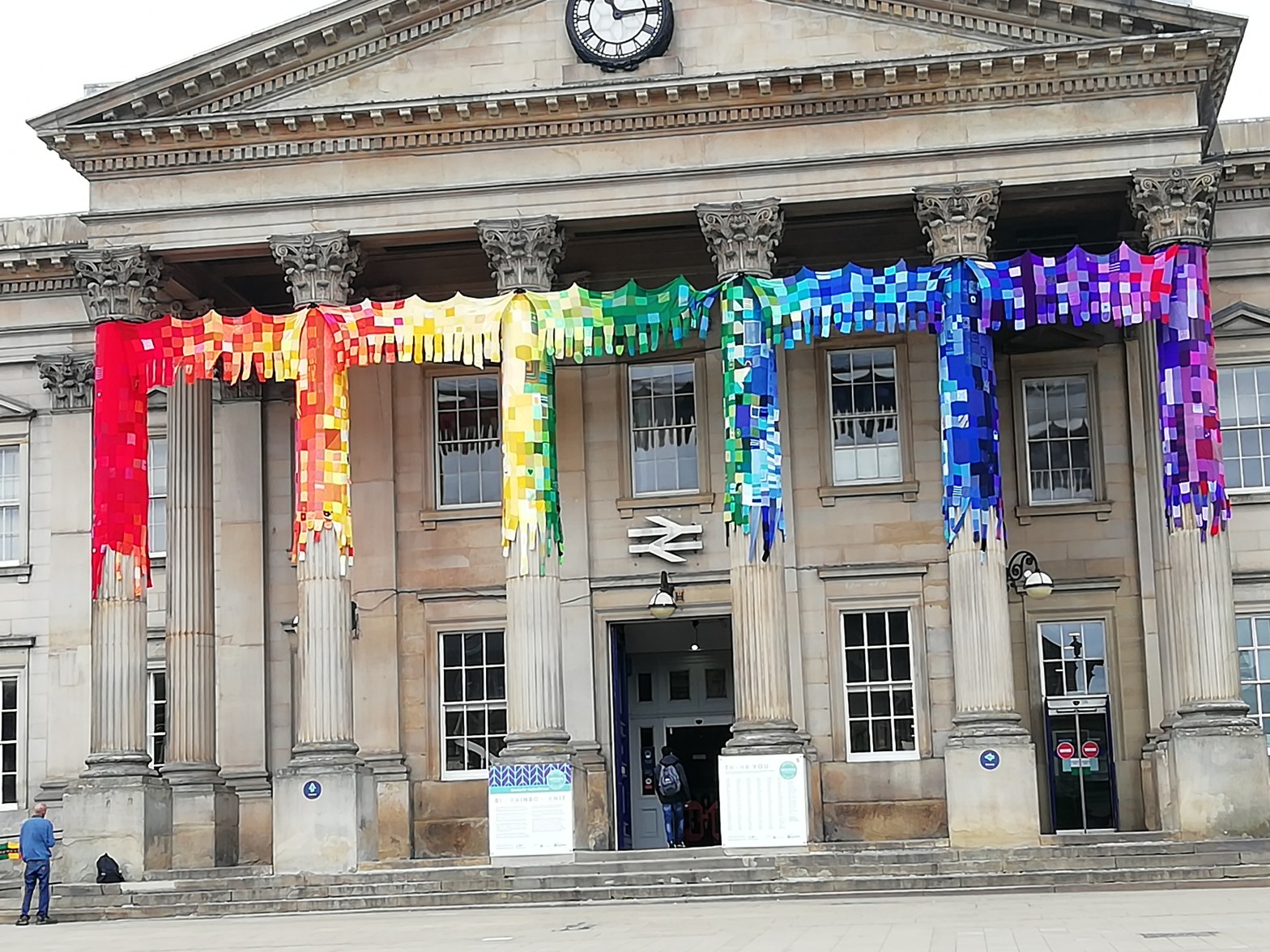
All communities, on water or on land are being asked to come together particularly this week to recognise how much we all have in common by the Jo Cox Foundation. This week which marks 5 years since Jo Cox, daughter, sister, wife, mother, and MP here in West Yorkshire, was murdered. In her maiden speech to Parliament, Jo Cox said “We have far more in common with each other than things that divide us.” Sharing in creating and celebrating what we have in common is the aim of the Great Get Together . Even if you haven’t signed up for it officially, it’s still a chance to extend an invitation to others you know or don’t know around you to share a natter, a cuppa, a walk, a Zoom even, or perhaps to create together. Perhaps you could enjoy taking a leaf from the fantastic Woven in Kirklees project I’ve delighted in here in Huddersfield.


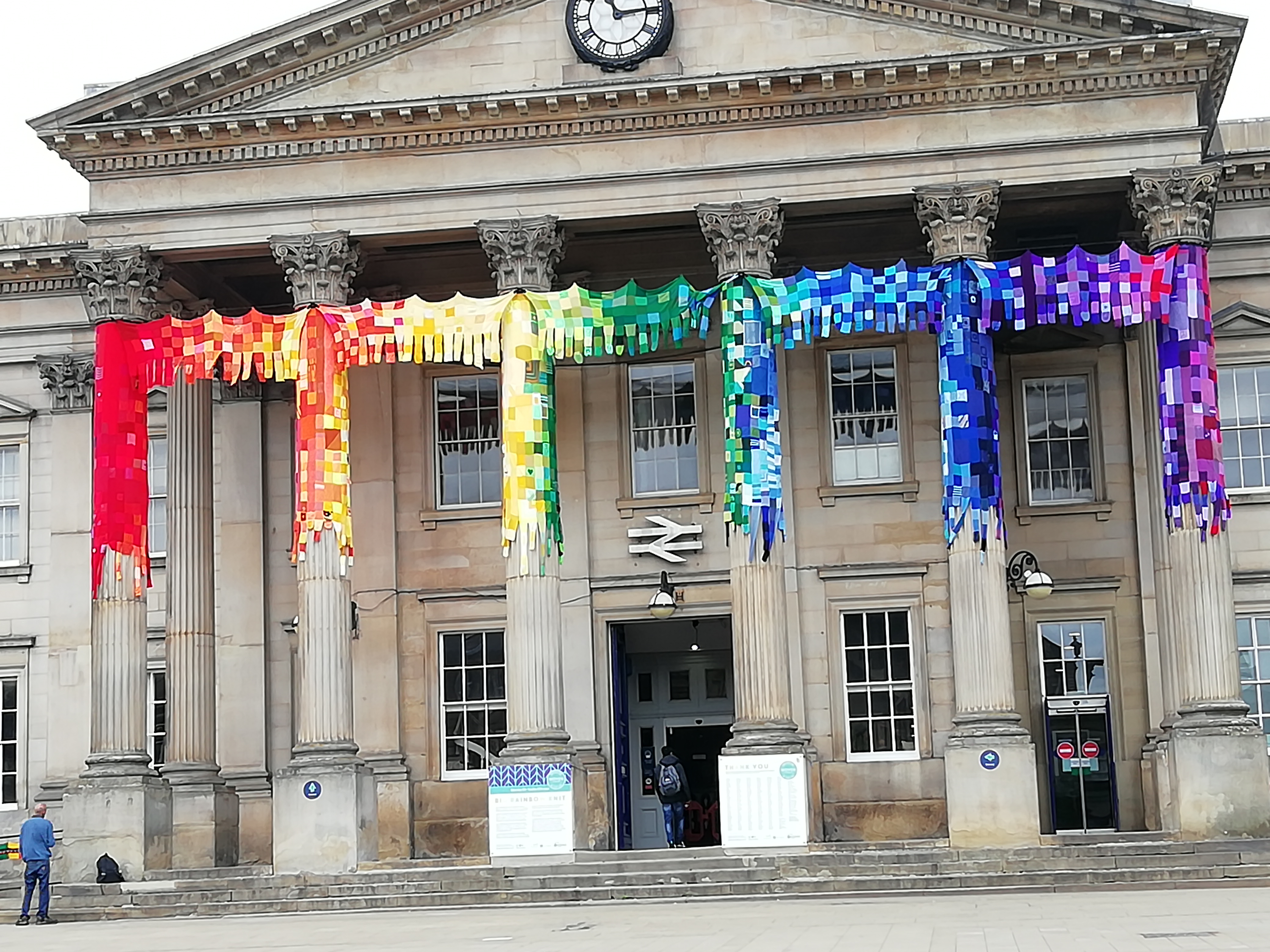
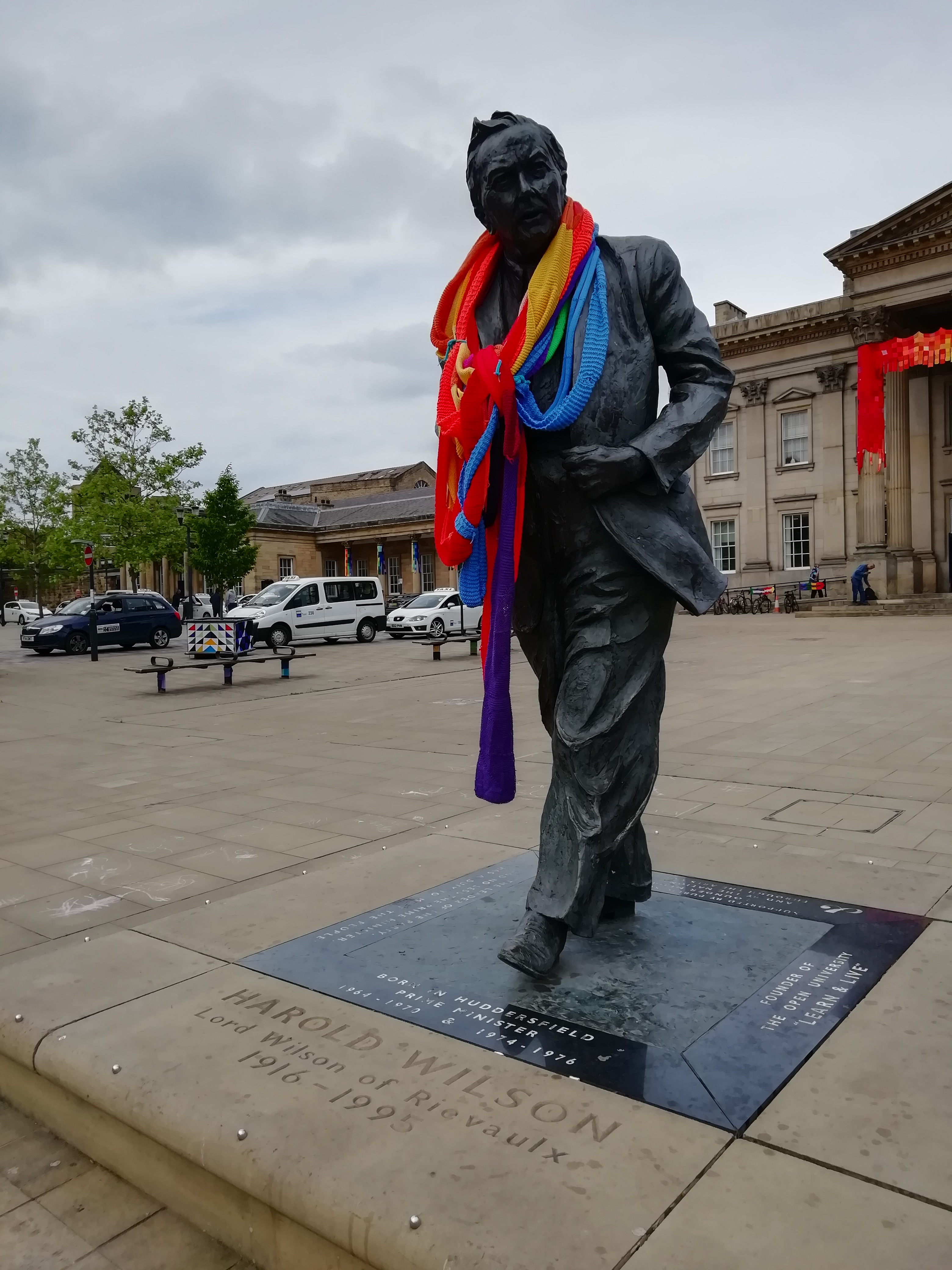
Thousands of squares knitted from all colours of the rainbow have been created by a community of knitters all over the region. Once people heard of the project via online networks (communities), contributions come in from Germany, Finland, Italy, New Zealand and Australia – from knitters eager to join this vibrant community project. I’m proud to know one of the very talented contributors, and delighted to see the founding advocate of the inspirational Open University, Harold Wilson, suitably adorned in the yarn bomb!
Sometimes projects like this, spawn continued community interaction. In the Leicestershire village of Mountsorrel (our last land location) in lockdown 1 a quilt was created with contributions about the village from stitchers of all abilities, all ages, all backgrounds, to mark a significant time in our history. It now hangs proudly for all to see – and on his journey back from pre-school my 3-year old grandson happily points to the square Granny contributed with its historic 1860 bridge over the river, swans and a heron.
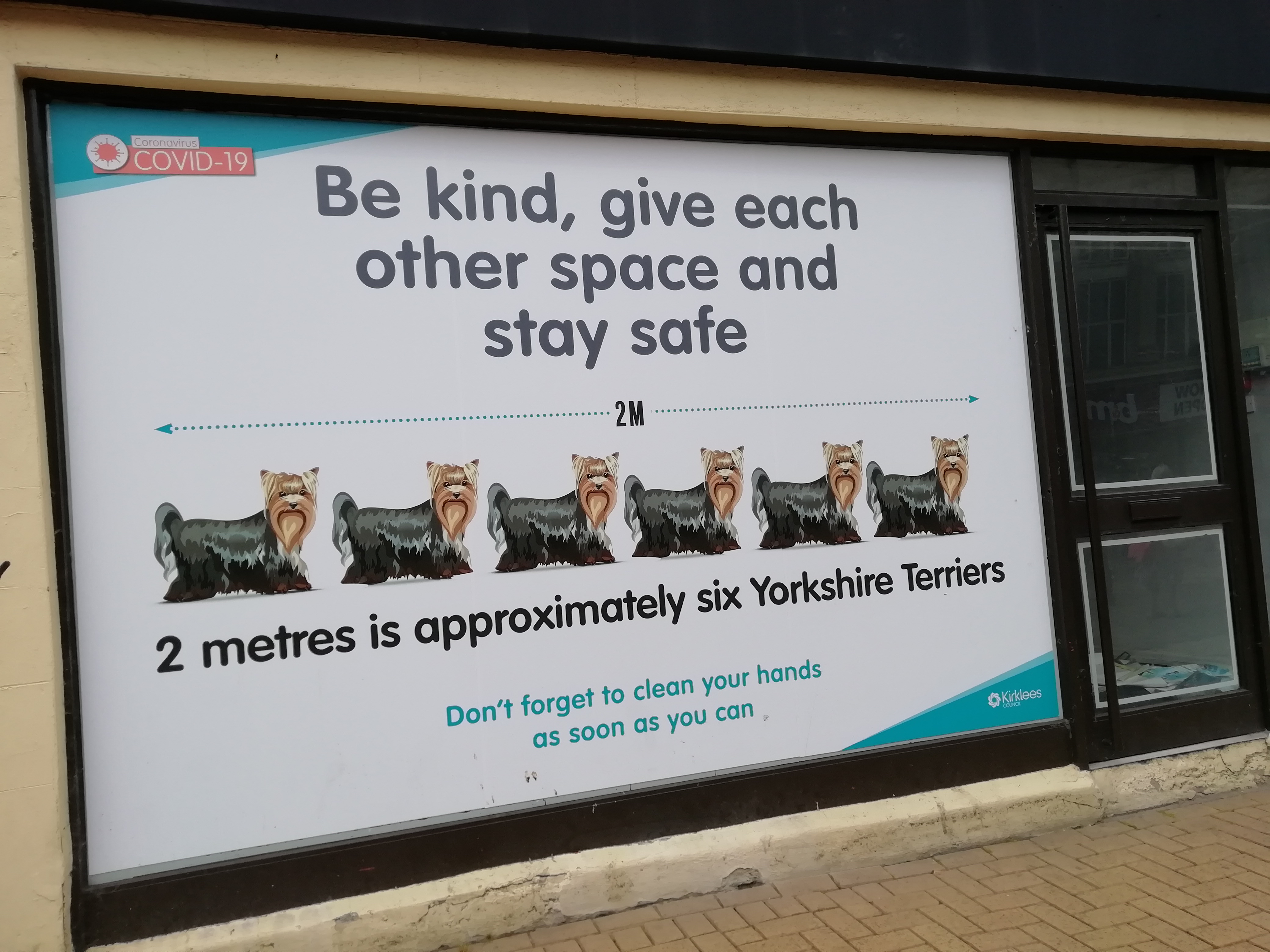
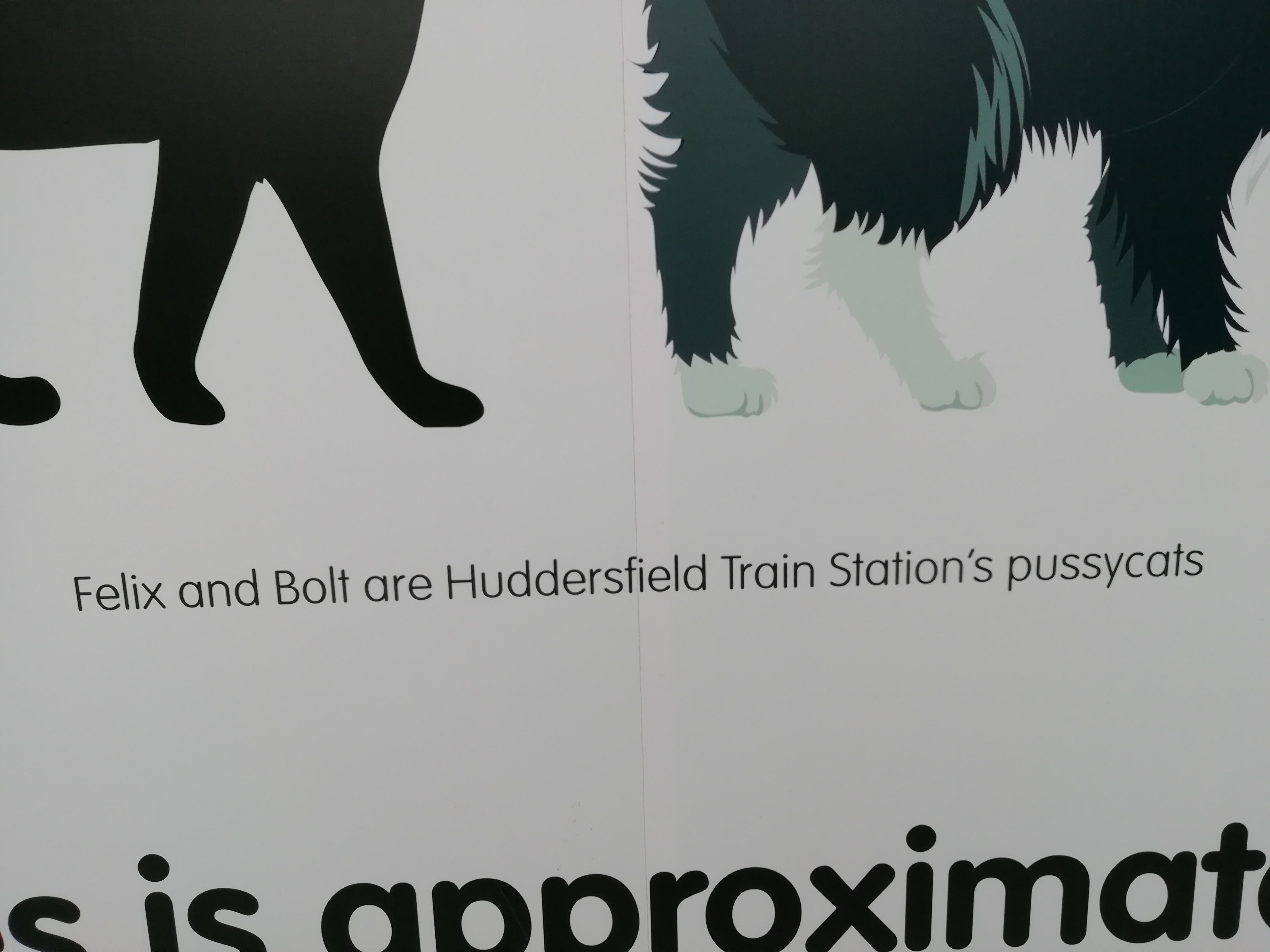
The pandemic has brought many communities together, and created bonds. I just had to share these posters from Huddersfield which made me smile.

Sustained support for individuals or groups is part of a community but communities can be born from transient help – assisting each other through locks, or swing bridges. We’ve been grateful for a hand with from boaters, walkers, cyclists enjoying the waterways on our recent travels. We’re glad to play our part helping others in the same way, and doing small things like clearing rubbish from the canals en route.

Sometimes we exchange first names with those we support or who support us, sometimes we don’t , but there’s a shared sense of community in our mutual support for each other built on concern and cooperation. Those were the essentials French philosopher Charles Fourier back in the 1800s said were keys for any community. He founded a community called Utopia in 1844. Had he stuck to those two essentials without bringing in equal sharing of economic money and effort, that community might have lasted longer than 20 years! Incidentally Fourier was apparently the first to coin the term feminism in 1837, so at least one of his ideas has endured.
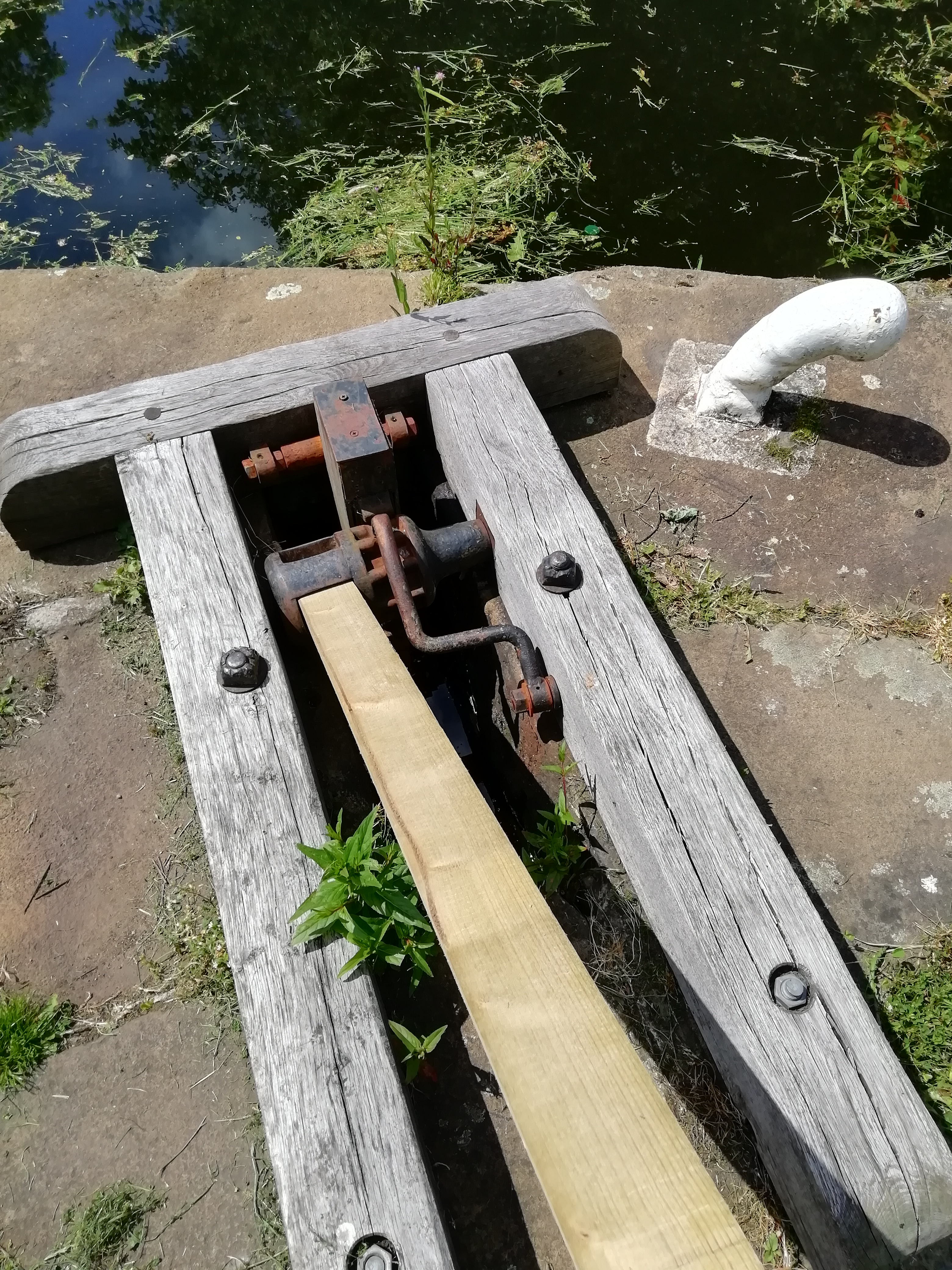
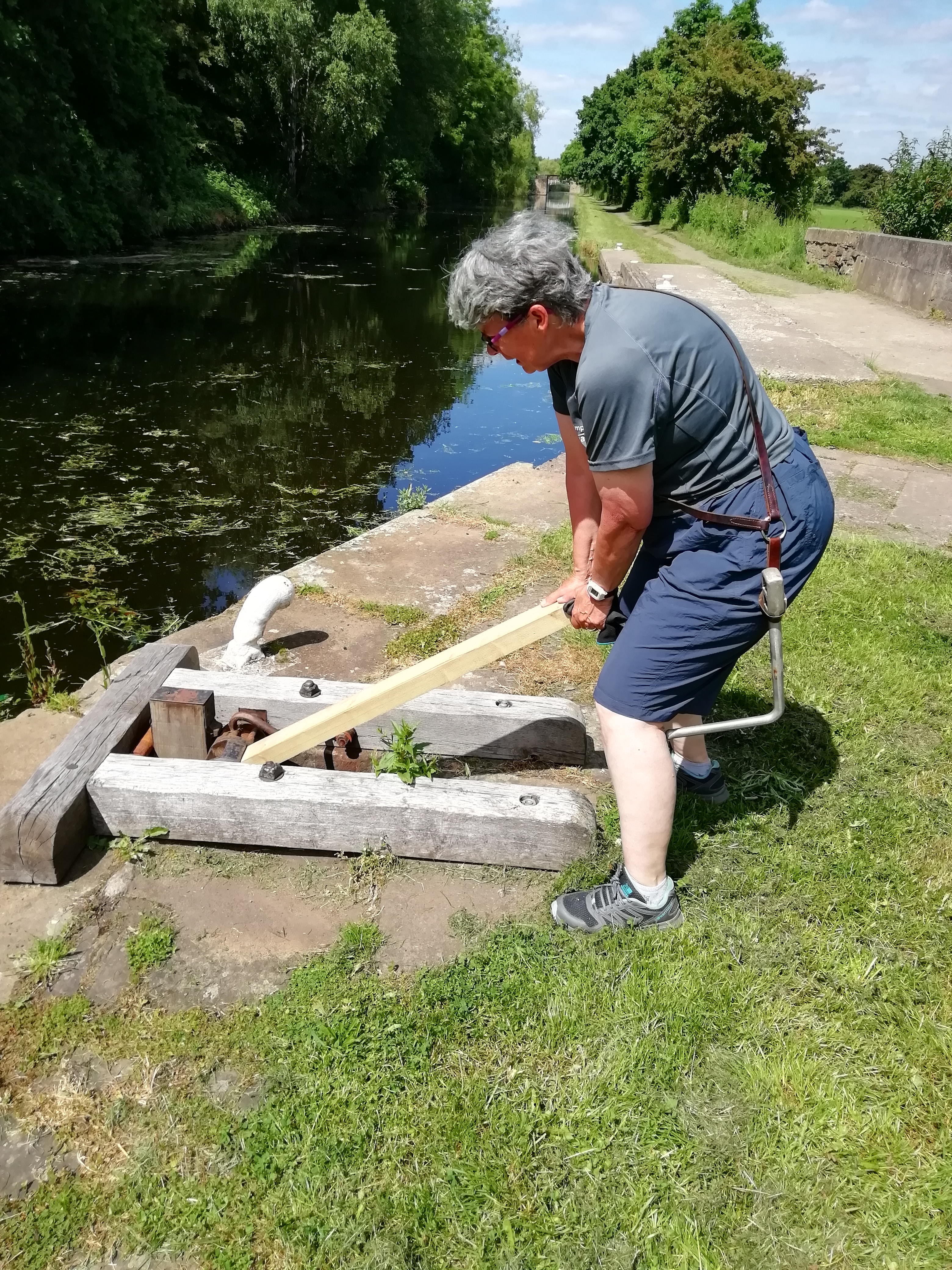
Yet another passing walker (male) told me this week that I should be ashamed of myself for letting Steve sit on the boat whilst I get a workout on the tough locks of the Calder & Hebble (a shock to the system after the push button approach of the Aire and Calder)! You set off to tackle them armed with a handcuff key (which often didn’t work) a long handled windlass for extra leverage and a Calder & Hebble spike. Every canal has its quirks and the spike is unique to the Calder & Hebble and apparently the Driffield Navigation. We were advised you can buy these from CRT or a chandlers or just get a piece of 3 x 2 hardwood that will do the job. My resident Yorkshireman did the latter and it worked fine once I got the hang of the spike mechanism thanks to a Dutch barge owner who showed me how.
If I had £1 for every time I explain that there’s a skill in keeping a boat still in a wide lock with water currents from ground and gate paddles creating turbulence in the enclosed space, and that I am rubbish at it …I would be rich. Plus you have to bring the boat in smoothly to let the crew on and off preventing damage to them and the boat – and I’m not a lot of good at that either!
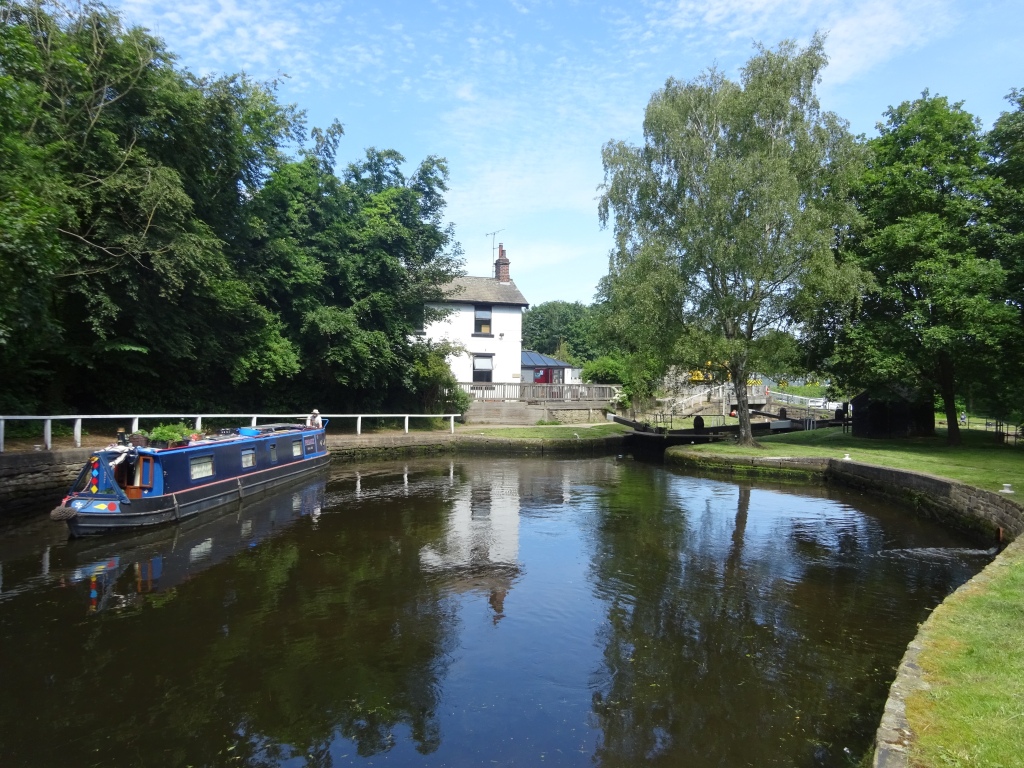
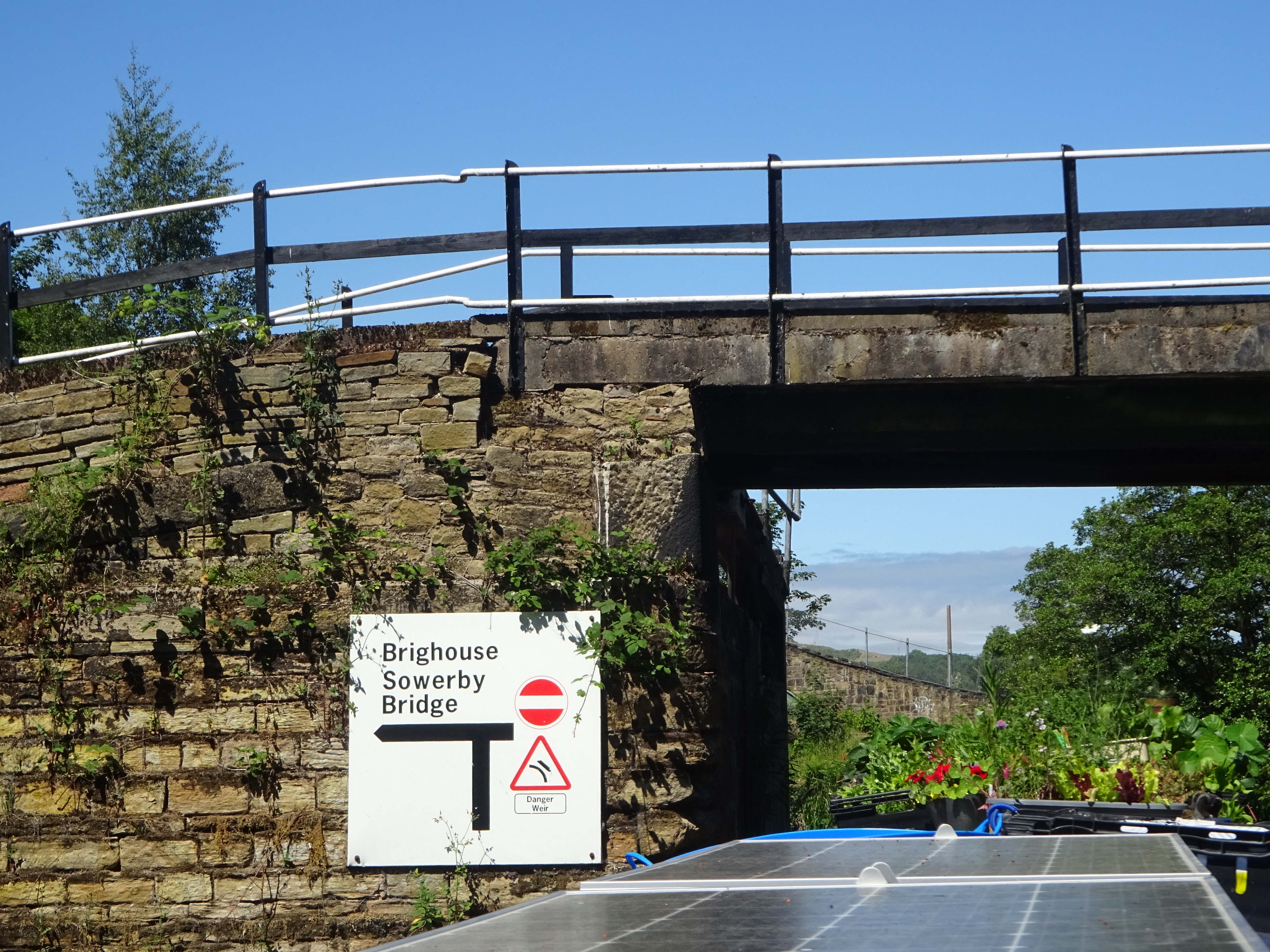
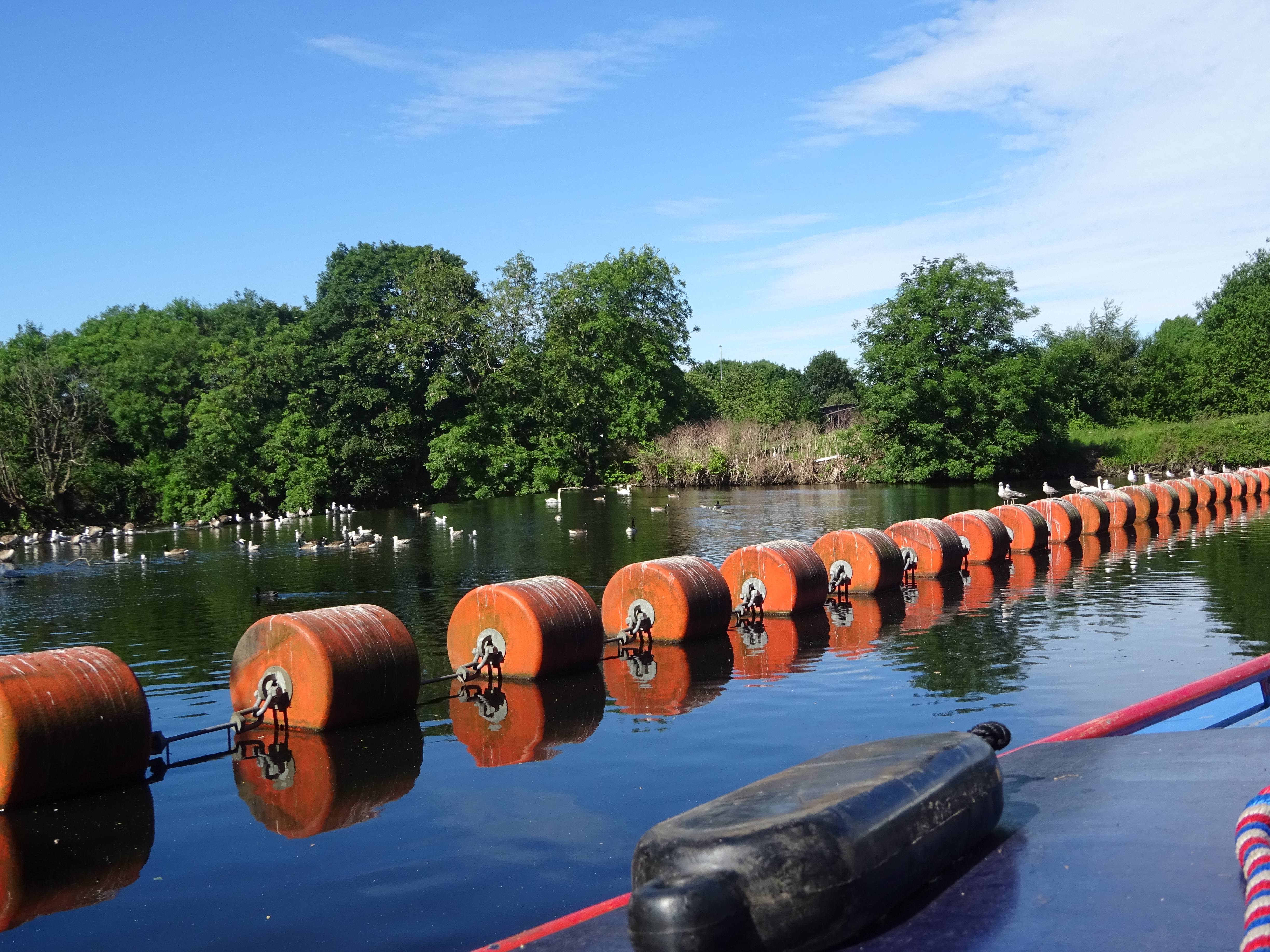
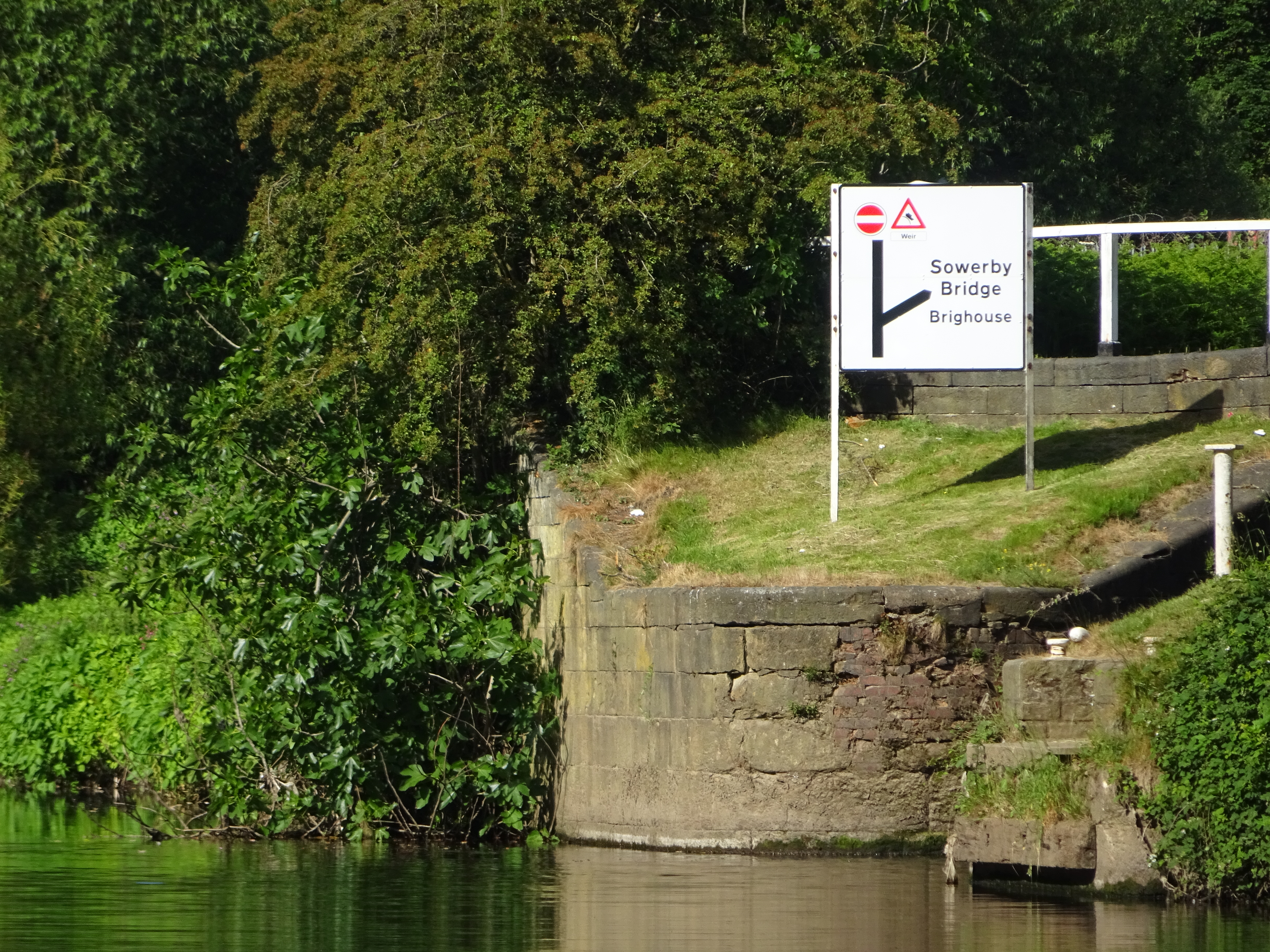
This boat and its contents are our home, and aggressive turbulent locks can cause significant damage inside and out as we already know. I also do need the HIT workouts which tough locks provide! Additionally the Calder & Hebble has been a fairly constant in and out of the river navigation with weirs to avoid, and directions to follow right, left, and centre. It’s suited me to not be at the tiller.
Next week though sees us taking on the Huddersfield Narrow Canal – 19.3 miles including the longest tunnel in England of over 3 miles, and 74 locks in the remaining 16 miles! As locks are narrow, a single boat width it means I can concentrate on front and back alone without having to worry about getting bashed from side to side. So next week my first challenge is to take the boat through the 42 locks up to the tunnel and let Steve do the lock wheeling – a novel part of his marathon training for London 2021. I just hope there’s enough water to let us get through – it was looking pretty shallow when we walked up a few lock lengths yesterday!
Surely I can’t do too much damage to our home and its contents – can I? Will we get stuck through lack of water or my tiller incompetence? Time will tell – watch this space!

 Pickingupducks