Music has been a constant across generations globally to communicate and express our emotions, to lift our spirits, to soothe, calm and console. Whether we create it ourselves or benefit from the works of others, music is immensely powerful in provoking a human response.
Whether spontaneous or planned, music is also complex. Just a few notes have the capacity to teleport us back in time to a place, a person, a situation. A chord can change our mood, a rhythm can force us to move or keep us moving when we are flagging, and a voice in song can express much we would struggle to say.
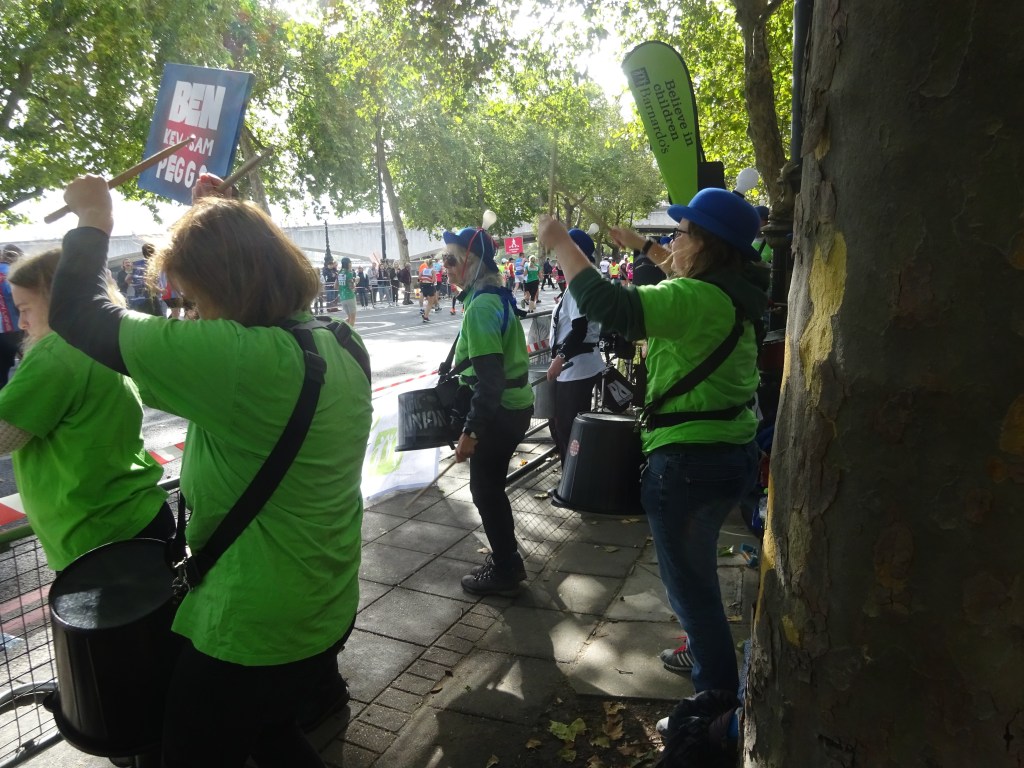
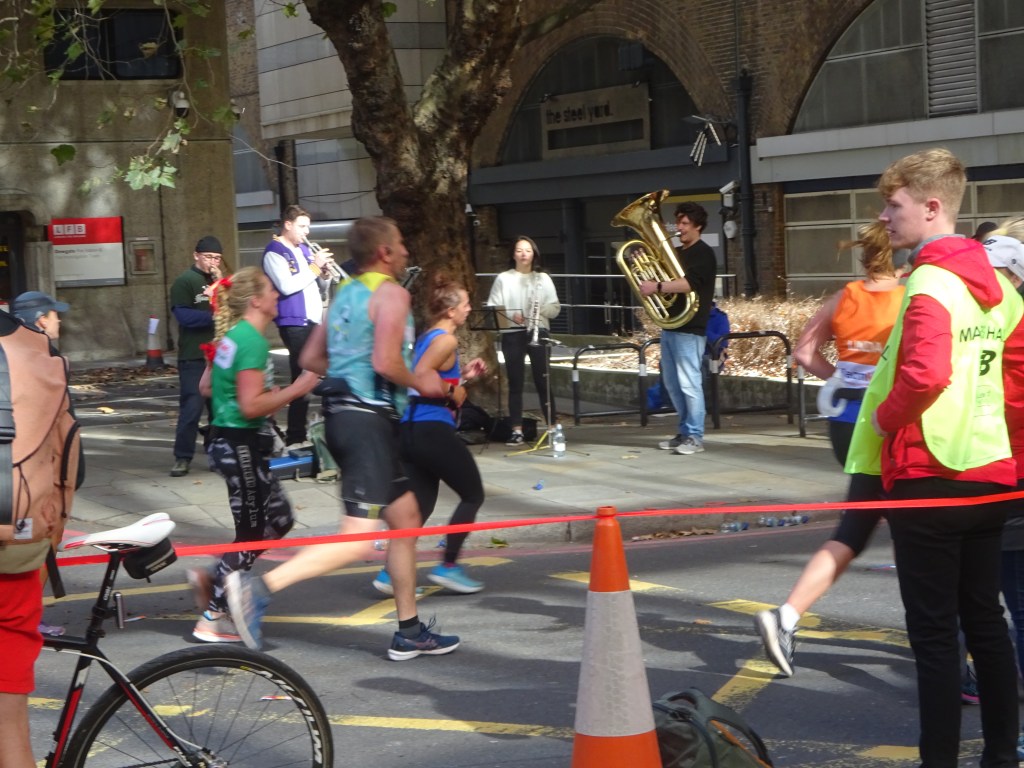
Music is the accompaniment to our lives – big events, special moments, break ups, parties, farewells – each of us has, and will create a personal musical record of memories and meanings. We’ve collected a few new ones over the past weeks connected to the London Marathon.

What has this to do with canals? Well, I’ve always found music a supporting force, and was looking for something to get me through the next tunnel (never my favourite places). We’ve heard people singing in tunnels, we’ve heard blasts of music from passing boats, and regularly hear calls and shrieks from small children exploring the acoustics. We have though, tended to go through accompanied only by the rhythmic reverberation of the engine and sporadic, percussive water splashes landing on and around us from the tunnel roof.
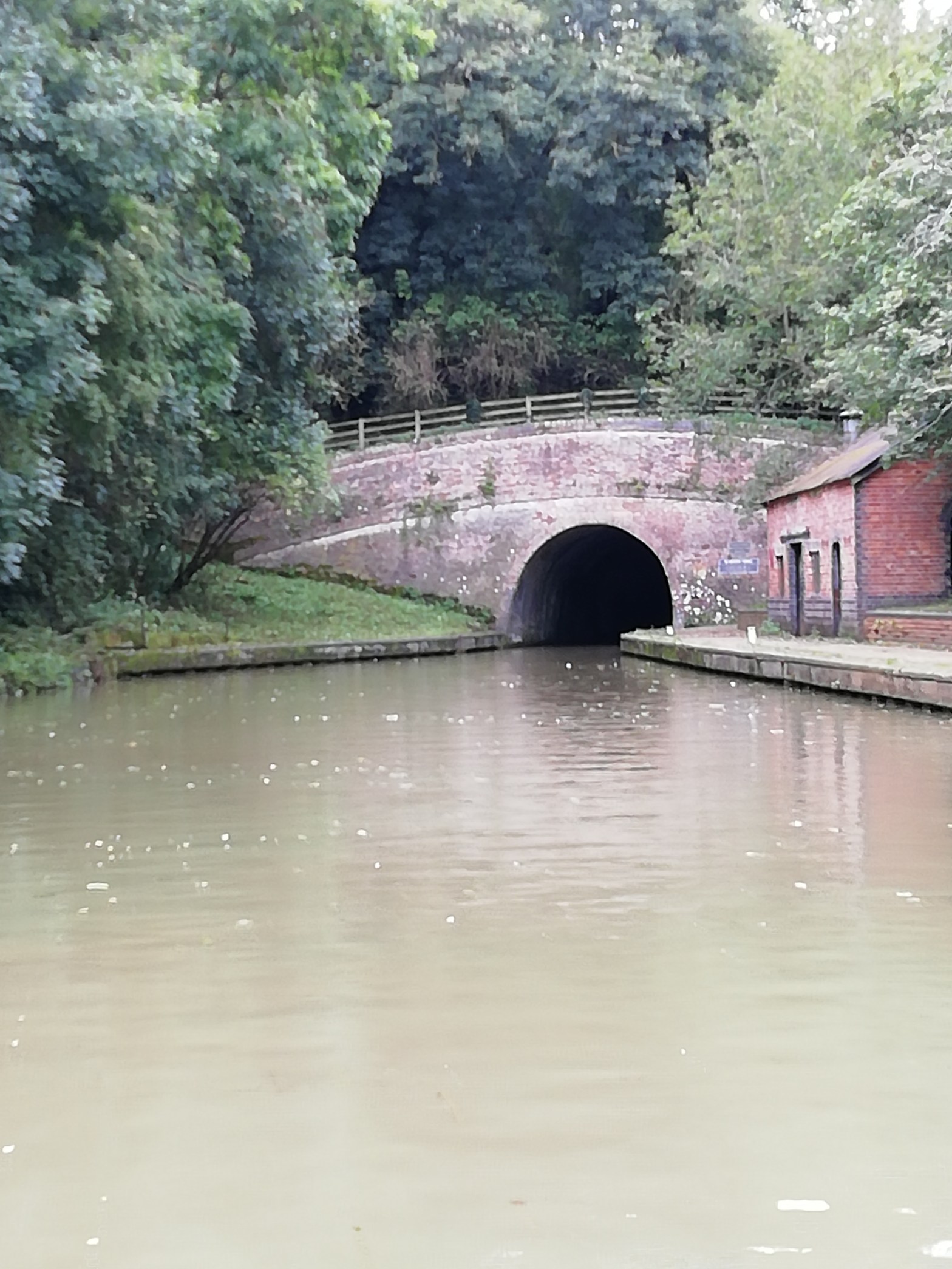
Our next tunnel was going to be Blisworth – the ninth longest canal tunnel in the world that snakes for 1.74 miles under Northamptonshire’s Blisworth Hill at a depth of around 43 metres. This mighty feat of engineering took many lives in its making, and has cost several since in the days men had to leg boats through, lying precariously balanced on boards and pushing the boat along with their legs against the sides of the tunnel. Completed in 1805, this longest tunnel on the Grand Union Canal is a monument to all those who painstakingly built it by hand with picks and shovels and barrows. The one that’s open is actually the second tunnel to be built under this hill – the first attempt in the late 1700s collapsed because of a failure to identify and factor in the quicksand all around.
On our London sojourn and return I knew we would pass through this cavernous blackness twice. It is a tunnel I find both daunting and oppressive, more so than many others we have passed through. I think this is because you once you enter you see no light at the end of the tunnel because of an S-bend in the construction.
I knew I needed something to get me through Blisworth, and in searching came across the Blisworth Tunnel Blues by George Nicholson. Naively thinking jazz, southern folk style music, I searched for a copy… finding only sheet music which appeared for a soprano and orchestra. Vaguely wondering if I could do something with voice and a penny whistle which is all I have on board right now, I sought the score. When it appeared I realised I was labouring under two illusions – it was way beyond my musical abilities AND it was not the blues as I had expected, but the epitomy of the blues Blisworth creates for me in terms of mood. It seemed particularly appropriate that it had been commissioned for the Orpheus Ensemble.
George Nicholson it appeared, was a fellow Blisworth sufferer! I tracked him down at the University of Sheffield where he’s the august Emeritus Professor of Music, and discovered that he last encountered the tunnel in 1978. He remembers it vividly and it hasn’t changed at all.
“What impressed me most about Blisworth was the darkness, the fact that you were cut off from the outside world for about half an hour at a time. Once the tunnel bends round you can neither see light behind you not in front of you. I also remember the periodic showers of water from the air vents that fell on me as I steered us through.
I found it a very compelling experience, not exactly a comfortable one, but certainly memorable and thought provoking.”
George Nicholson
George told me he composed this extended orchestral song cycle “to play for the same length as the canal boat journey through the tunnel, give or take a few moments in the open air at either end of the trip.” That’s a challenge if I ever heard one! (The piece as written and played totals 37 minutes and 41 seconds).
He kindly sent me a link to a recording of Blisworth Tunnel Blues in which the soprano is his wife, Jane Ginsborg. Obviously there’s no connectivity so far underground so another musical friend of mine, the accomplished and versatile vocalist and trumpeter Avelia Moisey and her technically savvy husband Andy converted it for me to an MP3 so I could play it in the tunnel on our return.
So this week, for what I believe to be the first time ever,a recording of Blisworth Tunnel Blues was played in its namesake location.
I first heard the piece one evening in stationery, late autumn sunlight. This time could not have been more different. We climbed the 7 locks of the Stoke Bruerne flight in crisp sunshine that made the autumnal reds, yellows and oranges blaze.
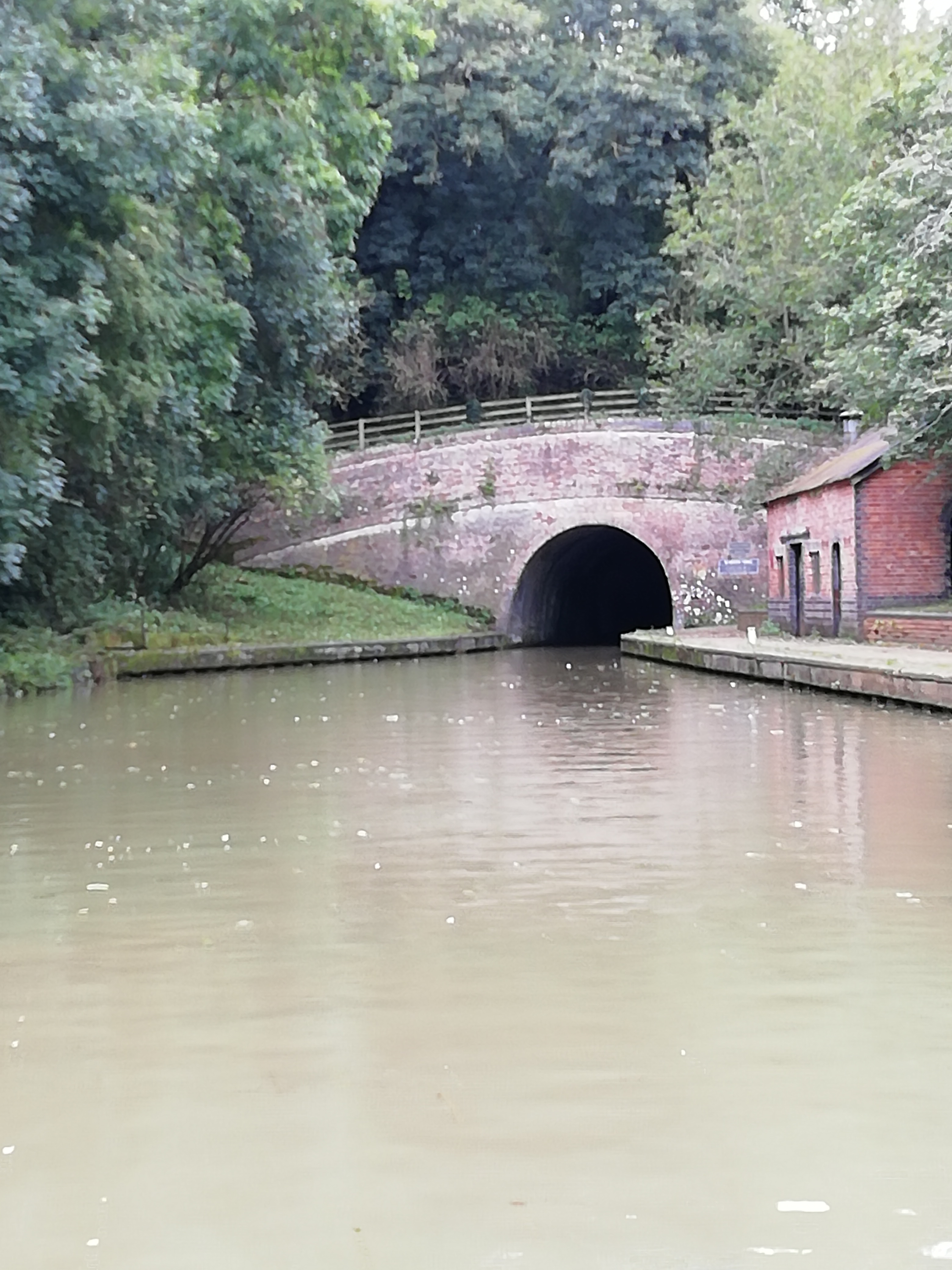
It was early afternoon and the sun was filtering weakly through the beech trees surrounding the cutting by the former leggers’ hut as I started the recording playing from the open cratch of the boat – as far from the engine as possible. It was the accompaniment to our journey into the inky blackness of the tunnel.
I had warned the boat ahead of us of my intentions just in case we scared the living daylights out of them but they were well ahead and actually couldn’t hear a thing over the noise of their engine.
In situ, the constant bass rumble of the engine and intermittent percussive splashes as drips fell into the water around us, or hit the metal shell of the boat added significantly to the atmospheric nature of the piece for me. I was conscious that my anxiety levels began to rise as I listened to the music reverberating around me, as we moved deeper into the darkness. Suddenly at 23.19 minutes into the music, as Jane Ginsborg’s beautiful voice clearly articulated “I had a dream…” the pitch black around me was lit by a ghostly white presence alongside the boat – a calcified side to the tunnel which looked eerily human in form.
Suddenly the music was overshadowed by an abrupt drop in engine revs and a hammering on the roof – Steve’s signal as tillerman of an issue so to the accompaniment of what sounded like chimes at that point, I dashed to the tiller to discover that the boat ahead had veered into the right-hand wall and appeared side on across the tunnel in our headlight. Steve was concerned its sudden collision might have been the result of a loss of steering or power.
Adrenalin pumps at times of stress, and the spoken voice rises in pitch. As I returned to the bow of the boat to see if I could identify the issue ahead, the rising soprano line piercing the darkness matched my increasing tension. Fortunately the boat ahead recovered and moved on before we reached it.
The words of Blisworth Tunnel Blues are based on texts exploring darkness, blindness and alienation, starting with Emily Dickinson’s We grow accustomed to the dark (personally, I don’t think I ever shall) and ending with a section from Byron’s Darkness prompted by the volcanic ash cloud of Mount Tambora’s eruption that blacked out the summer of 1816. Both in their way appear black and bleak but have much to offer in terms of hope and resilience. Dickinson’s poem is about how we humans stumble about until our sight adjusts in darkness. Byron issues a warning of an apocalypse, a call to care for our planet and the threat that hangs over us if we don’t – a message as timely today as in 1816.
This particular journey through the Blisworth Tunnel was the most memorable I have ever taken thanks to George Nicholson’s composition. The music didn’t comfort or console in any way but reinforced the dark, dank, underground experience in the most remarkable way. It was with immense relief that I approached the light at the end of the tunnel.
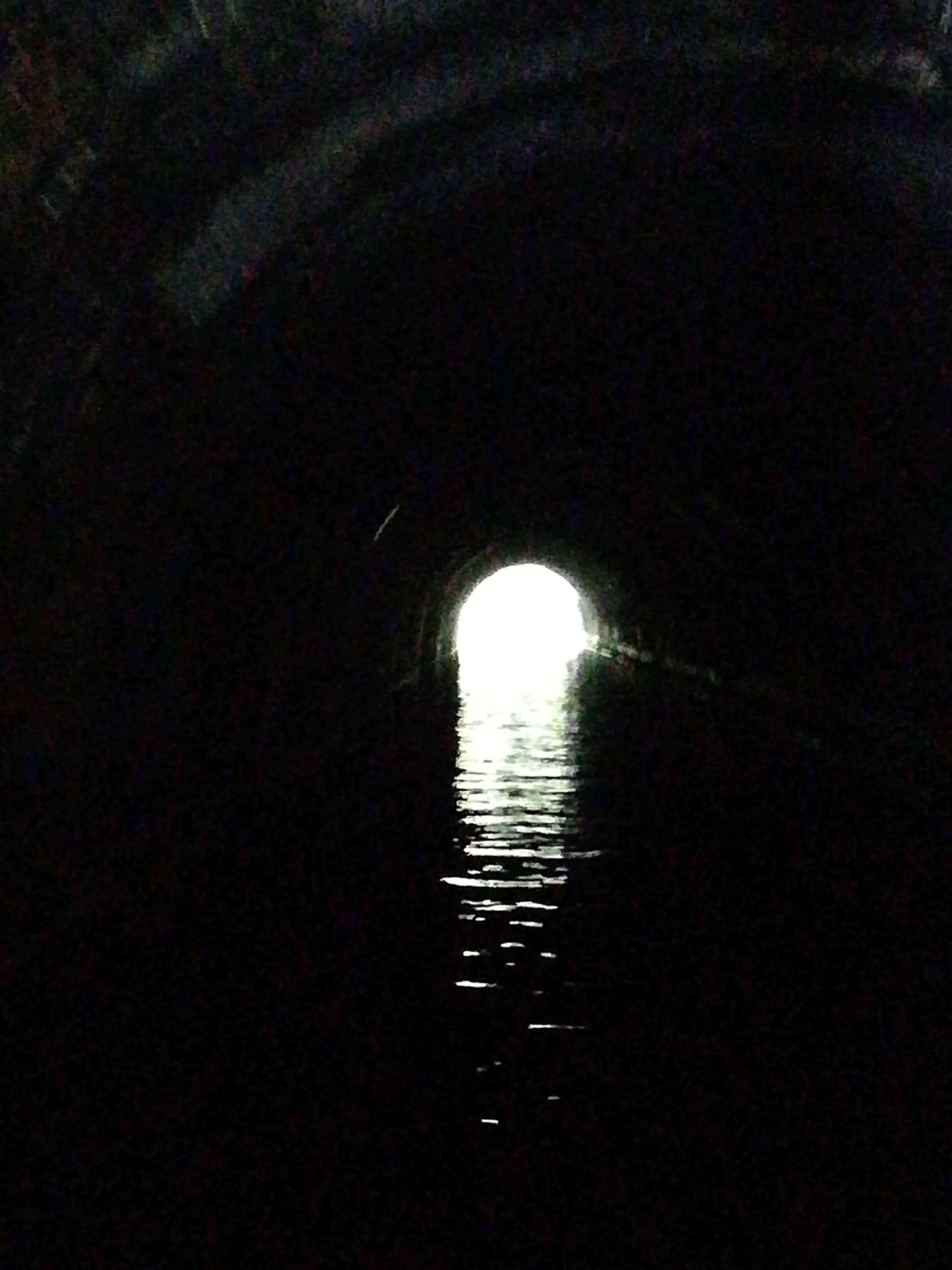
I emerged into the dappled autumn light of the Blisworth end of the tunnel both shaken and stirred by this remarkable experience. I felt like I had been holding my breath the whole way through, and was also acutely conscious of the sweet, musty smell of autumn which greeted me as I emerged into the light. To hear some very short (fair use) clips of our experience then visit pickingupducks on Instagram on 16 October 2021.
I wondered how it would have sounded without the throbbing, percussive bass of the engine and the chiming of the water splashes – perhaps one day someone will take an electric boat through the tunnel to the accompaniment of George’s music. What I would love to experience would be a trip through the Blisworth Tunnel (did I really just say that) on an electric boat hosting a live performance of the piece.
And the timing? It was pretty close to perfect – we emerged at 34.18!
 Pickingupducks
I was present at the premiere of George’s piece. Wonderful music. So pleased that it has returned home after so many years.
LikeLiked by 1 person
Believe me, hearing it in the underground darkness was an experience I don’t think I shall ever forget!
LikeLike