Six months ago we started travelling the 46 miles of the Staffordshire and Worcester Canal. This week, 250 years after it was first opened, we finally completed its 43rd lock and passed under its final bridge. It has been a fascinating lesson in history, geography and England.

As slow travel goes this is probably a record for us, 46 miles in 6 months, but we have retraced our steps and veered off to explore to the Mersey and Llangollen in that time too.
The Staffs and Worcs is like all canals we find, unique. It traverses market towns, quaint villages and pockets of industry. In its commercial heyday it was a noisy, constantly moving conduit. It bustled with barges carrying pottery from Stoke, glass from Stourbridge, carpets from Kidderminster, bricks from Wildwood, agricultural produce aplenty, coal from the Littleton pit, and iron from the works at Gothersley. The Staffs and Worcs connecting as it does to the mighty River Severn which heads to the South West and the Port of Bristol enabled goods to be transported locally, nationally and internationally.
The only barges using the waterway now are historic craft or commercial fuel boat. Whilst quieter than 250 years ago, this last stretch has been busy for us with happy hirers passing on holiday boats, a vital commercial aspect of the waterway today.
The weather is different too. When we turned onto the Staffs and Worcs last winter passing under bridge 109 at Great Haywood near the sumptuous Shugborough Hall, we had iced ropes and chill fingers. We’ve ended in April sunshine.

Within minutes of leaving Great Haywood you can be forgiven for thinking you’ve inadvertently gone to sea as you experience Tixall Wide. This huge stretch of water resulted from a wealthy landowner stipulating the view of a lake not a canal if the waterway wanted to cross his land.
Whilst Tixall Hall no longer exists to view the magnificent Wide, its Elizabethan gatehouse remains. From here we travelled south, through kingfisher country and the valleys of the rivers Sow and Penk. In early December we were moored by the moated luxury hotel of Acton Trussell a stone’s throw now from the M6 and M6 tolls carrying today’s commercial goods. Then into Penkridge with its many magpie buildings, to the summit at Gailey marked by a roundhouse that dates from 1895 when Nelson won the Battle of Trafalgar.
The canal winds down through heathland until suddenly industry intervenes with siren threatening chemical works and a recycling plant plus bio digester, under the M6 and M54, contrasting with The Narrows living up to their name before Autherley Junction.
This connection to the Shropshire Union Canal marks another changing point in this multifaceted waterway. It was to here that we came the first time, winded (turned in narrowboat speak) and returned to Great Haywood, from whence we took a loop into further reaches of Staffordshire, Cheshire, and North Wales. We eventually returned to Autherley Junction down the Shroppie after travelling its 66.5 miles and 47 locks.
Although on a map you can see how close the Staffs and Worcs runs to the Midland heartlands of Wolverhampton and Birmingham, it maintains a rural feel. Highlights on this southern section include the patriotically colour coded Bratch Triple Locks, the haunted Awbridge lock allegedly constructed by French prisoners captured post Trafalgar. I’d like to think they would have been pleased to see nb Preaux pass through their beautifully constructed and unique lock and bridge. They might have appreciated the reminder in their native tongue of peaceful meadows.

Through Swindon, Stewponey, into beautiful wooded surroundings at Kinver with its fascinating rock houses hewn from the soft orange sandstone and through Gibraltar to Kidderminster of carpet fame.
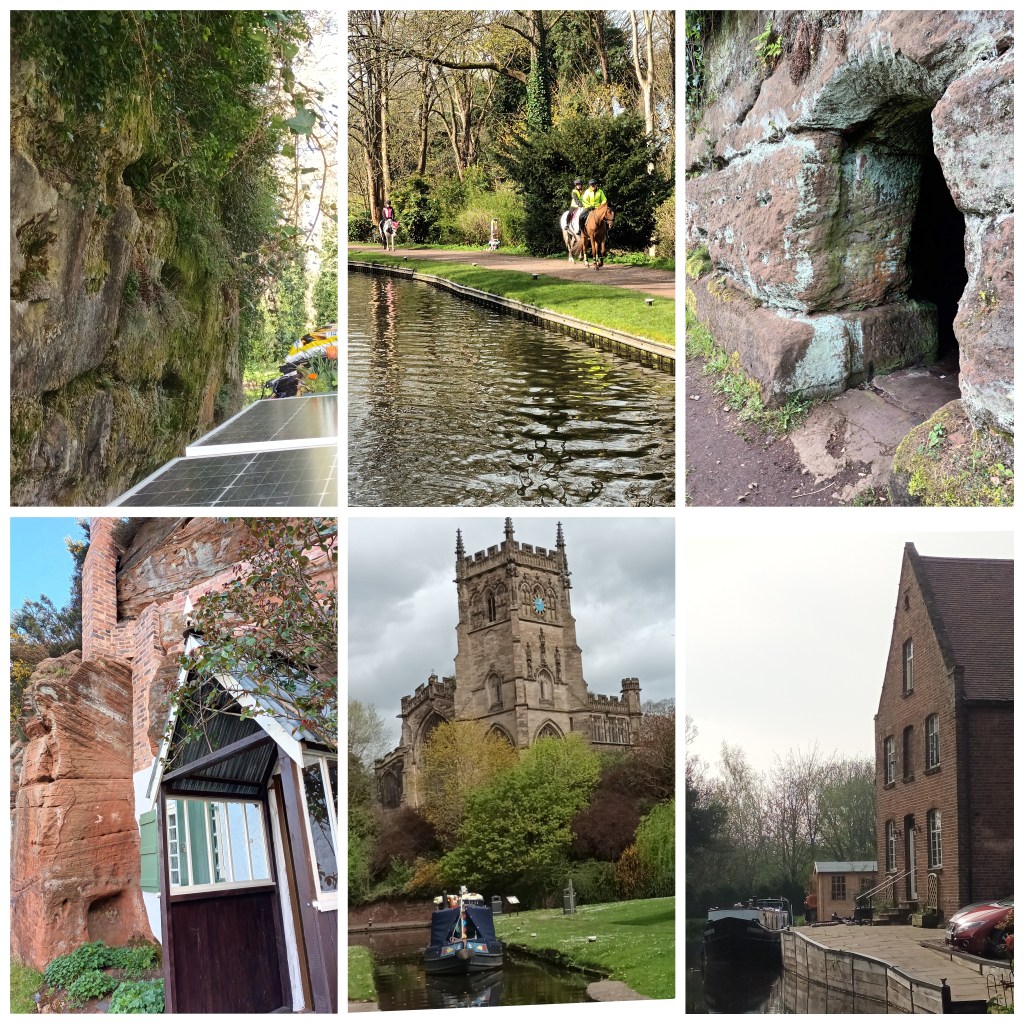
Sandstone outcrops and wooded glades often shaded blue at this time of year bring the canal abruptly it seems, to its end at Stourport. Here exuberant seaside gulls and stomach-churning fairground rides, contrasts with the formal surroundings of an inland trading port with its mellow clock in the Tontine tower, genteel yacht club and formal riverside gardens.

Within minutes of the final lock it’s through two staircase locks within Stourport Basin and suddenly you’re disgorged onto the wide reaches of the River Severn.
 Pickingupducks