Water is a major global problem for us all, and it’s getting more acute.
The United Nations General Assembly back in 2010 recognised access to safe, clean, and affordable drinking water and sanitation as a basic human right.
Living and working afloat makes us hugely aware of water – we need it to stay alive and afloat as well as to travel. You, like us, need water for your survival too, even if you don’t have to fill up your water reserve regularly as we do (we’ve filled up our tank 36 times in the past year).
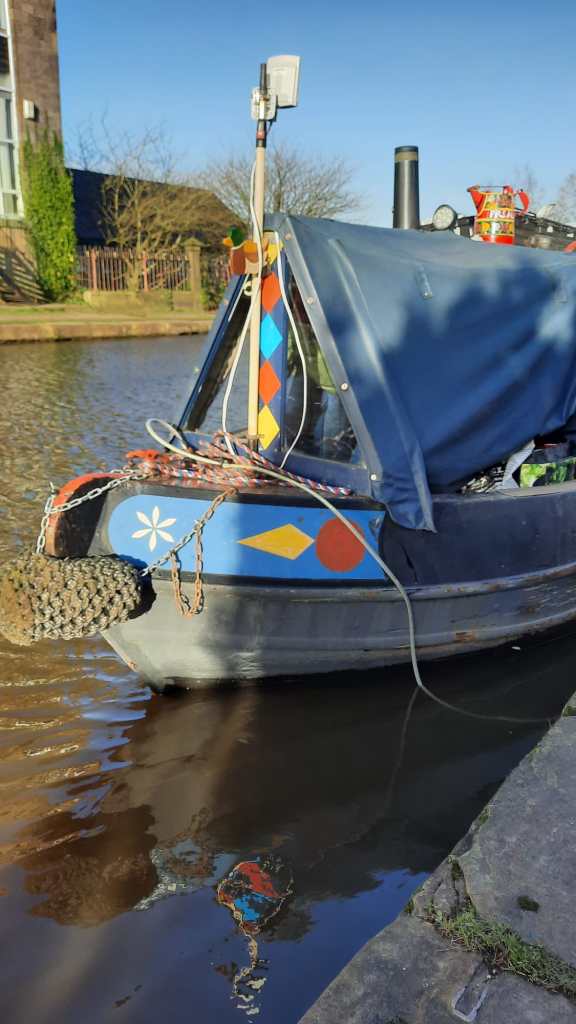
Conserving water as we travel is an essential. Where we can we share wide locks with other boats. We are conscious of not emptying or filling locks unnecessarily, so waiting for other boats to come up or down before we move wherever possible.

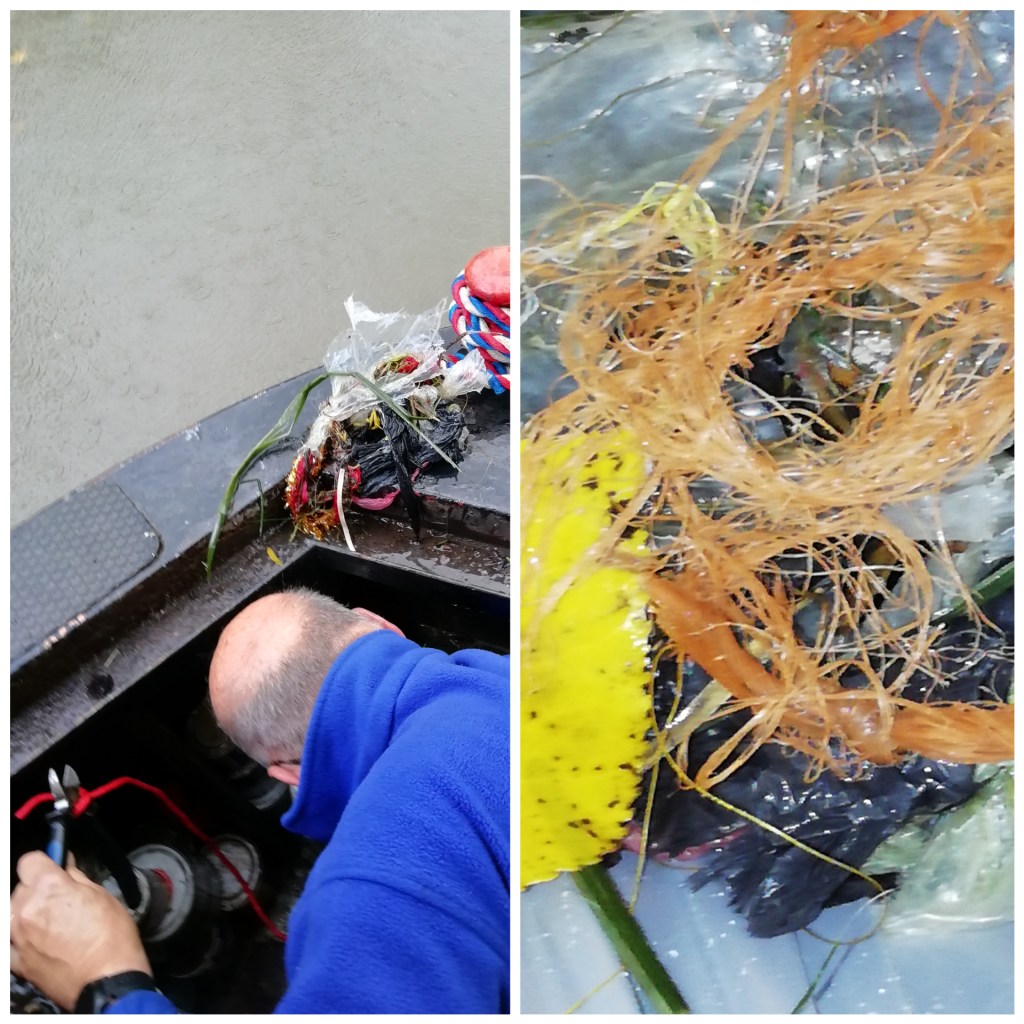
On the River Severn last month we were made very aware of the evident pollution in and around the water. Sewage was an issue in the water there too. Plastic and rubbish pollution is as apparent on the canals as the rivers. We try to fish out what we can, and not to add to the problem.
We’re conscious of how we use the water we store on the boat so we don’t have to fill up too often or waste the water we have in our tank. Washing up water, and shower water all provide useful roofgarden watering sources. Perhaps it seems a drop in the ocean when we look at the scale of the issues surrounding water availability but every little helps. We are also aware of the distances to travel between sanitation waste disposal sites so we don’t get caught short.
Water is a major global problem, with over 2 billion people according to the World Health Organisation (WHO) living in water-stressed situations, a problem getting worse its climate change and population growth. Clean, safe water is not available either to over 2 billion people meaning health is being compromised, and many are dying as a result.
Sometimes too much water with floods and tsunamis creates as much difficulty as drought or pollution.
In the UK we might think there is no problem, but a research project is underway to determine exactly what the situation is in terms of water and sanitation access among boaters, van dwellers and others with alternative off-grid lifestyles.
Ruth Sylvester from the University of Leeds is looking at water insecurity and equity among off-grid dwellers. She’s part of the Water-WISER Centre at the University of Leeds. Ruth and Helen Underhill , a liveaboard boater and researcher with the Water Security and Sustainable Development Hub at Newcastle University are keen to talk to anyone living off-grid.
In boater terms that means they want to hear the situation and experiences of boat dwellers on moorings with services, moorings without services, continuous cruisers, boaters with accessibility issues, full time, part time liveaboards and those who live on narrowboats, cruisers, widebeams, Dutch barges – you get the picture!

Leeds’ Water-WISER Centre = Waste Infrastructure and Serviced Engineered for Resilience – a higher education acronym if ever I heard one! Their work is seeking to have global impact combining as it is with research from Loughborough University’s Water and Development Centre, Cranfield University’s Water Science Institute and the Water, Public Health and Environmental Engineering group also based at Leeds.
If you can contribute to the factual content and perspectives of their research in any way do email them – helen.underhill@ncl.ac.uk or Ruth Sylvester cnres@leeds.ac.uk
 Pickingupducks