
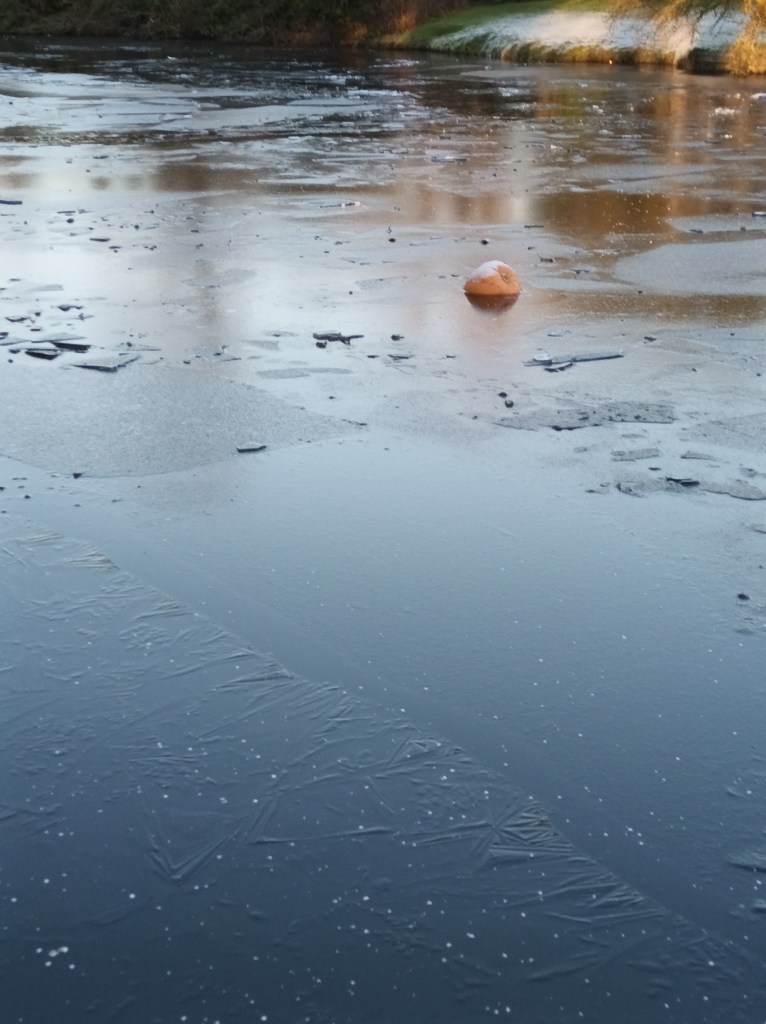
Our floating home and office is currently trapped in rural Staffordshire with us inside. We are quite literally frozen solid in the canal, unable to move because of thick ice.

To move would damage the blacking that protects the steel hull, and we’ve only just had the boat reblacked. That’s a regular maintenance job every few years but if we can make the blacking last as long as possible, that’s good.
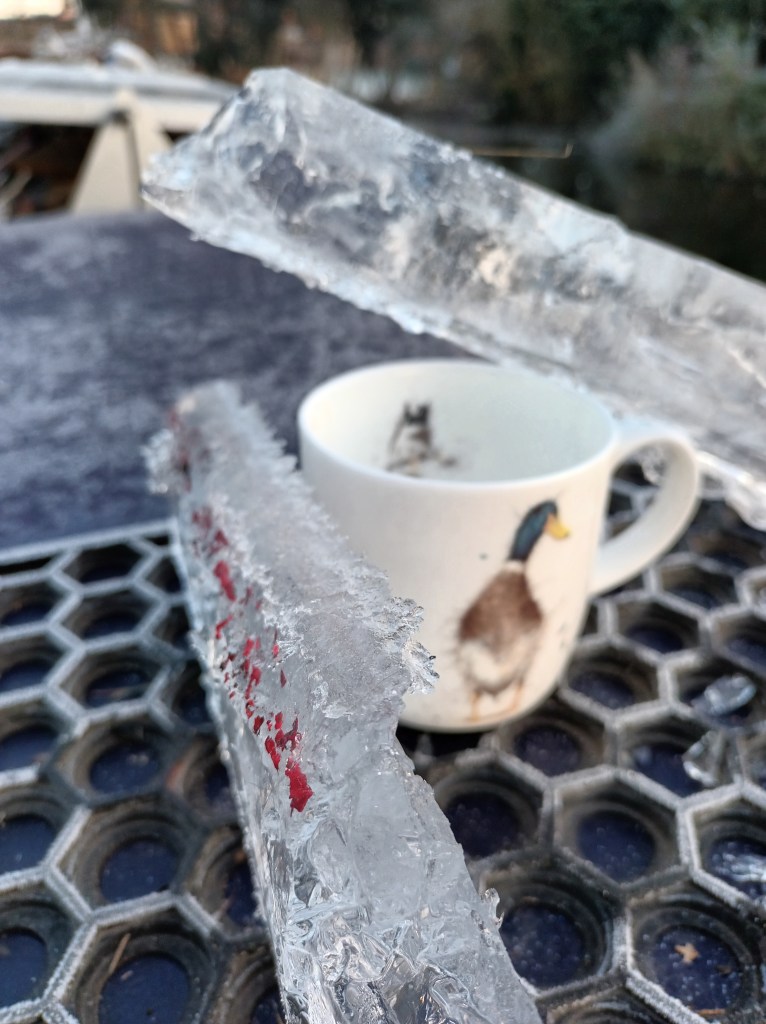
Moving through ice can also put the engine under considerable strain which could be costly, and send thick sheets of ice to hit other boats and damage them. This is a particular issue if fibreglass boats are involved. So we sit tight when it’s like this, and wait for the thaw.
In the days when canals were essential commercial thoroughfares with barges transporting everything from cheese to coal and wool to Wedgwood China, canals freezing over had huge economic impacts. Keeping traffic moving was vital to keep factories and furnaces operating. Ice breakers were employed rapidly. Now you can see them as exhibits at canal centres like Foxton or museums or a few have been converted into floating homes.
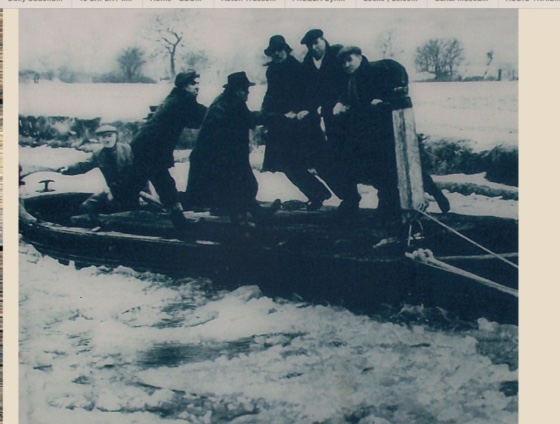
The early ice breakers were made of wood with iron plates nailed to the hull. They were horsedrawn – as the ice got thicker more horse power was added. Some records talk of up to 16 horses hauling a single ice breaker through the cut in bad weather. Whilst the horses were pulling the crew were rocking – literally. Up to 10 people stood on the boat and gripped a metal rail in the centre as they rocked it from side to side to create waves that shattered the ice. It was an incredibly dangerous job. Boats could and did tip over, trapping the crew.
These days there are no ice breakers unless you count the coal boats carrying essential warmth in terms of diesel, gas, logs and smokeless fuel to boats across the network. When the ice is too thick even they can’t get through and some have been forced to deliver gas logs and coal by road but not every boater is easily road accessible.
The Staffordshire and Worcestershire Canal where we are moored began to freeze at the end of last week. Initially the ducks were alternately swimming and skating but over the weekend the freeze began.
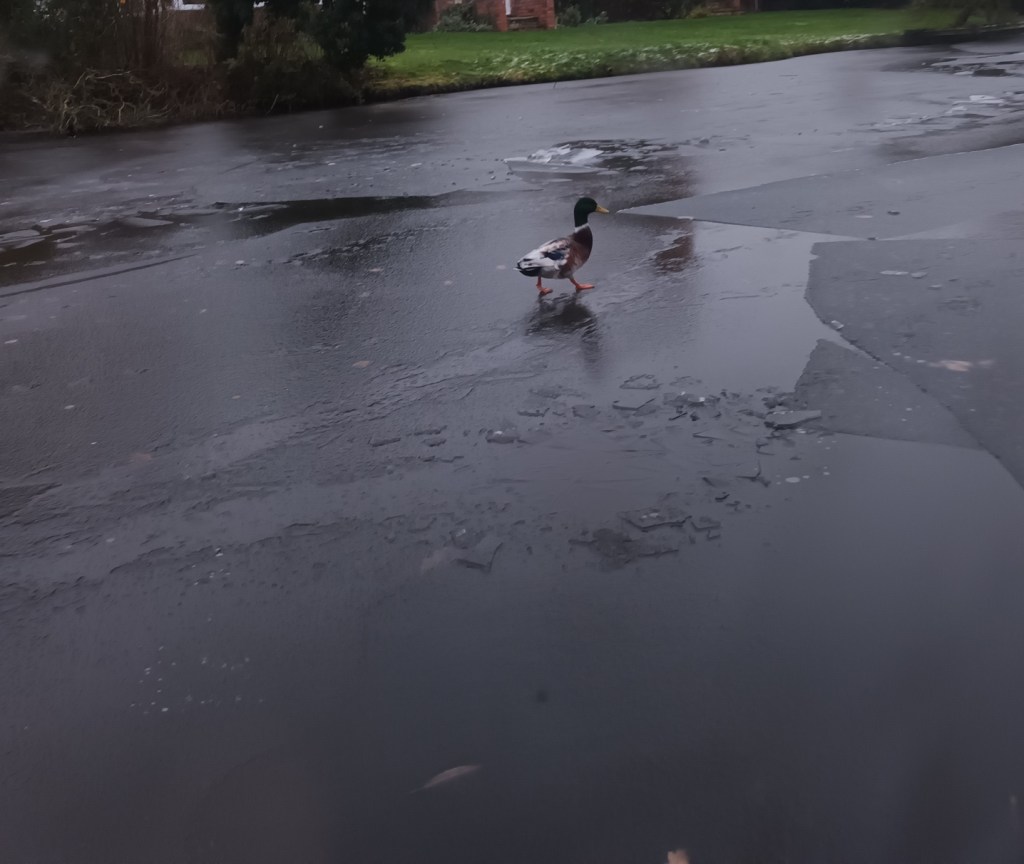
The boat feels different when iced in and we’re particularly aware of that at night when everything is quiet. It groans and creaks against the ice. As we move around on board the boat doesn’t rock as it usually does but stays oddly stationary. Other sounds also change. We’ve had the thud of icicles dropping onto our metal roof from trees above.
The swans and ducks have stopped knocking on the hull for food or nibble off any clinging weed. In fact by the time the canal iced over completely they have effectively disappeared. Presumably they’ve removed themselves to somewhere with a ready natural food supply and less ice.
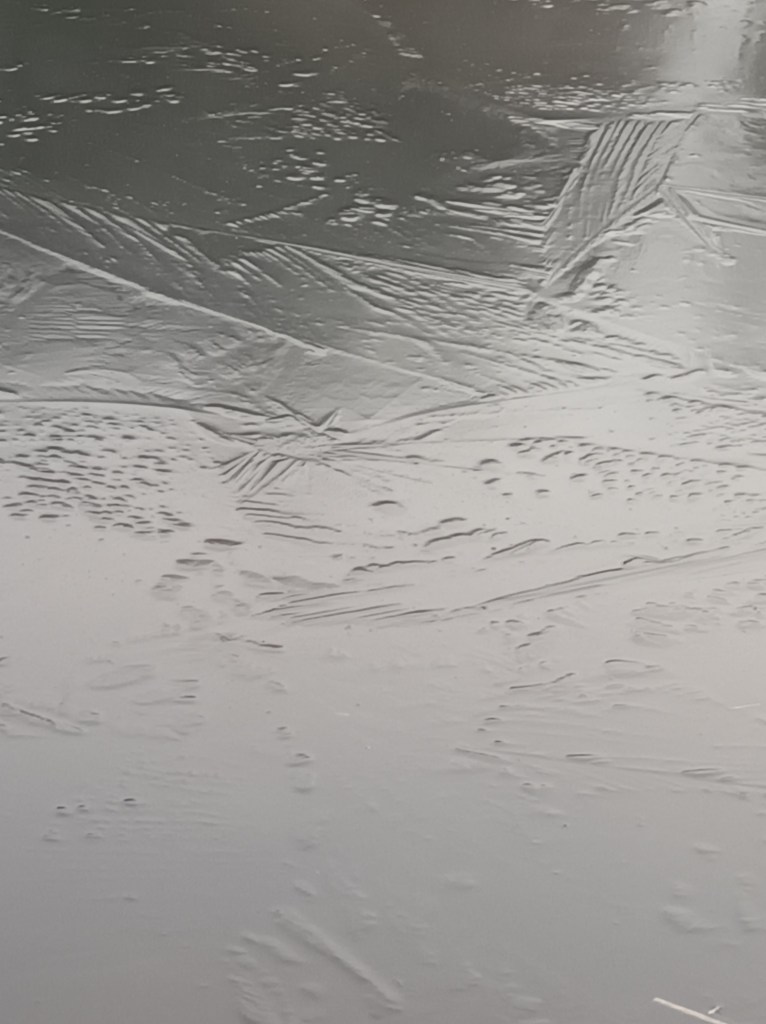
Minor thawing during the day has happened a couple of times but only in areas that got the sun, and by 5 in the afternoon any melted water was refreezing. The thawing and refreezing leads to changing patterns in the ice which can be quite beautiful close up.
We have a major advantage being frozen this week as we have the car with us. That means life becomes instantly much easier. We can shop more easily. The nearest convenience store is 1.8miles from our landlocked location, which is not a bad walk but a slippery one at the moment With the car we can get to a supermarket and manage a larger, cheaper shop.
Having the car also means we can access the service point to empty our toilet and rubbish too despite being unable to move the boat. Covid laid us low in the summer and also encouraged us to buy another toilet cassette so, if the worst came to the worst, we could now last for a week with both of us on board without a crisis. Like all boaters we do use facilities when out and about to avoid filling up our own! Another positive of having the car with us – supermarkets have loos but convenience stores tend not to!
We topped up the diesel in Nantwich in September when we last saw Jay on coalboat Bargus and we haven’t done huge mileage since as we had 2 weeks in dock for work. That means we have fuel to run the engine for a few hours every day to top up the batteries and keep us in power as we’re not getting much solar at the moment. One advantage of the weather though is that we don’t need to power the fridge which uses the most electricity of any of our devices – we just keep things frozen and chilled by putting them in the cratch or outside!
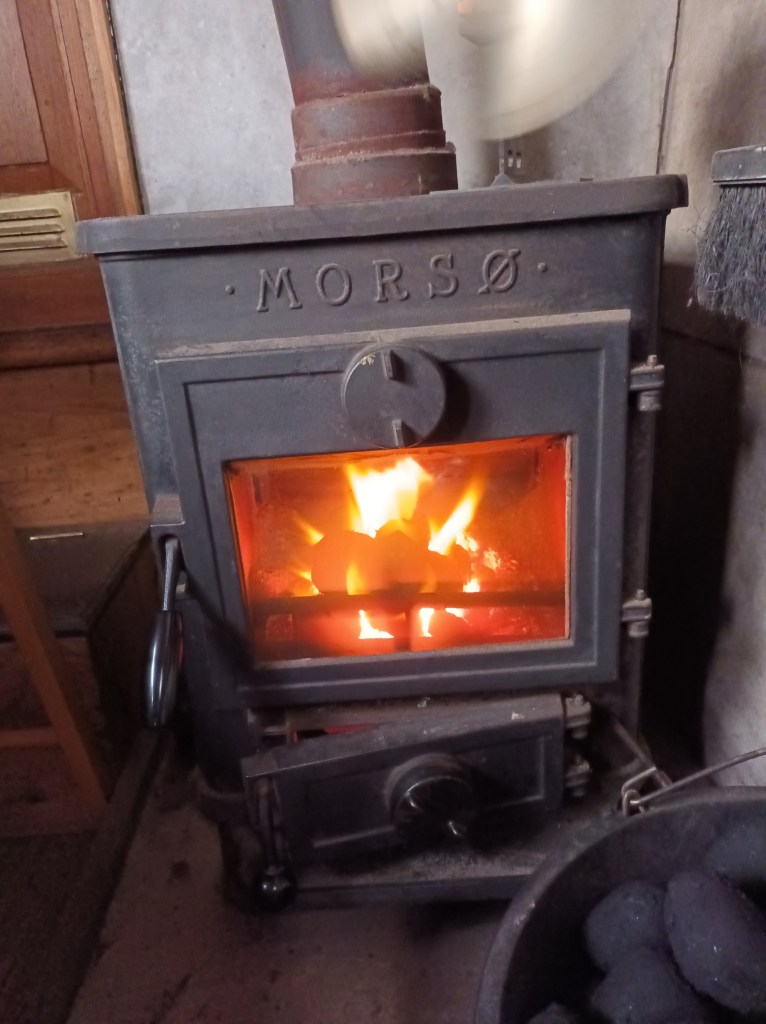
We have plenty of fuel for the stove which is going 24/7 and keeping us delightfully and vitally warm inside the boat. We restocked supplies three weeks ago.
Fortunately we filled our water tank completely before we moved here 2 weeks ago. That’s a relief because water is very heavy to carry and we only have two 5litre bottles to fill. Water pipes on the system are also causing problems freezing and bursting. In many cases. We are seeing regular updates from Canal and River Trust about frozen pipes and repairs across the network. The freeze is keeping them busy and we’re grateful to their staff for working hard in su h gruelling conditions.

For now, we sit tight, keep the stove lit and walk the dog only on a lead, much to his annoyance. He loves sniffing at the canal edge of the towpath. Being in his 15th year he’s a bit wobbly and the last thing we want is for him to fall onto and through the ice, so lead walks it is. He, like us, will be glad when it thaws, and then we can continue our journey even though we have no idea where we’re heading.
We’re pointing north so once we’re free that’s the way we’ll head!

 Pickingupducks
Roll on next week Deena! This seems to have been an amazing experience for you, let’s hope once in a lifetime, but it will be good to be back to some sort of freedom. For you two though, just another unexpected set of challenges you’re taking in your stride. What a marvellous pair you are!!
LikeLiked by 1 person
Thank you- we’ve been frozen in each year so far but this year seems much thicker ice!
LikeLike