
Sleep has come easily this week. As the rain regularly patters or thunders on the metal roof of our home, it becomes the only sound – white noise that drowns everything out and sends you to sleep. On the other side of the coin, when you wake in the velvety darkness wondering what woke you, it takes a moment to realise the cessation of the rain and lack of noise is the answer. Roll over and the resulting gentle rocking of the boat lulls you back to sleep.
When it rains like this, our regular nighttime owl chorus falls silent. Maybe they can’t compete or are too busy staying warm and dry like us. In the day, the birds are also hushed or drowned out with the exception of the ducks who delight in chattering away in the showers.
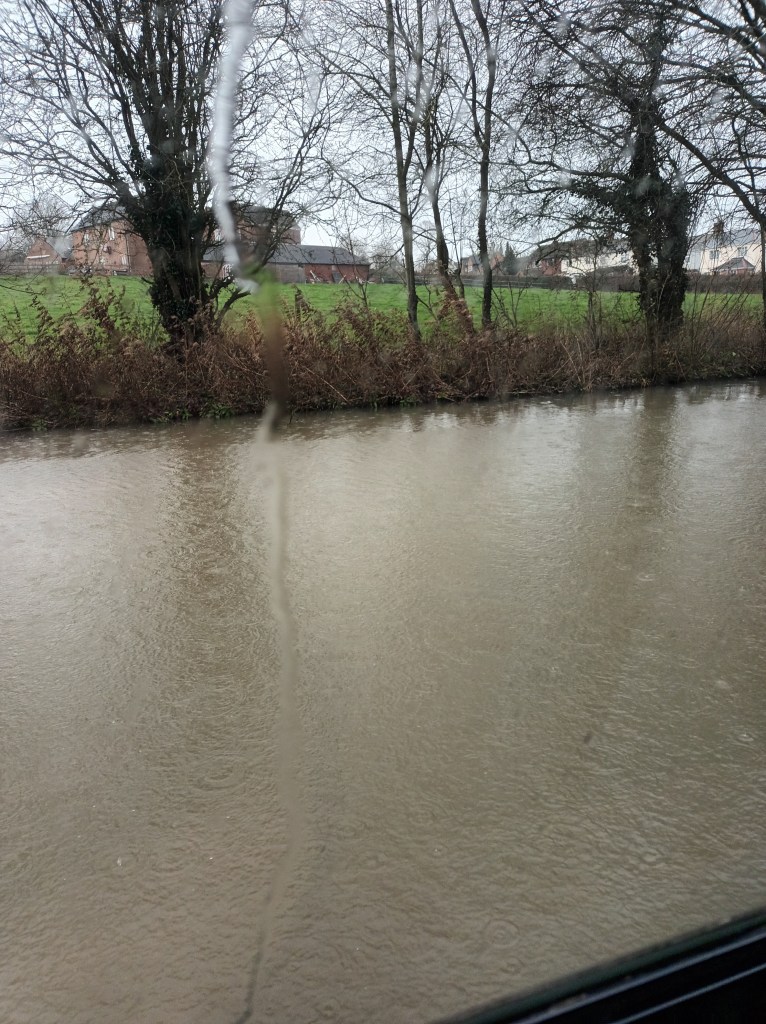
During the day as water pools on the towpath alongside, and streams chase down the windows obscuring the view, when going out for long walks seems too great a palaver – waterproof trousers, coat, boots, hat, gloves – I’ve been planning and it seems utterly farcical. I’ve been planning for a drought.
Planning ahead to better, brighter times is essential at this low point of the year.
Last year, things got very bright as the year progressed. Temperatures rose and rose as we all know, and at times, the metal shell of our home was just too hot to touch outside. That put paid to the veg garden on the roof such as it was. The garden was also hit by a double blow – low coal usage last winter.
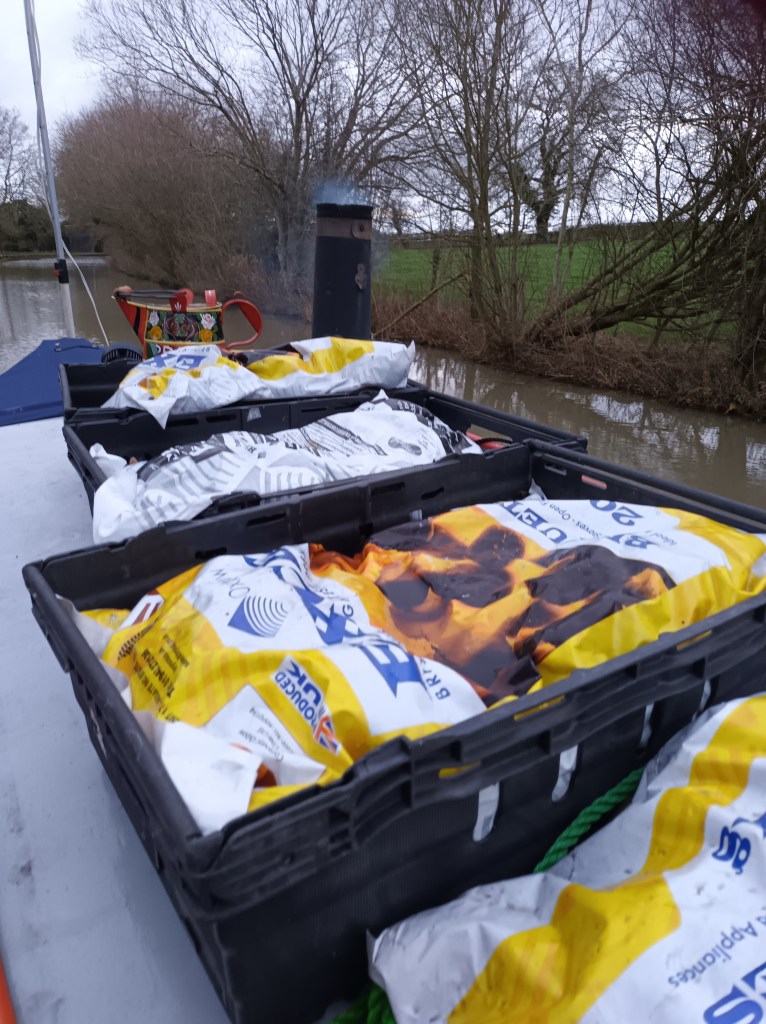
We upcycle between 4 and 6 supermarket bread trays into dual-purpose roof containers on our boat – coal bag/wood store by winter and roof garden containers for spring, summer, and part of autumn. Last year, coal took up most trays, leaving only a couple for the garden. Those couple were duly planted with spinach, and lettuce, the cut-and-come-again crops, which usually work well in a limited space. But then temperatures rose and kept rising. Plant foliage baked from above and roots roasted from below. Water levels dropped and taking water, even a bucket or two to feed plants, when every drop might mean continued navigation seemed selfish. I gave up and so did they.
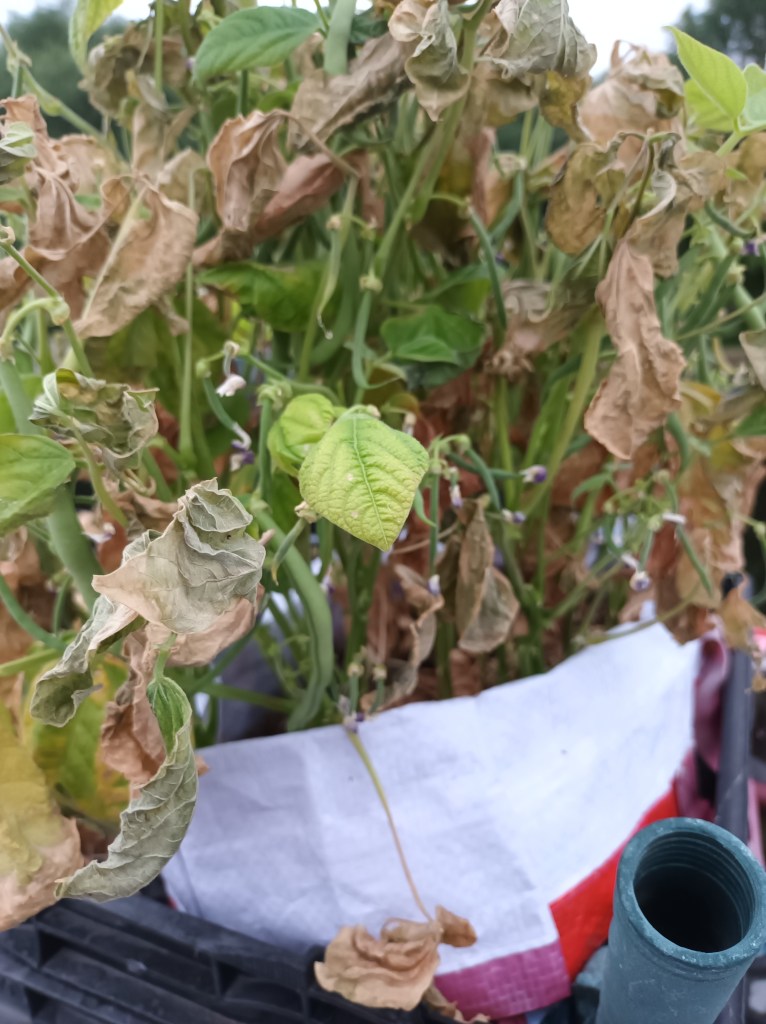
As rain pools around me (fortunately outside) I am planning for drought and empty coal trays for a productive roof garden again. It needs to be productive in a low growing sort of way – learned my lesson in the past with a hugely successful potato bag which grew like topsy. So well did it grow that we had to remove it from the roof because we could no longer see round it to navigate safely. It became a daily workout, moving it into the cratch, onto the towpath when we moored and back aboard before moving off.
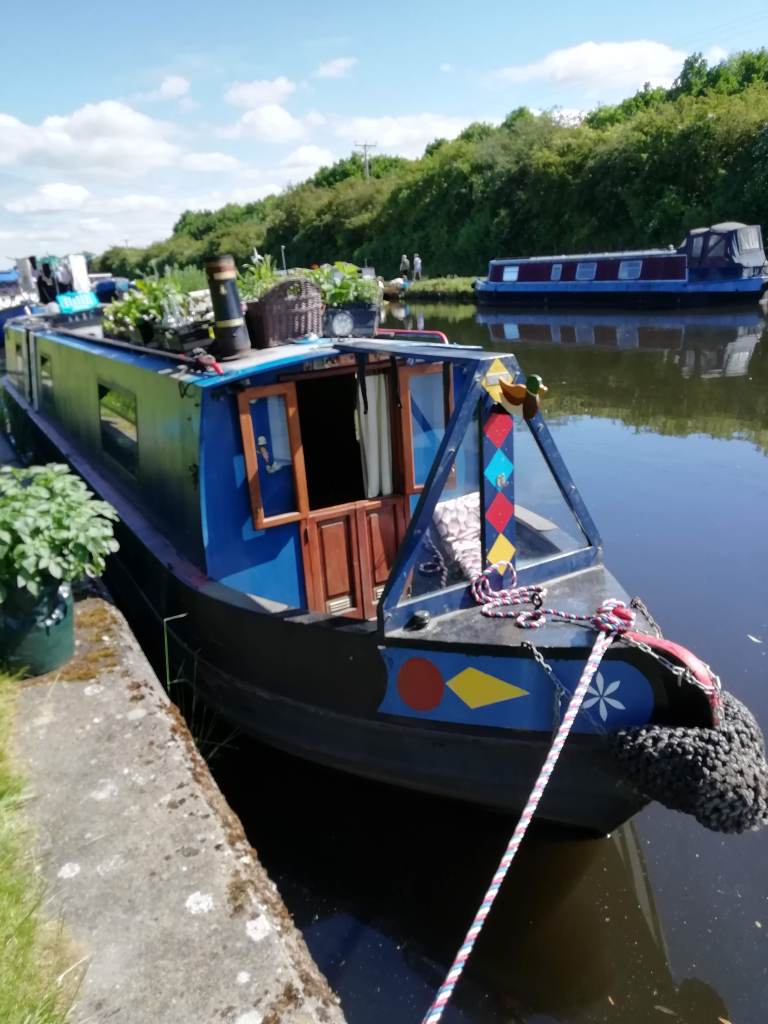
Its demise came before the longest, deepest and highest tunnel above sea-level, the mighty 3.5 mile Stanedge. To ensure safe passage everything has to come off the roof into the boat, all equipment and plants. There was just nowhere for the potatoes and nothing to do but to harvest them which gave us spuds aplenty!
For safe navigation and productive gardening this year I shall stick to low-growing, drought resistant planting. Thrillers, spillers and fillers will still be the planting plan – something to delight the eye and the stomach, to add insulation to the roof and keep the inside cooler than it might otherwise be. There may be a bucket or two to complement the growing trays and add (limited) depth. I just want to create a lush, productive roof garden once more.
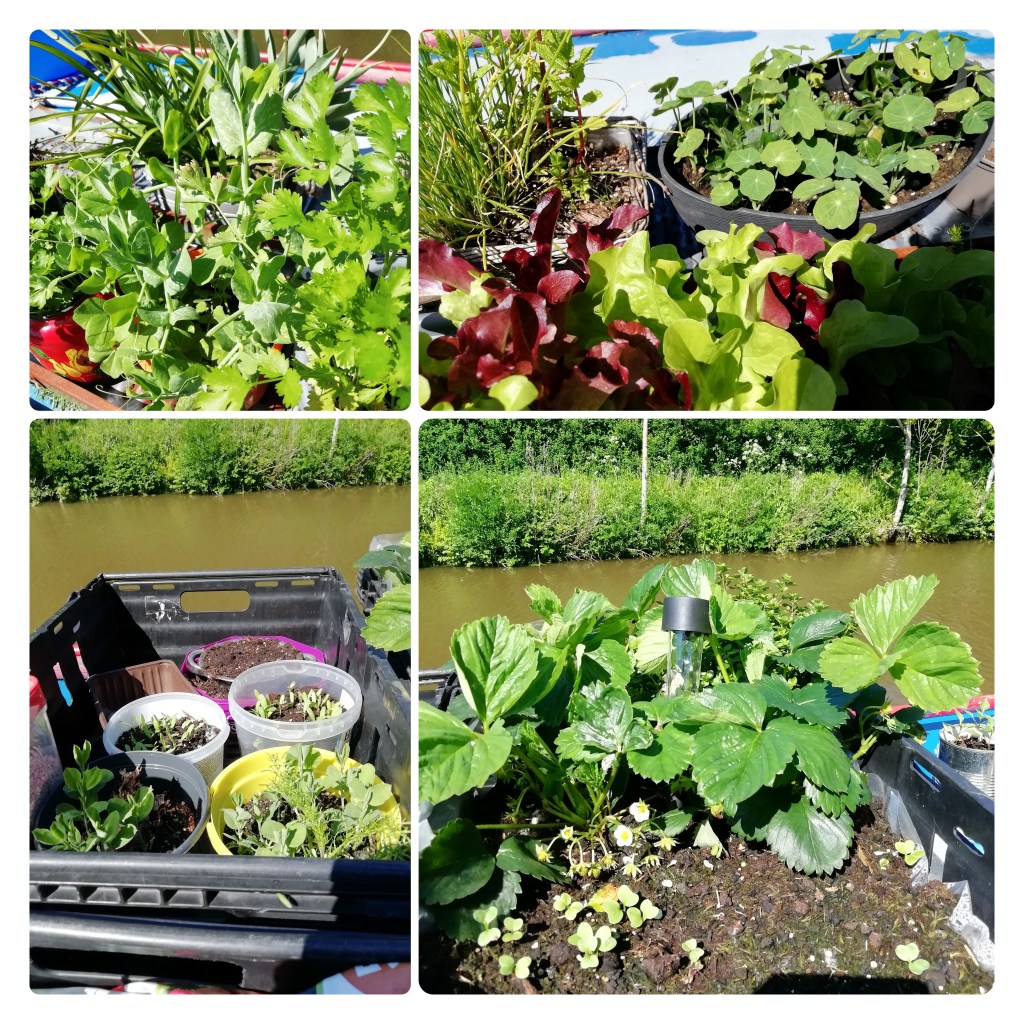
Lots of mulch and dense planting of drought resistant and drought hardy crops will be the order of the day.
So what to grow? Herbs like creeping thyme, the only salad crop will be rocket and tunbling nasturtiums will bring colour to the roof as well as a delicious peppery tang to salad bowls. Chillies, miniature Bell peppers and mini aubergines from plugs stand a chance of producing something.
Beetroot, carrots, and parsnips can do well because they are grown deep in soil, but to be deep enough means sourcing and sustaining bigger containers which can make navigation tricky. Buying that veg in is likely to be cheaper than taking up growing space for a long time to produce them in what really is limited space. Chard could be productive in their space instead, a cut and come again crops. Tumbling cherry tomatoes can work, if I’m prepared to water them without guilt.
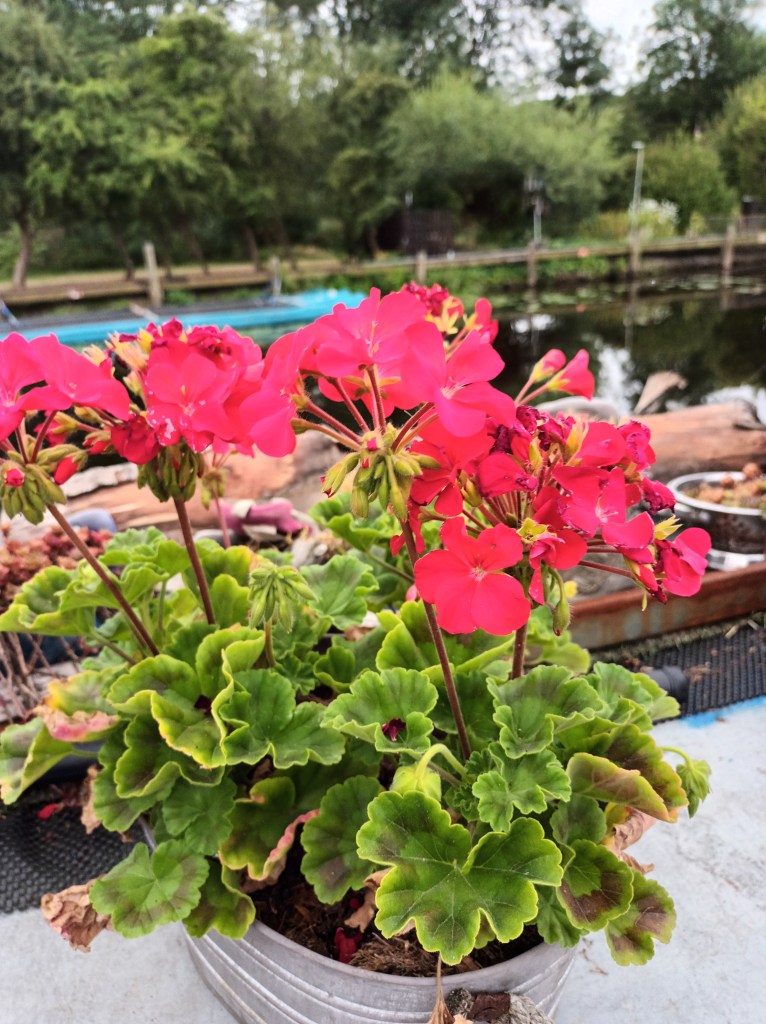
Splashes of colour not only attract insects away from inside the boat but are essential for passing bees. So sunshine yellow bidens, (beggar ticks) and maybe the blue swan river daisy brachyscome. Pelargonium survived last year and distract insects. Sedums grow well on the roof in old boits and containers. I’ll also add some cornflowers I have and as many herbs as I can. If anyone has any other ideas – please share in comments!
Buying good seed or plants is a sensible investment. My first stop for flower seeds for cut flowers and I highly recommend it to all gardeners, boating or land based, would be Higgledy Garden. https://higgledygarden.com/ Boat dweller Ben and his sidekick Flash do an excellent job for us all, and particularly for bees so do buy from them when you can.
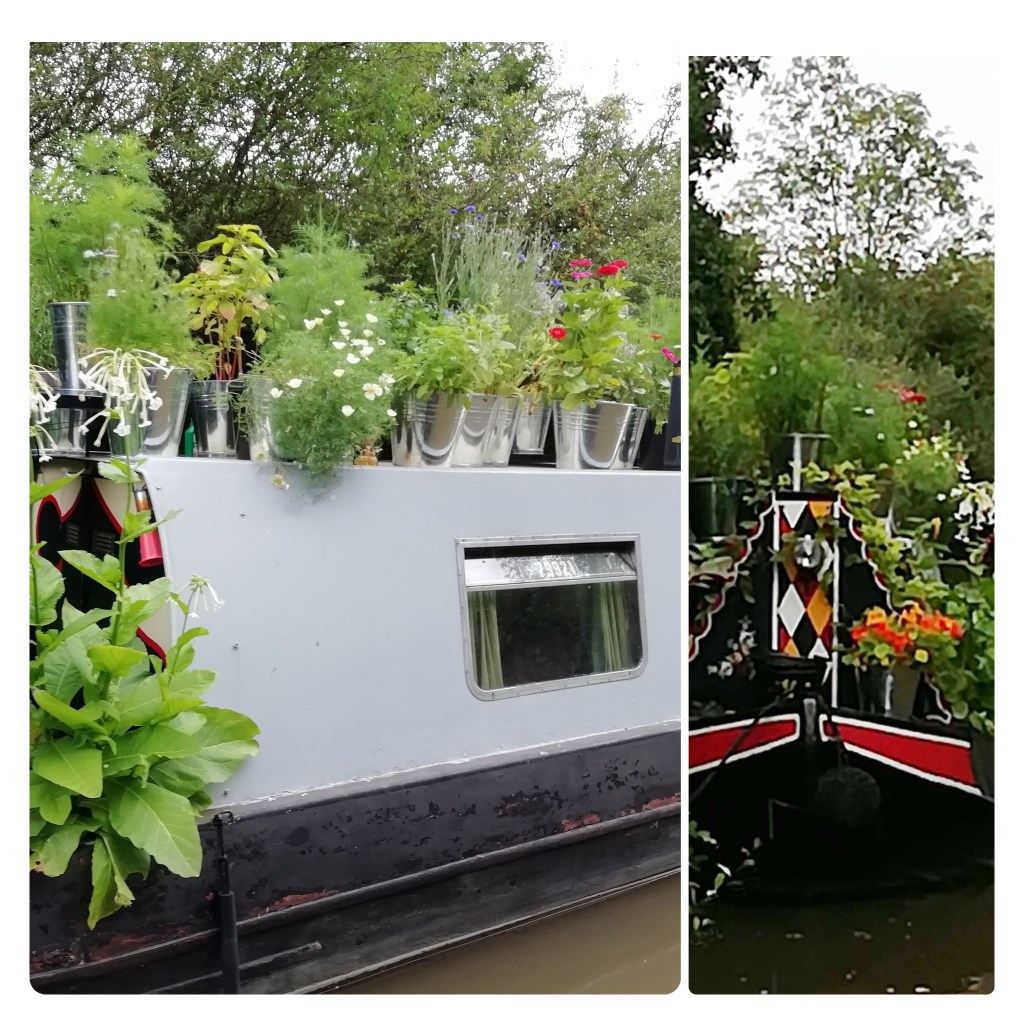
We all benefit from planning and thinking ahead from having goals large and small. As Blue Monday looms, I recommend forward planning for work, life, and leisure as a positive, productive, and pleasant as well as essential way to spend a wet hour or two.
 Pickingupducks