At work or at home how often do you think about flicking a switch and getting power to illuminate your life or recharge your devices? Bet you only really think about it when you flick the switch and nothing happens?
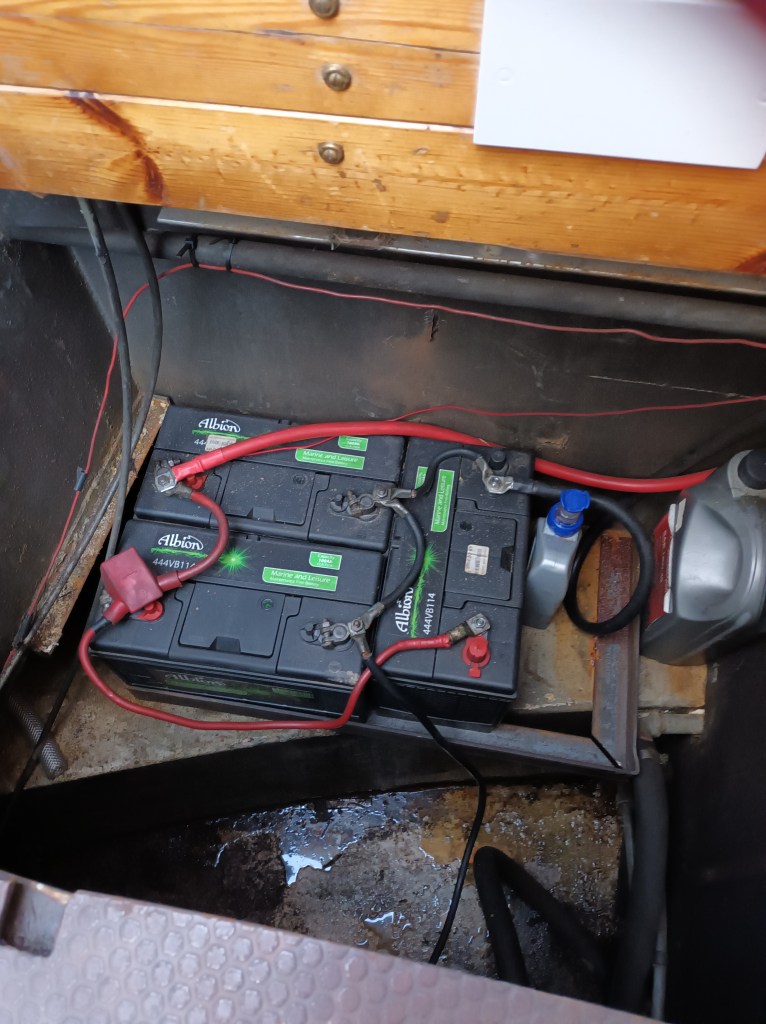
Living and working off grid as we do 24/7, power is not something we take for granted, or indeed can afford to take for granted. All our power is drawn from 3 x 100 amp hour leisure batteries neatly stowed under the floor of the rear deck in the engine bay. We also have a small starter battery which starts the engine.
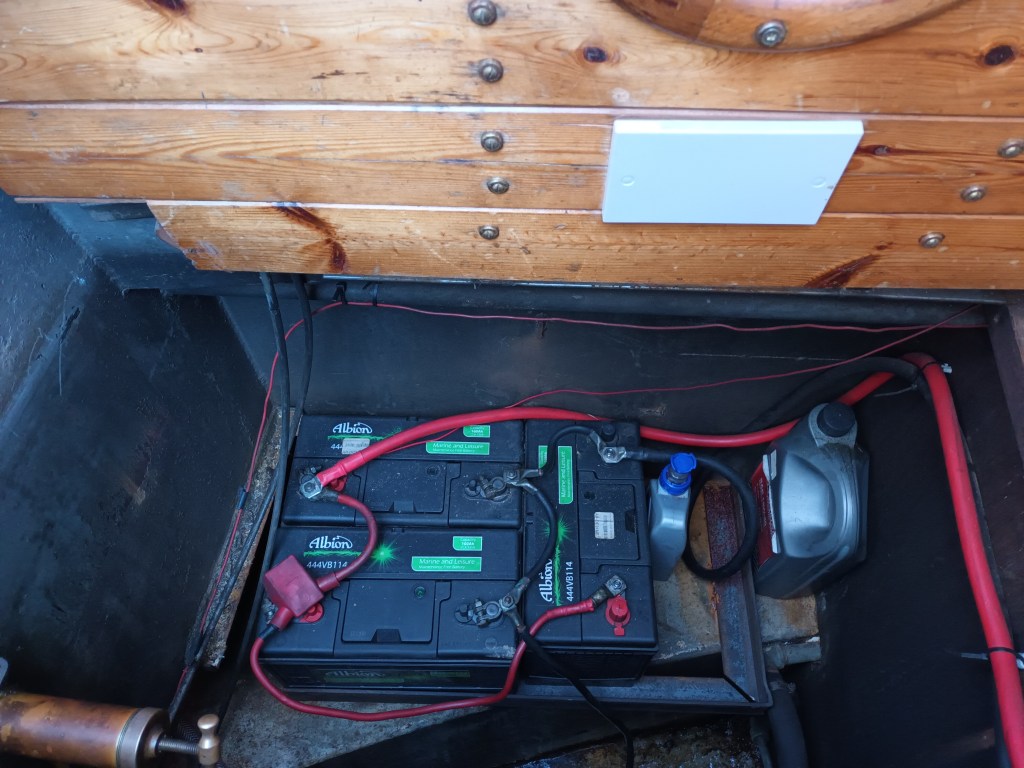
Initially those leisure batteries were required to charge the lights, a water pump and a camping fridge. Since then we have significantly increased the amount of power we require daily – we now have a fridge with a mini freezer section, a washing machine, a flushing loo, an Internet router, our phones and computers.
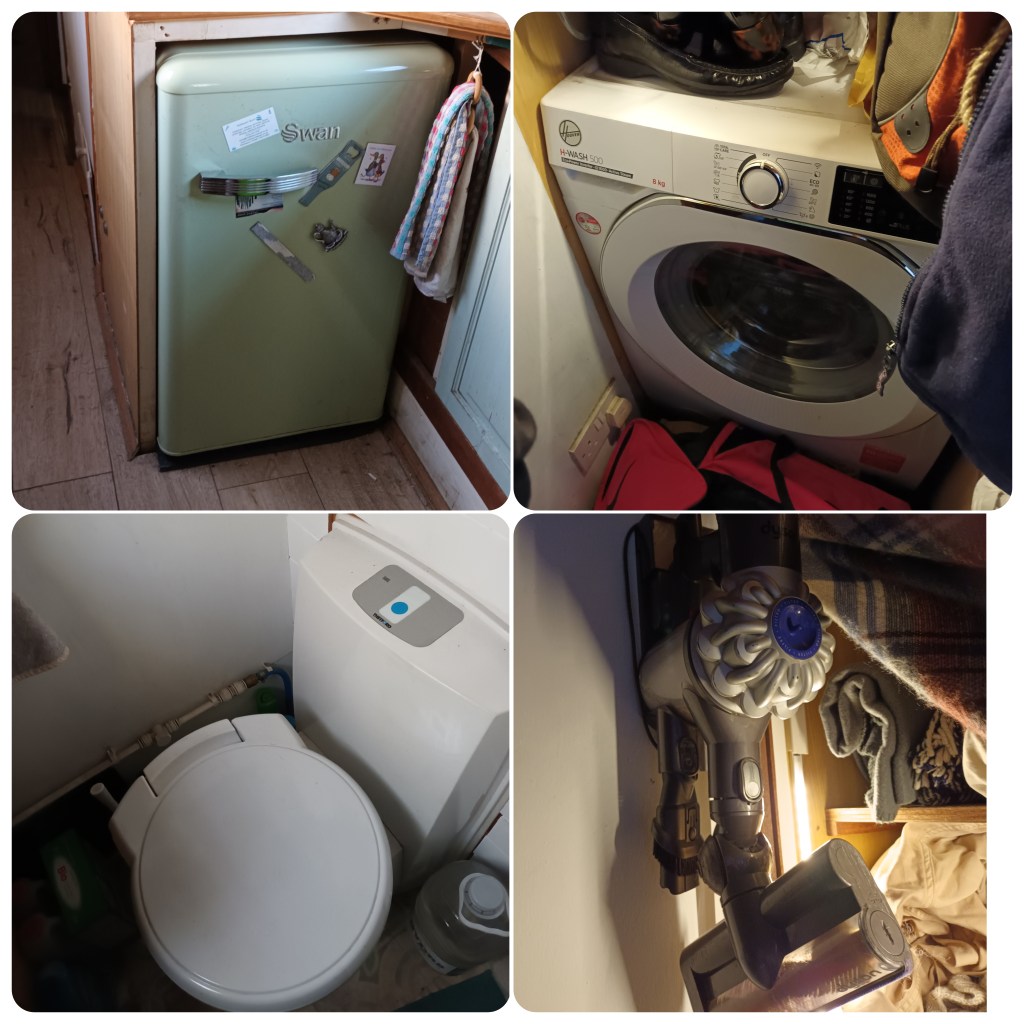
We charge devices via USBs and AC plugs and sockets. The batteries also power the inverter with which they recharge a power drill, a hoover and electric toothbrush (no, we aren’t reduced to sharing one – Steve prefers manual!).
All this extravagance means we are using approximately 0.65 of a kilowatt hour daily. If we are cruising (running the engine on red diesel), then the engine recharges the batteries as we cruise. But we don’t cruise every day. Work, ice, closed navigation and life often mean we happily moor up for days, occasionally weeks at a time without moving.
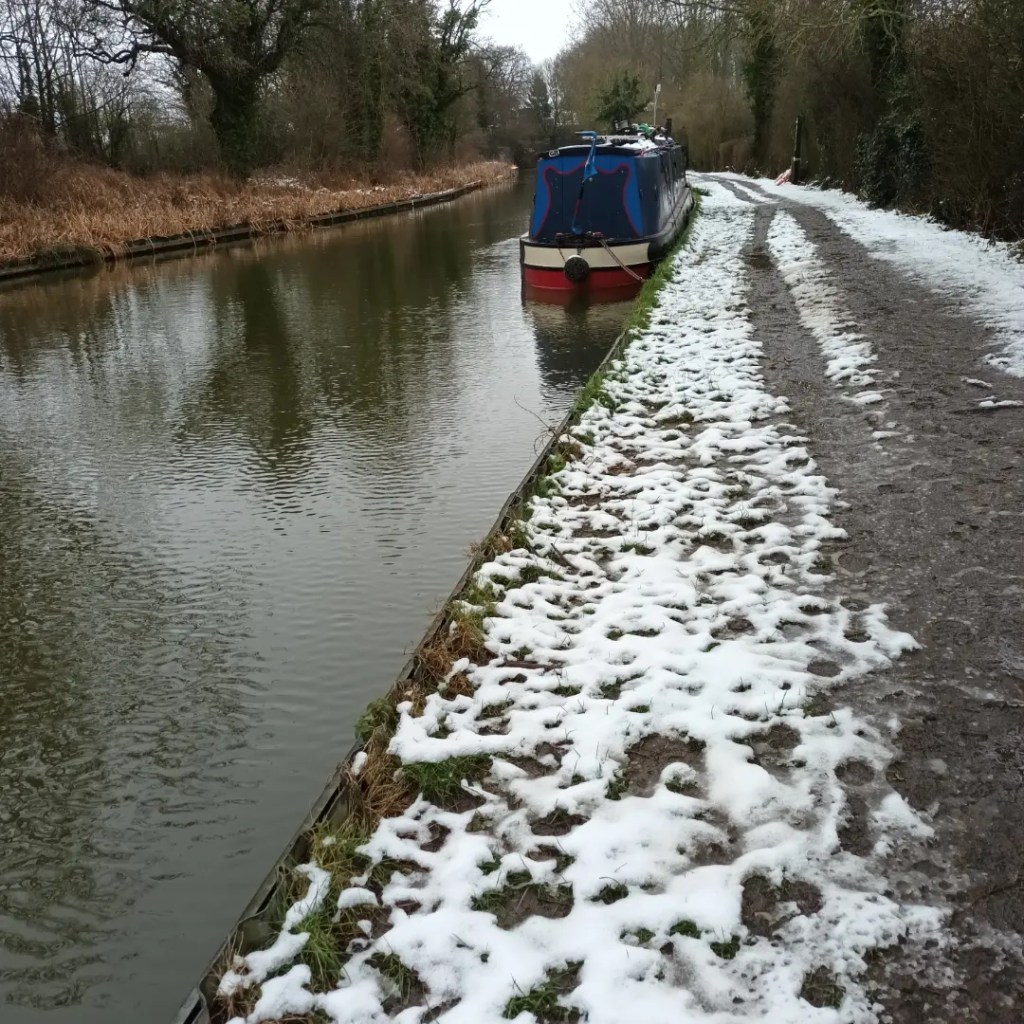
One of the most vital elements for our moored up, off grid living on our 50ft nb Preaux is our solar power system which also charges those leisure batteries without using any red diesel. Steve installed two 175 watt Victron panels two years ago during the 3rd lockdown.
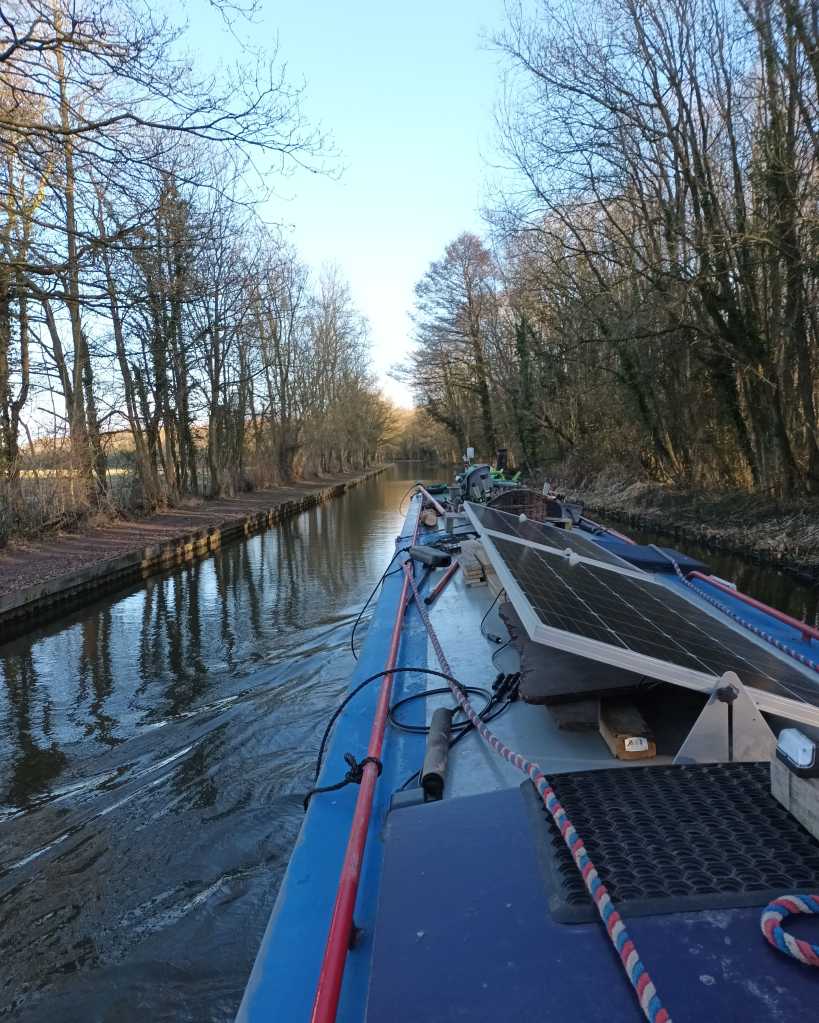
Together they have a perfect-situation capacity to generate 350 watts peak power. That means mooring in the optimum place, with the panels sparklingly clean and angled perfectly at a brilliant sun… that doesn’t tend to happen to be honest although we do take solar into account whenever we can when mooring. The highest peak power we’ve ever achieved was 260 and we were chuffed with that.
At the start then, the first kilowatt hour of cost us £500 per kilowatt hour (basically the installation cost). Now it works out that each kilowatt hour has cost us £3.03 – it’s going down rapidly as you can see, and because the system means we don’t need to run the engine so often to charge the batteries which we do when there is no or poor solar, then we save £8.36 a week in diesel costs – a power profit.
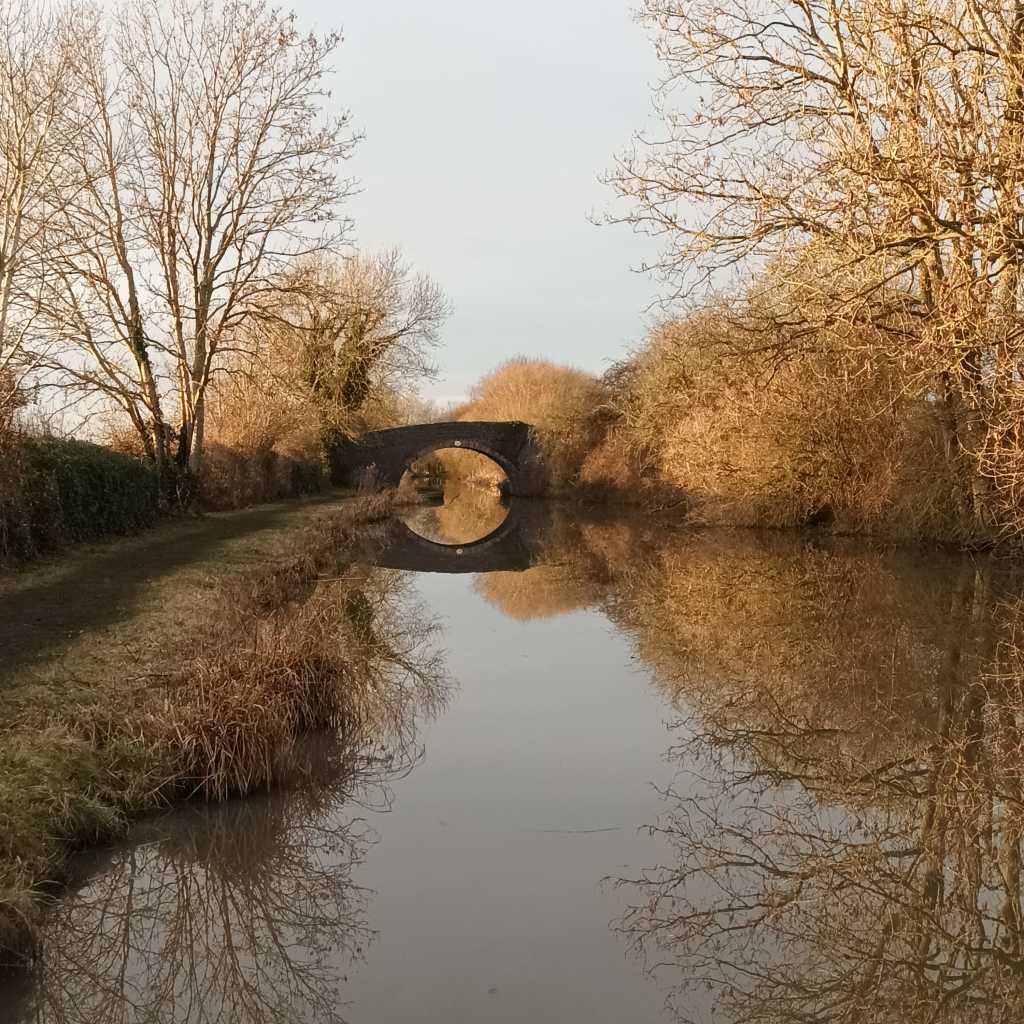
Solar generation isn’t exclusive to the summer either. In the past 30 days we have generated 8.1 kilowatt hours of energy. That means in February and March the sun and our panels generated 41% of our power needs. The first day of the year when solar generated 100% of our daily requirements was 5th February. We generally expect to be self sufficient between March/April and the end of October. The first day after the summer last year when we needed to run the engine to top up the batteries was 27 October – up to then solar was recharging the batteries fully every day.
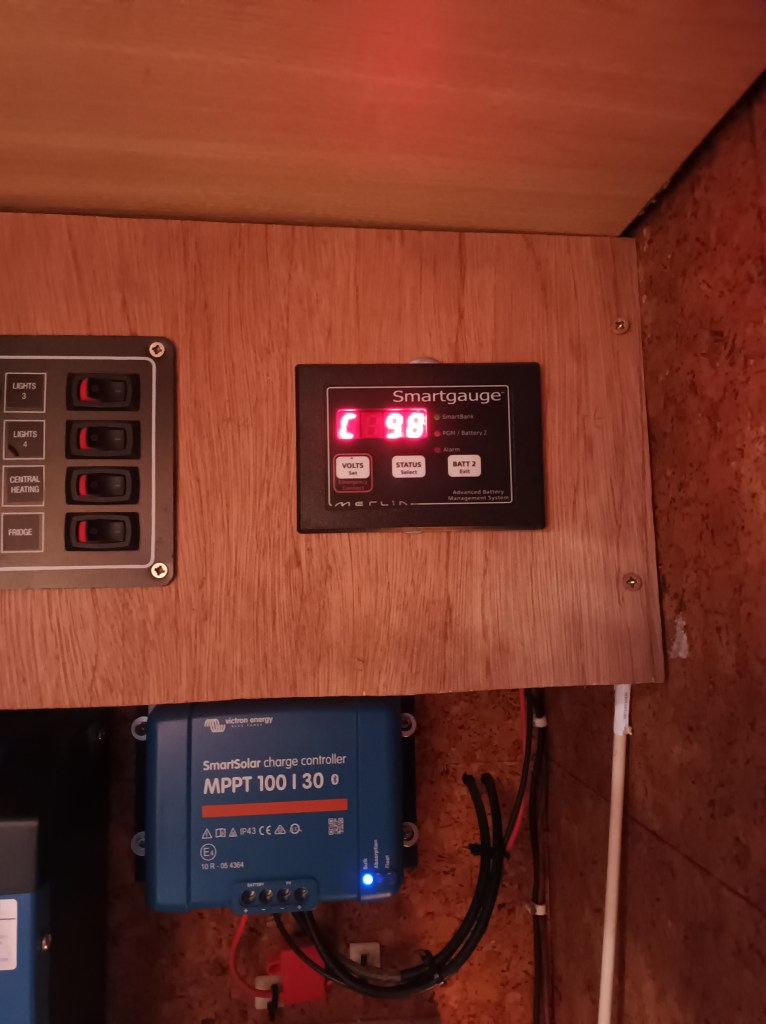
So since we installed the panels and the associated cabling and gubbins that makes them work and allows us to monitor them (well, to be honest allows me to press a button on a panel a few times a day to see the percentage of charge in the batteries). Steve takes a tech approach and monitors it via his phone what the panels and sun have generated for us. Since they were installed that’s a total of 175 kilowatt hours of electricity.
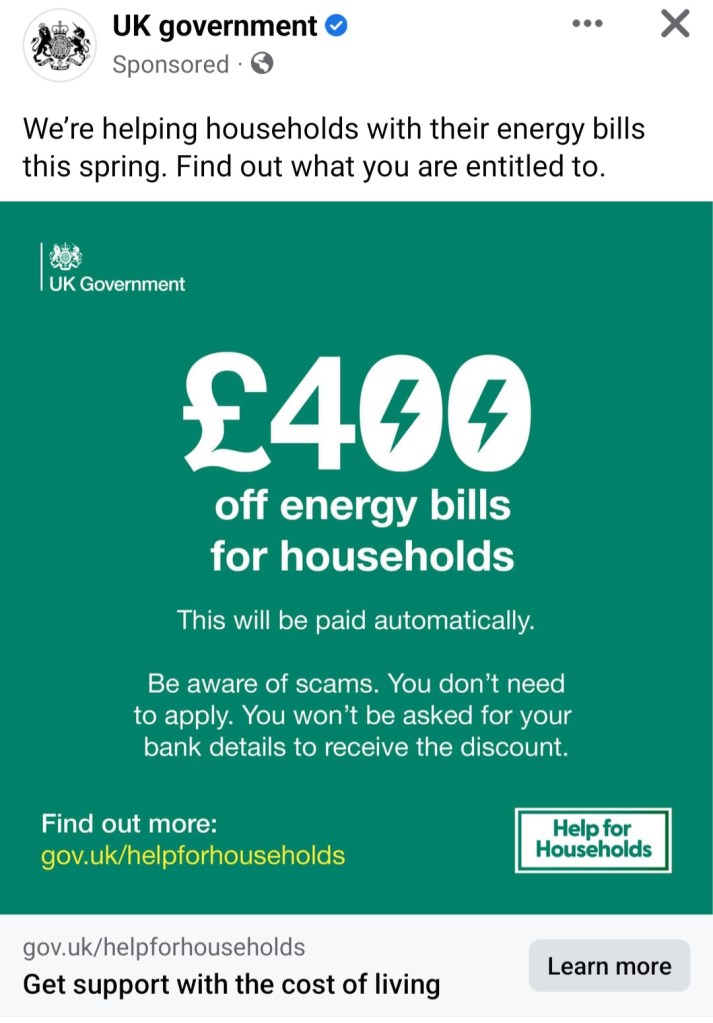
That all sounds good – power for free (or free ish after purchase and installation costs) but a damn good deal anyway. That allows us to save (theoretically) towards the degenerating elements of our system, and to offset the current lack of government assistance in heating terms (the £400 for every household has specifically excluded boaters like us who are continuous cruisers travelling the system, although it has been paid to second home owners…).
The deteriorating elements of our power system are the batteries themselves, and in the very long term the solar panels. Batteries don’t last forever – as anyone purchasing them for children’s toys knows only too well. Even rechargeable batteries have a finite life too. What you pay for a single battery can range from £100 to £1,000. We fly a Yorkshire flag, a symbol of economy, frugality and sustainability. We went for the £100 batteries and we nurture them with care. Technically the advice when we bought them was that looked after well (more on that in a moment but it doesn’t mean I’ve been knitting them jumpers for the winter….) we could expect 2 years per battery. We bought all three at the same time 2 years and 2 months ago now so our nurturing has paid off so far.

We don’t let them drop below 50% charge at any time. We charge them to 100% at least once a week but in reality as often as possible. So when might they give up and how will we know? Well we rather hope they will gradually degrade, taking longer to charge etc but you never know, they could just suddenly pack up, plunging us into darkness. We shall see, and at the moment there is significant pleasure in knowing recharging regularly and taking care of our power system is paying off.
It may sound a faff, but solar is better for the environment, and checking our batteries several times a day is a small price to pay to be independent of the National Grid. It gives us another reason to rejoice when the sun comes up.
All this makes me reflect that whilst we look after our batteries on the boat we also need to look after our own batteries too, to make sure we recharge ourselves and keep ourselves in good shape. Something we’ve determined we’re going to do – very soon.
 Pickingupducks