Snow blankets, dampens and muffles but ice, ice has a totally different way of changing life and the soundscape.
Ice means you hear new things, you are separated but connected to other boaters in totally different, sonic ways. It disperses sound, it reflect sound waves and helps us hear more clearly.
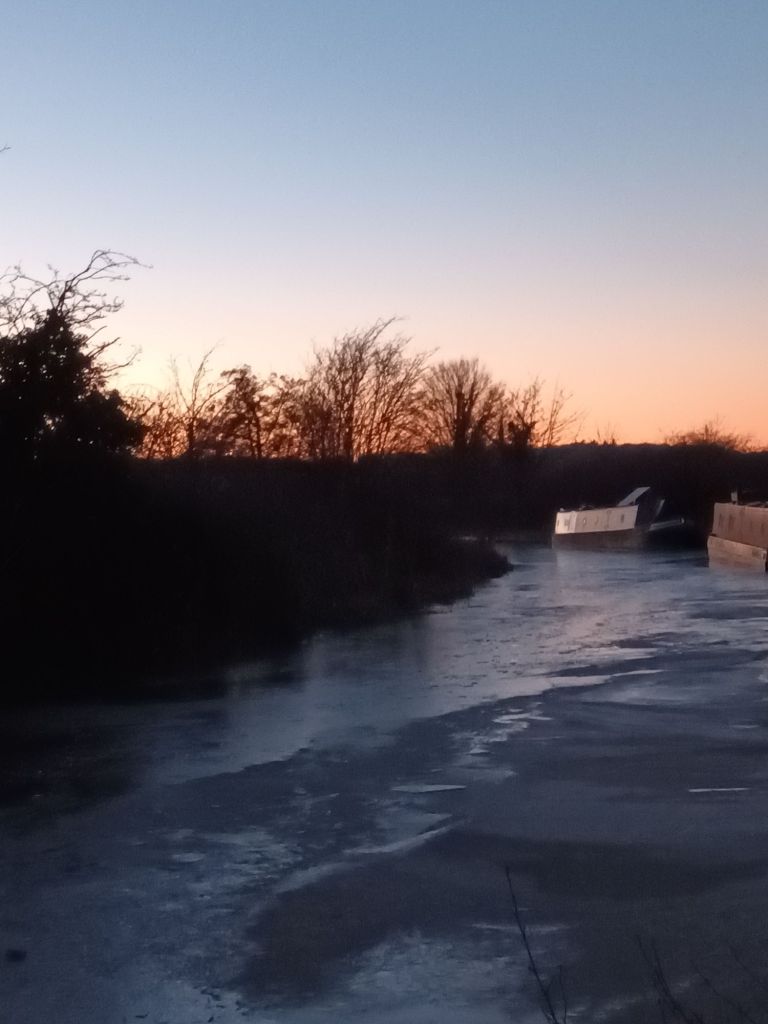
Like so many across the UK we’ve been watching and experiencing ice this week as we live and work afloat. This week we’re moored in the West Midlands, in the lee of a small hill. That has provided shelter from the icy blasts which have swept across the countryside.
At the start of the week we were watching the ice forming ahead of us on the canal and behind us but it was mid-week before it engulfed us too. If you look along a frozen canal everything looks static, people could even say frozen in time, but this is a noisy, constantly changing environment. The ice creaks and groans, it flexes and cracks, thaws and resets in tiny patches constantly. It is always changing.
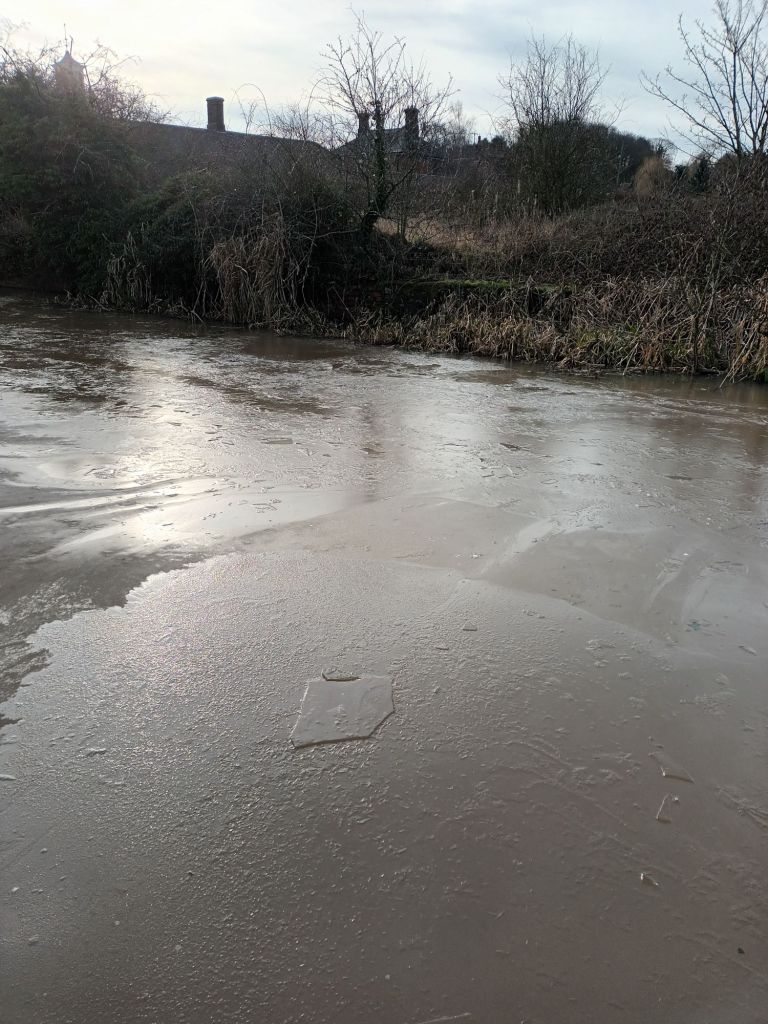
Ice changes the nature of a canal, making everything static for a while. Boats stop moving as the sharp scraping ice damages hulls and blacking. Nature forces a pause, a valuable chance to take stock and change pace.
When it began to embrace the boat on Wednesday night, when a boater friend joined us on board for a meal. Whenever one of us moved however slightly, shifting on the sofa, reaching for a glass, there was a growling protest from the encroaching ice. As she left into the icy night and we moved to the stern to say farewell, the gathering snarled in protest at being jostled and forced to reposition.

There are narrowboats opposite us on private moorings, and a sheet of ice now connects us to them in a way thawed water never can. When someone on our boat moves, it creates movement in the water, which nudges the ice sheet. The same happening on the other side of the cut means we know when anyone moves in the other boat as the ice creaks and groans against our boat. In the day, there are other sounds and distractions, but at night, when everything is still, the ice soundscape comes into its own.
We’ve also got ice inside this year because our secondary glazing has failed, but that’s a quiet companion, albeit a bit silently drippy!

The ice is a new entity, it’s an umbilical cord linking us together. It moves to make us aware when people move around their boats in the night, get up to leave for work, and when they are still and quiet. It tells them about us and how we live and move around our boat. In past years, when we’ve been iced in, we’ve always been moored with boats at a distance ahead or behind us, so being moored opposite others is a new experience, a new soundscape for us.
The ice turns the towpath into a crunching sounding board too. We can hear walkers coming crisply towards us. As we’re here for a bit we’ve put the bird feeders out and from the warmth and comfort inside by the stove we’re watching robins, a variety of tits and even a thrush or two enjoying a necessary feed.

Ice isn’t as obvious a view changer as snow, but it makes the familiar look and sound different. The regular neighbours of a feathered kind, the mallard ducks and swans who were round us regularly early in the week, enjoying the clear water by the boat have now moved away as the ice has swamped us. Nonlinear do we hear them tapping as they nibble at the weed on the waterline, or squabble noisily amongst themselves. Mr and Mrs Swan and their two cygnets from last year have taken up residence in a canalside field.
Our seasonal crackling, creaking companion won’t be around for long the meteorologists tell us, by the time you read this we expect the ice to be a mere memory and we will have returned to rain once more. It won’t go quietly either. The thaw will bring new noises to enliven our days and nights.
It is invigorating and refreshing to live seasonally, to be aware of the changing seasons, mindful of how they change the way we hear the world around us.
 Pickingupducks