Ey up mi duck – we made it! If you read last week’s update we’ve completed the first part of Plan C. We’ve donned our life jackets (all 3 of us) and hurtled down the Trent before Storm Ashley sends it back into flood, and executed a sharp left turn from the river onto the Erewash Canal.
Gongoozlers gather at Trent Lock for good reason – it’s a great place to watch dramas unfurl as skippers of narrowboats, widebeam and cruisers navigate their way on a five-way watery junction overlooked by the massive and now redundant cooling towers Ratcliffe Power Station. The Cranfleet Cut, the River Trent which goes right through, the River Soar and the Erewash Canal all meet at this point, and the two tricky turns are from the Cranfleet or the Trent onto the Erewash. You need to get cut across the flow of the Trent which is barrelling towards a non-navigable weir at this point to navigate between the abutments of the bridge onto the lock landing for Trent Lock (the bridge over the Erewash mouth bears the scars of innumerable collisions).
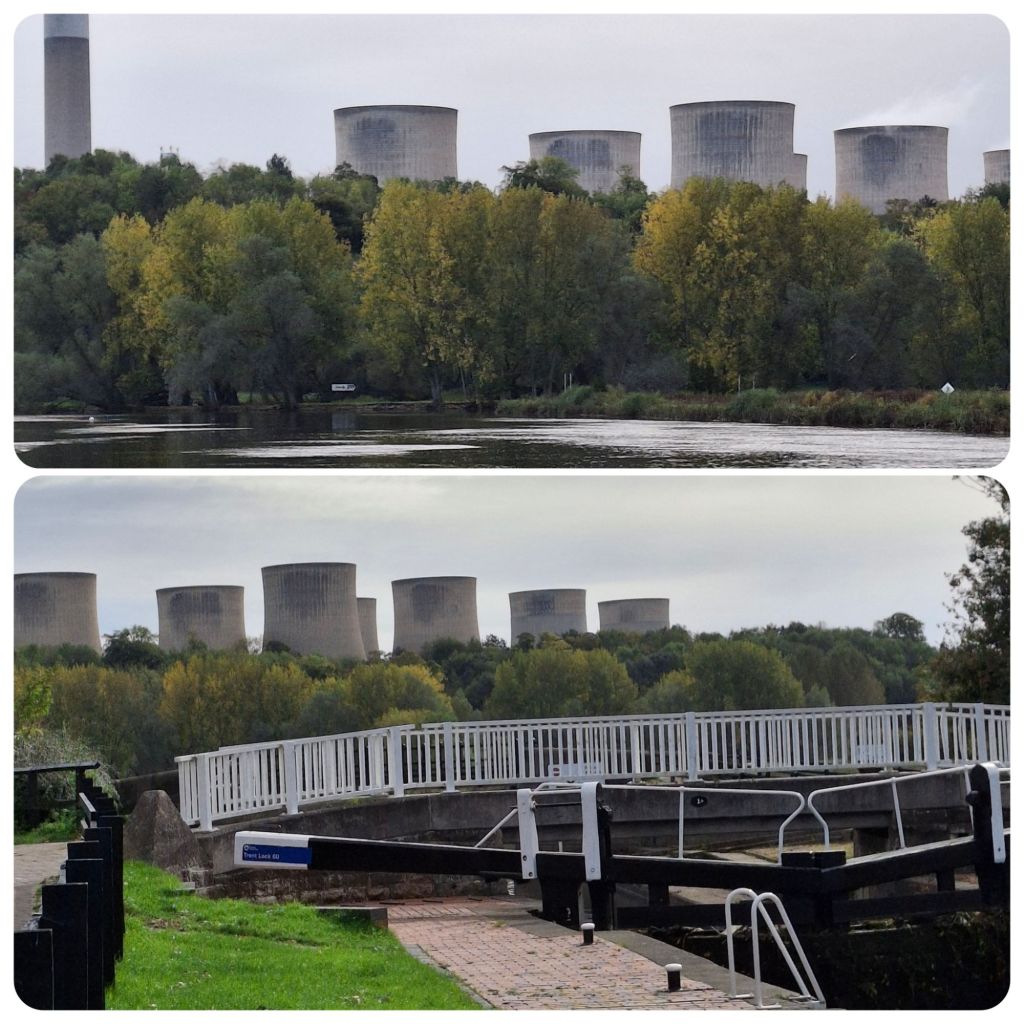
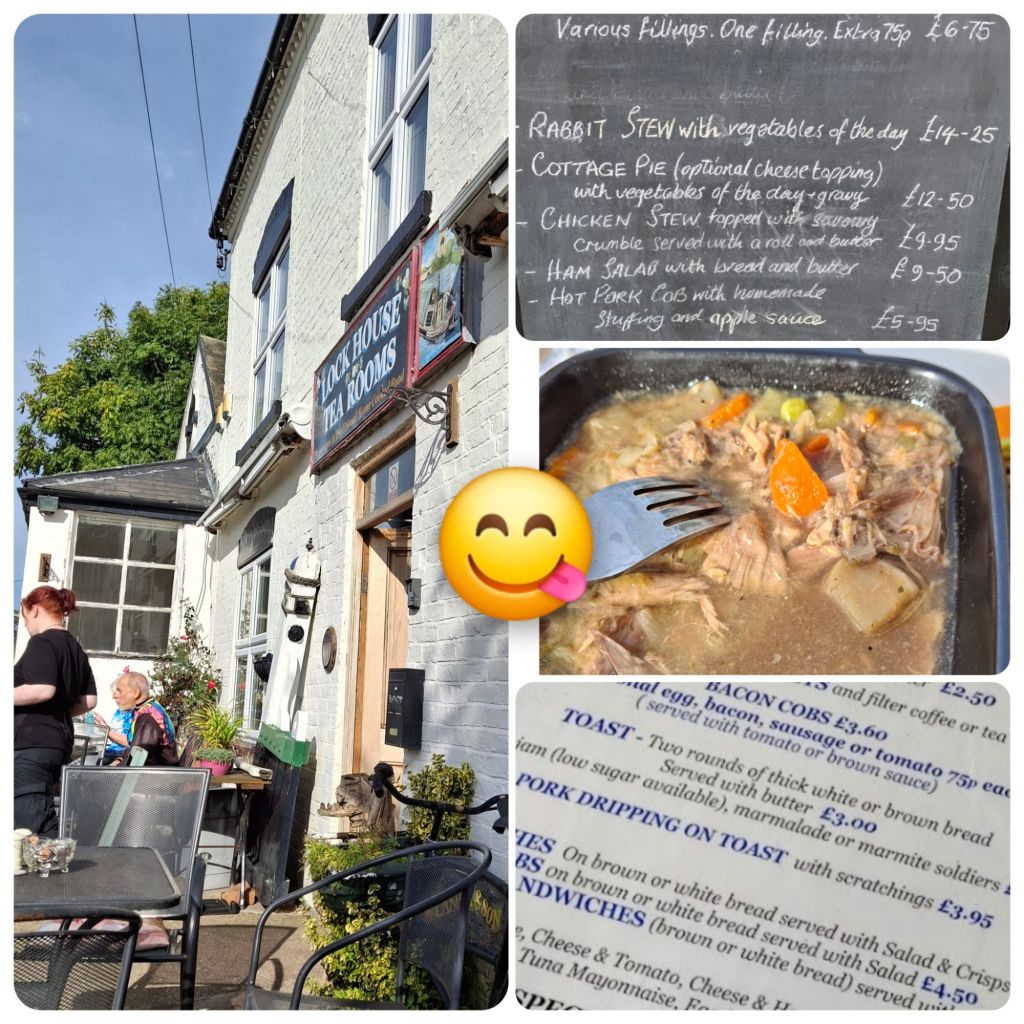
The Skipper executed a perfect turn disappointing the onlookers, and we made it up Trent Lock to moor by the facilities and head immediately to celebrate our successful achievement of the first part of Plan C – not into one of the two hostelries that flank the lock, but to the unsurpassable Trent Lock tea rooms.
Where else would you discover Rabbit Stew and Pork Dripping on Toast with Scratchings? I tucked into one with nostalgia but lacked courage for the other… maybe on the return journey?
The Erewash is another world, unlike waterways we’ve already encountered. It isn’t an ‘easy’ canal, but it began by repaying the effort of actually getting onto it. (Our last visit here was cut short and passed in delirium with Covid). Back to this trip and we could be forgiven for thinking we were hallucinating again – within minutes we were passing houseboats with ornate balconies like exotic Mississippi Steamboats, boatyards redolent with authenticity rather than modernity and then we faced our next pretty daunting challenge. We are in a constant state of flux at the moment, still renovating the boat around us, updating things and making changes for the way we want to live aboard. This entails a very major and rather expensive investment in terms of batteries (more on this when we get near to that point I promise). The first stage requires welding in the engine bay to safely hold the new battery installation. Quite how we manage our existing batteries in the meantime we haven’t quite established but Heath Robinson is assisting with that issue.
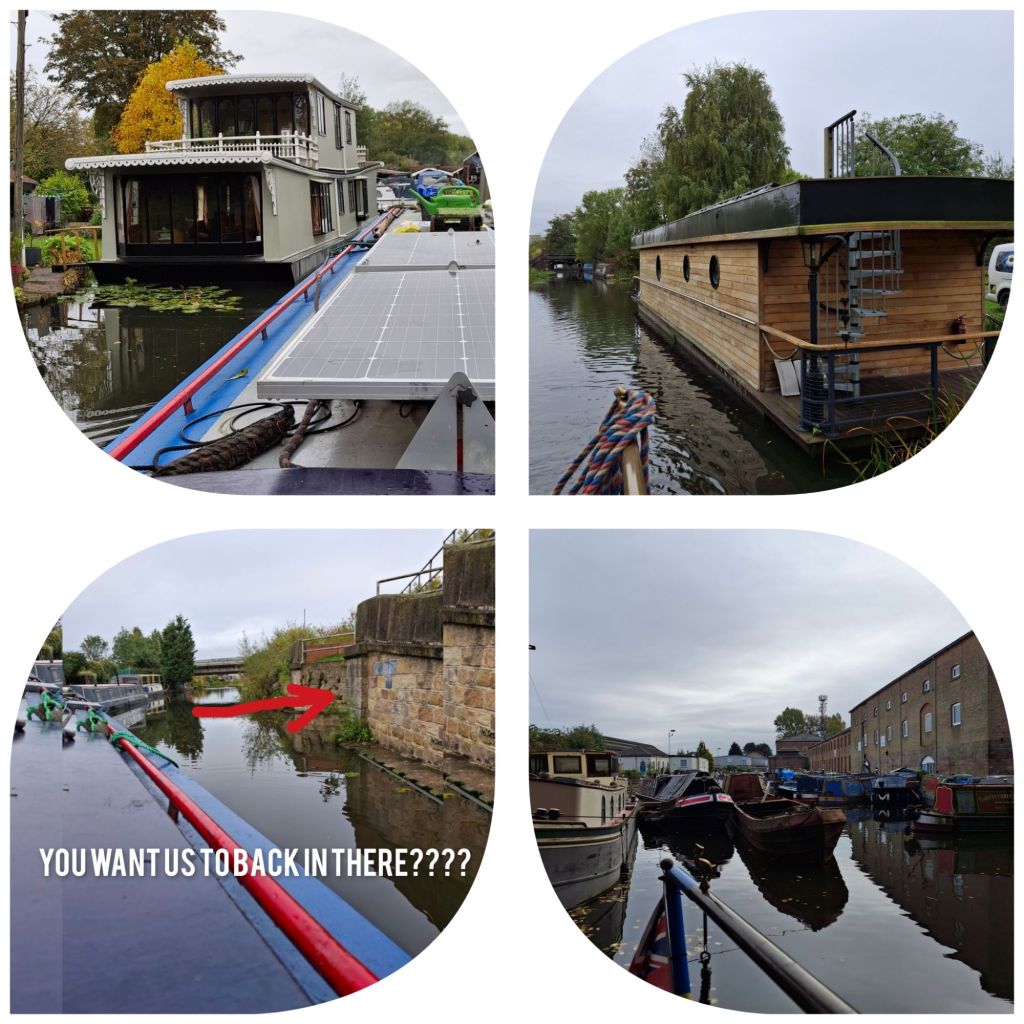
To get to the recommended welder we headed to the boatyard at Sheet Stores Basin where once they made the massive ‘sheets’ or tarpaulins that covered cargo on rail wagons and barges. We were told to back into their working yard under a bridge presumably without hitting the widebeam moored opposite. The the Skipper did it perfectly, mooring under a bridge to a tree for the first time as instructed! Examination of the job over, and our requirements written in chalk on a piece of angle iron, we set off and will manoeuvre our way back in there from a different angle on our journey back down the Erewash for the new battery tray to be welded into place.
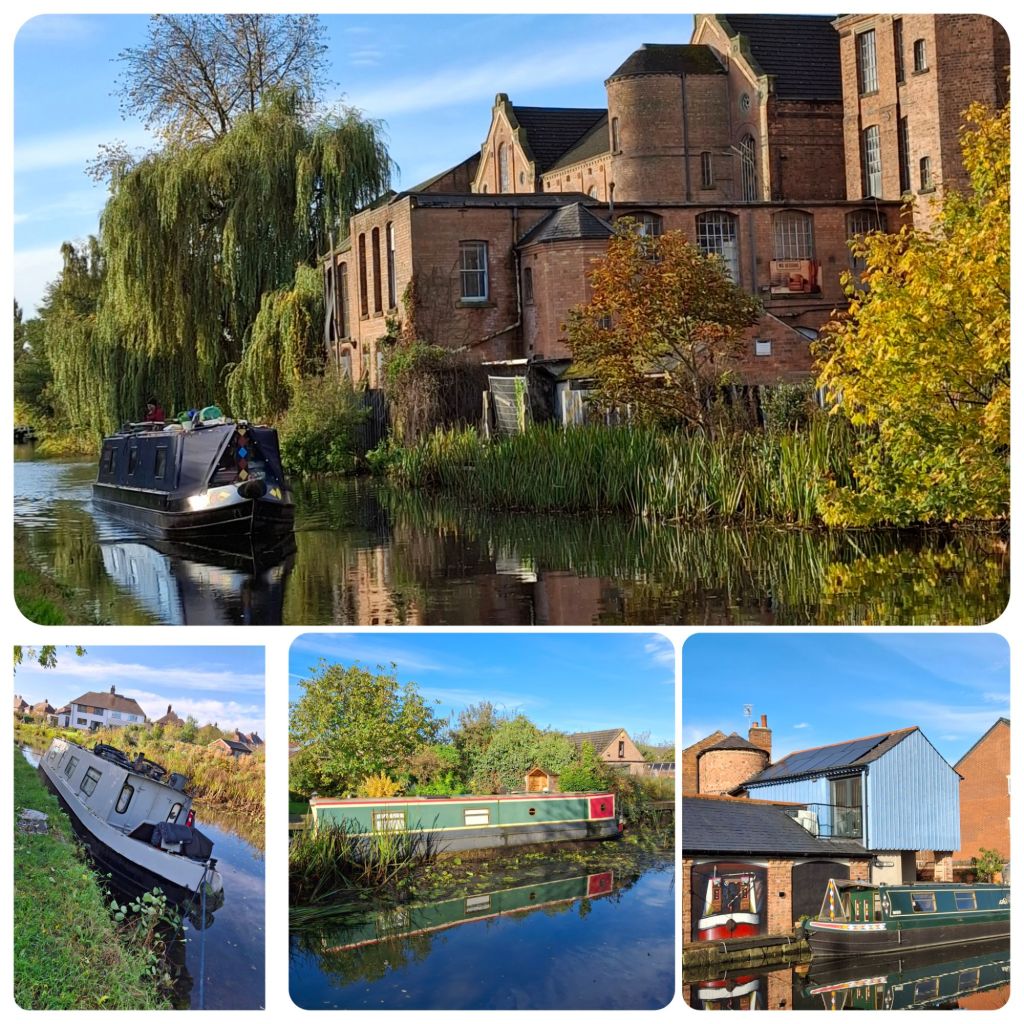
From Sheet Stores we made our way up to Long Eaton and moored up on the edge of town by a beautiful park, the formidable architecture of former lace mills now populated by furniture makers and small industrial units, past greedy squirrels, kingfishers that dart by in a flash of turquoise and always lift the spirits en route (no, I still haven’t got a decent picture but I keep trying), squawking moorhens and a solitary heron.
Long Eaton houses an exquisite library building – small but highly popular when I called in to work there for a change. Moving on up through Long Eaton Lock we came to Dock Holme Lock and promptly ground to a halt. An elderly cyclist adorned with a trilby sagely watched me setting the lock for the boat to enter and declared, “You won’t be *** going any further duck,” before accelerating away on his electric machine. I soon realised what he meant – looking ahead the pound (the section between two locks) was looking low. Not knowing to what it’s normally like, I managed to get us into the lock and as it was filling wandered up a little way, to see to my horror a boat completely out of the water, hull exposed, a narrow channel of water in the centre of the canal and nothing but reeds and mud at the sides. Certainly not enough for navigation. Explaining briefly to Steve and abandoning him with the boat in the lock I set off up to the next lock to see if I could resolve the situation by letting water down from above (hopefully without creating more problems).
It is a long half-mile pound between Dock Holme and Sandiacre and on the way I saw other boats, cruisers and narrowboats at horrendous angles because of the drained pound. Shouted conversations across the cut told me that it was the result of vandalism and had happened several times recently. I made it to Sandiacre Lock and began the slow process with a pound that long of letting water down whilst contacting Canal and River Trust to tell them of the problem and explain what I was doing. They promised to send someone but in the meantime I managed to get enough water down to refloat the stranded boats in the pound, and for Steve to limp our boat over the cill (step) of Dock Holme Lock and out into the centre channel. Just as he appeared at Sandiacre Lock a rather irate boater brandishing a windlass appeared to berate me for leaving all the paddles open and draining the pound above, causing her boat to list! I hastily explained and she was immediately understanding but told us just how often the issue had happened in recent weeks, and then she kindly helped us through. Most boaters are supportive of each other in this community we pull together.
Coming through Sandiacre Lock brought us into another world – one of bustle and history. Sandiacre itself was once renowned for starch works, brickfields and lace. The Padmore Moorings were once coal wharves and overlooked now by 21st century cctv cameras but also by 19th century gas lights – donated by Terah Hooley (wonderful name) who built the impressive Springfield Mill on the other side of the canal. The mill complete with its four beautifully semi circular staircase turrets is now apartments but in its day it had its own gas works, and Hooley donated 50 lamps to the village on the understanding the gas to power them was bought by the council from his works!
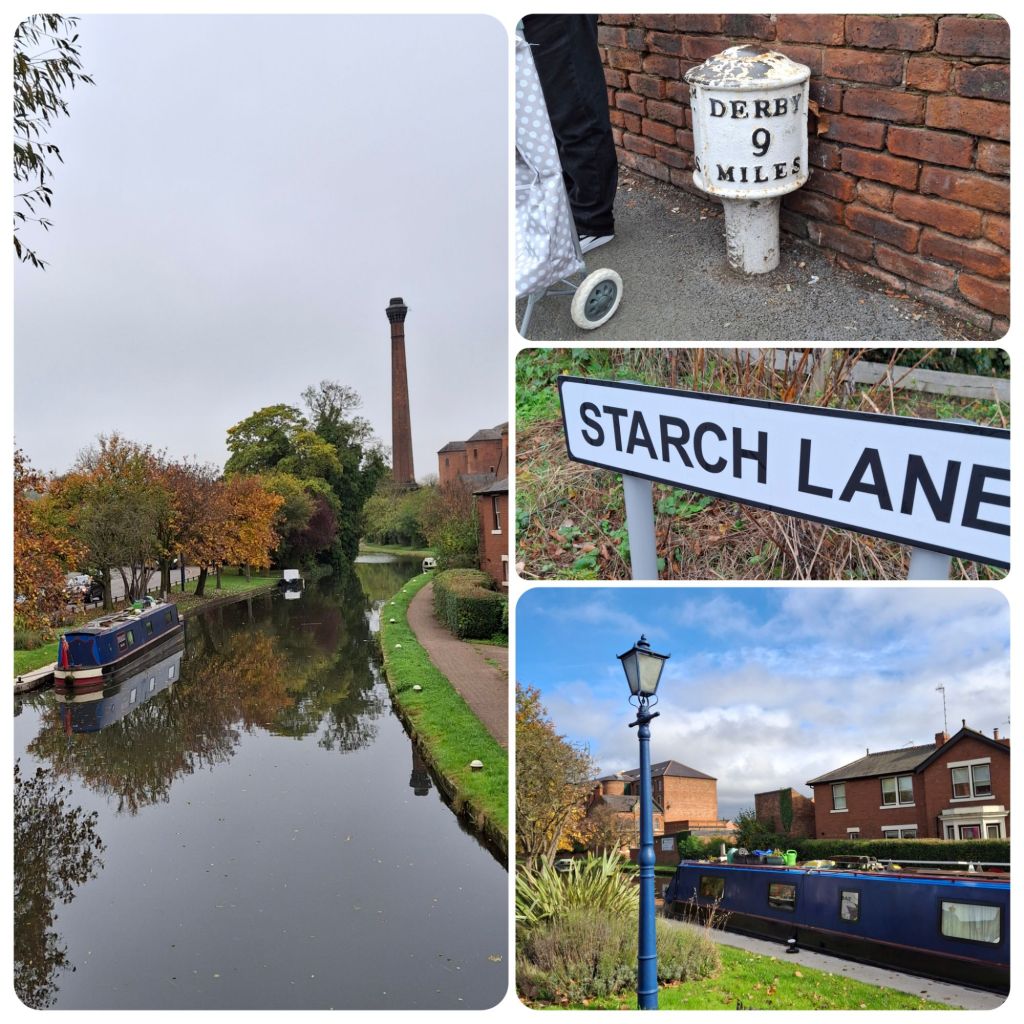
Incidentally Hooley’s son, Ernest Terah Hooley was mill manager for its first five years of operation. He though is ‘credited’ with being one of the most prolific financial fraudsters, cooking up schemes worldwide which resulted in him being declared bankrupt four times, sent to prison three times and en route getting nearly made a peer. He floated the companies that were behind names we know today like Singer, Raleigh, Dunlop, Bovril and Schweppes. But he overstretched himself, attracting investment into many of his floatation schemes when they were little but smoke and mirrors, and that was the downfall of “The Splendid Bankrupt” as he became known.
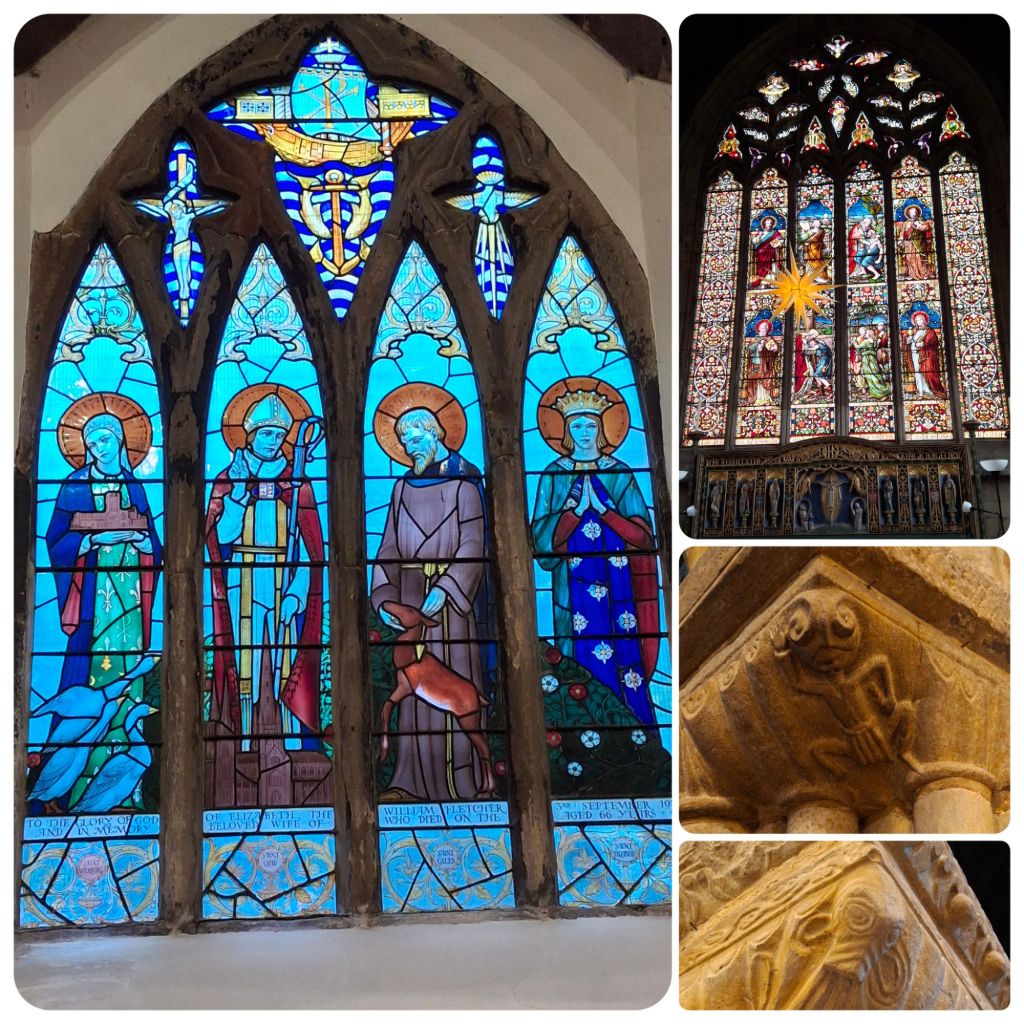
If Ernest had ever sought penitence (which seems pretty unlikely) he could have made his way up Starch Lane to the ancient church of St Giles. Parts of it date back to the 12th century, its broach spire is 13th century, and within the original Norman Arch are carved the “Sandiacre Imp” and apparently a dragon (looks more like an attempt at an ox to me!).
Looks like there’s going to be plenty to keep us occupied here on the Erewash as we wait for the expected floods to abate and work to be completed on Ratcliffe Lock to let us cross the Trent onto the Soar – hopefully next month. We still have another 7.5 miles and 10 locks to travel before we reach the navigable end of the Erewash and the Langley Mill basin on what was once the Cromford Canal.
 Pickingupducks