This week has seen the single biggest revolution in our off grid life.
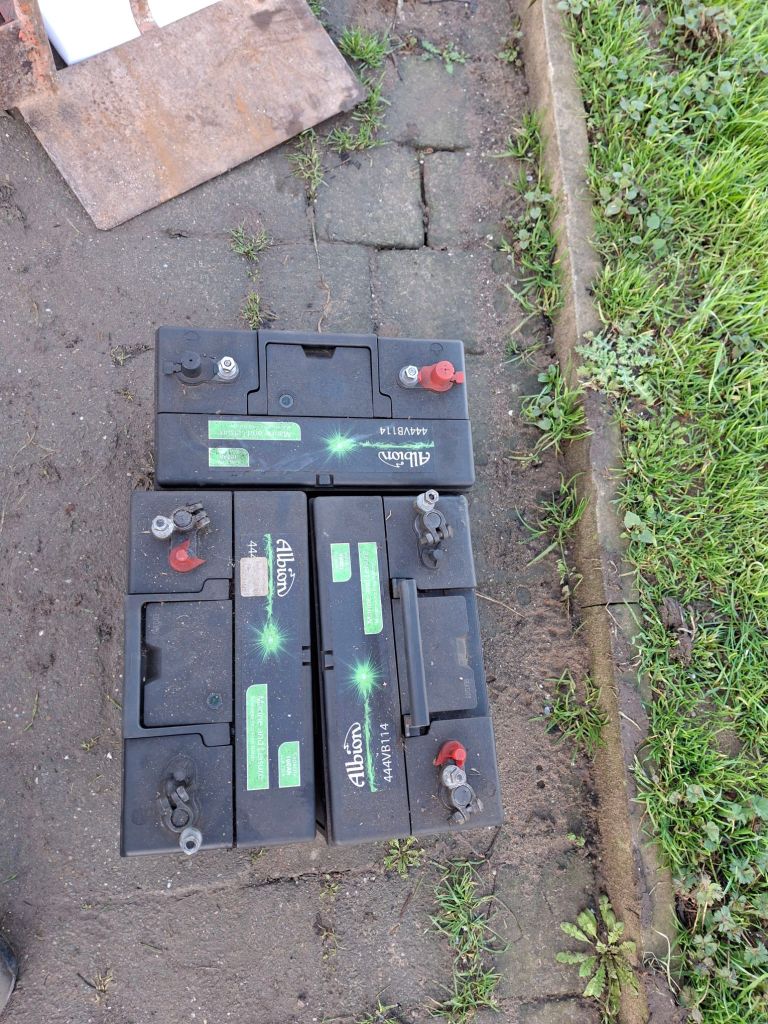
Our 50ft floating home/office/workshop, since we bought her 7 years ago, has been powered by 3 lead acid Albion leisure batteries. Initially, they were charged by running the engine, and they in turn powered the items we need – lights, laptop, mobile phones, and pumps for the water, shower, and bilge. After we added solar panels during the third pandemic lockdown, it made a massive difference to how we lived, the batteries were regularly replenished by free solar energy, but they couldn’t use all that was freely on offer.
Lead acid batteries have an expected lifespan of 2-5 years depending on how you look after them and the type of usage they have. Ours for a permanent live aboard situation have been nurtured – we’ve never allowed them to fall below 50%, and last year we noticed they weren’t holding charge as they used to. We made the (expensive outlay) decision to replace them, but not like with like. We, like so many in the boating world have made the decision to invest in new technologies and go for lithium iron phosphate (LiFePO4).
Those who have gone down this route are vocal about the advantages – capacity to maximise the available solar being one of them. The lead acid batteries could take so much solar and then the rest just went to waste.
We are also future proofing our boat to make life easier and even more enjoyable. Having greater power capacity will enable us to remove the gas from on board. We currently use gas just for cooking and some water heating via a 4 burner hob. That means storing two 13kg gas cylinders at the back of the boat. Each lasts between 4 and 7 months depending on the season. Those cylinders take up a fair amount of space that we could use for much needed storage. Additionally they require heaving up and lowering down into their locations – not the easiest of tasks.
So…if the gas should go what would replace it? Friends Ali and Jon on nb Warrior have replaced gas on their boat entirely and they survive very happily without it. They have an electric oven and hob so that got us thinking. We’re moving to an induction hob and…wait for it…an (controversial to some) air fryer.
Having used both an induction hob and air fryer whilst staying with a friend in the summer I became a convert but our lead acid batteries and Victron inverter (the latter turns the power from the 12 volt batteries into 230 volts so we can run things like our washing machine, charge the hoover and ultimately use devices that require the 230 volts of shore based power current). That would include an air fryer, but our lead acid batteries would struggle with the latter. They only managed the washing machine because we run the engine when it’s on, and jump start each wash with a flask of boiling water before running it on a cold wash. Recently, the last few washes have been a bit of a struggle, and twice we’ve had to stop the machine part way to allow the batteries to recover power. That’s left me watching a soggy load of washing sitting in the drum until the batteries recovered sufficiently to carry on…
So we knew we needed to replace our batteries. Good friends Al and Tina on nb Wobbly have along with many, many boaters advised going down the lithium route and in the world of boat electrics, one name kept coming up to sort such a major change – Ed Shiers of Four Counties Marine. Fellow boaters like Robbie Cumming on nb Naughty Lass and Matt & Clare Brown on Nb Quisqualis talk of Ed’s knowledge, attention to detail, and efficiency. When we travelled up the Leek branch of the Caldon Canal, we met up with him and sought his advice on the best solution for us, for our needs (current and future). We knew we were going to have to replace the old batteries, so replacing them with a system that would take us a long way into the future made sense.
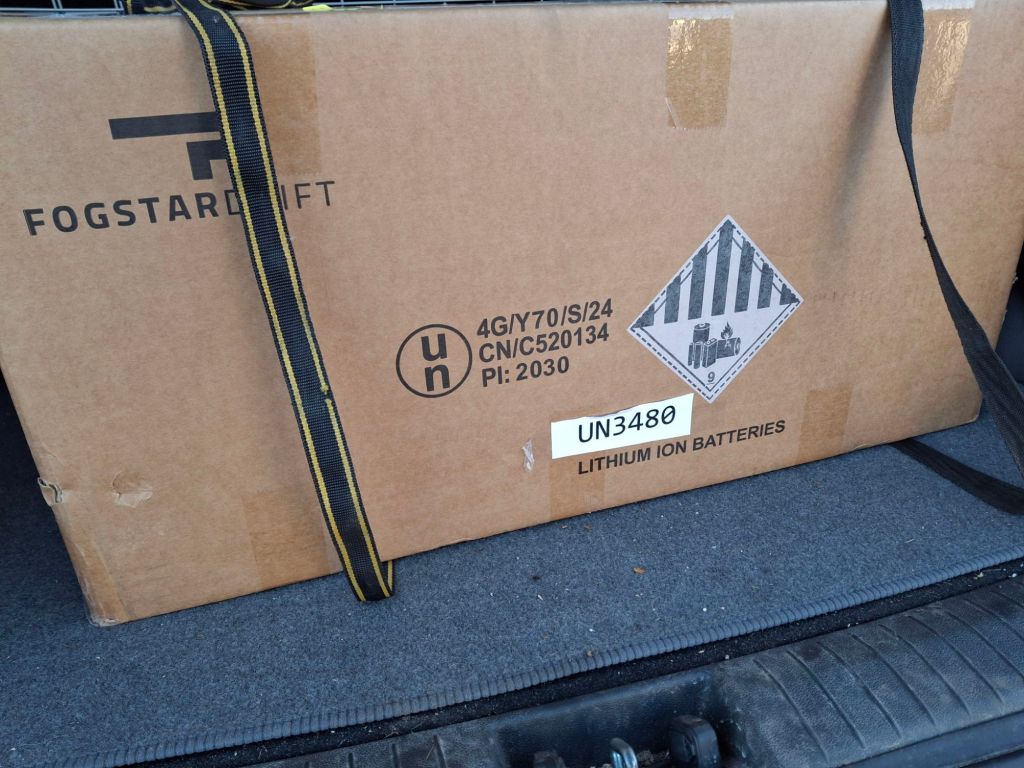
As a result, in October last year, we ordered a new LiFePO4 battery and, most importantly, got Ed Shiers on standby to install it plus a new alternator in November when it arrived. These batteries are currently shipped to the UK from…you’ve guessed it – China.
November came and went. December became the promised delivery date, and we were by now watching and nurturing the old batteries like small children.
December came and went. January was then the promised date, and yes, you’ve guessed it – last Friday, the battery finally arrived. A pretty major plus was that somehow, between order at £1,900 each and the final arrival, it had come down in price to £1,300.
This new replacement has a 10 year warranty and its expected minimum life is for 8, 000 cycles. An average lead acid battery has 3-500 cycles.
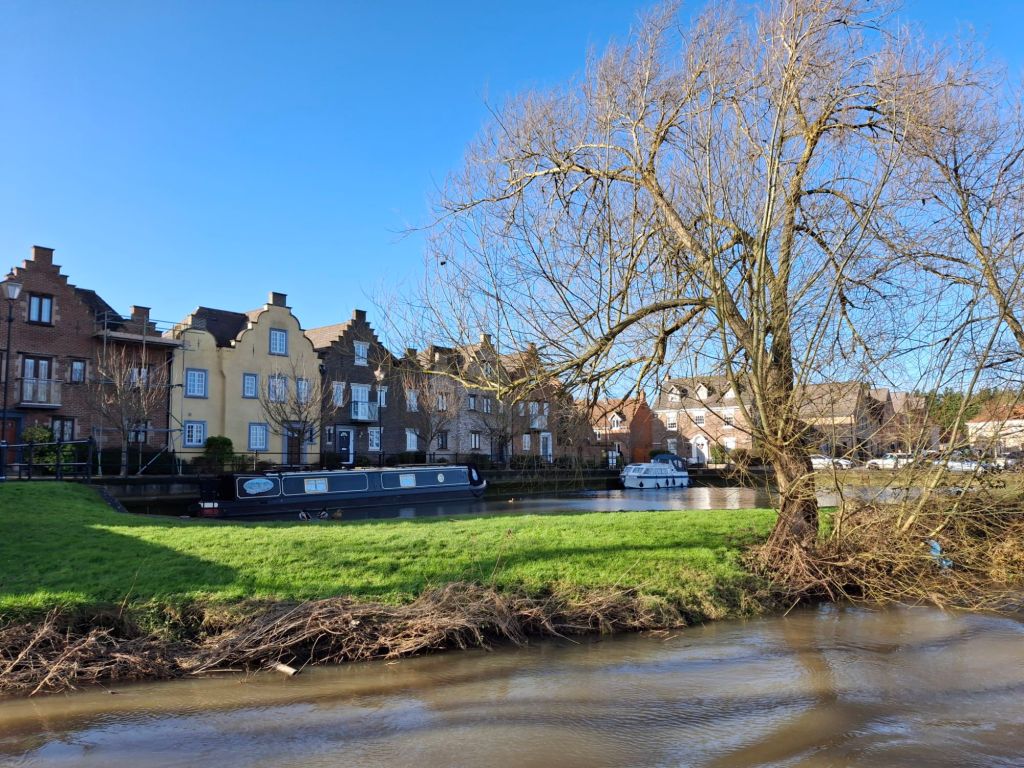
So last Friday this apparently lightweight (their description not mine) battery of 60.23kg arrived to a land address for us, and on Tuesday we moved the boat to a location which would make it easier to lug said lightweight battery on board and for Ed to come and work onboard. As we moved from our winter mooring at Barrow upon Soar, navigation was green for go and water levels lower than we’ve seen them for weeks. We stopped for water at the water point, but ironically, as it turned out, pressure was so low that we couldn’t get any water into our tank at all. Never mind – we thought – we’ll carry onto the next. But as we made our way along the River Soar, strong flows made for even slower going than normal. Before we reached Mountsorrel, my phone pinged with a Soar Navigation warning:
“We advise skippers of all boats not to navigate the Leicester Line (Grand Union Canal) from Kings Lock through to the River Soar at Redhill Lock. The strong flows make it difficult and dangerous, and locks may also be closed.”
Too late – we couldn’t turn round, so we just had to keep going. By the time we reached Mountsorrel Lock, the indicator was showing red river levels. We had to hastily take the chimney off to get the boat under the road bridge before the lock, as the level was pushing us so high in the water.
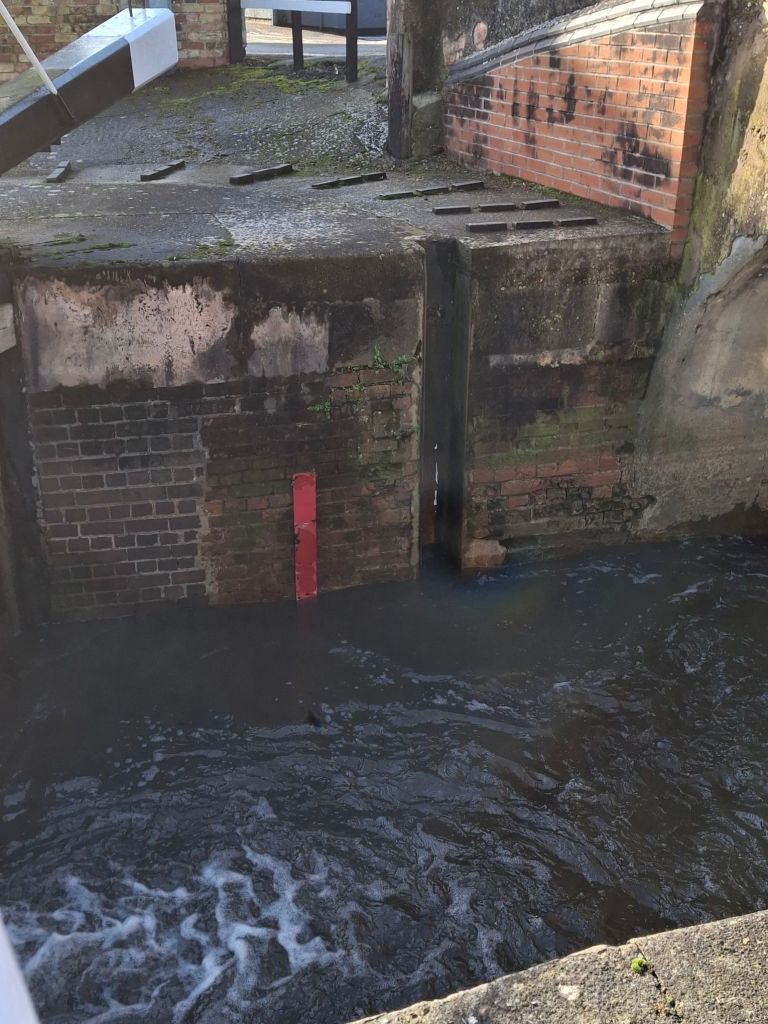
We got under the bridge and through the lock (fortunately not closed) and went straight onto the mooring beyond with relief. We shelved the idea of heading up to Sileby Mill for water and diesel – those can wait.
The river here flows fiercely towards both the lock and an adjoining weir, and it was certainly flowing hard and fast. For the next couple of days we rose gently so there was a good step up to and down from the boat, but we had hard standing, mooring bollards and a nearby pub with car park – what more can one ask?

Getting the battery moved took some doing – thanks, Alice and Chris! We then moved it by car to the pub car park and using a sack trolley plus Ed, we got it to the boat. Getting it onto the boat, which was high in the water, demanded three of us and a ramp. We slid it up the ramp – one of us pulling from the boat, one pushing from the towpath and the third straddling the gap of river between the two so it didn’t fall in and sink. Once on the back of the boat, it then needed to be lowered into the battery tray made for us months ago by precision welder Paul Barber at Sheet Stores Basin on the Erewash Canal.
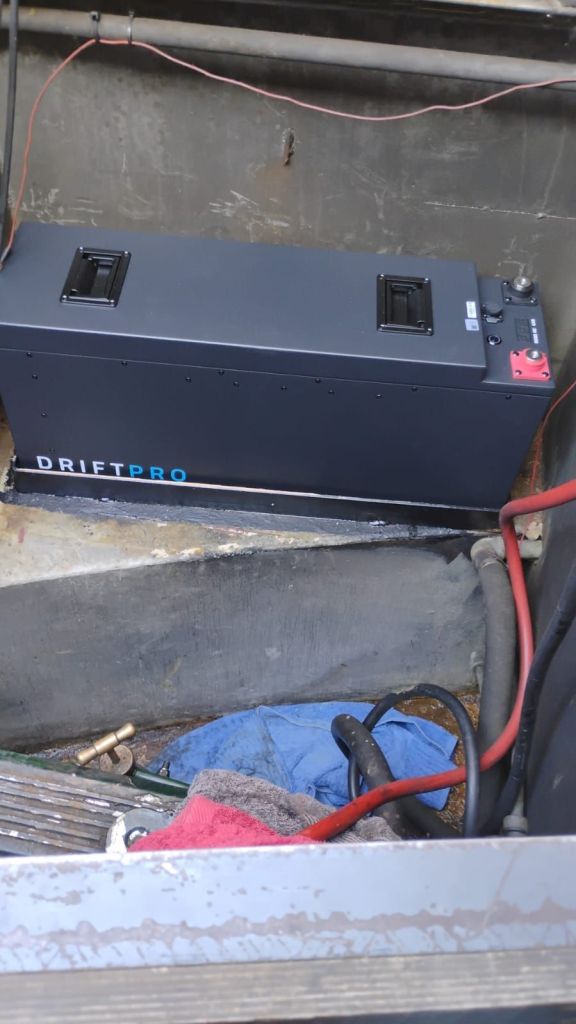
Getting the battery in, working, connected up to a newly installed 150amp Bosch alternator to replace our previous old 70amp one, linked into the solar power system, installing a regulator together with new fuses, a new battery monitor and making sure everything was working took Ed a long day and a half of hard graft. He was hugely efficient, hugely knowledgeable and also a very nice person to have around.
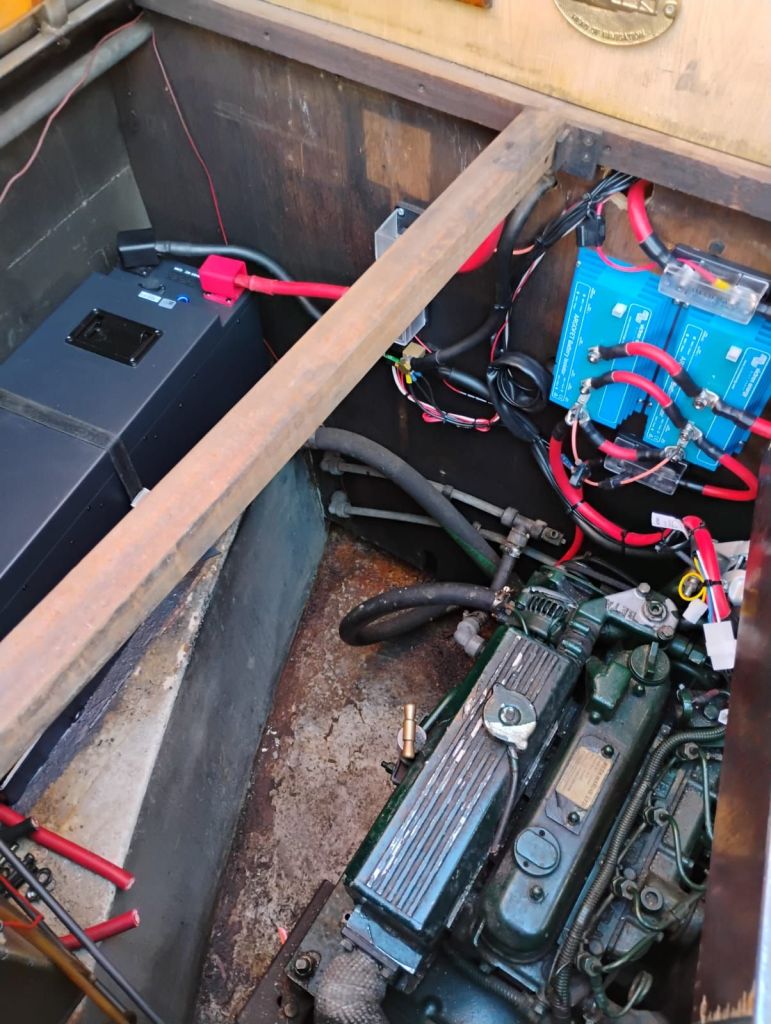
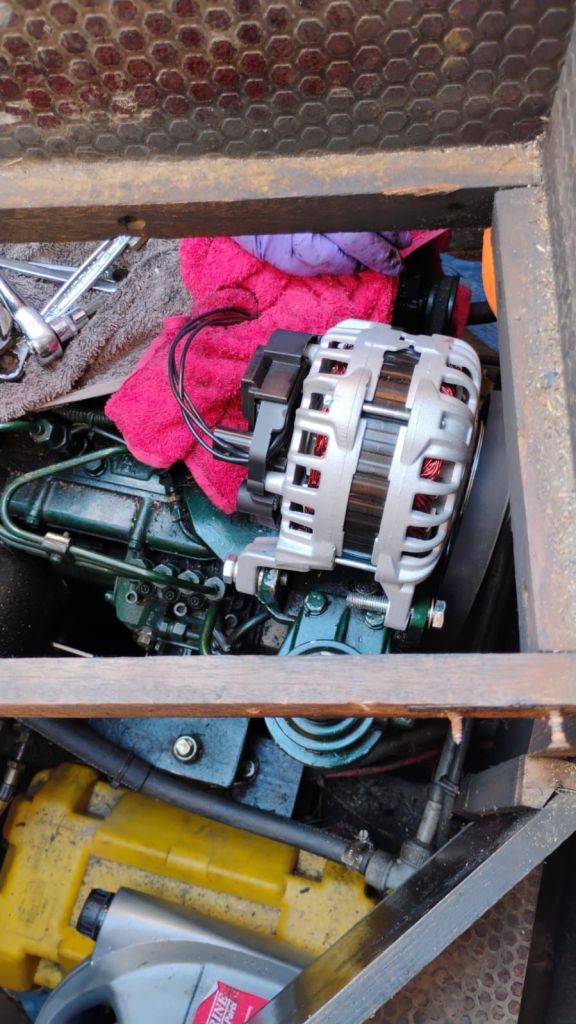
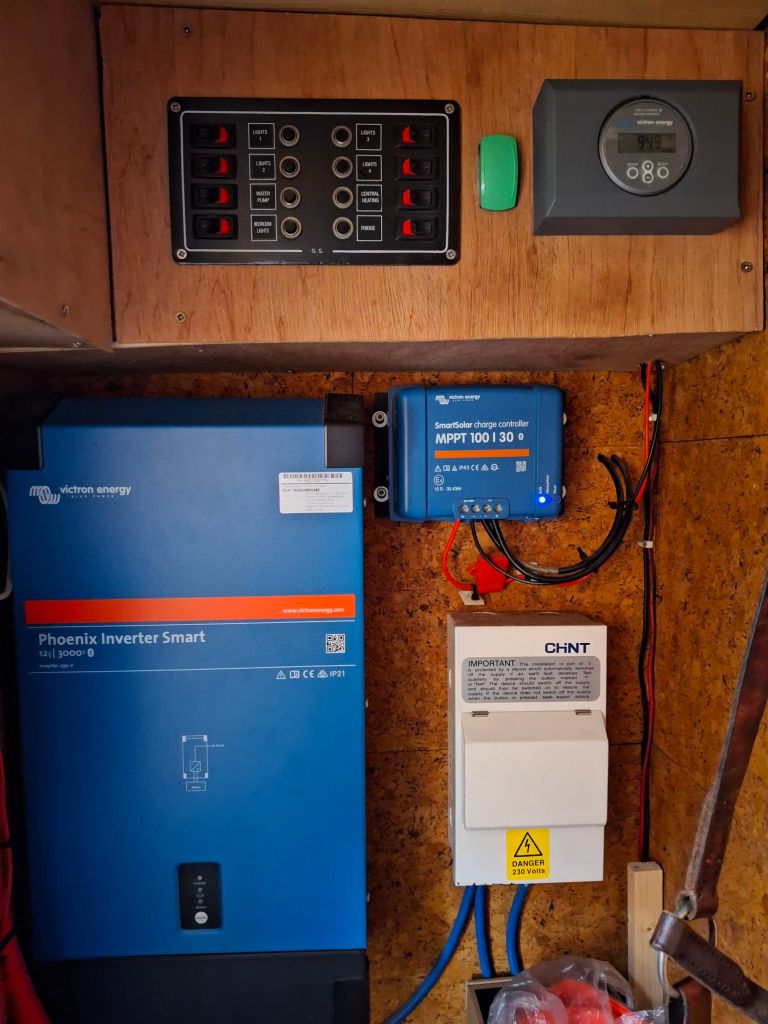
So we now have a completely new power system. It will allow us in time to remove our gas cylinders, move to an electric induction hob, but for the minute I don’t have to worry that the batteries are going to slowly die on us. I don’t have to remember to charge them every day (using diesel) or wonder if they have enough power to get our clothes clean. Nor do we need to turn the fridge off every night.
Like so many expensive boat items, the battery and alternator are invisible, like the swans paddling on the river alongside us with powerful feet under the water, the power beneath us is now hidden from sight! We will be donating the old batteries and alternator as they still have some life left in them to a charity and also when the time comes, the gas bottles.

We are hugely grateful to Ed for fitting us into his packed schedule when he is in such demand. We highly recommend him if you have anything that floats or moves in need of any electrical work!
The change this week has brought to our lives afloat will be something we experience and appreciate daily going forward. It will save us money in the long term – less wear on the engine, less diesel to power the battery, quieter operation when mooring as well as giving us new exciting options… like an air fryer, more storage and the chance to benefit fully from every ray of sunshine (and those are far more frequent than you might think)!
It’s a positive, superpowered start to 2025 for us!
 Pickingupducks