1805. Admiral Lord Nelson told his men that England expected them to do their duty as they approached the combined French and Spanish fleets at the Battle of Trafalgar, knowing many would lose their lives. As the smoke of cannons cleared, it was apparent the smaller fighting fleet of the British had triumphed, although 5,000 men, mainly French and Spaniards, were dead, as was Nelson himself.
That same year, a canal tunnel was opened in Northamptonshire that indirectly contributed to the war effort at Trafalgar that resulted. The opening of Blisworth Tunnel on the Grand Junction Canal was another key element that revolutionised the British economy, but lives were lost in its construction.

The tunnel we use today to pass in our own boat from the village of Blisworth in the north, along the 1 3/4 mile; 2,812m; 3075 yards to Stoke Bruerne in the south is that very same tunnel that was dug by hand with picks and shovels and wheelbarrows by navvies. Work began in 1793. The first tunnel collapsed due to quicksand. The second route is the one we use today.
Engineers set up poles as sightlines for the route of the tunnel, using the tower of Stoke Bruerne church as the sighting point. Twenty shafts were dug, and some of these remain as air vents today. The resulting tunnel was originally brick-lined, but in the 1980s, a third of the tunnel was restored with a concrete lining.
The tunnel was just wide enough for two laden narrowboats to pass. Building a towpath to let the horses pull the boats would have been way too expensive, so manpower rather than horsepower was required to get a boat through a tunnel. Initially, boats were pushed through with poles, but soon, the system of legging tool over.

It was quicker and more efficient. Men lay on boards at the bow of the boat and with their booted feet against the walls of the tunnel they walked the boat through. When the candlelit lamp of another boat was seen coming the other way, men on boat boats needed to rapidly pull in their boards to pass and then resume their passage. It was hard, dangerous work, and many leggers died in tunnels across the network as they strove to get their cargoes through these dark, dank subterranean commercial routes.
Blisworth was one of the canals where official leggers were employed by boatmen. After some claimed they had been terrorised into paying leggers, the canal company introduced easily recognisable brass armbands for the leggers in their employ. Wives and/or children escaped the underground confines to walk the horse over the Boathorse Road above the tunnel.
This week we’ve managed 2 trips through the tunnel – north/south followed by a prompt about turn and then south/north, all to try and find a mooring on a wet Bank Holiday Monday. We finally found a mooring back in Blisworth, and so later in the week, we took the Boathorse Road or Tunnel Path.
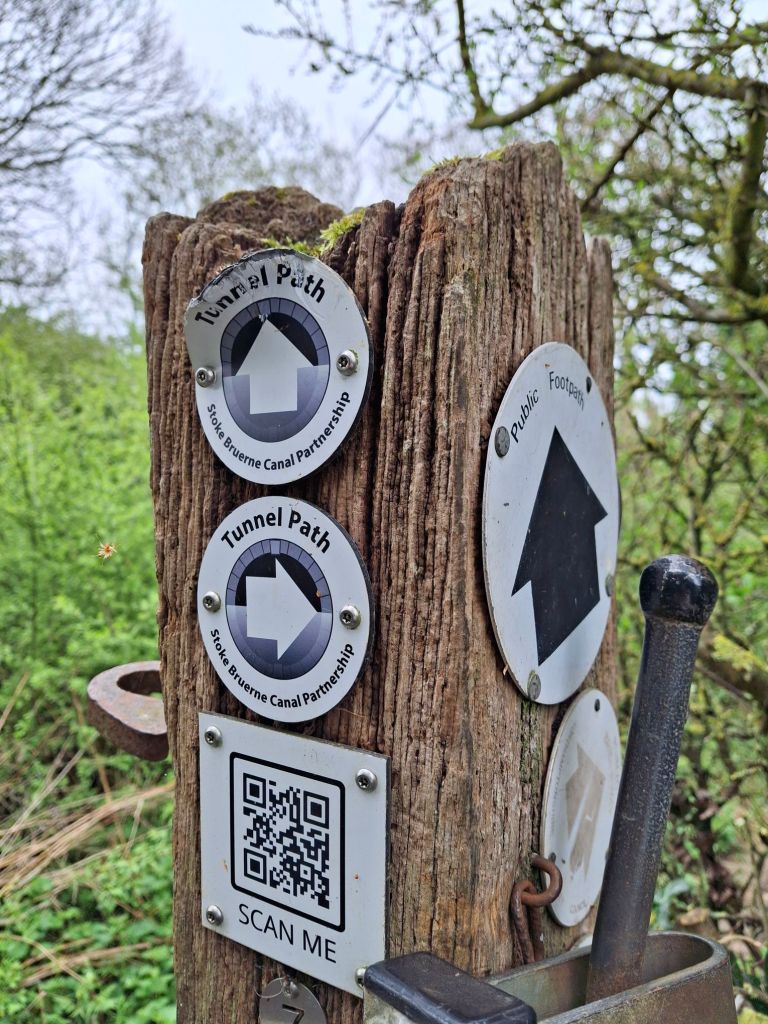
There were horses with us too – from a local stables rather than towing horsepower. We trod in their hoofprints and in those of their forefathers as skylarks soared high above, and buzzards rode the thermals in a blue, blue sky.

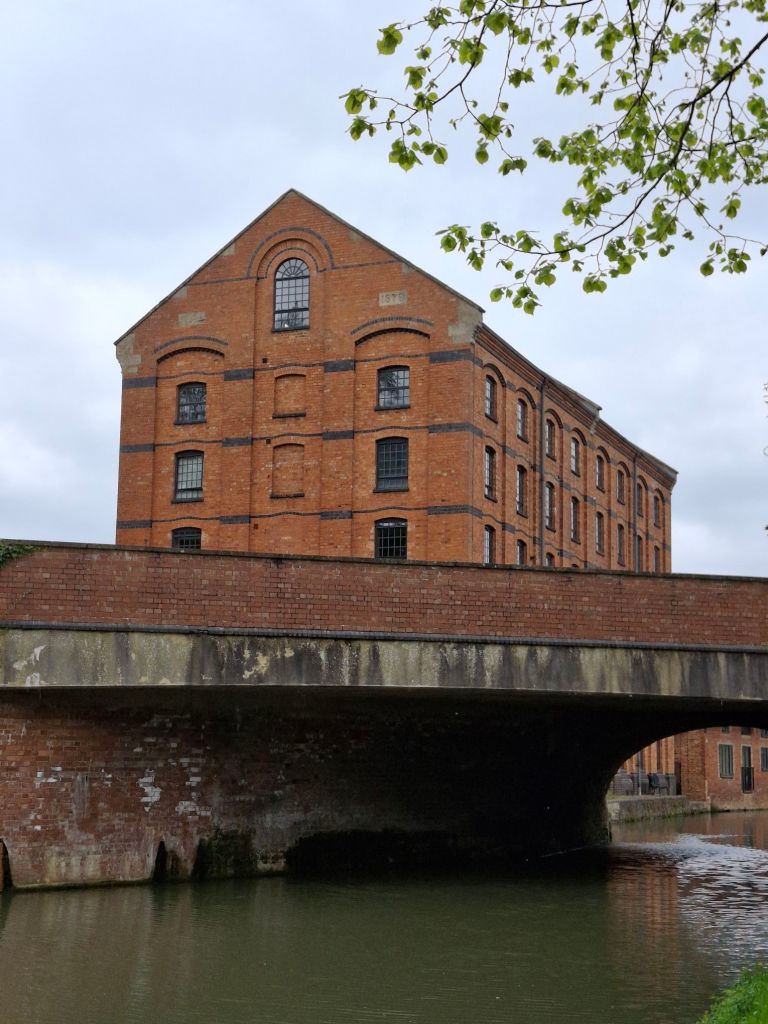
From Blisworth, we passed the imposing mill that once turned the rural Northamptonshire air rich with exotic spices shipped from lands far away, like cinnamon and nutmeg.
By the tunnel entrance near the stable where horses would wait to be reunited with their boats, we began to climb up to the fields above, across the springy grass with tunnel shafts show the route of the canal. The path now is not the most direct, which presumably it was in days gone by, but it makes for a delightful walk, rejoining the towpath just after the southern entrance to tunnel by the blacksmiths forge.

That forge was also the former tug boat store because from 1871 until 1936, the practice of legging was overtaken by progress. Steam tugs that could pull 10 fully laden boats were employed to bring boats and their cargoes through the tunnel. They halved the travel time to 45 minutes ( now our engines enable us to pass through in 25-29 minutes).
All that steam belching out meant the air vents were event more important and created yet another job – the need for the tunnel to be swept regularly of soot. Initially they would cut down a large bush and mount it on a boat to scrape the tunnel roof as it moved along, but after a while steel bristled brushes were attached to a tunnel shaped frame that was fixed to a boat. Progress meant more noise, more pollution, but faster deliveries for industry, and safer passage for those on the boats.
Blisworth tunnel is a perfect example of the pace of change. It is also a perfect example of how we who live and travel the waterways of Britain travel in the hoofprints, footprints and indeed in the wake of those who went before us. We are very aware of the history around us as we move.
Our work and our boats may be different to theirs in many cases, our lives safer and easier, but we follow the same routes, travel through the same tunnels breathing the damp, dripping air as they did, and passing through the very locks they navigated. We live their history thanks to the work of campaign groups, the Inland Waterways Association, British Waterways and now the charity Canal and River Trust who shoulder the responsibility for the upkeep of the 2000 miles of our canals and rivers.

 Pickingupducks