Monday mornings when you live on a canal are rarely heart-sinking events as they can be in conventional life, but this Monday brought a real heart-stopping, breath-holding moment.
From our dining table, desk, and workspace this week we’ve been able to see a swan nest, piled high with broken reeds by the pair of mute swans who have been, according to locals here, sitting there for over five weeks.
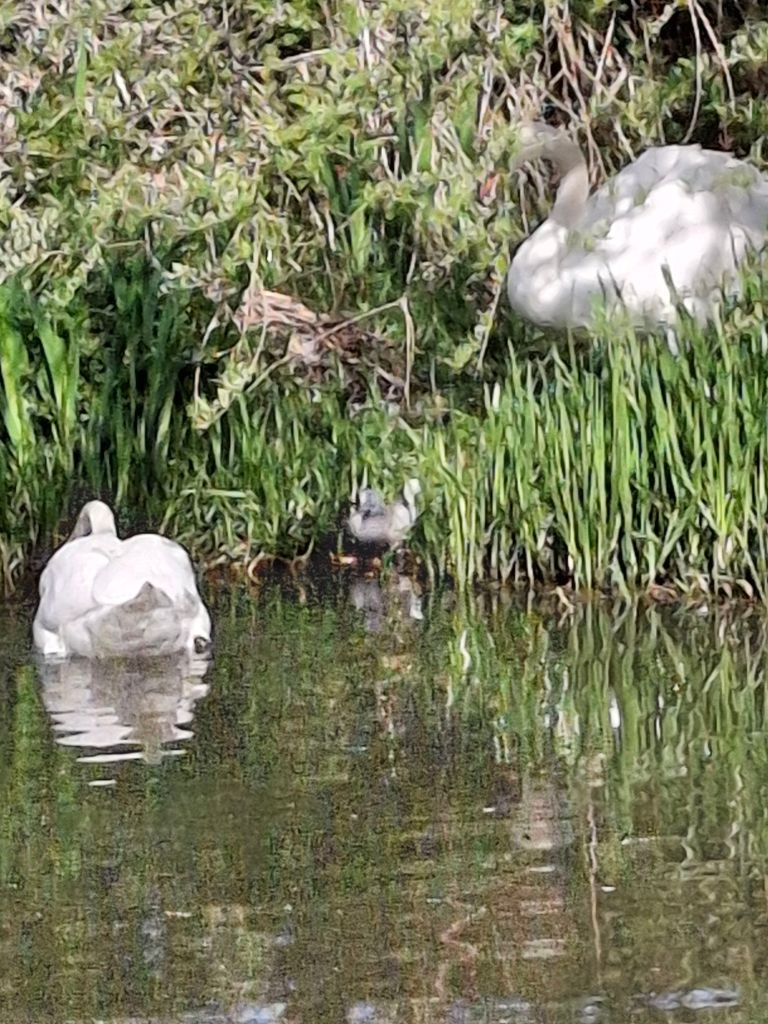
Sure enough, on Monday morning, two tiny heads emerged through the growing green reeds framing the nest. Guided from the nest by mum, and with dad waiting in the water for them, these two little bundles of pale grey fluff appeared to blow onto the water, apparently as unsubstantial as dandelion heads. Dad dutifully and determinedly positioned himself between any passing boat and his new offspring. Mum returned to the nest, and another two fluffy heads could be seen beside her.
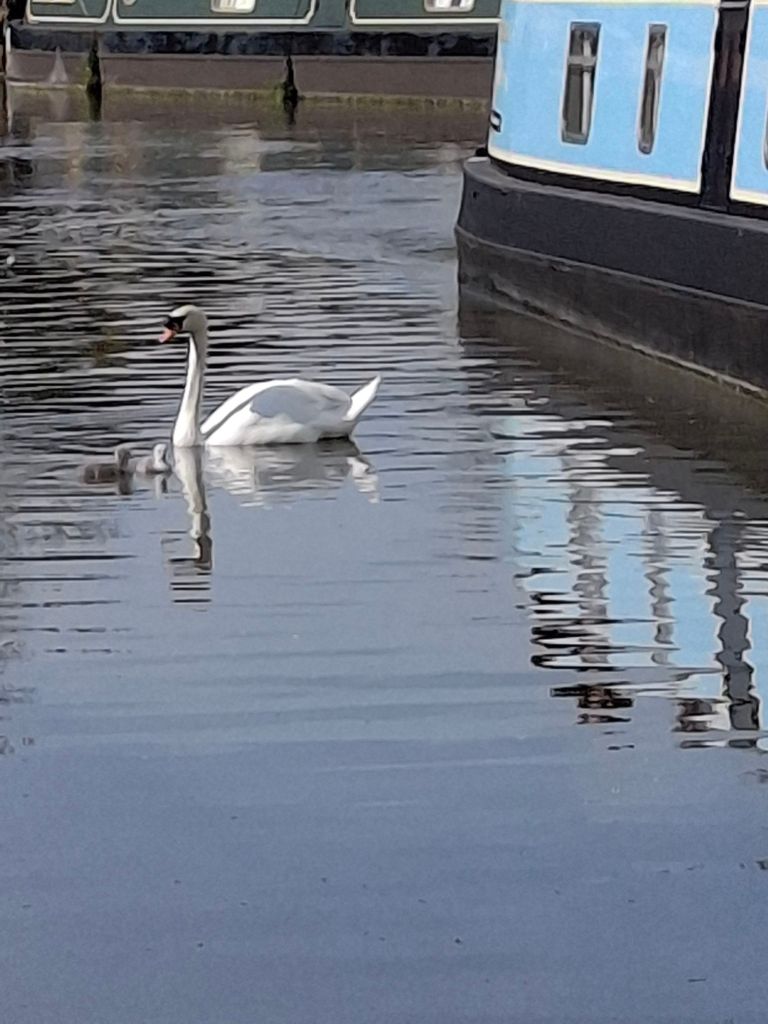
By Tuesday morning, all four were on the water, again chaperoned by dad. You can tell the cob and pen apart because the cob tends to be larger, and the fleshy black knob at the base of the beak is larger on the cob swan.
They didn’t travel far from the nest, though, and mum seemed to have returned to sit once more. By that afternoon, 5 youngsters were on the water with dad. Mum still sat once more – exhausted or just seeking some peace perhaps…

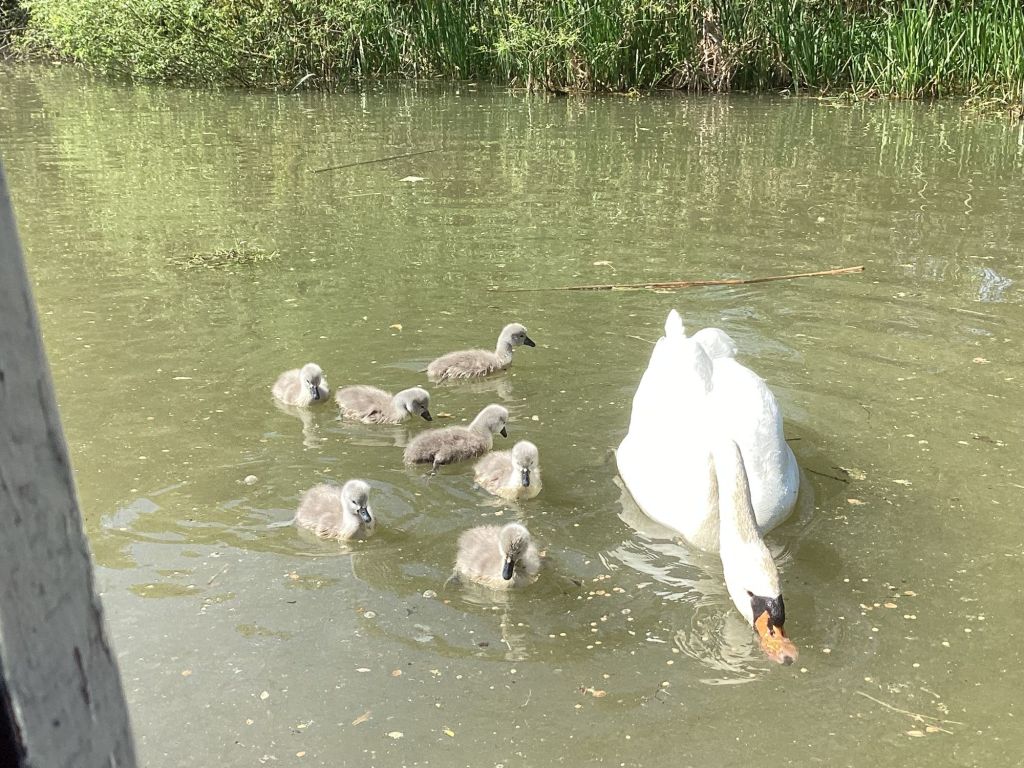
Wednesday morning brought both parents onto the water – now in the company of 7 youngsters. It is possible for swans to lay and hatch up to 10 eggs, with the number declining as the parents age. This pair apparently laid and hatched 7 last year too.
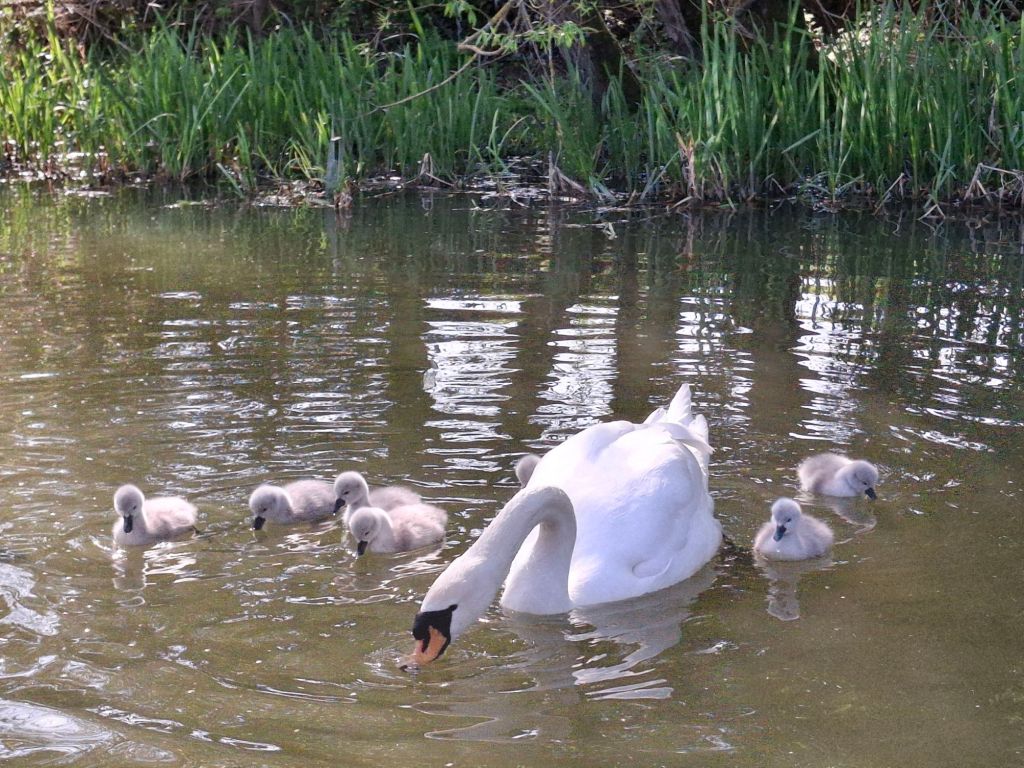
Passing boaters, moored boaters, and local people all united in their delight at the sight. These little fluffy bundles bobbing about on the water brought us all out (the sun helped too), to just stand and watch their antics. They splashed and suddenly disappeared briefly under the water to emerge spluttering and shaking droplets from their downy feathers.
One of the biggest delights about living afloat is our proximity to nature, to moments like this. The canals of today, unlike the commercial canals of old, are places where nature thrives. We have a ringside seat, out homrs becoming floating hides among the woldlife. Living close to mute swans as we often do is a privilege. Locals walk by and enjoy the sight of ‘their’ swans, but when they’ve gone home to bed, it’s our boats the swans are knocking against as they nibble the weed that collects against the hull, or just wallop the side of the boat with their beaks to remind us to open up the swan hatch and reach for the swan food for them!
They might be called mute, but as anyone summoned by them knows, they are far from silent. They grunt and snort in a strangely piglike way – very effective at waking snoozing morning boaters.
In Spring, we regularly get to watch the mating dance of these beautiful big birds. Reminiscent of balls in period dramas, full of pomp and stately ceremony they bow to each other in turn before entwining their necks, often ending up creating that heart shape so beloved of Valentines cards!
Often, they float past the boat with a leg folded up against their back. It looks uncomfortable but is apparently a way the bird can regulate its body temperature. The large surface of their webbed foot is used in the same way an elephant uses its ears.
Work has been happily interrupted all week as the white and fluffy family flotilla call on us for easy pickings (our supply of swan food has been seriously diminished). We’ve also had locals calling by to ask if we’ve seen them as they’ve begun to move their youngsters further and further from the nest.
Anxiously I’ve been counting the small heads each time they pass us. At the last count, there were still 7. Cygnets have so many predators – crows, herons, magpies, turtles, like and large perch, as well as the mink and foxes that can attack adult birds too. Last year, this pair sadly lost all their cygnets, so it seems the whole village is monitoring their progress with bated breath. We hear people counting out loud as they pass the boat when the swans are near.
If they survive, the youngsters will stay with their parents until about October, and then they will be chased away to join up with the first flock of swans they encounter. They will stay with them for about four years until it’s time for them as fully adult swans to seek out a mate for life, a lifetime that could be 12 to 30 years depending on the environment where they live.
In July, we will be heading down onto the Thames, and if we are lucky, we may encounter the rowing skiffs of Vintners, Dyers, and His Majesty the King, involved in the annual Swan Upping. This census of swans on the river will be taking place this year between Sunbury-on-Thames and Abingdon from 13-17 July. All the Crown’s birds are left unmarked, but those allocated to the Vintners or Dyer’s livery companies, will be ringed for identification. During the five-day journey up river, cygnets and swans will be caught weighed and health checked.
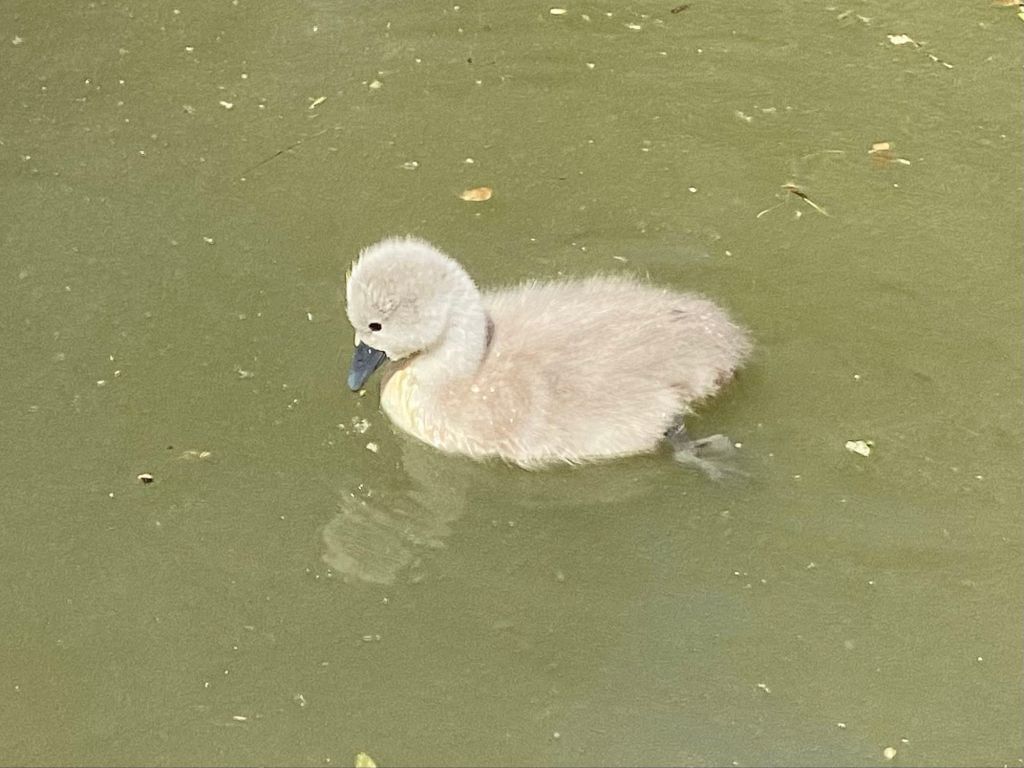
All the swans on waters other than the Thames automatically belong to the King. Perhaps it would be only polite for me to send him notification of the birth of his latest 7 here in Northamptonshire…
 Pickingupducks