Travelling to the United States of America by narrowboat is not something I ever thought we would be able to do, but this summer, we did just that.
We travelled down the River Thames to the Berkshire/Surrey border, moored our boat home with the help of a handy English oak, and set off on foot a few hundred yards to a symbolically carved wooden gate to step onto American soil.

This beautiful gate reminds us of the importance of an approach that aligns to a narrowboat way of life – slow but sure. It reminds us that our actions may not bear fruit in our lifetimes but that we must begin those actions in order for them to ultimately be achieved.
The gate leads into a single acre of American soil situated in Runnymede gifted to the United States by the late Queen Elizabeth II in 1965 to commemorate President John F Kennedy.
The content of the 35th President of the USA’s Presidential Address from January 1961 seems even more pertinent with the current situation in his country. He told all Americans to unite for their country. “Ask not what your country can do for you – ask what you can do for your country.”
He called on all nations of the world to join America in a fight against the “…common energies of man: tyranny, poverty, disease and war itself.” Success he said would take time, no instant quick fix, but it was beholden on us all to start the work to achieve these essential goals.
Kennedy was assassinated in Dallas, Texas in November 1963 but the goals he set for himself, his government, and his nation are ones which we would all do well to support to bring to fruition.
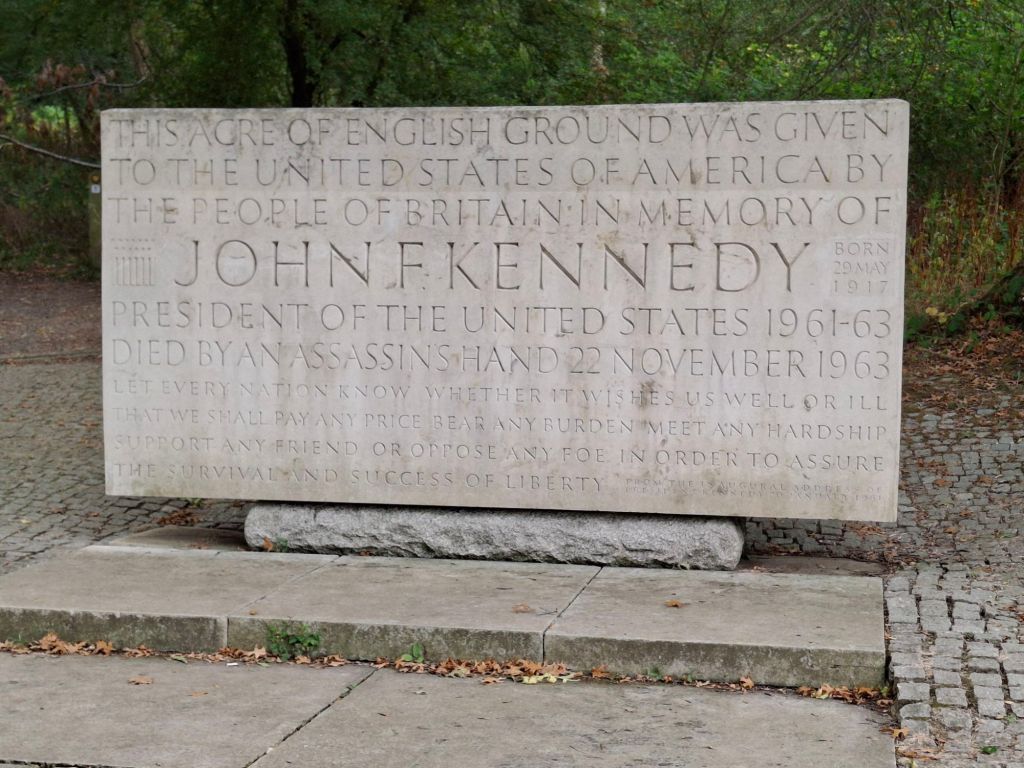
Kennedy’s clear guidance for the world to understand the key position of America is carved on a 7 ton block of Portland Stone
“Let every nation know whether it wishes us well or ill that we shall pay any price bear any burden meet any hardship support any friend of oppose any foe in order to assure the survival and success of liberty.”
Leading from the memorial are 50 steps, one for each US State, and an overarching American Scarlet Oak. This acre of America stands within a stone’s throw of Runnymede where the Magna Carta was signed in 1215, the place seen as the birthplace of modern democracy.
The other most significant item for me within this area was a large circular building whose exterior belies its purpose- to house a remarkable installation by artist Mark Wallinger. Writ in Water harks back to a line on poet John Keats’ gravestone ‘Here lies one whose name was written in water.’
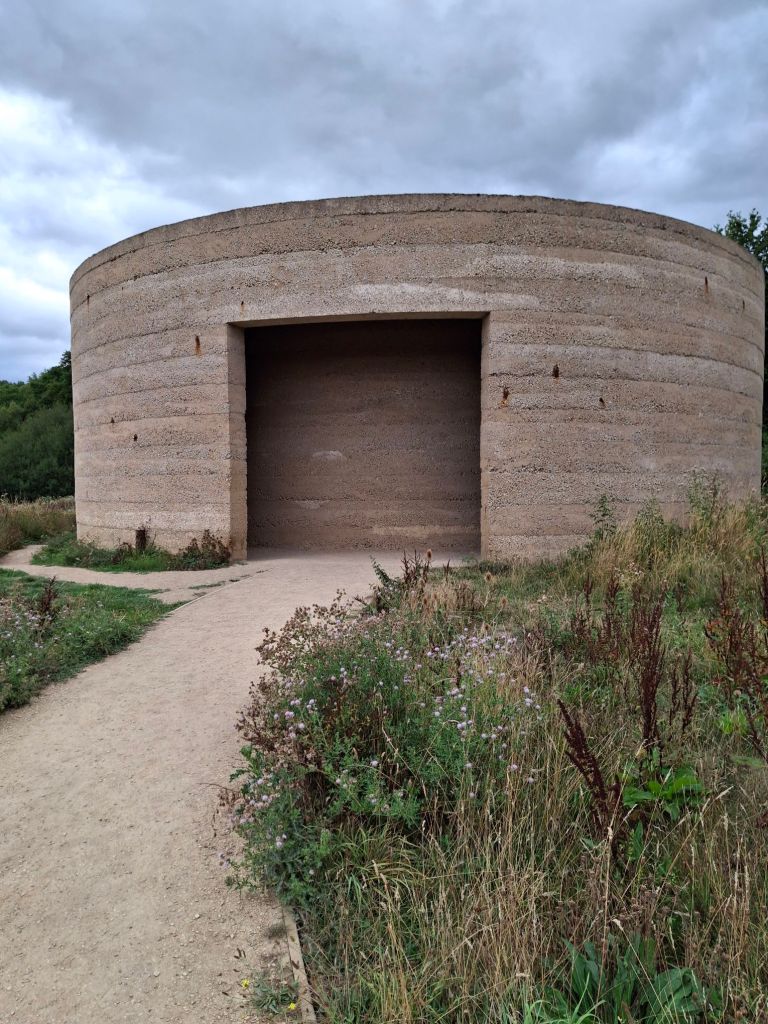
The building is a simple labyrinth with a central chamber open to the sky. It brings the heavens to reflect into a central pool with the sound of constantly flowing water, edged with inscribed steel. It is, like life, ever-changing with time and seasons.
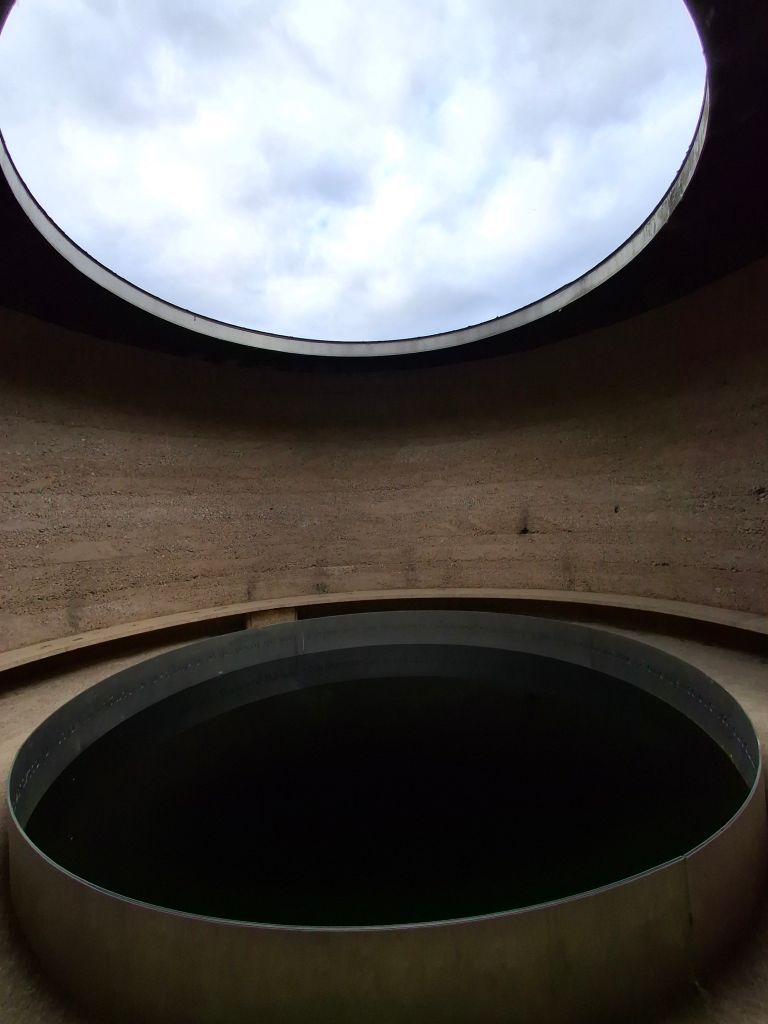
That inscription reflected alongside the changing sky in the apparently bottomless dark pool, is the wording of Clause 39 from the Magna Carta. “No free man shall be seized or imprisoned or stripped of his rights or possessions or outlawed or exiled or deprived of his standing in any other way, nor will we proceed with force against him, or send others to do so, except by the lawful judgement of his equals or by the law of the land.” This remains unchanged by time or the fluctuations of nature.
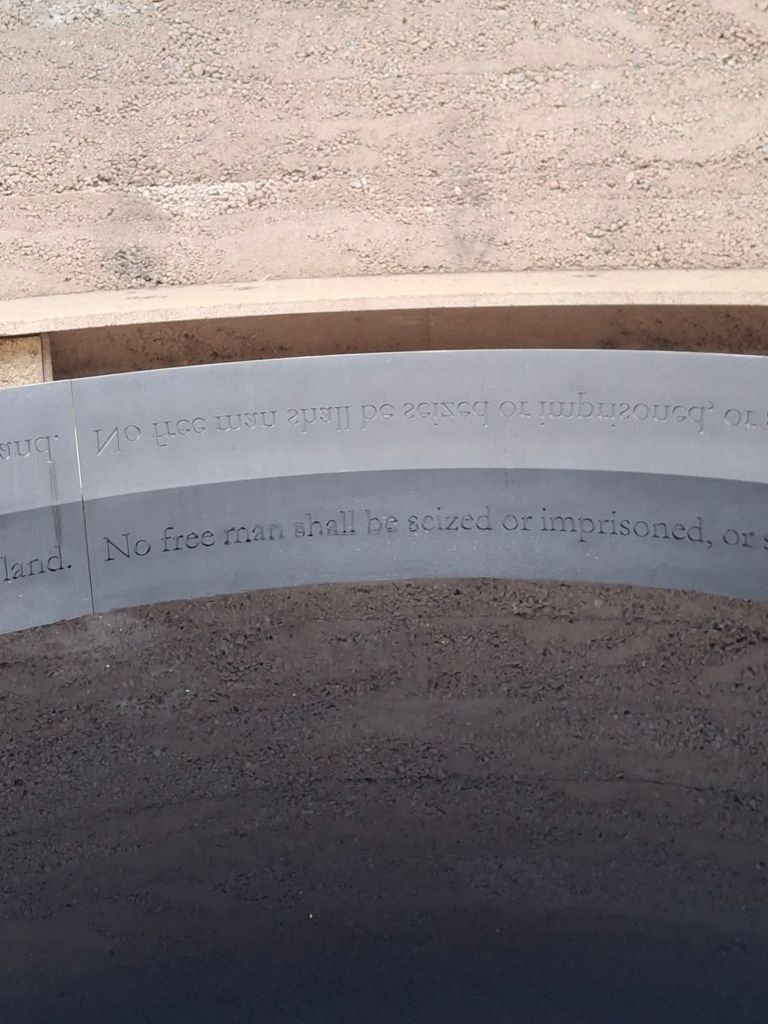
This is one of the most powerful, peaceful, thought-provoking and profound art installations I have ever experienced. Its power is in simplicity but complexity. The calming aound of water combines with the quiet induced by the embrace of the concrete labyrinth. Weeks later, its impact remains with me. If you have the chance to visit, don’t miss the opportunity.
It seems that all politicians of every hue here and in the United States would do well to visit both Writ in Water and to absorb the fundamentals set on American soil here in England. If they, and each of us in our small ways, would commit to continue the aims of Kennedy’s Presidential Address and the principles encapsulated in Clause 39, wouldn’t the world be a safer, happier place?
Wouldn’t it be wonderful each of us asked what can I do for this country where we live? Whether cleaning up graffiti or litter picking, being a volunteer or taking another selfless role, there is something every single one of us can do to make the world a better place. Why would anyone not do that?
 Pickingupducks