How long does it take to put down roots, to feel a sense of belonging, to feel part of a community?
Being a nomad, I reckon a couple of days often does it for me, but I am aware it’s different for each individual. For the first time for a very long time, we have been in one place almost continuously for the past 6 weeks (we have had to move to access water and waste facilities). We are heading off again this weekend, but in that time we have felt welcomed, included and generously made to feel we belong by the people who are living in this beautiful village of Grafton Regis near which we are moored. We also know from their honest conversations with us that they don’t always feel this way about “boat people”.
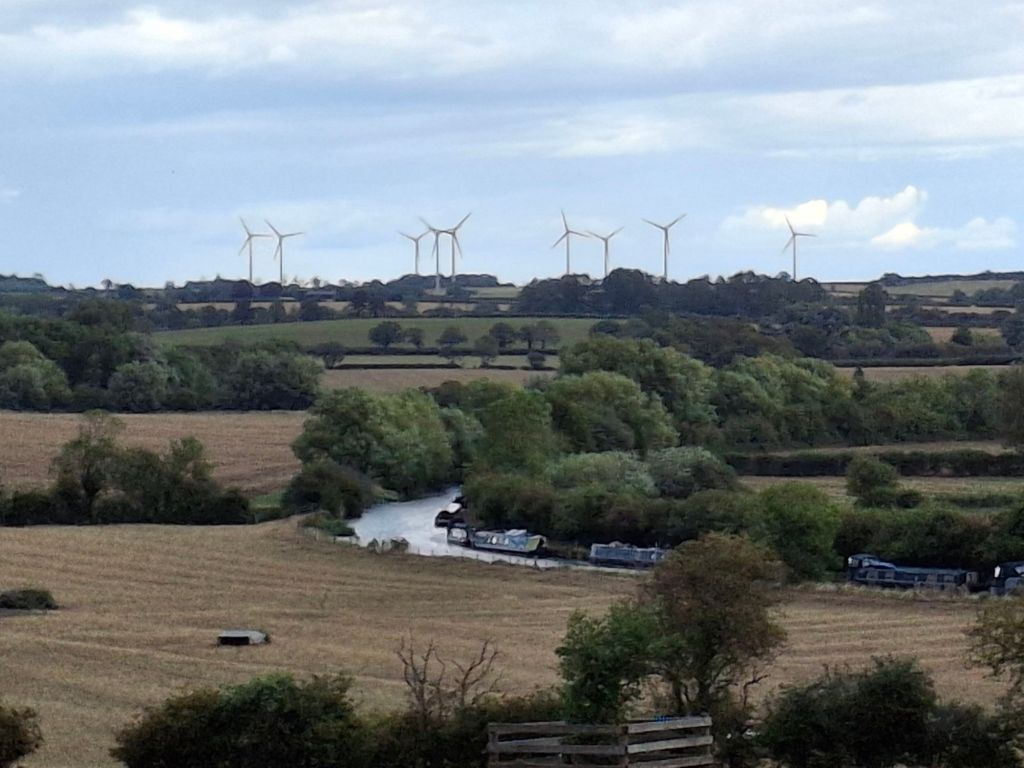
It got me thinking about how we as permanent “boat people” we seek to belong, to integrate, and why we do so if we are somewhere for a while. It works for us and is as much for us as it is for those around us and for future perceptions of all of us who live afloat on the inland waterways.
Subconsciously, I realise we have adopted 3Cs over the years, perhaps whether afloat or not, as we have become used to moving and living in different countries, different places, and different communities.
Communicate – in a shared language or if no shared language exists (which we have encountered in places), then with smiles and signs; through universal languages of art, music, hobbies, cooking or laughter. I will remain indebted to all who took time to help me learn their language and customs to help me integrate and belong. Even though I no longer live among them, I know without exaggeration that their kindness changed me for the better.
– by taking time to talk and more often to listen
– by asking questions about the local area, what they love about it, and what we should see or do while here
Contribute – by getting involved in small ways that make a difference to the whole community.
– by litter-picking the local area (not just the towpath – 10 black bin sacks full so far during this stay),
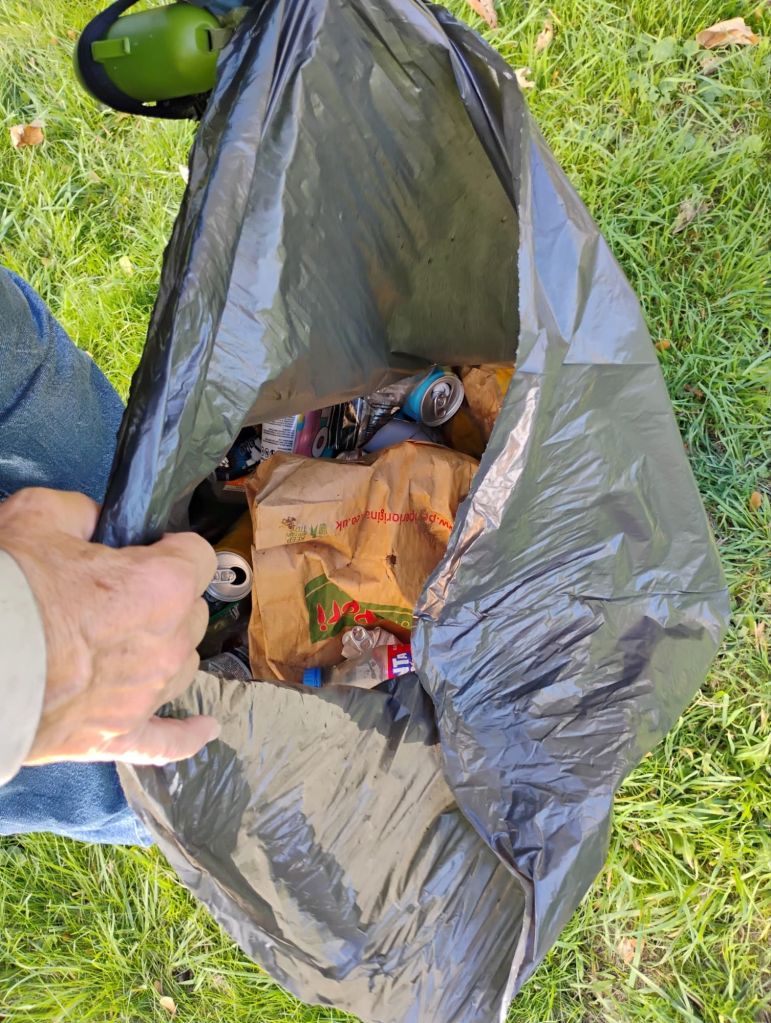
– by finding out what needs doing locally (nettle weeding in the churchyard this time round for me),
– by getting involved as Canal and River Trust volunteers in the locality (we’ve collected an old bike and transported it to a rubbish facility, litter-picked the towpath and cleared weeds from a weir)
– by supporting local village stores, farm shops and pubs (I knew going to the pub was a positive!)
Care – looking after the area around the boat and showing our appreciation of its beautiful position
– making sure we demonstrate a willingness and enthusiasm to learn about where we are and what is around us
– showing gratitude for advice on pubs, good dog walks, access to private land and being shown the best foraging spots. In this instance I’ve taken time to walk up to the village with thank you pots of crab apple and rosehip jelly
-keeping our dog under control being aware not all walkers like dogs, and aways clearing up after it
– moving on leaving nothing behind to show where we were apart from some flattened grass and hopefully leaving the area better for our stay
Today, we will move on as some locks are now unlocked because water levels have risen. One day I hope we will return to this little vilage in Northamptonshire but in the meantime, before we leave we will do one last litter-pick, call to say thank you and farewell to many of the villagers who have befriended us during our stay, and leave knowing so much more about English history than we did before. On our last farewell visit, we are likely to walk the same paths frequented by local girl Elizabeth Woodville, wife of King Edward IV and mother of the Princes in the Tower. She was crowned Queen of England on May 26 1465. And she wasn’t the only monarch in whose footsteps we are walking.
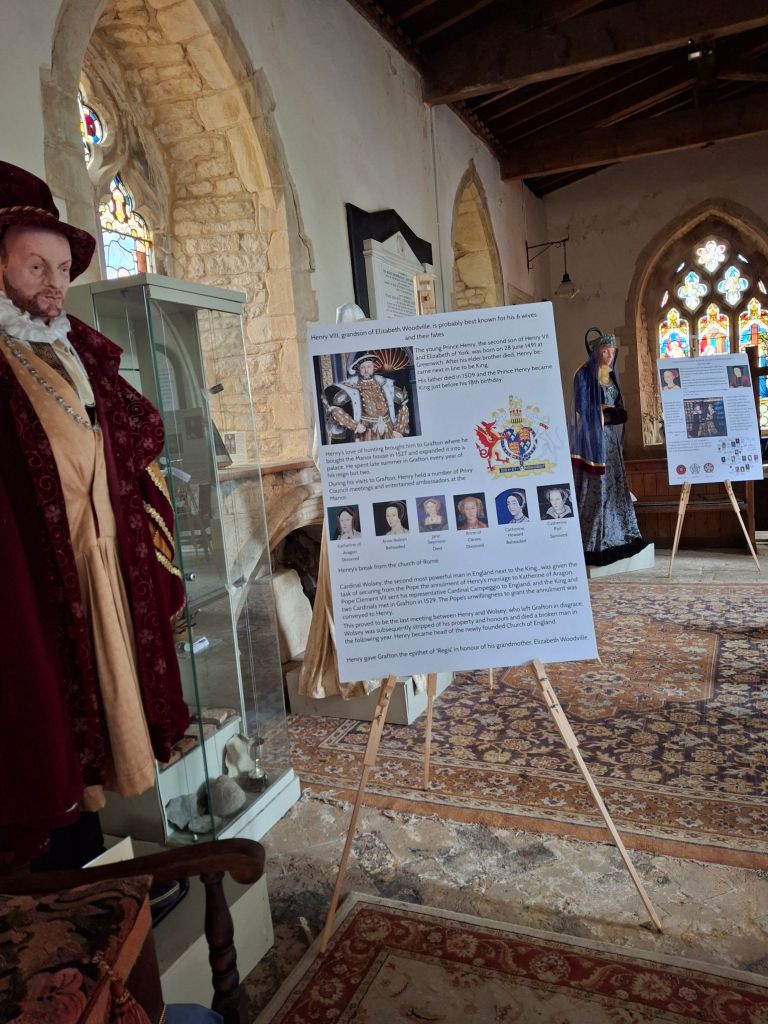
As we walk across the fields with the dog one last time, we may well be following the very routes taken by Henry VIII, his huntsmen and hounds, as this was one of his manors (coincidentally he swapped it for those of Loughborough and Shepshed in Leicestershire- places we also know well). The kites that whistle and call above us now inhabit the same skies as did Henry’s hunting hawks.
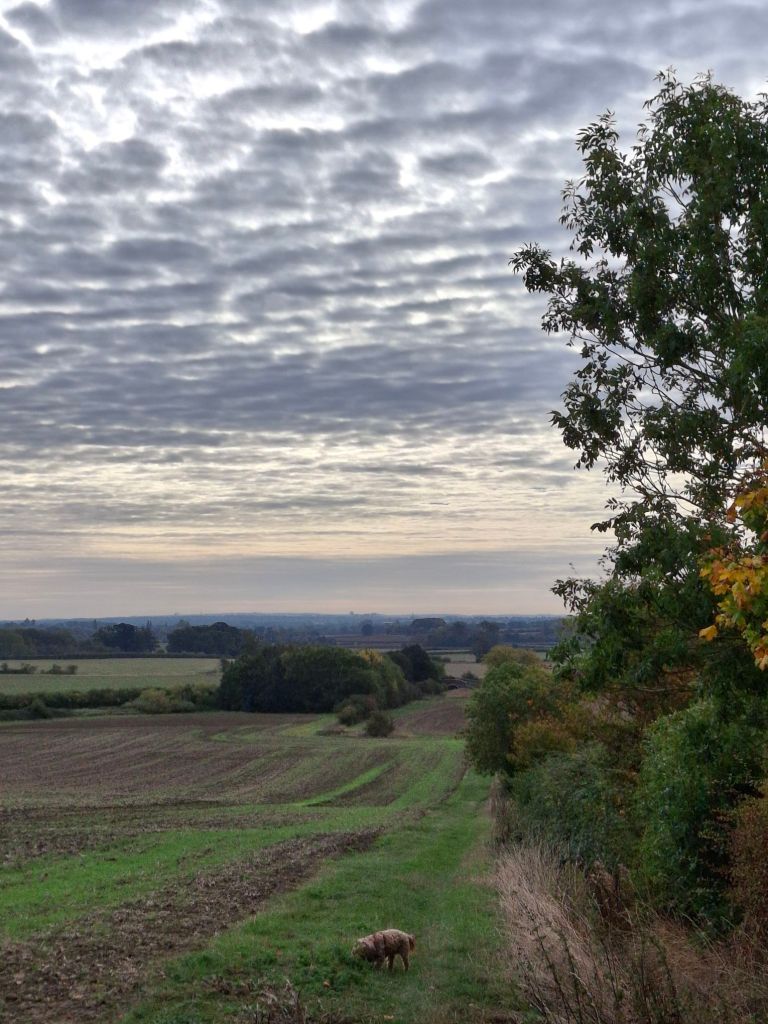
This former and very famous king will have seen, just as we have, the change of colours into autumn across these spectacular landscapes.
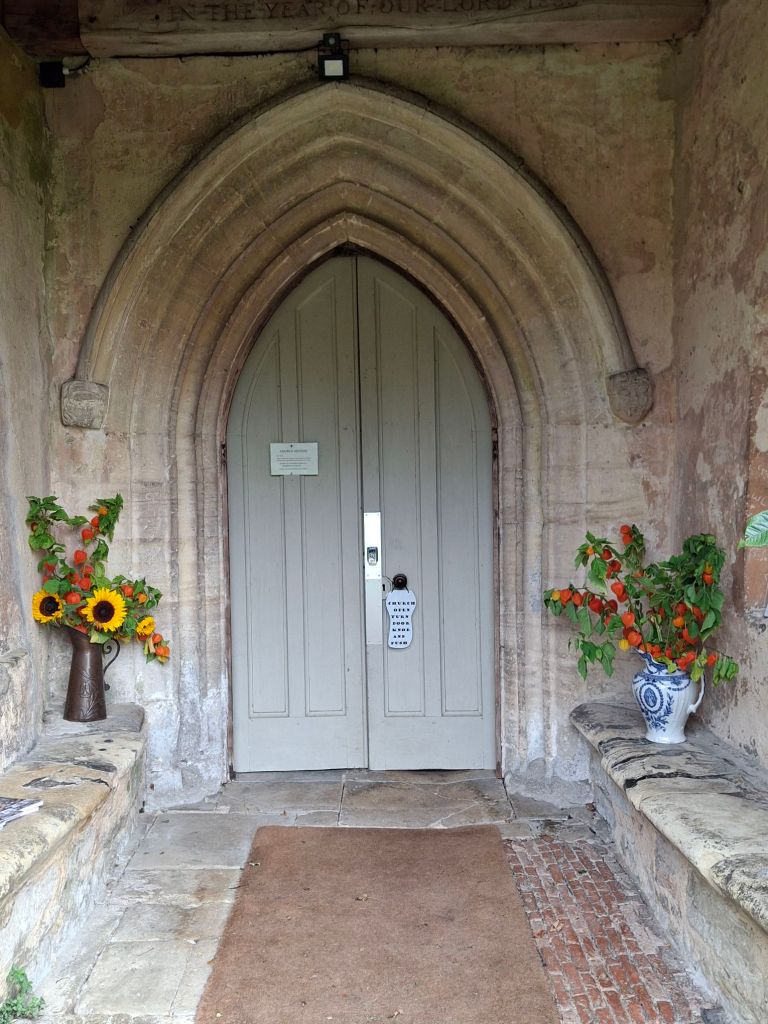
It seems remarkable that I never realised that it was here that the fated meeting with Cardinal Wolsey which led to the dramatic dissolution of the monasteries was held. History truly was made in this tiny area of Northamptonshire, a place you might now miss if you just speed past it on the A508. If you can detour into the wonderful church here then the remarkable history is encapsulated in one of the most remarkable, entertaining and unique interactive ways I have ever encountered.
While we have been here, we survived unscathed the first named storm of the year, Storm Amy. This is the place where the man who introduced the first storm warnings for shipping in 1861, was born, a man now remembered in the daily shipping forecasts.
Vice Admiral Robert FitzRoy, captained the Beagle, the ship that transported Charles Darwin on his expeditions; designer of the FitzRoy barometer; pioneer of the science of weather forecasting and Governor of New Zealand. In March 2002 Finisterre, one of the 31 sea areas around the British coast was renamed FitzRoy to honour him and his work.
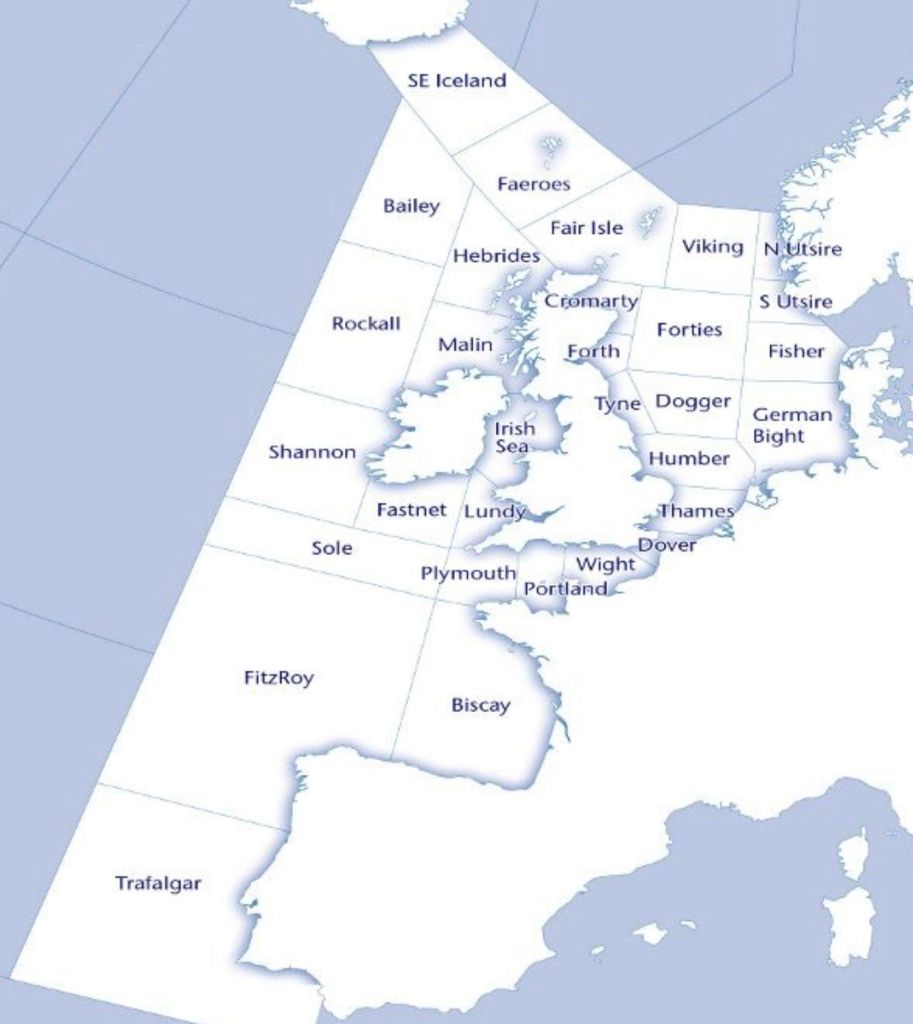
The forecast for his area today reads:
FitzRoy:
WIND
Northeasterly veering easterly, 3 to 5, but 6 or 7 at first near Finisterre, becoming variable 3 or less later in south.
SEA STATE
Moderate, occasionally rough until later.
WEATHER
Drizzle in north.
VISIBILITY
Moderate or good.
His sea area is conveniently adjacent to Trafalgar, whose memorable battle in 1805, the year FitzRoy was born, was Nelson’s final success.
This talk of the sea puts me in mind that over the 6 weeks we have been here, 4,603 individuals have arrived in the UK in small boats. They too are “boat people”. For their success and well-being, their involvement and integration, however long they stay here, they too will need to put down roots, to feel a sense of belonging and a sense of community. As we know, even a short stay can contribute and be positive. How these people are supported by communities to integrate, to understand the rich heritage, complex language and idiosyncrasies of the UK nations, however long they remain, will play a large part in their futures and in the well-being and success of the areas where they stay.
 Pickingupducks