Water – essential, but not the same for everyone or everywhere.
For everyone water is vital to keep us alive, to keep our bodies going, to make us and the plants and animals we depend on, growing.
For us as boat dwellers, water is vital to keep us moving. Without it, as now in the Midlands with water shortages, we cannot move. With too much of it (as also now in the Midlands) we cannot move as navigation halts because of dangers surrounding flooding and resulting strong river flows.
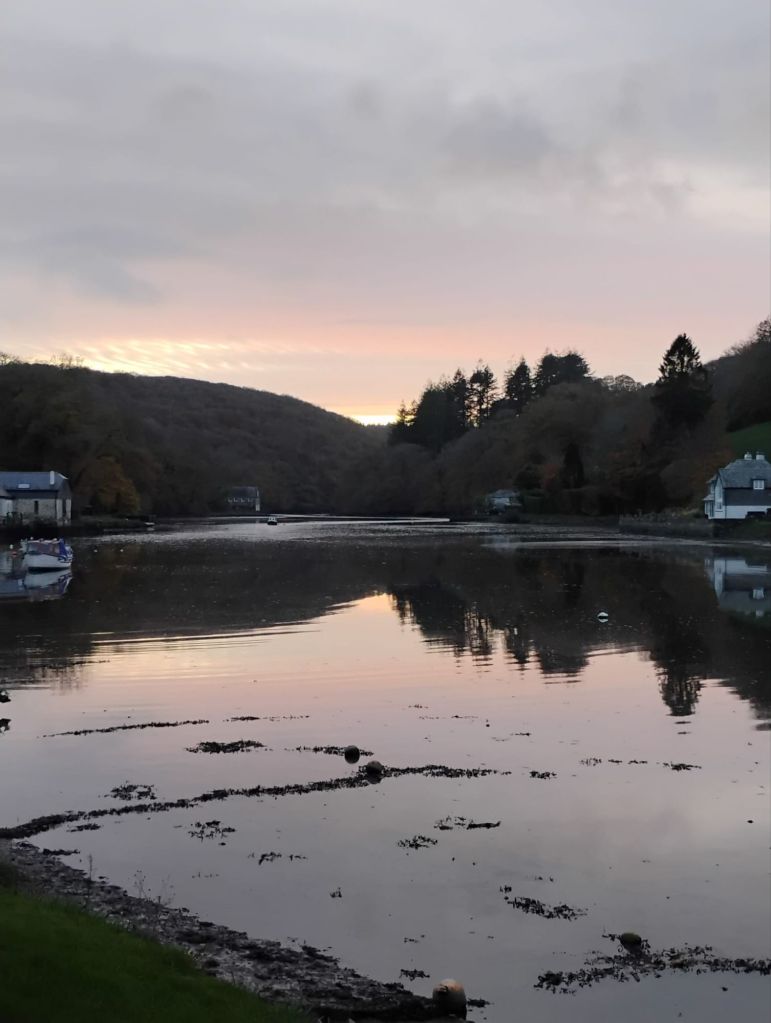
On holiday this week we have been watching and hearing just how different water can be. The rain drums on a boat roof very differently from a house roof. In a boat you are always aware of the type of rainfall outside from the sound inside – gentle tiptapping to fierce hammering.
Rain also drenches you just as much on holiday as it does when out in it at home! As Storm Claudia swept in we were relieved that we had left our home in a marina as she was 215 miles away. If waters rise or trees fall in a storm at least we know she will be looked after, mooring lines will be checked and she will be secure.
Out of storm time for us in inland waterways we are always aware of the water, and the backdrop of gentle water sounds as swans and ducks particularly move past us, as the boat moves through the water. These quiet calming noises are interspersed by sudden loud water movements, with flows at weirs, locks and sluices. Down here in the south west of England, we have become very attuned to the new sounds of water we are exposed to.
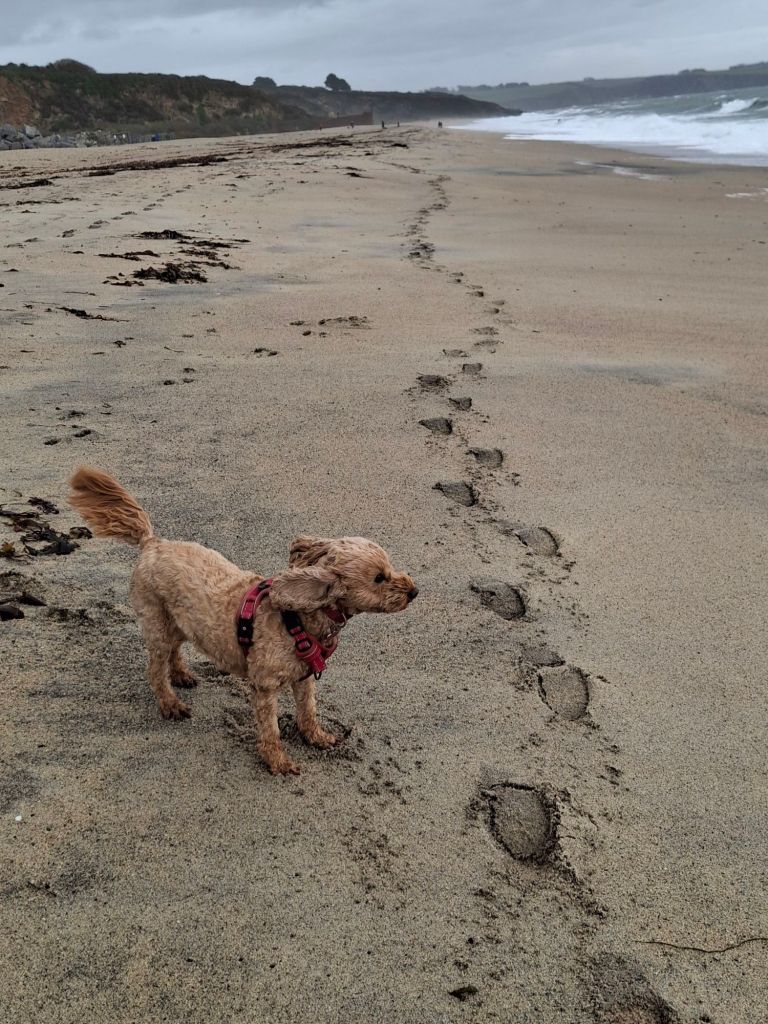
We are surrounded, and to some extent controlled, here by the tides. At high tide the road outside our holiday cottage floods. We have to remember to check the tide tables and not to park opposite the house but at the highest end of the public car park a short walk away.
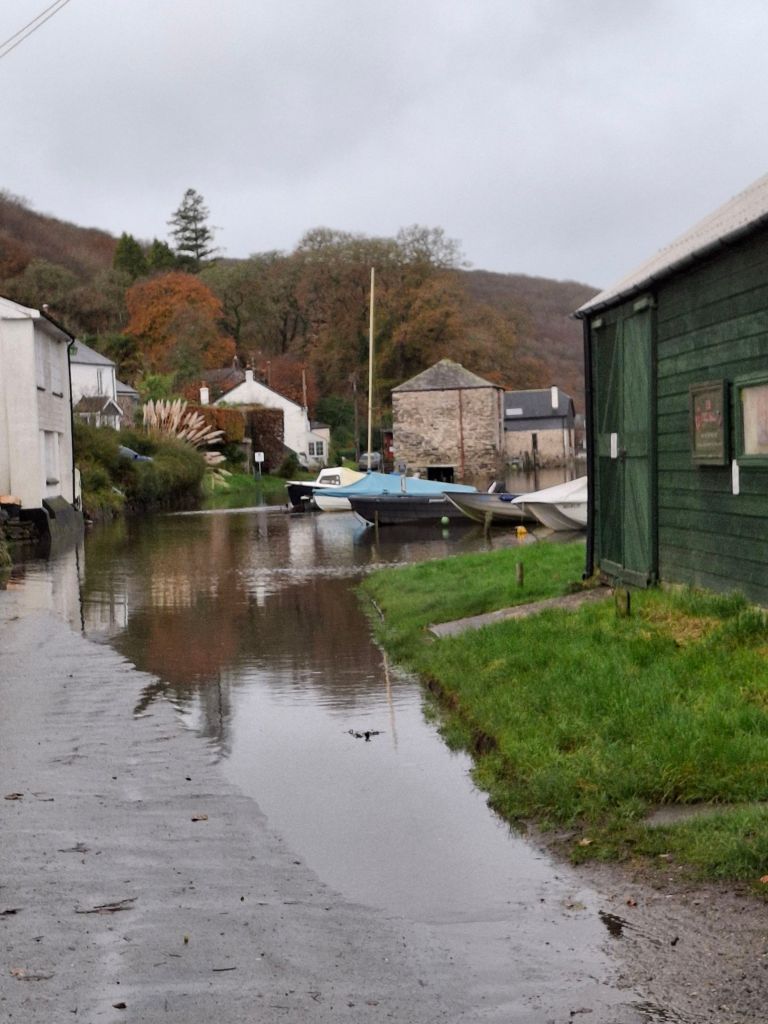
The noise of the tide going out, sucking water from the creek and leaving brown mud with listing boats in its wake is surprising. It gurgles, it splashes, it is never silent. This morning I watched a pair of cormorants fishing, and they just swam in the shallow channel that was slowly emptying, occasionally putting their heads down into the murky waters for food but never actually having the water depth to fully submerge their sleek black bodies. Beside them on the exposed mud a little pure white egret was an extreme contrast as he delicately picked his way through seaweed and slime, finding tasty titbits en route.
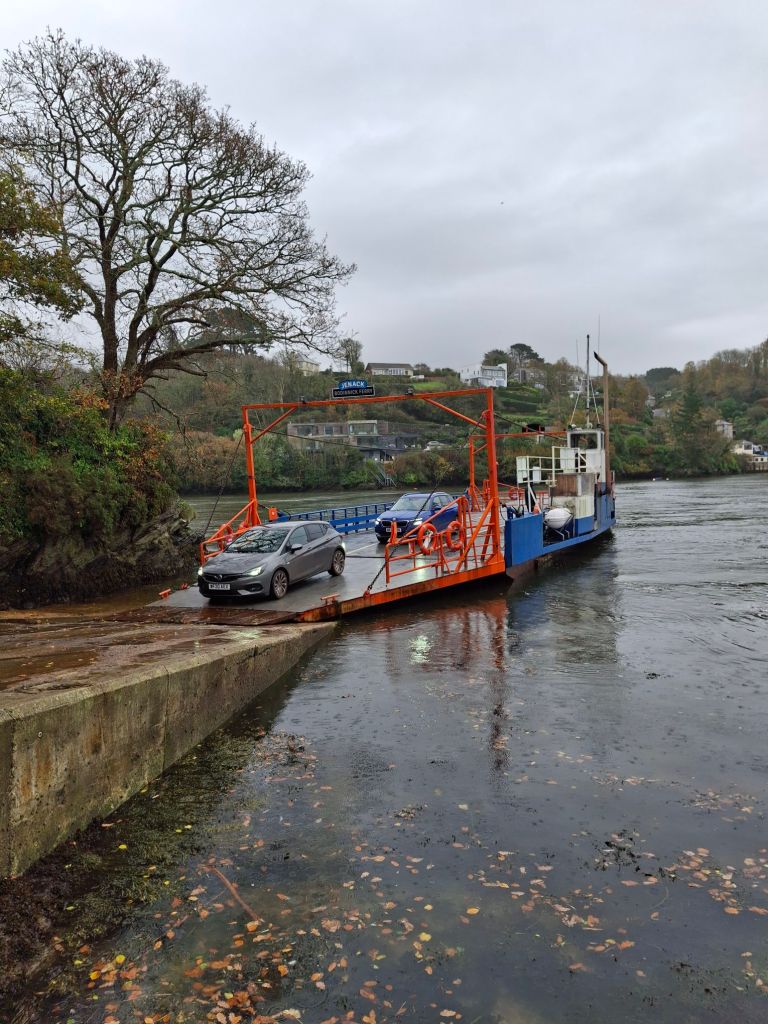
Coastal waters lead to different ways of life. For centuries they have brought employment through fishing, running ferries, and now sightseeing trips. For many living close, they control lifestyles creating opportunities or limitations. Tides and high seas affect work or pleasure, from surfing to knowing which roads to avoid or detours to take because of tides or surges.
Just as we have adapted and take for granted our awareness of the conditions of locks, canals and rivers that alter how we live our lives, so coastal dwellers do the same. Walking to and from school at low tide in the village of Lerryn, whose creek inspired Kenneth Grahame to write Wind in the Willows, can involve stepping stones. At any time other than low tide, it involves a walk round to the bridge crossing the creek.
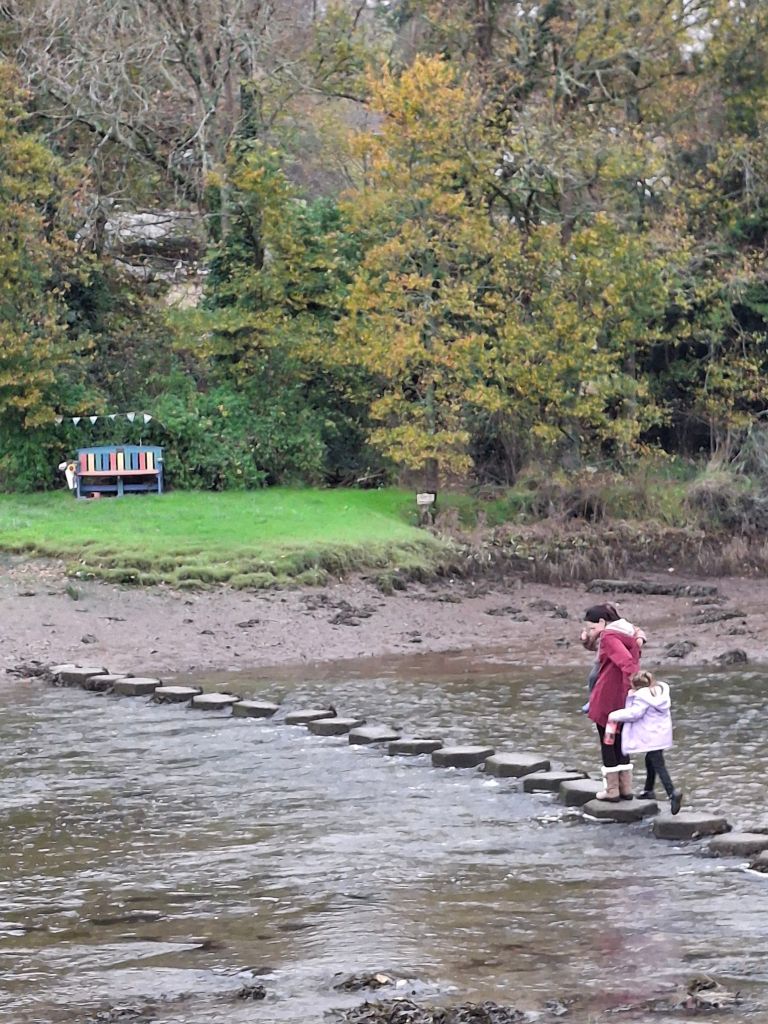
At Bodinnick getting to and from secondary school across the estuary at Fowey demands a “cool” ferry trip. It becomes the norm but still, like us on the inland waterways, it’s not taken for granted.

We have been “playing house” this week. Recognising and indulging in the things that we don’t have on the boat – an electric kettle, an electric toaster, a television, an oven, a flushing mains toilet and a BATH (with unlimited hot water). Some people have some of these on their narrowboats, but we don’t see the need for them, so this week I have felt spoilt but also aware I am missing the consciousness, the mindfulness that comes with living on a narrowboat. Living in a house I am oblivious to how much water we are using, and how much power. It feels wasteful and somewhat irresponsible. I am alarmed how quickly I have become attuned to not switching lights off if I am not in a room, or overfilling the kettle unnecessarily.
We have had a week of not having to think about moving our home, although since 1 November we are now into winter mooring times so every spot becomes a 14-day haven on the network.
We haven’t had to think about emptying toilet waste, or even being aware how many toilet cassettes are full and how many remain empty, mentally calculating as we constantly do, the available days before we MUST empty them.
Not once have I thought about how much water we have available in our tank. On mains water you just mindlessly turn on the tap.
I have never glanced at the fuses and meter cupboard in this cottage – I have no idea how much power we have used because I haven’t needed to know. I don’t need to think about what to cook for supper based on what heat sources are available – if the stove is on then I will gleefully use that ‘free’ heat for cooking. I have not needed to calculate how much power we have available, because attached to the mains, it is unlimited.
All of this strangely makes me feel detached, a little as if I am drifting through life in a a rudderless, uncontrolled way, unaware of my surroundings and disconnected from the daily basic rhythms of life. These have become as commonplace to me as the daily tides. I am conscious we live differently, our off grid lifestyle isn’t for everyone but it has its own rhythms, it’s own ebb and flow, its own regular constants by which we govern the way we live. These are as a heartbeat. You are unaware of them until they are not there.
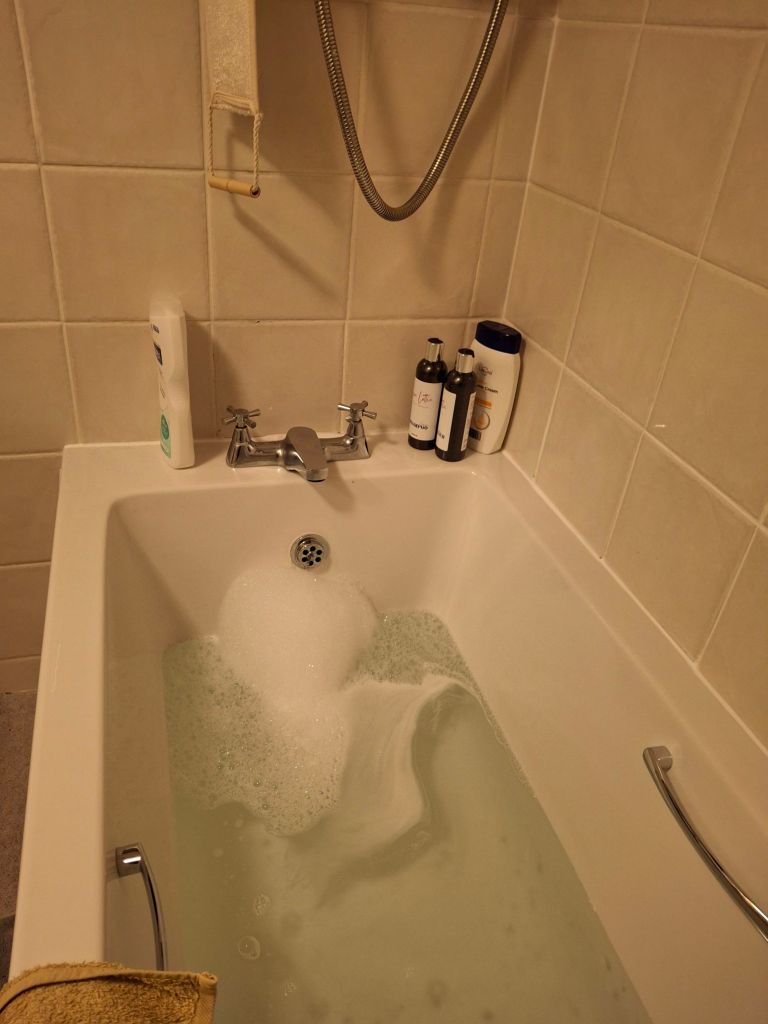
For now, as we prepare to return from a wonderful holiday seeing family and friends, enjoying different sights and sounds, I am running another indulgent deep bath to revel in its novelty and at the same time reflecting on how much I am looking forward to getting back to our 50ft home. We won’t have a bath on board. It will be cold on board after a week without heat but within minutes we will have the stove lit, the kettle on its hot plate, and we will be back on our gently rocking home with all the familiar, reassuring sounds of the waterways around us.
 Pickingupducks