In one of his 43 poems – yes, 43 – about the life of a river, Ted Hughes observes:
The winter floods have ruined her.
She squats between draggled banks, fingering her rags
and rubbish.”
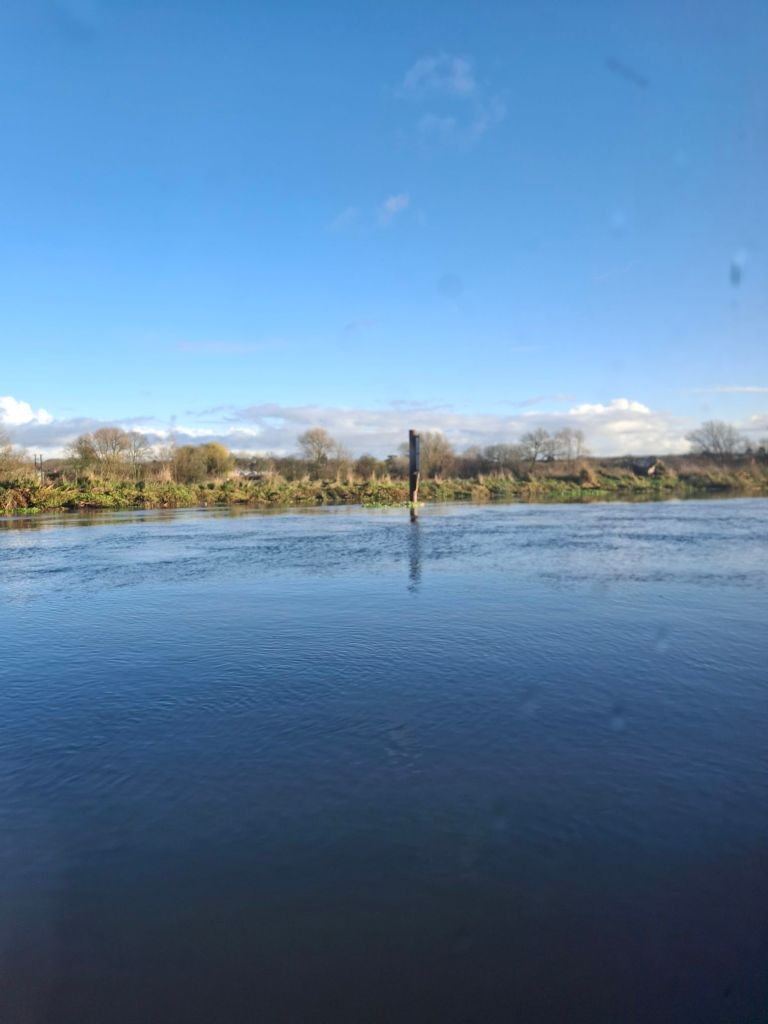
And so it is as the flood waters drop on a river leaving debris hanging from overhanging branches and piled on flattened banks like tattered Christmas decorations.
The connections between rivers and humanity, nature, and life itself are myriad. Rivers are made by nature. Canals are made by man.
Rivers may by subverted by man, as a tiger may be tamed, but at heart we all acknowledge their wildness, their potential to revert, the latent danger in that lurking power.
In his book Is a River Alive? Robert Macfarlane explored whether a river is a living entity, with ensuring rights and demands. Macfarlane hails from Nottinghamshire, a river’s journey from where we are currently moored on the River Soar. It is on the county border of Leicestershire and Nottinghamshire that the Soar ceases to be a single entity as it merges with the mightier River Trent and together they head out to sea through the mouth of the Humber.
The Soar has reminded us this week of its demand, its requirement, for respect. When we arrived at our current mooring the river had just come out of flood. Our passage along its length had been strewn with the debris and detritus the waters had sucked up and spat out as levels changed. Tree branches near the water trailed plastics and fabrics. We fished much out as we travelled, the boating equivalent of plogging, but in a narrowboat you can’t get too near to the edges without getting stuck fast in silt, so what we removed with net or by delving deep in our weed hatch had been floating rather than caught or draped.
At this time of year the Soar is subject to sudden and often quite significant fluctuations in level. Rainfall can make the river rise rapidly, by up to 4ft.

This week we saw that on Saturday. The nearest Environment Agency measuring station is at nearby Pillings Lock, some miles down stream. It indicates what is happening, albeit after it has begun to happen up here. We were both out at separate family social events when the Skipper saw from his phone that levels were rising, and rising fast. Boatdog and I were nearest and set off rapidly to check the situation.
When we left the boat where we had moored her at 11am that day we had to step up about a foot from the stern (back) to get onto the river bank. By the time I returned around 4 hours later, I had to step up onto the boat from the riverbank.
I loosened the ropes, checked my knots, checked the mooring pins at the bow, and banked up the stove to give us warmth to dry clothes and ourselves as the rain hammered down. Going out every couple of hours to check ropes aren’t too tight, dragging the boat down, invariably ends up with wet coats.

We are moored above a lock with two weirs close by. One weir is behind us, and one off to our left. If our ropes were not holding us firm, the boat would likely end up on that weir and probably overturn within a short period of time. In marinas and on permanent moorings, poles and rings on them, allow boats to rise and fall with the flood waters, but one still needs to keep a weather eye that they don’t catch, generally as the waters subside and the boat descends. We though are moored to a fixed short bollard at the stern and our own mooring pins banged into the sodden ground at the bow.
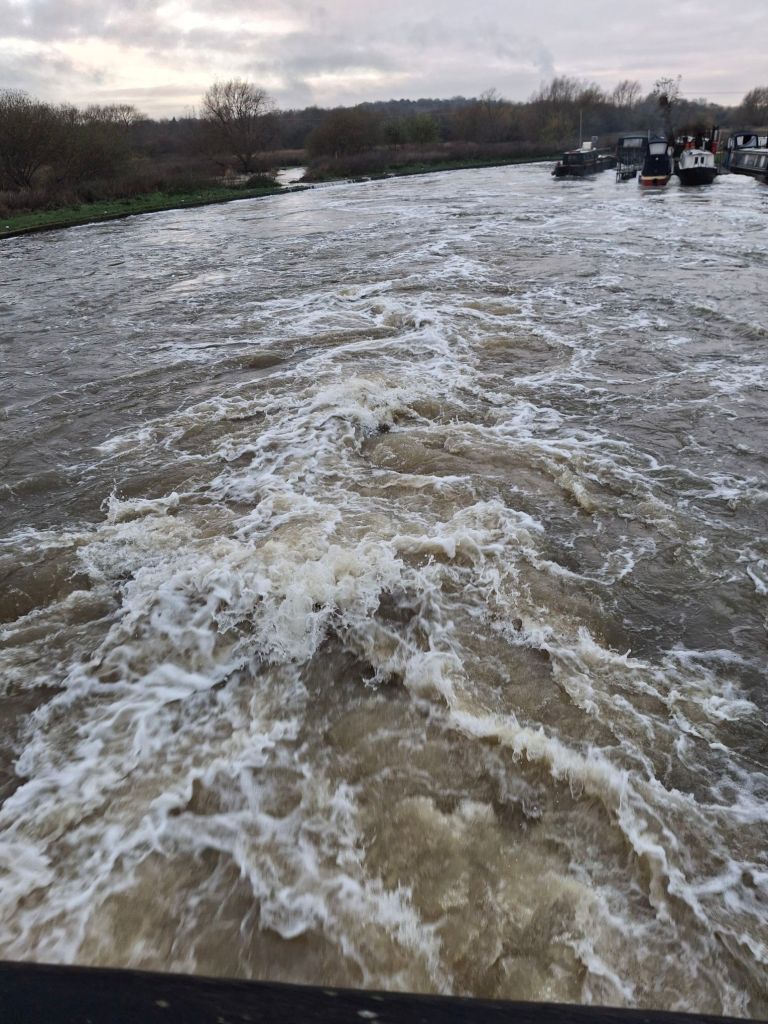
The name of the Soar stems like so many other rivers from ser- which means “to flow” and it lives up to its name. It is constantly soaring, constantly flying. It thunders down the weirs and rushes through gaps in the lock gates, and it is more obviously flowing at times of flood.
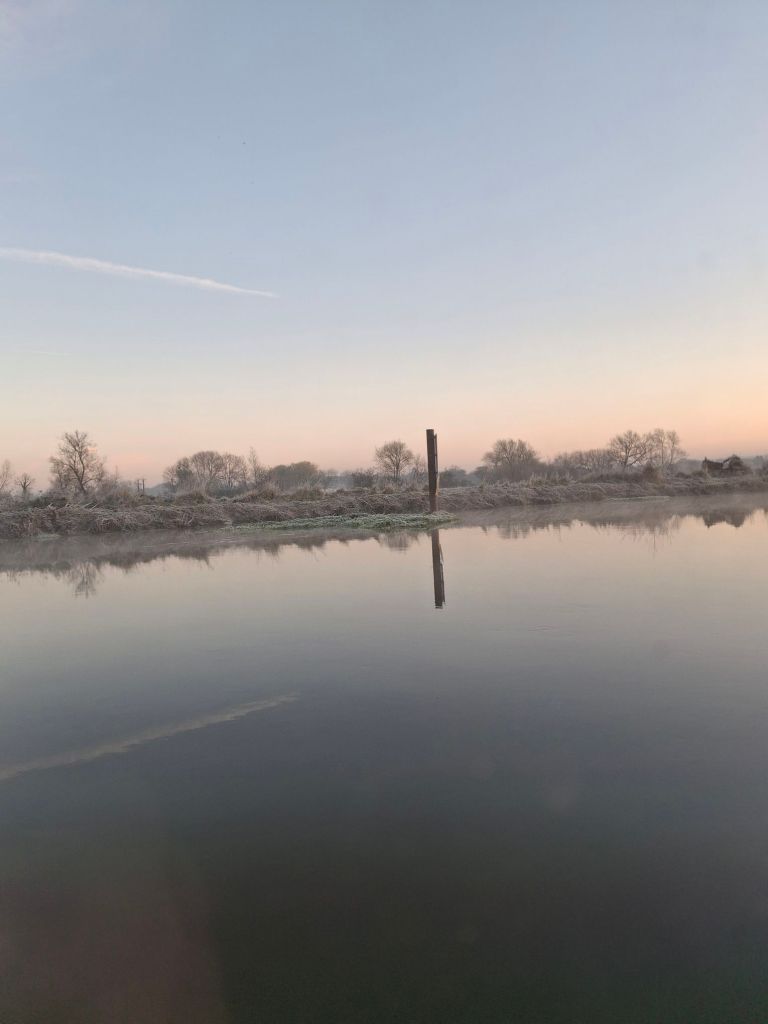
Within days of the sudden rise though, it was back to a more gentle flow as the flood waters abated, leaving paths sticky with mud, and grassy banks sodden and slippery.
This is one of the differences of a canal and a river. While one is made by man and one by nature, the constant movement is probably the single most obvious difference between the two. Rivers flow, it is in their DNA, their nature, their life force that they have to keep moving. Even though the flood has abated, I can still hear the white noise of the water cascading over the two weirs. This is winter though, and the nature of the river is that we know we should expect flooding regularly.
The river is also deeper than the canal. It is noticeable that the boat handles differently. With a depth of water beneath her she travels more smoothly, more easily, and faster too as we go with the flow.
So the sound and the feel of the river is different from a canal. It looks different too, wider in so many places, and the constant movement makes for a different smell in the air. It smells fresh, unlike the stale water of the canal we passed through to get here. At times when I let water into a lock, leaves which were gathered and had been lying under the water for months suddenly were churned up with the silt that had been quietly coalescing. The resulting released whiff was hardly pleasant.
But on the river the water is racing, it is tumbling at the weirs and gasping in air as it charges headlong.
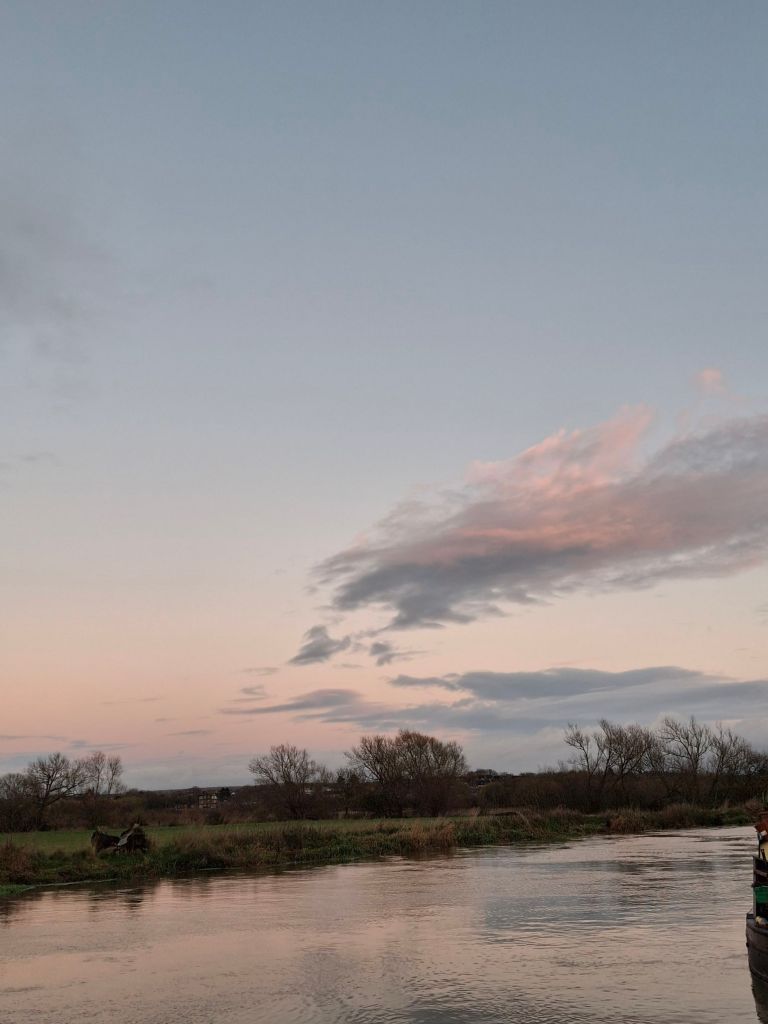
We have sections of the Soar which have been canalised during the time when water transport was a commercial operation. That gives us locks from time to time. At one stage in its history, the textile industries of which the Soar was a fundamental part, in terms of transporting raw materials, finished goods and providing water during the manufacturing process, turned the river pink.
At its height, around 1895 there were 231 hosiery manufacturers listed in Leicestershire, one of whom was my great grandfather and then in later years my grandfather took over the family factories at Leicester, Burbage and Market Harborough.
The Soar was vital for their business, and it is now vital for our way of life.
The fact it is moving, living, and (like us) constantly travelling, gives us an affinity with the Soar. But like any travelling companion, it demands its own space, and our respect. I hope in ecological terms, we and future generations will respect the needs of the Soar more than those who came before us did. We wish to nurture not pollute and to celebrate its capacity for leisure, and living rather than diminishing the river, its health and strength.
 Pickingupducks
Wow! Thanks for the Ted Hughes reference!
I can’t feeling a bit twitchy for you when you are on open waters, especially at this time of year. However, I’m sure you have all bases covered and will rise to each and every challenge (of which I hope there are very few!!)
LikeLiked by 1 person
Honestly, we feel twitchy too! 😊
LikeLike