Life has been reflected in the weather this week. Living so close to the elements, to nature makes us feel part of the environment around us. A single ray of sunshine above the floods this week has had a ridiculously positive impact on our spirits, and a single drop of rain delivers out of proportion gloom.
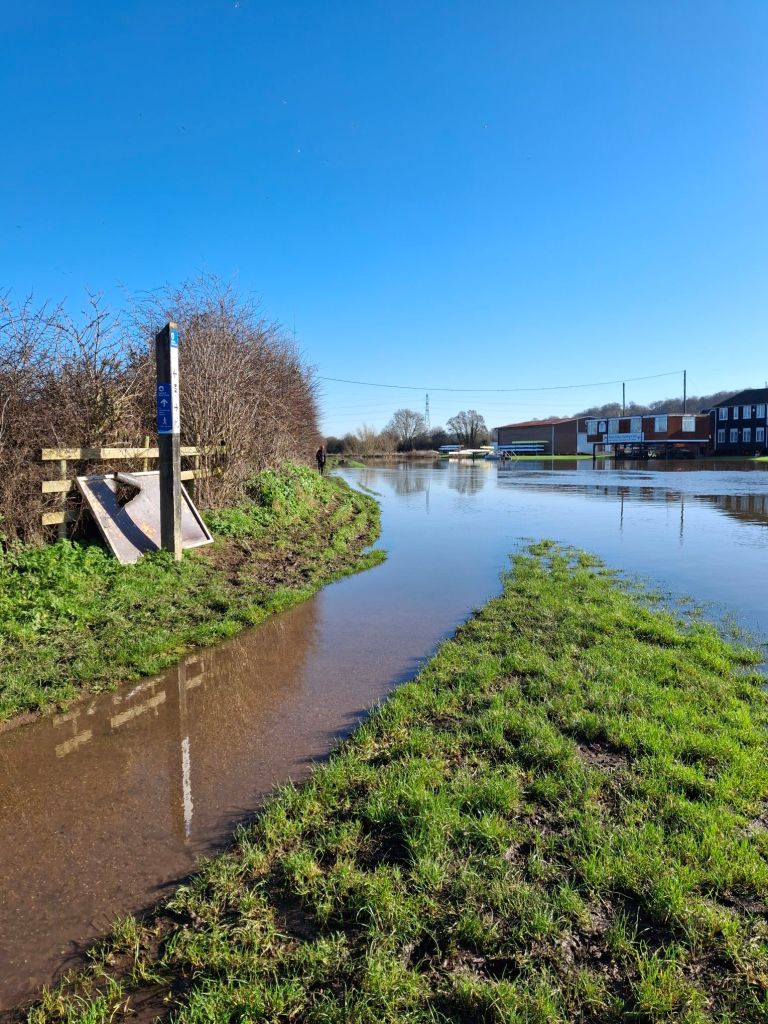
We started the week still sloshing around a towpath, wading back and forth, carrying Boatdog until we got to dry land, but it was a positive start. One of our best friends visited – after undertaking what seemed a huge detour. He brought with him unexpected gifts – a beautifully crafted new gangplank with non slip treads, and ropes at either end to allow it to be fixed – no more fishing out the gangplank while perched precariously at the back of the boat. We can fix it with a mooring pin to the bank and loop it over the ironwork at the back – ingenious.
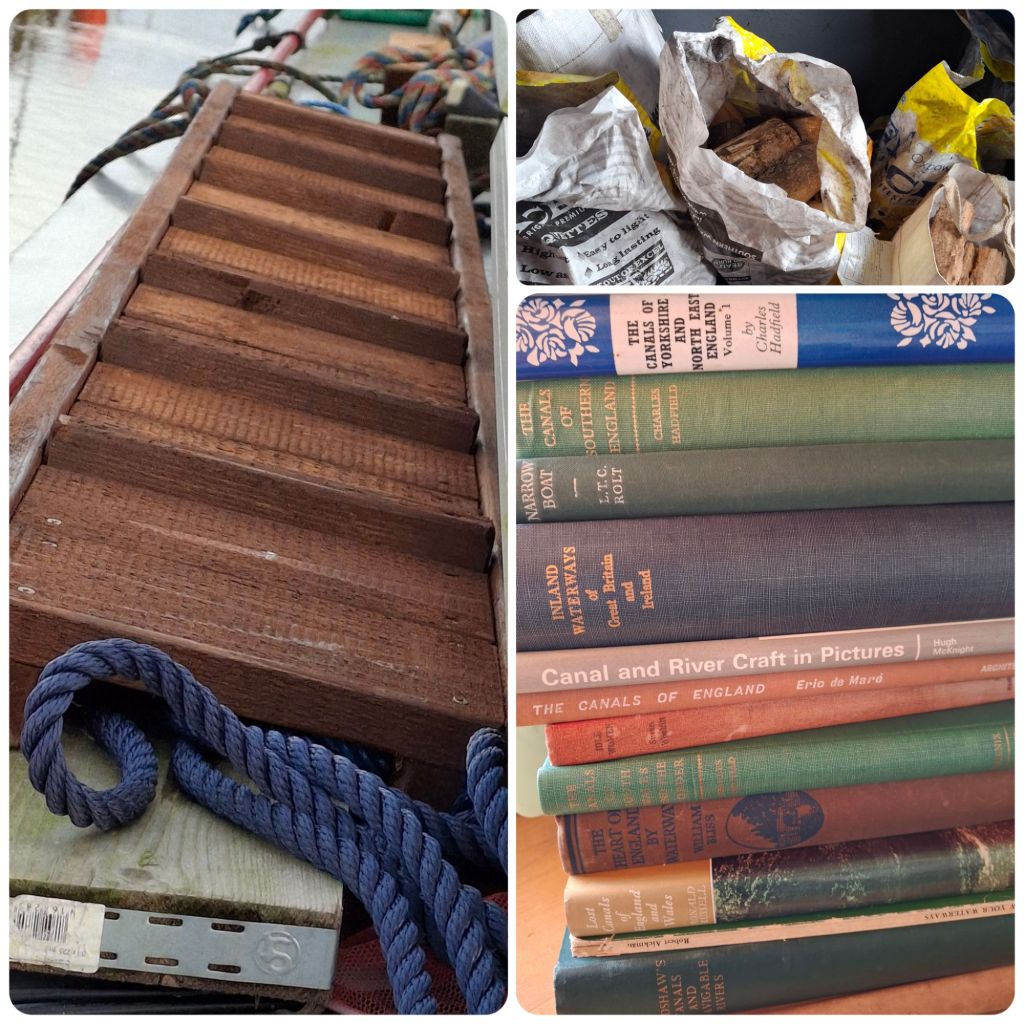
He also brought some sacks of seasoned logs cut to size for the stove, and…there’s more! In a box appeared a veritable treasury of sought-after canal books including LTC Rolt’s classic Narrowboat Boat and Susan Woolfit’s Idle Women. About the women who ran the canal transport during the war as part of their contribution to the war effort, it is one of the most readable, entertaining and hairraising books about canals I have ever read. A combination of personal experiences, history and practical insights Idle Women is a real misnomer. It charts the trips of boats and butties I know now as homes of friends and their businesses. But in wartime crewed and skippered by women, these boats covered (among others) the route we are currently on, but they came from a London up through Leicester and Loughborough to Langley Mill at the end of the navigation and back. That 167 mile, 169 lock journey (both ways) was taken empty up to Nottinghamshire and returned laden with 46 tons of coal. From Leicester to Langley Mill and back they had the services of a waterman, Joe Roberts, to guide them.
“…the Soare (sic) on which we we’re now ravelling was very wide in parts. We were glad we had Joe with us and had not tried to tackle it ourselves, the swiftly flowing water was such a change form what we were used to that we looked at it with eyes of awe…”
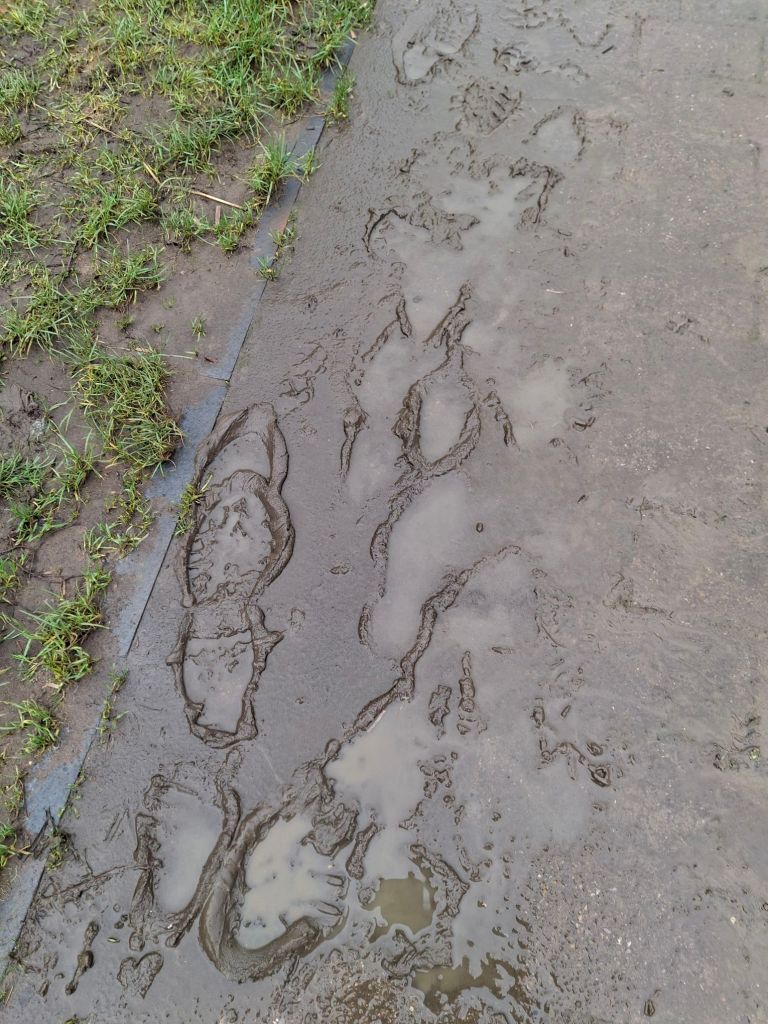
That is part of the Soar that we are currently on, and like others we treat it with respect. The flooding as I write is down once more, leaving the paved towpath section slimy and slippery with silt.
The forecast implies that more rain is to come and we have no doubt that the level will rise again. As I write this the wind is battering us against the concrete side of the section here. The rattles and thumps have Boatdog curled tightly up on her cushion by the stove.
Above her hangs a load of washing – such excitement. We managed to borrow a second hosepipe earlier in the week and rootled through all the many connectors we have aboard to join it with our own. By dragging the boat back this long snake of a hosepipe managed to reach from the generous local pub’s outdoor tap to our water tank. It has been 65 days since we were last able to fill the tank and we are now able to turn on a tap and smile with glee as water emerges. I am so relieved that the enforced weight training of lugging bottles and filled camping bladders is over for a while at least. It may sound simple but the delight of setting the washing machine going cannot be downplayed.
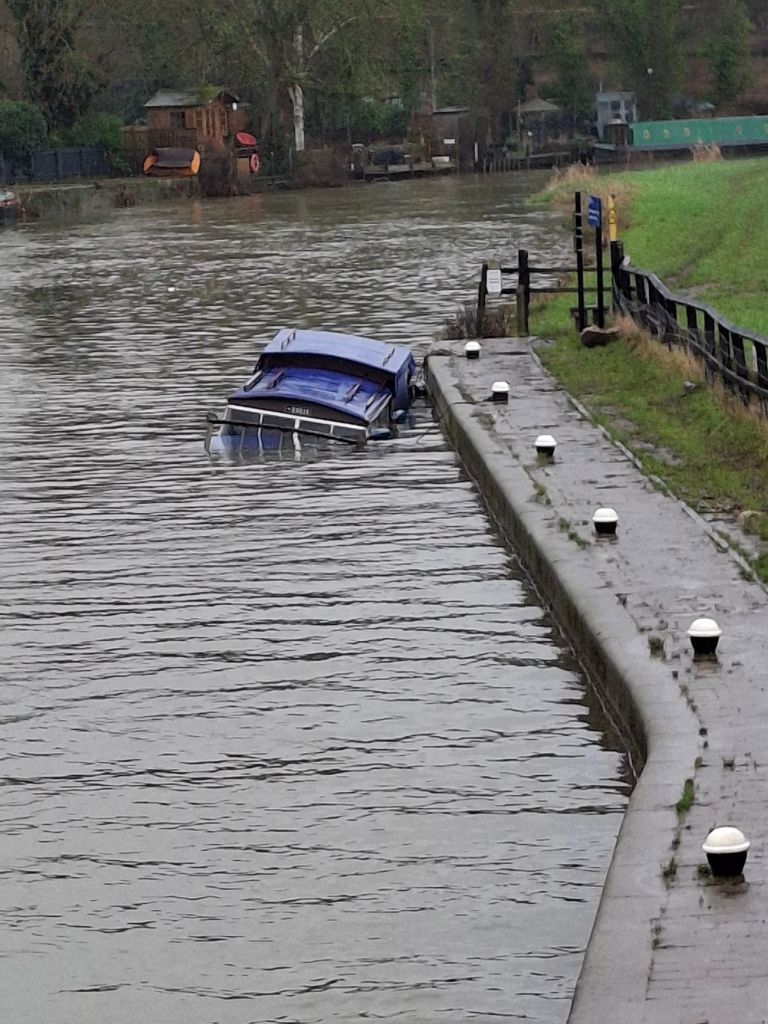
We remain moored above the lock but below is not such a happy tale for one boater. The river boat that was moored there since before Christmas has been listing since the last floods. I, and many others, have contacted Canal and River Trust with its licence number to ask them to contact the owner but on Thursday enough water had made it into the boat to sink it.
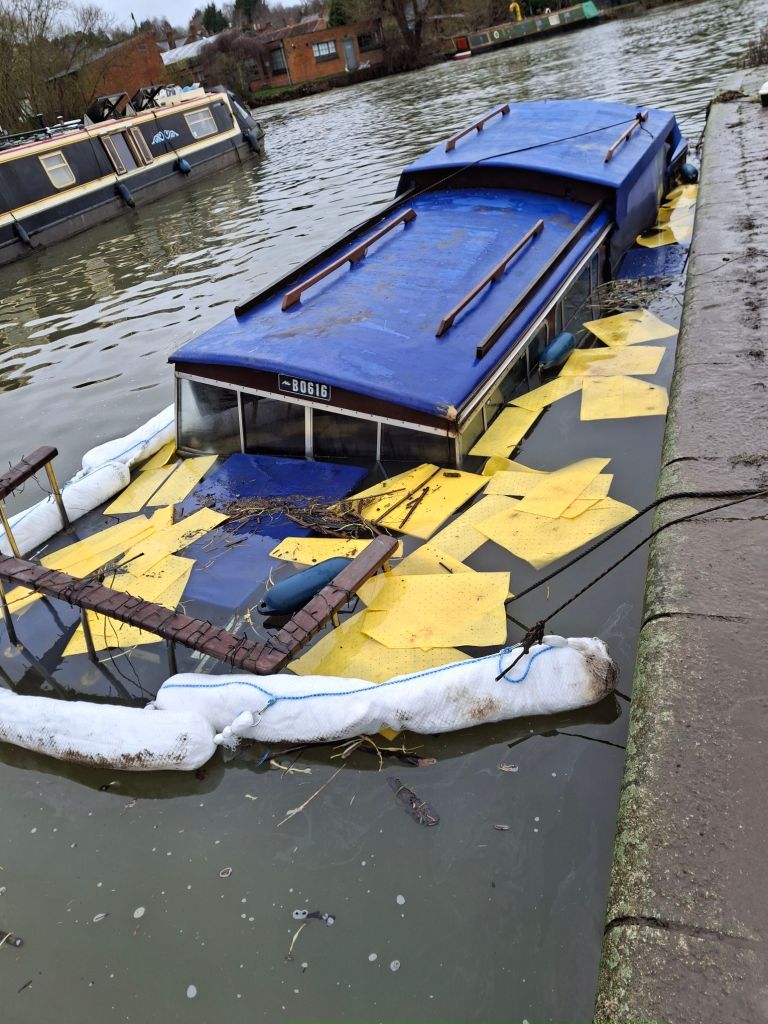
On Friday a CRT staff member came up to employ a spill kit – booms and absorbent mats to soak up diesel and oil. Sunken boats are a major issue for CRT who are after all a charity. If a boat has an owner and insurance then the removal is not down to the charity. Some sunken boats however are unlicensed and abandoned, and the cost then falls on CRT to remove them, which according to the Trust can be £7,000 PER boat. That includes legal costs and the contractors’ removal fees – because of the geography of the waterways, these can involve access agreements, and heavy lifting equipment. If there is scrappage value that bill can be reduced a little.
It is always desperately sad to see a boat sink, and it is a fear for so many of us who live afloat. Boats are great when they do what they are supposed to do – float. But that requires maintenance, checking weed hatches and stern glands are tight against water ingress, and opportunities to keep checking mooring ropes, avoiding them being too slack or too tight so they tip the boat allowing vents to get underwater.
It is a salutory reminder to us all
 Pickingupducks