Ageing effectively

It’ll come to us all if we are lucky – old age that is. When it does we need to be ready for it, for the change it will bring to us, but also to those we love and who love us.

It’s frustrating, infuriating and exhausting as we have witnessed first hand. Their body refuses to do what those who are aging want it to, or what they feel it should.

This week after 2 months being moored up we are on the move once more – on a jaunt to Liverpool and back. And we are together again. It’s been a time for us to get back together as for the past month the Skipper has been living with his mother (now 93) and Boatdog and I have been living on the boat. A strange, not easy but necessary temporary existence.

Following a series of eye operations his mum needed support and she’s been hugely lucky to have 3 children who have provided that unfailingly. The bulk of that care has fallen on her two sons because of geography  but her daughter flew over from New Zealand for a month.

This 24/7 need for help was a rapid progression from the weekend stay every two months month, then every month or three or two weeks which the Skipper has been doing for the past few years. From wherever we’ve been he’s made his way by bus, train or car to the North West. Our cruising schedule built in the need to be near transport or to have it with us. His brother at that time was a full time carer for his wife although ‘the boys’ shared supporting their mother before that.

The amount of time and effort they have given and continue to give willingly with so much love is immense. I have been in awe of their capacity to put their lives on hold. For their mother, she’s had to relinquish her fiercely held independence for a while, but now as her sight has improved and various aids are helping her regain independence, the next phase for everyone can begin. What that will look like in detail we don’t yet know, but it will allow Mum to regain more control of her life.

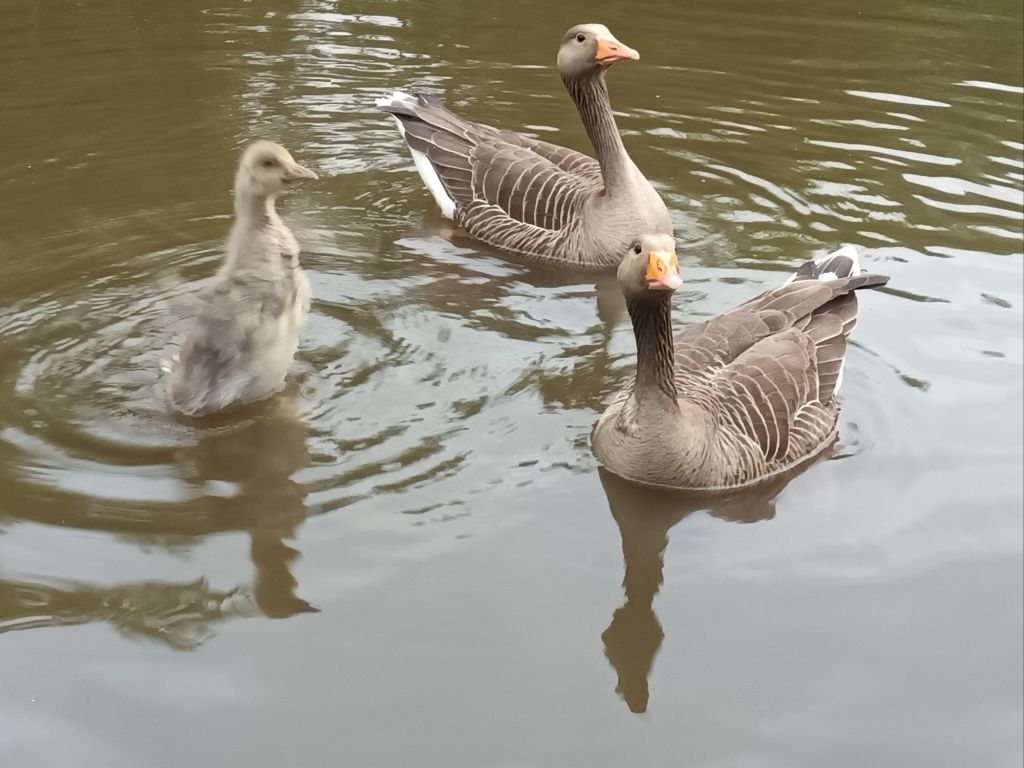
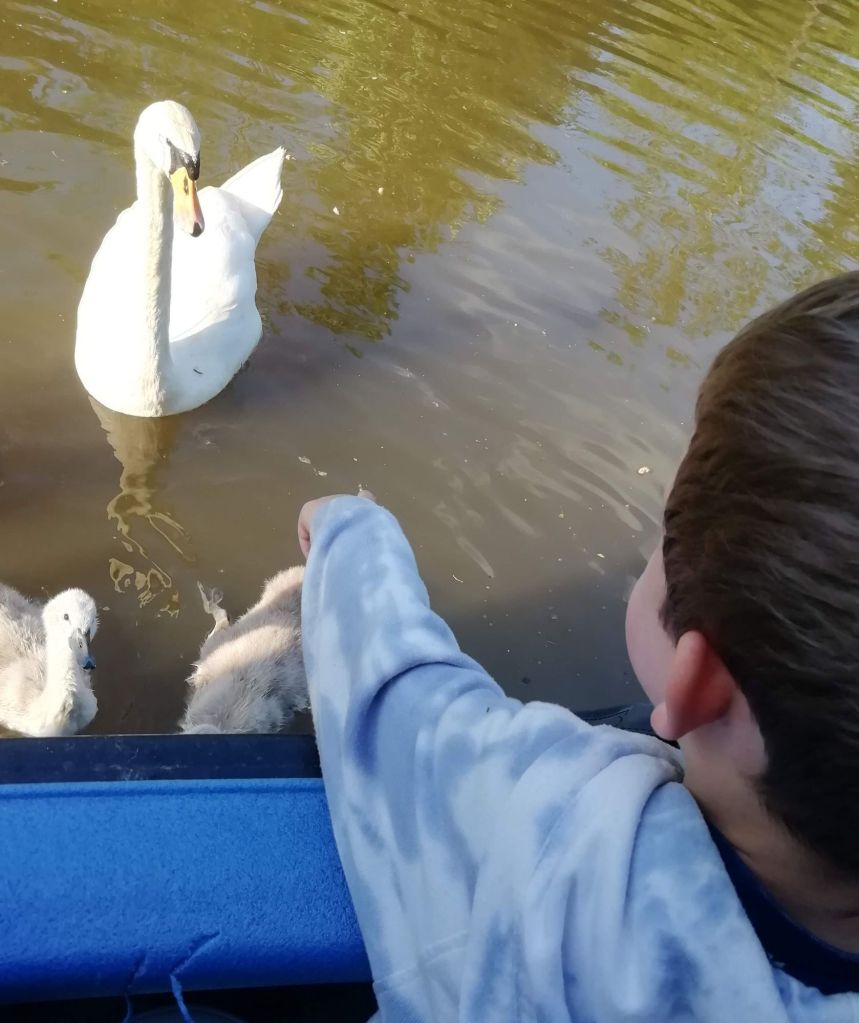
For us, as we cruise to Liverpool this week in a determined effort to get on the move again it makes us realise that even just an hour or two cruising on the waterways can reset our lives whatever has or is happening. The calm, the slow movement, the sights of nature all around us – a heron lifting off beside the boat and slowly flying ahead of us down the canal, ducks, coots, moorhens and geese shepherding their youngsters of varying sizes and ages around us, all these bring our lives back into kilter.

This recent need to consider ageing has given us food for thought. We’ve been looking at the boat with new eyes this week. How can we make it more efficient to live in? We have many years to go until we reach our 90s and maybe we won’t be continuous cruisers by then but we are considering ways we could make our boathome easier as we age. Reducing the need to lift a tonne of coal each winter onto the roof and off the roof into the boat as needed being one necessity! A diesel stove would remove that weightlifting but would perhaps necessitate an oven as well.  Maybe we could get rid of gas so we’re not lugging cylinders? That means new batteries – a chance for lithium perhaps, and that would require a new alternator! Gulp all this makes us wonder…maybe (and perhaps I should whisper this) maybe we should change boats? A bigger boat with more space, with central heating and a diesel stove?

We shared locks with a boat that caught our eye earlier in the week so maybe a narrowbeam Dutch barge would be the answer – with a wheelhouse to keep us dry as we cruise in what we are told will be increasingly wet weather… but we’d have to do all the narrow tunnels and narrow canals first or that wheelhouse would be up and down with alarming regularity!

365 Boatdog days

It’s a year since our ‘new’ furry Boatdog came aboard. She is her own character – nothing like her beloved furry predecessor Cola and definitely with a mind of her own.

She spent the first six and a half years of her life as a breeding bitch, producing 4 litters of cockerpoo pups in that time for her breeder. Then last year she came aboard for a totally different way of life, afloat cruising the country. 

Since joining nb Preaux whilst moored in Northamptonshire, she’s become quite a seasoned cruiser in her first year. In her first 12 months aboard together we’ve travelled on the Grand Union, Coventry, Ashby, Trent and Mersey, Bridgewater, Rochdale, Macclesfield, Leeds and Liverpool, Selby, Fossdyke and Stainforth and Keadby Canals. We’ve cruised on the River Aire, the Rufford Arm, the tidal Trent, Aire and Calder and Calder and Hebble Navigations, and descended 50foot to the River Weaver on the Anderson Boatlift, and ascended again (after a quick trip to Northwick to buy milk!). 

There are times when it’s hard to know Boatdog is aboard. She curls herself up small and sleeps in interesting places. If there’s a storm going on or fireworks outside she’s likely to be found hiding in the (dry) shower cubicle – the place she appears to find safest on such situations. 

At all other times water is not her chosen habitat, unlike her predecessor she loathes getting wet. Cola would swim, swim, swim but not his successor. She’s to be found tiptoeing round puddles on the towpath but on the occasions she has fallen in she can swim like an otter with an expression of total disgust! 

Cola in his younger days  but at 15 he was still up for a dip!

Her first plunge came near Wheelock on the Trent and Mersey when she hurtled down the towpath and flung herself onto the back of the boat going so fast she couldn’t stop. Her second dip was a misjudged jump between two boats moored together on the Coventry Canal Because she’s small there’s no large splash to alert us to dog overboard, just a little ‘plop’ and the realisation she’s missing.

She may be small but she can be feisty when she doesn’t get her own way proving a bit of a nuisance to others when they’ve kindly offered to look after her when there were situations she just couldn’t join us at like work, a family funeral or a hen party – sorry Lesley, Jonny and Chris but thanks for putting up with her. She even howls and sulks if left with the Skipper sometimes and often flatly refuses to walk on the lead if she doesn’t feel like it. 

She loves looking at what’s around us, is hugely sociable with dogs, children of all ages, and is particularly friendly to anyone in a wheelchair. As our rear hatch is convex and covers the full width of the boat she doesn’t feel safe sitting up there when we cruise so I’m looking at how we could have a dog bed made which would be shaped so it would be completely stable for her. For the moment she makes do with Cola’s porthole which has now become her view of the world as we travel. 

She’s small enough to fit in the sink for a bath and puts up with my attempts to clip her with immense patience. Every so often I find a groomers and book her in so she looks like a dog again for a bit and not a moth-eaten hearthrug!

She’s not a barker although the other night when a group of youths were banging on the side of the boat she produced a remarkably loud and welcome bark which surprised them, me, and from her expression, her too!

She now understands that cafes and pubs are fun places often with fuss and treats on offer and has dragged me into many an establishment to check it out. Once in, when she’s been made a fuss of and eaten whatever treats are on offer, she’s happy to settle under a chair and go to sleep until we move making her an ideal companion. She is excellent, undemanding company (if she’s near me and not near any of her dislikes). She knows who likes her and who doesn’t, generally staying  away from those who aren’t fans.

She does share the same name as our younger daughter, which can make life confusing at times, but we differentiate by adding ‘furry’ in front when referring to the dog! I wonder sometimes if I should have changed her name – she seems to respond well to ‘biscuit’! 

Dislikes: getting wet, loud noises, squeaky dog toys, fireworks, loud bangs, mud, being out of my sight. 

Likes: hurtling round grassy fields at full speed often going so fast she somersaults, tummy rubs, fish, being groomed, meeting people and dogs and horses, chasing squirrels, sitting so close to the stove she nearly singes, and I’m hugely glad to say her other like seems to be, me. The feeling, I’m glad to say, is mutual. I’m hugely grateful she’s here. Even if I’m just in her life for food, cuddles and walks, I’m grateful she gives me a reason to get up and go on each day.

Fear, fright, lessons and brutality

How’s your week been? Mine’s been a week of uplifting new experiences, valuable lessons, fear and sheer brutality.


I’m one of many people who suffer from acrophobia – a fear of heights. My knees wobble, I feel faint and sick at heights, my heart races, and I get short of breath. School friends still remember me descending the Eiffel Tower from the second floor on my bottom during a school exchange visit. But sometimes what affects me happens when there isn’t much of a height – some bridges across the canal without solid sides can do it.

Additionally I have High Places Phenomenon as identified by Jennifer Hames – a fear that I would jump in front of a train (usually a tube train for me),  jump or fall off a height. According to the researchers this doesn’t stem from a desire to die, but a sensitivity that results in my body reacting to a dangerous situation. The French (a sensitive people) identify this as L’appel du vide – the call of the void. It is a misinterpretation of a self safety signal.


One way to manage the call of the void is to avoid high places. Imagine my ‘delight’ to discover the first activity organised by my elder daughter at my younger daughter’s hen weekend was a high ropes course. Believe me – I’ve discovered that maternal determination not to let down your children can be empowering!

Amid the tree tops wobbling well but up there


There were moments of wobble, of forgetting to breathe, of shaking so much I couldn’t move my connection to the continuous belay system giving me security all the way round. But those moments reduced as I shakily worked my way round, supported by shouted encouragement from many of the hen squad. It made me reflect that we can overcome much if we have the right equipment but much more importantly the right motivation and support on the way.  The many zip line sections around the course, each incrementally higher than the last brought by far the worst moments but also made me realise that my HPP is never going to be realised. Faced with a sheer drop before each zip wire I froze – solid as a rock however wobbly my knees. Hurling myself off actually took a Herculean effort and closed eyes

.
The instructors walked below, never interfering but also encouraging and giving clear advice as to how we could overcome issues from fears to managing some of the obstacles we encountered. Their approach empowered us all to work out problems, overcome obstacles and  build our confidence.


So I learned much – about HPP, about overcoming fears, tough love from instructors and about the exhilaration of success. I also learned that fear makes you forget any concerns about how you may look in a high ropes harness which is tightened around the bits/ or should that be butts (!) which many of us would rather not have squeezed into focus. I can’t wait for the next challenge – the next chance to push myself out of my comfort zone.


The remainder of the weekend was a happy hedonistic blur of indulgent hot tubs, cocktail courses, excellent food and laughter.


Back at the boat, life suddenly seemed very quiet, very slow and very peaceful despite a battle to change the gas bottle! The last time we changed it was Christmas Day, so that’s not bad!

On the peace of the towpath I made it back to the final graduation run of my latest return to C25k with glee. But within days the brutality surrounding this floating life was thrown into stark relief. A roe deer who fell into the canal above the marina nearby drowned, and its bloated body floated near to the boat. CRT organised to get the poor animal’s corpse removed from the water, and said this had been the third roe deer to perish in the Leeds Liverpool Canal in these past three months.


That was an unfortunate accident, but nature itself is brutal. Since I’ve been back this week a bully swan has killed a Canada goose gosling who got too near to his barren partner’s nest. For five years he has defended her, for five years she’s made a nest, for five years she’ s laid eggs and sat on them without any cygnets appearing. I’m watching the remaining goslings carefully but last night the original four were down to just two. How many there will be tomorrow remains to be seen. It’s not all sweetness and light out here in paradise.

Taking stock with a floating business

It takes determination, hard work, and ingenuity to run a successful business. Mobile catering businesses, as we know, come in all shapes, sizes, formats, cuisines, and types. In floating terms we’ve encountered cafes, coffee, pizza, ice cream, and fudge boats, to name but a few. This week I’ve been learning firsthand the ins and outs of the consumables it takes to run a mobile catering business from a narrowboat.

On any boat, space is at a premium. Unlike a bricks and mortar establishment, you can’t store stock easily. That means being really focused on what you need and buying to sell. We’ve been moored next to The Slush Boat run by Mark and The Spud Boat run by Steve and Jo.


Steve and Jo, when we first met them some years ago, were setting up a doughnut operation on their boat, but to produce and cook a successful doughnut the equipment needs to be totally level and that isn’t always the case on a moored boat. After months of persevering, they sold the equipment and bought another boat, which they equipped from scratch to serve Spuddies. They also run a second business aboard – The Laundry Boat, offering service washes mainly to boaters. This is proving particularly popular in the winter, and they’re aiming to expand to offer a dog bed/rug wash n dry service too.


This week I’ve had a car and been glad to help my fellow traders, with transport support collecting stock from the cash and carry.

These are businesses whose sole means of transport are their legs or their boats. They don’t keep a car. That means factoring in the often considerable time it will take to cruise or walk to where they need to stock up and to trade. If walking, then you need a trolley and backpacks to enable you to maximise each journey. Sometimes that may be several miles, laden with heavy goods. There are other options like deliveries to near the boat or a taxi, but those costs need to be factored into any profits they subsequently make.


Like any business, it pays to buy in bulk or as much bulk as you can. The limits are space on the boat and the capacity to carry what they buy the distance from wherever they are buying to where they are moored. Often this means moving the boats as near as possible to the cash and carry or supermarkets as they can, but that can risk losing what could be a prime location for trading, so it is a delicate juggling act. If there are two traders who know each other well,  one may stay on the mooring whilst the other moves a boat to near the shops.

In Mark’s case, he needs slush syrups, cans of drink, ice cream, toppings, and snacks. For Spuddies, they need…spuds (boxes or sacks of them), toppings of a different kind ranging from butter to beans in large quantities, chilli and curry, and loads of cheese. Jo likes a grated mix of mozzarella combined with cheddar mix  for melty deliciousness.

😋 I highly recommend chilli and cheese

Together, this week, we did the cash and carry, and we did the supermarkets with the car. It still meant though that everything they bought, every box of cans or spuds had to be carried from the car up a path, up the steep steps of a footbridge, over the bridge and down the other side before being transported along the towpath to the boats. Not for them the luxury afforded to bricks and mortar businesses who just whizz to a shop, buy what they need plus some extras to see if they sell!


Mark, bless him, also lugged me a bag of coal onto the boat. I’m hoping that will mean we’re now into a heatwave, having bought yet another bag of fuel for the stove! I thought the last one would be the final one, but the evenings are still pretty chilly.

This Bank Holiday weekend if you’re in the Greater Manchester area, treat yourself to a visit to the Leeds Liverpool Canal at Pennington Flash and do visit The Slush Boat, and Spuddies – you can be assured of a warm welcome and I can personally guarantee they’re stocked up and ready for you!


Across the country this weekend, there will be floating markets – with foods and all manner of goods for sale. I won’t be trading this weekend (I’m having a new adventure instead) but there are markets at St Richard’s Canal Festival at Droitwich; Norbury Canal Festival at Norbury Wharf; Berkhamsted; Burton on Trent and in London at Little Venice there’s the amazing Inland Waterways Association Canalway Cavalcade. There will also be trading and a chance to enjoy the waterways at other locations – do explore what’s available near you. They all offer unique beautifully made items, a great experience, often brilliant bargains, and a tasty treat or two.

Practicing happiness and koselige

Thanks to my family, I realise I regularly do all four of the things researchers say make us happy.

Take a look to see how you’re doing.

Inspired by my younger daughter Freya and her fitness commitments, including her inspirational London marathon this past week, I actively move for at least 30 minutes a day.

Her London Marathon would have been inspiring enough to run 26.2 miles but to complete the distance through gritted teeth in acute knee pain from mile 14 was an unforgettable lesson in determination, perseverance and commitment ( commitment to her own goals, to those who had sponsored her, and as she knew all those children in her school who were waiting to see her arrive the following week sporting her medal).

I am inspired and encouraged by both my daughters and the way their lives (and figures) reflect their commitment to healthy activity. I’m also grateful for boaty friends who spur me on via social media to regularly get out and waddle to bring on a sweat.

I recognise and am grateful for the healthy lifestyle living afloat with a Boatdog brings. It is easy to move for 30 minutes a day with purpose because of our walks together, trips on foot to find shops, exploring new places, tackling locks – all workouts in their own way.

Ploughing through mud takes extra effort whatever your size

Prioritising connections with family and friends, is something living apart from them all and floating about makes even more important. It also brings huge joy in the way they seek to include us, and indeed how we can include them in our floating lives.

It reminds us that being included and including others in small ways is vital. That can be through conversations, paying someone attention in a conversation, really listening to what someone is saying and not being distracted. Making time for someone is one of the best things we can do, and it means a lot.

We need to make sure that we aren’t just contacting friends and family when things are wrong or troubling us – but contacting them when things are good or just when we want to say hello. Sometimes I recognise I don’t do this enough, often because I feel I will be bothering them, that they have busy lives but it doesn’t have to be a major event, just a quick hello a how are you, I’m thinking of you can mean a lot. Hearing someone’s voice makes a difference to the WhatsApp connection too and I’m always grateful for the sound of a familiar voice.

Sharing time and a shoulder with friends and family at times they need support is important for them and us, for our wellbeing and theirs.


Practising gratitude is something we need to keep practising – whatever our age. It makes us feel good because we are acknowledging someone else’s efforts and making them feel good in the process. It’s a win-win situation for us and them. Genuine gratitude, not platitude, is priceless. Not saying thank you because we feel we should, but because we genuinely mean it. Often, we fail to recognise the lengths people go to for us, let alone acknowledge out loud to them how appreciative we are.

The Pollyanna approach to life – always seeing the good in a situation – can be difficult, even irritating, but counting our blessings is invaluable to keep positive. Recognising and taking time to articulate our gratitude for the roles of others in those blessings is also vital for them and for us.

Spending time with pets – maybe because they are always so glad to see us, so grateful for just a pat, a stroke, and always happy to be with us whatever our moods.  Boatdog doesn’t approve of the early morning run habit – she’s always happy to welcome me home as if I had just won a marathon when all I did was waddle around the towpath or local streets for less than an hour!

Pets teach us much about giving unconditional love.


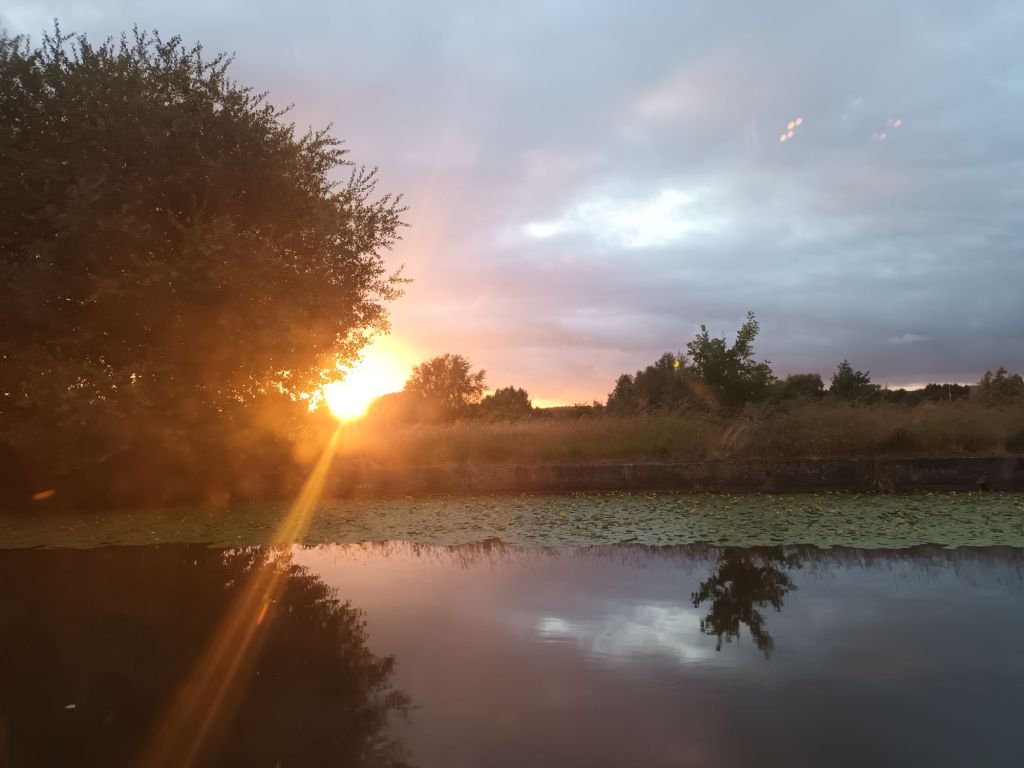
I would add to the researchers’ list those elements which living a floating life evidences brings happiness. The Norwegians define these as koselige – taking time to make the most of the simple pleasures in life. For me that’s time to watch the light from the water playing on the wooden ceiling, the surprise of a stunning sunset, the soft cushions of the sofa, time together and time on our own, time inside and time outside, and time doing those things that give us pleasure – whatever those may be for each of us reading, crafting, doing the crossword.


So this week, join me in getting happier – enjoy that glorious unconditional sharing time with a pet, show gratitude to others, connect with family and friends, keep your body moving and essential time for koselige.

Give, give up & give time to feel good


This weekend in London,  50,000 of the 500,000 runners who applied will run the 26.2 miles of the London Marathon. It will be the culmination of hundreds of hours of training for each runner, many long, lonely cold, and wet hours through the winter, getting their minds and bodies ready for this moment.

Since it began in 1981, London Marathon runners have raised over £1billion for charities worldwide through their efforts. Most runners and those who generously sponsor them will never meet those who benefit from their fundraising. We often sponsor someone we know, sometimes sponsor in memory of someone we knew, but we rarely do we know those who directly benefit from our philanthropy.

Many runners like our youngest daughter Freya, who we’ll be cheering on, have chosen to use their place to raise money and awareness for the causes they believe in. If you haven’t sponsored anyone in this year’s London Marathon, please consider supporting Young Minds with her.

Fancy supporting Young Minds with Freya?

Others run specifically for a charity, fundraising in return for a place. For two London Marathons, the Skipper ran for Victa, a charity helping sight-impaired youngsters and their families. Last year, I walked/jogged a virtual London Marathon on the towpaths of Northamptonshire for MIND – something I couldn’t have achieved in the day without Freya, Jonny, and the Skipper’s support or without the support of everyone who spurred me on through their generous donations.

We couldn’t be here to support Freya if it wasn’t for Steve’s brother Peter, giving up his chance to hurtle miles round London from support station to support station clutching Fruit Pastilles for our heroine and other runners!

Family – a multigenerational lesson in giving ❤️

He’s giving his time this weekend to share with Steve supporting their 93 year old Mum (who’s given to us all for years in so many ways).  Freya’s given her time for months to prepare, and along with the rest of the family who are heading to London, we’re giving her our loud and unfailing support on her inspirational marathon. We’re also supporting Young Minds through her to continue their vital work with young people and parents.

It’s rewarding to give to those we know, but why is it that giving seems even more rewarding if we have no expectation of repayment or of ever knowing those to whom we give?

John Bunyan was right when he said, “You have not lived today until you have done something for someone who can never repay you.”

Tony Hancock.in The Blood Donor – BBC


This week we’ve both given blood as we regularly do – an armful always seems so little to give when you understand that according to Blood.co.uk just giving up an hour of your time and one donation could save 3 lives.

We hear where our blood has gone, which hospital it’s been sent to, but never know those our gifts have benefited, and that doesn’t matter. It feels like a gift to us to know we’ve made a difference somewhere, sometime, to someone who needs it. Maybe it’s a health bonus for us too – after all blood letting used to be a medical cure for many ills

For years, I couldn’t give blood, I’m so grateful that finally I’ve managed it. Don’t give up if that applies to you, too.

On the subject of a different kind of red stuff , I’ve ended another giving up this week. It seems to me 100 days without an alcohol calls for a celebratory glass of red this weekend! Cheers 🍷!

What are you leaving behind?

What are you leaving in your wake? What do you want your legacy to be? What do you think it will be?

The wake of a rib travelling way over the 4mph limit – it left boaters and fishermen fuming


As Paris gears up to host the Olympic Games this year, expectations of legacy are being bandied about as ever. Legacy and sustainability are the key aims for Paris 2024. They want local communities to have economic benefits from this, the first time the Games have been held in France for 100 years. Those aims seem remarkably in tune with every other country hosting the Olympics in the past.

That’s not to say they aren’t laudable, and living as we do afloat, travelling on the inland waterways of England and Wales, I’m aware that legacy comes in many forms. It is possible for some to instantly or relatively instantly evaluate legacy. In many instances, though, legacy is only fully possible to evaluate decades or centuries later.

A lasting legacy is the positive impact our lives have on others – family, friends, strangers, and colleagues. Lasting legacies are not always tangible, and generally, we laud those who leave a positive legacy. Negative legacies are complex as last year’s film Oppenheimer brought into stark relief. The man who invented the atomic bomb could be seen by many to have left a devastating, destructive legacy but he devoted many more years of his life working with other scientists to resolve the ‘alignment’ problem – making sure new discoveries serve rather than destroy humanity. That is a significant legacy.


Living and working afloat on the inland waterways, I’m regularly reminded of the lasting legacy of pioneering canal engineers of Brindley, Jessop and Telford, and here on the Leeds and Liverpool Canal, the work of John Longbotham particularly. He was the first engineer commissioned to create this 127.25mile long vital trading waterway from Leeds to Liverpool. Construction started in 1770, and Longbotham died in 1801 in the penury after construction problems meant he was forced to resign from the project in 1775. Other engineers took over and built quite literally on his legacy until the canal was completed in 1816. As a result, goods from the mills of Yorkshire and Lancashire could be shipped all over the world, and cotton from America could be brought to the mills. Coal from the coalfields could be easily shipped to power the mills and other industries, and in this way, the legacy of these engineers fuelled the industrial revolution.  This year Longbotham’s remarkable engineering legacy in creating a mechanism that would raise laden boats the height of five double-decker buses or 60 ft at Bingley was recognised. This year, his lock solution at Bingley celebrated 250 years. 


The canal was designed by these engineers, but it was actually built by thousands of men, women, and children who worked with picks, shovels, buckets, and barrows.  It is their legacy, which means we can travel in the way we do, but generally, we don’t know their names, even though we appreciate their work daily.


We’re currently moored overlooking Pennington Flash, a stunning 170-acre lake at the heart of a country park. This impressive amenity for wildlife and humans alike is the legacy of subsidence from coal mining and farming that had to be abandoned because of flooding. The legacy of something hugely positive arising from something that was seen initially as immensely positive. Many people in many organisations worked to make this Country Park happen. Few can be remembered by name.


Back in Victorian times, plant hunters headed out to Asia, across Europe and into the Ottoman Empire seeking fame and fortune and lasting legacies through often tiny seeds which they brought back, nurtured and grew into exotic plants to embellish the gardens and parks of their homeland. Many of those plants have existed here for several hundred years no, being enjoyed and bringing colour and a touch of bling to our seasons. For some, though, their legacies have turned sour.

The glorious rhododendron that evergreen ornamental plant brought to the UK by  Victorian plant hunters in the late 18th century is now regarded as one of the most destructive, invasive species in our countryside Alongside our canals and rivers later this year we will join others in waging war against the pink peril of Himalayan balsam which is destroying our native species.

Little did the plant hunters or navvies of the past recognise what their legacies would be or how future generations would view them.

It just proves how hard it can be to leave a lasting legacy – but that shouldn’t stop us all striving to leave the world a better place for being here. Maybe the best we can all do is to leave a legacy in which we do no harm whilst we are here, and hope someone remembers us fondly.


When change is routine – it can help

Remember how quickly we all adapted to new routines during the national lockdowns? Some of us are creatures of habit, others not, but as humans, we all adopt some elements of routine which researchers identify as ways of coping more efficiently and effectively with our lives.


When we cruise, for example, we now have an established routine before we set off. It took us time to get a routine that works, but this way, it means we each have our responsibilities, and hopefully, nothing gets overlooked. One of us walks the dog, the other does the engine checks and puts the tiller handle onto the swan neck, slotting in Jemima Puddle Duck our tiller pin and attaching the Turks Head knot below that which stops her getting knocked off.


Once we are ready, if there are the two of us on board, the Skipper undoes the rear (stern) rope. If he hasn’t taken down the aerial at the front (bow), then I do that as I undo the front rope. I then push out the bow, pull up the fenders on the towpath side, and bring the centreline onto the rear hatch within easy reach as I walk back to get on at the stern. Boatdog will be waiting for me because she too knows her routine – a favourite marrowbone biscuit on her travelling ragrug on the back deck beside her porthole just as we set off.

So we are all creatures of routine – 2 and 4 legged. This week we’ve begun to adjust to a different routine and adapt to the very  well-established routines of the Skipper’s 93-year-old Mum. She’s probably having the bigger change, having to adapt to someone being around her 24/7, but if it helps her stay in the comfort of her own home, it’s well worth it. It’s got me thinking about the value of routines and the reasons we establish them.

Some think of routines as being humdrum, boring or restrictive, but according to psychiatrists, they have a powerful impact on our health and our mental functions as well as providing coping mechanisms. They give us control at times when things seem out of control – as in the pandemic.

In work terms, AI is being harnessed to take over routine tasks in many places to free us humans to engage with more creative aspects. We will still, though, develop our own routines and stick to them – AI won’t be able to sort my regular morning coffee to start the day just the way I like it!

Routines can free us up to be more creative – not having to think what to wear, what to eat for breakfast can be resolved by uniforms (formal or not) and many of us have the same breakfast many times a week if not every day, freeing ourselves up from the start not to have to worry about the little things at the start of a day.

According to researchers if we feel in control of our lives then we don’t rail against routine so much, we accept it as something we’ve chosen to employ to give us more choices over the things we want to spend more time on, more time deciding.

So routines are important, and it can be enjoyable learning new routines, adapting to the routines of others because it enables us to question how and why we do things the way we do. By seeing the routines others have established, we can consider if there is a better way for us to do things, whether organising our diets, our homes, or our daily lives.

One new routine I’m grateful to have established is the result of online encouragement from a group of 4 female boaters, only one of whom I’ve met in real life. Under the alarming title of “Run, there’s something behind you!” we are seeking to encourage each other to get back to or take up running. Because of these wonderful women I’m doggedly waddling at what I like to think is a jog every other day… using the wonderful NHS Couch25k app once more, it worked before and I have very faith it will get me back running again. My knee injury appears to have healed now, and all that’s holding me back is too much weight that I’m lugging around. Hopefully, that will begin to get shaken off as I continue plodding along, but I know the secret is to get into a routine of running, to make it regular. Once I’ve done it, it always makes me feel so much better, so it makes sense to run first thing, to enhance my whole day. Being in one place for months or years as we’re planning will, without doubt, be a major plus in that respect too.

This change makes me very conscious of how fixed we become in our routines and how thrown we can be by what may appear small changes or interferences. It’s interesting to see the medical advice – and what sounds like wise words – concentrate on the short term. In the short term today, tomorrow, this week, we need to see what routines we can keep and identify those which may need adaptation. Once we’ve achieved a single day, we know we can achieve more.

I wonder if we are more adaptable now we live afloat. Some days we move, some weeks we move, some days or weeks we don’t. Our work is not on regular days. We don’t have the embedded daily routines we remember from our past, so work and life for us are more fluid. Perhaps that makes it easier and indeed enables us to be more accepting of adopting and accommodating routines that are new to us. I’m aware the Skipper wouldn’t be happy cruising away while there’s valuable time (hopefully many years of it) to be spent with his mum. We are fortunately we can be here and do this.

There’s a novelty in this new routine adding a new interest to a new way of living, and I never thought I’d say that about routines! It’s a chance to pause and watch the flowers grow…

We’re a mine of information this week

For the first time ever we’ve a new reality beginning this week. Soon we shall be moving just a little for some time. Gone will be the long journeys across the country, or countries for a while. They will be something to look forward to and plan for the future, but for now we can revel in being in one area for a while, and being (we hope) useful to family.


Last week saw us on the Bridgwater Canal, in genteel surroundings that once would have been alive with a hustle and bustle of ‘Flyboats’ fetching and delivering people, parcels, food stuffs and livestock.

These busy boats plied a route from Preston Brook to Castlefield in Manchester. Passengers on the Worsley stop would buy their tickets at The Packet House, the dominant black and white building which dates from 1760. They would walk down the wide steps in front of the house to catch their boat.


Flyboats were designed for speed. They were especially lightweight and pulled by teams of horses that were changed at the stations with stables. They operated day and night. They had priority over other canal traffic at locks and a knife fixed to the bow could sever the towlines of any boats that got in their way. Forget genteel boating (if there ever was or is such a thing) – this was a cut throat commercial delivery business, the DPD of their day.

Their experienced crews were paid a premium and with the quantity of horsepower they required, these were expensive boats to run, so were generally run by the big canal companies like the Bridgewater, the Grand Union Canal Carrying Company, the Leeds and Liverpool Co., or Shropshire Union Canal Company. They ran to timetables so  cargo could be booked by anyone at any stop. In later years some linked up with river or road carriers to extend their business.

The now peaceful picturesque place of Worsley would have been a hustling, bustling place, not only with the flyboats and the old boat yard, but also because of the commercial activity around the Delph underground coal mine. This mine was reached and worked by miners using not sunk shafts but via 46 miles of underground canal. The mine was the reason the Bridgwater Canal was built above ground. It was constructed to transport coal from the mine to the industrial hub of Manchester where demand for coal was high.

Spot the heron

We were moored just up from the low roofed mine entrance, opposite the Duke’s Boathouse. This was where the Duke of Bridgewater kept his inspection barge. It has earned the nickname of the ‘Royal Barge’ as it transported royalty including Queen Victoria who wrote of her trip in 1851 “The barge glided along in a most noiseless & fairylike manner amid the cheers of the people who lined the banks of the canal…”

Her Majesty was also impressed by the wealth of the vast coalfields of the area if not the industrial  landscape of Manchester in the distance. For us though, we headed along the Bridgewater away from Manchester and onto the Leeds and a Liverpool Canal through a landscape that has been shaped by coal, and by its demise, by limestone quarrying and peat extraction.

Travelling this stretch of canal for miles we could see the steel headgear of a mine dominating the landscape. At 98 feet high it is a huge reminder of Astley Green Colliery, and 15 acres of the former industrial site is now preserved as the Lancashire Mining Museum. Manned by dedicated volunteers and many former miners, it remains as monument to a way of life and an industry for  generations of families. It is important for all of us that we understand the sacrifices that children, women, men and animals made to keep industry powered and homes warm. Lancashire’s worst pit disaster happened just a few miles away in 1910 at Hulton Colliery Bank Pit no. 3 known as The Pretoria Pit,  in which 344 men and boys lost their lives.

Memorials across this area remind us all of the dangers and deaths coal mines have inflicted on individuals, families and communities. At Pennington Wharf alongside a marina constructed on land which once housed Bickershaw Colliery, stands a sculpture of a miners’ helmeted head, a memorial to 19 men who died in the mine in 1932 as a result of a mechanical failure.

Perhaps the biggest positive legacy coal mining has given to this area are the tremendous natural flashes – huge water-filled hollows created by subsidence. In this area Pennington Flash is now a 200-acre country park where wildlife and nature flourishes.

For us, we can be grateful to the coal mines and miners who toiled in them because they were the catalyst for the canals we now enjoy, to be built as commercial byways.

Logistics, history and waters meet for us

When you know something is going to be the last for a while it takes on a special quality, a poignancy, perhaps even an importance out of all proportion. That is what we’re aware of this week, and it’s  good thing, a valuable opportunity.

Our last cruising time for a while has been a mixture of familiar routes and a foray into the previously unknown. We started off in Middlewich, moved the full length of the Trent and Mersey to the final stoplock and the Preston Brook Tunnel with the Bridgewater Canal.

The Bridgewater Canal is a privately owned  39 mile inland waterway in the North West. It stretches from Runcorn to Leigh. Our Canal and River Trust licence combined with a request for permission to cruise the Bridgewater grants us 7 days of transit on the waterway for no additional cost. We’ve cruised it before, and notably last year found ourselves trapped on it when a lock failed in Manchester and stopped us heading from the Bridgewater onto the Rochdale Canal as we had planned.

We are rather enjoying its lack of locks and tunnels, but to get here we descended the Middlewich flight of 3 locks followed by Big Lock alongside an excellent dog-frendly cafe which we visited whilst waiting for the water point. Water points are often chatty places when boats congregate, and this week was no different. I learned the fraught life story of one single-handed boater and his battles with the NHS before he took early retirement and took to the water for therapeutic living.

So we left Middlewich full of water, empty of waste and full of diesel thanks to Paul and Sam at Middlewich Wharf. Thanks to their tumble driers we also left with dry, clean bedding and clothes.

From Middlewich it was a short hop to Bramble Cutting, once the site of puddle clay extraction. That was the clay used to line the canal. Now it provides an offside peaceful mooring with picnic tables and the tracks still evident that the clay carts used to be rolled down to waiting boats. We’ve passed numerous times and never managed to moor here so when we saw a space…

The sun SHONE so we managed some painting while Boatdog enjoyed a bit of exploring, playing with another dog from another boat and then some serious rolling in goose poo.

The next day, we left in rain (surprise, surprise) to make our way north once more, not travelling too far to moor near the top of  the remarkable Anderton Boat Lift. This feat of engineering remains one of the rightful Wonders of the Waterways.

Set as it is now in a great area of parkland, this mooring offered a good park run, a long muddy walk and loads of wild garlic so homemade pesto pasta was the tasty order of the day. After that is, the Skipper went to rescue another boat in need of help with their electrics. They were astonished to hear thar leisure batteries need topping up regularly…

Then on the next day through the final 3 tunnels on the Trent and Mersey Canal, trying to get the timings right. First from the south west is Barnton, just 572 yards long. Apparently it can accommodate two boats at a time if needs be. Then comes Saltersford Tunnel, 424 narrow yards long.  Passage for our direction on the hour until 20 past. Last after the Dutton stoplock is Preston Brook Tunnel -1,239 yards long and narrow.  Northbound access is only on the hour for 10 minutes. 

Once we’d managed all this logistical juggling and the irritating sandpaper weather (wet and dry) we emerged as the waters meet onto the Bridgewater Canal and promptly turned under the M56 onto a section we’ve never explored before – the Runcorn Branch. This used to be the mainline down to the River Mersey for commercial barges. Now it is often overlooked by leisure boaters but it is a delightfully quiet stretch, populated by noisy nesting coots and the occasional leggy heron. It terminates at Waterloo, at least the Waterloo Bridge so is now a rather lengthy cul de sac.

Back onto familiar territory we moved to Lymm and then Dunham Massey to enjoy walks and a slow run in the deer park. We are fortunate to have managed some decent weather for that part of this trip at least and are very grateful for every dry sunny moment.

Now we only have a little way to go until we take up a static lifestyle for a while. We’re grateful for the chance to really appreciate moving whilst we can, and we’re also looking forward to the change of life for a while, the  chance to spend time with a real family VIP.