Water is generally regarded as a necessity for life afloat, but as we now know, in the wrong place it is both worrying and threatening.
You only have to look at the news or cruise England’s canals to see that narrowboats do sink sometimes. New bulletins also bring us the heartbreaking destruction created by flooding and to lose possessions with sentimental value would be hard. For us now flooding leading to sinking would result in the loss of our entire home. It would be devastating. It would spell the end of enjoyment of this new life afloat after only a short while, the end of our reduced impact alternative living , and create immense stress working out what we would or could do next. The fear for me is that this could become a reality if we don’t find and sort the leak/s we have discovered.
For some time we have been mopping out the bilges (the underwater internal part of a boat between the bottom in the water and the floor within the boat) regularly. This narrowboat doesn’t have the luxury of a cabin bilge pump so it’s a manual process. That’s a good thing otherwise we might have missed the drama going on beneath our feet, our sleep and daily life… The access slot for mopping out the bilges is under the step into the bedroom cabin at the back of the boat. Black, dirty water comes out in bucketfuls…
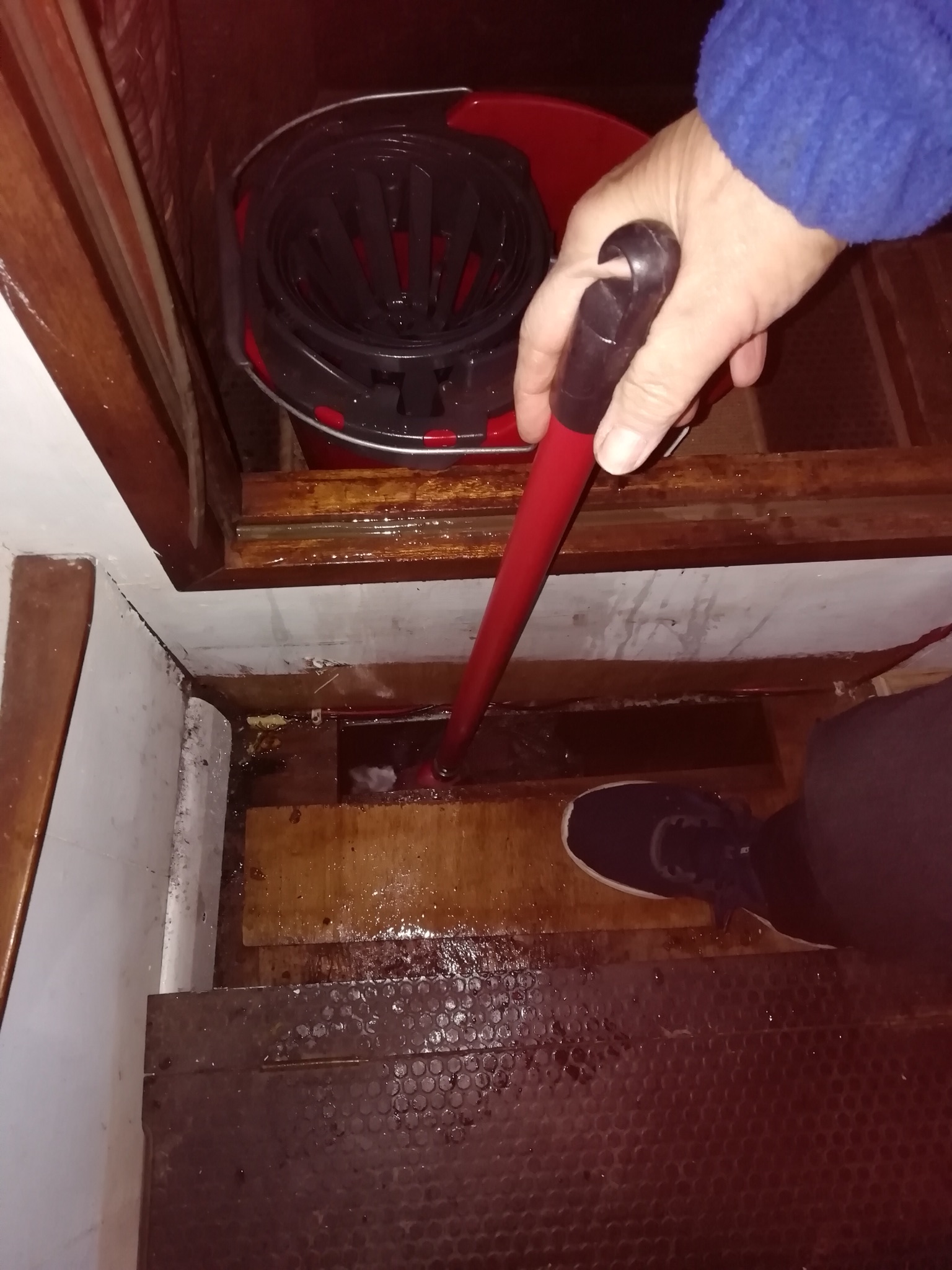
Water has been gathering inside the boat under the floor in some quantities. We get several 10 litre buckets out at a time. We need to stop it but to do that we need to understand what type of water it is and where it’s coming from. If enough water comes in – we could sink.
According to this handy article from Whilton Marina there are alarmingly multiple ways of sinking your narrowboat!
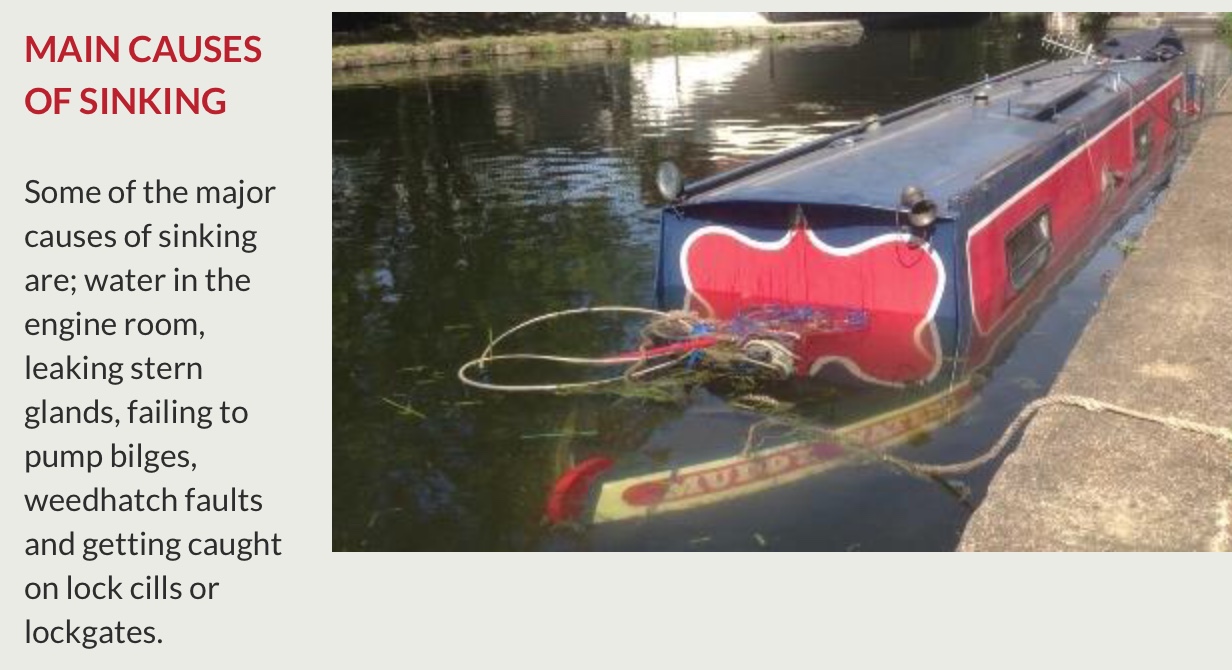
- Water in the engine hole – we don’t seem to have any quantities of water there
- Leaking stern gland – our stern gland was repacked only a few weeks ago [believe me, that’s an excitement for another blog]
- Failing to pump bilges – we are mopping madly!
- Weedhatch faults – our weed hatch is clear and clean
- Locks – we can rule out this leak is nothing to do with them
So we have identified that there’s water in the bilges and we need to work out how it got there and stop it increasing.
Three potential sources could be culprits:
canal water – that would indicate that we’ve sprung a leak in the part of the boat accessible to the canal. This is pretty unlikely given that we can mop out and it appears dry and then only gradually returns. If it was even a small hole in the hull it would be a constant refilling. We paid £4,000 to have the hull replated with steel and blacked when we bought the boat a couple of years ago and haven’t had any collisions, accidents since then that could create a hole. That’s the logical eliminaton explanation but at night when it’s windy and I can hear water lapping against the hull, I still imagine that water is being forced into the bilges somehow! Ridiculous ideas always seem to take hold in the night!
rain water – this can come in from poor fitting covers, windows, etc. Generally it doesn’t appear in the multiple bucket quantities we’ve been seeing but could be adding to the bilges somehow. We have a covered ‘cratch’ at the front of our boat over the well deck which makes a usable space. In the summer it creates our ‘conservatory’ – an ideal place to sit on specially made cushions with a drink with the cover folded back to let a gentle breeze.
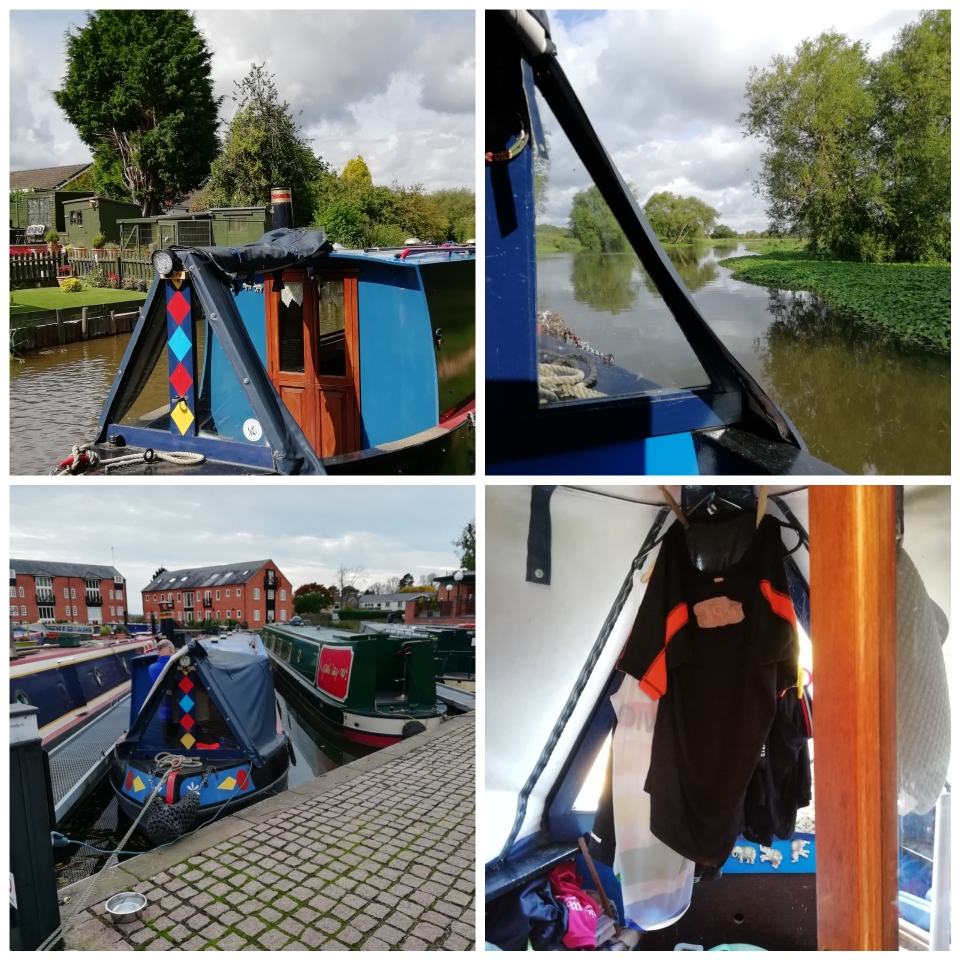
In winter with the cover zipped shut it is a utility room and porch, somewhere to shed muddy boots, wet weather gear, towel down the dog and store fuel. It also serves as a place to dry wet clothes.
The sides provide steps which form an easy route into the boat but as with every step on our boat, they double up as storage for garden chairs, sacks of dog food, the water hose, the anchor, the barbecue, the next lot of fuel for the fire etc…
We know our cratch cover is leaking a bit. One area has come away and there are problems with the closures, probably because we think the cover is as old as the boat and we all give and stretch a bit after 30+ years. But – if incoming rain could be part of the issue, how would rain getting into the well deck of the bow get all the way to the back of the boat?
More investigations required removing the sealed, non slip flooring board (oddly called buffalo board) which covers this area and which we walk on. This revealed a rusted hole in the bulkhead between the well deck and the main cabin of the boat, not a big hole but water can enter through tiny gaps. So Steve filled the hole with metal filler and we waited. The weather obliged and rain raged for us a couple of nights later, but there’s no way that alone would have resulted in the buckets we have been mopping out. The rain water that collected near the now-blocked hole was easily dealt with by kitchen towel, so rain certainly wasn’t not the culprit of the bilge buckets.
There had been drain holes in the boat which allowed rain water to exit the bow deck. On advice when we bought the boat we had them plated over. Steve decided to restore the holes but much smaller to deal with one potential ingress of water. He duly drilled the first hole and instead of rain going out, we ended up with canal coming in – it appears with all our stuff on board the boat is sitting much lower in the water than it was! Hasty finger in hole moment and urgent recourse to metal filler. More mopping required – this time of the well deck. Fortunately that’s now sorted and we won’t restore those drain holes until we have removed significant amounts of ballast raising the boat in the water!
drinking water – we actively put this with a hose into a tank at the bow [front] of the boat. A hole in the water tank below the level of the floor would mean a bilge with more water than we are finding given that the tank appears (and we can’t be totally sure with an old boat and no level gauge) to hold at least 250 litres of fresh water. The tank lid sits below the buffalo board we walk on, and is filled with a hose via a filler cap outside the boat.
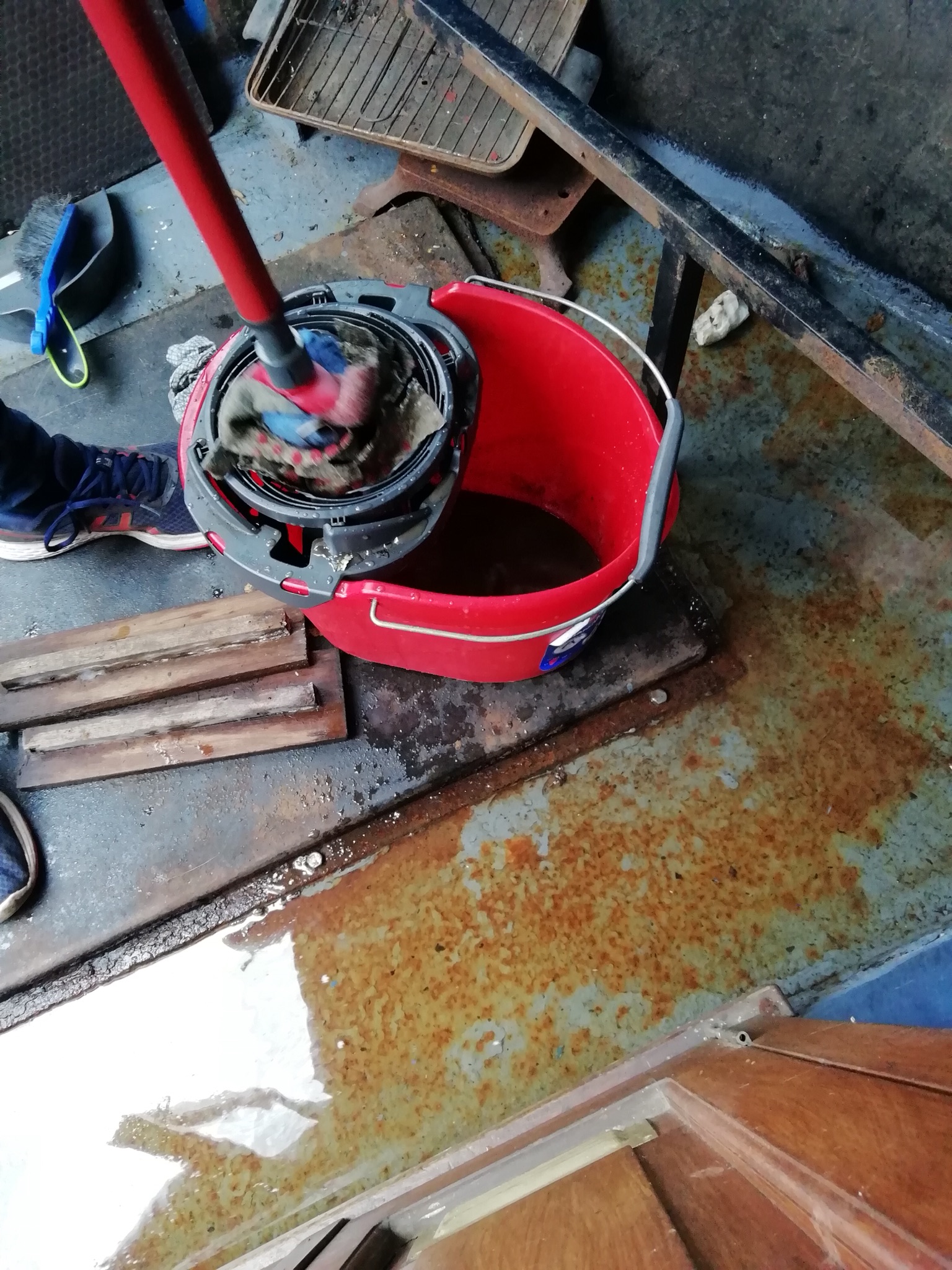
So with two options down – not rain or canal- it looks like it must be a leak from the fresh water tank but high enough that it only leaks when the tank is full or near full. Having cleared and uncovered the well deck to check the rain situation, we began the process of looking for obvious holes… not easy in a 30+ year boat which has been well used. We have been using more water recently because we are now living on the boat. We do keep a record of when we fill up, and we’ve filled up 3 times in the past 2 months. So we topped up again to check. When you are low it can take an hour to fill up but we only had to wait half an hour, watching nervously before water began spurting out in so many places we couldn’t mark them all!

Hastily we turned off the hose to the mains and turned on cold taps in the boat to reduce the level and pressure of water in the tank to stop it spurting out! More mopping followed and buckets later we realised that every time we have filled up we have been pouring about 40 litres into the boat! The water was insinuating its way through rust gaps and tiny spaces in the bulk head and trickling down along the bilges to reach the point at the stern where we mop it out.
So we at least know where the water’s coming from. Ironic that we’re effectively trying to sink our own boat by actively pouring water into it!
Hasty recourse to experts and canal boat online forums for advice led to finding the sealant which is safe for such a job, followed by an emergency click-and-collect order to Screwfix and a dash to fetch it. The top of the tank has been wire brushed, cleaned and has now had two layers of sealant, and the whole bulkhead has also been sealed with metal filler.
Now we wait to see if the sealant and metal filler have done the job. We continue to mop but the amount of water in the bilges is reducing, not increasing. It is damp now not sopping but we have reduced the water in the water tank to make sure there won’t be additional leaks in the meantime…
Three days later we attached the hosepipe to the main supply pipe, crossed our fingers and with bated breath and chalk at the ready, we watched the top of the water tank for 18 anxious minutes which felt like a lifetime!
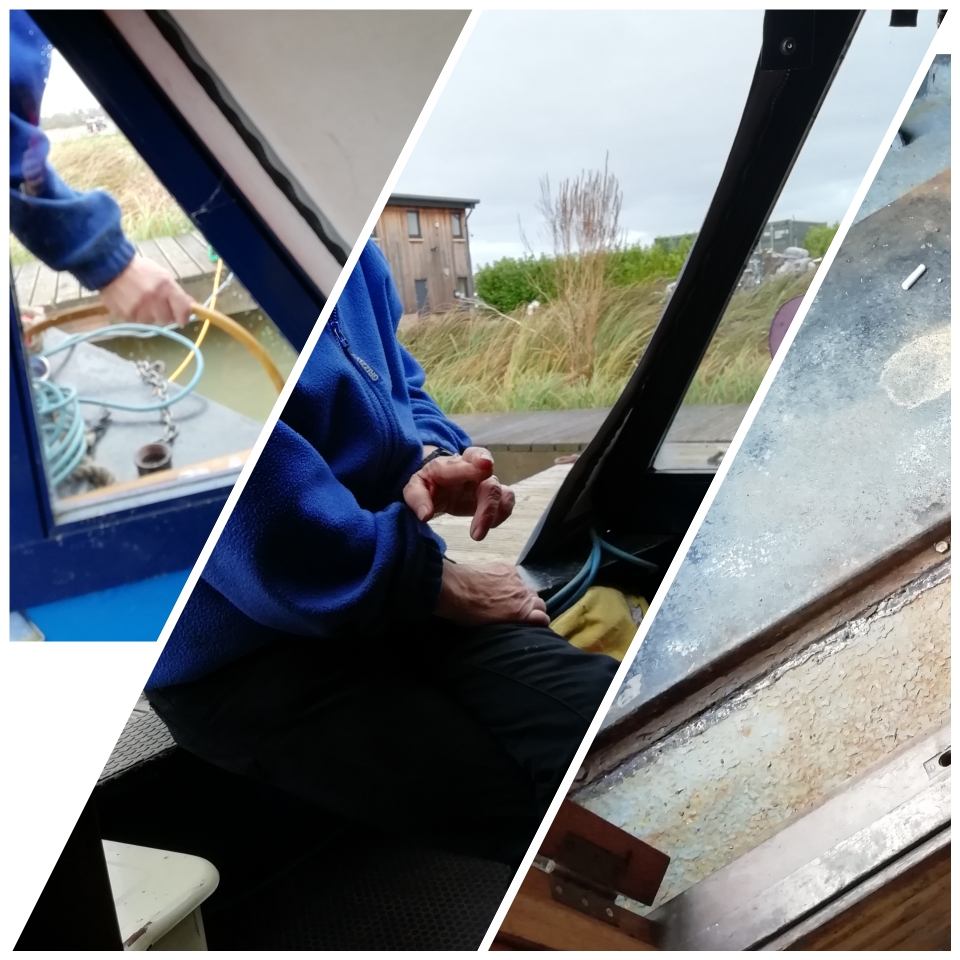
Sure enough, the leaks began again but (and it seems strange to say this), we only identified eight leaks and they were small, contained dribbles rather than gushing, spurting fountains. We managed to mark each one with a chalk arrow to allow us to target repairs this time.
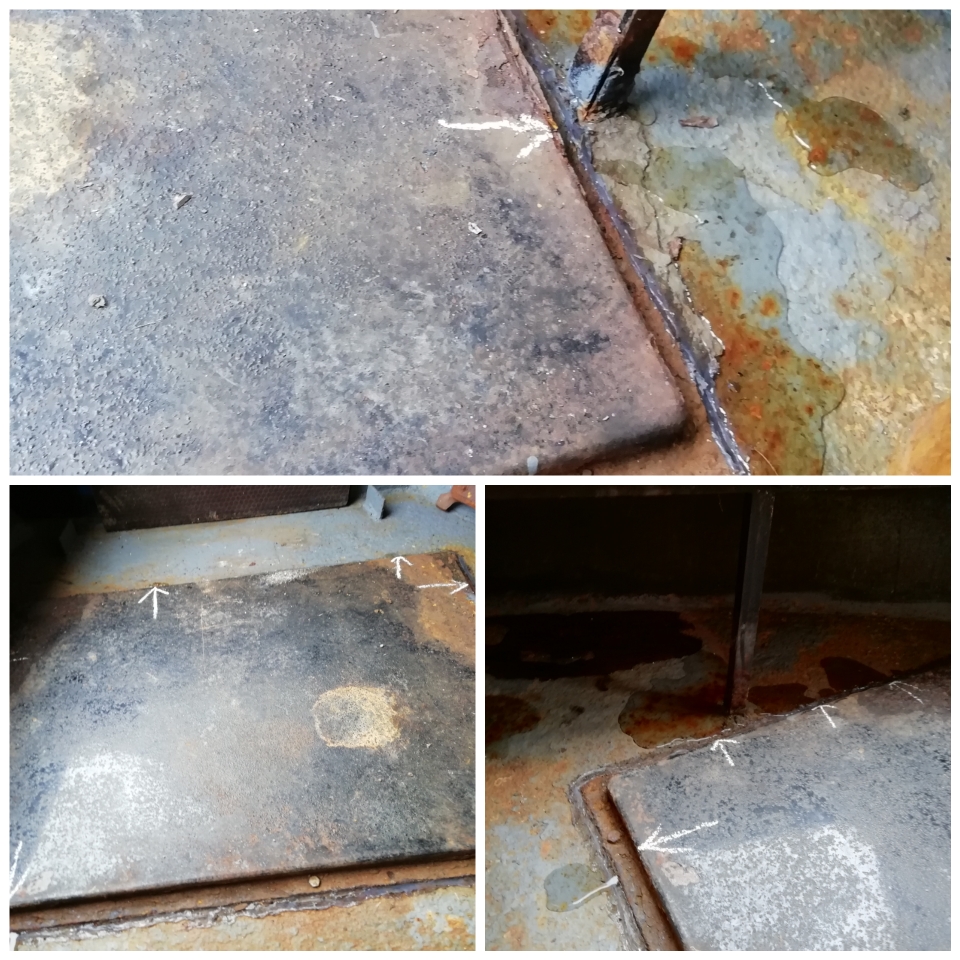
Lots more mopping in the well deck but we think the leaks were contained and the metal filler held back the water from flooding down the boat.
More sealant and more waiting is where we are now. Taking the lid off the tank would be a major task and create major problems (we can’t live aboard without water) as well as generating a major bill and we are actively trying to avoid all these.
We haven’t completely solved the problem yet but hope we’ve identified the cause of the leak and are well on the way to sorting it. We will try another tank fill tomorrow. If it still leaks then, we will keep going with sealing and testing – perhaps trying waterproof tape and sprays as well. We know that if we don’t fill the tank right up, we can avoid flooding the boat. That will have to be guesswork with no level gauge. If and when we can or have to replace the tank, or fit a new liner in the future we will install a gauge and a new lid.
For now the Autumn winds are building up. They have to blow hard to create waves on a canal but they are managing it. Already now when I wake at night hearing the waves slapping against the hull I just enjoy feeling snug and warm and happily let the waves rock me back to sleep.
Coming up next – the slippery A-Z of making a profit from your boat day and night… Covid tests… and have we solved the leaks?
 Pickingupducks
Good grief Deena! What a nightmare, but I’m full of admiration (understatement) for your persistent and logical approach to the problem. Hope you get it properly sorted soon! If you need to crowdfund for a new tank…count me in!!!
LikeLiked by 1 person
Bless you and thanks for the lovely supportive thought but we are managing…still leaking though!
LikeLike
Well done to have solved the problem . . .for now! I think you should have a sump pump. Love, love.
LikeLike
Thanks Liz, we just need to solve the leak now we’ve identified it. We have a pump in the engine Liz – just not in the cabin too. Glad to hear you’re home again!
LikeLike