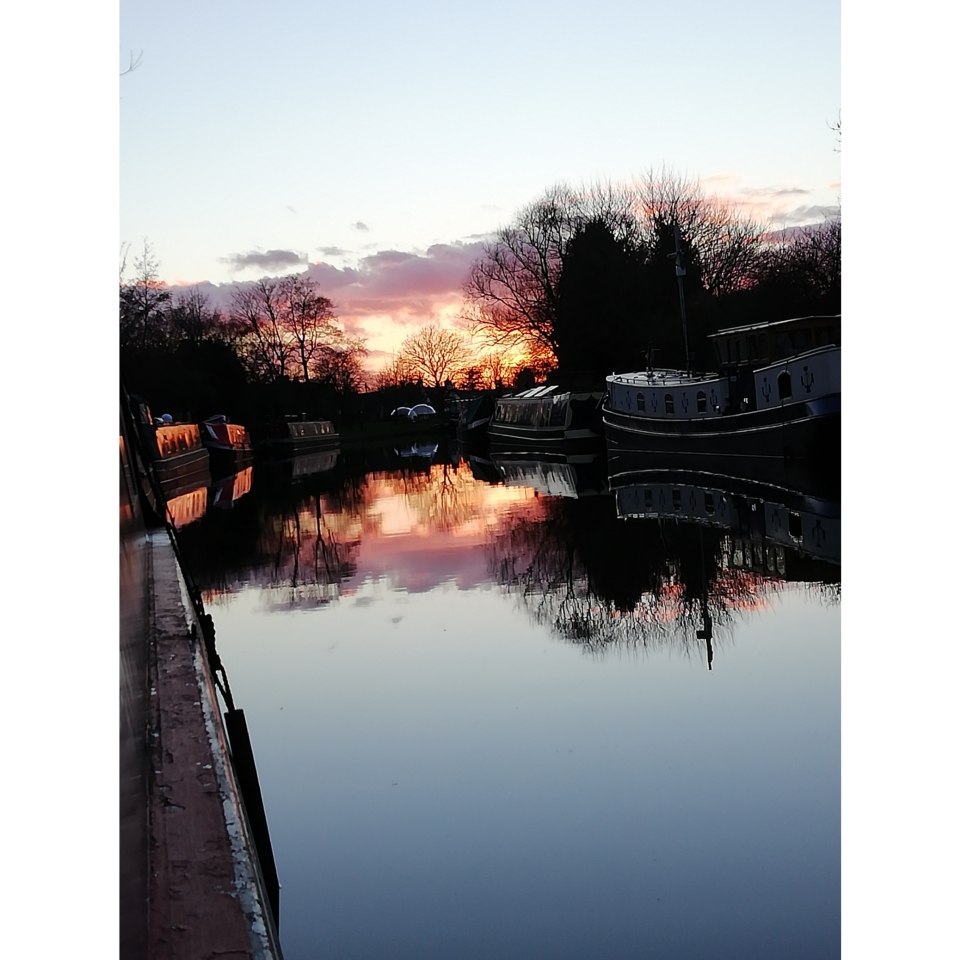
Lockdown has been a long haul this time – not a long haul that takes us to new locations but a long haul to nowhere which has reinforced why segregation is used as a punishment in prisons.
It seems ironic that taking off on a boat to enjoy a panoply of changing sights, sounds and challenges has resulted in us being moored in a single location since 28 December (in which time we’ve moved mooring precisely 6 feet to avoid mud). Our changing sights have been those of daily local walks or runs; ever-changing sunsets or sunrises reflected on water or ice; and floating neighbours heading out for water, diesel or pump outs. We’ve been part of a lockdown project unveiling by a family who built themselves a kayak. We watched the inaugural launching – and were as relieved as they were that it floated successfully! As the weather has improved we regularly see kayaks and stand up paddle boarders out on the water. It can be disconcerting to look out onto the waterside from a side hatch and find yourself face-to-face with someone silently gliding by. I’m now worried about startling a wobbly paddle boarder as I pop my head out!
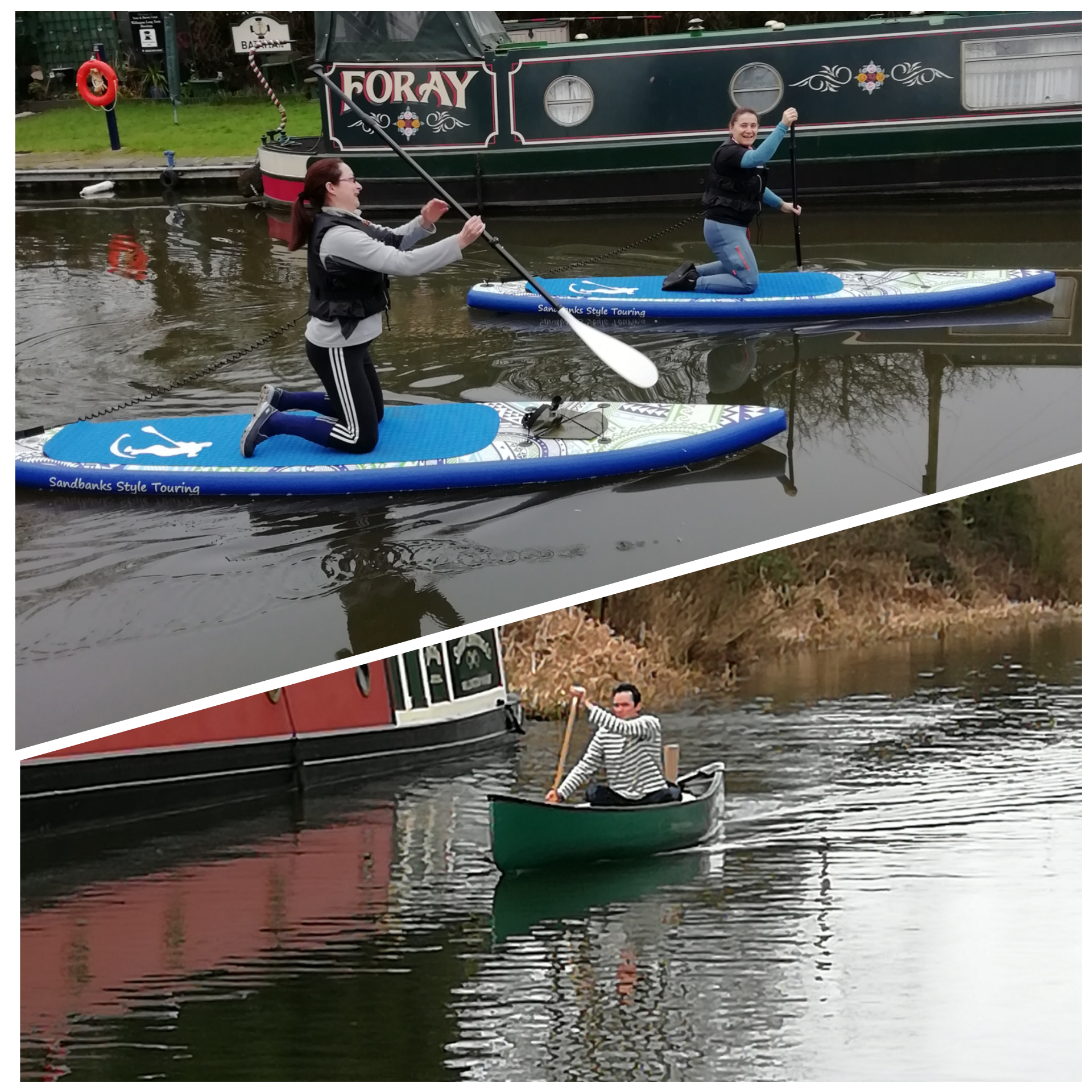
We may have been in one place but it is surprising how much there is to see. Perhaps this extended static stay has made us more observant with all our senses. This awareness is something which I am vowing to continue – to take conscious time to look, smell and listen to what’s around. We’ve moved from the musty winter smell of the leaf mould in the nearby oak wood through the fresh but woody smell of snow to a different freshness in the Springlike air.
Sounds are bombarding our senses too. Inside the boat they include the sound of rain pattering gently or thundering violently on our metal roof, the squeak of fenders as they flex against the bank in response to passing craft or buffeting winds and in breezy days the scratch and thud of small twigs flying off nearby trees onto our boat. External sounds include the gentle constant of birdsong now apparent for more hours each day. Some of the robins (of which there are many here) start to sing their uplifting melodies at 3am at the moment! I’ve also heard my first woodpecker hammering away. At the other end of the soundscape comes graunching and grinding of the trains on the railway. If we hadn’t had to, we wouldn’t have moored here for long because of the railway but we would have missed out! We can now identify the passenger from the freight, quarry loads from container trains – a skill we wouldn’t have developed without this extended opportunity to attune.
The main challenge has been one I’m sure hundreds of thousands of people have faced – to stay positive, and resilient in the face of this mundane, situation which appears out of our control. I have found seeking a daily image to record a positive for the day is uplifting. Like many, lockdown has also led me to explore what others do to develop emotional resilience, or emotional survival.
Scioli and Biller in their 2009 book ‘Hope in the Age of Anxiety’ identify the need to develop hope as a fundamental way out, and that its development lies in planning and visualising the way out. More recently, Jan Lodge in The Conversation identifies 3 key lessons for us all from prisoners’ experiences.
- Battle the mundane
- Understand what you can control
- Go on mental excursions
I’m battling the mundane in seeking beauty and interest in it as per my daily images posted on social media which develop fascinating comments and conversations with others all over the world. I recognise that I can control in the direction I take daily exercise and maximise its value by making the most of every moment I am out and about. I also control what I eat, the privilege of having food and enjoying the challenge of creating interesting meals. Food has become a feature of this lockdown!
Going on mental excursions was not something I had begun until this week. Perhaps the fear of hopes dashed from past lockdown lifting had made me nervous of even considering a future return to our peripatetic floating life. This is normally a life with a high level of spontaneity – where shall we go today, how far, which route, what might we see etc. This week amid all the excitement of a finale to lockdown, I strangely found I needed something to pick me up, to bolster my emotional resilience – so I began to plan our lockdown exit routemap…
It has been personal this planning, I have been able to flex personal control in making choices and decisions. I know some of these have, and will be influenced by external factors but this made me reflect on the importance for all businesses, and educational establishments to involve their employees and students in forward planning. Returning to a new way of working after nearly a year of working differently will demand choice and involvement if people are to feel included and engaged in the new future.
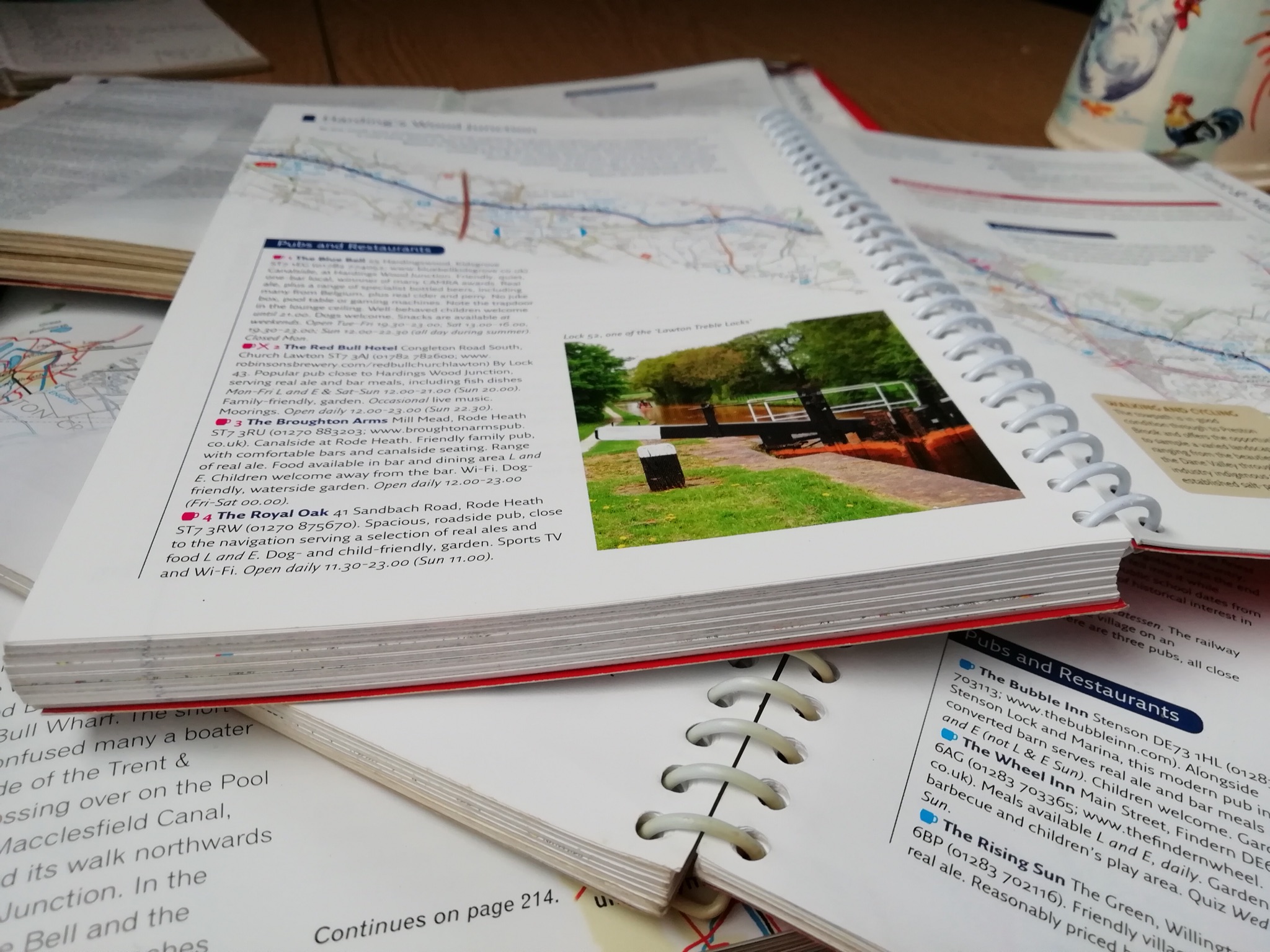
Hopefully forward planning for us will mean that we will go ahead more informed, aware of the history, geography and features of interest on our route. We will head north west on what was formally called The Grand Trunk Canal – now known as the Trent and Mersey. It follows the River Trent aptly named by British Celts (trent meaning flooding river). We can confirm they got it right as we’ve been able to monitor the river during this lockdown!
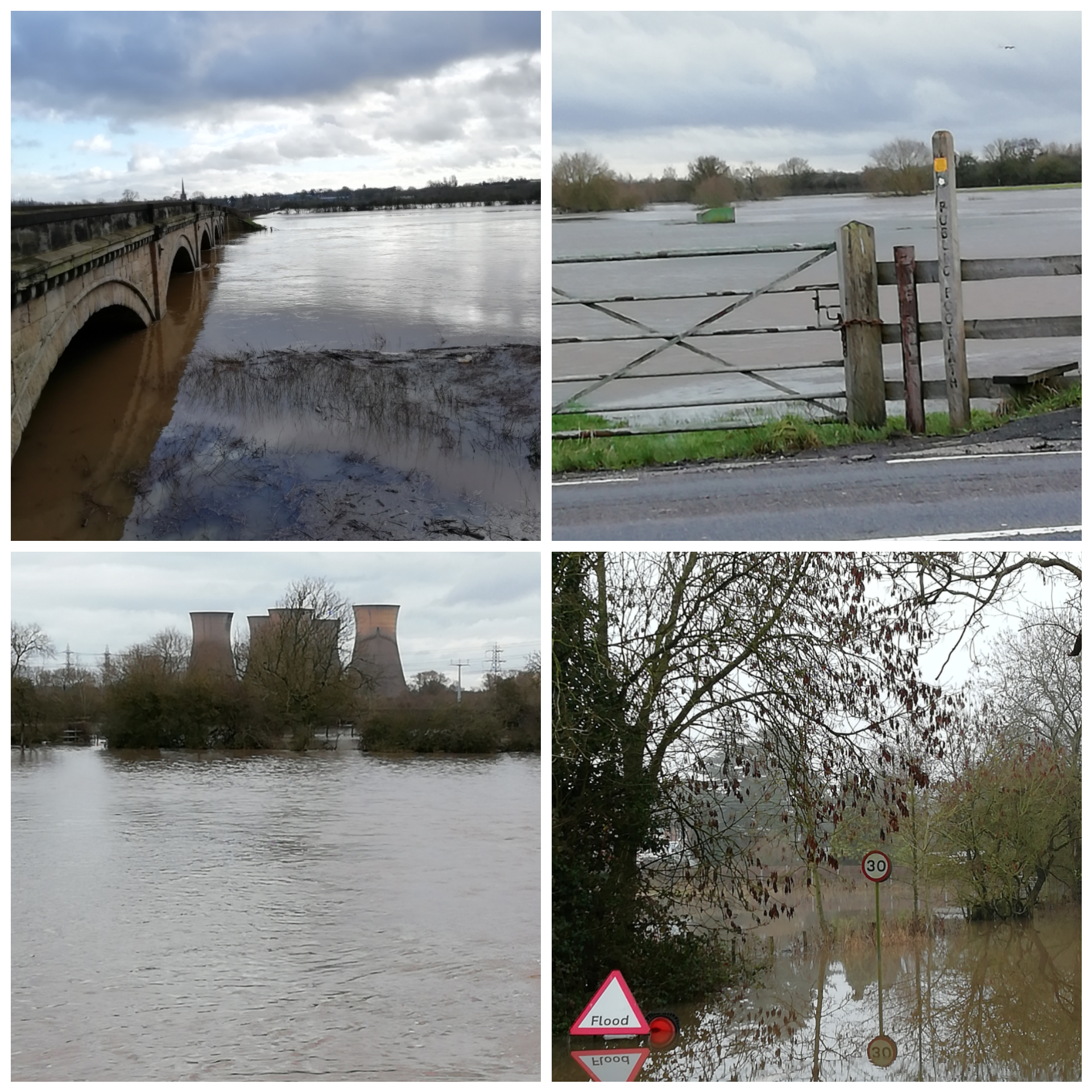
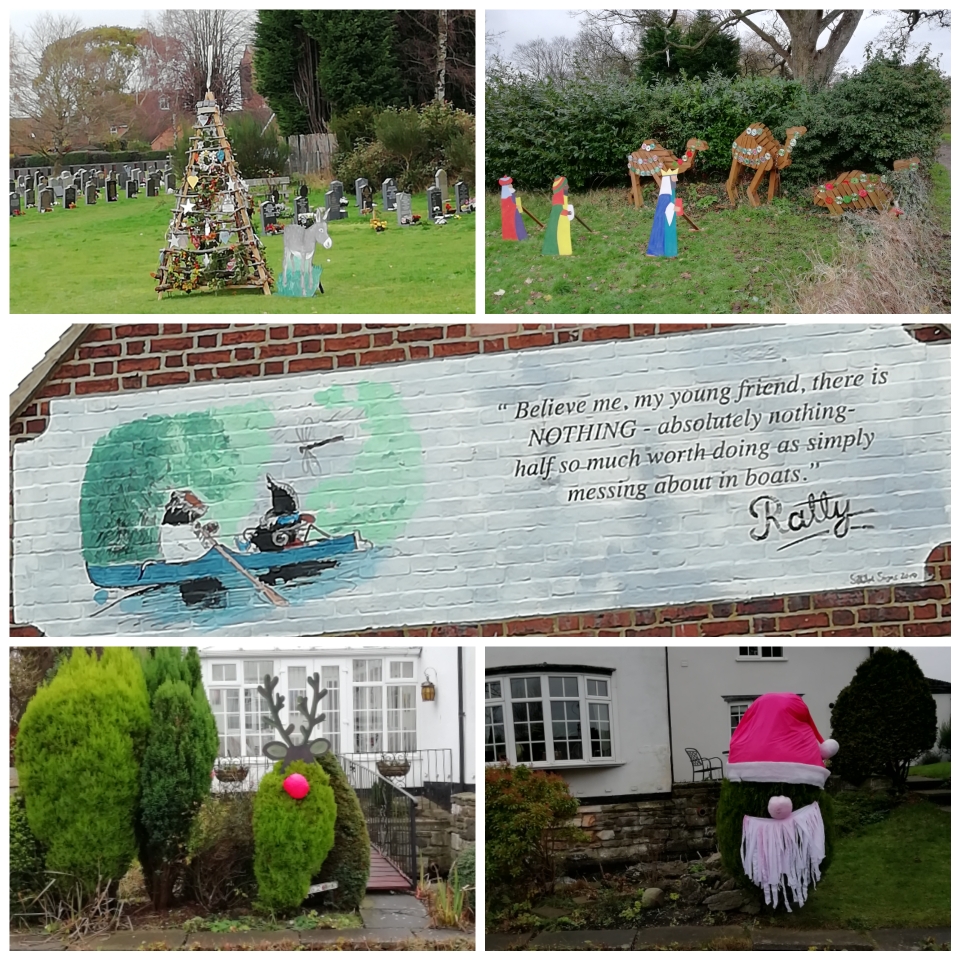
Continuous cruisers like us are not only subject to the decisions of Boris and scientists but also on CRT’s interpretation of political lockdown moves. In our case because of our current geographic location when we move also depends on environmental factors. The River Trent which we have to cross to get onto the next stage of the Trent and Mersey Canal is currently open, but has been shut a few times by flooding in past weeks. Will it be open when we are able to get there? CRT have currently interpreted the government’s lockdown steps to suggest we could move on 29 March when “Travel outside local area allowed.” That will mean for us that we will have been here for 3 months and a day, the longest we have moored anywhere as continuous cruisers. Once away from Willington, through Burton of brewing fame and across the Trent we come to Alrewas, a delightful village named after the alders which grew in profusion there. We were here before Christmas we found it a most pleasant place – convenient for shops and good walks, friendly people whose Christmas (and house) decorations were unique.
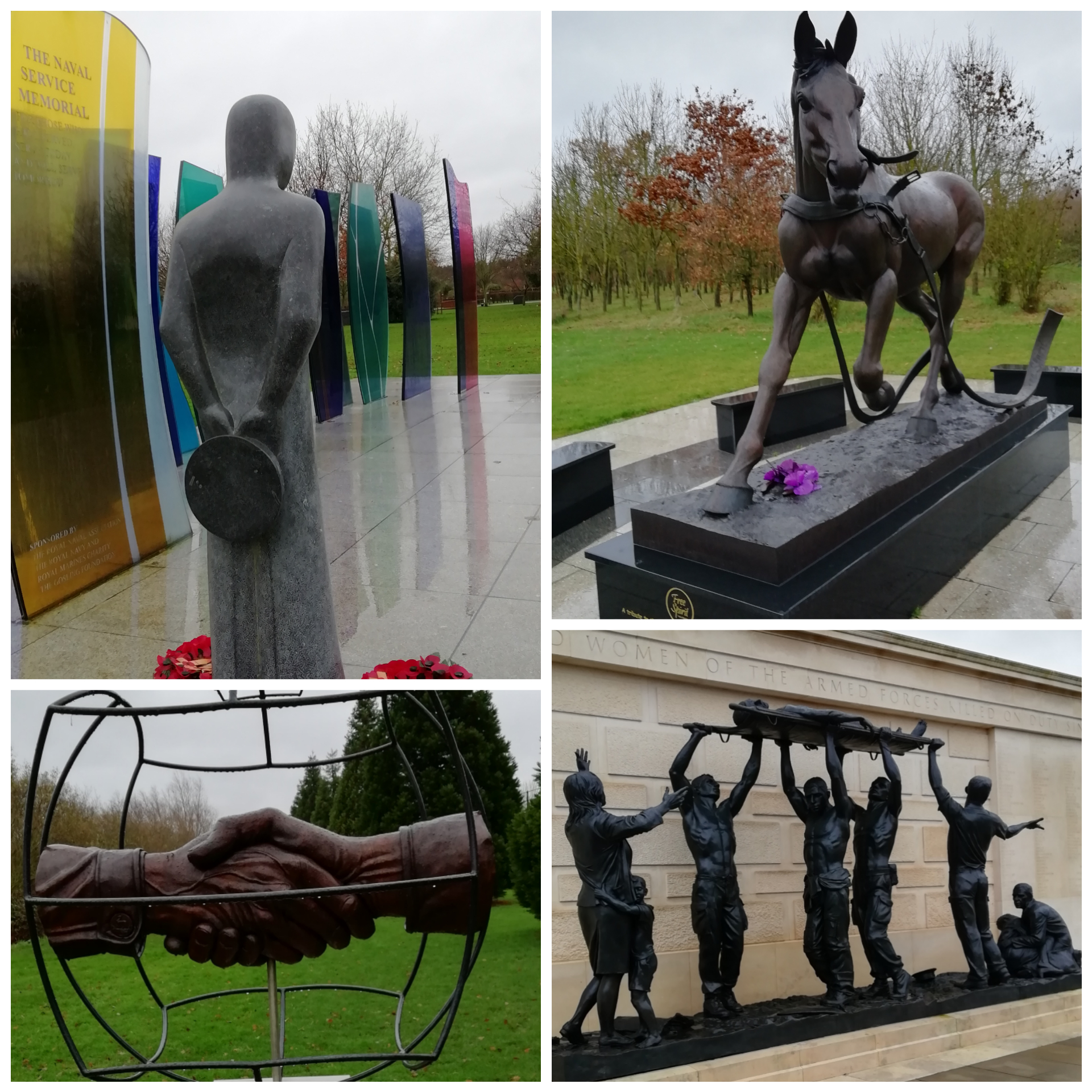
Alrewas is also walking distance to the remarkable National Memorial Arboretum – well worth making the time to visit. Every season the Arboretum changes so we look to revisiting as Spring is arriving. I expect the sculptures to take on a different feel as the trees come into leaf and bulbs flower.
After Alrewas comes Fradley Junction with the Coventry Canal. It was here we turned onto the Trent and Mersey back in early December 2020. We will be head north west up the Trent and Mersey from there, exploring pastures totally new. In a way it seems risky planning a lockdown escape, as I am sure anyone planning a holiday feels too. There are still clouds of doubt hanging over us, and the potential that the hope planning creates might be dashed. Somehow it seems more sensible and manageable to plan in small steps – alarmingly copying Boris perhaps! Step 1 for us is a 45 mile, 6.25 furlong trip from our current base to the start of the Caldon Canal in Staffordshire. With a travelling time of 3 hours a day and 34 locks it would take 8 days to get to the Caldon. Sadly the 44 pubs and 10 restaurants mapped en route are likely to remain shut to us. We shall stop en route to see some friends at a distance, so the journey should take us some weeks.
Looking forward enables us to look back with relief. We have already said farewell (thank heavens) to the last of the broad locks. Stenson Lock was the scene of our closest brush with disaster coming through between Christmas and New Year. These deep locks can be incredibly dangerous, particularly in winter. The undertow is strong when filling the lock. If you’re on your own and not going through with another boat, it’s important to try and hold the boat at the far bollard to stop it being pulled under the rushing water that can sink the bow of the boat. Stenson at 12ft 2inches or 3.71m is the sixth deepest lock in England and Wales. Our centreline which had suffered during a marina stay in Lockdown 2 wouldn’t reach the bollard and with just one ground paddle only partly open the boat was sucked into the cascading waters. The depth also meant I couldn’t see the boat from the top of the lock but Steve attracted my attention with the horn so I could lower the paddle to prevent the water battering the boat.
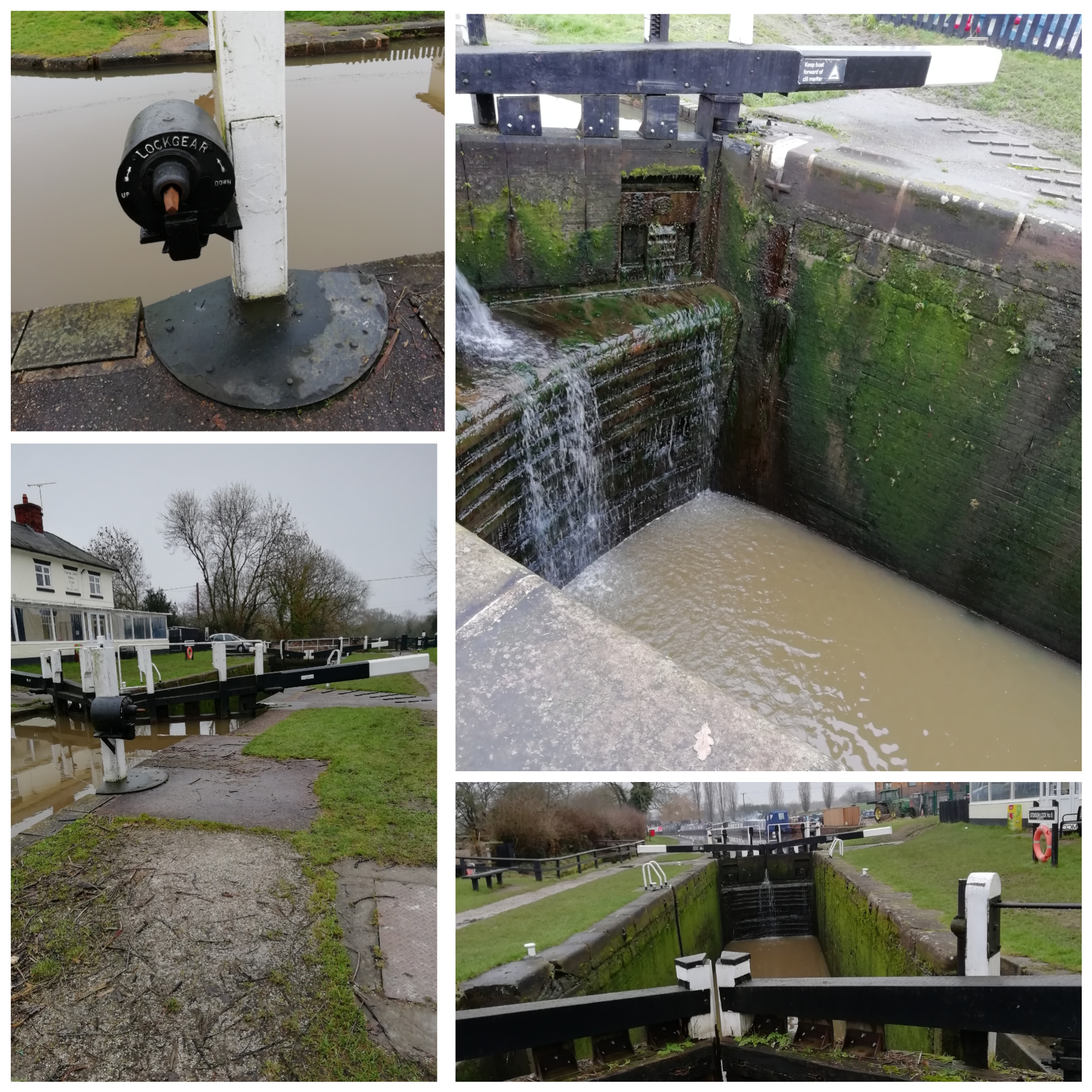
Fortunately another person heard the horn alarm and came through the torrential rain to help. With two of us – one working the lock, the other able to see the boat and its situation as well as catching the rope as soon possible, we made it through with only racing heart-rates, a drenched bow rope which had been washed off the bow deck by the force of the water and an even greater respect for managing locks safely. We also now have a new longer centreline – in fact we went for a complete new set from Tradline.
So back to forward planning – Step 1 takes us 45 miles 6.25 furlongs through 34 locks. That consists of 41 miles, 4 furlongs of narrow canals with 34 narrow locks and 4 mile, 2.25 miles of broad canals, that are delightfully free of locks! It will take us through the former Armitage Tunnel when a crew member needs to walk through to check for boats coming the other way. We will be able to moor at Great Haywood and walk to visit the National Trust Shugborough Estate. Whether it’ll be a grounds-only walk or a visit to the house is another question dependent on lockdown at the time we reach there. Down Banks, another National Trust woodland area near Stone won’t be restricted. The most glorious thing is that we can hope to share these exciting outings with family and/or friends, and perhaps offer them hospitality on the boat which would be absolutely wonderful.
The only issue with this mental excursion is that I am now itching to get underway – it’s unsettled my equilibrium and acceptance of the lockdown! Let’s hope we only have another month to wait before the dream becomes a reality. A change is apparent through numbers on the towpath – dozens of older people we’ve never seen before saying to each other as they pass the boat ,”Now I’ve had my jab it’s good to be out” and the sunshine is bringing out much bigger groups than we’ve seen to date. This final furlong of the lockdown is proving very hard for many, and overhearing their conversations (at volume as they pass) some have decided it’s now almost over so a few weeks aren’t going to make much difference. There are also now more boats evidently on the move, guidance or not.
We are going to sit tight until 29 March with everything crossed that we can move then. For now it’s back to making the most of the present, made easier by the ever-changing water and light views which help me forget we are still stuck!
In the meantime we are taking on the challenge of living on £20 a week. Will we make it? Find out next week if we will have made savings ready for the pubs when they reopen or if we’ve failed!
 Pickingupducks
As usual Deena, I’ve loved reading your blog and continue to be amazed at some of the difficulties and challenges you’ve had to overcome. It’s that resilience which has enabled you to make the most of lockdown within such a comparitively tiny space and with such limited resources. Planning for life after lockdown is a most peculiar challenge affecting every one of us and will be approached, I’m sure, with varying degrees of thought, realism and trepidation. For me, one of the important things is to have a positive, motivational Plan B in case of continued incarceration……that will definitely take some thinking about!!!
LikeLiked by 2 people
Thanks For the wise advice – I need to get thinking of a Plan B!
LikeLiked by 1 person