Leaving the marina, after a month of shuttling between there and bricks and mortar, to return to continuous cruising is liberating and also strangely different.
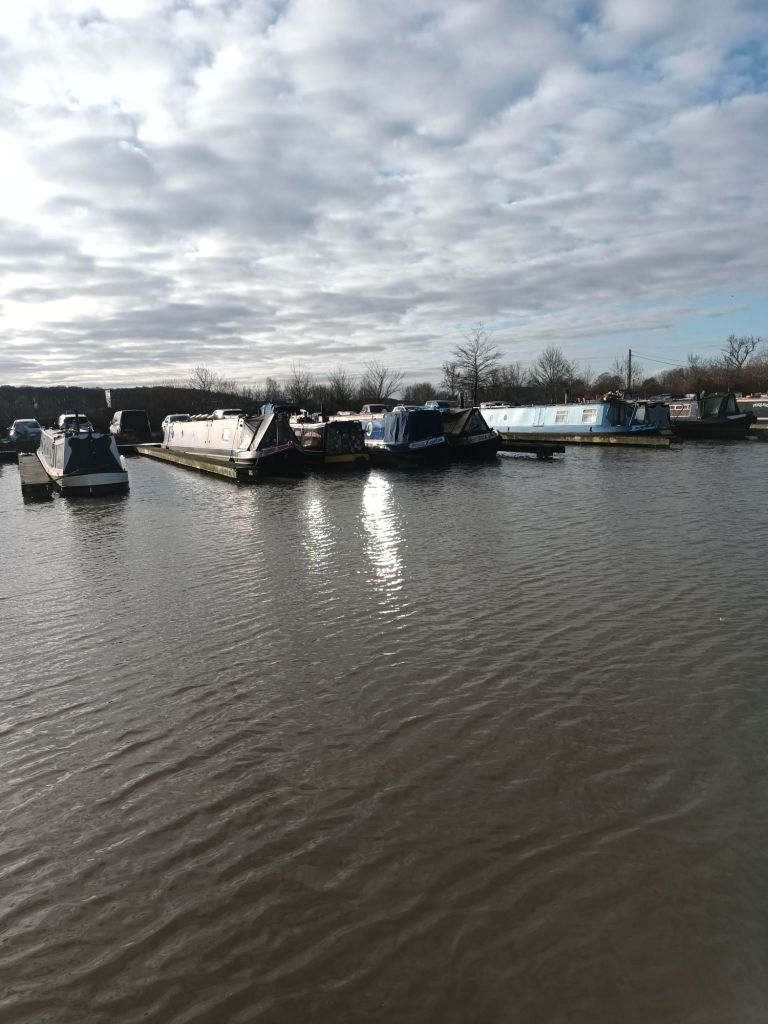
We’re back living off grid, no longer connected via a 24volt shoreline to the mains. The gas hob automatic ignition no longer works, the shore light no longer operates and we have to consider each day the state of charge in the batteries to make sure they are not dropping below 50%.
All of that feels like relaxing back into normality. But there are differences, and because of the pause in ‘normal routine’, those differences are more apparent, which helps us to appreciate them. We’ve been fortunate also to be off the rivers at a time when storms and flooding have made them truly perilous.
We are heading back towards the rivers, to the River Soar to be precise, but it will be some months before we get there. We’re back to slow moving on the canals for now, and it feels so, so good.
Living is different in the daytime – there are muddy towpaths to welcome our feet rather than (often slippery) wooden pontoons and compacted aggregate paths. That means more of the outside joins us inside from boots and paws! I get more indoor exercise with a mop!
We’ve been more aware of those frozen nights, giving us a thin coating of ice across the canal, making it creak against the boat as we move inside. Those cold nights also give us the delight of crunchy morning walks.
It is at night that living outside a marina really comes into its own for us. At night where we’re moored this week, there are no lights as there are in a marina. The night is dark, velvety smooth darkness that embraces the boat and together with the hooting calls of the owls, makes for a sound, deep, dreamless sleep. Nighttime in a remote spot is the difference between mono or surround sound, a fully immersive experience.
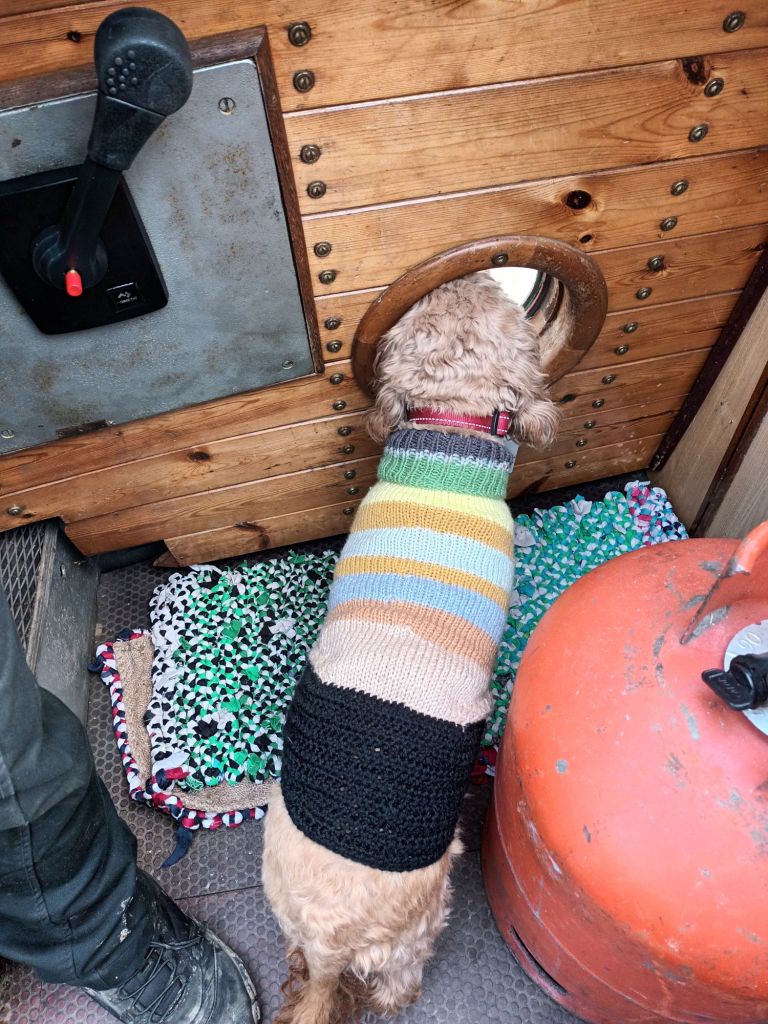
Noise in the marina has been a major issue for Boatdog. The bird scarers in surrounding fields terrified her. As a result she cowered outside her safe space of home and walks became a struggle for her (and us). Now she’s relaxing a bit although there are birds scarers a distance away, which we can still hear, and she does react, but we are reducing her terrors day by day. She enjoys travelling too and on cold days now sports a jumper I made her from leftover yarn.
We are also back to moving the boat to sort out the basics – filling up with water is no longer available from a tap at the side of the boat, we now need to cruise to a water point. We filled up before we left, though, so that should last us for about three weeks before we need to consider finding a tap. Waste is something we need to sort more often. No longer is it a short haul of the toilet cassettes to an Elsan point on the marina or a short walk to a rubbish bin. We need to plan waste trips!
The nearest rubbish and toilet disposal we don’t need to pay for (i.e. not in a marina) is 11 miles 6.25 furlongs away. We have another 4 days before we need to empty the toilet, so we could actually go further to the next waste point if we want to.

We’ve had the invaluable and essential refill of gas and smokeless coal, too, this week so we are ready to move on. Mark on Callisto was heading up the Ashby this week, and we caught him whilst we could. It makes economic sense and is supportive of the traditional commercial carrying on the waterways to buy from the coalboats. Most carry diesel, gas and coal, kindling, and in some cases they offer pump out for boats with toilet tanks. Many carry fenders, engine oil and other chandlery too. The other advantage is the sight of a friendly face, a chance for a chat, an opportunity to ask about conditions ahead (or behind) and catch up on news.
There are coalboats along the network, but unless we all use them, all of us, leisure and continuous cruisers, then the future for these essential services is at risk. Theirs is not an easy job – it’s heavy, hard work, but without them our life on the cut would be much more difficult and costly. They moor alongside, load directly onto our roof or into the bow, fill us up, and head off. We don’t have to move – just liaise by text or social media to find out where they are, let them know where we are and what we need. They accept cards, cash, or BACs. In the case of the coalboats, BACS stands for Brilliant And Convenient Service!

So we’re back in the comfortable, comforting routine of musing over where we go next and at what pace we want to move, how long we want to stop on each chosen mooring, whilst tasty scents from pans simmering on the stove fill the cabin as we slowly cruise. It is leisurely and relaxing whilst being active and demanding at the same time.
Our sojourn in the marina and in bricks and mortar with the family was wonderful and hugely enjoyed. An added bonus has been the increased appreciation of our life together on the water – absence after all, really does make the heart grow fonder for this life we’ve chosen.

 Pickingupducks