Let your boat of life be light, packed with only what you need – a homely home and simple pleasures, one or two friends, worth the name, someone to love and someone to love you, a cat, a dog, and a pipe or two, enough to eat and enough to wear, and a little more than enough to drink; for thirst is a dangerous thing. ”
Jerome K. Jerome Three Men in a Boat
We may be missing the cat (and pipes) but our journey on the River Thames has everything else we could ask for, and we have learned a huge amount this week – our first on the mighty waterway.
So far we’ve travelled 92 miles and 33 locks in a week, something which seems astonishing given our normal pace.
We joined at the Dukes Cut from the south Oxford Canal, wending our way through blanket weed encouraged by sunshine and a lack of boat traffic to congeal the waters to a thick green slime. Cutting the engine and gliding through saved entanglement and we emerged onto the river turning right towards the Cotswolds.
A narrowboat feels different with this depth of water and even going against the flow we travelled more rapidly than normal on a canal. It is very different cruising on a wide river too, there are the big long boring lengths and locks are more widely interspersed. Many are manned by lock keepers particularly at weekends, but even if you find them on self service they make canal locks look like very hard work. The manual ones heading north on the Thames require opening and closing of paddles (now termed sluices) by spinning a large metal “ships wheel” on each gate before manually pushing and pulling gates open and shut. Opening requires spinning outwards and closing goes inwards. Further south on the Thames, locks have been converted to the electric push button variety such as one finds on some northern rivers. Again – a real doddle if you’re used to canal locks – requiring the exercise of a thumb alone!

Environment Agency locks all seem well maintained, and those we’ve encountered have worked well. It is important to put this in context. The Environment Agency only has 45 locks to deal with on the 215 miles of the Thames while Canal and River Trust have more than 1500 locks to maintain across 2,000 miles of network. Both have faced significant budget cuts in recent years.
River locks took us some getting use to, and we nearly came to grief at our first (a self-service affair) when a rope became jammed on a bollard tipping rhe boat. Staying alert, reversing the opening of the sluices, and following instructions to cut the engine so you can hear, meant disaster was averted and a valuable lesson learned.
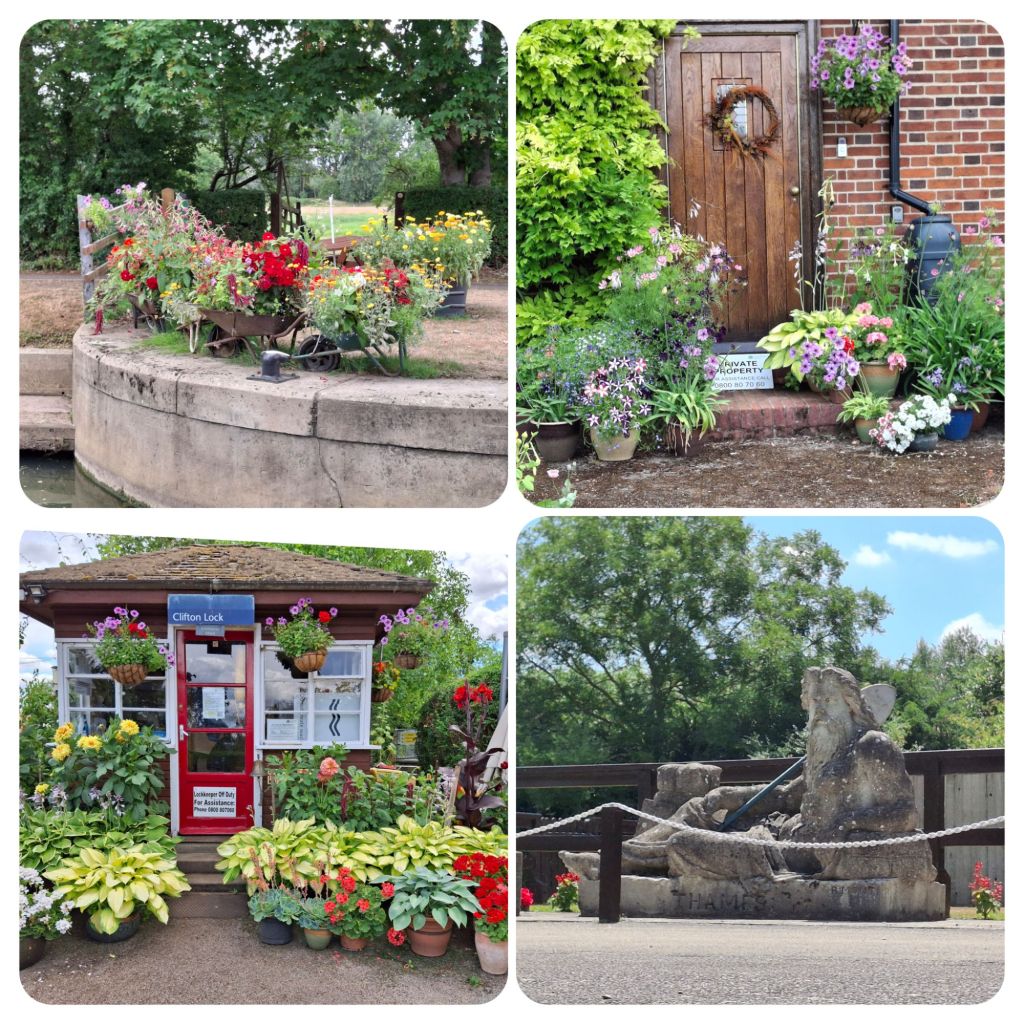
Another glory was the lock keepers’ gardens, particularly on the upper Thames – absolute highlights.
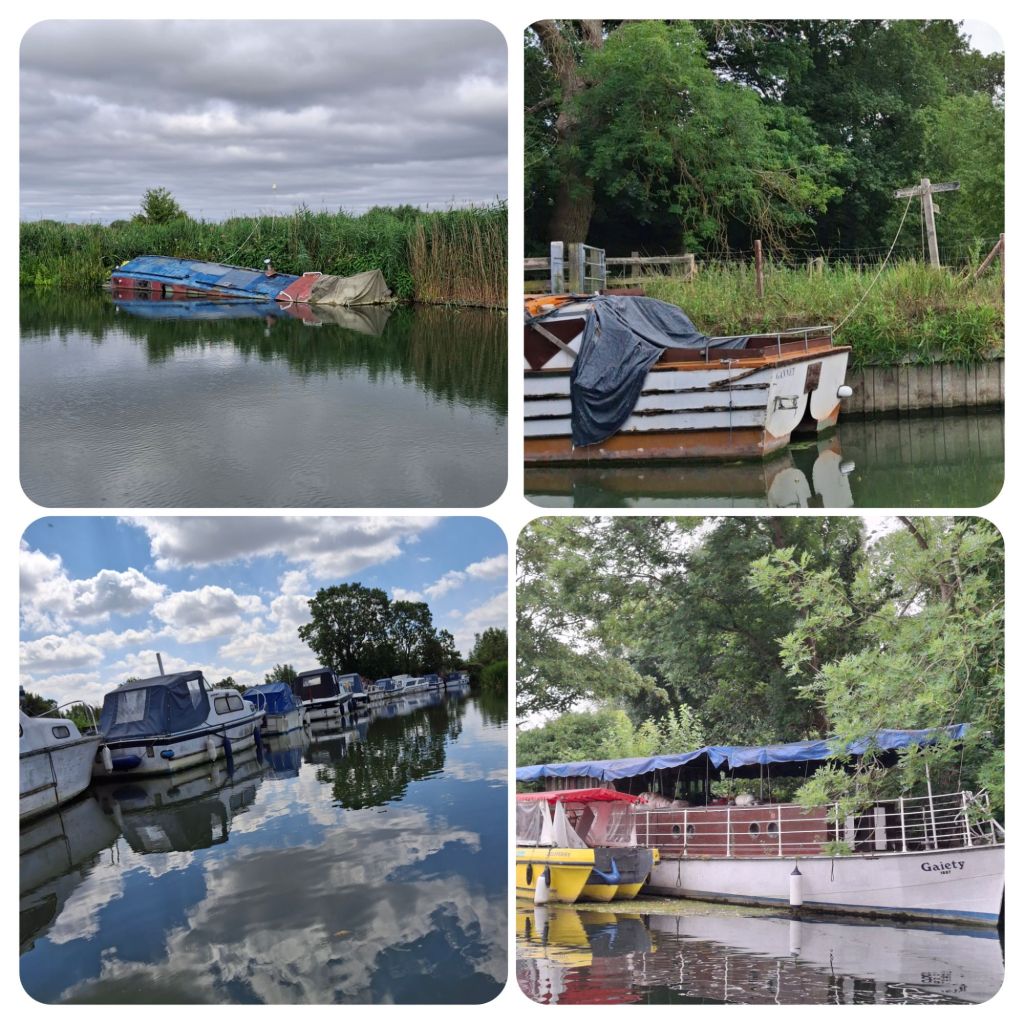
Mooring was our biggest concern – and demanded a shift of mindset. We soon realised mooring on the Thames is not as organised or obvious, or indeed anything like we had found on other rivers, let alone canals. Forget pontoons, think more about beaching the bow of your boat in a bank.
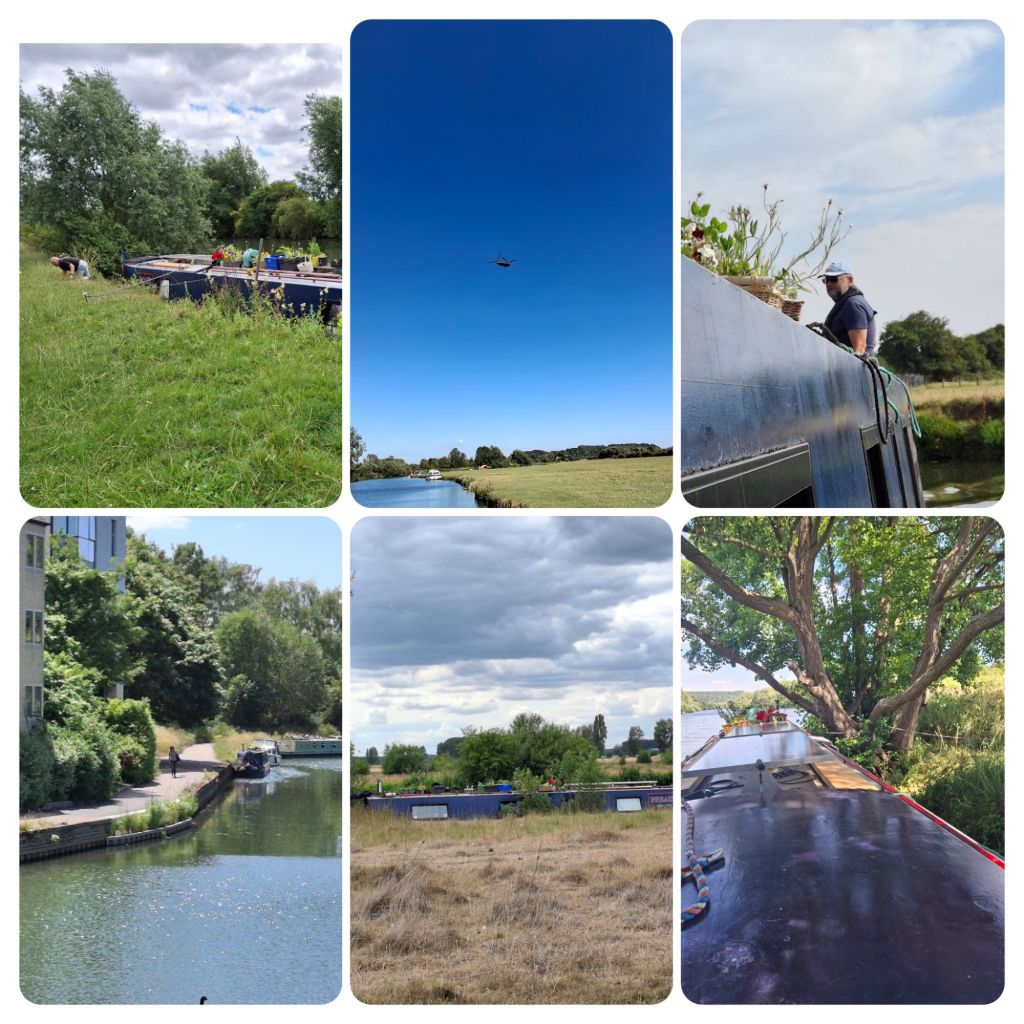
The identifiers for what a potential mooring might look like are different too and we’ve managed some wonderful spots. The first was a bit of a scramble, but after that we learned what to look for and as I write this we are in our first ‘tree mooring’ offering valuable shade.
We have been fortunate with the weather, and travelling on a river where the speed limit is a rapid maximum of 5mph we’ve been able to get more of breeze coming through the boat.
There are more hazards here – so many paddle boarders, rowers, swimmers, kayakers, and canoeists. Vessels out here come in all shapes and sizes, some even carrying a spare boat!

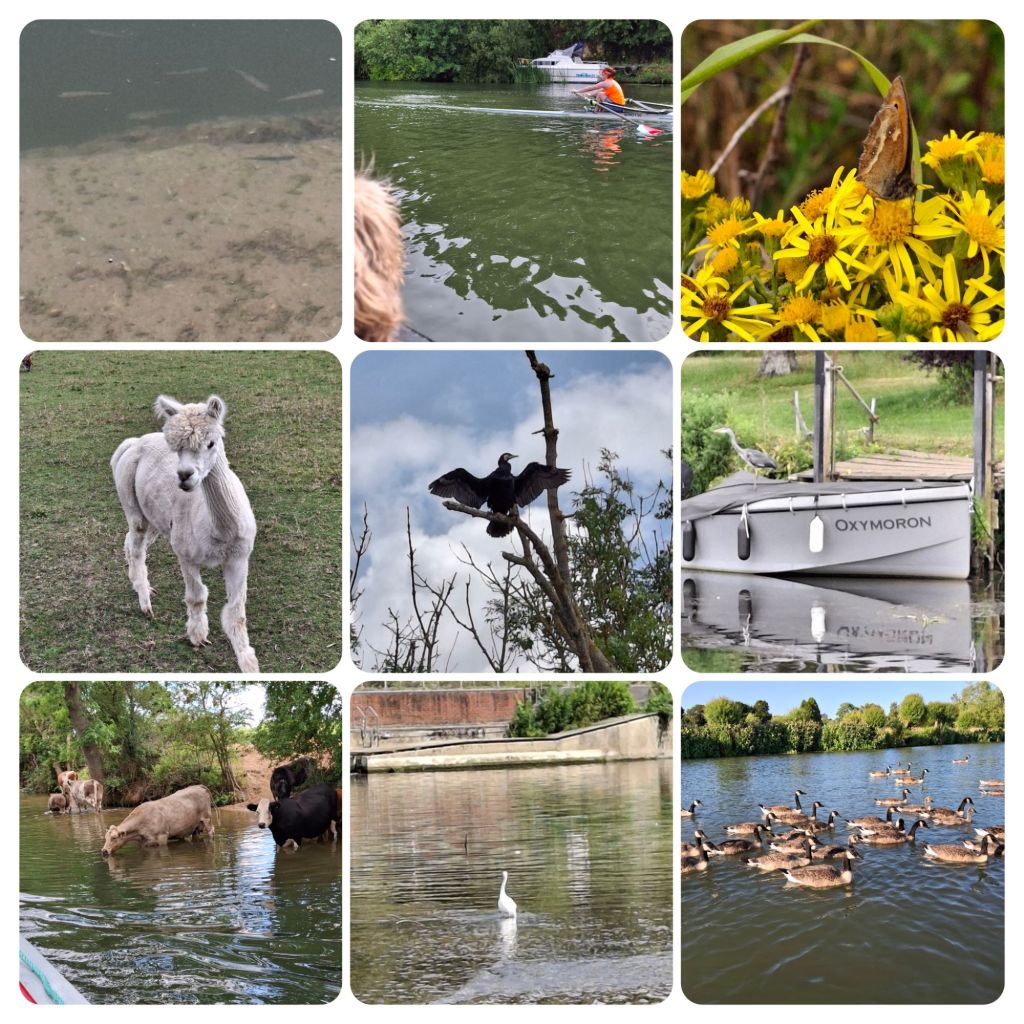
Often, nature is a bit remote compared to the canals where we all live cheek by jowl. Here, the stretches are often so wide that birds are very far away (by choice), but we have encountered some wildlife and several mink, now wild but originally escapees, have swum across our bow. Cows have also been regularly in the water alongside us!
Costs so far have been – one night of paying for mooring (£7 in a farmer’s field) plus £75 for a week’s Environment Agency licence.
I write this in Pangbourne. It’s where Jerome K. Jerome’s Three Men in a Boat adjourned, as we are about to do, to The Swan Inn, and home of Kenneth Grahame, author of Wind in the Willows whose water rat delivered the best quotation about messing about in boats…

More messing about from us next week on more waterways new to us – the River Kennet and the Kennet and Avon Canal.
 Pickingupducks