On Wednesday BBC Womans Hour featured women narrowboaters during their Listener Week.
Back in late June when they first asked for suggestions for topics to cover, I proposed a segment about women narrowboaters, particularly about Charlotte Ashman, a talented artist, mum, and skipper of not just one, but two boats. This is what I told Woman’s Hour.
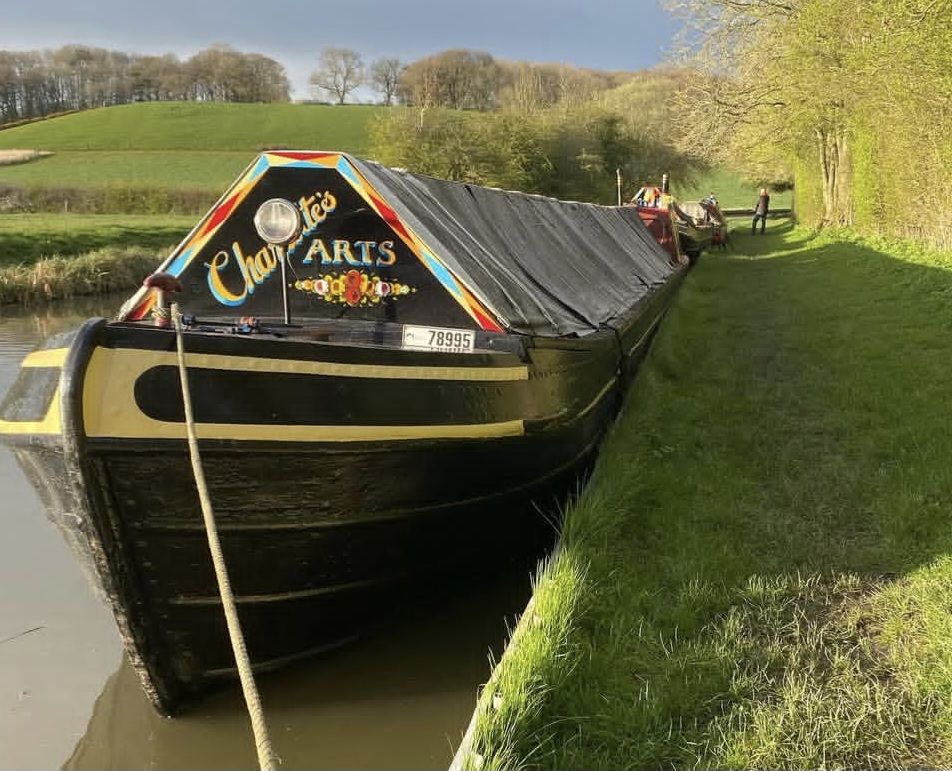
“Thousands of women now live on the inland waterways of Britain on narrowboats and but only a few live in historic boats, some the very boats that were crewed by the “Idle Women” in World War 2.
Hyperion is a 72ft long boat, with her butty Hyades (also 72ft towed behind, no engine). In wartime, with a crew of 3 women including artist and printmaker Christian Vlasto, she plied the waterways between London and Birmingham carrying steel, aluminium, coal, and sometimes munitions.
Now, in a satisfying twist of fate, Hyperion and Hyades are back together and in the hands of a woman again – another artist and printmaker, Charlotte Ashman. She lives aboard with her daughter, who has been brought up on the boats. Their boats are now a historic floating home, studio, and gallery. The boats need constant upkeep, maintenance, and must be moved to a new location every few weeks around the waterways.
Charlotte is currently working on a project looking at the intersection of heritage and female perspectives on the water – particularly the unique connections between herself and Christian Vlasto, artists and printmakers united by their work and the huge working boats Hyperion and Hyades.
It’s a life many men on the working boats found hard, and many gave it up because it was too tough. It isn’t easy now, even basic day-to-day living on a historic boat is hard work but both these two women like countless others, thrive on it, seeing it as freedom. Both Charlotte and Christian vividly reflect the places, people, and nature of the waterways in their work.
The soundscape of working boats is unique, the heartbeat throb of the engine, the soft sound of the boats moving through the water, the birdsong, and the creaking of the ropes. It would be captivating to hear the story of these two remarkable women, their shared boats, their creativity, and through them the roles of women on the wartime waterways and women living afloat today.
As a female boat woman myself (and ex-BBC journalist) who finds life so much more vivid and vibrant living and working aboard a much more modern (1989), shorter (50ft) narrowboat, I’d love to hear of waterways women on Women’s Hour. Our challenges and delights are many, similar, and also very different to those of women in bricks and mortar, or vans.”
The item that was broadcast was rather different from that I proposed including, as it did, a boating poet. You can listen for yourself here the segment starts at 35.19.
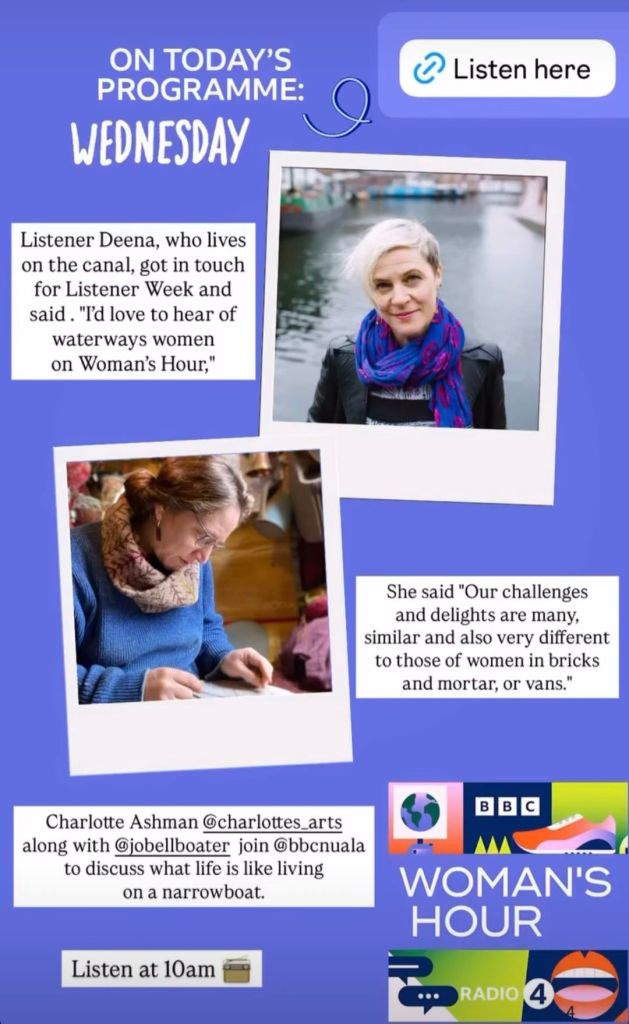
Jo Bell is a poet, boat woman, and in 2013, she was the first ever Canal Laureate for the Canal & River Trust and The Poetry Society.
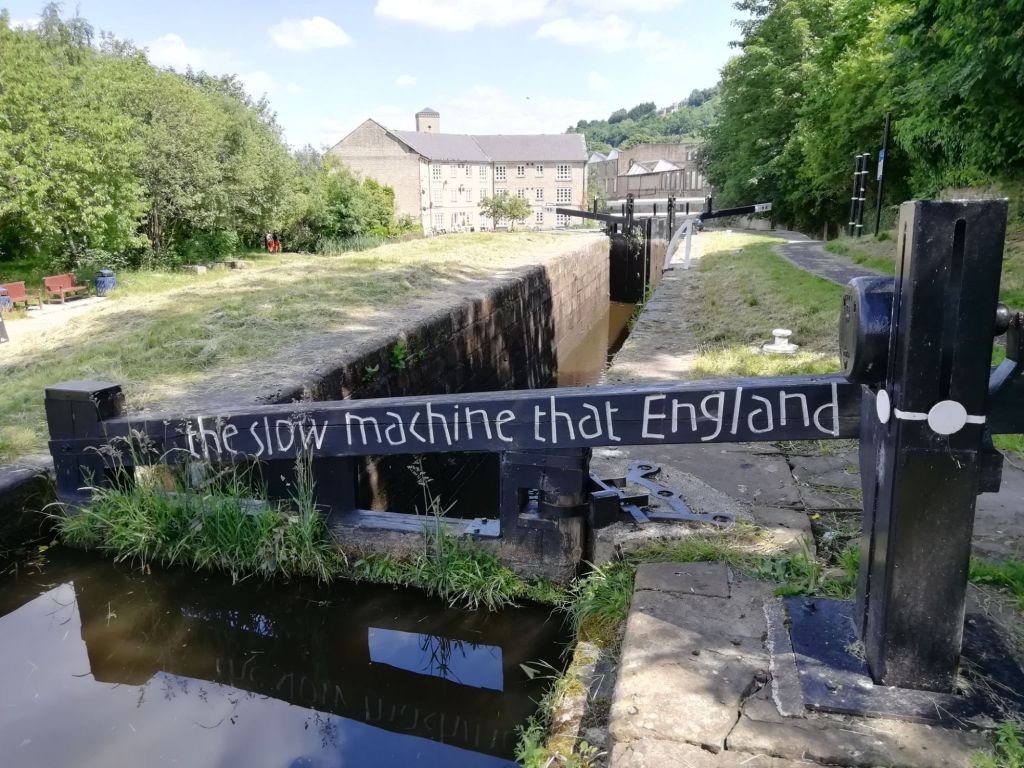
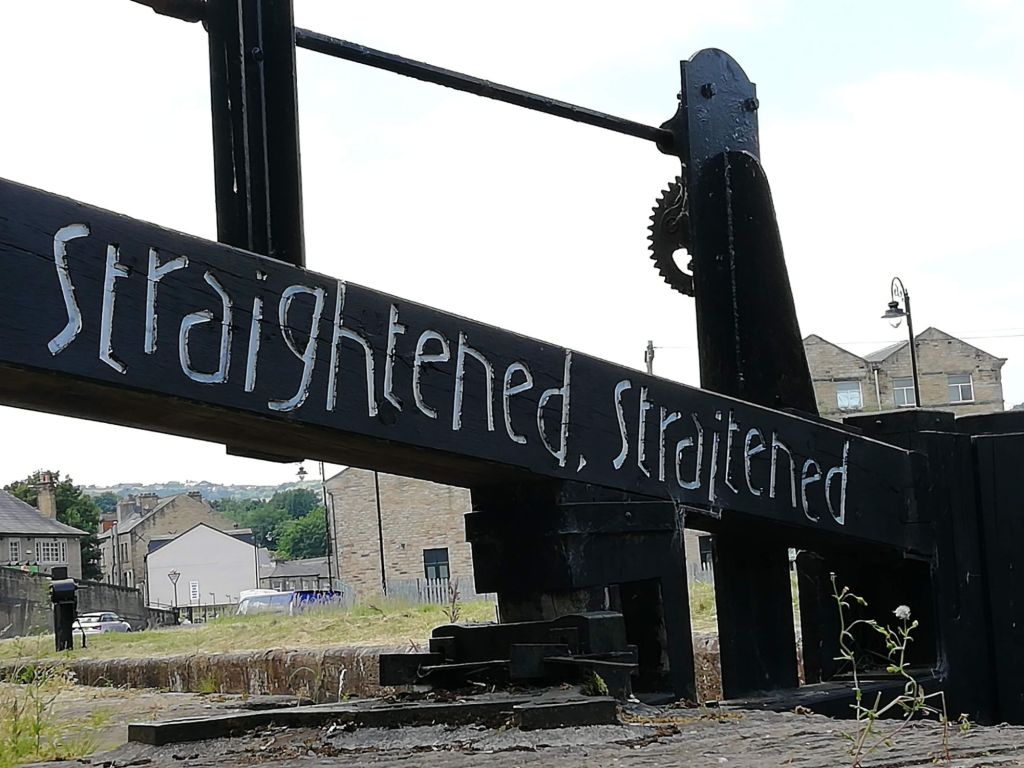
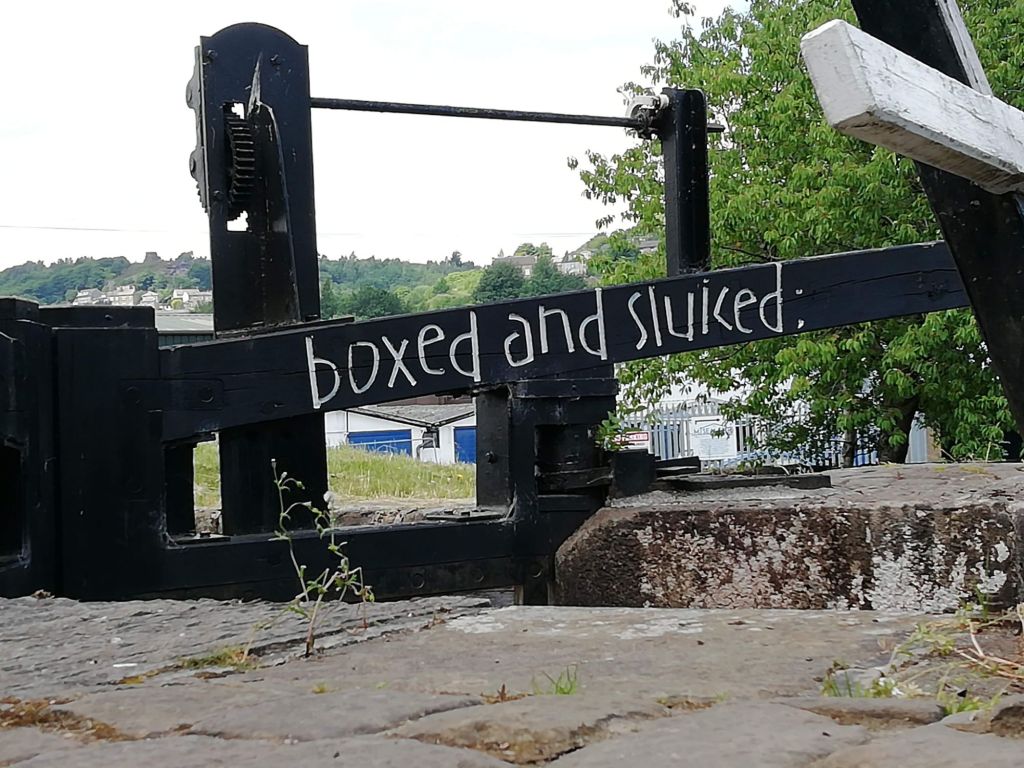
Lines from one of Jo’s works enliven the lock at Milnsbridge lock 9E on the Huddersfield Narrow Canal, one of our favourite waterways. Carved for posterity, “The slow machine that England was, straightened, straitened, boxed and sluiced…”
The broadcast Womans Hour programme segment was a very different piece from that I had proposed, and because my name had been linked to it (and it’s an unusual name) I began to hear from some boat women (and ‘landlubbers’) on social media and in conversations their disappointment. Many were critical of the piece for being ‘superficial’, ‘irrelevant’, and in discussions about men’s acceptance of boatwomen, downright ‘wrong’. This in direct response to Jo Bell’s shared view that women are viewed and judged on the waterways for their ability to handle their boat. Ironically moments after the piece ended I took a windlass and approached a lock to be given a long lecture about how to use a lock, by a man who could clearly see my boat was a live aboard (the vegetable garden on the roof is a huge indicator) so likely to be the home of someone who has done a lock or two (actually over 2,000).
It left me feeling guilty, feeling that somehow I had let boat women down by proposing the piece I had, but which I felt had not been broadcast . I was disappointed that Woman’s Hour did not share the story I hoped people would find interesting, but it was apparent from the feedback to the beautiful video of Charlotte and her boats on the Womans Hour Instagram feed filmed by Mischke Weinrab, that I underestimated the power of the piece. Do look at the video on the Instagram feeds of @bbcwomanshour or @mischkesmemories. It captures an evocative, truthful depiction of what many boat women recognise. The video said so much more than the radio programme in many ways.
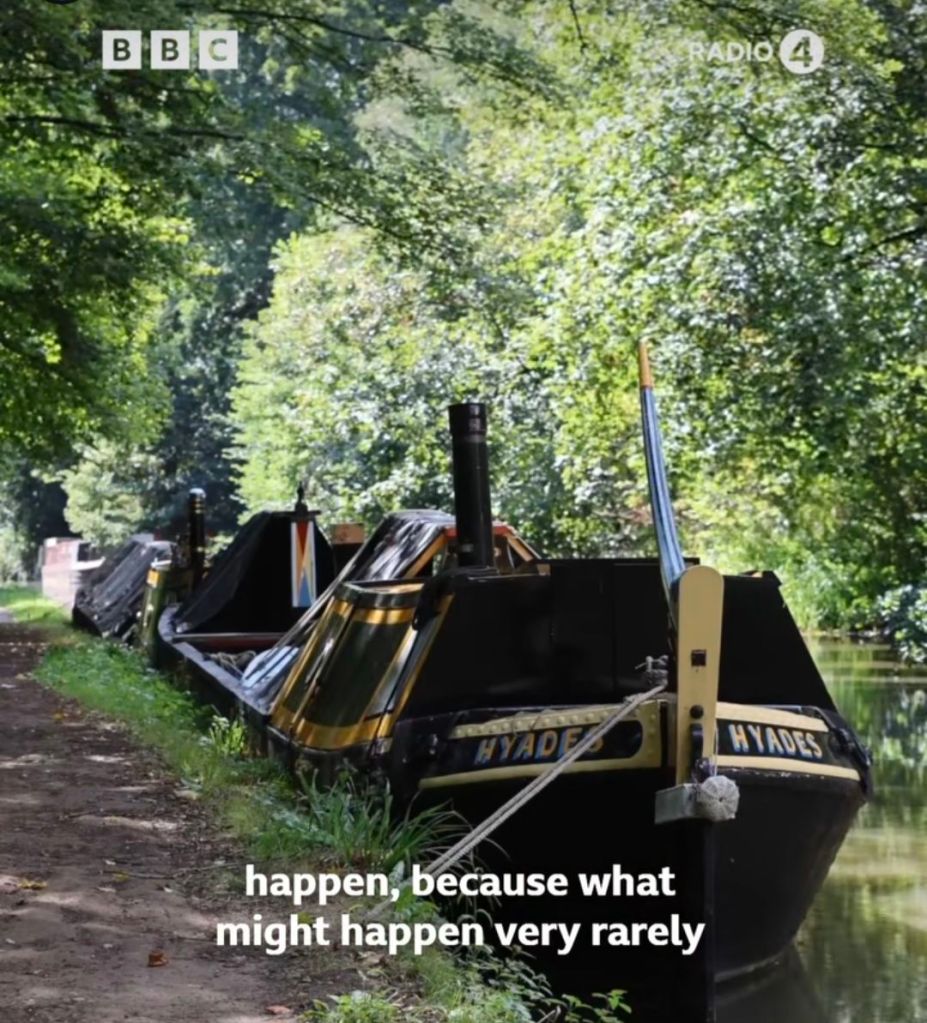
It was apparent from the comments on the video that what had chimed and inspired so many was when Charlotte said so clearly that living afloat was the epitome of taking a chance, a risk, and not worrying if it doesn’t work out, but being prepared to fill your life with joy.
Like Charlotte, I love winters on the boat. They are without doubt my favourite time. The whole way of life on the canals and rivers is hard, physically taxing, but it is also gentler in pace. We are in tune with the seasons, aligned in living to the rhythms and cycle of nature. That is a huge privilege.
For continuous cruisers as we are (boaters without fixed home moorings), the constant feeling of freedom and movement is liberating. If we don’t like where we are or who we are near, we can pull up our ropes and move on, but even if we are enjoying somewhere we know that tomorrow, next week or the week after, we could find ourselves somewhere even more special.
So the tale I hoped people would enjoy hearing is still to be told, in part available via Charlotte’s website
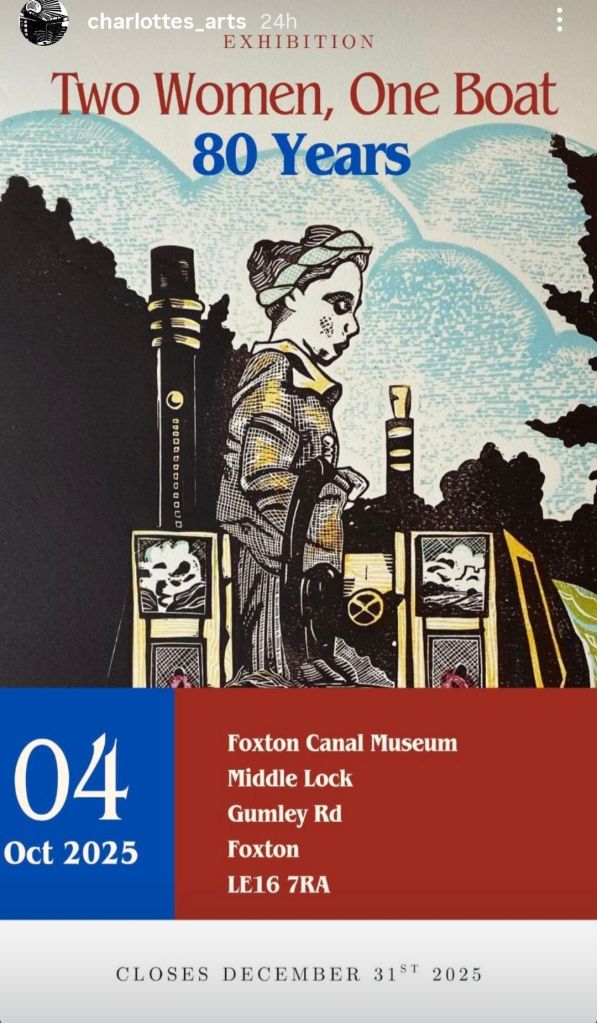
The story and related artwork will also be featured in an exhibition that will be at Foxton Locks Museum in Leicestershire this autumn.
Ironically, for someone who works and lives with the written word, this week has made evident to me the power of video. Perhaps the written or spoken word does not cut through the busyness of many people’s lives today as effectively as an edited film.
I am grateful, though, that this week, more people had a chance to hear the voices of women living on the water, enjoying a way of life that is different to those lived in vans or houses. To be able through hearing their conversations and seeing videoed daily routines, is to gain insight into how others live. That gives us all inspiration, understanding, and a chance to value what we have. I, for one, am hugely grateful for the freedom of our floating life and glad that this week I’ve played a very small part in ensuring more people have been able to hear about it, see some of it, and hopefully understand it better than they did before.
 Pickingupducks
Yes, be glad Deena! You started something and it will roll on in many unexpected ways….just like you 🤗👍💁♀️
LikeLiked by 1 person
Long time lurker and reader, never been moved to comment before!
Great insight and inspirational post. Top work and power to your elbow!
LikeLiked by 1 person
Thank you 😊
LikeLike