Narrowboats like ours are basically a metal box. Living and working in a metal box has its challenges, but probably one of the biggest is surviving during extreme heat.
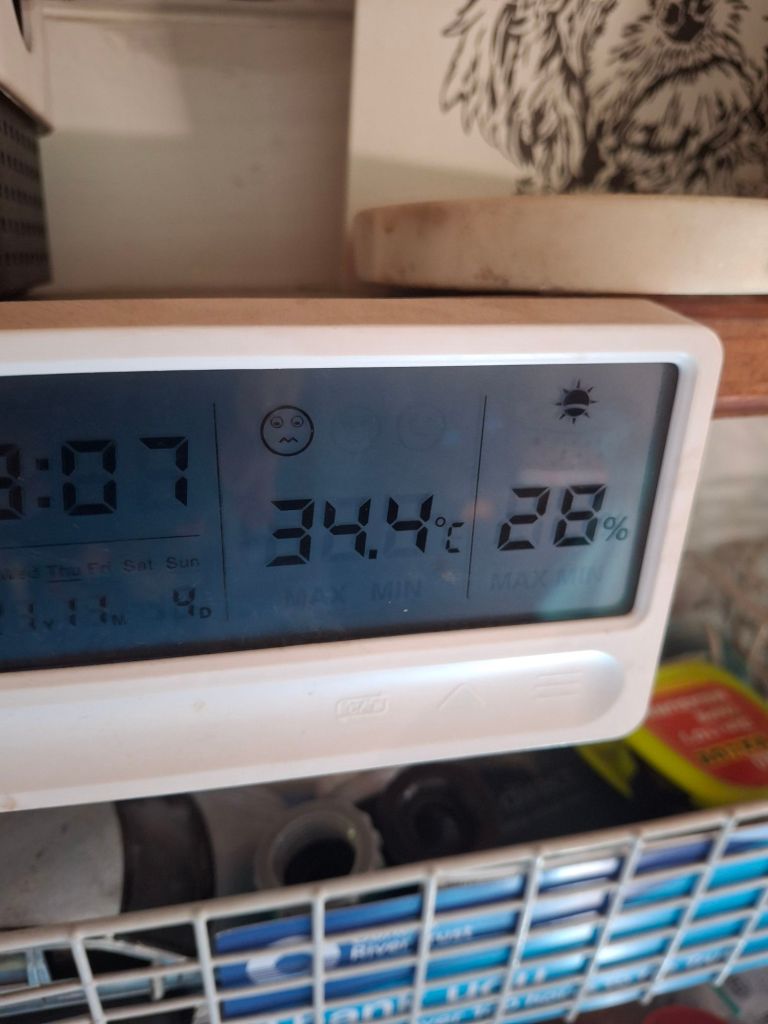
When travelling on a boat there is a natural flow of air created by the movement, but when you are sitting still, or moored up overnight, it is a very different story. Canal and River Trust have issued advice for people about staying safe and conserving water by careful, considered use of locks particularly. For us though, we don’t want or need to move this week, so we are staying put. If we were moving we would be doing so in the evenings or very early mornings. Leapfrogging the car with us means we can drive waste to disposal stations, reducing rubbish sitting in the heat and also meaning we don’t have to move our home and office to the services. Having the car has also given us issues though – it’s air conditioning which used to give a brief welcome break from the stifling heat decided to give up this week just as we took a 5-hour trip in excruciating heat to see family! It’s been a long time since we travelled with the windows open, prayed for no stoppages and sought streams en route via Google maps for Boatdog to get into to cool down.
In terms of drinking water for us in our home, we should be OK for water for the next couple of weeks having filled up a week ago.
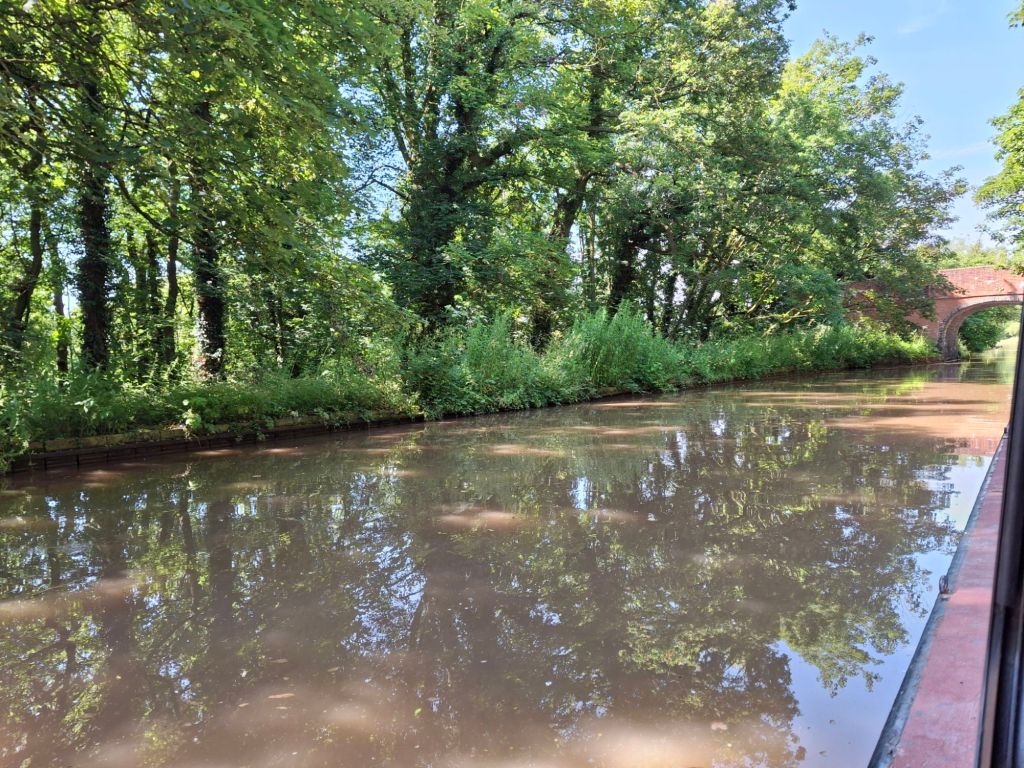
So for us, in terms of life and work, the heatwave has been stationary. We sought out a shady mooring – one we knew of with mature trees on both sides of the canal. We were delighted when we found it was empty and promptly took up residence. We are glad we don’t have to move and won’t until temperatures reduce.
On board we have managed to keep temperatures to the 30s, so about the same as the outside climate. That has partly been achieved over the years by prior planning like investing in retro fitting insulation in the shell of the boat, and replacing the single glazed windows with their small hopper openings with double glazed thermal break windows where the glazed panes can be completely lifted out maximising the amount of air in the boat. The roof is also painted grey to reflect some of the heat away although my roof garden has messed that theory up somewhat. The planters are all raised up so air can pass under the pots and across the roof. This reduces the risk of the plants being cooked from underneath as well as above, but also means the roof can in part remain cool.
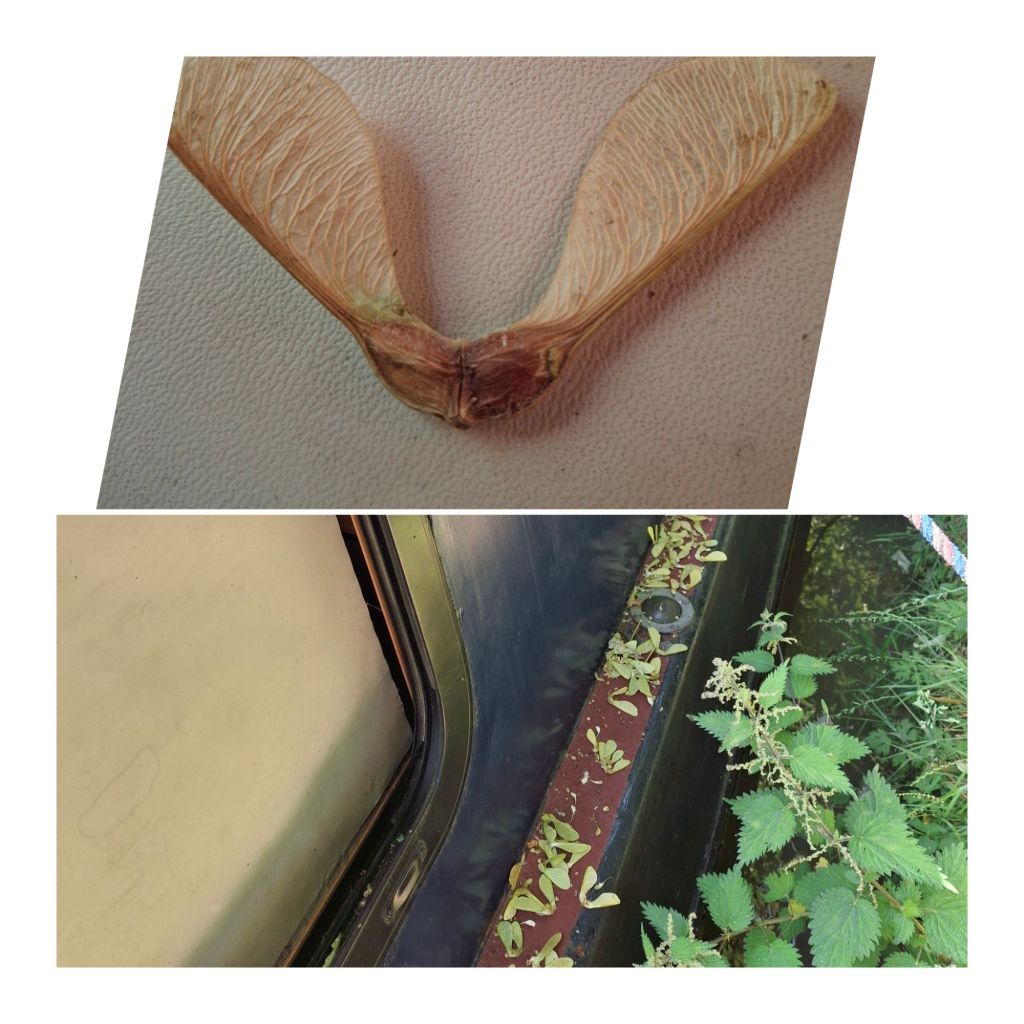
As we are moored under some huge sycamore trees the plant pots amd boatnin general are bejng liberally mulched with sycamore helicopters. I’m happy to leave them to stop the pots losing as much moisture as possible but the Skipper is out daily clearing them from the solar panels . We need the shade to stay cool but getting some solar means we can run the fans, and devices we need for work on board without draining the battery.
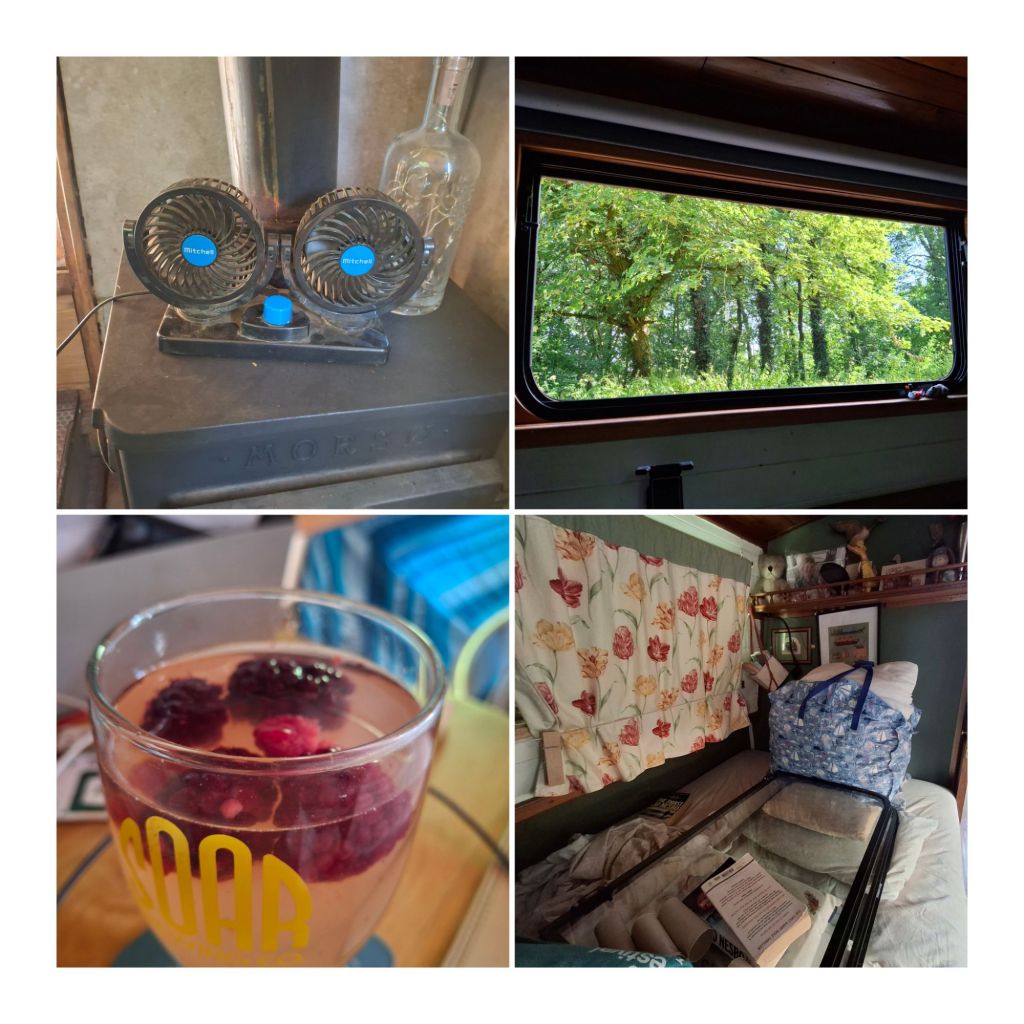
Inside the windows are out (and window frames piled on the bed sandwiched between pillows and cushions), blackout blinds are drawn on the side where the sun is shining and we monitor this during the day. The side hatch (swan or duck hatch to many) is open 24/7 (fortunately we are moored with it facing the waterside), and doors are open fore and aft. The cratch cover, the heavy protective waterproof canvas covering the bow area, is folded back to maximise any breeze. A double portable car fan (thanks Jonny) positioned on the stove and working from an installed car lighter point helps move air around the boat during the day but is too noisy to run at night.
The main work area is in the middle of the boat and gets the breeze well so that helps and although I felt like I dripped through a Teams meeting yesterday I don’t think anyone noticed and I did seem cooler than others on the call!
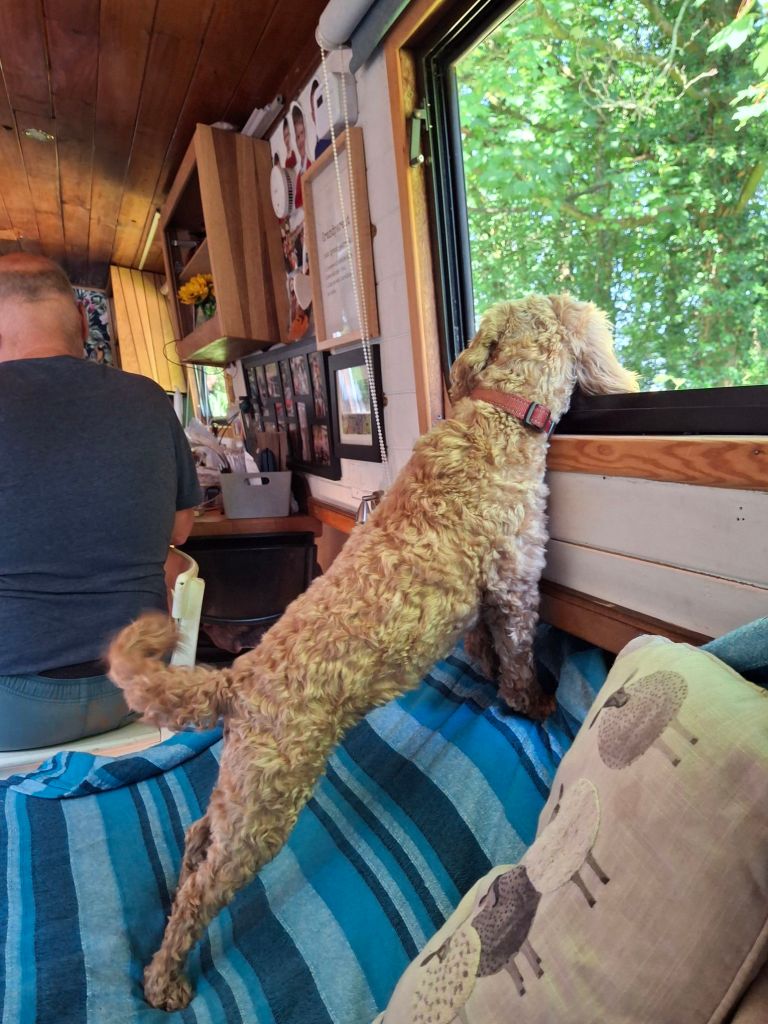
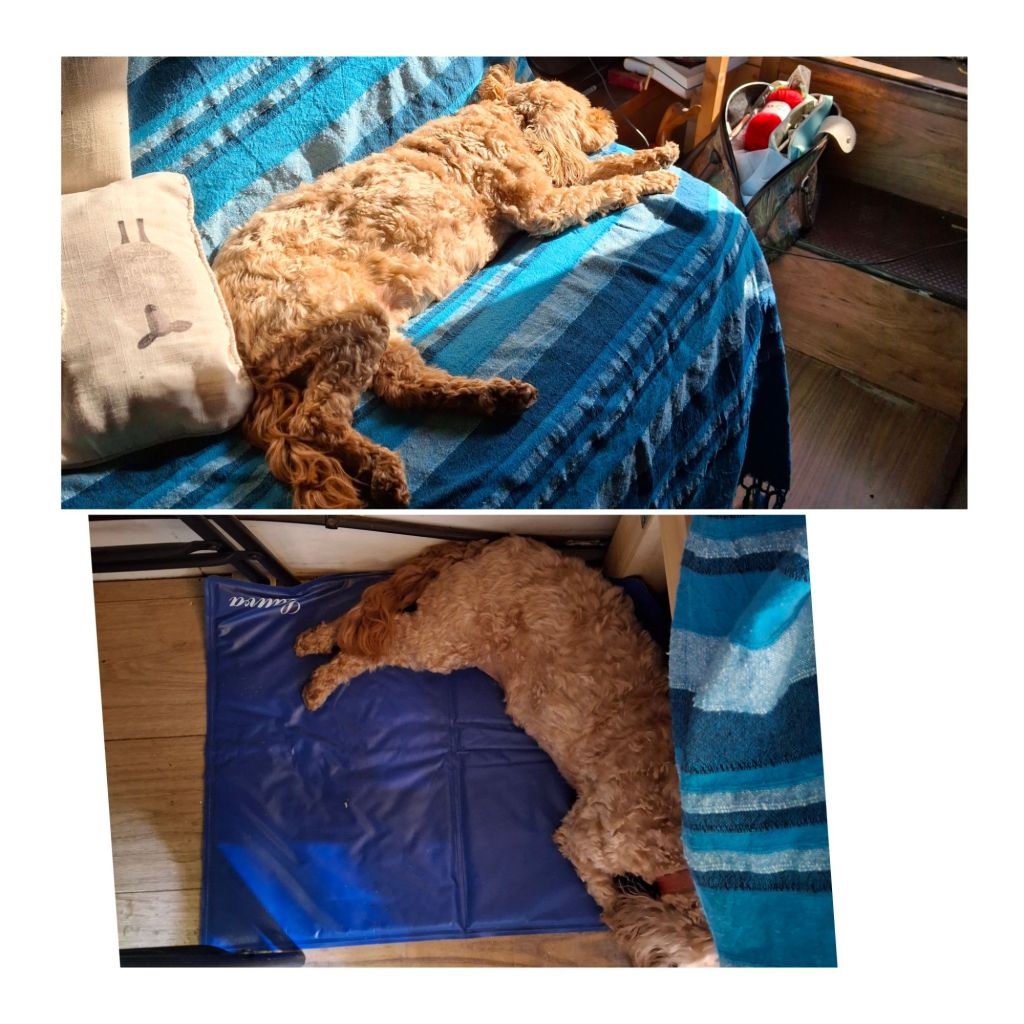
The dog is a bit of a sunbather but has cool mats to lie on, a constantly replenished water bowl and walks only early morning in the woods and late in the evening when she usually gets (takes herself off for) a paddle or swim. Trying to stop her lying in the sun is a problem but she enjoys the sociability of the windows being out, engaging with two and four passers by on the towpath. Fortunately she isn’t a barker or that would drive everyone mad as well as making work difficult. She has regular rubs during the day with a wet tea towel to get her fur damp and when she begins overheating she does have the sense to take herself to her favourite spot – under the sofa which is away from the direct heat and where the wooden flooring is directly above the bilge that sits in the water so it stays cool. We managed to get the car air conditioning recharged so if we do go out to empty waste or get some shopping the dog is delighted to come too.
For the humans aboard we are reducing our heat generation through not cooking apart from boiling a kettle for morning coffee and saving the remaining water in a thermos for washing up or hot drinks if we should want them later in the day. Meals are salads and cold meats, tabbouleh and cheeses. Drinks are constantly to hand – water or squash with frozen berries from the freezer as delicious ice cubes. Clothes are cottons and minimal.
At night we put the towpath windows in and close the towpath side of the cratch, before giving the plants on the roof a drink from washing water collected during the day, and some drawn the canal. I don’t know if they will survive, but I keep working with them and hoping. The essential herbs are coping and the flowers give a welcome blast of colour.
I made the decision this year not to grow vegetables as I have previously and I’m glad. They (and I) struggled so much with the heat of last year and watering morning and night was a constant chore, one I felt guilty doing when locks were being closed through lack of water. Every watering can full makes a difference after all, and we didn’t get a decent crop either!
As night finally falls, it is time to shiver for the first and only time of the day in a cold shower before heading deliciously damp to bed with just a cotton sheet for a cover. We need to do more than dream about what we should do for the future though. These heatwaves are likely to become more frequent so we need to consider different fans, possibly some dehumidifier on board and the low to run them. We may need to think about cruising less in the summer and more in the other three seasons. Major climate change calls for major changes. We are likely to see more extremes. We haven’t seen real cold for several winters now but flooding is a winter issue. It has implications that are even more serious for bricks and mortar homes and offices where you can’t just lengthen your ropes or move location.
 Pickingupducks