Sod’s Law and Tiger Traits

This Year of the Tiger is about courage, bravery, and resilience. We’ve all been developing and drawing on those in these recent years, but perhaps now more than ever as post pandemic stresses build, we are going to need our tiger qualities.

In a small way we’ve drawn on them a lot this week, discovering yet more challenges to living afloat, and seeking out positives for balance. Living afloat reinforces that balance is essential – like in business, work, or life in general. Too much weight on one side can overbalance you and if you aren’t careful – sink you.

What threw us off balance this week…[tiger collective nouns can be a streak, an ambush or a hide. This week we had a streak of bad luck which ambushed us and led me to want to hide, believe me!]

Our senior boat dog (apparently 98 in human years) began serious hobbling. Was it a flare up of his arthritis for which he has daily tablets? No idea, but it seriously curtailed walks to very short strolls. I gave him 3 days rest to see if it would resolve as lugging him to a vet near our mooring seemed a ridiculous option (he’s a big spaniel, not fat but about 18kgs and the vet was nearly a mile away). He certainly couldn’t have walked it.

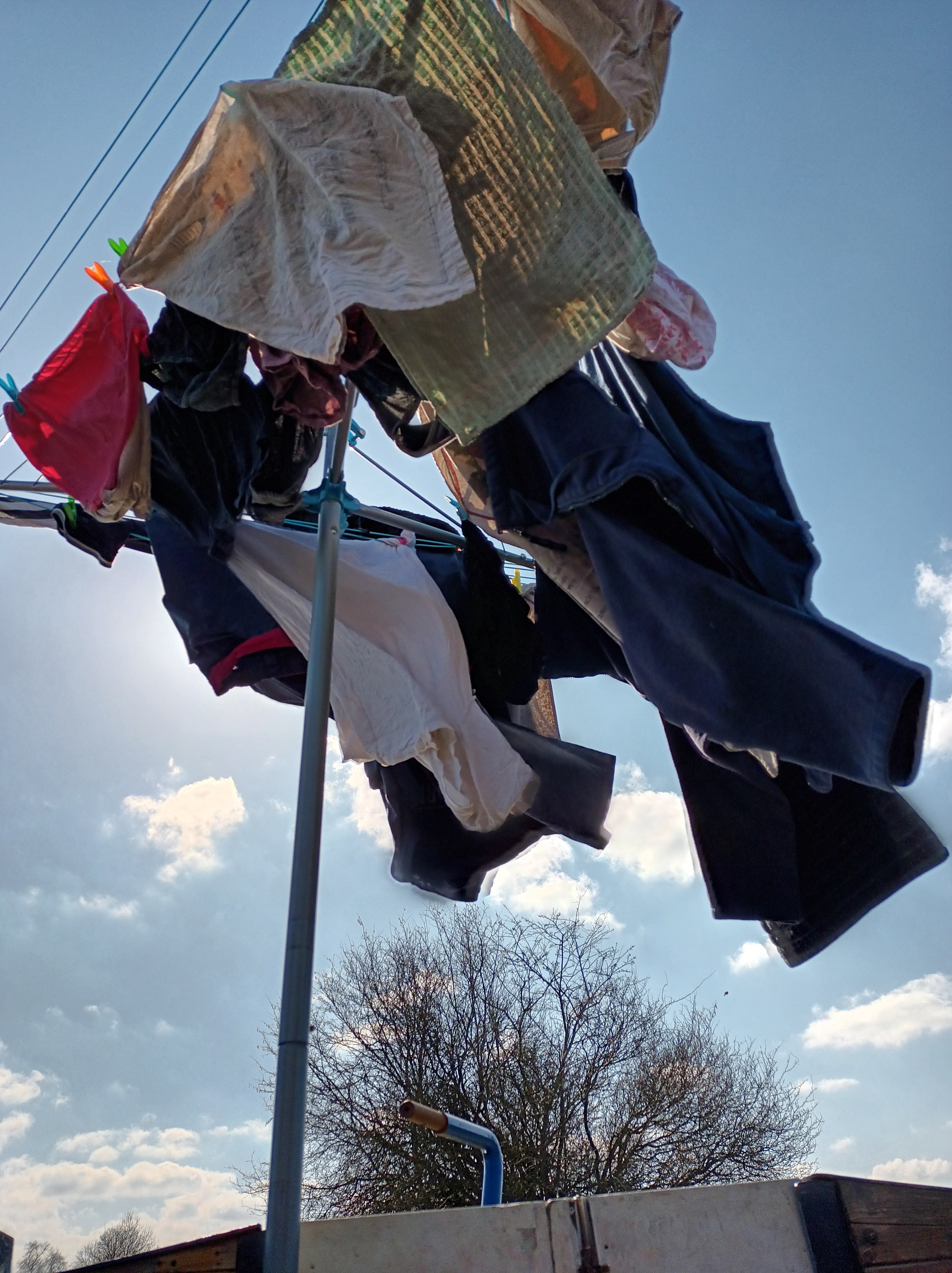
Rest seemed to resolve the issue so I had just heaved a sigh of relief when UGH! At 2.30 one morning he suffered a serious gastric attack – a nightmare in a confined space. Suddenly we were left with a vast amount of washing… and no machine yet… and we’d left the town with the laundrette… and there wasn’t one for miles…

Dog was starved for 48 hours and walked on a short lead to prevent scavanging (probably the cause). He’s perked up now but keeps giving me hard stares for my cruelty in reintroducing food in small portions and all mixed with cooked rice which takes him a while to eat being lots of little morsels!

The washing meanwhile was consigned to our biggest bucket, rinsed copiously at the nearest water point, and soaked with disinfectant for a couple of days out in the cratch whilst we travelled nearer to a laundrette.

But… arriving at the marina with a laundrette no washing machines were working. My brother Spud co-authored and illustrated the hilarious book Sod’s Law of the Sea based on Murphy’s Law (‘What can go wrong will go wrong’) and this week I felt sufficient material for Sod’s Law of the Canals was building up!

But things that rebalanced us…

A visit from a wonderful friend armed with goodies. Luckily for her she wasn’t still staying on board when the dog was ill.

Long country walks in beautiful new surroundings – always a tonic, and even better in good company. A greater spotted sign means every time I hear a woodpecker now, I think “Aha, it’s Brian!”

Thank you Freddie! I think I have a spongy brian rather than a spongy bone round it!

Dog improving in health if not in affronted expressions.

We have a car this week so managed to get to a distant laundrette – and all washing is DONE!

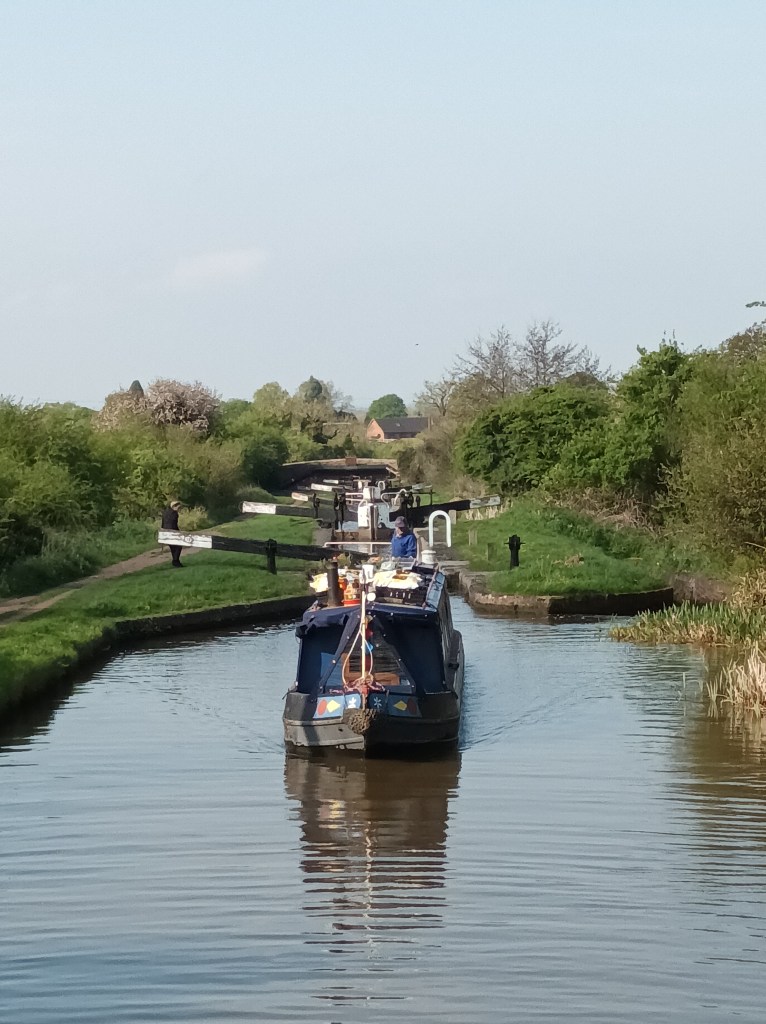
I plucked up the courage to cruise alone on day 503 afloat (well, plus affronted dog) whilst Steve moved the car – not something we normally do and it was a delight. Sod’s Law though – met a boat at a blind bridge as might be expected! On the plus side no collision and all was fine.

And last but a real highlight .. a visit to China – and Egypt! If you haven’t visited the hidden Staffordshire gem that is Biddulph Grange Garden – do. Created by James and Maria Bateman who owned the Grange in the mid 1800s this is a remarkable place.

It encompasses a Chinese garden modelled on the willow pattern plate design. Oriental plants flourish amid a Great Wall with sculpted arches, an ornate wooden temple and bridge, watched by a massive stone frog and a huge gilded water buffalo relaxing resplendent under an ornate canopy.

The giant beatified bovine is by Benjamin Waterhouse-Hawkins. A notable English sculptor, he made the Crystal Palace Dinosaurs, (now Grade I listed structures). They still inhabit London and they’re free to see!

Bateman was a visionary – creating the ultimate travelogue for a pandemic world with his garden incorporating a Geological Gallery for people to see first-hand collected fossils from across the world. His Egyptian garden has sphinxes, and a pyramid entered under the sign of Ra which houses the monkey god Thoth. It contrasts with a half-timbered Cheshire cottage complete with stone sculpted pine cones.

Whilst many will enjoy these National Trust gardens in Spring and Autumn when the spectacular plants and their colours are the highlight, to visit in the winter is a chance to see the unadorned but quite remarkable structure and symmetry behind the scenes.

It’s a lesson for the future – plan get the foundations right and whatever you create will last. Have courage in your convictions, and resilience to keep going – it’s never all plain sailing – as Sod’s Law dictates!

Peaking early in 2022

The past is the past – whether two years, two hundred or two thousand years ago. It creates and shapes our future.

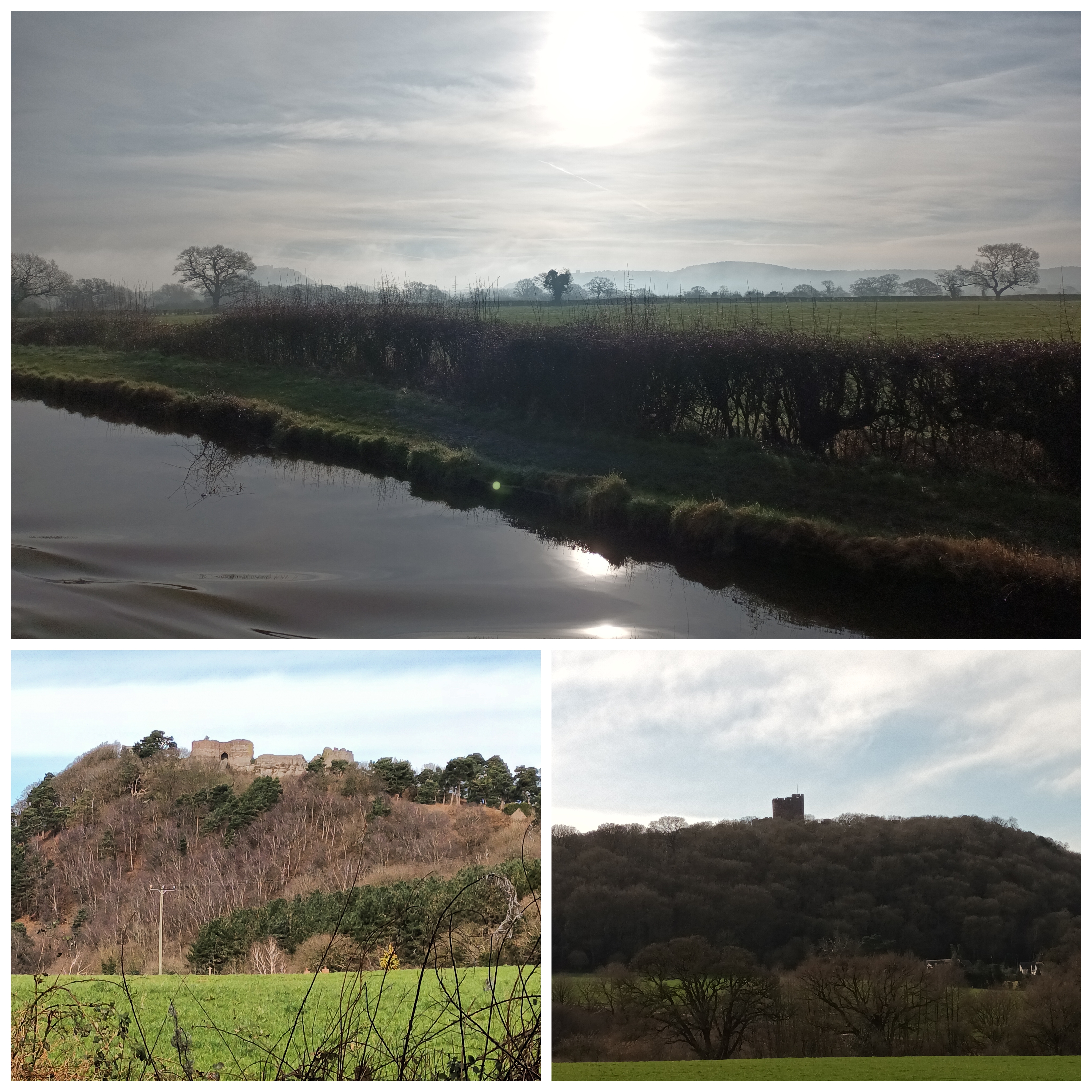
This week has seen us travelling (for us) the final stretch of the Peak Forest Canal – known as Peak Forest Upper as it stretches into the Peak Forest, through ancient landscapes of fells, woods, and into history itself. Another new stretch for us early in the year, and an historic one in the history of our nation.

The terminus of the canal is two-pronged – to the left is Buggy Basin (Bugsworth Basin) at Buxworth and the right travels into the town of Whaley Bridge.

Buggy Basin was the largest and busiest inland port on Britain’s narrow canal system and the only one to survive intact. It holds Ancient Monument status thanks to the efforts of the Bugsworth Basin Heritage Trust (previously the Inland Waterways Protection Society). Due to their efforts not only canal history but our industrial heritage is here for us all to see in this remarkable place. It was hugely important in its day, a complex of transhipment canal arms and basins situated at the end of a six mile tramway from the limestone quarries of Dove Holes. Not only would there have been up to 20 barges a day loading limestone and quicklime – the latter the output of the lime kilns built alongside the basin at Navigation and Gnats Hole. The loads from kiln and quarry were essentials to fuel Lancashire’s heavy industry.

Now this hub of industrial activity is given over to leisure boats and walkers. It is not silent though, particularly in winter with no leaves on the trees the busy A6 passing on the far side of the basin lends a constant hum. Easy mooring exists on provided mooring rings, and a convenient pub – The Navigation Inn a short stroll from the basin. For boaters there is a draw of water, waste and an Elsan point too.

The more recent past awaits down the other arm of the canal which wends into Whaley Bridge, the town made (in)famous in August 2019 amid fears a reservoir dam would collapse. Some 1500 people were evacuated from their homes in the town amid fears the town would face a devastating flood.

Thanks to efforts from RAF teams operating Chinook helicopters, engineers from Canal and River Trust (who operate the reservoir) and volunteers from the community, disaster was averted. Reminders remain throughout the town and work continues to decommission the damaged spillway that looms over a children’s playground, and create a newly routed replacement which is hoped to be operational by 2023. Until then the reservoir is kept nearly empty and the Peak Forest and Macclesfield Canal water levels are maintained with high pressure pumps from the remaining reservoir and River Goyt. These run 24/7 near the boaters’ services by the Transhipment Warehouse which now contains a community space alongside one of the most atmospheric and secondhand bookshops.

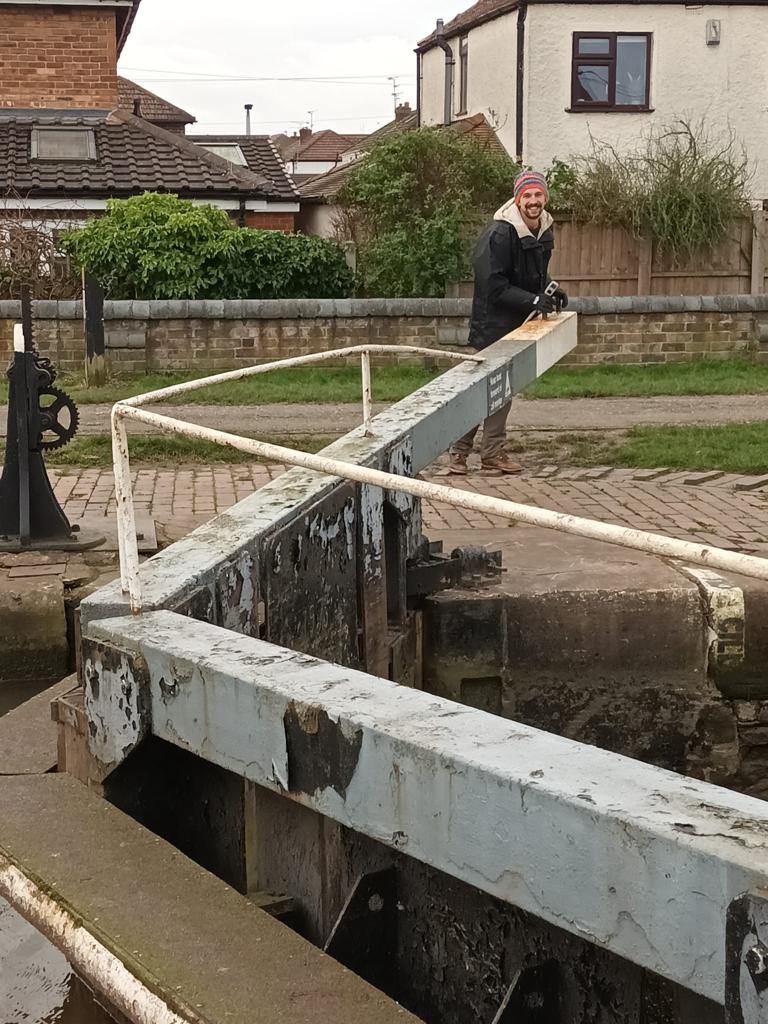
We shall always remember this basin at Whaley Bridge as The Place Steve Fell In The Canal. Somehow he came off the boat whilst mooring, bashing his knee, thumb and ribs on the boat as he fell. Then followed the indignity of being hauled out by one arm and landed dripping on the towpath. (That’s why I didn’t have a spare hand to take photographs!)Dry clothes and a whisky were immediate recovery requirements.

Wherever you travel (or swim) on this stretch reminders of the past – historic or recent – punctuate your journey. It has shaped who we are and how we live – the heavy industry has given way to new industries driven by demand, like the Swizzles- Matlow factory which makes the New Mills stretch of the canal a sherberty paradise from its home in the former Brunswick cotton mill.

Rather him than me – we travelled under this holding our breath, but glad the essential Swizzels factory is being looked after!

This is the home of Drumsticks, Fizzers, Refreshers and the iconic Love Hearts. You can personalise your own Love Hearts with whatever message you like. What would yours be?

Wifi has been good all week which was great news for work, and now we’ve Peaked early by completing the remainder of the Peak Forest in January. We completed the section from Ashton under Lyne down to Marple Junction last summer on our way back from our Yorkshire trip. Marple Locks are currently shut for major repair work so we can’t head back that way… where next we wonder? Keep following us to find out.

Some of course are – are we?

Oh Pooh!

This week started with Winnie the Pooh Day (the birthday of author A.A. Milne). As ever the ursine who always underestimated himself as the Bear of Very Little Brain, got our life afloat spot on in a succinct reminder which seems valid for everyone, however they are living and working.

Credits to A.A.Milne and E.H Shepard, as wonderful a pairing as Pooh and Piglet!

So often we forget that life is not a series of hurdles to be overcome, bags of money to be gained or promotions to be won, but just as Pooh says, a journey to be experienced, and to be honest, to be enjoyed. If hurdling, money, or promotions are how you get your enjoyment – fantastic, but if they aren’t then maybe make this year 2022 one for enjoying your life, channeling your efforts into the things that do give you pleasure.

Recognising that the experience of journeying is actually one of the delights for us of living and working afloat, we brought a long stay in Bollington to an end this week after three fabulous days of visits from family and friends. Bollington is a delightful spot, but who knows what other delights await us? Staying in one spot, however beautiful, has the potential to reduce our adventures and experiences.

Clarence Mill, a former cotton mill now home to apartments, multiple businesses and the delightful Cafe Waterside

The rain cleared as we set off, cruising past Cafe Waterside which has become a second home to us this past few weeks (another reason we need to move on!).

We headed up the Macclesfield, under the rather beautiful Hag Footbridge – I’d love to know how it got it’s name as the stone bridges around it are all obviously named after people – Ryles, Braddocks, and Grimshaws being just three. Dare I say the first three sound solidly male and have been given sound stone structures…?

One of the most enjoyable parts of living as continuous cruisers is the endlessly changing views from our windows. Every day brings something new. We found ourselves iced in this week – in two different places on the Macc.

We had to wait for the sun to come up and melt the ice before we could move on each time, once as we needed to move once because we had been in one place for a long time (for us!), and once to access services. Moving through thick ice can damage the blacking on your own boat and on that of others, so we only move in very thin, broken or melted ice if we have to. We were passed by CRT work boats and its evident there’s a lot of work going on on towpaths and cutting back vegetation in addition to the major works.

Once underway it was all change as we completed the Macclesfield and turned onto the Peak Forest Canal. This time we can’t turn to Marple as the flight of locks are shut for significant winter work by CRT (Canal and Rivers Trust), so we carried on to the Canal Forest Upper which is new to us – Buggy Basin and Whaley Bridge beckoning ahead. New signage too – yellow and blue bridge numbers instead of black and white – it’s all change here!

It’s not all been visual experiences this week – the sweet smell of Swizzles from the factory at New Mills alongside the canal wafted us on our way.

So another new canal, a new journey, and new experiences – hopefully they’ll keep my mind off the perennial constraints of the far-from-new-pain of the annual tax returns – might these be Pooh’s “problem to be solved”!

Some just have everything

Canals are remarkably like people. They each have their own character, their awkward bits, their lovely parts and their idiosyncrasies. Some, just like some people, seem to be blessed with everything, and that goes for the Macclesfield where we’re moored right now.

The Macc has beauty, history, the right amount of challenge and some of the most beautiful places along its 27.5mile length. It wends its way from Marple in Cheshire where it joins the Peak Forest Canal all the way down to the mighty Trent & Mersey on the outskirts of Stoke-on-Trent.

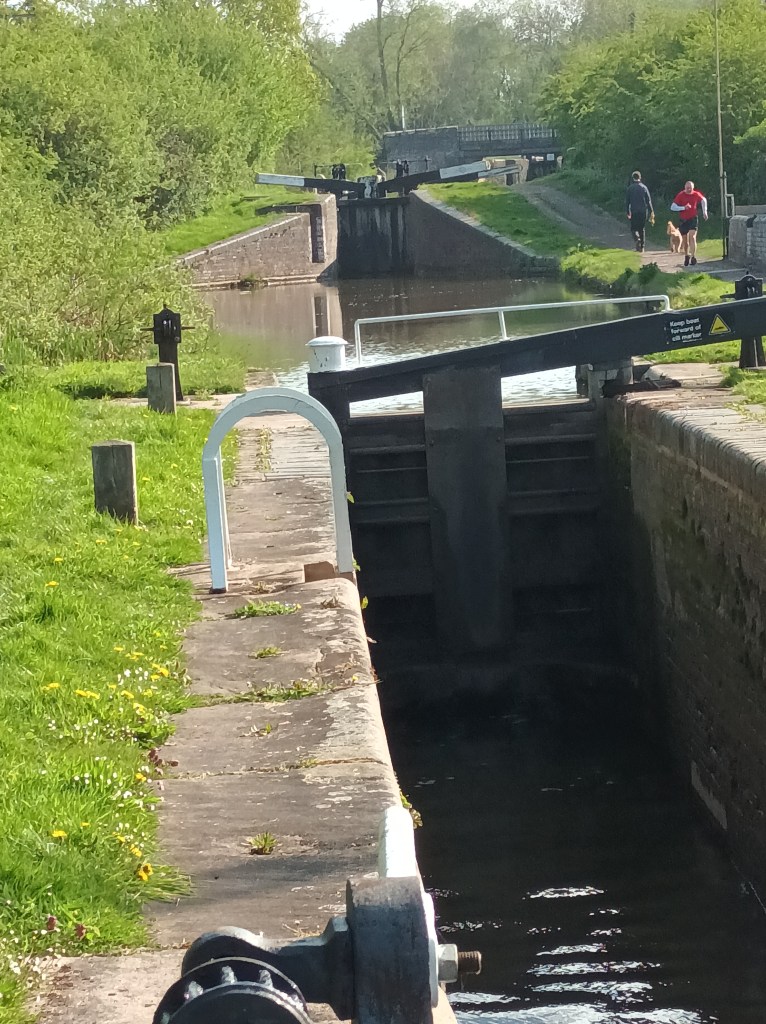
We’re travelling up the Macc this time, from The Potteries up to the Peak District and that does mean a climb, but thanks to its famous designer, one Thomas Telford, this canal makes its locks very manageable. We encountered a single stop lock at Hall Green of just 12 inches and the other 12 locks which took us up 118 feet were contained in a single flight at Bosley. The Bosley flight is a delight, a mix of long and short pounds between stone locks. It took us just under 2 hours to complete.

Some times the pounds are so short you can see 2 locks in one, but this is the ascent from 12 to 1, 2 bridges included!

Bosley provides a real treat at the top, a set of services that, if you have the right cards (which we don’t) includes washing machines! (Fortunately there are good laundrettes on the Macc at Macclesfield and Bollington). The Bosley Services also boast excellent clean, hot showers – essential for the lucky long term moorers up there, but they provided us a positively delightful spa day treat after 12 locks. (We do have a hot shower on the boat fed by our tank but CRT showers come with unlimited hot water). Bosley has a free book exchange in a cupboard – what more could anyone want? When we called there also seemed to be a free cocktail ingredient exchange on offer too!

The Macc is one of the last narrow canals ever built, created to serve mills (cotton and silk), mines and quarries. It was opened in October 1831 and operated commercially until the 1960s. Now the commercial operation is limited to the essential and friendly fuel boats that ply their trade along its length, and hire boats bringing tourists for blissfully relaxing days and weeks on its waters.

Coal Boat Alton outside the Adelphi Mill. We look forward to a visit from Coal Boat Alton next week!

It has two swing bridges both of which appear on the outskirts of Macclesfield, that notable silk town. The swing bridges of the edge of the Cheshire Plain aren’t toughies like the Leeds and Liverpool types, but the easily power operated Royal Oak and the manual but still easy to use Broadhurst.

Broadhurst Swing Bridge

Bridges too bear witness to possibilities of combining practicality, commercial considerations and beauty. The turnover, changeover or snake bridges have sinuous curves which saved the horse drawn barges time, enabling the horses to cross the canal without needing to be time-consumingly unhitched and rehitched when the towpath changed sides (time being money) , and the Macc has some of the most exquisite examples.

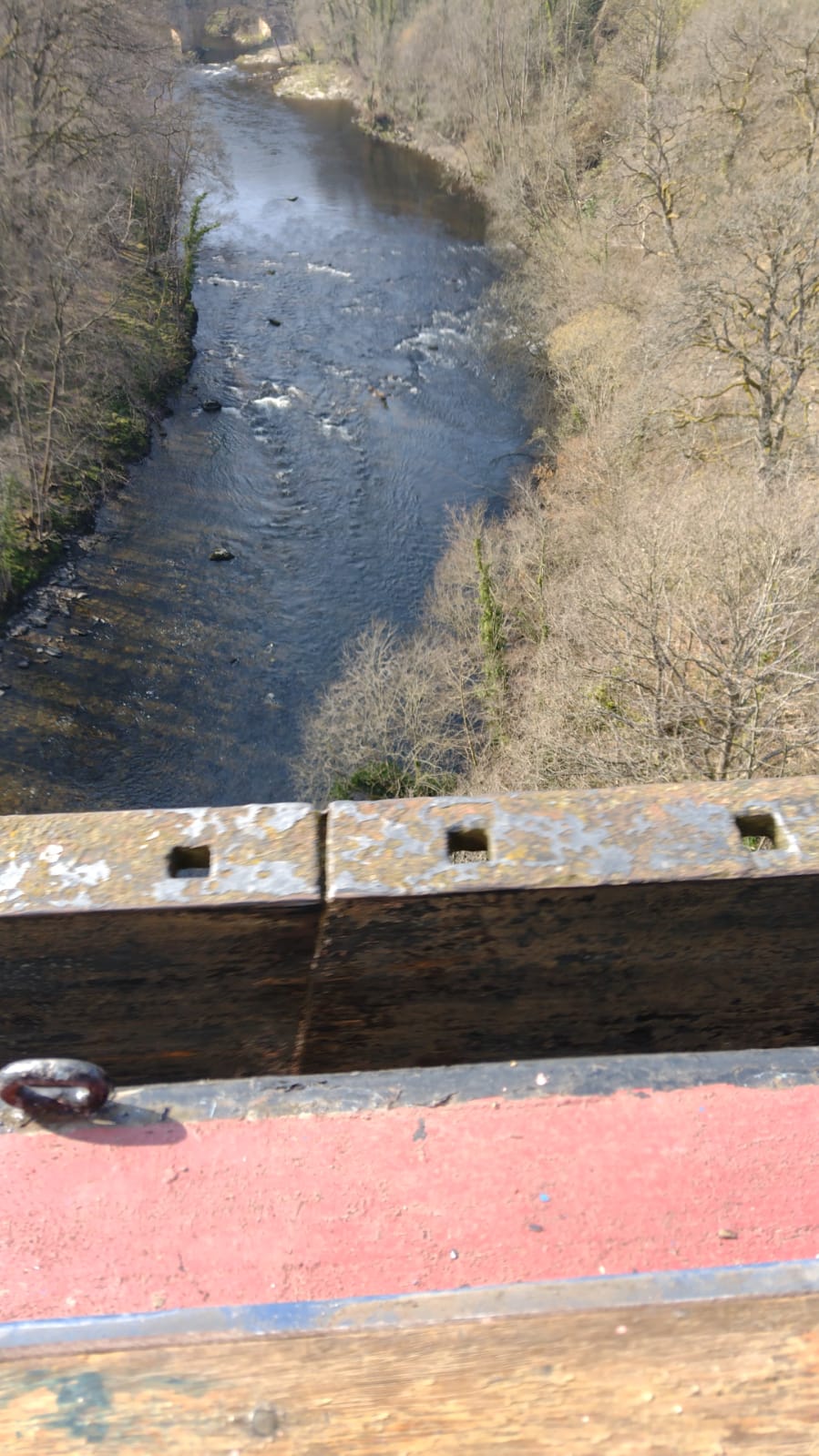
There are stupendous stone aqueducts at the foot of the Bosley Flight over the River Dane, and at Bollington. The views from these testaments to 19th century engineering and craftsmanship are well worth seeing, whether you make it to them by boat or foot or bike. In the case of the Bollington Aqueduct be warned of the 43 steps up!

Stone also features in the milestones along the length of the canal. During World War II they were nearly all buried to prevent invading enemies using them to find their way through England’s countryside. All bar 3 were found and reinstated, the gaps being filled with new milestones carved from stone quarried from Kerridge Hill behind Bollington.

Bollington is another treasure on the Macc. A small town which boasts two stunning mills, the Adelphi and the Clarence are no longer spinning world-class cotton but are homes to new 21st century businesses including cafes, gyms, offices, upholsterers etc.

The glorious Clarence Mill, now a creative hub

Bollington sits in Happy Valley which enjoys all sorts of therories about how it got its name, from a preponderance of pubs ( currently 15) but apparently really because of a philanthropic mill owner called Samuel Greg Junior. He developed the area around his mill to make life better for his workers with medical attention, a school, library and allotments. He called this Goldenthal, German for Happy Valley. Today the name is used for the whole of Bollington and has also appeared on a continental style ale from the Bollington Brewing Company.

The walks from the Macc are outstanding – as long or as short, as flat or hilly as you could wish for. One of the most accessible is from Bollington rising to White Nancy, an iconic landmark which was originally built on the top of Kerridge Hill as a remarkable summer house by a wealthy landowner. My photos here are from now and when we climbed to enjoy White Nancy in the summer sun last year.

The only thing the Macc doesn’t boast is a tunnel, but with everything else it has to offer quite frankly I think that’s a bonus!

Crisis? It really is an opportunity!

A new year is here that appears for most to herald times at least as difficult and uncertain as its predecessor. That is stressful situation and just adds to the pressures many were already facing as 2021 ended.

Wellbeing and mindfulness increases our resilience to stress, our ability to cope with whatever life, work, colleagues, family, circumstances etc. throw at us. Moving to live and work on a 50ft x 7ft narrowboat 24/7 might be considered the ideal way to increase stress levels, particularly in the winter that drives us inside more.

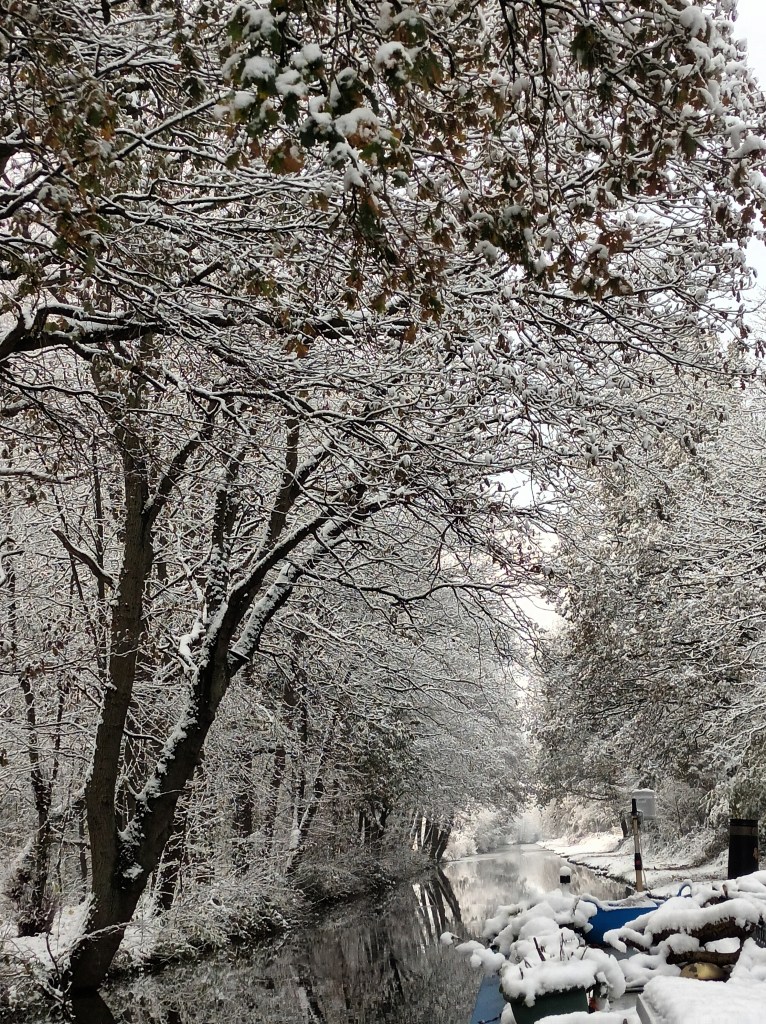
Home in the snow this week in Stoke

It seems that for me though that our alternative floating lifestyle has reduced stress whilst interestingly significantly increasing my resilience. Why that might be, I’ll return to in a moment, but first the evidence of how my resilience has increased.

On Monday we left the delightful Staffordshire canal town of Stone where we spent New Year. It was an incredibly mild day and we made good progress through the 5 locks at Stone arriving not far from Trentham Gardens outside Stoke-on-Trent after an excellent short day of cruising amid the winter sun. All was well with the world and it felt like an auspicious start to the new year.

The next morning we set off, looking forward to travelling though Stoke and mooring up that evening on the far side, just by the Harecastle Tunnel, ready for our booked passage through on Wednesday morning. Tuesday was another day of wintery sunshine, mild for the time of year – fortunate as it turned out. We were standing on the back stern deck chatting as we cruised, the dog in his usual place lying at our feet. Within 20 minutes the three of us were engulfed in smoke and steam, billowing from the engine below our feet, accompanied by a piercing alarm and a red overheating warning light.

Smoke and steam abating by this point as we’d managed to stop and moor the boat.

Luckily we were on a part of the canal where we could instantly get to the side and stop. Steve brought the boat in, I grabbed a rope, and leapt off, pulling against the boat’s forward momentum to bring her to a stop, as he switched off the engine, and leapt off holding a second rope to help. Together we pulled the boat in and as soon the boat was stationary, the dog joined us (he tends not to rush).

I hammered in pins and moored the boat whilst Steve explored the issue. There was no panic, no yelling, no stress, just a recognition that we had a problem that needed resolution. It struck me forcibly just how much I personally have changed.

My previous response to what appeared to be a potentially serious situation would have been a drama, with a significant rise in noise and stress levels – pounding heart, raised blood pressure, worry about what might happen (boat on fire – boat sunk – home underwater), what that might mean, what the implications would be. Strangely as I hammered in mooring pins with the remnants of steam and smoke around me, I realised that I was calmly thinking how lucky we were. No snow, no rain, somewhere we could actually moor, and no flames to be seen. I was also thanking my lucky stars we weren’t in the 1.5 mile Harecastle Tunnel when it happened – that would have been a new challenge!

We were safe and moored, the weather was OK for ripping up the floor over the engine, piling stuff on the towpath and exploring the issue. If we really needed it we knew could call on our Bronze package of rescue insurance with River Canal Rescue, so I scrambled back on board with the dog through the cratch at the bow (no way of getting on at the back as the floor was up), and put the kettle on.

Perhaps the lack of time pressure helped – we cancelled the booking through the Tunnel which was our only demand. I checked wifi and the signal was good, so my booked work later in the week could happen from the breakdown spot if needed, and we weren’t that far from shops, so we wouldn’t starve. There was no feeling of acute stress, just a curiosity about what might be the cause and how long it might be before we were chugging along again.

When you are already stressed, adding a crisis on top can be the straw that breaks the camel’s back as we have seen for so many during the pandemic. Family illness and even death, furlough or loss of work, have all added incrementally to base stress levels created by uncertainty and fear.

So what is it that has increased my resilience to a crisis? What allowed me to step back and calmly take the steps needed without adding to the drama of the situation? I believe the increase in my wellbeing has been created by a slower pace of life (should have heeded my mother-in-law years ago when she exhorted me to slow down!); proximity to water with its infinitely calming properties; feeling close to nature and the beauty of the world around us that brings daily joy; and cruciall downshifting so the hamster wheel of apparently endless activity has stopped madly spinning. We live life, not watch it fly by. There’s also of course, the recognition that in the time since we moved to live aboard we have encountered all sorts of hiccups and managed to deal with each in their own way. Our survival success rate to date is 100%.

One example – our last journey through the Harecastle (renamed Scarecastle) Tunnel comes to mind. We picked something up as the doors slammed shut behind us and it fouled the steering although we had propulsion. While Steve worked to resolve it, I fended us off the sides of the tunnel from the bow of te boat with the first thing that came to hand in the near darkness – a table leg. It might not have been textbook cruising, and that table was never the same again, but we made it through with our home intact!

Back to the current crisis – just a day later we were underway again – RCR came to the rescue and diagnosed a perished pipe whose almost invisible pinholes had leaked coolant resulting in the engine overheating. The leaked coolant turned into steam as it came into contact with the heat, while paint flecks began to smoke. The pipe was replaced and rerouted so it doesn’t come so near the engine which should increase its lifetime.

We had to cancel our booked passage through the tunnel and in winter the tunnel is only operating on certain days, so we rebooked for Friday. That gave us two extra days once the engine was functioning, and we made the most of that extra time in the Potteries. I began my BBC reporting career in Stoke some 30+ years ago.

We moored on Hanley’s Festival Park moorings, remnants of the 1986 Garden Festival. From there we managed to explore the former site, discovering a brick scultpure of Josiah Wedgwood near his former Etruria Hall home (now an hotel), a different use for clay than he profited from… and “Windborne”, aka The Feather by Keir Smith which is now surrounded by mature trees and overlooking a McDonalds in the retail park below.

We managed a pint or two – taking on at The Holy Inadequate – a fantastic CAMRA pub which takes you back in time and on a taste trip. And giving – I managed an appointment at the Donor Centre to give my 54th pint in record time (7mins 40 seconds) before enjoying the ubiquitous Club biscuit and a soft drink.

Making the most of our ‘extra’ day we cruised onto the tunnel, moored up in carrot-coloured water (dyed by the iron ore in the surrounding ground), ready for our passage.

No filters – this really is the colour of the water thanks to iron in Harecastle Hill

We walked up to visit the former Goldendale Ironworks site at Tunstall. When working the site would have been easily identified by a constant flame burning off noxious gasses produced in the manufacturing process. Now it is marked by a 21 metre high sculpture, Golden: The flame which never dies created by Wolfgang Buttress. It contains wishes for the future written by local people that were sealed into each of the 1500 glass light spheres when the sculpture was erected in 2016.

I wonder how many of those wishes have come true. Many, I hope, and for those which haven’t maybe 2022 is the year they will.

My own wish for 2022 is for everyone to actively increase their sense of wellbeing, their resilience and their enjoyment of life, and for every employer and manager to make it their business to ensure this happens.

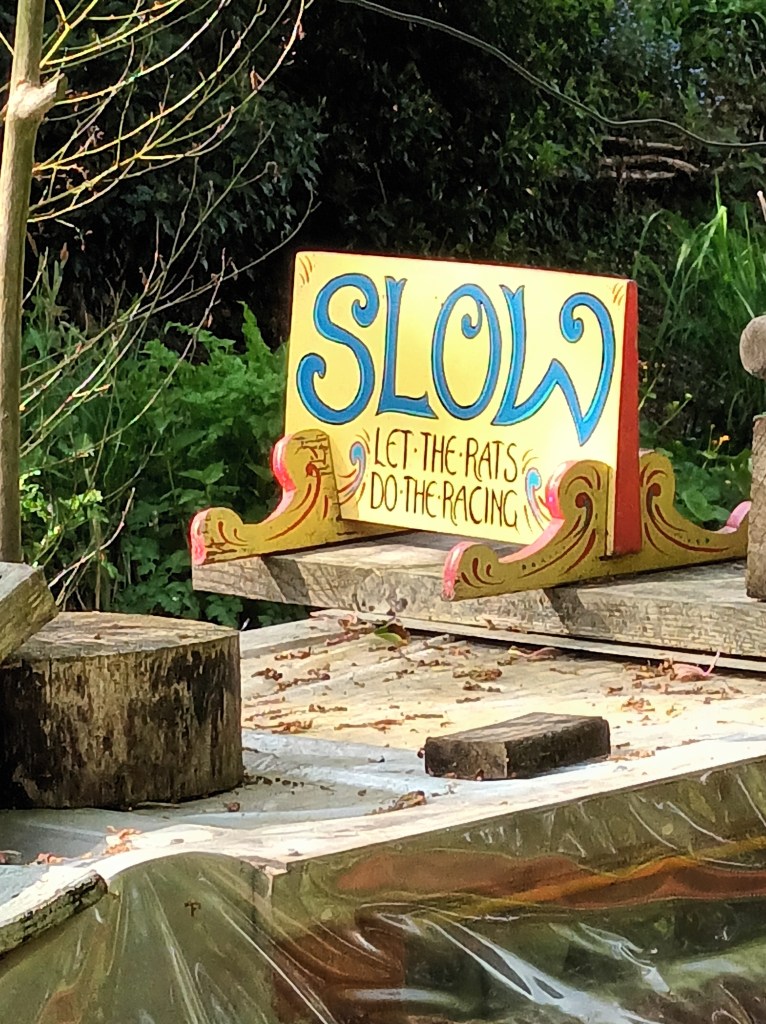
Slow is the only way to go

A new year, a new start and a new month – January named after Janus as my erudite cousin Liz reminded me. Janus was the Roman god of transitions, whose two faces were both reflecting and looking forward. It’s easy to reflect on the calm of the inland waterways (until you meet another boat at a blind bridge of course!).

So as we float gently into another year we look back with gratitude on another year afloat. Steve completed the London Marathon despite Covid delaying his attempts and training. We cruised south for it, after enjoying time on gorgeous waterways in the north. We’ve been hugely fortunate with a year of health, family and friends, love and laughter, work in balance and 365 days of discovery.

My resolutions for 2022 are simple:

  1. Continue to live slowly and seasonally – recognising how rewarding that makes our lives. Slow living allows us to savour moments at work and rest, making the most of life. Work/life balance is about feeling good about what we do and how we do it. We shouldn’t feel bad about doing things slowly and well.
  2. Give at least one smile a day – family, friend, or stranger.
  3. Look for the positive lessons in everything. I won’t beat myself up about things that don’t work but take positives from why they didn’t to move on effectively.
  4. Walk more (aim on 2000+ miles this year) and cut food miles.
  5. Capture a decent close up photograph of a kingfisher – so 365 days of trying!

Thank you for joining our journeys and coming with us as as we float gently through inland waterways, living and working a much enriched life en route.

We look ahead to finding out what lies ahead in another fresh new year, glad to have learned in time that the little things are what really matters.

Life is a journey for us all to enjoy and savour.

Gratitude – the gift that gives

Io Saturnalia! Happy Solstice! and almost Merry Christmas! Are you ready – wi

These significant festivals begin this week with the official start of winter. It marks a time of ending and beginning, launches a time of taking stock, counting our blessings if you will, and being grateful – all of which done positively is good for our wellbeing. [Don’t take my word for it but the work of psychologists including Emmons ,McCullough, Kilpatrick, Larson, Wood, Froh, & Geraghty, who have all researched and written on the connection.]

As headlines make for gloomy reading and fear of disease seems pervasive once more we all need to feel good about something – to make time and space to consciously recognise the positives (however small) in any aspect of our lives.

It’s seems easy in this floating life we have made for ourselves to feel gratitude in many ways – grateful for having made the choice – grateful when the winter sun shines, warming us with its soft rays and charging our solar panels! Grateful for the unfolding beauty of nature around us from sunrise to sunsets. I can even be grateful for the mud settling in around us on towpaths – because without it I wouldn’t feel the utter joy when summer comes and it’s all gone! I’m also grateful for the respite from mud created by the old paved sections of towpath worn smooth by the hooves of horses and feet of working boatmen in whose footsteps we travel.

But this week particularly I’ve been grateful for something I have feared and dreaded for decades – the dark. Talking to colleagues and friends, it appears I have a gendered approach to the dark. It’s not the dark per se but what cover it gives to the human dangers that can lurk within it. As Elise Dowling puts it in her searingly honest and funny book Coasting: Running Round the Coast of Britain – Life, Love and (Very) Loose Plans, it’s the fear that a serial rapist lurks behind every bush. Surely more the product of an overactive imagination rather than proven crime statistics?

This winter I am grateful for the dark as we approach the longest night and the shortest day. Without this time living afloat, surrounded by nature and its inhabitants I would have continued my gendered approach to the dark. I would never have seen it as a calm and beautiful time recharging but fearful, alarming, potentially dangerous. I will always remain grateful for this remarkable opportunity to discover the wonder of what seems like a whole new world – utterly fascinating and astonishingly freely available to us all.

We’ve had several moorings here on the Staffordshire and Worceshireshire canal which have been idyllic in terms of silence and seclusion. There’s been no need to sleep with curtains drawn on the waterside of the boat, the bed side as we are currently moored. From the window we can see the stars and moon gleaming above us and just raising up on an elbow doubles them in number as they’re reflected in the water outside.

Once your eyes accustom, it isn’t actually pitch black dark. Light pollution has changed how we view the night, and that’s partly through fear, the desire to banish dark with light which merely casts more shadows. There are places though where it’s possible to experience the stars with dark skies – a fantastic winter treat if you can find some on the map near you.

We think of night as a quiet time, but I’m gratefully discovering that’s far from the case! Eavesdropping on those around us makes that very apparent. From the brown tawny owls breathily asking “Who whoo?” from the trees on the far side of the water to the ever-vocal Canada Geese. Even when on water they remind me of portly parsons with their thick white dog collars.

A Canada Goose

There’s no harsh alarms or strident calls like they make when flying in formation. For most of the night, just the voices of individuals can be heard, chuntering away like children muttering in their sleep as they toss and turn on the water.

It’s a companionable dark, a comforting dark, a normality into which we are lucky to get a glimpse and to share. From the side opposite the water come other occasional sounds, the shrill “kaak kaak kaak” alarm of a startled pheasant, perhaps warning of a prowling fox, and the heavy snuffling of a badger digging up tasty roots and slugs by the towpath.

Then it’s a sunrise awaking us, a new day, a new dawn promising yet another sunset and comforting dark night to come.

This week all is lit by a waxing gibbous moon (isn’t that just a glorious phrase?), leading us up to a Cold Moon which we should be able to see on Sunday night this week before the Solstice on Tuesday.

The moon gives us extra working time outside too. Winter on a boat means more work – inside cleaning the floor of mud more often as paws and boots pad it in – outside collecting twigs for kindling, foraging and sawing wood for the fire. We’ve got our Yule (Juul) log ready to burn on Tuesday night to keep us warm on the longest night. The winter solstice is the seasonal time to honour the light and darkness within ourselves – a tradition in many countries is to write on scraps of paper the things you wish to let go of, to shake of. As they are flung into the fire they create a blaze of light illuminating us as we speak out aloud those things we want to bring into our lives.

We’ve also been hugely grateful this week for the sight of coal boat Bargus beaming through the darkness – festive lights aglow. Jay, Kat and Lulu brought us our order of 200 kg of smokeless fuel which will keep our stove glowing for a month or so. We’ve never let our stocks get as low as they have this year, all empty baskets on the roof and alarmingly down to our last bucket of coal before they chugged into sight!

So we’re grateful for coal boats working at this time of year, delivering to us with a smile and keeping us cosy. On the hot stove as the dark of the Solstice descends we will be grateful for a warming wassail. Wassail or Ves Heill in Old Norse means ‘be in good health’ – a good toast to use this year particularly.

This year I’m going to try the National Trust’s Petworth Wassail recipe. They make it using 3.8 litres of cider which could be a bit much for the two of us so I’m going to reduce that quantity! It’s effectively a mulled cider with orange juice, cloves, nutmeg, and brandy. Over a glass (or two) I shall be happily grateful for time away from work to refresh and relax over Christmas to get ready for 2022. I hope you too manage to relax and reset yourself for the coming year – a process which should be invigorating in its introspection, as well as positive and productive.


Our Plan B to party on

Christmas demands planning, and despite Omicron, Delta and other Covid-associated variants, it looks like bubbles this year will be mainly alcoholic!

Living afloat Christmas demands decision making not just on what presents to make/buy, what shopping to do or who is cooking what. We’ve both had both our jabs and our boosters and our flu jabs. We now need to decide thanks to invitations, where we are spending Christmas, and that means making a decision on where we should moor our home. We’d love to stay on the boat but the pull to be with family is stronger.

Last Christmas the edicts said – stay overnight with family – don’t stay overnight with family – total confusion on the government’s rules if you remember. We were lucky to be invited for a lovely family Christmas by Daughter No. 2 and her partner so we moored up not too far from them and left the boat in the company of other boats on a Winter Mooring site. These are long stay temporary mooring sites allocated by Canal and Rivers Trust to allow people to stay for periods from a month to three months and they exist across the country. We didn’t want to stay for a month but stayed instead for nearly a fortnight as there was space on that particular stretch. There was a water point but no waste disposal, but there was parking nearby and we fetched the car. There were good walks but during the time we were there many of the footpaths flooded and the towpath turned into a quagmire – even the swans thought so but somehow they still stayed pristine (unlike the inside of the boat!).

This year Daughter No. 1 has invited us to spend 5 days of family celebrations. This means leaving our home, our floating home for 5 nights moored somewhere. We can’t moor up nearby as the closest waterway would be the River Soar and it has been subject to flood warnings regularly through the late Autumn/Winter which makes it difficult to navigate. As I write there is another warning that strong flows make navigation difficult and dangerous along the entire length of the canalised River Soar from Kings Lock near Aylestone to Redhill Lock close to the mouth of the Soar where it joins the River Trent near Sawley. In other words – it’s not safe on the Soar. So Plan A – to moor nearby and stay in our own home overnight is not feasible.

The Soar’s no fun when in flood – you’re effectively trapped by rising waters as we know of old

So what are the other options? For boaters leaving their boats for any length of time, there are two main choices:

Marina mooring
  • Plan B – Marina
  • Plan C – Towpath mooring
Towpath mooring Christmas 2020
Marina prosMarina cons
secure in terms of cctv, locked accessadditional cost of mooring – usually pay by length of boat and duration of stay or a fixed fee
power hook up enables a low watt heater to be left on board in case of freezing weatheradditional cost of electricity
water, electric, showers, car parking and sometimes a laundrette may be available. Electricity means batteries don’t get drained if you leave the fridge on and you don’t need to run the engine every day. Also means you can use power tools to get maintenance done.static living
usually on a pontoon away from potentially wobbly trees that may fall in a stormmay have to navigate onto a mooring spot amid other boats and pontoons
neighboursneighbours
pontoons which are mud free and sometimes de icedpontoons are often slippery in ice, snow and rain
Towpath mooring prosTowpath mooring cons
no additional cost – it’s covered by the licence security – need to try and moor near other boats but can’t expect strangers to keep an eye on your boat to prevent break in etc., equally there may be other boats when you moor but they may move on before you return leaving your home alone (see what I did there?!)
you can moor wherever is easiest for your needs and stay for up to 14 days in many places no electricity risking batteries running down as solar is limited at this time of year, and you’re not there to run the engine to top them up
need to moor on piling where you can attach mooring ropes to chains for security.cold snaps can lead to frozen/burst pipes as no heating whist you’re off the boat
neighboursneighbours
2020 Moored on a pontoon in a marina during Lockdown 2

Does this make us sound very untrusting or just paranoid about our home? We’ve never (fingers crossed) had a problem in the three and a half years we’ve had the boat. Some people have security cameras on board linked to their phones etc. That always seems to say to us as we pass (probably wrongly) “Look – there’s things worth stealing on here!”We don’t have security cameras and we don’t have anything on board worth stealing like a TV. The laptop will come with us as I shall need to do a little bit of work sometime during the festivities.

We accept that the chance of someone breaking in and trashing the boat which is really the concern is slight – whether they would be doing that from boredom or need to find food or somewhere to stay, we’d still like to go away feeling we’ve taken the necessary steps to keep our home safe.
We’ve weighed it up, spoken to many people and developed our own Plan B. The week of Christmas Preaux will be tucked up safe and secure in a marina so we can go and party with the family without worrying about will the boat still be there when we get back, will she have flooded because of burst pipes or been flattered by a falling tree.
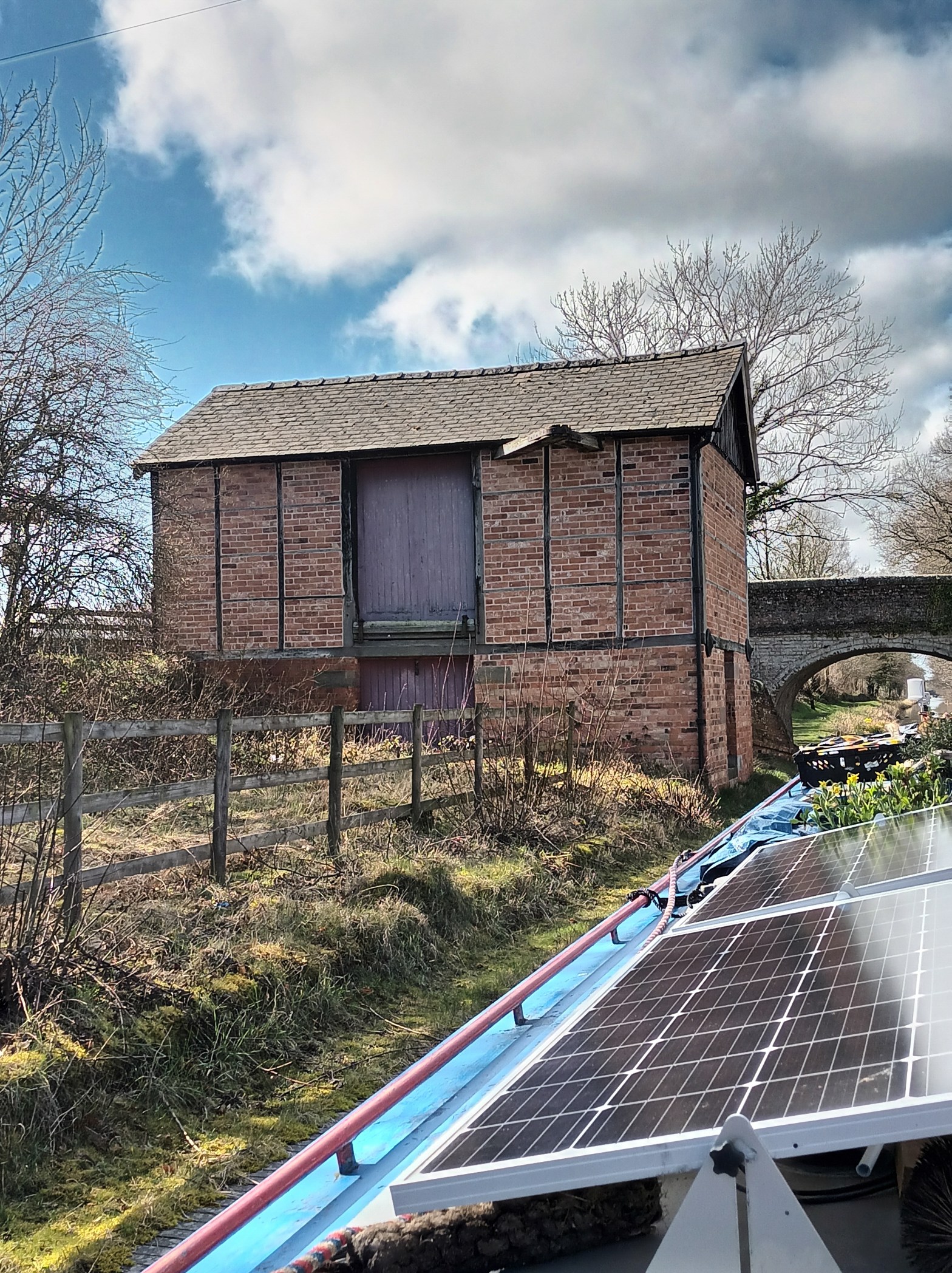
Our chosen Plan B means we can enjoy Christmas with our fabulous family and return to a warm secure home that’s ready for us to move. It means all we have to think about is where shall we moor to celebrate the end of another year afloat together and the start of another somewhere new.
Glad that’s sorted so now we can concentrate on a rather more pressing need – sourcing more fuel for the fire which is running 24/7 and will do right up to the time we tuck up the boat for her Christmas break. We’re lower on supplies than we’ve ever been…eek!

We need a coal boat!

Iced up and frozen solid

What a week – snow, ice, frozen ropes, rain, fieldfares, owls, kingfishers and fantastic community spirit.

Living afloat on England’s inland waterways makes us much more aware of that archetypal English conversation staple – the weather. We live in it much more than we did amid bricks and mortar. Winds buffet the boat, sometimes gently, sometimes violently; the clatter of rain on our metal roof has us racing to close the hatch and cratch; and sunshine brings us out like flowers to bask in warm rays. This week though we have encountered little of the sun amid much other weather!

Saturday morning I awoke to Steve suggesting I might like to look outside. The forecast had been for rain and possibly some ice. We were planning to join friends at a local parkrun and my enthusiasm for the run bit was already running low when I went to bed the night before. To see a carpet of white laid out always makes me feel like a small child. I rushed into clothes and boots and with the dog as eager as I, headed out with glee. It was sadly slushy under the pristine top layer, but within minutes it was snowing again.

It continued on and off through the day – we made it to within a mile of parkrun before it was cancelled but we did a bit of shopping and exploring areas unknown to us before picking up a small crew member from a no-snow zone and bringing him back for the night. Delight was written large when we got back to the boat and found enough snow for a (very small) snowball or two. Next morning saw less snow but a crisp covering of ice. Puddles begged to be slid on, and the usual dog walk was a great adventure with ‘skating’ and snowballs. The woods were crisp but far from white.

By Monday morning when we were back to normal crew numbers and aware we needed to head off from our two day mooring at Fradley Junction. There had been more snow overnight, with no sign of thawing. Emptying bins and loo cassettes was a chilly business – the water to wash out the latter had frozen by the Elsan point but we with the help of CRT staff we managed to find running water nearby.

They told us the snow was much heavier where we were heading, and that a tree down on the most southerly point of the Trent and Mersey Canal at Wood End had been cleared the day before. So forewarned, we prepared to set off.

Getting the boat from its mooring took numerous kettles from the stove to thaw the ropes enough to untie them! The fenders too needed thawing from the metal piling before we could leave.

The thin ice on the canal cracked and scrunched as the metal hull of the boat broke it up. Metal on bridges and locks stuck to my gloves, pulling the lining from one through existing rips, and the anti slip surfaces to cross the locks were covered in crunchy snow.

Travelling from Fradley Junction was magical at first. We seemed to be the only ones moving and we slowly made our way from the Coventry Canal through a swingbridge, onto the Trent and Mersey and through the first two locks. Thanks to CRT staff for thoughtfully setting the second lock for us before we got there.

We then encountered others on the move, and were reminded of the advantages of safety in numbers. Woodend Lock comes just after the most southerly point on the Trent and Mersey Canal. It used to sit, as you might expect in wooded isolation but now sits overshadowed by swathes of desolate land cleared for HS2 emblazoned with red and white trespassers keep out signs.

This used to be woodland – now it is cleared and fenced off for HS2

Last week the canal was shut above the lock after a tree came down and blocked the navigation. It was rapidly cleared (along with many others Storm Arwen brought down) but whilst the trunk and major branches were piled on the side, leaves, twigs, and the general detritus that falls from a large tree creates a floating ‘soup’ within the canal which takes time to dissipate and disintegrate.

It creates problems for navigation – it clogs the prop so the boat isn’t being moved through the water. Steering becomes a nightmare, and locks compound it. Locks allow boats to travel up and down hill by a series of gates. Open one, let the boat in, adjust the water level inside and then let the boat out. As you open the gates if this soup is around you let it in, it clogs the boat and there’s difficulty getting the boat to move out. Our net comes in handy for trying to fish some of it out.

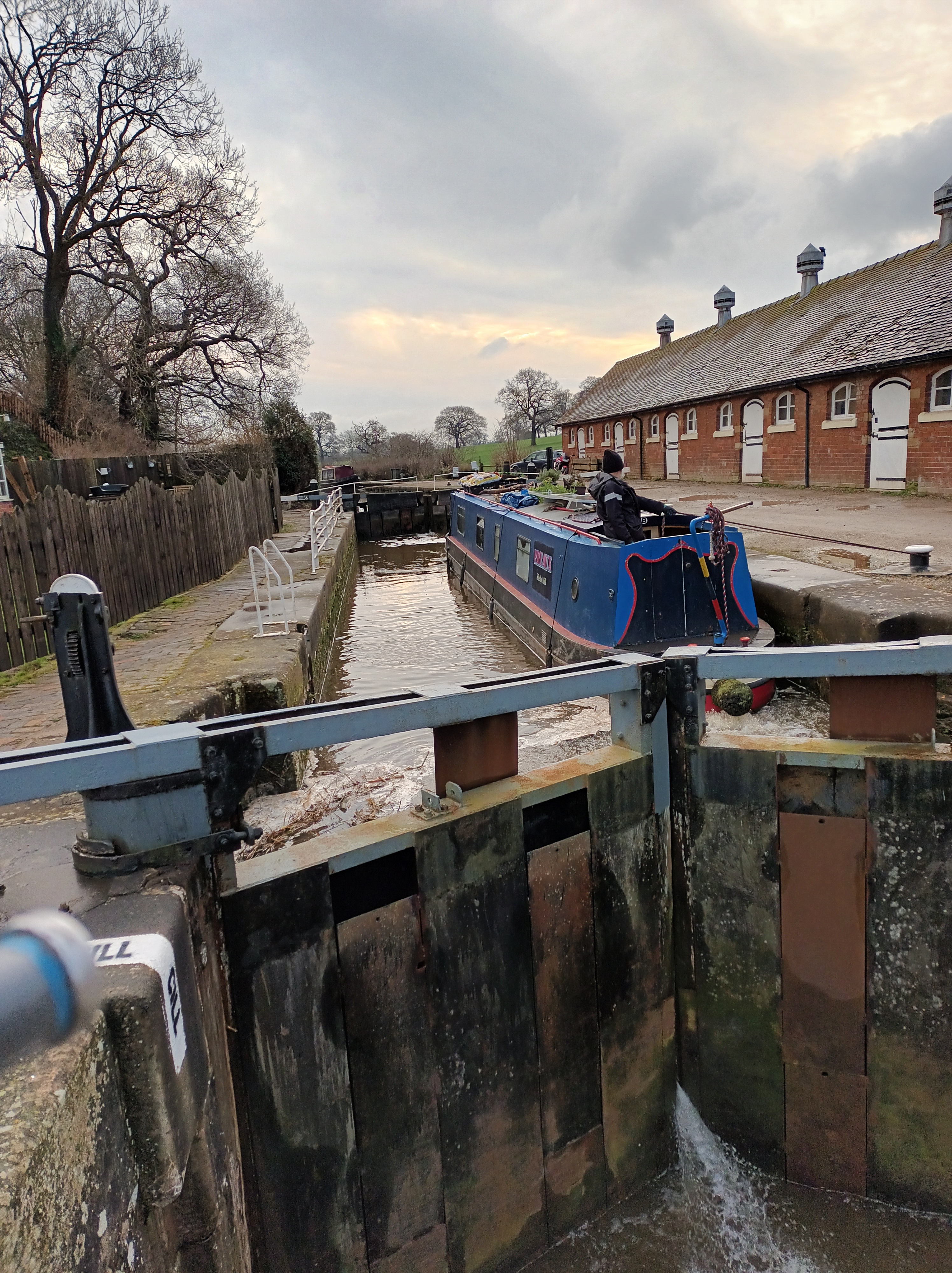
At Woodend Lock we ended up moving 4 boats (including ours) in and out of the locks by hand using frozen ropes. It was much easier with more of us – had it just been the two of us we would only have had one boat to move, but it would have been hard. More hands made light work and also provided a chance for a chat. When you’re all in the same situation (can’t say same boat!) people rally round, united in a common understanding and goal.

Once through the lock judicious use of reverse gear at times gradually dissipated the clogging soup, and we were able to move on. It was though a problem we encountered at our next four locks, although not as difficult to deal with as the Woodend one.

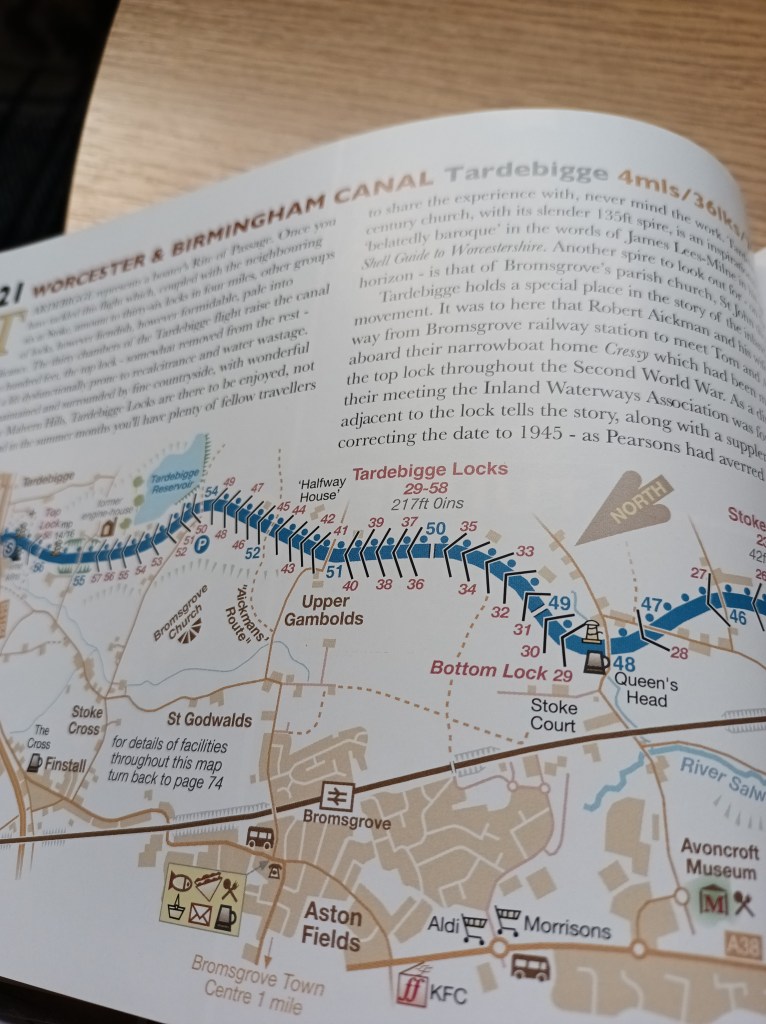
Steadily we made our way past the eyecatching Armitage Shanks/ Ideal Standard factory at Armitage, reflected in the glassy canal, through the narrow former Armitage Tunnel with me walking ahead of the boat to check no one was coming the other way, to moor at Rugeley conveniently between Morrisons and Tesco! Not the most beautiful mooring but undeniably useful.

By the next morning there wasn’t a flake of snow or a frozen rope in sight as we made our way out to Great Haywood to moor alongside the neo-classical mansion of Shugborough Hall. From our mooring we can walk just across the famous Essex Bridge, across the River Trent which is joined by the River Sow just upstream. This is the longest remaining packhorse bridge in England with fourteen of its original forty round span arches left. It takes us straight into Shugborough Park much to the dog’s delight.

We did a very short early morning move before work to get improved internet signal and it proved a delight – kingfishers darting like vivid turquoise arrows above the dark waters, and posing in the trees but still I haven’t managed a decent shot of one despite their generosity in posing! There seem to be many around us but perhaps it is just that they are so vividly apparent against a wintery, often monotonal backdrop.

Between work the view from the side hatch is uplifting. I look up from the computer to trees and birds. As we walk or cruise it’s not only kingfishers that are so apparent but fieldfares, like large colourful spotty thrushes, rise in clouds from among the red berries of the hawthorn bushes alongside the canal.

We’ve moved on again now, turning under the Haywood Bridge past the moored boats of the Anglo Welsh hire fleet, and out into Tixall Wide which lives up to its name. The Elizabethan gatehouse of the former Hall overlooks the Wide which was orginally created to provide a better view for the Hall owners. Now it creates a paradise for wildlife, even if it does feel as a boater that you’ve suddenly gone to sea!

Living afloat allows us to discover and explore these remarkable places, to be closer to nature and the seasons, and to have a heightened awareness of their importance as a rich and vibrant backdrop to our lives and work. I work from my computer with ever changing views and alongside the comforting heat of the 24/7 working stove. This really is work-life-balanced.

Hope your week has been as memorable and beautiful as this one’s been for us.

Taking nothing for granted; blood, sweat and an end to washing our dirty linen in public

This time last year we were in the midst of Lockdown 2, wondering whether Christmas would be a time we could share the presence of loved ones which was the greatest present we wished for.

This week last year – colder and lonlier for most

Since then the world has moved on, and in some ways we have learned to live with a pandemic. Vaccinations, boosters, masks, handwashing, sanitiser, personal space and less crowded socialising have all become familiar to many of us.

Personally we are conscious of where we go and how, where we meet people and we think of their safety as well as ours. We have relaxed but we are still aware of the risks, perhaps because we live in such a self-contained environment.

I honestly fear as a society we are in danger of taking too much for granted, in what we do, how we live and how we consume. Consciously thinking of how and what we consume is life changing. For many of us Covid brought us up short and made us re-evaluate what we value, even temporarily . For us, moving to live on a 50ft narrowboat has conclusively forced us to re-evaluate what we value in terms of lifestyle, and a good example, not to put too fine a point on it, is our dirty washing.

We have no washing machine on board. In the past year or so we have tried all sorts of solutions to live cleanly. Handwashing, standing by water taps on the towpath wielding a homemade dolly created from a boat hook (literally washing our dirty linen in public) to showering with the washing and trampling it underfoot like a French grape harvest – definitely not as delicious an outcome! These got the washing done one way or another but in the main it’s been months of standing in car parks at all hours operating washing machines, trailing heavy bags to family and friends, having our underwear pawed over as part of a service wash, none of which prove economical options.

Car park washers – this one in Skipton, North Yorkshire

But now – that’s it. End of tether reached. Decision made. We are going independent on the washing front. We have drying capacity outdoor if the sun shines (although handwrung things take an age to dry, even when I used rolling pins!) and indoor on a folding ceiling rack above the stove in the winter or rain, all we need is a good spin speed and a better way of washing clothes than by hand. A machine that will cope with underwear and jeans, duvet covers and towels. A machine that will spin out as much water as possible. A machine that takes the strain… ah bliss!

So shall we go for a mini washer of the type you see advertised all over the place? We’ve canvassed opinion – some people swear by them, others swear at them. They aren’t cheap, particularly if you’re buying one or more a year…

There’s so much choice… Top loader, front loader, it’s hard to know where to start. We began by making the big decisions. A full sized machine so parts are easier to come by, replacements available and it will have the highest spin speed possible to reduce drying time, So where to put the machine when space is at a premium?

Inset in a kitchen cupboard is just not practical – it would take up more than one cupboard and that’s our vital food, equipment and cleaning storage.

In the bathroom was something we toyed with – taking out the basin, trying to squeeze a washing machine between the gunwhales and the loo with the plumbing encroaching into the kitchen cupboard behind it so it wouldn’t sit too far out. Not ideal though and where to put the basin? If we could find a countertop basin maybe it could sit on top of the washer but the plumbing for basins needs to drain so the basin would end up rather high!

We dismissed the front cratch as that doubles as a bootroom and fuel store in the winter; a conservatory and extra living space in summer. Putting a washing machine in there would completely remove the space from use for anything else.

Steve has spent weeks stalking the boat with a tape measure and thinking. The decision is to accommodate a washing machine in the wardrobe at the end of the fixed main bed. Last year we converted the hanging space to shelving to give us more storage space. Top shelf is linen, second shelf is mine, third shelf is Steve’s and beneath rest shopping bags, rucksacks etc. Bags and rucksacks will be moved to the cratch for now, and Steve has reordered his clothing shelf contents to under the sofa and under the bed.

Just as there would be in a conventional landbased home that’s old and previously loved, reorganising electrics and water pipes to service the machine is necessary. It’s now underway but we have a uniquely floating home requirement – to remove sufficient ballast from below the floor to accommodate the weight of the machine and preventing the boat tipping violently over. That meant getting up the floor, and discovering what ballast was in use. In other parts of the boat we have found kerb stones in use and they are incredibly difficult to remove when you have little wiggle room to get anything round them to lever them out. Fortunately under the wardrobe proved to be paving slabs – easier to remove in pieces.

Levering out paving slabs from the wardrobe floor

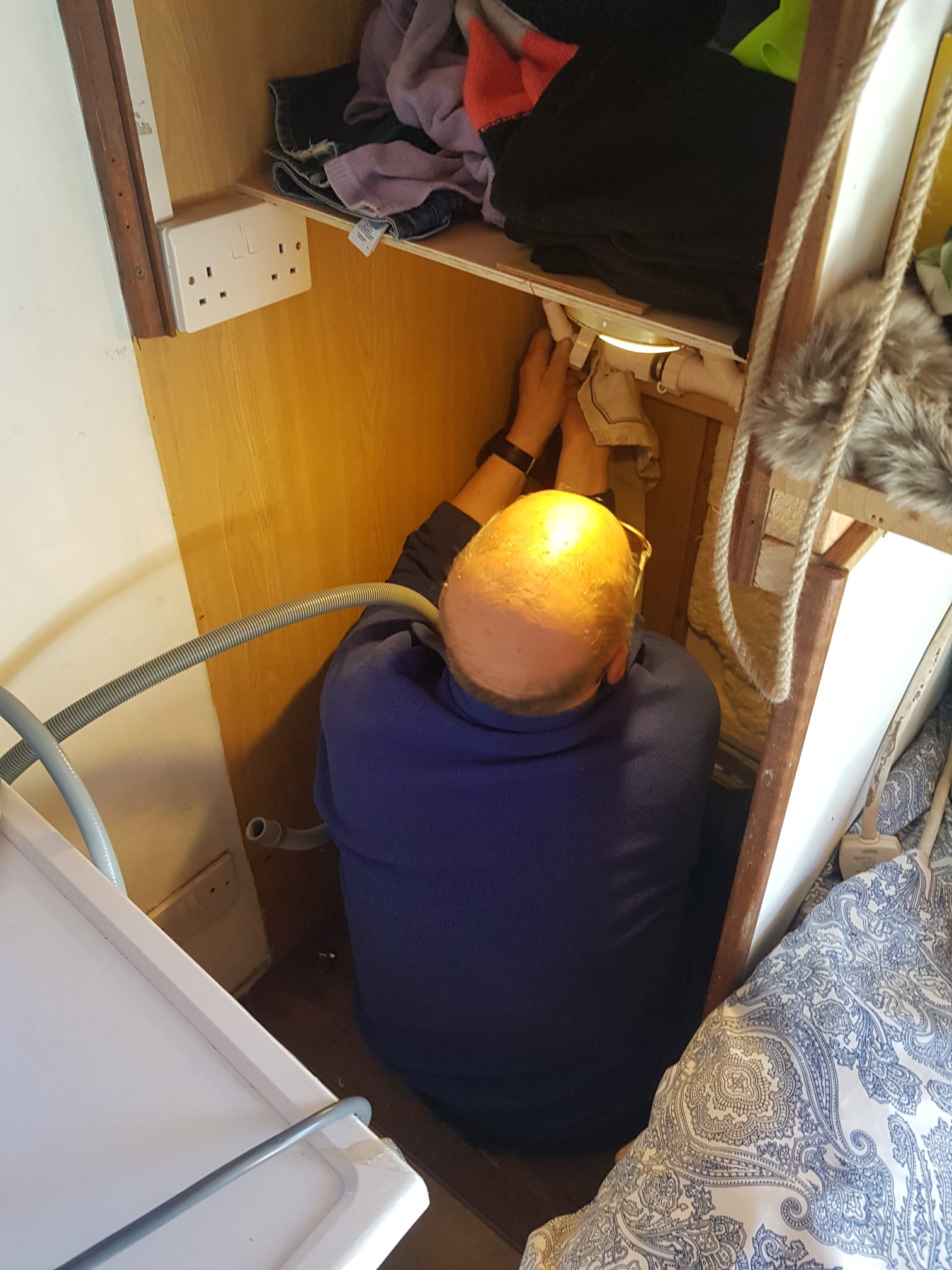
Having got sufficient paving slabs out to cope with the weight of the machine there’s another rather more extreme requirement. The base of the wardrobe has to be extended by 2cms to fit the machine. This means moving a partition wall which is housing shelving, and not damaging existing pipes from the hot water tank in the process. It is painstaking work conducted in tiny cramped spaces.

Once the space is ready, which probably will take some considerable amount of time yet how the machine is to be powered will require new power cables, purchase of an inverter so it can run as we don’t have mains electricity. All of this has been part of Steve’s intensive pre-planning, involving visits to Victron suppliers and discussions with washing machine manufacturers.

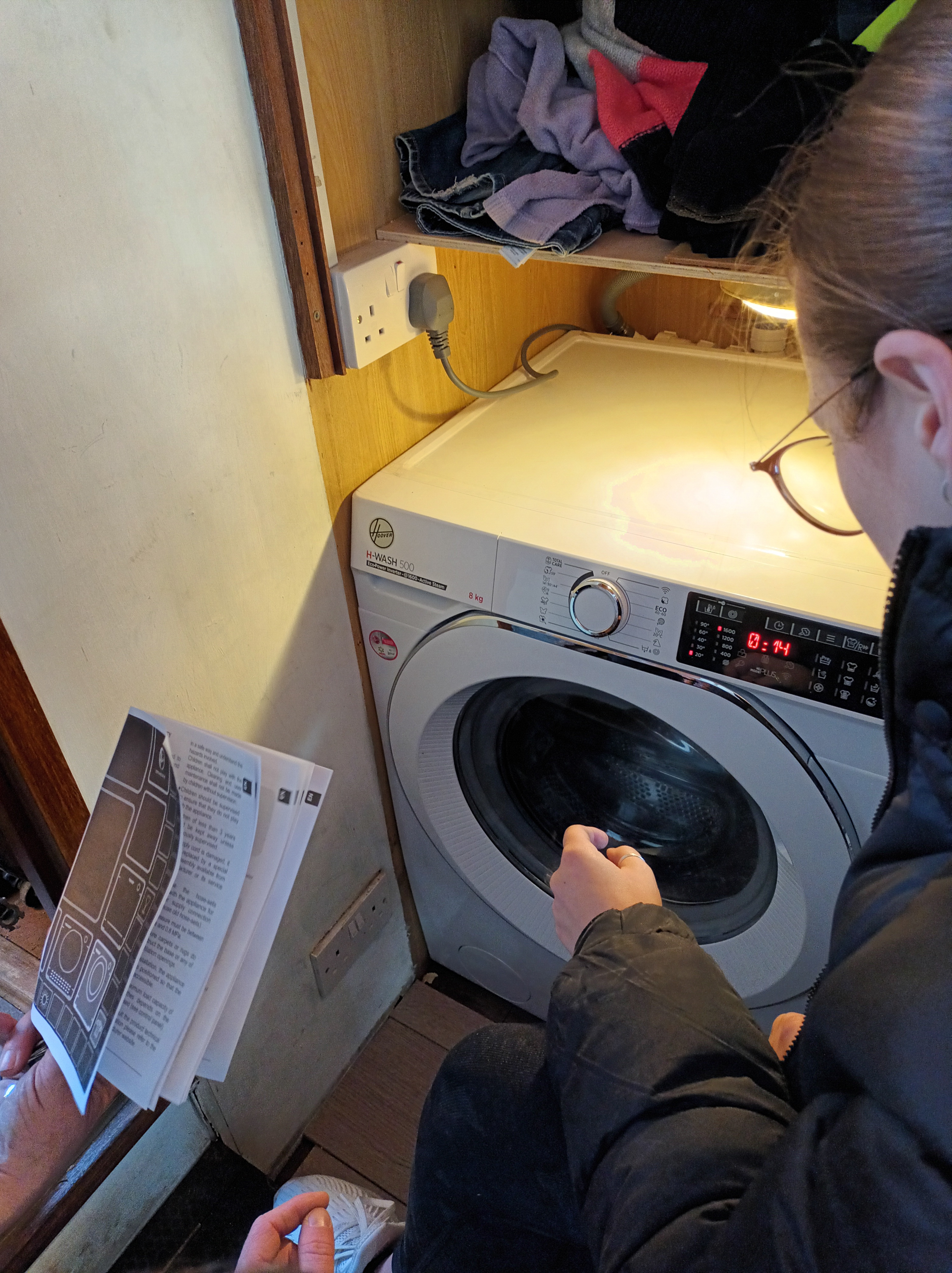
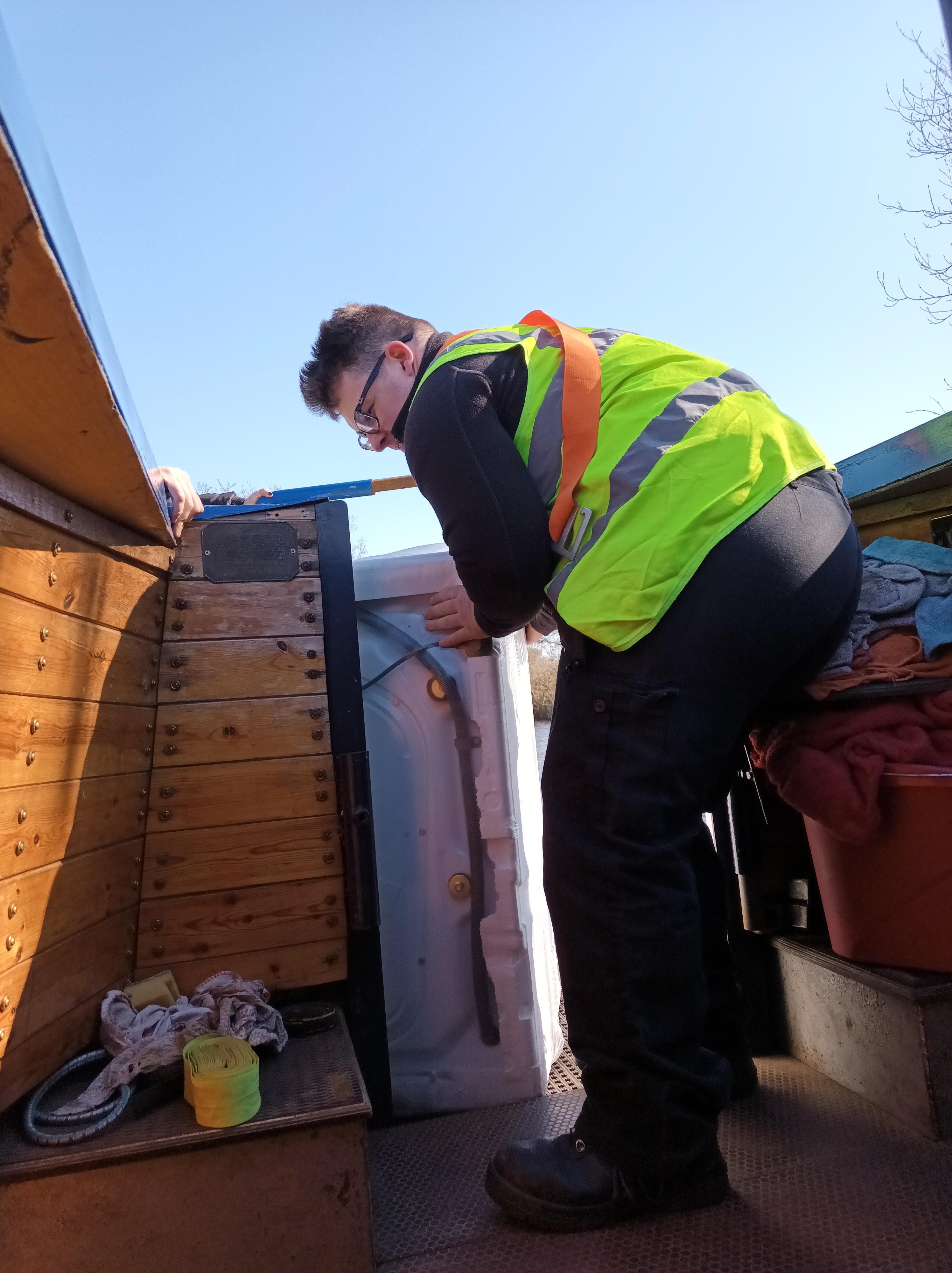
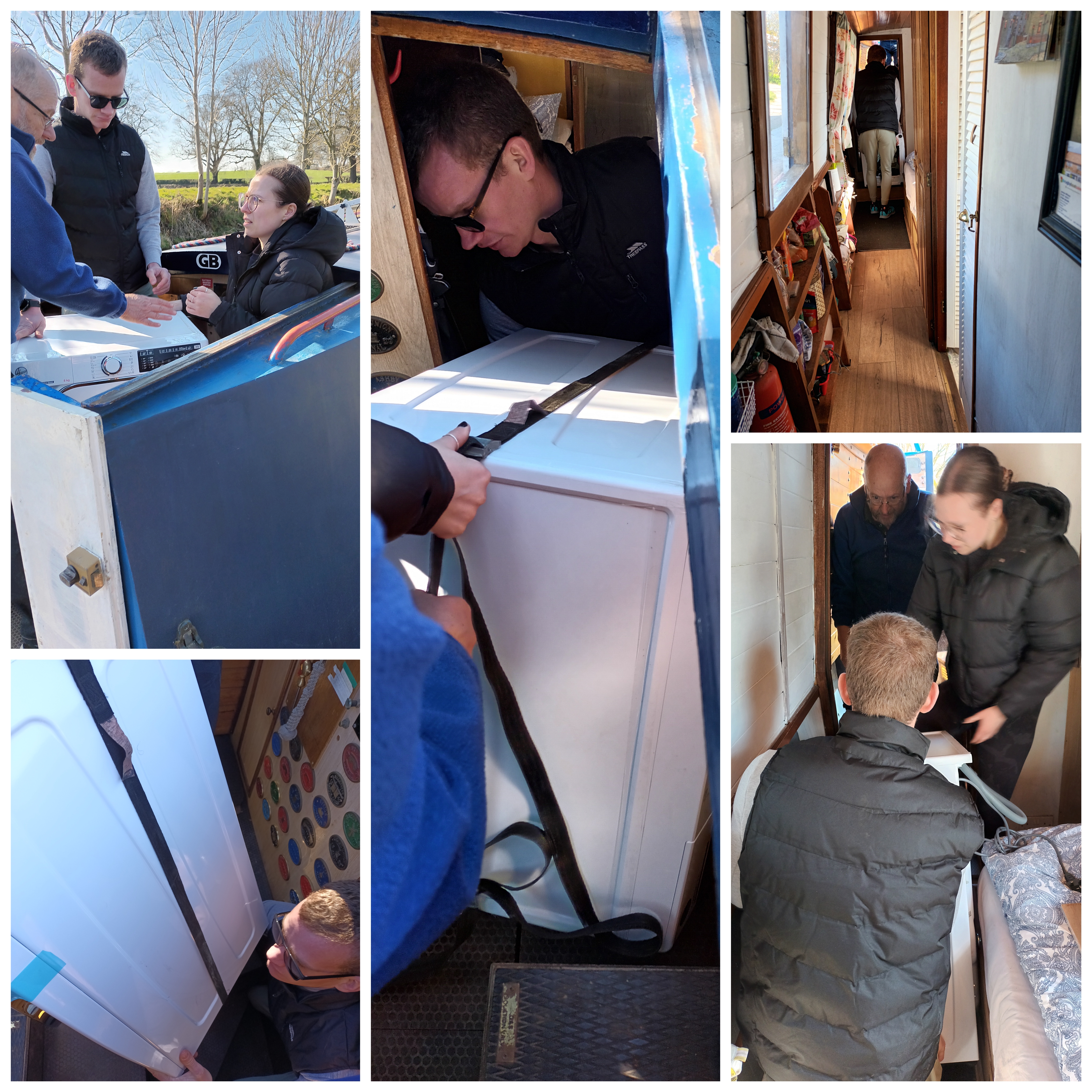
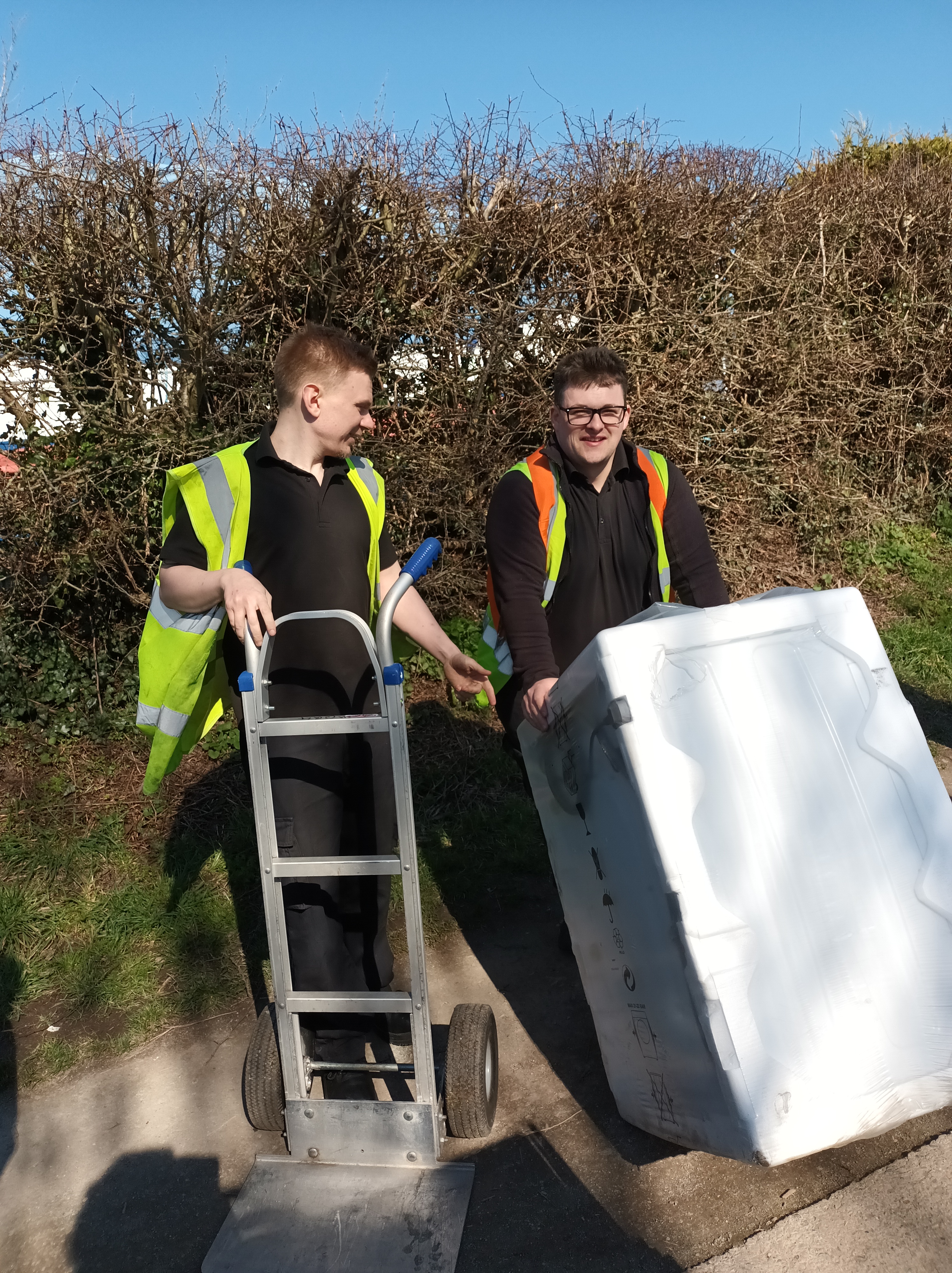
When we are ready for the machine to finally arrive it will have to come in the stern doors and down the twisting steps through a doorway which will have to be removed to enable it to get into its new location. We will need to rely on strong friends and reliable straps to help lower it down and manoeuvre it into place.

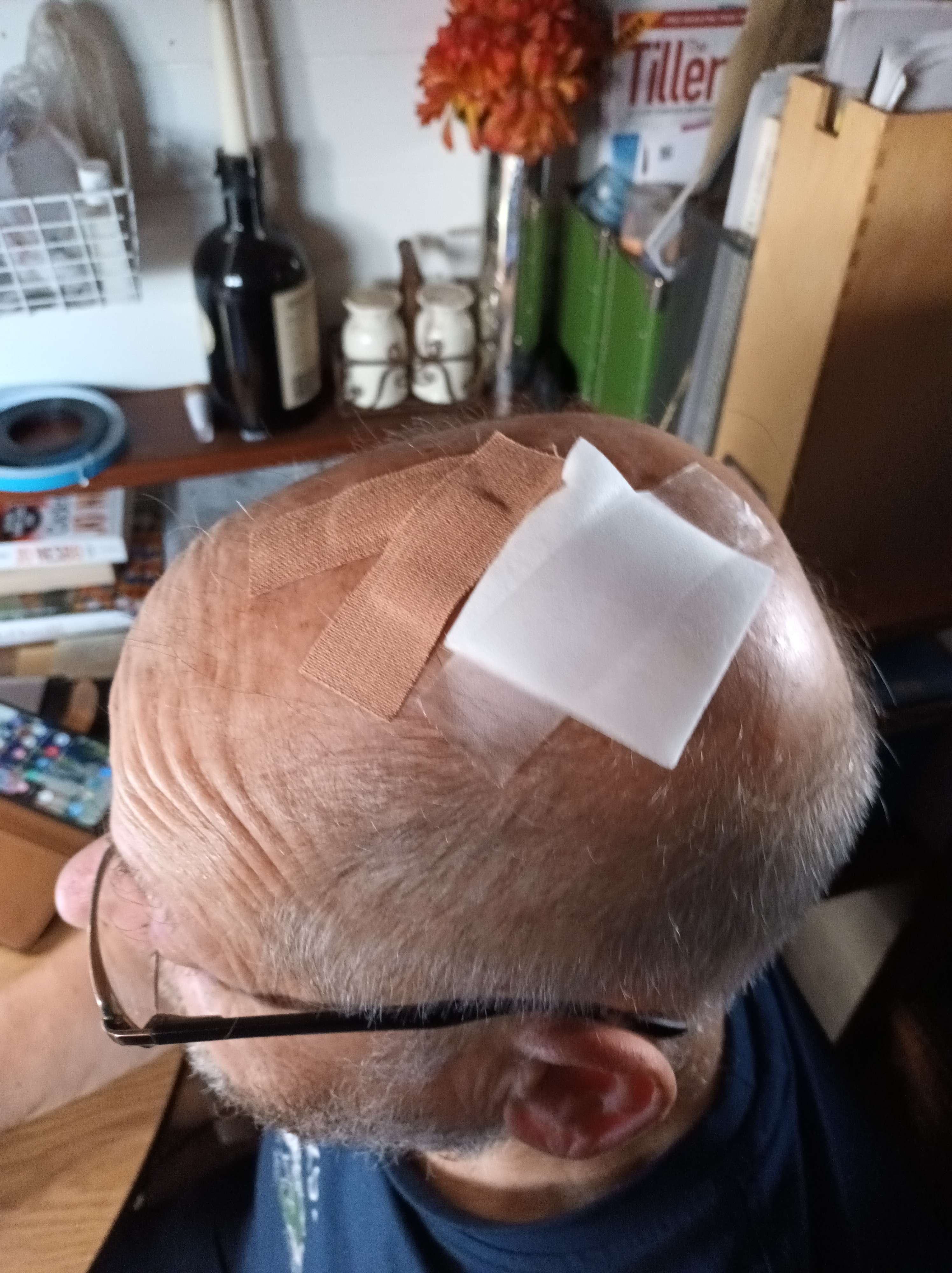
I recognise the effort, the sheer hard work going in by Steve to make us independent on the washing front is something which underlines that it’s not just about buying a machine and slotting it in. He’s suffered spasms of cramp from being wedged in a tiny space sawing away, smashed his head on overhanging shelves and literally sweated blood over getting the boat ready for this machine.

Seeing this extreme effort behind the scenes makes me realise that getting a washing machine is not something to take for granted.

I fear we are in danger of taking many things for granted because they become automatic, things we don’t really think about. Our incredible education provision from pre-school to university is remarkable, but how often do we stop to recognise just what a priviledge it is to have this provision available. This week’s I’ve had hospital tests, flu and Covid booster jabs. They have been timely reminders that the National Health Service and all who work within it are in danger of being taken for granted, and not sufficiently appreciated.

In lockdown we came to value our local shops and I hope we won’t desert them amid the marketing clamour of Black Friday or Cyber Monday, funded by the multinationals.

Most of all though as we come to Christmas 2021, let’s not take family and friends for granted. Their presence, not commercialised hype is what matters. It’s a lesson we learned the hard way through the early stages of the pandemic – let us not forget it, and let our gratitude for them light our Christmas.