Glorious weekend weather, a talented and hard-working carpenter (with serious muscles), and an accessible hard-standing towpath have made a massive difference to our life afloat this past week.
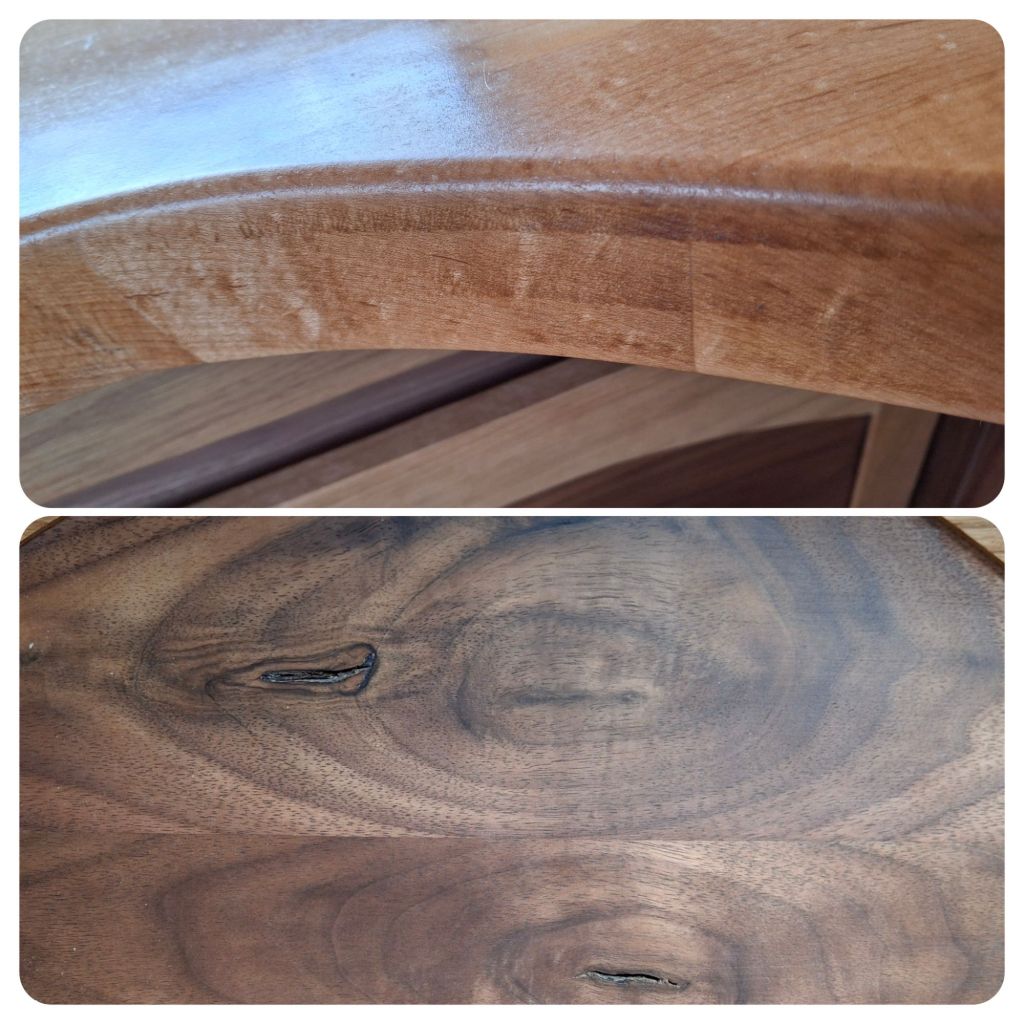
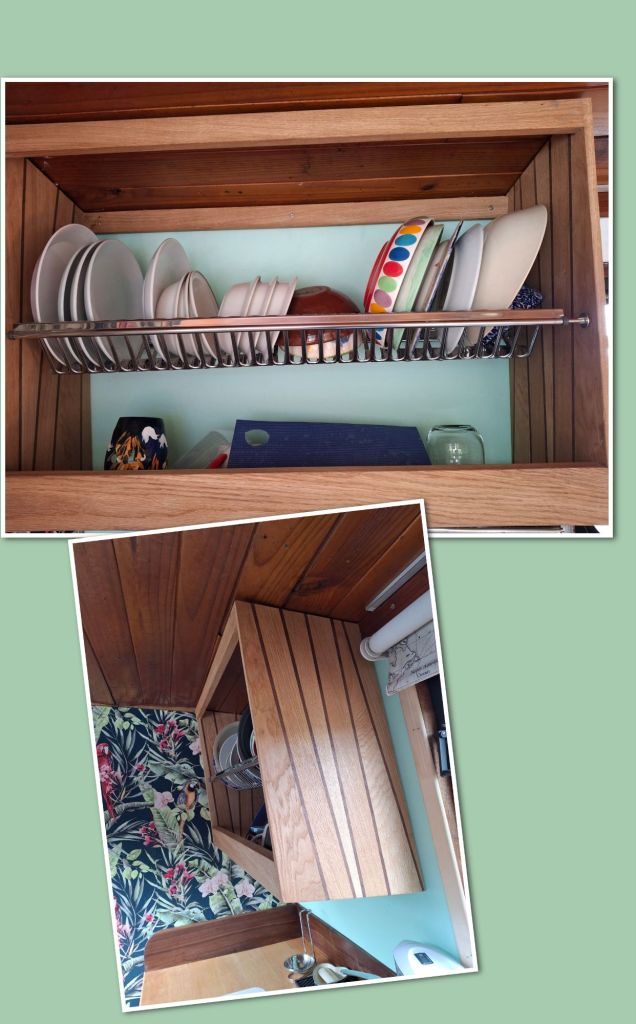
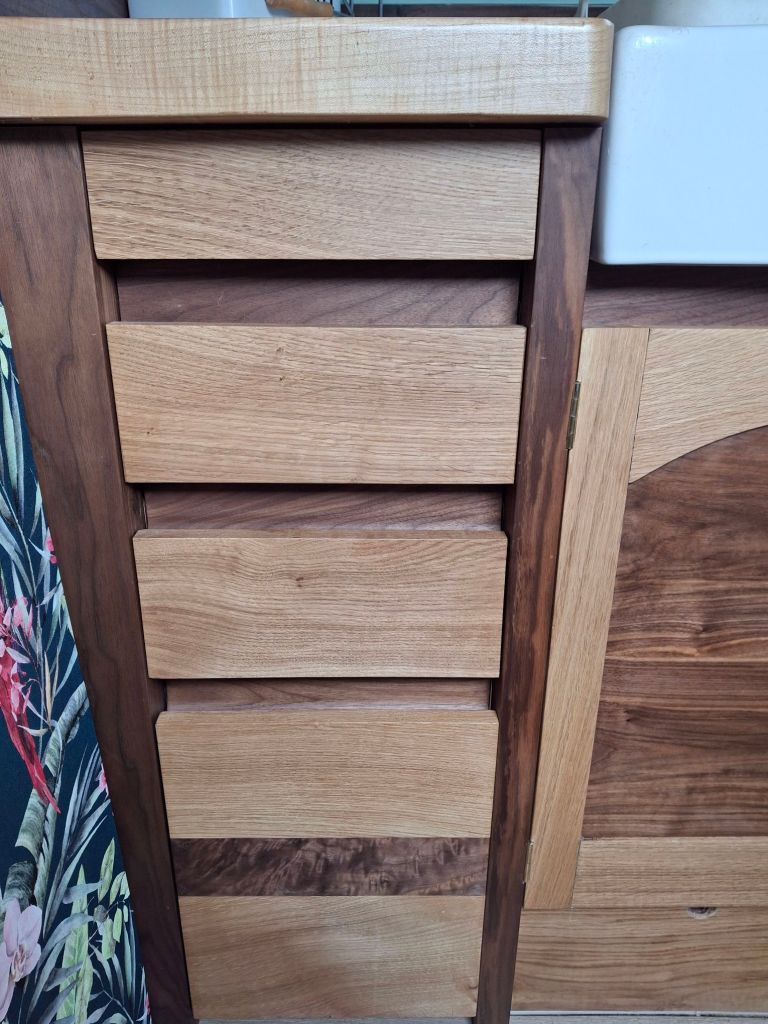
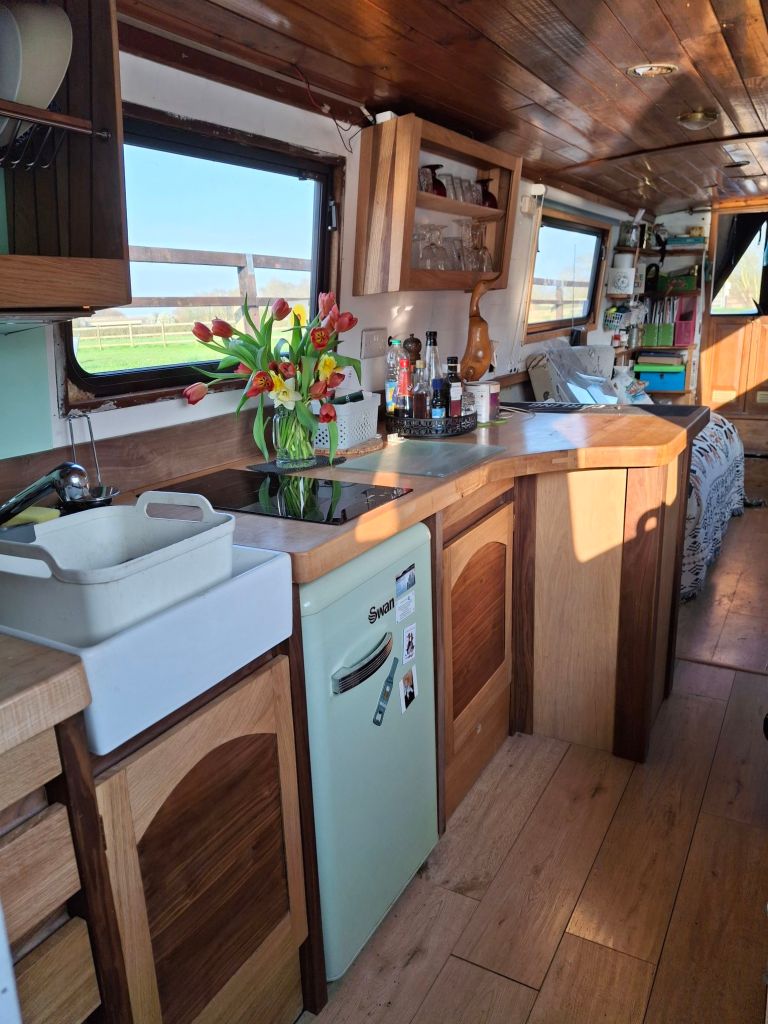
We now have the bulk of a beautiful, bespoke kitchen plus dining area, crafted from oak, maple, black walnut, and beech.
The sun (and there has been some this week between showers and hail), lights a vast expanse of beech which is being nurtured daily. Painstakingly pampered, sanded, and oiled. Once a day for the first week, once a week for the next month, once a month for the next year and once a year after that. I think I’ve got that right!
There are drawers – no less than 7 in one area, and secret ones that I can’t quite remember where they are! There are pull-outs and cupboards, and yup – we can’t at this moment find anything because we have no idea where we put it!
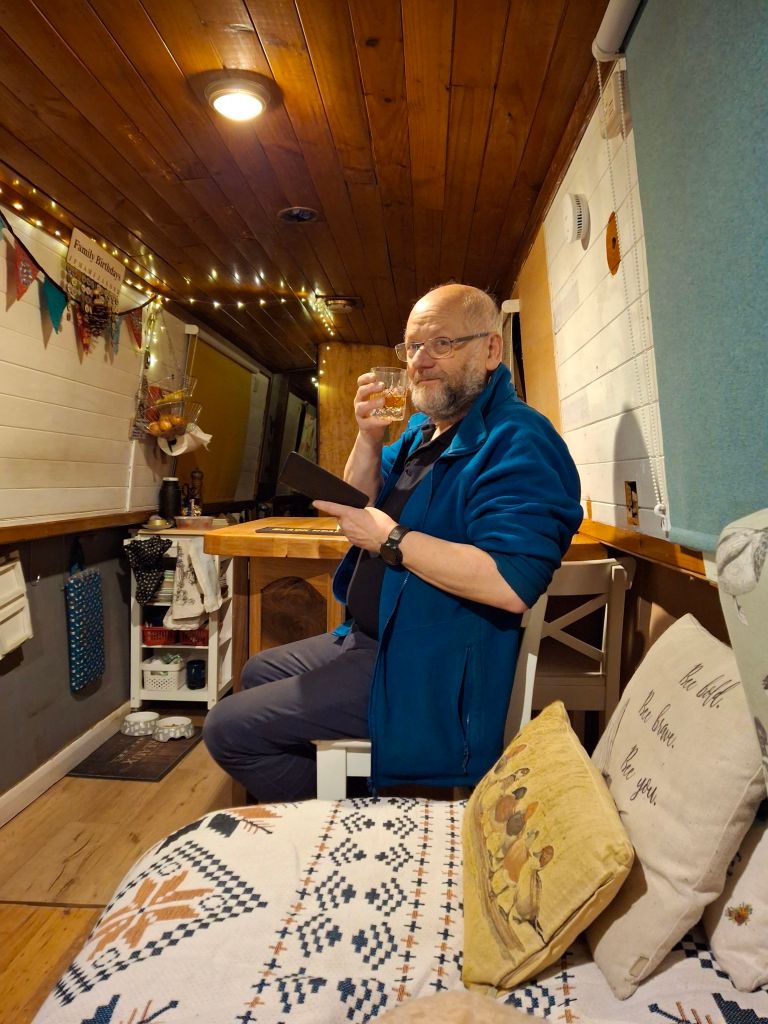
It is hard to remember what was here before, and I can’t wait until I can use the vast expanse of worktop, to sit comfortably at the breakfast bar to eat meals instead of twisting round a curved table edge as I’ve done for the past 5 years. It will be bliss and probably wonderful for the digestion.
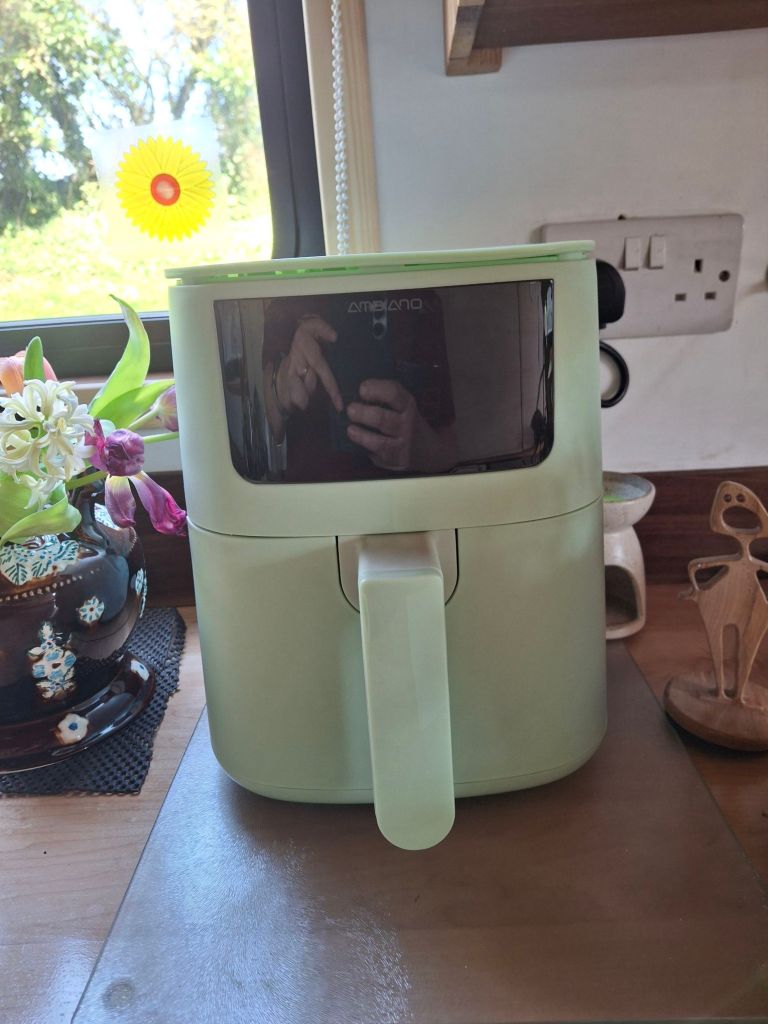
Food too can be different now – we have an air fryer (basically a mini oven) and an induction hob. It means grilling is effectively now a thing on board.
I’m waiting until everything is complete to give you the Grand Tour, but suffice to say true craftsmanship combined with the inherent natural beauty of wood is a thing of beauty. As I write, my hand is stroking the smooth curves of this remarkable kitchen.
It’s still chaotic on board. The floor needs finishing. There are many things waiting to be found homes and living in a small space when things are piled high is far from easy. This past week, though, has seen a dramatic step towards a new way of living (and working) afloat.
In other news, which hasn’t brought any rays of joy, after 16 years on Twitter (now X) I’ve posted for the last time. I cannot justify staying with it because of its current owner. I’ve moved to bluesky (as DeenaI). I’m also trying, because of its owners’ outspoken support for the current US regime to wean myself from an unhealthy dependence Amazon. They seem small and probably to some, insignificant protests, but every successful marathon starts with a single step. It also makes me feel less helpless in a world that seems to be spiralling out of sensible control. What, I’m interested to know can we learn from what you’re doing to seize some control?
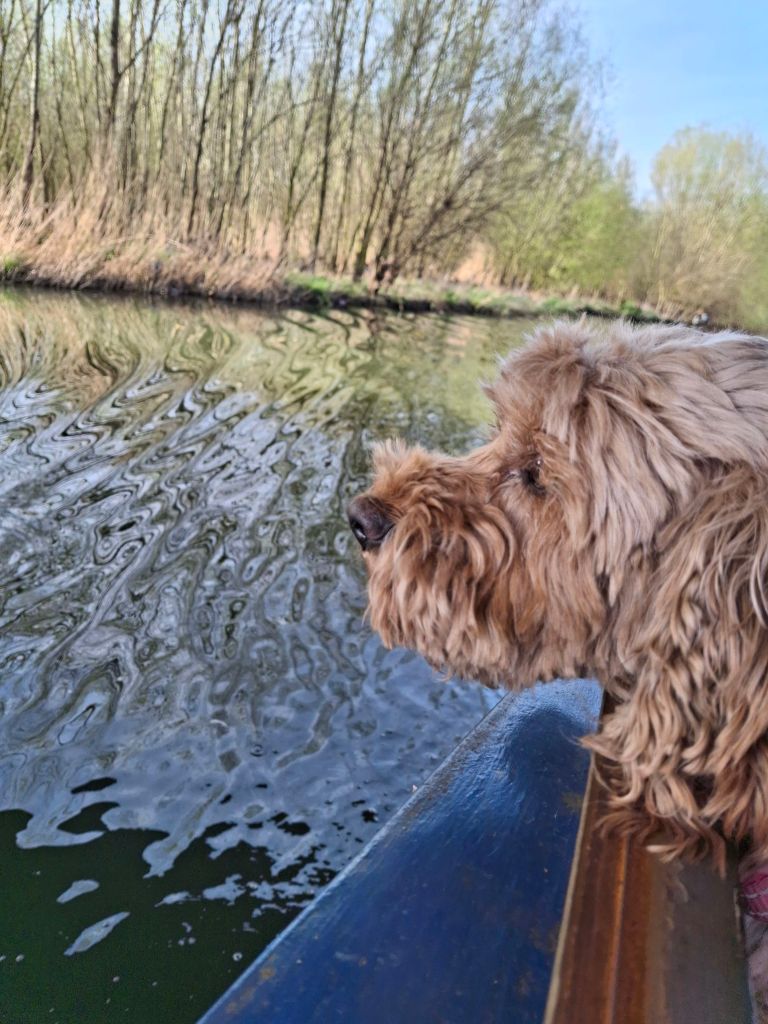
I’m fortunate in many ways. I have the calming capacity to stroke a Boatdog (and now caress a tactile kitchen), to look out at gently moving water (we’re still on a river and out of flood at the moment), walk the towpaths and watch wildlife all around. All are guaranteed to bring perspective and relaxation.
Older boats are like older houses. You start one job and another 6 make an appearance. They also demand because of their dimensions that doing work anywhere affects another area because everything has to move to produce working space.
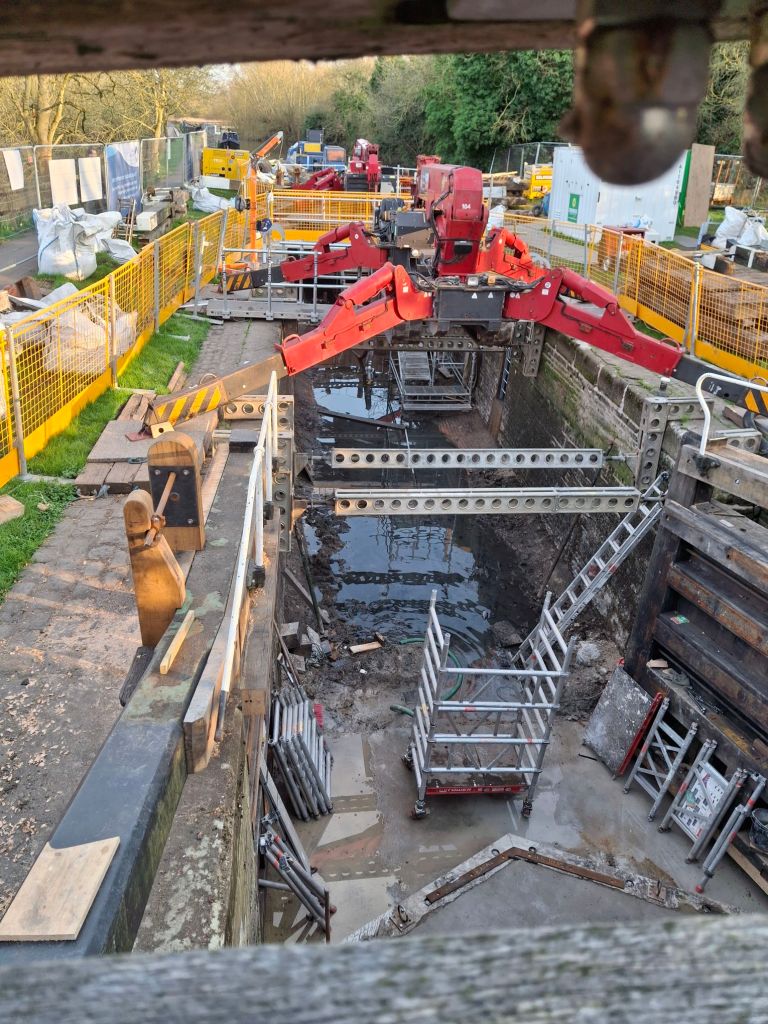
This week is a major milestone aboard Preaux, a week when we are making another massive change to how we will live (and work) aboard. We have ripped out the kitchen which the Skipper installed to keep us going. It consisted of shelves with 3 doors across and an open shelf unit.
The kitchen on Monday
Having moved our battery to LiFePO4, it’s given us more capacity, and that means a chance to move away from using gas for cooking. That was forward planning needed to make a change of hob. The hob for the past 5+ years has been our only consumer of gas, and it has meant we’ve been carrying 2 gas bottles. The bottles are situated at the back of the boat in two storage lockers. This week (thanks to a CRT volunteer heading to Sawley) we sent our smeg gas hob and two gas bottles to boating charity Vets Afloat.
Jenga – food moved into shower, chaos everywhere!
And the hob wasn’t the only thing to go from the kitchen this week. The sink and tap, the worktop, the cupboards, and shelves have also gone. Basically, there is no kitchen left!
This gives us a chance to retrofit insulation behind where our new kitchen will be, and to explore yet more strange wiring which has appeared as we’ve pulled out elements which might have been in the boat for the past 30 odd years.
It’s also been necessary to rebalance things. Under the old floor were kerbstones being used as ballast. Replacing the kitchen is going to create more weight, so 4 of those have had to move. That’s around 160kgs taken from one side of the boat, so as I write this, she is listing by approximately 4 degrees. That doesn’t sound much, but it feels like a lot more.
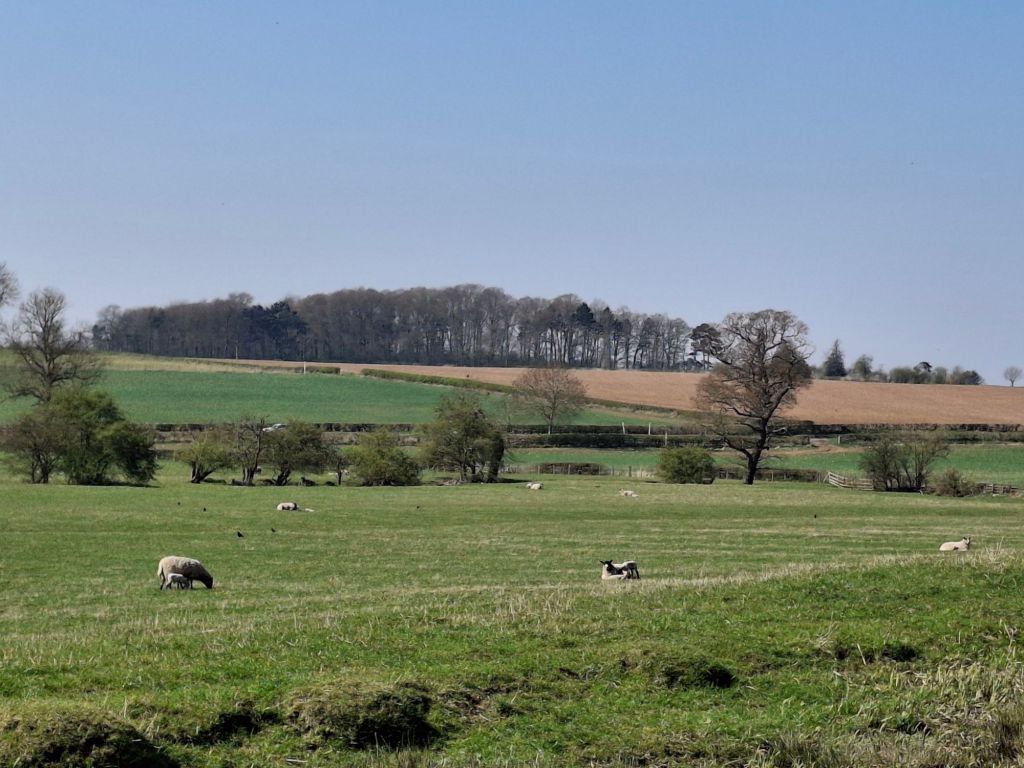
So we’ve now got a blank canvas.
There’s so much choice and decision-making in making any replacement with an older boat or older home. Should one go for a traditional look, or a modern contemporary style, or replace with what the boat would have had in 1989 when she first went in the water?
Buying off the shelf kitchen units is possible, but they then need to be cut down. That is necessary to maximise the available space, slotting under the gunwhales and making wall cupboards hang well, taking into account the tumblehome, which results in a slanting narrowing as the boat rises from the gunwhales to the roof. Effectively, each kitchen needs to be bespoke.
Narrowboat interiors are as diverse as boat owners, and we have been in negotiations for months with a skilled carpenter and friend, whose work on his own boat we have long admired.
So what would you go for? Original, bespoke or contemporary?
We will be hard at work this weekend, so by next week, I hope to be able to show you an internal transformation, and you’ll be able to see for yourself.
That’s it then – all over. How did that happen so quickly?
For the first time in our five years of working and living afloat on a narrowboat, we took a winter mooring. Somehow it’s been nearly four whole months that we have remained (most of the time) in one place.
Some people go into marinas at winter time, and others take advantage of private moorings, but many, like we did, opt for winter moorings arranged by Canal and River Trust (CRT) the charity that has responsibility for most of the inland waterways we use.
There are CRT winter moorings available in selected places across the network, from Yorkshire to Wales and the South to the Midlands. They are made available on a first come, first served basis from 1 November until 28 February. Boaters can choose a month or more up to a maximum of four months. Prices range across 7 bands from costed per metre of boat per month from £8.50 to £26.20. That price is influenced by the location; the price of moorings nearby;, availability of services and facilities nearby like water, waste and rubbish disposal and in some cases electricity; and demand. For ours, water, waste, and rubbish are a short walk up the towpath or a cruise up the river. There is no electric point, and we have positioned ourselves to avoid trees to maximise the available solar energy.
This winter, there have been only two boats moored on the 100 available metres of our chosen location, so there’s been plenty of space for travelling boaters to join us, but no one has. There’s just been us, and Joe. It has been very quiet on the river, perhaps because we’ve gone in and out of flood with anticipated regularity.
We were late arriving on our mooring because of delayed CRT maintenance further down the River Soar, but we made it in the middle of November and we have been able to stay until now, the end of winter mooring.
Advantages?
We’ve not had to plan travel around winter stoppage programmes, which can result in us being stuck in places we wouldn’t have necessarily chosen.
At last we’ve been able to officially join the thousands of people who give their time regularly as volunteers for CRT, working to improve the waterways. We’ve undertaken our required training and enjoyed working alongside many different people, all committed to supporting the waterways that, for us, furnish a wonderful way of life. We are now working with CRT to find ways we can keep volunteering as we continually cruise from place to place.
It has been a huge bonus, and the main reason for us taking this mooring is to be near family. We have been able to help out and be part of their lives again on a regular basis. That may mean we’ve spent way too much time and money in certain coffee shops, but it also means we have had the fun of weekly school pick ups, and the chance to see the world through the rejuvenating eyes of a 7-year old. We’ve been to Panto together.
We’ve made it to school performances, helped in school and at Beaver Scouts, been on the touchlines for football matches and weekly training sessions, and cheered on family runners in competition. Maybe now as we are becoming fixtures, it’s a good time to move on and let them all live their lives in peace so that when we do come back they’ll be (hopefully) pleased to see us again.
It has been wonderful returning to an area where we used to live and work so we could catch up with many friends. I know many of them visit the boat wherever we are, but it’s been great to catch up with them more regularly and to visit their homes.
We haven’t had to even think about where we needed to be to fill up with water, dispose of rubbish, or empty the loo – it’s always been a known short walk or cruise away.
Nor have we had to worry about overstaying our allocated allowed time on our mooring
We have been able to have the car with us, although I shall be glad to live without it once more and not just because I managed to give myself the new experience of an expensive Speed Awareness Course in lieu of points. Oh, for a maximum of 4mph again, and the need to walk everywhere again.
It has been hugely advantageous being able to plan to get major necessary work done on the boat knowing that we didn’t have to move the boat to that work, we could tell people where we were and arrange visits/appointments. As a result, we now have a fantastic lithium iron battery system and are about to have a beautiful bespoke kitchen installed… more on this next week when it begins to become a reality.
It has been wonderful to get involved with community projects. I’ve been involved in helping fundraise to get a primary school sensory room off the ground. I won’t be around to see it to fruition, but I know I’ve brought people together to make a difference.
I’ve also had the real joy of being able to get involved with the local Spinners and Weavers Guild. I’ve learned so much in the process. I’ve also conveniently been near a yarn producer…or is that financially a disadvantage???
Disadvantages?
Having the car to hand has definitely made us lazy! It got me caught for speeding and we’ve used it too much.
Static views can grate on the nerves after a few weeks we’ve discovered.
We love to move, to explore with our home is what we adore doing, but we have hardly moved in 4 months.
Cost – for us £500 for the winter period in addition to our licence fee
Flooding – we knew it was likely on the river, but river levels exceeded previous records this year, and people were evacuated by the fire brigade from just near our mooring. We were offered the chance to leave our home, but we just loosened our ropes to keep ourselves afloat and sat tight.
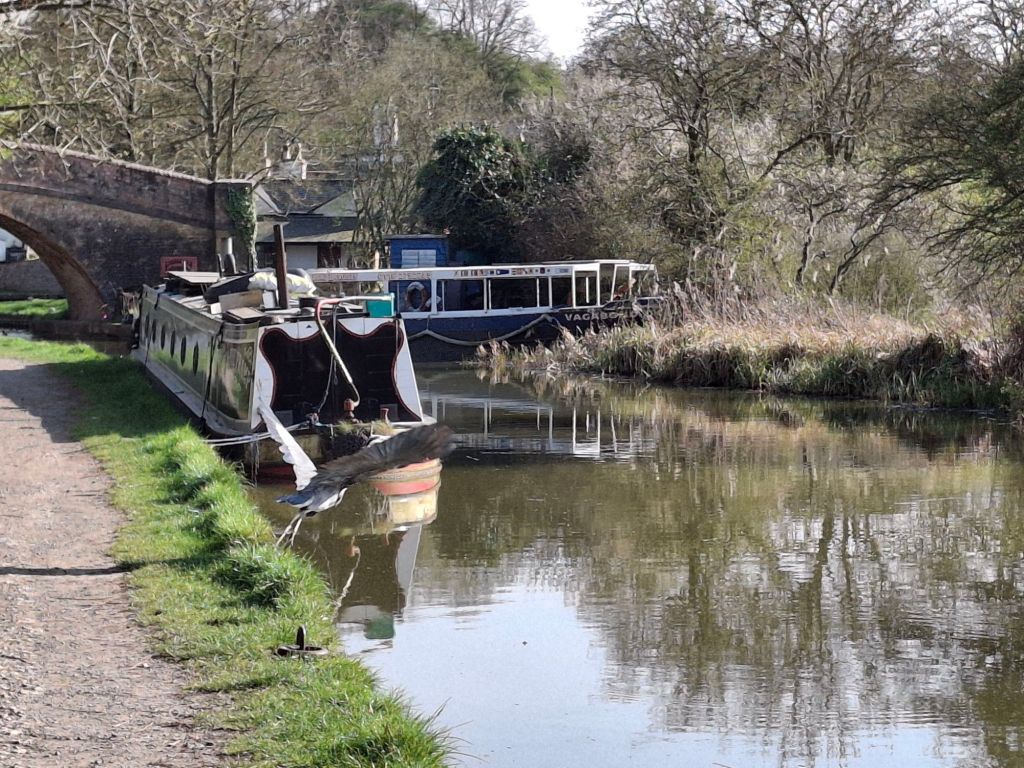
Winter mud on the towpath has created a constant cleaning battle inside the boat but it hasn’t been anywhere near as bad as we found it on the Ashby Canal last year or in other years on other stretches but as we were continuously cruising then, we could pull up our ropes and move on in search of better surfaces.
Would we do it again?
We would definitely consider it.
Where are we going next?
Initially we are stretching our wings to go just a mile or so further on for the final winter major renovation work, and we will have to then wait because winter work at a lock further on has been delayed – the team working there have found it a frustrating job with more issues and storms have caused additional hold ups. Once that is open and they are now saying that it should be late March, then we will set off again, and we will be ready and happy to do so. Our maximum moorings after that will be back to 14 days in one spot.
Spring’s sorting out is going on all around us. Many birds are busy nesting, female ducks are once more putting their lives at risk as the mating season begins (males can and often do drown the females if they mate in the water), buds are busily forming on shrubs and trees, and early bulbs are beginning to delight us with splashes of colour, lifting the dark days of winter.
Escape while you’ve got time girl!
For us, our first winter mooring is nearing its end. In just a few days, we will be at the end of February, and that is the expiry date of our winter sojourn. It’s been many things – an education, a delight, a chance to explore, to reacquaint ourselves with places and people we haven’t seen for a long time, and crucially, an opportunity to make changes to the boat that will see us into the next decade.
It was in November that we finally made it onto their chance to do regular school pick ups, join the support team on football training and match touchlines, help at his Beaver scout group, join school activities and help with homework projects which have taught us too.
The boat has been upgraded to a new battery system which has totally changed how we can live aboard, and another revolution in onboard living and working is being constructed on land as I write, ready for installation in early March.
Before then, we have much to do – ripping out, clearing, reducing unnecessary items, and that’s not been constrained to our floating home/office. When we left bricks and mortar over five years ago, we put some items we couldn’t bear to part with in store, and these past months have been the time to review them. Absence makes the heart grow fonder, they say, but it can also make the resolve grow stronger. If it hasn’t been used or even missed in five years, then maybe it should go.
Ugh – how can my kitchen space be such a chaotic mess?
Once more we’ve created the piles of keep, donate, and dispose. Once more we’ve made good use, while we still have it, of the car. EBay, facebook marketplace, charity shops, Vinted, and as a very last resort, the local tip, have been destinations of choice and necessity.
After the next major work on the boat, we will do a final sweep of the boat and the store, and I’m sure more will come to light. It’s a major way of spring cleaning, I guess, but vital. It is surprising that on the boat, even though it is such a limited space, items accumulate and get forgotten. I’ve been appalling in sticking to the maxim of one on, one off, and have smuggled all sorts of things on board. In the same way it is easy to leave items in store that just sit there because you can’t decide what to do with them. Now we need to be brutal, and no doubt in a few years’ time we will need to do the same again!
It’s interesting how one’s perspective changes with time. Things I considered just five years ago were essential to keep have found their way to charity shops this week. Partly, I suspect, because we’ve changed our views for now about moving back to bricks and mortar.
A few weeks ago, we met up with a couple we helped during the long final lockdown. Both remain continuous cruisers, both will celebrate their 80th birthdays this year and both are not in brilliant health but they too feel even though they could buy a bricks and mortar home tomorrow, that they would lose a wonderful way of life by doing so. They are inspiring, and in a way, their recognition of the beauty of narrowboat life as ccers is comforting. At the same time, we are seeing stories I’m sure many of you have seen this week of a boat that has apparently been stripped and sunk on the Coventry Canal. There has also been the seasonal flurry of boats for sale, just as the usual annual bricks and mortar flurry of homes for sale at this time of year.
Buds appearing everywhere – even on the fished from the canal trainers acting as roof planters!
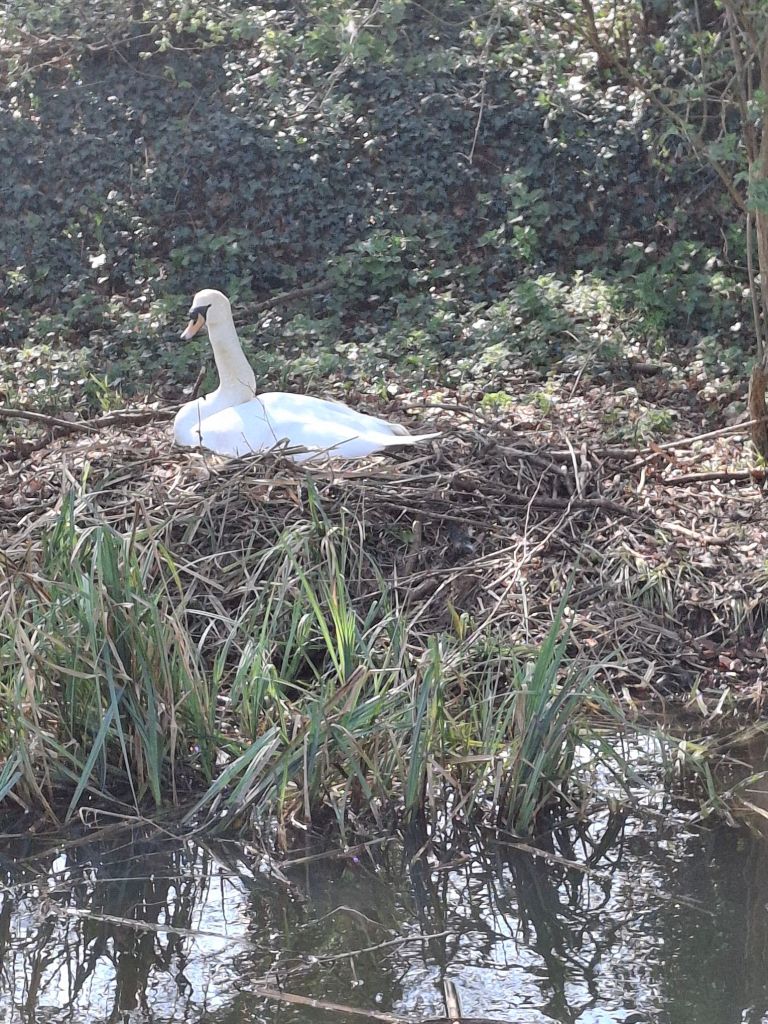
It’s the way of things, the changing of the seasons, and we all need to clear out, sort out, and spring clean, ready for the blossoming of a fresh new year. We all need our nests to be functional, well structured, and safe at this time of year, whether they are up in the treetops or floating on the water.
This week has seen a flurry of red roses, cards with hearts, and lots of soppy messages on social media. For many, it brightened the gloom of this often dreary time of the year. For others, I recognise it’s depressing or underlines loneliness, and for some it’s all hype and unnecessary.
It made me think about the ways in which boaters show how much they care for each other, and consider the differences from when we used to live in bricks and mortar. The Skipper, it has to be said, despite or perhaps because of that Yorkshire heart beating inside him, is a HUGE romantic.
For him Valentine’s Day means producing cards and flowers hidden somehow aboard, as well as producing chocolates of the kind I adore. But there are so many other things he does during the year as we boat and live afloat, that show me just how much he cares, even now after 36 years of marriage and a few more years before that.
There is one boat job I hate, but I can count on one hand how many times I’ve had to empty loo cassettes thanks to my Valentine (and there are several each week to be seen to).
Love is – emptying bins and loos in all weathers ❤️
He puts on the kettle and gets the fire hot on wintery mornings whilst I’m still snuggled under the duvet so I can get up to a warm boat and a hot cuppa. Equally he stokes up the fire until it’s as toasty as I like it, and merely removes another layer until he’s in his T-shirt…or less!
He never complains about the lumpy cushions on the sofa (one place I store my wool stash), and puts up with knitting, crochet and weaving projects all over the place, always being fulsome with praise when they’re finally finished and even more fulsome with praise when they’re sold (and off the boat)!
At this time of the year, he moves coal and wood around from source to boat, roof to cratch, so I rarely have to lug it about but can still stay warm.
He helps carry shopping down muddy icy towpaths, and when we cruise, he willingly shares tiller and windlass duties.
He also puts up with me decades of me listening to The Archers.
And crucially this week he’s never said anything about me having to do a Speed Awareness Course – not because of violations on the waterways I’m glad to say!
Many of these tasks that happen so regularly for all boaters are for me regular reminders of how much my Valentine cares and as an assistant in Sainsbury’s said this week as I shopped for something whisky for him instead of flowers or chocolates, it’s the little things that happen every day of the year that matter. We agree, but an excuse to give whisky, flowers, and chocolates is something we appreciate too.
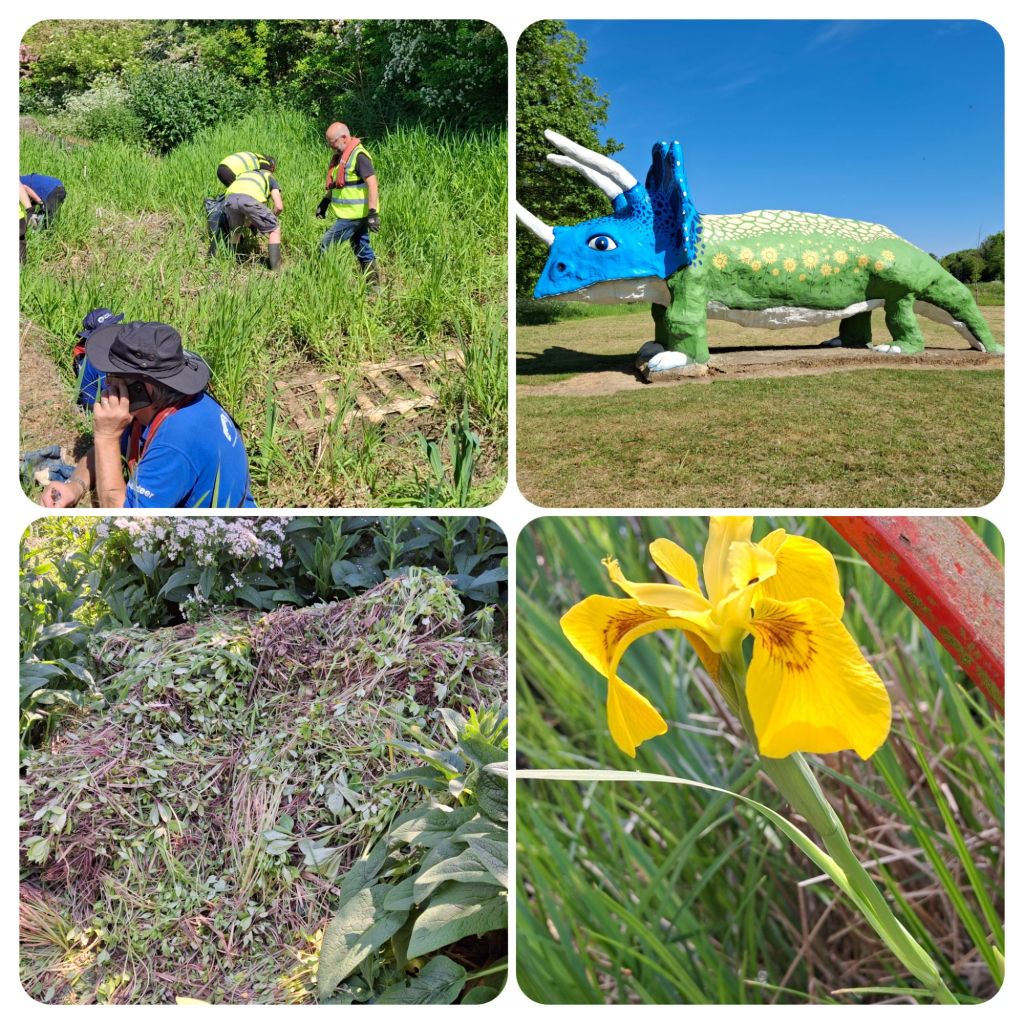
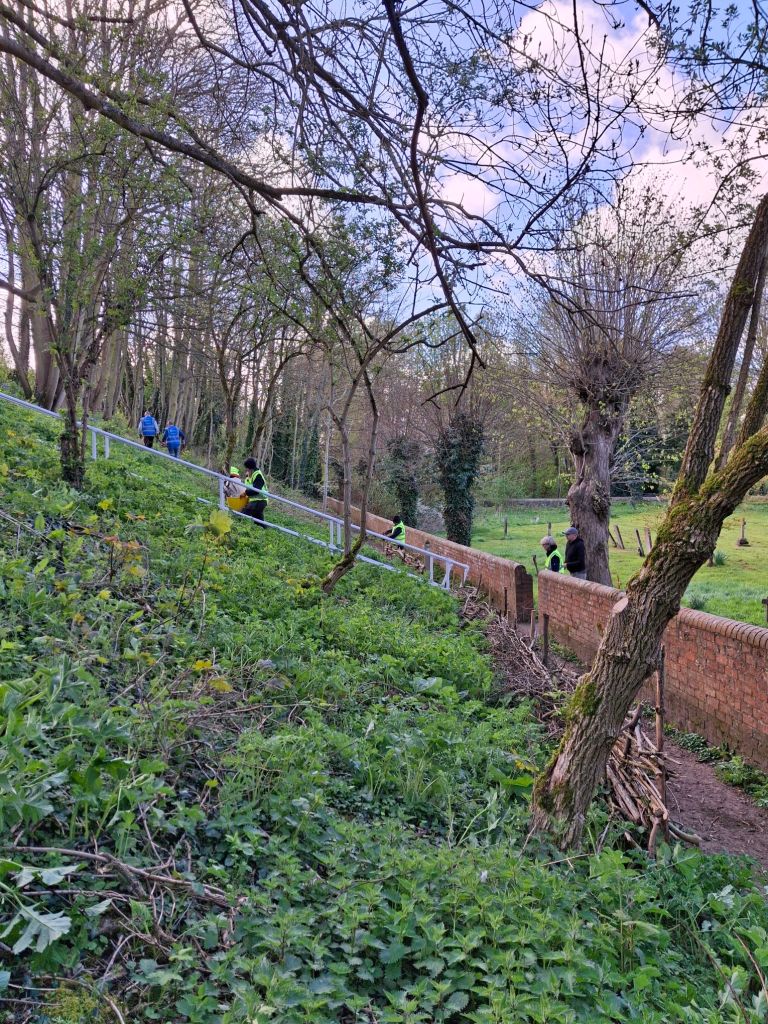
We spent Valentine’s Day together appropriately down Memory Lane – in a boat. Well, Memory Lane Wharf in Leicester, to be precise, in CRT workboat Aylesbury litter picking and clearing buddleia and brambles with other Canal River Trust volunteers.
Then it was out for a late cafe lunch, home to the boat to warm up and get a bit of work done, followed by a walk with Boatdog (the other BIG Valentine love) for a packet of mini Cheddars (her faves) and a pint in the Soar Bridge before home for a meal. If I’m honest most of the Boatdog’s adoration is cupboard love… but who cares?
I love you, I do, if you’ve got mini Cheddars…or Biscoff biscuits…
A good day, a day of giving back, sharing tasks and time.
Many boaters, I think, can be real softies at heart. There are lots of boats called Valentine, Love Bug, First Love, Lady Love, Tru/True Love and probably the most truthful of all when applied to a boat – Labour of Love.
Perhaps the greatest thing of all is being able and supported to live the life you love. It isn’t easy all the time. It isn’t all plain sailing. It is, though, something unlike any other way of life. It isn’t like living in a van or on a yacht, although there are similarities, living on a narrowboat as continuous cruisers is liberating, infuriating, and inspiring. It is also something that is so much easier when there are two of you pulling together, having each others backs and sharing the many good and occasional bad times together.
Living together is just an extension of what it’s like to live on a boat – storms, floods, sunshine, and showers but with treats of chocolates and flowers too at this time of year.
One advantage of spending the winter in one place has been the chance to formally become volunteers with the charity that has responsibility for the waterways we live on – Canal and River Trust.
Volunteering has brought unexpected blessings and benefits to us, and many others
On 2 July 2012, CRT, as a charity, took over from the previous government authority, British Waterways, who ran the network before them. BW also had a charitable arm, The Waterways Trust, which merged with CRT and brought with it the responsibility for museums on the network at Stoke Bruerne in Northamptonshire, Ellesmere Port and Gloucester Docks.
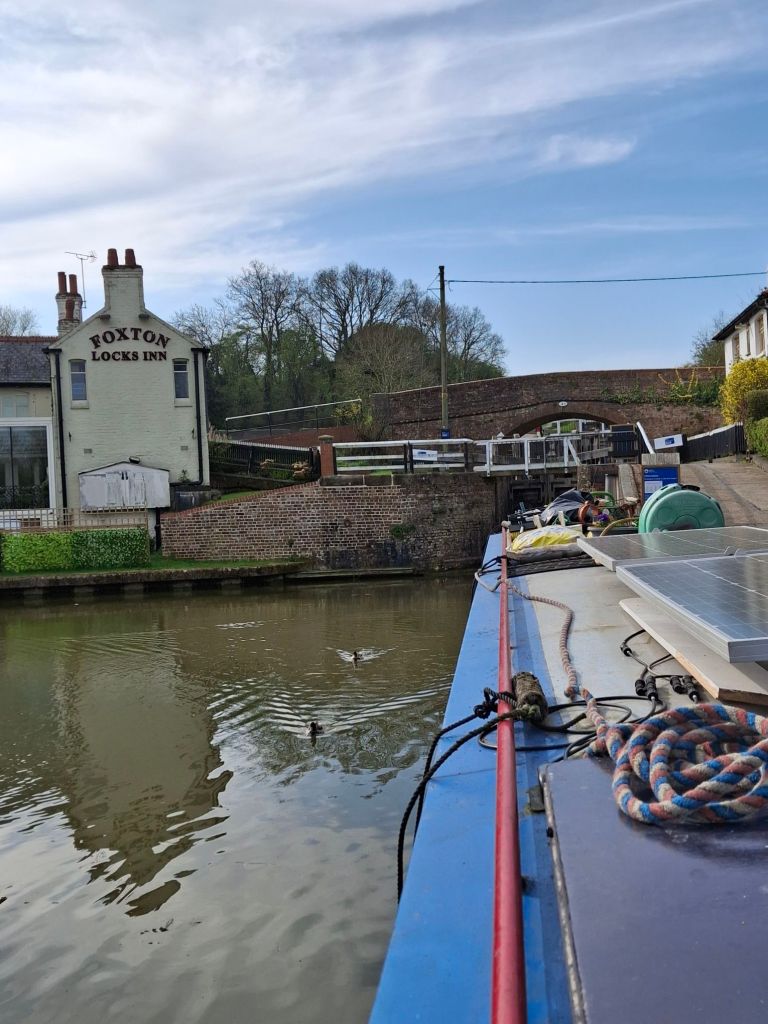
The Waterways Trust and BW benefitted from volunteers, and thousands of people now volunteer with CRT every year. Boaters like us sometimes see volunteer lock keepers helping in the season with particularly difficult or busy places like the lock flights at Hatton, Foxton, Caen Hill, Hillmorton, and Watford.
We also have seen volunteers out maintaining towpaths and structures like steps and lock landings, cutting back undergrowth from the land and the water. Until now I really wasn’t aware of the scope of volunteers roles within the Trust, the importance of their work for the charity who like so many charities depend heavily on the continued, consistent commitment of their volunteer force. Their contribution enables the Trust to spread its limited budget more effectively across the 2000 mile network.
Being able to sign up as volunteers and commit regularly to working with others who give their time and effort to support not only the Trust’s work but the network of waterways in their own local area has been both humbling, inspiring, educational and invigorating.
Since completing our basic initial training, both the Skipper and I have been undertaking different tasks. Boatdog and I have become enthusiastic litter pickers and undergrowth clearers whilst the Skipper has been carrying substrate to fill towpath holes, wielding loppers, and working with others to clear overgrown steps and paths.
Volunteers are managed in geographic groups, mostly supporting the area where they live or have connections. Some are boaters, and a few like a couple we met this week are live aboards who live in a marina, but all we’ve met have affinity to a single place. This week, we joined with another group, and together, the two groups tackled litter around Belgrave Lock in Leicester on the Grand Union Leicester Line. With two volunteer managers employed by CRT and a work boat, we attacked the debris and detritus around the lock island, surrounding trees, bushes, and towpath.
Between us, 50 bags of rubbish and a huge amount of other items from rubble sacks and all manner of containers were collected in a single day. I found underwear (ugh), 2 t-shirts, 3 boots (all different sizes and 1 sari among the items strewn in trees and near the lock. Removing those along with all those bags of plastic, metal and glass will reduce issues for locks, boats, and wildlife habitats as well as making the entire area look better.
It’s an effort which we’ve signed up to continue over the rest of the month, working steadily along the canal towards Birstall Lock. Together with the same dedicated team we will make a significant difference. That team includes volunteers like Kenneth, an awesome volunteers who is an example to us all. He took to the workboat, cutting and moving rubbish and debris, and Kenneth is 94 years old. He reckons volunteering keeps him essentially active and was awarded his 500 hours recognition at the end of last year.
Kenneth is second from the right on the boat in his safety gear with others
Kenneth and all the other volunteers each contributing when and how they can have spurred me on to do more. On Valentine’s Day the Skipper and I have signed up to spread some love among the inner city wildlife setting up bird and bat boxes at Memory Lane mooring, and of course litter picking once more to try and give them a better environment. I’m also keen to get local schools in the area involved in recognising the dangers and problems litter creates for the environment and the creatures that live in it. If we can reduce litter from collecting in the first place, we can focus volunteer efforts in other areas where they are also needed.
Spreading the word about the waterways and the value they bring to so many people, creatures and the environmental benefits is yet another role of volunteers, and one which many undertake.
On a selfish note- this volunteering has immense benefits for us, too. Not only do we get to cruise and live in cleaner, safer environments which are more pleasant, more populated with wildlife but we also get to work in often beautiful places out in the fresh air, being active as Kenneth says, and crucially undertaking tasks which give the immense satisfaction of being able to see the impact of what we are doing.
My step count is clearly benefitting from volunteering days, as is Boatdog’s! We get to meet and spend time with enthusiastic, interesting people, to learn more about the area we are working in, see the waterway from a different perspective, and recognise a job well done.
Volunteering like this in Towpath Taskforces and as Rangers is something which we are keen to continue when we leave our winter mooring at the end of February and return to continuous cruising. Who would want to give up something that makes you feel so good? And as Kenneth has shown us – we’ve got decades of volunteering still to give!
This week has seen the single biggest revolution in our off grid life.
Out with the old…
Our 50ft floating home/office/workshop, since we bought her 7 years ago, has been powered by 3 lead acid Albion leisure batteries. Initially, they were charged by running the engine, and they in turn powered the items we need – lights, laptop, mobile phones, and pumps for the water, shower, and bilge. After we added solar panels during the third pandemic lockdown, it made a massive difference to how we lived, the batteries were regularly replenished by free solar energy, but they couldn’t use all that was freely on offer.
Lead acid batteries have an expected lifespan of 2-5 years depending on how you look after them and the type of usage they have. Ours for a permanent live aboard situation have been nurtured – we’ve never allowed them to fall below 50%, and last year we noticed they weren’t holding charge as they used to. We made the (expensive outlay) decision to replace them, but not like with like. We, like so many in the boating world have made the decision to invest in new technologies and go for lithium iron phosphate (LiFePO4).
Those who have gone down this route are vocal about the advantages – capacity to maximise the available solar being one of them. The lead acid batteries could take so much solar and then the rest just went to waste.
We are also future proofing our boat to make life easier and even more enjoyable. Having greater power capacity will enable us to remove the gas from on board. We currently use gas just for cooking and some water heating via a 4 burner hob. That means storing two 13kg gas cylinders at the back of the boat. Each lasts between 4 and 7 months depending on the season. Those cylinders take up a fair amount of space that we could use for much needed storage. Additionally they require heaving up and lowering down into their locations – not the easiest of tasks.
So…if the gas should go what would replace it? Friends Ali and Jon on nb Warrior have replaced gas on their boat entirely and they survive very happily without it. They have an electric oven and hob so that got us thinking. We’re moving to an induction hob and…wait for it…an (controversial to some) air fryer.
Having used both an induction hob and air fryer whilst staying with a friend in the summer I became a convert but our lead acid batteries and Victron inverter (the latter turns the power from the 12 volt batteries into 230 volts so we can run things like our washing machine, charge the hoover and ultimately use devices that require the 230 volts of shore based power current). That would include an air fryer, but our lead acid batteries would struggle with the latter. They only managed the washing machine because we run the engine when it’s on, and jump start each wash with a flask of boiling water before running it on a cold wash. Recently, the last few washes have been a bit of a struggle, and twice we’ve had to stop the machine part way to allow the batteries to recover power. That’s left me watching a soggy load of washing sitting in the drum until the batteries recovered sufficiently to carry on…
So we knew we needed to replace our batteries. Good friends Al and Tina on nb Wobbly have along with many, many boaters advised going down the lithium route and in the world of boat electrics, one name kept coming up to sort such a major change – Ed Shiers of Four Counties Marine. Fellow boaters like Robbie Cumming on nb Naughty Lass and Matt & Clare Brown on Nb Quisqualis talk of Ed’s knowledge, attention to detail, and efficiency. When we travelled up the Leek branch of the Caldon Canal, we met up with him and sought his advice on the best solution for us, for our needs (current and future). We knew we were going to have to replace the old batteries, so replacing them with a system that would take us a long way into the future made sense.
Ordered Lithium Iron Phosphate super charged replacement
As a result, in October last year, we ordered a new LiFePO4 battery and, most importantly, got Ed Shiers on standby to install it plus a new alternator in November when it arrived. These batteries are currently shipped to the UK from…you’ve guessed it – China.
November came and went. December became the promised delivery date, and we were by now watching and nurturing the old batteries like small children.
December came and went. January was then the promised date, and yes, you’ve guessed it – last Friday, the battery finally arrived. A pretty major plus was that somehow, between order at £1,900 each and the final arrival, it had come down in price to £1,300.
This new replacement has a 10 year warranty and its expected minimum life is for 8, 000 cycles. An average lead acid battery has 3-500 cycles.
So last Friday this apparently lightweight (their description not mine) battery of 60.23kg arrived to a land address for us, and on Tuesday we moved the boat to a location which would make it easier to lug said lightweight battery on board and for Ed to come and work onboard. As we moved from our winter mooring at Barrow upon Soar, navigation was green for go and water levels lower than we’ve seen them for weeks. We stopped for water at the water point, but ironically, as it turned out, pressure was so low that we couldn’t get any water into our tank at all. Never mind – we thought – we’ll carry onto the next. But as we made our way along the River Soar, strong flows made for even slower going than normal. Before we reached Mountsorrel, my phone pinged with a Soar Navigation warning:
“We advise skippers of all boats not to navigate the Leicester Line (Grand Union Canal) from Kings Lock through to the River Soar at Redhill Lock. The strong flows make it difficult and dangerous, and locks may also be closed.”
Too late – we couldn’t turn round, so we just had to keep going. By the time we reached Mountsorrel Lock, the indicator was showing red river levels. We had to hastily take the chimney off to get the boat under the road bridge before the lock, as the level was pushing us so high in the water.
We got under the bridge and through the lock (fortunately not closed) and went straight onto the mooring beyond with relief. We shelved the idea of heading up to Sileby Mill for water and diesel – those can wait.
The river here flows fiercely towards both the lock and an adjoining weir, and it was certainly flowing hard and fast. For the next couple of days we rose gently so there was a good step up to and down from the boat, but we had hard standing, mooring bollards and a nearby pub with car park – what more can one ask?
Getting the battery moved took some doing – thanks, Alice and Chris! We then moved it by car to the pub car park and using a sack trolley plus Ed, we got it to the boat. Getting it onto the boat, which was high in the water, demanded three of us and a ramp. We slid it up the ramp – one of us pulling from the boat, one pushing from the towpath and the third straddling the gap of river between the two so it didn’t fall in and sink. Once on the back of the boat, it then needed to be lowered into the battery tray made for us months ago by precision welder Paul Barber at Sheet Stores Basin on the Erewash Canal.
A perfect fit – you can hardly see the welded tray it sits in
Getting the battery in, working, connected up to a newly installed 150amp Bosch alternator to replace our previous old 70amp one, linked into the solar power system, installing a regulator together with new fuses, a new battery monitor and making sure everything was working took Ed a long day and a half of hard graft. He was hugely efficient, hugely knowledgeable and also a very nice person to have around.
Connecting up the batteryNew alternatorControl HQ
So we now have a completely new power system. It will allow us in time to remove our gas cylinders, move to an electric induction hob, but for the minute I don’t have to worry that the batteries are going to slowly die on us. I don’t have to remember to charge them every day (using diesel) or wonder if they have enough power to get our clothes clean. Nor do we need to turn the fridge off every night.
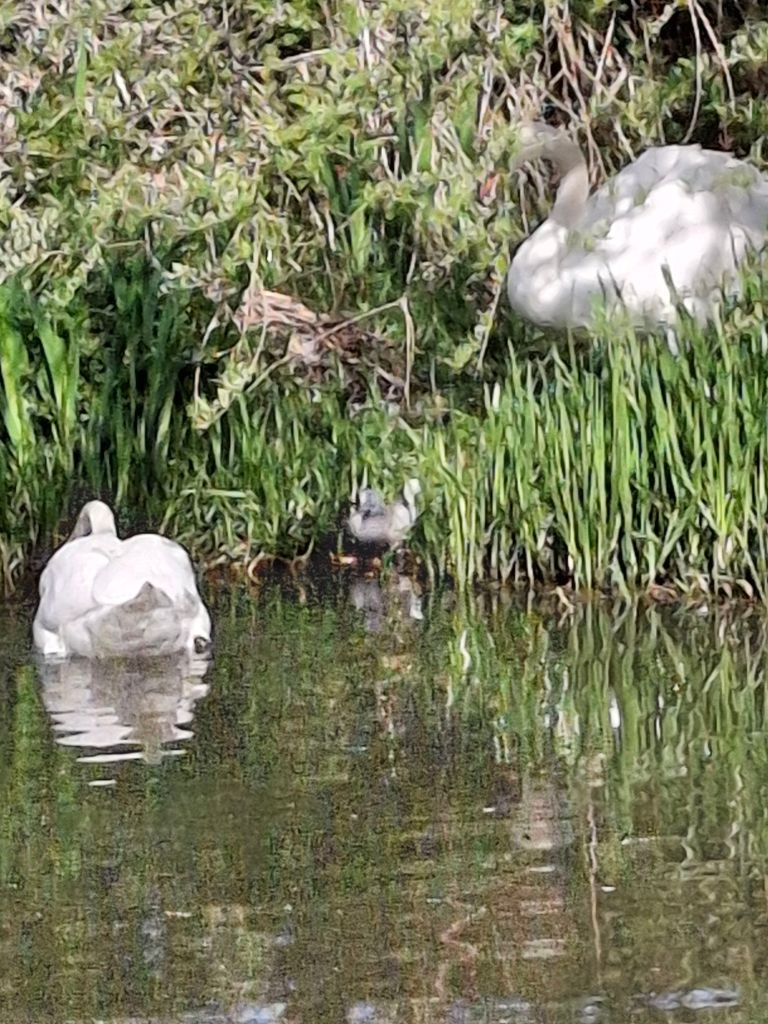
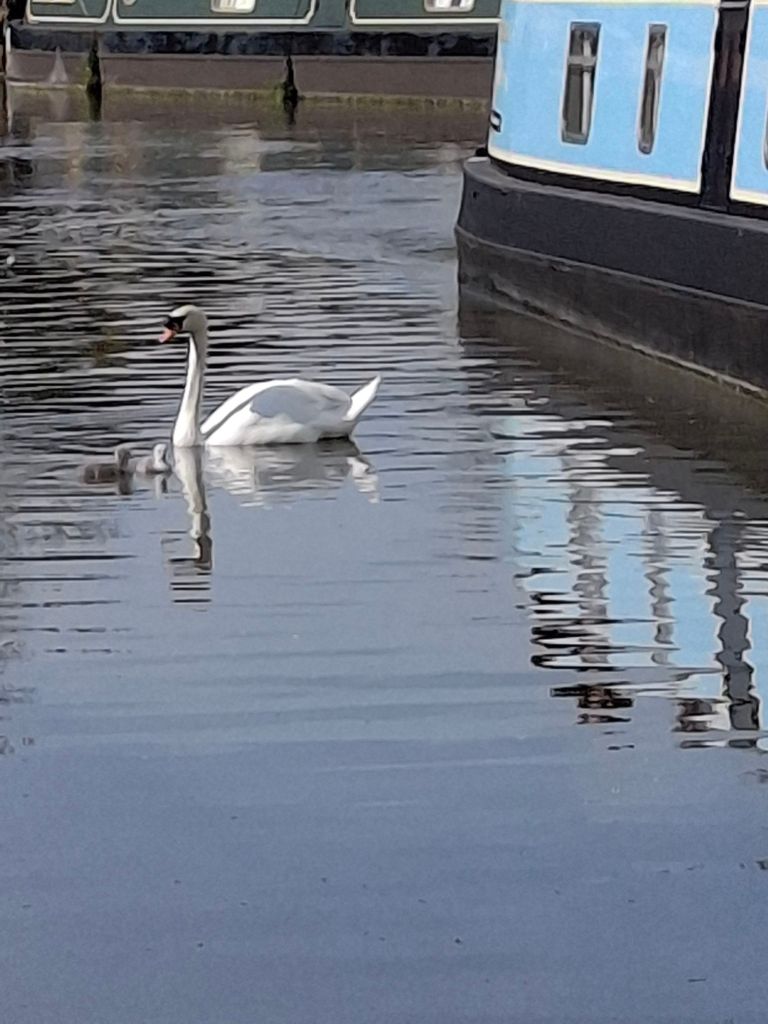
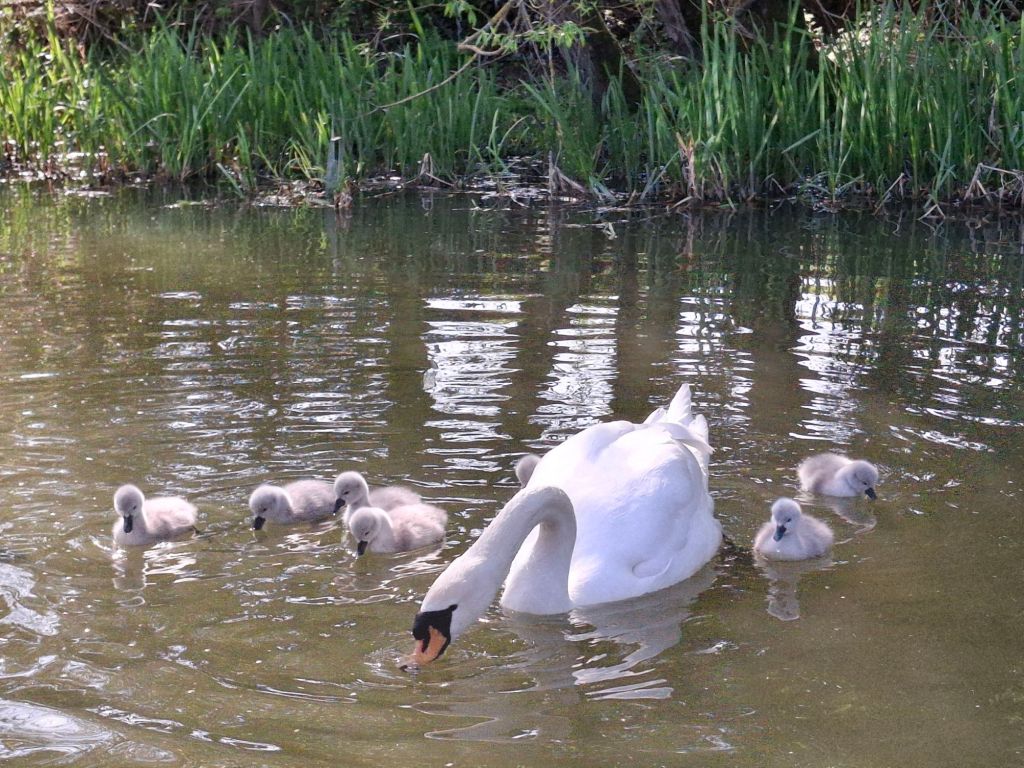
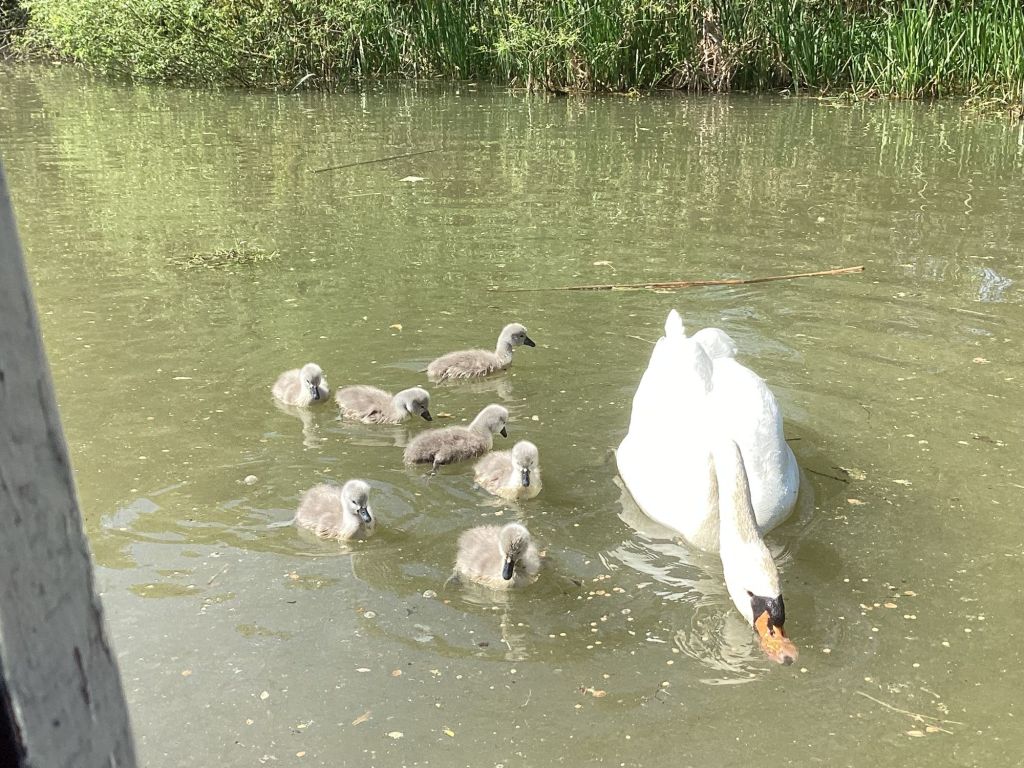
Like so many expensive boat items, the battery and alternator are invisible, like the swans paddling on the river alongside us with powerful feet under the water, the power beneath us is now hidden from sight! We will be donating the old batteries and alternator as they still have some life left in them to a charity and also when the time comes, the gas bottles.
We are hugely grateful to Ed for fitting us into his packed schedule when he is in such demand. We highly recommend him if you have anything that floats or moves in need of any electrical work!
The change this week has brought to our lives afloat will be something we experience and appreciate daily going forward. It will save us money in the long term – less wear on the engine, less diesel to power the battery, quieter operation when mooring as well as giving us new exciting options… like an air fryer, more storage and the chance to benefit fully from every ray of sunshine (and those are far more frequent than you might think)!
It’s a positive, superpowered start to 2025 for us!
Another storm…another natural disaster for much of the UK.
As Storm Eowyn raged we have been away worrying about our boat remotely from down on the South West coast, and once more we are so grateful for the support of the boating community.
This time, as winds howled and waters rose, we were on the North Devon coast for the funeral of a unique family member who would have been 100 this summer.
We walked the beach with Boatdog and enjoyed the lights on the prom before the storm raged, and metal furniture outside our hotel room was hurled across the hotel gardens. I lay awake wondering about our floating home and whether she remained moored where we had repinned her and loosened her ropes in case of winds and high waters.
The message next morning from a boater to say Leicestershire was not as badly affected this time and our boat was fine was not only a huge relief but yet another indication of the strength of the boating community. It’s a community where people care for each other, and that is something our 99 year old relative would have greatly appreciated. He was a firm believer in the butressing stability of family and friendship.
It was a testament to that belief that people from across the many years of his life united on the South coast, despite the difficulties of their journeys because of the storm, to remember him. Some remembered him as a young man. Others had worked with him. Some only knew him in his admittedly lengthy retirement, but their gratitude for the times shared with him was constantly articulated. Thank you, David… for all the memories.
It has made me think – how do each of us want to be remembered? How do you hope to be remembered? How do I hope to be remembered?
Time’s ticking – what positives can we create in it?
Maybe “She weathered life’s storms thanks to the love of and for her family and friends” would be a positive summation for me. What do you hope hope will say about you at the sunset of your life and how are you working to make that a reality?
We seem to be a novelty after the floods have abated here in this part of Leicestershire.
It is one of the lovely things we find about narrowboat living – people are curious about how we live because it’s a bit different. Additionally, we can often be found outside alongside or easily available sitting out on our boat, so we are accessible for a chat.
There’s been a thread this week on one of the narrowboat social media networks about regularly asked questions and it’s made me realise from that while many like us love the questions and opportunities for sharing our lived experiences, others seem to find these interrogations irritating, even intrusive. We find sharing our delight in living afloat is genuinely one of the appeals of this way of life.
So here are the top 20 questions we’ve been asked this past year, starting with the most recent and most frequent…
Where did you go when the recent floods happened?
A boat below the lock near us was evacuated, but we stayed aboard. We had to wade along the towpath but for us the safest place because our home will rise in flood waters if we’ve slackened the ropes sufficiently, and we were in a safe spot, unlikely to be washed off where we had moored or washed onto the towpath. We need to slacken ropes so the boat can float up and not tip, allowing water to enter vents, which would then sink us.
Is it cold on board / you must be cold?
We are probably a lot warmer than most people in bricks and mortar homes. We have a 5kw multi fuel stove which we keep going 24/7 in the winter and it really warms the entire boat beautifully. As I write this the Skipper is in his T-shirt and Boatdog is panting because she’s sitting way too close to the fire. Our stove only has to heat what is effectively a single space of 50ft x 6ft 5 at its widest so we stay very toasty.
Where do you live in the winter / can you live on board all the time?
It is tempting to ask people if they move out of their homes in the winter! But yes, we live on board all year round because it is our home. Personally I love the winter on the waterways – it’s quiet and so cosy on board although the winter stoppages for repairs and maintenance work curtails cruising a bit. It is fun trying to work out a way round the stoppages though.
How do you do your shopping?
Usually with a backpack and we walk to local shops, or bus stops to towns. Alternatively, at the moment, we have the luxury of a car, which is making us very lazy, and we have been able to do some stocking up big shops as a result. Today, for example, we went to a supermarket for food and a wood yard where we bought a lot of wood for the next internal project and we were able to transport it back.
What do you do for showers and toilets?
Um… what do you do? We have a flush toilet on board which feeds into cassettes that seal and we take them to disposal points along the inland waterways networks and empty there. When we first bought the boat it had a big tank under the floor for toilet waste but it was very old and had holes in it! We decided that replacing it with cassettes which we can store if we have to then empty would be safer than one large tank if we were stuck somewhere for any length of time like a frozen canal or a breach of canal.
We also have a shower on board fed by water heated when we are running the engine/cruising along. If we are stationary for any length of time we boil kettles and use a shower pump from a bucket – a system designed for van life but brilliant for saving us energy and water. I’m proud to know I can have a good shower and hair wash with a single bucket.
Do you do your washing in the canal/river?
Er – no. We have a full sized washing machine on board. It has a cold water feed and we give it a flask of boiling water to get it started and save power. We run a cold water wash and it has a 1600rpm spin which is wonderful – clothes come out almost dry. They just need a quick dry on the airer above the multi fuel stove or on the rotary washing line that fits on the back of the boat.
Can you stand up inside?
Yes. As you go into the boat from the towpath you go down steps so head height is over 6ft. One tall family visitor finds doorways challenging but that can happen in a shore based cottage too!
Do you have the internet?
We do indeed. It is vital for our work. Over the years we have used different systems. At one point it involved putting up an aerial every time we moored up, and trying to remember to take it down every time we set off again (didn’t always remember and it finally came to serious grief on the first bridge into Burton on Trent from Willington on the Trent and Mersey Canal). Then we had a box shaped aerial on the roof 5G. We now have an EE 5G router internally which seems to do the trick.
How do you know where to stop?
We look for somewhere that looks good for us – not too near a main road, a railway, or a bridge or on a bend which would make us mooring there a hazard for others; not under overhanging trees (dangerous in high winds and useless for solar); and with a bank or edge that looks good to moor to. Some designated areas on waterways maps show you whether they are limited to 48 hours, a week or if nothing is stated then we’re fine there for 14 days. At the moment we are on a winter mooring for the first time which means we have paid Canal and River Trust so we can stay here longer than 14 days and for as long as we’ve paid for.
Can you stop wherever you like?
See above, although there are some lovely mooring spots which are private, so we can’t stop there. A general rule of thumb for continuous cruisers like us (boaters who don’t have a permanent mooring) is that we should be mooring on the towpath side only.
What’s your favourite place to stop?
This is unbelievably difficult to answer. We have places and canals we have loved for different reasons, and still many more to explore. Among our favourites are Stoke Golding and Snarestone on the Ashby; Bollington and the Dane Aqueduct on the Macclesfield; Selby on the Selby Canal; Nantwich on the Shropshire Union; Penkridge and Tixall Wide on the Staffs and Worcester; Ellesmere on the Llangollen; virtually anywhere on the Monty and oh so many more. Every canal has places we love. There are cities and towns, villages and those moorings in the middle of nowhere… all are unique at the time and season we visit them.
How far can you go?
Physically the connected network goes up to Ripon in North Yorkshire, down to Godalming in Surrey, west to Llangollen in Wales and east to Brandon in Suffolk on the Little River Ouse.
What’s the furthest you’ve every been?
We’ve been north to Selby, south and east to London, and west to Llangollen. We have many miles to explore yet!
Can you have pets on a boat?
Yes. We have a Boatdog. Our first was a wonderful black working cocker spaniel who belonged to our youngest daughter. We lost him two years ago at the age of 15. His successor is a cockerpoo who came aboard at the age of six and a half years old? Some people have cats, rabbits, all sorts of birds, reptiles and I’ve also seen goldfish on board.
Don’t you wish you had a bigger/wider boat?
Occasionally, I wish for an extra few feet in length but this size of boat can go anywhere on the connected navigation, and so she really is perfect
What do you miss?
Sometimes I miss being able to have a long soak in a bath, but then I can have one as a treat on holidays and visits to generous family and friends.
As we’re in Britain there are always the indirect questions like
Bet it’s dirt cheap to live on a boat
I always let the Skipper answer that with facts and figures. He tells everyone about the regular almost continuous maintenance costs, licence fee, fuel that means it isn’t hugely cheap.
I’d love to live on a boat but you can only live like that when you’re retired
Well, we haven’t retired. If you want to do something , do it. Living aboard the way we do have enabled us to downshift so we don’t have to work as hard/as much but that’s as much the lifestyle we choose to live that’s made the difference as it is boat life.
Bet it’s scary/dangerous/miserable/exciting living on a boat
At times it can be all of these things and living in a house for us was often only 2 of them… on a boat it’s also beautiful, inspiring, and possible to pull up your ropes and move on if you don’t like the neighbours!
There is always something to see, to learn, to discover, and amazing wildlife all around.
And the easiest question of all to answer –
Would you ever go back to living in a house?
Not for many many years until I can’t physically manage to live on the boat. We are making preparations to future proof to boat so we don’t have to heave coal and logs and gas on board so we are trying to make it possible for us to stay aboard and cruise as long as possible. At some point in the future we may even consider a ratchet windlass…
Oh and an extra question that we get asked a lot –
Have you ever fallen in?
Yup. Once in broad daylight when I trod on grass that was not the edge of the river bank but just grass sticking out over the water and once in the dead of night when I stepped off a lock walkboard into nothing and landed in the canal.
The Skipper also joined the Mermaid Club in a canal basin whilst mooring the boat on the Peak Forest Canal.
It’s been a dramatic week. From wet and muddy to a pollution incident. emergency evacuation, danger to life levels, and ice.
Monday began with grandson’s school being closed on the first day back from the Christmas holidays because not enough staff could get in through flooded or snowy roads. This is a benefit of being close – we can help if needed. We had an unexpected and delightful day with him, which included splashing in our wellies back to the boat along a breached, flooded towpath. He (like us) wasn’t impressed to see sewage spewing from a manhole cover pushed up and out by flood waters. The sewage was flowing across the towpath into the river. We duly reported it to Canal and River Trust, Seven Trent and the Environment Agency, appreciating they were experiencing multiple calls across the region.
Then we splashed our way back from the boat (levels still not over age 7 wellies st this point) and took him in the car to an early evening football skills session on an all-weather pitch the other side of Leicester. It was a slow journey as many roads were shut with flooding. The plan was for a family supper together before we returned to the boat. It didn’t go according to plan.
As the footballers returned, the Skipper announced we had to go “NOW”. He’d been monitoring water levels via the Environment Agency website during the training session, and they were rising alarmingly. Supper boxed up for us, we grabbed Boatdog from her comfortable snooze on their sofa and dashed out to the car. The first road back towards the boat was closed, the second too. Sat nav was struggling to show where was open and where was shut, as the situation was changing so fast, so it was trial and error. Stress levels were rising as fast as the waters.
We headed into the village of Quorn. The mini roundabout in the heart of the village was underwater, but we got through slowly with care. We made our way back towards Barrow, but blue lights illuminated the main road into the village, leading over the bridge that spans the River Soar. Flooding across the road had shut the route, with a fire appliance and pumps in attendance.
Back onto the A6 and on to Loughborough. Water levels were high and there was lying water but some roads were still open. Everywhere was busy as all traffic was being channelled the same way. As we came into Barrow the back way it was to find road closed signs and blue lights again where we wanted to be. We squeezed through and made our way to the Soar Bridge Inn car park. En route I’d had messages from a friend who runs the pub asking if we were OK or if we needed anything. We called in to explain we were going to try and get home, and she very kindly let us leave our car in their car park.
What can be a 1.3 mile walk between our grandson’s home and our winter mooring or a 3.2mile drive, turned into almost 11 stressful miles. Even when we were finally back in Barrow, it felt like we were still a long way from home.
We set off on foot, but within just a few yards, met a fire service cordon by the archway entrance to Proctor’s Park over the bridge just by Deep Lock.
Proctor’s was originally a post-war pleasure park that attracted day trippers on special trains from Leicester, Loughborough, and Nottingham to enjoy the attractions of boating, train rides, side shows and sand pits. It was opened on 12.5 acres in 1948 by Jack Proctor, who owned fairground rides and undertook event catering. Since then, people’s holiday aspirations and the park, like life, have changed. It is now a caravan park for static or touring vans, mobile homes, converted vans and also provides both residential and leisure mooring for boats.
Being bounded by the river, Proctor’s Park was the focus of attention for the emergency services. When we arrived just before 8pm, they were advising evacuation, but not insisting. They had already helped one couple and a dog to leave a boat moored at the park, but their said if we could get to our boat and we’re happy to stay on it, then we should.
We set off. Behind Deep Lock levels were high. I had opened the paddles earlier in the day to let water flow down and avoid flooding higher up. We are moored spme 10ft above the main river at this point. Within a few feet of the lock, our head torches were showing water flowing over the towpath from the Barrow Cut (the canalised section of the river). All we could hear was water running, pouring across the towpath, disappearing into the dark below, and the level of the caravan park. The dog had to be carried from here all the way to the boat – her legs being too short to make it through without swimming. When we got to the boat, the mooring pins were totally submerged but astonishingly still holding the mooring ropes and the boat secure to the bank. The pallet with the boot scraper on that we keep as a step at the stern was just peeking above the water.
We made it on board, loosened the ropes to prevent the boat being pulled over by the rising waters, which could result in her taking on water and sinking and lit the stove. We could hear water running constantly across the towpath into the fields behind the hedge beside us.
We gratefully ate our packed meal and wondered how others lower down the river we’re doing. Levels continued to rise, and at 22.18, we were startled by a shrill siren sound from my phone. It was the emergency evacuation message for the area. The Methodist Church had been set up as emergency accommodation. The Soar Bridge Inn also set up a very necessary free hot drinks station for evacuees, those determined to stay in their homes, and the emergency services. The Skipper’s phone siren sounded soon afterwards, and family in the next village also had the warning. We carried on reassuring anxious friends and family that we were fine, kept the stove well stocked, checked the ropes again, and settled down for a long night. Surprisingly, I slept well, although the Skipper was constantly on alert. Levels according to the Environment Agency monitoring down river at Pillings Lock peaked at 3am at 2m52. The highest point of normal levels is 1m14. Even at this the boat was not close to being floated onto the towpath – another potential hazard.
The next morning we stood on the back of the boat looking out at a muddy sea – fields and towpath as far as the eye could see was just water, and it was still overflowing from the Barrow Cut across the towpath into the fields. Wellies on, we waded off, carrying the dog, to see what help we could offer anywhere.
The first thing we encountered were journalists, photographers and film crews all clustered by the entrance to Proctors Park by Deep Lock. Residents from Proctors were taking it in turns to repel sightseers but said few people had chosen to evacuate, although a man was taken from his home by the fire service using a raft during the morning. There was nothing we could do to help, community spirit was evident with everyone helping everyone else.
The park alongside the lock moorings was almost completely underwater, as was the well-used pathway across the far side of the river to Quorn. What has become a familiar landscape was alien. A few car roofs could be seen just poking above the water in the park. There were boats on the far side of Proctor’s Park isolated on their moorings with the rivers treating fast on both sides of their hulls. Local people watched in a minute of fascination and horror as the water thundered through the bridge arches below them. The Moorings pub car park was being crossed by canoe as we approached and the pods at the edge of the parking were clearly awash.
There was little we could do to help so slowly we made our way back to check our ropes, loosen them, and sit tight, glad to have a home that floats. All day news helicopters and drones were buzzing around, but the waters began to subside.
Within 24 hours it was a very different story for us and everyone affected. By Wednesday morning media interest had moved with the flow of waters downstream, to Loughborough and then to the areas around the River Trent and Nottingham. The Soar river level had dropped enough to allow us to walk across flooded fields and pathways to Quorn. Low overnight temperatures had turned shallow areas of flooding into danger zones for cars and pedestrians but the water levels kept slowly dropping enabling a clear up of sorts to continue. The noise of the river thundering under Barrow Bridge was terrifying. It seemed astonishing that this was a bridge under which we have cruised our narrowboat many times. Now the weight of water means there is little space under the historic arches.
Normally our boat passes under these arches…
An overnight freeze on Wednesday night led to strange ice formations in the woods, making Thursday morning’s dog walk (a walk not a carry) strangely beautiful. Water still lies at Proctor’s among the caravans, and some boats will remain cut off on the far side where the river sweeps round to rejoin water coming from the Barrow Cut until levels drop much more. There’s a fresh smell in the air round us despite the amount of debris and lying water, perhaps the weather has frozen decay.
Mooring pins disappearing and re-emerging but still doing their job!
It is astonishing how quickly the levels rose, but also how quickly they’ve begun to subside. We had two days booked of volunteering with Canal and River Trust this week but both days had to be cancelled – we’ll try again next week when there will be even more need for clearing and cleaning up around the locks particularly to make them safe for use once more. At the moment navigation is still on red, but there are 10 clear days without snow or rain forecast so everything should have a chance to dry out. Once the boat goes down enough I’ll be able to do the washing – can’t really do it when the water would spew out onto the towpath from our current height!
So it’s been a very different week. Excitement. Drama. And now calm again. We knew the Soar floods when we booked our winter mooring and it’s a small price to pay for some months near the family.
There’s been the opportunity for a bit of work too which is good, but the overriding feeling this week has to be gratitude.
Gratitude for a home that floats, for mooring pins that have done their job and held us safe, for the emergency services, for a well fuelled stove, for friends and family who care, for ths chance to get off again to empty the loo and waste bin, for new wellies without holes and blue skies again! We are very fortunate and grateful we’ve made the decisions we have.