
Join us on the stage as bit part actors for the delight of the gongoozlers at Foxton. We ascended this time after the Bank Holiday had whimpered its less than sunny way towards September and the return of the Leicestershire schools, thinking it would be a quiet climb, necessary to get us underway again.

Foxton seems to attract the crowds whatever the weather, whatever the time of year, and whenever you ascend or descend you join the volunteer lock keepers in answering questions, explaining the workings of the locks, answering the inevitable “Do you live on board? (Yes)”, “Isn’t it cold on a boat?”(some have central heating but ours has a stove which often results in us wearing just t shirts inside in the winter), and “Are those your own shoes you’ve planted flowers in?”(some are, and some are fished out of the canals and rivers – recycling and reducing pollution).
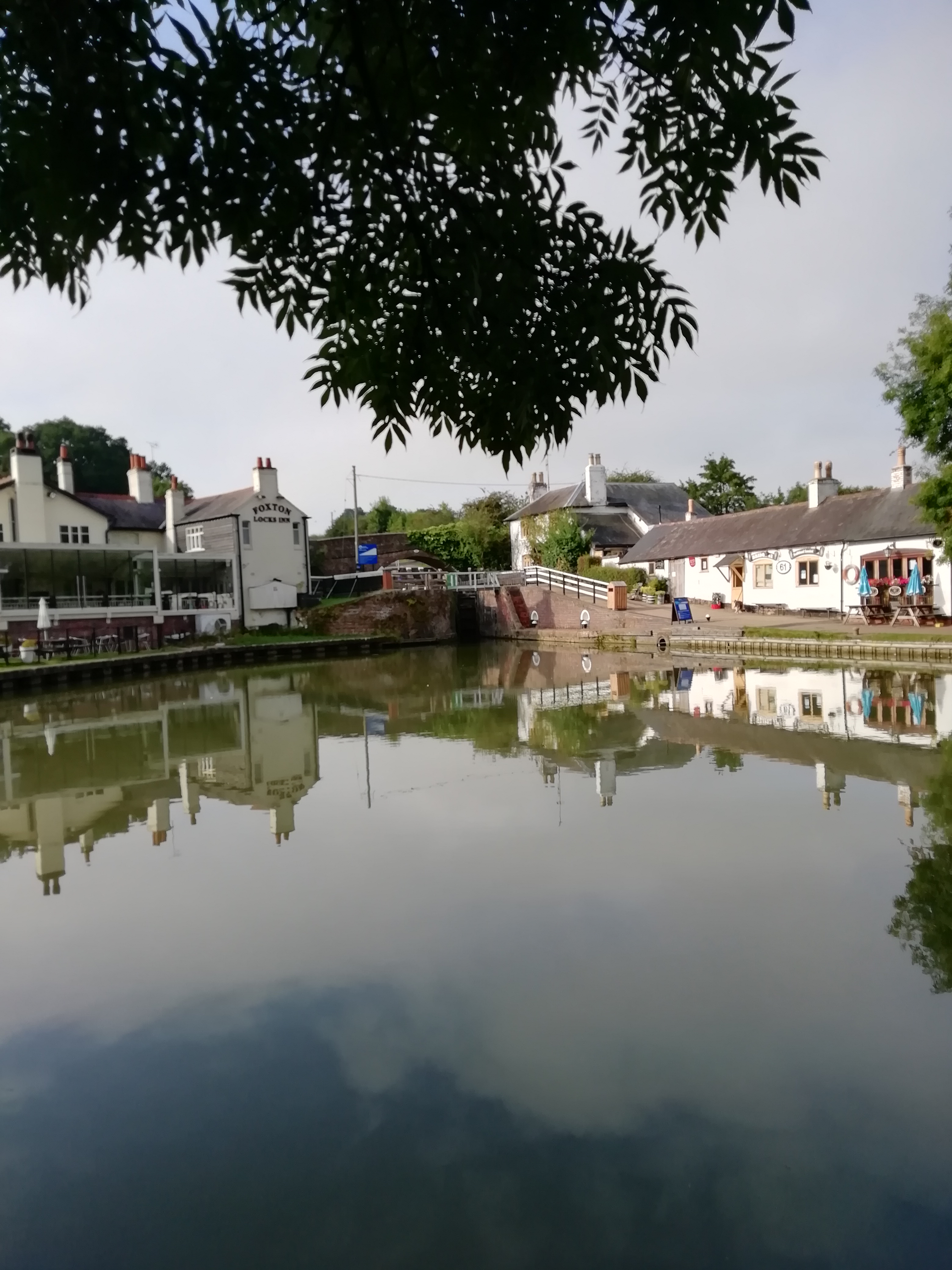
The locks start in a pool by the Bridge 61 pub which like all good things in the canal world has multiple purposes – in this case shop, laundrette, pub, restaurant and cafe. On the other side of the water is the Foxton Locks Inn. The locks lead off between the two, and so it was beside the Bridge 61 that we aimed to moor up on Bank Holiday Monday evening ready for the winter hours 10am off the next morning.
To get there from where we had moored on the Market Harborough Arm, we needed to open a small swing bridge and so with the dog alongside, and swinging the key needed for the bridge, I set off whilst Steve followed with the boat. I was almost instantly stopped in my tracks.
The kingfisher sped past me just centimeters above the water, a tiny bright blue rocket contrasting vividly against the waters muddied by moving boats. Suddenly he changed trajectory, veering up to an overhanging hawthorn branch. There he sat for little more than a second or two, the deep orange of his breast feathers set off by the scarlet berries around him. He wasn’t drawing breath but scanning the water beneath and then he plunged vertically down from his perch. He pierced the water like a dart just millimeters from the moss-edged coping stones that frame canal and which would have smashed his tiny frame had there been any impact at that speed. No sooner had my eye adjusted to him sinking into the water that he was out again, a small glistening silvery fish within his dagger-like beak. He flew with his catch to the far side of the water to another hawthorn and by the time he landed I could no longer see the fish.
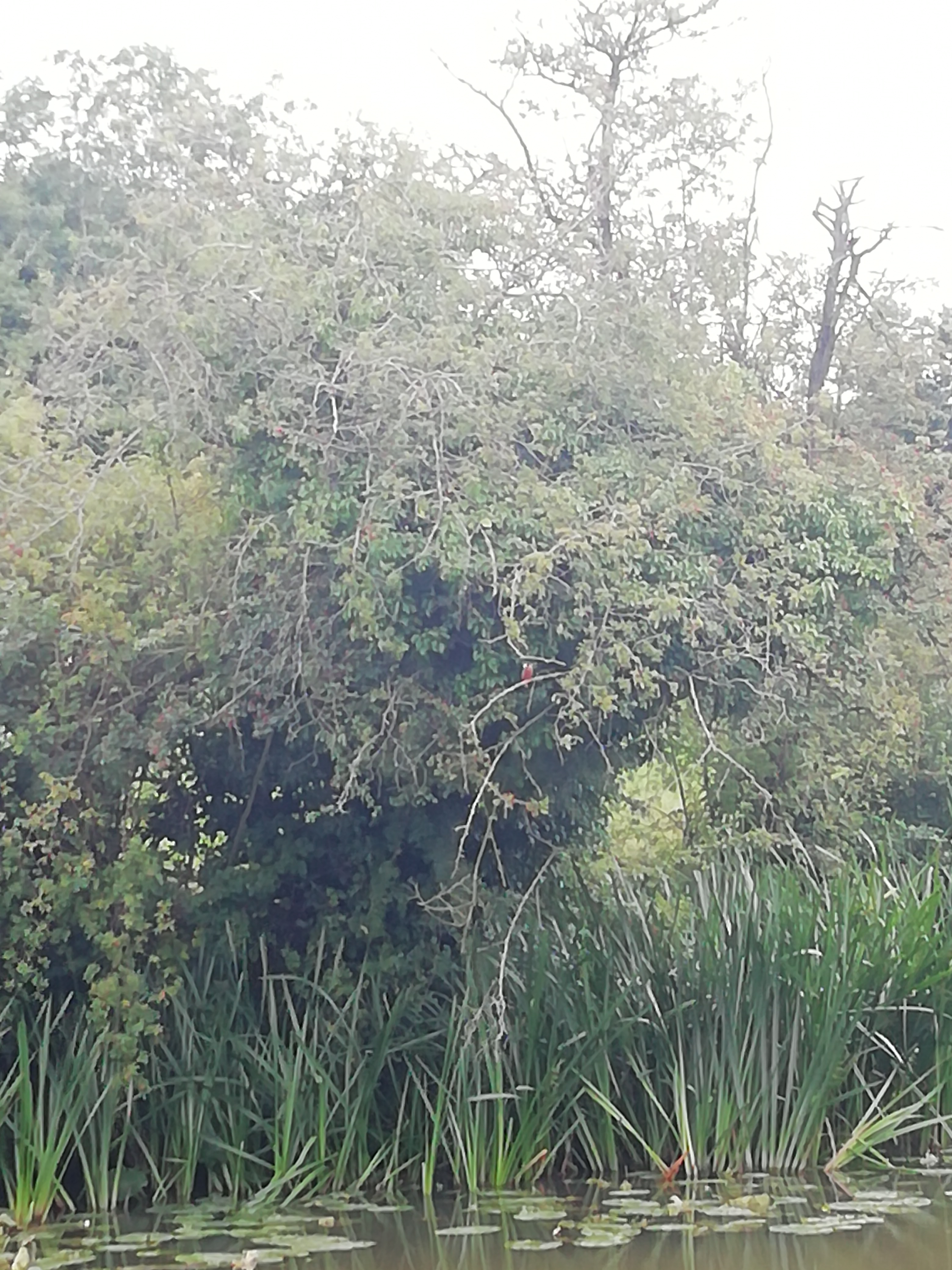
I realised I was holding my breath, awed by this demonstration of consummate skill and accuracy. I was honoured to watch the precision of that dive. It was worthy of a gold medal and a round of applause at the very least. But I stayed quiet and smiled with glee at one of the most marvellous sights I have been privileged to see.
I was shaking with excitement (and that’s my excuse for the quality of the photos!). We have seen glimpses of kingfishers before on the canals, although fewer this year than previously, but this felt like a performance, laid on just for me.
So thanks to this serendipitous encounter I was gleeful when we moored up that night, ready for the morning ascent. It took off the nerves I was feeling about taking the tiller for the ascent for the first time, and leaving Steve with the physical job of working the locks.
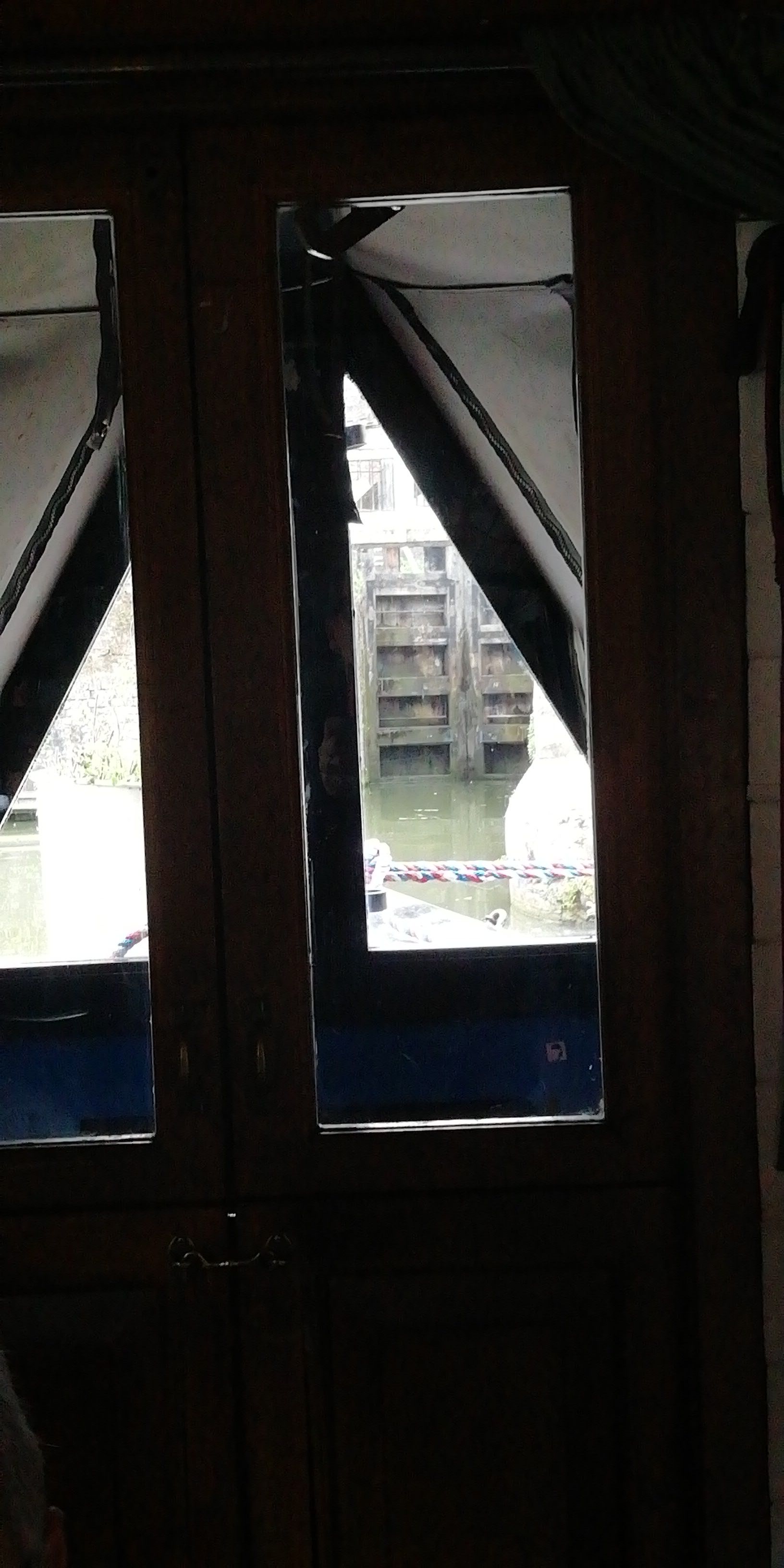
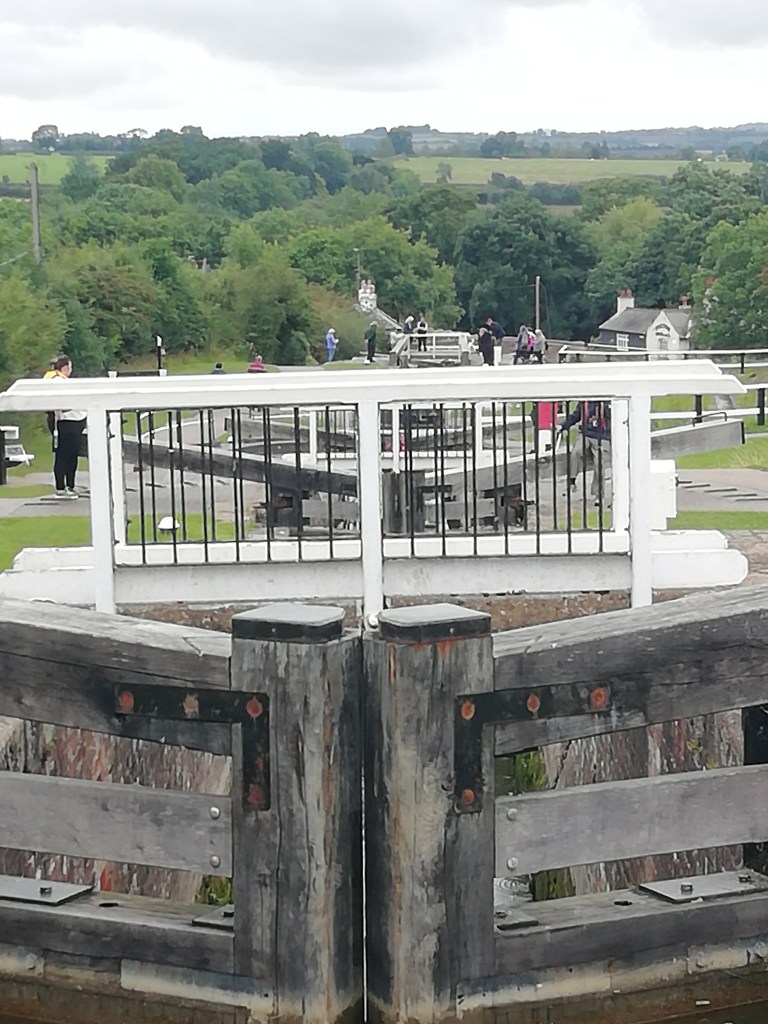
Foxton has 10 locks in all, arranged in two staircases, each of five chambers and in total they enable a narrowboat to climb or drop 75 feet.They are single locks, meaning they can only take one boat at a time – double locks can take two boats up and down side by side. In the middle of the staircases is a circular pound (like a pool) where a boat coming up can pass one coming down if the lock keepers (lockies) advise and permit. From this mid point you can see the Canal Museum, which records and retells the history of this fascinating place in multiple ways with video, reenactments, models and artefacts. From my point of view I learned that coming out of the lock before the pound, crossing the pound and entering the next lock does not require steering a straight line… But to get there we need to climb…and we need to get into the first lock to start…
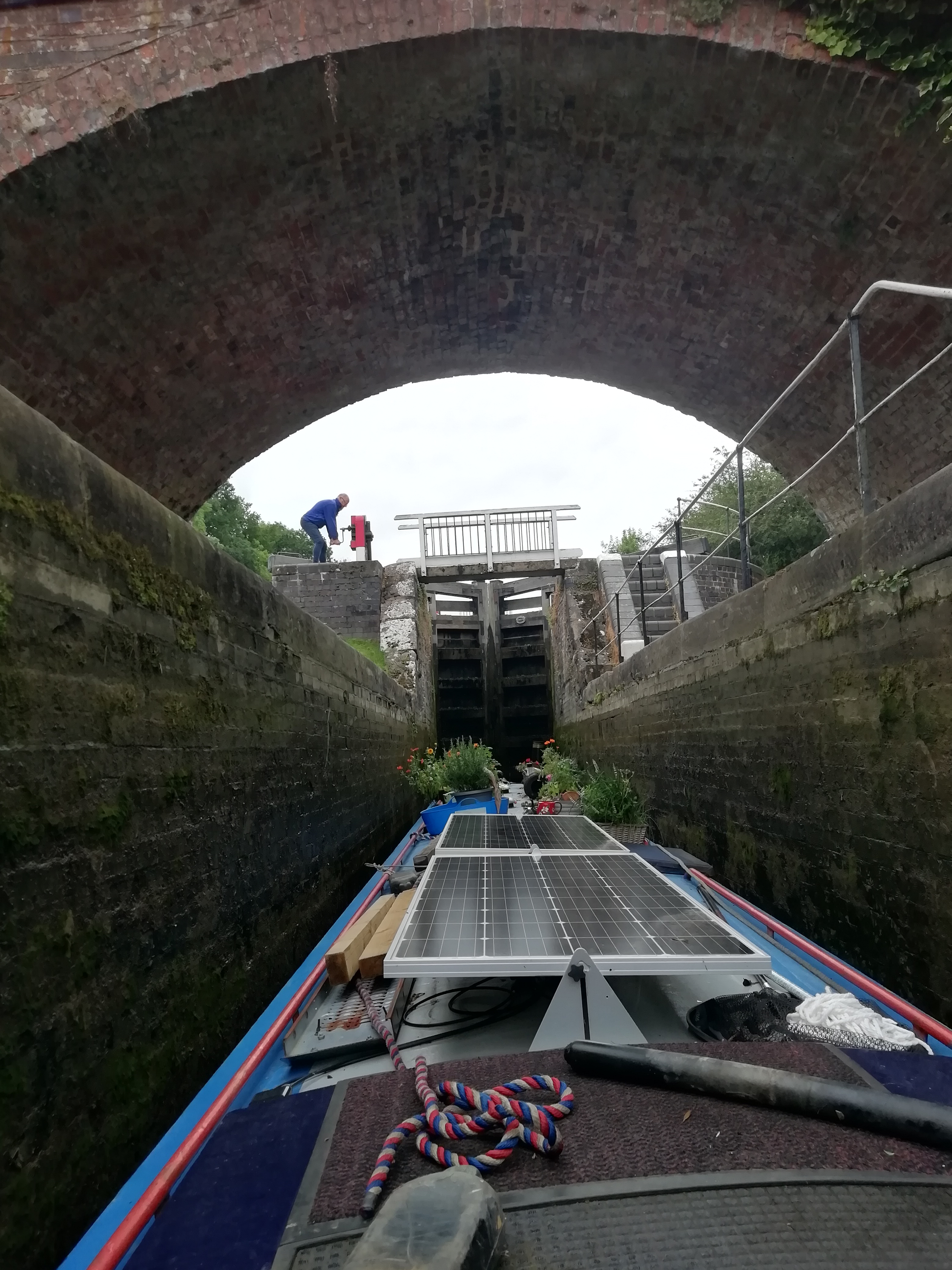
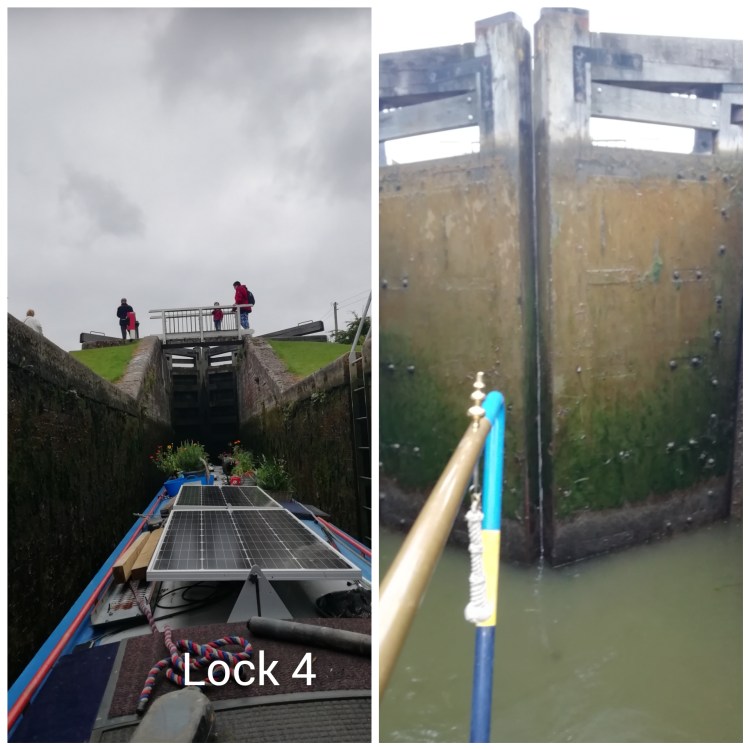
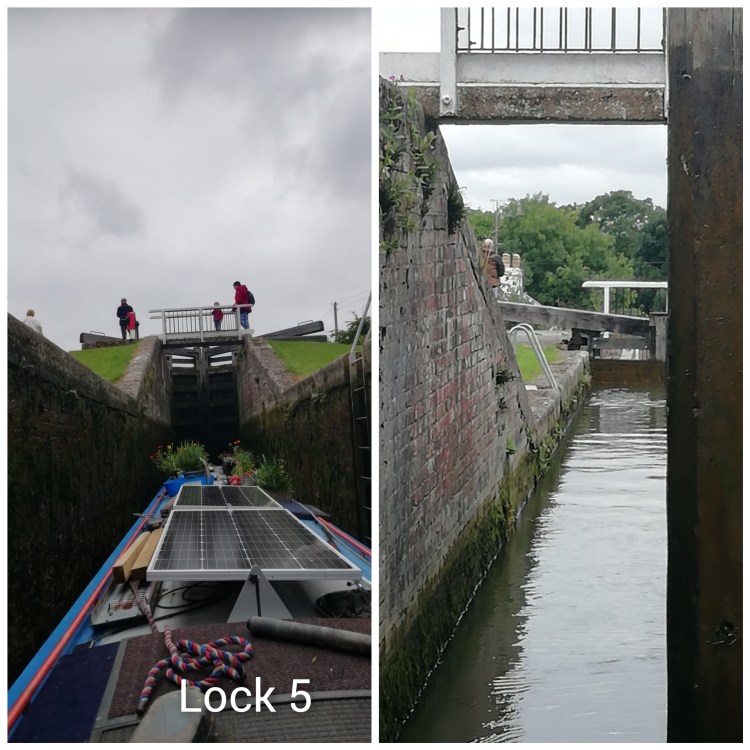
Join me in some of the first few locks from my perspective at the tiller – looking ahead and looking back.
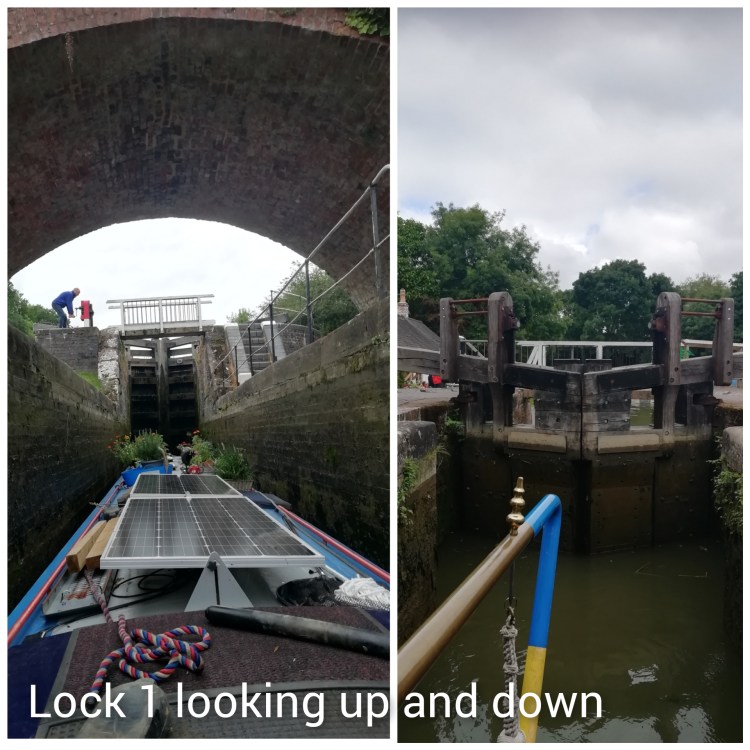
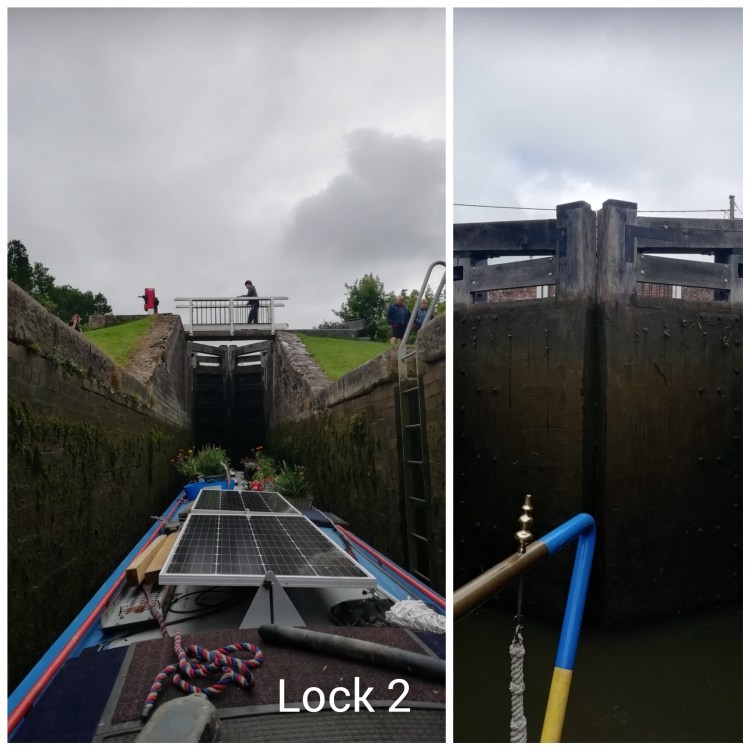
Historically these narrow locks created a bottleneck for commercial traffic, taking only one boat at a time and so an inclined plane lift was designed and built. It was steam operated and worked by loading two narrowboats or one barge at a time into a counterbalanced tank or caisson. Those going down would then pull the counterparts up the 1:4 gradient. The lift though was closed at night so for the 24 hour operators campaigned for the locks to reopen. The locks reopening, combined with mechanical issues with the inclined plane (the rails kept giving way under the weight), as well as the significant cost of manning and repairing and operating the lift meant it closed in November 1910, after just a decade of operation. Now only the locks remain as the way up.. or down. They each have their own character but each also has its own identity, sometimes well hidden beneath the slime…
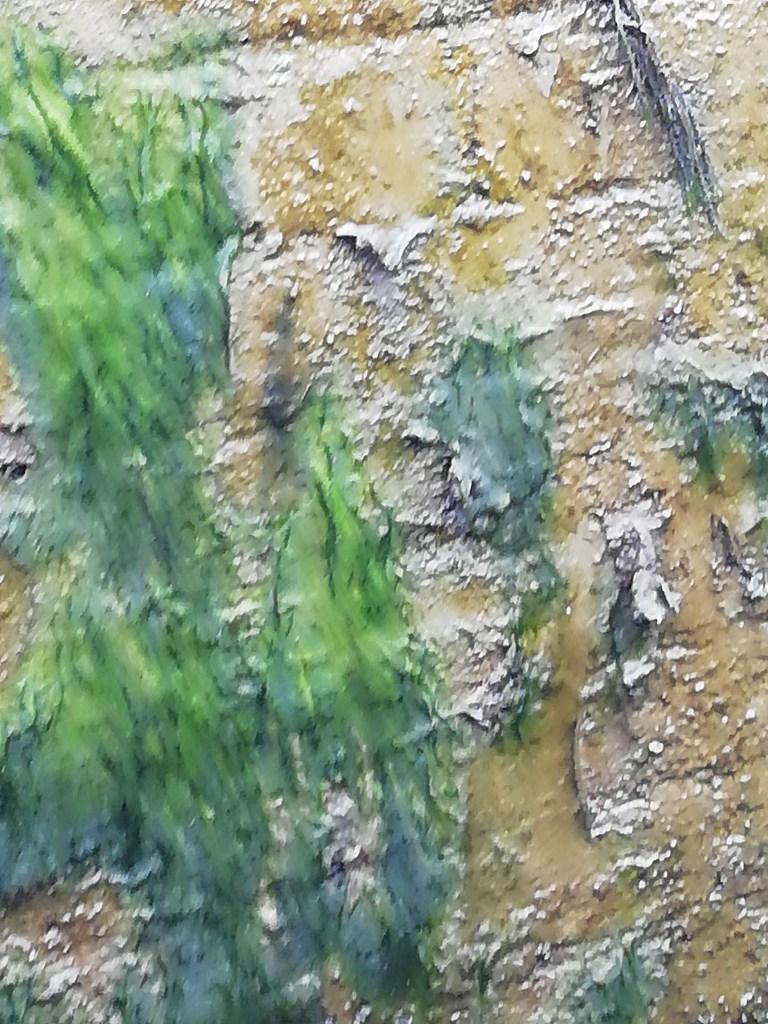
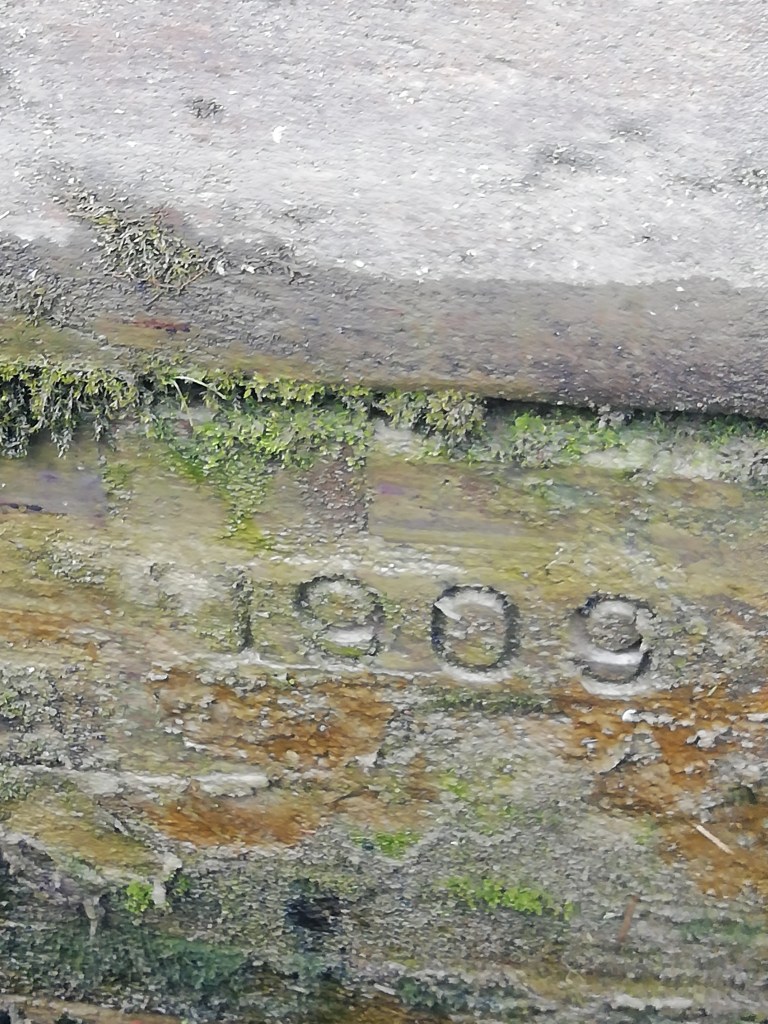
You’re getting the picture of what it looks to navigate them so I won’t take up up all10! The staircase means each lock opens straight into the next, taking the boat up (or down) in giant watery steps.
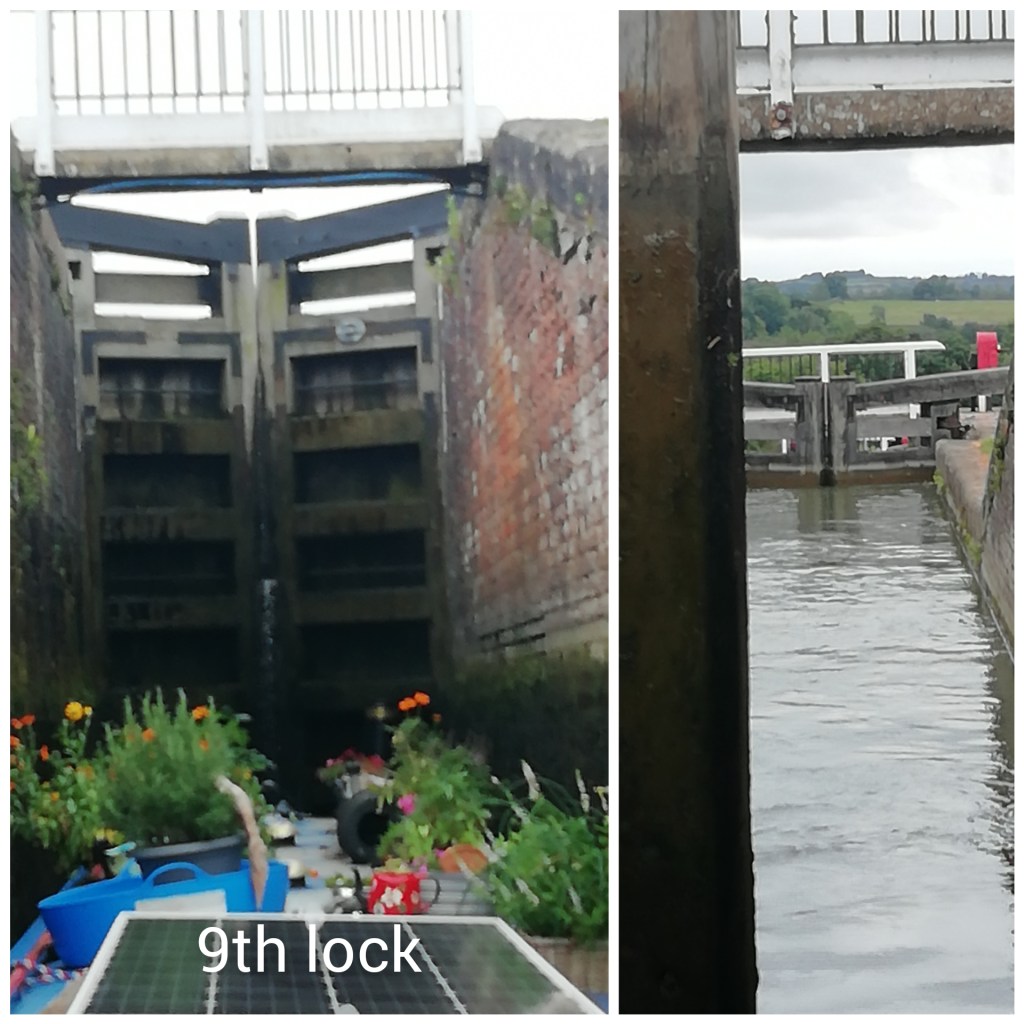
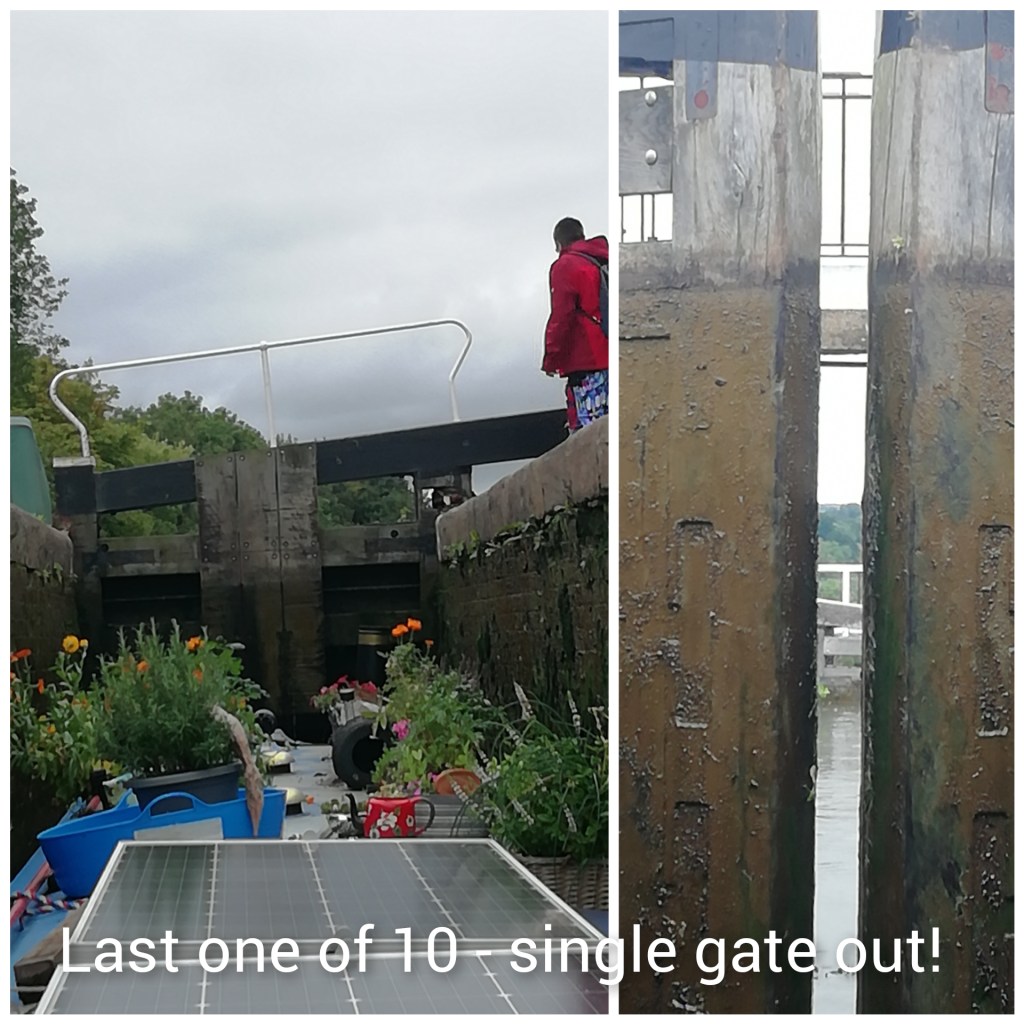
Despite the fact that we waited for 5 boats to come down, and the one in front of us to set off before the most rapid ascent of Foxton we’ve ever made – 45 minutes from lock 1 to lock 10. That’s despite the bottom scraping on something metallic between gates 15 and 15 . I’m sure our rapid progress was down in part to the heroic efforts of Richard, a small boy not yet at school who you can see in a red jacket.
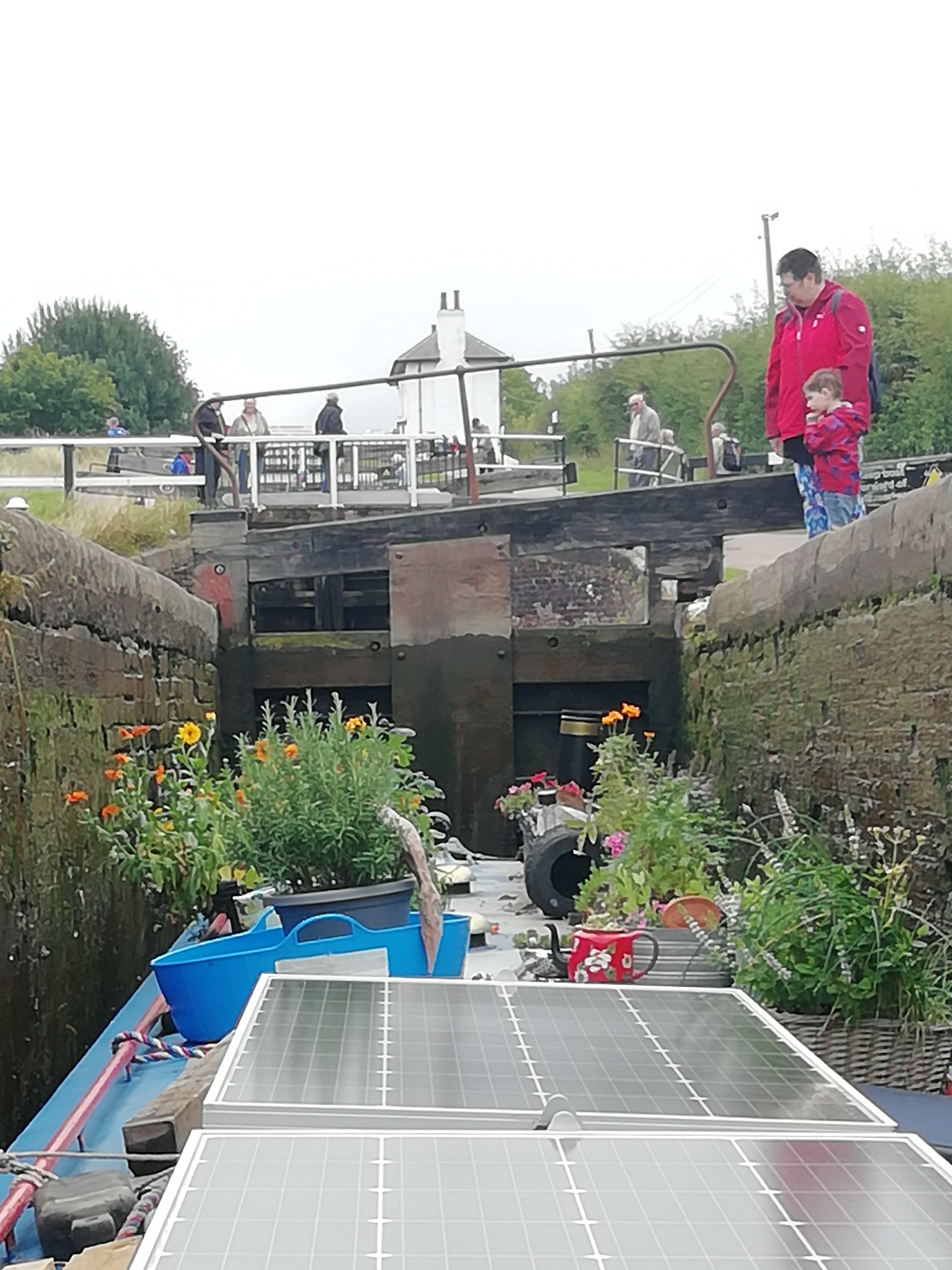
Under adult supervision and the watchful eye of Preaux’s crew as well as a lockie or two or three, this small gongoozler ‘helped’ with the lock gates and the winding of the windlass to operate each lock in the two staircases. Various other actors took bit parts as gate pushers, advisers (volunteer lock keepers were the informed ones, others sometimes not), and general hangers on.
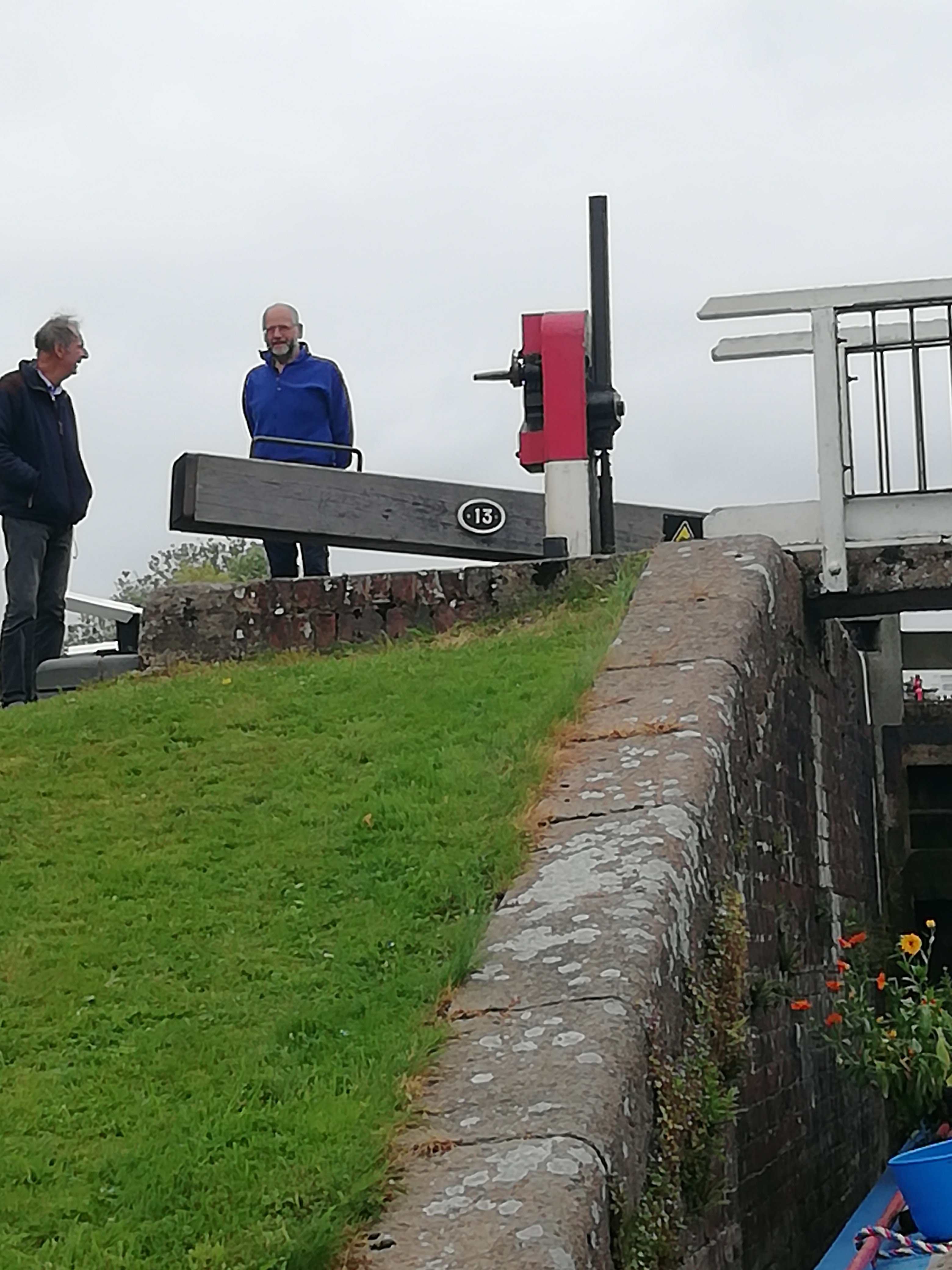
We got to the top to find Mark and his commercial coal boat Callisto who had just a few bags of coal left, so we are now stocked up for the start of winter. We refilled the water, refuelled ourselves at the whitewashed cafe at the summit, and then watched in astonishment as three fishermen caught a 5lb Koi carp in the pound at the top of the locks. It surprised them as much as they surprised it! It had obviously been a big fish in a small pond at some point and been dumped in the canal, where it obviously flourished.

Then we took time to reflect on another safe passage and another 24 hours of momentous firsts.
 Pickingupducks
Another great post about a fascinating place. The museum is also worth a visit and I wonder if you had the bacon rolls at the cafe by the Top Lock? I certainly did when I walked there from Market Harborough along the canal a couple of years ago, and will do so again later this year.
LikeLiked by 1 person
We did indeed, partly to celebrate Canal and River Trust’s decision to let the family who have had the Top Lock cafe for many years, to renew their lease. Many boaters signed a petition against the CRT original decision to end the family’s lease.
Enjoy your hot butty/cob/roll (so varied the language it is great) there when you get the chance, and if you want to visit the museum it now has limited hours so check out their website before heading that way.
LikeLike