Boaters know only too well the impact of too much stuff. Life becomes more difficult – it’s physically more difficult and uncomfortable to move around an overcrowded boat. Life also becomes mentally more difficult – “the clutter effect” psychologists say. It results in increased stress, lower life satisfaction and I’m not talking about hoarders, but those of us inclined to squirrel things away.
It may be for the best of reasons – rainy day mentalities ‘that’ll come in handy one day’; the desire to keep records in paper form not just online; or a desire to hold onto memorabilia that means something, often only to you, but sometimes to others too.
It’s not just TV shows who talk about decluttering, or tidying consultants (yes – they exist and cost a fortune!). I’ve just had the privilege of helping family members sort part of their home ready for a significant downsize. It has been thought-provoking, causing me to think long and hard about how we all deal with the things we consider important, or necessary to keep, and how we deal with those things others consider important or necessary to keep. The two are not always the same. After all “One man’s trash is another man’s treasure.” It applies to physical things as much as it does these days to emails or photographs on our phones. My phone keeps shouting at me now that I’m about to run out of space, and it’s all down to the photographs I can’t bear to delete even though I think I’ve saved them in the Cloud.
Clutter, physical and mental, real and digital affects how we live. We are all living longer which this means we have longer to amass stuff, to spread it around us, and perhaps we end up cramping our style for longer because we are literally cramping our lives.
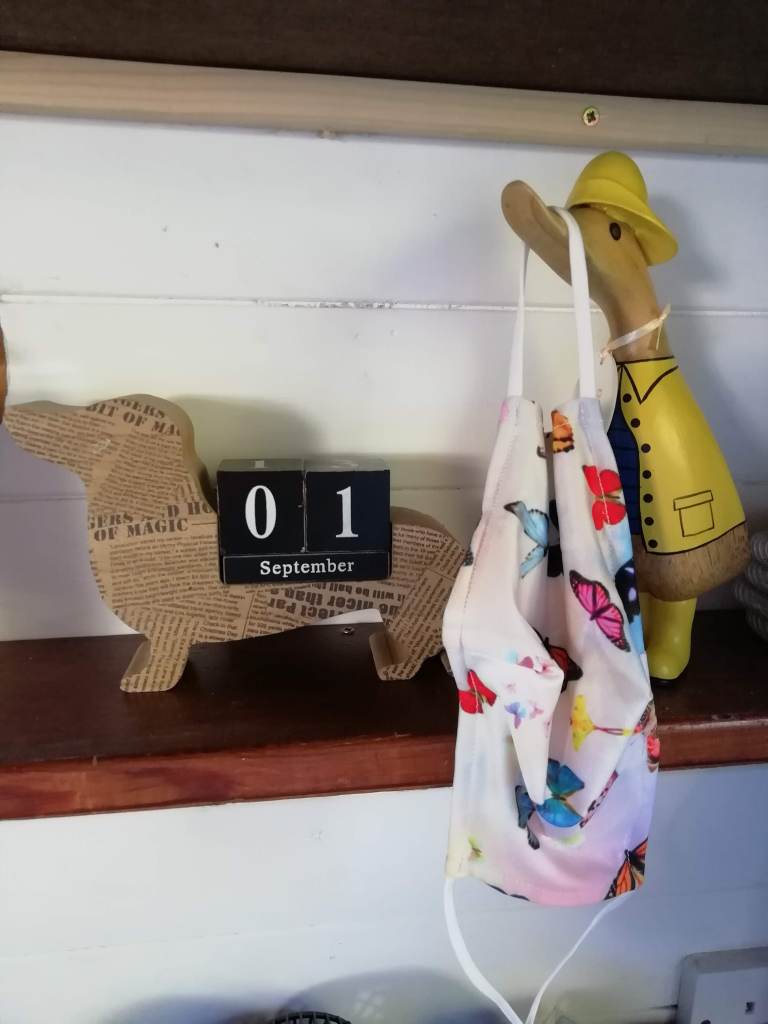
In part we feel satisfaction when we look at treasured possessions. They may evoke memories of those we love, remind us of happy times, make us feel joyful or contemplative. Too many of them though, and that valuable feeling can be lost, literally swamped. Clutter means we can’t see the message at the heart.
Being able to clearly see what we believe matters to us is important. If we don’t see it, or appreciate it regularly, then perhaps we need to question why we have it.

When we packed up our bricks and mortar home and moved onto a narrowboat – see a previous blog – it was done in a flurry of optimism, of enthusiasm and excitement. That kept us going through the tough decisions, the agonising over what to keep, what to give away and what we had that really amounted to junk. We also kept a few things in store – the ship’s wheel from my late Father’s last ship, some cartoons my late brother drew, childhood Dinky toys and lots of photographs, many of family no longer with us.
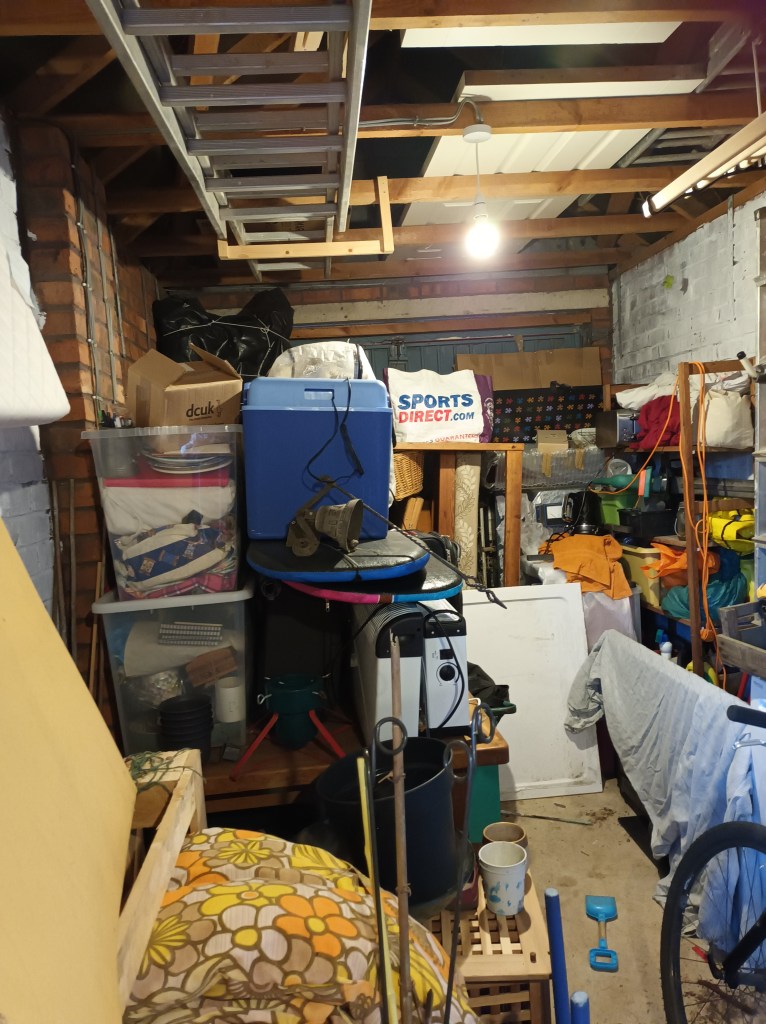
Weirdly most of what we disposed of came from employment, that fundamental around which our lives had revolved. Changing to live rather than work – working only when necessary changed our perspectives on the importance of associated papers, journals, books etc. Many were gifted, some papers shredded and others were recycled.
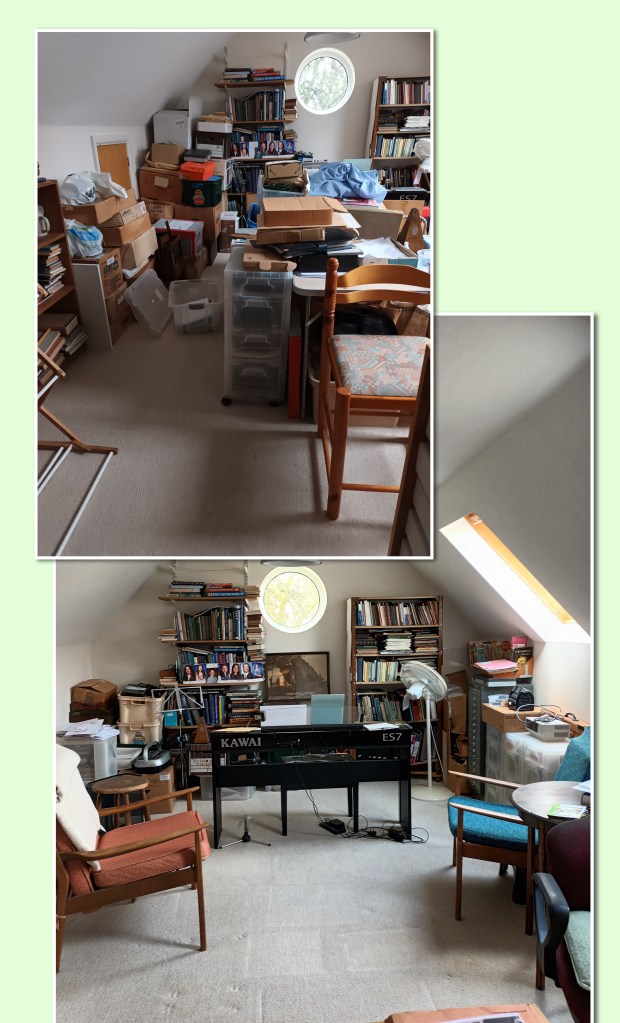
Looking at family members’ papers – they won’t mind me disclosing they are in their 90s now they too had papers from throughout their long careers. Many kept for over half a century in many cases not looked at for at least a decade. Like letters kept from past years, going through them resulted in the many memories or at times, the realisation that there was little point in having kept something when all it resulted in was “Who’s this?” or “What’s this about” or even the unanswerable “Why did I keep this?” I have to hope they enjoyed the task of reviewing at a manageable number of items, enjoying the memories and being in control of the decisions of what should go and what should stay. There was too much for them to review though in one go so much has been boxed for other days, but their surroundings are clearer which may make the process easier and certainly safer going forward. The choice of filtering must be theirs.
Their thousands of photographs, slides, transparencies (so many unidentified) made me realise the importance of making sure someone knows why you have kept something – it’s hard for others to appreciate the value of something if you can’t identify it. Those of us downsizing and clearing out have a responsibility to make sure that what we do keep (because we’d like to hand it on), has meaning to and for those we hand it to.
That labelling and categorisation is part of streamlining our possessions. Doing that means items have relevance and value to others who can then make a decision on what they want to do with them. It also means we can appreciate what we have, and decide if we really want to keep it. Books, clothes and photographs are often among the hardest things to shed, but it really can be quite liberating to at least reduce them.
The Swedish, as they always seem to do, I’ve discovered have a word for sorting things out so those who might inherit them know what they are dostadning. It means death cleaning, and it’s about proactively clearing out possessions before death so you don’t put the onus on others to decide what to keep or dispose of. I’ve discovered Margareta Magnusson’s book The Gentle Art of Swedish Death Cleaning, which set me wondering at what age the process should start, but then I looked around the boat and decided that it needs to start now. If we haven’t used it or appreciated it in the past 12 months, it needs to go – clothes, books, papers, etc. It is a chance to sort out things we want to keep or to hand on to others. In the main, this is physical, but the digital also needs thinking about today.
So when to start this process – well we’re all living longer lives giving us more chance to accumulate stuff as a result so I think we all need to recognise we have more time to get rid of things, and perhaps also recognise that many of the memories we value are the ones in our heads and hearts.
I owe a huge thank you to the family members I was helping. I now know we all need to ask ourselves a few simple questions that should enable pain-free decluttering making our living environments more pleasant.
- What do we need with us daily
- What do we want to keep and why
- What do we want to keep for others and do they know its importance
Anything not covered by those is out – in our case, off the boat, and out of the storage we’ve had it in. We are about to move to a new storage location so that is a spur to reduce what we have, to move less, have less to worry about and quite frankly if we are keeping things that we can’t answer those simple questions about with clarity and conviction then we need to dispose of it. Keeping the wisdom of William Morris in mind will assist.
'Have nothing in your houses (or boat) that you do not know to be beautiful or believe to be useful'
                     William Morris
After all, things aren’t what matter most in life. People, experiences, shared moments. These matter.
 Pickingupducks