As boaters, like all the emergency services as well as those who need their help, we have a lot to thank musicians who got lost when trying to find far flung venues or gigs.
If you’ve ever got lost while following a postcode or trying to find an address, then you will know the shortcomings. If like us, your temporary address could be literally in the middle of nowhere as some of favoured our inland waterways mooring spots are, then telling family and friends how to find us can be a trial…or often rather a frustrating trial and error.
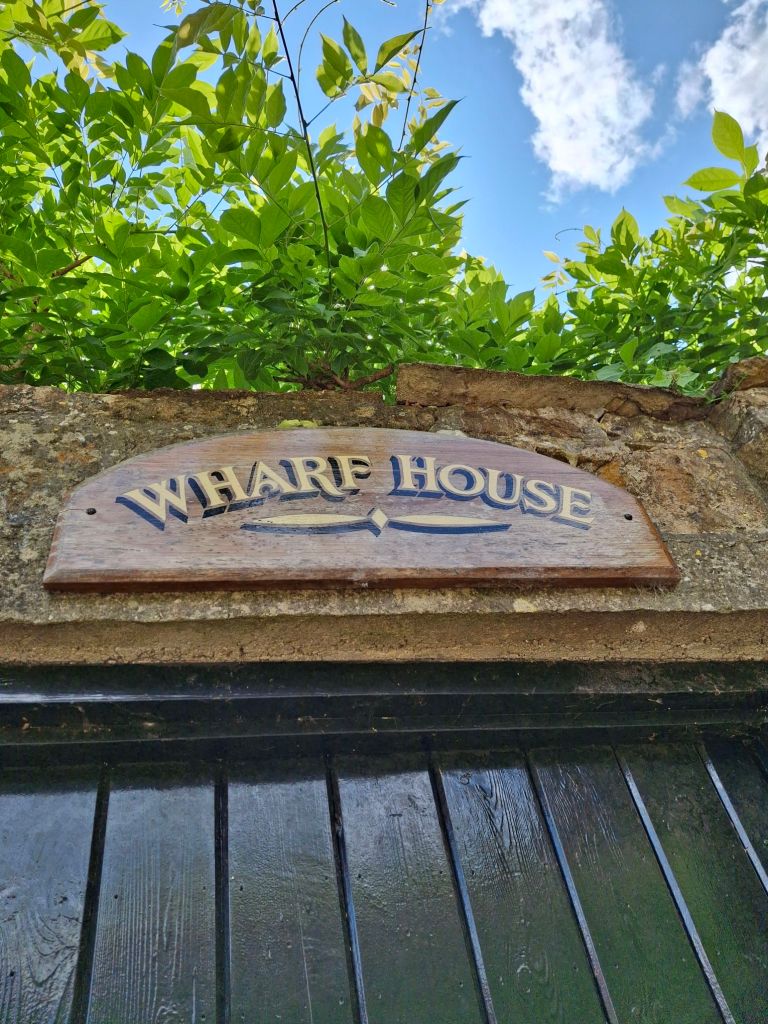
Many houses just have a house name and no number. From Preston to the Staffordshire Moorlands or as I found last week, to the Cheviot Hills of Scotland, a postal address is often insufficient to get you to exactly the place you want to be. People can use directions, often lengthy and complex to be found, or longitude and latitude which can lead to confusion, but since 2013 what3words can take you straight to the right door, the right place, in just 3 words.
You can speak it, scan it, type it, and what3words functions in 61 languages. The entire globe is divided into 3m squares and each is assigned a unique combination of three separate words. Just 40,000 words are enough to cover the whole of the world in 57 trillion 3metre squares and still have some combinations left over- statistics I still find utterly mind blowing to contemplate.
For us as continuous cruisers of the waterways, being able to send three words every time we moor up to let family know where we are is invaluable. No need to faff about with longitude and latitude (and hope people get them in the right order), or work out where we are by convoluted directions. We merely now give 3 words and at the click of a button people can know exactly where we are.
Some places have less connectivity than others but w3w can work offline once you have the app.
People now add w3w to orders to make sure what they are ordering arrives right at their door, and the right door. Delivery companies often ask for the what3words to save them time and effort getting items delivered efficiently. From police to mountain rescue, coastguard and fire services, land and air ambulances, over 85% of UK emergency services and some in other countries use the system, enabling them to find people in need of their help in often far flung remote locations without obvious nearby landmarks to aid navigation.
Nothing is foolproof where humans are concerned and AI is being employed to try and provide an element of autocorrect for human error like mispronunciation or mistyped characters.
There are other systems in operation but in our experience on the waterways what3words has proven invaluable for the past few years. It is the first thing I would go to in an emergency, and it has successfully pinpointed locations for bringing us an engineer, gathering to volunteer in remote spots, meet up with other boaters, to find difficult addresses or to clearly pinpoint an incident.
There is also the unexpected amusement of discovering some hilarious combinations. People have looked up worldwide landmarks and discovered some true comedy gold in the process. My favourite? 10 Downing Street – slurs.this.shark and on the other side of the pond at The White House – sulk.held.raves (although that could be more appropriate for some incumbents than others!). If you’ve ever paid to travel up the Eiffel Tower you might agree with – prices.slippery.traps
There’s even a narrow.boat.canal – in Alaska. We are sadly unlikely to ever make it to discover.narrow.boat as that is in Angola.
For us in the last year we’ve found ourselves in (amongst other places)
turkeys.streaking.viewer
sliding.atomic.slugs
doses.scorch.elephant
pirates.amicably.extremes
If you want to follow our footsteps, just pop those into w3w.co – if would be fun to hear where you find yourself too!


Great and helpful post Deena. Amusingly, ours is brightens.most.boils Too much!!!! 😂
LikeLiked by 1 person
🤣
LikeLike
The way I use the three words app is I write postcards. Each postcode is either a Structure (anderton boat lift or the lock), New Place (Town or village) or in most cases a Mooring (good\bad). Each postcode is then posted to my father’s address which I then add to my hand written journey and journal book.
LikeLiked by 1 person
I love that idea. Are they blank postcards or postcards of the structure, town, village? A great way to build depth to a boat log
LikeLiked by 1 person
They are blank postcards because I couldn’t find any modern ones of the anderton boat lift when I first started the project so pictures on so I drew my own
LikeLike
What a brilliant idea
LikeLiked by 1 person