Hopeful migration or staying put

Migration is in the news, it’s high on the political agenda. It fuels fierce and often aggressive debate, but it is taxing my mind this week in what I think of as original, basic ways.

A resident Mute swan – territorial unless conditions force localised migration


The swallows, swifts, and house martins who were still evident swooping low above the water in front of the boat as we made our way south from Yorkshire at the start of October have now gone.

Their long voyages cross continents. By now they’ve travelled via France and Portugal to winter in Africa, some 3,400 miles of flight. They head south for warmer weather, more ready food supplies to see them through our cold months, and for each of these tiny darting birds, their journey has been far riskier than ours. They have to hope that they can evade bad weather, skyscrapers, powerlines, loss of places to rest en route, and attacks by human and animal predators during their journeys. If they can safely navigate these remarkable distances and avoid the many perils to life on the way, and do this taxing journey twice in one year, then we can hope to see them diving and swooping around us once more as we unite on the canals next Spring. Maybe next year I’ll get a decent photo of them too!

There are migrants like Canada and Egyptian geese that have decided to stay here – some in vast numbers.


The blackbird enjoying the ivy berries in the hedge opposite the boat may well migrate to mainland Europe if the winter here proves more bitter than that over there. As some birds leave for warmer climes, some have headed towards us, considering it warmer here than their normal hangouts in Scandinavia and Iceland. Redwings and fieldfares are still gorging themselves on the remaining berries that drew them here in early Autumn.


Our native tawny owls are at their noisiest right now, and it is glorious hearing them from nightfall through the night. They are making a real racket right now, and the boat is a perfect spot to hear what’s going on. The young are off hunting for somewhere to call their own, and the older birds are calling out to defend their territories. The females shriek – that’s the only word for their too-whit whilst the males hoot too-whoo. We’ve been falling asleep these past weeks listening to their vocal battles echoing around us.


The farmer by our current mooring has been preparing the lambing sheds and bringing his in-lamb ewes to pasture near the farm, getting ready for the next stage of the cycle of life. Along the canal, the early birds are only a few weeks off getting ready to start their own cycle of reproduction.

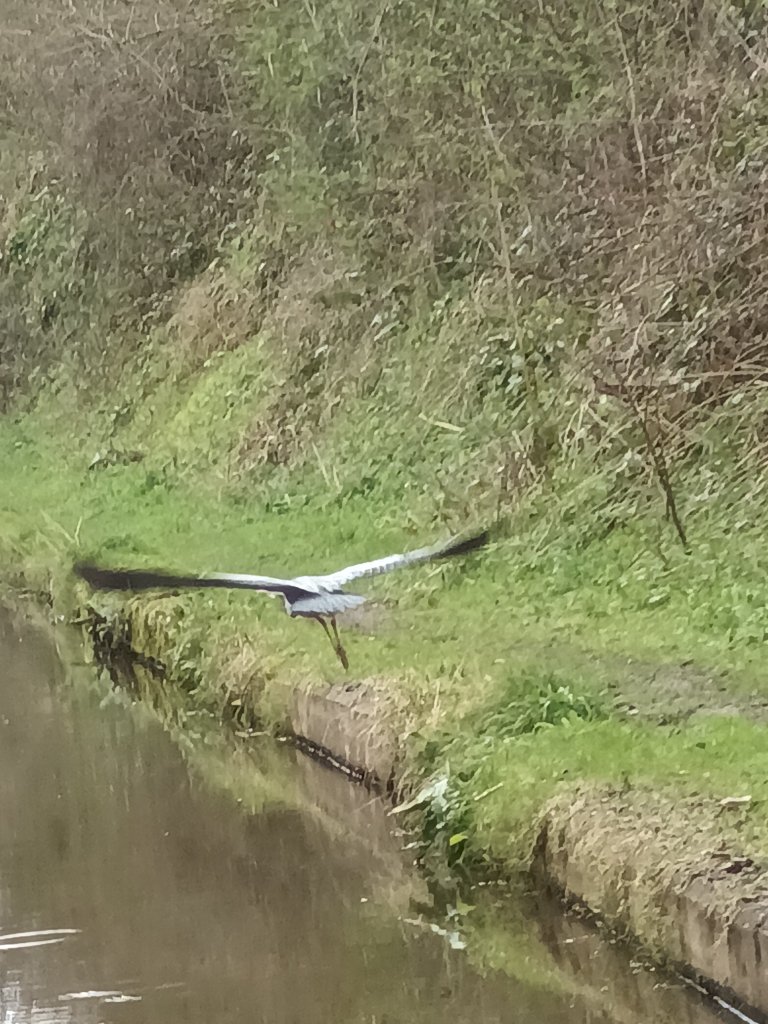
The grey herons and rooks will soon start collecting sticks and getting the prime locations for their nests – the herons will lay in January, so they need their homes built next month. The rooks may well find winter storms blow their nests apart, but they persevere in hope.


We’re doing much the same, really. We’ve migrated to a place we know is safe and sheltered, convenient for winter. Not totally ideal – there’s always a compromise (mud in this case). The pull to be back on a canal, avoiding the vagiaries of rivers and their potential for flooding is strong – security over everything, even the mud.

The advantages though include being able to take early morning runs following the darting flight up the canal of the vivid blue and red kingfisher or watching the early morning perambulations of the russet fox on the towpath as he eyes up and fails to enjoy a mallard breakfast.

The ducks, swans, moorhens, and cormorants remain with us, endlessly fascinating. It isn’t just us who need canals.

We all need to make the most of what’s around at this time of year, wherever we are. There is so much to see if we give ourselves space and time to really look. I also need to give myself more time to take some better bird photos!

There may be trouble ahead…

Preparation for the future is essential, and something many of us put off but we can’t. We have been getting ready for winter as the first winter storms chivvy us.

Getting a full-time liveaboard boat winter ready is very different from prepping a house or a car or a boat that sits in a marina.

Already this year I’ve heard about 10 times “It must be so cold on a boat in winter”, but if we get things right and plan ahead, it’s anything but… We are both sitting in t-shirts as I write.

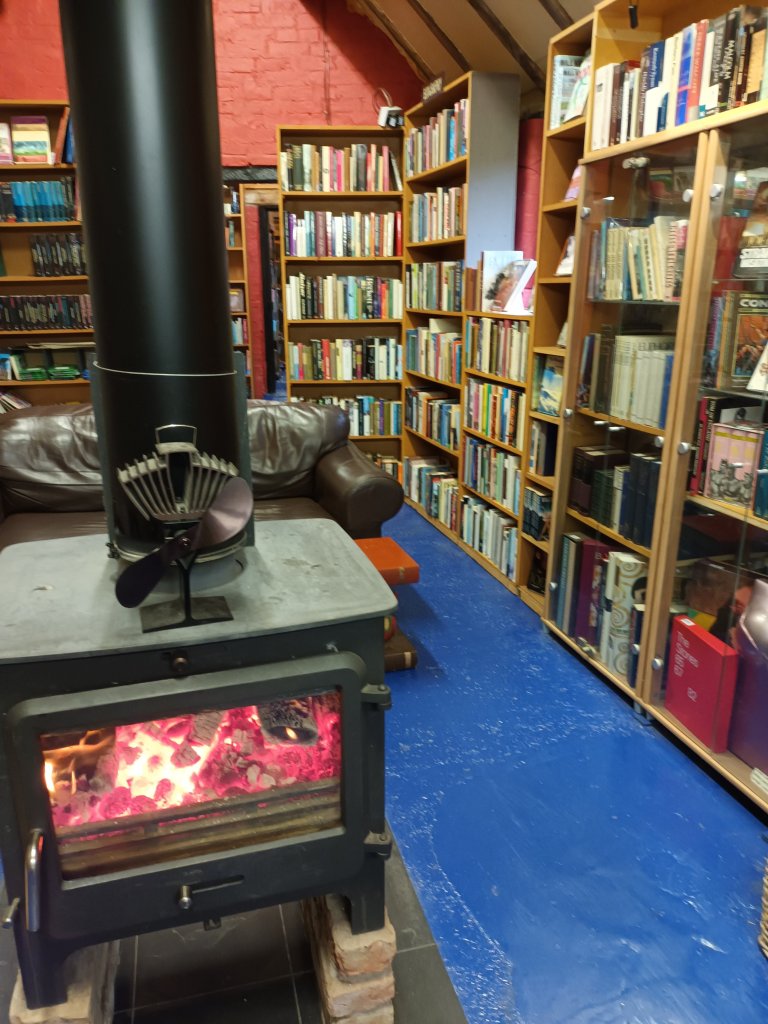
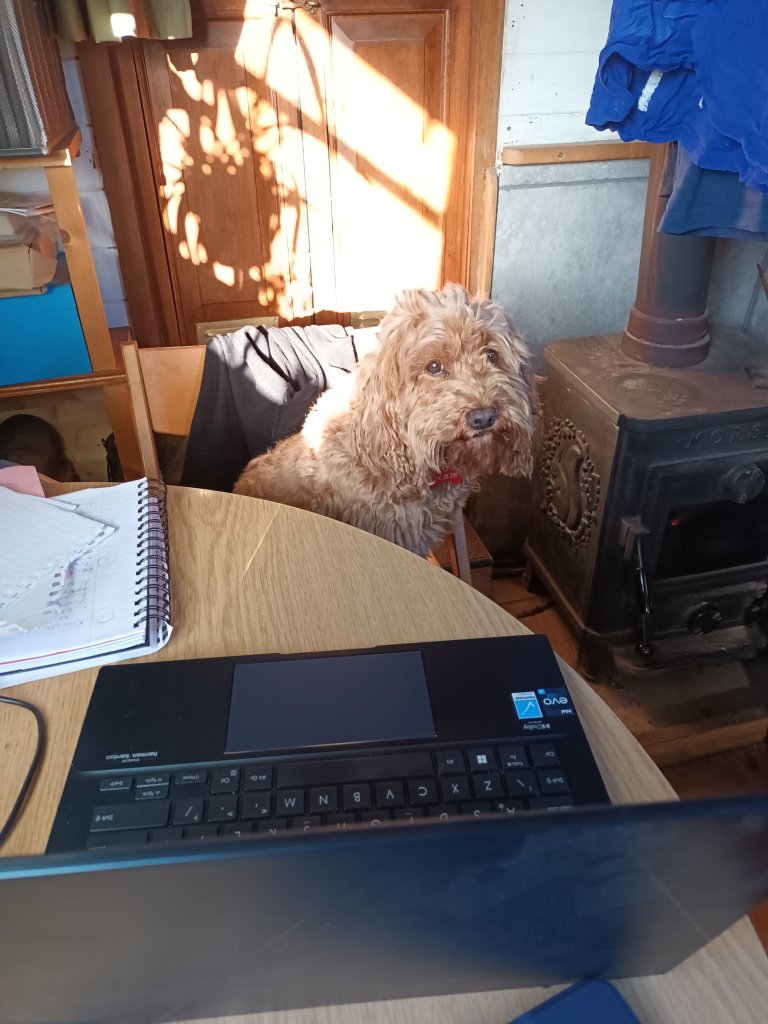
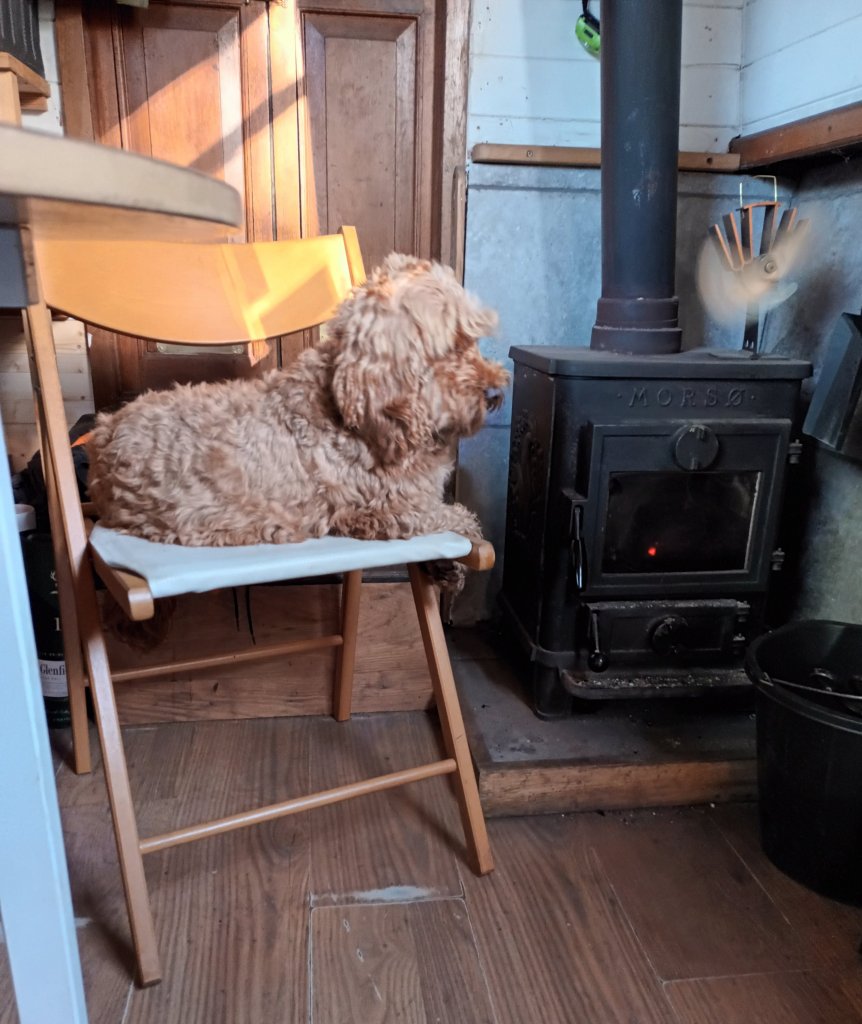
We don’t have central heating, but our trusty Morso Squirrel multifuel stove which is located at the far end of the living area. As it’s our main source of heat we keep it going 24/7 from now until the end of winter. We are already foraging twigs and sticks as we walk the dog in dry spells. That cuts down the need to buy kindling or firelighters for the times we have to relight the fire if we’ve been out for any long period of time.

To keep the stove lit requires fuel, and we burn mainly smokeless Excel, with some foraged wood. Last year as prices were incredibly volatile, we were invested in buying a tonne of bagged Excel up front and were fortunate to have the generous loan of a garage to keep it in until we needed it. We got to summer with 8 of our 50 20kg bags remaining. Those are doing us nicely as we start to move into winter, although it hasn’t been bitterly cold yet despite the four storms that have moved over the UK since September.

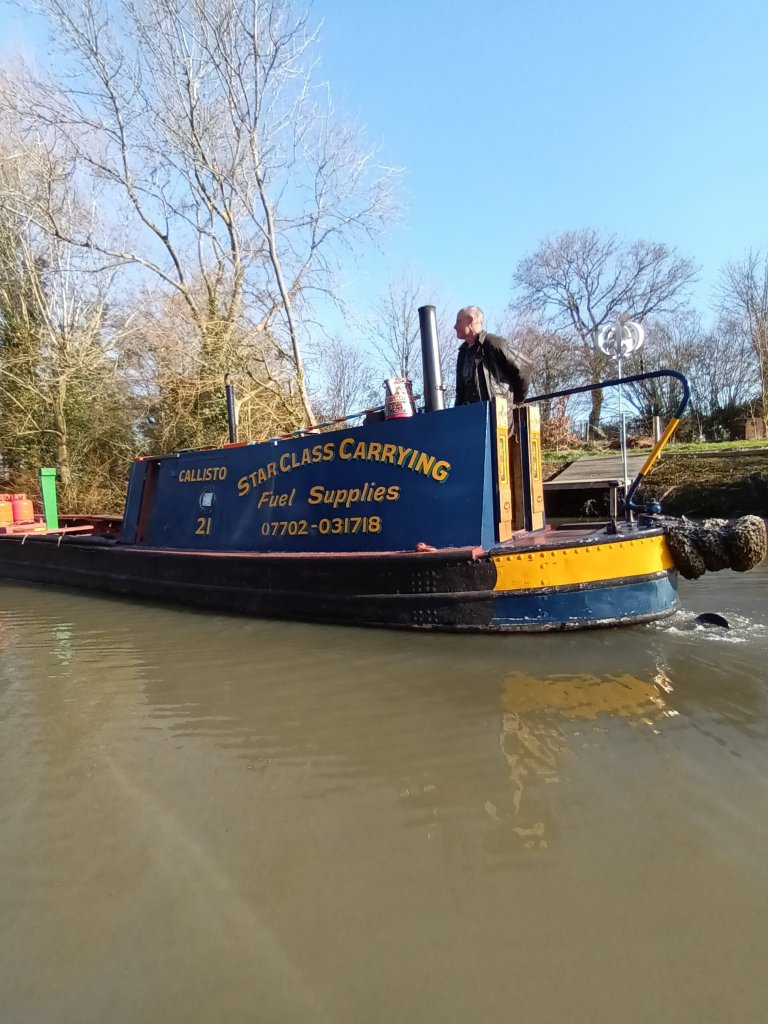
We are almost at the end of our fuel, so we’ve ordered some from the coalboat Calisto that supplies the route where we’re currently moored. It should be passing us early next week, and if we’re out for any reason, walking the dog, shopping, Mark will just drop the bags of smokeless Excel ordered on our roof. This really is remarkable service – couldn’t be easier, and the coalboats that plie the waterways supplying coal, diesel in many cases and gas, are a lifeline for boaters.

Not only do we need to think about heating, but insulation (and ventilation too). In terms of insulation things will be a bit different for us this winter. In past years we’ve used secondary double glazing to help keep the heat generated by the stove, in the boat. This year though much of the acrylic sheet secondary glazing snapped and shattered when we were moving it from the main windows and the bathroom – victims of old age and good service. We could replace it for the four windows that are bereft this year, but we are nearly on target with our savings towards new windows, so as they will negate the need for secondary glazing anywhere, we don’t want to waste cash in the short term.

Winter also reduces the amount of solar our roof top panels generate. Maximising generation opportunities along with avoiding dangers in storms does influence how we move and where we moor at this time of year. Wooded areas are out. Dangers of trees falling in high winds and/or creating shade spots are things of which we are very aware.

Storm avoidance is impossible, but minimising impact by thoughtful mooring and not taking routes which are prone to issues can help. This year we had aimed to head for Loughborough which meant mooring on the River Soar, but heavy rains brought by Storm Aiden in October, Storm Babet and hot on her heels Storm Ciaran last month and now Debi topping up the water levels, have changed plans. We are keeping off the rivers, even if we could get onto them, and sticking to the canals for now. Canals are more regulated in terms of water flow and whilst towpaths may well end up as muddy tracks, they tend not to be flooded as moorings on rivers can be, both riverside or in marinas.

Winter is a time for living differently on board as Boatdog is discovering on her first winter afloat. Stews and casseroles cook gently on the stove, potatoes bake in its depths, and we craft and read more, working inside more than outside. Walks are brisk, running is a great way of generating body heat.  Like the birds and animals around us, our circadian rhythms mean we sleep more, responding to the hours of dark and light. We enjoy the change of pace, the more measured movement.
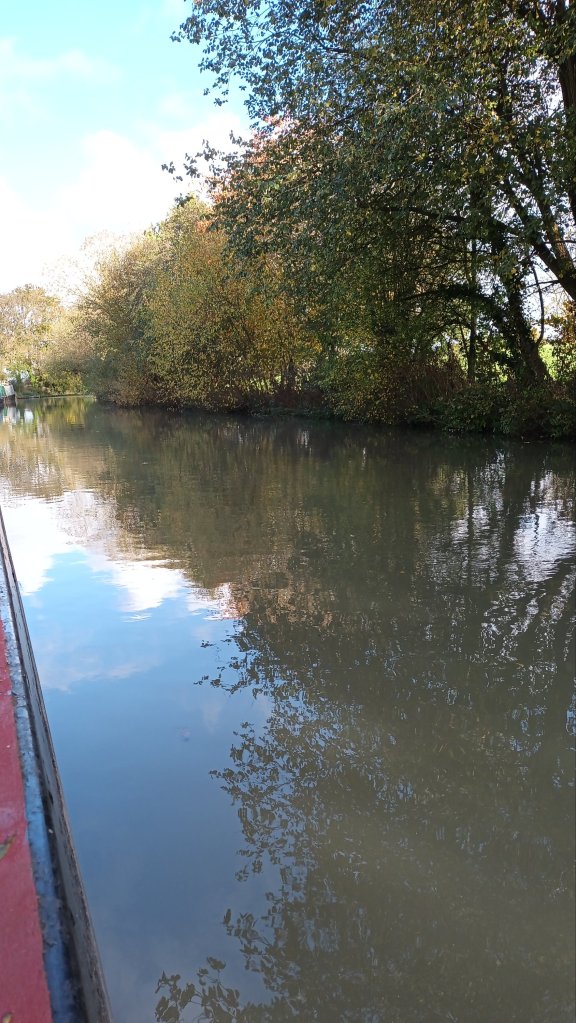
It is as the traveller and writer Paul Theroux said, an important time for us all. “Winter is a season of recovery and preparation.” It is a time for us, a time to think, to plan ahead, to hunker down away from the storms but also a time to look after and nuture ourselves, so we’re stocking up on coal and chocolate to cover all eventualities that storm Elin may bring whenever she appears!


Getting crafty – join us if you can!

Many of us turned to crafting during the lockdowns of the pandemic, learning new skills, or returning to old hobbies with renewed vigour or in some cases desperation.

Global research shows that the repetitive actions, multi-sensory engagement and satisfaction in creating something physical has a significant impact on our wellbeing, and reduces stress. The meditative nature of repetitive movements, demand for focus and attention in the moment have a restorative impact. Researchers from University College London; Sydney Australia and Finland have found textile crafts particularly result in positive feelings and emotions. Knitting and crochet, sewing and embroidery can, it appears, be real secret weapons in the feel-good fight!

But crafting on a narrowboat needs to come with a health warning. It can add to stress by significantly reducing the space one has to live in! Lockdown found me returning to knitting, something I learned as a young child in Scotland, and which I have picked up from time to time, but this time I returned with a vengeance. Jumpers, hats, scarves, all gleefully flew off the needles.

Crochet had always seemed a dark art to me – ending up in wiggly strands and strings of knots rather than clear shapes, but lockdown changes all that too. There’s a Facebook group for everything it seems, and the gloriously named Narrowboat Hookers and Stitchers community advised me to try some of the YouTube beginners videos (yes, there are videos for everything too), and hey presto – crochet became yet another passion.

Patterns, freely shared by other crafters became sources of new ideas, new stitches, new opportunities. Wool bought from other crafters who spin and dye, gifted by family and friends, sourced from charity shops, became positively therapeutic creations.

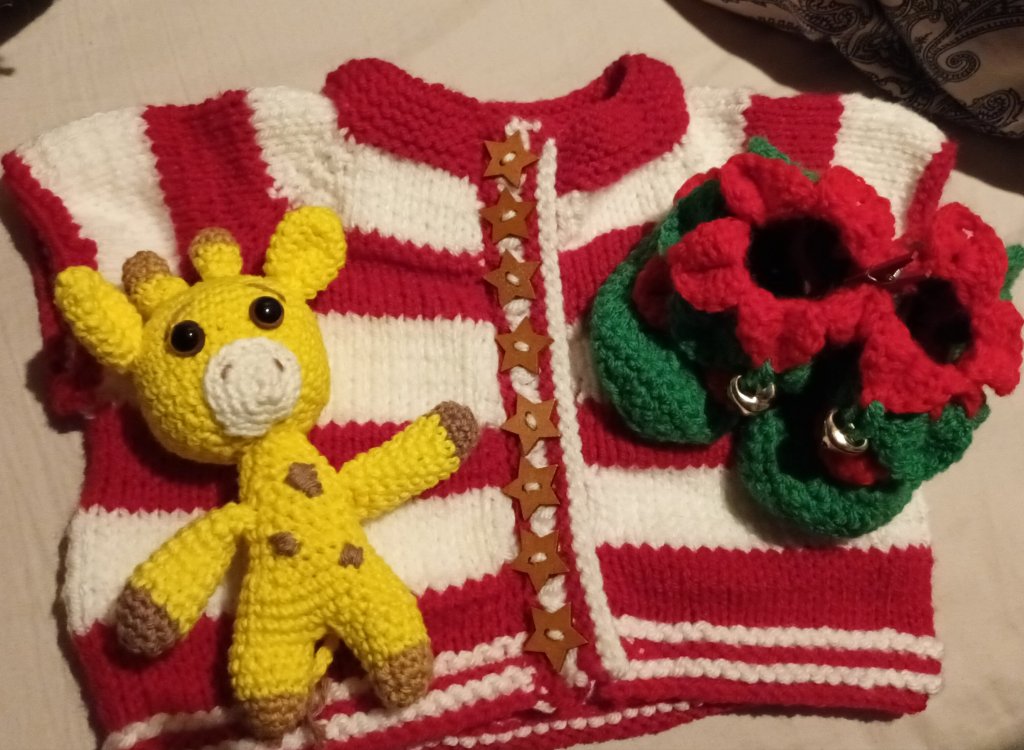
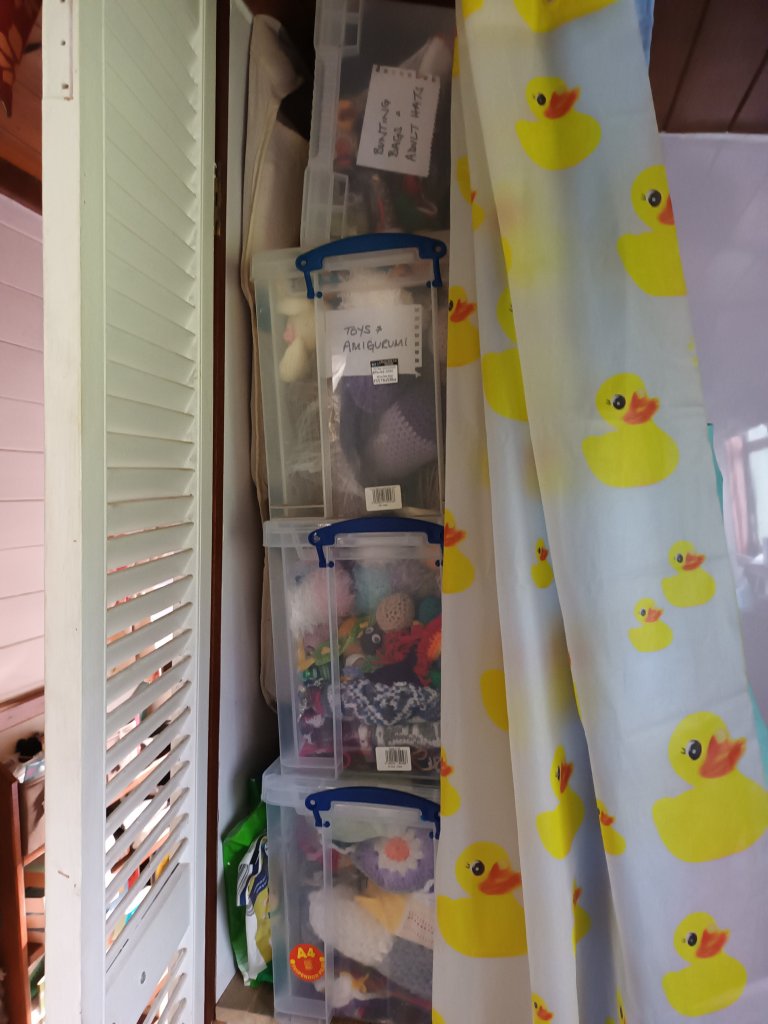
One of the joys of crafting is giving and gifting items, but when you’re gleefully intent on producing on an almost daily basis, even birthdays and Christmases just aren’t enough to absorb the output. The shower cubicle had to shrink as a result, and shelves of large boxes filled steadily with colours and items of all sorts. Baby clothes, toys, amigurumi animals and birds, hats, jumpers, traditional ganseys, and then headbands, bags, blankets, ponchos, gnomes, bunting….you’re getting the picture!

Every cushion cover on the sofa has a different shape each being stuffed with wool waiting to be used! What was space under the dining/office table is now crammed with boxes, containers and bags stuffed with buttons, ribbons, threads and stuffing. We’ve become versed in the intricacies of eco-friendly stuffings like buckwheat hulls versus synthetics.

Then the constraint of the boxes was outgrown and on a 50ft narrowboat space really is limited. So we began realising that we should from time to time, hold stalls to sell some of these items. That though isn’t quite so straightforward as it might sound. Setting up a stall alongside the boat in nice weather in a location where there will be passers by sounds ideal and very eco friendly. The transport costs of goods to market are probably a few feet at the most! To do that though requires a trader’s licence from Canal and River Trust. We duly applied, answered what seemed like an awful lot of questions, paid them more money, and began what proved a ridiculously complicated round of trying to get insurance. This presumably not in case our scarves strangle anyone or people overheat in our jumpers, but for public liability – in case people fall in the canal and injure themselves because they get so carried away looking at our goods on the outside of the boat! Finally we found insurance thanks to the support of other traders who recommended companies for us to try, and then we were able to obtain our traders licence.

In between times we took time out to go and see other traders, looking at how they displayed their goods, what they produced, and taking on board their freely, generously given advice. There are informal sales and formal markets, many run by the Roving Canal Traders Association. I don’t think there’s much that can’t be made and bought from a boat – from cheese to dog treats (our Boatdog thinks there’s no difference between those two things) from clothes to curtains, chimneys and culinary delights of all kinds.

We learned quickly that the weather dictates selling outdoors – overheated customers shun woolly goods in a heatwave as they beat a sweaty path to the ice cream boat. You don’t want to put up an outdoor stall in pouring rain or windy weather – no one will stop and stock will get ruined. You also need time to promote what and when you’re available so travelling from place to place every day doesn’t give any opportunity for marketing. We’ve also been talking to fellow boating crafters who want to sell their wonderful makes, but don’t want to trade themselves.

Now we have our licence, and we are settled in Leicestershire to be near and support family, it’s time to bite the bullet and get trading…but where given this weather?

An indoor pre-Christmas market seemed the best thing to start with – and we found one, a stone’s throw from the River Soar (where we had hoped to moor until the recent floods). We won’t be trading from the boat but not far away, and better still, we will be trading at a riverside pub that serves local ale and mulled wine. Seems an excellent alternative venue!

We will dip our toes into trading at The Swan Christmas Market in Mountsorrel on Saturday, 16 December. If you’re nearby do come along and see us – we’re really looking forward to meeting lots of customers, seeing people enjoying and buying our goods, and it will be glorious having more living space on the boat again! If you aren’t nearby, then we will be holding floating pop-up shops as we travel in 2024, advertising where and when we’ll be via our Instagram account @MovingCrafts. We look forward to seeing you sometime, somewhere, before too long.


Unwinding

After a period of frenetic activity it’s important to unwind, but how?

In our case it’s doing things we haven’t been able to do because we’ve been absorbed (happily I might add) in the mechanics and demands of travelling afloat. We are seeing family which is what we came to do, catching up with friends, having lazy mornings now the need for 7.30am starts is gone, and enjoying (when the winds and rain allow, and we can persuade her out) long leisurely walks with the dog.

It makes us more aware just how many people use the waterways we have as our home as their unwinding place. It’s rarely lonely out here – when we are moving or moored up we encounter others. Walkers, dog walkers (a subtle difference but a difference nonetheless), runners, joggers, canoeists, paddle boarders, and cyclists.

The waterway, particularly on the canals and the state of its towpaths makes a big difference to the nature of the unwinding going on. Tarmac or compacted surfaces lend themselves to mobility scooters, families with pushchairs, cyclists whizzing along, but those with more natural surfaces (currently mud) tend to attract the slower travellers. They are happy to pause, to chat if we’re working on the outside of the boat, cleaning windows, clearing leaves or collecting twigs for kindling brought down by the recent winds. All of those activities for us are part of our unwinding, embracing the slower pace once more.

Our return to a slower pace chimes with the change of season, the change of hours. Seasonality was something embraced in years gone by, a return to slower times, to seasonal foods cooked slowly on stoves lit for warmth.

It’s the same for us. The stove is now on to warm the boat, and while it’s doing so it’s gently creating warming stews of pulses, root vegetables and cooking baked potatoes for us. We’re slowly moving towards winter ways onboard.

The time has not yet come though to dig out the thermals from their summer storage under the main bed. The temperatures haven’t sent me digging out the fleece lined hoodies and layering up the Michelin man look yet and for that I’m grateful. We can enjoy the low sunlight that filters through the trees and dances from the water to cast patterns across the wooden ceiling in the boat with a feeling that it carries some warmth. The time will come for the cold crisp light of winter, but that can wait.

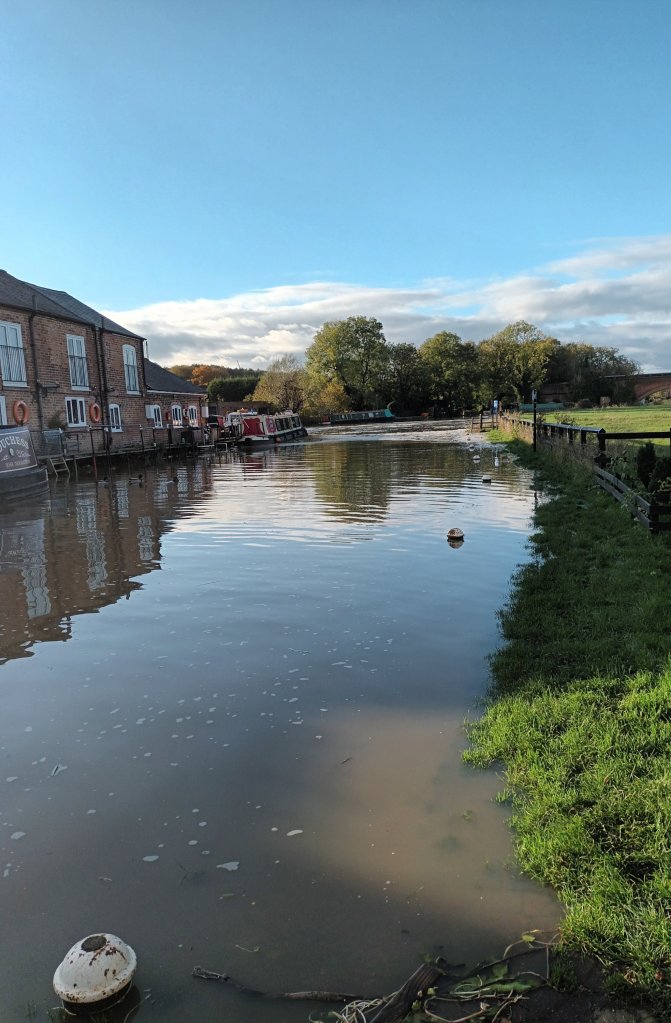
We are waiting too, for the rivers to subside, to see if we can get nearer to family, ranged as they are around the River Soar. Winter stoppages for Canal and River Trust work to be carried out are beginning across the network, but those aren’t an issue for us and our current plans. The weather is the issue for us. The Soar remains on flood alert (so not navigable) with locks physically chained shut and from where we’re moored now there are other stoppages too. Flooding caused by Storm Babet has washed a length of towpath and its piling into the water on our route so navigation is impossible. Flooding has turned moorings into wadings.

Moorings are a bit soggy!!!

There’s no point fretting, getting frustrated or fuming. We just need to make another casserole, set it gently cooking and enjoy our days. At some point we will be able to move but for now we are near enough to see family and be of use, so we are content.

I’ve booked a stall for an inside Christmas craft fair in December so I have plenty of makes to make for that. Im enjoying the gentlen unrushed therapy of knitting, crocheting, and painting once more. As well as making stock tonsell, there are Christmas presents and there’s the normal work to do to swell the coffers before we want to be off moving madly once more.

For now for us, it’s take stock, stock up and unwind.

Never look back? There are times it helps but not in anger

It can be tough to look back – this week we encountered Adrian Edmondson on his Berserker book tour. He was looking back as one does when launching a personal memoir.

In part, Edmondson looked back at his time at a Yorkshire boarding school. It was a time he recalled feeling helpless; at the mercy of often sadistic masters; with a constant refrain of corporal punishment running through his time there. As he looked back, Steve, his fellow pupil at that same school, nodded in agreement. The two of them and hundreds of other boys experienced the same thing, believing they could say nothing. They all understood that they were at this esteemed public school to benefit them in some way, at no insignificant expense to their families. It was an experience neither of them enjoyed. Steve left with relief before the sixth form but has continued to think he was perhaps the only one to feel as he did about his school days. To look back and vocalise his thoughts came as a therapeutic relief to Adrian as he wrote his memoirs but, in turn, to Steve and possibly to many other public schoolboys. A memory shared and recognised can be invaluable.

I came across another former journalist recently and we looked back at our lives when 24-hour news ruled our days, nights and lives. Looking back like that made me hugely grateful that I enjoyed that adrenaline-fuelled time but also that I left it when I did, that my life has been fuller as a result and I am no longer locked into that hamster wheel existence.

We’ve also been looking back this week at our past 20 days of travelling, 20 often long days that have enabled us to take our floating home and office from Selby in North Yorkshire.

In that time we have operated 201 locks across 191 miles of England, through rural countryside, cities, towns and villages. As we have moved looking back at the photographs of our journey shows us how autumn has been moving with us.

It’s been hard to keep up this pace whilst doing the things on the way we need to do to keep living afloat – sorting rubbish, emptying the toilet, filling the water, washing, drying, shopping and working. Looking back we can feel strong because we have done it, we have travelled in a way we have never done before, and we have maintained good progress whatever the weather. Storm Babet has affected us only in designing a different route as it put the rivers Trent and Soar into flood. They remain shut to navigation, so we are taking a route through Warwickshire and Northamptonshire to drop us down into Leicestershire. We have been lucky – others have suffered dreadfully in this storm.

We are looking back with satisfaction and relief as well as some surprise. The red route is what we’ve completed, the green is yet to come over the coming weeks.

Only when you look back can you really see how far you have come and the journey you have made.

Make your own choices

This week, after months of trying, we completed our journey down the Rochdale Canal. It was the only one of the three trans-Pennine canals we had yet to navigate.

It has been a passage that has taught us much about the benefits of physical effort, determination, and making up our own
minds, making our own decisions.

It’s important to put the Rochdale Canal into context. At just 32 miles and 91 wide locks (locks built to accept 2 boats at once), it is physically challenging to travel, particularly if you want to travel it quickly. (If you have the chance to take time on it, it will repay you). 

It drapes across the country like bunting ribbon, settlements hanging from it at regular intervals with rarely a long gap, so there are many places to explore, not least the famed ones of Hebden Bridge and Todmorden.

The canal originally opened in 1804, hailed as the only way to cross the Pennines without the need for long tunnels that caused
construction delays on the other routes (Huddersfield Narrow and the Leeds
and Liverpool. The challenge for the boats using the Rochdale was water, so seven reservoirs were built to support the passage of coal, textiles and agricultural produce. Road haulage and the decline of textile
industries sounded the death knell for the commercial operation of the waterway
and it closed in 1952.

Volunteers who led the campaign to reopen it had a vision to regenerate the bunting pennants along the canal, bringing new traffic of tourists, holiday boating and giving boaters wanting the chance to stay along its route an opportunity to do so. They had numerous challenges to overcome with ingenuity that included in one case creating the deepest lock in Britain. Tuel Lane Lock in Sowerby Bridge at 19ft 6 inches replaced two former locks built over after the canal closed.

In 2002 after years of campaigning, restoration working parties, fundraising, and vision, the canal reopened, and yet the struggles of the Rochdale have not ceased. When we first headed for it in July this year, we were prevented from navigating it because of problems leading to a lock at the Manchester end of the canal being closed for 2 months. We tried a huge detour to get onto part of it, were held up and finally stopped in that bid by more lock issues. It appears from the stoppages data for this year so far on the Rochdale, there have been only 6 mechanical issues with locks causing delays, and most were repaired within 2 or 3 weeks. If you are travelling gently that can result in pleasant exploration time if held up.

This year, there have been 10 Rochdale stoppages because of water shortages (it seems ridiculous writing this amid the downpour of Storm Babet). Undertaking the route in October worked for us in that respect – plenty of water with overflowing locks in many cases.

The Rochdale struggles in many ways – being physically demanding for boaters, lacking water resources in late Spring and Summer, mechanical issues and also because of damaging hearsay. Via social media we had heard much negativity:

“It almost broke us. Lack of water and general maintenance. We’ve never struggled so much.”

“Dirty, poorly maintained, strewn with needles and capsules, urine infested and down right dangerous [in Manchester]”

“Constant trips down the weed hatch – rubbish, litter and shopping
trollies everywhere”

If we had listened only to these voices, we would never have enjoyed the sweeping hills, former mills, and beautiful woodland that the Rochdale Canal has afforded us these past weeks.

We would have missed little hamlets, small villages, beautiful stone settlements like Hebden Bridge and Todmorden and excitement of the city of Manchester. We would have learned less and missed much. Our life would have been emptier as a result.

It is important to hear other people’s perspectives, experiences and thoughts as part of our research through life, but we all need to make up our own minds, make our own decisions and remember that everyone’s perspectives, experiences and thoughts are based on their past which may have been very different to yours.

Nelson Mandela said: “May your choices reflect your hopes, not your fears.” The Rochdale Canal has taught us to journey on, making choices based on our hopes, not our fears, or those of anyone else.

A different view of our week wending and working our way from ‘up north’

Finally free of locked floodgates that had held us up and kept us safe, and back onto the River Calder
Calder and Hebble Navigation is great between locks when there’s no flooding on the river sections
The giant silos of the former Thomas Sugden and Son flour mill have been reinvented as climbing walls – one for adrenaline junkies!
Swapping weeds for leaf soup which clogs the prop too.
Heading off the Calder and Hebble Navigation and coming into Sowerby Bridge to join the Rochdale Canal
The Rochdale Canal opened in 1804, the first of 3 Pennine crossings. It climbs (and descends) 600ft via 91 locks over its 32 miles between Sowerby Bridge and Manchester.
Tuel Tunnel in Sowerby Bridge which leads to…
Tuel Lock – the deepest in Britain – 19 foot 8.5 inches. It replaces 2 locks on the original.canal which had 92 locks – this monster means the restored route ONLY has 91. Personally I’d have preferred two normal depth locks!
Heading from the Aire and Calder, the Rochdale was a boaters’ breath of fresh air, like coming from the dark to the light
The lung-filling, leg-stretching views from Heptonstall
Hebden Bridge – quirky, creative, and great WiFif for a productive day’s work
Todmorden has found itself in both Yorkshire and Lancashire over the years as boundaries change and has even been divided by the county borders
The Great Wall of Tod, a 4 million brick railway embankment that towers over the canal
Sharing the water and the glorious backdrop with enthusiastic young canoeists
Heading across the border set most recently in 1990
Waterfalls rush down the craggy hillside at the summit at the moment
Tetlow’s Brickworks at Punchbowl Lock are disappearing from the landscape. Wonder what will be here the next time we travel this way?
Everyone warns of low water levels on the Rochdale… we’re finding quite the opposite with some good downpours adding to the levels.
Made it to moor at Littleborough – 63 miles and 83 locks behind us over the past 10 days travelling.

We are now halfway along the length of the Rochdale with 44 locks and 16 miles of the canal still to go.

Then it’s onto the Bridgewater, Trent & Mersey, Coventry, Birmingham & Fazeley, Coventry, North Oxford, Grand Union, and Leicester Line to our ultimate destination… a little way to go (191 miles and 143 locks), but we’re doing well and still smiling.

How do you plan?

We planned to head to live and work in Yorkshire this year, but none of our plans are set in stone. Last week, we decided we wanted to head to join and support family over winter, so we began planning…

The plan was to travel 275 miles and 255 miles on inland waterways to reach Leicestershire. That should get us there before the winter work closures start in November.

Day 1 of the voyage was Wednesday. We started at Selby in North Yorkshire. Because of the high tides, winds and high water because of torrential rain, the tidal route was out of the question. We planned to come across country before heading down the west side via the Rochdale Canal. That’s the waterway we’ve been trying to navigate since 6 July this year. A faulty lock in Manchester meant the Rochdale was not navigable from the south so we took a 97 mile detour to approach it from the east, heading along the Trent and Mersey to the Macclesfield and onto the Peak Forest, arriving there just as a faulty lock on the Marple Flight shut that route.

Nothing daunted we are having another go at making it along the Rochdale approaching this time from the North!

It was a flying start to get us there. From Selby we made it along the Selby Canal, onto the River Aire, then onto the Aire and Calder Navigation, and then onto the Calder and Hebble Navigation. The two Navigations alternate river and canalised sections which means that heavy rain can adversely affect them.

Day 1 went brilliantly- Selby to Castleford Cut, a total of 18 miles and 5 locks. Another early alarm got us up and leaving our mooring at 7.50am on Day 2 in driving rain.

From Castleford we made it through 15 miles and 12 locks to the Dewsbury Arm Junction. On the way we stopped for water at Stanley Ferry and lunched at Wakefield.

Some locks on the Calder and Hebble demand a Hebble spike to operate. It looks a bit like a flattened baseball bat and can be bought from boatyards or chandlery outlets in the area. Ours is a piece of 4×2 from Wickes with a rectangle cut from one end l to give the right size to fit in the lock mechanism. Our planning included getting wood ready although the last minute adjustments to make it fit happened with a saw on the lockside!

Our planning identified a lock that has problems and is available only between 12 noon and 2pm after Dewsbury for assisted passage so we planned a leisurely start for Day 3. What we hadn’t bargained for in our planning was an email meaning Day 3 would be spent not cruising.

Green cross marks our position

How you cope when plans are thrown into disarray is often the mark of a good business person, teacher, boater or individual. We made the most of the day, Steve leapfrogging the car so it is now ahead of us and not stuck up at Selby. I worked and enjoyed a delightful unexpected visit.

Photo courtesy of Doug and Kath Briggs

By the time you read this, we will know if our plan is back on track with another long day of 12 miles, 18 locks to Salterhebble Bottom Basin.

From there, it’s a short hop to the Rochdale Canal where 32 miles await us, containing 91 locks that take us over the Pennines. I’m looking forward to some hills again!

So for the moment our plans are fluid…in limbo but still plans. There’s no point in getting frustrated or frantic. Safety is paramount. We have faith and confidence with a lot of crossed fingers that we will make our destination – eventually. This won’t be the only hold up en route I’m pretty sure.

Changing course

Einstein is alleged to have said many things, among them: “The measure of intelligence is the ability to change.” Our whole floating life is about change – about fluidity of movement, plans, scenery, locations, and work. This week that’s become more relevant than ever, as have the facts that we don’t always have a car with us and that we generally travel at around 3-4mph (so it takes a while to get places!).


When one of your family suddenly ends up in hospital and you are 101 miles away, distance and speed are thrown into sharp relief. By car that’s a couple of hours travel, by train between 3 and 4 hours, by narrowboat it’s 149 miles, 39 locks and so 58 hours of travelling, if the tides are in your favour but Storm Agnes ruled that out and tidal fluctuations can mean days or weeks of delays!


A train took us to where the car was stored, we left our floating home and office, praying Storm Agnes and local youngsters who in some places like to untie ropes were kind to her and travelled south.

We found hotels (yay – we found some with BATHS – boaters will understand the glee!) that would take us and the dog overnight and found ourselves new plans, new scenery, new locations and ooh, a new look too!

Retro style!


Moments like this make us question the life we’ve chosen – but then they also underline the positives. We have the capacity to move our home nearer to where it means we want to be and feel we can be of use. Yes, it will take time, particularly now that winter stoppages are approaching from October – March when Canal and River Trust are doing scheduled work on the network, and winter tides make rivers difficult to navigate in a narrowboat. We’ve ruled out coming back down the tidal route because it could take longer and result in us getting trapped. Our original plan was to nip up the tidal Ouse from Selby, where the boat is currently moored to Ripon, the northernmost point of the network. From there, we would turn (cant carrynon – there’s no navigable waterway) and return. Tides and storms can make that a lengthy journey!


So our realistic options are –

1. Turn where we are – saving Ripon for another day

2. Head elsewhere in Yorkshire and take a winter mooring where we can have the car nearby and be on hand more quickly if that would be useful

3. Head south so we can be near family and be useful when needed to help or hug at a moment’s notice.

Selby snapshot

It’s as much about us as it is about the family. It’s a quandary – we don’t want to impose ourselves, but we want to help. We feel too far away, too remote, too useless at 101 miles away. If we were 50 miles away, we might well feel the same, so being say 20 miles away would probably be ideal. If we stay on canals and move away from rivers where the family live, then we avoid issues/fun of winter flooding. That’s the advantage of having a moving home – we can move it to where we want it to be for whatever reason. That way, we don’t need to keep living in and paying for hotels for weeks or months if we want to be in another part of the country. It’s also an advantage having family living near navigable waterways!

So our decision is to move south. Sorry to those family and friends in Yorkshire we haven’t seen yet but fortunately we don’t travel too fast so you should be able to catch us somewhere. We’ve got the current stoppages map out, the winter stoppages schedules out and the maps to see which way we need to go. We will be back north, just not staying there this winter.

Seems such a short timescale but long days could do it9

We know there can be stoppages, issues, blockages on the way, but we calculate that our trip back is going to be 242 miles, 248 locks and 141 hours. It will take us on some familiar routes and some routes that are new to us which is always exciting. It will be another adventure, and one which will lead us into another set of new experiences, the chance to experience the joys of winter in a new place, and the opportunity to be near family to share time with them. This life lets us be flexible, none of our plans are set in stone, but this life gives us the chance to embrace change, to make changes work for us and those we care about. It lets us live the life we love whilst taking the chance to be near those we love.

Choosing the best of all worlds gets a big thumbs up 👍

Thinking and planning done, the next questions are – is the boat still safely where we left her and when shall we/can we start The Next Great Move? Those will be answered as soon as we can, we need to accept whatever happens there are some things we can’t change or force, they are just things we need to deal with.

Slow boat to New York

This week we started our fourth year living and working from our 50ft narrowboat on the inland waterways of Britain, and in that time we’ve taken her the equivalent distance of the UK to New York.

To date we’ve worked 1969 locks, travelled 2917 miles (43.5 of them underground in tunnels) and moved 193 bridges (many of which I reckon require far more effort than the locks!).

This year alone up to our cruising anniversary we moved 40 bridges, cruised 985 miles, worked 499 locks and spent 9 miles 81 yards underground.

Anniversaries are a time of indulgent reflection and this year is no exception. The milestones of this year have been (in no particular order)

  • Getting our Boat Safety Certificate for another 4 years
  • Getting the boat hull blacked, water tank cleaned and resealed internally – the external seal is still somehow a work in progess
  • Having the big main hatch and front bulkhead sorted so they do the jobs they were intended to
  • The loss of our beloved spaniel Cola after 15 great years
  • Deena completing the London Marathon virtually from the boat along Northamptonshire’s towpaths
  • Navigating the tidal River Trent and emerging in one piece
  • Experiencing the astonishing Anderton Boat Lift
  • The arrival of a new Boatdog who seems happy with her new life
  • Getting a trading licence to set up our floating craft business
  • Enjoying the company of family and friends afloat and ashore

People keep asking us – would we head back to bricks and mortar?

We’d struggle to be honest because we would miss so much the delights this wonderful floating life gives us, things that are good for body and soul and which just wouldn’t all be possible in a fixed house and office.

  • Awakening every morning with the possibility of taking our home off on an adventure
  • Having new scenery and new walks on our doorstep every day
  • Duck alarm clocks and owl lullabies
  • Discovering fascinating stories of places and people along the routes we take
  • Enjoying being part of the community afloat
  • Working and living within nature and the seasons
  • Having a home that demands we’re active – which we think must be keeping us fit
  • Being able to watch wildlife close up – from our own floating hide
  • Challenging ourselves to do new things, go to new places and always taking our home along for the ride
  • Being able to move on if we get bored, fancy a change, or (never yet) don’t like the neighbours

This is the lifestyle that still very much floats our boat. Living and working afloat has given us freedom from materialism and the rat race; courage and confidence to undertake challenges and do what’s right for us; and peace – what more can we ask? We would love being nearer family all the time and still being able to cruise to our hearts’ content (whether they’d like that is another matter!).