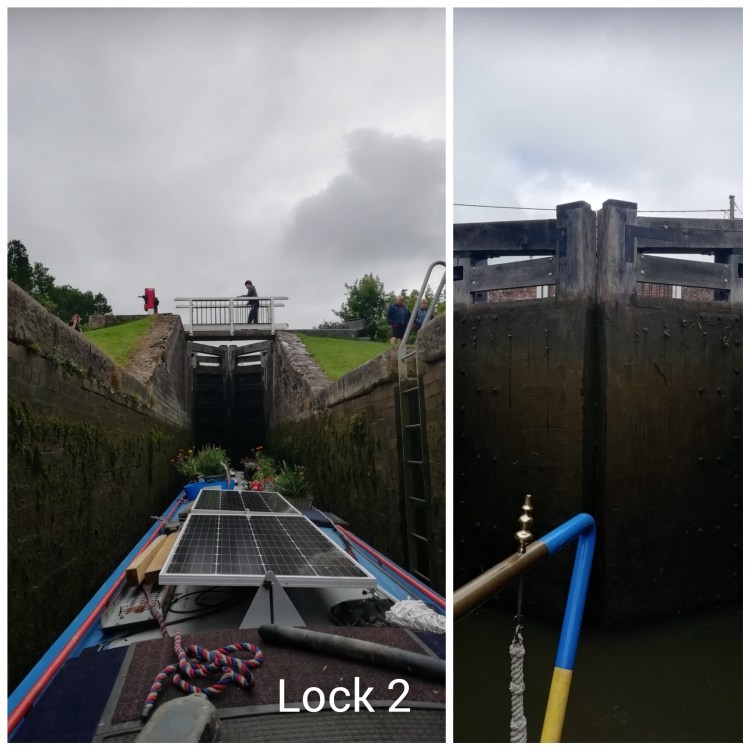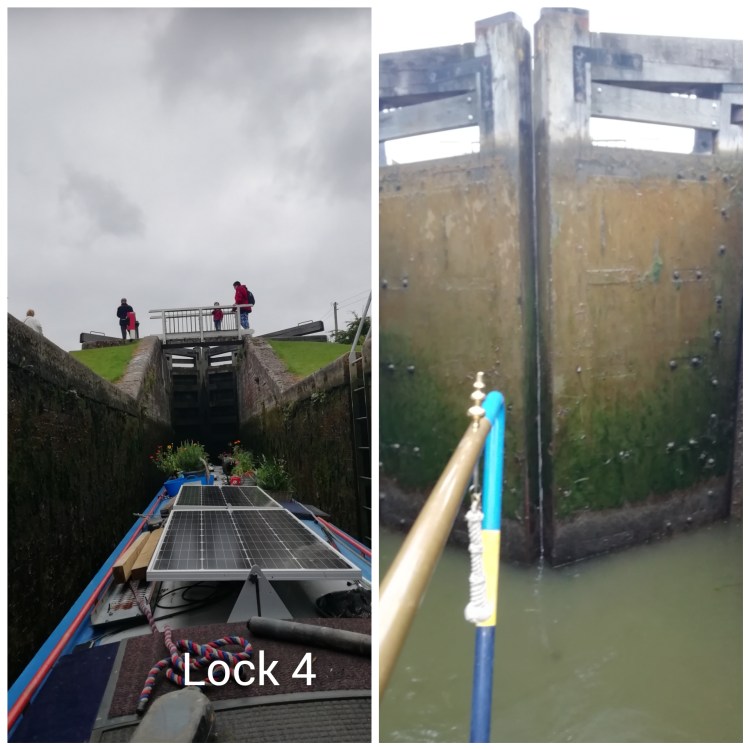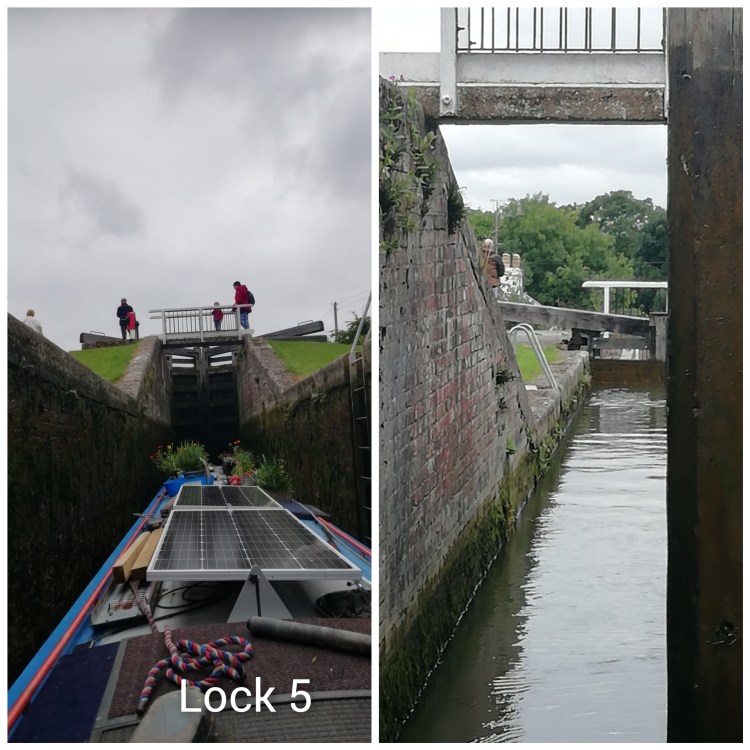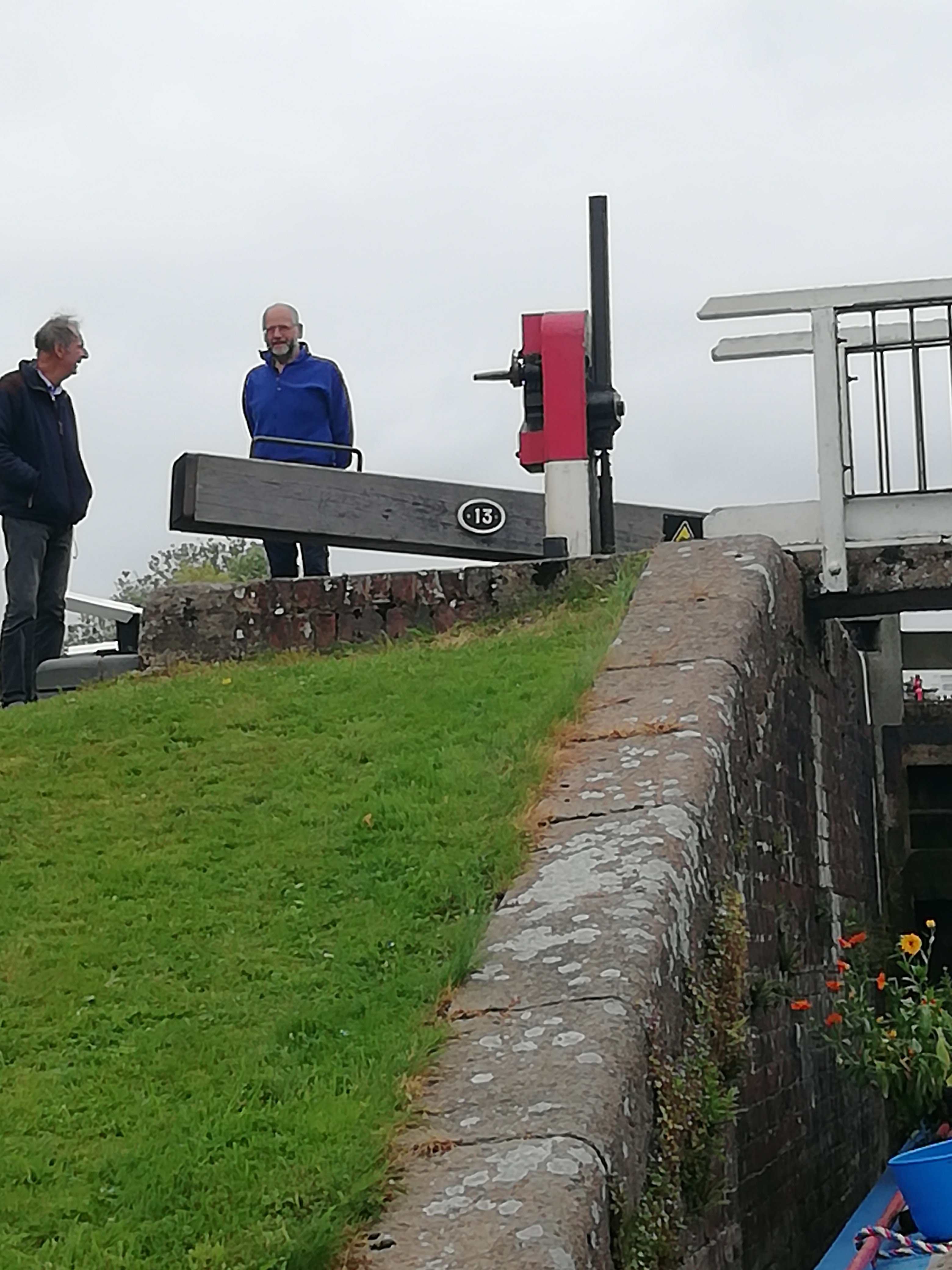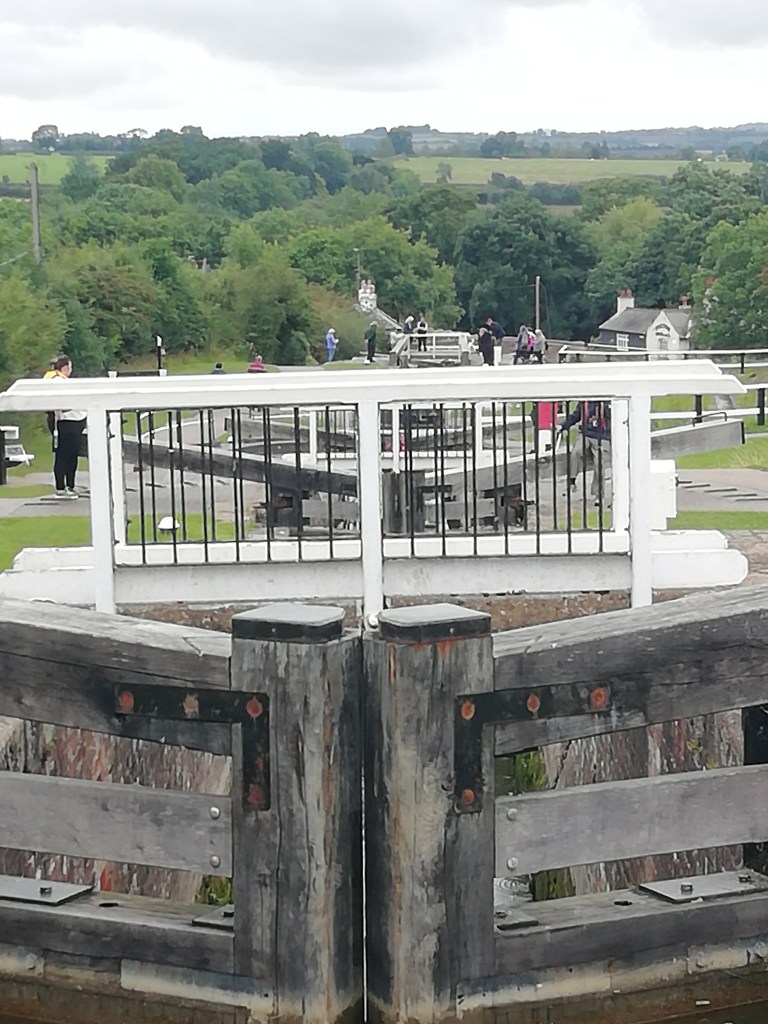
The epitome of life…and England

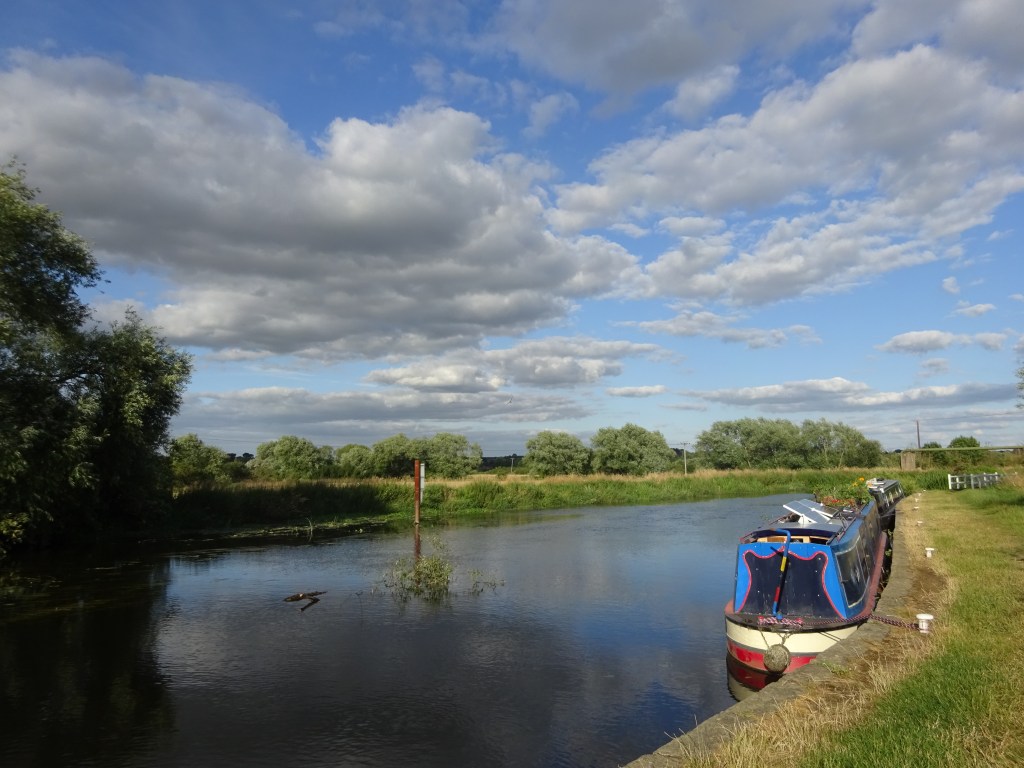
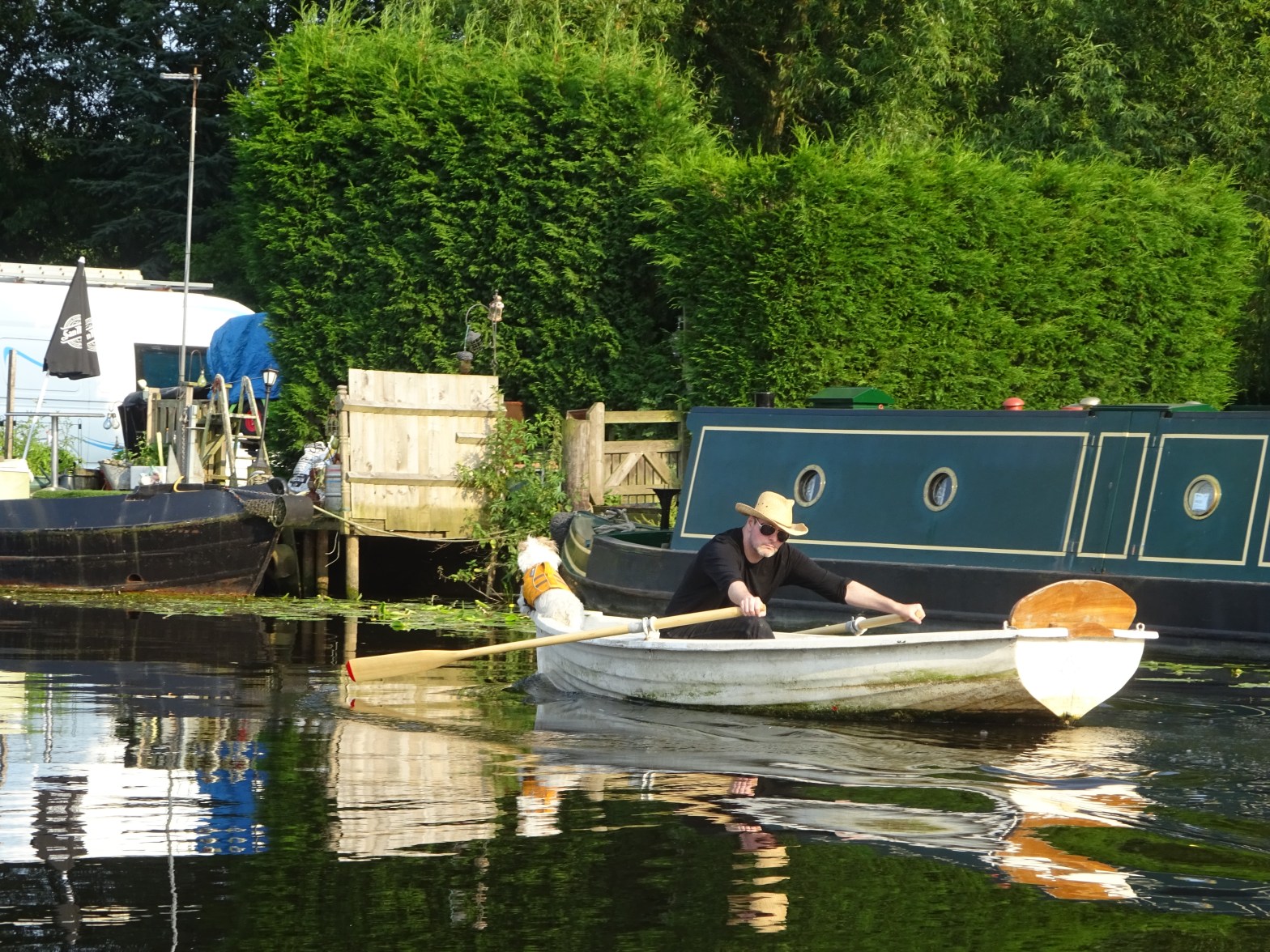
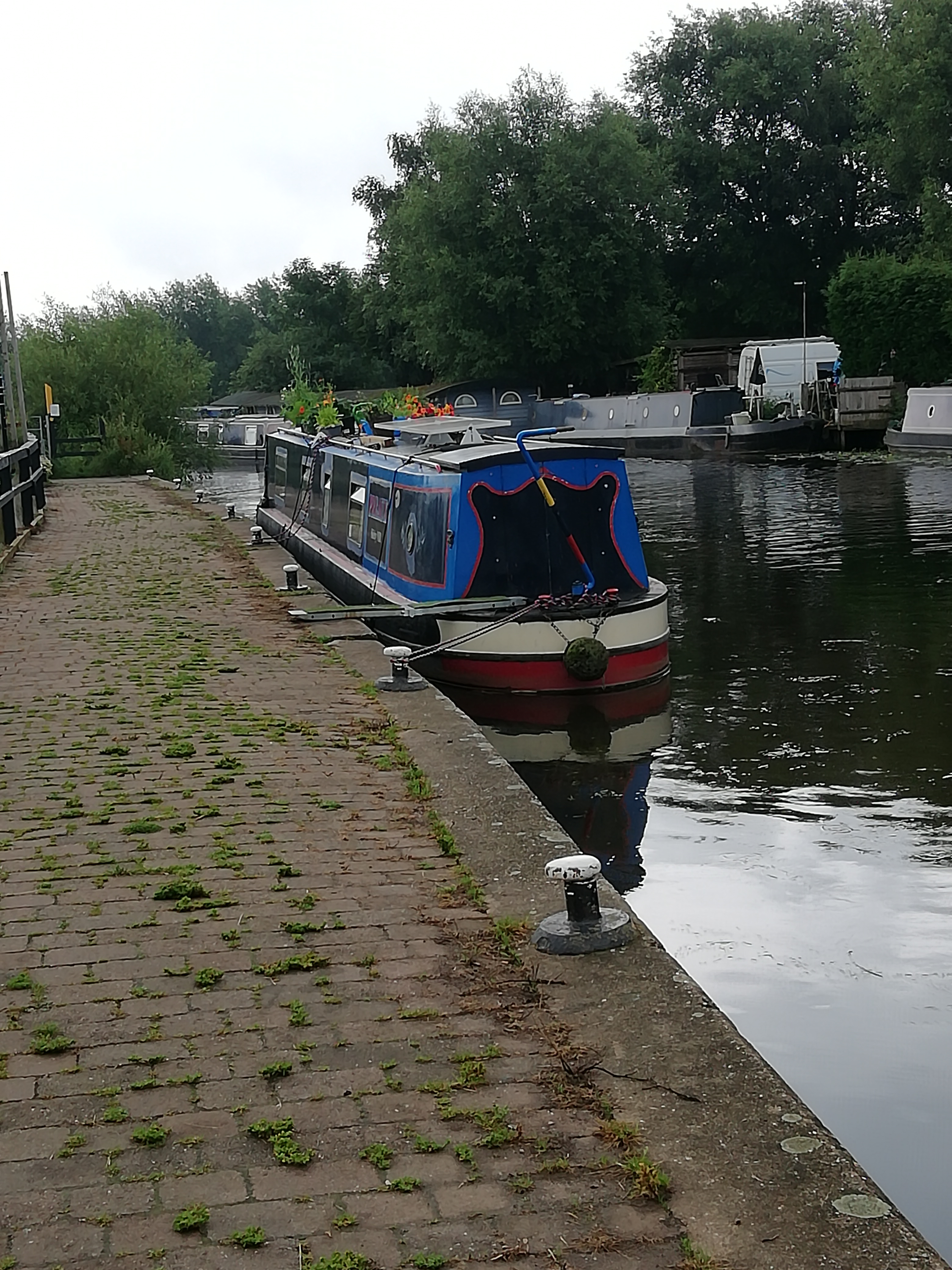
Having now travelled the length and narrow breadth of the Huddersfield Narrow Canal, including a voyage into the interior, it seems to epitomise life, and England too – today, yesterday and tomorrow.

It brings amazing highs, significant lows and challenges. It is built on a long history, heritage and currency of diversity and community, spectacular scenery and constant innovation.

It rightly claims superlatives and records – longest, deepest, highest tunnel above sea level (Standedge), the oldest currently navigable cast-iron aqueduct which nearly gave me a heart attack as well as very wobbly knees when I turned the boat along it to suddenly see a sheer drop to the cascading River Tame on my right (Stalybridge), and boasts the highest stretch of canal in England.

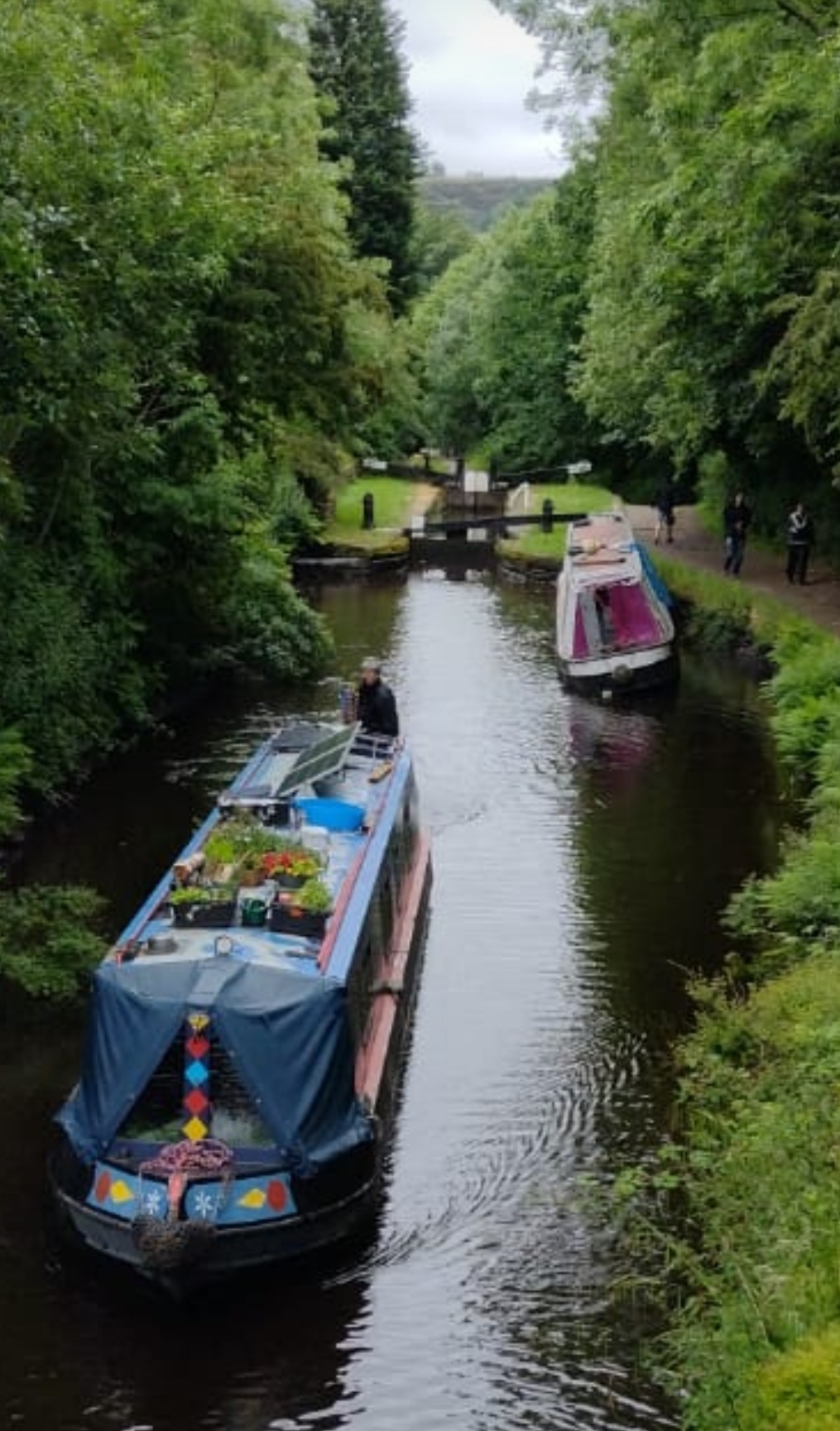
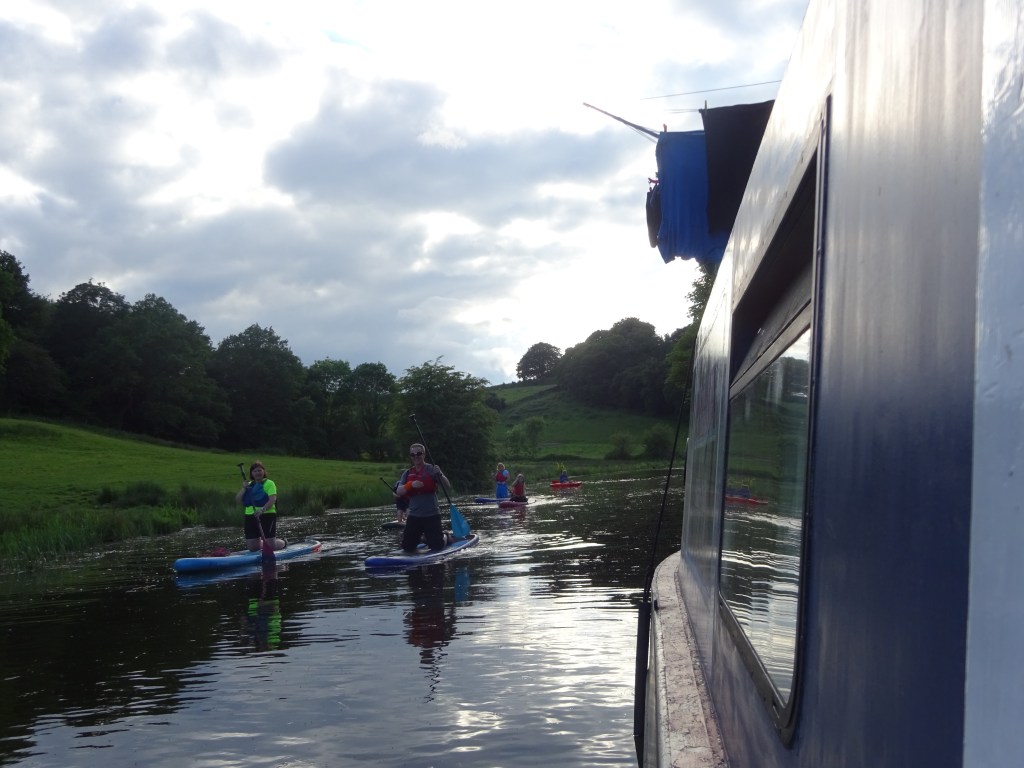
Cyclists, walkers and joggers appreciate its towpaths. Among boaters though, it doesn’t seem as appreciated as it should be – perhaps because it isn’t an easy route – it demands effort and engagement with 74 locks to tackle on its 19.3 mile length, and regular forethought to keep moving despite often low water levels. That means canoeists and paddleboarders avoid it too, whilst wild swimmers evidently enjoy its supplying reservoirs!

From unassuming beginnings in the West Yorkshire market town of Huddersfield with its solid Victorian architecture, the canal slides between the modern buildings of the university, navigating the odd shopping trolley. These may lead some boaters (maybe wrongly) to conclude today’s students are too wealthy to want £1 back or too lazy to return to the supermarket…

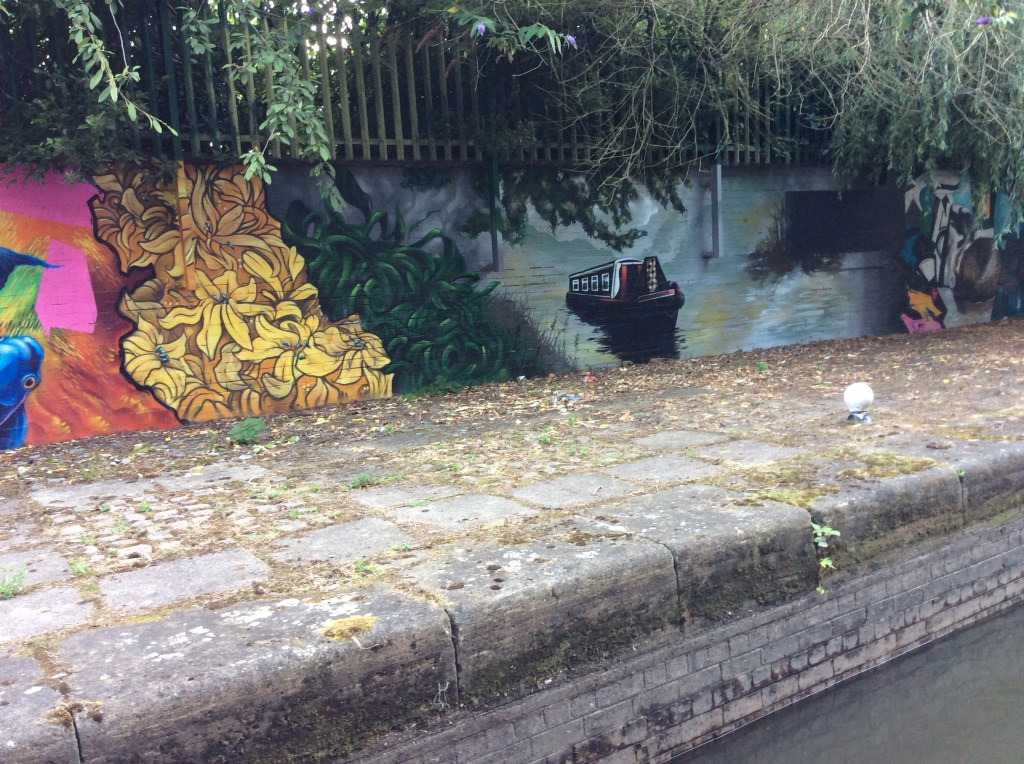
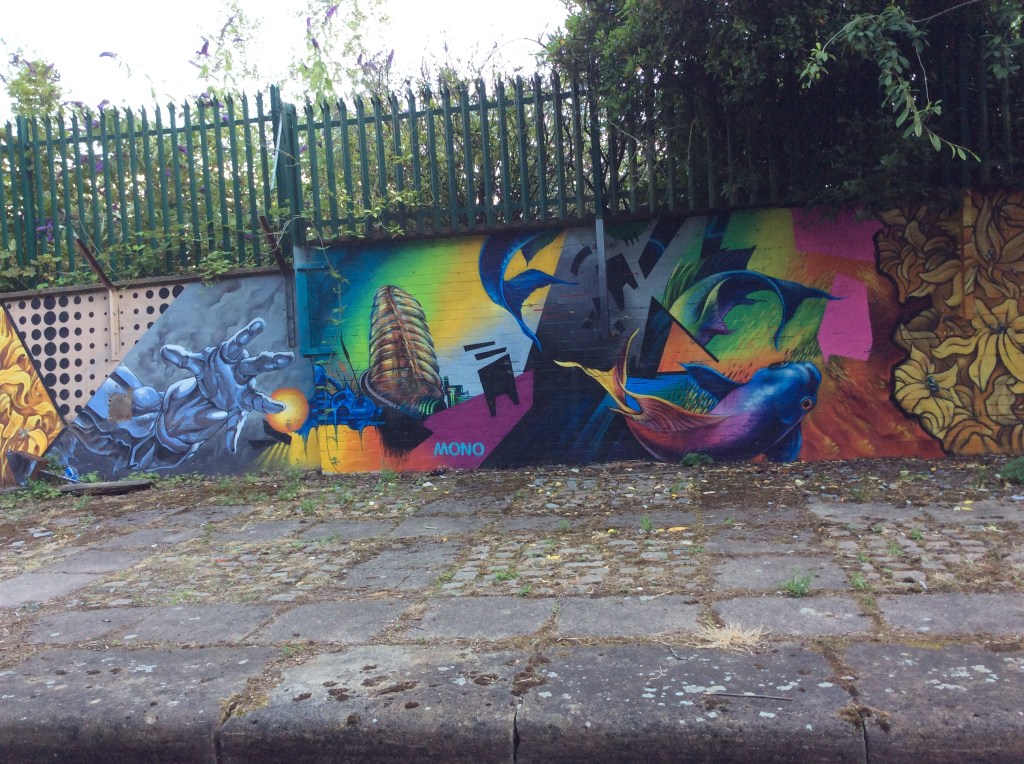
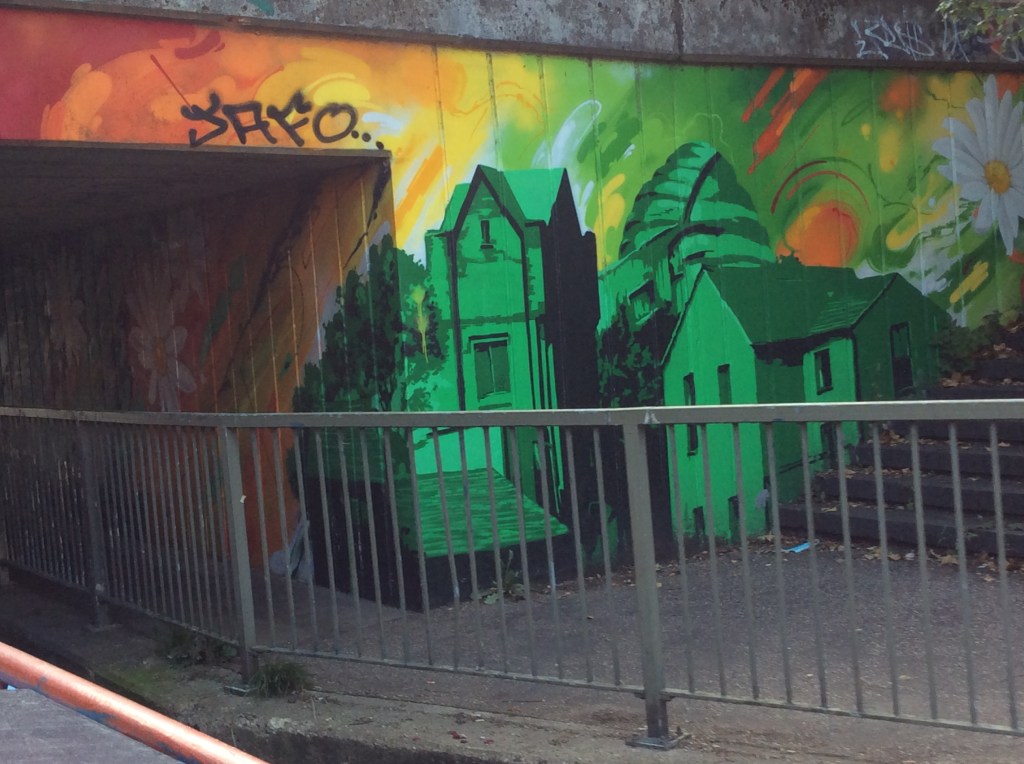
Through villages, hamlets and market towns, creativity runs along the Huddersfield Narrow like a golden thread…

Community spirit is strong here – inclusive, united, shared and collaborative. Design to celebrate, cement and build identity and make their place a better place, a place to share with those who float through, and those who arrive to stay.

The highlight for many has to be the remarkable Standedge Tunnel burrowing deep through the Pennines. It claims multiple superlatives, and rightly so.

Images cannot do justice to the feeling this incredible feat of engineering, and determined construction inspires, but give you an idea of its scale and scope. From being measured to see if we will fit (we did) to travelling through the heart of the Pennines via meticulously laid brick arches, rough hewn rock and snaking through the sections of what resemble spray concreted intestines with little space to spare, wet, dry, damp, cold and warm – it was an experience like no other. To discover more about the dramatic story behind this and the other three parallel tunnels I highly recommend Trevor Ellis’s very readable book The Standedge Tunnels available from the Huddersfield Canal Society shop. It’s fascinating and you also know the purchase is going towards a good cause!

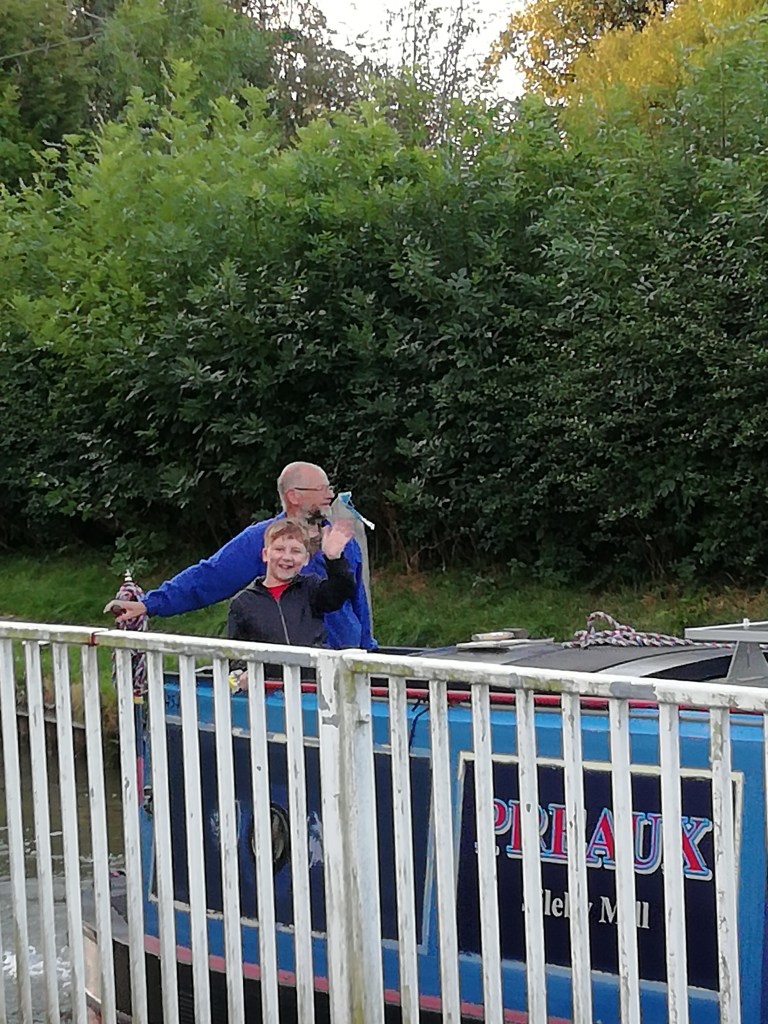
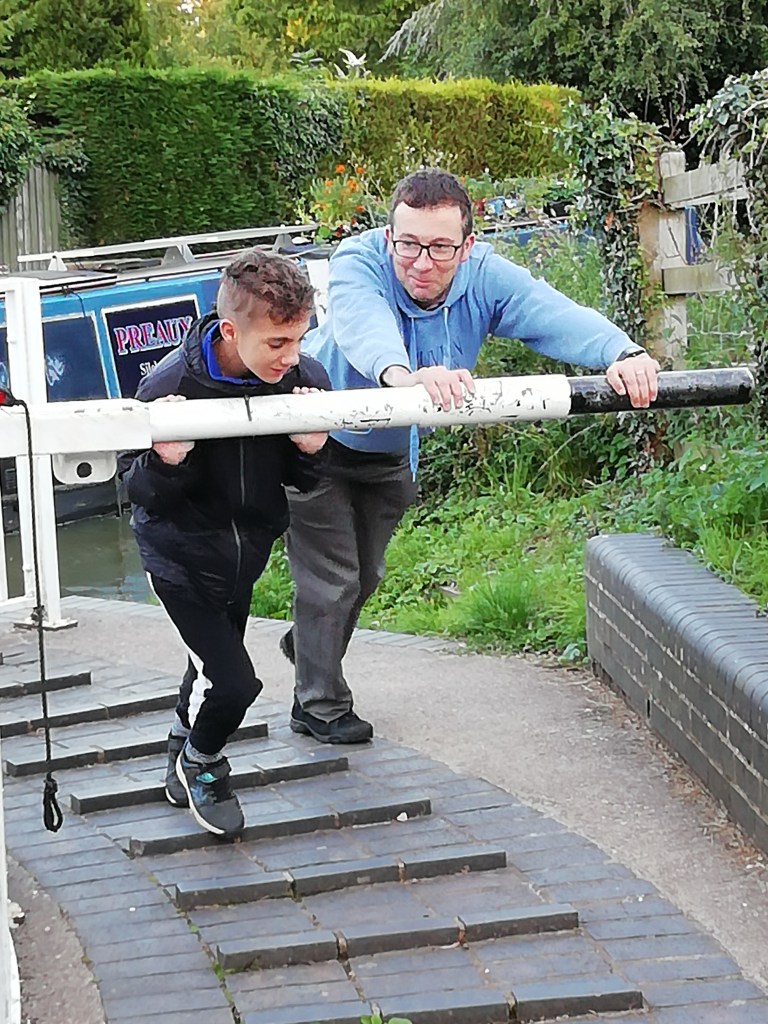
The views from and around the Huddersfield Narrow are as changing, fluid, generous and inspiring as the people we encountered who live and work along its length. People who too time to share insight and muscle to help us along its length. To everyone who pushed a gate, smiled, waved, stopped for a chat, helped us through tunnels, and locks or thoughtfully guided us to the best pubs and cafes – thank you.
Never until now have I been inspired to verse, but there’s always a first time, and Huddersfield Narrow has been a veritable inspiration, so here’s my attempt

Historic, handsome, honest, alive 
Unassuming, it moves with Pennine strength
Dedicated individuals cleave to see it revive
Dynamic communities hum again along its length.
Embracing cultures, contours, countryside, weaving away
Reinventing constantly: transport,dereliction,now leisure use
Solid foundations thus saved from decay.
Formidable engineering sustains each tunnel, lock and sluice
Innovation repurposing water, land and mills en route.
Established with a backbone of 74 tough vertebrae
Lauded with numerous superlatives, today we salute
Diversity and community, gleaming threads on daily display.

Noteworthy for tunnel, aqueduct, height 
Arduous in effort, exhausting but real
Rewarding from water to high moorland delight
Repaying our input wi’ nowt to conceal.
Original, impressive, one not to be missed
Welcoming, educating, a must on any wishlist.

Like life, the HUDDERSFIELD NARROW is unique in character, taken slowly, thoughtfully and savoured, it reveals unexpected and delightful gems.

Next week: 20 things to help any staycation stay afloat…

Locked in, up and down

The Covid pandemic has changed many things, the ways we work, relate to each other, behave and also our language. Pandemic, social distancing, furlough, epidemiology and lockdown have become familiar to us, many have been ones we’ve used daily.

Here on the canals locks are also something we use daily, an essential to travel. In the days since April 12 when the last full lockdown lifted, we have travelled 254 miles and needed 230 locks to do that. Locks take the boat up and down the contours of the land. Essentially they are chambers with gates at either end. The boat comes in one level and the gates behind it are shut. Operating openings (paddles) in the gates ahead of the boat the water in the lock (and the boat) is either lowered or raised depending on which way you are travelling.

Once the water in the lock is the same as the water in the canal for the direction of travel, the gates open easily and the boat glides out on a new level. Sounds simple? The engineering principle is straightforward. Sometimes the mechanisms are tough going, the gates heavy and difficult to move, but the system works.

This wide lock is part of a staircase on the Leeds Liverpool canal at Bingley. It operates on the same principle as any lock.

The simple but incredibly efficient lock mechanism on canals is our only way of climbing and descending hills with boats. Locks have taken us over the Pennines once on this trip and are currently taking us back across their splendour.

Since the pandemic hit the word it seems the word lock has moved from being instantly associated with security, safety and protection to constraint (lockdown). Locks on canals are both constraint and protection but if not treated with respect they can be dangerous and indeed deadly. Talking of such dire things, we survived the Guillotine Lock on the Huddersfield Narrow – it was an engineering solution to a lack of space at restoration and works beautifully although the low bridge before it nearly took my head off!

The guillotine lock on the HNC – the little ‘door’ is a paddle, not an escape hatch!

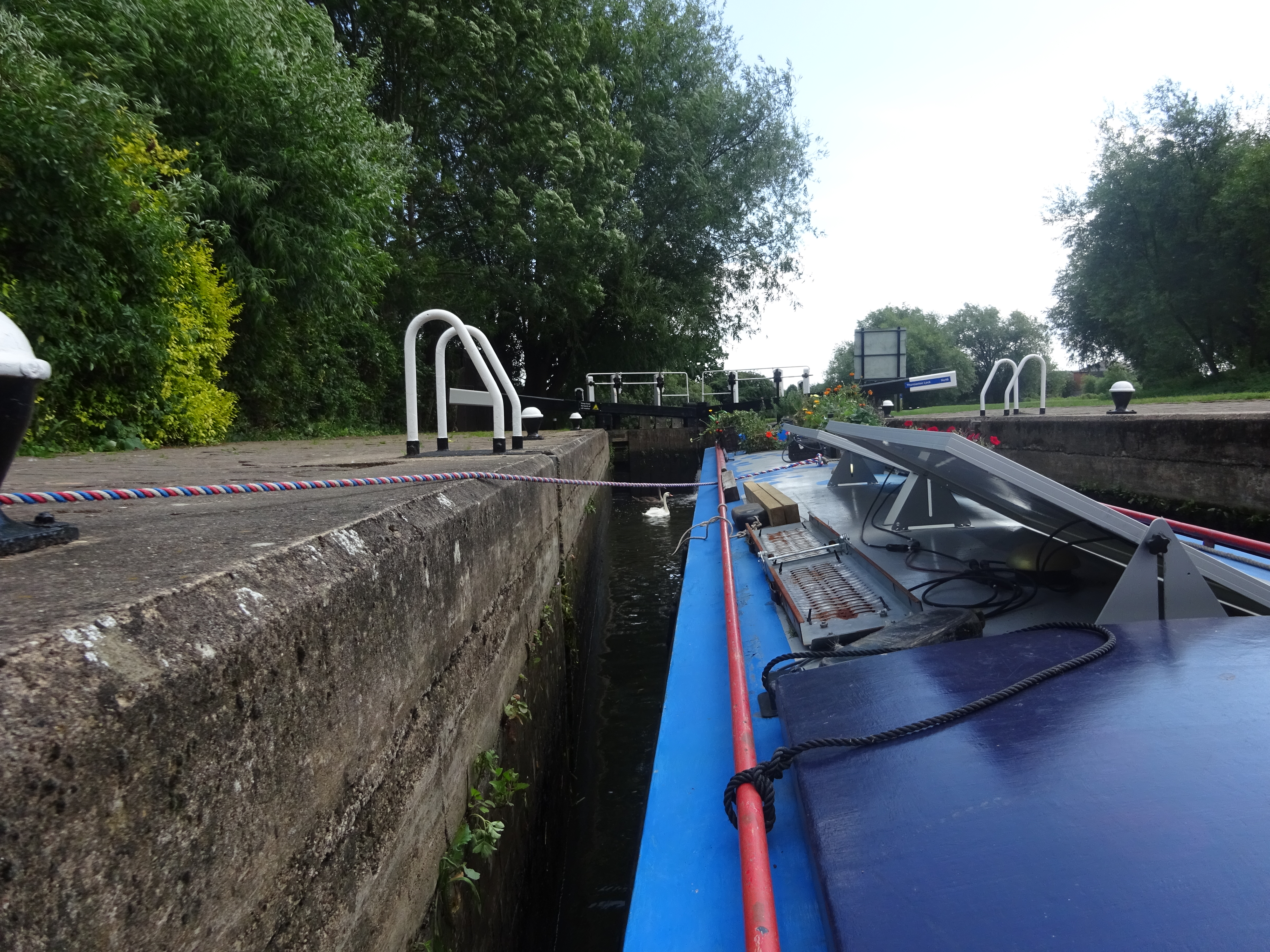
Rising in a lock is literally uplifting, particularly in the narrow locks which only take a single boat at a time, but the principle is the same in wide locks, or multiple, staircase locks.

You take the boat in at a low level into a dark dank chamber made of substantial hewn stone blocks, often with water and mud dripping from the sides. You can only see the top of the lock by craning your neck, and on a sunny day it feels like any warmth has been instantly obliterated. Sometimes there are plants clinging in the cracks of the stones, ferns, buddleia and occasionally the all-invading Himalayan Balsam. If I see the latter and can reach it safely, I yank it out to put it where it can dry out and die, to support our native species.

Down in the depths it feels joyous to be propelled up into the sunshine, by the rising waters swirling underneath as the paddles open. Every time the greenery , and the warmth after the darkness seems more vibrant, more alive. Taking a boat such as ours through 74 locks on the 20 mile Huddersfield Narrow Canal is made easier because she’s only 50ft long and the locks are 70ft long.

This is a boat going up – the big stone cill is evident ahead. Imagine if that was behind you as you went down and the boat caught on it

That length gives space for whoever’s at the tiller to move the boat well back from water flowing in ahead of the bow (which could swamp the boat), and it’s easier to make sure the fender and front of the boat doesn’t snag on the end gates which could result in the boat tipping and sinking. The narrowness of 6ft 10inches just fits the boat snugly giving a feeling of protection, as long as we’ve made sure all fenders that protect the sides are up – so they don’t snag and jam the boat in the lock.

Going down is a different matter. You enter in the the light, and gradually plunge down into the darkness of lower levels until the lower level is reached and the gates open to let you out. It’s vital as you descend that you keep the boat forwards of the stone or concrete cill which the gates rest on, and which holds back the water of the pound (the area of water between locks) that you are leaving. Getting the back of the boat caught on the cill can sink the boat. Letting concentration slip whether on the tiller or the lock can be costly.

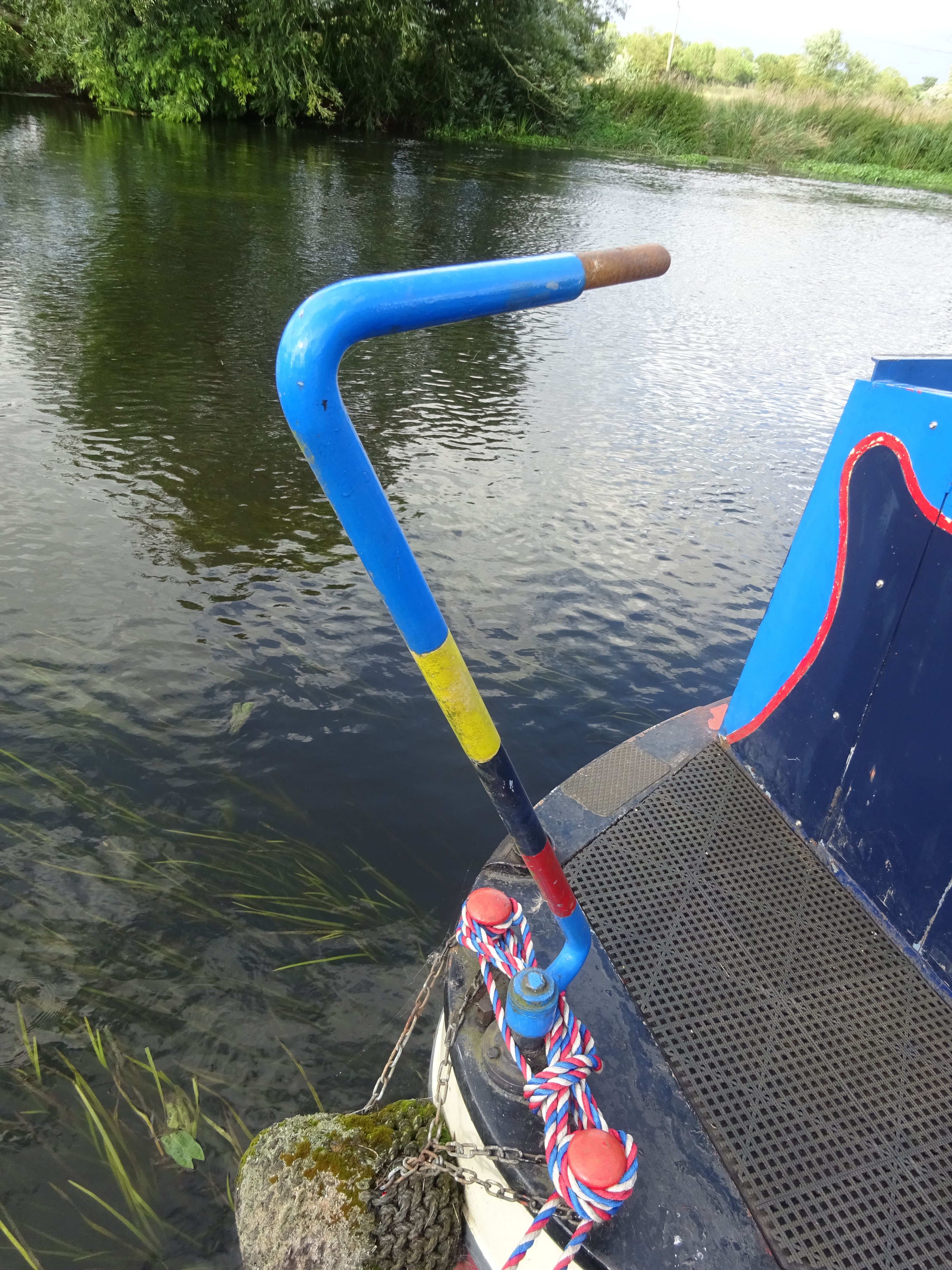
So locks on canals combine protection, constraint and danger. On the Huddersfield Narrow there’s been the added concern of water levels – we’ve been aground several times travelling between locks because it’s been so shallow, and struggled to moor in many places we fancied because of the depth. Employing reverse gear and our trusty bow thruster (me and a big wooden pole – we don’t have modern gismos), we’ve carried on until we’ve found somewhere suitable… although one night we did look more like we’d abandoned the boat after a bout of careless or drunken driving rather than neatly moored up! It was the only way to moor, and the dog managed to get off the bow (front), even if he (or we) couldn’t reach the bank from the stern (back).

Couldn’t moor neatly – couldn’t get the stern into the bank at all, the water was so shallow

It’s been different for me on the Huddersfield Narrow, because I’ve taken the tiller after the first few locks, and Steve has been lockwheeler armed with a windlass and handcuff key.

With the dog peacefully sleeping at my feet comfortingly unaware of my incompetence, I got over my hesitation at steering the boat through the hurdles of pounds, locks, bridges and mooring. It’s all too easy to leave it to the more experienced one aboard, but that way I shall never learn. As with anything I need experience in different situations, on different canals to build confidence, skills and knowledge.

Each pound and each lock is different, and although I am trying not to make this a contact sport as some hire boats do, I have had some minor bumps too but with no resulting damage to structures or the boat! Knocks tend to occur when trying to fit the boat into a tight channel.

Leaving Huddersfield and passing under the University buildings in a narrow channel – you don’t want to meet another boat here!

It’s been a privilege to see the canal from another perspective. Work on the narrow canal from Huddersfield to the Ashton-under-Lyne near Manchester began in 1794. Five years later coal and textiles were being transported along it’s length although they had to be loaded on and off barges onto horses and carts to cross the Pennine Hills at its summit. In 1811 construction of the legendary Standedge Tunnel was complete and the entire canal was navigable for commercial vessels. The tunnel remains the highest above sea level, longest (5000m, just over 3 miles) and deepest (190m) tunnel in the UK began being constructed in 1794.

The Huddersfield Narrow operated for 140 years commercially. It was officially abandoned in 1944 although some stretches were still used for local traffic until the 1960s. It then fell into disrepair and much of its length became derelict. Campaigners fought from 1974 to bring it back into use and it was officially reopened in 2001. No commercial traffic uses it now, but for leisure boats it provides a unique route through the Pennines. Ongoing restoration continues and even Blue Peter was involved in 2015.

Blue Peter badge on Lock Gate 37E (E means east on the Huddersfield Narrow…not easy) which the programme helped restore. After the tunnel locks are identified with W for West.

The locks themselves are a unique connection with not only the original workmen (navvies as they were called) who built the canal, the commercial barges who plied this route, but also to all those in more modern times who worked so hard to get the canal reopened. As you hold the boat steady in the locks, waiting for the waters to lift you up or carry you down, the very stones around you are marked with the passage of time. Some bear the scars of less than careful boatmanship, others the heritage of their origins, and some more intricate symbols.

Carved with shapes, and sometimes initials, perhaps from original lock makers, bored tillermen or modern day makers, the stones bear a patina of mud and water that makes their individual markings glisten. Some marks are repeated at intervals, as if indicating certain stones form a pattern. What the marks actually mean, or who the makers expected to see them would be fascinating to know.

These huge lock stones give a sense of permanence and protection from the surrounding earth, but if a boat capsizes in a lock with the force of the swirling water currents, those self-same stones would constrain, even imprison the boat and its inhabitants.

Taken carefully and with respect, the lock is a secure, safe way to traverse the hills and dales of England, a way unchanged over centuries. The Huddersfield Narrow has glorious carried us through the permanence of agricultural fields and past mills, some of which are still working, others have been converted like Titanic Mill. Completed the year the famous boat was launched (and sank), it now houses luxury apartments and a spa.

This narrow canal has carried us through vibrant villages, past houses old and new, and it now carves its way with pride through the heart of communities which welcome it and those it brings. These pictures are from the Yorkshire village of Slaithwaite apparently prounounced Sla-wit, delightfully down to earth and buzzing. Where it says Bank, that’s just what you find – they say it as it is in Yorkshire tha’ knows!

We’re booked to travel through the Standedge Tunnel early next week, and will see for ourselves its hewn interior. We don’t fortunately have to leg the boat through – pushing the boat through with our legs on the sides as was the way in days gone by, although I am sure after all this time at the tiller my legs could do with the exercise.

Leaving the tunnel we will start on one of the fastest, and most consistent periods of travel we’ve undertaken. We won’t be on a slow route despite remaining on the canals – The slow machine that England was...

Jo Bell’s words as Canal Laureate in the paste carved on the lock beam at Milnthorpe. “The slow machine that England was, straightened, straitened, boxed and sluiced.”

No leisurely days for us in the coming weeks but hopefully we can make it on schedule – 132 miles, 112 locks and another 5 tunnels will bring us back to the Leicestershire village on the River Soar that we left 10 months ago. We shall see family, friends and take part in annual village celebrations before moving our home on again.

I hope the experience of long days travelling the waterways may bring a little understanding of the canals as those on working boats saw them – routes through the incredibly diverse countryside of England. We are, after all travelling in their shadowy wake.

Communities that care

This week has reinforced both the diversity and importance of community for us. There have been times we’ve needed help and there have been times we’ve been glad to help others, and to celebrate with them too. We’ve seen communities that have been created with vision and communities which have developed organically. We’ve recognised how important it is for us all to have functioning communities to help us survive emotionally, practically and psychologically, whatever our circumstances.

Feeling part of a community has always been important to be personally, giving me a sense of belonging and purpose. I find it strange that I feel just as settled, as fulfilled and very much at home in this transient floating community than I ever have in a land-based or these days, online, community. It set me wondering why that might be, and thinking what makes a community.

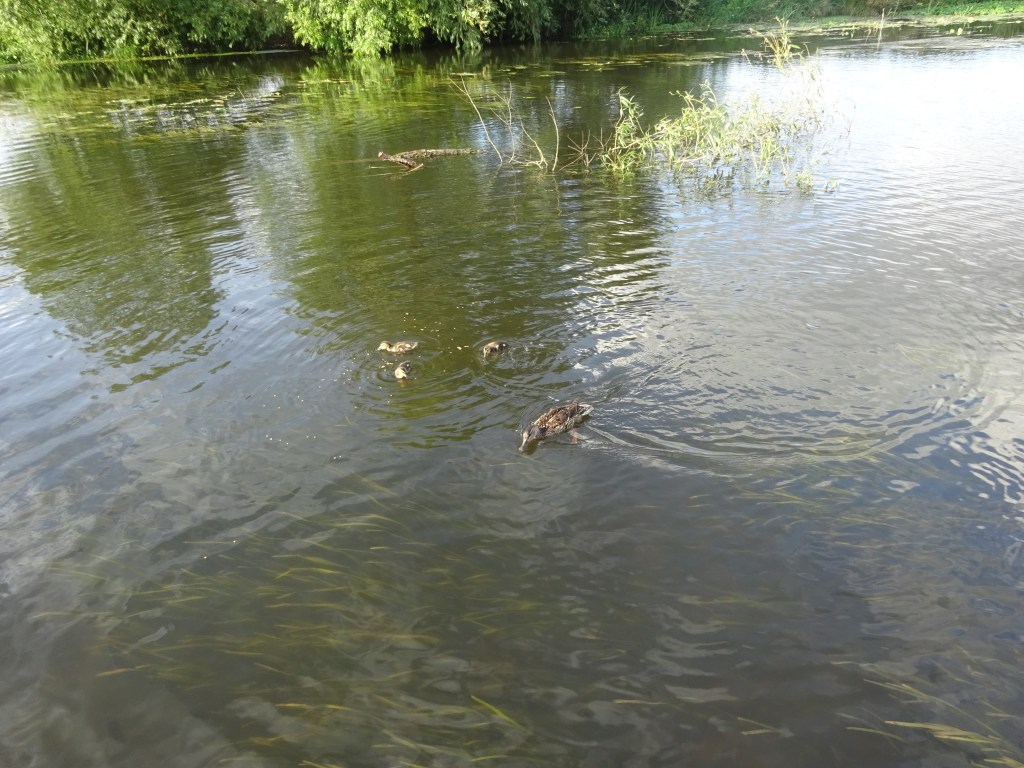
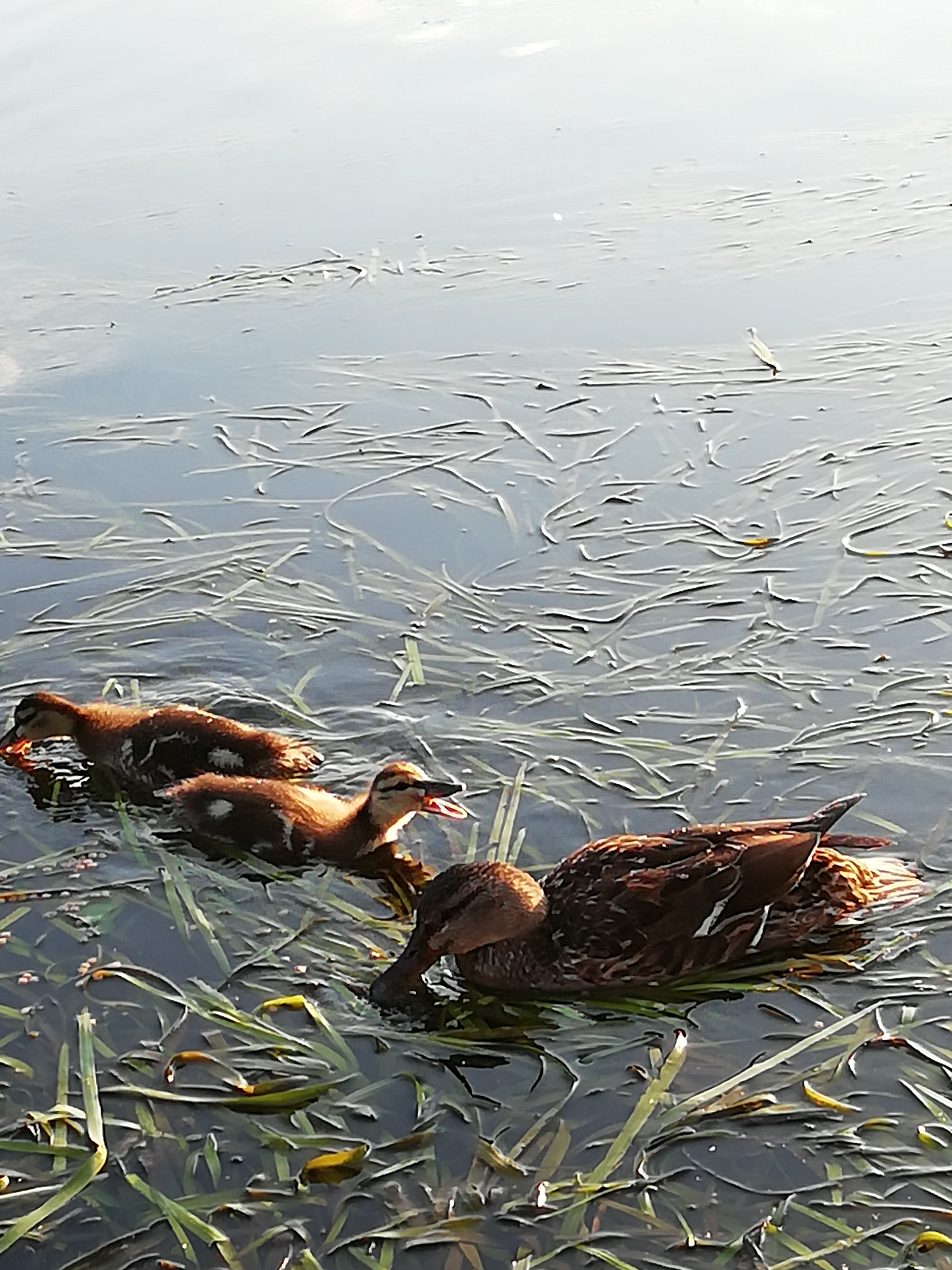
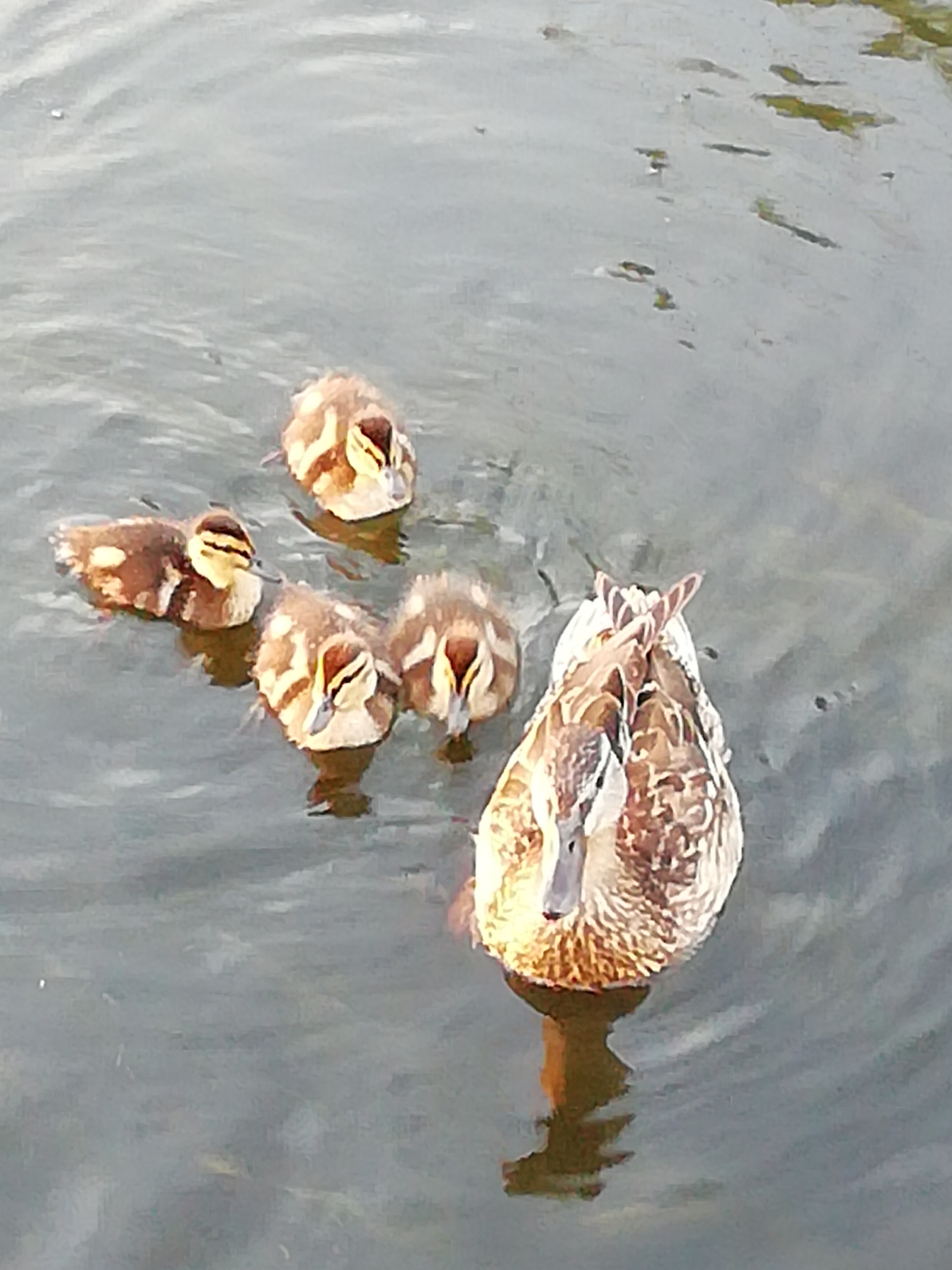
Picking up ducks for neighbours in our new community afloat – this is a sord of mallards (a new collective noun to me!)

What makes community for you?

Back in 1986 Macmillan & Chavis identified from their research what they saw as pillars essential for a sense of community:

  • membership
  • influence
  • integration
  • fulfillment of needs
  • shared emotional connection

Those pillars are evident in Saltaire, the community the Leeds and Liverpool Canal took us to on this journey in Yorkshire and which I touched on last week. Created as the uptopian dream of Titus Salt, a wool merchant inspired by alpaca wool to create new textile mills with a surrounding village designed to make (and keep) his workers happy and healthy. Built in the early 1850s the community of fudge-coloured stone was named after Salt and the river which flows through it. In 2000 his vision was designated a UNESCO World Heritage Site for its impact on international town planning, and for being an outstanding example of a model town in terms of social and economic influence.

Some may say Salt was a dictator seeking merely to maximise profits and compelling his staff to live as he demanded. Historically he has been regarded as a caring philanthropist with the best interests of his workers at heart. He considered their needs from the maternity ward of their hospital to the alms houses, all of which he provided. For life in between there were libraries, churches, a school, allotments and sports facilities to sustain the population as well as the employment from the mills. The one thing missing was a pub. Salt as a Quaker was a temperance observer. 2021 Saltaire has a licensed bar restaurant “don’t tell Titus!” Even without a pub, Saltaire flourished during Salt’s lifetime. After his death his sons struggled to keep the business and the village going. His vision died but the sense of community it engendered remains today.

Saltaire’s terraced homes are now in individual ownership but there remains a clear sense of community in the streets and the park. It is a sense of community built around place, shared values and for many, a shared love of cultural endeavour. It’s a creative, artistic and collaborative community. Other model communities built around industries of chocolate, soap, mustard and railways still exist in various forms today across the UK.

Community for me is about people, and it’s people who make or break communities. It is the same on land as on water, in villages as suburbs or cities, in colleges and universities where groups of people come together to live and work. Some become inspiring communities which encourage engagement – some do not. Sometimes they require a catalyst like Salt, sometimes they are organic, created by mutual need or shared interests.

The boating community is largely organic. Boaters are all different. Boats come in a never-ending succession of types, sizes, colours, ages, states of repair/disrepair and there are sub-communities of certain makers, narrowboats, cruisers, Dutch barges etc., but the fundamental is that if you boat, you love living on the water and given the chance, will non-judgmentally support others to both do and enjoy doing that. Community can be created through locations or boats but it takes people to make and sustain a community, and community really is important for the majority of us. It’s about making us feel we belong, feeling connected to others, cared for and responsible for others too. It’s important to feel we can contribute, we can matter, and natter too.

People contribute to their communities in many different ways, and it’s the same on the canals. Volunteers and paid staff go above and beyond in supporting the network which they love.

Sometimes it’s in times of trouble and crisis that community comes to the fore. On the Aire and Calder we found our morning walk with the dog last Sunday barred by police tape.

Later in the day we helped the wide beam at the centre of the police investigation through several locks, learning en route that those on the boat were friends of the owners, accompanied by a narrowboat which had been moored nearby. We formed a supportive convoy of three.

We three boats in convoy on the expanse of the Aire and Calder. Hope the unfortunate boat on the left had support nearby when it sank.

The owner of the boat had been found unconscious in the water alongside his boat, pulled out by those on the narrowboat who called paramedics. He was rushed to hospital with head and chest injuries and when we met them was in intensive care. Police ruled out foul play, establishing that he had fallen into the water, perhaps as the result of a heart attack whilst hammering in mooring pins, and been crushed against the side by his boat. His friends had come to take the boat back to its mooring whilst his wife sat by his side in hospital. The crew kept apologising to us for being slow and careful, but of course we didn’t mind. We appreciated the care they were taking to get their friend’s boat back to its home mooring.

The novelty of navigating huge commercial locks in a convoy of a wide beam, 2 narrowboats and 2 dinghies took us time to adjust to, so slow but sure was fine with us, and we were just glad to support them in their mercy mission in a very small way with some lock support.

All communities, on water or on land are being asked to come together particularly this week to recognise how much we all have in common by the Jo Cox Foundation. This week which marks 5 years since Jo Cox, daughter, sister, wife, mother, and MP here in West Yorkshire, was murdered. In her maiden speech to Parliament, Jo Cox said “We have far more in common with each other than things that divide us.” Sharing in creating and celebrating what we have in common is the aim of the Great Get Together . Even if you haven’t signed up for it officially, it’s still a chance to extend an invitation to others you know or don’t know around you to share a natter, a cuppa, a walk, a Zoom even, or perhaps to create together. Perhaps you could enjoy taking a leaf from the fantastic Woven in Kirklees project I’ve delighted in here in Huddersfield.

Thousands of squares knitted from all colours of the rainbow have been created by a community of knitters all over the region. Once people heard of the project via online networks (communities), contributions come in from Germany, Finland, Italy, New Zealand and Australia – from knitters eager to join this vibrant community project. I’m proud to know one of the very talented contributors, and delighted to see the founding advocate of the inspirational Open University, Harold Wilson, suitably adorned in the yarn bomb!

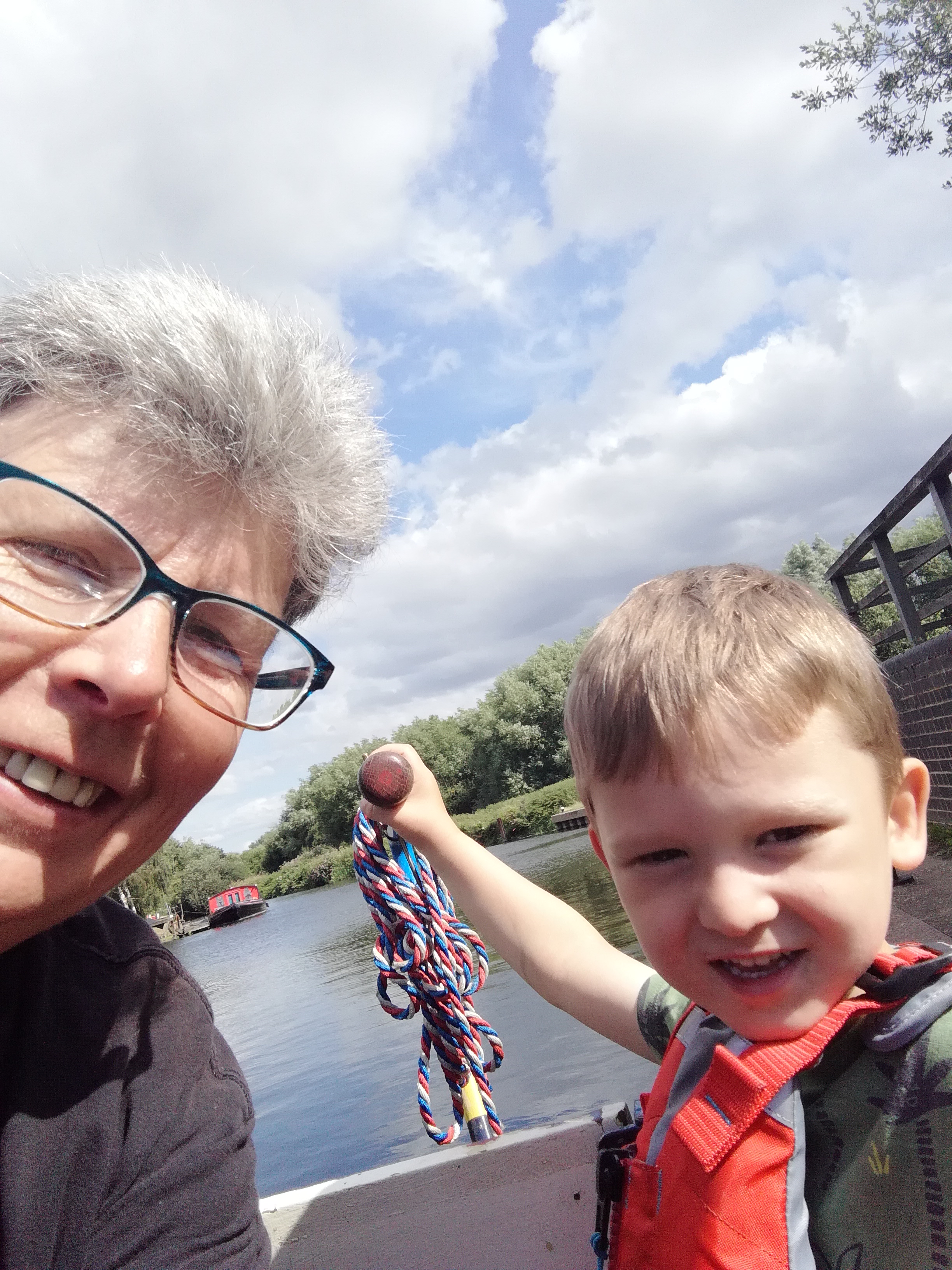
Sometimes projects like this, spawn continued community interaction. In the Leicestershire village of Mountsorrel (our last land location) in lockdown 1 a quilt was created with contributions about the village from stitchers of all abilities, all ages, all backgrounds, to mark a significant time in our history. It now hangs proudly for all to see – and on his journey back from pre-school my 3-year old grandson happily points to the square Granny contributed with its historic 1860 bridge over the river, swans and a heron.

The pandemic has brought many communities together, and created bonds. I just had to share these posters from Huddersfield which made me smile.

Sustained support for individuals or groups is part of a community but communities can be born from transient help – assisting each other through locks, or swing bridges. We’ve been grateful for a hand with from boaters, walkers, cyclists enjoying the waterways on our recent travels. We’re glad to play our part helping others in the same way, and doing small things like clearing rubbish from the canals en route.

Some of this week’s fishing…

Sometimes we exchange first names with those we support or who support us, sometimes we don’t , but there’s a shared sense of community in our mutual support for each other built on concern and cooperation. Those were the essentials French philosopher Charles Fourier back in the 1800s said were keys for any community. He founded a community called Utopia in 1844. Had he stuck to those two essentials without bringing in equal sharing of economic money and effort, that community might have lasted longer than 20 years! Incidentally Fourier was apparently the first to coin the term feminism in 1837, so at least one of his ideas has endured.

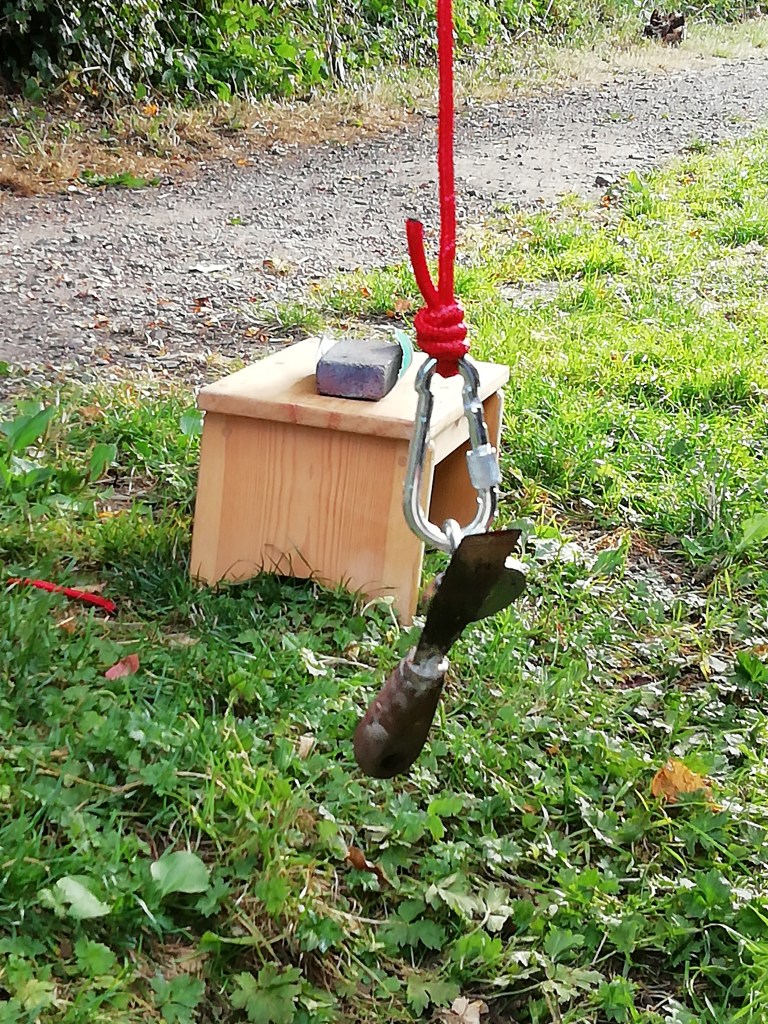
Yet another passing walker (male) told me this week that I should be ashamed of myself for letting Steve sit on the boat whilst I get a workout on the tough locks of the Calder & Hebble (a shock to the system after the push button approach of the Aire and Calder)! You set off to tackle them armed with a handcuff key (which often didn’t work) a long handled windlass for extra leverage and a Calder & Hebble spike. Every canal has its quirks and the spike is unique to the Calder & Hebble and apparently the Driffield Navigation. We were advised you can buy these from CRT or a chandlers or just get a piece of 3 x 2 hardwood that will do the job. My resident Yorkshireman did the latter and it worked fine once I got the hang of the spike mechanism thanks to a Dutch barge owner who showed me how.

If I had £1 for every time I explain that there’s a skill in keeping a boat still in a wide lock with water currents from ground and gate paddles creating turbulence in the enclosed space, and that I am rubbish at it …I would be rich. Plus you have to bring the boat in smoothly to let the crew on and off preventing damage to them and the boat – and I’m not a lot of good at that either!

One of the most beautiful pounds I’ve ever seen – the circular Double Top Lock pound after the Dewsbury Arm of the Calder & Hebble

This boat and its contents are our home, and aggressive turbulent locks can cause significant damage inside and out as we already know. I also do need the HIT workouts which tough locks provide! Additionally the Calder & Hebble has been a fairly constant in and out of the river navigation with weirs to avoid, and directions to follow right, left, and centre. It’s suited me to not be at the tiller.

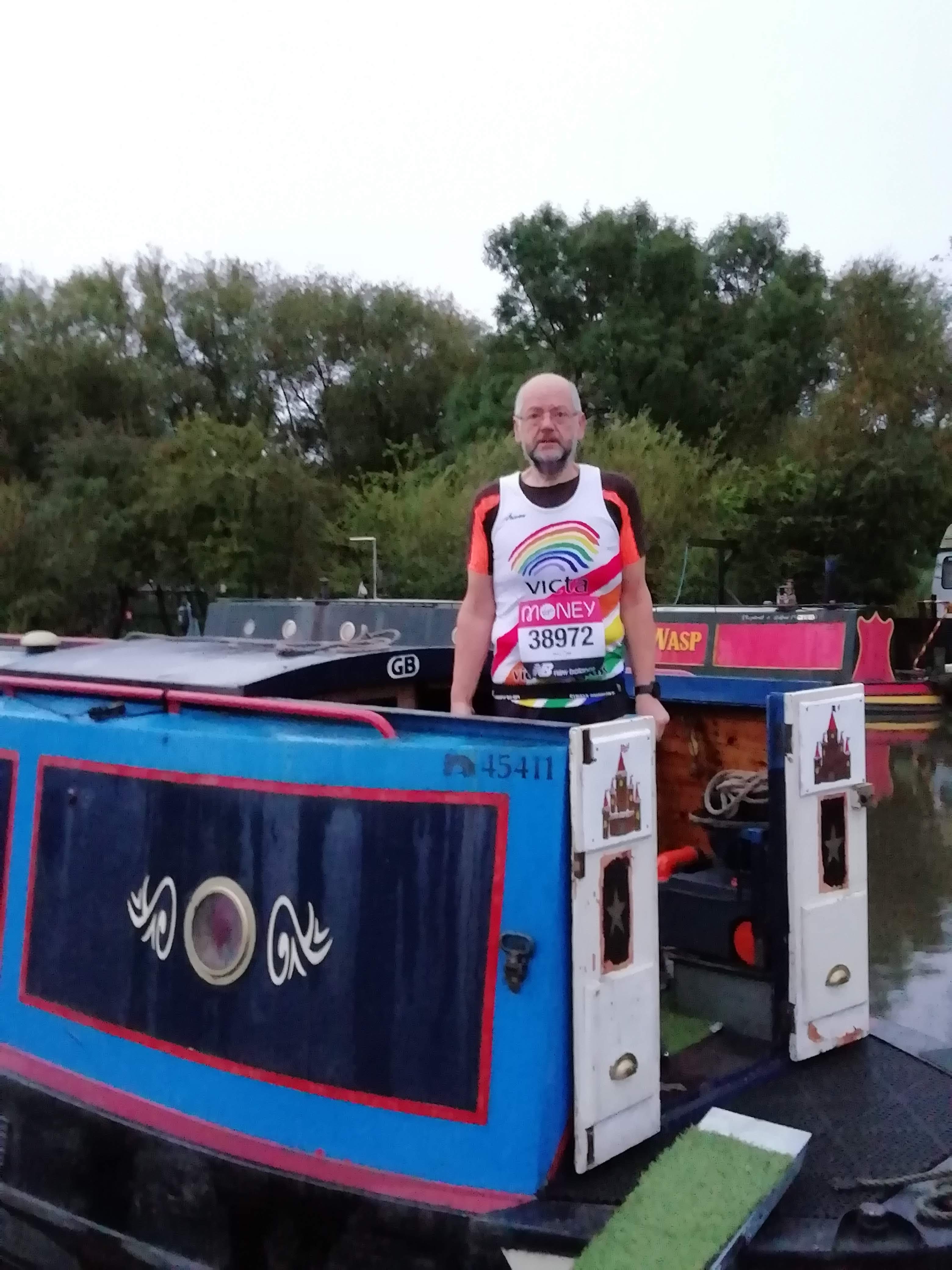
Next week though sees us taking on the Huddersfield Narrow Canal – 19.3 miles including the longest tunnel in England of over 3 miles, and 74 locks in the remaining 16 miles! As locks are narrow, a single boat width it means I can concentrate on front and back alone without having to worry about getting bashed from side to side. So next week my first challenge is to take the boat through the 42 locks up to the tunnel and let Steve do the lock wheeling – a novel part of his marathon training for London 2021. I just hope there’s enough water to let us get through – it was looking pretty shallow when we walked up a few lock lengths yesterday!

Surely I can’t do too much damage to our home and its contents – can I? Will we get stuck through lack of water or my tiller incompetence? Time will tell – watch this space!

Interesting piece of steering/ mooring – hope I do better than this!

Drama, trepidation and terror

There’s nothing like the fear of waiting for something that others tell you is downright dangerous and terrifying. That stomach-churning trepidation, night-waking terror, and escalating imagination of all the what-might-go-wrongs.

Wrong turn or flood?!

We’ve had it this week. After a peaceful, sun baked 10 days in Skipton we prepared for yet another new experience on the waterways – joining the inland waterways giants of the floating world on their commercial territories. Rules are different, locks are different, there are new guides to be accessed and instructions to be absorbed. There is always the fear of doing something wrong, or ignoring a vital sign.

Our first commercial waterway after the Leeds Liverpool Canal is the great Aire & Calder Navigation which we meet at Leeds. A commercial waterway, it is capable of carrying 600-tonne barges shipping mainly gravel and petroleum. Vessels of up to 200ft in length (we’re 50ft). Who knows if we are going to meet dozens of these commercial natives or maybe be all alone on our travels?

The Aire & Calder Navigation is also a river – and rivers demand more skill as they can be subject to strong currents, which need careful managing to prevent your boat being pushed around. Rivers invariably have weirs which need avoiding and steering away from. Locks are mechanical – controlled by traffic lights, primarily for the commercial traffic, sometimes manned by lock keepers, but sometimes we will have to operate them. Single red or single green seem to convey the instructions you might expect but we also need to take heed and understand amber (no lock keeper – moor up to self operate); red and green together (lock available and lock keeper will operate for you) or flashing red (flooding – unsafe to navigate). Hopefully we will get lots of red and green together, no flashing red and very few ambers… we shall see!

There’s also the issue of where to stop. On canals we regularly bash in mooring pins or stakes and tie the boat to these at night at a pleasant spot.

On commercial waterways the huge wash from big craft can make these types of moorings pull loose so fixed bollard or fixed mooring rings are advised. How plentiful they are everyone fails to mention…

The navigation guides seem to be full now of warnings like Boaters must on no account…Boaters should obey…keep a sharp lookout… All we need now are the Beware crocodile and shark signs and we’ll have the set!

There’s a lot to think about, before we even get onto the Aire & Calder. Once there we have 17 miles and 9 locks before we merge onto the next challenge – another navigable waterway, the Calder & Hebble. This also attracts commercial traffic but slightly smaller than the Aire & Calder. It also appears to require new equipment – a Calder & Hebble handspike which seems to be purchasable or can be made from 3×2 timber plus a plane… not something we appear to have in our onboard toolkit! Still where there’s a will, there’s a way, and a wooden spike is something I am sure we can fashion somehow… or is this wishful thinking? [As I write there now are two chunks of 3×2 waiting on the roof to become essential pieces of kit!]

First though, we have to get to, and tackle, the Aire & Calder Navigation. We have so much we want to see and do before we face our potential nemesis that we may as well enjoy the journey to it. We started for the first time on this trip with help on board – friends to support with 4 of Yorkshire’s idiosyncratic swing bridges. Swinging, like many things in Yorkshire is a practical activity and essential if you are going to travel on the Leeds Liverpool Canal. These sometimes manual, sometimes electronic, sometimes a combination of both bridges, make a change from locks. They are vital connections to small farms, country lanes, major roads and even memorials. Each needs unlocking with either a handcuff or BWB key and then operating, and relocking. Some swing happily, others grumble and grind or just won’t budge without added assistance from walkers, cyclists or other boaters!

Padlocks and bridge locks are the only type of lock you encounter on the 17 miles between Gargrave and Bingley. Through wooded glades and far-reaching views, we cruised east towards the former mill and dye town of Keighley and where the canal passes its outskirts, found East Riddlesden Hall, the 17th century manor house of a cloth merchant, now offering welcome riverside walks and a delightful tea room under the auspices of the National Trust. From here to Foulridge which we distantly remembered on the Yorkshire/Lancashire border was regarded as a day’s work for a boat horse in the days of non-stop fly boats which used to carry “perishable goods and passengers” – presumably both went off after a short time on board!

Each of the bridges takes us nearer to our nemesis – the commercial waterway looming ahead of us. How then to tackle the rising fear of the unknown and the resulting nerves, as we might for a job interview, returning to work in the office, an exam or test, or a visit to the dentist…can we use the same strategies?

Research – reading and personal experiences. Sometimes knowing more about what you are going to face can make it better, but equally it can sometimes make it worse as people have a habit of sharing horror stories. Good news or no news rarely makes the headlines as Galtung and Ruge recognised in 1965. In googling “issues on the commercial inland waterways” it was comforting to find nothing about collisions, narrowboats having issues, or indeed discover anything news or noteworthy about the commercial navigation.

Hearing the experience of others too is sometimes helpful as long as they don’t have a tendency to embellishment… fortunately those we met and chatted to regarded the commercial navigation as an unsung delight of the waterways – not a perspective we had expected and one which perhaps isn’t newsworthy. Don’t over prepare and alarm yourself in the process!

Perhaps because we were so focused on the alarming trial ahead of commercial navigation we were in danger of giving the here-and-now less attention this week. It made me realise that by failing to live in the present but overly in the future, we really can miss out.

Yorkshire’s ubiquitous swing bridges brought most of the early week excitement. Raising one of the few electronically controlled ones a car decided to explore the possibility of getting through the barrier before it closed… got through the first onto the bridge…saw the barrier ahead closing and promptly reversed into the first barrier. I then spent hours with police and Canal & River Trust on the phone. Four hours waiting engineers and the queues built up on both sides of the bridge.

Those four hours were unexpectedly delightful – a sunny opportunity to meet Judy and Bill York and enjoy their true Yorkshire hospitality in their garden mooring. We also developed new boat aspirations after a tour of their beautiful Swallow’s Nest! I could have happily listened to their boating stories for many more hours, but the minute the engineers arrived they got us all moving rapidly before they replaced the barrier.

The hire boats we collected in the queue then stayed with us and three of us leapfrogged our way through a batch of swing bridges into Riddlesden, supporting each other en route. One boat stayed with us the next day and assisted by lockies Miles and John, we made it down the historic, architectural, engineering Wonder of the Waterways – the Bingley 5 and Bingley 3 staircase flights overseen by that wonder of thermal warmth, the Damart factory!

Bingley 5 Rise has lots of quirks including box clough ground paddles and a ratchet mechanism on “scissor” gate paddles. Completed in 1774 and is still in daily use now – it includes two of the largest gates on the whole Leeds Liverpool Canal so I am reliably informed.

Bingley 5
Bingley 3

Personally I don’t think they are as impressive as the Foxton staircase in Leicestershire, but they are impressive feats of engineering nonetheless.

We edged closer to terror via a cultural interlude at Saltaire, a UNESCO World Heritage Site, and the Utopian realisation of Titus Salt. He wanted to create a place fit for his workers to keep his workers happy and healthy. In the process Saltaire was born with its mills and its housing, public parks, sports grounds, schools, hospital, library and recreation areas. It remains a remarkable place today, a cultural and visionary hub.

This included an exhibition by Simon Palmer. His watercolours made me smile, nod, and yearn to observe like him. Through his delightful two women of integrity he also introduced me to the much-needed Marie Collins Foundation which supports victims of online abuse.

On then to the long awaited descent into Leeds and what awaited us beyond…

As we came down the previous staircase locks into Leeds we encountered Dave and Kim on Betty D. We made it through the locks together, and once they moored up for a weekend on the town, they kindly helped us through River Lock so we scarcely had time to worry as the moment arrived.

From then on until we moored up last night 4 locks later, the commercial waterway was wide, we saw only one other moving boat, a narrowboat of a similar size to ourselves, and although the locks were vast, being electronic made them much less physical hassle than any of the previous locks or swing bridges. Not a windlass in sight! The only thing that got a work out was my finger pressing buttons, and my legs having to walk the length of the lock to find the boat! [We only ever encountered amber lights.]

The lesson of the week was not to lose sight of the present, or to take your eye off the ball because you’re stressing or fretting about the future. To do so is to miss potential delights and experiences, learning and opportunities that exist right now. The future will come and when it does – that will be the time to deal with it. It’s a lesson we need to remember and teach our children and students.

We’ve made it onto the Aire and Calder without incident; made the right decision when faced with three apparent routes and unclear signage; learned to look for the high yellow paddles to indicate the lock location; had no problem mooring (we’re on chains in the piling) and yet again we have more new experiences under our belts. The navigation is so wide it feels a little as if we’ve gone to sea…but that’s another challenge for the future perhaps!

A new take on life

What we think of our world depends on how we look at and interact with it.

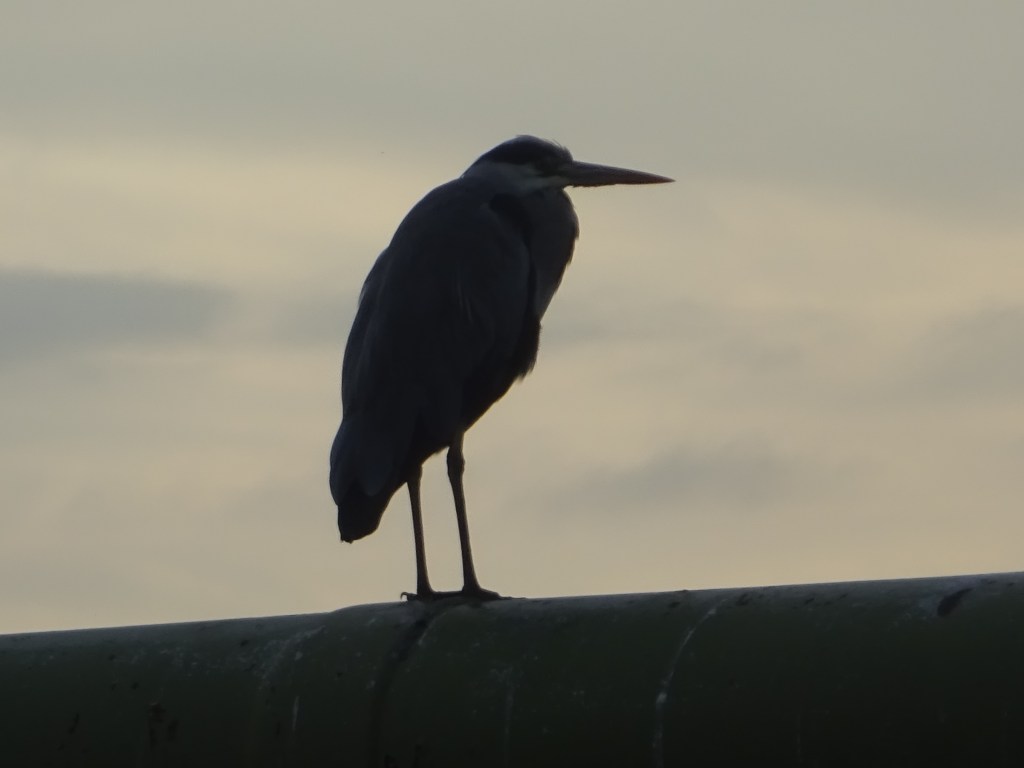
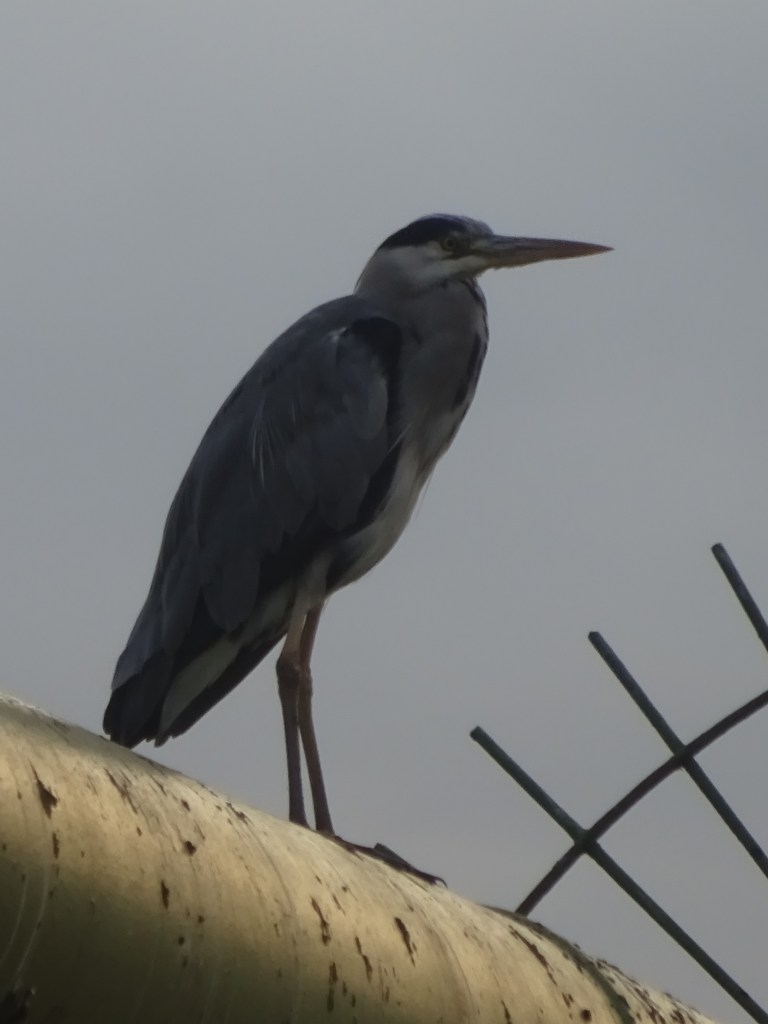
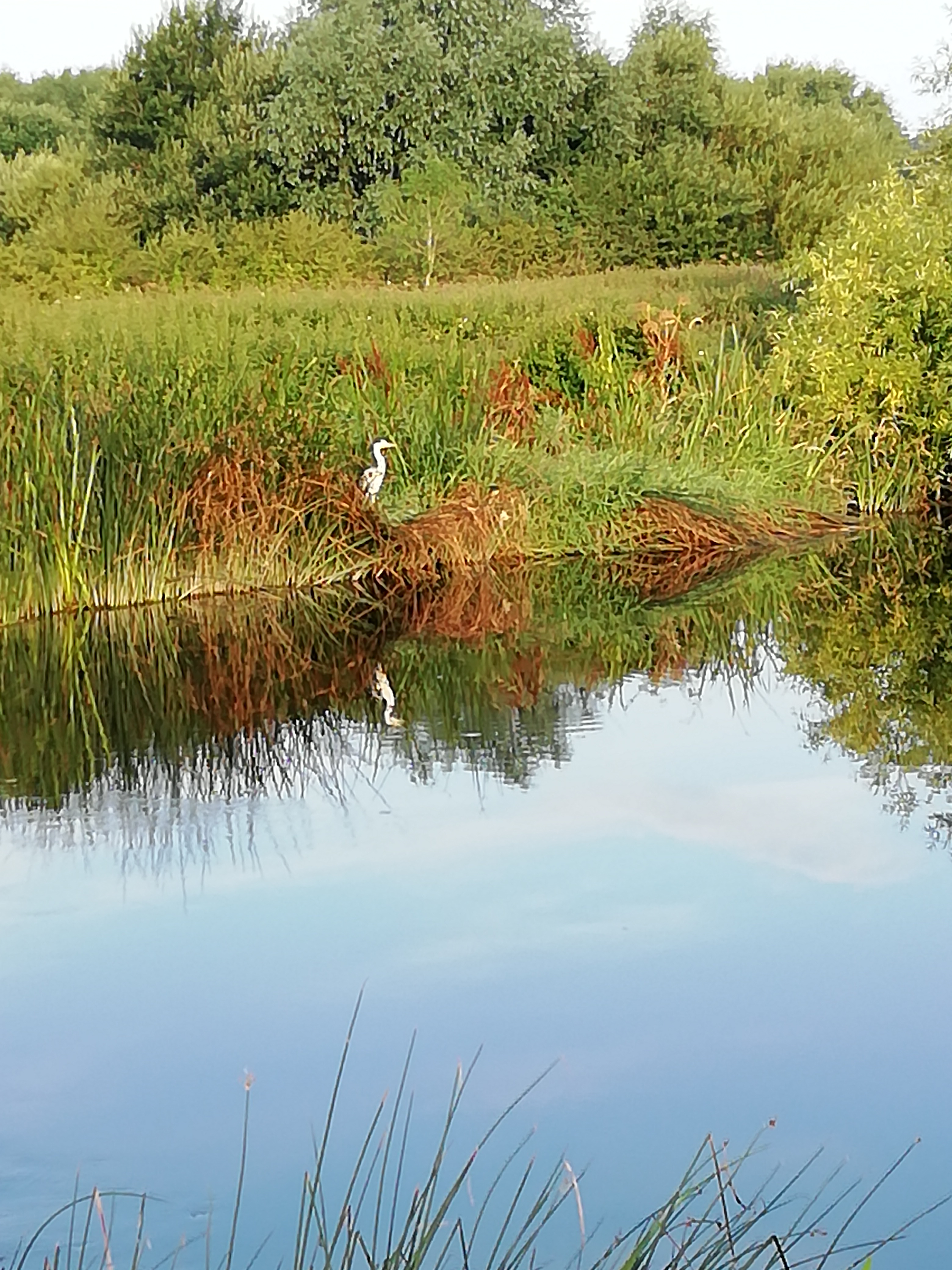
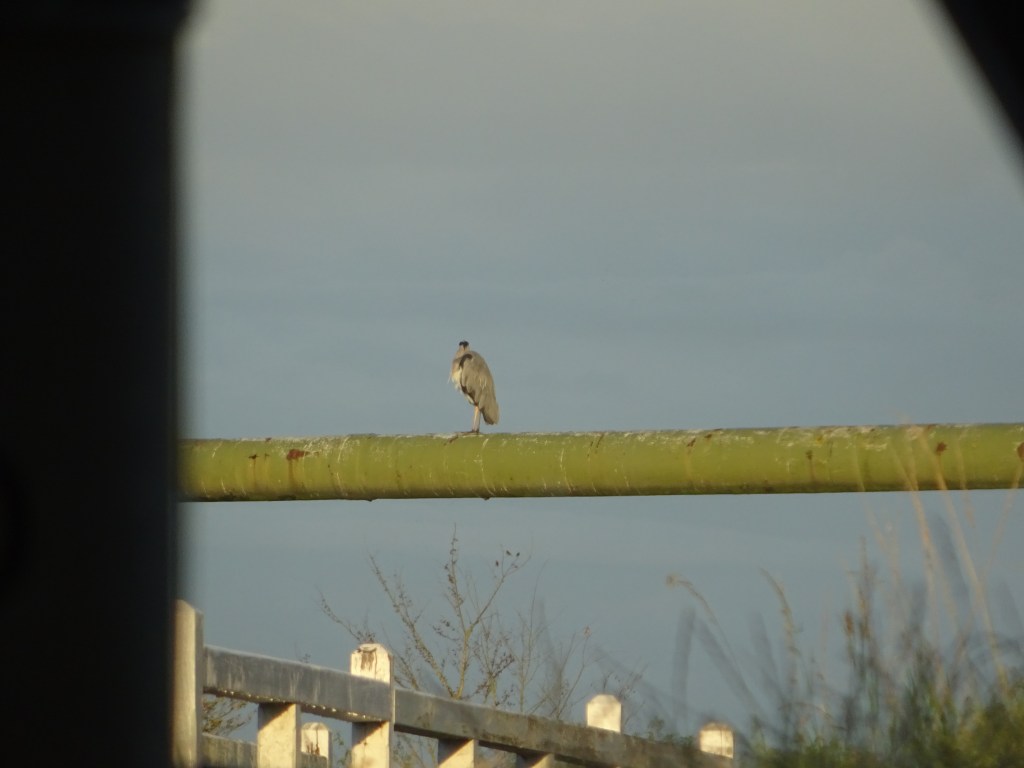
We’ve chosen to move more slowly by living and working afloat and we know that has allowed us, in fact given us the priviledge, of seeing things differently. It’s possible to see more of the world unfolding in front of you if you travel slowly. You can see the heron waiting for his early evening snack, watch him patiently scanning the water’s edge, and then make his move, snapping up a little wriggling frog and gulping it down. If you were driving past you’d have missed that moment – just as I missed it with the camera because I was too busy watching!

But this week we’ve not moved by boat, remaining moored up on the outskirts of Skipton, one of the most delightful and picturesque towns in North Yorkshire.

This week we’ve explored mainly on foot and at a very different pace as demanded by shorter legs.

I realised how much I have missed through familiarity, through thinking I’ve already seen something before, that it doesn’t merit a second glance. It is the little things which make up the rich patchwork of moments in our lives, and taking time to look and re-look adds texture and colour to those moments.

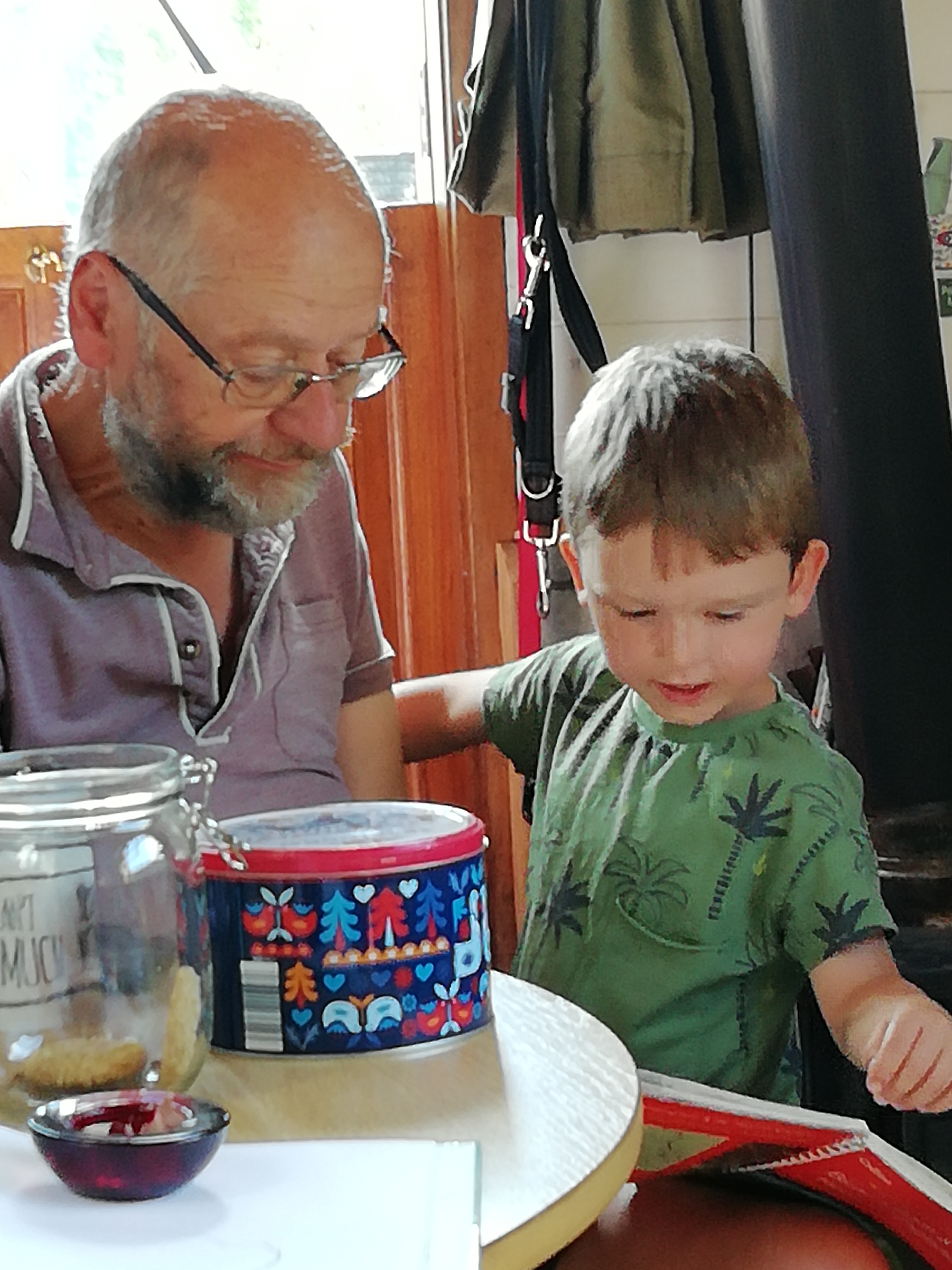
We’ve been fortunate this week to share life on the boat through the eyes of a 3 year old. Seen through new eyes, there is a new world all around us. Marcel Proust was right when he said in his epic novel À la recherche du temps perdu (In search of lost time)”The real voyage of discovery consists, not in seeking new landscapes, but in having new eyes.”

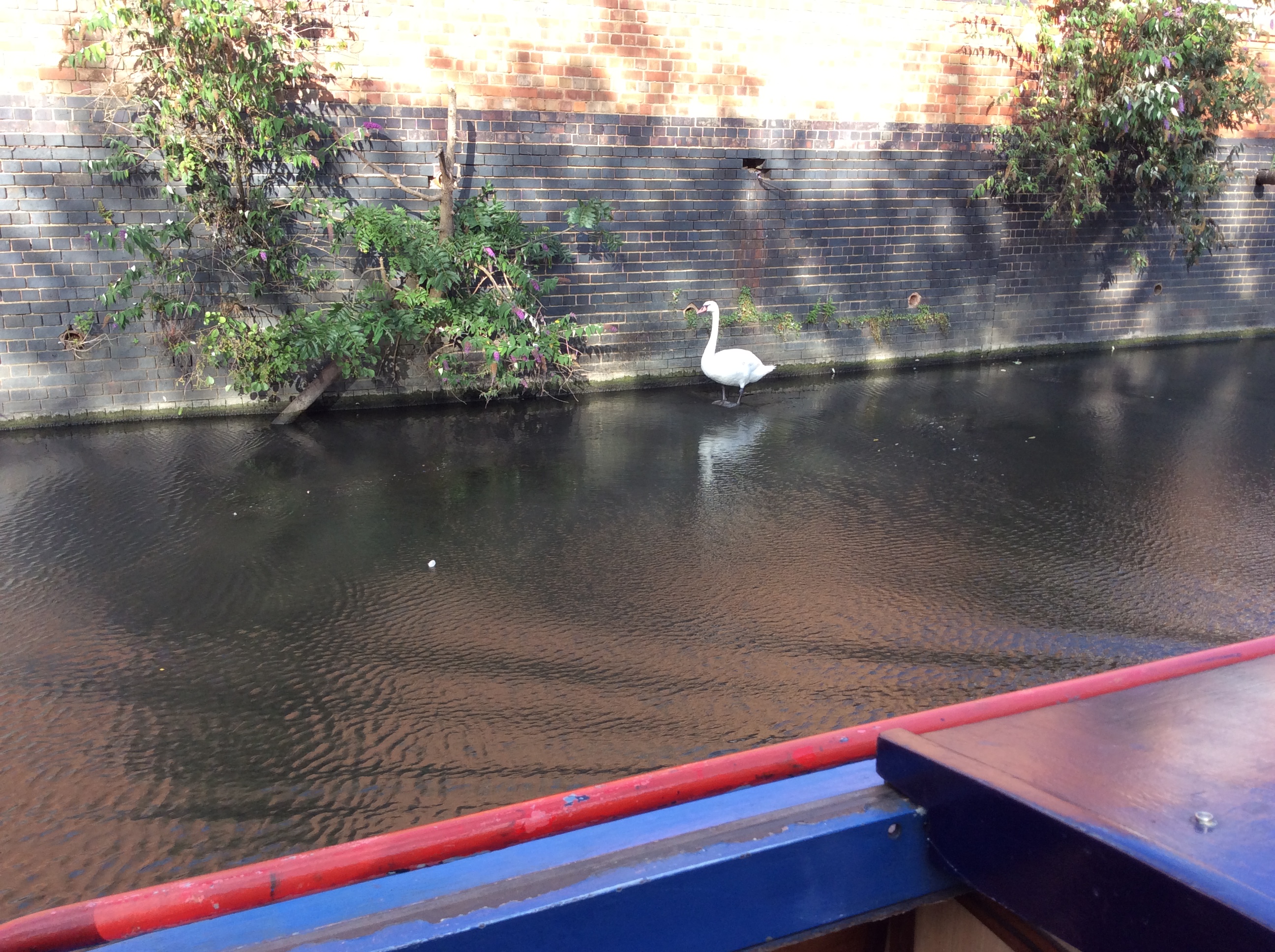
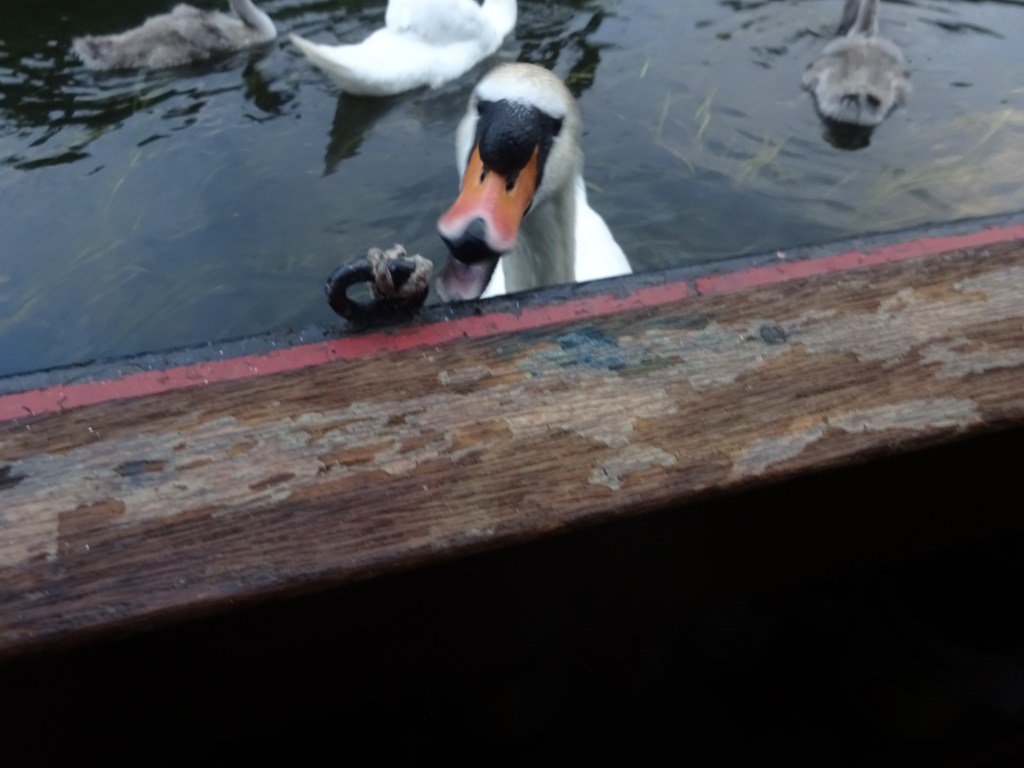
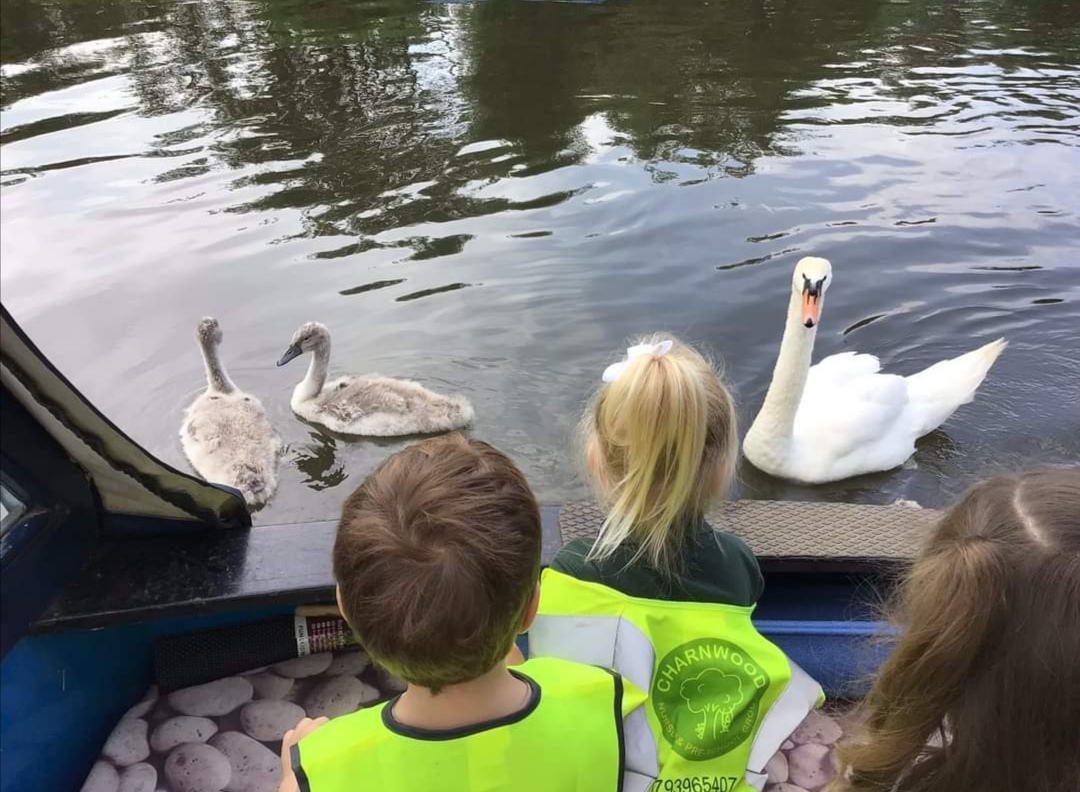
We’ve become used to the daily cheeping and tapping of swan visitors at the side of the boat as they nibble off weed and enjoy an easy found meal. Until this week though we haven’t spent as long as we might in watching the down covered fluffy cygnets learning how to feed, how to ‘upend’ to get weed. We realise from careful, continued observation that they are holding their breath underwater for longer and longer every day. They love dried mealworms which give them a good source of energy, and when these sink they upend rapidly to snap them up. The watchful parents stay near the young now but hold back, letting the youngsters feed first.

Everything needs a good look. The huge butterbur leaves now burgeoning along the canals hold unexpected surprises which to be honest, I could have easily missed had I walked briskly past.

The wonder of a snail in its shell – a riot of colours, pattern and shapes. The trail of the snail, the path of the slug, the wiggle of a worm were things I saw and appreciated this week rather than being things I would have passed by.

This tractor ride we took to the biscuit shop was a lesson in never giving up

The perseverance of a woodlouse struggling to squeeze from the narrowed end of a crack on the wheel of the tractor in this wooden play equipment absorbed us both for a full 7 minutes. We watched him (I was assured it was apparently a he) as he brought determination, trial and error and continued effort to his struggles. Finally he succeeded, freeing himself and going on his way by shuffling backwards proving that sometimes retracing your steps is the answer to achieving your goals.

Sometimes lessons like these are ones we have all learned but perhaps forgotten. Reminders and nudges to remember are always valuable. I’d completely forgotten the fascination of finding things hidden in walls that lead us to old ways, old lives and reflections on how people used to live.

It’s not just sight but all the sense which we need to engage to make the most of our world. We miss out on so much if we don’t stop and smell, touch and feel.

The delights of taste and texture demand to be appreciated too. The sheer joy and total bliss of a savoured ice cream or two …on a hot day. The rush of sweetness and coldness combining in a unique experience.

The resulting sense of indulgence and self care is immense. There are times we all need those.

It’s been good to have a reminder that even slowing down can mean we still miss things if we are not paying attention. Without looking up and looking carefully – we’d have missed this tawny owl, or to be correct we’d have missed seeing the bum of a sleeping tawny owl!

On the scale of things, the owl’s rear end was a highlight of the week! It overshadowed the artwork, creation and celebration of individual interpretation that is evident in these massive works of Damien Hirst at the Yorkshire Sculpture Park. His Virgin Mary (on the left) was matter-of-factory reduced to “Look she’s got a baby in her tummy and you can see it’s going to come out like a zombie.” I wonder what the artist would say to that review! On the other hand, Charity – whose collection box has been ransacked by a crowbar-yielding thief – resulted in an urgent plea for us to do something to help. I like to think that’s just the response Hirst was trying to elicit from his audience.

From enjoying the art of nature to experiencing the creations of man, we can all miss out if we go too fast, don’t take time to stop, question and research what we don’t know. We need to ask WHY? and take time to find the answer. We should never be afraid to ask Why or sneer at those who do.

New knowledge and new perspectives can bring totally new life to old familiar sights. It’s a great reminder that if we are open to learn a new world will open up that’s richer and more interesting. If we change the way we look at things, work and life are the same. We miss out if we assume or underestimate our colleagues, students, family members.

As we all hurtle back to hustle, bustle and business of old lives, it’s important we look at the ways we live and work with the new eyes and questioning approach which the pandemic has given us the chance to develop, to make sure we don’t miss out on the detail, and the richness around us.

A dandelion clock – the ideal timekeeper for a new considered approach to time and life.

I am so grateful to have had the chance this week to experience life differently. I need to keep looking, listening, feeling, tasting and touching differently as we continue on our slow way to see the world in all its breathtaking glory. Using all our senses learning can be child’s play. Considering research shows children learn more in their early years than at any other time in their lives, there’s hope for us all, if we follow their example.

It’s a beautiful world

A journey through time

This week has taken us from the lowlands of Lancashire to the heights of the county, and we have now begun descending into Yorkshire. We’ve been blown about, soaked to the skin, dried, drenched again and bathed in sunshine! En route we have become entwined with England’s industrial past, it’s rise, decay, regeneration and resurgence in new ways. We’ve discovered stories of the workers behind our history, those who toiled in the inhumane and often deadly conditions of England’s dark satanic mills.

Cotton is the thread winding through the history of the Leeds Liverpool Canal. The longest canal in England travels 127.25 miles between the inland wool town of Leeds, to the coastal sea port of Liverpool, crossing the Pennines along the way. Work on the canal started in 1770. It was built in a number of sections and was finally completed in 1816.

Leeds Liverpool Canal has spawned artwork and creative projects along its length in recent times


Barges would ply their trade from Liverpool where they had been laden with huge bales of cotton shipped from America. The cotton would be unloaded at wharves along the way, and from there redistributed to local cotton mills.

Canal Mill at Botany Bay with the white spire of the Preston England Temple of the Latter Day Saints or Mormon church rising to its left

In Chorley what was Canal Mill still stands imposingly at Botany Bay. In its heyday as a cotton mill, men worked on the top floor as spinners and women were employed on the lower floor as creelers, getting the bobbins ready for the spinners. It last spun cotton in the 1950s and currently stands empty after failed attempts to turn it into a shopping and leisure destination.

The Imperial Mill at Blackburn also looks forlorn. It was built on the banks of the canal in 1901 and was in production until 1980.

Blackburn itself was known as cottontown through the 18th and 19th century and was famed as one of the most important cotton producers in the world. From the windows and architecture of houses it’s possible to see the origins of the cottage industry. Space and light was created for handlooms in terraces, or in loomshops attached to the backs, the sides or in the cellars of their homes. Once the Industrial Revolution brought mechanised looms housed in specially constructed factories, the landscape changed again.

The canal was fundamental to the development and functioning of the spinning and weaving mills, as well as the associated industries of paper mills, collieries, breweries and brickworks that flourished in the region.

The collieries have had a major impact on some areas of the canal – subsidence has led to significant work needing to be done to maintain the working of lock flights, and in some places the canal is now much lower than it was as we can see from high sides!

The architecture alongside the canal has in some cases been repurposed, recycled if you will. Apartments, houses, offices, restaurants and cafes have sprung from wharves and mills.

Many though remain untouched by humans, if not the ubiquitous Canada geese, waiting for funds and entepreneurs to revitalise them.

The structure of the canal remains unchanged, running like a ribbon through the urban and rural landscape. It rises through the Lancashire mill towns, skirting the edges of most but in one former mill town it runs spectacularly 60ft above the town centre on The Burnley Embankment. The Embankment was an engineered solution to keep locks at a minimum because they took time to navigate (as we know!). Regarded as one of the original “seven wonders” of the British Waterways the “Straight Mile” as it’s known locally gives good views of the rows of traditional terraced houses with their symmetrical chimney stacks…even in torrential rain!

Out of Blackburn the countryside opened up, the sky expanded and we began to encounter the M65, as it crossed and recrossed the canal. Lorries and cars hurtled along, oblivious to us and our world of 4mph, geese, swans, sheep and moors rolling to the waterside.

Spectacular views were laid out for us all to see even through the rain. For us fortunately they didn’t pass in a blur or the stress of a rush but we were able to appreciate them, to marvel and enjoy.

Just before Burnley at the Pilkington Bridge is a small, blue plaque. It remembers and reminds us all of an explosion at the nearby Moorfield Pit which killed 68 men and boys and seriously injured 39 on the morning of 7 November 1883.

It was a deadly gas explosion which led to safety recommendations that affected coal mines across the country, including replacing the traditional Davy Lamp. The youngest to die in the disaster were just 10 years old, James Atherton and Aaron Riding.

The collieries, the mills and the canals were dangerous places for children in those days – many worked with their families on the commercial barges, barges like Kennet. A short boat, built to the exact dimensions to allow her to fit in all the locks of the Leeds Liverpool , Kennet travelled the whole Leeds Liverpool canal carrying cargo. Now on the National Register of Historic Vessels, we came across her not far from her permanent mooring at Greenberfield Top Lock preparing for filming series 2 of the latest All Creatures Great and Small.

Not only historic barges are taking on a new life – bringing authenticity to period dramas, but narrowboats too are transforming their purpose. At Accrington we came across Small Bells Ring, a recreational/research vehicle (RV) Furor Scribendi, which has been built as a floating library of short stories. It transports them across the canals, and lets the words of those stories transport their readers to new places, just as the canal takes us to new places, new views, new discoveries dozens of times every day. The boat is travelling through Lancashire inviting families and individuals to explore new worlds through the written word, and will be in Coventry as part of the City of Culture events in July.

We’ve spent the week traveling slowly, thoughtfully, from Greater Manchester, through Lancashire to Yorkshire. It’s been a week of sensory overload – spectacular scenery, everything sodden and shimmering in the rain, sudden moments of joyful sunshine, which set everything sparkling in a different way. History grounded within the scenery, stories of people and places. Far reaching views of rolling hills have contrasted starkly with crumbling stonework in urban sprawls of old mills that once hummed with industry. Ducks, geese and moorhens living in urban detritus of rubbish contrasted starkly with the exhilarating freedom of curlew with their gangly legs and distinctive curved beaks, flying with the rolling motion of a wave through clear skies over open fields.

William Blake captured England with all its contrasts, in his recognition of England’s pleasant pastures green, dark satanic mills and unfolding clouds. We’ve seen them all this week in a head-turning, never-ending slideshow of sights that have underlined for me how much there is to see and explore in this country.

Seeing this diverse countryside at a slow pace allows us to appreciate it, to experience it in a way you can’t whizzing through at speed. We have chosen to travel the ‘Super High Way, Super Wet Way, Super Low Way, Super Slow Way’, in what I would add is the Super Best Way.

It’s been a memorable week – 62 miles and a quarter of a furlong on the Leeds Liverpool Canal through 57 locks and 2 tunnels taking us from Wigan to Skipton.

When fight is the only option…

Sometimes fear of the unknown is far worse than the reality – sometimes it just doesn’t prepare you for the reality in life and on canals.

Fight or flight is not an option on the famous or infamous Wigan Flight. In this instance, you have to fight to keep going…and going…and going…

Looking back to the spires of Wigan

I am sure Wigan is a wonderful place. After all, Wallace and Gromit live here at 62 West Wallaby Street, Uncle Joe’s Mint Balls are produced here, and the long list of notable people who herald from the town include many comedians including George Formby, famed for his musical humour. I particularly mention Formby because he married one Beryl Ingham, and we are Inghams, so it’s good to find a connection, however tenuous!

Wigan is famed for mills, music and coal. At the peak of the mining industry over 1,000 pit shafts were being worked within five miles of the town centre. The canal was originally planned not to go through the town, but to have an arm heading off to Wigan on its route from Leeds to Liverpool. The Industrial Revolution saw the power of the mill owners change the course of history and the canal. It put Wigan on the main line map, because of its importance in supplying Lancashire coal and textiles to the major cities.

Today’s Wigan is very different now. Wigan Pier, a canalside wharf made famous by two Georges – Forby and Orwell, as a joke and an area of inhuman conditions, has become a tourist attraction as a heritage centre. The mills and mines have, like the commercial boats which plied the waterway, now gone. In many places the railways were the death knell of the commercial canals but for the Leeds Liverpool it was the roads. Until the First World War the canal was operating busily but traffic then moved onto the roads. The last regular commercial canal traffic here, from Plank Lane colliery to Wigan power station only stopped in 1972.

The top nine locks of the Wigan flight were dominated in their day by the vast Wigan Coal and Iron Company which employed 10,000 people at the works here. The huge blast furnances and coking ovens are gone but the canal infrastructure which supported the business remains. Its locks built in 1816 have dominated our thoughts and life this week.

The Wigan Flight even has its own Facebook page with invaluable advice. It’s also a place for boaters to seek others willing to help them up and down the infamous series of locks. People apparently come from all over the place to spend time getting involved with the canal to help others but in the wind and torrential rain of Thursday this week these individudals were sensibly tucked up elsewhere. We encountered one boat who had been moored part way, but mainly dog walkers, cyclists and at the top a boater preparing to go down the next day who helped with the final gate.

From personal experience, with 23 locks to tackle climbing over 210 feet in less than 2 steep miles, Wigan isn’t somewhere I would readily recommend for a wet and windy day out! However we did 20 locks of Heartbreak Hill in one day (the Cheshire Locks) but they were narrow locks, and they were more spread out, allowing me to get on the boat for a cuppa or the loo en route. Here there are 21 wide locks grouped together on the Wigan stretch of the longest canal in Britain, the Leeds Liverpool canal. To get onto the flight from where we had moored on the Leeds Liverpool Leigh branch, which connects Wigan to Manchester via the private Bridgewater Canal, we had another 2 locks to add on. Hence our 23!

First of two locks on the Leigh Branch of the Leeds Liverpool canal coming into Wigan

Dating from 1816, the flight of locks which took the boats out of and into Wigan, to and from the Pennines, climb over 210 feet in around 2 linear miles. Unlike some famous flights of locks, they aren’t constructed in a clean line that allows you to see from top to bottom to know easily how far you have come, and how far you have to go. The Wigan Flight curves around the local contours which means its easy to lose track of where you are and how many you’ve completed as well as how many are left to tackle.

The locks are wide locks – they will take 2 boats side by side going up or down, but they will only accommodate boats of up to 60ft long. We are 50ft so no problem for us, but it puts this route to the North of England out of bounds for many larger boats.

Every single lock consists of gates on balance beams which need pushing open and two sets of paddles – ground paddles at the top of the lock, and gate paddles in the big gates. Both of these paddles are opened and closed manually using with a windlass (a handle which slots onto the spindle of the paddle). On the Wigan Flight there is the added delight of needing a handcuff key for every single paddle, so somewhere in the wet windy blur of Thursday I unlocked (or tried to unlock and failed in three instances) and relocked 132 anti vandal locks (the handcuff key releases these locks). When I failed to get it to unlock we had to make do with emptying or filling the locks with the limited paddles I could operate, which obviously took longer.

Operating the handcuff key

Because these are wide locks, in some instances very deep, and with limited mooring points on the stretches between the locks (called pounds) we split our roles into tiller and lock operator. Steve is far better able to keep the boat safer in strong winds, bywashes which knock you off course, and judging the water flows into the deep locks so he drew the short straw (as I see it) of tiller. I was lock operator for the day, and really this is a flight which needs completing in a single stint. There is a possibility to pause part way but it’s not recommended.

So armed with my big girl pants, rubbery gloves from @Middlewich Wharf for grip, a windlass, and for the first time a windlass holster which we bought from @cruisingcrafts on Lady Brian just before we left our mooring near Pennington Flash, I set off. You can tell what I forgot – the handcuff key, so having set off to prepare the first lock I was kicking my heels until Steve, the dog and the boat arrived with the handcuff keys aboard for me to unlock the lock!

Topped with my Drizabone oiled hat (which the family call my safari look), wishing for safari weather!

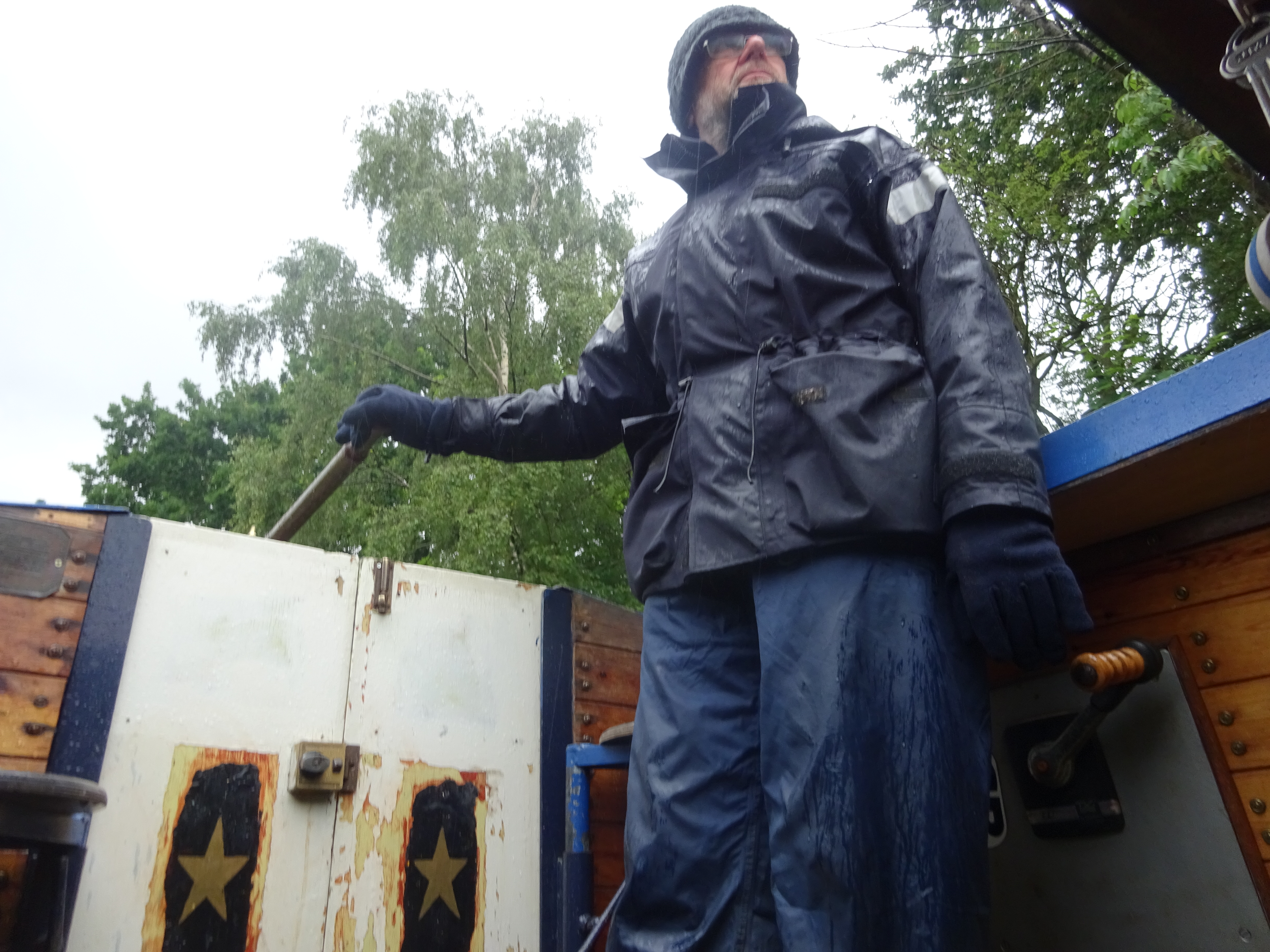
Clad in my newly purchased ex-Met Police waterproof coat which I hoped would keep me dry and perhaps combined with my handcuff key, keep trouble-makers at bay – I set off! The coat did prove waterproof but having to raise my arms above elbow height at most locks to operate the windlass I soon discovered the cuffs were a bit big for my wrists and the rain just ran straight down, soaking the lining in minutes… Fortunately keeping on the move for 7 hours kept me warm, and trotting back and forth meant I completed a half marathon on the flight!

Within a few locks I ended up on flight control autopilot – which went like this:

  1. check lock level
  2. if you can open bottom gate,open it (this only happened once) so unlock gate paddle
  3. raise first bottom gate paddle
  4. cross the lock
  5. raise second bottom gate paddle to empty lock. When level’s right…
  6. open one gate (fortunately Steve can bring our boat in on a single gate, significantly reducing the time and effort of opening and closing these big wide lock gates – yet another reason it’s better to have him on the tiller at times like these!)
  7. when the boat’s coming in, cross the lock to close paddle 1, relock
  8. recross the lock to close paddle 2, relock
  9. when the boat’s in – close gate
  10. go to the head of the lock
  11. unlock the ground and gate paddles on that side
  12. operate the ground paddle watching (or if too deep to see him – listening) for signals/shouts from tillerman Steve about flow and currents
  13. cross to the other side of the lock (ground paddles first and then gate paddles)
  14. unlock that side’s ground and gate paddles
  15. operate ground paddle watching for Steve’s directions as he’ll probably be in sight by now
  16. operate gate paddle
  17. cross back to the other side of the lock
  18. operate gate paddle
  19. when the level is right, open gate
  20. as boat moves out, close gate and ground paddles and lock them both
  21. close gate behind boat
  22. cross to the other side
  23. close gate and ground paddle and lock them both
  24. move onto the next lock
  25. repeat 23 times!

As you can see, the mechanisms aren’t all the same either so each lock brings a bit of excitement and often a new challenge. Many of the locks have had to be braced because over time they have suffered with the subsidence that is a destructive legacy of mining in this area, and this can impact how they operate. It was a workout without having to go anywhere near a gym!

I still managed to forget the order occasionally in a soggy blur but fortunately a yell from the eagle-eyed tillerman brought me back in line! I am sure others can do all this more rapidly but this routine worked for me. It got us from the bottom to the top. It sounds quite straightforward looking at it written down, but some paddles are difficult to turn, some gates take a lot of opening, and sometimes there are problems with gates not shutting when they should.

Shut pub – such a sad sign

The inn at the top used to offer a certificate to boaters achieving the flight but it stands empty and forlorn with a Pub to Let sign in the window. So no certificate or pints for us but the relief of making it to the top.

We used the services there, filled up with water, emptied the loo and the bins and prepared to enjoy a much-needed shower. The advantage of a shower in the services is that you can luxuriate in as much hot water as you like without worrying the tank will run dry. Except of course, this had turned into an endurance event for us and not an experience, so the showers were out of use! Quick hot shower in the boat to warm up and lighting the stove for warmth and to dry out our sopping clothes was another treat instead.

In different weather or sharing the journey with other boats, the experience would have been very different. As it was it became an endurance effort and an experience that will stay with us as one which proves our resilience, ability to overcome and reinforces yet again our partnership in this new worklife balance we have chosen for ourselves. We’ve shared another experience together.

We had two casualties en route – Steve’s phone gave up because it got too wet and a wine glass launched itself from the shelves at some point, conveniently into the sink which saved too much clearing up! Steve’s phone died because when we got to the top he set off for a 5-mile walk in the rain to fetch the car. It’s been fantastic having it this week to catch up with family and friends. However his walk turned into a 6.6mile mystery tour so he had to keep checking the map en route.

Now though, it’s on climbing still towards Chorley, Blackburn, Burnley, Colne and into the rural remote navigation through Salterforth, Barnoldswick and Rainhall. We can but hope the rain doesn’t come with us all that way – our feathered neighbours aren’t the only ones with webbed feet and the rooftop garden is washing away! Greenberfield marks the summit of our climb and then it’s downhill to Leeds via Skipton, Keighley, Bingley, Saltaire and Apperley Bridge.

I hope it’ll be a long time before I see Wigan again – and that the weather’s better when I do!

4Cs for better mental health

It’s been a rollercoaster Mental Health Week for us, and one which has led me to reflect on the 4Cs – choice, control , consideration and compassion. Armed with these we can try to make life easier for ourselves and just as importantly, make life easier for those with whom we live and work.

Choice

If you voted last week, you exercised your electoral choice. If you opt to hug your family next week Boris says you’ll be making a choice based on science and consideration for those you love.

The pandemic has brought into stark relief what it means to have choice. Choices about things we’d never have even given a second thought to before last year – going out, staying in, hugging loved ones, getting a hair cut, seeing friends and family, going on holiday, and many more.

Just a few of the things that help me keep on an even keel

The opportunity to think more clearly about the choices we make means we have perhaps become more aware of the little choices of life. Things that seemed a drag once, like what to have for dinner, became really important during the pandemic. We also became very aware that for some poverty curtailed choice.

Control

That leads into the second C – control. What to eat and when, was something many of us could choose, something we had control of at a time control and choice was being removed from us by the virus and how politicians were managing it. Choosing to donate to essential foodbanks, or to support others in multiple ways was an option we took to help others regain choice and control in their lives.

I’ve been reflecting on choice and control particularly this week because it seems so apparent to me that having choice and control removed makes us much more aware of how precious they are. During full lockdowns we couldn’t move. We sat on our boat and recognised that within the narrow parameters of food and exercise, we had little choice. We didn’t worry about who to see or where or when because we couldn’t. It was a form of isolation that reduced choice, and at the same time liberating. It made me realise that choice and control can lead to stress. Choices demand decisons and decisions are difficult things. They lead us to wonder if we’re making the right choice or the wrong choice, if there’s a better way, if we’re making a choice too quickly, too hastily.

We all need propping up some time – it’s just a fact

Choice and control have the potential to inspire, to motivate, to liberate us and to challenge us. Whether it’s trying to decide who to see, where to see them and to hug or not to hug, or whether to return to working in the office (if you have a choice), or whether to travel abroad, the lockdown lifting gives us all challenging choices to make. If we feel that control is being imposed upon us or that we are losing control, even of small things like what time we take a coffee break, go for a walk, decide to eat our meals.

Part of what makes us the individuals we are, are the choices we make and the control we exercise in our own lives. Marcia Baxter Magolda developed a theory about self-authorship, the ways in which we each have the potential to develop and direct our lives. One major aspect of that is about how we each develop our own identity that guides our choices. Drawing on our beliefs, values and loyalties, our past experiences and crucially our mistakes, we determine a way forward which we feel is right for ourselves. In turn that supports how happy or fulfilled we feel which supports our mental health.

“It is our choices that show what we truly are, far more than our abilities.”

J.K. Rowling, Harry Potter and the chamber of secrets

The lockdown restrictions led to huge mental health issues for some created by so many factors. The stress of being prevented from seeing friends, of being on furlough, working from home, losing jobs, and that’s just about each of us as an individual, the potential for more stresses and depression to multiply when one takes into account the impact the pandemic was having on our families and friends.

The past year has also removed from so many the ability, and even the right to self-author their own paths through life. Talking to university students, in many cases they felt the pandemic and decisions surrounding it had been taken by others, and had totally negated their capacity to self-author. They had decided to go away to university and then that had been overruled. They had found themselves back at home where decisions on daily life were often taken by parents (also struggling for something they could control); they were studying online in a way decreed by academics or their university IT systems, not as they had intended or envisaged. The only choice for many students and indeed many of us, was what exercise to do and when to do it, or as one student told me – which rules to break and when.

Then came the initial easing and some freedom that comes with choice. We chose to move and that’s fortunately not a challenging choice on a canal – you travel the way you are pointing. It’s not like a road with the opportunity to make u-turns all along the way, On a canal unless you have a short boat you only turn at the winding (turning) points, by which time you’ve usually had plenty of time at 4mph to make up your mind if you’re going the way you want!

Stresses for me this week include travelling 12m up above the Manchester Ship Canal on the Barton Swing Bridge Aqueduct

We’ve been waiting so long for restrictions to finally lift and yet in that lifting there are going to be new stresses next week for many. Many have become used to a new way of living, one that has reduced social pressures because there’s been no need to go out, to socialise, to spend money we don’t actually now have because of furlough or redundancy, or to invite people round. Workwise, officewear of trackies and a sweatshirt reduced washing, decision making, and perhaps also the need for dieting…

The pressures of lockdown ending can create problems that have the potential to overwhelm. We had a personal reminder this past week of lockdown, of losing control, of being at the mercy of someone or something else, of hopes raised and dashed and recognised how easy it is for any of these situations to trigger negative, low feelings that can be hard to manage.

The culprit for us was the driveshaft coupling. It connects to the engine to make it move the boat (all those who know more complex explanations – apologies!). Four bolts/studs came loose, losing threads in the process. Steve managed to get them to hold sufficiently to let us limp through King’s Lock into a mooring in Middlewich in Cheshire but that was it, the end of their useful lives.

Replacements were ordered asap by the helpful Paul Donnelly at Middlewich Wharf but the Bank Holiday weekend meant they didn’t arrive until day 6 of our enforced pause. When they arrived it was rapidly apparent that the threads into which they were connecting were also damaged, and that these had already been drilled out and repaired with helicoils in the past. Nothing for it but get rescued.

The saga of failed parts, arrived but not fitting parts, the removed part and engineer arrival – Andy the saviour is on the left.

Day 6 we called River and Canal Rescue – we’re insured with them. It took until day 13 of our enforced stoppage for them to have the parts and get to us. The moment the engineer Andy arrived with the new part was wonderful – high, positive, excitement but then it wouldn’t fit…instant low. By cutting out part of the engine bay the new coupling fitted and within minutes we had it fired, tried and with almost undue haste we thanked our rescuer and were pulling off our mooring as his feet left the boat for the towpath!

It almost seemed worse to be grounded again (by a failed drive coupling which links the engine tot he act of propulsion), having had a taste of freedom. We were constantly reminded of what we were missing as other boats happily cruised last us and all we could do was wait…impatiently in my case…for the replacement components to arrive. Huge glee when they finally arrived – followed immediately by a crushing low when they wouldn’t work.

It’s made me appreciate the difficulties for students, for colleagues at work who have suffered the difficulty of lockdowns; developed through personal choice and control their own ways of working, and then with the lifting of lockdown have the potential to lose that again through heavy-handed management. Making the return to the new normal one that allows everyone the opportunity to exercise their personal control and make their own choices, and to manage that with compassion and consideration, seems vital.

We’ve all got used to a slower pace of life in lockdown – and the speeding up is going to seem exhausting for many. Making sure we have slow times in our days is going to be vital – fairly easy for us at a maximum 4mph!

Consideration and compassion

It made me consider all those things we do often unconsciously that reduces choice, or control for others, and how by doing that, we lack compassion. Do we manage our lives and work to give those (children, partners, colleagues, students, clients) involved in the decisions we are making, a meaningful element of control and choice? Academics – are your assessment practices offering elements of control and choice for students? Do we exercise compassion if they find any elements overwhelming or challenging? When people are struggling with work, study, or life being compassionate and considerate isn’t telling them to “Get on with it”, or “Pull yourself together”. What seems an obvious solution to one can be impossible or alarming to another. Unless we are aware and remember that we lose our compassion.

Sharing is one way of caring for each other, sharing a new found love of nature, of walking, of cooking or crafting, or whatever it has been that got you through. In my case it’s been discovering more about the history and architecture that’s on my doorstep – wherever I take that doorstep on England’s canals. In the salt town of Nantwich and the City of Manchester we discovered some fascinating sights.

Sharing may help others make it through the challenging changing times to come. Even if they don’t feel it’s for them, you’ve given them the chance to share in your choices, your self-authorship of a crucial time in your life, and that insight might be something they draw on to find their own inspiration for the next battle they face.

As individuals we need to look after ourselves for our own mental health, when it seems we have no choice or control over what life is throwing at us. We recognised the need to consciously see the multiple positives during our fortnight in Middlewich – shops, access to services, friendly and helpful owners at Middlewich Wharf (possibly the only wharf in England with a horsebox bar), visits from friends, good pubs serving food and drink outside and we found with the constant “will today bring news or a solution”, it was important to keep reminding ourselves of these pluses.

We consciously recognised the need to gain some control over our situation, it’s tempting to sink further feeling totally out of control. We walked. We took ourselves and the dog for long, new walks immersing ourselves in the countryside around us whatever the weather, consciously noting the changes going on in the trees, the hedges, the continuation of life through the hatching of ducklings, goslings and cygnets and appearance of buds, blossom and new leaves.

I’m hugely grateful right now – to those who have helped us on our way, supported us with consideration compassion and engineering expertise to get us on our way to the cheery waves from those on the towpaths and houses we have passed, to those who have shared a smile as they pass the boat and those who have shared the work at locks. Most of these lovely people will be unaware of how much they lifted my flagging spirits, but all these little interactions as we endured our enforced pause and then made up for lost time with long days cruising to get us into Lancashire for a much-awaited family reunion this weekend were little positive nudges. We are here. We will get to see everyone, and hopefully the only choices this weekend will be to hug or not (I am happy to but will leave that choice to each individual concerned), and how many slices of cake are too many? Ah cake – perhaps that’s a 5th C in the armoury to support my mental health!


How to belong – anywhere

Food for thought time this week. Being on a boat, moving about all the time has given me a heightened sense of belonging which seems so strange, when it doesn’t seem as if now I belong anywhere!

It’s made me curious about what it is that makes us feel we belong? Is there anything from this experience that can help others – in employment, at school or college or university – in a new house – or even in a new country?

Why does it even matter? Psychologists are clear it does, but we ourselves know that feeling we belong is important to happiness, engagement and productivity. It helps us feel settled, secure and productive in relationships whether personal or professional. It’s good for us, and those around us.

During lockdown/s it’s clear some of us have felt a new sense of belonging in our homes and local communities, where we’ve been spending much more time, and conversely a reduced sense of belonging in our workplaces which some haven’t seen for over 12 months. It was the pandemic with its unsettling uncertainties which drove us from a 4-bed detached house into a 50ft floating home (coincidentally both were built in 1989). I know that had I felt a strong sense of belonging in the university where I was then working, it would have been more difficult, if not impossible for me to make that huge change, giving up the permanent job in favour of a freelance, peripatetic way of working. I’m eternally grateful that I made that move.

According to Maslow, the American psychologist whose 1943 heirarchy of needs has validity today, belonging comes in the third tier. So for us to even be able to even consider belonging – hunger, thirst, comfort and safety need to be addressed. Safety is something I have been hearing a lot about from people I am working with as they return to face-to-face working. They articulate fears of being found wanting by bosses and colleagues, of having enjoyed too much working from home without that sense of being constantly judged and found wanting. Are they imagining it? Whether they are or not, it indicates a lack of trust in their management and colleagues that creates insecurity.

Copyright Simply Psychology – Creative Commons – such a clear way of setting out Maslow’s heirarchy.

Just looking at this pyramid of Maslow’s makes me realise just how much more complex belonging is in reality for us all. The experience of 3.5 months in lockdown in a single place, when normally living on board a boat which is continually cruising means staying in a place for a maximum of 14 days enabled experiential evaluation of what is it that makes us feel we belong. I realised it is about the small things, it is about us ourselves and how we respond to others, as much as it is about how others respond to us.

Firstly in our case, I wondered where is it we are belonging? It’s a multilayered situation, like an onion. At the heart we are belonging in our own skins. Belonging on a boat. Belonging on the canal and river network. Belonging fleetingly in all those places where we stop, some inhabited, some not. It’s also about belonging not just to individual places but to the whole, belonging in the country, in the nation. Living so close to nature, to the ever-changing countryside and its different facets, enables us to feel more connected – building a greater sense of belonging through appreciation and understanding. It is hard to belong somewhere you don’t appreciate or understand.

This floating way of life, working and living onboard is one we are making together, Steve and I. It makes me wonder if the fact there are two of us helps. We have a sense of belonging to each other, that we carry with us wherever we are. We have though, in our lives together, spent years apart living in different countries, in my case in places where I didn’t always speak the language, and the sense of belonging I particularly experienced in at least two of those instances was immensely strong, so it’s not always the fact we are a team.

What creates a sense of belonging? It’s not about big gestures or statements. I experience it in the little things, a smile, a wave, a cheery good morning. It makes me realise that the dog has a big part to play. Wherever we go, we are instantly part of the dog walking community. I always have a pocket of dog biscuits – a surefire way of guaranteeing obedience from our dear deaf old spaniel, a way of dispelling potential canine aggression and they make a conversation starter with another owner about whether they mind their pet having a biscuit.

Dog ownership – Wet, snowy and what on earth’s he got NOW? Wouldn’t be without him for anything!

Feeling part of a community is one element of this sense of belonging. A friend and former colleague asked this week how we managed without community, and the simple answer is, we don’t have to. Wherever we are we are part of the dog owning, dog walking community which so many have become part of lockdown. That in turn leads to shared experiences, another important element in belonging. We and these other dog owners know we have all walked our pets in the torrential rain, the sun, the wind, the early morning and the dark of night. Some will have stronger bonds of belonging, they will have seen each other daily for years, they may have walked together in the wind and rain, but even without that added togetherness we belong together through shared experiences.

It’s the same with the boating community. Whether your boat is new and expensive or only just staying afloat, you are part of a community of boaters. As in any community, there are communities within the community afloat. There are the continuous cruisers, the marina moorers, the weekend boaters, the floating traders, those who have a share in a boat and those who are holiday boaters. All are part of the wider community of boaters, but they also belong to different sub groups too. Vintage engines, different types of boats, boats from different makers, all create separate sub communities within those communities too!

In societies culture, language, accent, religion and location all create opportunities for belonging. In the same way they can all create opportunities for division and fracture, dislocation and alienation. The clear local identities we have seen and heard as we have traveled across the country from the Trent to the Mersey has been apparent in regular daily greetings, accents that indicate something about where people belong or have belonged – here’s a quick summary:

  • Nottinghamshire – “Ay up miduk”
  • Derbyshire – “Yer reet duk?”
  • Staffordshire – “Orate?”
  • West Midlands – “Tarara bit.”
  • Cheshire – “Hi, ahrite?”
  • Merseyside – “‘iya!”
Shardlow at the start of the Trent and Mersey, in Derbyshire the bridge over the River Trent between Willington and Repton, an iconic old bottle kiln at Stoke-on-Trent in Staffordshire and the green rolling fields of Cheshire famed for its dairy herds.

We’ve heard the changing accents, signalling identities at lock gates, supermarket checkouts, in friendly exchanges as we dive off pavements to try and give others as much space as possible. It is of course totally possible to drive the 92 miles from Shardlow to Preston Brook in a few hours whilst it has taken us from 19 December last year until now, nearly 5 months. It would have been a bit quicker, but a lot less rich in experiences without 14 weeks of lockdown spent in South Derbyshire, and a week in Middlewich waiting for 4 small studs (I thought they were bolts to be honest) to appear over a Bank Holiday! They did turn up in the end but old boats are like old houses, there’s always something else – in this case an issue with the threads the studs were going into, so we ended up having to call in River Canal Rescue for some emergency canalside engineering expertise.

Traveling slowly allows you to absorb more of the places and people that give these places their identity. You stop more often than you would in a car which would whizz through. The countryside is your route. You feel the hills and experience them through tunnels and locks as you travel up and down. Your passage through the land is an experience that demands effort and gives rewards in return. This involvement with the landscape develops a deeper sense of belonging.

For some a key way of belonging is developing a sense being needed within a community, contributing to the whole. This can manifest in small ways, the friendly waves exchanged between boats, more physical ways like sharing the physical work on locks, or as we’ve seen so clearly this week, and been so grateful for, helping those in need of a hand. Creating opportunities for mutual support or mutual dependence, often through projects, sports or assessments is something which can develop connections between individuals that contributes to a sense of belonging in schools, colleges, universities and workplaces. This can be developed well off site if there’s a will. It is an investment in the future. A strong sense of belonging affects not only how people feel about a place, an employer, or a university today or tomorrow, but how they talk about it, promote it, care for it and in some cases financially contribute to it for decades as alumni. Effort repays in often unexpected ways.

It is of course perfectly possible to have opportunities to belong, and to reject, or repel them all. The individual has to feel wanted, to feel their contribution is valued in order to feel they belong. It comes back to Maslow’s heirarchy – if we don’t feel safe in being ourselves, in contributing to a community or feel genuinely valued then that will taint and inhibit how we act and ultimately our sense of belonging. It will reduce loyalty and commitment, not usually to the job but to the employer.

It makes me realise how important it is for employers and institutions to re-engage with colleagues and students after the pandemic. Recognising that everyone is returning from a different experience is important, whether they are returning physically or not. Providing safe, genuine opportunities to share what we have all learned from the past year to develop a new way of working which draws on the entire community could be one way of developing a stronger sense of belonging for the future. We are all different because of the experiences we have individually lived through, and this may provide invaluable input for how communities and/or sub communities work better in the future.

Same spot brings two very different perspectives

In the last year we’ve all been on a journey with different perspectives, different views. By having an opportunity to come together and share what we have seen, learned and heard in that time, we can enhance our collective futures. For those in the lead, making space for people to know they are wanted and valued, to encouraging sharing of learned experiences without fear or favour is vital to develop a lasting sense of belonging.

As individuals though, just as we have the capacity to change how people respond to us with a smile or a scowl, we need to be open to the demands of belonging – if that is, we want it to happen. We need to understand ourselves to let that happen as Benjamin Hoff’s The Tao of Pooh explains so well:

“When you know and respect your Inner Nature, you know where you belong. You also know where you don’t belong.” [emphases are mine]

So if you find yourself somewhere you know you don’t belong, untie your ropes and just quietly, gently, calmly move to somewhere you do. Enjoy the journey.

You’ll find out when and where you belong – just like a duck in water.

Genuine teamwork and beneficial disasters

Isn’t it always the way? You set out with great ideals or should that be ideas, and then things change en route, the direction veers off, but often if you can make it, the final result can be better for the diversion. The glory of living and working from the boat as continuous cruisers is that you accept and indeed expect things to change- whether the weather… the WiFi signal…the way we feel. Why so often in life do we cling to an original plan, and dismiss deviations as weaknesses rather than opportunities?

This week we were between commitments and decided not to potter in our usual way but to crack on (as much as you can in a 15 ton, 4mph top speed narrowboat). After all those months being still in lockdowns 2 and 3 it was as if the ability to move was something we couldn’t get enough of. We powered through Staffordshire and into Cheshire. As a result, it has amazed me how much we have learned, seen, and to some extent how much we often fail to value so many things we take for granted, at home and at work. 

Teamwork for example. Not the contrived stuff of groupwork projects. Not the often glib stuff of job interviews, job applications or personal statements but the reality. Teamwork which requires constant evaluation and readjustment of your roles in order for the whole to be successfully achieved. Good teamwork also demands trust.

Sometimes that’s trust in your close team, and sometimes that involves others from outside involved in supporting you. We made it through the 1.6 mile Harecastle Tunnel this week, carved between Kidsgrove and Tunstall. Only one of 3 tunneled passages remain and this is a single boat width. You need to trust the Canal & Rivers Trust staff who guide you in, count you through, and are prepared to come and save you if things go wrong (they do tell you this as they usher you in, firmly shut the doors behind you and switch the ventilation fans on to give you clean air to breathe). You have to trust there is an end in sight and its not an oncoming boat they’ve let in by mistake!
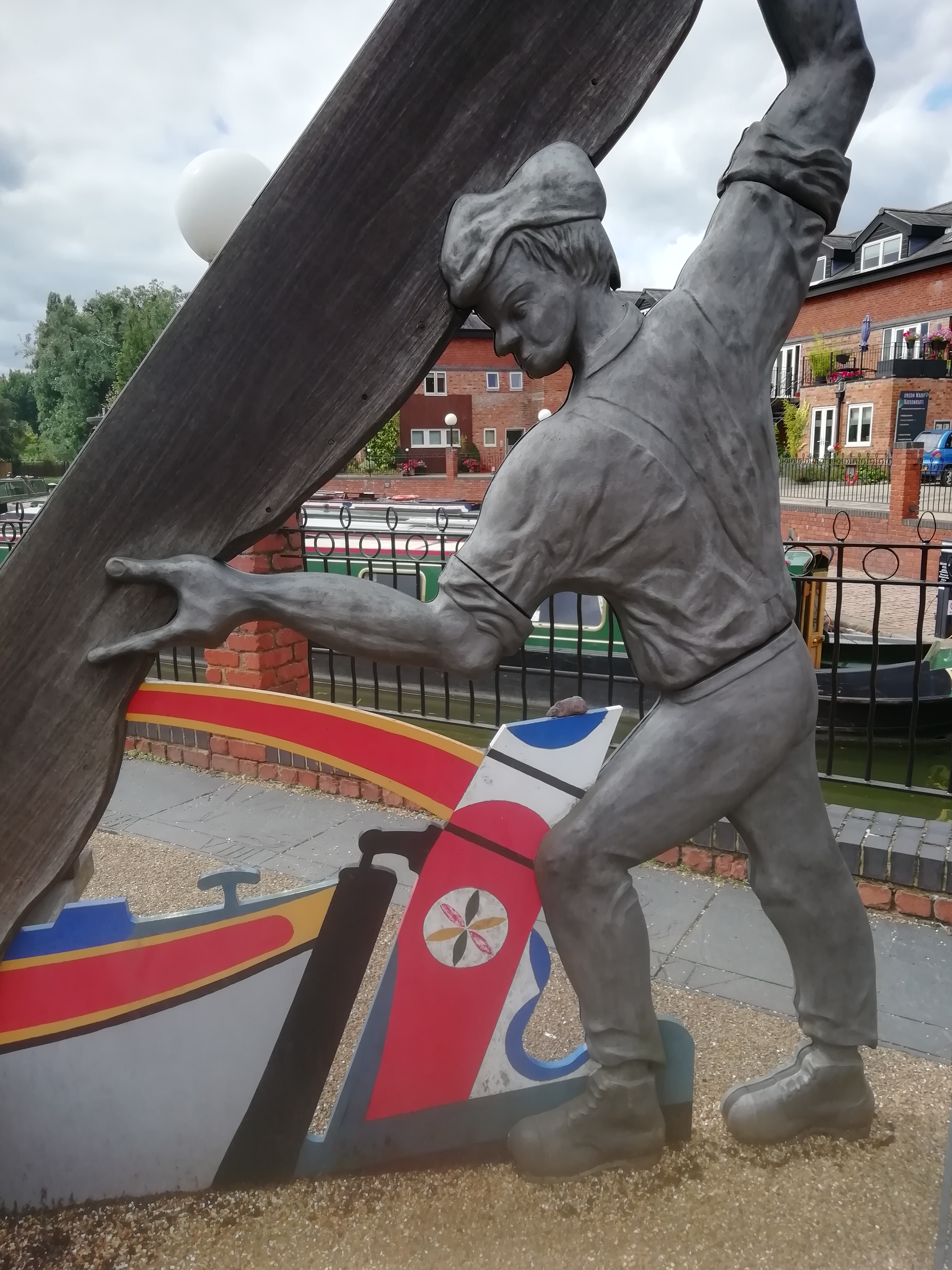
I can though plan ahead, ensure the thermos is full of boiling water (no naked flames allowed in the tunnel so no boiling kettle on the gas stove) and produce piping hot cuppas on the 40-minute journey through to cheer the dripping, wet and cold tillerman. Not a mega task but one which means we get to the end all feeling better about the experience. 

An incredible feat of engineering. In the days of horsedrawn barges men had to lie on the roof and walk the boat through with their feet on the ceiling – legging it.

You emerged blinking on the other side into another world. Heading south to north as we are, the whole canal turned a vivid orange by the time we emerged on the other side – the result of iron oxide from former mines.

The water round the cavernous exit/entrance looks almost red being in dark shade. Lock gates for miles are stained by iron oxide.

Outside of tunnels, teamwork is essential to move a narrowboat as fast as possible though locks, those amazing feats of engineering which take laden boats up and down hills. We did 20 of the 31 locks of Heartbreak Hill aka The Cheshire Locks in a single day, but achieving that speed through flights (sets of multiple locks – in this case sets of multiple pairs of locks) would have been impossible without effective teamwork. 

Pairs of locks with bridges that save you having to walk across the lock gates

We knew what needed to be done, the goal was to clear as many locks as comfortably possible. The only pre-discussion was who would be at the tiller of the boat and who would be the lock wheeler armed with a windlass to open paddles. That done we began. The lock wheeler went ahead to set the lock (get it ready by gauging the water levels, opening paddles if needed to adjust levels and opening the lock gate for the boat to be brought in). The gate the boat enters through then needs to be closed together with any paddles at that end of the lock, before the paddles at the opposite end of the lock need to be operated for the water to flow in or out (depending on whether you are going up or down) before the gates in front of the boat can be opened and the boat released to the new level. In a flight the lockwheeler can often run ahead and set the next lock whilst waiting for the one where the boat is to fill or empty.

Tillerman closing the gate behind the boat…at this point the dog’s in charge of the boat!

If the tillerman/woman manoeuvring the boat stays onboard the whole physical effort falls on the lock wheeler. Share the load and things get quicker. The lock wheeler can leave the tillerman to bring the boat in, closing gate and paddles at that end whilst they move to set (prepare) the next lock and return to fill or empty the lock where the boat is now. If there is another boat going in the opposite direction you all work together to save water and help each other through. We haven’t seen many other boats yet though so it’s been down to our team of 2.

Steve lock wheeling, me at the tiller coming through Stone

It made me think how often we seek examples of team work when employing people and how often what we fail to recognise is that the responsive nature of teamwork is what makes it important and in business so cost-effective. The examples we give are often where we galvanised others, led others, not where we worked and thought ahead and identified ways of working that made the final goal more efficient, rapid or easy for all involved.

The sense of achievement of really effective teamwork is a huge reward in itself (along with, in this instance a well-earned fabulous pizza from near the final mooring of the day and a good glass of red). It is the satisfaction of a job well done, a role well played in the whole and an achievement of which all can justifiably be proud. 

We have become very aware that the lockdown helped develop our team working. We were isolated, forced to be together much more than we had previously been or perhaps had thought of being. Although we have known each other for approaching 4 decades, we still discovered new things about each other’s approaches and ever-changing ideas influenced by research and exploration. Perhaps when setting up new teams in business, when asking students to work in teams, making an immersive initial experience would pay off. It’s about not looking for ways out of the team, or ways to demonstrate leadership all the time , but learning about the different strengths of the team and working out together how to maximise those for the team.

This last year has made me aware of how much young people also need to be able to demonstrate their ability to employ technology to create effective working relationships, achieve goals, galvanise teams and communicate socially and in a working setting. Universities, colleges and schools succeed if they give students the opportunities to learn, develop and demonstrate these skills. Collaborating with colleagues in other countries is one way of showing just how well individuals can use technology as a working tool. It’s also a lesson for parents – enabling children to become team players from an early age is vital, with all that entails. 

It has been strange after such an enforced time in isolation to begin seeing people again, to realise how insular we have been, and also how scary the lifting of lockdown can be. We have been hugely fortunate this week to have had meetings with family and friends, some of whom have been shielding. Their experiences reinforced how different everyone’s pandemic has been to this point. Meeting up with loved ones, friends and family is a huge bonus at any time. This time it made us more aware of how different our world has become from theirs, and made us immensely grateful for how rich our lives have become as a result of making the decision to live and work afloat.

We are more aware of the changing seasons. We have been watching stark, naked hedges take on the clothing of multi-hued green leaves and blossom or in the case of the blackthorns (sloes) blossom and then leaves; spotting emerging wild flowers and grasses; seeing mallards, swans and geese mating, nesting and now hatching fluffy young which seem instant experts at narrowboat dodging down the canals.  These lighten the days, add colour and balance to work and put work into perspective. 

Do you think this Canada goose knows she’s supposed to sit on that egg?

Things rarely go according to plan which always tests the team. It’s usually when complacency has set in, when you think, “Got the hang of this.” This week all was going brilliantly until we got to Rumps Lock just outside Middlewich…now renamed by us.

Just as the boat left the lock there was a horrible grinding noise. We were fortunate to be able to pull over onto moorings fast. Deck floor up, engine exposed and 4 studs that should attach the drive shaft to the engine were revealed to have clocked off… unattached engine and drive shaft means the boat isn’t going anywhere really. Steve began delving deep to find the culprits…

Only space for a team of one in this engine hole!

He found them in the depths, reattached them temporarily and we limped into the next lock whilst I consulted Google for a boat yard or chandlery with which Middlewich is remarkably well equipped. 

Our team expanded at the lock thanks to two very welcome smiling and efficient CRT volunteers there to take the strain. Once through we slowly moored again and Steve headed to a boat yard and chandlery armed with pictures of our offending studs. Sucking of teeth and dire warnings about engines needing replacing led to recognition they couldn’t help but gave us the number of someone who might. Being on lock moorings we needed to move ASAP so limped on into the town past the junction with the UK’s shortest canal, the Wardle just 154 feet onto the Shropshire Union. One single solitary mooring space remained amid a melee of hire boats and long term moorings before the next lock. We slid in with relief just a few inches spare either end of Preaux. 

Perfect fit!

It turned out to be good luck. Middlewich Wharf produced another chandlery and an affable owner, Paul. He predicted what we needed, took a look at one of the offending studs, came back to our boat to check for himself and ordered replacements for us at less than £15. We also discovered we were on his moorings but he said it was fine as I relentlessly threw the ball his dog brought me; fed his dog and Cola treats from my pocket and he even offered us a  new boat dog (we declined). He then let me know that if we were moored here all weekend waiting for the studs to arrive, they would open a horsebox bar and marquee a stone’s throw from the boat. Not sure if that’s just to entertain me, or for the town of Middlewich as a whole! (If you want to hire a holiday boat his Floating Holidays boats look good too!)

We had intended to stop in Middlewich briefly to shop but this extended stay, is a suprise bonus. Despite having spent many years as a teenager and in my 20s in Cheshire, this is a town I know nothing about. Middlewich, a salt town dating from Roman times is proving both a delight and education. This is an area where the canal would have been busy with barges laden with salt.

Lots of white powder here – most is salt from huge brine tanks, some is also lime

Eye catching architectural features, friendly people and fascinating historical details appear at every turn.

None of this was in our original plan, but it’s a forced change that is beneficial. It’s teaching this team the advantages of flexibility, coping with change and making the most of the hand you are dealt. Additional pluses are that it started raining just as we arrived back at the boat with the shopping so we didn’t get wet but the garden got a good soaking which saved me having to water it! 

As WiFi is great where we are moored, I can get ahead with some of the work I have on. No excuses – can’t move!  We work hard when we work but we work when we choose to because we have chosen to downshift.

“Now we work to live, not live to work.”

 We have balance and perspective as well as a rich ever changing pattern to our days which includes never knowing what we might see, or encounter next. It keeps teamwork relevant and necessary every single day. “Now we work to live, not live to work.”