Effective communication

Just as in business, education and let’s be honest any relationship – it’s not all plain sailing on the canals, and communication, or rather miscommunication, is at the heart of most issues.

This working week has been a sorting week for us – getting on with jobs that have been outstanding, prepping the boat for winter and preparing for exciting new projects (more in due course on this!). We’ve not cruised much apart from an early Sunday morning short move from one mooring point to another which turned out to be a slightly longer move than anticipated due to a fishing match. The fishermen were taking up the mooring spaces we were heading to so we continued until we found somewhere suitable and unoccupied!

It’s given me time for thought this week, and I’ve found myself going back to a thought-provoking TED-x talk by round-the-world yachtswoman Dee Caffari. If you haven’t heard it – do take time to do so. It seems so relevant if you are a boss, a leader, a team member, a parent, grandparent, wife, husband, partner, friend, colleague, teacher, lecturer, or let’s be honest – any human being who has any interaction with another.

On a narrowboat we don’t face the big seas and waves but we do have winds and we have bridges, blind bends, in some cases areas where one of the crew has to walk ahead to makes sure the navigation is clear unless you’re singlehanded when you can either push on and hope for the best, or walk ahead and run back to get the boat once you’ve established it’s clear!

On our travels round the network, north and south, we’ve seen everyone deals with these challenges in different ways. It doesn’t matter if they are holiday boaters, long-married couples, families or singlehanders travelling with others…communication is a key to problem-free navigation. Communication though is not without it’s difficulties…

Some blindly hope, others use sheer vocal volume (shrieking and shouting generally), some turn to modern technology bellowing into walkie-talkies or mobile phones if they have signal, and some resort to historic methods such as semaphore. For us the latter works well if there’s a line of sight. It overcomes the risks that you can’t be heard over the noise of the engine, wind or rushing water and in situations where there’s no line of sight we go for cautious slow approach until visibility is reached.

It’s been interesting travelling with others this year because you see how differently crews communicate, not only among themselves but with you too. If both of you are in a wide lock are you leaving one at a time or both together? I’ve had people say you go first and then they head off first, leaving me wondering who misunderstood! We’ve learned it’s best to communicate clearly by gestures with boaters – a clear after-you arm indication works for all nationalities, all hearing abilities and boating abilities too.

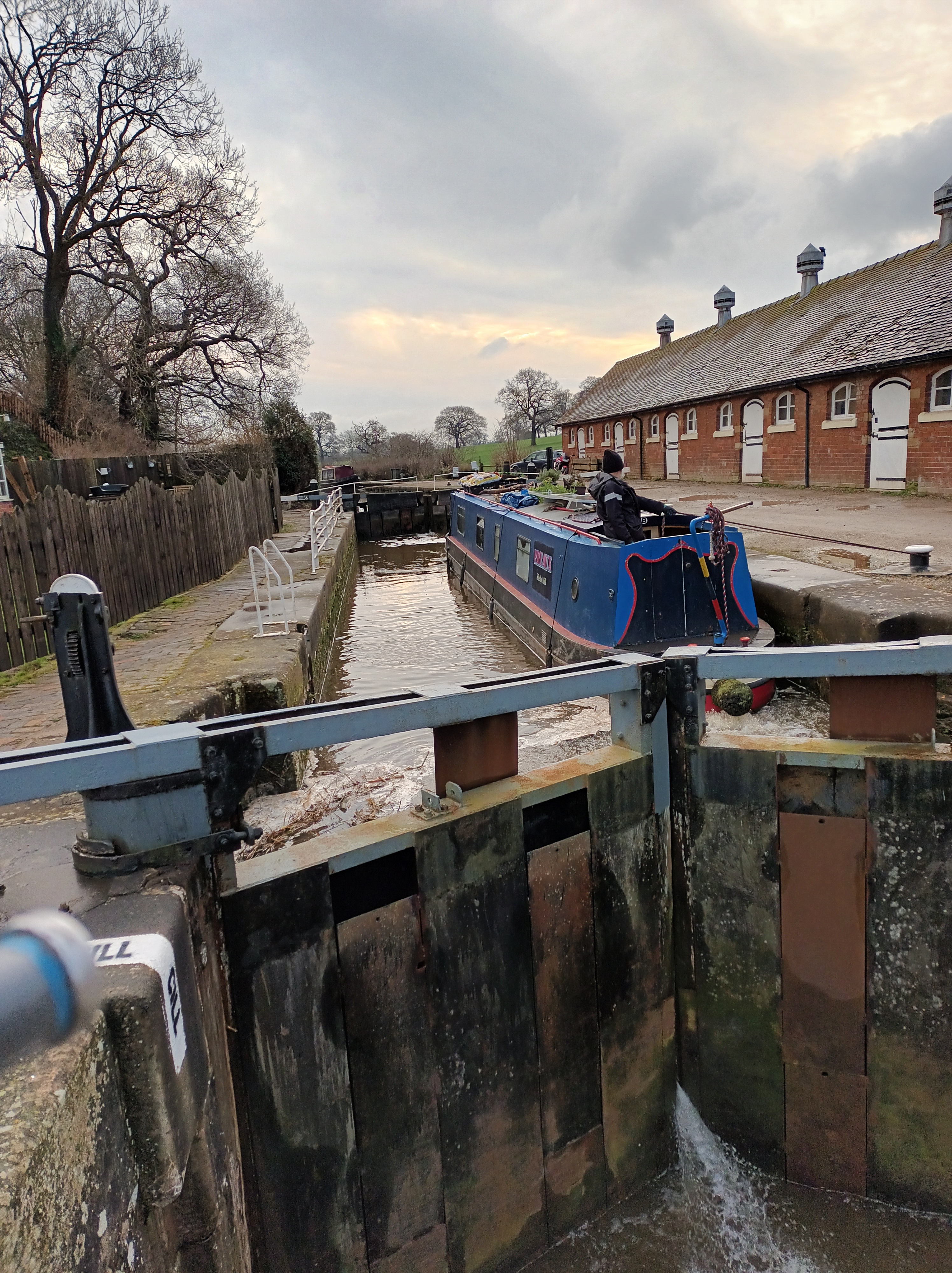
It’s not exaggeration to say that communication failure at locks can be a matter of life or death. Someone working the locks who doesn’t constantly look at the skipper on the boat to see whether they are ready can cause chaos or worse. Opening lock paddles creates powerful waterflows. They could knock an unprepared skipper off balance and into the water with fatal consequences, or sink a boat that’s on the cill or too close to the top gates. If a problem arises engine noise in a confined space, forcefully rushing water and rising panic can make it can hard for those operating the lock or on the boat to communicate with each other.

Sad reminders of the dangers of locks in particular are a regular sight along the canals

What and how we say it can have lasting impacts on individuals. In education I know the essential importance of feedback to students and colleagues – but how you say something is as important as what you say. That’s why audio, and sometimes video feedback can add so much to the words. It adds emphasis so the right things are taken from the words whatever type of day the recipient is having.

We all want to be understood and yet we take too little time to check understanding. Sometimes we don’t have long – a split second to know that what you meant has been understood. Sometimes you need simple, clear and pre-discussed signals and actions to make things instantly clear. Sometimes you don’t have that luxury. A hand raised palm forward as stop seems universally understood and is clear – unambiguous. It can be quite calming to communicate so clearly and quietly – amid often noisy settings yelling and shouting just seems to inflame situations, creating uproar where there’s no need for it.

If there is a breakdown in communication then it’s important for the future to understand what went wrong – without attributing blame (that’s the hard bit). Sometimes this is where gestures Dee talks of, can mean so much. A smile, a hug, a hot meal ready and waiting, a cuppa, and CAKE. All these communicate so much which goes beyond words. They are understood across generations and nationalities – as part of a universal language of understanding, caring and love.

A gesture speaks a thousand words – but also remember the power of a shake of the head, a frown, a shrug, a dismissive look, a judgmentally raised eyebrow – and think how those might be interpreted by others, even if meant as a joke! (It’s usually those closest to us that we fail in this way as I know too well).

In our communications next week afloat or on dry land, let’s show people we care about them and demonstrate that by taking time to check they have understood what we meant. Let’s think of others and be positive in what we communicate, and supportive in how we choose to communicate. That should be as good for us as much as it will be for those with whom we communicate.


After a year of trying – we can’t go on

A year ago as the second lockdown loomed in England in the face of the Covid pandemic, we were on the idyllic 22 lock-free miles of the Ashby Canal for the first time.

Our intention was to sit out the lockdown in a Marina, namely the Bosworth Marina, and then make our way to the current end of the still being-restored canal to at least let us say we had ‘completed’ the distance of a whole canal.

Just days before that lockdown was due to lift on 2 December disaster struck. On Sunday 27 November the Ashby was the subject of a breach.

Hundreds of thousands of gallons of water and the fish who lived in them poured out of a collapsed culvert flooding fields. A rescue mission was launched and stop-planks were installed rapidly, shutting off the canal and stemming the flow by lunchtime. In the marina stop-planks were installed shutting us all in to stop water being sucked out which would have led to the many narrowboats inside being marooned in the same way as those up near the breach.

Once the canal was stabilised and lockdown lifted we could move, but we headed out of the Ashby with alacrity rather than approaching the breach, feeling it safer to flee to the Trent and Mersey (where we then got locked in during lockdown 3 for three and a half months!). So we never did make it from one end of the Ashby Canal to the other, and it took until May this year for that stretch of the canal to be rewatered.

Almost a year later, after hundreds of miles and hundreds of locks taking us north into Yorkshire and south to London, we have returned to finish what we started.

We turned onto the Ashby from the Coventry Canal early last misty Sunday morning. Steadily, with a stop for lunch en route, we found our way like homing birds back to a mooring spot near Stoke Golding which we had found blissfully quiet last year before the lockdown started on 5 November. Last year of course, the world had shrunk. People were staying home, travel was local or non existent. Dogs enjoyed being home with their owners, and holidays were on hold.

We found the mooring peaceful and idyllic in its tranquility. This year we moored up within a few hundred feet of our original location, behind a couple of boats, one of which we had seen here last year. Across the canal the same ponies grazed in the same field, and the same Canada geese took off in their V formations at dusk to fly to their nighttime nests, and return at dawn. But that was where the similarities ended. The peace and quiet was as distant a memory as a lockdown. People are now taking holidays, and not all with their pets.

Over the bushes from our mooring it appeared the farm buildings we could see were dog kennels, and we can attest that several of their canine guests may well be returning to their owners a little hoarse! Just one example of how the world has changed in this past year!

We moved first thing Monday morning to another mooring – designated visitor mooring at Sutton Cheney Wharf which had been out of commission last year. The intervening space has been well used by someone – whether the Ashby Canal Association or CRT I know not.

The moorings now enjoy a smart recycled pontoon with mooring rings, located just a couple of hundred yards from all services including hot, spotless showers (spa day time) and a fantastic cafe/restaurant plus car parking – £2.50 for 24 hours. What more could one ask? Well, possibly more than 2 days permitted mooring if I’m being selfish!

From there after our allocated time, we moved on, accompanied by a borrowed 4 year-old and his grandparents – thanks Lucas! We made it to Market Bosworth and moored up temporarily for them to disembark just before the marina where we’d experienced our first and only marina life. With just the two of us and dog aboard once more we carried on, to find a delightful mooring spot near Shackerstone a stone’s throw from the Battlefield Railway Line and its delightful cafe (spot the theme…!)

After a couple of nights we collected our own 3 year-old deputy tillerman, and we made it through the Snarestone Tunnel (where Tommy valiantly tested the acoustics at full volume – they’re amazing – check them out on our pickingupducks Instagram!) before arriving at long last at the finale of the Ashby Canal.

For the first time in all our travels we found ourselves faced with a canal closed sign and a canal-level bridge backed by stop-planks. We turned in the available winding hole, our mission complete. We can go no further on the Ashby for now.

A quick visit to the volunteer-run shop, 5 tombola tickets later we emerged the delighted owners of Ted the teddy (another one, won on the very last ticket, the only one ending in a 0!), and for a modest contribution as part of his birthday present, Steve became a member of the Ashby Canal Association. A fitting conclusion to what should have been a short journey but which has taken nearly a year to complete.

A year is nothing, compared to the efforts of those who laboured to built this canal to transport limestone and coal from the Ashby Woulds (interesting spelling isn’t it?) from 1804, or those who fought and indeed continue to fight to reopen the Ashby for boaters to enjoy in their droves today.

It is a beautiful canal, winding through beautiful countryside, much in the National Forest and it deserves the support of all who enjoy it – boaters, walkers, fishermen, canoeists, kayakers, paddleboarders, and runners of all generations. Let’s hope it can be enjoyed for generations to come, and that one way we can return again, this time to travel the full length from the Marston Junction, past the current terminus and winding hole, past the Moira Furnace to Conkers at the heart of the National Forest. If we can do that, then we can get in another excellent parkrun, just a little stroll from a mooring – if we aren’t too decrepit by that time to complete 5k!

Blisworth Tunnel Blues

Music has been a constant across generations globally to communicate and express our emotions, to lift our spirits, to soothe, calm and console. Whether we create it ourselves or benefit from the works of others, music is immensely powerful in provoking a human response.

Whether spontaneous or planned, music is also complex. Just a few notes have the capacity to teleport us back in time to a place, a person, a situation. A chord can change our mood, a rhythm can force us to move or keep us moving when we are flagging, and a voice in song can express much we would struggle to say.

Music is the accompaniment to our lives – big events, special moments, break ups, parties, farewells – each of us has, and will create a personal musical record of memories and meanings. We’ve collected a few new ones over the past weeks connected to the London Marathon.

What has this to do with canals? Well, I’ve always found music a supporting force, and was looking for something to get me through the next tunnel (never my favourite places). We’ve heard people singing in tunnels, we’ve heard blasts of music from passing boats, and regularly hear calls and shrieks from small children exploring the acoustics. We have though, tended to go through accompanied only by the rhythmic reverberation of the engine and sporadic, percussive water splashes landing on and around us from the tunnel roof.

Our next tunnel was going to be Blisworth – the ninth longest canal tunnel in the world that snakes for 1.74 miles under Northamptonshire’s Blisworth Hill at a depth of around 43 metres. This mighty feat of engineering took many lives in its making, and has cost several since in the days men had to leg boats through, lying precariously balanced on boards and pushing the boat along with their legs against the sides of the tunnel. Completed in 1805, this longest tunnel on the Grand Union Canal is a monument to all those who painstakingly built it by hand with picks and shovels and barrows. The one that’s open is actually the second tunnel to be built under this hill – the first attempt in the late 1700s collapsed because of a failure to identify and factor in the quicksand all around.

On our London sojourn and return I knew we would pass through this cavernous blackness twice. It is a tunnel I find both daunting and oppressive, more so than many others we have passed through. I think this is because you once you enter you see no light at the end of the tunnel because of an S-bend in the construction.

I knew I needed something to get me through Blisworth, and in searching came across the Blisworth Tunnel Blues by George Nicholson. Naively thinking jazz, southern folk style music, I searched for a copy… finding only sheet music which appeared for a soprano and orchestra. Vaguely wondering if I could do something with voice and a penny whistle which is all I have on board right now, I sought the score. When it appeared I realised I was labouring under two illusions – it was way beyond my musical abilities AND it was not the blues as I had expected, but the epitomy of the blues Blisworth creates for me in terms of mood. It seemed particularly appropriate that it had been commissioned for the Orpheus Ensemble.

George Nicholson it appeared, was a fellow Blisworth sufferer! I tracked him down at the University of Sheffield where he’s the august Emeritus Professor of Music, and discovered that he last encountered the tunnel in 1978. He remembers it vividly and it hasn’t changed at all.

“What impressed me most about Blisworth was the darkness, the fact that you were cut off from the outside world for about half an hour at a time. Once the tunnel bends round you can neither see light behind you not in front of you. I also remember the periodic showers of water from the air vents that fell on me as I steered us through.

I found it a very compelling experience, not exactly a comfortable one, but certainly memorable and thought provoking.”

George Nicholson

George told me he composed this extended orchestral song cycle “to play for the same length as the canal boat journey through the tunnel, give or take a few moments in the open air at either end of the trip.” That’s a challenge if I ever heard one! (The piece as written and played totals 37 minutes and 41 seconds).

He kindly sent me a link to a recording of Blisworth Tunnel Blues in which the soprano is his wife, Jane Ginsborg. Obviously there’s no connectivity so far underground so another musical friend of mine, the accomplished and versatile vocalist and trumpeter Avelia Moisey and her technically savvy husband Andy converted it for me to an MP3 so I could play it in the tunnel on our return.

So this week, for what I believe to be the first time ever,a recording of Blisworth Tunnel Blues was played in its namesake location.

I first heard the piece one evening in stationery, late autumn sunlight. This time could not have been more different. We climbed the 7 locks of the Stoke Bruerne flight in crisp sunshine that made the autumnal reds, yellows and oranges blaze.
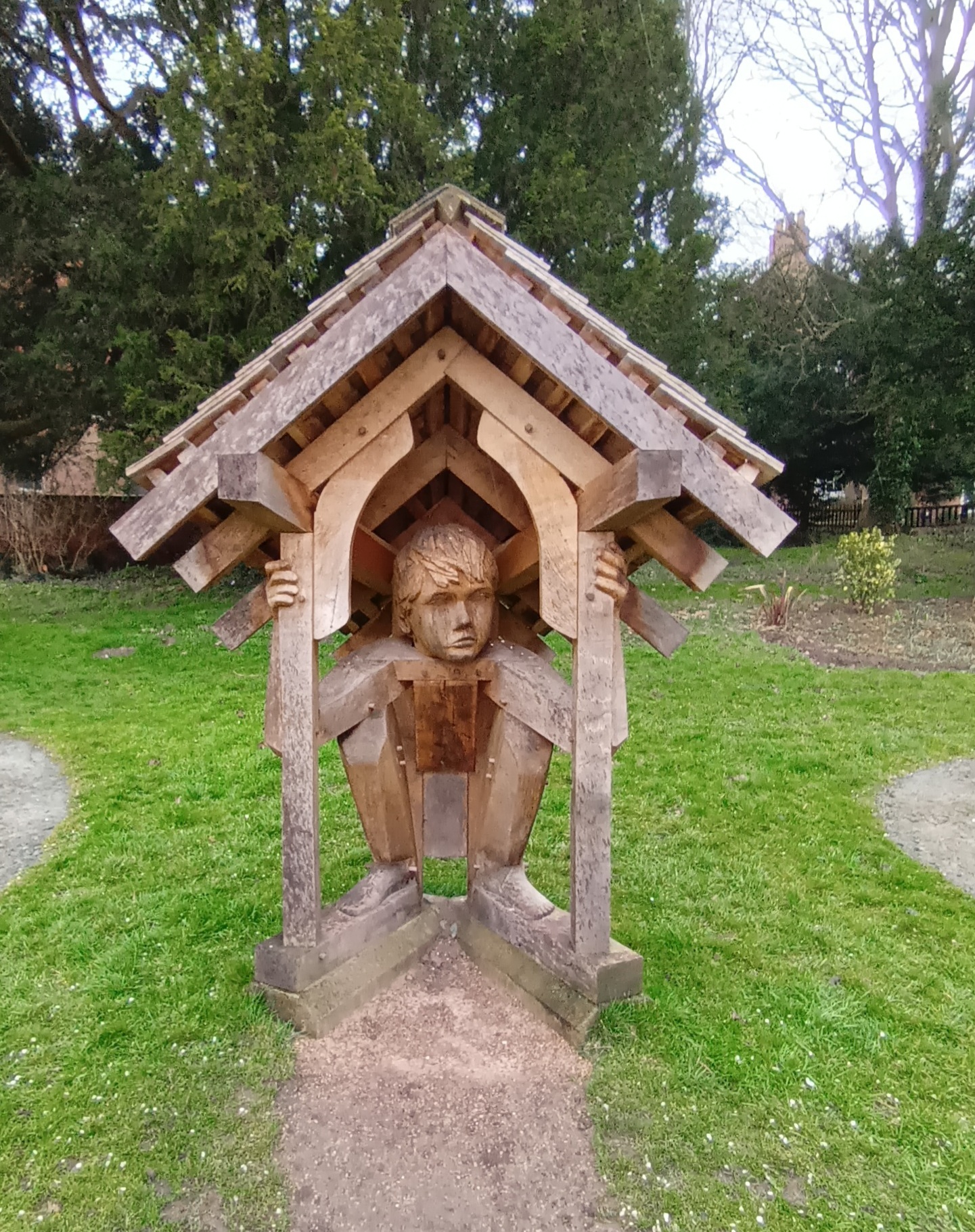
It was early afternoon and the sun was filtering weakly through the beech trees surrounding the cutting by the former leggers’ hut as I started the recording playing from the open cratch of the boat – as far from the engine as possible. It was the accompaniment to our journey into the inky blackness of the tunnel.

I had warned the boat ahead of us of my intentions just in case we scared the living daylights out of them but they were well ahead and actually couldn’t hear a thing over the noise of their engine.

In situ, the constant bass rumble of the engine and intermittent percussive splashes as drips fell into the water around us, or hit the metal shell of the boat added significantly to the atmospheric nature of the piece for me. I was conscious that my anxiety levels began to rise as I listened to the music reverberating around me, as we moved deeper into the darkness. Suddenly at 23.19 minutes into the music, as Jane Ginsborg’s beautiful voice clearly articulated “I had a dream…” the pitch black around me was lit by a ghostly white presence alongside the boat – a calcified side to the tunnel which looked eerily human in form.

Suddenly the music was overshadowed by an abrupt drop in engine revs and a hammering on the roof – Steve’s signal as tillerman of an issue so to the accompaniment of what sounded like chimes at that point, I dashed to the tiller to discover that the boat ahead had veered into the right-hand wall and appeared side on across the tunnel in our headlight. Steve was concerned its sudden collision might have been the result of a loss of steering or power.

Adrenalin pumps at times of stress, and the spoken voice rises in pitch. As I returned to the bow of the boat to see if I could identify the issue ahead, the rising soprano line piercing the darkness matched my increasing tension. Fortunately the boat ahead recovered and moved on before we reached it.

The words of Blisworth Tunnel Blues are based on texts exploring darkness, blindness and alienation, starting with Emily Dickinson’s We grow accustomed to the dark (personally, I don’t think I ever shall) and ending with a section from Byron’s Darkness prompted by the volcanic ash cloud of Mount Tambora’s eruption that blacked out the summer of 1816. Both in their way appear black and bleak but have much to offer in terms of hope and resilience. Dickinson’s poem is about how we humans stumble about until our sight adjusts in darkness. Byron issues a warning of an apocalypse, a call to care for our planet and the threat that hangs over us if we don’t – a message as timely today as in 1816.

This particular journey through the Blisworth Tunnel was the most memorable I have ever taken thanks to George Nicholson’s composition. The music didn’t comfort or console in any way but reinforced the dark, dank, underground experience in the most remarkable way. It was with immense relief that I approached the light at the end of the tunnel.

I emerged into the dappled autumn light of the Blisworth end of the tunnel both shaken and stirred by this remarkable experience. I felt like I had been holding my breath the whole way through, and was also acutely conscious of the sweet, musty smell of autumn which greeted me as I emerged into the light. To hear some very short (fair use) clips of our experience then visit pickingupducks on Instagram on 16 October 2021.

I wondered how it would have sounded without the throbbing, percussive bass of the engine and the chiming of the water splashes – perhaps one day someone will take an electric boat through the tunnel to the accompaniment of George’s music. What I would love to experience would be a trip through the Blisworth Tunnel (did I really just say that) on an electric boat hosting a live performance of the piece.

And the timing? It was pretty close to perfect – we emerged at 34.18!

A memorable week – was yours?

Last week for us was yet another crammed with memorable moments. It makes me realise that it’s not possessions or work but people and events that make most of our important memories. What memories will you keep from last week?

We came to London to run a marathon and that’s just what Steve did. We also had a chance to catch up with family and friends which was fantastic. It’s the effort people make to come and visit us on the boat, or support Steve on the marathon, or share meals with us, which is memorable.

Then one day of recovery and restocking calories (for two but only one had burned them off) with visits to boat cafes, with walking in London, along Regents’ Park passed the Zoo and into Camden for more food before heading back via a tavern…

And then we escaped the hustle and bustle of London. It surprised us just how quiet the mooring at Little Venice was. There are just 2 Canal and Rivers Trust moorings there, right on the edge of Rembrandt Gardens which is locked overnight but when open gives a handy shortcut from the mooring to Warwick Avenue tube station. The moorings are opposite a small island, which is inhabited by swans, ducks, Canada geese, cormorants and coots. The surprisingly raucous sound of the wildfowl often drowned out sirens of emergency vehicles travelling to nearby St Mary’s Hospital.

We were hugely fortunate with the weather – Saturday brought torrential rain as did Monday night causing flooding in the Capital. The marathon on Sunday though was largely dry apart from a heavy shower when Steve was running round the souless Canary Wharf. Fortunately the skies and Steve dried out by the finish line. Good thing too, as he’s still promising that is his last full marathon!

This week has reinforced my belief that it is actually possible to run any business from a boat. We’ve encountered the Puppet Barge, a Cafe Boat which served astonishingly enormous breakfasts (although it still didn’t rival the breakfast rolls of Boat Street – the floating cafe at Mercia Marina run by Chris and Kim), a recording studio, a welder and a floating concert hall with a grand piano.

From our travels we’ve already encountered a softserve ice cream boat (the sublime Wobbly which also serves candyfloss and fudge in what seems unlimited flavours); Holly the cafe boat with Jo’s amazing homemade cakes; a hairdresser; a wood carver and artist; Holm Oak Trading which sells a huge range of eco products for home, human and canines plus clothing from recycled offcut materials, so reducing waste, and the luxurious Pullman seating of Boat Street Cafe.

I’d be interested to know what business actually couldn’t work on a boat?

Our memories of cruising south are how very different it feels to boating in the Midlands or the North (our experiences to date).

  • Few boaters we’ve spoken to are travelling any significant distances – many shuttling rather than cruising
  • There are many more floaters than boaters – people using floating structures as homes rather than homes plus transport. It’s understandable given the space and cost issues.
  • How many boats/floating structures are in a poor state of repair, through lack of funds or lack of knowledge perhaps?
  • The number of loose boats we have had to catch and re-moor or manouevre round – widebeams, cruisers and narrowboats!
  • The bulk of Britain’s widebeams seem to be gathered south of Watford Gap!
  • The significant debris on towpaths – much boat fit out waste in certain places particularly irritating alongside lock moorings. It all takes up valuable CRT time and resources to clear meaning they can do less in maintaining or improving the infrastructure of the waterways

We’ve encountered CRT staff and volunteers in various places, in emergencies and unexpectedly and they have always been cheerful and helpful. They have responded when we have needed them, for which we are hugely grateful.

We got to share the first day’s cruising memories of a couple who sold up everything and moved onto a narrowboat with no prior experience of one; we met the last finisher of the 2021 London Marathon (a justifiably proud 83 year old); saw some interesting floating roof gardening (wonder if I can manage wisteria…not sure if the other plants on an adjoining boat were legal…), and moved from pea soup algae covering the canal on the Paddington Branch to another invasive species, pennywort, clogging locks and propellors further north. We, like other boaters, are dragging it out constantly, and will keep doing no doubt as we head north.

For now though, we’re back under the M25 and heading to see family and friends in Bedfordshire and enjoy more memorable promised meals in their company before moving on once more.

The smoky, damp scent of Autumn is in the air, mornings start misty and chill giving way to late sunshine or torrential rain – who knows which way we’ll go or what awaits us round the next bend?

Our slowlife 5-day week – how does yours compare?

This is a week designed to get Steve to the start line of the London Marathon for Sunday morning. Unlike others taking trains or cars, we’re going by narrowboat and starting this leg of the journey from Leighton Buzzard.

Monday – Set off from Leighton Buzzard in Bedfordshire in steady rain accompanied by a strong wind which by the first lock had developed into a downpour.

We weren’t the only idiots out in this weather – another boater whose view of Britain and its weather was expletive – such was his lack of any additional words forced us both to laugh out loud. We also met the Aussie Boater to shout to – about the weather of course! Rain and wind battled us until suddenly the sun came out and we forgot about the rain and the wind. Passed watersides being developed, boats whose owners have a sense of humour (I think) and strangely shaped bridges.

Met a pair of ex working boats who gloomily passed on the knowledge that Berko (alias Berkhamsted) has little water resulting in problem navigation so tomorrow should be fun…

Moored up for the night in woodland on the Tring Summit so it’s all downhill from here. Also handy for a supermarket which Steve volunteered to trek to as part of this week’s training! 18 locks and a swing bridge for exercise today. Plus 10 miles, 5.5 furlongs and sorted rather a lot of emails.

Tuesday – Set off in rain but fortunately it cleared during a Bushes Lock no. 50 drama. The bottom gates of the lock were wedged slightly open and nothing we could do would close them, so opening the paddles would just pour water from the pound above the lock into the pound below draining one and flooding the other. We called CRT (Canal and Rivers Trust) for help, put the kettle on, made a cuppa and sorted invoicing which I had been putting off whilst waiting for them to appear.

Prevarication over, invoices sent and bang on time CRT arrived. They had had to overcome a diesel theft from the van and find a place to sell them more fuel so they could get to us, and to others needing help. With the aid of a 3-extension-pole rake expertly manipulated from perched atop a gate, the cause of the problem was found and extracted – a chunk of wood embedded in gravel which had stuck the gates fast.

Off we went once more, now in sunshine and alternate showers making up for lost time with lots of small children waving at the boat from the tow path as they walked with parents and grandparents.

Through Berko in the rain, a famous canal town and indeed apparently renowned as the place where sheep dip was invented.

No sign of the low pounds that were threatened but we faced a torrential rain storm which called for an early stop for lunch, and encountered lots of locks which were empty when we arrived. Long term problems of leakage means they have to be emptied – at least coming back this way they should all be in our favour!

Even allowing for the extra time required, we made 7 miles 7.25 furlongs , 18 locks and another swing bridge today.

Torrential rain struck again as we moored up for the night opposite Boxmoor just outside Hemel Hemstead and it rained almost continuously until the early hours, which should help the water shortage.

Wednesday – Right opposite the moor was a petrol station with a tanker delivering. No queues when I took the picture below, but by the time we set off in a beautiful low autumn sunrise which called for peaked caps so we could see where we were going, the word had gone out and cars were queuing down the road.

Sorted plumber for a property boiler issue on the way, and headed under the M25 feeling hugely sorry for all those way above us, working on scaffolding or whizzing along in cars and lorries.

Just minutes from the madness of the M25 the canals are peaceful, tranquil and utterly beautiful. Herons,kingfishers and coots delighted us as we chugged along, through little bridges enjoying stunning autumn colours.

We made the most of today’s sunshine – according to the forecast it could be the only good day this week. En route we filled up with water – always a necessity and emptied the loo (also vital!). Towards the end of the day we found a cruiser floating loose which we remoored, and a large narrowboat blocking a bridge – we also remoored that! Good deeds done for the day we ended our 10 miles 5.25 furlongs and 20 locks to moor just outside Rickmansworth near Stockers Farm, a location for Downton Abbey, Bridget Jones: The Edge of Reason, Midsummer Murders and Black Beauty to name but a few.

Thursday – As promised – the rain returned to start the day so clad in full waterproofs we headed out once more.

Rain always slows things down – you need to be extra careful on locks which become slippy – it’s better to be slow and sure than risk an accident which could derail plans altogether. This was underlined by a single-handed boater we met and helped through two locks – he was literally single-handed having cut through his wrist with a Bushman’s axe the weekend before. He managed to get a tourniquet on his arm and tighten it, administer first aid and call for help. He was blue lighted to St Mary’s Hospital, Paddington and has now disposed of the offending axe as being too sharp, too dangerous and yet there he was with his arm strapped up, having to move his boat because he needed diesel for his stove and to keep the boat mobile.

Having done our good deed for the day we then encountered another single-handed but two armed boater and went through the next lock together. We also found a rubbish store that wasn’t overflowing and emptied the bins, but no chance of separating the recycling and general rubbish. Cannot remember the last time I saw a recycling place at a CRT rubbish store.

It was slow going today because of all the moored craft of all shapes and sizes, and in all states including right across the canal.

Requirements to slow down for them all made it slow going, but we made it onto the Paddington Branch and up to Southall, to moor in the rain for the night. Completed the final 7 locks of the journey today, 13 miles in total.

Friday – Started with lateral flow test as Steve has to register one with the NHS and the London Marathon in order to compete on Sunday.

Daft but it seemed really stressful after all this training, all this fundraising to think a line in the wrong place could cancel out all his efforts. Bedecked ourselves out in full waterproofs after heavy overnight and early morning rain, whilst we were waiting for the test result to appear. It was negative and by then the weather had cleared – it stayed clear for the rest of the journey but we didn’t stop to take the gear off just in case!

One moment of high excitement and tension and I didn’t have the camera with me. A squirrel overreached itself on a tree overhanging the canal and fell PLOP! straight into the water alongside the bloat. As I went for a net to fish it out, it rose to the surface and began determinedly swimming for the opposite shore where it managed to scramble up some grasses, shook itself and then headed off to explore its new location.

London grew up around us as we headed in. Boats here are residential accommodation in the main, whatever state they are in. From plush and floating Grand Designs to shacks almost afloat, they are homes.

Arrived at Little Venice after the slowest journey ever through moored boats as far as the eye could see. Travelled the whole of the last few miles on tickover. At least it meant we ate lunch gently on the go! The visitor moorings (2 of them) are next to Rembrandt Gardens and right opposite the island, Puppet Theatre Barge and convenient for the zoo, and Camden Market. So we are here at last!

This however is a weekend for supporting rather than sightseeing! Once moored we sorted out the fix to the boiler thanks to the engineer, wrote this blog, reviewed a journal article, responded to a magazine editor about a commission, introduced ourselves to our neighbours and Steve headed off to collect his marathon number/deliver his kit bag from ExCel. A 5-day week of worklifebalanced covering 53 miles, 7.25 furlongs and 63 locks, and now we are in place – marathon ready!

As you can see I discovered a fabulous new motto this week. Hope your week was as good, with as much challenge and fun.

It’s not a sprint – it’s a marathon

Sunday October 3 sees the return of the London Marathon to the English capital after a pandemic hiatus. For us, having made it down there and moored our narrowboat in the city for the first time, it will be a momentous, nail-biting day.

Steve will leave the boat on that Sunday morning to run 26.2 miles for the first time in the London Marathon. Last year he also ran the marathon from the boat but it was the virtual event due to Covid, and he was on familiar streets around Leicestershire, supported by fantastic friends and family. Particular thanks for last year have to go to Ali, Jo, Jack and Freya who paced alongside him for the event. This year is a very different story, in many, many ways.

Firstly, we’ve taken from August to bring the boat down to London to moor in the capital for the event. It’s been a journey down of 153 miles, 7 furlongs and 145 locks. Without lockdowns it has meant we have been able to see friends and family en route which has been lovely, but it has meant that training has been incredibly hard for Steve.

Secondly, for all previous marathons, and for last year, he was training in familiar places, on routes he knew, and crucially at least once a week he was able to train with others, which as every runner knows, enables you to increase speed and stamina whilst supported by those around. This year virtually every training session for him has been in unknown territory – he’s had no idea what the underfoot surface is like even if he can see gradients, distances etc. from the web. Sometimes he’s found himself on towpaths which are paved or compacted. Other times he’s encountered thick mud impossible to run on so then it’s been roads – often with no pavements. His trainers have taken a pounding along with his legs!

Rarely has he had people to run with him. I am only just returning to running, and so of no use. The dog is too old. So hour after hour he’s been running on his own in areas he doesn’t know, sometimes coming back covered in scratches from brambles, having done detours where routes were blocked or lengthy loops just to get back to the boat.

Thirdly add to that – he’s had Covid which has affected his speed and stamina. He’s returned from training runs gasping for breath and dejected at his pace which has been much slower than his previous marathon training pace at this stage. He has had to accept that he is now aiming to walk part of the 26.2 miles in order to conserve his energies to finish the event.

But despite all these struggles and setbacks – he keeps going, battling on, putting one foot in front of the other, lacing up his trainers to head out into the unknown after moving the boat during the day, creeping from the boat early on Sunday mornings to head out for miles and miles. The trainers he’s worn out in training are all recycled – and put to good use!

All this because he’s made a commitment to a small national charity which does amazing work and which depends on every penny Steve and the other #TeamVicta runners can raise. Victa supports children and young adults from 0-29 who are blind and partially sighted to live life to the full. Crucially the charity also supports their families too.

Like many small charities, those who have encountered Victa’s work recognise how essential it is. If you’ve never experienced blindness or partial sight, then it is hard to comprehend how limiting it may feel, for the individual and also for their family. Victa builds confidence, independence and enable access to the activities and experiences many sighted people take for granted. Those receiving their support say it is life-changing in the most positive way.

It is for Victa that Steve is running the marathon. It is for them he has been training for nearly 2 years now. He began training in January 2020 to run the marathon for them in London in April 2020, but as we know that was cancelled. He carried on training, with a hope that there would be a marathon in London in October 2020. Eventually he ran the Virtual London Marathon for them in October 2020. Now he will run the London Marathon 2021 for them in London at last on 3 October. It’s not his first marathon, actually his fourth, but for him it is hugely significant.

Getting over that finish line has meant 22 months and hundreds of training miles – and now Covid has dashed his hopes of completing what he says will be his last marathon in a time he wanted. There’s nothing any of us can do to make that happen for him. But something we can do though is get him to his fundraising target. Thank you so much to everyone who has sponsored him, and generously donated to Victa’s vital work in the process.

When you sit back in comfort and put on the TV to watch 50,000 runners putting in the miles from Greenwich to The Mall on Sunday 3 October they will be joined by 50,000 runners running the same distance in all sorts of locations across the world on the day taking part in a Virtual London Marathon. Together they will be fundraising for thousands of charities and raising the profile of running for physical and mental health. Steve will be proudly wearing Victa’s rainbow colours again,. This year his number if you’d like to follow him on the app is 45606.

I’m in awe of all those running, but I am in particular awe of my amazing husband who says he wants to celebrate his 65th birthday later this month knowing he’s completed the London Marathon in London and raised vital funds for Victa’s work.

My amazing husband’s journey from fat to fit is one which is nothing short of inspirational – he’ll probably kill me for saying it or even showing it, but I am so proud of what he has done. I hope his efforts inspire others to achieve physique and fitness they would never have dreamed of by hard work, training and determination. He has been q quietly inspirational role model to me, and to many who have had the good fortune to meet him. The difference he has achieved and maintained from 7 years ago is remarkable – as you can see.

If you haven’t sponsored anyone in the London Marathon – please consider sponsoring Steve. He’s so nearly (97% at the time of writing) at his target of raising £1700 for Victa now. If he could get to the start line knowing that he’s raised his target or even bettered it, it will be an amazing psychological boost. You can be the one to push him along those long 26.2 miles to the finish in The Mall. Just click on this link to add your support – it doesn’t have to be a big donation – every penny counts.

This event which supports so many people is just like life – a marathon, not a sprint – something to train for, develop ourselves for, and it’s necessary to remind ourselves to enjoy it on the way with the support of those around us, family, friends, and strangers.

Thank you for your support. If I’m honest – I just want to see him safely at the end of this one, and I want to believe his pledge that this REALLY is his last.full.length.marathon!

The end of a year afloat and hardest blog to write

Exactly one year ago we sold most of our possessions, let our house and the two of us (plus the dog of course) moved to live full time on a 50ft long, 7ft wide narrowboat continuously cruising the waterways. Our adventure began at Sileby Mill in Leicestershire on the canalised section of the River Soar, formally known as the Grand Union Canal (Leicester Section – River Soar Navigation).

Since then have have completely departed from our previous existence which was living on the hamster wheel of long hours and work dictating our lives. We no longer need to commute. I’ve gone freelance and returned to journalism as well as continuing some Higher Education work – all of which is delivered remotely. Steve continues to operate his existing property business from the boat and his portfolio now includes what was once our home.

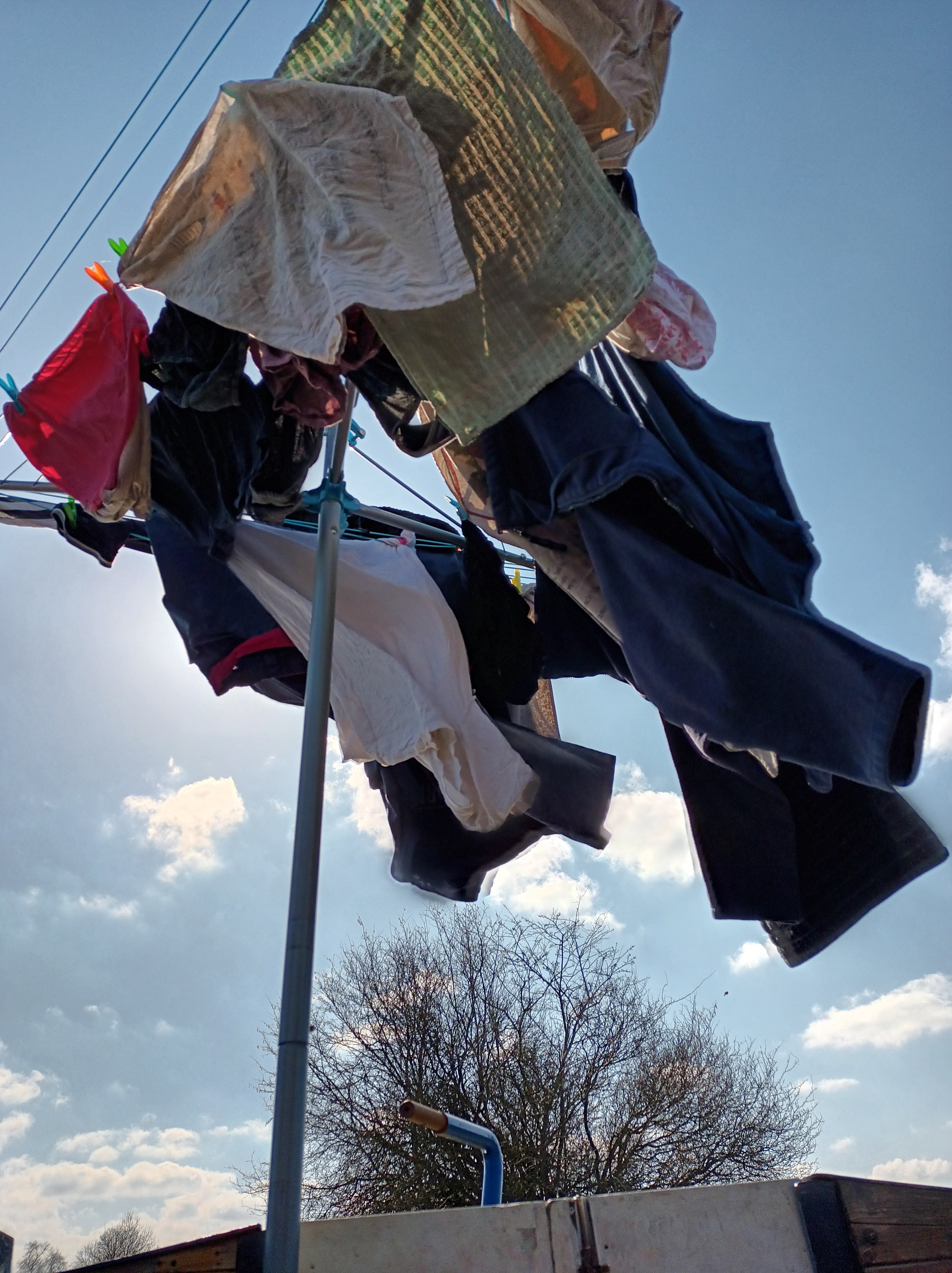
Downshifting to need less to live on has meant we spend more time together. It has given us freedom and more choice. We have time to explore the incredible countryside, towns and cities we have passed through. It also means we use our time differently and are kinder to the planet in the way we live. We watch cygnets hatch, grown and have flying lessons from Dad, see fish, herons, woodpeckers, kingfishers – and of course our new ever-present neighbours – ducks – as we go along, or from the galley window as we wash the dishes by hand (no need for a dishwasher); enjoy splashing about in the fresh air washing clothes by hand at water points or enjoy chats in laundrettes or with family and friends as we borrow their machines (no washing machine), we forage for wood and food, enjoying the produce of woodland, hedgerows and fields (free food and fuel).

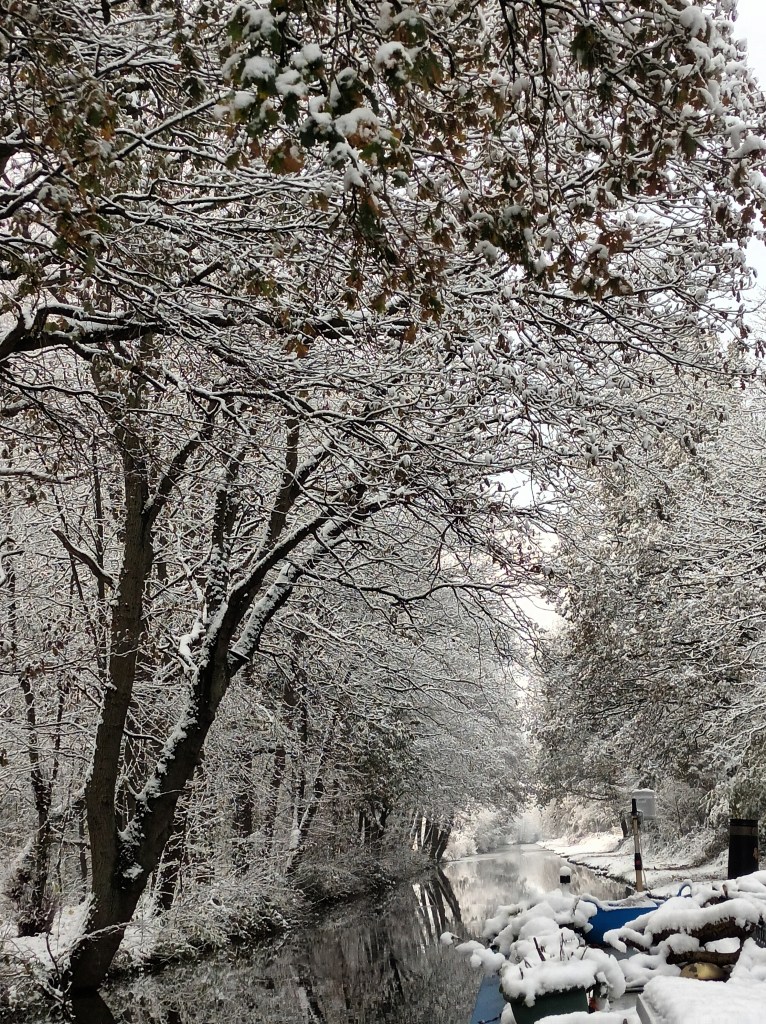
We’ve been through two lockdowns on board and one winter without central heating. In reply to friends who say “Isn’t it cold on board?” – we have found our multifuel stove heats us so well we ended up in t-shirts on board whilst the canal froze outside and snow fell. We foraged Christmas decorations, hiked miles and enjoyed many memorable moments with family and friends (sorry – too many to include here) once lockdowns ended.

Living afloat has changed how we think. Dual purpose or treble purpose is the name of the game – thinking consciously about our consumption. We think differently to maximise the use of our fuel – when using our stove we harness its heat for warmth, drying clothes and cooking too. The dual purpose approach extends to how we use our space too. Every step in the boat double as a store, the sofa is a double bed and storage container, the space under the bed contains the hot water tank and a sizeable storage space. Empty gin bottles become lamps thanks to rechargeable usb lights and generous friends.

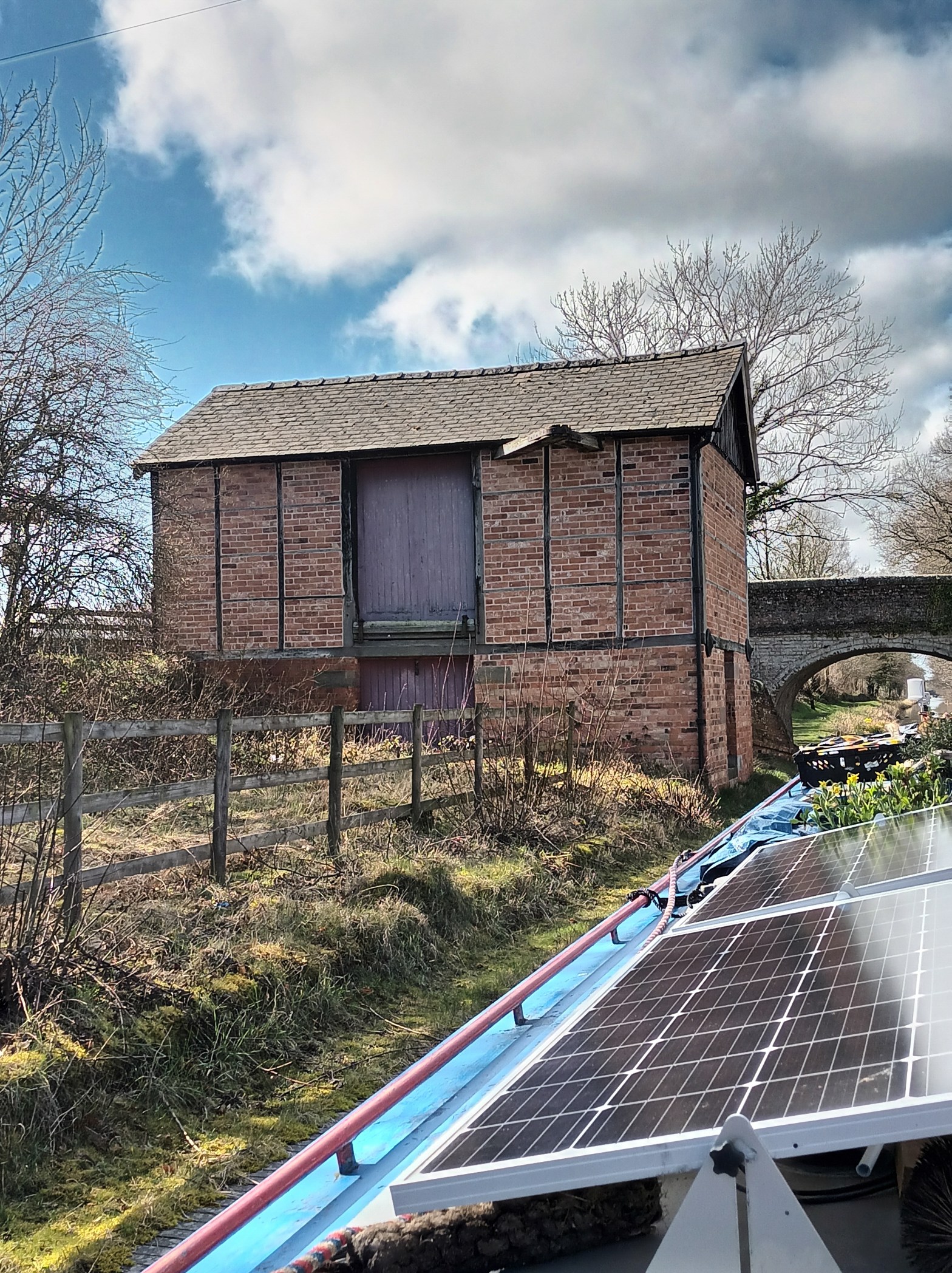
Talking of power we don’t have mains electricity. Our batteries which give us light and power are charged by the engine as we cruise, but we don’t cruise every day. Steve installed two solar panels in March this year in lockdown 3. These mean that we don’t have to run the engine on days we are stationary. So far our two panels have generated 62kw hours which has saved us £311.96 in diesel to date. In total thanks to the sun we have recovered 60% of our installation costs.

Year 1 totals
• 522 locks (271 narrow/ 145 broad/ 5 large) including staircases and flights
• 697 miles 0.75 furlongs (10miles commercial waterways/ 351 narrow/ 276 broad/60 rivers)
• 58 moveable bridges
• 24 tunnels = 19m 0.25f underground

Waterways encountered

  • Grand Union Canal (Leicester Section – River Soar Navigation/ Leicester Section – Leicestershire and Northamptonshire Union Canal/ Leicester Section – Market Harborough Branch/ Leicester Section – Old Grand Union/ Leicester Section – Welford Arm/ Grand Junction Canal – Main Line)
  • Oxford Canal (Main Line)
  • Coventry Canal (Main Line)
  • Ashby Canal (Main Line)
  • Birmingham Canal Navigations (Birmingham and Fazeley Canal)
  • Trent and Mersey Canal (Main Line)
  • Bridgewater Canal (Main Line and Stretford & Leigh Branch)
  • Leeds and Liverpool Canal (Leigh Branch and Main Line)
  • Aire and Calder Navigation (Main Line and Wakefield Section)
  • Calder and Hebble Navigation (Main Line and Dewsbury Old Cut)
  • Huddersfield Broad Canal
  • Huddersfield Narrow Canal (19.3 miles, 74 locks)
  • Ashton Canal (4 furlongs!)
  • Peak Forest Canal (Lower)
  • Macclesfield Canal
  • Trent and Mersey Canal (Hall Green Branch)
  • River Trent (Western End)

We’ve experienced 4 of the 7 Wonders of the Waterways, appearing here in the order we encountered them. Barton Swing Aqueduct over the Manchester Ship Canal; Burnley Embankment; Bingley Five Rise Locks; Standedge Tunnel.

Areas we’ve travelled through: Leicestershire, Northamptonshire, Oxfordshire, Warwickshire, Staffordshire, Cheshire, Lancashire, Yorkshire, Derbyshire, Nottinghamshire, Buckinghamshire, Greater Manchester, Bedfordshire.

The nitty gritty bits of living afloat including our running costs:

  • 32 water fills
  • 658 running engine hours
  • taken on 652 litres of diesel at a total cost of £598 = 0.97l per hour = £11.58 per week diesel. Diesel is needed for cruising and whilst we cruise that heats our hot water. It used to also be for powering the batteries to give us light and power but now we also have solar.
  • taken on 1,220kg (1.22 tons) coal = total cost £613.60 = 1.17 bags a week = £11.80 per week coal.
  • taken on 4 bottles of gas = total cost £135.95 = £2.61 per week.

Energy costs over the past year: £26.00 per week, £112.67 per month, annual total £1,352.13 – that includes current full tank of diesel, 8 bags of coal and 2 full gas bottles on board.

What have we gained?

  • Steve: Freedom
  • Deena: A wonderful balance to our lives
  • Cola: Daily swims

Best part ?

  • Deena: too many to choose just one – being so close to nature; Huddersfield Narrow a fabulous rewarding challenge; gaining confidence and enjoying taking the tiller; long night’s of sound sleep and meeting fascinating, fabulous people.
  • Cola: new walks and new smells to explore every single day
  • Steve: Going a long way slowly

Least favourite part ?

  • Deena: what seemed like months of mud and between us we have 8 feet to walk it onto the boat!
  • Cola: the biscuit tin is STILL out of reach.
  • Steve: Running out of beer.

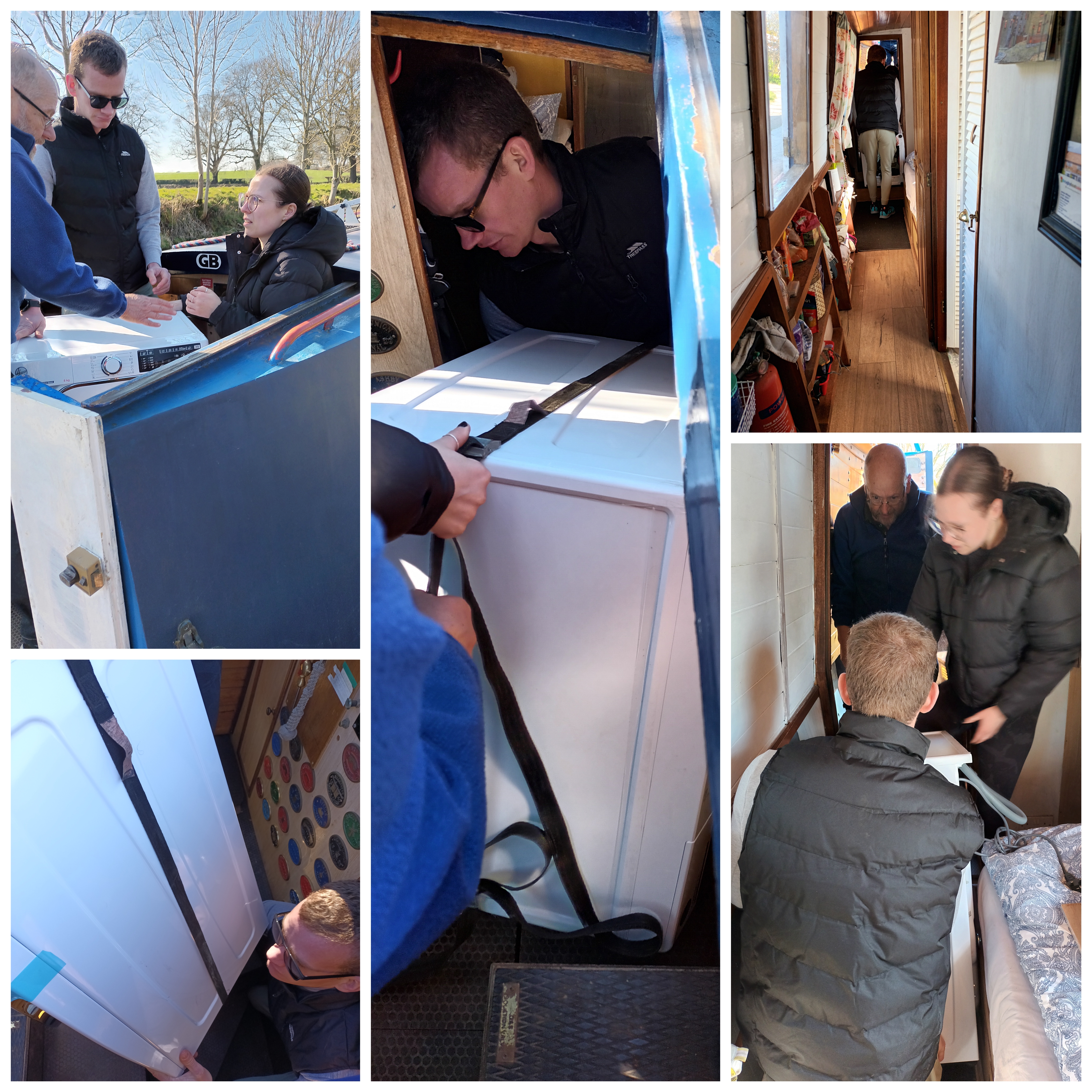
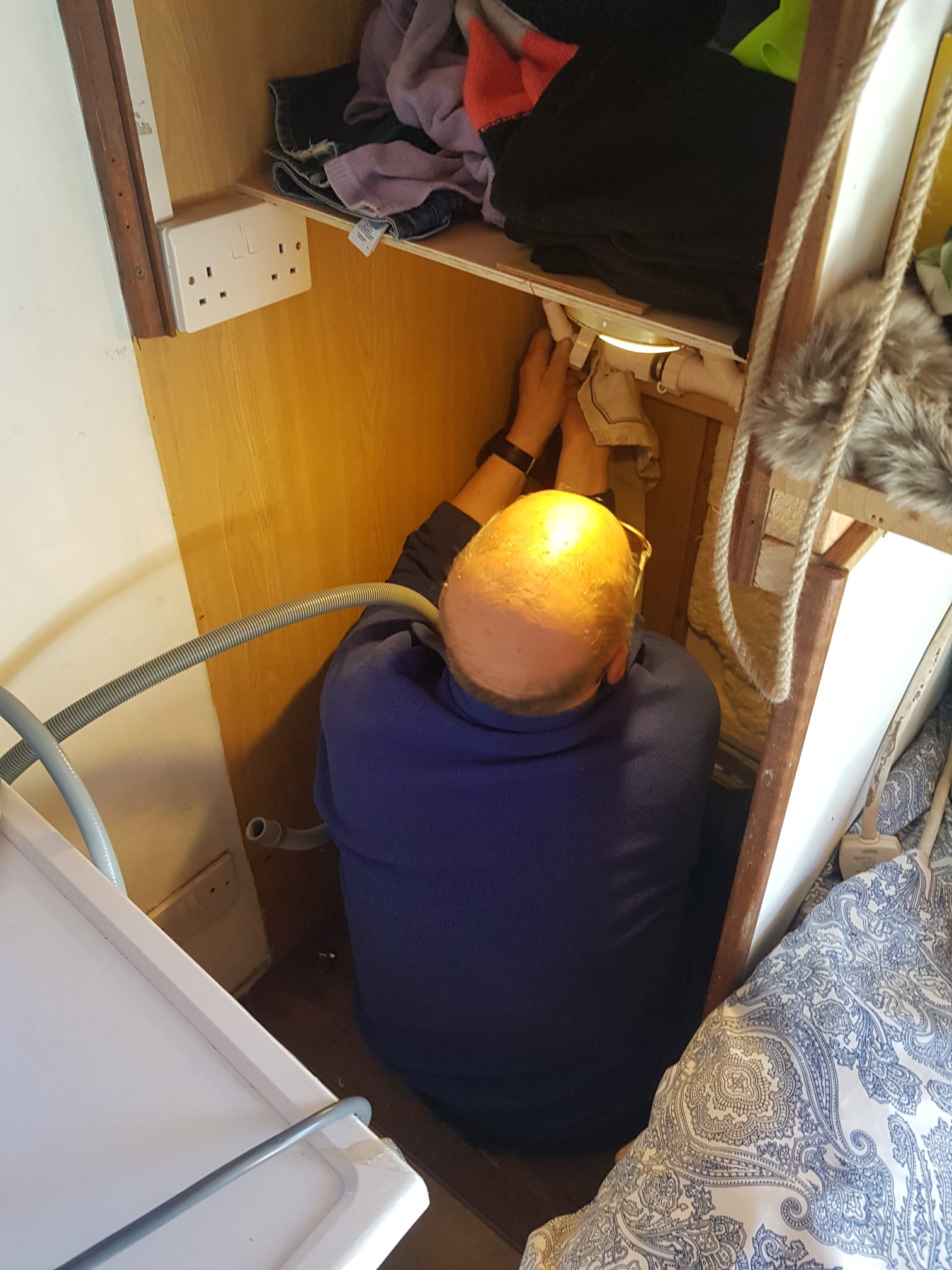
What do we miss? Steve & Deena: Washing machine (think we might have to try and work out how to fit one on board, power one and afford one!) Cola: Nothing

Most surprising thing?

  • Deena: How enjoyable winter is without central heating but a solid fuel stove even when there’s snow and you’re iced into the canal (and at one point into the boat), oh and that ducks do daily pilates!
  • Cola: how the towpath changes sides so you have to check every time you get off (but I’ve proved old dogs do learn new tricks).
  • Steve: How easy it is to change your life for the better – just go and do it!

Funniest part? Deena: Steve having to take another boat owner on our boat to rescue their boat after they moored it with a piece of string on the Aire and Calder and the string snapped!

This has been the hardest blog of the year to write because there was so much I to remember, to share, to capture. We are both looking forward with anticipation to what the next year will bring us. We are heading to London where Steve will run the London Marathon (slower than he would like thanks to Covid taking its toll), but he will still run it for Victa an amazing small charity. Then we will move slowly north via the Oxford Canal seeking to explore the Staffordshire and Worcestershire Canal, and the Shropshire Canal over winter.

I’m eagerly planning next year’s roof garden’s flowers, fruit and veg building on lessons from the experiences of this year – in the main nothing over 30cms tall but all the successful plants from this year. (More on this in due course).

The abundantly leafed potatoes in a sack proved the biggest issue this year – we couldn’t see where we were going and I had to stand on a step at the back to navigate! After weeks of being forced to take them off the roof for safety (so we could see and also to stop low bridges knocking them off into the cut), we started juggling them into the cratch for travelling, out onto the towpath in the evenings and nights so we had room to sit out, and back into the cratch in the day, they met their Waterloo at Standedge Tunnel in Yorkshire. Everything apart from the solar panels had to come off the roof to get through the tunnel. The panels had to be lowered. There were plants in containers stacked 4 deep in the cratch and lining the main cabin too much to the puzzlement of the dog! But I just couldn’t fit in the spuds however hard I tried, so they were harvested the night before the tunnel, and kept us tastily fed for a few weeks afterwards! If we’d kept them longer we might have had a bigger crop but they could have proved our undoing too!

In answer to the question we now keep being asked – how long will we keep going with this life afloat? As long as we possibly can, savouring every moment of it. It was a leap into the unknown of which this is not the end, but just the beginning.

Come spend a week afloat

“So what do you do all day?” people often ask when they hear we live on a narrowboat? Working and living afloat as continuous cruisers is different from having a holiday so here’s how the last week has looked to us. It is an unusual week in that we had the car for part of it and I had a night away for work reasons thanks to a good friend – my second night off the boat in the past year.

Saturday found us moored in the most delightful spot near the stunning boat Dutch Owl and its shapely rope figurehead Nicole.

Owner Nick made Nicole, but told us the boat she embraces was built for a Crick Boat Show in years gone by. The Boat Index gives no year for the build but suggests that was by M. Sivewright Boatbuilders. Steve cycled to Daventry for his 101st parkrun whilst I did some washing (by hand in the sink) after a pleasant walk with the dog.

In the afternoon we all enjoyed a good circular walk with some spectacular views of harvested fields topped by distant church spires. The walk took in a sleepy village which seemed to provide a chance to try a new-to-us pub midway particularly as the sign over the door seemed such a challenge. It wasn’t to be – pub shut for a wedding! We headed home foraging blackberries for supper with en route.

Sunday was blissful. Steve went for his long run(18 miles today – all heading to London Marathon on October 3rd) whilst I walked the dog, worked and nattered to our new neighbour about his part time PhD. After Steve’s return and shower we walked to the New Inn on the A5 near Norton Junction to meet out eldest daughter for a huge lunch – highly recommend their roasts and in fact their portions of everything are real boatman’s sizes! A walk back to the boat, a cruise through Norton Junction and we moored just past the junction facing the Braunston direction. Steve then left with our daughter to head back to Leicestershire and fetch the car. Cola and I returned with secateurs to trim Katie’s resting place which we had spotted the day before.

Poignant sign for any dog lover to come across

Monday Moved the boat nearer to the tunnel – fast as no locks. Another day working for me. Steve has less work this week so sorted shopping and tackled a laundrette with a mountain of washing. Took a good long walk later in the day after work, over the tunnel to Braunston and back. We used the old road that barge wives and children took the horses along whilst their men legged the boats through in days gone by. You see the brick vent shafts from the tunnel along the way.

Tuesday A day of work for me as well as moving the boat. Only 3 miles, 6¼ furlongs and 6 locks but it included the Braunston Tunnel, 2042 yards long (just over a mile).

dig

Only met two boats coming the other way – neither on the bend in the tunnel. One boat passed us fine, the other was veering about all over the place and bumped us hard. The locks come after the tunnel and we managed to meet up with another boat and share the work going down. Once moored it was haircuts on board for us both (and I trimmed a bit of the dog to help him keep cool). Then back to work for me and Steve arranged for our cratch cover (front canopy if you like) to be reviewed by AJ Canopies who made it originally. That was our reason for coming to Braunston before London. Verdict – we need to do self repairs with the indispensable duck tape (apparently it’s actually duct tape but I think duck is more appropriate on the water) to get us through the winter. Apparently we need a new cratch cover which couldn’t be sorted until May 2022 at the earliest at a cost of – gulp – £1450.00. Think the duck tape will be lasting longer than the winter (and the spring!).

Wednesday – up early, dog and I appreciate the sensational sunrise, slurp coffee, catch up on emails/messages, walk the dog, breakfast, turn the boat to face the right way ready to start up through the locks.

Set the first lock ready. Lady Lorna was ahead of us slowing so we could travel up as a pair – makes life so much easier sharing the work and two boats in wide locks stops them bashing about as the water swirls in the lock. Somehow though another boat nipped in between us so they went through the lock as a pair, and we were left out! I helped them through then emptied the lock to ready it for us. Had to do this for the first three locks and then fortunately we started meeting boats coming down so the next three locks were ready for us to go straight in. The locks near Braunston are a delight too.

Steve then steered us through Braunston Tunnel for the second time this week whilst I worked! Met another boat just on the bend so we both ended up bumping a bit – nothing serious. Once out into the sunshine found a mooring spot on the third attempt – first two we grounded the boat as the places were too shallow. Then work for me for the rest of the day. This way of working enables me to put work in perspective and provides invaluable thinking time whatever I am working on – writing chapters, preparing higher education sessions or writing articles.

Steve walked back to fetch the car which we need this week. He collected orders from Argos and an Amazon box in Daventry before returning to collect a loo cassette for emptying and taking the rubbish too (he really gets the good jobs!). Once back he installed a new wifi aerial while I finished work.

Steve then continued scraping and sanding the gunwhale on the towpath side – you can see what a fab job he made of the other side when we were moored facing the other way.

All was well until he dropped the scraper in the cut! Out with the magnet. Being sandwiched between Armco and the boat it just stuck frustratingly wwll to one or the other. I moved the boat out and hey presto – magnet fishing worked first time!

Thursday Lateral Flow Tests for us both (both negative) and then more work for me and a journey south for us both. Steve and Cola return without me via a quick family visit. Before settling for a bit more work (Higher Education) I headed off for a spot the elephant tour in and around Luton’s beautiful Wardown Park.

I also luxuriated in a bath! What a treat and be grateful I saved you the sight of that!

Friday Energising higher education work for me today – assessment and feedback in Ireland – and thanks to a wasp’s nest Steve gets to spend the day with a special 3 year old. (Preschool is shut for the Wasp Killers to do their worst). When Steve and Cola manage to tear themselves away from the fun, its back south to pick me up after work and a return home. Our journey resumes tomorrow via Milton Keynes, Leighton Buzzard, Tring and all points south to London.

So that was a week on board with us as continuous cruisers – not all work – not all play. Our work and life is balanced, and we includes regular adventures, new sights, scenes and encounters that add huge value to our lives. Personally all this allows me time to plan, think and reflect which improves not only my life but my work too. Thanks to friends, family and clients who have been such an integral part of the week – we couldn’t do what we do without you.

Climbing staircases with a narrowboat

Join us on the stage as bit part actors for the delight of the gongoozlers at Foxton. We ascended this time after the Bank Holiday had whimpered its less than sunny way towards September and the return of the Leicestershire schools, thinking it would be a quiet climb, necessary to get us underway again.

Foxton seems to attract the crowds whatever the weather, whatever the time of year, and whenever you ascend or descend you join the volunteer lock keepers in answering questions, explaining the workings of the locks, answering the inevitable “Do you live on board? (Yes)”, “Isn’t it cold on a boat?”(some have central heating but ours has a stove which often results in us wearing just t shirts inside in the winter), and “Are those your own shoes you’ve planted flowers in?”(some are, and some are fished out of the canals and rivers – recycling and reducing pollution).

The locks start in a pool by the Bridge 61 pub which like all good things in the canal world has multiple purposes – in this case shop, laundrette, pub, restaurant and cafe. On the other side of the water is the Foxton Locks Inn. The locks lead off between the two, and so it was beside the Bridge 61 that we aimed to moor up on Bank Holiday Monday evening ready for the winter hours 10am off the next morning.

To get there from where we had moored on the Market Harborough Arm, we needed to open a small swing bridge and so with the dog alongside, and swinging the key needed for the bridge, I set off whilst Steve followed with the boat. I was almost instantly stopped in my tracks.

The kingfisher sped past me just centimeters above the water, a tiny bright blue rocket contrasting vividly against the waters muddied by moving boats. Suddenly he changed trajectory, veering up to an overhanging hawthorn branch. There he sat for little more than a second or two, the deep orange of his breast feathers set off by the scarlet berries around him. He wasn’t drawing breath but scanning the water beneath and then he plunged vertically down from his perch. He pierced the water like a dart just millimeters from the moss-edged coping stones that frame canal and which would have smashed his tiny frame had there been any impact at that speed. No sooner had my eye adjusted to him sinking into the water that he was out again, a small glistening silvery fish within his dagger-like beak. He flew with his catch to the far side of the water to another hawthorn and by the time he landed I could no longer see the fish.

I realised I was holding my breath, awed by this demonstration of consummate skill and accuracy. I was honoured to watch the precision of that dive. It was worthy of a gold medal and a round of applause at the very least. But I stayed quiet and smiled with glee at one of the most marvellous sights I have been privileged to see.

I was shaking with excitement (and that’s my excuse for the quality of the photos!). We have seen glimpses of kingfishers before on the canals, although fewer this year than previously, but this felt like a performance, laid on just for me.

So thanks to this serendipitous encounter I was gleeful when we moored up that night, ready for the morning ascent. It took off the nerves I was feeling about taking the tiller for the ascent for the first time, and leaving Steve with the physical job of working the locks.

Foxton has 10 locks in all, arranged in two staircases, each of five chambers and in total they enable a narrowboat to climb or drop 75 feet.They are single locks, meaning they can only take one boat at a time – double locks can take two boats up and down side by side. In the middle of the staircases is a circular pound (like a pool) where a boat coming up can pass one coming down if the lock keepers (lockies) advise and permit. From this mid point you can see the Canal Museum, which records and retells the history of this fascinating place in multiple ways with video, reenactments, models and artefacts. From my point of view I learned that coming out of the lock before the pound, crossing the pound and entering the next lock does not require steering a straight line… But to get there we need to climb…and we need to get into the first lock to start…

Join me in some of the first few locks from my perspective at the tiller – looking ahead and looking back.

Historically these narrow locks created a bottleneck for commercial traffic, taking only one boat at a time and so an inclined plane lift was designed and built. It was steam operated and worked by loading two narrowboats or one barge at a time into a counterbalanced tank or caisson. Those going down would then pull the counterparts up the 1:4 gradient. The lift though was closed at night so for the 24 hour operators campaigned for the locks to reopen. The locks reopening, combined with mechanical issues with the inclined plane (the rails kept giving way under the weight), as well as the significant cost of manning and repairing and operating the lift meant it closed in November 1910, after just a decade of operation. Now only the locks remain as the way up.. or down. They each have their own character but each also has its own identity, sometimes well hidden beneath the slime…

You’re getting the picture of what it looks to navigate them so I won’t take up up all10! The staircase means each lock opens straight into the next, taking the boat up (or down) in giant watery steps.

Despite the fact that we waited for 5 boats to come down, and the one in front of us to set off before the most rapid ascent of Foxton we’ve ever made – 45 minutes from lock 1 to lock 10. That’s despite the bottom scraping on something metallic between gates 15 and 15 . I’m sure our rapid progress was down in part to the heroic efforts of Richard, a small boy not yet at school who you can see in a red jacket.

Under adult supervision and the watchful eye of Preaux’s crew as well as a lockie or two or three, this small gongoozler ‘helped’ with the lock gates and the winding of the windlass to operate each lock in the two staircases. Various other actors took bit parts as gate pushers, advisers (volunteer lock keepers were the informed ones, others sometimes not), and general hangers on.

We got to the top to find Mark and his commercial coal boat Callisto who had just a few bags of coal left, so we are now stocked up for the start of winter. We refilled the water, refuelled ourselves at the whitewashed cafe at the summit, and then watched in astonishment as three fishermen caught a 5lb Koi carp in the pound at the top of the locks. It surprised them as much as they surprised it! It had obviously been a big fish in a small pond at some point and been dumped in the canal, where it obviously flourished.

Then we took time to reflect on another safe passage and another 24 hours of momentous firsts.

Mouse on board!

In mid August on a balmy morning walk with the dog, a small person (aged 3) picked up a number of pink granite stones from a path.

The stones are quarried nearby to where we were then moored and where we used to live, in the pleasant riverside Leicestershire village of Mountsorrel. We used the 12.30 quarry blast every weekday as our lunchtime indicator. At the start of the first lockdown the regular rumbling blast caused severe concerns among those normal commuters who had never been at home on a weekday. Local police even had to allay concerns of a regular 12.30 terrorist blast or a plane crash!

The quarry is a place of fascination for small person

We are now currently moored near Market Harborough which is coincidentally of historic commercial significance to Mountsorrel. In 1758 Mountsorrel’s quarry won the contract from the Harborough to Loughborough Turnpike road company to surface all the roads in the area – a massive undertaking. The first quarry in the village was on the hill where we lived. The granite from Mountsorrel formed the cobblestone setts, kerbs and chippings that in turn created roads that revolutionised transport and business as well as catapulting the small quarry into the huge commercial enterprise it is today. It also led to development of the River Soar and the Grand Union Canal as carrying granite by barge proved much more economical.

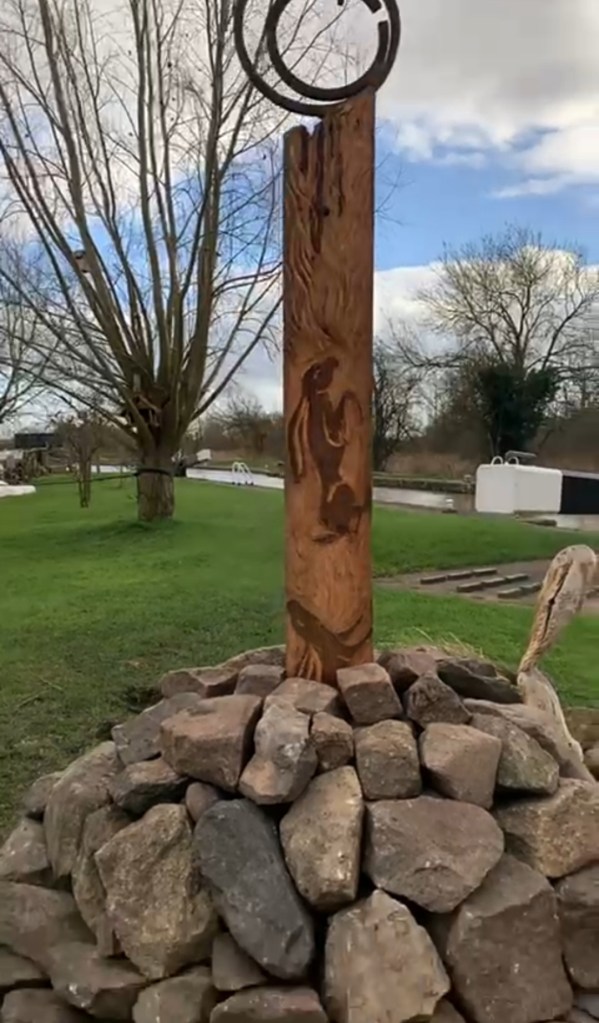
Back then to the little piece of Mountsorrel’s distinctive pink granite which was firmly clutched in a small sweaty hand, and carried across the fields that run alongside the Soar to Sileby. The stone was a gift from the small person to Angel, the inspirational boat dweller and sculptor who works and lives from Sileby Island. The stone and two others entrusted to my pocket were intended for a peace cairn she is planning. They discussed the stones as they were handed over and agreed one looked like….you’ve guessed it, a mouse.

Later that day we returned home to find Harry (as small person named him) brought to life by Angel’s vision and skill. From his delicate ears to his luxuriously curving tail, he is exquisitely subtle in shape and creation.

…stones leaped to form, and rocks began to live.

Alexander Pope discussing the power of sculpture and other art forms in “The Works: Including Several Hundred Unpublished Letters, and Other New Materials” 1871.

Harry was patiently waiting for us by the tiller, safely ensconsed in the curve of the stern ropes. He’s joined us living aboard and we are documenting his adventures for small person’s delight (as well as ours). So today – meet Harry and experience our world through his eyes.

From the swirling waters of the canalised Soar with its weirs and waterfalls to the calm of the canals, Harry has begun to make his way to London, probably not to see the Queen or hide under her chair, but certainly to experience the London Marathon and see the sights.

His first destination en route was one of the oldest cities in England, Leicester. He braved Castle Gardens avoiding the dangers of the rat traps, and by only emerging from the boat accompanied, stayed safe from the glittery-eyed cats that stalk the gardens at night.

From Leicester he journeyed through locks and ran the risks of running aground in low waters to reach safe moorings at Kilby Bridge and then to Saddington. For security he travels firmly attached by bluetack (like most precious things on this boat!). Like most most he can’t always be easily seen!

Our little murine friend has since seen to playgrounds, been introduced to statuesque nobility, and we even smuggled him on board the highly recommended and absolutely delicious floating cafe Boat Street at Mercia Marina – don’t tell the authorities!

He has come with us into the very heart of Market Harborough, the town which brought about the revival of the inland waterways for leisure use (and where Steve ran his 100th parkrun last weekend!) Originally the canal was going to link Market Harborough to Northampton but as ever, funds ran out, and the Market Harborough Arm stopped abruptly at just 5.4 miles in 1809. It runs from Foxton Locks to the market town’s Union Wharf, without a single lock along its length, but with two swing bridges, one by Foxton Locks and one in Foxton village.

In 1950 Union Wharf was the site of the Inland Waterways Association‘s first boat rally, Festival of Boats. It must have been an amazing site with over 100 boats gathering to showcase the canals, and the boats as a fantastic leisure option. The charity is still vibrant today, campaigning for the waterways, supporting development and protecting the existing network.

The IWA was formed by people with vision, people who could see the need to create a new purpose for our inland waterways, people who could see opportunities. That insight and perspective is something which has enhanced our own lives afloat, just as the insight and vision of our artist friend has changed our perspective. All of us now, young and old have a changed view of the world around us. We see differently, view stones and trees, driftwood and rocks with new eyes – see possibilities where once we would have seen nothing. As Henry Moore the famed Yorkshire sculptor once said:

Painting and sculpture help other people to see what a wonderful world we live in.

Henry Moore

This humble, beautiful little mouse is giving us a new view of the life we are leading, a chance to look for the hidden, the often overlooked, and it is a delight. It’s fun looking for and through the mouse eye view at the world around us, and sharing that with our small person remotely. It helps keep us in touch and connected in a new way.

As we all head back to school, to work, to pick up lives so interrupted as much as we can, it can do us good to change our perspectives, to see our world and our work our lives and eyes of others. Step back, step forward, look differently.

The way I view the world now is very different to the way I viewed it some years ago, we have moved away from the material by living afloat, and stepping back from slavishly working. Alexander Pope knew a thing or two centuries ago which we have only just discovered:

When we are young, we are slavishly employed in procuring something whereby we may live comfortably when we grow old; and when we are old, we perceive it is too late to live as we proposed.

I am grateful every day, dozens of times a day in fact, to have discovered this truth and to have taken action to live life to the full as a result. Now I have the additional delight of this cleverly wrought scrap of pink granite which warms in my hand as I walk around with him, is helping us see things differently. Harry inspires us to view our new world differently and also constantly connects us to the past. Through the skill and artistry of an amazing sculptor he has brought us a new lens to the past, present and future.

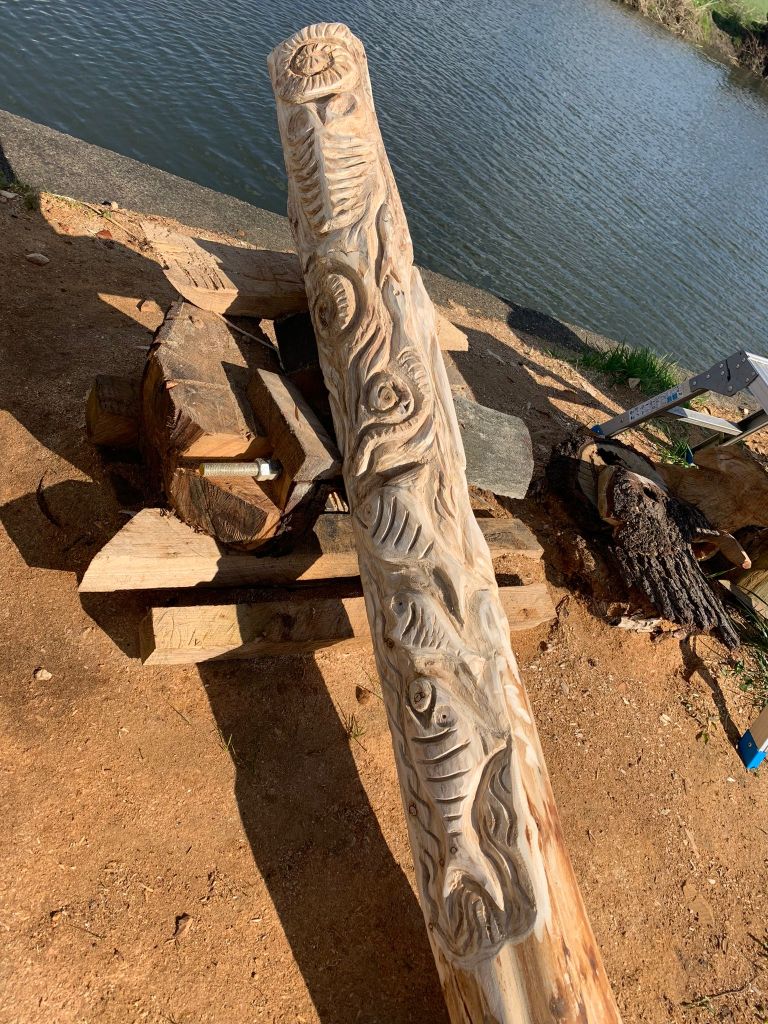
Angel working on a rather larger commission

There is one wee downside to this new perspective on life – a certain small person is avidly collecting stones on every walk and exclaiming look I can see  a squirrel or a crocodile or a dinosaur with each, and each (of course) has to be kept! Hopefully we can find them new homes before we sink our boat with their weight…