Another storm…another natural disaster for much of the UK.
As Storm Eowyn raged we have been away worrying about our boat remotely from down on the South West coast, and once more we are so grateful for the support of the boating community.
This time, as winds howled and waters rose, we were on the North Devon coast for the funeral of a unique family member who would have been 100 this summer.
We walked the beach with Boatdog and enjoyed the lights on the prom before the storm raged, and metal furniture outside our hotel room was hurled across the hotel gardens. I lay awake wondering about our floating home and whether she remained moored where we had repinned her and loosened her ropes in case of winds and high waters.
The message next morning from a boater to say Leicestershire was not as badly affected this time and our boat was fine was not only a huge relief but yet another indication of the strength of the boating community. It’s a community where people care for each other, and that is something our 99 year old relative would have greatly appreciated. He was a firm believer in the butressing stability of family and friendship.
It was a testament to that belief that people from across the many years of his life united on the South coast, despite the difficulties of their journeys because of the storm, to remember him. Some remembered him as a young man. Others had worked with him. Some only knew him in his admittedly lengthy retirement, but their gratitude for the times shared with him was constantly articulated. Thank you, David… for all the memories.
It has made me think – how do each of us want to be remembered? How do you hope to be remembered? How do I hope to be remembered?
Time’s ticking – what positives can we create in it?
Maybe “She weathered life’s storms thanks to the love of and for her family and friends” would be a positive summation for me. What do you hope hope will say about you at the sunset of your life and how are you working to make that a reality?
We seem to be a novelty after the floods have abated here in this part of Leicestershire.
It is one of the lovely things we find about narrowboat living – people are curious about how we live because it’s a bit different. Additionally, we can often be found outside alongside or easily available sitting out on our boat, so we are accessible for a chat.
There’s been a thread this week on one of the narrowboat social media networks about regularly asked questions and it’s made me realise from that while many like us love the questions and opportunities for sharing our lived experiences, others seem to find these interrogations irritating, even intrusive. We find sharing our delight in living afloat is genuinely one of the appeals of this way of life.
So here are the top 20 questions we’ve been asked this past year, starting with the most recent and most frequent…
Where did you go when the recent floods happened?
A boat below the lock near us was evacuated, but we stayed aboard. We had to wade along the towpath but for us the safest place because our home will rise in flood waters if we’ve slackened the ropes sufficiently, and we were in a safe spot, unlikely to be washed off where we had moored or washed onto the towpath. We need to slacken ropes so the boat can float up and not tip, allowing water to enter vents, which would then sink us.
Is it cold on board / you must be cold?
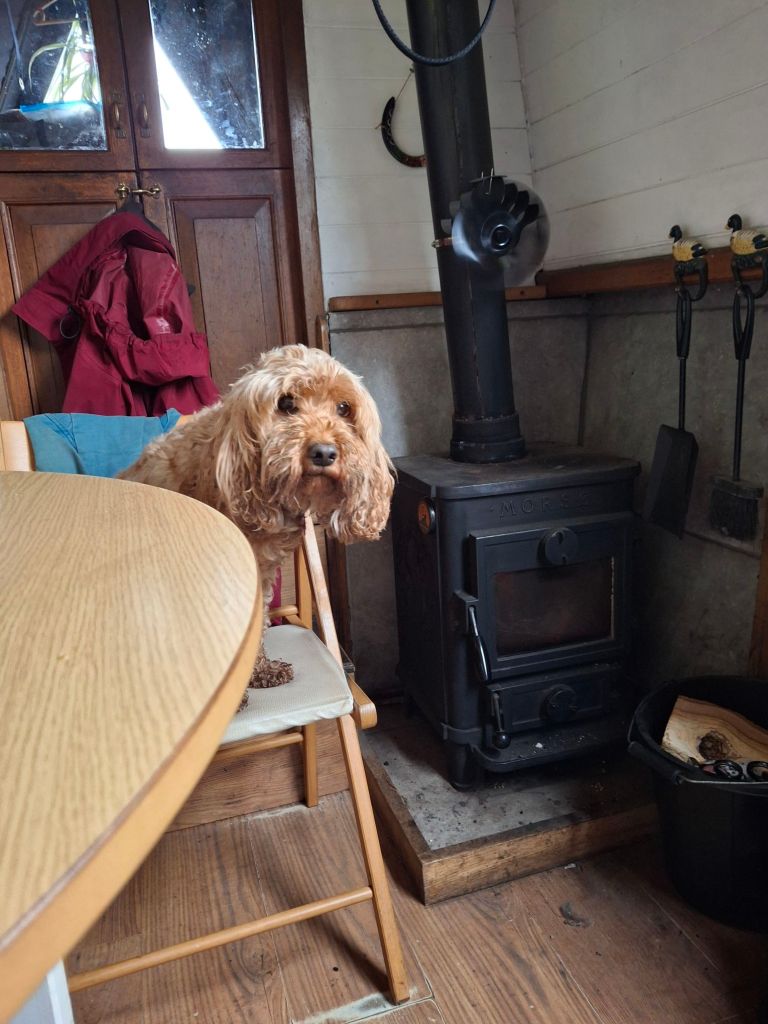
We are probably a lot warmer than most people in bricks and mortar homes. We have a 5kw multi fuel stove which we keep going 24/7 in the winter and it really warms the entire boat beautifully. As I write this the Skipper is in his T-shirt and Boatdog is panting because she’s sitting way too close to the fire. Our stove only has to heat what is effectively a single space of 50ft x 6ft 5 at its widest so we stay very toasty.
Where do you live in the winter / can you live on board all the time?
It is tempting to ask people if they move out of their homes in the winter! But yes, we live on board all year round because it is our home. Personally I love the winter on the waterways – it’s quiet and so cosy on board although the winter stoppages for repairs and maintenance work curtails cruising a bit. It is fun trying to work out a way round the stoppages though.
How do you do your shopping?
Usually with a backpack and we walk to local shops, or bus stops to towns. Alternatively, at the moment, we have the luxury of a car, which is making us very lazy, and we have been able to do some stocking up big shops as a result. Today, for example, we went to a supermarket for food and a wood yard where we bought a lot of wood for the next internal project and we were able to transport it back.
What do you do for showers and toilets?
Um… what do you do? We have a flush toilet on board which feeds into cassettes that seal and we take them to disposal points along the inland waterways networks and empty there. When we first bought the boat it had a big tank under the floor for toilet waste but it was very old and had holes in it! We decided that replacing it with cassettes which we can store if we have to then empty would be safer than one large tank if we were stuck somewhere for any length of time like a frozen canal or a breach of canal.
We also have a shower on board fed by water heated when we are running the engine/cruising along. If we are stationary for any length of time we boil kettles and use a shower pump from a bucket – a system designed for van life but brilliant for saving us energy and water. I’m proud to know I can have a good shower and hair wash with a single bucket.
Do you do your washing in the canal/river?
Er – no. We have a full sized washing machine on board. It has a cold water feed and we give it a flask of boiling water to get it started and save power. We run a cold water wash and it has a 1600rpm spin which is wonderful – clothes come out almost dry. They just need a quick dry on the airer above the multi fuel stove or on the rotary washing line that fits on the back of the boat.
Can you stand up inside?
Yes. As you go into the boat from the towpath you go down steps so head height is over 6ft. One tall family visitor finds doorways challenging but that can happen in a shore based cottage too!
Do you have the internet?
We do indeed. It is vital for our work. Over the years we have used different systems. At one point it involved putting up an aerial every time we moored up, and trying to remember to take it down every time we set off again (didn’t always remember and it finally came to serious grief on the first bridge into Burton on Trent from Willington on the Trent and Mersey Canal). Then we had a box shaped aerial on the roof 5G. We now have an EE 5G router internally which seems to do the trick.
How do you know where to stop?
We look for somewhere that looks good for us – not too near a main road, a railway, or a bridge or on a bend which would make us mooring there a hazard for others; not under overhanging trees (dangerous in high winds and useless for solar); and with a bank or edge that looks good to moor to. Some designated areas on waterways maps show you whether they are limited to 48 hours, a week or if nothing is stated then we’re fine there for 14 days. At the moment we are on a winter mooring for the first time which means we have paid Canal and River Trust so we can stay here longer than 14 days and for as long as we’ve paid for.
Can you stop wherever you like?
See above, although there are some lovely mooring spots which are private, so we can’t stop there. A general rule of thumb for continuous cruisers like us (boaters who don’t have a permanent mooring) is that we should be mooring on the towpath side only.
What’s your favourite place to stop?
This is unbelievably difficult to answer. We have places and canals we have loved for different reasons, and still many more to explore. Among our favourites are Stoke Golding and Snarestone on the Ashby; Bollington and the Dane Aqueduct on the Macclesfield; Selby on the Selby Canal; Nantwich on the Shropshire Union; Penkridge and Tixall Wide on the Staffs and Worcester; Ellesmere on the Llangollen; virtually anywhere on the Monty and oh so many more. Every canal has places we love. There are cities and towns, villages and those moorings in the middle of nowhere… all are unique at the time and season we visit them.
How far can you go?
Physically the connected network goes up to Ripon in North Yorkshire, down to Godalming in Surrey, west to Llangollen in Wales and east to Brandon in Suffolk on the Little River Ouse.
What’s the furthest you’ve every been?
We’ve been north to Selby, south and east to London, and west to Llangollen. We have many miles to explore yet!
Can you have pets on a boat?
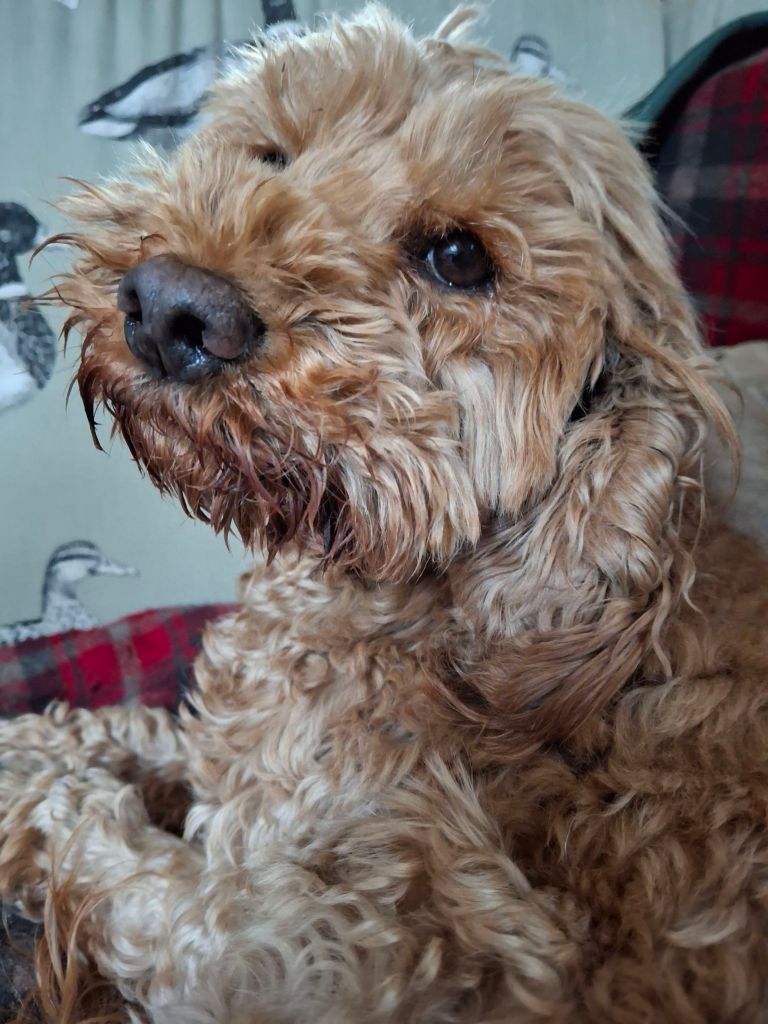
Yes. We have a Boatdog. Our first was a wonderful black working cocker spaniel who belonged to our youngest daughter. We lost him two years ago at the age of 15. His successor is a cockerpoo who came aboard at the age of six and a half years old? Some people have cats, rabbits, all sorts of birds, reptiles and I’ve also seen goldfish on board.
Don’t you wish you had a bigger/wider boat?
Occasionally, I wish for an extra few feet in length but this size of boat can go anywhere on the connected navigation, and so she really is perfect
What do you miss?
Sometimes I miss being able to have a long soak in a bath, but then I can have one as a treat on holidays and visits to generous family and friends.
As we’re in Britain there are always the indirect questions like
Bet it’s dirt cheap to live on a boat
I always let the Skipper answer that with facts and figures. He tells everyone about the regular almost continuous maintenance costs, licence fee, fuel that means it isn’t hugely cheap.
I’d love to live on a boat but you can only live like that when you’re retired
Well, we haven’t retired. If you want to do something , do it. Living aboard the way we do have enabled us to downshift so we don’t have to work as hard/as much but that’s as much the lifestyle we choose to live that’s made the difference as it is boat life.
Bet it’s scary/dangerous/miserable/exciting living on a boat
At times it can be all of these things and living in a house for us was often only 2 of them… on a boat it’s also beautiful, inspiring, and possible to pull up your ropes and move on if you don’t like the neighbours!
There is always something to see, to learn, to discover, and amazing wildlife all around.
And the easiest question of all to answer –
Would you ever go back to living in a house?
Not for many many years until I can’t physically manage to live on the boat. We are making preparations to future proof to boat so we don’t have to heave coal and logs and gas on board so we are trying to make it possible for us to stay aboard and cruise as long as possible. At some point in the future we may even consider a ratchet windlass…
Oh and an extra question that we get asked a lot –
Have you ever fallen in?
Yup. Once in broad daylight when I trod on grass that was not the edge of the river bank but just grass sticking out over the water and once in the dead of night when I stepped off a lock walkboard into nothing and landed in the canal.
The Skipper also joined the Mermaid Club in a canal basin whilst mooring the boat on the Peak Forest Canal.
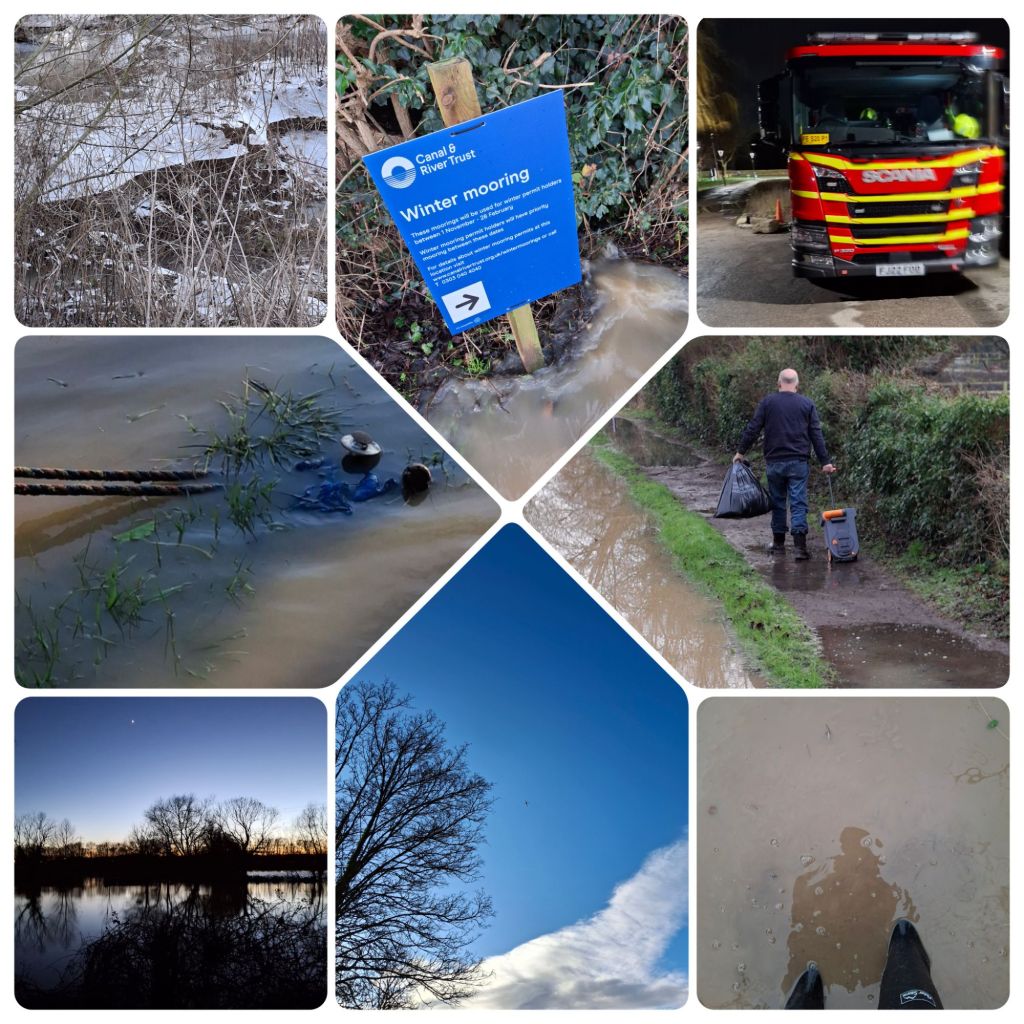
It’s been a dramatic week. From wet and muddy to a pollution incident. emergency evacuation, danger to life levels, and ice.
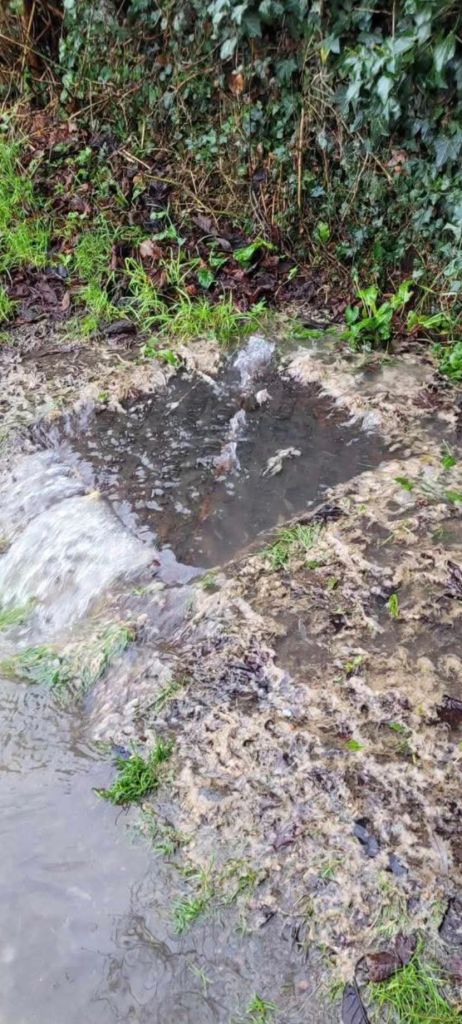
Monday began with grandson’s school being closed on the first day back from the Christmas holidays because not enough staff could get in through flooded or snowy roads. This is a benefit of being close – we can help if needed. We had an unexpected and delightful day with him, which included splashing in our wellies back to the boat along a breached, flooded towpath. He (like us) wasn’t impressed to see sewage spewing from a manhole cover pushed up and out by flood waters. The sewage was flowing across the towpath into the river. We duly reported it to Canal and River Trust, Seven Trent and the Environment Agency, appreciating they were experiencing multiple calls across the region.
Then we splashed our way back from the boat (levels still not over age 7 wellies st this point) and took him in the car to an early evening football skills session on an all-weather pitch the other side of Leicester. It was a slow journey as many roads were shut with flooding. The plan was for a family supper together before we returned to the boat. It didn’t go according to plan.
As the footballers returned, the Skipper announced we had to go “NOW”. He’d been monitoring water levels via the Environment Agency website during the training session, and they were rising alarmingly. Supper boxed up for us, we grabbed Boatdog from her comfortable snooze on their sofa and dashed out to the car. The first road back towards the boat was closed, the second too. Sat nav was struggling to show where was open and where was shut, as the situation was changing so fast, so it was trial and error. Stress levels were rising as fast as the waters.
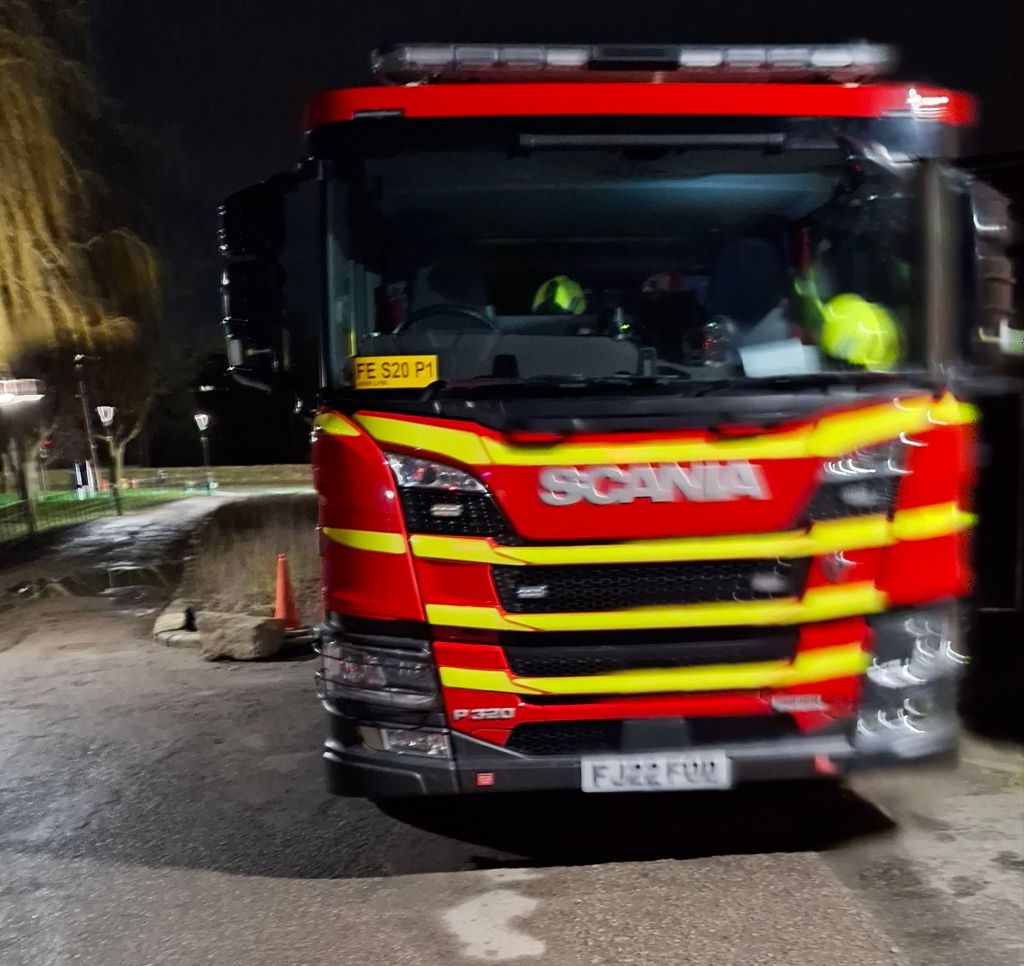
We headed into the village of Quorn. The mini roundabout in the heart of the village was underwater, but we got through slowly with care. We made our way back towards Barrow, but blue lights illuminated the main road into the village, leading over the bridge that spans the River Soar. Flooding across the road had shut the route, with a fire appliance and pumps in attendance.
Back onto the A6 and on to Loughborough. Water levels were high and there was lying water but some roads were still open. Everywhere was busy as all traffic was being channelled the same way. As we came into Barrow the back way it was to find road closed signs and blue lights again where we wanted to be. We squeezed through and made our way to the Soar Bridge Inn car park. En route I’d had messages from a friend who runs the pub asking if we were OK or if we needed anything. We called in to explain we were going to try and get home, and she very kindly let us leave our car in their car park.
What can be a 1.3 mile walk between our grandson’s home and our winter mooring or a 3.2mile drive, turned into almost 11 stressful miles. Even when we were finally back in Barrow, it felt like we were still a long way from home.
We set off on foot, but within just a few yards, met a fire service cordon by the archway entrance to Proctor’s Park over the bridge just by Deep Lock.
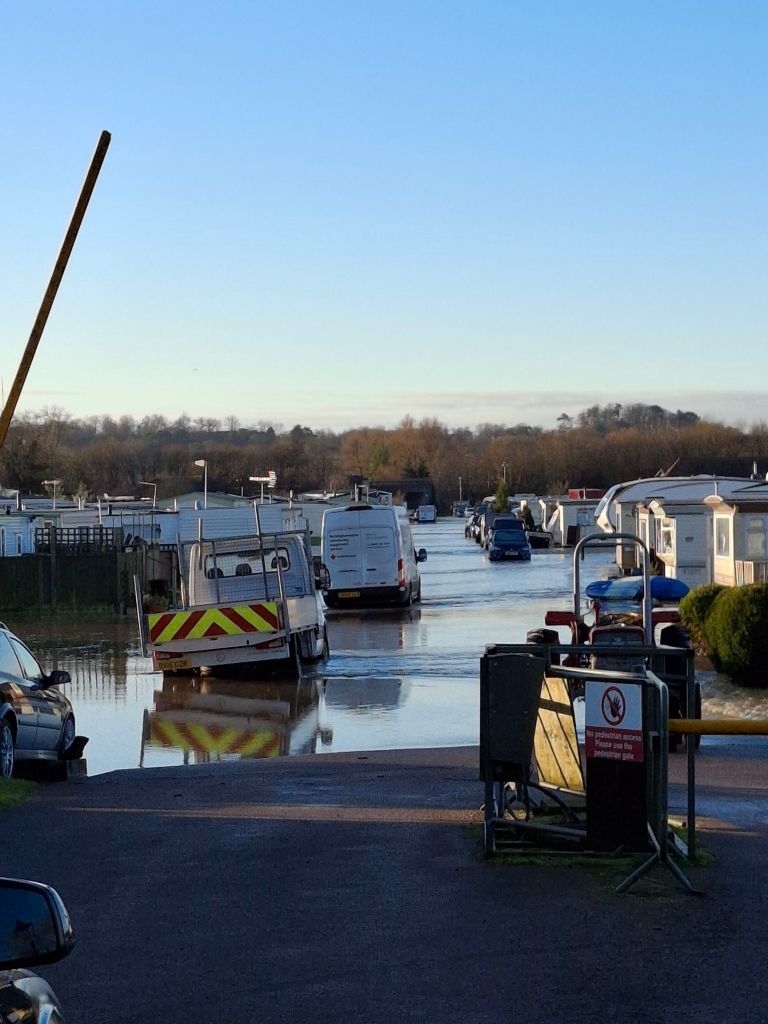
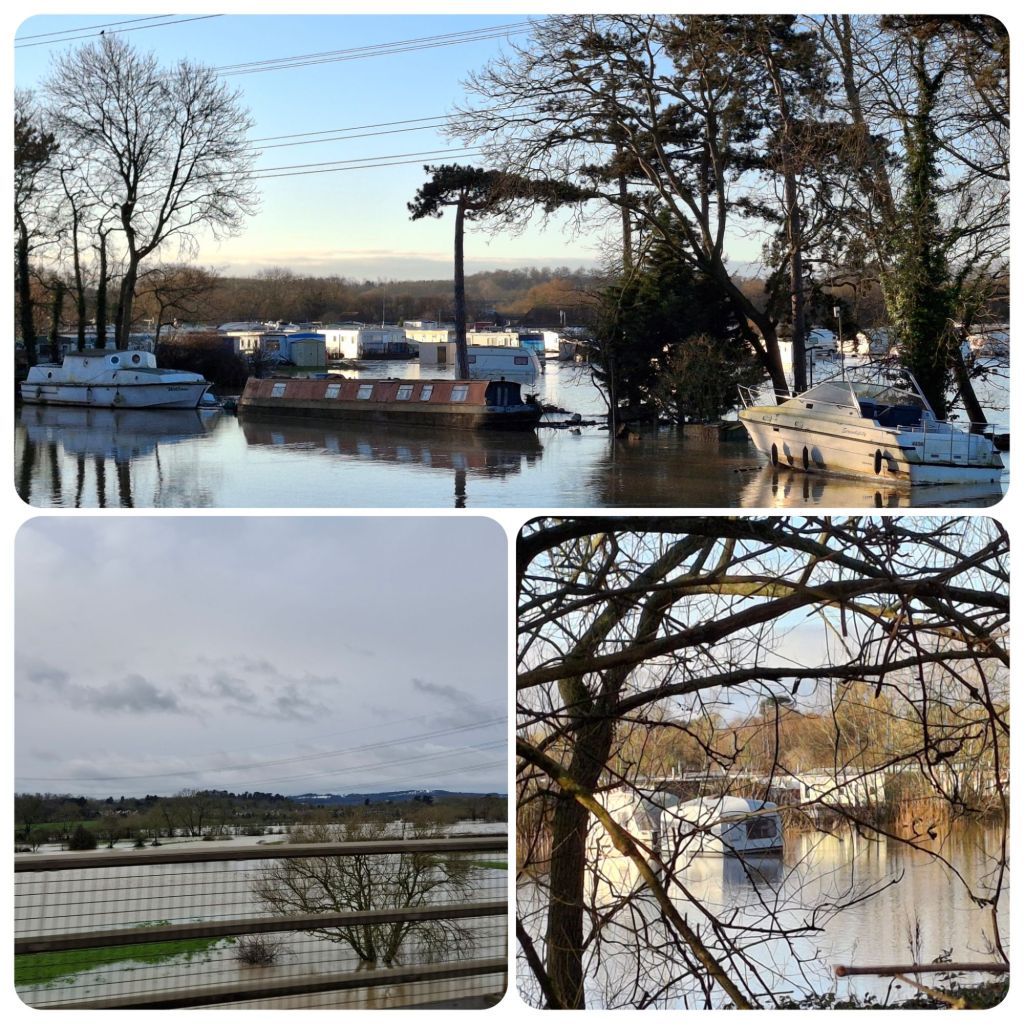
Proctor’s was originally a post-war pleasure park that attracted day trippers on special trains from Leicester, Loughborough, and Nottingham to enjoy the attractions of boating, train rides, side shows and sand pits. It was opened on 12.5 acres in 1948 by Jack Proctor, who owned fairground rides and undertook event catering. Since then, people’s holiday aspirations and the park, like life, have changed. It is now a caravan park for static or touring vans, mobile homes, converted vans and also provides both residential and leisure mooring for boats.
Being bounded by the river, Proctor’s Park was the focus of attention for the emergency services. When we arrived just before 8pm, they were advising evacuation, but not insisting. They had already helped one couple and a dog to leave a boat moored at the park, but their said if we could get to our boat and we’re happy to stay on it, then we should.
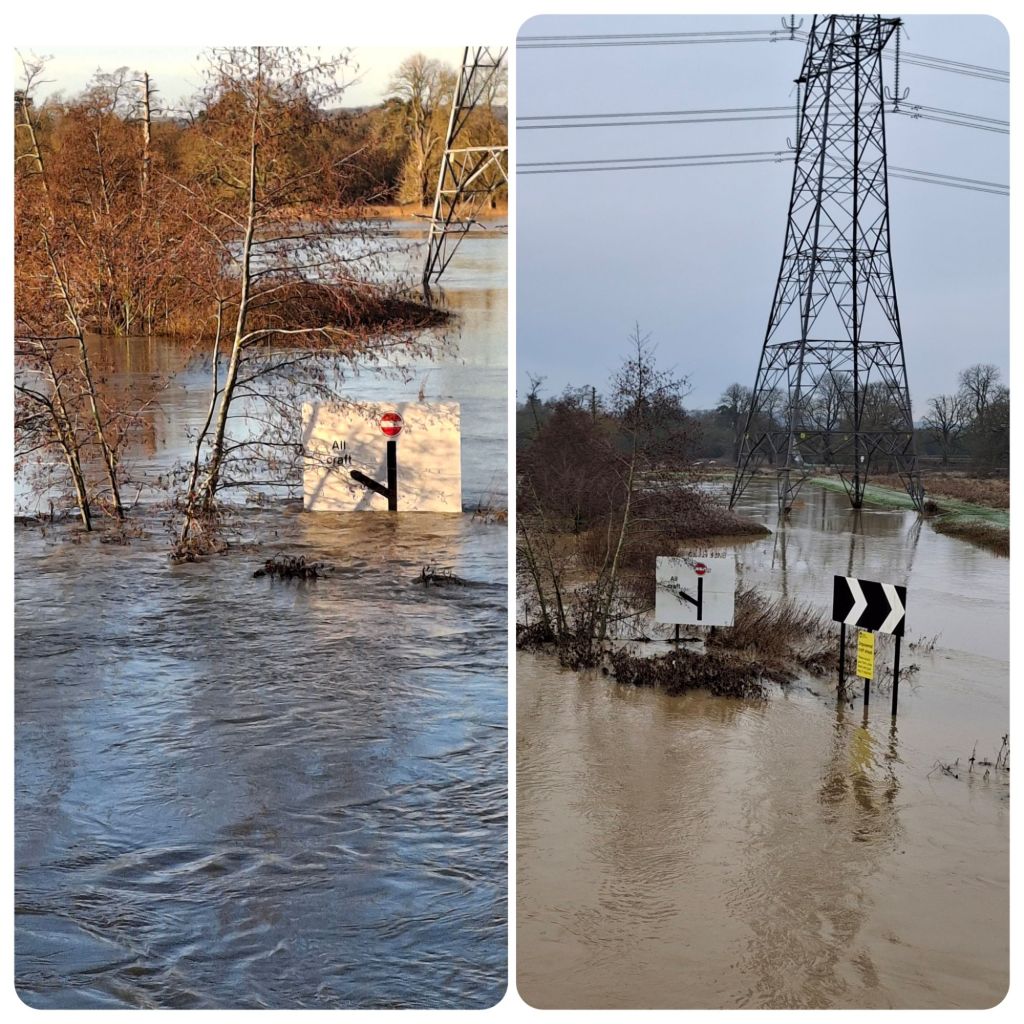
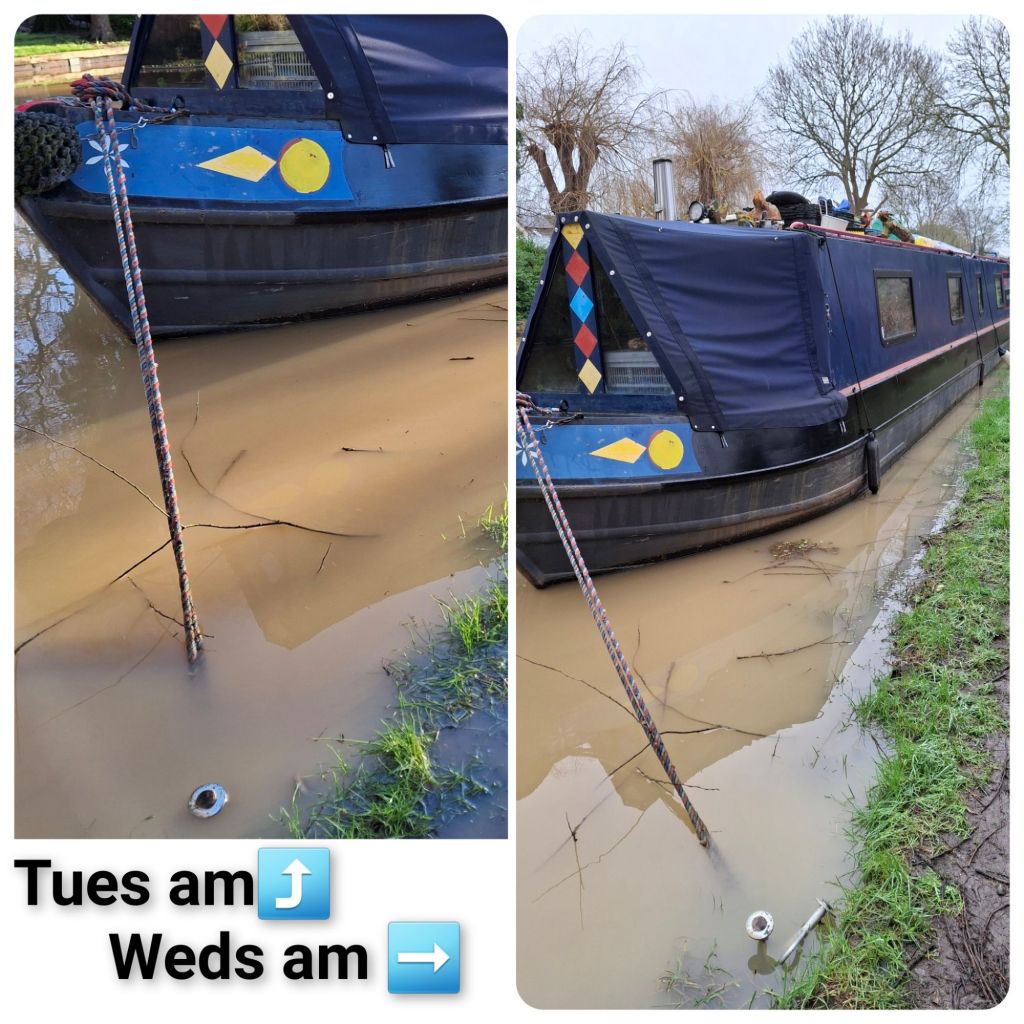
We set off. Behind Deep Lock levels were high. I had opened the paddles earlier in the day to let water flow down and avoid flooding higher up. We are moored spme 10ft above the main river at this point. Within a few feet of the lock, our head torches were showing water flowing over the towpath from the Barrow Cut (the canalised section of the river). All we could hear was water running, pouring across the towpath, disappearing into the dark below, and the level of the caravan park. The dog had to be carried from here all the way to the boat – her legs being too short to make it through without swimming. When we got to the boat, the mooring pins were totally submerged but astonishingly still holding the mooring ropes and the boat secure to the bank. The pallet with the boot scraper on that we keep as a step at the stern was just peeking above the water.
We made it on board, loosened the ropes to prevent the boat being pulled over by the rising waters, which could result in her taking on water and sinking and lit the stove. We could hear water running constantly across the towpath into the fields behind the hedge beside us.
We gratefully ate our packed meal and wondered how others lower down the river we’re doing. Levels continued to rise, and at 22.18, we were startled by a shrill siren sound from my phone. It was the emergency evacuation message for the area. The Methodist Church had been set up as emergency accommodation. The Soar Bridge Inn also set up a very necessary free hot drinks station for evacuees, those determined to stay in their homes, and the emergency services. The Skipper’s phone siren sounded soon afterwards, and family in the next village also had the warning. We carried on reassuring anxious friends and family that we were fine, kept the stove well stocked, checked the ropes again, and settled down for a long night. Surprisingly, I slept well, although the Skipper was constantly on alert. Levels according to the Environment Agency monitoring down river at Pillings Lock peaked at 3am at 2m52. The highest point of normal levels is 1m14. Even at this the boat was not close to being floated onto the towpath – another potential hazard.
The next morning we stood on the back of the boat looking out at a muddy sea – fields and towpath as far as the eye could see was just water, and it was still overflowing from the Barrow Cut across the towpath into the fields. Wellies on, we waded off, carrying the dog, to see what help we could offer anywhere.
The first thing we encountered were journalists, photographers and film crews all clustered by the entrance to Proctors Park by Deep Lock. Residents from Proctors were taking it in turns to repel sightseers but said few people had chosen to evacuate, although a man was taken from his home by the fire service using a raft during the morning. There was nothing we could do to help, community spirit was evident with everyone helping everyone else.
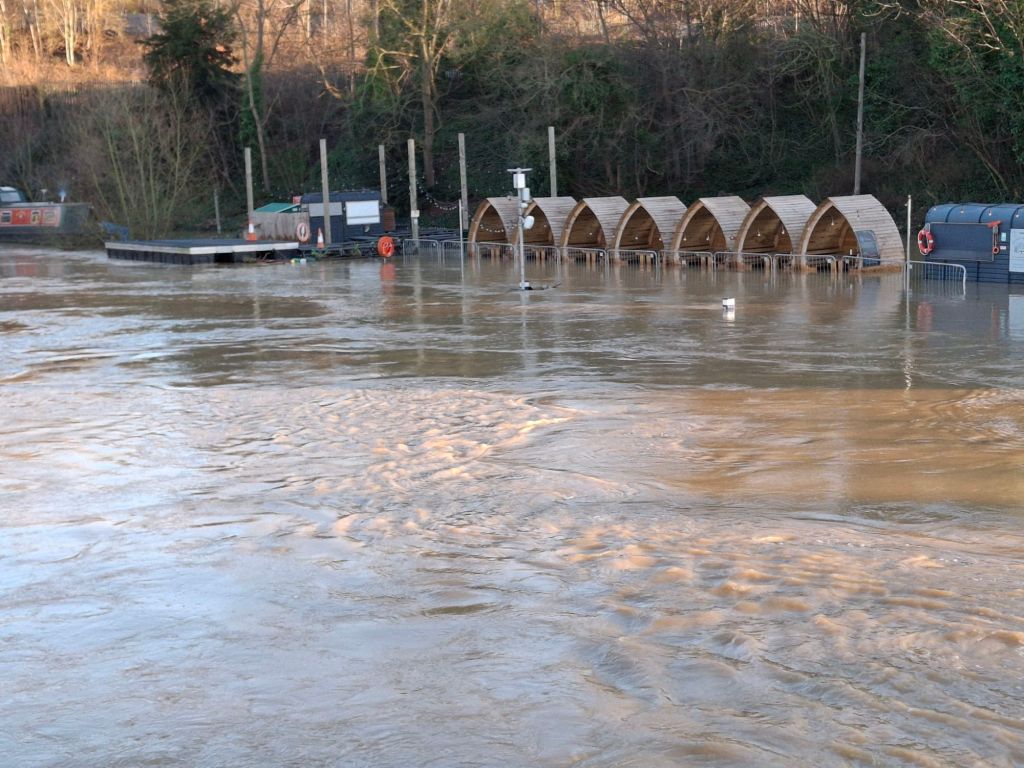
The park alongside the lock moorings was almost completely underwater, as was the well-used pathway across the far side of the river to Quorn. What has become a familiar landscape was alien. A few car roofs could be seen just poking above the water in the park. There were boats on the far side of Proctor’s Park isolated on their moorings with the rivers treating fast on both sides of their hulls. Local people watched in a minute of fascination and horror as the water thundered through the bridge arches below them. The Moorings pub car park was being crossed by canoe as we approached and the pods at the edge of the parking were clearly awash.
There was little we could do to help so slowly we made our way back to check our ropes, loosen them, and sit tight, glad to have a home that floats. All day news helicopters and drones were buzzing around, but the waters began to subside.
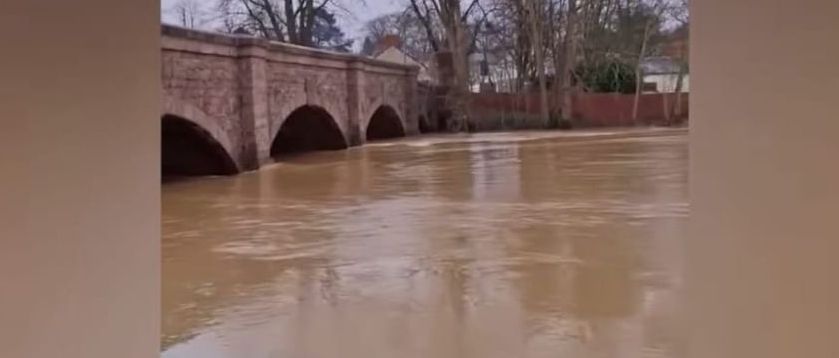
Within 24 hours it was a very different story for us and everyone affected. By Wednesday morning media interest had moved with the flow of waters downstream, to Loughborough and then to the areas around the River Trent and Nottingham. The Soar river level had dropped enough to allow us to walk across flooded fields and pathways to Quorn. Low overnight temperatures had turned shallow areas of flooding into danger zones for cars and pedestrians but the water levels kept slowly dropping enabling a clear up of sorts to continue. The noise of the river thundering under Barrow Bridge was terrifying. It seemed astonishing that this was a bridge under which we have cruised our narrowboat many times. Now the weight of water means there is little space under the historic arches.
Normally our boat passes under these arches…
An overnight freeze on Wednesday night led to strange ice formations in the woods, making Thursday morning’s dog walk (a walk not a carry) strangely beautiful. Water still lies at Proctor’s among the caravans, and some boats will remain cut off on the far side where the river sweeps round to rejoin water coming from the Barrow Cut until levels drop much more. There’s a fresh smell in the air round us despite the amount of debris and lying water, perhaps the weather has frozen decay.
Mooring pins disappearing and re-emerging but still doing their job!
It is astonishing how quickly the levels rose, but also how quickly they’ve begun to subside. We had two days booked of volunteering with Canal and River Trust this week but both days had to be cancelled – we’ll try again next week when there will be even more need for clearing and cleaning up around the locks particularly to make them safe for use once more. At the moment navigation is still on red, but there are 10 clear days without snow or rain forecast so everything should have a chance to dry out. Once the boat goes down enough I’ll be able to do the washing – can’t really do it when the water would spew out onto the towpath from our current height!
So it’s been a very different week. Excitement. Drama. And now calm again. We knew the Soar floods when we booked our winter mooring and it’s a small price to pay for some months near the family.
There’s been the opportunity for a bit of work too which is good, but the overriding feeling this week has to be gratitude.
Gratitude for a home that floats, for mooring pins that have done their job and held us safe, for the emergency services, for a well fuelled stove, for friends and family who care, for ths chance to get off again to empty the loo and waste bin, for new wellies without holes and blue skies again! We are very fortunate and grateful we’ve made the decisions we have.
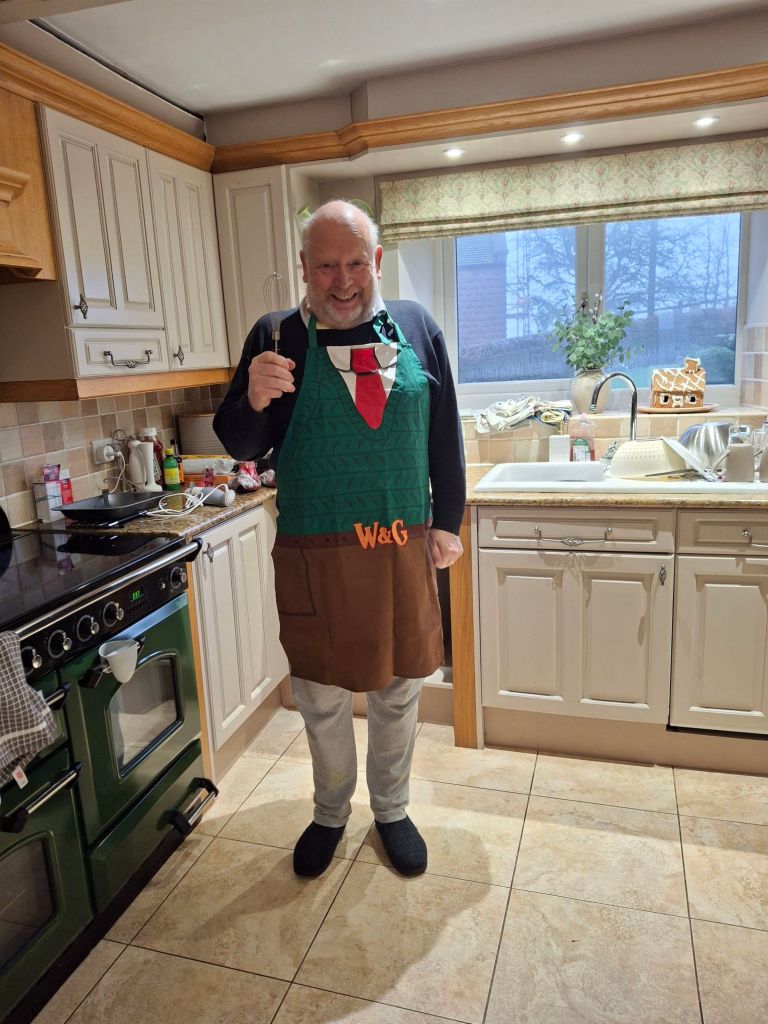
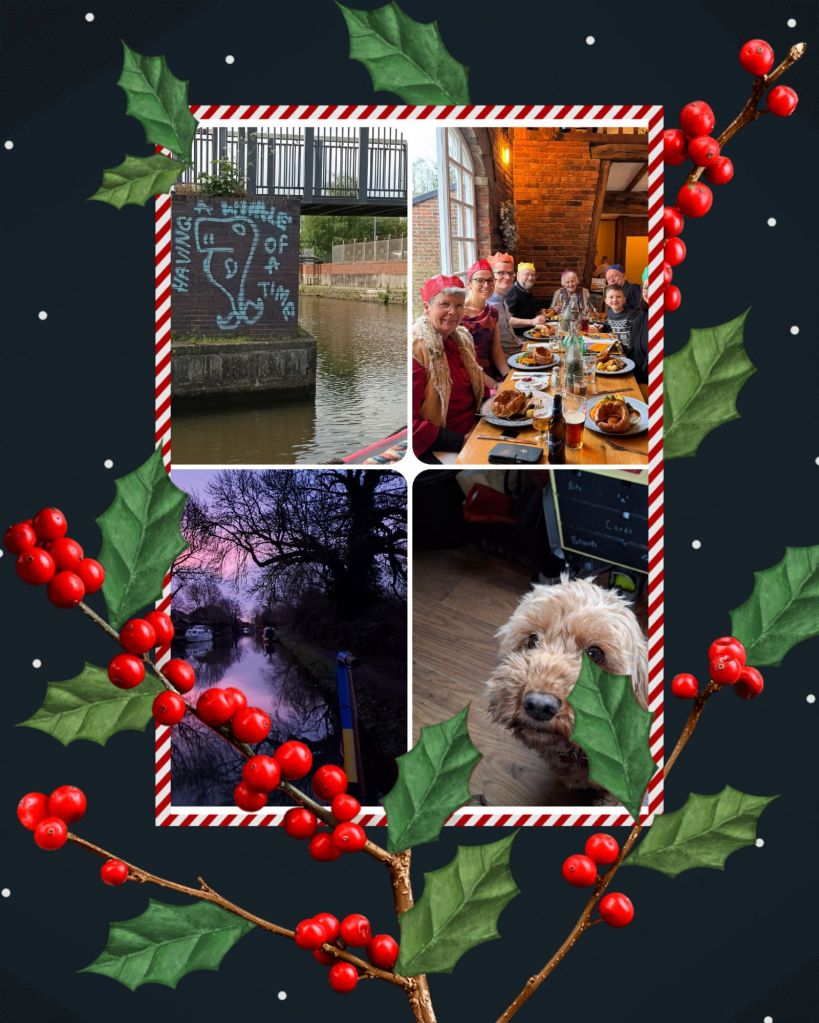
The highlight of a wonderful week away surrounded by our amazing family was being able to cook for a crowd (I forgot how much I loved doing that, what a gesture of love it is to be the cook for lots of people special to you.) I’ve not had the chance on the boat to host the whole family at once, and have been treated as a guest for the past four Christmasses by my lovely daughters and their partners).
Trifle supremo brother-in-law showing off a perfect Christmas apron and The Range Cooker!
So after a week with a range cooker, two ovens, the chance to cook for those I love, and the added delights of family walks, huge rooms, wonderful views, constant hot running water, central heating, electric toaster, electric kettle, a BATH, and a choice of shower rooms no less… you could be forgiven for thinking I returned to our 50ft long, 6ftish wide floating home feeling a weeny bit despondent. I did rather expect that myself, to be honest.
Not a bit of it. Once the many trips lugging wonderful presents down a muddy towpath and the lighting of the fire was complete, it was bliss to be back. Yes, we still have to boil water for a shower, we don’t have a bath or one oven let alone two ovens, but… the sunset was glorious, the swans dropped by for a festive treat, we had awesome presents to unwrap, the cosy boat rocked me to sleep as the wind howled outside and it reminded me that wherever you go, wherever you you roam, there’s something glorious about returning home. The advantage for us is that we can roam and take our home with us.
So this new year of 2025, roaming is at the forefront, and every day is focused on positives (for me 3 positives every day) and once get on the move again, new waterways for us all – me, the Skipper, Boatdog and of course nb Preaux herself.
So far this weeks positives have brought lovely Christmas presents to revel in, new wellies, lovely deep puddles to test them in, crisp sunny days, an opportunity to fill up with water, catkins with their promise of Spring, an oppressive to repaint the bedroom (and only use 2 tester pots doing so) and a breeze to dry the washing. Ah…bliss!
We are lucky. Others have had an horrendous start to this New Year. On the Bridgewater Canal, a private canal owned by Peel Holdings, and a waterway we’ve enjoyed this past year as we have on many other years, a massive breach has drained the canal near a Dunham Massey in Cheshire. Thousands of gallons of water have flooded adjoining land and roads. Trees and embankments have been ripped apart, and boats left grounded. Stop planks have been put in to stop the canal on either side draining away, but the damage will take millions of pounds and years to repair. Boaters, farmers, house owners, wildlife, the natural environment, and those whose businesses are close by will be affected for many years.
Fortunately for us, we aren’t planning on heading back to the north for a while, and not via that route. In terms of planning we’re indulging ourselves with books and websites, guides, and maps. Until we leave this winter mooring in March, we will be dreaming and reading of new locations, new waterways, and then (clear passage allowing) we will be experiencing them.
At the moment we’ve planned 712 miles of cruising through 686 locks (a good workout), 87 moveable bridges (usually even more of a workout), and tunnels taking us underground for 13.5miles. Who knows how long it will take us, or where we will go after we’ve completed our initial plan but it looks great fun, and we need the challenge of new places, unchartered waters and an adventure together.
From our winter mooring, we will head through Leicester and down through Northamptonshire to explore the Aylesbury Arm, then the newly restored section of the Wendover Arm, and on to Slough Basin. En route catch ups are planned with friends and family.
From Slough we will head onto the mighty River Thames wending our way through familiar territory such as Henley before joining the Kennet and Avon Canal for its full length, and the chance to take several old friends on board with us for a long awaited cruise together. It will be nostalgic to cruise through an area where we lived and worked for many years and to see it from a new, slower, waterborne perspective. Through Berkshire and Wiltshire into Bath, tackling in on the way the last of the seven wonders of the waterways that we have yet to navigate. Caen Hill flight near Devizes is one of the continuous lock flights in the country – it has 29 locks in succession. The 16 locks that form the steepest part of the flight are a scheduled monument. In total, the locks take the boat up 237 feet (and then we will do it all again on the way back down!). It isn’t though the longest flight – that’s Tardebigge, which has 30 locks, and which we completed some years ago with the invaluable help of our friend Kat James.
From Bath then we will come back along the Kennet and Avon Canal, then River Kennet and the River Thames to Lechlade and Inglesham before beginning an exciting odyssey through several hundred miles of the labyrinthine Birmingham Canal Navigation. We’ve never really explored the BCN before, and we feel this is the year we need to discover it’s hidden secrets. I’m expecting it to be a bit like Narnia – a fantasy land discovered through a prosaic portal.
For the moment, we are exploring the BCN vicariously through the razor wit and observation of Michael Pearson. His witty, insightful guides make us laugh out loud, take detours en route, and see through newly informed eyes, the areas through which we pass. Thanks to him, things that might have been missed are usually found. Nicholson’s Birmingham and the Heart of England was a very welcome Christmas present – with canalplan.co.uk, they form the essentials.
The Birmingham Canal Navigations form the basis of a 24-hour annual narrow boating challenge in May. I can’t see us being there to take part, but I have a sneaking suspicion that this year is perhaps a recce in the Skipper’s mind for a future assault on the Marathon Challenge. In which case… anyone fancy joining Team Preaux in 2026?
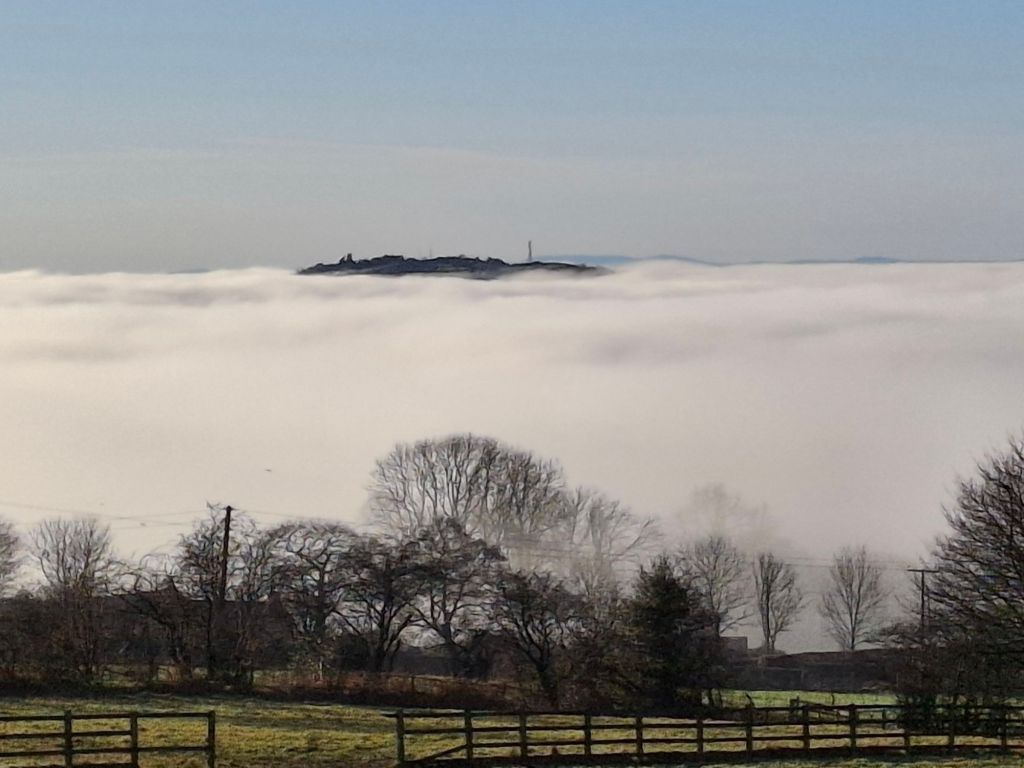
The view from our holiday house across to Mow Cop above the Macclesfield Canal engulfed in candyfloss clouds
Looking back it’s been a year of significant difference for us and also one of new opportunities.
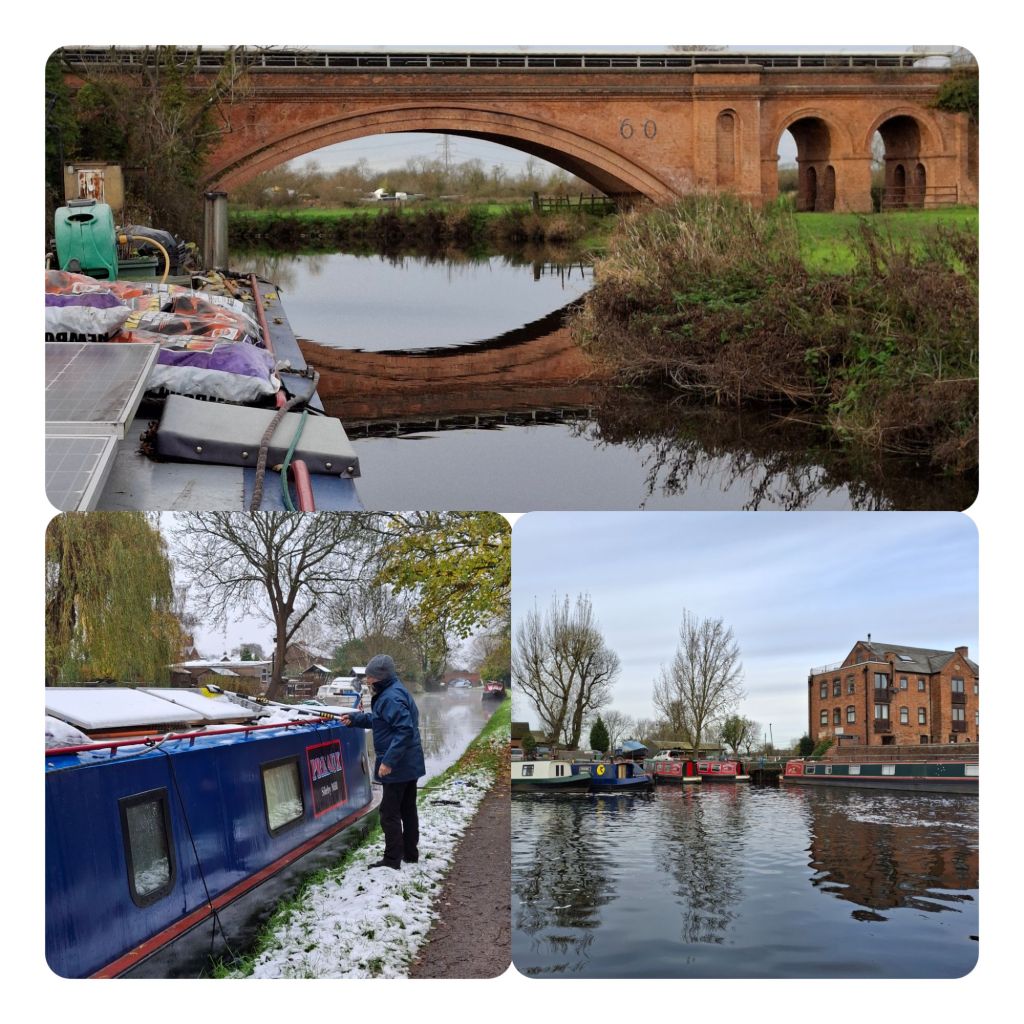
We started 2024 on the Ashby Canal, headed onto the Coventry, Trent and Mersey, Bridgewater and Leeds and Liverpool.
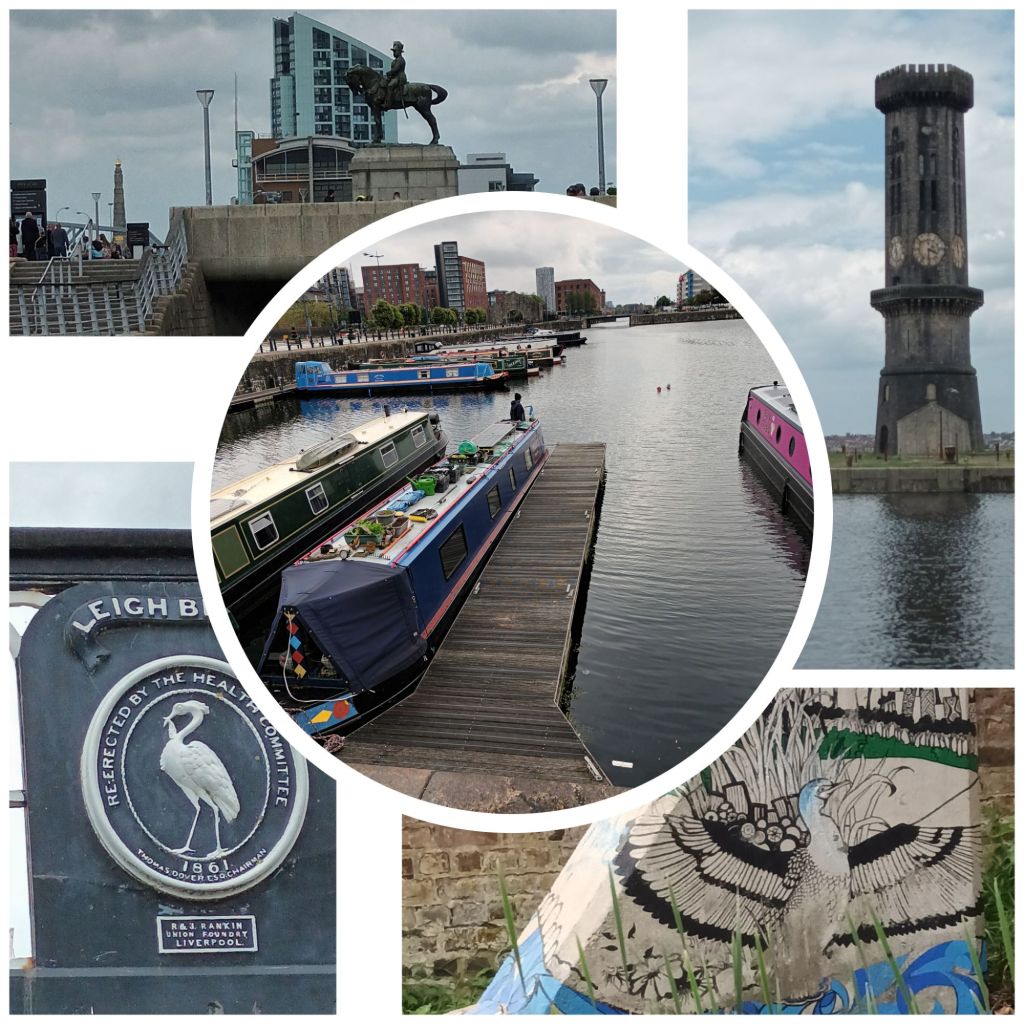
Through the late Spring and early summer, we had 3 months stationary in one place (thanks CRT for your sympathetic and accepting approach when we contacted you regarding our situation). The Leigh branch of the Leeds and Liverpool was an interesting place for the first while, but we feel we’ve explored it well now! We had a brief dash to Liverpool – an awesome experience wending our way down and round the docks.
Liverpool
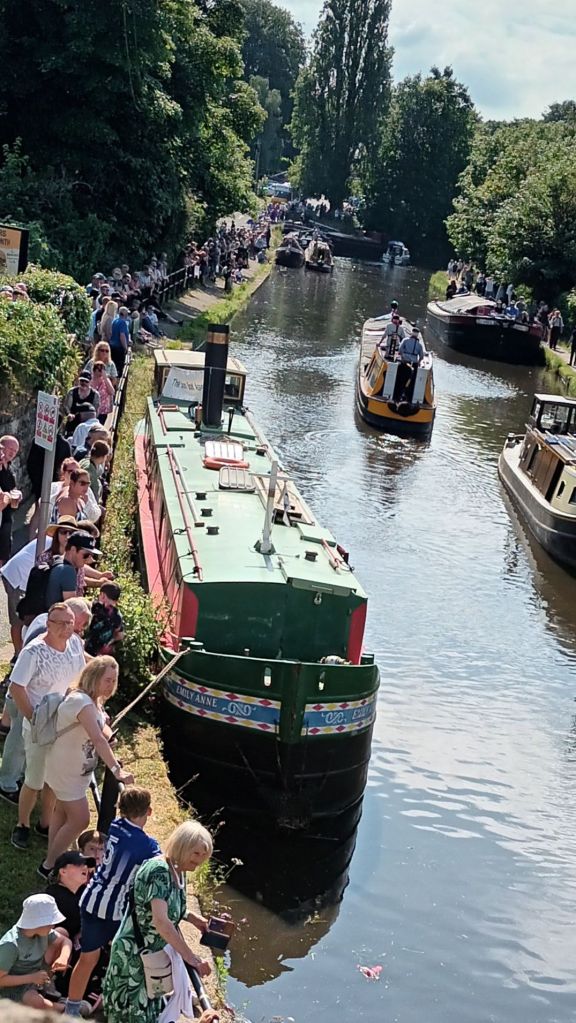
Once back we had time to see the sights of the Lymm Vintage Transport Weekend – some amazing boats to be seen.
Lymm
We also had an eventful weekend of lock-wheeling for the steam narrowboat Tixall from Venetian Marina to the top of Bosley Locks on the Macclesfield, so that’s another 47 (46 plus back down Bosley top lock) locks we worked, although they don’t feature in our regular lock summary.
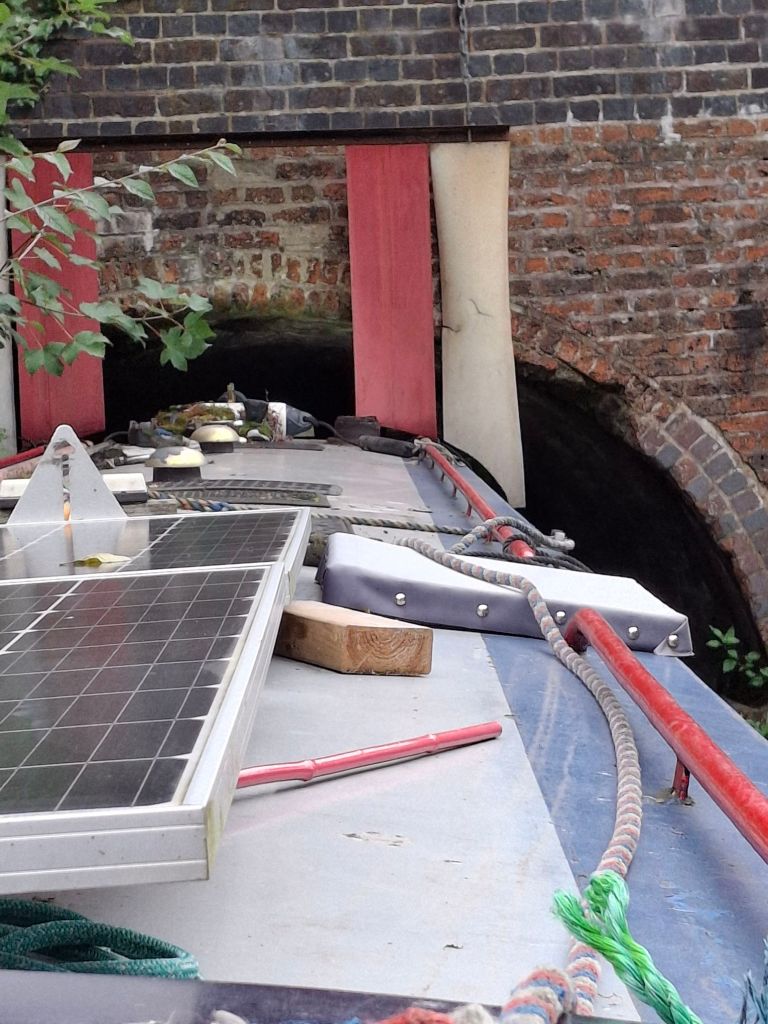
We travelled two waterways which were new to us – the Caldon in Staffordshire wending its way from Stoke-on-Trent to Leek and Froghall, and the Erewash in Derbyshire/Nottinghamshire which goes from the River Trent at Long Eaton up to Langley Mill. The Caldon gave us the excitement of Froghall Tunnel, one of the lowest challenges on the network.
Duck!
Now at the end of the year we are having another new experience – winter mooring.
So our 2024 stats compared to the previous year are
2024 2023
Miles cruised 508.75 909.75
Locks completed 288 479
Tunnels 12 8
Distance underground 6 miles 8 miles
The winter mooring finds us on a river – not always a brilliant idea but it’s a CRT mooring and they don’t tend to allow people to take up moorings in dangerous places…
Back on the Soar ❤️
After the first month in one place on the Soar we are getting used to not moving every day because time flies due to the delight of being able to be more involved with our grandson. We’ve also taken the opportunity to at last join Canal River Trust as official volunteers which is great. It allows us to more fully appreciate the work of the volunteer task force who are so vital to our waterways. One total delight is the opportunity to be grandparents who collect from school, get involved in supporting school activities, and supporting football matches in mud and miserable weather! BLISS🤣
Looking ahead, when we leave our winter mooring in the spring, we are heading for pastures new to us, hoping to catch up with yet more friends and family on the way.
More info on our route next week when our planning has started in earnest. We look forward to taking you along with us as we chug our way through another year working, living afloat, and hopefully now volunteering as we go.
We hope 2025 brings you all peace, lots to see of interest, some excitement, safe moorings, clear routes, and working locks. Oh, and the opportunity for some relaxation!
Living and working afloat isn’t stressless or plain sailing, but it is full of wonder, surprise, and physical achievements. All of these are uplifting. Combined with slow travel with a top speed of 4 mph, it is a calm way to live. We are very fortunate in many ways. So this year, your Christmas card is going to CALM – the Campaign against Living Miserably to support their vital work, preventing suicide by enabling more people to have hope and calm in their lives.
We know Christmas is not an easy time for everyone, but we are incredibly grateful this year for all we have.
What a week – reunions and wonderful Christmas meals with family, colleagues and friends, rising flood waters again, more trading, haircuts, nativity performances creating proud tears and near hysterical laughter, final makes and preparations all leading to what will be a very special time for us with family who have supported us above and beyond through an unexpectedly difficult year. Very grateful 🙏🤗❤️
Next week, we shall look back and also look ahead as we predict the future – crystal ball at the ready! In the meantime, whatever your Christmas looks like, we wish you peace, love, warmth, manageable water levels, good food, a tipple or two, a safe mooring and gentle winds.
Who knows what it was, perhaps a combination of all of the above, but we survived Storm Darragh just as we survived Storm Bert and before that earlier this season, Storm Ashley. We are not defeated or even deflated (although this is a boat nearby – not ours!).
Some have not been so lucky this past weekend. Across the inland waterways network, nearly 500 trees came down, blocking canals, as well as sinking and damaging boats. Power cables landed in some waterways, and there was widespread flooding with its accompanying damage.
Having to be away for our annual four generation family Christmas meal together at the height of the storm felt both risky and irresponsible, but the boat was moored away from trees at risk of falling. Water levels had risen during Storm Bert, and we’d stayed moored where we were, so the hope was that would be the same with Darragh. It was the winds that worried me, and I have to say the ferocity of the storm near Haydock where we spent Saturday night was far stronger than it was down here where we are moored in Leicestershire. It led to a sleepless night for me and I was grateful for reassuring storm updates from those down here. Just a little further along the Leicester Line was a different story though with trees down, navigation blocked and significant damage.
The relief of sloshing down the towpath with the dog on Sunday night (forgot my head torch so reliant on the torch on my phone) to see the shadowy outline of the boat where and as I left her was immense. Within minutes, the lights were on, the stove was lit, and the dog was curled up on a chair as close to the heat as she could make it. It was as if we had never been away, never worried, never fretted and fussed.
It nerve ceases to amaze me how quickly concerns fade. Worries dissipate rapidly as the boat rocks in the wind. I remember back to the early days when we first lived aboard I dare not sleep in storms, but lay awake worrying in the darkness as the boat was tugged and tossed by the winds and rain hammered down on the metal roof. Now, though, the velvet darkness of rural moorings I find comforting rather than menacing, and the sounds of the abating winds and drumming rain, act as white noise, sending me very soundly to sleep. If we were in an area where the risks were high, then I would have set an alarm every two hours as many boaters did over the weekend to check they were still safely afloat.
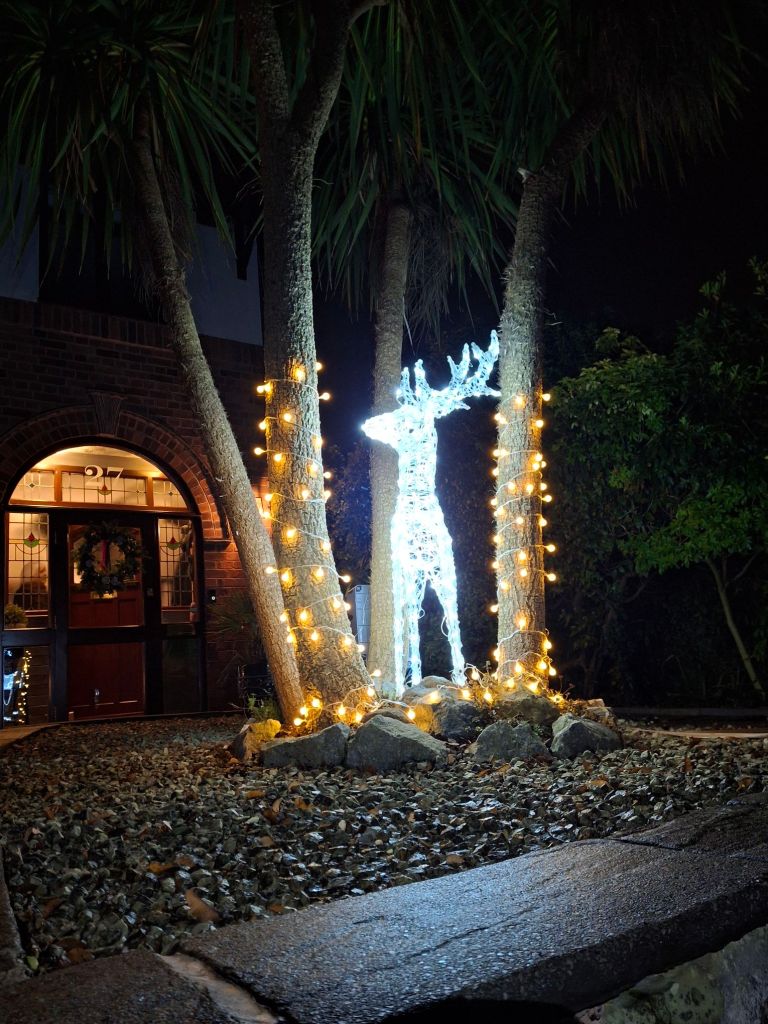
The only problem the next morning was that for us was that we had risen such a long way that water from the sink, basin, shower or washing machine was going to discharge straight onto the towpath adding to the breach puddles that had gathered! In the village above the canal sparkling reindeer keep sparkling.
Just as storms abate, the puddles and floods reduce here pretty quickly. We are situated between weirs and a lock so water can escape around us. By Thursday morning, the towpath was muddy, but not underwater in places.
This life is a living lesson – things happen, things get tossed at us, but whatever happens, we can manage. We float onto the next drama, the next crisis having learned a little more about resilience and preparation, about weathering the storms of life.
Pampered pooch has recovered
We can get through. Things will get better, just as Boatdog has recovered from her violent viral infection with help. We are a little battered, a little weaker for a time, but we recover. Trees that have fallen are gradually being removed thanks to dedicated workers, boats are being refloated, homes mopped out, and we are lucky none of us suffered directly here.
Hearing the trials of others makes us grateful, grateful we have survived unscathed. We are also grateful for the boating community and its supportive network, for having messages and calls from boaters and family checking on us. We are fortunate to be blessed in this way and fortunate to live afloat where we rise and fall with the storm.
Several times this week, boating friends have anxiously asked if I’m suffering from withdrawal symptoms or the dreaded itchy tiller syndrome, as we enter our third week moored in one place. When you’ve been used to moving the location for your home and office regularly, seeing new signs and new sights almost every day, staying put can be a bit of a shock to the system.
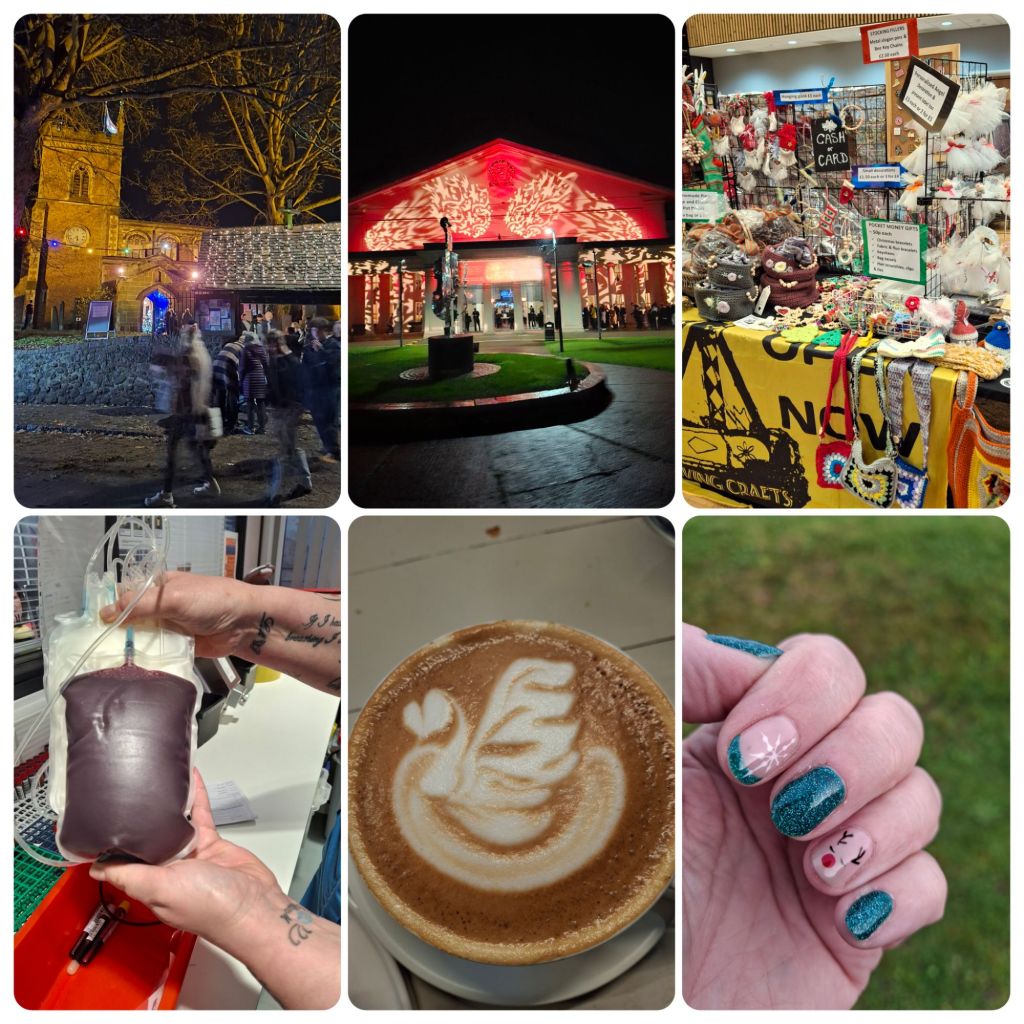
But because we chose a winter mooring so we could be close to an area we knew well, our lives have been delightfully full. There’s been regular professional work, the opportunity for busy craft fairs indoors, and the chance to catch up with things that can take a bit of organising when we are constantly moving. That means dental appointments, hair cuts for all three of us, as well as a bit of pre-Christmas giving in the shape of blood donation, indulging in festive nails and a night out in the city. It also means we are able to collect a certain special small person from school regularly, watch football matches, take part in school activities, and enjoy being read to as part of homework.
I’ve been hugely grateful this week particularly for being in one place as Boatdog became unwell last weekend and that’s meant interrupted sleep as her insistent need to go out meant I was scrabbling for clothes and a head torch at all hours of the night. (After the first night, I left clothes and a torch within arms reach to speed the process up and enable me to go out in something a bit more substantial than pyjamas, walking boots, and a coat!)
Better now ❤️
It helped being in one place for continuity of veterinary treatment for what has turned out to be a nasty virus, and cruising with a dog that needs to leave the boat at short notice is never easy so that’s another advantage of being moored up. Boatdog is now fortunately back to her normal self, and I’ve learned that tuna chunks are brilliant for getting pills down a suspicious eater.
The river briefly went out of the red, and we had a flurry of workboats and narrowboats taking advantage of the opening of navigation. We are now firmly back in the red, and as I write, water levels are rising once more. As Storm Darragh looms I’ve battened down the hatches, removed things that might blow away and will be keeping my fingers crossed that our annual multi-generational family Christmas get together won’t be interrupted by a call saying the boat has left our mooring in the storm.
On one of the lovely days of this week, we took a long reverse to the water point. We have regular journeys to the waste disposal points and a fairly constant surveillance of the boats batteries, which are failing fast. We were expecting the new batteries that are on order to appear later this month, but now we’ve been told they won’t be here until some point in January. It’s just one of those things of living off-grid that we now need to nurse the batteries we have for longer. We aren’t getting significant solar for them at the moment so we aren’t nurturing them, reducing drain on them, and being forced to charge them with the engine on an (unusual for us) daily basis.
We are enjoying discovering more of the local history in this area on regular walks, and we have managed something we’ve been longing to do. Finally, we have been signed up officially as Canal and River Trust volunteers. Next week will see us getting our hands dirty seeing the river from yet another perspective.
So we’re managing to keep busy! We hope that this latest storm leaves you (and us) safe.
We have been on our first winter mooring for near a fortnight now, and strangely, it doesn’t seem anywhere near that long. There has been much to do for work and family as well as the many additional tasks that Storms Bert and Conall have created for boat dwellers and many others.
How time flies when you’re having fun and watching water levels! We need to keep on top of things – quite literally as we don’t want to drift off…or sink. Sadly, there have been some boats lost in this storm on the inland waterways, and so we monitor our mooring ropes and the mooring pins we are having to use to secure our home. The pins are fixed into an increasingly soggy bank, and during Bert, they were partly submerged as water levels rose.
Navigation on the River Soar has been stopped, resumed and stopped again as it is now during the time we’ve been here because the river is in flood, as the result of snowmelt and heavy rain adding to already high water levels. Flood plains were already saturated.
For us, the storms and rising waters have been mildly inconvenient, but for some, they and the trees brought down by accompanying winds, have been devastating. We need to know that perspective to feel hugely grateful. Our doormat which we place on the towpath as an indicator for us and the dogs of where to step to has got further away as the boat has risen on the waters and we began having to jump down to it before the waters covered it, and we resorted to the raised step doormat which so far has stayed dry on top. There have been a few breaches of the river onto the towpath, but we haven’t had to bring in scaffolding poles to put between the boat and the towpath to avoid us being washed onto the ground. Getting a grounded boat back into the water can be a risky manoeuvre.
That was a field the week before last…
It may sound alarming, but we knew it might be like this. We used to live near the Soar in the next village along its meandering (now flooded) path. We know it can flood. We know it comes up rapidly and equally can descend the same way, we also know this mooring is between sluices, weirs and a lock so there are opportunities around us for the water to dissipate and disperse fairly safely. Several roads in the villages around have been flooded and made impassable, so it isn’t just navigation that’s been stopped.
From our perspective, then, informed by experience, this is what we were expecting. We knew before we got here that we needed to be aware and alert to possible flooding in the area. We know that if it gets worse, we could move further towards the lock where there are mooring opportunities that won’t involve pins hammered into saturated ground, but we haven’t got there yet.
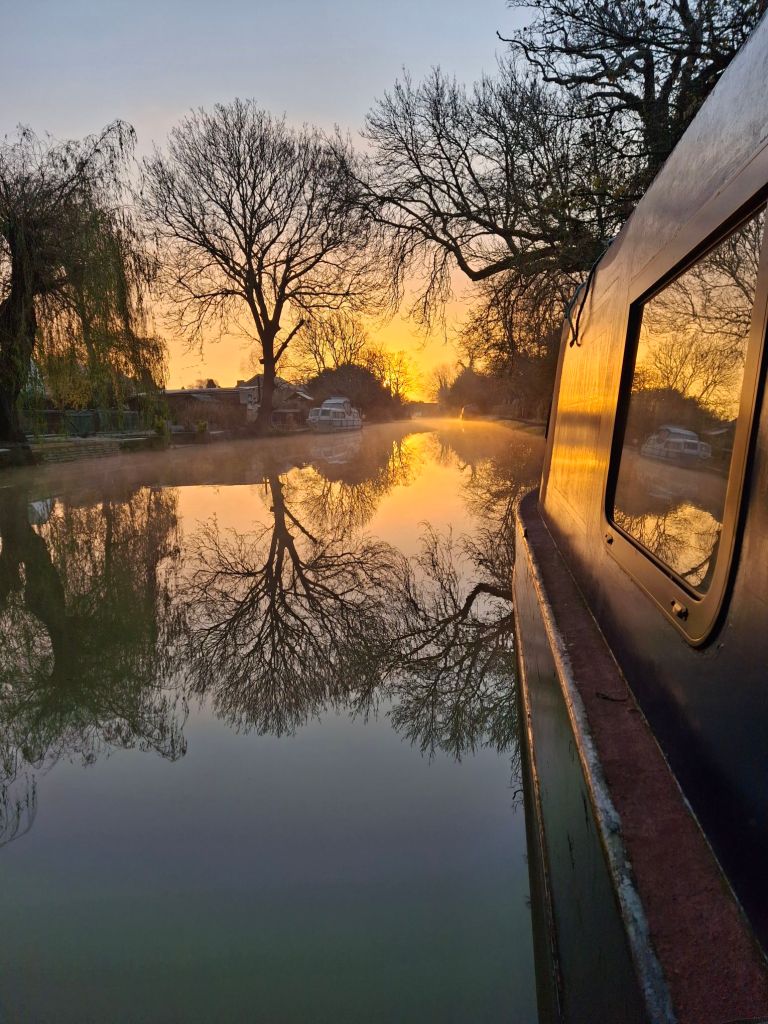
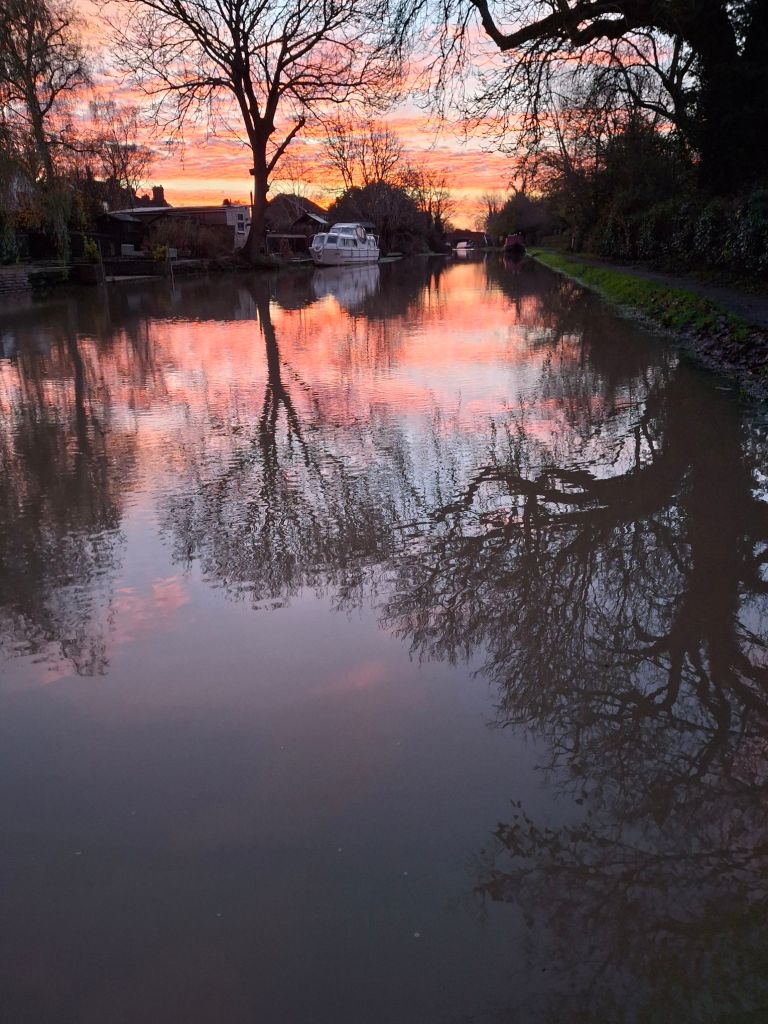
At the same time, when the rain stops, this is a stunning mooring – particularly at sunrise. Many people have commented on social media about the beauty of the sunrises I’ve been lucky enough to see and share (what they haven’t seen is the full perspective of mud and disappearing mooring ropes on the far side of the boat just out of view!). But it is important we see the beautiful perspective – the glorious reds and golds that help put the sogginess and state of alert in perspective.
It is also hugely convenient (despite the water levels). We are getting the perspective of being hands-on grandparents regularly collecting from school, cheering from soggy sidelines at Sunday league football, and just being close by. We can enjoy supporting both daughters and their partners on a more casual, regular basis. Chats over a cuppa or helping out with projects are easier living nearby. This week, I went into school to share the nostalgic delights with 7- year olds of making angels from paper plates, colouring and glueing paper chains and folding, and cutting paper snowflakes. I’m still finding pva glue and felt tip on my hands, but thank heavens that glitter has been recognised for the environmental nightmare it is! The perspective of a small girl I helped this week, though, was that the sparkly stuff was what would make her angel a ‘real’ one and not just a paper plate one!
And we have begun the process of signing up to get a new perspective on the charitable organisation that oversees the canals and some rivers. Canal and River Trust (CRT) relies heavily on volunteers to support the work it undertakes on many fronts, and we have signed up to help in the East Midlands whilst we are here. Hopefully, that means we can continue to support volunteers as we move on next year as well, and it will give us new insight and new perspectives that are invaluable to get a more rounded picture. This week’s online Boater Forum from CRT gave us new perspectives on the winter stoppages programme of works, the intense planning for the repairs carried out during it, and the complexities for the teams involved not least because of the unpredictable weather conditions.
This Sunday, whatever the weather I’m trading. On land under cover, fortunately – at the Mountsorrel Memorial Centre for the Christmas Lights Switch On. My perspective will be one of sparkly festive fun in the dry, whatever is happening outside. If you are in the Leicestershire area on Sunday, do come and say hello to me (and Santa, too). Wherever you are this weekend and whatever you are doing, stay safe and seek out a new perspective to give you a new view on life, work, and the world we share.
Setting a goal and being thwarted can be a challenge. We’ve been thwarted many times in our aim to reach our first ever winter mooring, but last Saturday was the first chance for us to try and make the trip across and up a river to reach our spot – and we went for it.
We started later than intended on Saturday morning, being unsure if the first lock that had been shut since September was actually open or not. Canal and River Trust had said it should have been opened at 4pm on the Friday, but no update appeared electronically to give the green light. Our aim was to go and see if it was open, and if it was, to keep going on through that and the next few locks until we reached the one which Canal and River Trust categorically said was shut because it wouldn’t equalise. That meant we would have to sit on the river somewhere near Zouch (pron. Zotch) or on the lock landing until the lock was fixed and available for use – never idea.
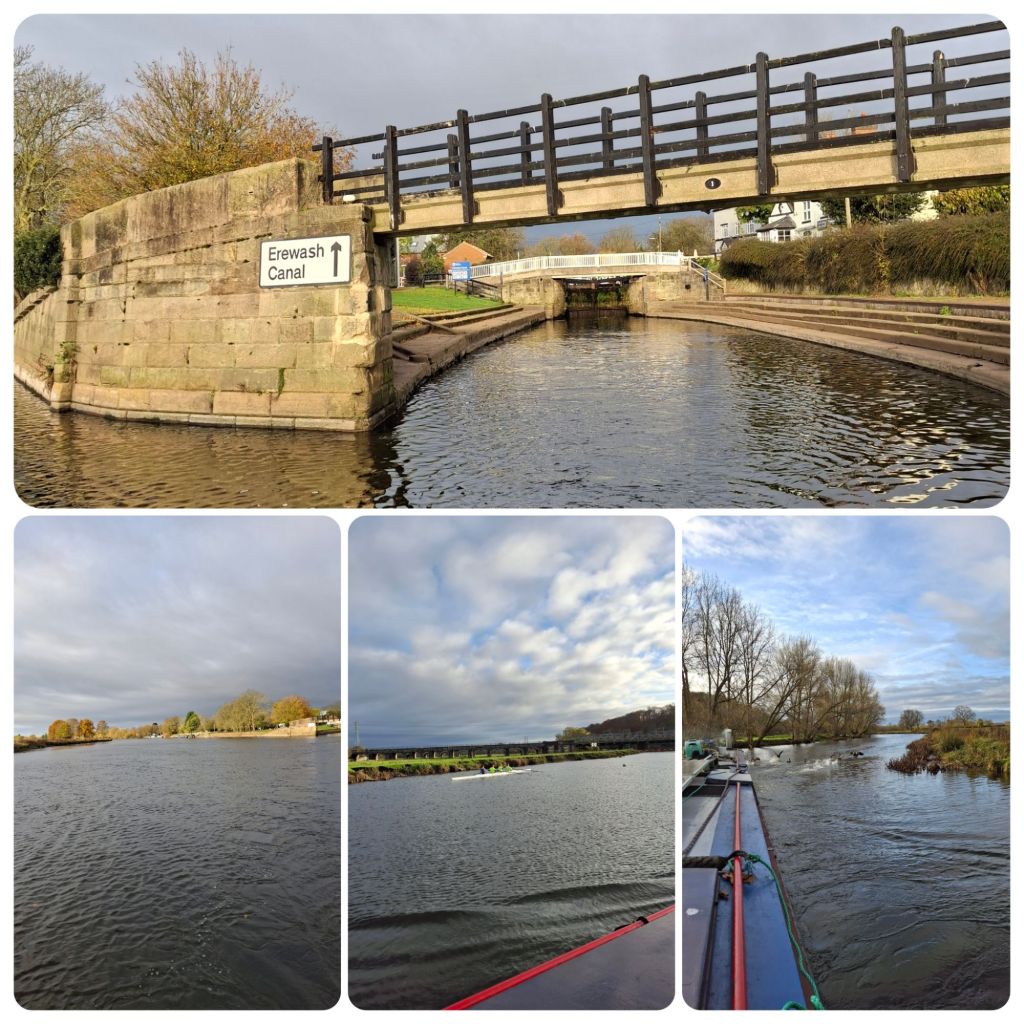
So we bid farewell to the Erewash, and did a slalom round Saturday morning rowers enjoying the Trent as we crossed to the River Soar. Canada geese, who’ve had the river much to themselves for the past two months seemed startled by our presence, taking off in flurries and landing just ahead of us time and time again. As we got alongside the residential boats at Red Hill Marina, people were leaning out to ask ‘Is it open?’ We gave the only reply we could – that if it wasn’t we’d see them again very soon!
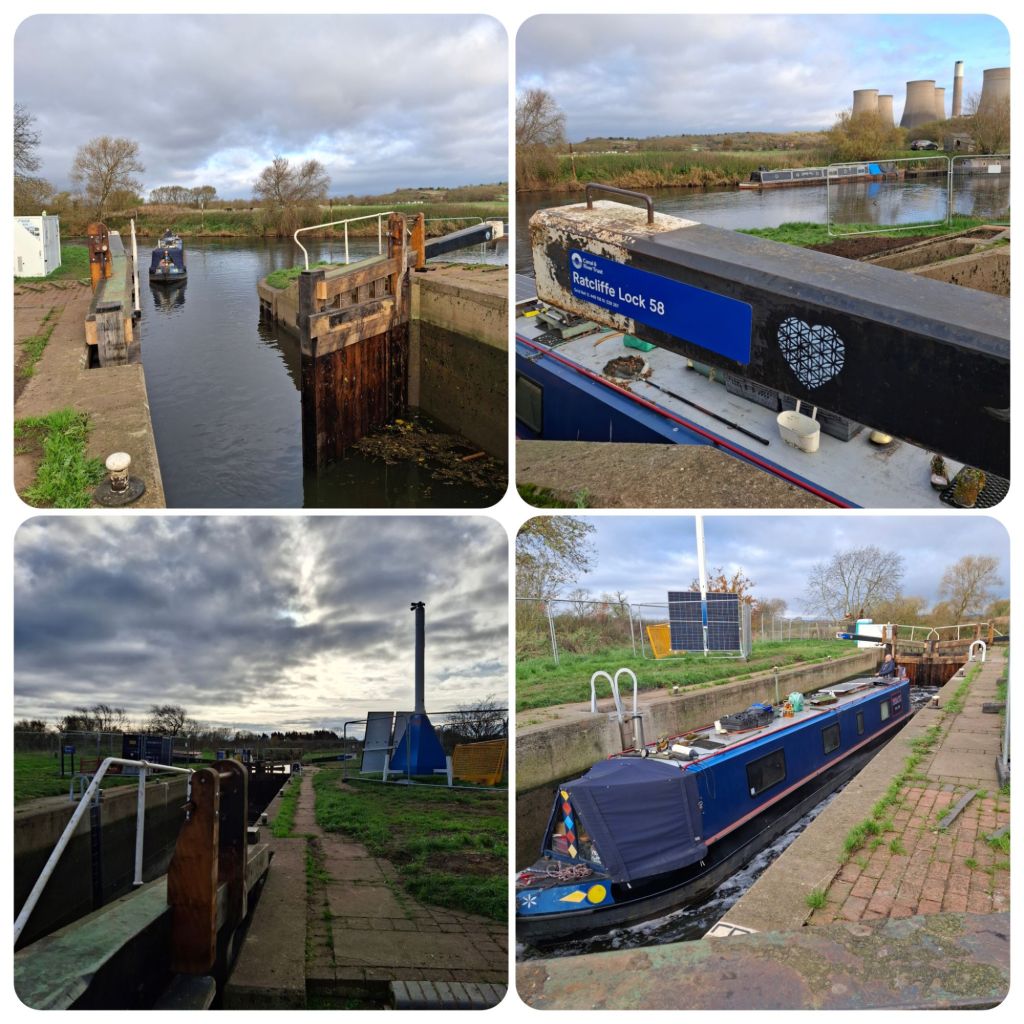
Approaching Ratcliffe Lock we could see workboats still alongside the landing area and catch fencing still in place. I felt deflated as I stepped off onto a workboat and made my way towards the fencing, but then suddenly I saw another boater operating the lock. Despite me yelling for her to save her efforts and leave the gate for us, she carefully closed it behind her boat before turning and ruefully pulling a face as she spotted me. At least it meant the lock was open for businesd do I really didn’t care that I then had to battle the heavy gate to get it open for Preaux.
We were in, up and though – our progress noisily monitored by the vocal security cameras on site. And then we were heading towards Kegworth, through the flood lock, and approaching the deep New Lock. Suddenly, we were seeing boats coming the other way. Like travellers of old, we shouted between each other to find out the lie of the land ahead, to discover they had all come through the apparently unusable Zouch Lock that morning. In an instant, our journey took on a new perspective. Instead of sitting on a river for an undeterminate amount of time until a repair was carried out with rain in the immediate future forecast raising the levels, it looked like we might be able to get to our mooring that very day.
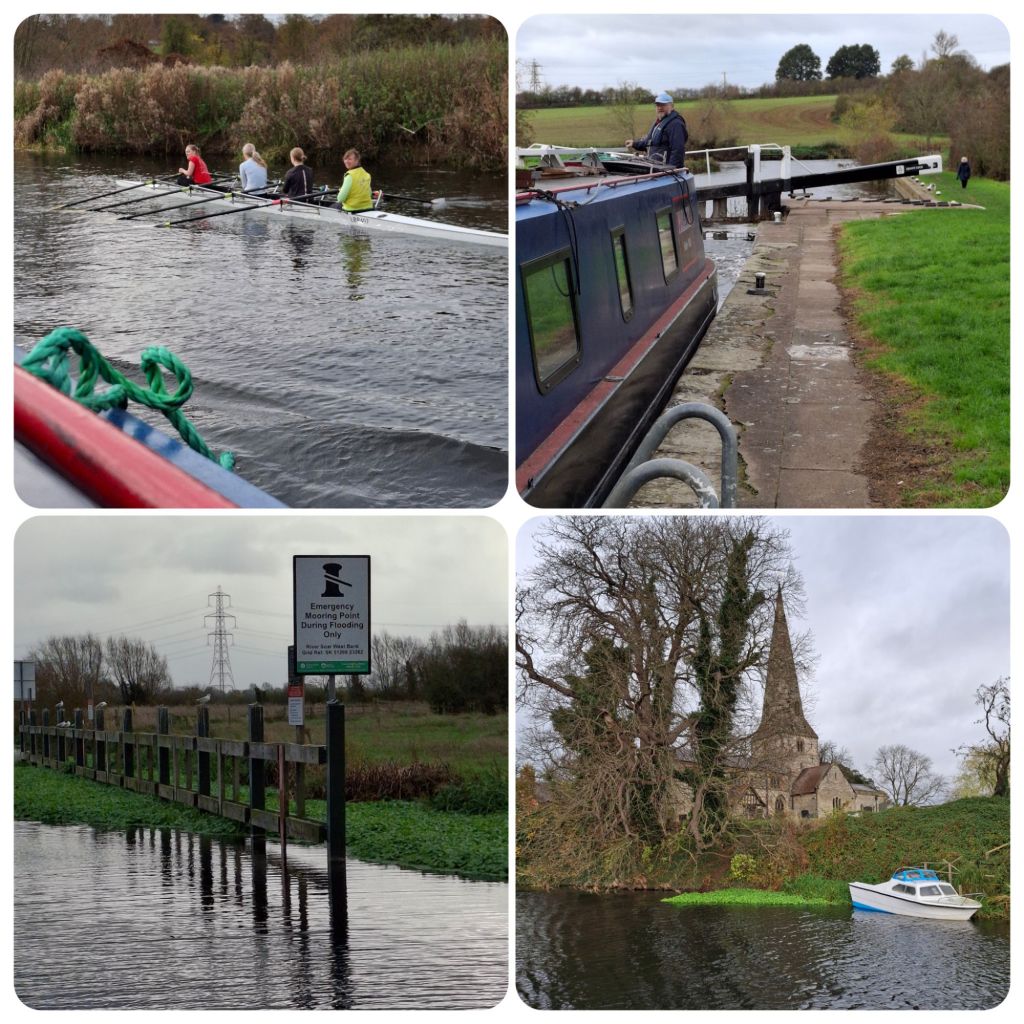
We pressed on, going slow, though, as we encountered rowers from Loughborough Boat Club. We know very well what rowers in our family used to say about narrowboats on that stretch…
As the rowers pulled ahead towards their landing stage, we turned sharp left to the lock at Zouch. It was empty, so I opened the gate, let the boat in, and began the test of whether it would actually equalise enough to let us rise and get out of the lock. There was leakage, one paddle was inoperable, but the boat rose, and with two of us shoving, we got a top gate open, and the boat was through.
On past the weirs and stilted chalets, past the emergency flood dolphins giving home to terns and rafts of invasive pennywort but luckily not needed by us or any other boats. I’m struggling to find the definitive etymology of a dolphin as a mooring point, so if anyone knows, please put me out of my misery.
On through the picturesque village of Normanton on Soar with its 12th century Church of St James and over the route of the chain ferry. It’s one of the few remaining chain ferries still operating in the UK and the last in Nottinghamshire. It was first mentioned on a map in 1771 and is still operated by volunteers every weekend afternoon between April and September. Popular with walkers, the fees used to be and probably still are £1 per person and 50p for a dog or a bicycle – a bargain for a unique experience. It also means you can walk across the fields on the far side and be ferried over to a rather good pub!
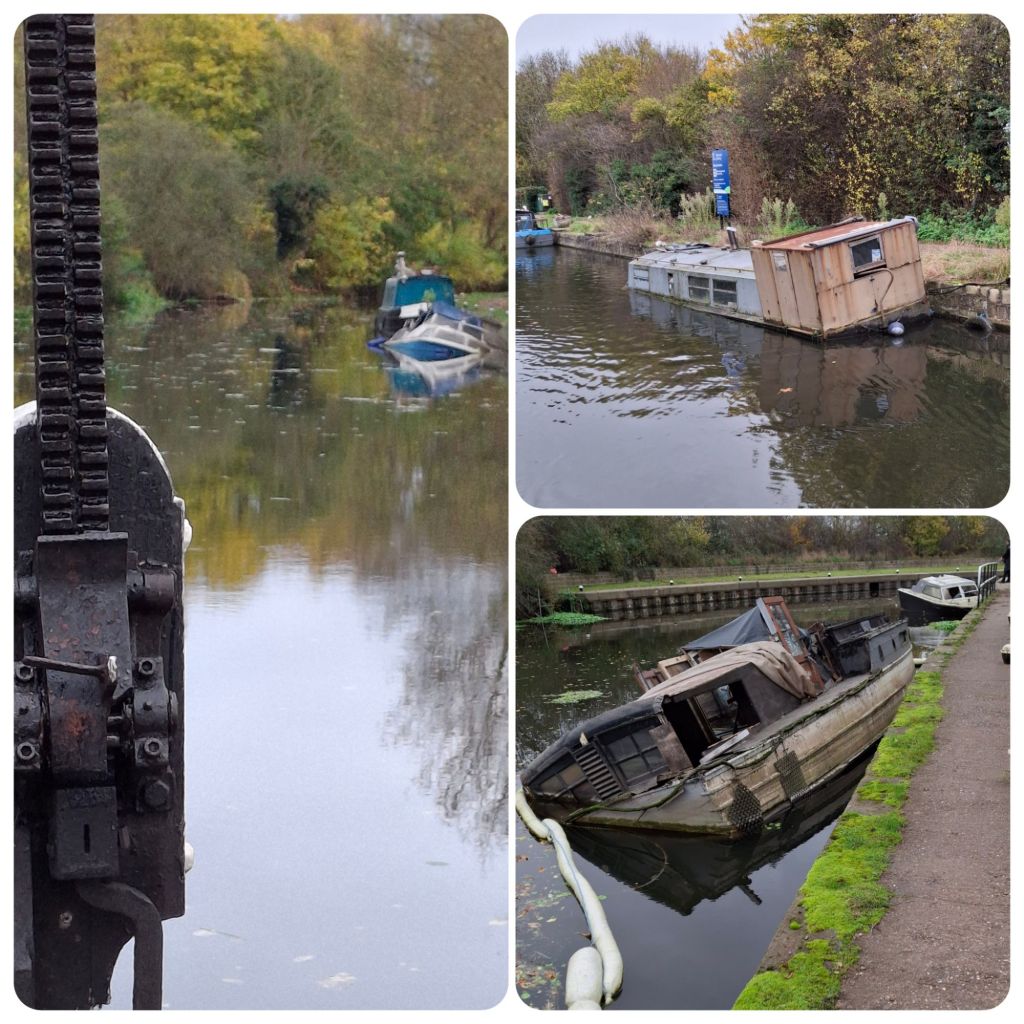
Next, we cruised alongside Dishley a bit late in the day for the parkrun we helped set up there, but now we’re back in the area forna bit we look forward to getting involved in parkruns again here. On then to Bishop Meadow Lock via an apparent boating graveyard. A very sorry sight, two boats half sunk, and yet sadly, they weren’t to be the last we saw that day. Whether the result of earlier floods, I don’t know, but the problem of boats that have sunk or partly sunk is very real on inland waterways. They aren’t cheap to raise – often in difficult to access places, requiring costly cranes to lift them out. Not every boat is insured. It’s something CRT are well aware of, and a problem they cannot afford to resolve.
They tell boaters clearly “Should your boat unfortunately sink, it’s your responsibility to salvage it, not ours.” They will check the site of the sinking for pollution containment and ensure the boat isn’t in the way of navigation, and they can put owners in touch with specialist recovery contractors but the boat owner has to foot the bill, and some just refuse to do so leaving a wreck in the water.
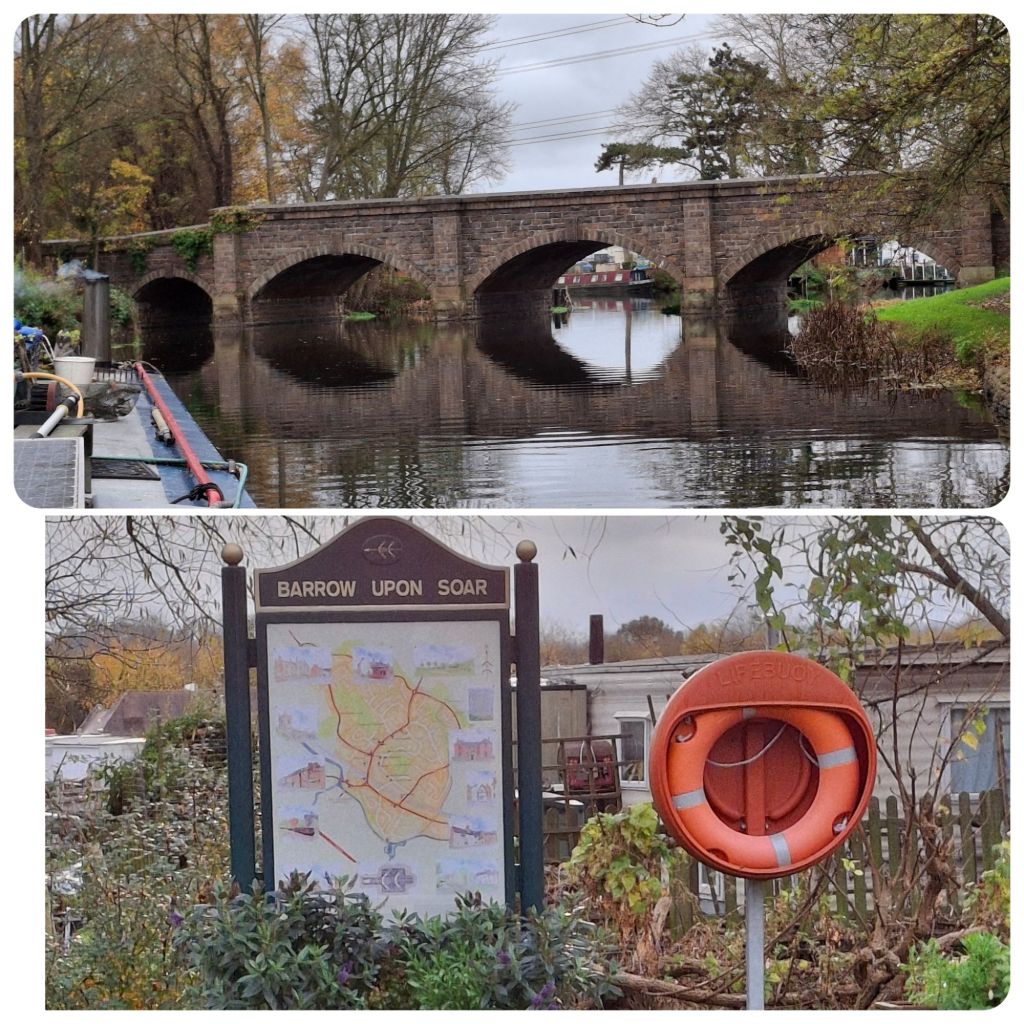
On then for us past the wrecks, past another sunk boat on the moorings after the lock, through Loughborough where the water was high, and through Pillings Flood Lock which was still open, to the impressive arches of Barrow Road Bridge. The last time I saw it, there was a sunk narrowboat rammed against the arches by the weight of floodwater, which had swept it and its mooring pontoon and slammed them against the brickwork.
Up then to Barrow Deep Lock, the last before our winter mooring. We couldn’t keep the grins from our faces. We had made it. We hadn’t expected to, but we had. We moored up with glee and headed in the gathering drizzle to one of the nearby pubs for a celebratory very late lunch (the light was beginning to fade).
A quick look at the weather forecast as we ate determined that we really couldn’t spend too many days settling in before we moved to get essential diesel and coal. Our supplies were running very low, and because our batteries are beginning to fail (reaching the end of their lives after an impressive innings), we need to be running the engine to repower the batteries and give us power to live with. Such are the delights of living off grid and at the moment there isn’t much solar most days although we still have occasional glorious bright and power-full November days. The other day I put all the washing in and no sooner had everything I the machine got wet than I had to cut the power to the machine as the battery levels plummeted alarmingly. Eventually we got enough power to get the clothes washed which was a relief. But we are nursing the batteries to keep going as the new battery installation has been delayed, and while we hope it will be sorted before Christmas, that’s a hope rather than a certainty.
Our first night on the mooring was peaceful and we were exhausted so we slept well. The next morning was a small footballer’s Sunday league match and his delight at unexpectedly seeing us join the rest of the family support team was everything we could have hoped for. He waved with glee, hurtled towards us with his arms , dropped to the ground to hug Boatdog tightly! A perfect welcome!
Since then, we have now made it up river to our former mooring at Sileby Mill for diesel and coal, so we are fully stocked for another few months and can relax. It seems we moved just in time as we’ve also had rain, snow, the river was shut to navigation when it went into flood for 48 hours, and now there’s more snow forecast. It’s been a busy week on the water!












 Pickingupducks