How to live happier and make the world better

Research says loss of a partner with whom you’ve lived for many years is often made harder to bear because of the reaction of others.

What the researchers refer to relates to the heart-rending loss of a pet. They say that often results in profound grief that is unacknowledged by those around, and this extends or prolongs the mourning period. Prolonged grief can have severe effects on our mental and physical health.

We had a tough week this week with the loss of our partner of 15 years, Cocker Cola, a spaniel without equal in our eyes. That loss has been huge but made easier by all the kind comments and sympathies which have come our way from people who knew Cola, as our dog and a volunteer at parkruns and Remembrance Parades but also from people who never met him but wanted to send us kind thoughts.

People who knew him as a pup, others who knew him as a boatdog, and many who never met him but who recognise the deep bonds we build with our pets. I am hugely grateful for the hundreds of messages, emails, tweets and WhatsApps. Taking time to extend sympathetic kindness when people could just have ignored my post in the maelstrom of social media really made a positive difference.

Cola was a working cocker whose work was to keep 3 generations of this family adored, valued and consoled over his time with us.

Into those silky black ears we have all poured troubles, excitements, hopes and fears that we didn’t want to tell others. Not once has he spilled the beans, made a comment, voiced an opinion or given advice – however well meaning. Bad days have been made good, tensions and tempers calmed by a walk with him or a chance to sit stroking his soft black fur.

Since the day in 2008 he left his mum Matty and travelled from Sally and Vic Bleming’s home to ours, he has been a constant, loyal black shadow He’s padded beside us through our homes, walks, hikes, high days and holidays. That black nose and big paws have over the years opened cupboards, doors, gates and one memorable year identified and opened all the edible gifts under the tree before Christmas.

Cola was not really ours. He was our daughter Freya’s, her 13th birthday present. When she went away to university, he stayed at home, enthusiastically welcoming her whenever she returned.

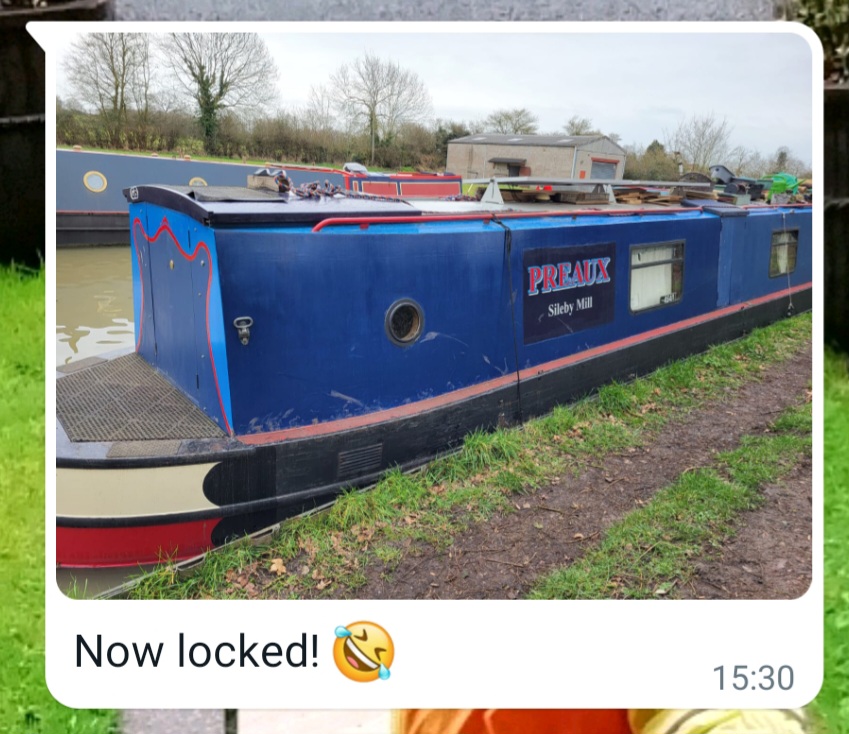
When she started work and moved away, he holidayed with her often but stayed with us, a generosity of hers for which I will always be grateful. When we moved onboard Preaux to live as continuous cruisers, Cola moved with us. As a spaniel who adored water, living on the boat was heaven.

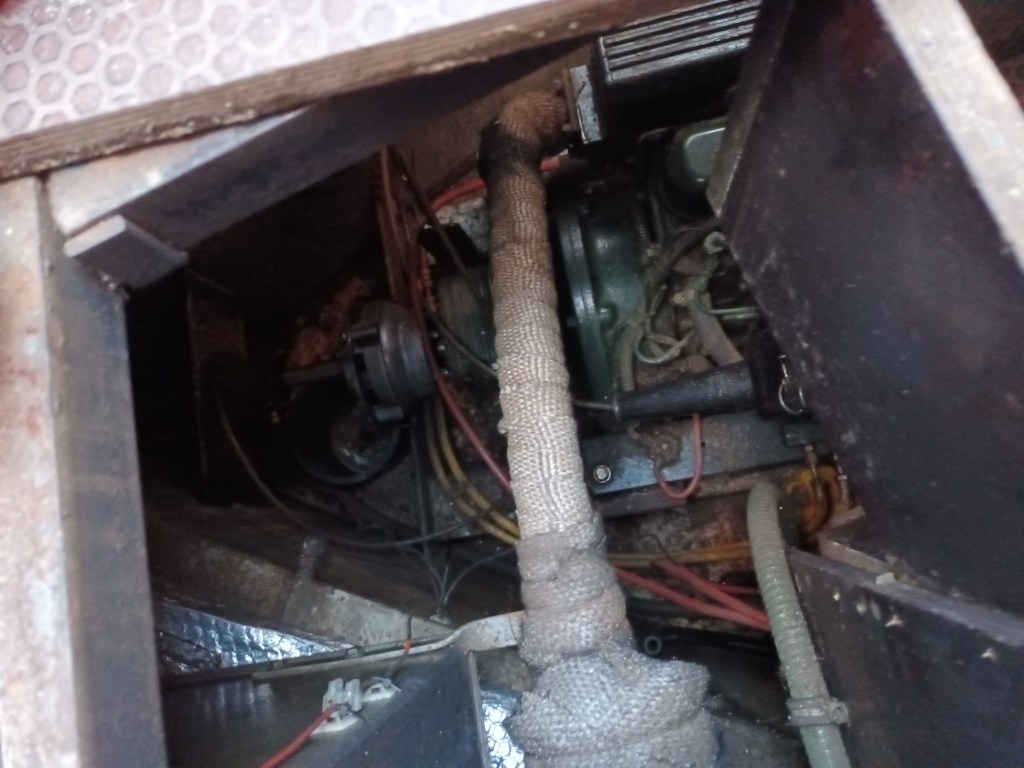
He had his own porthole where he’d sit looking out at the world as we travelled, or just looking at us. It was perfect for him – he was still with us which was always where he wanted to be, but he was also able to watch the ducks go by, and enjoy the warmth from the engine beneath the deck boards (once the smoke too when things over heated and he disappeared in a cloud, but still sat still as we rushed about like headless chickens).

He loved the long walks in ever changing places, the fact that each time he hopped off the boat he was greeted with new smells and new places to explore, things to roll in and he always shared his delights with us (whether we wanted it or not) with a generosity of spirit.

He enlivened boatlife particularly in his own indomitable way.

Our first night on board he went overboard in the darknesswhen he misjudged the jump into the bow and plungrd into an inky black flooding, swirling River Soar. Only the fact that Steve had him on a lead meant he wasn’t swept away. We finally landed him, a sodden mass back on board by getting a towel underneath him and using it as a hoist.

He’s always hurled himself deliberately with glee into rivers and canals – always keen for a dip. In more recent years, as his brain and eyesight have dimmed, he’s become a bit of a liability. Sometimes, he’d forget which way we’d moored and fail to seek out the towpath side before jumping off the back of the boat… more recently, he’d stop on the canalside, and his old legs would give way with a wobble, and he’d fall in with a splash.

Fishing him out seemed a small price to pay for all his unquestioning companionship. To towel him off, and not mind when he shook himself all over us, and embued the boat with the unique aroma of canal-water-wet dog.

Over the years he’s recultivated gardens, retrieved our chickens and shoes (always singly, never in pairs), dropped single shoes overboard and developed a singular reputation for his one bad habit of stealing food from plates, pockets, handbags and sometimes out of people’s hands (often without them even noticing).

Protector on guard

He loved mud, muck, water, FOOD (the capitals are his) and unquestionably all of us. Three generations of our family have benefited from his hairy embraces and protection. He’s been a favourite with dog lovers and even won over non-canine enthusiasts. He adored us all, never bothered about how we looked or felt – he just wanted to be with us.

When pets are with you day in, day out, when you work from home particularly as we do, in a small space, they are the most important compananion. The most constant, uncritical and enthusiastic of friends. They are a reassuring  presence of good in our lives.

He aged rapidly at the end. He slept for England – often having often having to be lifted onto his favoured sleeping spot – the sofa.

Towards the end he became doubly incontinent. Our furniture took on a strange crackling sound from its waterproof covers. He often to be carried to places when his legs gave out. That just seemed a small repayment for all the good times he gave us still.

The arthritis pain never made him grumpy, even when it made walking, which he loved, a real struggle sometimes. His bad days began to outweigh the good, his hearing left him in a quiet world where fireworks no longer bothered him but equally he could no longer hear the rustle of a wrapper in the kitchen. However, try opening a packet of biscuits to indulge quietly, and you would fail to remain alone for long. That nose would nudge the back of your knee in hope – his sense of smell never deserted him. When his tail stopped wagging, he signalled his end.

This dog taught me patience, gratitude, and a real joy for life every day of his 15 years with us. Not once did he complain or sulk, or greet us with anything but glee.

His legacy is simple:

  • Be unfailingly, uncritically supportive of those around you.
  • Enthuse over important things like food, long country walks, wild swimming, a comfy sofa, warm fires, and good company.
  • Show and share your pleasure with others.
In younger times

Let’s all make life better for ourselves and those around us at home and at work – let’s just be more Cola.

Farcical planning – a feelgood essential right now

Sleep has come easily this week. As the rain regularly patters or thunders on the metal roof of our home, it becomes the only sound – white noise that drowns everything out and sends you to sleep. On the other side of the coin, when you wake in the velvety darkness wondering what woke you, it takes a moment to realise the cessation of the rain and lack of noise is the answer. Roll over and the resulting gentle rocking of the boat lulls you back to sleep.

When it rains like this, our regular nighttime owl chorus falls silent. Maybe they can’t compete or are too busy staying warm and dry like us. In the day, the birds are also hushed or drowned out with the exception of the ducks who delight in chattering away in the showers.

During the day as water pools on the towpath alongside, and streams chase down the windows obscuring the view, when going out for long walks seems too great a palaver – waterproof trousers, coat, boots, hat, gloves – I’ve been planning and it seems utterly farcical. I’ve been planning for a drought.

Planning ahead to better, brighter times is essential at this low point of the year.

Last year, things got very bright as the year progressed. Temperatures rose and rose as we all know, and at times, the metal shell of our home was just too hot to touch outside. That put paid to the veg garden on the roof such as it was. The garden was also hit by a double blow – low coal usage last winter.

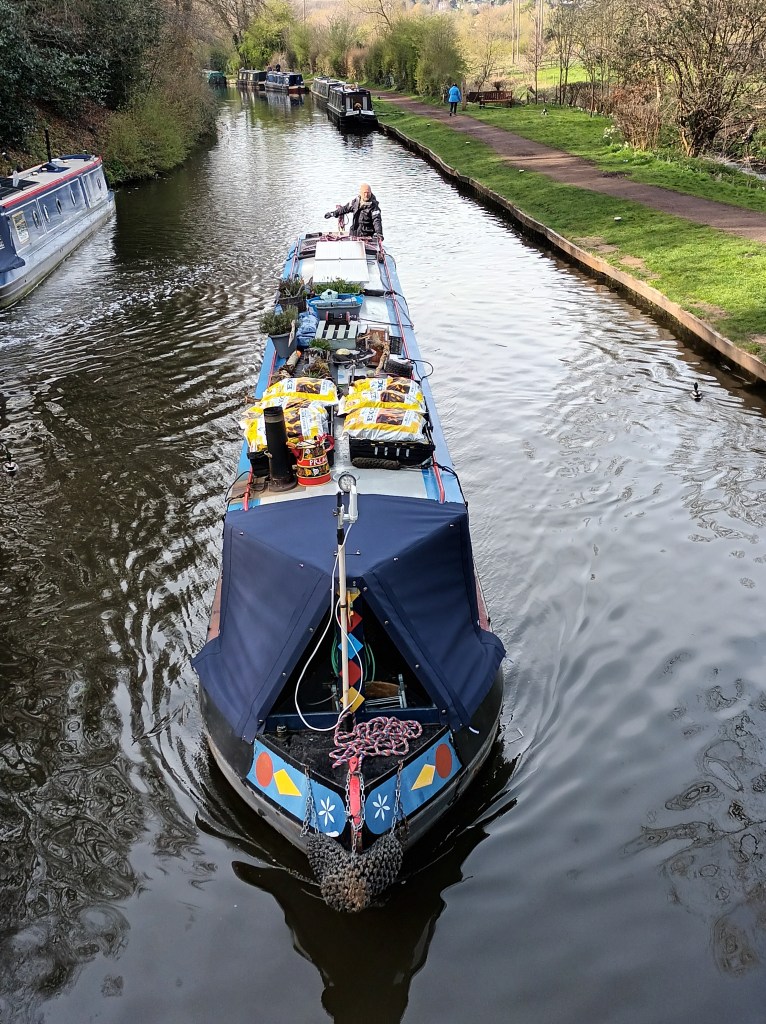
We upcycle between 4 and 6 supermarket bread trays into dual-purpose roof containers on our boat – coal bag/wood store by winter and roof garden containers for spring, summer, and part of autumn. Last year, coal took up most trays, leaving only a couple for the garden. Those couple were duly planted with spinach, and lettuce, the cut-and-come-again crops, which usually work well in a limited space. But then temperatures rose and kept rising. Plant foliage baked from above and roots roasted from below. Water levels dropped and taking water, even a bucket or two to feed plants, when every drop might mean continued navigation seemed selfish. I gave up and so did they.

2022 😩

As rain pools around me (fortunately outside) I am planning for drought and empty coal trays for a productive roof garden again. It needs to be productive in a low growing sort of way – learned my lesson in the past with a hugely successful potato bag which grew like topsy. So well did it grow that we had to remove it from the roof because we could no longer see round it to navigate safely. It became a daily workout, moving it into the cratch, onto the towpath when we moored and back aboard before moving off.

2021 was a good roof gardening year – nite the potatoes at the side off the boat!

Its demise came before the longest, deepest and highest tunnel above sea-level, the mighty 3.5 mile Stanedge. To ensure safe passage everything has to come off the roof into the boat, all equipment and plants. There was just nowhere for the potatoes and nothing to do but to harvest them which gave us spuds aplenty!
For safe navigation and productive gardening this year I shall stick to low-growing, drought resistant planting. Thrillers, spillers and fillers will still be the planting plan – something to delight the eye and the stomach, to add insulation to the roof and keep the inside cooler than it might otherwise be. There may be a bucket or two to complement the growing trays and add (limited) depth. I just want to create a lush, productive roof garden once more.

2021

Lots of mulch and dense planting of drought resistant and drought hardy crops will be the order of the day.

So what to grow? Herbs like creeping thyme, the only salad crop will be rocket and tunbling nasturtiums will bring colour to the roof as well as a delicious peppery tang to salad bowls. Chillies, miniature Bell peppers and mini aubergines from plugs stand a chance of producing something.

Beetroot, carrots, and parsnips can do well because they are grown deep in soil, but to be deep enough means sourcing and sustaining bigger containers which can make navigation tricky. Buying that veg in is likely to be cheaper than taking up growing space for a long time to produce them in what really is limited space. Chard could be productive in their space instead, a cut and come again crops. Tumbling cherry tomatoes can work, if I’m prepared to water them without guilt.

Scorched survivors

Splashes of colour not only attract insects away from inside the boat but are essential for passing bees. So sunshine yellow bidens, (beggar ticks) and maybe the blue swan river daisy brachyscome. Pelargonium survived last year and distract insects. Sedums grow well on the roof in old boits and containers. I’ll also add some cornflowers I have and as many herbs as I can. If anyone has any other ideas – please share in comments!
Buying good seed or plants is a sensible investment. My first stop for flower seeds for cut flowers and I highly recommend it to all gardeners, boating or land based, would be Higgledy Garden. https://higgledygarden.com/ Boat dweller Ben and his sidekick Flash do an excellent job for us all, and particularly for bees so do buy from them when you can.

Garden goals!

We all benefit from planning and thinking ahead from having goals large and small. As Blue Monday looms, I recommend forward planning for work, life, and leisure as a positive, productive, and pleasant as well as essential way to spend a wet hour or two.

Diurnal wobble and other experiences

It’s been a strange first week of the year – combining unsettling new lessons and exciting experiences, with comforting returns to familiarity. All giving a chance to learn, reflect, and move better equipped into the months ahead.

We started the week on the Coventry Canal at Fradley Junction. The Mucky Duck aka The Swan proved an excellent place to share a celebratory New Year’s Eve drink or two with fellow boaters and the temptation to cruise on a crisp sunny New Year’s Day proved a delightful start to 2023. That took us onto the Birmingham and Fazeley Canal at Hopwas.

Set against the backdrop of ancient woodland now a military firing range, Hopwas is a delight. I say that despite having been caught out and locked in the firing range on a live firing day when out for a walk with the dog on our first stay there. Through locked gates, friendly locals gave escape directions whilst gently pointing out for future visits the need to look for the big red warning flag fluttering beside us…

No festive red flag flying this time!

The army was obviously on festive leave or strike duty this week, so the woods were safe. We didn’t have too much time to explore, with work on two days, one demanding a long drive on multiple motorways. As soon as work finished, we fixed the tiller pole, popped Jemima Puddleduck, our tiller pin in place, and set off once more.

By Fazeley junction we were back on the Coventry Canal, and from this approach it is possible to really enjoy Steve Edwards’s giant murals of a kingfisher and robin which he created in 2014 on the side of a timber yard. They’ve now been joined by a lively chaffinch and bullfinch created by artists from New Urban ERA UK.

Along this stretch of the canal, as with so much structure in urban areas, murals have been created as a response to graffiti, an example of what urban art can be. In many places this has worked – Birmingham, Leicester and Oxford being particular examples where stunning art enlivens buildings and cheers gloomy bridge holes. They are brilliant demonstrations turning negatives into positives, something we can all strive to do this year.

Splashes of colour en route this week have come from nature too. Large and small displays of vibrant beauty have cheered what can be a dreicht time of the year.

From Hopwas via the Glascote locks where we met some helpful bored young men only to happy to help push lock beams open, to Polesworth offering pub and poetry – neither of which we were tempted to take up – one illegible, the other a casualty of dry January.

From Polesworth – a glorious ascent of Atherstone’s 11 locks in sunshine with every single one in our favour and voluntary lock keepers to aid at the top. Such simple delights put a rosy glow on any day of cruising and they could be our last locks for a month or two!

On then past many moored boats, some coldly lonely, others with puffing chimneys indicating inhabitants warm and cosy inside, to a blissful mooring spot in woodland below Mount Judd ( also known as the Nuneaton Nipple). This man made mountain of spoil from what was once Judkins’ quarry has settled to become a local landmark, and it’s certainly useful as a location guide.

The barking of foxes and calls of owls in the woods beside us were the only sounds to be heard at night, and the moon the only light. Our original idea of a very early start to make the most of the time available to move before work meetings was delightfully delayed by the diurnal wobble. After the shortest day we think it’s going to become lighter but there’s a wobble for a week or two until things settle down. It was really apparent in the clear skies round the dark woods.

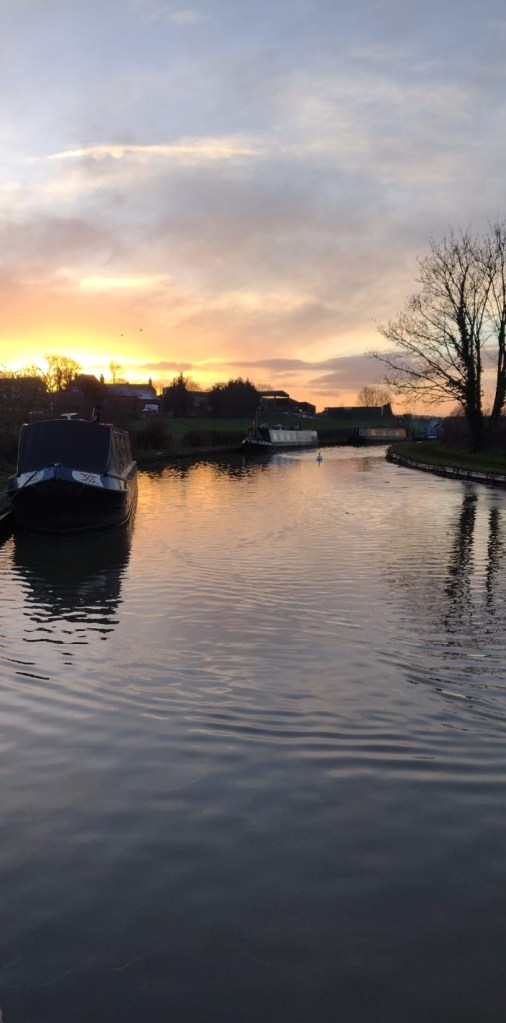
We’ve left some mornings at 7.30am recently and been able to see well to navigate our way, but not so on a Friday. This was the scene at the back of the boat at 7.18am

And this the scene at 7.34

By 8.04 our commute was underway, to the glorious accompaniment of the sunrise.

Past the telegraph pole, a landmark in its own right that appears on maps.

The nearer you get along the canal to Mount Judd, and the nearer to Nuneaton, the more apparent is the encroachment of man to the environment. Quarrying has ceased there now, and the area is rich in wildlife, although also sadly in litter, some remaining from pre-2009 when the quarry was a landfill site.

Our cruise brought us on to yet another canal – the lock-free Ashby.

A fondly familiar haunt, which I seem to remember saying we wouldn’t cruise again in winter because it’s narrow towpaths turn into a sea of mud, but here we are! We have wellies, and the dog at his great age retains a semblance of 4-paw drive!

The mud will give us a chance to remember fondly drier days and probably deliver the intention that the only mark we travellers should leave behind us is our footprints.

Go slow in 2023

We float peacefully into yet another year in a world overshadowed by conflict, disputes and environmental threats. Sometimes it can seem that there is little we can do but we do all have a chance to reflect and reset our personal compasses for the year ahead to make a difference.

Aboard nb Preaux we’re thinking of how we can move gently and reflectively into 2023

Smile – at each other, with strangers, and inside.

Laugh more – at the ridiculous, the just daft, and make each other laugh. We will laugh at the leak from the water tank when we’ve finally sorted it out!

Offer to do more for others whether you know them or not.

Welcome the chance to do new things, take new routes through life. Welcome the challenges as chances to learn and grow.

Savour life and remember simple is fundamental – a good use of our time and other precious resources. Simply living in the moment allows us to appreciate what we have.

Listen and learn more from the world and those around us. Everyone has something to teach us.

Observe the ways of the past, of nature, that can teach us much about how to live better.

Wonder at the world – if we learn how wonderful it truly is, we can’t do anything but seek to preserve it

Share with others the good times and bad, the times of plenty and poverty

Learn to live your life as you want but without hurting anyone or anything

Opt for the positive in everything

Waste nothing – reuse, recycle and reduce consumption. Remember waste not want not… and that goes for my wool stash too which is sadly low after Christmas creations so if anyone has any wool gathering dust we can offer it a good home onboard!

A fraction of this year’s knitting meditation!

We’re taking on the annual winter closures and going with the flow, heading for the Ashby Canal now before planning trips south to Weedon, north to Ripon and west to Lancaster. On the way it’ll be slow – slow living, slow running and determined slow enjoyment of everything around us.

Wherever we go, we will be embracing a SLOW life in 2023. We wish you and yours the chance to experience the value of slow in the coming year.

Christmas Wishes

We’re very aware this year particularly, of how strange a time of the year this is – so joyous and with plenty for many, which makes it appear even harder, more lonely and more lacking for many others.

We know we are hugely fortunate to celebrate this week with family and loved ones. We’re also very lucky to have caught up with good neighbours in the boating community who will look after our boat whilst we are away for the immediate Christmas time. We wish everyone the security and joy good neighbours bring.

If your Christmastime is less joyful, if there is an empty place beside you which you long to fill, or if health and happiness seem impossible, then we hope you can remember good times. We send you our best wishes to cheer you and a view of the nativity party turning green in sight of our mini modern tree!

The thaw came in time to give us the festive gift of a chance to move in winter sun and beautiful new views. We really do have chestnuts to roast on the fire, swans and geese entertaining us along with duck visitors daily and are aware how much we have to be grateful for.

We’ve learned much this year. Our patience has been tested (Steve’s is well honed – mine less so!). We’ve had our belief in the beauty of the waterways reinforced by another year afloat.

Nature has been a constant, a consolation and a delight. The beauty to be found around us every day in every situation every season and every weather has been uplifting and we hope it can be a gift for you too, this Christmas.

If you’re searching for the best way of spending Christmas Eve then the Icelandic tradition of Jolabokaflod probably can’t be bettered in any circumstances. Everyone indulges in a book and chocolate – two joyful and readily available things we always insist on having in abundance on the boat. *As well as knitting or crochet on the go for me!

On that note Gleðileg Jól! We will be reading map books this Christmas trying to work our where to travel next year, along with the CRT winter closures to see when we can actually get to wherever we select!

We can only wonder what delights and disasters, mayhem and magical moments await? We definitely know there will be some of each and look forward to sharing them with you all!

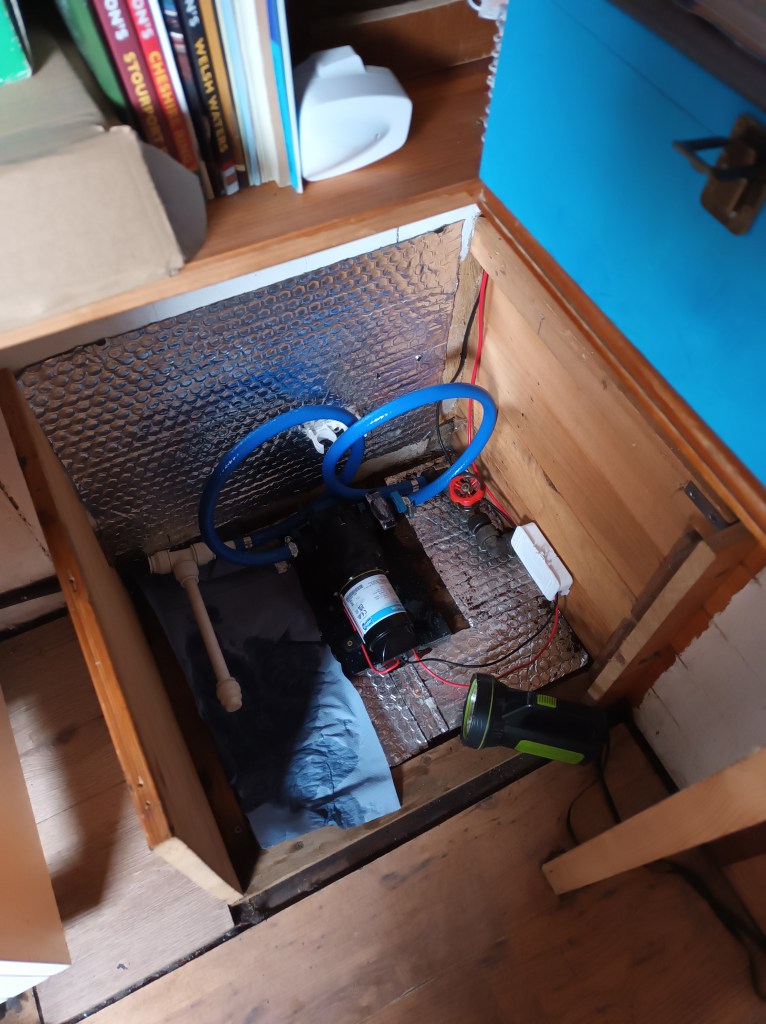
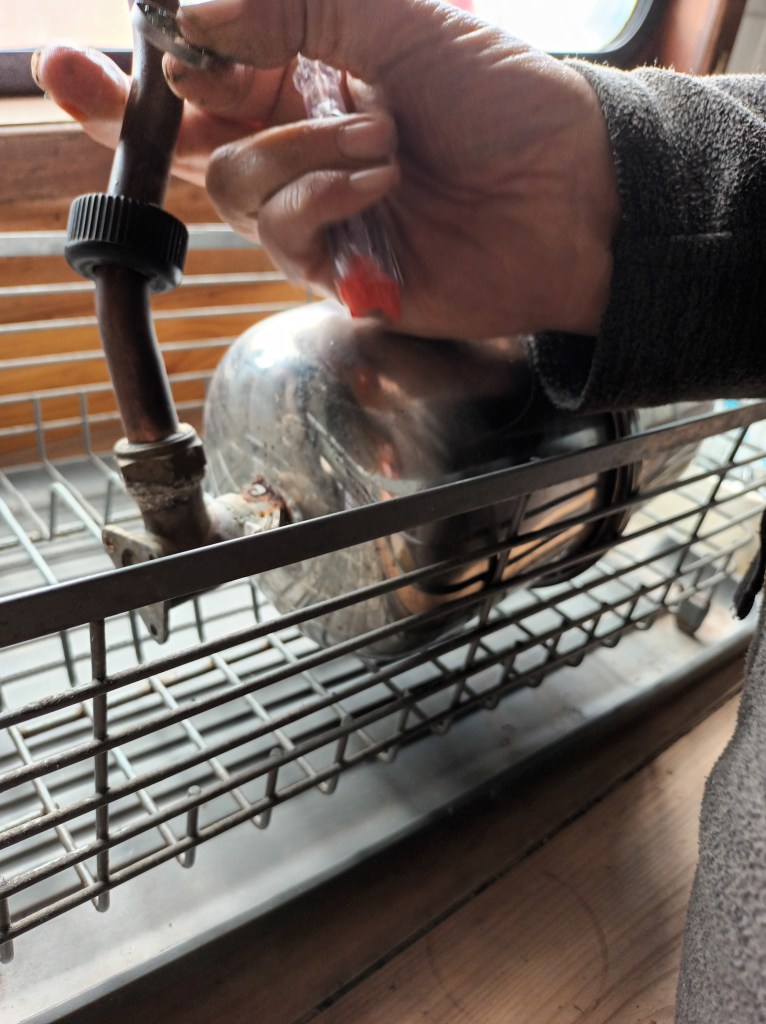
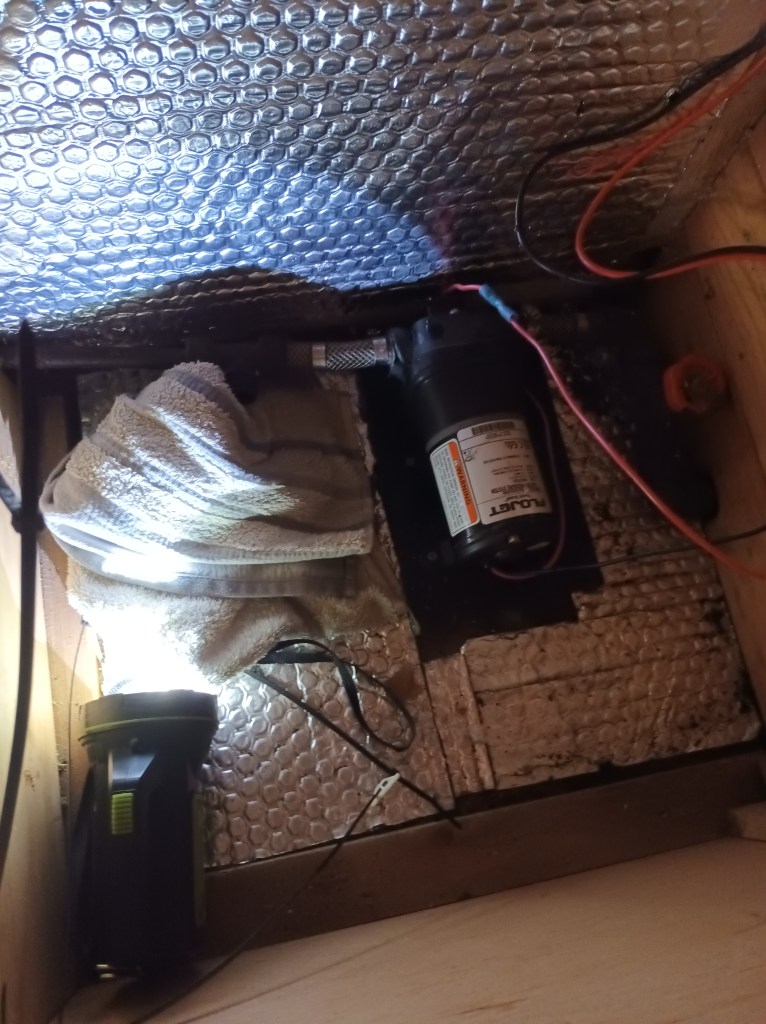
P.S. Santa’s had to come a little early to rescue us from flooded bilges after we filled up the water tank! On the plus side…our home hasn’t sunk and we now have a new pump with lots of piping!

Frozen assets

Our floating home and office is currently trapped in rural Staffordshire with us inside. We are quite literally frozen solid in the canal, unable to move because of thick ice.

To move would damage the blacking that protects the steel hull, and we’ve only just had the boat reblacked. That’s a regular maintenance job every few years but if we can make the blacking last as long as possible, that’s good.

Ice around us is thick. The red flecks are paint from our tunnel band scraped by the ice.

Moving through ice can also put the engine under considerable strain which could be costly, and send thick sheets of ice to hit other boats and damage them. This is a particular issue if fibreglass boats are involved. So we sit tight when it’s like this, and wait for the thaw.

In the days when canals were essential commercial thoroughfares with barges transporting everything from cheese to coal and wool to Wedgwood China, canals freezing over had huge economic impacts. Keeping traffic moving was vital to keep factories and furnaces operating. Ice breakers were employed rapidly. Now you can see them as exhibits at canal centres like Foxton or museums or a few have been converted into floating homes.

Rocking the boat to break the ice

The early ice breakers were made of wood with iron plates nailed to the hull. They were horsedrawn – as the ice got thicker more horse power was added. Some records talk of up to 16 horses hauling a single ice breaker through the cut in bad weather. Whilst the horses were pulling the crew were rocking – literally. Up to 10 people stood on the boat and gripped a metal rail in the centre as they rocked it from side to side to create waves that shattered the ice. It was an incredibly dangerous job. Boats could and did tip over, trapping the crew.

These days there are no ice breakers unless you count the coal boats carrying essential warmth in terms of diesel, gas, logs and smokeless fuel to boats across the network. When the ice is too thick even they can’t get through and some have been forced to deliver gas logs and coal by road but not every boater is easily road accessible.

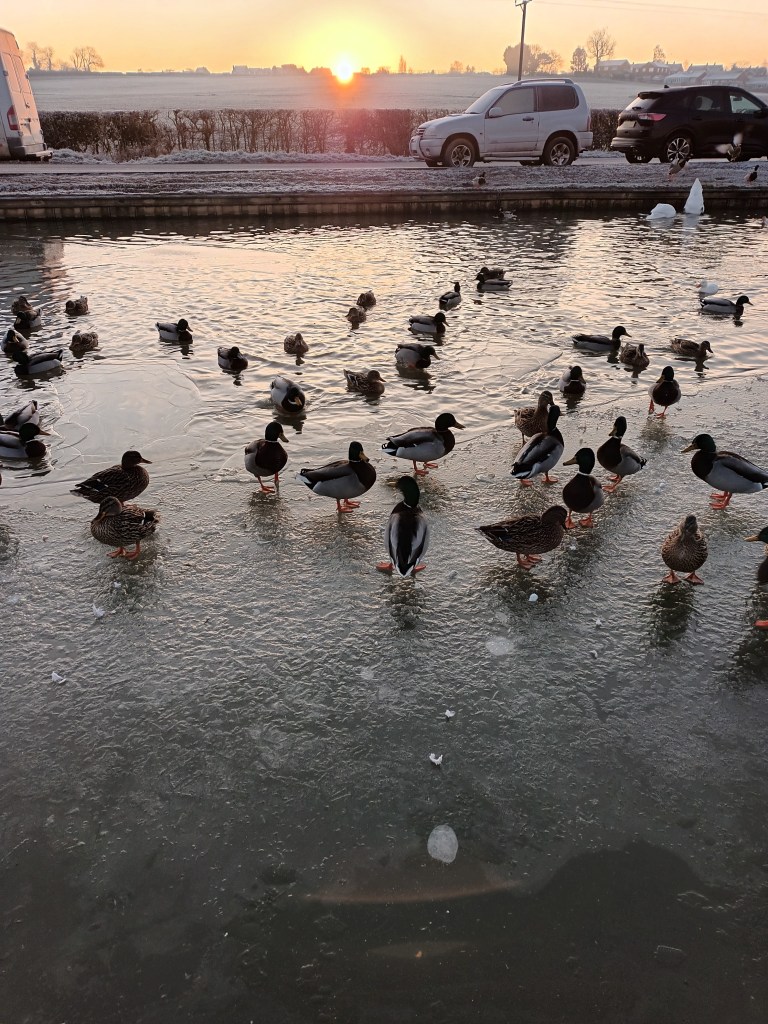
The Staffordshire and Worcestershire Canal where we are moored began to freeze at the end of last week. Initially the ducks were alternately swimming and skating but over the weekend the freeze began.

The boat feels different when iced in and we’re particularly aware of that at night when everything is quiet. It groans and creaks against the ice. As we move around on board the boat doesn’t rock as it usually does but stays oddly stationary. Other sounds also change. We’ve had the thud of icicles dropping onto our metal roof from trees above.

The swans and ducks have stopped knocking on the hull for food or nibble off any clinging weed. In fact by the time the canal iced over completely they have effectively disappeared. Presumably they’ve removed themselves to somewhere with a ready natural food supply and less ice.

Minor thawing during the day has happened a couple of times but only in areas that got the sun, and by 5 in the afternoon any melted water was refreezing. The thawing and refreezing leads to changing patterns in the ice which can be quite beautiful close up.

We have a major advantage being frozen this week as we have the car with us. That means life becomes instantly much easier. We can shop more easily. The nearest convenience store is 1.8miles from our landlocked location, which is not a bad walk but a slippery one at the moment With the car we can get to a supermarket and manage a larger, cheaper shop.

Having the car also means we can access the service point to empty our toilet and rubbish too despite being unable to move the boat. Covid laid us low in the summer and also encouraged us to buy another toilet cassette so, if the worst came to the worst, we could now last for a week with both of us on board without a crisis. Like all boaters we do use facilities when out and about to avoid filling up our own! Another positive of having the car with us – supermarkets have loos but convenience stores tend not to!

A pumpkin appears to be frozen into the canal!

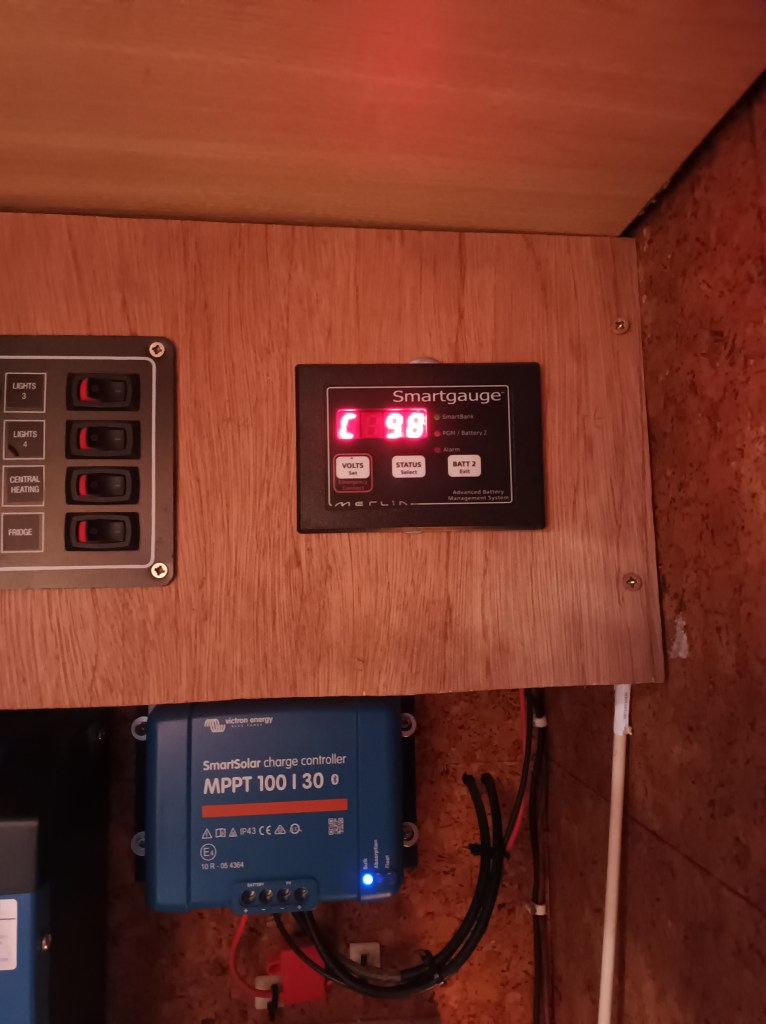
We topped up the diesel in Nantwich in September when we last saw Jay on coalboat Bargus and we haven’t done huge mileage since as we had 2 weeks in dock for work. That means we have fuel to run the engine for a few hours every day to top up the batteries and keep us in power as we’re not getting much solar at the moment. One advantage of the weather though is that we don’t need to power the fridge which uses the most electricity of any of our devices – we just keep things frozen and chilled by putting them in the cratch or outside!

We have plenty of fuel for the stove which is going 24/7 and keeping us delightfully and vitally warm inside the boat. We restocked supplies three weeks ago.

Fortunately we filled our water tank completely before we moved here 2 weeks ago. That’s a relief because water is very heavy to carry and we only have two 5litre bottles to fill. Water pipes on the system are also causing problems freezing and bursting. In many cases. We are seeing regular updates from Canal and River Trust about frozen pipes and repairs across the network. The freeze is keeping them busy and we’re grateful to their staff for working hard in su h gruelling conditions.

For now, we sit tight, keep the stove lit and walk the dog only on a lead, much to his annoyance. He loves sniffing at the canal edge of the towpath. Being in his 15th year he’s a bit wobbly and the last thing we want is for him to fall onto and through the ice, so lead walks it is. He, like us, will be glad when it thaws, and then we can continue our journey even though we have no idea where we’re heading.

We’re pointing north so once we’re free that’s the way we’ll head!

Interrogating the season

Bet it’s bad in winter – you don’t live on it all year round do you – guess you don’t move at this time of year? Constant questions boaters face at this time of year. Our responses are usually always the same – it’s cosy inside as small spaces are easier to heat – it’s great in many ways living on a boat winter – canals are quieter and mooring is easier to find. Yes, we live on the boat all year round because it’s our only home, our office and our workshop.

Sparkling in the winter sunshine

Life takes on a different pace in winter, it needs to. We move slower, we move the boat less, we take more time to live, to move coal, collect sticks for kindling, to stoke the fire and tend it so it never goes out. There is increased work in winter, and we accept that’s part of the lifestyle.

Because of that fire and the increased retro fit insulation which we keep adding it’s not cold on the boat in winter. If the fire went out it would be bitter at the moment. We keep warm screaming at the radio or TV regularly when they tell us everyone in the country is benefiting from the £400 winter fuel allowance. It may well apply unless you are off grid and itinerant. We are immensely grateful to the National Bargee Travellers Association who are fighting the corner or us and every other traveller, seeking to get us all help with our coal and gas bills. Living in a metal box in winter every little helps.

We are aware all the time what it’s like outside. We see the grass alongside our windows by the towpath is white and crunches under foot when we finally get to it. Getting to it is a bit of a struggle and involves crawling out of the doors beneath the rear hatch because the metal hatch has frozen solid. We crawl out clutching the kettle that’s heated on the stove ready, and thaw the runners open to allow us to slide the hatch open and stand upright at our back doors.

Crawling out gives a lower perspective 🤣

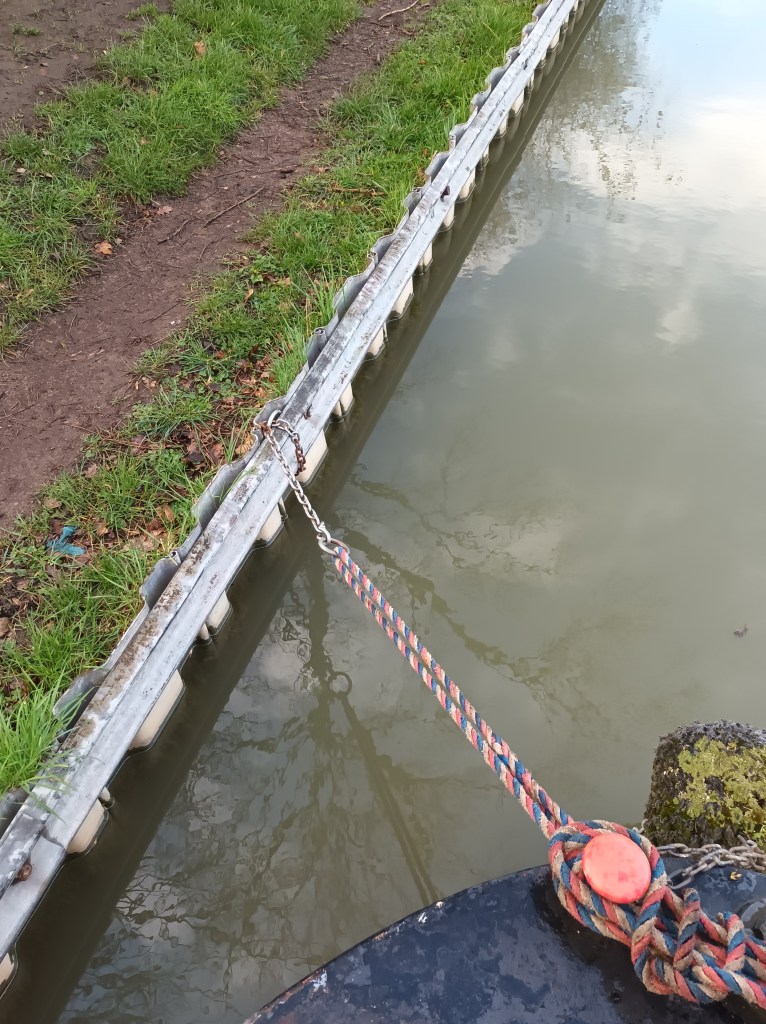
On the water side of the boat this week has brought ice, not thick but still creating a duck skating rink. Our mooring ropes are stiff and solid, glistening with ice, a far cry from being flexible and pliable as usual. Sometimes they thaw during the day, other times they stay rigid like metal hawsers all day.

The air smells different, it is sharp and breathing in out here hurts, but it feels clean and pure at the same time. It is easy to imagine that lurking germs have been wiped out by this sudden deep freeze.

My paternal grandmother used to talk about bitter winters on the farm in Kent when at the first sign of winter she claimed they would smear yellowish goose grease (by-product of a hearty meal) over their chest and back, wrap the oily areas in brown paper and then don a tight vest over the whole unsavoury package. Those three layers would stay untouched until the dawn of spring. Heaven knows what the smell was like by then…perhaps it reached a peak and then died away? Or maybe everyone smelled the same so no one remarked upon the rancid whiff.

We avoid goose fat and brown paper. Layers are the order of the day, but layers including our thermals are back in action. The best I’ve found came cheap from Aldi some years ago, lightweight yet warm, they make moving about easier and safer at this time of year. In the cold morale can dip and if you are cold you move less fluidly which can lead to problems, particularly when tackling icy locks.

We haven’t had snow yet this winter but we keep moving when we have, locks and all

Moving the boat means negotiating locks, (unless on the lockless Ashby Canal) an occupational hazard for continuous cruisers like ourselves. We haven’t selected to go into a marina or take a winter towpath mooring for some months so at least every fortnight we need to move in a meaningful manner. That demands managing locks, Lock mechanisms and lock beams get icy at this time of year and demand significant care. A dip in freezing waters from a slip is not what anyone wants or needs. Given hypothermia can be fatal unexpected swims are best avoided.

So yes, we love winter, we love the fact that winter and the work it entails helps us appreciate the other seasons when they come, helps us appreciate our stove and the comfort food bubbling away on its welcome heat, appreciate the fact the grate broke a few weeks ago when we weren’t freezing and could replace it. We appreciate the blanketing calm of winter on the waterways and the constant incredible service of the coal boats crewed for long, long days by some of the most amazing individuals we’ve ever met.

Cutting edge philosophy

This dramatic sculpture, made from over 100,000 knives, tours towns and cities across the UK as a statement against knife crime.

I’ve had the privilege of working with young people seeing the Knife Angel first-hand this week as it arrived in Milton Keynes where it will be officially unveiled today (Saturday 3 December).

It’s a testament to the power of creative art, and particularly poignant at this time of year. It reminds that, because of violent crime, many families will have an empty place at their table this Christmas and a hole in their lives forever.

It makes me even more grateful for how fortunate we are to start our Christmas this weekend together with a family meal fornall generations at a lovely restaurant overlooking the Staffordshire and Worcestershire Canal.

The tradition began long before we owned our narrowboat. We would look out onto the canal every year and wistfully say “If only…” as we reminisced about family canal holidays.

Over the years, we have seen many personal changes. We continue to gather joyfully for our festive meal but now raise a grateful glass together to those loved ones no longer with us, and celebrate being joined by new family members. Whilst these losses and arrivals affected us all, they touched the individuals concerned most deeply. We did save to buy a narrowboat for family high days and holidays. Then came the last three years which have brought immense changes to all our lives.

In 2019 experiencing a pandemic was unknown to most of us. We came together for our traditional festive celebrations without much of a care in the world, unaware of what was to come.

In came 2020 – and with it pandemic, lockdown, social distancing. The family mealnwas off but for us it was a time to take chances, take a leap of faith, decide that life was for living and believe somehow (we weren’t totally sure on the detail) we could make lives living afloat, travelling the country on our narrowboat, living at a different pace. Christmas was subdued under the looming and very real shadow of Covid which like knife crime was actively and suddenly destroying health and lives. The joy of seeing family if and when we could was the only gift we all we all wanted.

2021 seemed very different again. We were back together, allowed to see each other, but tentative, nervous and it seemed a fragile reunion. We asked loved ones if they minded a hug and we celebrated with two missing from our festive table, because of Covid and a long-term illness.

This year, this weekend, we hope we will all be together, grateful we can be united once more. We remain grateful for our leap of faith and are still happily cruising round Britain, sharing how we live and what we see with increasing numbers of virtual passengers thanks to social media.

We meet many people on the waterways who have sold up, taken the plunge and become liveaboards. When you are surrounded by something it seems normal and not unusual. It’s only when talking to friends, family and work colleagues who don’t live on the move that how we live now seems different, even daring. Regular Teams calls for work begin with “Where are you today?” People often say how lucky they think we are. We are fortunate and still working hard to live like this and make it work.

We continue to cruise and to work. We have met more fascinating people and enjoyed more breathtaking sights and sounds on the waterways. This weekend once again I shall dress up, put my shoes in a bag, don my wellies to get me from the boat and along the muddy towpath to the bridge by the restaurant, and hopefully then celebrate with all the family. In my head I will be saying not “If only…” but “We did, and we do…”

We have learned along the way that if you want to make a change there is always a way to do so. There may be compromises – we don’t have a newest, smartest boat. We don’t have a bottomless purse but who does? Things go wrong. Things break and fail and frustrate at times, on and off the boat. We are at the mercy of the weather and the weaknesses of a 200+ year old canal network.  

We have the fun of working together to find solutions, making things work for us, and figuring out ways to continue when things go wrong. It’s not all plain sailing but the satisfaction in a life lived for every moment is immense. Perhaps it’s no wonder over 76 narrowboats are named Carpe Diem – seize the day.

It all underlines for me how fortunate we are, how precious life is, and how we all need to seize the day, to make the most of every day, for ourselves and for others. Can we make that our Christmas gift to ourselves and each other.

Who knows what lies ahead? We can but hope.

The narrowboat travelling life can easily be seen as a metaphor for every life.

We never know what’s round the corner or what tomorrow, the next week, the next hour or even the next minute will bring. If it’s bad now, it may well be brilliant in a moment (or not) but change is certain.

A week ago we were watching paint dry, living life in a single spot, tucked under a canopy, without running water. Today you join us 47 miles, 1 tunnel and 32 locks further down the Shropshire Canal. A week ago the wait for paint to dry in our refurbished water tank so it could be filled, seem never ending, the daily checking seemed to take an age to move from wet to tacky (that lasted for many many days) to finally ‘dry enough’!

After a week of sitting frustrated, within a minute of ‘dry enough’ the hose was connected, water was flowing in, and a few hours (yes, hours) later the lid was lifted on, sealant applied round the lid and we were finally ready to set off – backwards at first to avoid going down a lock to turn round and return.

Less than half an hour later we were escaping static boredom via our first lock, grabbing at dwindling daylight to head along the Middlewich Branch towards the Shropshire Union Canal once more, to sleep under stars again in comfortingly dark countryside with only owls for company.

We are on a travelling mission – to make it to our annual, much-awaited family Christmas get together that conveniently happens (thanks Mum) at The Moat House Hotel in Acton Trussell alongside the Staffordshire and Worcestershire Canal.

The Moat House Hotel from our 2021 mooring

The shortest route to get there from where we were in dry dock is 44 miles but because of the winter closure programme we can’t use that way – we need to go the long way round, 65miles and 5 and three quarter furlongs through 43 locks and one tunnel to our destination. All that in autumn when leaves are falling from the trees to slow our progress by creating a thick leaf soup that clogs our prop, meaning regular pauses as we engage reverse to shake them off.

Locks harbour leaf soup these days

We have to be at our destination by December 1. Even at a maximum of 4 miles an hour that sounds like we have loads of time, but we won’t be able to travel every day. Equally we won’t be making 4 miles an hour over much of the route because there are many moored boats, and we slow to tick over to pass these, avoiding creating a wash and disrupting their mooring in the same way we expect others to pass us when we are moored. Every lock also, while taking us up in the world at the moment, takes time too.

There are working days to factor in too, when we need to be moored up with good WiFi and won’t move. Then we also have to think about spending time fetching a car on a couple of days, and a weekend when we won’t move the boat because Steve’s away (with said car) and it’s always good for him to know where home is to come back to. That’s also my weekend to catch up on work and housework so I don’t have time to move us. So we have 7 moving days.

Our planned early morning starts on moving days make the most of daylight hours and have been utterly glorious – golden sunrises and rose-tinted dawns.

There’s been rain – no surprise there! Some delighted us by arriving on days we were moored working, other days we were drenched as we journeyed and the boat each evening was draped inside with waterproofs dripping and steaming by the stove.

We’ve managed to get the boat stuck on a sandstone ledge between locks (and get off), seen friends en route, discovered new delicacies (Billingtons Gingerbread from Market Drayton) and been dazzled continuously by autumn colours on the way.

I started what some see as Black Friday, a frenzy of consumption, with my own Back to it Friday – back to regular jogging and a thoroughly enjoyable return it was. Injury niggles stayed away, the towpath was mainly good, and I made it out and back to meet the boat conveniently under a bridge where I could jump back on.

My post-run water taxi approaches!

Other family members who live more normally will set off on the morning of the lunch. Our lengthier journey is bringing us challenges, fun and increasing daily our excitement at seeing our fabulous family and sharing a delicious festive meal together (thanks again Mum!)

It’s only been a week but we are well on our way and we should reach our destination in time next week. There is of course the frisson of never knowing what’s round the corner and something totally unexpected might still affect one of the canals or the boat, or one of us which would hold us up, but at the moment, we are on track, and we always have hope, ready to navigate any obstacles in our way.

In deep water living afloat

We have water water everywhere, under us, over us but not a drop in our tank!

Finnish readers (or reader to be accurate) may be startled to know that in England since the year our narrowboat home first went in the water (1989), water provision has been privatised. Until then it was considered a Public Health Service and managed by the State on behalf of all the people.

Normally when we are cruising we have access to thousands of water points provided by British Waterways originally and now Canal and River Trust. The Trust has the job of negotiating with the providers across the country on our behalf in return for part of our licence fee. We carry a hosepipe with us and hook up to these points regularly (about every 3 weeks to date) to fill our onboard tank with clean, fresh water that we then use for cooking, washing, showering and flushing our toilet.

For the past 2 weeks we have been living off the boat as she has been in dry dock. We returned on board at the start of this week and have been living on her at the boatyard. As part of the work surrounding our time in dry dock we decided issues with our water tank needed resolving. For some years every time we fill up we create a flood on board as water spews out of holes at the top of the tank into the bow area, and then because of the bizarre drainage system, into the bilges which need mopping or pumping out.

Additionally we never knew how big the tank was, or indeed what state it was in. We knew we hadn’t been ill from consuming the water we poured and stored into it, but we weren’t sure it had ever been cleaned or refined in its 33 year lifetime. So, expensive though we knew it would be, we felt it a necessity and save on mops!

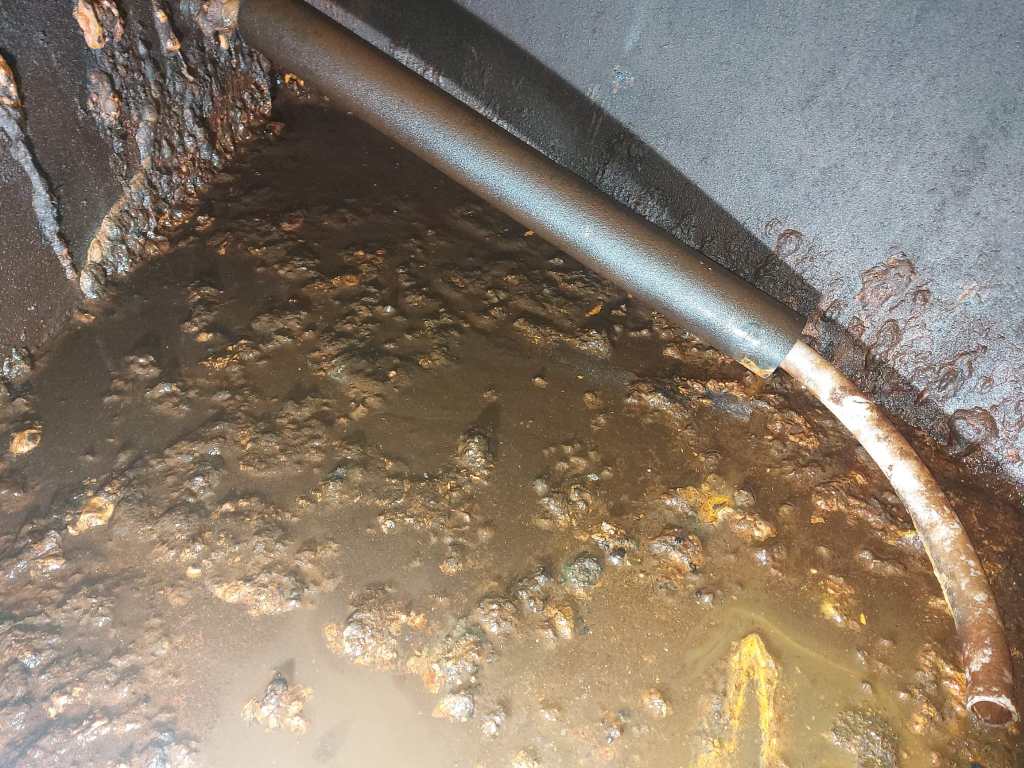
Our water tank takes up the whole of the bow floor of the boat, stretching right across from side to side. It is BIG, and it was nothing short of revolting when opened up. The bottom looked repulsive, but the water never drains from the very bottom, the outlet pipe taking water from an inch or two off the base. Even so, the thought that some of that gunge could be stirred or shaken into the water coming from the taps as we travel makes me very glad we’ve had the work done.

So the huge cover was removed by drilling off the rusted bolts, and that showed us that most water tank lids are secured by many more bolts than ours was! Rust had built up under the tank lid, expanding until the lid didn’t fit properly any more, and thus leaked. Now the tank and its lid have been cleaned, sandblasted, cleaned again and treated with a liner paint suitable for potable locations.

For the past week the tank has loomed like an empty chasm just outside the cabin doors ( good thing we don’t sleep walk!) whilst this lining paint dries. Watching paint dry is overrated and NOT a relaxing pastime I can report…at least not for us!

Steve painting the deck floor whilst standing in the tank that’s being heated by a radiator to speed drying time

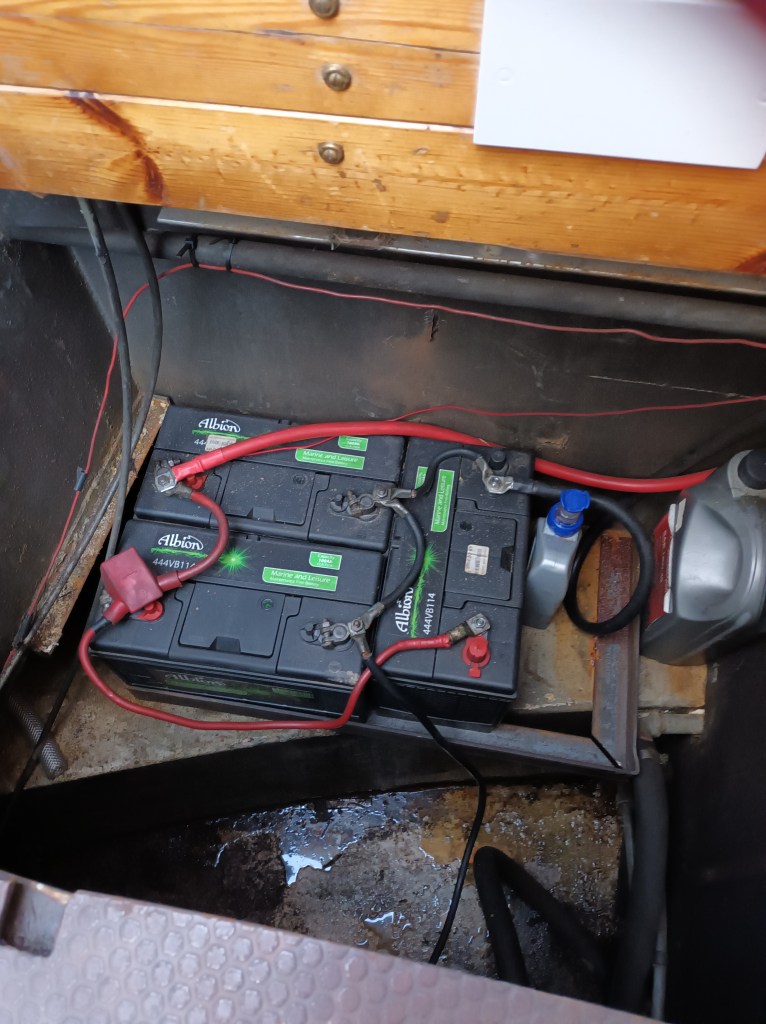
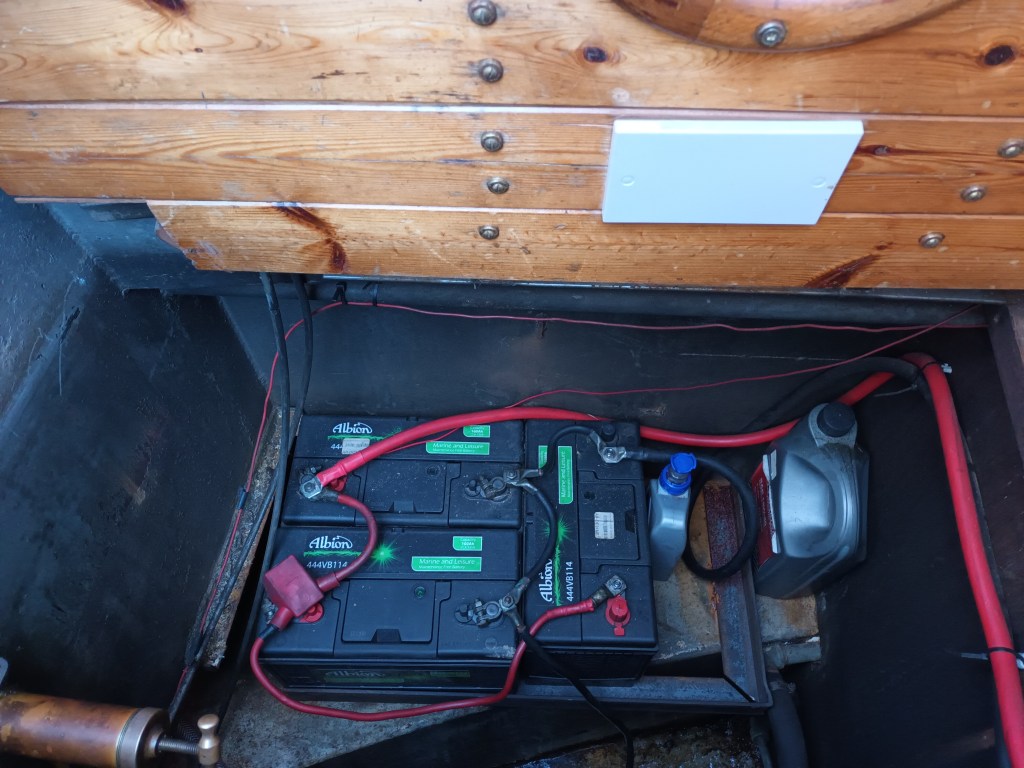
It has given us a chance to reflect on water, particularly it has been raining pretty torrentially here in Cheshire all week as we sit ironically stranded and waiting for water. The tank needs to dry before it can be sealed with its newly painted and treated lid, and then refilled with fresh water. Once we have the tank sealed and filled then we will be off once more. Other work is complete. We have our BSS (MOT equivalent) until December 2026, our batteries are encased in a newly welded battery tray with space for another when we can afford it, our hull is beautifully blacked for another 4+ years and the gearbox full of fresh oil.

Flush with canned water!

So water – one little week of flushing the loo with watering cans of water from the canal makes me realise how little water we use for that purpose because we control the flush to what is needed. A household toilet uses between 6 or 9 litres each flush depending on whether it’s low flush or not. We with our watering can system have realised we use just half a litre a day to flush our loo, that’s a twelfth of the bricks and mortar house equivalent, and we work from home too, so we are here most of the time. We aren’t being profligate with water for flushing then.

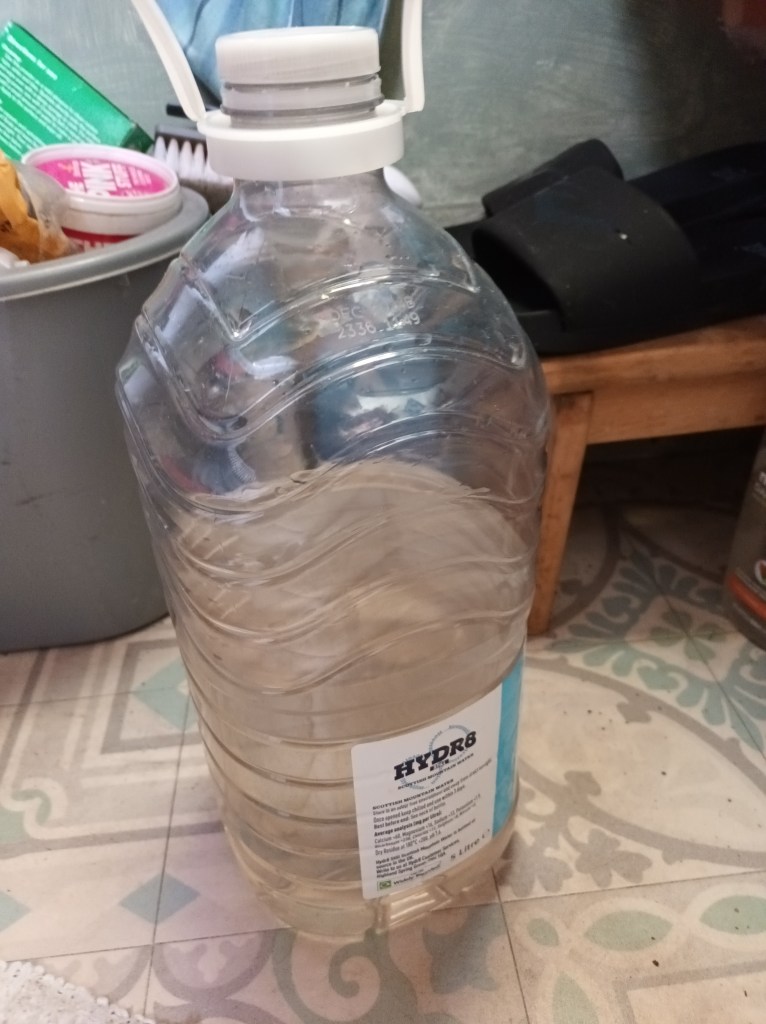
For drinking water for the three of us (Steve, me and the dog), cooking, hand washing and washing up we initially bought 2 x 5litre bottles of water from the local supermarket. We have been refilling them thanks to the Wharf where we are moored and who are doing the excellent work for us. That’s helping with weight training – makes us realise how heavy water is, and how grateful that we don’t have to carry it daily as so many people in other countries do.

In terms of showers this week we’ve been incredible in terms of water saving – we haven’t brought any water at all onto the boat for showers. Nor do we smell! We have been very grateful that leisure centres have reopened post pandemic, and enjoyed hot showers for a very reasonable price together with a swim at one centre. The canal network does provide showers at some services but when we managed to get to one (couldn’t do this without a car), we found it locked and we couldn’t open it with our British Waterways key which was irritating to say the least. The leisure centre have proved closer, more convenient and more economical.

Swim, shower and a treat – don’t get this on board!

Maybe this weekend the water tank will be dry and sealed and we shall be able to refill it. Because we have now see its configuration of inlet and outlet we haven’t installed a gauge to indicate full, half full and empty because it would always read inaccurately so we just know it is big and actually it is bigger than we thought it was. Approximate calculations give us a tank of 550l or 120 gallons. That means as it’s nice and clean we may well move our 3 week fill up maximum to 6 weeks and if we run out for once (we never have) then we will shorten that time for the future.

It is astonishing how many times I have turned on a tap and looked in surprise as no water comes out. Even though I know we are here because we have no water, I still go to turn on the taps.

I know that when I do turn them and water gushes out I shall be hugely grateful and appreciative that I have the luxury and security of knowing that as part of our licence fee we have access to clean, safe water, for only the effort of connecting a hose to a standpipe every few weeks. For that reason, we won’t be sending Christmas cards this year but donating the money we would have spent doing so to the charity WaterAid to help their vital work in providing clean, safe water and sanitation.