Tuning in

Living afloat brings so many dimensions to life. Some are expected – like being able to move on when you don’t fancy the location (or the neighbours), or you feel you’ve explored everything you can in that place, but some are totally unexpected.

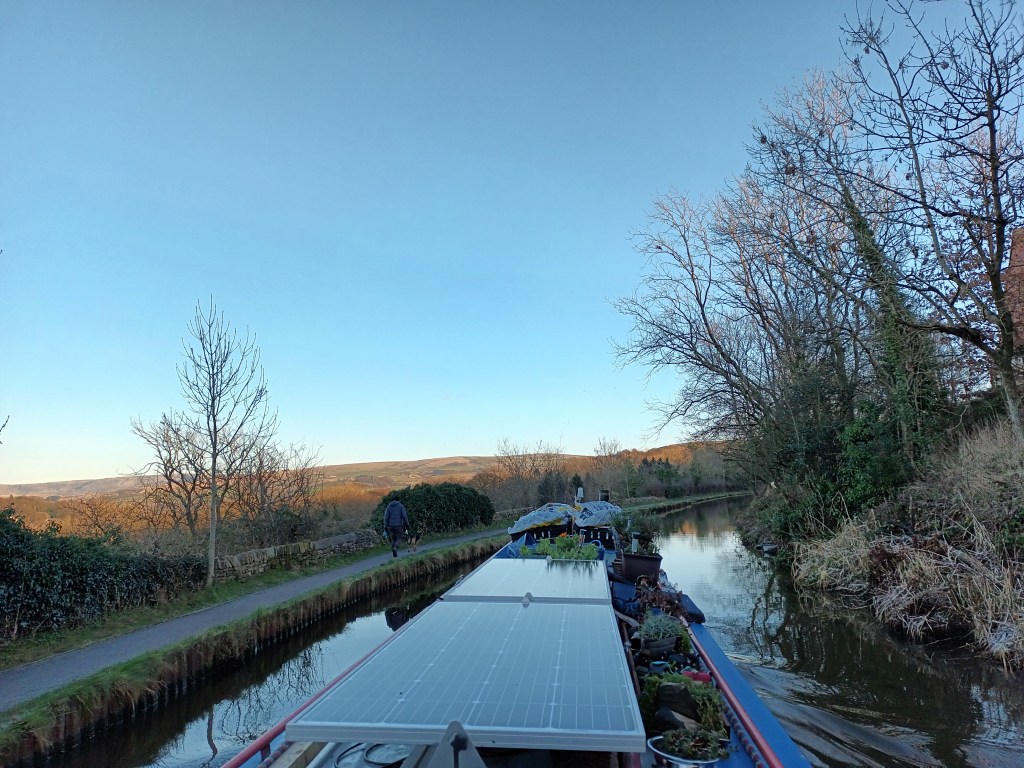
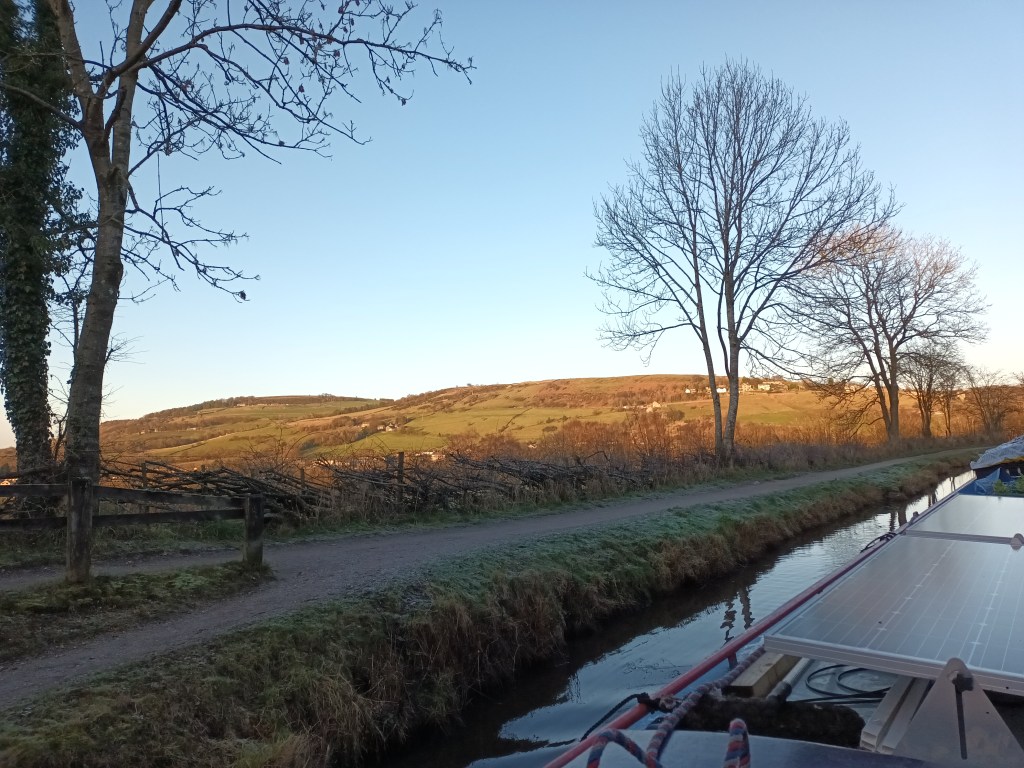
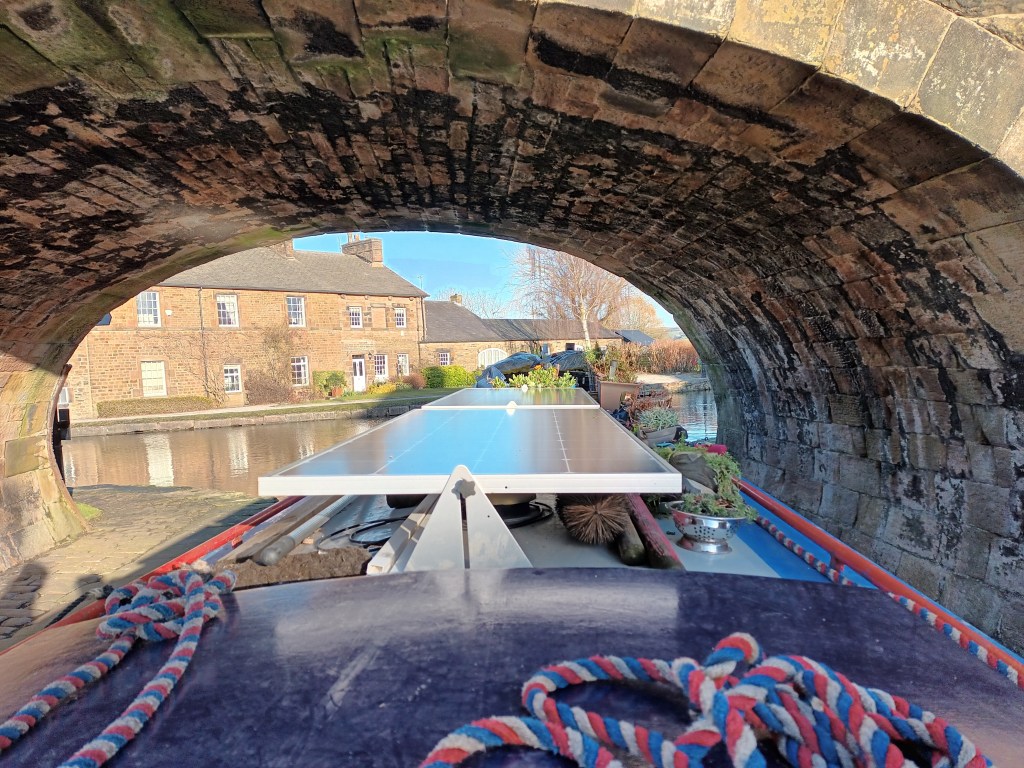
The sensory scope of each place is remarkable, and unless you are consciously listening or seeing you could miss out on a hugely rich part of life. It is most apparent at this time of the year when dusk falls early and the night is long.

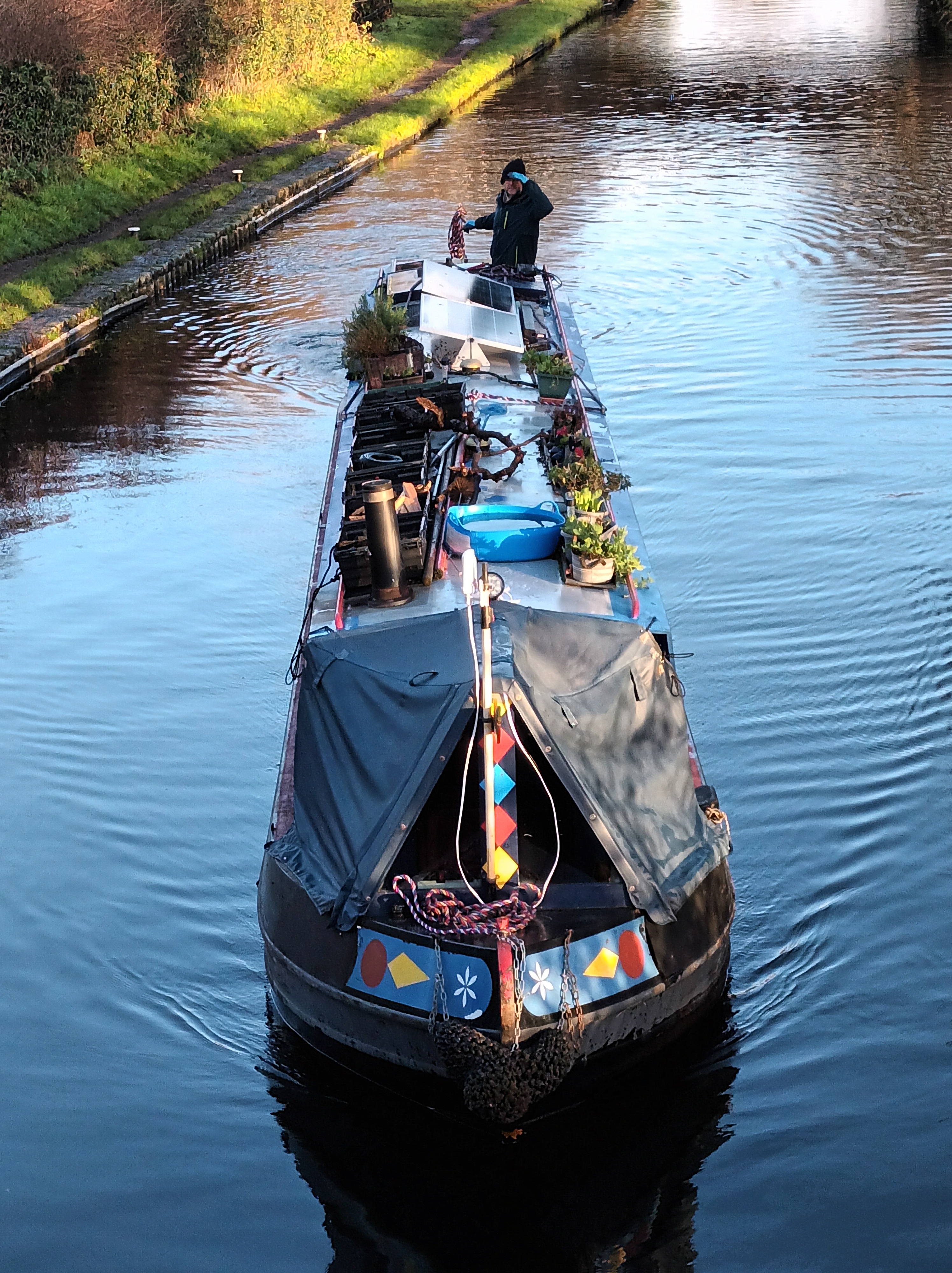
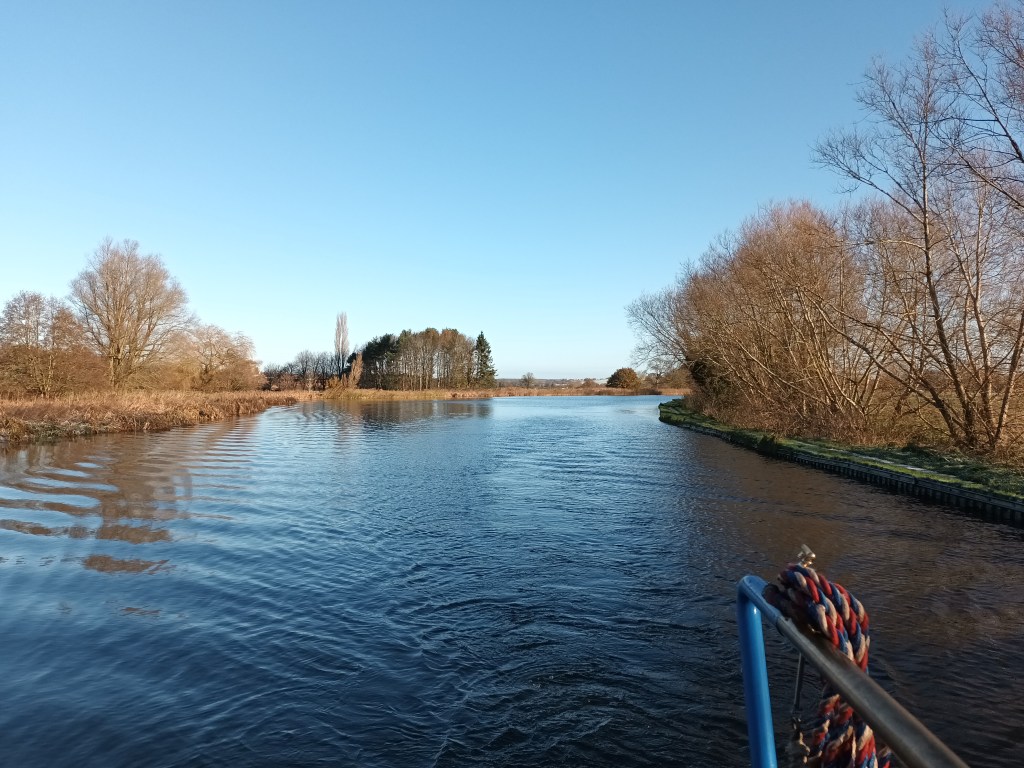
On Sunday (after successfully completing the Seagrave Wolds Challenge of 17.2miles and thoroughly enjoying it as usual) we were still moored on the Ashby Canal, in a rural location amid fields of cows and ponies. No streetlights created a velvety blackness at night; a deadening carpet of yellow and brown fallen leaves muffling dog walkers’ footsteps as they passed the boat at dusk; night brought us the occasional car horn anxiously approaching the nearest canal bridge, but apart from that, the sounds were totally the sounds of nature – shrill moorhen squawks, the gentle hooting of a tawny owl, scuffling of small creatures moving through the towpath leaves.

In the early morning the bullocks in the adjoining field bellowed, and a distant donkey joined in the chorus with an asthmatic hee-hee-heee which just occassionally ended in a haw. The sparrows and robins, blackbirds and blue tits created a constant background symphony in the hedge alongside us, apparently unaffected by our presence.

Monday took us onto the Coventry Canal, moored on the outskirts of Nuneaton.

It was a very different place to stay. There were houses on the far side of the canal. Close to each other but detached, modern homes with gardens coming down to the water, each with its own character telling you something of their inhabitants. Some clearly housed children of differing ages, with brightly coloured plastic play houses, sandpits with lids and trampolines; others are homes of obvious plant enthusiasts with specimen trees and carefully tended herbaceous beds; others point to hedonist inhabitants with hot tubs, swinging chairs and hammocks. Garden buildings doubled as offices, or “Dad’s bar” and lots of plastic rattan furniture in shades of gray and black, some with covers, some without. At night solar fairy lights appeared along many fences. For all the apparent human presence it was silent on that side of the canal.

On our side of the water, walkers passed soundlessly on newish, well made paths. Ducks chattered alongside a solitary swan. The birds kept up a steady flow of conversation and made their presence heard (and felt too as they tapped their beaks against our steel hull to see if there’s interesting edible weed attached to us that they can enjoy). The occasional train rumbled past but there are few regular services on this branch line. Sudden shrill sirens on distant roads reminded us of how close we are to the hustle and bustle of a town.

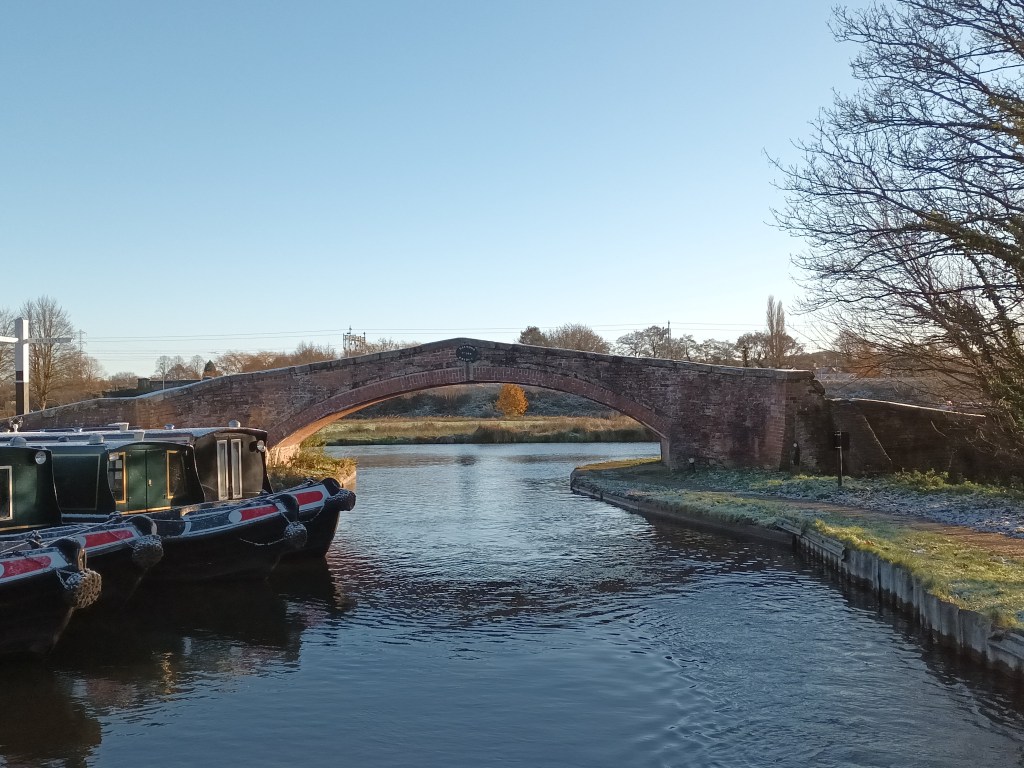
After eleven delightfully easy and well maintained narrow locks down the canal, through the market town of Atherstone in Warwickshire, we came to our third mooring of the week.

There are boats on both sides of the canal here – long term moorings opposite us, with a huge variety of boats, narrowboats, cruisers, converted tugs. Some permanent homes, some used on high days and holidays, others in the throes of being made habitable. A service point beside them – provides a necessary opportunity to remove the waste from the boat and fill up with water.

A railway rumbled intermittently and regularly in the distance; a little-used lane over a canal bridge ahead brought the sound of vehicles, and beyond the long term moorings a large property was guarded by occasionally vocal dogs that sounded fittingly large too. It was at times though remarkably quiet here, and that included birdsong. I saw no birds on the water and the hedge alongside our mooring seemed bereft of inhabitants. Walking the dog just 50 yards beyond the bustle by the moorings and the wildbirds appeared. They’ve chosen a quieter, more peaceful location.

Human accents have changed too – at 5.30am in the morning we clearly heard two men heading from boats to work, or perhaps going out to fish. The monotonal Brummie twang was very apparent.

Then we moved on two locks to our third and final mooring of the week, and possibly a home for the next two weeks – Hopwas in Staffordshire, a short hop from Tamworth, a market town famed for its Titian-tinted pigs.

We moored on the outskirts of the village. Last time we were here we strayed too early into the beautiful woods for our morning walk. Inadvertently we then found ourselves trapped as it became a live military firing range! This time we’ve downloaded the firing times from the MOD website and have yet to hear evidence of anyone firing, in anger or anything else!

Sounds here are muffled and amplified by layer upon layer of fallen leaves – footsteps crackling through the dry top tier, activities of wildlife amplified by the scuffling sounds their paws and beaks make in the fallen foliage.

The woods, despite their military use, are full of birds and creatures scurrying to and fro, the world being their own until borrowed by walkers and soldiers for a time. There are ducks on the water and the occasional moorhen too.

This life afloat surrounded by nature is teaching me to hear – to listen better. It’s a lesson I wish I had appreciated sooner, particularly in business and in education. I hear the crackle of dry leaves on the woodland paths but miss the scamper of a squirrel or the frenzied digging of of Jay seeking acorns. Sometimes snap decisions are based on the initial or apparent information easily offered, but that doesn’t always lead to the ideal solution, because other information which could lead to a full response goes unheard, unrecognised. It’s something I know from experience that sometimes speedy solutions or responses receive more recognition than those that take longer to craft. Speed is sadly in our fast-paced world, often synonymous with efficiency and professionalism when actually it may lead to a shallow response that doesn’t really resolve all of the issue.

Taking time to make a decision and a judgment is not a waste of time but an investment. Taking time to really hear what’s really going on around me informs a competence that prevents negligence or wastefulness.

It’s tough really listening, really hearing but it repays the effort I put in to it, in so many ways. It uses my senses better- by listening fully I can see so much more, saving time and money, effort and error. I am sure I , and those around me, can benefit from me being more aware and more alert.

Taking time to hear what’s going on around me, to appreciate the complexity, the multi layered environment that envelops me isn’t easy, but it richly repays the effort of listening and seeking to understand my changing world. I am not only aware of more around me, but aware I get so much more out of the world by doing so.

Life’s far from being on auto-pilot now.

Silver linings and a reminder of what really matters

I know that many people working from home have found themselves viewing their home differently – some despairingly but many positively, learning about their home and community in a different way.

I’ve had a new experience of our home this week too. I don’t do ill very often – I think the last time was several years ago so I had only fleetingly wondered, and worried a bit what it would be like to be ill on the boat. This week I had the chance to find out! Not Covid fortunately but a gastric attack probably brought on by too much rich food over four indulgent birthdays in quick succession.

The result has been that in just a couple of days I have discovered even more advantages to living afloat (is there no end to the delights of floating life?). Here are my latest findings:

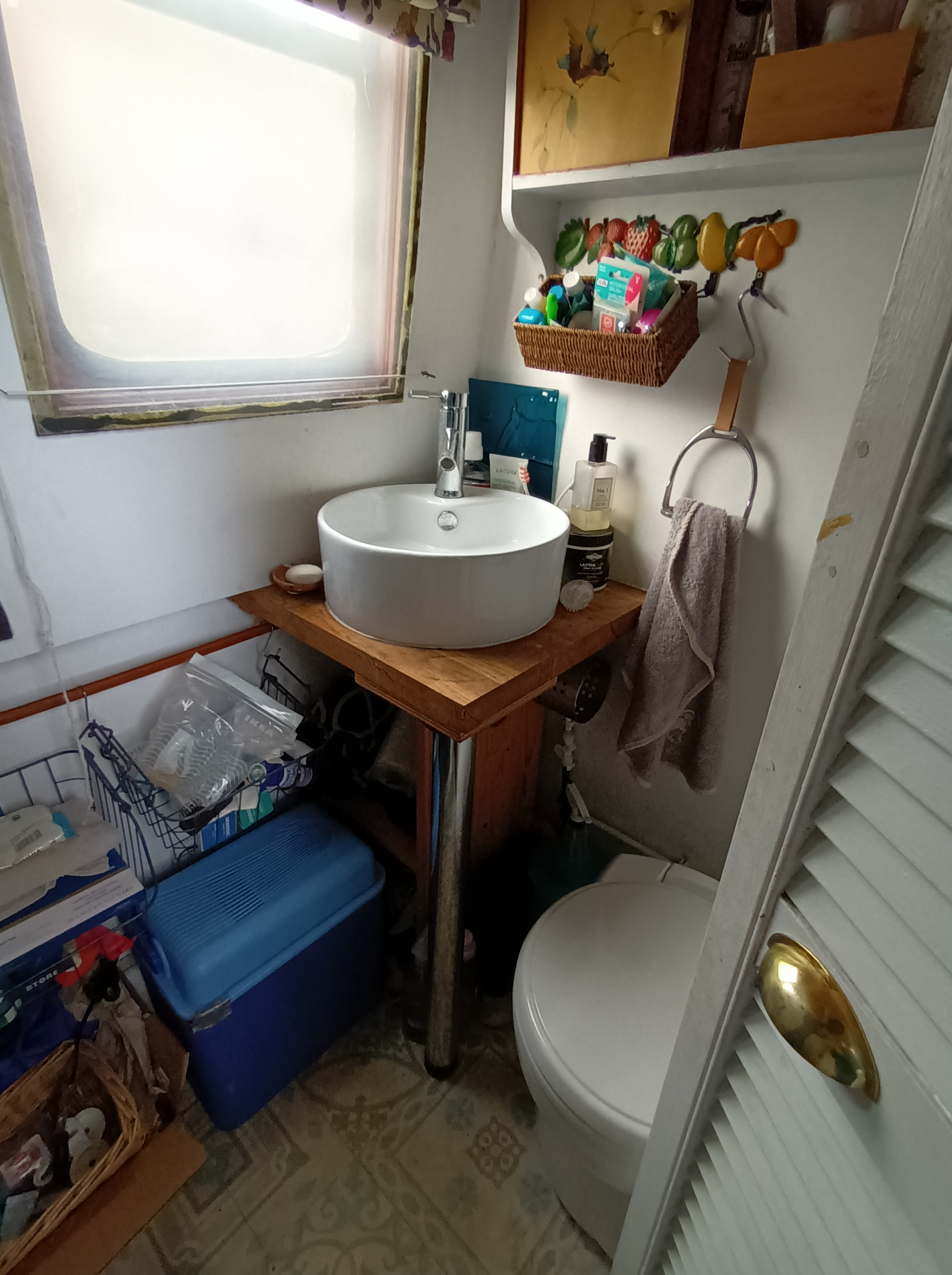
1. The walk (or dash) from the bedroom to the bathroom is 4 steps – nearer than most en suites!

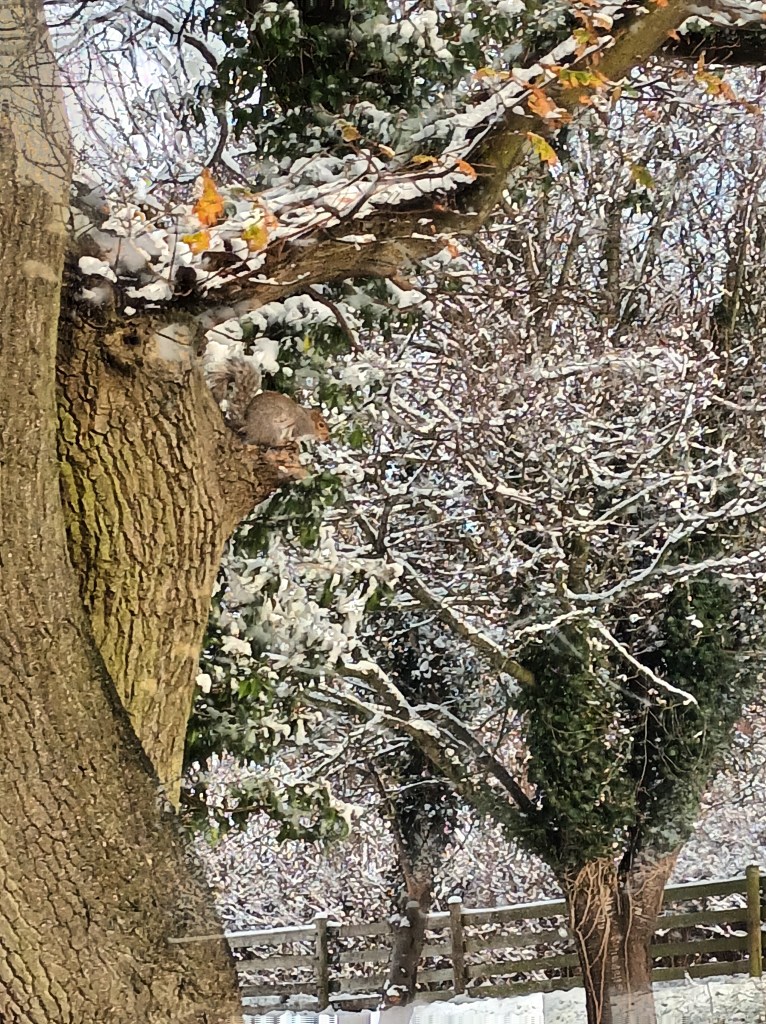
2. Lying in bed with the curtains open allows me to watch the tops of the trees on the other side of the canal gently swaying in the breeze which is so relaxing, and something I shall consciously make a point of doing now I am recovered. I watched fluffed up grey squirrels making their way time and time again to the highest leaves that still clung on, surely just for fun because there seems no food to be had up there, and the branches are so slender they bend wildly sending the squirrels swinging and scurrying back down only to repeat the game again.

3. Watching the same trees and the same part of trees for a few days allows me to appreciate the speed of change as autumn moves apace. Colours turn from dark to light green, to yellow, before being patterned yellow with mottled brown before being blown from their living home or turning brown and falling gently down when they are ready.

4. I’ve never been in bed on the boat during daylight hours when boats are moving past before. If I found myself awake when they travelled by at tickover speed, the resulting movement of the canal gently rocked me back to sleep – so thank you to all of them – you have no idea how soothing and calming your passage along the canal was to an ailing soul! To those who passed at higher than tickover speeds, I hope you never lie abed in a boat feeling ill when others pass by at speed…

5. I’ve stepped away from any work and given myself the time to recover. Had I been working on the ubiquitous hamster wheel I would have soldiered on, and undoubtably taken longer to recover. It makes me realise that we need to look after ourselves – however and wherever we work. Our health is the most important thing.

6. Lousy internet connection and screens making me feel ill has meant even more book reading than usual and it has been a blissful change.

7. Towpaths here in the Midlands are perfect for short flat strolls through breathtaking autumn colours. Easy walks clear the head and make you feel normal again.

The latter is a really good thing as we have the 16ish mile Seagrave Wolds Challenge to complete this weekend in return for soup and crumble. It’s an amazing community event which sees around 200 people run, walk and plod a course across Leicestershire paths, fields and mud every November. The funds it raises supports a variety of charities including the Village Hall, the local church and the Royal British Legion Poppy Appeal. The event has been going since 2005, and our triumphant trio has completed it in all sorts of weather!


The event starts from the village hall with a 2 minute silence, a piper sending us off and is a remarkable achievement supported by villagers, runners and walkers alike. Food stops en route usually mean you can put on weight on this event despite putting in the miles! We missed those last year when it was a virtual event and we ended up calling into the boat which was moored nearby for sustenance!

I’d like to think that our collective experiences during lockdown have suited in many community events across the country, examples of how local people are supporting their communities and making a difference. They are events we can all delight in supporting. I’ve not heard of any celebratory community events being launched as people have gone back to working back in their normal workplaces, perhaps that lack itself is a mark of an unappreciated environment?

We need to appreciate what we have – this week of all weeks. This is a week in which we remember those who gave so much so that we could all be free.

Some gave their lives, others suffered life-changing mental and physical injuries in their battle for the freedom of future generations in conflicts from history to the present day; their families paid and pay a high price too for their service to their country. We owe it to all of them, to those we love, and to ourselves to look after our own health (mental and physical); to look after each other – our families and communities; to look after the precious life we have; and to look after the world in which we live.

One of the most inspiring projects on the waterways at the moment is currently taking shape here in the Midlands. It seeks to turn unwanted or abandoned narrowboats into restored floating homes for homeless service veterans. The first boat has been donated and members of the canal and river community are contributing to its renovation in many ways. Some helped move it to the yard that offered space for it to be worked on, others are working on it when they can sharing particular skills, some are donating money – and in that way, this is an invaluable life-changing project which anyone can support, wherever or however they live. Forces Vets Afloat is a remarkable project seeking to give back dignity, thanks, and a new way of life to service veterans by providing as many sound, floating homes as possible. If you or your company are looking for a worthwhile project to support this November, or this Christmas – perhaps this is one you would enjoy getting involved in. Not only is it seeking to provide homes and a new lifestyle for homeless veterans, in the process it also prevents boats being abandoned, reducing pollution, waste and has to be one of the most ambitious but inspiring recycling projects ever.

Winter’s coming so we’re planning and ham-ming it up!

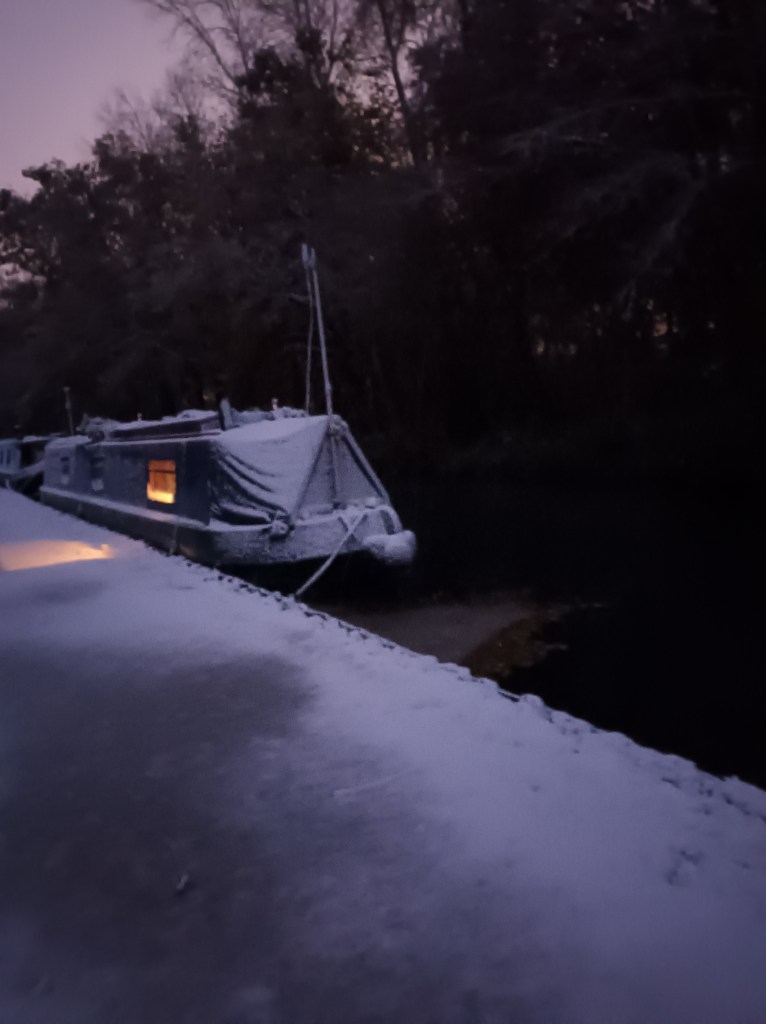
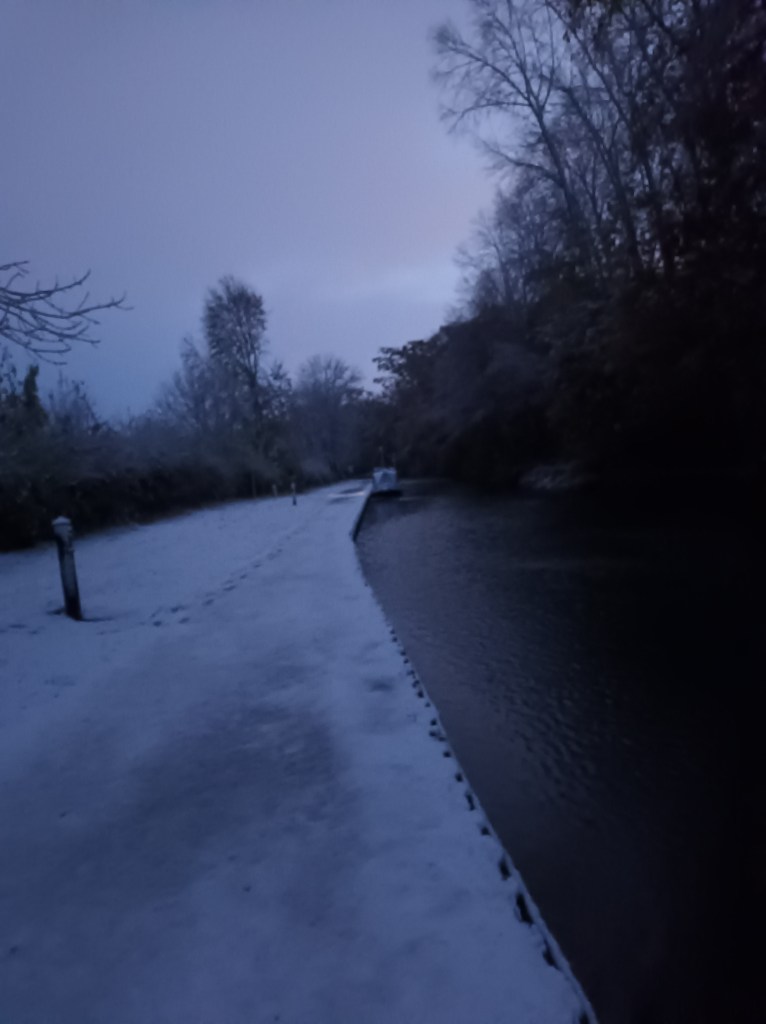
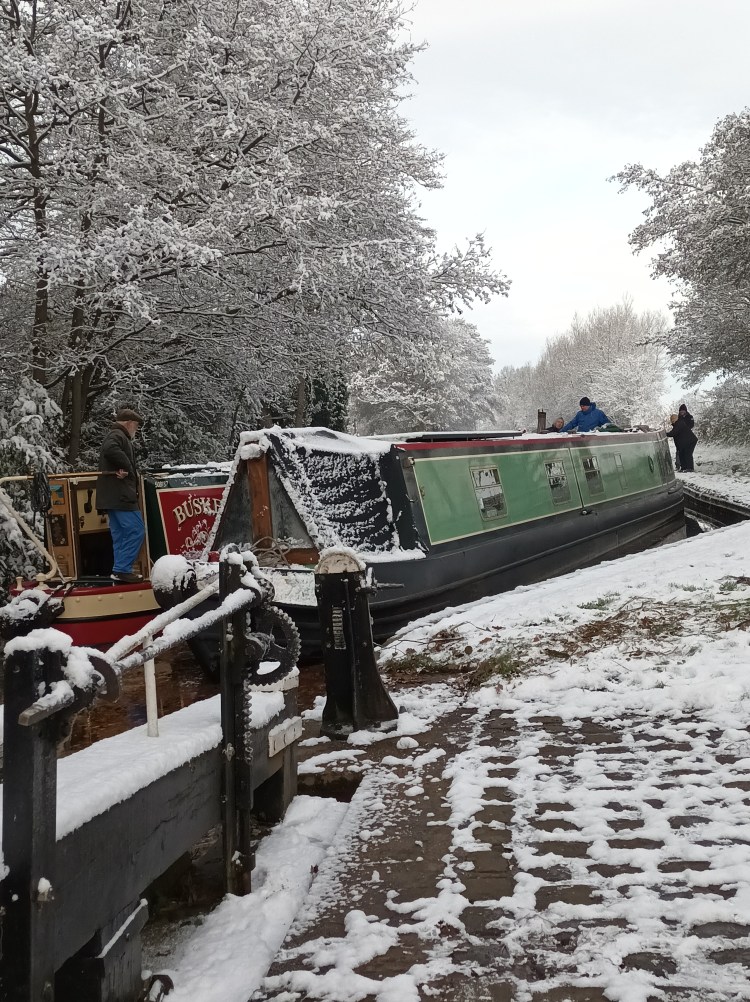
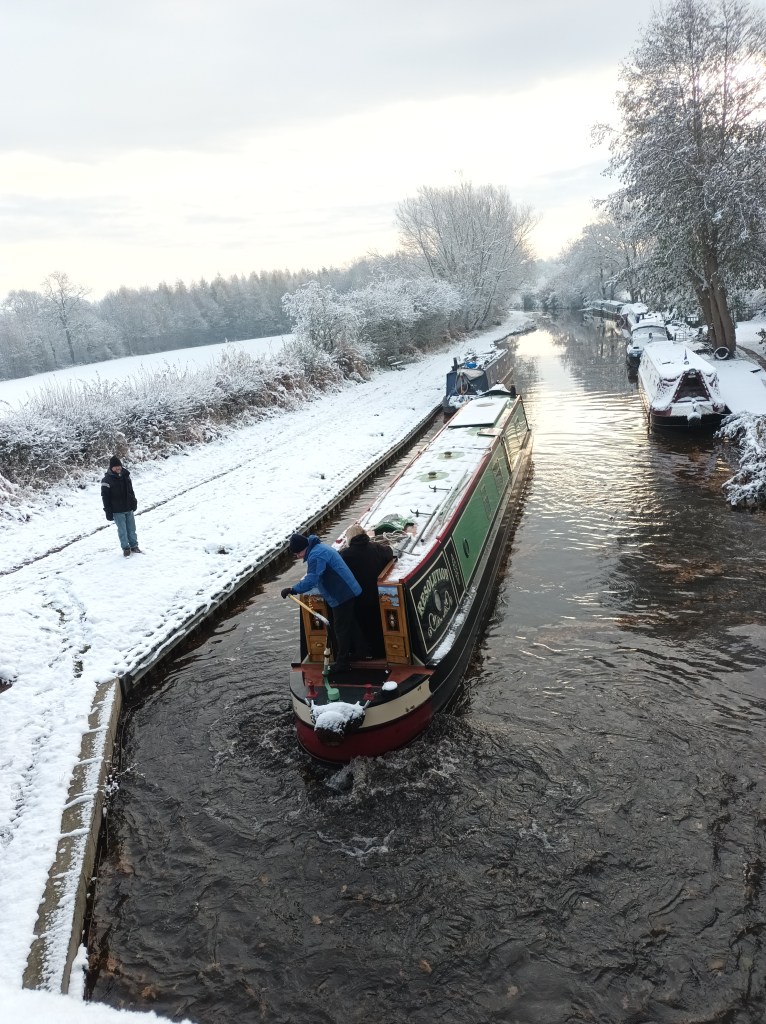
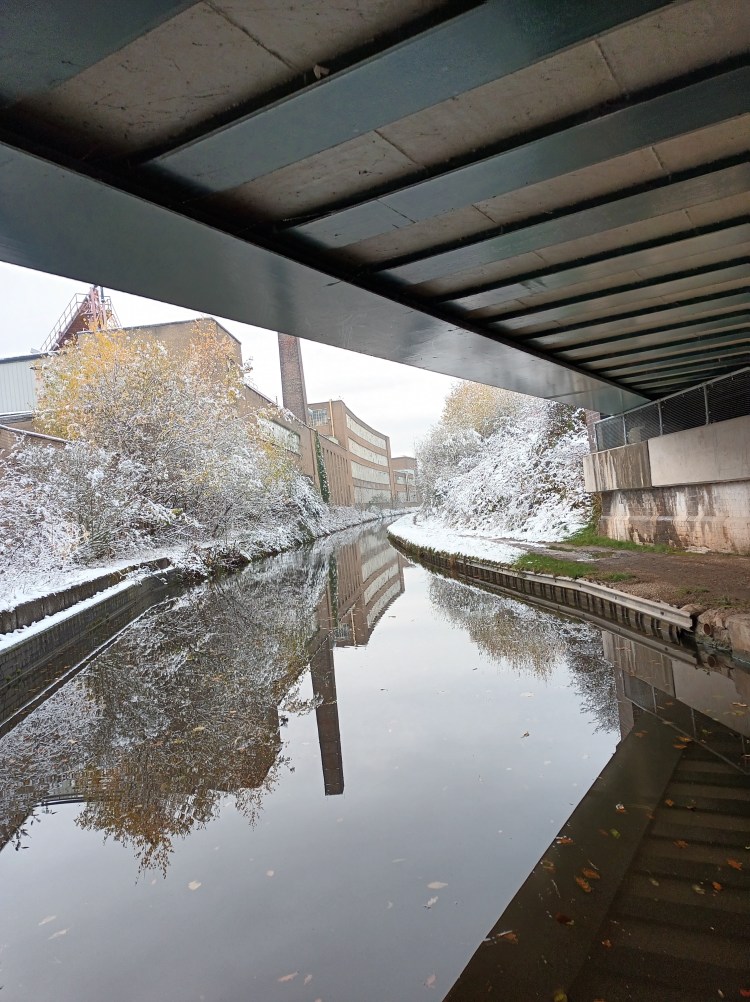
The first frost arrived this week hard on the heels of the clock change, and a need to have the fire lit more often now to keep us cosy. The frost caught me by surprise meaning the early exit the dog and I make through the stern hatch turned into farce. The hatch was frozen shut so we ended up crawling through the rear half doors emerging floundering on the narrow rear deck in the crisp morning dark.

And we’ve had Bonfire Night, which heralds the tail of autumn.

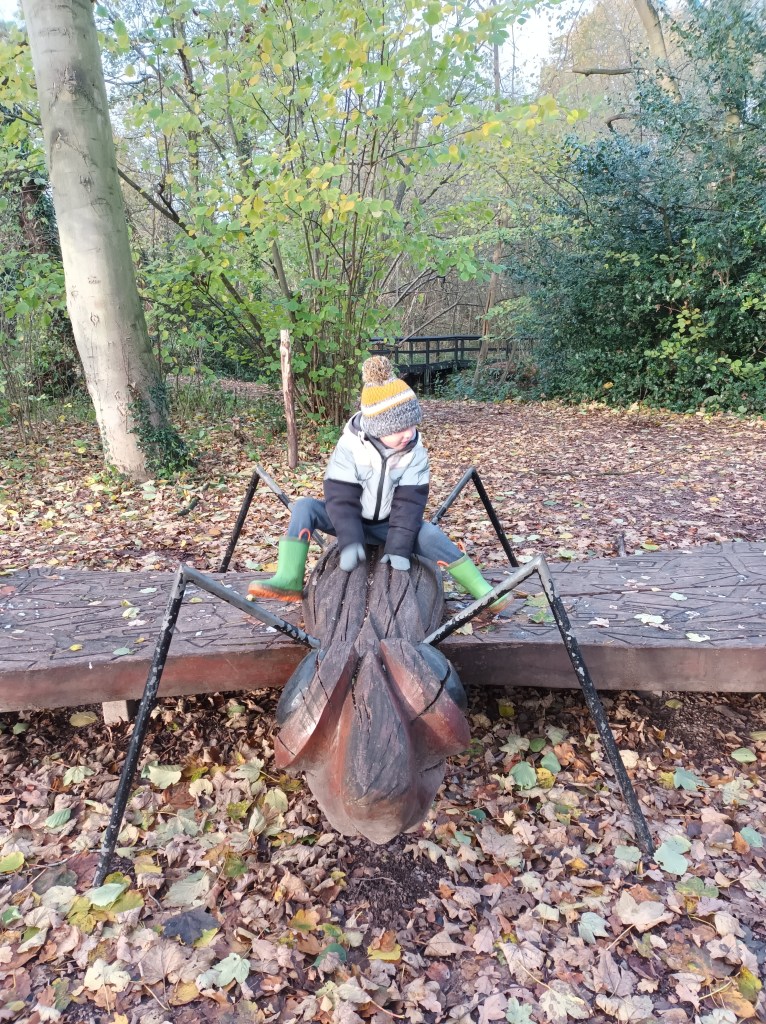
Tommy tells me these are his “ear fenders” – essentials on fireworks night!

November for us, as for many creatures, means conscious preparation time for HAM (Hibernate, Adapt, Migrate).

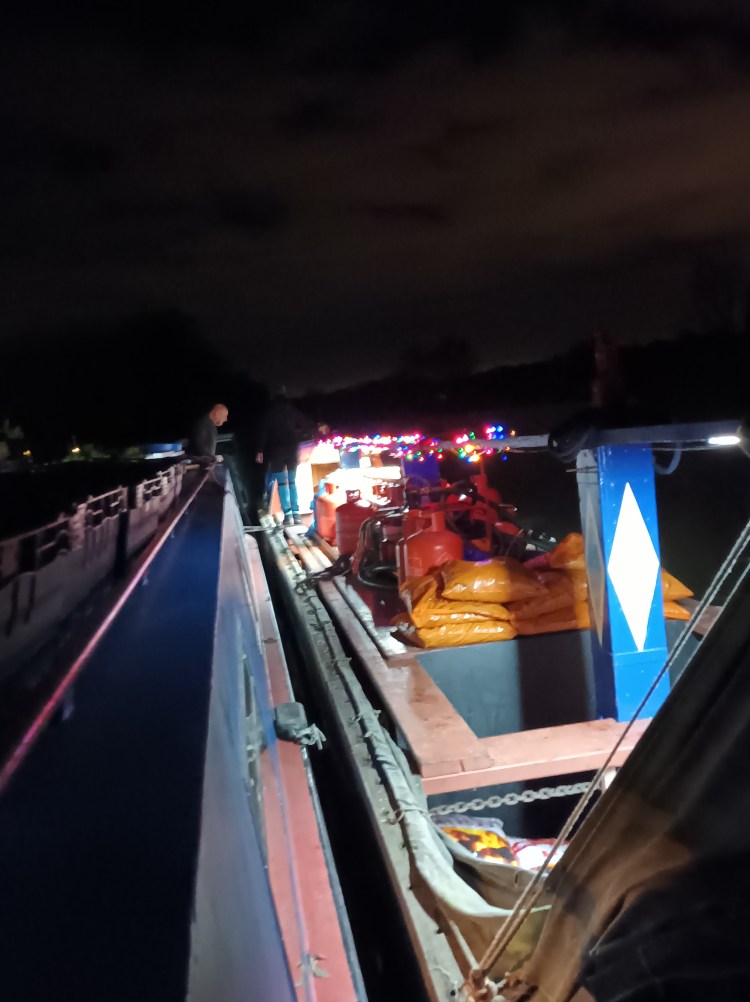
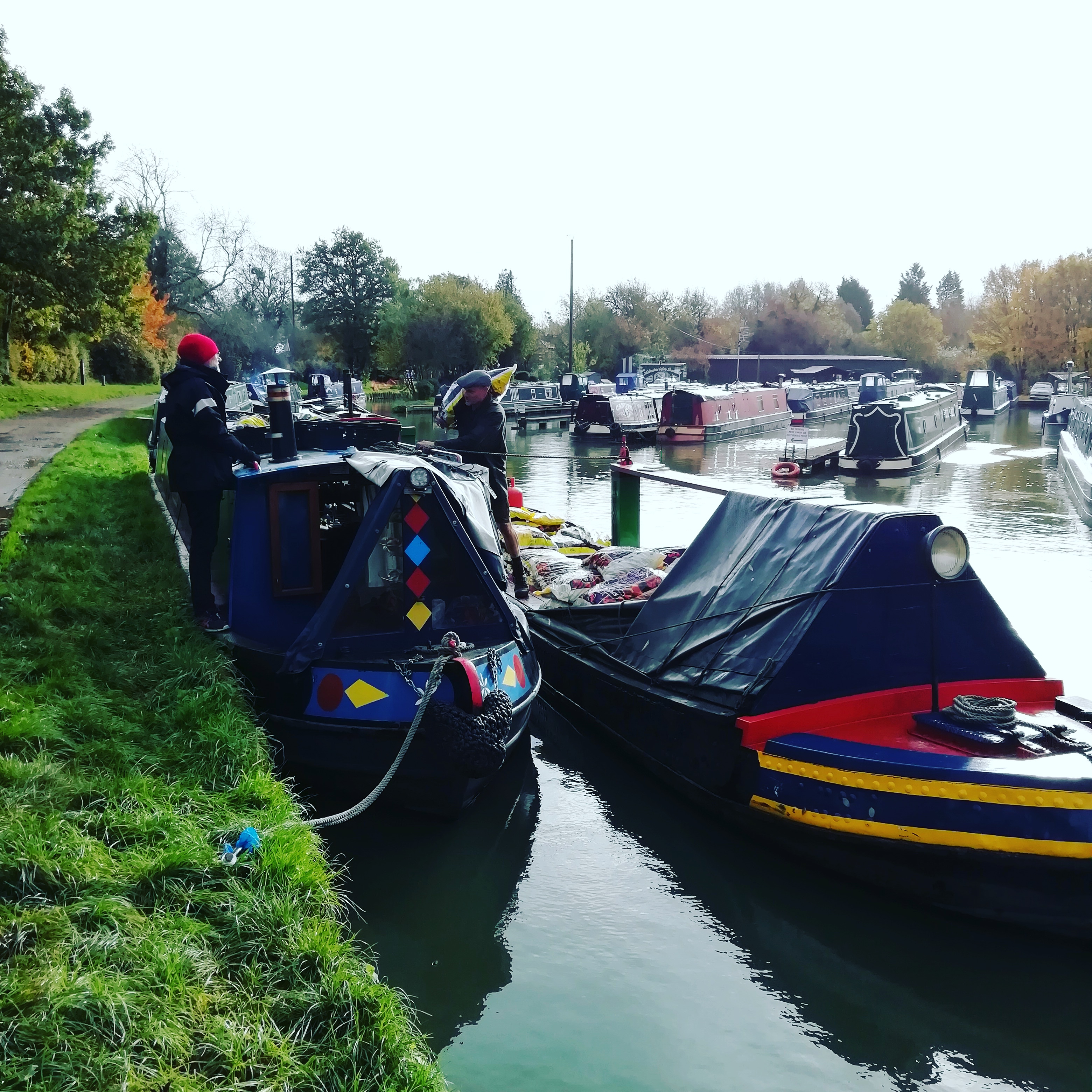
In conventional homes we tend to prepare for winter by checking fuel supplies and heating systems. We do that on the boat as well – checking where and when fuel boats are passing to make sure we have bottled gas for cooking and fuel for the stove. The stove is our sole drying and heating source as well as a winter cooking source for soups and stews. Just as many animals change their diets in winter, so do we – more soups, stews, slow cooking using the stove. We also start spending more time foraging for winter fuel – for sticks to light the fire, and Steve keeps warm by chopping the wood we collected and stored earlier in the year.

This year we aren’t corralled by a lockdown (currently). Last year that prevented us moving. Covid resulted in us seeking out a place close to services to reduce the amount we needed to travel for water and waste disposal. From December to April, Willington in South Derbyshire became our mooring home for the duration of lockdown 3.

So as continuous cruisers we have a choice in terms of location. We could hibernate – choosing to pay for moorings in marinas or online along towpaths on allocated winter moorings operated by Canal and River Trust (CRT) across the country. From 1 November until 28 February 2022 CRT sell permits for allocated mooring areas. Winter moorers pay by the metre of their boat and by the month. Each mooring site has a different price depending on location, proximity to facilities and demand. The costs this year range from £7.10 to £22.90 per metre per month.

We don’t think we are going to go for the marina, single or even multiple location winter moorings but stay as continuous cruisers although we will look for longer mooring spots – those allowing us to stay for 14 rather than 2 or 5 days.

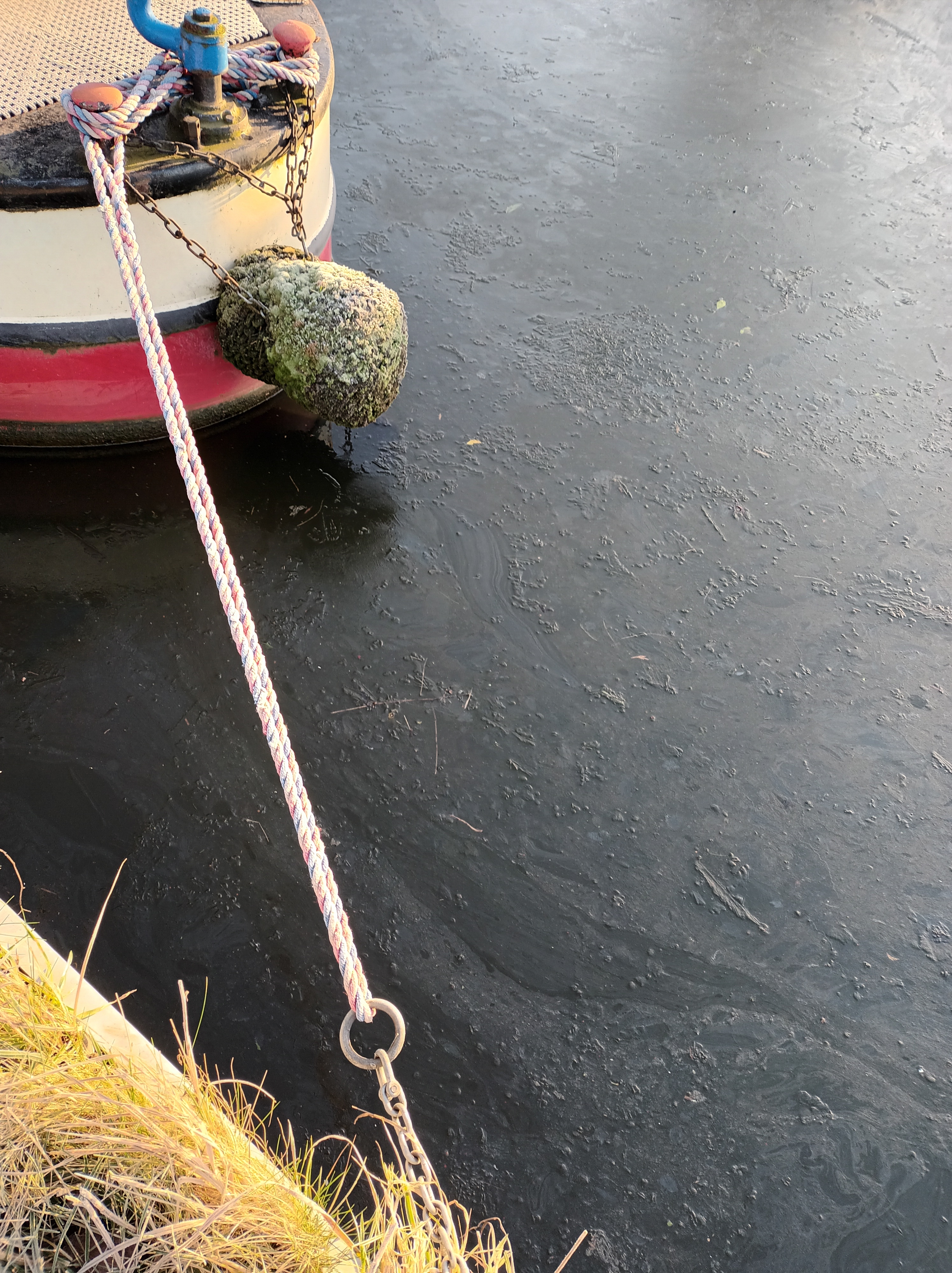
Animals stock up on food for winter hibernation…and I’m starting to do that with tinned, dried and longlife foods so we have enough if we get iced in on a part of a canal somewhere away from shops. If there’s ice then it’s not good to move the boat – the potential for damaging the protective blacking or other boats is real.

Some animals add body fat to get them through the winter…I think I’ve done that despite the fact that I don’t actually have any intention of living off it during the cold months! Time for extra exercise to burn it off I feel or as you can see – I shall roll off the boat in the Spring!

We will adapt our movement for the winter – muddy towpaths make for slithery walks, ice makes crossing over locks to operate them difficult and dangerous, it also makes lock spindles slippery, and the whole lock environment becomes riskier. To stay safe you need to take more time, move more slowly and with more care. In cruising terms, we want to reduce the number of locks we have to travel in the winter time – reducing the potential for accidents or incidents.

So we will adapt the way we cruise, looking for less locked routes (the latter is the reason so many people seek the Ashby Canal where we are now in winter as it has no locks for 22 miles), and seeking longer mooring stops.

We also need to adapt our travels to take into account the winter closure programme of canals which is created by CRT. As winter is a time when fewer boats use the waterways, CRT and others like Network Rail or gas companies plan a programme of essential repairs and maintenance during these months. There are 166 scheduled repairs to locks, bridges, and other elements of the network this year. Some last a few days, some months.

So wherever we move we need to take into account these works as they can completely shut canals for navigation, meaning we could find ourselves trapped a long way from vital services. That has changed our selection of routes. We originally thought of heading for the Shroppie (Shropshire Union) for the winter but having seen six scheduled works along its length stretching from 8 November to March 2022, we’ll enjoy it with all its improvements, in the Springtime. It’s good to see that some of the locks we’ve struggled with on canals in the past are down for some tlc this winter which will make boaters’ life easier. The Rochdale and the Llangollen, both on our travel wish lists will also be improved by the winter works which is good to hear.

We are also adapting the way we live on the boat – the windows are now encased in their secondary double glazing. Last year I said we needed to replace the old scratched and cloudy Perspex panels so we could see out better…but the pandemic put paid to that! Perspex became a high demand and high price item thanks to Covid demanding screens everywhere we turn. So replacing our double glazing can wait. We are going to snuggle down in a faintly fuzzy world for the winter. It will allow us once again to emerge blinking into a brilliant clear Springtime once we take them down. Perhaps next year we will take them to a Perspex company to use as templates for replacements.

We won’t migrate south to warmer climes but head north from where we now are on the Ashby Canal, which actually means we need to head south first as the Ashby is in effect a long cul-de-sac! We want to be midway between Leicestershire and Lancashire so we can reach either fairly easily should we be needed/wanted.

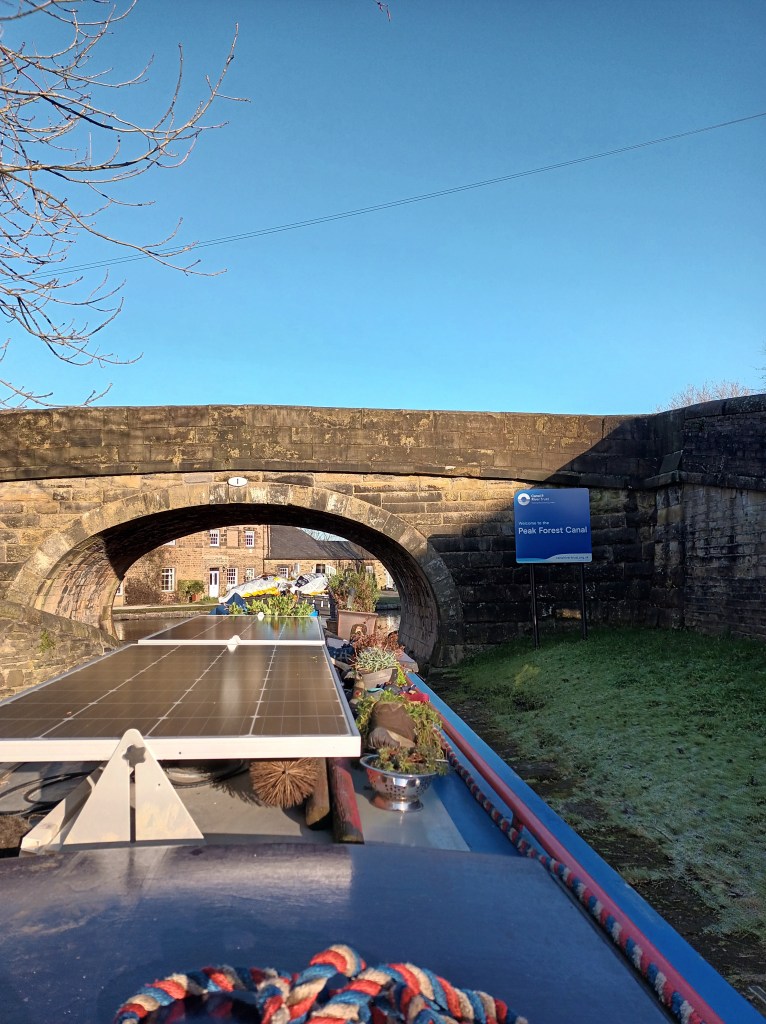
That gives us a variety of locations to explore – the Caldon, the Peak Forest, the Ashton, the Macclesfield (we travelled the Macc at a rush last year coming back at speed from Yorkshire so didn’t have a chance to discover its true character).

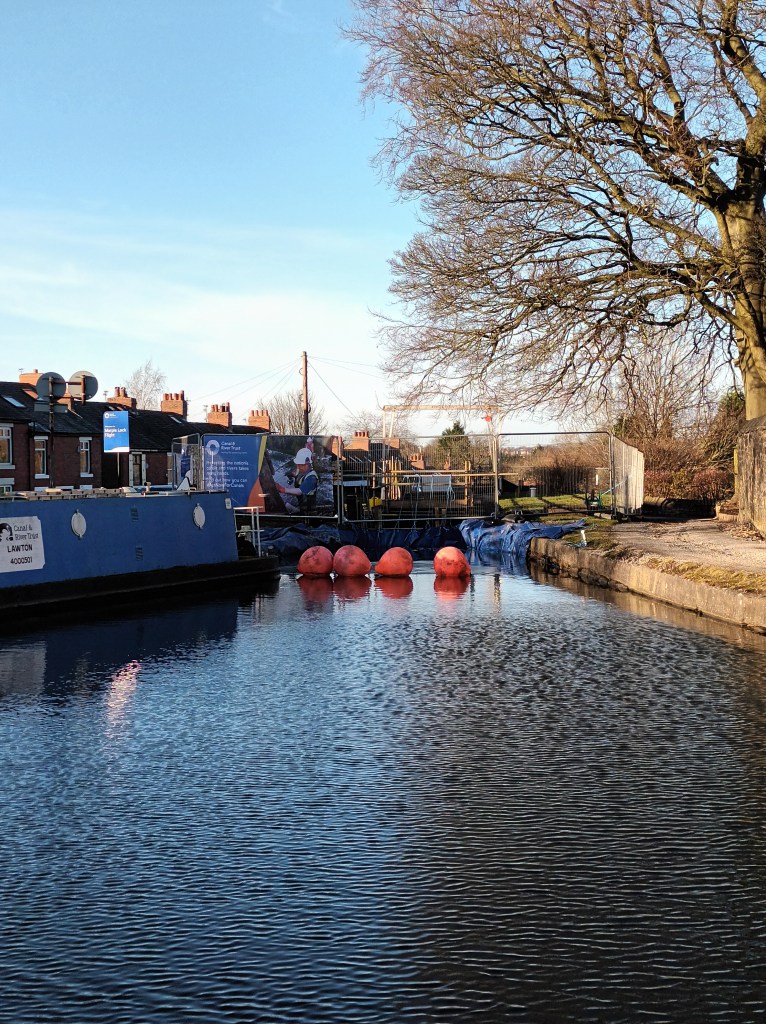
The Ashton Canal is a tiny waterway – just over seven miles linking the Rochdale, Peak Forest and Huddersfield Narrow canals. It may be short but work is scheduled for 5 projects there this winter on locks, from ladder replacement and grouting to replacement of gates and also the realignment of a towpath section for a new cycleway. Those works range in time from 8 November to the middle of March, so we’ll give the Ashton a wide winter berth!

Ashton (plus my finger) in the summer!

The Caldon extends 18 miles with 17 locks from Stoke-on-Trent to the Staffordshire Moorlands and Churnet Valley. It is a canal that came about to support two major industries – bringing limestone needed for iron making and flints essential for pottery. It has two arms, one leading through a low tunnel to the Wharf at Froghall, the other Leek branch ends at the River Churnet Aqueduct. These two branches will be benefitting from 5 projects over the winter, one a major canal bed replacement over an embankment at an early part of the canal will take from November to March. So the Caldon will be one for another season.

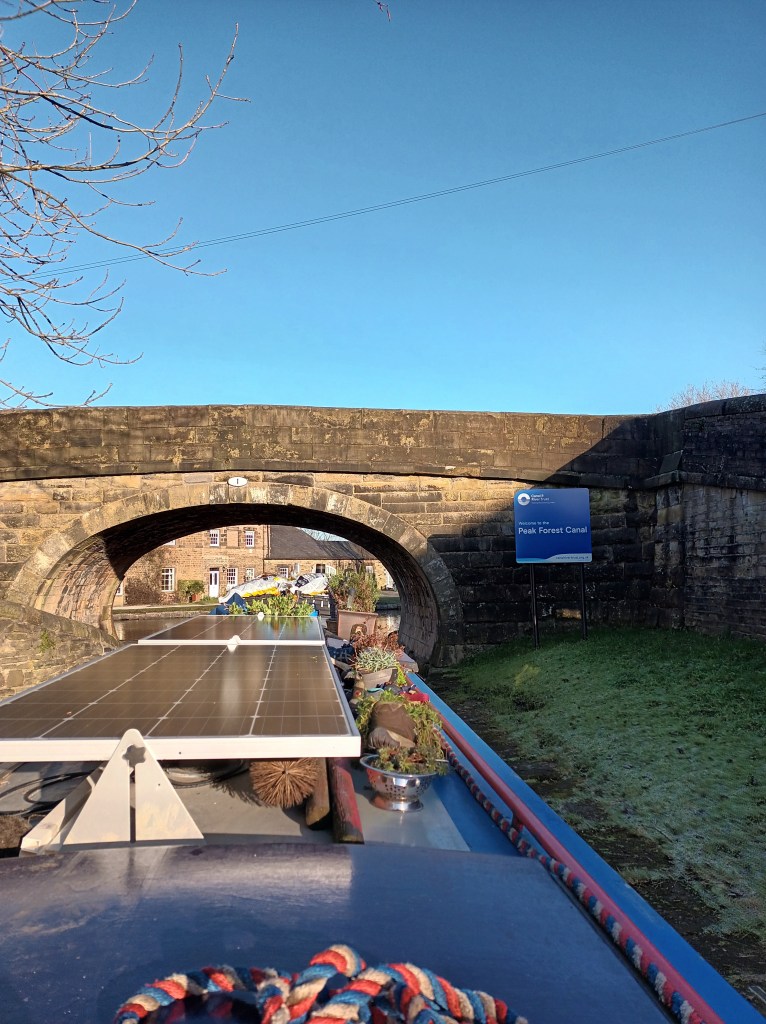
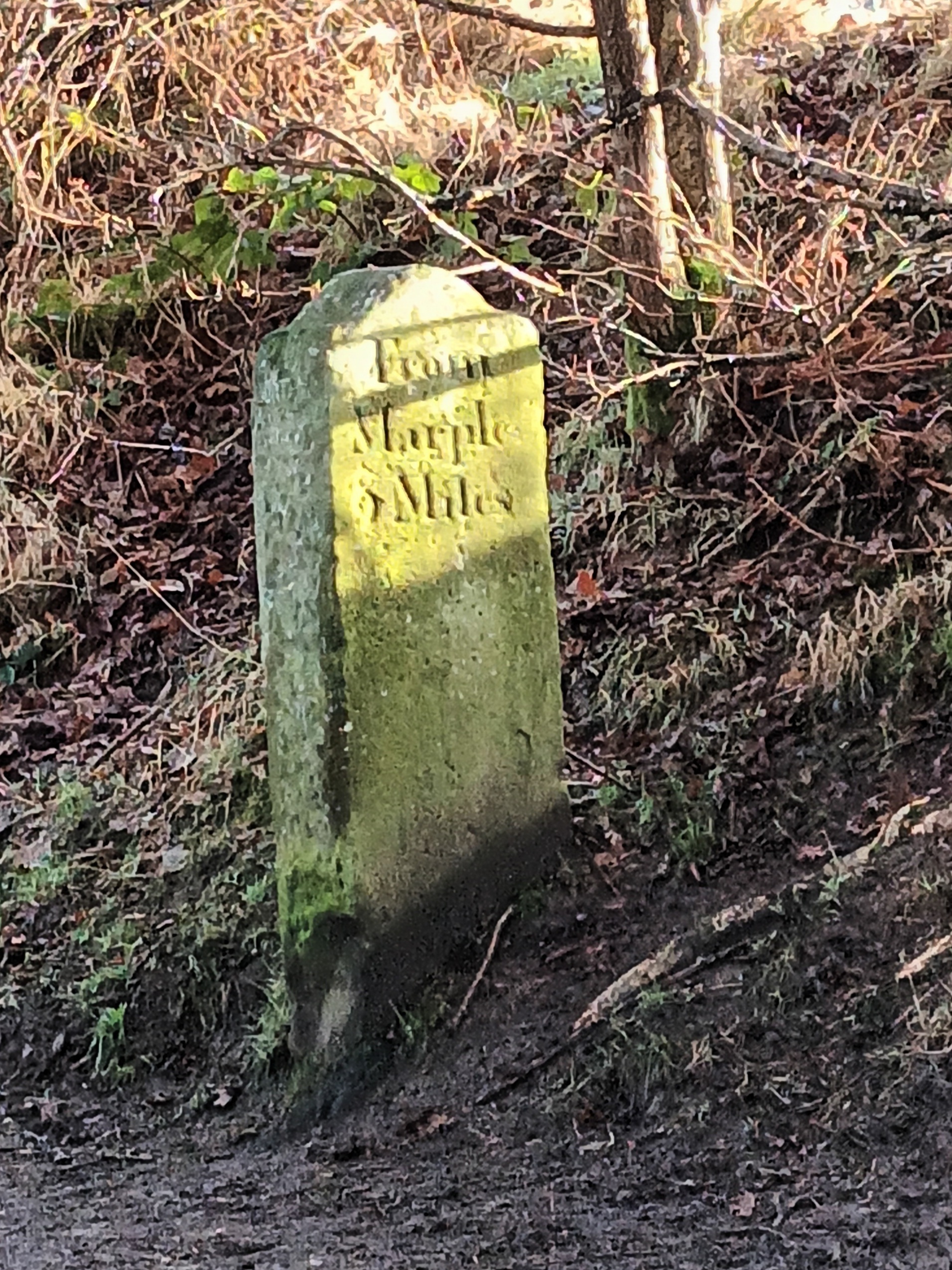
The Peak Forest is a canal we have enjoyed touching on in the past, but we haven’t really got to know it in detail. It runs 14.8 miles from Ashton-under-Lyne east of Manchester connecting to Whaley Bridge in Derbyshire. Four of the Peak’s 16 locks are being repaired during this winter, and to get to it we would need to travel the length of the Macclesfield Canal from where we are now. So it looks like the 27.5 miles of the Macc will be our winter destination – somewhere to explore with amazing winter walks along its length. The Macclesfield will take us from just near Kidsgrove near Stoke to Marle Junction with the Peak Forest in the foothills of the Pennines.

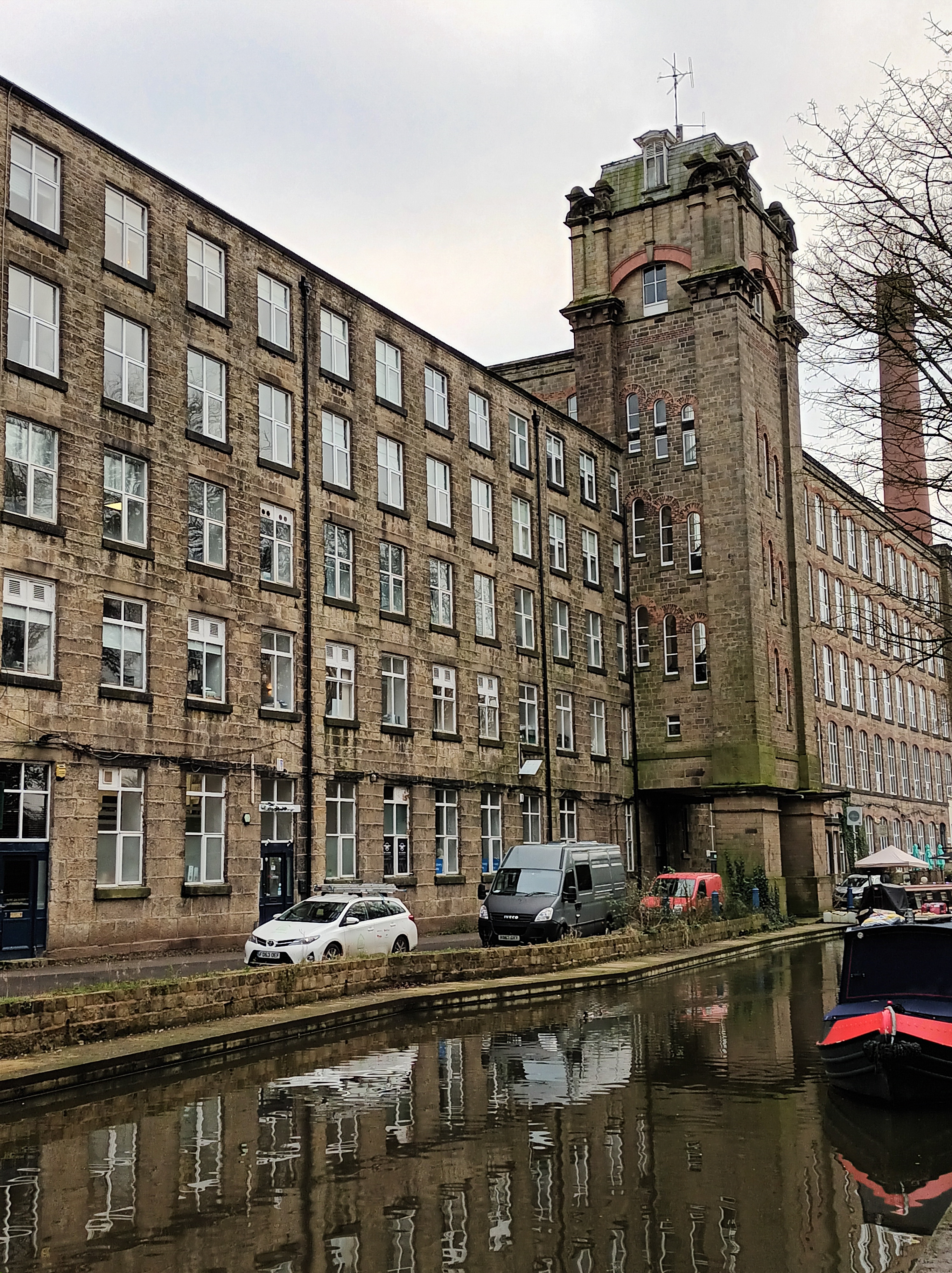
The Macclesfield is renowned for its beautiful countryside, fantastic walks and also includes some delightful towns – the silk town of Macclesfield obviously but also Bollington and Congleton. There are services along the length, and we didn’t encounter issues with wifi when we travelled through in the summer so we feel confident we can work there.

The Macc isn’t scheduled for work this winter. It was the subject of major work earlier this year when it suffered a breach when a culvert wall collapsed. A section of the canal had to be closed and drained completely for repairs. Hopefully there won’t be more breaches this winter…but if there are, well it’s a pleasant canal to be stuck on, with good fuel supplies and services.

First though we need to get there. We can’t set off until after 15 November when we will travel along the Ashby to the Coventry, up to the Trent and Mersey and onto the Staffordshire and Worcestershire Canal as we’re due at Action Trussell in Staffordshire the first week in December.

From there we will then head back to the Trent and Mersey Canal, before turing onto the Macclesfield Canal. That part of the journey will be delayed by stoppage work on the Trent and Mersey which we will need to wait to be completed. At the moment those works are scheduled from 8 November to 17 December. If the works are able to completed on time (depending on weather and the complexity of the work), then we might get onto the Macc in time for Christmas – but who knows? Time will tell – the only think we know for sure is that we will winter somewhere…!

Effective communication

Just as in business, education and let’s be honest any relationship – it’s not all plain sailing on the canals, and communication, or rather miscommunication, is at the heart of most issues.

This working week has been a sorting week for us – getting on with jobs that have been outstanding, prepping the boat for winter and preparing for exciting new projects (more in due course on this!). We’ve not cruised much apart from an early Sunday morning short move from one mooring point to another which turned out to be a slightly longer move than anticipated due to a fishing match. The fishermen were taking up the mooring spaces we were heading to so we continued until we found somewhere suitable and unoccupied!

It’s given me time for thought this week, and I’ve found myself going back to a thought-provoking TED-x talk by round-the-world yachtswoman Dee Caffari. If you haven’t heard it – do take time to do so. It seems so relevant if you are a boss, a leader, a team member, a parent, grandparent, wife, husband, partner, friend, colleague, teacher, lecturer, or let’s be honest – any human being who has any interaction with another.

On a narrowboat we don’t face the big seas and waves but we do have winds and we have bridges, blind bends, in some cases areas where one of the crew has to walk ahead to makes sure the navigation is clear unless you’re singlehanded when you can either push on and hope for the best, or walk ahead and run back to get the boat once you’ve established it’s clear!

On our travels round the network, north and south, we’ve seen everyone deals with these challenges in different ways. It doesn’t matter if they are holiday boaters, long-married couples, families or singlehanders travelling with others…communication is a key to problem-free navigation. Communication though is not without it’s difficulties…

Some blindly hope, others use sheer vocal volume (shrieking and shouting generally), some turn to modern technology bellowing into walkie-talkies or mobile phones if they have signal, and some resort to historic methods such as semaphore. For us the latter works well if there’s a line of sight. It overcomes the risks that you can’t be heard over the noise of the engine, wind or rushing water and in situations where there’s no line of sight we go for cautious slow approach until visibility is reached.

It’s been interesting travelling with others this year because you see how differently crews communicate, not only among themselves but with you too. If both of you are in a wide lock are you leaving one at a time or both together? I’ve had people say you go first and then they head off first, leaving me wondering who misunderstood! We’ve learned it’s best to communicate clearly by gestures with boaters – a clear after-you arm indication works for all nationalities, all hearing abilities and boating abilities too.

It’s not exaggeration to say that communication failure at locks can be a matter of life or death. Someone working the locks who doesn’t constantly look at the skipper on the boat to see whether they are ready can cause chaos or worse. Opening lock paddles creates powerful waterflows. They could knock an unprepared skipper off balance and into the water with fatal consequences, or sink a boat that’s on the cill or too close to the top gates. If a problem arises engine noise in a confined space, forcefully rushing water and rising panic can make it can hard for those operating the lock or on the boat to communicate with each other.

Sad reminders of the dangers of locks in particular are a regular sight along the canals

What and how we say it can have lasting impacts on individuals. In education I know the essential importance of feedback to students and colleagues – but how you say something is as important as what you say. That’s why audio, and sometimes video feedback can add so much to the words. It adds emphasis so the right things are taken from the words whatever type of day the recipient is having.

We all want to be understood and yet we take too little time to check understanding. Sometimes we don’t have long – a split second to know that what you meant has been understood. Sometimes you need simple, clear and pre-discussed signals and actions to make things instantly clear. Sometimes you don’t have that luxury. A hand raised palm forward as stop seems universally understood and is clear – unambiguous. It can be quite calming to communicate so clearly and quietly – amid often noisy settings yelling and shouting just seems to inflame situations, creating uproar where there’s no need for it.

If there is a breakdown in communication then it’s important for the future to understand what went wrong – without attributing blame (that’s the hard bit). Sometimes this is where gestures Dee talks of, can mean so much. A smile, a hug, a hot meal ready and waiting, a cuppa, and CAKE. All these communicate so much which goes beyond words. They are understood across generations and nationalities – as part of a universal language of understanding, caring and love.

A gesture speaks a thousand words – but also remember the power of a shake of the head, a frown, a shrug, a dismissive look, a judgmentally raised eyebrow – and think how those might be interpreted by others, even if meant as a joke! (It’s usually those closest to us that we fail in this way as I know too well).

In our communications next week afloat or on dry land, let’s show people we care about them and demonstrate that by taking time to check they have understood what we meant. Let’s think of others and be positive in what we communicate, and supportive in how we choose to communicate. That should be as good for us as much as it will be for those with whom we communicate.


After a year of trying – we can’t go on

A year ago as the second lockdown loomed in England in the face of the Covid pandemic, we were on the idyllic 22 lock-free miles of the Ashby Canal for the first time.

Our intention was to sit out the lockdown in a Marina, namely the Bosworth Marina, and then make our way to the current end of the still being-restored canal to at least let us say we had ‘completed’ the distance of a whole canal.

Just days before that lockdown was due to lift on 2 December disaster struck. On Sunday 27 November the Ashby was the subject of a breach.

Hundreds of thousands of gallons of water and the fish who lived in them poured out of a collapsed culvert flooding fields. A rescue mission was launched and stop-planks were installed rapidly, shutting off the canal and stemming the flow by lunchtime. In the marina stop-planks were installed shutting us all in to stop water being sucked out which would have led to the many narrowboats inside being marooned in the same way as those up near the breach.

Once the canal was stabilised and lockdown lifted we could move, but we headed out of the Ashby with alacrity rather than approaching the breach, feeling it safer to flee to the Trent and Mersey (where we then got locked in during lockdown 3 for three and a half months!). So we never did make it from one end of the Ashby Canal to the other, and it took until May this year for that stretch of the canal to be rewatered.

Almost a year later, after hundreds of miles and hundreds of locks taking us north into Yorkshire and south to London, we have returned to finish what we started.

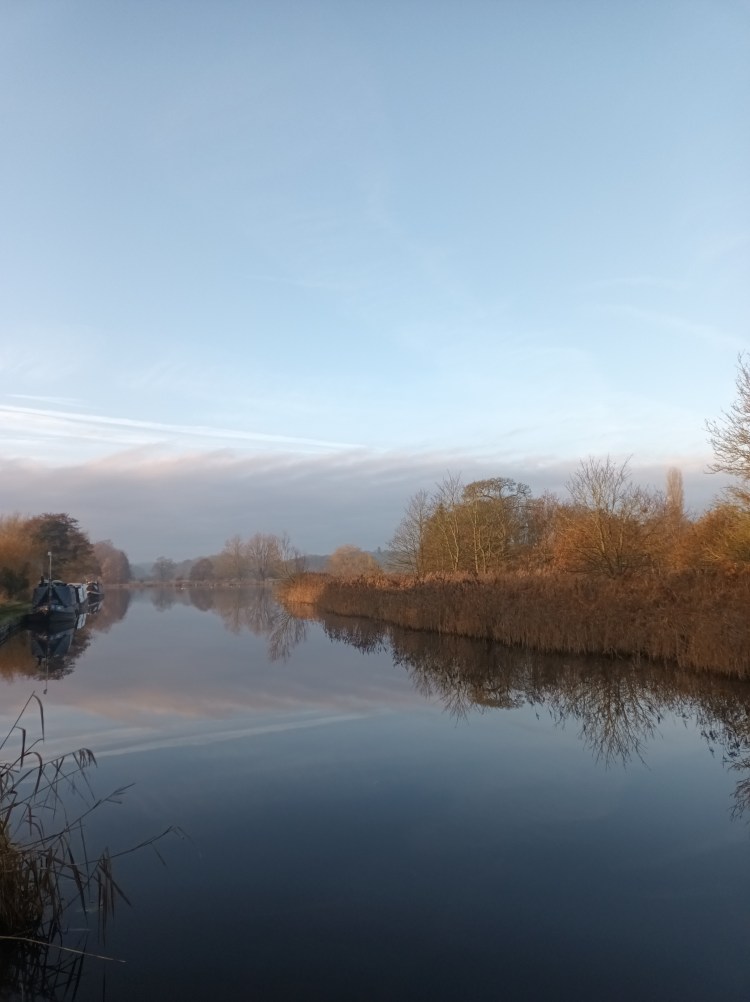
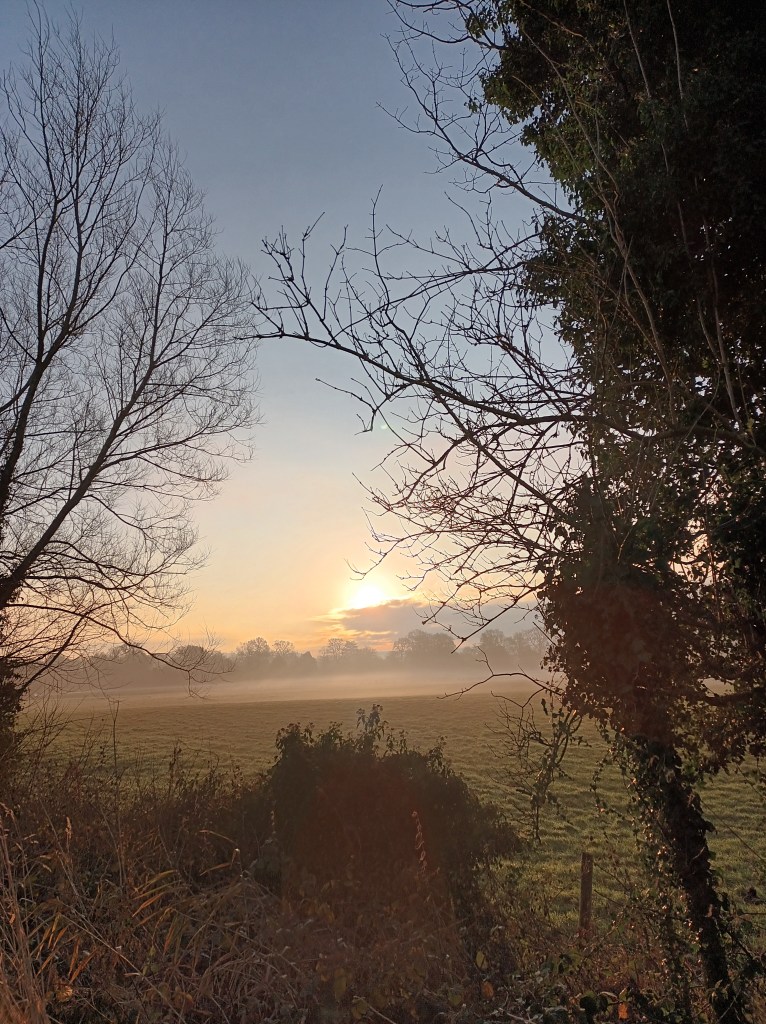
We turned onto the Ashby from the Coventry Canal early last misty Sunday morning. Steadily, with a stop for lunch en route, we found our way like homing birds back to a mooring spot near Stoke Golding which we had found blissfully quiet last year before the lockdown started on 5 November. Last year of course, the world had shrunk. People were staying home, travel was local or non existent. Dogs enjoyed being home with their owners, and holidays were on hold.

We found the mooring peaceful and idyllic in its tranquility. This year we moored up within a few hundred feet of our original location, behind a couple of boats, one of which we had seen here last year. Across the canal the same ponies grazed in the same field, and the same Canada geese took off in their V formations at dusk to fly to their nighttime nests, and return at dawn. But that was where the similarities ended. The peace and quiet was as distant a memory as a lockdown. People are now taking holidays, and not all with their pets.

Over the bushes from our mooring it appeared the farm buildings we could see were dog kennels, and we can attest that several of their canine guests may well be returning to their owners a little hoarse! Just one example of how the world has changed in this past year!

We moved first thing Monday morning to another mooring – designated visitor mooring at Sutton Cheney Wharf which had been out of commission last year. The intervening space has been well used by someone – whether the Ashby Canal Association or CRT I know not.

The moorings now enjoy a smart recycled pontoon with mooring rings, located just a couple of hundred yards from all services including hot, spotless showers (spa day time) and a fantastic cafe/restaurant plus car parking – £2.50 for 24 hours. What more could one ask? Well, possibly more than 2 days permitted mooring if I’m being selfish!

From there after our allocated time, we moved on, accompanied by a borrowed 4 year-old and his grandparents – thanks Lucas! We made it to Market Bosworth and moored up temporarily for them to disembark just before the marina where we’d experienced our first and only marina life. With just the two of us and dog aboard once more we carried on, to find a delightful mooring spot near Shackerstone a stone’s throw from the Battlefield Railway Line and its delightful cafe (spot the theme…!)

After a couple of nights we collected our own 3 year-old deputy tillerman, and we made it through the Snarestone Tunnel (where Tommy valiantly tested the acoustics at full volume – they’re amazing – check them out on our pickingupducks Instagram!) before arriving at long last at the finale of the Ashby Canal.

For the first time in all our travels we found ourselves faced with a canal closed sign and a canal-level bridge backed by stop-planks. We turned in the available winding hole, our mission complete. We can go no further on the Ashby for now.

A quick visit to the volunteer-run shop, 5 tombola tickets later we emerged the delighted owners of Ted the teddy (another one, won on the very last ticket, the only one ending in a 0!), and for a modest contribution as part of his birthday present, Steve became a member of the Ashby Canal Association. A fitting conclusion to what should have been a short journey but which has taken nearly a year to complete.

A year is nothing, compared to the efforts of those who laboured to built this canal to transport limestone and coal from the Ashby Woulds (interesting spelling isn’t it?) from 1804, or those who fought and indeed continue to fight to reopen the Ashby for boaters to enjoy in their droves today.

It is a beautiful canal, winding through beautiful countryside, much in the National Forest and it deserves the support of all who enjoy it – boaters, walkers, fishermen, canoeists, kayakers, paddleboarders, and runners of all generations. Let’s hope it can be enjoyed for generations to come, and that one way we can return again, this time to travel the full length from the Marston Junction, past the current terminus and winding hole, past the Moira Furnace to Conkers at the heart of the National Forest. If we can do that, then we can get in another excellent parkrun, just a little stroll from a mooring – if we aren’t too decrepit by that time to complete 5k!

Blisworth Tunnel Blues

Music has been a constant across generations globally to communicate and express our emotions, to lift our spirits, to soothe, calm and console. Whether we create it ourselves or benefit from the works of others, music is immensely powerful in provoking a human response.

Whether spontaneous or planned, music is also complex. Just a few notes have the capacity to teleport us back in time to a place, a person, a situation. A chord can change our mood, a rhythm can force us to move or keep us moving when we are flagging, and a voice in song can express much we would struggle to say.

Music is the accompaniment to our lives – big events, special moments, break ups, parties, farewells – each of us has, and will create a personal musical record of memories and meanings. We’ve collected a few new ones over the past weeks connected to the London Marathon.

What has this to do with canals? Well, I’ve always found music a supporting force, and was looking for something to get me through the next tunnel (never my favourite places). We’ve heard people singing in tunnels, we’ve heard blasts of music from passing boats, and regularly hear calls and shrieks from small children exploring the acoustics. We have though, tended to go through accompanied only by the rhythmic reverberation of the engine and sporadic, percussive water splashes landing on and around us from the tunnel roof.

Our next tunnel was going to be Blisworth – the ninth longest canal tunnel in the world that snakes for 1.74 miles under Northamptonshire’s Blisworth Hill at a depth of around 43 metres. This mighty feat of engineering took many lives in its making, and has cost several since in the days men had to leg boats through, lying precariously balanced on boards and pushing the boat along with their legs against the sides of the tunnel. Completed in 1805, this longest tunnel on the Grand Union Canal is a monument to all those who painstakingly built it by hand with picks and shovels and barrows. The one that’s open is actually the second tunnel to be built under this hill – the first attempt in the late 1700s collapsed because of a failure to identify and factor in the quicksand all around.

On our London sojourn and return I knew we would pass through this cavernous blackness twice. It is a tunnel I find both daunting and oppressive, more so than many others we have passed through. I think this is because you once you enter you see no light at the end of the tunnel because of an S-bend in the construction.

I knew I needed something to get me through Blisworth, and in searching came across the Blisworth Tunnel Blues by George Nicholson. Naively thinking jazz, southern folk style music, I searched for a copy… finding only sheet music which appeared for a soprano and orchestra. Vaguely wondering if I could do something with voice and a penny whistle which is all I have on board right now, I sought the score. When it appeared I realised I was labouring under two illusions – it was way beyond my musical abilities AND it was not the blues as I had expected, but the epitomy of the blues Blisworth creates for me in terms of mood. It seemed particularly appropriate that it had been commissioned for the Orpheus Ensemble.

George Nicholson it appeared, was a fellow Blisworth sufferer! I tracked him down at the University of Sheffield where he’s the august Emeritus Professor of Music, and discovered that he last encountered the tunnel in 1978. He remembers it vividly and it hasn’t changed at all.

“What impressed me most about Blisworth was the darkness, the fact that you were cut off from the outside world for about half an hour at a time. Once the tunnel bends round you can neither see light behind you not in front of you. I also remember the periodic showers of water from the air vents that fell on me as I steered us through.

I found it a very compelling experience, not exactly a comfortable one, but certainly memorable and thought provoking.”

George Nicholson

George told me he composed this extended orchestral song cycle “to play for the same length as the canal boat journey through the tunnel, give or take a few moments in the open air at either end of the trip.” That’s a challenge if I ever heard one! (The piece as written and played totals 37 minutes and 41 seconds).

He kindly sent me a link to a recording of Blisworth Tunnel Blues in which the soprano is his wife, Jane Ginsborg. Obviously there’s no connectivity so far underground so another musical friend of mine, the accomplished and versatile vocalist and trumpeter Avelia Moisey and her technically savvy husband Andy converted it for me to an MP3 so I could play it in the tunnel on our return.

So this week, for what I believe to be the first time ever,a recording of Blisworth Tunnel Blues was played in its namesake location.

I first heard the piece one evening in stationery, late autumn sunlight. This time could not have been more different. We climbed the 7 locks of the Stoke Bruerne flight in crisp sunshine that made the autumnal reds, yellows and oranges blaze.

It was early afternoon and the sun was filtering weakly through the beech trees surrounding the cutting by the former leggers’ hut as I started the recording playing from the open cratch of the boat – as far from the engine as possible. It was the accompaniment to our journey into the inky blackness of the tunnel.

I had warned the boat ahead of us of my intentions just in case we scared the living daylights out of them but they were well ahead and actually couldn’t hear a thing over the noise of their engine.

In situ, the constant bass rumble of the engine and intermittent percussive splashes as drips fell into the water around us, or hit the metal shell of the boat added significantly to the atmospheric nature of the piece for me. I was conscious that my anxiety levels began to rise as I listened to the music reverberating around me, as we moved deeper into the darkness. Suddenly at 23.19 minutes into the music, as Jane Ginsborg’s beautiful voice clearly articulated “I had a dream…” the pitch black around me was lit by a ghostly white presence alongside the boat – a calcified side to the tunnel which looked eerily human in form.

Suddenly the music was overshadowed by an abrupt drop in engine revs and a hammering on the roof – Steve’s signal as tillerman of an issue so to the accompaniment of what sounded like chimes at that point, I dashed to the tiller to discover that the boat ahead had veered into the right-hand wall and appeared side on across the tunnel in our headlight. Steve was concerned its sudden collision might have been the result of a loss of steering or power.

Adrenalin pumps at times of stress, and the spoken voice rises in pitch. As I returned to the bow of the boat to see if I could identify the issue ahead, the rising soprano line piercing the darkness matched my increasing tension. Fortunately the boat ahead recovered and moved on before we reached it.

The words of Blisworth Tunnel Blues are based on texts exploring darkness, blindness and alienation, starting with Emily Dickinson’s We grow accustomed to the dark (personally, I don’t think I ever shall) and ending with a section from Byron’s Darkness prompted by the volcanic ash cloud of Mount Tambora’s eruption that blacked out the summer of 1816. Both in their way appear black and bleak but have much to offer in terms of hope and resilience. Dickinson’s poem is about how we humans stumble about until our sight adjusts in darkness. Byron issues a warning of an apocalypse, a call to care for our planet and the threat that hangs over us if we don’t – a message as timely today as in 1816.

This particular journey through the Blisworth Tunnel was the most memorable I have ever taken thanks to George Nicholson’s composition. The music didn’t comfort or console in any way but reinforced the dark, dank, underground experience in the most remarkable way. It was with immense relief that I approached the light at the end of the tunnel.

I emerged into the dappled autumn light of the Blisworth end of the tunnel both shaken and stirred by this remarkable experience. I felt like I had been holding my breath the whole way through, and was also acutely conscious of the sweet, musty smell of autumn which greeted me as I emerged into the light. To hear some very short (fair use) clips of our experience then visit pickingupducks on Instagram on 16 October 2021.

I wondered how it would have sounded without the throbbing, percussive bass of the engine and the chiming of the water splashes – perhaps one day someone will take an electric boat through the tunnel to the accompaniment of George’s music. What I would love to experience would be a trip through the Blisworth Tunnel (did I really just say that) on an electric boat hosting a live performance of the piece.

And the timing? It was pretty close to perfect – we emerged at 34.18!

A memorable week – was yours?

Last week for us was yet another crammed with memorable moments. It makes me realise that it’s not possessions or work but people and events that make most of our important memories. What memories will you keep from last week?

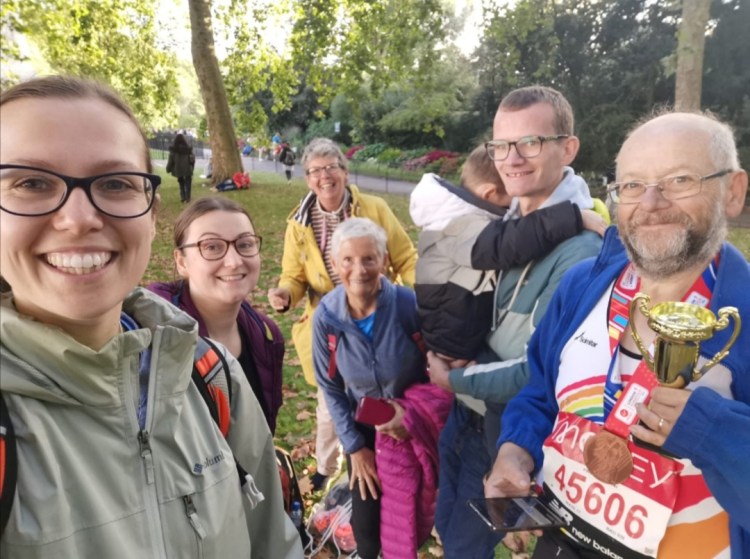
We came to London to run a marathon and that’s just what Steve did. We also had a chance to catch up with family and friends which was fantastic. It’s the effort people make to come and visit us on the boat, or support Steve on the marathon, or share meals with us, which is memorable.

Then one day of recovery and restocking calories (for two but only one had burned them off) with visits to boat cafes, with walking in London, along Regents’ Park passed the Zoo and into Camden for more food before heading back via a tavern…

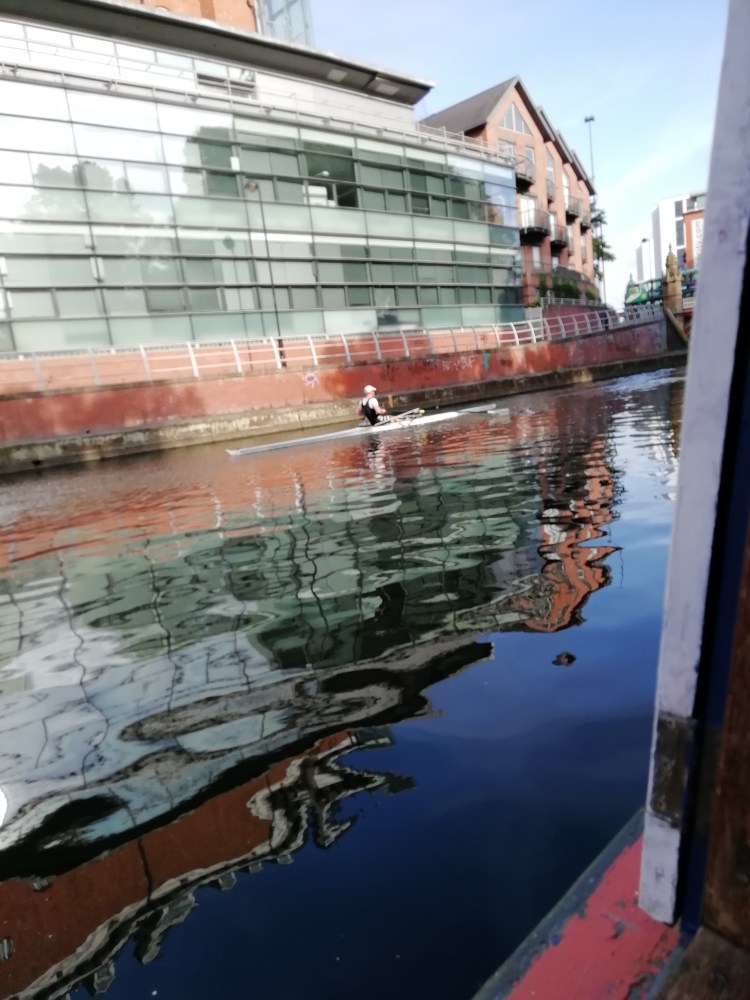
And then we escaped the hustle and bustle of London. It surprised us just how quiet the mooring at Little Venice was. There are just 2 Canal and Rivers Trust moorings there, right on the edge of Rembrandt Gardens which is locked overnight but when open gives a handy shortcut from the mooring to Warwick Avenue tube station. The moorings are opposite a small island, which is inhabited by swans, ducks, Canada geese, cormorants and coots. The surprisingly raucous sound of the wildfowl often drowned out sirens of emergency vehicles travelling to nearby St Mary’s Hospital.

We were hugely fortunate with the weather – Saturday brought torrential rain as did Monday night causing flooding in the Capital. The marathon on Sunday though was largely dry apart from a heavy shower when Steve was running round the souless Canary Wharf. Fortunately the skies and Steve dried out by the finish line. Good thing too, as he’s still promising that is his last full marathon!

This week has reinforced my belief that it is actually possible to run any business from a boat. We’ve encountered the Puppet Barge, a Cafe Boat which served astonishingly enormous breakfasts (although it still didn’t rival the breakfast rolls of Boat Street – the floating cafe at Mercia Marina run by Chris and Kim), a recording studio, a welder and a floating concert hall with a grand piano.

From our travels we’ve already encountered a softserve ice cream boat (the sublime Wobbly which also serves candyfloss and fudge in what seems unlimited flavours); Holly the cafe boat with Jo’s amazing homemade cakes; a hairdresser; a wood carver and artist; Holm Oak Trading which sells a huge range of eco products for home, human and canines plus clothing from recycled offcut materials, so reducing waste, and the luxurious Pullman seating of Boat Street Cafe.

I’d be interested to know what business actually couldn’t work on a boat?

Our memories of cruising south are how very different it feels to boating in the Midlands or the North (our experiences to date).

  • Few boaters we’ve spoken to are travelling any significant distances – many shuttling rather than cruising
  • There are many more floaters than boaters – people using floating structures as homes rather than homes plus transport. It’s understandable given the space and cost issues.
  • How many boats/floating structures are in a poor state of repair, through lack of funds or lack of knowledge perhaps?
  • The number of loose boats we have had to catch and re-moor or manouevre round – widebeams, cruisers and narrowboats!
  • The bulk of Britain’s widebeams seem to be gathered south of Watford Gap!
  • The significant debris on towpaths – much boat fit out waste in certain places particularly irritating alongside lock moorings. It all takes up valuable CRT time and resources to clear meaning they can do less in maintaining or improving the infrastructure of the waterways

We’ve encountered CRT staff and volunteers in various places, in emergencies and unexpectedly and they have always been cheerful and helpful. They have responded when we have needed them, for which we are hugely grateful.

We got to share the first day’s cruising memories of a couple who sold up everything and moved onto a narrowboat with no prior experience of one; we met the last finisher of the 2021 London Marathon (a justifiably proud 83 year old); saw some interesting floating roof gardening (wonder if I can manage wisteria…not sure if the other plants on an adjoining boat were legal…), and moved from pea soup algae covering the canal on the Paddington Branch to another invasive species, pennywort, clogging locks and propellors further north. We, like other boaters, are dragging it out constantly, and will keep doing no doubt as we head north.

For now though, we’re back under the M25 and heading to see family and friends in Bedfordshire and enjoy more memorable promised meals in their company before moving on once more.

The smoky, damp scent of Autumn is in the air, mornings start misty and chill giving way to late sunshine or torrential rain – who knows which way we’ll go or what awaits us round the next bend?

Our slowlife 5-day week – how does yours compare?

This is a week designed to get Steve to the start line of the London Marathon for Sunday morning. Unlike others taking trains or cars, we’re going by narrowboat and starting this leg of the journey from Leighton Buzzard.

Monday – Set off from Leighton Buzzard in Bedfordshire in steady rain accompanied by a strong wind which by the first lock had developed into a downpour.

We weren’t the only idiots out in this weather – another boater whose view of Britain and its weather was expletive – such was his lack of any additional words forced us both to laugh out loud. We also met the Aussie Boater to shout to – about the weather of course! Rain and wind battled us until suddenly the sun came out and we forgot about the rain and the wind. Passed watersides being developed, boats whose owners have a sense of humour (I think) and strangely shaped bridges.

Met a pair of ex working boats who gloomily passed on the knowledge that Berko (alias Berkhamsted) has little water resulting in problem navigation so tomorrow should be fun…

Moored up for the night in woodland on the Tring Summit so it’s all downhill from here. Also handy for a supermarket which Steve volunteered to trek to as part of this week’s training! 18 locks and a swing bridge for exercise today. Plus 10 miles, 5.5 furlongs and sorted rather a lot of emails.

Tuesday – Set off in rain but fortunately it cleared during a Bushes Lock no. 50 drama. The bottom gates of the lock were wedged slightly open and nothing we could do would close them, so opening the paddles would just pour water from the pound above the lock into the pound below draining one and flooding the other. We called CRT (Canal and Rivers Trust) for help, put the kettle on, made a cuppa and sorted invoicing which I had been putting off whilst waiting for them to appear.

Prevarication over, invoices sent and bang on time CRT arrived. They had had to overcome a diesel theft from the van and find a place to sell them more fuel so they could get to us, and to others needing help. With the aid of a 3-extension-pole rake expertly manipulated from perched atop a gate, the cause of the problem was found and extracted – a chunk of wood embedded in gravel which had stuck the gates fast.

Off we went once more, now in sunshine and alternate showers making up for lost time with lots of small children waving at the boat from the tow path as they walked with parents and grandparents.

Through Berko in the rain, a famous canal town and indeed apparently renowned as the place where sheep dip was invented.

No sign of the low pounds that were threatened but we faced a torrential rain storm which called for an early stop for lunch, and encountered lots of locks which were empty when we arrived. Long term problems of leakage means they have to be emptied – at least coming back this way they should all be in our favour!

Even allowing for the extra time required, we made 7 miles 7.25 furlongs , 18 locks and another swing bridge today.

Torrential rain struck again as we moored up for the night opposite Boxmoor just outside Hemel Hemstead and it rained almost continuously until the early hours, which should help the water shortage.

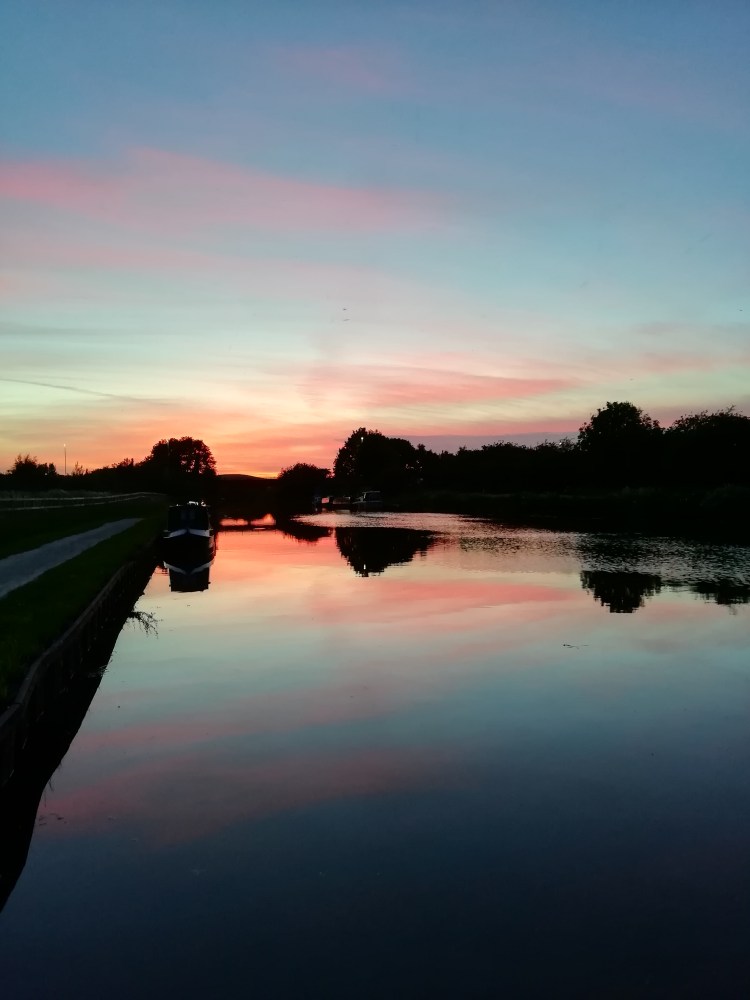
Wednesday – Right opposite the moor was a petrol station with a tanker delivering. No queues when I took the picture below, but by the time we set off in a beautiful low autumn sunrise which called for peaked caps so we could see where we were going, the word had gone out and cars were queuing down the road.

Sorted plumber for a property boiler issue on the way, and headed under the M25 feeling hugely sorry for all those way above us, working on scaffolding or whizzing along in cars and lorries.

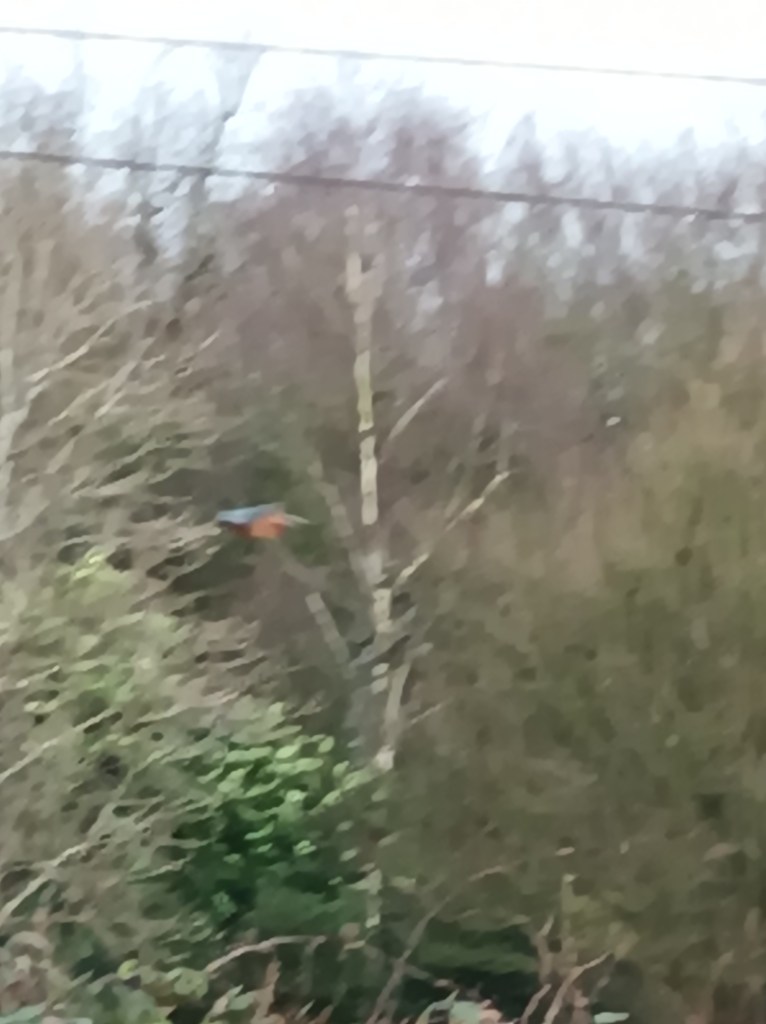
Just minutes from the madness of the M25 the canals are peaceful, tranquil and utterly beautiful. Herons,kingfishers and coots delighted us as we chugged along, through little bridges enjoying stunning autumn colours.

We made the most of today’s sunshine – according to the forecast it could be the only good day this week. En route we filled up with water – always a necessity and emptied the loo (also vital!). Towards the end of the day we found a cruiser floating loose which we remoored, and a large narrowboat blocking a bridge – we also remoored that! Good deeds done for the day we ended our 10 miles 5.25 furlongs and 20 locks to moor just outside Rickmansworth near Stockers Farm, a location for Downton Abbey, Bridget Jones: The Edge of Reason, Midsummer Murders and Black Beauty to name but a few.

Thursday – As promised – the rain returned to start the day so clad in full waterproofs we headed out once more.

Rain always slows things down – you need to be extra careful on locks which become slippy – it’s better to be slow and sure than risk an accident which could derail plans altogether. This was underlined by a single-handed boater we met and helped through two locks – he was literally single-handed having cut through his wrist with a Bushman’s axe the weekend before. He managed to get a tourniquet on his arm and tighten it, administer first aid and call for help. He was blue lighted to St Mary’s Hospital, Paddington and has now disposed of the offending axe as being too sharp, too dangerous and yet there he was with his arm strapped up, having to move his boat because he needed diesel for his stove and to keep the boat mobile.

Having done our good deed for the day we then encountered another single-handed but two armed boater and went through the next lock together. We also found a rubbish store that wasn’t overflowing and emptied the bins, but no chance of separating the recycling and general rubbish. Cannot remember the last time I saw a recycling place at a CRT rubbish store.

It was slow going today because of all the moored craft of all shapes and sizes, and in all states including right across the canal.

Requirements to slow down for them all made it slow going, but we made it onto the Paddington Branch and up to Southall, to moor in the rain for the night. Completed the final 7 locks of the journey today, 13 miles in total.

Friday – Started with lateral flow test as Steve has to register one with the NHS and the London Marathon in order to compete on Sunday.

Daft but it seemed really stressful after all this training, all this fundraising to think a line in the wrong place could cancel out all his efforts. Bedecked ourselves out in full waterproofs after heavy overnight and early morning rain, whilst we were waiting for the test result to appear. It was negative and by then the weather had cleared – it stayed clear for the rest of the journey but we didn’t stop to take the gear off just in case!

One moment of high excitement and tension and I didn’t have the camera with me. A squirrel overreached itself on a tree overhanging the canal and fell PLOP! straight into the water alongside the bloat. As I went for a net to fish it out, it rose to the surface and began determinedly swimming for the opposite shore where it managed to scramble up some grasses, shook itself and then headed off to explore its new location.

London grew up around us as we headed in. Boats here are residential accommodation in the main, whatever state they are in. From plush and floating Grand Designs to shacks almost afloat, they are homes.

Arrived at Little Venice after the slowest journey ever through moored boats as far as the eye could see. Travelled the whole of the last few miles on tickover. At least it meant we ate lunch gently on the go! The visitor moorings (2 of them) are next to Rembrandt Gardens and right opposite the island, Puppet Theatre Barge and convenient for the zoo, and Camden Market. So we are here at last!

This however is a weekend for supporting rather than sightseeing! Once moored we sorted out the fix to the boiler thanks to the engineer, wrote this blog, reviewed a journal article, responded to a magazine editor about a commission, introduced ourselves to our neighbours and Steve headed off to collect his marathon number/deliver his kit bag from ExCel. A 5-day week of worklifebalanced covering 53 miles, 7.25 furlongs and 63 locks, and now we are in place – marathon ready!

As you can see I discovered a fabulous new motto this week. Hope your week was as good, with as much challenge and fun.

It’s not a sprint – it’s a marathon

Sunday October 3 sees the return of the London Marathon to the English capital after a pandemic hiatus. For us, having made it down there and moored our narrowboat in the city for the first time, it will be a momentous, nail-biting day.

Steve will leave the boat on that Sunday morning to run 26.2 miles for the first time in the London Marathon. Last year he also ran the marathon from the boat but it was the virtual event due to Covid, and he was on familiar streets around Leicestershire, supported by fantastic friends and family. Particular thanks for last year have to go to Ali, Jo, Jack and Freya who paced alongside him for the event. This year is a very different story, in many, many ways.

Firstly, we’ve taken from August to bring the boat down to London to moor in the capital for the event. It’s been a journey down of 153 miles, 7 furlongs and 145 locks. Without lockdowns it has meant we have been able to see friends and family en route which has been lovely, but it has meant that training has been incredibly hard for Steve.

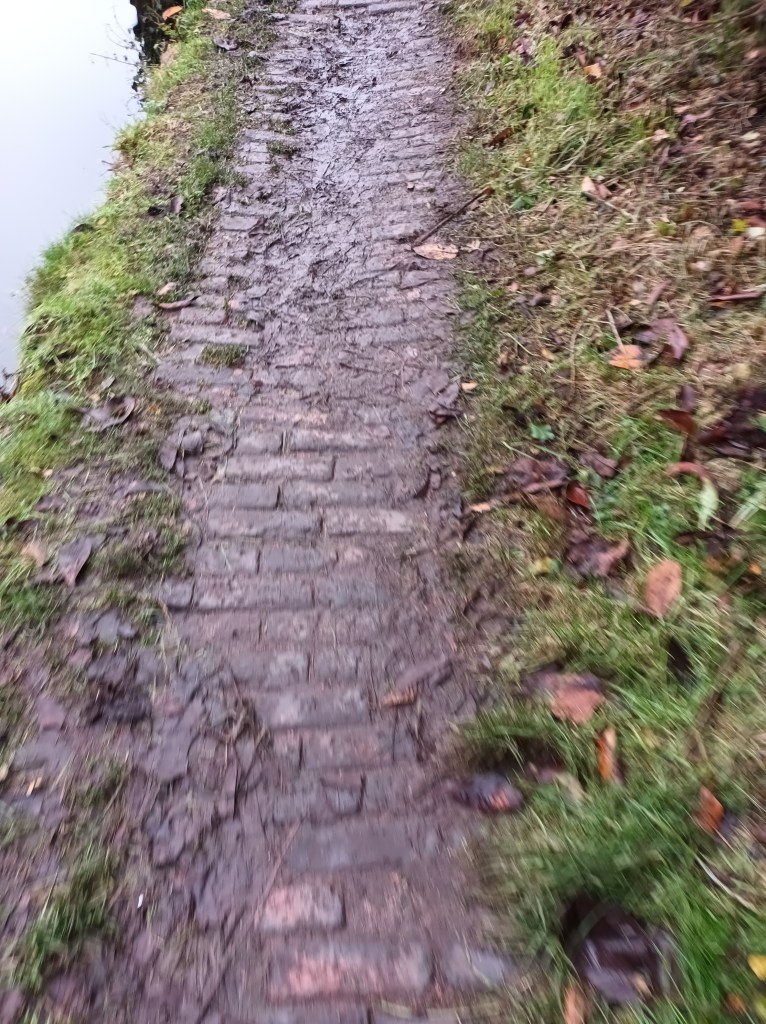
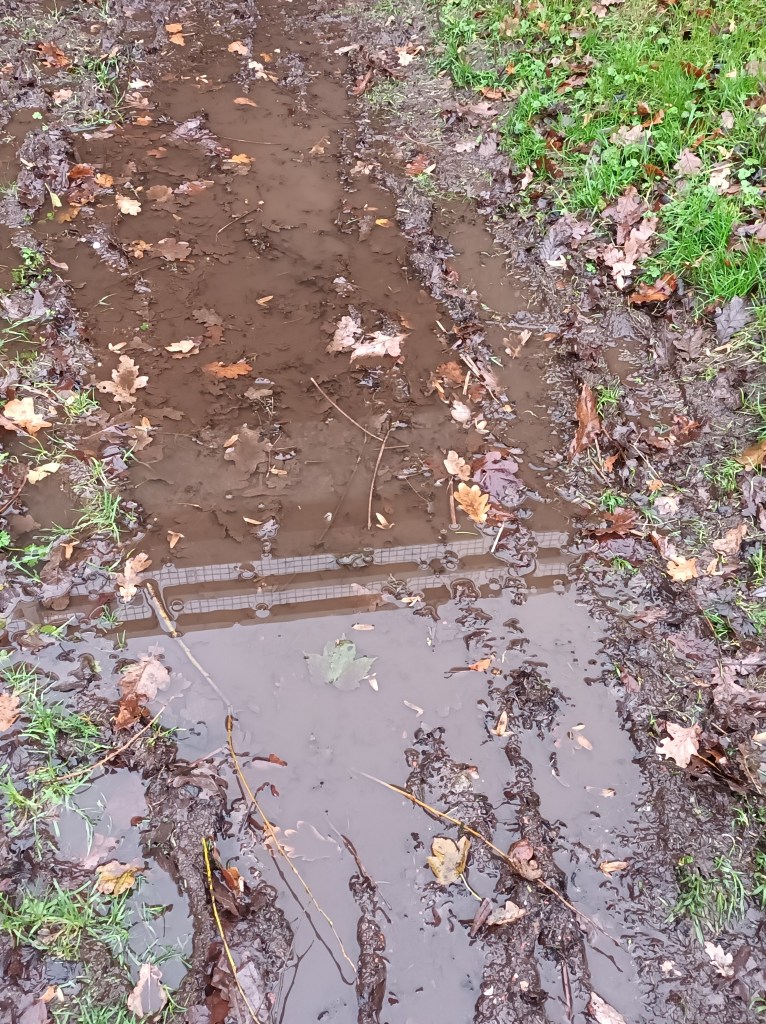
Secondly, for all previous marathons, and for last year, he was training in familiar places, on routes he knew, and crucially at least once a week he was able to train with others, which as every runner knows, enables you to increase speed and stamina whilst supported by those around. This year virtually every training session for him has been in unknown territory – he’s had no idea what the underfoot surface is like even if he can see gradients, distances etc. from the web. Sometimes he’s found himself on towpaths which are paved or compacted. Other times he’s encountered thick mud impossible to run on so then it’s been roads – often with no pavements. His trainers have taken a pounding along with his legs!

Rarely has he had people to run with him. I am only just returning to running, and so of no use. The dog is too old. So hour after hour he’s been running on his own in areas he doesn’t know, sometimes coming back covered in scratches from brambles, having done detours where routes were blocked or lengthy loops just to get back to the boat.

Thirdly add to that – he’s had Covid which has affected his speed and stamina. He’s returned from training runs gasping for breath and dejected at his pace which has been much slower than his previous marathon training pace at this stage. He has had to accept that he is now aiming to walk part of the 26.2 miles in order to conserve his energies to finish the event.

But despite all these struggles and setbacks – he keeps going, battling on, putting one foot in front of the other, lacing up his trainers to head out into the unknown after moving the boat during the day, creeping from the boat early on Sunday mornings to head out for miles and miles. The trainers he’s worn out in training are all recycled – and put to good use!

All this because he’s made a commitment to a small national charity which does amazing work and which depends on every penny Steve and the other #TeamVicta runners can raise. Victa supports children and young adults from 0-29 who are blind and partially sighted to live life to the full. Crucially the charity also supports their families too.

Like many small charities, those who have encountered Victa’s work recognise how essential it is. If you’ve never experienced blindness or partial sight, then it is hard to comprehend how limiting it may feel, for the individual and also for their family. Victa builds confidence, independence and enable access to the activities and experiences many sighted people take for granted. Those receiving their support say it is life-changing in the most positive way.

It is for Victa that Steve is running the marathon. It is for them he has been training for nearly 2 years now. He began training in January 2020 to run the marathon for them in London in April 2020, but as we know that was cancelled. He carried on training, with a hope that there would be a marathon in London in October 2020. Eventually he ran the Virtual London Marathon for them in October 2020. Now he will run the London Marathon 2021 for them in London at last on 3 October. It’s not his first marathon, actually his fourth, but for him it is hugely significant.

Getting over that finish line has meant 22 months and hundreds of training miles – and now Covid has dashed his hopes of completing what he says will be his last marathon in a time he wanted. There’s nothing any of us can do to make that happen for him. But something we can do though is get him to his fundraising target. Thank you so much to everyone who has sponsored him, and generously donated to Victa’s vital work in the process.

When you sit back in comfort and put on the TV to watch 50,000 runners putting in the miles from Greenwich to The Mall on Sunday 3 October they will be joined by 50,000 runners running the same distance in all sorts of locations across the world on the day taking part in a Virtual London Marathon. Together they will be fundraising for thousands of charities and raising the profile of running for physical and mental health. Steve will be proudly wearing Victa’s rainbow colours again,. This year his number if you’d like to follow him on the app is 45606.

I’m in awe of all those running, but I am in particular awe of my amazing husband who says he wants to celebrate his 65th birthday later this month knowing he’s completed the London Marathon in London and raised vital funds for Victa’s work.

My amazing husband’s journey from fat to fit is one which is nothing short of inspirational – he’ll probably kill me for saying it or even showing it, but I am so proud of what he has done. I hope his efforts inspire others to achieve physique and fitness they would never have dreamed of by hard work, training and determination. He has been q quietly inspirational role model to me, and to many who have had the good fortune to meet him. The difference he has achieved and maintained from 7 years ago is remarkable – as you can see.

If you haven’t sponsored anyone in the London Marathon – please consider sponsoring Steve. He’s so nearly (97% at the time of writing) at his target of raising £1700 for Victa now. If he could get to the start line knowing that he’s raised his target or even bettered it, it will be an amazing psychological boost. You can be the one to push him along those long 26.2 miles to the finish in The Mall. Just click on this link to add your support – it doesn’t have to be a big donation – every penny counts.

This event which supports so many people is just like life – a marathon, not a sprint – something to train for, develop ourselves for, and it’s necessary to remind ourselves to enjoy it on the way with the support of those around us, family, friends, and strangers.

Thank you for your support. If I’m honest – I just want to see him safely at the end of this one, and I want to believe his pledge that this REALLY is his last.full.length.marathon!

The end of a year afloat and hardest blog to write

Exactly one year ago we sold most of our possessions, let our house and the two of us (plus the dog of course) moved to live full time on a 50ft long, 7ft wide narrowboat continuously cruising the waterways. Our adventure began at Sileby Mill in Leicestershire on the canalised section of the River Soar, formally known as the Grand Union Canal (Leicester Section – River Soar Navigation).

Since then have have completely departed from our previous existence which was living on the hamster wheel of long hours and work dictating our lives. We no longer need to commute. I’ve gone freelance and returned to journalism as well as continuing some Higher Education work – all of which is delivered remotely. Steve continues to operate his existing property business from the boat and his portfolio now includes what was once our home.

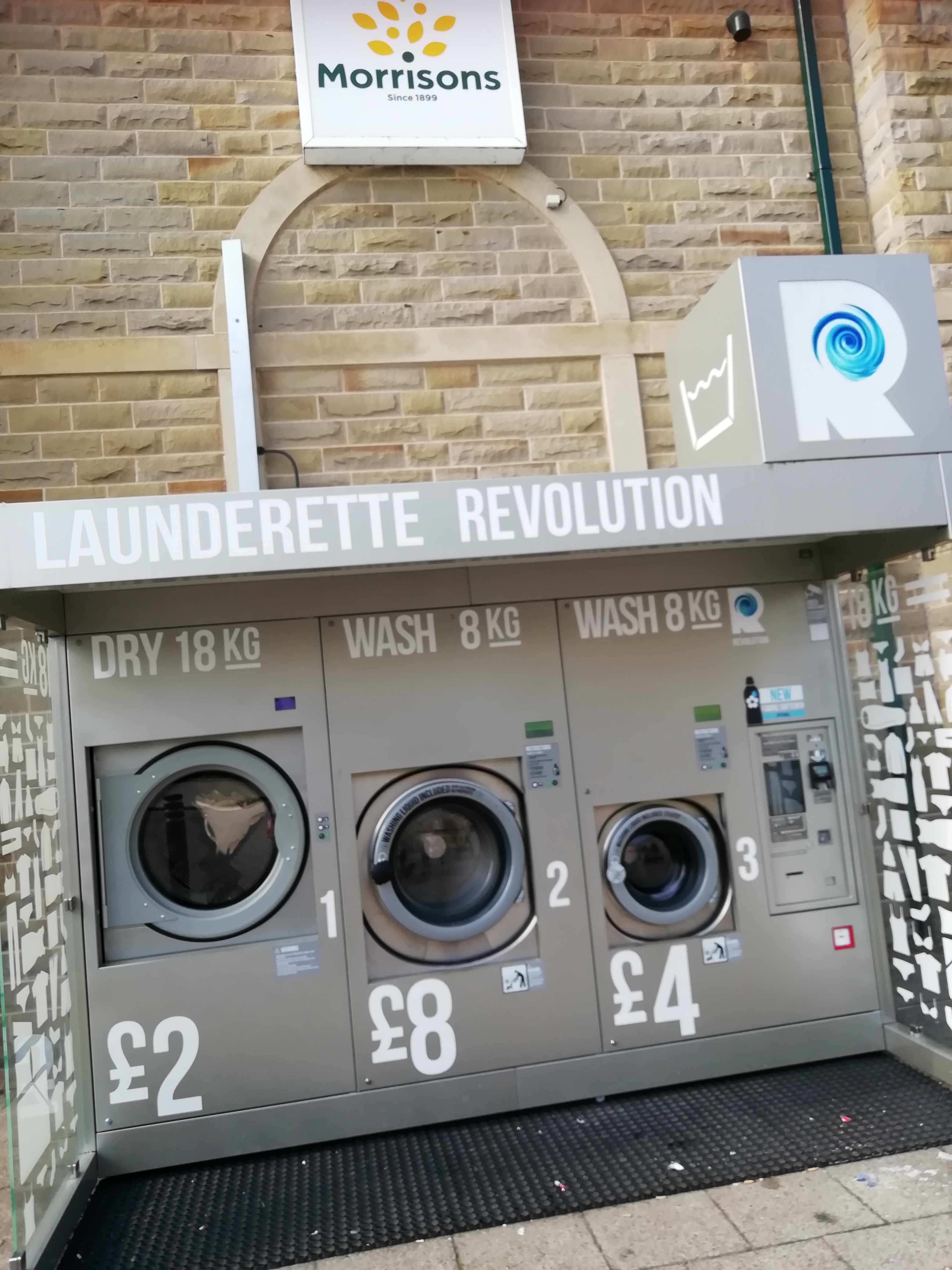
Downshifting to need less to live on has meant we spend more time together. It has given us freedom and more choice. We have time to explore the incredible countryside, towns and cities we have passed through. It also means we use our time differently and are kinder to the planet in the way we live. We watch cygnets hatch, grown and have flying lessons from Dad, see fish, herons, woodpeckers, kingfishers – and of course our new ever-present neighbours – ducks – as we go along, or from the galley window as we wash the dishes by hand (no need for a dishwasher); enjoy splashing about in the fresh air washing clothes by hand at water points or enjoy chats in laundrettes or with family and friends as we borrow their machines (no washing machine), we forage for wood and food, enjoying the produce of woodland, hedgerows and fields (free food and fuel).

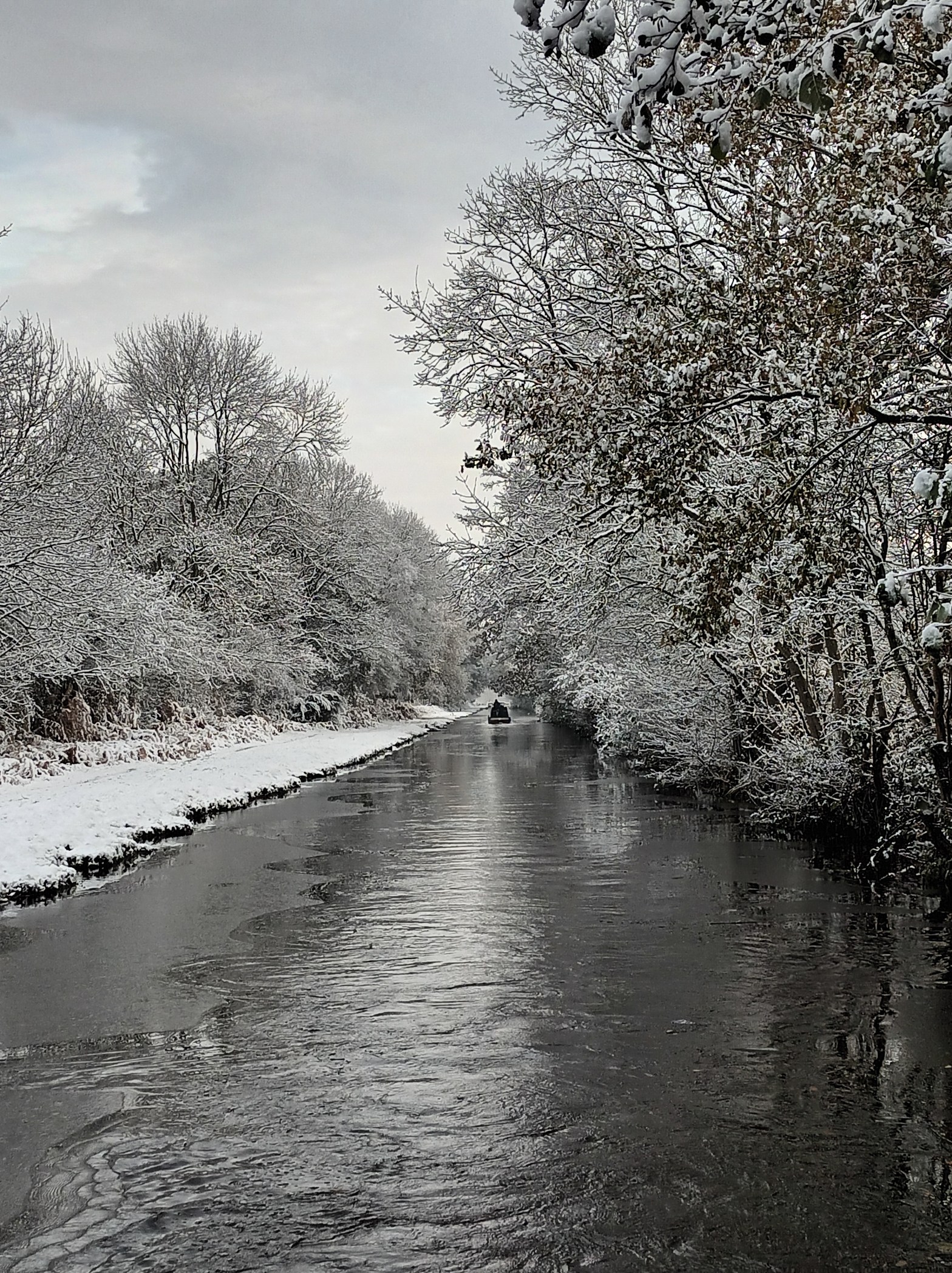
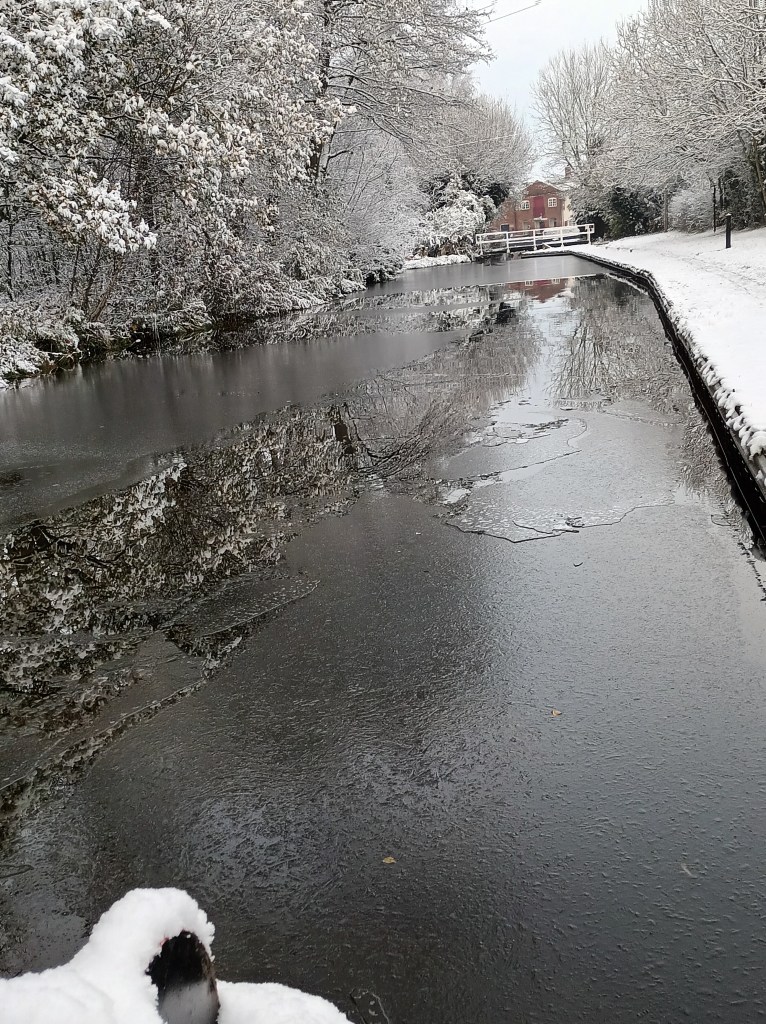
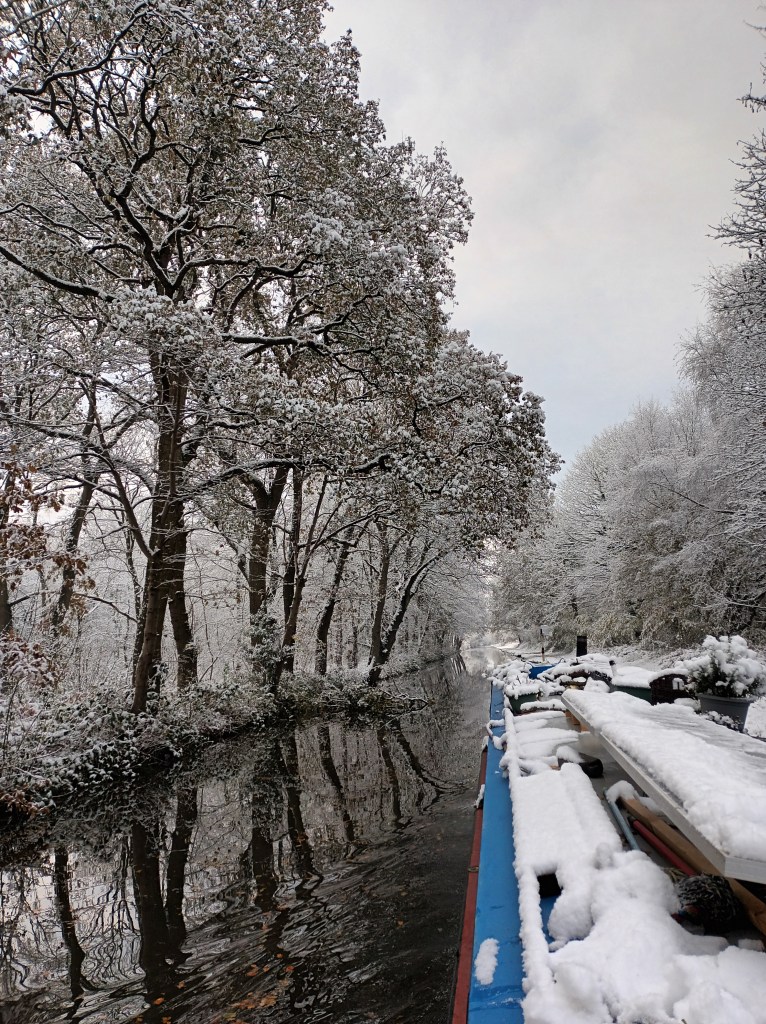
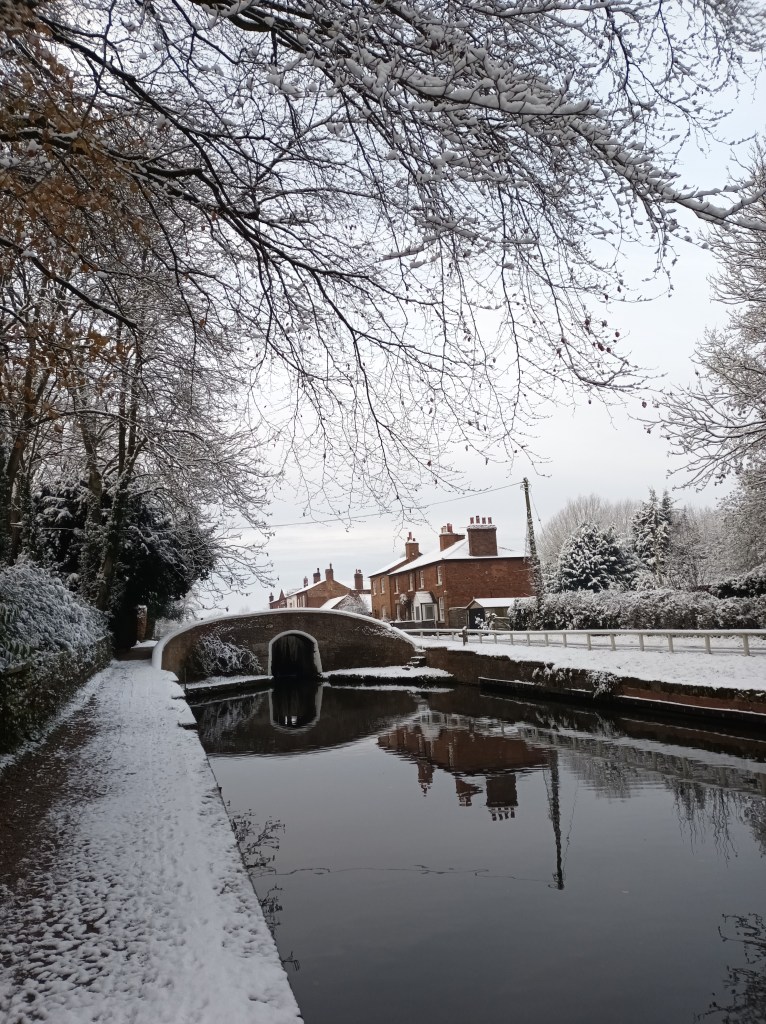
We’ve been through two lockdowns on board and one winter without central heating. In reply to friends who say “Isn’t it cold on board?” – we have found our multifuel stove heats us so well we ended up in t-shirts on board whilst the canal froze outside and snow fell. We foraged Christmas decorations, hiked miles and enjoyed many memorable moments with family and friends (sorry – too many to include here) once lockdowns ended.

Living afloat has changed how we think. Dual purpose or treble purpose is the name of the game – thinking consciously about our consumption. We think differently to maximise the use of our fuel – when using our stove we harness its heat for warmth, drying clothes and cooking too. The dual purpose approach extends to how we use our space too. Every step in the boat double as a store, the sofa is a double bed and storage container, the space under the bed contains the hot water tank and a sizeable storage space. Empty gin bottles become lamps thanks to rechargeable usb lights and generous friends.

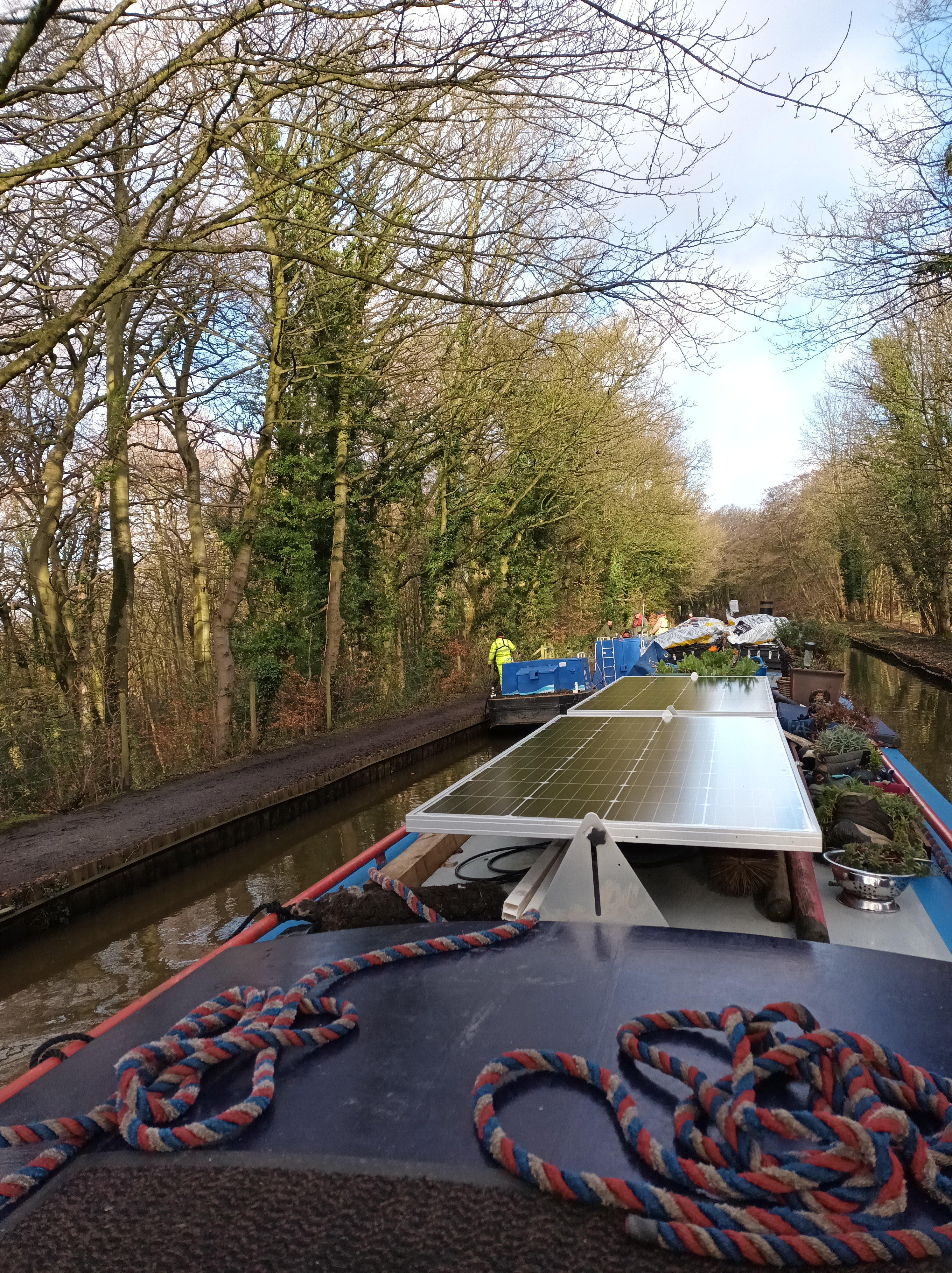
Talking of power we don’t have mains electricity. Our batteries which give us light and power are charged by the engine as we cruise, but we don’t cruise every day. Steve installed two solar panels in March this year in lockdown 3. These mean that we don’t have to run the engine on days we are stationary. So far our two panels have generated 62kw hours which has saved us £311.96 in diesel to date. In total thanks to the sun we have recovered 60% of our installation costs.

Year 1 totals
• 522 locks (271 narrow/ 145 broad/ 5 large) including staircases and flights
• 697 miles 0.75 furlongs (10miles commercial waterways/ 351 narrow/ 276 broad/60 rivers)
• 58 moveable bridges
• 24 tunnels = 19m 0.25f underground

Waterways encountered

  • Grand Union Canal (Leicester Section – River Soar Navigation/ Leicester Section – Leicestershire and Northamptonshire Union Canal/ Leicester Section – Market Harborough Branch/ Leicester Section – Old Grand Union/ Leicester Section – Welford Arm/ Grand Junction Canal – Main Line)
  • Oxford Canal (Main Line)
  • Coventry Canal (Main Line)
  • Ashby Canal (Main Line)
  • Birmingham Canal Navigations (Birmingham and Fazeley Canal)
  • Trent and Mersey Canal (Main Line)
  • Bridgewater Canal (Main Line and Stretford & Leigh Branch)
  • Leeds and Liverpool Canal (Leigh Branch and Main Line)
  • Aire and Calder Navigation (Main Line and Wakefield Section)
  • Calder and Hebble Navigation (Main Line and Dewsbury Old Cut)
  • Huddersfield Broad Canal
  • Huddersfield Narrow Canal (19.3 miles, 74 locks)
  • Ashton Canal (4 furlongs!)
  • Peak Forest Canal (Lower)
  • Macclesfield Canal
  • Trent and Mersey Canal (Hall Green Branch)
  • River Trent (Western End)

We’ve experienced 4 of the 7 Wonders of the Waterways, appearing here in the order we encountered them. Barton Swing Aqueduct over the Manchester Ship Canal; Burnley Embankment; Bingley Five Rise Locks; Standedge Tunnel.

Areas we’ve travelled through: Leicestershire, Northamptonshire, Oxfordshire, Warwickshire, Staffordshire, Cheshire, Lancashire, Yorkshire, Derbyshire, Nottinghamshire, Buckinghamshire, Greater Manchester, Bedfordshire.

The nitty gritty bits of living afloat including our running costs:

  • 32 water fills
  • 658 running engine hours
  • taken on 652 litres of diesel at a total cost of £598 = 0.97l per hour = £11.58 per week diesel. Diesel is needed for cruising and whilst we cruise that heats our hot water. It used to also be for powering the batteries to give us light and power but now we also have solar.
  • taken on 1,220kg (1.22 tons) coal = total cost £613.60 = 1.17 bags a week = £11.80 per week coal.
  • taken on 4 bottles of gas = total cost £135.95 = £2.61 per week.

Energy costs over the past year: £26.00 per week, £112.67 per month, annual total £1,352.13 – that includes current full tank of diesel, 8 bags of coal and 2 full gas bottles on board.

What have we gained?

  • Steve: Freedom
  • Deena: A wonderful balance to our lives
  • Cola: Daily swims

Best part ?

  • Deena: too many to choose just one – being so close to nature; Huddersfield Narrow a fabulous rewarding challenge; gaining confidence and enjoying taking the tiller; long night’s of sound sleep and meeting fascinating, fabulous people.
  • Cola: new walks and new smells to explore every single day
  • Steve: Going a long way slowly

Least favourite part ?

  • Deena: what seemed like months of mud and between us we have 8 feet to walk it onto the boat!
  • Cola: the biscuit tin is STILL out of reach.
  • Steve: Running out of beer.

What do we miss? Steve & Deena: Washing machine (think we might have to try and work out how to fit one on board, power one and afford one!) Cola: Nothing

Most surprising thing?

  • Deena: How enjoyable winter is without central heating but a solid fuel stove even when there’s snow and you’re iced into the canal (and at one point into the boat), oh and that ducks do daily pilates!
  • Cola: how the towpath changes sides so you have to check every time you get off (but I’ve proved old dogs do learn new tricks).
  • Steve: How easy it is to change your life for the better – just go and do it!

Funniest part? Deena: Steve having to take another boat owner on our boat to rescue their boat after they moored it with a piece of string on the Aire and Calder and the string snapped!

This has been the hardest blog of the year to write because there was so much I to remember, to share, to capture. We are both looking forward with anticipation to what the next year will bring us. We are heading to London where Steve will run the London Marathon (slower than he would like thanks to Covid taking its toll), but he will still run it for Victa an amazing small charity. Then we will move slowly north via the Oxford Canal seeking to explore the Staffordshire and Worcestershire Canal, and the Shropshire Canal over winter.

I’m eagerly planning next year’s roof garden’s flowers, fruit and veg building on lessons from the experiences of this year – in the main nothing over 30cms tall but all the successful plants from this year. (More on this in due course).

The abundantly leafed potatoes in a sack proved the biggest issue this year – we couldn’t see where we were going and I had to stand on a step at the back to navigate! After weeks of being forced to take them off the roof for safety (so we could see and also to stop low bridges knocking them off into the cut), we started juggling them into the cratch for travelling, out onto the towpath in the evenings and nights so we had room to sit out, and back into the cratch in the day, they met their Waterloo at Standedge Tunnel in Yorkshire. Everything apart from the solar panels had to come off the roof to get through the tunnel. The panels had to be lowered. There were plants in containers stacked 4 deep in the cratch and lining the main cabin too much to the puzzlement of the dog! But I just couldn’t fit in the spuds however hard I tried, so they were harvested the night before the tunnel, and kept us tastily fed for a few weeks afterwards! If we’d kept them longer we might have had a bigger crop but they could have proved our undoing too!
In answer to the question we now keep being asked – how long will we keep going with this life afloat? As long as we possibly can, savouring every moment of it. It was a leap into the unknown of which this is not the end, but just the beginning.