Future proofing for life

I don’t know who I’m working for. I only know the effort I am now putting into living differently is hard work, but I can see some instant benefits, and that is encouraging, reaping rewards encourages increased action.

I recognise it isn’t enough to work towards my own future, or that of my children or even that of my grandson. The way I live now is just a small contribution in the big picture of trying to future proof our world for them, but also for their children’s children and generations I will never meet in person.

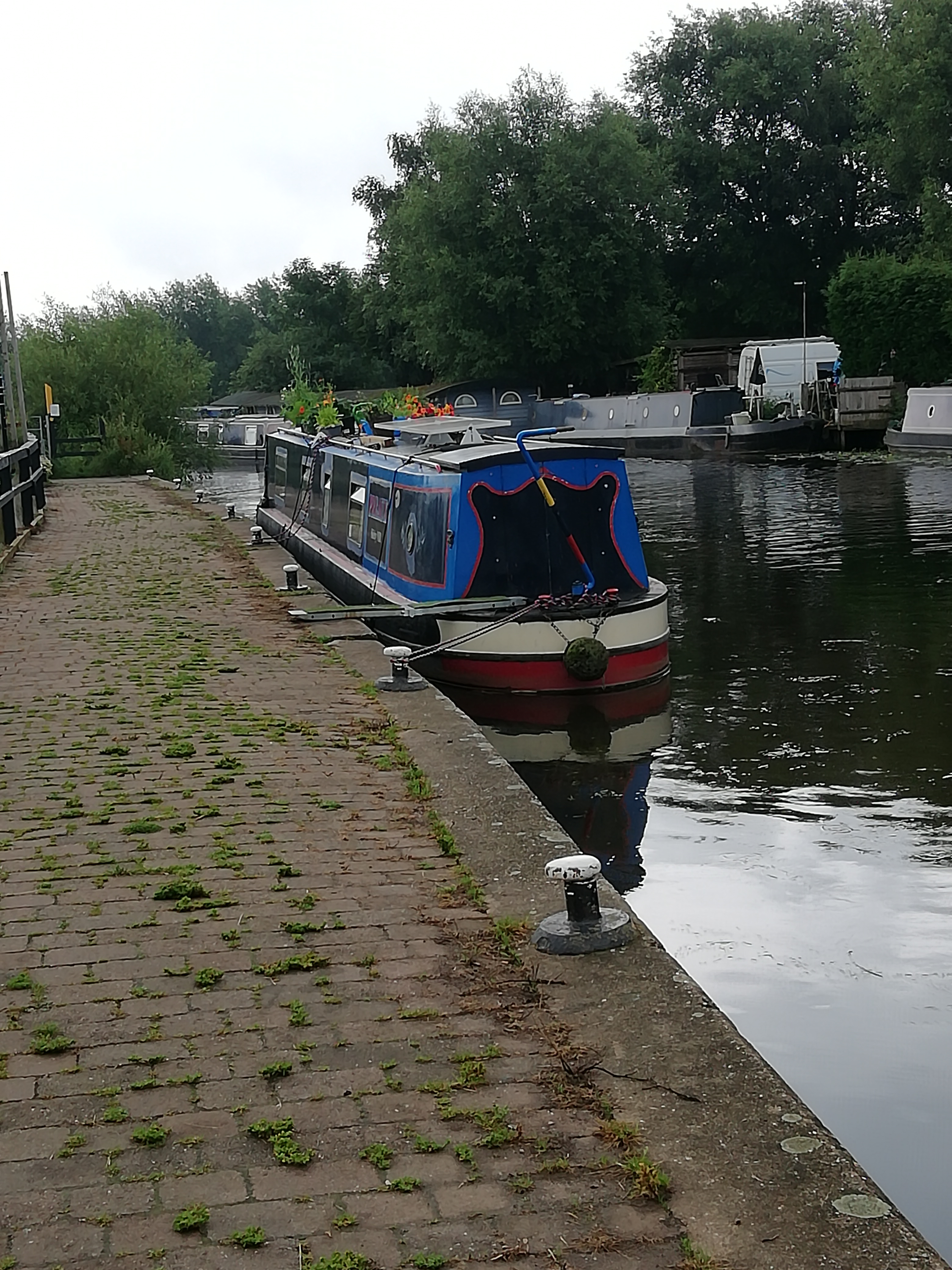
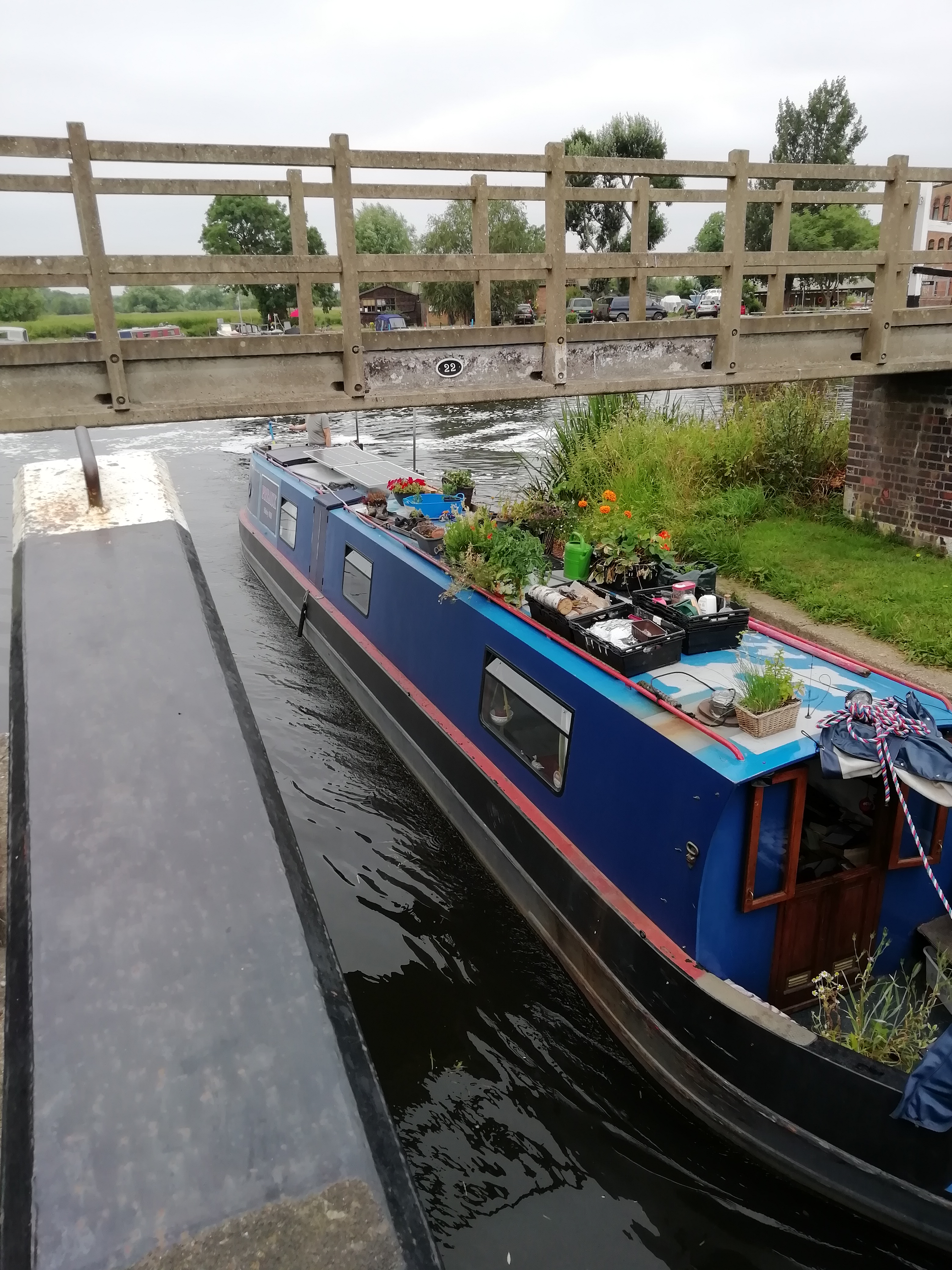
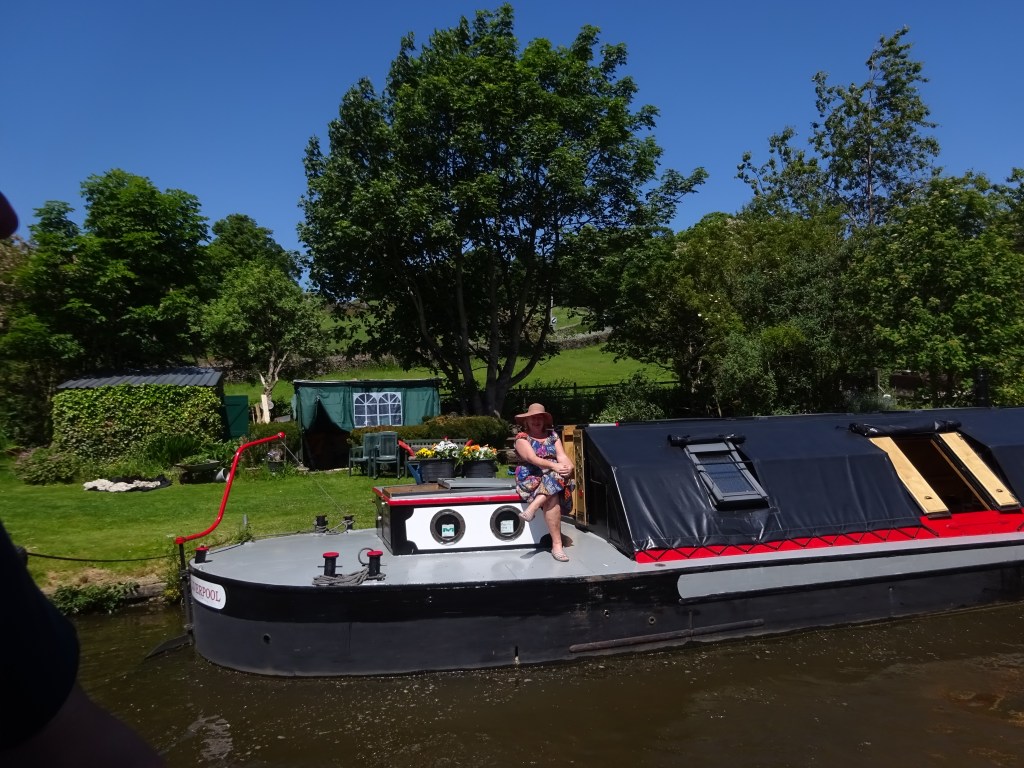
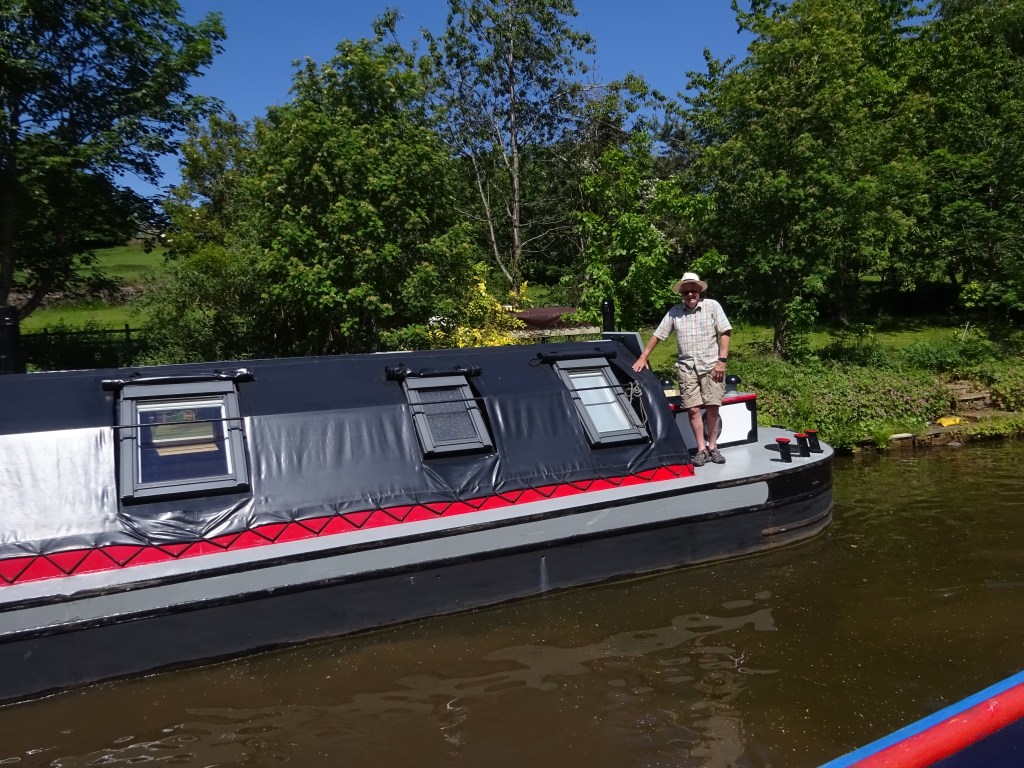
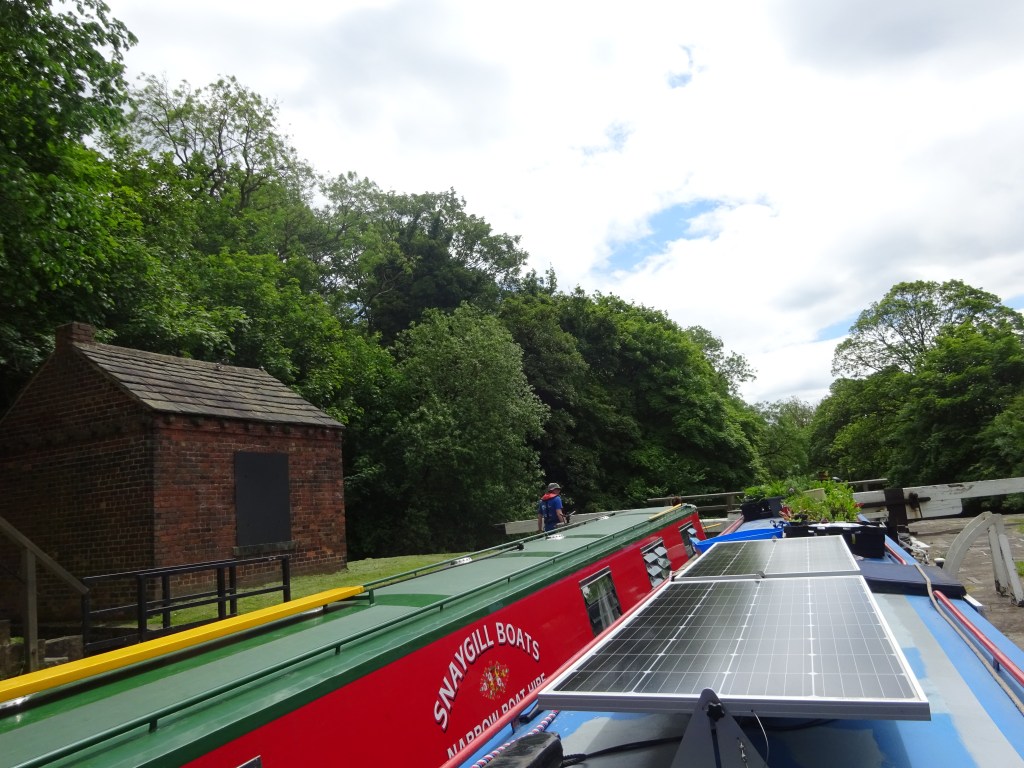
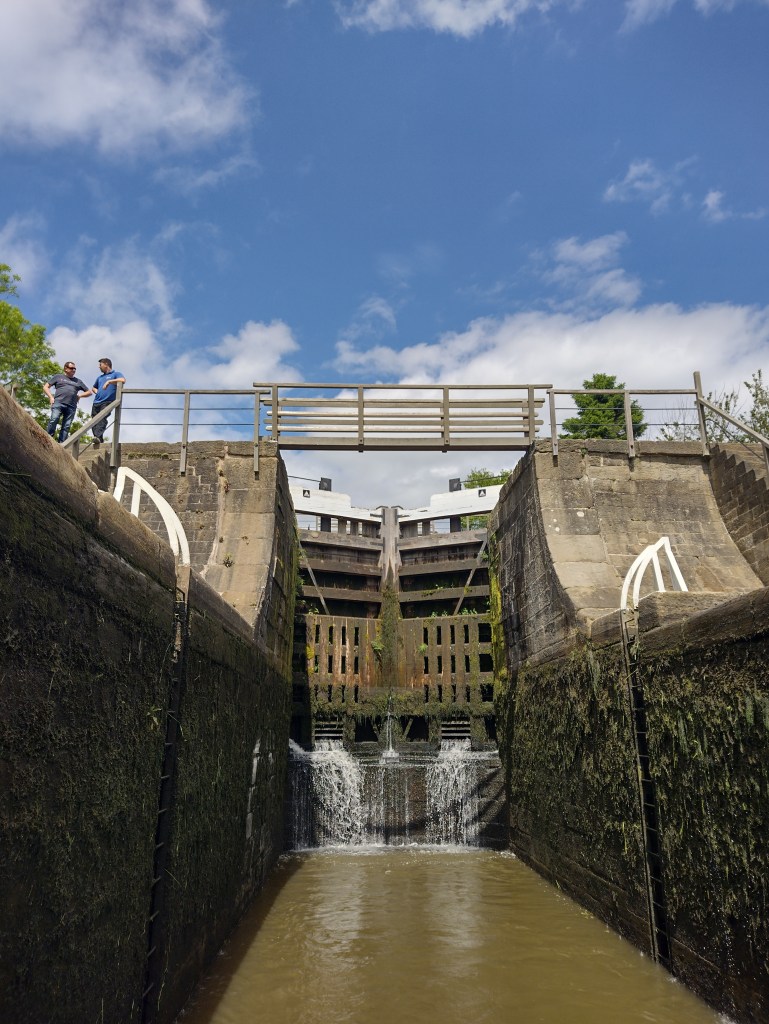
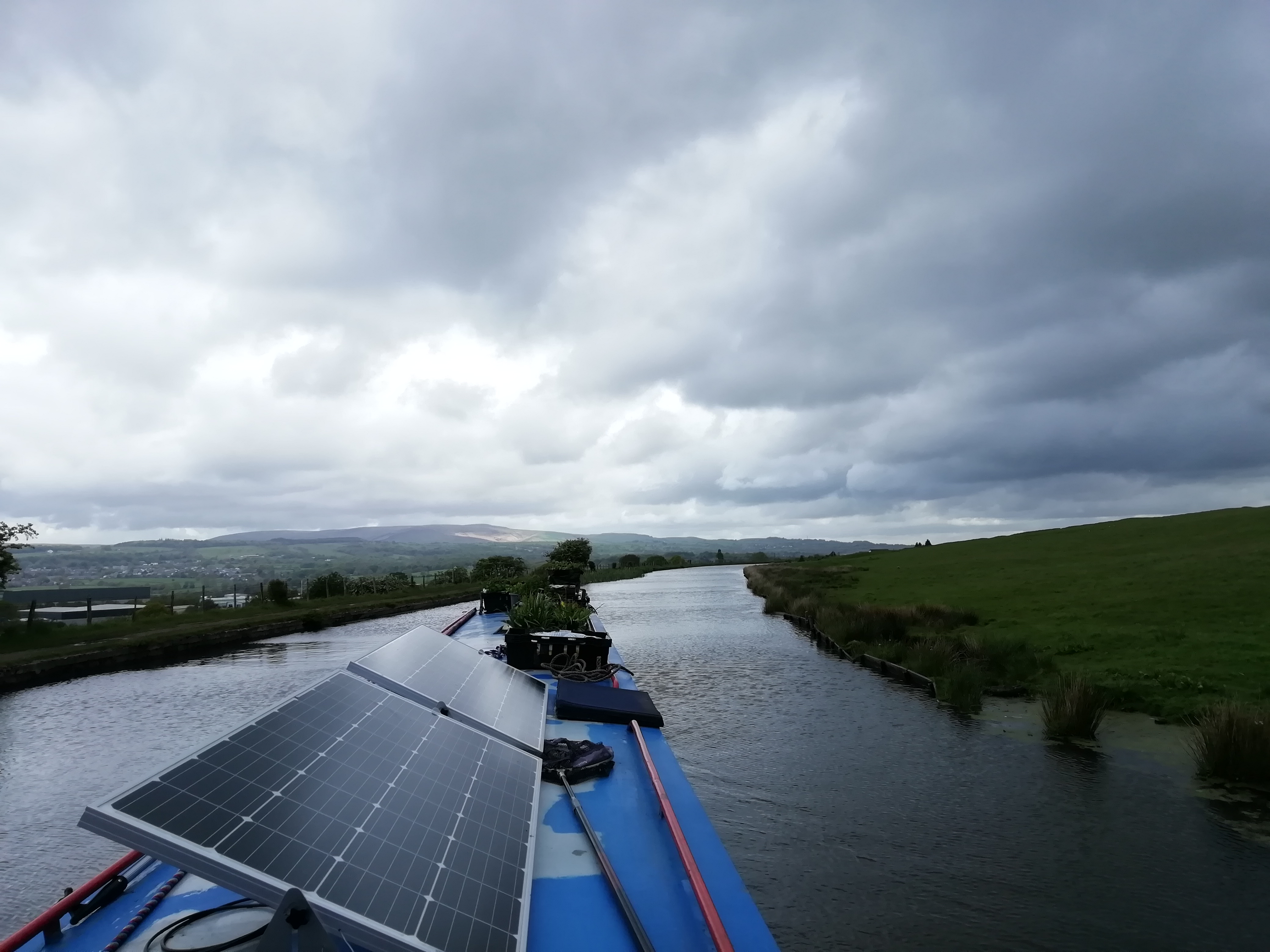
There’s so much of beauty and interest in this world that I’m fortunate to encounter every day living and working from our 50ft narrowboat.

Only 50 ft but painting is a bit of a Forth Road Bridge job – never ending!

This week, the week that hosted Earth Day 2021, and the week we traveled through certain areas of Staffordshire, has brought home dramatically how what we take for granted could be under threat.

This year I am acutely aware of the accelerating pace of Spring. Every day it seems new buds appear, new flowers arrive to show off their colours and scents. After the busy bustle of Fradley Junction where we pulled in by the Laughing Duck cafe to fill up at the slowest water point ever, and after emptying all the waste, we’d earned a pint outside the Mucky Duck (aka The Swan). Narrowboat life makes you very aware of your water consumption and waste production – you can’t help it!

Lovely to see people out and about whilst waiting at the slowest water point ever!

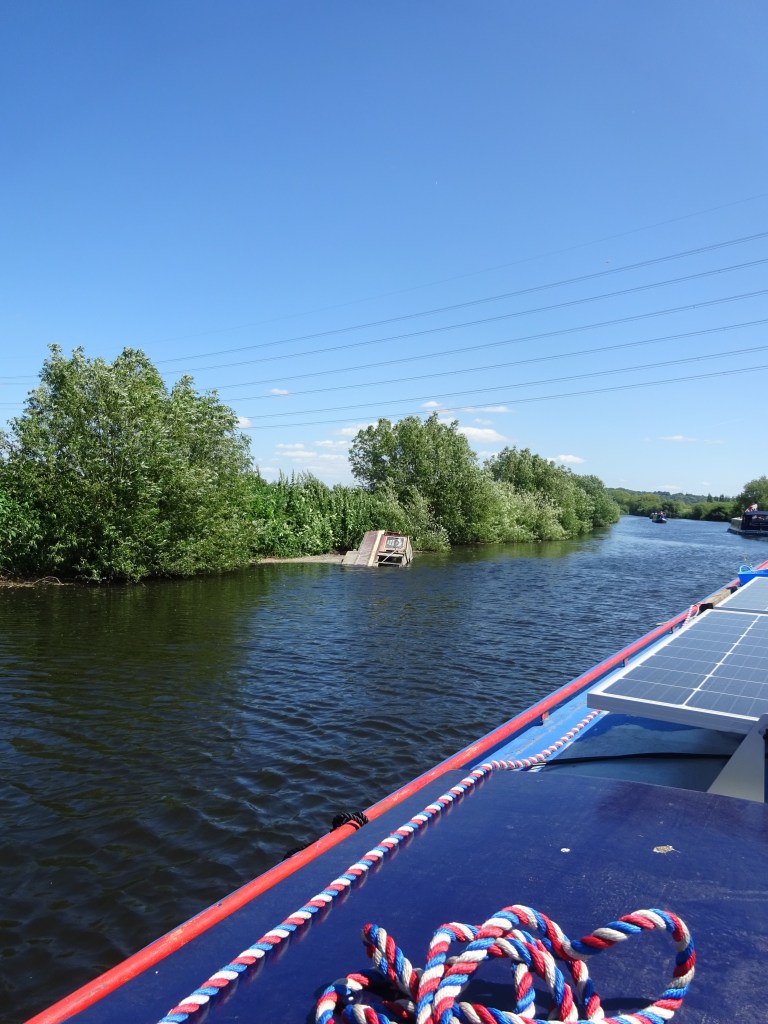
Through the last two locks of the Fradley five and then expecting dappled calm of Fradley Wood – we suddenly found ourselves facing the reality of work for HS2, the high speed rail line. The main line and subsidiary line will both affect this part of Staffordshire. A bridge will be constructed for the main rail line to pass over the canal where Fradley Wood currently stands, or at least what’s left of it stands.

Stumps of an entire woodland felled for HS2

On one side of the canal trees have been felled already. Stumps alone remain amid dusty soil in a scene of total decimation of the woodland and the habitats it provided. On the opposite side of the canal every single tree still stood, but for how long we couldn’t tell. Each tree was singled out for destruction with a cross.

Each tree marked for felling

Further on just round the most southerly point of the Trent and Mersey Canal at Wood End Lock it was a huge contrast and delight to find a tranquil mooring spot opposite Slaish. This woodland of deciduous trees, packed with squirrels, foxes and birds will be amazingly different when the huge rhododendrons come into flower. Our only company were nesting rooks and rabbits. The bank alongside the boat was covered in tiny purple violets.

Peace and tranquility

Slaish and neighbouring Black Slough Wood with their habitats for a variety of English floral and fauna also going to be affected by HS2. They were the scenes of Extinction Rebellion protests in the Autumn and Winter of 2020 but seeing the beautiful reality and hearing the soundscape of calm woodland brings home the cost of such transport expansion. Whilst I appreciate the argument that quicker rail will reduce road traffic, we haven’t seen that happen yet even though such promises have been made time and time again.

The next morning we moved on towards Handsacre and Armitage where we encountered more impacts of HS2, along with the desperate but apparently futile protests of people desperate to save the rich flora and fauna around them from destruction.

It brought into stark contrast the pleasure we’ve experienced watching nature unfold its delights for us this week. Ducklings have kept us astonished and amused. Tiny fluff balls that seem to be blown across the canal but are actually propelling themselves at incredible speed for their size with their minute muscles, and larger youngsters hopping and flopping in the water as they try to catch tasty gnats just above the surface.

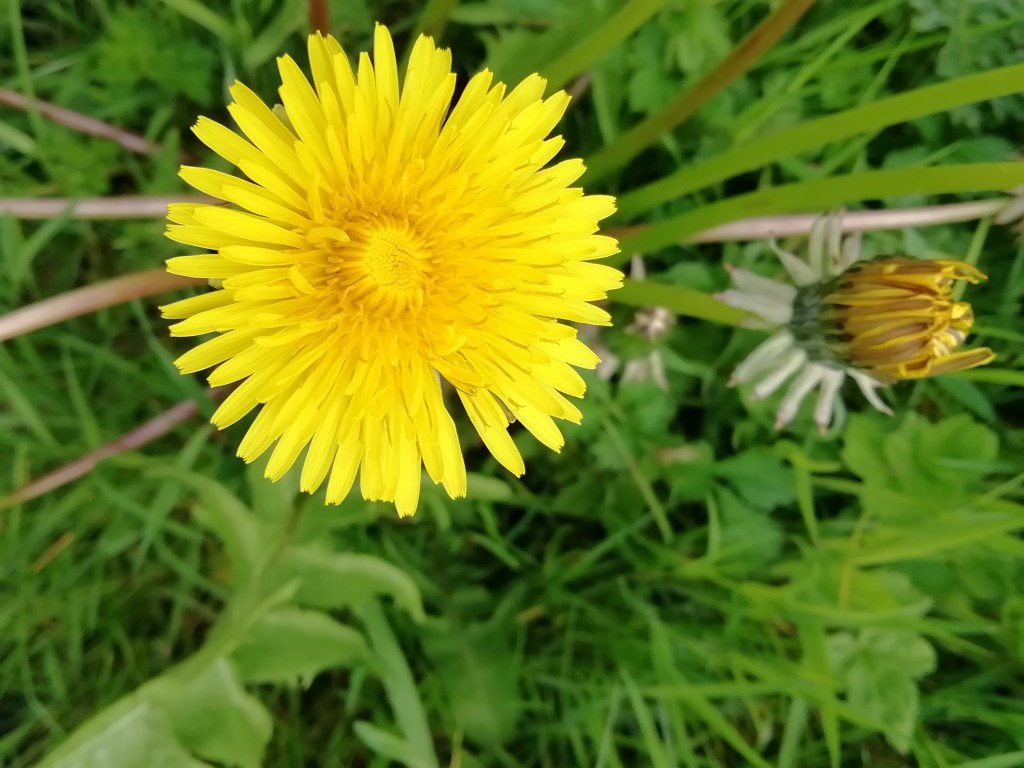
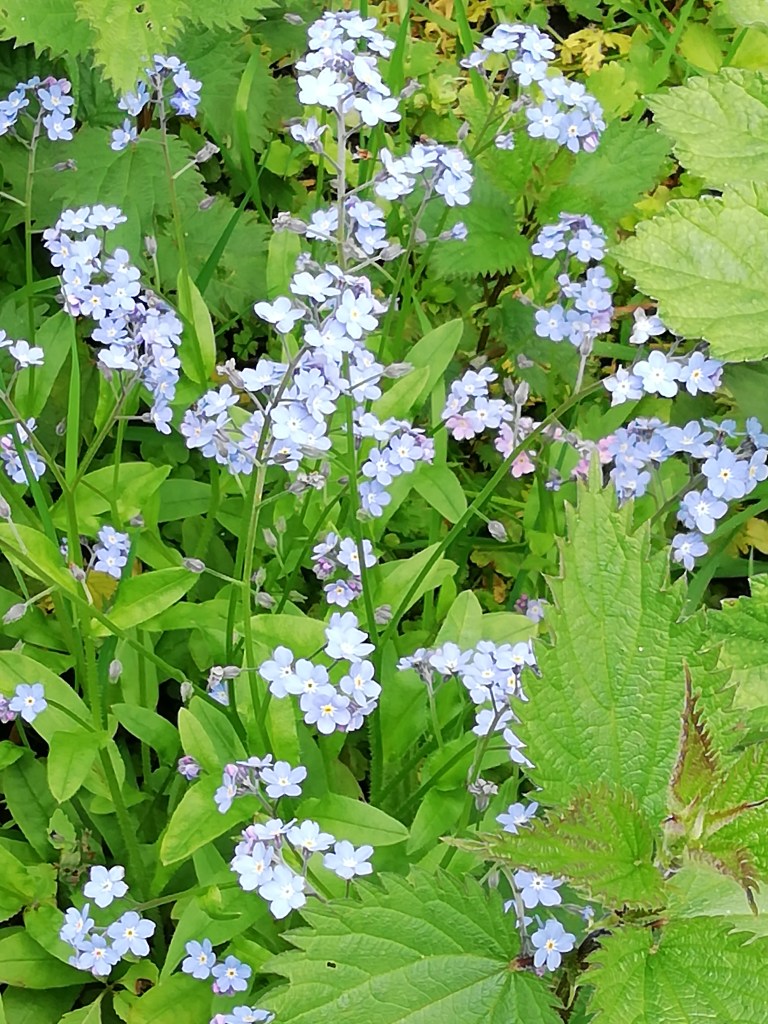
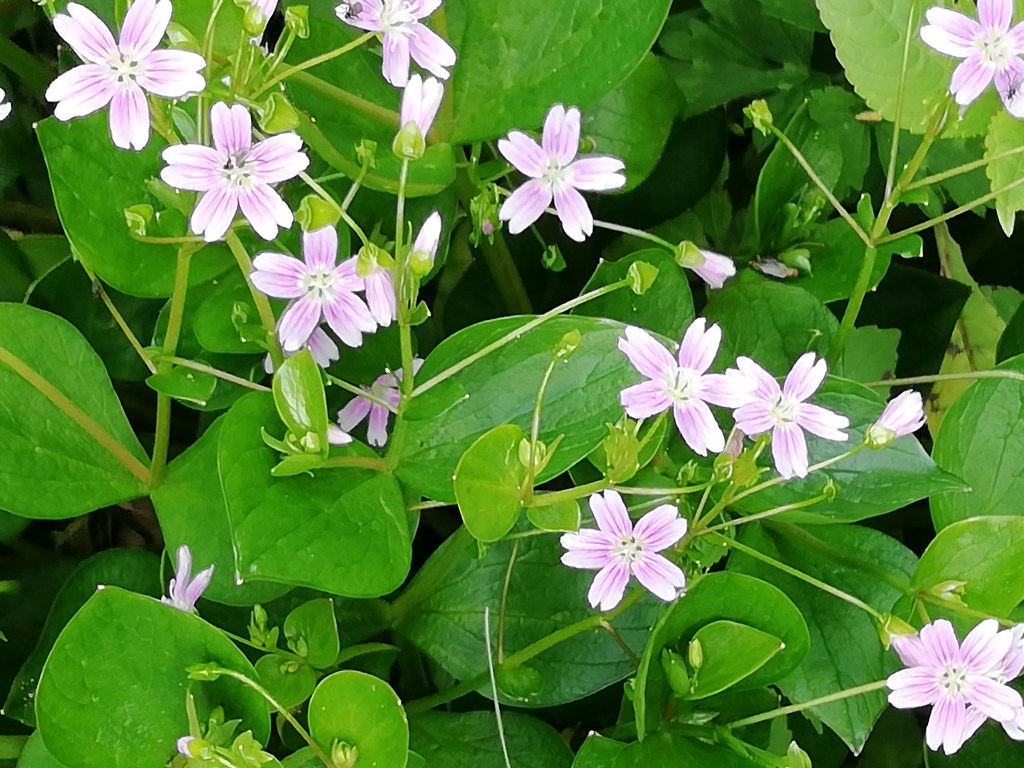
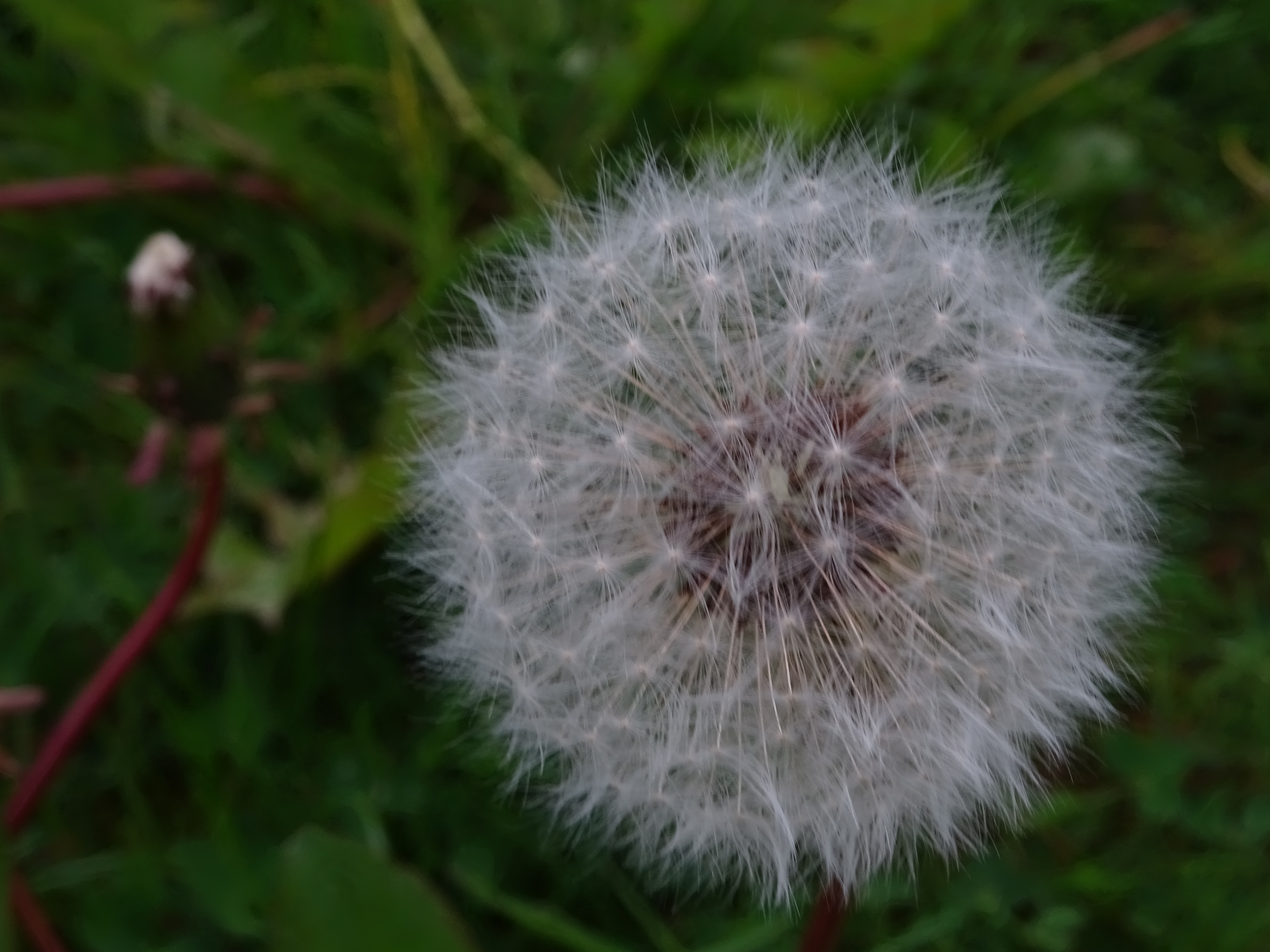
We’ve walked miles on footpaths, woodland and towpaths, walks brightened by the glimpse of a vivid yellow dandelion flower, a glade of bluebells beginning to flower, a flash of white from a clump of lesser stitchwort against the green grass of a verge, and the mouthwatering scent of ransoms (wild garlic). Forget-me-nots, lady’s smock and the peppery yellow gorse flowers have all added colour, texture and in some cases extra flavour to our days.

Clockwise: wild garlic (ransoms); Lady’s smock; dandelion; bluebells; lesser stitchwort; forget-me-nots, yellow furze (gorse)

As we’ve cruised we’ve been using our trusty fishing net, well repaired now after it’s carbon fibre handle snapped under the weight of too much saturated litter. We’ve landed whatever rubbish we can reach that’s floating in the canal – cans, plastic bottles and plastic sheeting this week. We’ve been moored now near the glorious Shugborough Hall in Staffordshire for a couple of days. Our walks have taken us along carriage drives, over ancient bridges, across canal and rivers into the woodland of Cannock Chase. We’ve litter picked as we’ve gone, just to try and leave the place a little better for us being there, and as a thank you for being able to enjoy these surroundings.

No stars for this litter disposal – litter’s still destructive however it’s “hidden” – we carried it home and binned it.
Clockwise: Steve demonstrating the Stepping Stones at Cannock Chase; Brindley Aqueduct with the Bloody Steps rising in the far right; view of Rugeley power station from the railway – these towers are due for demolition in June so we don’t expect to see them again; Old Church of St Augustine in Rugeley; Triumphal Arch of Hadrian’s Tower at Shugborough

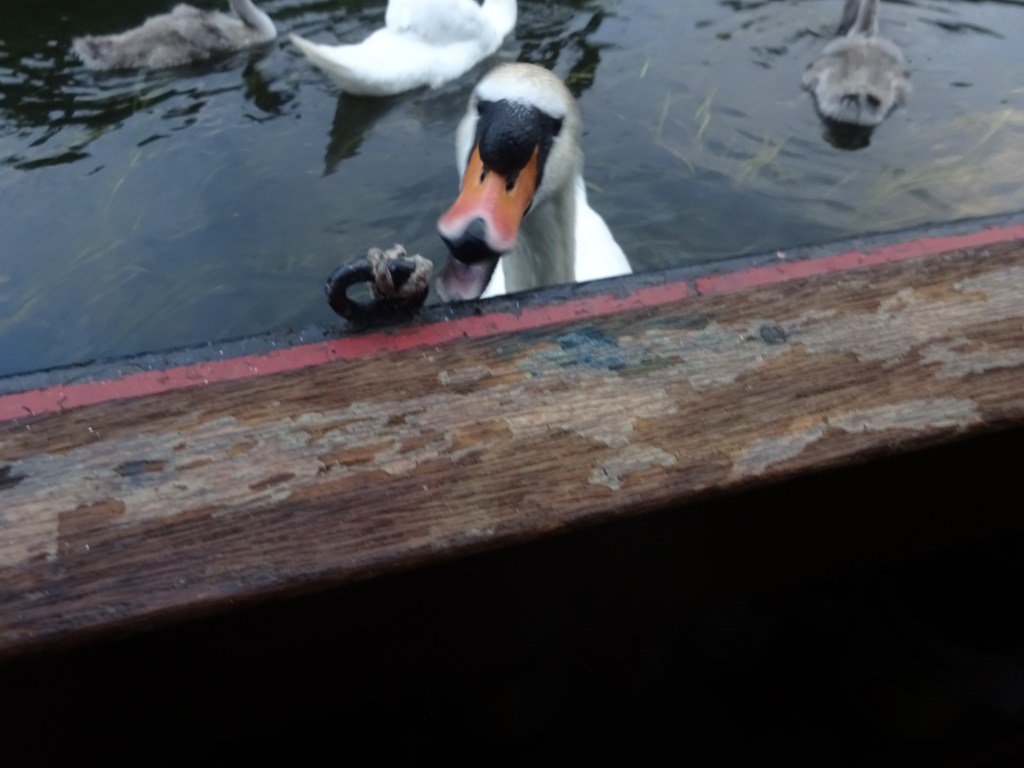
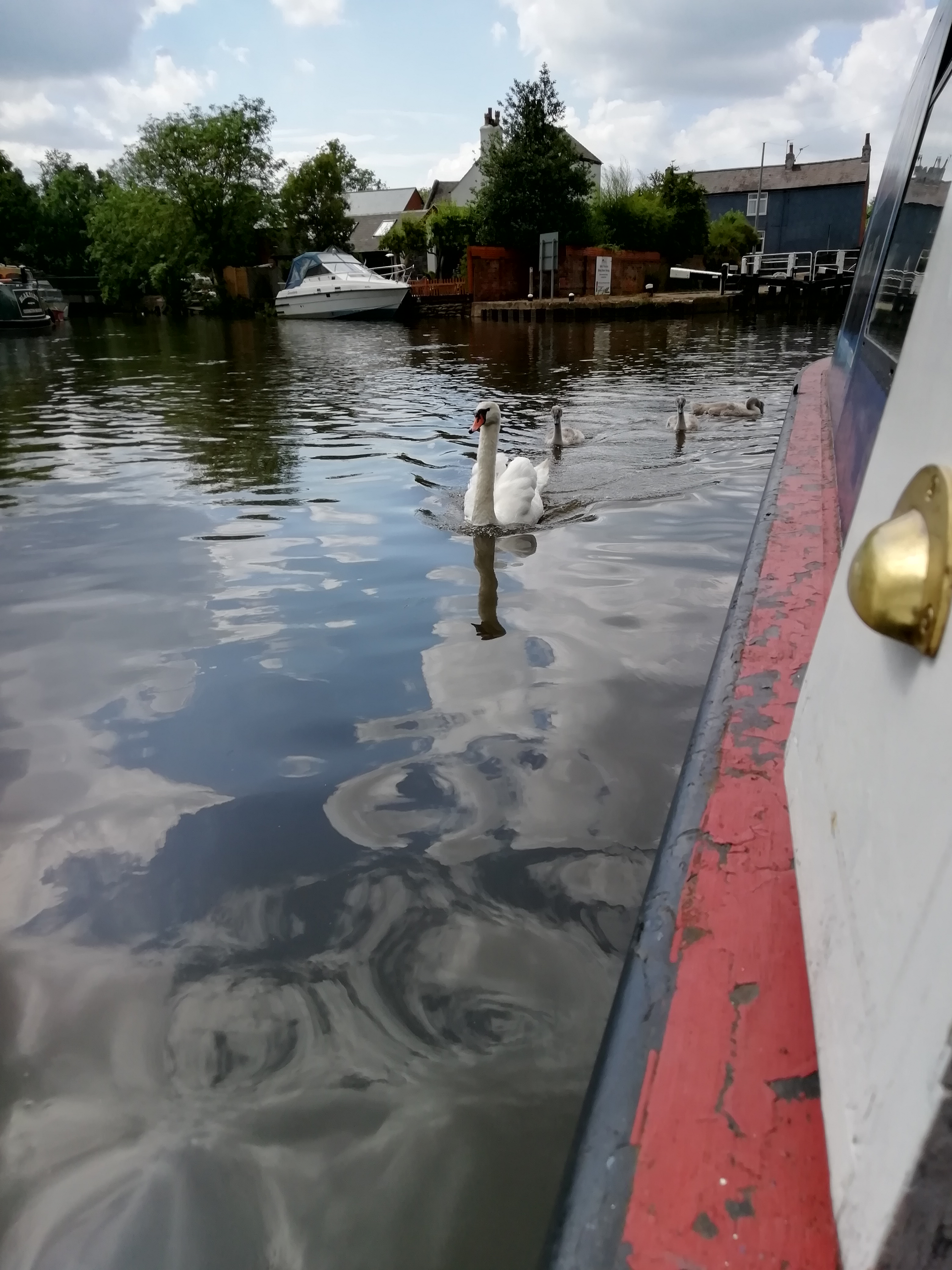
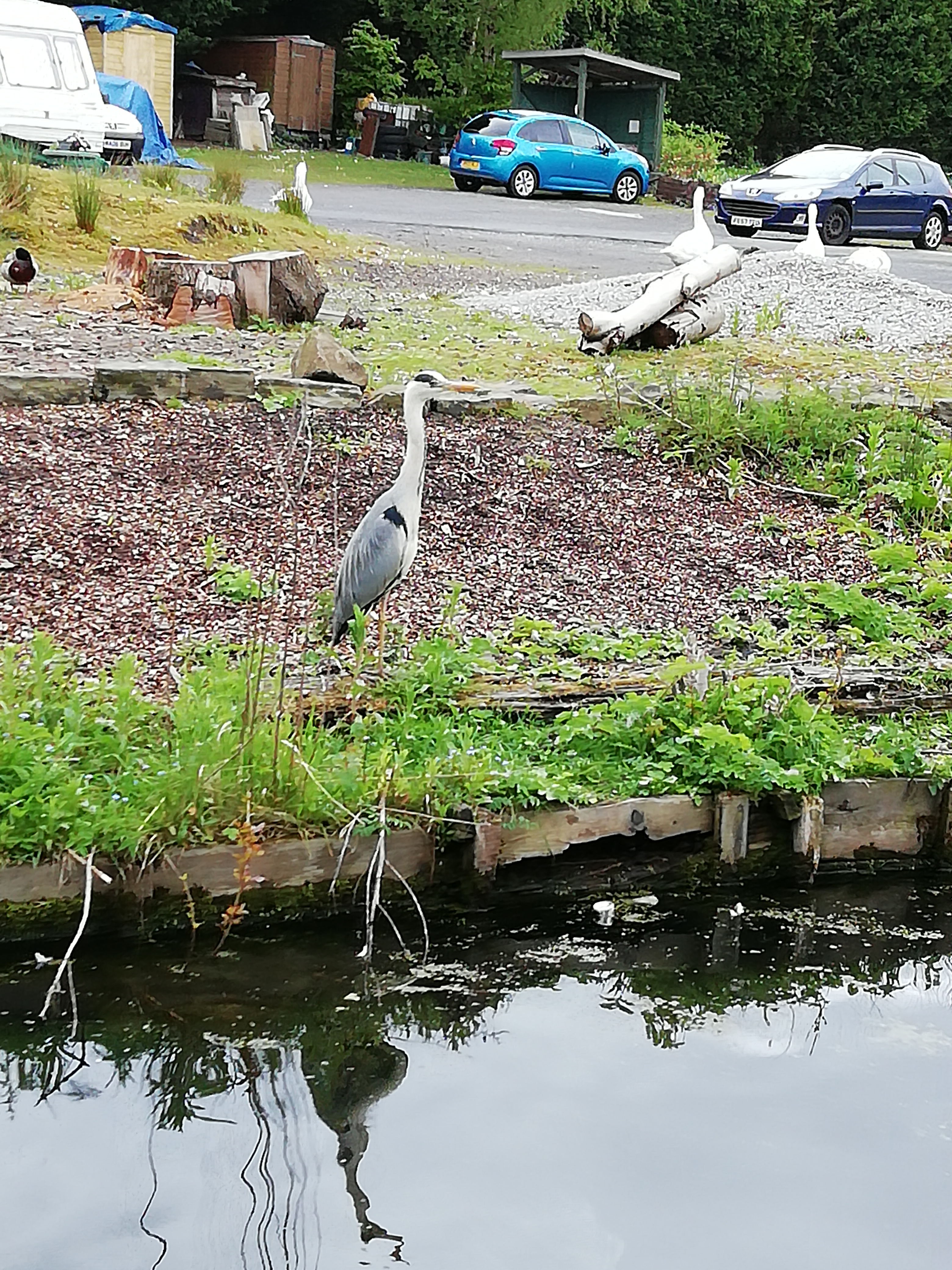
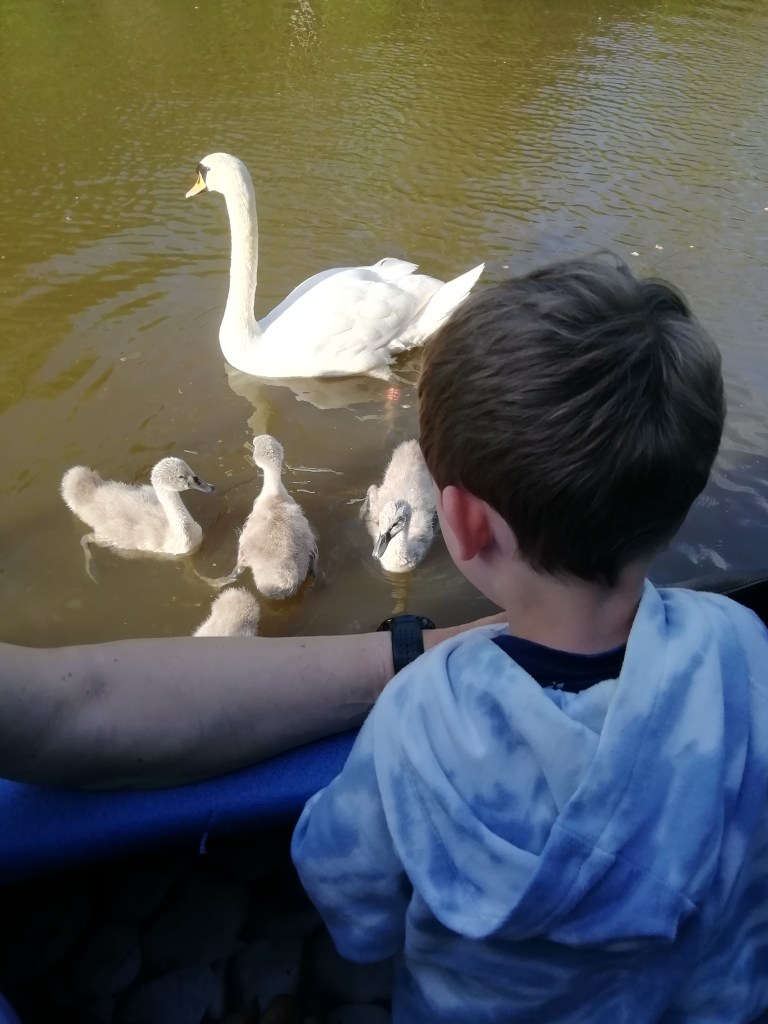
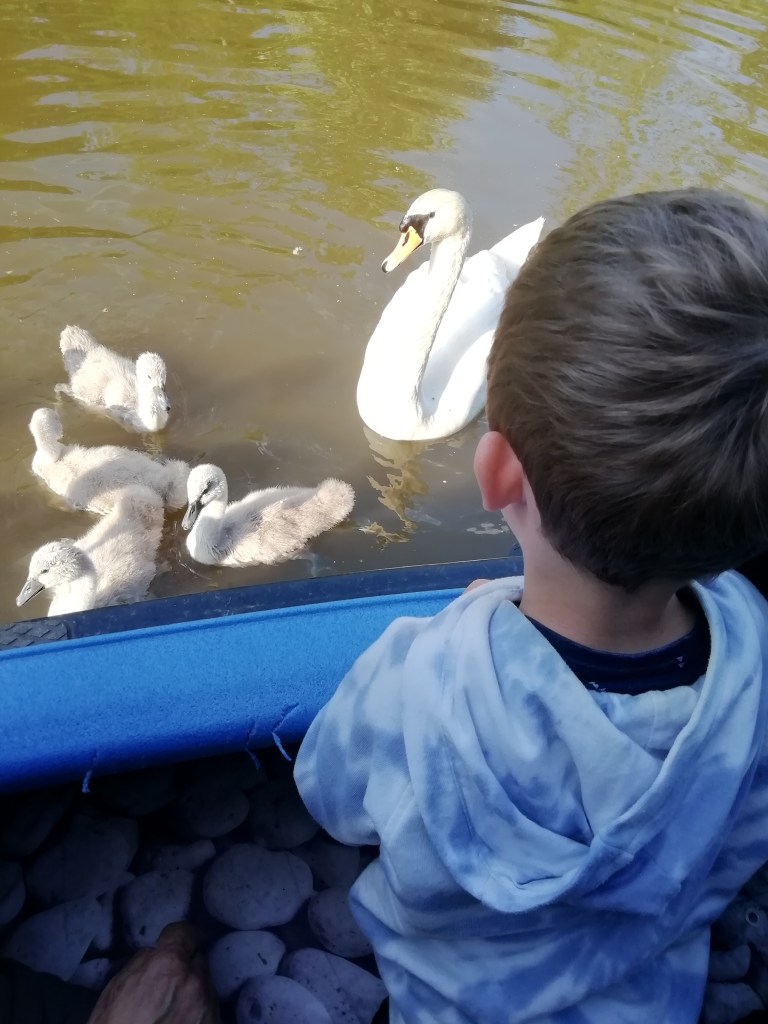
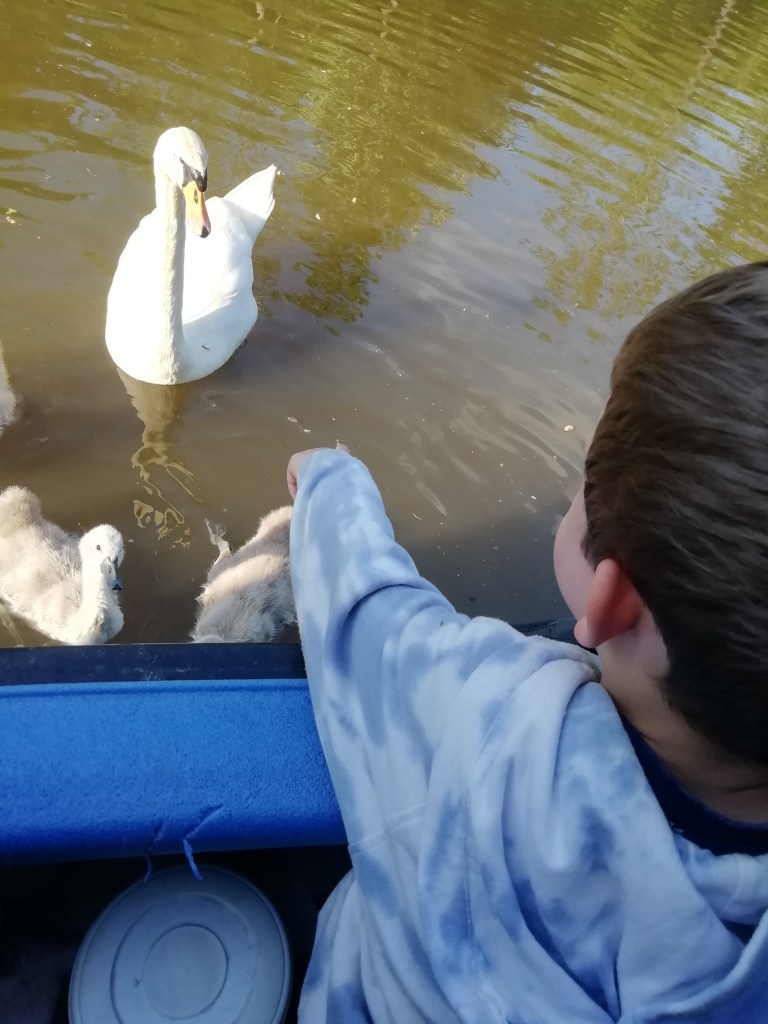
Back on the boat our mornings and evenings have been entertained by new neighbours – as you might expect from such impressive surroundings, we’re not just picking up ducks here! A stately heron and a very determined swan have made our acquaintance this week along with acrobatic moorhens and a robin all fluffed up in the chill of the morning frost.

These may appear small things perhaps, but it is the small things which give meaning and value to our lives. Imagine how bleak the world would be if future generations were never able to see these flowers, or birds, or hear the high passionate descending song of the robin. Earth Day brought our focus to what we can do – each of us as well as politicians and world leaders to work to preserve the world we live in for our wellbeing and economic survival.

We all need a healthy Earth to support our jobs, livelihoods, health & survival, and happiness. A healthy planet is not an option – it is a necessity.

Earth Day 2021

Together we have our small but meaningful part to play in climate action, in supporting science and educating ourselves. If we don’t know about or notice what is around us then we are inclined to dismiss them as unimportant. We can all conserve and restore, make the most of resources and enjoy the process of recycling, reusing and upcycling too. We can reduce pollution and consider before we consume whether water, power or food. Together we can seek to cut our foodprints, eating a UK fruit instead of a banana which has been flown thousands of miles to us. It may seem that our actions are like a drop in the ocean, but every little positive action makes a difference, and there is huge satisfaction in knowing like you are doing something that matters, something that makes a difference not just for now but for the future.

Earth Day is one day but what we do every day at home, at work and in how we get between the two, can and will have an impact. Let’s every day a positive impact, for everyone to try and future proof the world we have left, for everyone.

On a practical note, it’s interesting how our priorities have changed – life rather than work has prominence and in more mundane but equally important matters the bucket-hand-powered washing solution seems to be working well. The whirly washing line attaches well at the back of the boat (when stationary) but even in such a constrained space with no mechanics to eat them, socks vanish!

Was this, I wonder, the sock thief?

Value in reflection and remembrance

We are coming out of Lockdown 3 in a way that mirrors our life afloat – slow but sure. There’s no point in rushing things. Taking time can prevent accidents as I know too well. My own unscheduled, never-to-be-forgotten, plunge into the icy waters of the River Soar not far from a weir was the result of excessive, unnecessary haste. The loss of a mobile phone, a Fitbit, and any semblance of dignity after I had to be landed like a drowning whale on a towpath by husband and strangers heaving hard to get me up from the depths remains a salutary lesson…(we do now own a rescue ladder which should save members of the public having to haul me out should it happen again).

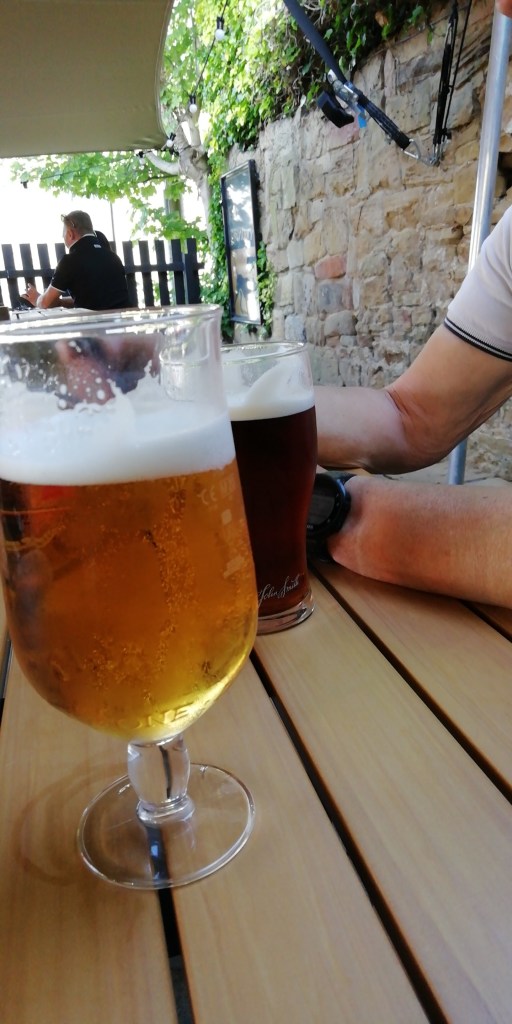
This week we joined many supporting the pubs reopening (outside). It was rapidly apparent lockdowns have changed our personal drinking habits – one pint was enough to nearly send me to sleep! After 3.5 months moored a stone’s throw from a pub in Soouth Derbyshire, by the time they opened we had cruised across the River Trent. We raised a glass in the beautiful Staffordshire village of Alrewas which we visited last year when its pubs were also shut.

Pint done – all I need now as you can see is a haircut!

Getting back on the move was tinged with nerves – perhaps how many people have felt about return to offices and other workplaces. Will we remember what to do (never fear – locks are like riding bikes, never forgotten skills), will we encounter hundreds of boats and get stuck for mooring (not yet but it’s definitely busy), will we remember how to juggle moving and working etc. (it appears so!)

Locking on – rather than clocking on in our post-Covid worklife balance
As ever, generous helpers at hand make life easier

The instant pleasure of moving on has unbelievably rapidly erased much of the frustrations we experienced by being impounded in one place for so long.

Moved from 3.5 months sensibly near a railway, services and shops to a backdrop of the National Forest
Made it over the scary River Trent which was as calm as a millpond, past Wychnor Church to moor at Alrewas.
Glimpses of Alrewas and a bit of boat gardening

I wonder whether this is the start of a return to an old way of life which although still tinged by change (masks, distancing, outside meeting). Will we pick up the reins of our old lives with relief, and will this erode our memories and erase the reality of what we have have all been through. I am sure that will not be so for those touched directly by the loss or horror of Covid , but for many we overhear on the towpath (people hold very personal conversations oblivious to canal boat dwellers so we have no choice but to hear), it’s a time people are desperate to forget. Whilst I recognise it is important to move on and not dwell on the pandemic 24/7, I feel that a failure to remember and reflect would be an immense loss to us as a nation, and as individuals. We have individually and collectively learned much, achieved much and need to recognise and remember that as well as appreciating the efforts and sacrifices made during this time.

The ways we reflect and remember are many and vital to our collective, national and personal selves. As Alexander Pope observed in his Essay on Man and other Poems the two go hand in hand:

“Remembrance and reflection how allied!
What thin partitions Sense from Thought divide!”

It is important to learn from our experiences, reactions, and responses. To make that which we have endured count in the future. Sometimes physical reminders act as triggers. The kindness of strangers will enable me reflect upon our long Lockdown 3 sojourn in Willington, South Derbyshire even though the memory of it is rapidly fading, superceded by new experiences and sights.

We’ve been picking up more ducks – thanks to the lovely people we met at Willington. Joan brought us an antique wooden flying mallard drake which has pride of place on the bedroom wall whilst Kim and Chris gave us a mallard duck. She joins the pewter wine bottle stopper duck on a windowsill opposite the sofa (we never did work out why one would need a wine bottle stopper…!). The flock also now includes Will our figurehead mallard, introduced in last week’s blog, made for us by Paul and Christine on Foxtrot.

The ducks will remind us of individuals, of the kindness of strangers, how strangers become meaningful acquaintances or friends, and the resilience we all developed during that time in Lockdown 3. Remembrance does not have to be maudlin or sad but can be joyous and uplifting. It can celebrate our individual and collective capacity for good, and remind us to learn from our experiences.

The National Memorial Arboretum (NMA) is a poignant but massive celebration of remembrance and reflection for us all in beautiful surroundings. Just a short walk from Alrewas where we moored, it was packed this week with families, couples and individuals. Lots were enjoying the Stickman Trail whilst all were making new discoveries.

Every visit here is so different – the seasons, the weather, the opportunity to spot something not seen before. It’s a place to find connections with ancestors, share time with loved ones, hear stories of daring do, enjoy peaceful walks and spectacular sculptures, picnic and play. Astonishingly it is also a place that remains free to enter, and let’s hope it remains that way so we can all enjoy the opportunity to remember, reflect and learn about our past.

From the collective and individual efforts and exploits in conflicts of the armed forces and civilians, to those lost in peacetime from stillbirth or illness, this is a peaceful, contemplative and celebratory place. It seeks to be inclusive and all-embracing. I was reminded of the awesome efforts of Captain Sir Tom Moore in galvanising us during the pandemic to support the NHS, and of Prince Philip, his contribution during and since the war, and his connection to my father, another WW2 veteran.

My father got to know Prince Philip well in 1953 at the time of the Coronation, long before I was thought of! As the assigned Royal Navy helicopter pilot he regularly flew the Prince to and from Buckingham Palace, landing on the Palace lawns. He held a lifelong admiration for the no-nonsense, plain spoken Prince, and wore the MBE he was awarded in the Queen’s Coronation Honours with immense pride.

The Queen herself was a truck mechanic during the war, one of thousands of women who stepped in to take the place of once male jobs while men were fighting at the front. These women ensured our nation was fed and functioning during the Second World War. They are remembered with various memorials at the NMA along with cipher teams of women (of whom my mother was one) who supported the troops with information and munitions makers who made arms for them. One group are missing though – there is no mention of the “Idle Women” who worked so hard on our canals. Surely this is some oversight- after all these women did a job ‘no one would touch with a bargepole’!

Back to 2021 and the NMA have set aside a place for a Covid memorial which is just waiting for government backing. It will be a good way in time to honour those who have developed, administered and accepted the vaccine to protect others; to those who have worked tirelessly in hospitals, care homes and communities, schools and supermarkets, those who have never stopped working to help us all to carry on, as well as to those we have lost as a result of this horrendous pandemic. Future generations and we ourselves need to remember and reflect on how we have each played a part in enabling a return to some hopefully enhanced way of life. We must remember how this pandemic has helped us appreciate the important things in life, many of which may appear small but which are crucial to us – presence not presents, people not possessions.

This did the rounds of Facebook at the start of the pandemic – it seems hugely resonant as a reminder

We need to remember lest we forget…

And reflect so we learn the most we can from this life changing experience.

Ice inside and out… nature lessons… and our few last nights locked down

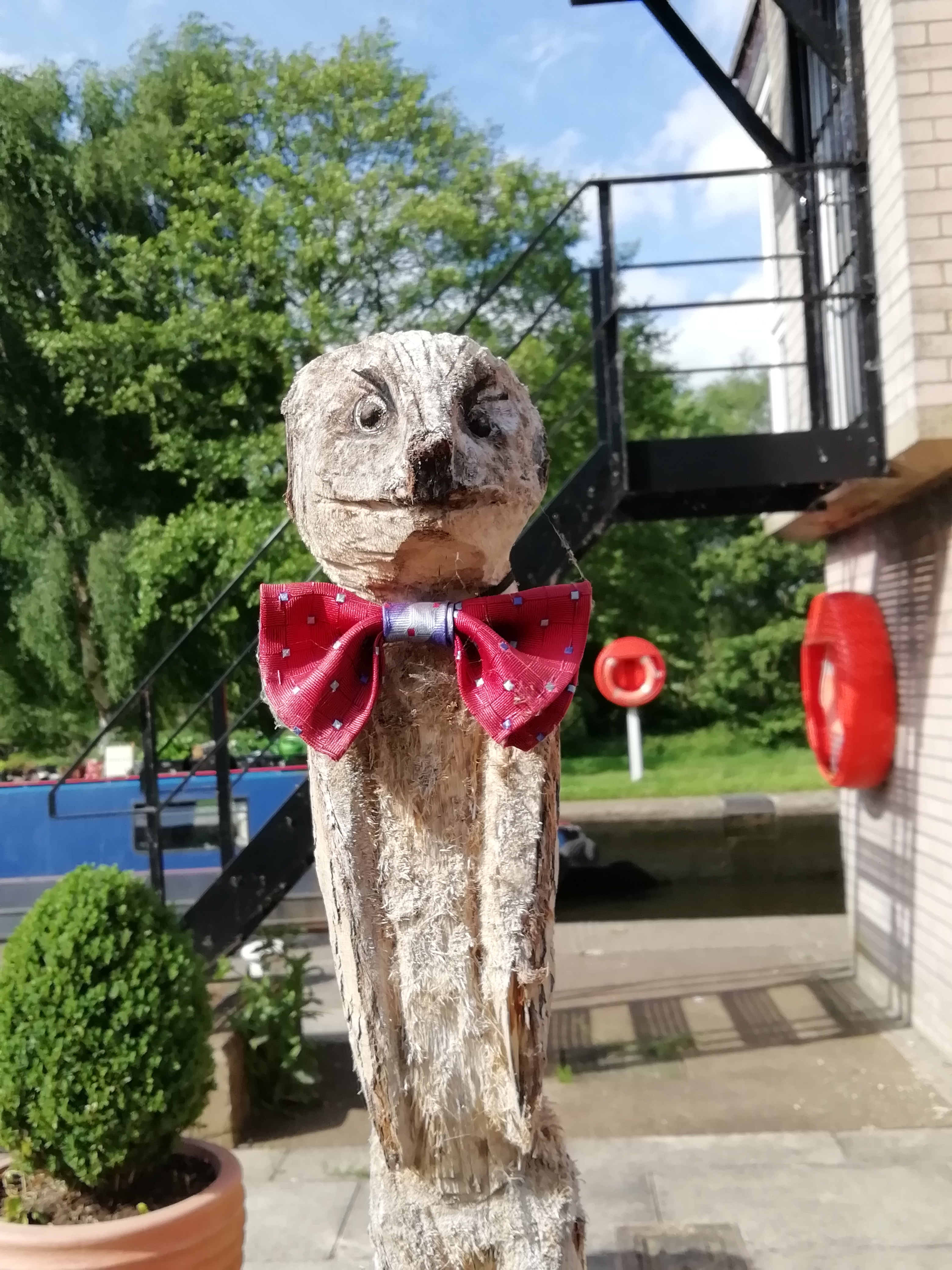
To mark our extended stay here in Willington, South Derbyshire we commissioned a figurehead for the boat from the talented Paul and Christine on Foxtrot (@Foxtrotand Wood ‘N’ Crafts). Willington Will, our guiding mallard duck will see us right!

Meet Will!

We’ve also had our first Easter living on the boat so Happy Easter everyone.

A beautiful Easter display at Findern Methodist Church

I really should have started this blog with an apology to the seedlings on the roof – just as the spring onions, salad leaves, herbs and beetroot started to push through, in 4 hours we had 4 seasons early in the week – sun, snow, hail, rain, and punishing winds.

April snow showers

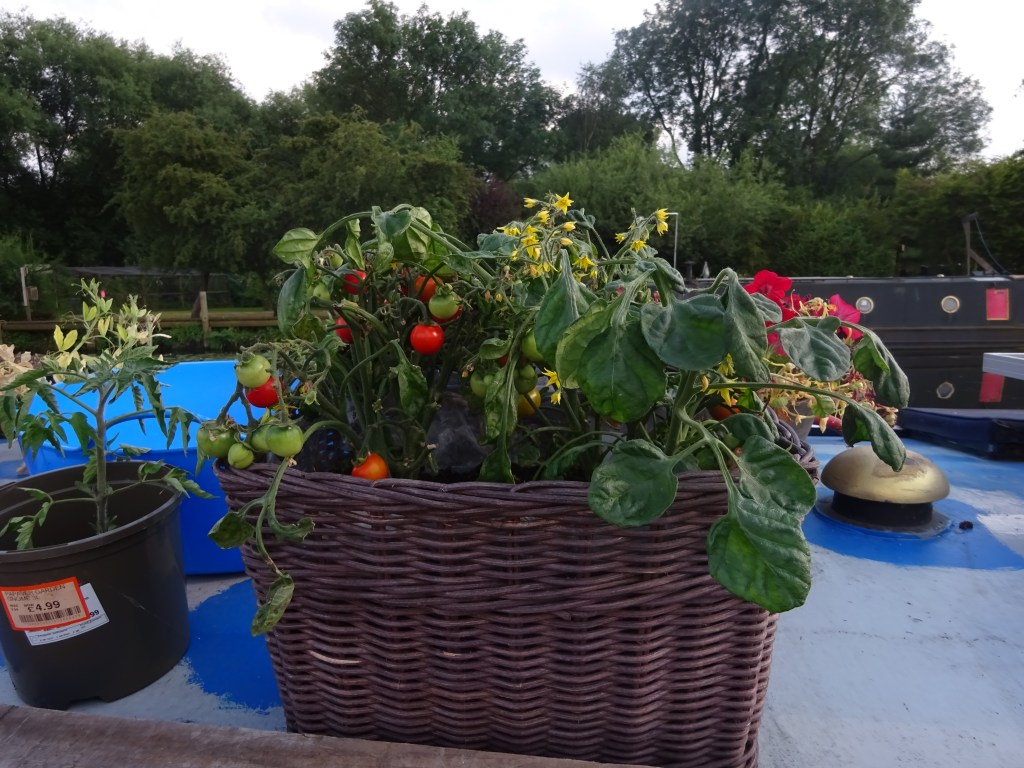
More biting winds and sharp frosts followed. Still, the seedlings have hung on and are currently encased in cloches of bubble wrap attached with bulldog clips and plastic bottles. Some other plants (surfina and tomatoes) destined for the roof this week have now moved into the bathroom to harden off! So there are seedlings on kitchen worksurfaces, in the bathroom and in the cratch!

We’ve got ice inside too now – with our final lockdown purchase – a full sized under counter fridge. It replaces our compact one which had a small 2* freezer compartment. Thanks to Inlander 12volt our stunning new retro Swan is chilling everything beautifully as I write and even making ice for tonight’s G&T which will be a real treat! Getting the fridge into the boat in its box to stop it being scratched was fun!

Funky fridge time!

Nature has been a joy of Lockdowns 2 and 3, made even more important because of its instant accessibility. We just step out of our door and feel instantly in the wild. Every day has brought something new to see, watch or hear – whether new growth, landscapes, birds or animals.

Such beautiful piggy eyes and those ears – just delightful!

We’re preparing to leave Willington in South Derbyshire on Monday 12 April – the first date we can under lockdown lifting. We’ve been here since 28 December, and in that time have been hugely aware as well as grateful for the incredible work of volunteers who make the local environment accessible for us all.

If you are planning a UK holiday on a narrowboat, learn from our experience that the journey is the destination on Britain’s inland waterways. Taking time to explore and be leisurely over travel is one of the sheer joys of this life afloat. Rushing from place to place risks missing so many of the small and fascinating pleasures and moments of interest.

From the Ashby Canal we explored parts of the Leicestershire Round and Bosworth Field, famed for its connection with England’s last Plantaganet king, Richard III who perished in battle in August 1485. His body was discovered in September 2012 under the tarmac of a Leicester City car park and was reburied in Leicester Cathedral in March 2015.

Bosworth Field

From the Trent & Mersey Canal, since New Year’s Day I’ve walked 580 miles, mostly on towpaths and footpaths. From the Willington visitor mooring we’ve found some great walks ranging from short and easy to long and challenging. Some are flat, others include the delights of hills which bring new perspectives. Most are well signposted and maintained by groups of volunteers who give up their time to enable us all to enjoy the incredible health and wellbeing benefits of the countryside.

If you have children I highly recommend the fantastic figure of eight walks from Willington or Mercia Marina to Findern, Stenton and back which can be as short as 2 miles or as long as 10, depending on the permutations you make. There’s lots to see on the way, and the Findern Footpaths Group (FFG) have installed information boards which share fascinating facts about the locality, flora and fauna around to make sure you don’t miss anything, whatever the season.

We’d highly advise you make it include Boat Street, the cafe boat now permanently moored beside the Streethay Wharf workshop area of the Marina, a short walk from the towpath if you go over the white metal footbridge, explore a willow maze and enjoy the wildlife lake on the way. Boat Street’s prices, and Cumberland Sausage breakfast rolls have to be seen to be believed!

The FFG boards tell me the centre of Findern used to be known as Bumpton but I have no idea why or when it changed its name. It would be fascinating to know the answers.

A short walk from Willington and the Trent & Mersey canal takes you over the River Trent to Repton, the historic village and former capital of the ancient kingdom of Mercia. Famed for its public school, the buildings of which are scattered throughout and dominate the historic village.

From Repton three walks of varying lengths are detailed on the village website for ease. These fan out across the surrounding hills. Maintained by local groups including the Melbourne Footpaths Group. Paths take you along by the River Trent, past the site of an old chain ferry to Twyford (we managed this route in the ice and snow), through fields to the back of Repton Prep School before climbing to give a good view of the Peak District on a clear day. Another, longer route heads up through the oaks and ash of the Woodland Trust’s Sledge Wood. It then scales Red Lane where outcrops of Bunter sandstone stand on pebble beds.

Walking in the footsteps of our ancestors

Eventually this route offers stunning views back across the Trent valley over the distant Willington Power Station cooling towers to the southern Peak District from near the back of Foremark Reservoir. The Reservoir itself is only a short walk further on and well worth a visit, beautiful picnic spots, sandy coves and a cafe!

We’re looking forward to new walks, new scenery, new moorings and more adventures from next week as we start cruising again. There are breaches of both the Trent & Mersey and the Macclesfield which are our optional routes to reach Yorkshire. It’s a race to see which will be fixed first but the latest information suggests that we’ll be heading north via the Trent & Mersey and returning via the Macclesfield. In the meantime, Willington has been good to us for what we expect to be our longest single mooring so here’s a final sunset from this perspective!

Next week: Who knows where we’ll be and what will have happened to us on the way to wherever we are?! Join us on that journey!

Frightening fire onboard! Treats and making a living afloat.

The small 24 ft fibreglass cruiser behind us had a fire onboard on Sunday afternoon. The first I knew was clouds of what looked like yellow smoke billowing across the towpath – it turned out to be powder from a discharging fire extinguisher.

You can see how close the cruiser was to us – that’s our tiller and ropes. The powder on the towpath is all that’s left of the drama outside the boat. Onboard I gather it’s a different story and the owner took bags of damaged interior to the bins.

The new boater on board fortunately was OK and so was his boat. He attempted to fill up his methanol stove without realising the pilot was alight, and inevitably things caught light. That resulted in him automatically throwing the flaming fuel from him, setting fire to more of the boat. He was extremely lucky, managed to get everything out not into the water but the towpath and followed up with a fire extinguisher. Raised heart rates all round but fortunately no one injured and Misspent 1 remains afloat.

I’ve gone round and checked our fire blanket and fire extinguishers as a result as I think have most of us along the canal here after Sunday – a salutary reminder to do so.

Do you remember trips to your parents and coming away with the car laden with food? Sometimes it’s nice to know some things don’t change, even when you totally change the way you live! Steve was away at the weekend on essential duties allowed in lockdown but returned on Sunday after the drama was over with a huge basket of goodies – thank you Mum! We will enjoy a delicious weekend of Easter treats.

No £20 challenge this week!

The sun which followed a quick flurry of snow this week has been welcome. Coming with March 29 lifting of restrictions it’s led to so many more smiling people catching up with family and friends on this already busy towpath. The nearby Mercia Marina must be emptying a bit too from the steady stream of boats of all shapes and sizes emerging.

Walkers, boaters, paddle boarders, canoeists, kayakers , runners and cyclists alike have enjoyed the abundance of riches on offer within a mile of our current mooring at Willington. Towpath traders make a towpath walk a delightful and a vibrant experience at the moment. Of course it’s ever-changing as boats move on and new traders arrive.

To our left we currently have Alan and Tina on nb Wobbly with ice creams, fudge and soon – candy floss. Their ice creams have just launched for the season and as discerning tasters we, friends and family can vouch for their utter deliciousness. They aim to be in a flotilla of narrowboats later this year travelling across The Wash, and maybe serving ice creams en route!

Wobbly ice creams also provided us some April Fools’fun on Facebook, Twitter and Instagram (pickingupducks and personal accounts. Some people were keen to know more about zero calorie, non drip ice cream!

Their fudge is available in a multitude of flavours – great for taking on a long walk or enjoying at home. Candyfloss is new for them this year and will be up and running as soon as the dome arrives that stops the boat and its inhabitants (Alan, Tina, 2 cats and a collie) being pebble-dashed with spun sugar.

To our right we’ve been grateful for Sylvie and Ben and their dog Badger on The Holm Oak. They enable us all to be more sustainable and knowledgeable with their eco friendly household and beauty products and well researched information. They offer many products in refill form which is brilliant and provide bottles if you can’t. We now have several once empty gin bottles with new labels saying – not to have with tonic – as they contain eco friendly washing up liquid or washing liquid! (I’ve stocked up in case we don’t see them for months…and it gave purpose to several empty bottles).

Sylvie also makes beeswax wraps and covers, and after April 12 will be selling her unique handcrafted clothing and bunting which we first encountered after Lockdown 2. Between them this enterprising couple also create beautiful handcrafted wood and macrame plant shelves and hangers. They are heading to Fradley for Easter weekend and then perhaps onto the Shroppie heading for Llangollen when restrictions permit. When you find them make sure to see their amazing feature window crafted from oak by Ben and finished with stained glass panels which they made under the guidance of former boater and glass expert Bonnie Brooksbank at her Purple Stained Glass Studio in Loughborough. Bonnie’s workshops are fabulous – I personally highly recommend them. Like me, you will find you can make things you never imagined under her skilled tutelage.

See nb Holm Oak Trading’s website or social media for details of their next locations.

For a while, moored near Holm Oak was the cafe boat Holly recently started up by Joanna and Victor Gould. Their YouTube channel means thousands have already had a taste of their life if not yet of Jo’s great cakes and coffee.

Half a mile further on past an oak wood towards the white metal footbridge over the canal to Mercia Marina is the mooring of Boat Street. This is a cafe boat with hot food, cakes, snacks, hot and cold drinks and trips too. Chris and Kim have backgrounds in the esports sector and NHS. They’ve made a huge success of their cafe business despite the pandemic which put an abrupt halt to their trip enterprise. Our loyalty card with them is well used and their Cumberland sausage rolls are already justifiably legendary. They will be the one boat we’ve encountered who will still be trading in the same spot – all of the others need to move on once lockdown finishes but this is Chris and Kim’s base. They are trialling a new location this week just into the marina which looks like a great place.

Boat Street – Cola’s favourite traders and ones who have given a lift to our Lockdown

As soon as lockdown allows, with their boat master, Boat Street will be running licenced, catered trips – they’re already taking bookings. I can’t think of a more relaxed way to get together with family or friends you haven’t seen for a while on a boat, gently cruising the Trent and Mersey Canal, out of Mercia Marina, along through Willington, over the historic and beautiful Dove Aqueduct to Horninglow Basin and back. It’s one way to meet up with family and friends – you don’t need to get wet or cold, or sit draped in blankets and the boat can take 2 groups of 6 or one group of 12 in a Covid secure way.

By their very nature, floating traders are always changing as they come and go. There hasn’t been so much of that during lockdown but movement is now underway. Latest arrivals have included nb Yorkshire Lass with an astonishing array of fenders, doormats, rope dog toys and an assortment of creatures. We spotted snakes, spiders, snails, and dogs!

It’s been a real positive of lockdown, having all these trading boats on the towpath around us. Not only have we been able to buy their goods but we’ve really enjoyed getting to know may of the traders themselves – fascinating people whose enthusiasm and passion is infectious.

Empty gin bottle update: Thanks to responses from last week and Holm Oak Trading we now have 2 x candle holders, 1 eco washing up liquid container, 1 eco washing liquid container and 1 fairy light holder. I would add these are bottles collected over recent years – not just the last 6 months living aboard!

Coming up next week: Lasting lessons of and from nature. An exciting new major purchase -will it change our life on board? And our last week in lockdown at Willington.

Highs, Lows, Lessons and Stats: 6 months on

Six months into casting off tethered lives… the three of us (2 x 2-legged and 1 x 4-legged) are still afloat and healthy.

This week however – brought a disaster. On Monday I couldn’t trust myself to speak to Steve despite the fact he had managed an awesome 20-mile virtual race the day before. Instead of congratulating him I was intent on not yelling at him.

It was an accident, him hurling my carefully prepared box with personal items out of storage, gifts and items for the roof garden including a tub of new plant food, solar lights and glass watering globes into the local tip. An extreme way of downsizing? It’s expensive to replace those bits we can, and frustrating about the things we can’t but que sera… these things happen.

Six months ago my sister asked if we didn’t find boat living claustrophobic and I somewhat smugly answered: “No, because there’s so much accessible outside space.” This week we found out just how far away from each other you can get even on a 50ft boat when you need space! Adapting to new dimensions has been part of the change to our lives.

Steinbeck was right when he said: “It’s a hard thing to leave any deeply routine life, even if you hate it.” We humans are creatures of habit. It is hard to leave the apparent safety of routine, the daily job, the bricks and mortar house, and the comfortable life resulting from decades of hard work. The big things were hard to make decisions but easier to leave than the small often material things. I think that’s the reason I over-reacted to the accidental hurling of items I associated with past life. Now I realise the things I needed can be replaced, and everything else is retained in my memory – until I forget everything when it won’t matter anyway. So I have calmed down – and more importantly apologised!

Running away?

It’s interesting how people have reacted to our move. Other boat dwellers consider us normal (well, as normal as any of us are). In the past six glorious months we have met many different people living permanently on their boats. From retired to young people living on narrowboats is an affordable way to get a home of their own. We though weren’t in that situation, and those who don’t live ‘on the cut’ full-time have expressed horror, incredulity, considered us brave or foolhardy and there’s also been a response which delighted us just when I thought we were becoming boring old bods, ‘Wow – only Deena and Steve would do that…’

Our youngest gave us pause for thought with her brilliant card – were we actually running away? The answer is yes – not from our children or any problems but from a toxic worklife balance and monotony.

I am personally grateful for the pandemic in that it brought a me up short to question how we were living and how I was working. Reflection and decision was made easier because of a sudden change of routine. I realised it didn’t matter where I was physically – with internet access I had the potential to continue working from wherever I chose.

Steve has run his property business from home for the past 8 years, and in lockdown 1 had to contend with me invading his space but we realised this worked. We both enjoyed being together 24/7… we realised that if we simplified our lives and reduced our outgoings then we could perhaps survive in a different way, keeping the essentials of daily life we were appreciating. Downshifting means we need less money and I have returned to a freer freelance existence.

The best things in life really are free. That’s something else the pandemic has taught me – what matters are moments that take your breath away, that make you smile or laugh out loud. They come from nature, from those you love and sometimes from strangers. It is also handy to have enough money for the occassional g&t! (A gin fairy, birthdays, mothers’ day, Christmas and plentiful sloe foraging has helped gin stocks so far!). Any ideas for recycling gin bottles???

Part of the change involved considering our family home as a resource rather than a tie. We turned it into an asset bringing income to support our different life.

Getting boat ready

So where to live? Three years ago we released an early element of pension and on a whim following a couple of enjoyable family holidays afloat we bought a 50ft narrowboat from Rugby Boats (highly recommend them if you’re looking). We had her base plate totally replated with steel (to avoid a soggy bottom), blacked (protection) and replaced an inadequate propellor. We also had the Morso Squirrel stove made usable and safe which was a significant cost.

The aim was to use her as a family boat for high days and holidays. We began to change the interior for that use, reducing the kitchen area, taking out the full sized grimy cooker and replacing it with a hob; increasing the living area to include a gateleg table and chairs; building in a sofa bed with storage to give space for 6 to sit and eat together (handy really given the rule of 6 which emerged during the year). Then came The Plan – to live on her full time…

The moment Lockdown 1 lifted so we could go to the boat, Steve began frenetic renovations on board helped by a family friend on periodic furlough who sanded and painted rust spots, skirting and shelves whilst I worked out my three months notice from home. Steve dug out the old rusty and rotten waste tank on the boat (a revolting job), installed a new walk in shower, basin, flushing cassette toilet, akitchen sink, and laid a floor. He installed the hob and built the sofa bed.

Before on the left and now on the right – left doesn’t include any of our ‘stuff’ but the right does!
Before on the left and after centre and right.

The eventual move onboard was a mad dash – to avoid being trapped on land by the impending, much heralded Lockdown 2… followed by a dash down the Leicester Line of the Grand Union to avoid being locked down close to our former home! We actually made it as far as the Ashby Canal before Lockdown 2.

Life afloat

Our first night on board as continuous cruisers was 19 September on the River Soar . Early the next morning, in the dark, the dog fell overboard. Disaster was averted thanks to using a towel as a hoist, something we’ve learned to adopt when in need of lifting said spaniel. My dressing gown though never recovered…

Rivers generally make for more excitement than canals, especially when starting to flood. There are multiple questions that keep you on edge:

  • how high will the waters rise?
  • will we be able to get off the boat?
  • will our mooring ropes hold? or in my case – will my often-rubbish knots hold?
  • on an almost hourly basis asking what’s the indicator showing? is it red or still on amber?
  • if the indicator goes to red and navigation is stopped how long will it be for?
  • will we escape a lockdown only to be trapped by a flooddown?
  • is it possible to shoot resulting rapids in a 15 ton narrowboat?

Rising river levels put paid to my aim of mooring back near our family for Christmas. It proved a good thing because we have had excitement and adventure on the canals too. These include discovering the shower tray angle was sending water into the bathroom and not down the plug hole (messy and resolved by shifting ballast), springing a leak from our water tank (messy, worrying and finally resolved in Lockdown 2), being trapped by a breach in the Ashby Canal (Lockdown 2) and being trapped in a live military firing range… if you missed these – nip back into past blogs!

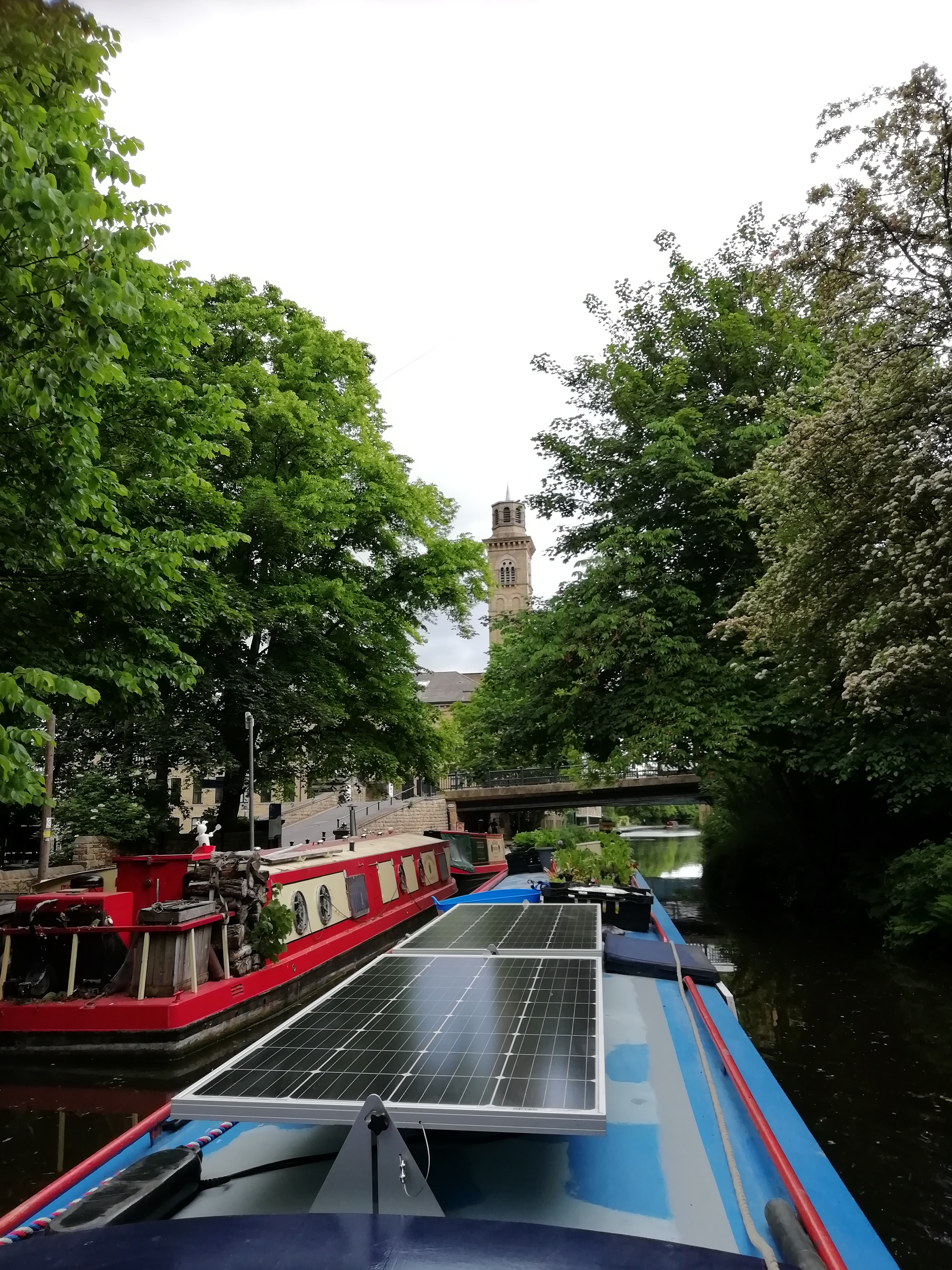
We’ve invested in new ropes, new batteries and this week the excitement of NEW SOLAR PANELS which Steve fitted while I worked. ( I thought it would be appreciated if I stayed out the way so he could crack on in peace but all I could hear was people stopping and talking to him. People are sociable on towpaths – walkers and boaters alike. He also had to rescue another boater who’s diy project went overboard!).

Stages of going solar

We’ve encountered iced ropes and iced canals, snow, sunshine, winds, rain and mud – lots and lots of mud. We’ve been touched by the constant caring admonitions to stay warm – usually these arrive as we’re down to tee shirts because our stove works so well!

Life in all weathers

We’ve moored in rural isolation, on the edge of towns, on busy towpaths, and in a marina. We’ve used mooring chains, nappy pins, pegs and rings.

We’ve enjoyed meeting coal boats and coffee boats, a floating eco shop, a talented spinner and wood crafter, an ice cream boat and dozens of sociable dog walkers.

The highs of living afloat

HIGHS:

  • a different, somewhat Circadian pace of life
  • sleeping for more hours a night than I have ever managed before
  • enjoyment of moving slowly (outside lockdown) and gently (unless I steer)
  • constantly changing sight and scenes
  • meeting new people with the realisation that if you like your neighbours you can stay a while or travel on together (lockdowns permitting) but equally if you don’t like them then you can just untie your ropes and move on
  • time to delight in small pleasures like the patterns sunshine on the water make on the boat’s polished wood ceiling and watching dancing flames in the fire
  • closeness to nature and the elements – I’m more aware of the daily changes wrought by the seasons than ever before
  • daily anticipation, adventure and discoveries
  • being thinned, healthier and as a friend described us “sickeningly de-stressed”

Lows of living afloat

LOWS:

  • not being able to see or have family and friends on board
  • not being able to move thanks to lockdown
  • springing a leak (but a high because we fixed it!)
  • the tiny old fridge with its freezer shelf which doesn’t work well means buying fresh good more often which is proving costly – it’s on the saving up for list.
  • still not having mastered a solution to clothes washing. Hand washing and reliance on family cannot go on for much longer. It’s our next project – to devise a sustainable solution.

Lessons learned from living this way

Steve – learned more about the boat. He had time to explore it in ways that he probably wouldn’t have done so quickly otherwise. Has had time to see how it was originally built and how it’s been adapted, changed and altered over the years.

Me – whenever something’s going to go wrong, it will be in front of the maximum audience (even on the Suez Canal it appears!). If it’s going to go right there’s never a soul to see. It is good to be reminded of how adaptable and resourceful we can be and enjoy being so. Feeling calm, relaxed, energised and making every day count.

What would we change?

Ben Lount from @HolmOakTrading said to us last week when we were buying out eco refills from their boat: “You have to be a doer to live on the water”, and it’s so true. We are doers and enjoing doing things so we wouldn’t change the emptying of bins, the emptying of the loo, the washing up or the carrying shopping to wherever we are moored.

There are things that we find slightly odd – having a stove in the middle of the boat would help heat both ends more quickly, and the side hatch opening onto the bathroom is a little tricky at times when you want the hatch open and privacy too but they are a small price to pay for the life we have.

I would love to change the mud but before next winter I am planning an outside bootscraper with brushes and better dirt trapper mats inside! We are preparing to live differently on the boat as summer comes. We decided spring equinox was the official time to remove the Perspex secondary double glazing. It means we can see out clearly now, or will do when I have finished cleaning windows!

The black line indicates our journey to date. Blue lines indicate return journeys on the same stretch.

Statistics to date – even with two lockdowns when we haven’t moved

  • Travelled a total of 193 miles, 1.75 furlongs [132 miles 6.5 furlongs on narrow canals, 46 miles 6.5 furlongs of broad canals and 13 miles 4.5 furlongs of river]
  • Navigated 95 locks [47 narrow and 48 broad] this included the staircases at Foxton and Watford
  • Moved 6 bridges (the moveable ones fortunately)
  • 41 aqueducts or underbridges
  • Cruised 3 miles 2.5 furlongs underground through 5 tunnels – Saddington (880 yards), Husbands Bosworth (1166 yards), Crick (1582 yards), Braunston (2042 yards), Newbold (250 yards)
  • Journeyed on 7 canals – Grand Union, Oxford, Coventry, Ashby, Birmingham & Fazeley, Coventry detached portion (I kid you not), Trent & Mersey
  • Cruised on one river – the Soar navigation – and one Line – the Leicester Line
  • Took in two Arms – Market Harborough and Welford

We are steadily confirming our new life…we registered not only with the CRT as continuous cruisers but now posterity will see us living on nb Preaux as recorded in the 2021 census…thanks to volunteers bringing a code to access the form.

It’s been a surprisingly eventful and enjoyable six months – what will the next six have in store? We aim for Lancashire, Yorkshire, back to the Soar for August’s Mountsorrel Revival and then into London for October! Will we make it? Stay with us to find out and feel free to share with others who might like to join the journey.

Living by our mottos

Next week: Keeping afloat financially – a look at some of the many ways people are earning a living on the water.

Springing forward and spring cleaning

On the water, the towpaths and in the wider world outside there is a sense of movement all around us – even if we are still static, until at least 12 April it appears! To avoid intense frustration building up we are taking action.

It’s been a busy week for us both workwise but amid everything the vernal (fresh, new) or spring equinox has arrived at long last. Across the globe they mark the point where day and night are almost equal in duration (equi: equal nox: night), unlike solstices which mark longest (June) and shortest days (December).

Leaf buds are appearing along the towpath on what looked like scrubby land between the increasing line of boats and the railway. Trees which since we arrived in December have been patterned only by lichen, snow and ice. Now a vibrant green hue is emerging, highlighting the ends of branches.

Violets, aconites and a ladybird – surely signs of better times ahead?

Mallard are pairing up along the canal, signalling their interest in each other by the rhythmic head bobbing of courtship. The ducks are looking for suitable spots or already building their carefully cached nests. Other birds too are nesting. As I swept out yet more dog hair from the boat this week a robin eagerly pounced and flew off with the black fluff dangling from its beak. Those who missed out, magpies or small sparrows, are constantly flying back and forth with varying lengths of twigs, moss plucked from the side of the canal or scraps of wool from the nearby fields of sheep and lambs. Along by the Dove Aqueduct we stood watching vibrant coloured male goldfinches with their red masks and hazard warning yellow and black striped wings as they sing “teLLIT-teLLIT-teLLIT”. Next time I will try for a photo which isn’t a blur!

Along the towpath the peculiar tornado shapes of butterbur are opening their tiny pink flower spikes next to the water. These exotic looking plants are easily to spot now when there’s little else around them. Their leaves are beginning to appear too. These will grow huge, and heart-shaped. People used to use these leaves to wrap butter in the past. Extracts of the rhizomes were used for treating headaches, hay fever and in Japan the young buds of their native variety are apparently delicious fried in temura batter. I haven’t been tempted… but maybe next year?

Butterbur

In the past seven days we seem to have had a month’s worth of weather in each 24 hours. Sunshine, warmth, high winds, hail with stones that whiten the paths, gentle breezes and torrential rain which makes for more mud underfoot and paw.

At night the winds bend the trees which we hear creaking along with our mooring ropes have made me fearful not only for my plants on the roof, but for the newly constructed nests. By day the birds, like this female blackbird joyfully puddle-bathing just outside the kitchen window, bring positives to even a muddy towpath.

We managed a spring clean inside during the showers, and outside during a gap in the downpours. We fish out rubbish with our net when travelling, and we’ve been doing that for anything drifting past us whilst we’ve been moored too. Steve was delighted to have his rubbish netting skills caught on camera by Joanna Gould as she and Victor brought Zero back from the water point the other day! He appears at 8 mins 37 apparently!

This week though there’s been little floating debris so we headed on land towards Findern clutching gloves, grabber and bin sacks to collect stuff spotted on walks. We rapidly gathered so much that we had to beg another bin sack from Boat Street, a cafe boat moored near the marina. A quick litter pick whilst walking is something we’ve tried to do wherever we are moored for a while. Let’s be honest we do hope this 3-4 month mooring is the longest we will have have to spend anywhere so this litter pick seemed like preparation for a farewell!

Some of the biggest rubbish culprits wherever we go are dog owners. If we’re out walking our dogs surely we all want to be enjoying the countryside we walk in and preserving it for others to enjoy. Putting dog poo in plastic bags and then discarding them all over the place, hanging in trees or on hedges – WHY???

On the plus side in the hedgeline of the oak wood we came across a very nice intact Fevertree gin glass – that’s been recycled I’m glad to say…sadly no gin was to be found. Cola did his bit too… fishing an old cat food tin from the canal and retrieving discarded cauliflower leaves which he found somewhere…just hope he didn’t nip onto a boat for them!

Gin glass doing duty after a good wash and Cola trying to see out after picking up discarded cauliflower leaves

We collected the usual haul of cans and bottles plus half a plastic garden chair, a lot of pens, sweet wrappers, and plastic containers of all sizes. Steve took the bags to the boaters’ bins at Willington.

Spring cleaning and preparation for what comes next also led us on a walk we wanted to do but which has been partly underwater until now by floodwaters from the Trent.

The footpath finger post has been indicating quite a swim as waters rose higher and higher since January

Crossing the original 1839 toll bridge would have cost a toll of 2d for us both back in the day. When it opened the engineer who designed it had to pay compensation to Mr Pearsall, the operator of the ferry which provided the previous crossing.

Finally we were able to follow the footpath fingerpost along the now lush well-watered fields beside the Trent. Turning alongside a gaggle of Canada geese grazing happily and as ever noisily, we moved away from the river over a series of stiles before coming back to the glistening, gleaming waters on a final bend where the river has carved the sandy soil to take part of the field away. At this point we began climbing up through sprung gates and stiles to the back of Repton, with a view right over the valley to the vast Toyota factory complex at Derby.

Repton this week has a completely different feel to that when we first encountered it because the public school that dominates the village is open again. The whole village looks and sounds different. Shrill commanding whistles blast from sports pitches and on the paths and pavements, navy-uniformed groups of boys or girls (one or the other, never together it seemed) chatter in groups as they walk.

The school was founded in 1557 on land that once housed a Benedictine Abbey and an Augustinian Priory. Its motto Porta Vacat Culpa (the gate is free from blame) from Ovid’s Book of Days or Fasti, is apparently inspired by the remains of the Priory gatehouse. I much prefer Steve’s translation of the motto “You’re to blame for leaving the door open!” Former pupil Roald Dahl would probably have agreed with him – he said wrote that school days were filled with fear and censure. His novel Boy draws on his time at Repton. Boazers and fagging were made bearable by positives like the unique Corkers, a delightfully eccentric master who only pretended to teach maths. Maybe Dahl was one of the schoolboys who sought to decorate the top of the famous Market Cross. Newspaper reports over the centuries tell of chamberpots, underwear and more recently traffic cones adorning its ball-shaped top.

Whilst we are still here, spring cleaning, walking and keeping track of all the changes happening in nature around us feels energising and even exhausting after a particularly subdued winter. This year we are all being tracked too with the census which happens every decade. It’s proving a bit more complicated on water than it ever has on land!

The census provides data about the population but also a moment of reflection as to what will be shown to future generations of our family by this recording. This is our first census as continuous cruisers. It is also is the first when both our daughters are living independently and the first time our grandson will be recorded for posterity.

For the first time this is going to be a census primarily online. Foolishly I thought that meant it would make it easier being cast adrift from the norms of postal addresses, letterboxes etc. Wrong! We are told to call for an access number to enable you to complete the census online and that’s where the”fun” starts… Steve being organised took it upon himself to get our access code before the census night of 21 March even though boaters have been told we can officially complete on any night between 20 and 23. He’s now spent something in the region of 4 hours according to his phone records trying to get the number and as of this moment we are no nearer. We await promised return calls… or the arrival of a census officer calling on moored boats. Will we get access to complete or a £1,000 failure to complete fine? Watch this space as they say!

Next week: Highs, lows and lessons of our first six months as continuous cruisers… and a floating census update

Education, inspiration and pure entertainment – it’s all in a name

The names we bestow upon inanimate objects tell us so much – generally about ourselves – our identity, personality, sense of humour (or lack of it). Onomastics or onomatology, the study of names, absorbs some people for years. Looking at narrowboat names I can understand why – they offer up a entire world of education, history, reality and imagination.

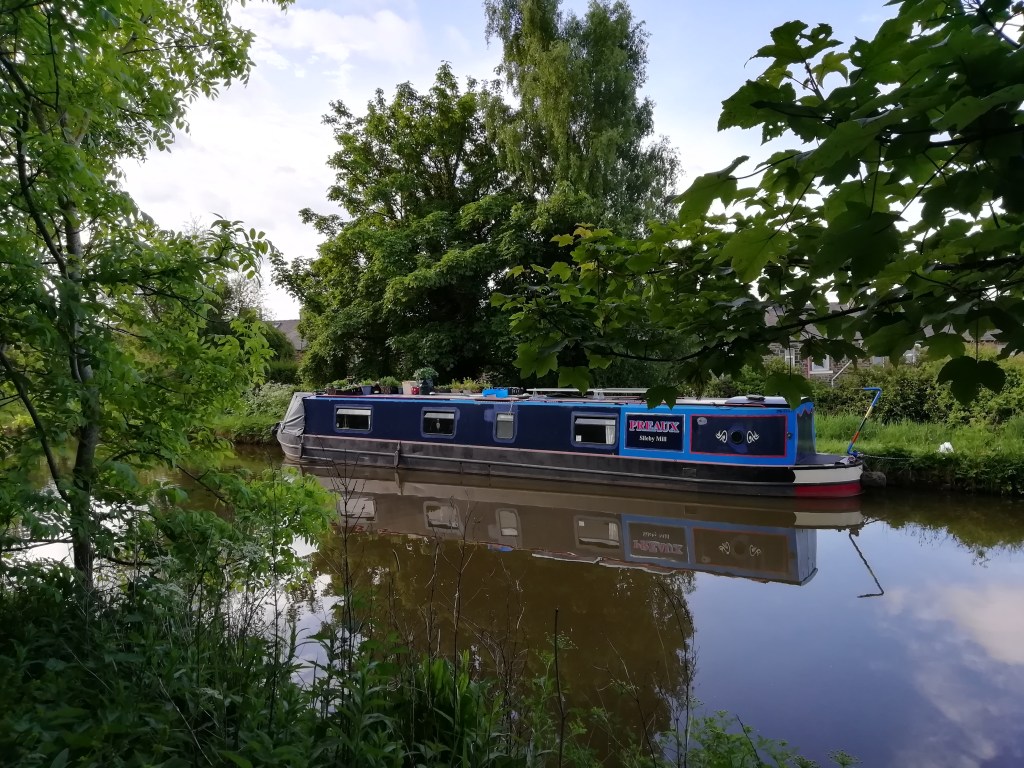
Some boats tell of their owners’ situation like the humorous Old Age Traveller, or geographic origins Ay up mi Duck which anyone from Nottingham will recognise, Tui and Rangitikei from New Zealand, and Francophiles might identify our own narrowboat’s name Preaux. Named after the French village where we lived and where our daughters were born, the word also aptly means a playground.

There’s a hidden education available on offer in linguistics too. If you didn’t learn Latin at school – take to the cut with a curious mind and you’ll soon learn…

There are at least 76 boats out there called Carpe Diem (Seize the Day), probably one for every marina in England. Strangely there’s only one river cruiser licensed as Carpe Vinum (Seize the Wine). Personally I wish we’d thought of Carpe Iuniperorum (Seize the Juniper…i.e. the gin!) There are a good few Tempus Fugit (time flies) but only one Tempus Vernum (Spring time). I wonder if the owner of this was an Enya, Verdi or nature fan or perhaps all three?

A Carpe Diem lurks on a turquoise background beyond the Portuguese Vida Nova (new life)…

The most common names are those reflecting some of the highlights of this beautiful floating environment. Kingfisher and Dragonfly appear in their hundreds according to licence lists. Flora and fauna also provide inspiration for more original names like the rain lily Zephyranthes. Pretty apt as living on a narrowboat you’re well aware of any precipitation!

There are boats whose names reflect what inspires or fires the passions of their owners. Victo Gould was inspired to name Zero after reading of a philosopher who declared zero to be “the immovable mover of things… puts everything into balance, much like a boat which is floating level.” I only hope the philosopher wasn’t Schopenhauer. Canals weren’t much good for him. He drowned in one in Hamburg in 1805.

Dragon’s Dream was inspired by poster from the owner’s youth and his passion for these fire breathing flying creatures. The eyes at the front of the boat are inspired in the Norse tradition to both offer protection and enable the vessel to find its way safely.

Floating along our inland waterways are some sensationally unusual names that take you off into fascinating discoveries as well as far fetched musings about how they came by their monikers. There are advantages to social distancing and lockdown at times – it allows your imagination to go wild and not be stifled by reality or truth. Sometimes you don’t want to know the real reason behind the name – imagining how a boat could have got its name can take you into flights of fancy….One day I hope I will be able to catch up with some of these boats at a time I can knock on the side and ask about the real reasons behind their names, but sometimes you’re just passing by and have to rely on your imagination… which has the advantage of at least preventing the disappointingly unimaginative response of: “No idea, it had that name when we bought it.”.

The Flying Eagle for example may be owned by enthusiastic numismatists who longed to own one of the rare American coins but never did. Instead they gave its name to their beloved boat…alternatively they could have owned one of the rare coins and funded the boat by its sale…or the owner could have been a trapeze artist … Just one name and the possibilities are endless!

Khaleesi – I’m sure will be owned by a strong woman…. or by someone who earned the money to buy the boat from involvement in the Games of Thrones dramatisation of George R.R. Martin’s book A Song of Ice and Fire… Khaleesi was after all Martin’s title for the wife of a Dothraki warlord.

Montgomery Pickles Esq has had his story written up already – and a remarkable one it is, one that just can’t be embellished! There does remain a question of whether the boat was indeed really named after a… goldfish?

Some names make you wonder what was the spur that led their owners to take to narrowboats or are perhaps evidence of wishful thinking, Rehab, Patience, Wegonen-Dunnit, Who gives a… and Peace at last for example. The latter has ended up with the owner of at least one of the 5 on the water being nicknamed Tombstone – something he apparently wasn’t expecting!

As you can see we positively sped past Lady Mondegreen (my excuse for poor photography). She gave her name to misheard lyrics and appeared with the Earl of Moray in situ.

Sylvia Wright coined the term mondegreen for a misheard lyric after mishearing the lyrics of one of Bishop Thomas Percy’s Reliques as:

Ye Highlands and ye Lowlands,
Oh, where hae ye been?
They hae slain the Earl o’ Moray
And Lady Mondegreen. (Percy wrote: “and lay’d him on the green”)

My own mondegreen has led my daughters to burst out laughing in clubs and parties whenever Kings of Leon play:

Lay where you’re laying
Don’t make a sound
I know they’re watching
They’re watching

All the commotion
The kiddie-like play
Has people talking
They’re talking

You
Your socks is on fire

Flaming socks always struck me as such a delightfully odd thing to sing about. None of us can now unhear this and I had it as my mobile ringtone for years.

Talking of songs, would you believe at last count there were 6 Waterloo Sunset‘s floating on this ‘dirty old river’…or canals… and television and musicals inspire too. When I can approach boats and shout without fear of breaching social distancing rules, I want to know how and why Craggy Island and Alfie got their names. Connections with performances, episodes, or just a love for the stories they tell?

Sometimes the name you see hides a charming or amusing story when you do get the chance to meet and talk to the owners. Maythorne is a 60ft narrowboat owned by a couple who had a lifetime in horticulture. Appropriately their boat is named after the English hedgerow staple also known as hawthorn which turns the countryside into a swathe of white in May. It was the topic for the first article the owner wrote when approached to share his knowledge more widely.

Molly ‘D’ who I hope you have the chance to encounter at floating markets is the home of spinner and weaver Christine and her Yorkshire husband. If you see them make a point of visiting their boat to see her work which clients across the globe seek out. When they were trying to decide on a name for their boat they went back and forth between them watched by their dog Molly. In despair, unable to choose a name they said they might as well leave it to the dog, and so the boat is… Molly ‘D’. Molly Dog is sadly no longer but her name lives on afloat.

Some boats have fuelled my fascination to the point where I’ve spent money and enjoyed hours of research in a quest to know more.

Passing Mabel Stark on a mooring resulted in me discovering the remarkable Mary Ann Haynie in 1920s America. Under the name of Mabel Stark she became the most renowned tiger trainer in the States with Barnum and Bailey’s circus among others – and here she still is, remembered with her name emblazoned on an English narrowboat! I’d love to see the decor on board – tiger prints throughout perhaps? I do want to hear how the owners came by the name – were they tiger trainers themselves? Is the owner perhaps the Canadian author Robert Hough, or a relative of his? Or maybe even a relative of Mabel’s? One day I hope to meet Mabel Stark cruising the cut and not on a mooring so I can ask the questions I long to have answered. In the meantime the novel based on Mabel’s remarkable career and racy life raised eyebrows for a winter evening or two. It’s now moved into the boaters’ book exchange at Willington in South Derbyshire for other boaters. It’s no spoiler to say her life was probably even more exciting than the book about it!
Another boat name has resulted in me wanting to order two books about the life of another exceptional woman – Ursula Graham Bowers. This former debutante broke away from the strictures of English society’s expectations for young ladies and in 1939 headed to the mountainous Naga region between India and Burma. Her resulting anthropological observations of the Naga groups of the region were recognised for their detail and insight, despite the fact she had no formal training in anthropology. In World War II at the request of the British administration she led a guerilla force of 150 armed Naga against the Japanese troops. Her exploits earned her the nicknames Naga Queen and Jungle Queen. Might this boat be or have been owned by one of her relatives, or by one of the authors or writers who documented her life? I was delighted in whilst researching the Naga Queen to find video which allowed me to hear the indomitable lady’s voice in person in a beautifully conducted received pronounciation interview from 1985. It seems strangely dated by today’s standards, very staged with no interruptions, no aggressive questions and a gentle appreciation for the subject.

I’m now eagerly awaiting a chance to read Ursula Graham Bowers’ biography as well as getting out of lockdown to start cruising again. What onomatological gems lie out there to discover?

Lessons in mindful consumption from a tough challenge !
Spoiler alert to start – blog details an epic fail with highly recommended side-effects for individuals, businesses, in fact for anyone who consumes anything!

There are challenges one rises to, those achieved with struggle or panache and there are those which just flop, flounder and fail. For two of us the challenge of living on £20 a week between us came in the latter category. 

The fail may well have resulted from my total dislike of mathematical documentation, or a complete failure on my part of following the principles of careful meal planning advocated and demonstrated so successfully by both my mother-in-law and my elder daughter. Even with delicious edible gifts from Christmas to call on from family and friends (thank you Alice, Freya and the Day family) as well as the gin fairy (aka the inestimable Lesley) – I failed the challenge. Maybe my philosophy was at fault… 

There are relevant lessons from this experience for those running any business, office or industry as we emerge from lockdown. We can all so easily become accepting of regular outgoings in a way that often means we lose sight of their accumulated totals and the impact that can have. It will also be interesting to see how many people returning to work away from home become suddenly aware of the accumulating costs of not working from home, and how much businesses face increased costs of reduced  digital dependence. The last year has been hard and we need businesses and individuals to remain in existence for our collective recovery from this destructive pandemic.

We did have some fun trying the £20 challenge and discovered some fascinating meals we’d never have encountered otherwise. The eternally inventive Jack Monroe saved our digestion and purse on several occasions as normal. Plus no food was thrown away apart from potato peelings too green to be made into crisps, and the skins of onions and garlic.

So to the details…

I can manage a week of breakfast monotony in a good cause so every day began with porridge. I added 2 chunks of cheap Co-Op milk chocolate to my bowl whilst Steve had sultanas and more porridge. Outcome 12p each daily.

Steve, it appears, would also be happy to eat the same lunch every day. I gritted my teeth and followed suit for most of the week once I realised how much easier it made the maths!

On two days we enjoyed homemade vegetable mulligatawny soup with a slice of bread, some spread and a yoghurt. 50p each in total with the yoghurts eating up a whopping 35p of that bill.

Homemade mulligatawny soup – guaranteed to bring a splash of colour and warmth to the darkest of days

The remaining five days of lunches were cheese, bread and delicious Christmas gifted homemade caramelised onion chutney. Two days included a yoghurt taking lunches to 58p each. Three days saw yoghurts replaced with 15.5p apples etaking the total to 36.5p each.

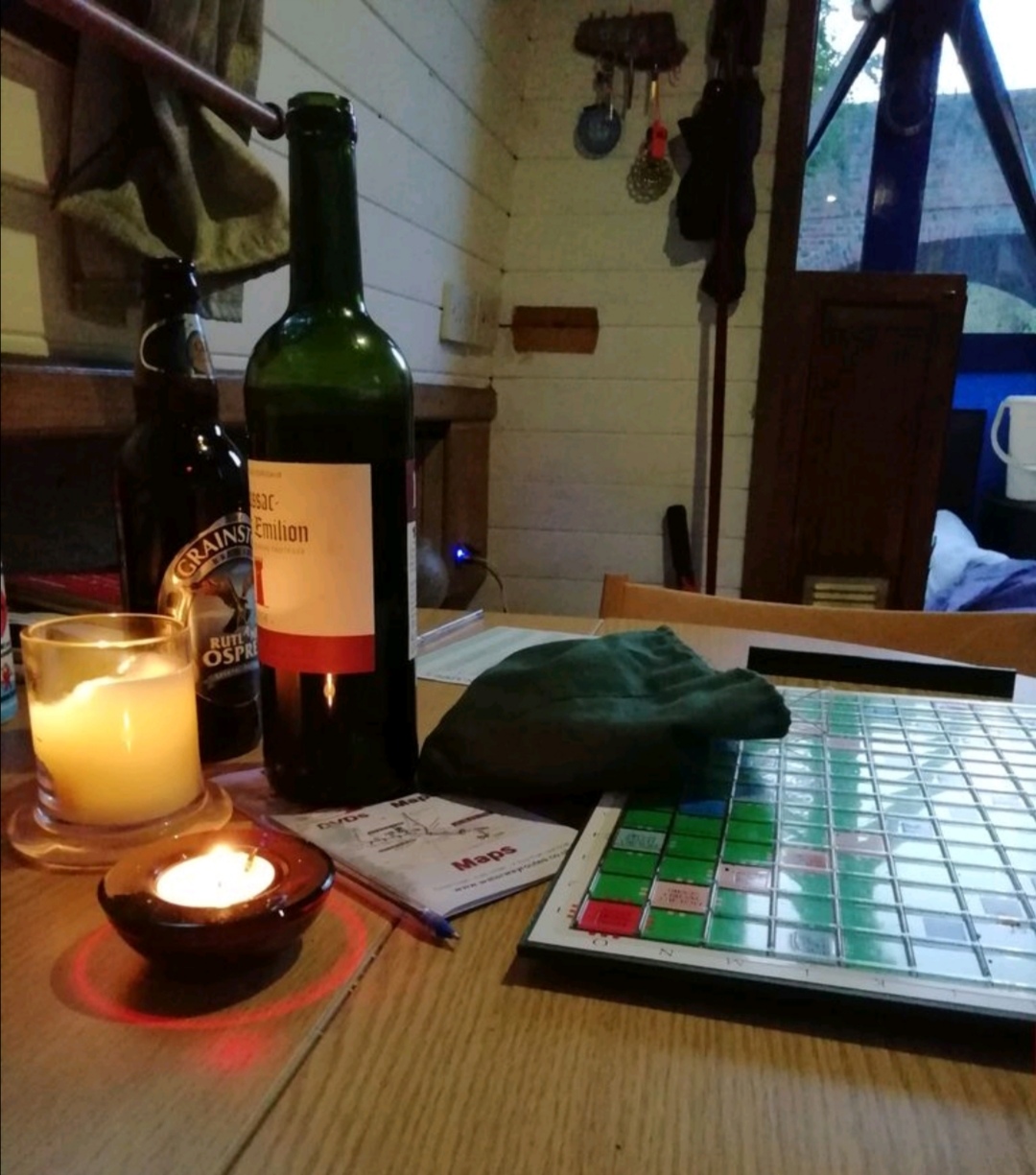
Evenings brought inventive fun plus indulgence. Pre-dinner Scrabble matches were held over a treat of a gin and tonic and nibbles. Nibbles not homemade this week so 18p a time, and the gin courtesy of the inestimable gin fairy with tonic from the monthly shop. Such treats have been essential this lockdown!

The monthly shop additions I divided in 4 (£2.04) for the purpose of the challenge:

  • Butter spread 500g @ 79p
  • Slimline tonic water 4 bottles at 30p a bottle 
  • 2 Milk 4ltr @ £1.09 (usually buy one a fortnight)
  • Coffee 200g @ £2.00
  • Cheese cheddar block @ £2 – made lunches and two suppers
  • I also added in £1 to cover herbs, spices and Pomegranate tea used this week from the store shelf
Clockwise – not pink beetroot pasta, smoky vegetable jambalaya and vegetable curry

Day 1 Smoky vegetable jambalaya (Dr Rudy Aujla -) 30p a portion plus tinned rhubarb and custard = total 72p each. Gave a spicy fragrance to the boat which was lovely.

Day 2 Cauliflower cheese (30p bargain cauli!)  – each portion 40p.  Fruit compote of a left over satsuma, pear and tinned pineapple 23p each.

Day 3 Remainer of jambalaya with cauliflower leaves and veggie quarter pounders (87p each portion) plus remaining rhubarb with vanilla yoghurt (cheaper version) total £1.18 each. Daily costs are rising, just wait until you see tomorrow…

Day 4 Steve’s divine mmmushroom risotto – sadly our homegrown mushrooms have all been eaten and foraging season hasn’t yet begun so I bought chestnut mushrooms locally for £1. Adding in white wine, Arborio rice and Parmesan brought the cost to £1.23 each . Bananas at 15p each finished the meal.

Day 5 A highly experimental dish courtesy of Jack Monroe – beetroot pasta.  Absolutely delicious despite being made with well out of date beetroot at 10p for 250g. Ours came out not the vibrant pink of her recipe but sludge brown! I never knew that over-stored beetroot lost its colour! This is down as a Must-Try-Again with fresh beetroot which I imagine will be deliveranother taste sensation. Total cost 65p including a yoghurt.

Day 6 Every vegetable left in the veg rack curried with some red lentils creating a spicy scented boat and a satisfying, warming dish. Served with rice and another of those d*#@ expensive yoghurts for a pud! Total 61p each.

Day 7 Pasta with homemade creamy tomato and herb sauce plus an apricot oat crumble with the last of the creme fraiche. 77p each in total. 

Top: Creamy tomato pasta Below: Apricot crumble with creme fraiche

The weekly total? £27.43 for two of us… didn’t seem too bad! Then I remembered the two packs of hot cross buns that found their way into my basket – another £1 to add – they were on a deal and can freeze… oh, and the packet of giant chocolate buttons which somehow fell in – another 99p! And then there was the support for the cafe boat with coffee and biscuits at a remarkable £2.30 (thanks to a loyalty card) – still an additional outgoing ! Thus the challenge of £20 a week was well and truly blown out of the water. Still £31.72 for two people in the winter in a lockdown when food seems such a highlight of the day, doesn’t seem too bad. We have eaten healthily, certainly not starved and I have lost some weight which is a good thing. It’s also nothing short of remarkable considering I also consumed a present of salted caramel and chocolate hot cross buns!

One issue I spotted was the amount we spend on yoghurt when there are no offers in the local supermarket. I shall now experiment with making my own. It will either be highly successful or a disaster. In the winter it should ferment in a towel-wrapped pot near the stove overnight and once charity shops open I can enjoy trawling for a wide mouth thermos for summer yoghurt making. Our current flask is in daily use for boiled water as boiling the kettle time and time again wastes gas.

This week has been a fascinating challenge with multiple positives:

  • We achieved zero food waste using every leftover
  • I am now mindful of previously unrecognised expenses in indulgences like daily snacks and also in staples like yoghurts
  • Making our own (snacks, yoghurts, veggie burgers) may turn out to be more fun and just as tasty (if not tastier) whilst reducing costs.

Any comments or recipes would be very gratefully received!

The wider issue of conscious consuming is something we all employ do to cut costs particularly when returning to work with commuting costs and increased business overheads. It’s all too easy to slip back into habits like unnecessary photocopying or printing without recognising the cost; those frothy coffees or snatched lunches which can lead to us wondering where the pennies have gone. The return to work is going to be tough for individuals and businesses both psychologically but also economically. Every penny will count going forward so mindful consumption could contribute to keeping jobs and savings. We have learned the hard way that so much can be done exclusively online, minutes of meetings, agendas, learning materials, reports – let’s keep those lessons into post-lockdown to save resources, costs and cut waste. 

Mindful consumption isn’t over for me though the challenge week is done. It has made me more aware. I want to see the economic impacts of meal planning (yes, I concede in outline!) and home production of snacks, burgers, yoghurts etc. We currently have the car (electric) with us so had I not walked to a local supermarket would the bill have been cheaper after factoring in electricity and other running costs? Better still, I should cycle to the cheaper store to save fuel and money as well as getting some extra exercise – one for the next supermarket shop! Roll on too the warmer weather and a chance to get our rooftop veg patch producing.

Pomegranate tea brings the colour and vibrancy of Turkey to soggy South Derbyshire in March!

Next week: What’s in a name – pearls and pitfalls.

#zerowaste #consciousconsumption #mindfulconsumers #liveon£10aweek #jackmonroe #drrupyaujla #makingendsmeet #savingmoney #boatlife #boatsthattweet #cuttingcosts #usingresourceswell

Planning our great escape from lockdown

Lockdown has been a long haul this time – not a long haul that takes us to new locations but a long haul to nowhere which has reinforced why segregation is used as a punishment in prisons.

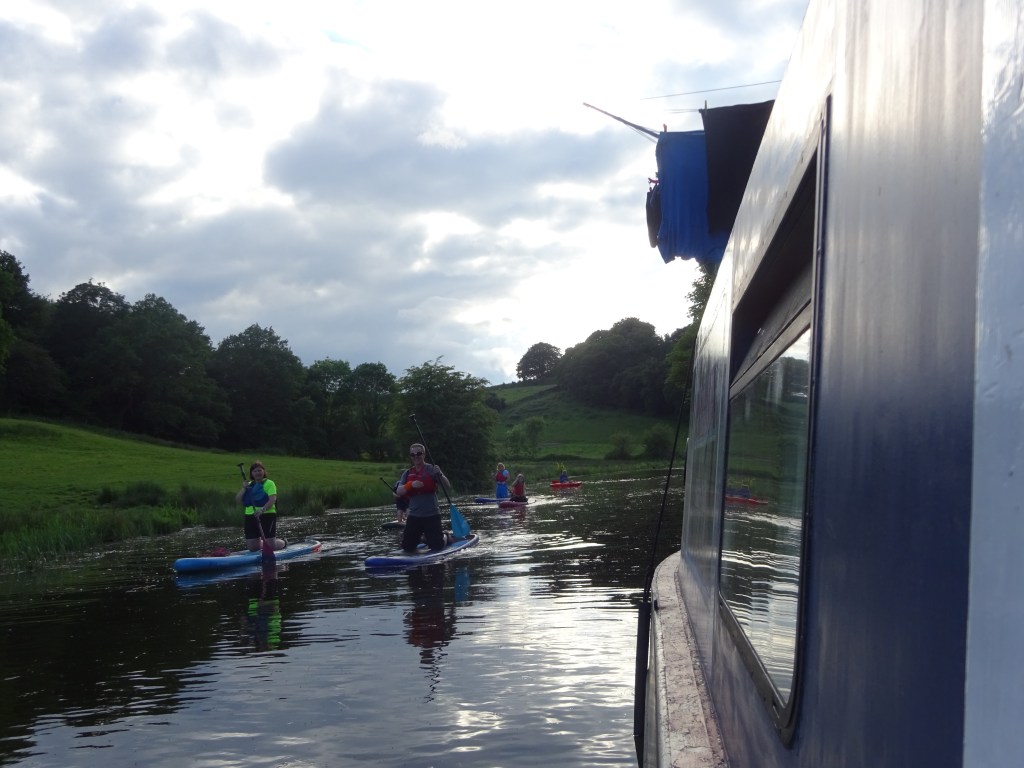
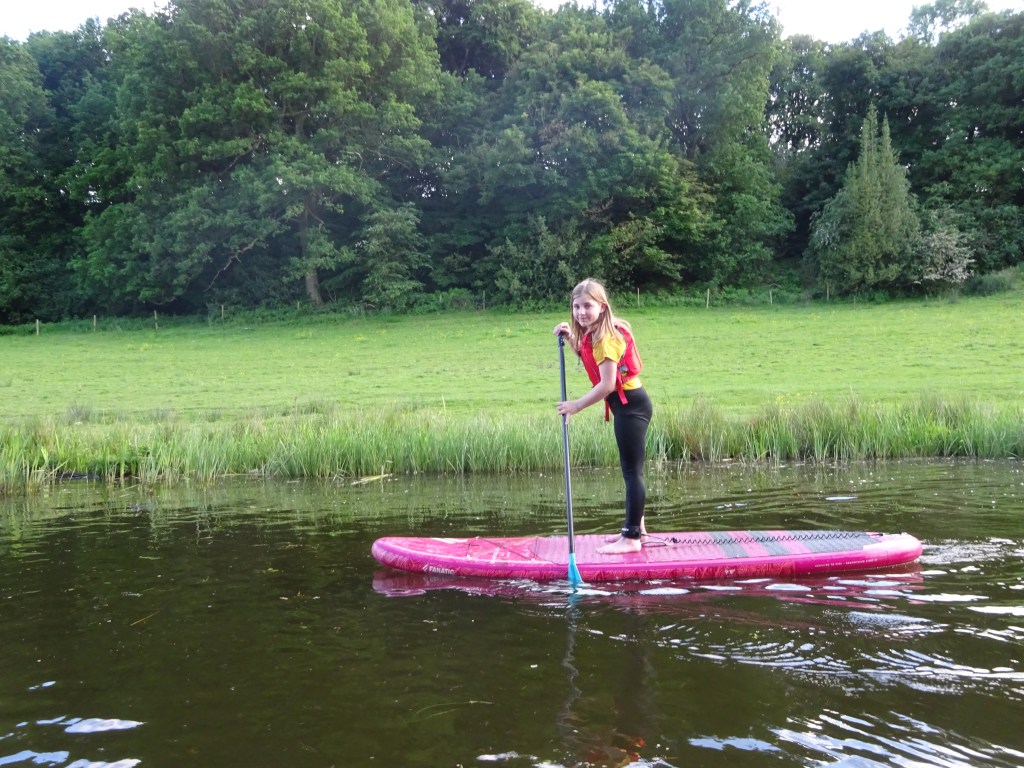
It seems ironic that taking off on a boat to enjoy a panoply of changing sights, sounds and challenges has resulted in us being moored in a single location since 28 December (in which time we’ve moved mooring precisely 6 feet to avoid mud). Our changing sights have been those of daily local walks or runs; ever-changing sunsets or sunrises reflected on water or ice; and floating neighbours heading out for water, diesel or pump outs. We’ve been part of a lockdown project unveiling by a family who built themselves a kayak. We watched the inaugural launching – and were as relieved as they were that it floated successfully! As the weather has improved we regularly see kayaks and stand up paddle boarders out on the water. It can be disconcerting to look out onto the waterside from a side hatch and find yourself face-to-face with someone silently gliding by. I’m now worried about startling a wobbly paddle boarder as I pop my head out!
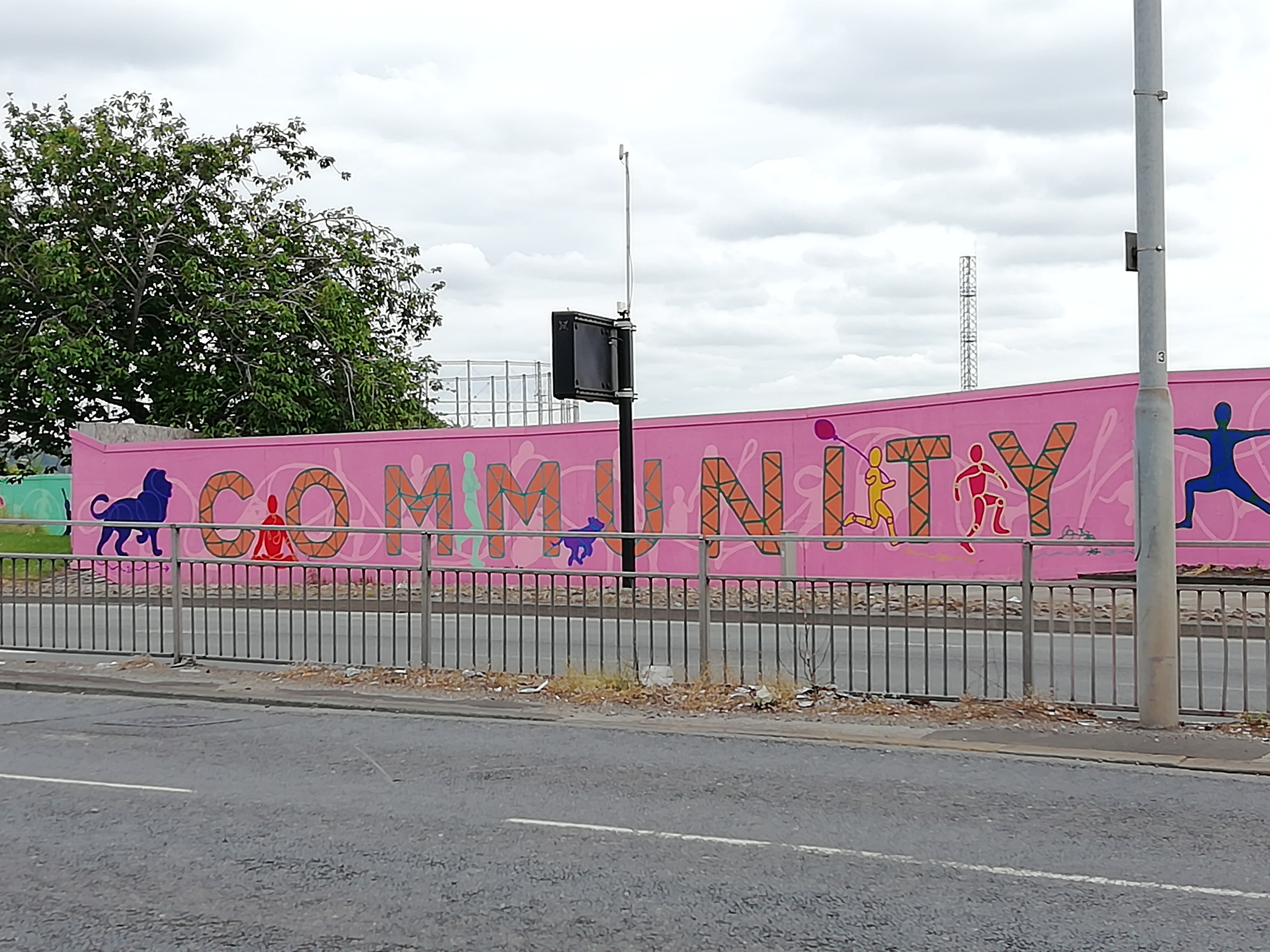
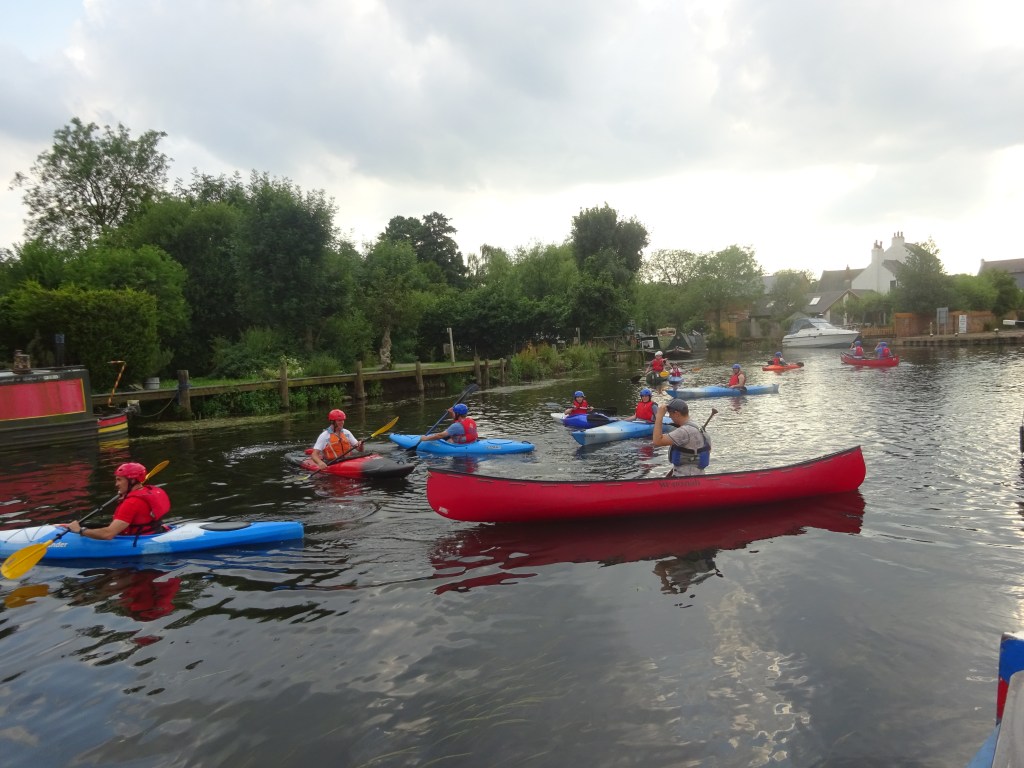
Watersports make for a different feel on the canal

We may have been in one place but it is surprising how much there is to see. Perhaps this extended static stay has made us more observant with all our senses. This awareness is something which I am vowing to continue – to take conscious time to look, smell and listen to what’s around. We’ve moved from the musty winter smell of the leaf mould in the nearby oak wood through the fresh but woody smell of snow to a different freshness in the Springlike air.

Sounds are bombarding our senses too. Inside the boat they include the sound of rain pattering gently or thundering violently on our metal roof, the squeak of fenders as they flex against the bank in response to passing craft or buffeting winds and in breezy days the scratch and thud of small twigs flying off nearby trees onto our boat. External sounds include the gentle constant of birdsong now apparent for more hours each day. Some of the robins (of which there are many here) start to sing their uplifting melodies at 3am at the moment! I’ve also heard my first woodpecker hammering away. At the other end of the soundscape comes graunching and grinding of the trains on the railway. If we hadn’t had to, we wouldn’t have moored here for long because of the railway but we would have missed out! We can now identify the passenger from the freight, quarry loads from container trains – a skill we wouldn’t have developed without this extended opportunity to attune.
The main challenge has been one I’m sure hundreds of thousands of people have faced – to stay positive, and resilient in the face of this mundane, situation which appears out of our control. I have found seeking a daily image to record a positive for the day is uplifting. Like many, lockdown has also led me to explore what others do to develop emotional resilience, or emotional survival.

Scioli and Biller in their 2009 book ‘Hope in the Age of Anxiety’ identify the need to develop hope as a fundamental way out, and that its development lies in planning and visualising the way out. More recently, Jan Lodge in The Conversation identifies 3 key lessons for us all from prisoners’ experiences.

  1. Battle the mundane
  2. Understand what you can control
  3. Go on mental excursions

I’m battling the mundane in seeking beauty and interest in it as per my daily images posted on social media which develop fascinating comments and conversations with others all over the world. I recognise that I can control in the direction I take daily exercise and maximise its value by making the most of every moment I am out and about. I also control what I eat, the privilege of having food and enjoying the challenge of creating interesting meals. Food has become a feature of this lockdown!

Going on mental excursions was not something I had begun until this week. Perhaps the fear of hopes dashed from past lockdown lifting had made me nervous of even considering a future return to our peripatetic floating life. This is normally a life with a high level of spontaneity – where shall we go today, how far, which route, what might we see etc. This week amid all the excitement of a finale to lockdown, I strangely found I needed something to pick me up, to bolster my emotional resilience – so I began to plan our lockdown exit routemap…

It has been personal this planning, I have been able to flex personal control in making choices and decisions. I know some of these have, and will be influenced by external factors but this made me reflect on the importance for all businesses, and educational establishments to involve their employees and students in forward planning. Returning to a new way of working after nearly a year of working differently will demand choice and involvement if people are to feel included and engaged in the new future.

Hopefully forward planning for us will mean that we will go ahead more informed, aware of the history, geography and features of interest on our route. We will head north west on what was formally called The Grand Trunk Canal – now known as the Trent and Mersey. It follows the River Trent aptly named by British Celts (trent meaning flooding river). We can confirm they got it right as we’ve been able to monitor the river during this lockdown!

Yup – evidence the Trent still floods!

Continuous cruisers like us are not only subject to the decisions of Boris and scientists but also on CRT’s interpretation of political lockdown moves. In our case because of our current geographic location when we move also depends on environmental factors. The River Trent which we have to cross to get onto the next stage of the Trent and Mersey Canal is currently open, but has been shut a few times by flooding in past weeks. Will it be open when we are able to get there? CRT have currently interpreted the government’s lockdown steps to suggest we could move on 29 March when “Travel outside local area allowed.” That will mean for us that we will have been here for 3 months and a day, the longest we have moored anywhere as continuous cruisers. Once away from Willington, through Burton of brewing fame and across the Trent we come to Alrewas, a delightful village named after the alders which grew in profusion there. We were here before Christmas we found it a most pleasant place – convenient for shops and good walks, friendly people whose Christmas (and house) decorations were unique.

The visual delights of Alrewas at Christmas.

Alrewas is also walking distance to the remarkable National Memorial Arboretum – well worth making the time to visit. Every season the Arboretum changes so we look to revisiting as Spring is arriving. I expect the sculptures to take on a different feel as the trees come into leaf and bulbs flower.

Even a wet winter’s day at the National Memorial Arboretum was poignant and powerfully emotive – look forward to visiting in Spring

After Alrewas comes Fradley Junction with the Coventry Canal. It was here we turned onto the Trent and Mersey back in early December 2020. We will be head north west up the Trent and Mersey from there, exploring pastures totally new. In a way it seems risky planning a lockdown escape, as I am sure anyone planning a holiday feels too. There are still clouds of doubt hanging over us, and the potential that the hope planning creates might be dashed. Somehow it seems more sensible and manageable to plan in small steps – alarmingly copying Boris perhaps! Step 1 for us is a 45 mile, 6.25 furlong trip from our current base to the start of the Caldon Canal in Staffordshire. With a travelling time of 3 hours a day and 34 locks it would take 8 days to get to the Caldon. Sadly the 44 pubs and 10 restaurants mapped en route are likely to remain shut to us. We shall stop en route to see some friends at a distance, so the journey should take us some weeks.

Looking forward enables us to look back with relief. We have already said farewell (thank heavens) to the last of the broad locks. Stenson Lock was the scene of our closest brush with disaster coming through between Christmas and New Year. These deep locks can be incredibly dangerous, particularly in winter. The undertow is strong when filling the lock. If you’re on your own and not going through with another boat, it’s important to try and hold the boat at the far bollard to stop it being pulled under the rushing water that can sink the bow of the boat. Stenson at 12ft 2inches or 3.71m is the sixth deepest lock in England and Wales. Our centreline which had suffered during a marina stay in Lockdown 2 wouldn’t reach the bollard and with just one ground paddle only partly open the boat was sucked into the cascading waters. The depth also meant I couldn’t see the boat from the top of the lock but Steve attracted my attention with the horn so I could lower the paddle to prevent the water battering the boat.

Stenson lock – calm without a boat but still deep!

Fortunately another person heard the horn alarm and came through the torrential rain to help. With two of us – one working the lock, the other able to see the boat and its situation as well as catching the rope as soon possible, we made it through with only racing heart-rates, a drenched bow rope which had been washed off the bow deck by the force of the water and an even greater respect for managing locks safely. We also now have a new longer centreline – in fact we went for a complete new set from Tradline.

So back to forward planning – Step 1 takes us 45 miles 6.25 furlongs through 34 locks. That consists of 41 miles, 4 furlongs of narrow canals with 34 narrow locks and 4 mile, 2.25 miles of broad canals, that are delightfully free of locks! It will take us through the former Armitage Tunnel when a crew member needs to walk through to check for boats coming the other way. We will be able to moor at Great Haywood and walk to visit the National Trust Shugborough Estate. Whether it’ll be a grounds-only walk or a visit to the house is another question dependent on lockdown at the time we reach there. Down Banks, another National Trust woodland area near Stone won’t be restricted. The most glorious thing is that we can hope to share these exciting outings with family and/or friends, and perhaps offer them hospitality on the boat which would be absolutely wonderful.

The only issue with this mental excursion is that I am now itching to get underway – it’s unsettled my equilibrium and acceptance of the lockdown! Let’s hope we only have another month to wait before the dream becomes a reality. A change is apparent through numbers on the towpath – dozens of older people we’ve never seen before saying to each other as they pass the boat ,”Now I’ve had my jab it’s good to be out” and the sunshine is bringing out much bigger groups than we’ve seen to date. This final furlong of the lockdown is proving very hard for many, and overhearing their conversations (at volume as they pass) some have decided it’s now almost over so a few weeks aren’t going to make much difference. There are also now more boats evidently on the move, guidance or not.

We are going to sit tight until 29 March with everything crossed that we can move then. For now it’s back to making the most of the present, made easier by the ever-changing water and light views which help me forget we are still stuck!

Early evening from the side hatch

In the meantime we are taking on the challenge of living on £20 a week. Will we make it? Find out next week if we will have made savings ready for the pubs when they reopen or if we’ve failed!

Covid positive at last!

I’ve been struck this week by the ways in which this pandemic has created, strengthened and developed communities – it is a genuine Covid positive. It’s something I hope we don’t lose as we head out of this initial crisis, but from which I hope we learn. Environments of both home and work will need strong communities to support individuals as we move into whatever the next phase will be. Coming out of this pandemic could be much harder than it was going into it.

Whatever our ages and our situations we are going to face another period of significant upheaval, and this is where strong communities can help with genuine, practical, uncritical support. We may all be in the same storm of a pandemic or its aftermath, but we are not all in the same boat. We are all facing different pressures and will continue to do so. It won’t all just go back to “normal” whatever that is and strong, supportive communities are going to be vital for our survival whether in person or online. I think there is going to be a particular need for this in the new work environments particularly as that is where people often feel unable or discouraged to be honest about the stresses and strains they are facing. A supportive workplace community can be a productive one.

Community has always been important to me as an individual – sense of responsibility, belonging, public spirit (Latin: Communitas) and common purpose. I wondered how it would be replicated, or indeed if it could be replicated if you were part of an itinerant, travelling community as a boat dweller.

We moved onto our boat as full-time continuous cruisers (cc) during the hiatus between Lockdowns 1 and 2. We came from a village where the pandemic had resulted in significant development of an existing sense of community. Wherever we’ve lived we have been an active part of community groups. In our village we have supported wherever we could annual community events like a major summer festival, Remembrance Sunday, and a Pancake Race.

Both of us, yes both of us, playing our part in one community event!

During the pandemic other community efforts began in the village, and we had been glad to become part of a scheme operated via Facebook to help and support neighbours in need in a variety of ways, with shopping, collecting prescriptions, telephoning to provide conversation etc. I learned new skills and encountered new people (remotely of course) through a community craft project during Lockdown 1 which has resulted in a splendid rainbow quilt of stitched 12inch square images of our community – geographic in terms of location landmarks; emotional in terms of people and feelings particularly centred round the pandemic; and identity based providing perspectives from the many sub-groups within the village to which people belonged. That shared endeavour has creating an ongoing crafting community. Members mutually support each other not in some face to face sewing bee as our mothers and grandmothers had experienced in wartime, but via online communities. We recognised a need to be doing something, and the initial quilt creation was something which would share our stories, celebrate the things we held dear and be a physical testament to the way in which the community pulled together in what we naively imaged was “The Lockdown”… little did we imagine it was to be the first of many…

Pointing out my 1860, Bridge 25 in the quilt . My fabulous grandson, the next generation finds the displayed, finished work fascinating.

To move from this hive of community spirit onto a boat felt odd to me. In one sense as if we were being selfish and cutting ourselves off from everyone, in another way quite liberating – no responsibilities for anyone else (apart from family of course although Covid meant we were still having to distance from them too!). The pandemic though had shown us how capable they all are, and indeed made us so proud of their independence, liberating us perhaps from the feeling that we couldn’t take off on the boat to live and work from there because we were needed! We might be wanted (which is lovely) but we recognised that we weren’t really needed, and on the odd occasion we might be, we could be there. So we took to our own little bubble floating about on the cut in what felt initially like glorious isolation. Communication with family, friends and work was safely conducted via diverse technological means but physically we were isolated.

Gradually over the months it became apparent that most boaters we met were doing their best to maintain social distancing, keeping their distance, and thus reducing their contact with others. We all still helped each other through locks but socially distanced from opposite sides of the canal! Conversations were short and there was no shared space – no opportunity to share a pint at a canalside pub or onboard each others boats.

I notice online communities within social media for continuous cruisers (of whom here are over 5,500 registered in the UK), but none appear particularly vibrant unless among the London cc community who have specific issues that draw them together – lack of space, need to remain within working distances etc. whilst trying to maintain Canal and Rivers Trust’s (CRT) 14-day maximum stay rule.

Lockdown 2 found us in a marina for a month. A different type of community – location based, and clearly organisational based community. It demonstrated a hierarchy, a clearly defined structure.

Within minutes we were visited by the lady who had been moored there longest, to tell us how things operated… in addition to the marina operators there was a clear code of conduct among moorers. The community was able to offer help and advice – when the butcher called, where the best shops were, when and where to find community markets and the best fishing or dog walking etc. People kept themselves to themselves although regular cliques were apparent.

Fast forward to Lockdown 3 – and we, along with an increasing number of continuous cruisers are in a village, moored along a busy towpath . It’s the best of all worlds if you can’t move – not far away we have a water point, disposal services, a marina for diesel and parts, local shops, a post office and country walks.

More and more boats are gathering at the moorings as the floods and ice clear.

I have been struck over the months since we began lockdown how vibrant the community has become – still socially distanced, but evident. It’s not just among the boaters, but we have experienced a sense of growing community between ourselves and the local community. That seems apparently at odds with some of the cc Facebook groups who portray themselves as online spaces designed to support an “often vilified” group of boaters.

Covid appears, in this instance, to have had a positive impact in developing a united community between the itinerant floating travellers and the fixed residential boaters and bricks and mortar dwellers. It’s got me thinking about how communities develop, and considering what it is that each of us can do to maintain the good things about them as we move out of the pandemic.

Strong communities whether in person or online stem from shared interests and needs. This may be around a place, a purpose or a platform. We’ve seen communities pull together against common threats – development, a desire to preserve a specific environment, and most recently to fight the Covid pandemic. People have volunteered locally to man vaccination centres, test centres, to give out information and alongside the towpath there has been a very clear development of a positive community spirit.

Every boat is its own bubble. Some contain single boaters, some families, some couples, friends or siblings. We are all individuals, with a common shared interest – living afloat. Our reasons for doing so are as diverse as we ourselves. For some its the only way of affording a home of their own, for others a deliberately chosen way of living, some have bricks and mortar homes they let, some work from their boats, some are retired. Everyone is different but the pandemic has brought us together. Before the pandemic continuous cruisers under CRT licences would have to move on at least every 14-days unless there was a particular reason – illness, ice, flooding etc. In the case of one of our boating neighbours here, CRT supported an extended stay when their cat went missing. The cat fortunately was found, albeit in a very sorry state, but then significant resulting veterinary treatment resulted in a further stay which then ran into lockdown so they have become a very familiar feature here! Locals rallied round to hunt for the missing cat, and were delighted by its eventual return. Pets do bring people together, not only in lockdown, and dogs get us all out walking.

The local accent took us a bit to adjust to – our introduction was when a local lady walking her dog pointed at ours and said “Harold?” (or so we thought). “No, Cola”, we replied, slightly puzzled, only to discover she’d said, “Har old?” as in “How old?”! Now we know and are attuned!

Cola aka Harold!

Perhaps it is because this is an established canal hub with services that makes local people supportive and accepting of the normally itinerant floating community. Perhaps it is that the pandemic with its enforced requirement for us to stay here has provided an opportunity for us to see and appreciate the local community, as well as get to know our floating neighbours. People chat (at a distance). We can tell you the ages of most people we talk to – a direct result of Covid vaccination bands. We support with deliveries of fuel, carry rubbish bags to the disposal point and do shopping for those less able. Maybe this would happen anyway but often it takes a few days for the English reserve to be breached, and the lockdown which puts us all in the same metaphorical boat means we have a shared experience, a shared need to communicate and seek to support each other in a situation which is very different from the independent, itinerant norm.

I hope we meet these individuals again on our travels. I feel sure it will be a reunion with some warmth as we will hopefully be able to share a brew or a drink together reminiscing over our collective lengthy winter lockdown. What I hope I remember as we all move on is the small ways which I can contribute to building and supporting communities wherever they may be – floating or fixed. It’s about unquestioning respect each other but also seeing who may find it useful to have rubbish carried for them, shopping done, dogs walked and what a difference a cheery wave or friendly chat can make. Positive communities in which we can play a part make us and others feel good – and we all need that. The onus is on each of us to make the change we wish to see in our communities at home or work, however long lasting or transitory they may be.

“Change will not come if we wait for some other person, or if we wait for some other time. We are the ones we’ve been waiting for. We are the change that we seek.”

Barack Obama