Many happy returns

Returning to familiar places, familiar things and retracing your steps can sound faintly boring but it provides new perspectives, new opportunities to see things differently if you are prepared to do so, and can foster moments of familiar comfort, alongside a capacity to still surprise.

This week that’s exactly what we’ve been doing on the first leg of our trip back to the north west. I say leg, but actually it was a trip of 5 short legs. It’s brought us along the Trent and Mersey Canal from Alrewas where the passage includes the River Trent. The village of Alrewas is thought to have grown up around the crossing point to meet the needs of merchants who could be held up by the river flooding, just as boaters get held up there today. As a result Alrewas remains a delightful village to while away the hours, days, or weeks it can take for the river levels to drop and make safe passage. 

Alrewas was a key crossing point for salt merchants bringing their white gold from the salt springs and mines of Cheshire particularly. And we’ve spent this week travelling the route plied by carriers of salt, ending up now in the salt town of Middlewich. Its very name stems from salt, a wych (which) being a brine spring or well. It is easy to see the saline trail across Cheshire – in Northwich, Nantwich and Middlewich. 

British Salt at Middleport

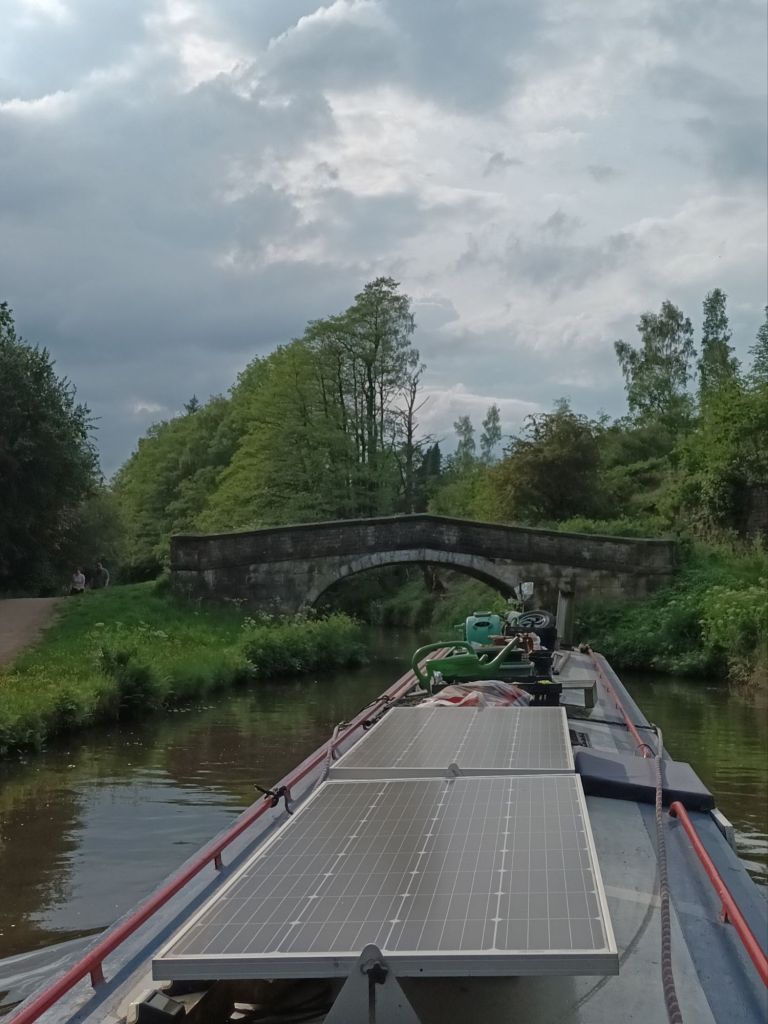
For us this week was retracing what has become a familiar route through Staffordshire, across the Potteries and into Cheshire. We weren’t only tracing the steps of commercial barges that carried clay, pots, coal and salt (not all together!) but as ever we were using the same locks these bargees would have used, treading the same paths, seeing some of the same views, trees and fields they would have seen. 

To those whose trade it was to travel this route, this passage between the Midlands and the North West would have been immensely familiar. It’s becoming that way for us too. We’ve made this journey heading north to south and south to north numerous times. We’re on first name terms with Bob the Lock at Etruria and stood him a cuppa this time.

Often, as this time we take advantage of the moorings at Middleport Pottery to stop and enjoy excellent local delicacies at their cafe. No traditional lobby this time (think of a stew with everything you can find lobbed in…) but some truly excellent oatcakes. 

From Middleport it’s just a short trip to the Harecastle Tunnel. We’ve made it through at least four times now but there’s still a frisson of something as we head towards that entrance, hearing the roar of the fans and the thudding clang of the doors slamming shut behind us as we cross the threshold. Is it fear? Is it nerves? Despite the view of the coffin and skeleton visible as you enter from the south, this time was an uneventful calm 40 minute journey through the mile and three quarters underground. They haven’t always been like that, so perhaps recollections of previous less easy encounters with the Scarecastle Tunnel have made me anxious. 

From the tunnel set in its caramel waters courtesy of local iron ore, the canal offers the chance to head up the Macclesfield or to descend the Cheshire Flight. These 26 locks, built in the 1770s carried us down to Wheelock on the Cheshire Plain. 

For us the first lock coming north of the 26 at Kidsgrove holds painful memories. Here it was coming up last Autumn that I dented our beautiful new chimney from the Little Chimney Company on the low bridge profile before the lock. This time, coming down the lock we remembered and kept the chimney off that we’d removed for the tunnel. 

Just before the next lock we were delighted to find Geoffrey on a bench. We first met Geoffrey when he was living out in Willington in Derbyshire. He’s a fascinating man, now in his early 70s. Serendipity brought us together again, as he’d decided to take advantage of some of the wetter recent days to travel by bus instead of his usual Shanks’s pony, hence his arrival in The Potteries. It was good to make him a hot cup of tea in his special lidded cup (he has Parkinson’s Disease), and sort him a dinner and snacks before heading on our separate ways. Geoffrey is heading to a holiday park on the Lincolnshire coast where he has work and accommodation for the summer season. Maybe we shall have to head over there to see him – shame no canals go that way!
So retracing our steps along the Trent and Mersey Canal brought us by chance back into contact with Geoffrey, it also gave us the opportunity to catch distant views of Mow Cop castle, a folly perched high on the edge of the Staffordshire Moorlands. It’s fondly known on our boat as Cow Mop. We moored in one of our favoured spots, at Church Lawton before heading out as the light began to fail to walk Boatdog. She has a particular field she enjoys galloping through near there but this time her walk got longer than expected as we diverted to rescue a stranded, grounded cruiser stuck in a low pound, and heeling over. We sorted the water levels, hauled the shaking owner and cruiser to the side and then because he had engine problems, hauled him through the remaining three locks. Familiar we may be with this flight, but every time we pass through them is certainly different! 

We’ve been lucky too to help some single narrowboaters too on this trip, lockwheeling for them where we could. So as I write this we are 60 locks and 52 miles further on our way, with several pay it forward deeds making us feel good along this very familiar way. As arrived in Middlewich it was good t see the familiar faces of those who’ve become friends over the years – always a delight.

It seems we’ve arrived in a flurry of spring – mating mallards squawking and flapping around, willows in vibrant green robes and blossom appearing at every turn. That’s another thing that makes familiar paths and routes so different, the unique nature and vibrancy of each season. It reinforces just how therapeutic it can be to go back over familiar ground and see it with new eyes in different circumstances.

Join me and book a get-away

It’s been quite a week. I’ve been to Paris, Austria, Yorkshire, and the English canals in wartime. Only one in person, but all were vivid, visceral experiences. I’ve been absorbed in the lives of a male serial killer and his victims; an actress mother as a commercial boatwoman; a female global  adventurer with a delicate constitution and an indomitable generous woman determinedly recovering from surgery. Fact and fiction, reality and fantasy intertwined.

The more you read, the more things you will know. The more that you learn, the more places you’ll go

Dr Seuss

I’ve played chess with ‘Harry Potter’, enjoyed a library treasure hunt, marvelled, laughed, and learned. Fiction and fact, reality, and fantasy have interwoven as delightfully as ever through my days. Books are a vital part of my life, and I recognise many of my life’s highlights and delights have come through the marvels of the written word. 

A marvel of the boating network is the plethora of book exchanges scattered across it – in telephone boxes, toilet blocks, bus shelters, cafes, little covered shelves outside private houses and in pubs too. As a result, the range of books we find to read surpasses anything we could discover via a book club or an Amazon suggestion! It also means that reading is the cheapest and most diverse entertainment we experience.

Books change lives, societies, and perceptions.

Pens and books are the weapons that defeat terrorism

Mallard Yousafzai

This past month on my own I’ve been indulging in sailing round the world, tracking down murderers in mainland Europe and exploring the lives of children in Cumbria post World War Two. I’ve heard the voices of boatmen from the turn of the century, explored the often alarming history of building Britain’s longest canal tunnel, the Standedge, built in 1811 at a time when picks, shovels and gunpowder were the excavation tools of the day. 

It never ceases to amaze me that we have a single alphabet with just 26 letters from which authors conjure words that transport us to far off places, back in time, ahead to the future and everywhere in between. Their crafted words make us laugh, learn, and weep. They make us escape and think.

This week saw lots of Harry Potters, many Matilda’s and numerous greedy caterpillars, bananas in pyjamas, Paddington Bears and lots of Mr Men and Misses to name just a few characters I spotted wandering the streets near schools, and posted on social media. Launched by UNESCO  in 1995, World Book Day celebrates books and reading, as well as promoting reading for pleasure. 

And that’s the importance for us all whatever our ages, we should make sure that whatever we have to read for work, or school, university or college, that we also read for pleasure. That every single day we should, we must, allow ourselves an escape, a pause, a moment to enjoy ourselves, a little relaxation, a real treat with a book. It doesn’t matter what it is as long as we are enjoying it, there’s no snobbery, it’s a private and personal thing but the more we read, even reading things we don’t think we will like, the more we discover, and discovery is something wonderful.

The most wonderful opportunity we can give any child is the gift of being able to read, a love of reading, and access to books that will excite, enthral, and encourage them.

WBD encourages “Changing lives through a love of books and reading.” That’s just what a book can do, it can change how we see our world, how we think, how we interact with others, give us inspiration to dream, to imagine, to learn and explore. There are unlimited supplies of books we’ve never read just waiting for us, there are old favourites longing for us to return.

Reading should be for us all like breathing – a vital habit which we can be conscious of at times, and unconsciously do all the time. 

Reading furnishes the mind only with materials or knowledge; it is thinking that makes what we read ours

John Locke

So whatever you’re planning to do this coming week, schedule in some you-time with a book…on a device, in paperback or hardback, new crisp pristine pages, or well thumbed ones. Fiction, fact, reality, fantasy, let your chosen book or books transport you – where I wonder will we all find ourselves next week? Where do you fancy?

Into every life, some rain must fall.

The British and boaters are obsessed with the weather. It plays a major part in how we live, enjoy and in our case, move, our floating home and office.


Walking this morning as rain and sleet, hail and wind whipped my skin and Boatdog shivered beside me, I was in full agreement with the man who grumbled: “I’ve had enough of this now.” Haven’t we all, even if we accept Longfellow’s words that “into each life some rain must fall.”

The Midlands, where we’ve spent most of this first part of the year, has experienced one of its wettest Februarys ever. Rain is hammering silently against the lovely new double glazed windows that keep out the elements and their soundscape in ways their predecessors did not. Rain these days comes with consequences. Even a little bit of rain has implications.

Parts of the Midlands have had more than two and a half times the normal February rainfall this year, and that means the rivers are full, overflowing, flooding with alarming regularity. We’ve had 6 named storms this winter to date. Every drop that falls now lands on saturated ground. There is nowhere for more water to flow away, it sits, it floods.


For us, this has meant that our original plans to cruise the River Soar once more have had to be abandoned. On February 18, during a Sunday afternoon family walk, 2-year-old Xielo Maruziva slipped into the river at Aylestone Meadows and vanished from sight in seconds. His family continue to pray and hope he will be returned to them. The flooding river has also claimed boats this month.


The Soar normally flows into the Trent, but Trent has also spent much of the past month in flood, closed to navigation. One small section of the Trent is at Alrewas in Staffordshire. Boats moving up and down the Trent and Mersey Canal at that point have to travel on the river for 1 mile and 2 furlongs between the lock at Alrewas and a lock at Wychnor, passing a large weir en route. This section has been intermittently closed to navigation this year because the strong flows make it unsafe. As we headed from the Coventry Canal across to Derbyshire to Willington, where we had arranged to get our windows replaced, we were held up at Alrewas until the river section was passable. We got across, but last week, as soon as the windows were wonderfully replaced, we intended to come back across to begin our journey north. No chance said the Trent – I’m in charge ! Every time it rained, we held our breath because two or three days later, river levels would rise once more. We prayed for dry weather, and we’re grateful for several clear days that gave us hope.

On Monday morning last week the Trent and Mersey river section was regarded as navigable, so we set off with alacrity,  and made a slow river crossing battling against the current, watching boaters including some old friends whizzing past us as they went rapidly with the flow.

For us, the rain brings mud, flooded towpaths, wet clothes, and a soggy dog. It is an opportunity to be grateful for our Morso stove, dry towels, efficient windows, and the chance to get warm and dry in our cosy boat. It has a short-lived effect on our bodies.


For others we have met these past weeks, the rain brings hours, days of struggle. They are resigned to being cold, wet, and stiff as the rain soaks them. Geoffrey and Jim have both been generous to share insight into their lives living outside. They don’t have boats or vans or tents. They carry their lives with them every day. We look at bridges and consider them for height and width, for their capacity to knock our chimney and aerial off (yes – the high water levels and a bridge put paid to our aerial cover this week). Geoffrey and Jim both look at bridges for their capacity to offer overnight shelter, evaluating their width, their positioning to withstand prevailing winds, the slope of the towpath beneath to repel or collect water. Misjudging one of those, or an unexpected change of direction of the wind, can lead to wet sleeping bags, soaking clothes, and literally of being damp. Geoffrey particularly looks at bridges for their safety, too –  are they away from inebriated nighttime drinkers, so offering a night’s sleep away from potential disruption.


Thanks to Raynor Winn’s personal journey, The Salt Path, many of us recognise that there are as many reasons for homelessness as there are people. Geoffrey and Jim both live as they do because of the Covid pandemic, but there the similarity stops.


Geoffrey became homeless when the holiday park for which he worked had to close because of the pandemic. He and all the other staff lost their jobs, but for all who lived in as he did, they also lost their homes. The day after his 67th birthday, suddenly, with no work and no home, he was advised to talk to social services. They looked at him, noted he was suffering from the onset of Parkinson’s disease and told him he should be going into an old people’s home, many of whom were struggling to contain the spread of Covid. He was horrified and walked out of social services’ office, and as he put it, “I just kept walking.”

He talks eloquently about the wonderful people he’s met, particularly the generosity of boaters, as he migrated towards the towpath with its regular bridges and many benches. Over a welcome mug of tea and a hot sausage roll, he shared learned lessons about the goodness of strangers, the consideration he’s experienced, the joy of winter sun and the warmth of unexpected kind gestures. He’s been offered a holiday park job after Easter, so he hopes to be back with a roof over his head once more.

Bus stops with shelter are a lifeline for Jim when it’s wet


Jim, too, is living in villages alongside the canal. He is in his 40s and works as a casual labourer whenever he can. His marriage broke down during the pandemic, and he lost his job as well as his home. He lived in hostel accommodation but found himself stressed and alarmed by the behaviour of some others there. He chose to live as he has now done for over two and a half years, walking the towpaths, the footpaths, and country lanes. He stays in the West Midlands, the area of the country he knows best, and says he feels stronger, happier, and enjoys a  uplifting sense of freedom, even in the rain.

These men have taught us much these past weeks – about gratitude, acceptance, values, and expectations. We are grateful to have met them and for them to have shared their time and lives with us.  They both said they appreciated our proffered hot drinks and food, and conversations. As the wonderful late poet Benjamin Zephaniah rightly recognised, people need people. (Enjoy the rain in Phil Hankinson’s illustration). Zephaniah also says: “If you need a lesson From whom will you learn.” Geoffrey and Jim have taught us so much that’s positive these past weeks  – about themselves but also about us and wider society too.

Our floating itinerant lifestyle is also a product of the Covid pandemic. It is a life infinitely more full of comfort than Geoffrey or Jim’s, and one for which we remain eternally grateful. We are grateful we could help them a little, that we got across the river when we did, and for the moments without rain. What are you grateful for today?

Rainbows need the rain

We can see clearly now

Our window on the world, or indeed windows on the world have changed dramatically this week. We see the wealth of birds and animals, people and the British weather around our floating home and office very differently today than we did this time last week.


After years of planning, research, saving, and preparation – we have new windows, and not just any windows. We have replaced our single glazed ones which had a metal hopper strip with large panel double glazed windows. We are seeing things totally differently, and are ridiculously surprised by the difference it has made. There’s no line across our view anymore. The world we see seems more expansive. As I write, two blackbirds and a pigeon are flying from beech to oak to alder, each taking their perches in that order. My view of their daily performance is captured in a black powder coated sleek frame, no peeling paint or encroaching green gunge detracting from the scene.

The old windows were a little like anyone with old vehicles with sliding windows might recall. I once had a Mini with sliding windows that acquired moss regularly and even began nurturing a buddleia – our old boat windows hadn’t become that advanced, but were heading that way. They rattled atrociously when we ran the engine or even moved on board, so each hopper had individual pieces of wine cork cut to wedge them either open or shut as desired. The only advantage to them was that they didn’t leak – although as we excavated and removed them we discovered at some point in their lives, some obviously had.


A major issue for our life afloat during the increasingly hot summer months when temperatures have risen above 40 degrees on our metal home, has been the complete inability with the old windows to open much of them to develop a through draft. We painted the roof a lighter to reflect the heat,  retro-insulated as much as we could reach of the steel hull, but the windows and lack of breeze became a major issue.  With that in mind, we’ve gone for windows that can be tilted or removed entirely to maximise any breeze. The highest insulation spec should also help, but time will tell.


Cruising through Wigan last year, we visited Caldwell’s, the company we had selected. We wanted to see their windows in person, to feel them, see how they worked, talk through our requirements. It’s a genuine family firm, we spoke to two Mr Caldwells and a Miss Hannah Caldwell. They listened to what we wanted, made helpful suggestions, and were able to answer all our questions immediately – none of that ‘oh the person who’d know is busy’!

After Skipper Steve had measured our windows for the umpteenth time, we placed our order in the New Year, and on Wednesday he drove to Wigan to collect 7 beautifully packaged, new windows.


They sat overnight in a Derbyshire car park near the boat, and then on Thursday the highly recommended Callum came to install them. We couldn’t have chosen worse weather to be without windows! The rain started in the early hours of Thursday. It thundered unrelentingly on the roof, hammered against the old windows, and by the time Callum arrived (sensibly clad in waders) the towpath alongside the boat (and alongside the first lot of windows to be replaced) was under water. 


He’s a boater too, so undaunted. He began on the smallest of the 7 windows – the bathroom. Inside I was covering everything I could with thin plastic decorators’ sheets to catch the expected falling rust and stop the rain encroaching too much. Steve’s job was to try and prepare the multiple screws that had held in the old frames for removal. Thirty plus years had taken their toll on them though, and demanded brute force. Finally they succumbed to serious persuasion and we’re removed. After breaking the seal around the outside (which wasn’t hard), the window was out. AS the rain hammered in, we began to prepare the bare metal hole for its new window.

Scraping away old sealant and flaking paint, angle griding away rough edges, cleaning off rust, dust and a surprising number of mummified insects, levering out the old wooden frame from the inside that had sealed the gap between the window and the steel side of the boat. The rain pooled in the plastic sheeting, finally forcing it to fall to the bathroom floor where a handy bathmat soaked up the worst. Callum crouched in the protection of the hatch to prepare the new window with insulating foam edging and a bead of black sealant before whisking it through the rain to its new home. Ankle deep in water, he placed it into the prepared frame and it fitted! Don’t ask my why I had any frisson of joy after all that measuring, but relief was certainly evident on the Skipper’s face! Steve then had the job of securing the frame with ingenious clips that are screwed into place – fiddly in some places, straightforward in others, and head torches were as always invaluable for seeing what you’re doing in cramped spaces. 


One down, six to go. Sausage and bacon sarnies and tea on tap despite everything piled high in the kitchen! We worked on, bedroom next, then the kitchen and finally the biggest window on this side, the saloon. All in, and then it was time to turn the boat (we were moored as close to the winding hole as possible to save disruption). Another boater walking his dog came for a chat and told us he was moving on, so we moved to his space alongside stone edging once we turned which reduced the risk of trench foot.

The rain stopped, and the sun tried to come out, as we turned, ready for the next side. Only three windows here – the side hatch adds more light and ventilation. It will be a project for another day.


For now though, we worked on, old out, preparation of the hole, new in. Just as we started on the last window, the rain started again, and the last window proved the most difficult to get out, but a hammer worked wonders once more. We had the routine down to a fine art, and very little rain came in before a lovely shiny new window was in place, keeping out the elements. Within 5 hours, 7 old single glazed windows and their internal wooden frames were out, and new double glazed windows installed.


Last night was so bizzarely quiet on board the boat (and we’re moored outside a pub by a road) – we could hear a pin drop. Somehow, I hadn’t expected such a complete change. I had to open the window by the bed to hear the birdsong this morning! There are noticeably fewer drafts, and we can begin the process of insulating the internal areas around the new windows, making new wooden frames for the inside as streamlined as our new views on our world. I think new window coverings are also called for – maybe blinds this time with magnets to hold them in place on our sloping walls, so we can pull the blind right up above the window and maximise not only our view of the outside, but our view of these amazing windows.


Not since the advent of our fridge and then our washing machine has anything changed our life afloat so dramatically. As we live with these windows through changing temperatures, we should see even more advantages, to fuel usage in the winter and staying cool in the summer.

Unfortunately the person who said they wanted the old windows hasn’t materialised so if anyone wants them, do get in touch, seems a waste to throw them away.

For now though, I know the new ones mean a bit more work. George Bernard Shaw said “…keep yourself clean and bright, you are the window through which you must see the world.” I need to keep our windows clean and bright – and I always seem to struggle with removing smears during cleaning. Anyone prepared to share their tips to solve this, please?

Stunning at sunset ❤️


New window spec for those interested:
Double glazed, black powder coated frames, thermal break, full hopper so the whole window tilts, clip in installation, mitred tops, 4 inch radius curved bottoms (old ones were 3 inch radius) aesthetically more pleasing, 6 clear glass and 1 frosted glass. All supplied by Caldwells Windows Limited

Tales of the unexpected – including a painful accident


The unexpected can be pleasant, but – as we know this week – not always. How we respond to the unexpected in our lives and our careers says much about us.

American researchers are trying to teach AI (artificial intelligence) to cope with the meaningfully unexpected, to make it able to respond effectively to black swan events (like pandemics for example). 

Oscar Wilde could have been talking about boaters when he said expecting the unexpected shows a thoroughly modern intellect. Life afloat, and as a freelance is in a large part about the unexpected. That ranges from weather to  work, from every day living to every lock we tackle.

Our week started very unexpectedly with a broken nose and two black eyes. A step above the engine bay, which has apparently been dodgy (as I leaned afterwards), decided it had had enough of me. As it gave way, the leg that was on it plummeted into the gap beneath, catapulting me forward and slamming my nose into our 85kg steel hatch cover. Step 0 : Hatch cover 1. Glasses 0 : Nose 0

Fortunately the engine was OK but the unexpected resulted in rather a lot of blood being left around the boat (and over Boatdog anxious to keep me company) until I got to the bathroom and could bleed into the basin and a cold face flannel. We are lucky to have a freezer section in our 12 volt fridge but meatballs, fish fingers or burgers didn’t appeal to press onto my rapidly expanding nose. Chopped parsley on the other hand proved invaluable. I lay with it pressed to my aching face as my head throbbed and the Skipper fixed the offending step. 

Swelling, shades of purple, black and yellow

Eventually the bleeding stopped. Advice was that the crunch I heard and resulting swelling/bleeding indicates a broken nose but as long as it hadn’t gone out of alignment, I could breathe and it wasn’t continuing to bleed, there was nothing that could be done except employ time as a healer. The rainbow bruising has been an unexpected feature of the week as will the new glasses be too (current pair sort of superglued into a shape that stays on-ish in the meantime).

We’ve had the expected delights of Mardi Gras – we know not to toss pancakes too high on the boat (they leave marks on the ceiling) and Valentine’s Day – gorgeous flowers and a delicious meal out for all three of us! 

We’ve also trialled a new experience for us – car hire which had a very unexpected outcome. Skipper needs to be north west this week while Boatdog and I need to be east and both of us need to be involved in transporting things/people so public transport won’t work thistime. Car for one and car hire for the other it has to be. The unexpected outcome was when you hire the smallest car they have, and this us what turns up!

It’s resulted in unbridled unexpected joy for a certain 6 year old because not only is it a Jeep but better still –  it comes in Liverpool red. 

Work has been unexpectedly calm and straightforward this week and we’ve have unexpected joys in sunsets and visits from expectedly-ever-hungry swans.Whatever your coming week holds in store – I hope it is peppered at home and work with unexpected joy.

Moments are what matter – of hygge, niksen and ukiyo

Small is beautiful in our world. The fact that our home, office, workshop, and studio is just 50ft long is a clue to why small is something we treasure. Not everyone can have or would want to have a micro home, a tiny home, but everyone can have micro moments in their day that add joy and delight.

I’ve been thinking about what makes our tiny home so special to live in, what it is about living this way that brings such joy and positive energy. Living afloat isn’t for everyone, living in a space this small isn’t for everyone either, but it is has many elements that combine to make it an experience for us that is both special and valuable. Many of those single elements are available to everyone, it’s just that here, we have them in close proximity and intensity.

At this time of the year when it is absolutely miserable outside, rain lashing the windows as I write and wind moaning around us, it is such a treat to feel bathed in heat from the wood burning stove. We are cosy inside, at different moments of the day dreamily watching the flames rise and fall, flicker and form in moving shapes behind the glazed door. In the evenings the flickering light from the fire joins the dancing flames of candles. Every mug we cup in grateful hands brings instant warmth and a glow to fingers chilled from being outside, from moving the boat, walking the dog, collecting shopping, or foraging wood.

These delightful moments happen multiple times a day, and perhaps because they bring a momentary pause to our days with comfort, calm and relaxation, they are mini recharges, little mood boosts. Moments the Danes would call hygge perhaps. Moments that make us grateful. They are not earth shattering moments, but together they combine to make us feel good, and that is invaluable.


It also appears that we are indulging in niksen and ukiyo ( who knew?)! Both are good for us, and now I know what they are, I concur. Both appear daily in our floating lives with great regularity. Niksen is the Dutch concept of doing nothing, and I mean nothing. Doing absolutely zilch. Ukiyo, on the other hand, is the Japanese concept of living in the moment, removing yourself from struggles and strains of life. [Interestingly given that we live on water, ukiyo-e apparently means the floating world, a transitory, pleasurable world remote from responsibilities. Initially, it referred to the hedonistic escapism of brothels and courtesans. It became the focus of an art movement captured in wood block prints that are famed today. Perhaps the most iconic is the Great Wave off the Coast of Kanagawa, which features Mount Fuji dwarfed and framed by a huge arching wave sweeping from the left of the image.]

The joy of capturing this moment this week ❤️


We combine ukiyo (living in the moment) and niksen (doing absolutely nothing) regularly in our days too, with obvious benefits (boatdog does it particularly well). Whilst one of us may be steering the boat, the other can be found doing nothing productive, nothing that leads to a set outcome, impact or result, but happily gazing, utterly focused on the swan gliding past, or the ducks splashing in our wake, watching clouds or reflections.

Minutes of peace are invested watching water moving ahead and beside us as we move slowly on our way. Moments of doing nothing but watching, listening, feeling and smelling the air around us and living in the moment where we find ourselves at that given time.

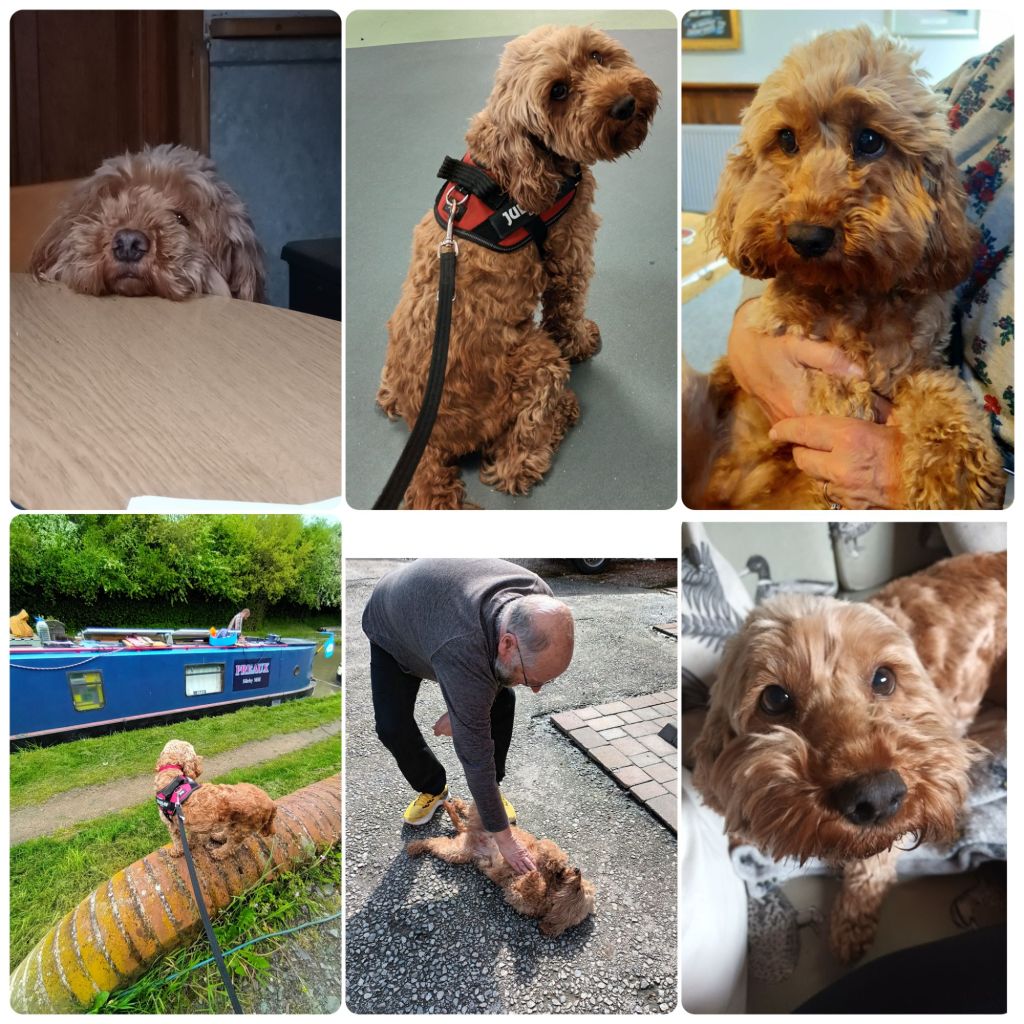
Boatdog busy expounding niksen

Those who spend their days researching such things have identified that moments such as these are invaluable for well being. We are fortunate to experience them multiple times each day. This morning I probably had hygge, niksen and ukiyo combined as I lay in bed in the darkness of the early morning. snuggled down enjoying the warmth beneath the covers contrasting with the chill of my nose. I was transported into another world, by the dawn chorus. Such pleasurable moments are indulgent treats, gifts to oneself, and a wonderful way to start the day.

The dawn chorus seems louder and more joyful in these quiet times when the increasing light begins to extend the days. Between rain showers, from the hedge next to the towpath, robins, blackbirds, chaffinch, blue, coal and great tits, thrushes, sparrows and goldfinches all celebrated the arrival of another new day. We have a ringside seat, as together they create the best way to be woken.

It’s not a time for conscious thought, for conscious meditation, but a time for just focusing on the musicality in a hedge beside our window, a time to just enjoy, just be still and just listen.

The early morning offers mists and sunrises. The evening offers sunsets and moonlight – both times to soak up in awe the beauty around us. Times to stop, to stare and appreciate what is around us, to mindlessly stroke boatdog as she sits beside us and not to worry about what we needs doing. Everything that needs to be done will get done in time.

It is often nature that allows us to experience many of these special moments, and living as we do with just a sheet of metal between us and nature is a joy. This week it’s even brought us closer to that other famed relaxation experience – running water. In this case water running into the boat from a leaking swan hatch! Not quite as soothing as experts indicate, but thanks to a repurposed coal sack installed in the pouring rain we are dry inside once more and will furnish a more permanent repair eventually. For now we’re busy getting back to the business of feeling cosy, relaxed and as ever, feeling very glad we have chosen to live and work like this.

Planning another leap or two this month

If January was our time of hibernation, February is time for preparation.


Preparing for what we need to do, for getting ourselves and the boat to the right place, and making sure we are all where we need to be. It is still a time for planning rather than big movements because this is the winter stoppages season on the inland waterways.

Each winter, when mainly only the hardy continuous cruisers remain on the waterways, Canal and River Trust undertake their major programme of essential repairs and maintenance to the waterways and towpaths. They publish a list in advance for comments, but as with any work to old structures, things can change as it rolls out. Doing one piece of work in one area can flag up issues in another that need tackling, and the significant storm damage this winter already has led to so many more jobs that need doing. This year alone, the planned works were expected to cost around £50m – with the unexpected additions on top of that.


If a lock is closed near you it’s an amazing opportunity to go along and see the incredible engineering architecture of these invaluable structures. When you can see the bare bones, you realise just what lies beneath the water. Sometimes Canal and River Trust hold open days with explanatory boards or experts. You can explore the possibilities online Canal & River Trust

It’s not just closed locks that can bring insight into the architecture of our industrial history – opportunities to watch essential maintenance can be as interesting. Dredging used to be more regularly carried out when commercial loads were at risk of delay. As we’ve seen recently elsewhere in the world – money talks. We got up close to the dredging process and how it works these days on the Trent and Mersey this past week while on the move.


Dredging isn’t just essential for boat traffic – it keeps the ecosystem healthy for wild and plantlife. An excavator with hydraulic legs using a sieved scoop to remove debris and silt from the bottom of the canal whilst letting the water drain back in. The solids were then dropped into a floating barge which was collected periodically by a tug that transported it to a disposal site where the material was moved out of the barge and spread on designated land.


Just as CRT use this winter time to plan ahead to keep the canals operational, we are using this time to plan ahead for ourselves. We moved the boat in two hops this past week, from a mooring where we enjoyed 14 days of ice, storms and calm. We were so grateful that we sat tight when we did and had that period of immobility.

This week I went to see the state of the River Soar where we had aimed to moor, and the narrowboat which was swept away with its entire pontoon mooring during Storm Henk is still blocking the County Bridge at Barrow on Soar, a tragic reminder of the power of flooding water. I feel desperately those for whom Sea Jade was their home but thank heavens they managed to leave the boat in time.


We need to cross another river, the Trent, on our trip into Derbyshire to reach a location where we have arranged to meet a window fitter who will undertake the removal of our good but old windows with new, thermal break, double glazed ones that are currently being manufactured for us in Wigan by Caldwells.


At the moment the river is not in flood, and if we can make that 12 mile, 6 lock hop this coming week we will be able to moor up for a few weeks again.

Once we have our new windows (bliss), we are then planning a longer 114 mile, 4.5 furlong and 70 lock trip that will take us along narrow canals, broad canals, through nearly 3 miles of underground tunnels and on part of England’s only privately owned canal, the Bridgewater. It’s a route we know well and will allow us to move our home nearer to be where we want to be – near another member of the family where we can be of use. But we know we can’t do that journey right now – we can only plan it because of the winter stoppages.

There are three current stoppages that would hold us up if we set off now. Two involve the replacement of lock gates in Stone and near Middlewich. These run from 8 Jan to 2 March so by the time we have the windows, we should be clear to start moving with a purpose again.

It is an advantage of a floating home and office that we can take it where we need to be. After several years of moving where we fancied, last year we ‘hurtled’ (always a strange word to use for narrowboat travel) across 201 miles and 200 locks in 21 days to where we hoped we could be useful. It was a series of very special experiences.

Now we are considering a similar, shorter trip in a different direction – another journey with purpose and the pleasurable opportunity to be able to base ourselves in another part of the country where we can do what our lovely family does so well – support each other.

It is an unexpected advantage of this floating life, which, when we first embarked, seemed such an indulgent, selfish thing to do, one that would bring immense pleasure to us alone. Now it seems that we can indulge ourselves and be of use to family too, giving us the best of all worlds. We are lucky and blessed to be able to do this.

Weathering the storms when you live and work afloat

It’s been a stormy, destructive week for so many. Hot on the heels of last week’s Storm Henk we’ve had to contend this week with both Storm Isha and Storm Jocelyn. The winds are still strong, but we seem in a time of respite with sun streaming through the boat windows.

I’ve photoboombed this one!

It’s interesting that we are already approaching K in the storm list, though I’ve seen no indication of when Storm Kathleen will strike. The last time the UK reached the Ks was with Storm Katie in the 2015-15 season. 

Since we moved into our floating home and office in September 2020 we’ve lived through 26 named storms. Some stay in the memory. All require some planning if there’s an advance warning from the Met Office, but you can’t always get everything right.

Our main choice is to get off rivers or avoid getting onto rivers when storms are forecast. This autumn we cruised down to the Midlands from Yorkshire. We had intended heading onto the River Soar to be close to family, but we are so relieved we couldn’t get on initially in October because of strong flow warnings. Since then, there have been storm damage problems along the Soar, and the level of the river has been fluctuating wildly.

Possible to see the top of mooring bollards on the Soar before it got too high

Three boats have sunk on the Soar during the recent storms.  Two still haven’t been recovered  – one up against the County Bridge at Barrow upon Soar and the other at Redhill Marina. 

Canal levels can generally be managed in a way rivers cannot as we’ve seen again this year.

The River Soar discharges into the Trent. The River Trent has reached record levels this month, breaching previous height records set as recently as 2020. There is nowhere for the excess water in ths Soar to go but upwards and outwards.

This area of the East Midlands has been hit with rainfall between October and now, that is 150% above the average rainfall levels set between 1991-2020. Villages have flooded, as marinas too. It is surprising in some ways that so few boats have been swept away and/or  sunk. 

As storms hit, Canal and River Trust the charity with responsibility for our canals and some rivers need to work with the Environment Agency who look after the major rivers to reduce impact of flooding and manage the situation for home and business owners, either floating or static. Storms Babet, Gerrit and Henk have caused significant damage in the Midlands. But it is out of storm time when both need to work on maintenance to ensure drainage and structures are sound and effective.

As liveaboard boaters we seek particular attributes for mooring spots on canals when winds are forecast. We look both up and down. Looking up to avoid obvious tree dangers – ones that look dead or dying, ones that overhang the cut, and ones that look as if they could shed branches onto us. You can’t always get it right, but we’ve been lucky so far. 

We look down to find mooring that gives us maximum security. Rings or bollards set into firm concrete are good, as is strong metal piling alongside sound unfolded towpath that allows us to use chains around it to attach our ropes. 

We moved from a mooring on the Ashby where we were on rings but under over hanging trees on both sides of the canal,  to where we now are on the Coventry. we made sure we were stocked up with water and fuel

We are moored now to metal piling on a sound, well-drained towpath. Whilst there are trees nearby, the slope of the ground takes them away from the canal. we gave some shelter from a hill.

So far it’s been a good choice. Weve been iced in, blown about and had torrential downpours. The result has been a few branches down on the towpath and destruction limited to the bird feeders we’d put out. Mind you, finding them in the undergrowth has led to more destruction of my now less-than-waterproof winter coat.

Designer duck tape!

In 2021-2 we were on the Grand Union Canal in Chester when three violent storms hit within a week. Elsewhere in the country three people died and 1.4million people were left without power as a result of Storms Dudley, Eunice and Franklin. 

Eunice alone with its extensive flooding cost Canal and River Trust an initial £300,000 with a final cost of around £1million. That’s a lot of for any charity to find. This year they’ve had to be sorting fallen trees, towpaths washed away and some structural damage too.

We were able to tie up to mooring rings in that case, set into concrete and it all held us safe. We checked ropes every few hours at the height of the storm. There were waves with white tops coming down the cut at times. it’s only time I’ve felt seasick on a narrowboat.

A bizarre highlight of Storm Franklin was being bashed by a wheelie bin which we fished out. That was a relatively lightweight, if large, piece of debris but that is another issue of storms we shall need to watch when we do move.

There are risks for boaters of weakened buildings and trees as well as large chunks of debris floating in the water. Large branches are probably the worst and most dangerous we regularly encounter after high winds. Flooding leaves thick, slimy mud – lethal around locks and moorings. A drying wind such as we have today is hugely welcome. Let’s hope for many more of them and that Kathleen doesn’t make an appearance at all this year. 

Cracking cryoacoustics at work

Snow blankets, dampens and muffles but ice, ice has a totally different way of changing life and the soundscape.

Ice means you hear new things, you are separated but connected to other boaters in totally different, sonic ways. It disperses sound, it reflect sound waves and helps us hear more clearly.


Like so many across the UK we’ve been watching and experiencing ice this week as we live and work afloat. This week we’re moored in the West Midlands, in the lee of a small hill. That has provided shelter from the icy blasts which have swept across the countryside.

At the start of the week we were watching the ice forming ahead of us on the canal and behind us but it was mid-week before it engulfed us too. If you look along a frozen canal everything looks static, people could even say frozen in time, but this is a noisy, constantly changing environment. The ice creaks and groans, it flexes and cracks, thaws and resets in tiny patches constantly. It is always changing.

Ice changes the nature of a canal, making everything static for a while. Boats stop moving as the sharp scraping ice damages hulls and blacking. Nature forces a pause, a valuable chance to take stock and change pace.

When it began to embrace the boat on Wednesday night, when a boater friend joined us on board for a meal. Whenever one of us moved however slightly, shifting on the sofa, reaching for a glass, there was a growling protest from the encroaching ice. As she left into the icy night and we moved to the stern to say farewell, the gathering snarled in protest at being jostled and forced to reposition.


There are narrowboats opposite us on private moorings, and a sheet of ice now connects us to them in a way thawed water never can. When someone on our boat moves, it creates movement in the water, which nudges the ice sheet. The same happening on the other side of the cut means we know when anyone moves in the other boat as the ice creaks and groans against our boat. In the day, there are other sounds and distractions, but at night, when everything is still, the ice soundscape comes into its own.

We’ve also got ice inside this year because our secondary glazing has failed, but that’s a quiet companion, albeit a bit silently drippy!


The ice is a new entity, it’s an umbilical cord linking us together. It moves to make us aware when people move around their boats in the night, get up to leave for work, and when they are still and quiet. It tells them about us and how we live and move around our boat. In past years, when we’ve been iced in, we’ve always been moored with boats at a distance ahead or behind us, so being moored opposite others is a new experience, a new soundscape for us.

The ice turns the towpath into a crunching sounding board too. We can hear walkers coming crisply towards us. As we’re here for a bit we’ve put the bird feeders out and from the warmth and comfort inside by the stove we’re watching robins, a variety of tits and even a thrush or two enjoying a necessary feed.


Ice isn’t as obvious a view changer as snow, but it makes the familiar look and sound different. The regular neighbours of a feathered kind, the mallard ducks and swans who were round us regularly early in the week, enjoying the clear water by the boat have now moved away as the ice has swamped us. Nonlinear do we hear them tapping as they nibble at the weed on the waterline, or squabble noisily amongst themselves. Mr and Mrs Swan and their two cygnets from last year have taken up residence in a canalside field.

Our seasonal crackling, creaking companion won’t be around for long the meteorologists tell us, by the time you read this we expect the ice to be a mere memory and we will have returned to rain once more. It won’t go quietly either. The thaw will bring new noises to enliven our days and nights.

It is invigorating and refreshing to live seasonally, to be aware of the changing seasons, mindful of how they change the way we hear the world around us.

Coming out makes us appreciate life

Leaving the marina, after a month of shuttling between there and bricks and mortar, to return to continuous cruising is liberating and also strangely different.


We’re back living off grid, no longer connected via a 24volt shoreline to the mains. The gas hob automatic ignition no longer works, the shore light no longer operates and we have to consider each day the state of charge in the batteries to make sure they are not dropping below 50%.

All of that feels like relaxing back into normality. But there are differences, and because of the pause in ‘normal routine’, those differences are more apparent, which helps us to appreciate them. We’ve been fortunate also to be off the rivers at a time when storms and flooding have made them truly perilous.

We are heading back towards the rivers, to the River Soar to be precise, but it will be some months before we get there. We’re back to slow moving on the canals for now, and it feels so, so good.

Living is different in the daytime – there are muddy towpaths to welcome our feet rather than (often slippery) wooden pontoons and compacted aggregate paths. That means more of the outside joins us inside from boots and paws! I get more indoor exercise with a mop!

We’ve been more aware of those frozen nights, giving us a thin coating of ice across the canal, making it creak against the boat as we move inside. Those cold nights also give us the delight of crunchy morning walks.

It is at night that living outside a marina really comes into its own for us. At night where we’re moored this week, there are no lights as there are in a marina. The night is dark, velvety smooth darkness that embraces the boat and together with the hooting calls of the owls, makes for a sound, deep, dreamless sleep. Nighttime in a remote spot is the difference between mono or surround sound, a fully immersive experience.

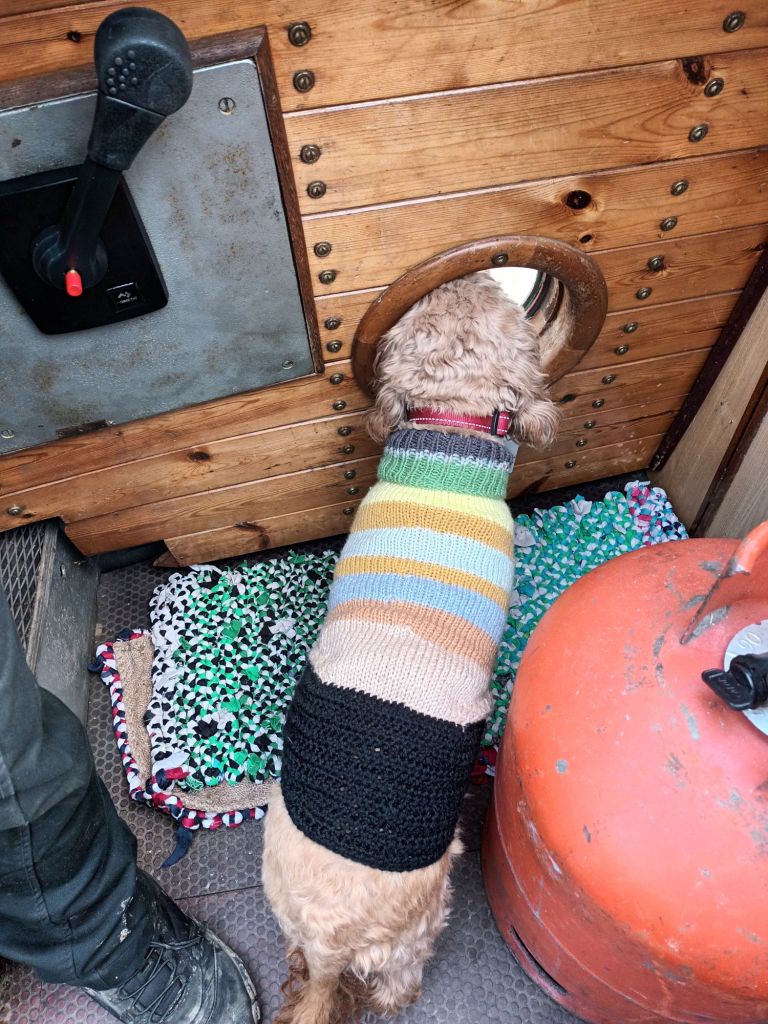
Noise in the marina has been a major issue for Boatdog. The bird scarers in surrounding fields terrified her. As a result she cowered outside her safe space of home and walks became a struggle for her (and us). Now she’s relaxing a bit although there are birds scarers a distance away, which we can still hear, and she does react, but we are reducing her terrors day by day. She enjoys travelling too and on cold days now sports a jumper I made  her from leftover yarn.

We are also back to moving the boat to sort out the basics – filling up with water is no longer available from a tap at the side of the boat, we now need to cruise to a water point. We filled up before we left, though, so that should last us for about three weeks before we need to consider finding a tap. Waste is something we need to sort more often. No longer is it a short haul of the toilet cassettes to an Elsan point on the marina or a short walk to a rubbish bin. We need to plan waste trips!

The nearest rubbish and toilet disposal we don’t need to pay for (i.e. not in a marina) is 11 miles 6.25 furlongs away. We have another 4 days before we need to empty the toilet, so we could actually go further to the next waste point if we want to.

We’ve had the invaluable and essential refill of gas and smokeless coal, too, this week so we are ready to move on.  Mark on Callisto was heading up the Ashby this week, and we caught him whilst we could. It makes economic sense and is supportive of the traditional commercial carrying on the waterways to buy from the coalboats. Most carry diesel, gas and coal, kindling, and in some cases they offer pump out for boats with toilet tanks. Many carry fenders, engine oil and other chandlery too. The other advantage is the sight of a friendly face, a chance for a chat, an opportunity to ask about conditions ahead (or behind) and catch up on news.

There are coalboats along the network, but unless we all use them, all of us, leisure and continuous cruisers, then the future for these essential services is at risk. Theirs is not an easy job – it’s heavy, hard work, but without them our life on the cut would be much more difficult and costly. They moor alongside, load directly onto our roof or into the bow, fill us up, and head off. We don’t have to move – just liaise by text or social media to find out where they are, let them know where we are and what we need. They accept cards, cash, or BACs. In the case of the coalboats, BACS stands for Brilliant And Convenient Service!

So we’re back in the comfortable, comforting  routine of musing over where we go next and at what pace we want to move, how long we want to stop on each chosen mooring, whilst tasty scents from pans simmering on the stove fill the cabin as we slowly cruise. It is leisurely and relaxing whilst being active and demanding at the same time.

Our sojourn in the marina and in bricks and mortar with the family was wonderful and hugely enjoyed. An added bonus has been the increased appreciation of our life together on the water – absence after all, really does make the heart grow fonder for this life we’ve chosen.